
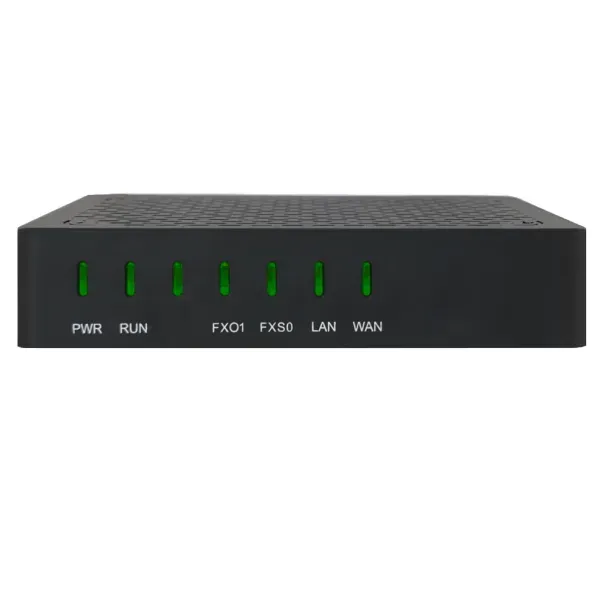
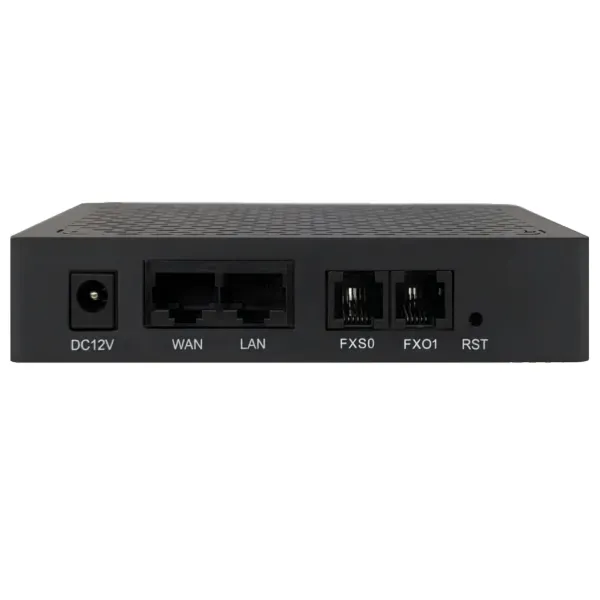
Dinstar DAG1000-2S Analog Telephone Adapter
The Dinstar DAG1000-2S is a multi-functional analog telephone adapter for organizations that want to retain analog telephones, fax machines or compatible legacy PBX endpoints while moving voice services onto an IP telephony platform. The model provides two FXS interfaces, one WAN and one LAN interface, SIP/IMS support, T.38 fax, flexible routing and dial plans, IPv4/IPv6 networking, VLAN and QoS functions, TLS/SRTP security, automated provisioning and centralized-management options. For Tanzania businesses, it is especially useful in small offices, branch sites, reception areas, remote facilities and staged migration projects where replacing every analog endpoint immediately is unnecessary or impractical.
Choose the DAG1000-2S when you need two FXS ports for analog endpoints, SIP-based IP connectivity and straightforward administration. Confirm your SIP platform, fax requirements, network addressing, VLAN policy and power arrangements before ordering.
Connect two analog phones, fax devices or other compatible analog endpoints to an IP voice environment.
Built for standards-based IP telephony integration with compatible IP PBXs, SIP servers and softswitch platforms.
Supports fax over IP through T.38 as well as pass-through methods where supported by the surrounding voice environment.
Includes TLS/SRTP capabilities, automatic provisioning, web management, SNMP/TR-069 and configuration backup/restore options.
What the Dinstar DAG1000-2S solves
Many organizations still depend on analog endpoints even after adopting SIP trunks, IP PBXs or hosted voice systems. A fax machine may still serve finance workflows, a reception telephone may be perfectly usable, or a branch may need to preserve an analog handset while its core telephony platform is modernized. The DAG1000-2S provides the translation layer between these two worlds. Its FXS interfaces present analog line service to supported devices, while the gateway connects toward the IP network using SIP-based signaling. This lets a business phase its telephony modernization without forcing every endpoint to be replaced at the same time.
The model is suited to small deployments because it concentrates the essentials into a compact platform: two analog subscriber ports, Ethernet connectivity, voice and fax functions, dial-plan control, network features and remote-management tools. This is different from a large FXS gateway intended for dozens of extensions. Procurement teams can therefore use the DAG1000-2S where the requirement is specific and contained: two analog phones in a small branch, a phone plus a fax endpoint, two legacy devices attached to an IP PBX, or a small customer-premises voice environment that needs straightforward SIP interoperability.
A correct deployment still depends on the surrounding system. The SIP server or IP PBX must be compatible, extension credentials and registration parameters must be available, routing must be planned, and the LAN should provide stable connectivity. If fax is required, the full call path should support the chosen fax method; T.38 performance depends on both ends and on the carrier or trunk path. For broader planning, see the Fourteck Tanzania technology shop, which explains how telephony products should be evaluated together with network, infrastructure and compatibility requirements.
Verified Dinstar DAG1000-2S capabilities
Two FXS ports for supported analog telephone, fax or related analog endpoint use cases.
One WAN and one LAN port, with the manufacturer positioning the family as including a built-in NAT router.
SIP v2.0 support over UDP, TCP and TLS, together with IMS support for compatible service environments.
T.38 fax and fax pass-through capabilities for compatible deployments.
IPv4/IPv6, Layer-3 DiffServ QoS and 802.1p/Q VLAN tagging are listed among supported features.
Call waiting, transfer, forwarding, speed dial, DND, three-way conference, hunting group, voicemail and MWI support are included in the product family feature set.
TLS and SRTP capabilities are available for deployments where the connected SIP infrastructure is configured to use them.
Web-based administration, HTTP/HTTPS provisioning, automatic firmware/configuration workflows, SNMP, TR-069, logs, CDR, backup/restore and Dinstar cloud-management support are listed by the vendor.
Deployment and integration guidance
A DAG1000-2S installation should begin with a simple call-flow map. Identify which analog device will connect to each FXS port, what extension or account each port will use, which SIP server it registers to, what outbound routes are permitted, and how incoming calls reach each endpoint. If the two analog ports serve different departments, give each a clear naming convention and document its authentication details separately. Where an IP PBX provides the extensions, confirm the device can reach that PBX on the required network path and that the firewall is not blocking necessary SIP and RTP traffic.
Voice quality depends on the IP network. Avoid placing the ATA behind unstable wireless links where a wired connection is available. Use VLAN and QoS policy when the broader network design requires voice separation or prioritization. The manufacturer lists 802.1p/Q VLAN tagging and Layer-3 DiffServ support, which can help the gateway participate in a voice-aware LAN. That said, those features only create value when the switches, routers and PBX are configured consistently. Businesses planning a wider LAN refresh can review the networking and IP-telephony guidance on Fourteck Tanzania before finalizing the voice design.
Fax deserves a separate test plan. T.38 is designed for fax transport over IP, but successful faxing depends on the entire route, not only the local ATA. Confirm whether your SIP provider, IP PBX and remote path support T.38. When pass-through is used instead, codec selection, jitter, packet loss and carrier behavior become important. A practical commissioning procedure includes sending and receiving multi-page test faxes, testing different destinations, reviewing negotiated media and keeping a record of the final working configuration.
For organizations operating multiple sites, configuration templates and centralized management can reduce deployment effort. Dinstar lists automatic provisioning, SNMP, TR-069 and its cloud-management system among the management options for the product family. Before using remote management, define access controls, update policies, credential standards and configuration-backup procedures. A small ATA can become operationally important when it supports a reception phone or finance fax workflow, so it should be documented like any other network endpoint.
Who should choose the DAG1000-2S?
The strongest fit is a customer that specifically needs two analog subscriber interfaces rather than a large gateway. Typical scenarios include a small branch retaining two analog phones, an office connecting one phone and one fax endpoint, a migration project bridging legacy analog equipment into a SIP-based PBX, or a remote facility where a small number of existing POTS devices must remain in service. If the requirement will grow beyond two analog ports, compare a larger Dinstar FXS gateway before purchase rather than deploying multiple small adapters without a plan. If the requirement is for modern SIP desk phones rather than analog endpoints, review the specialist Fourteck IP phone resource so endpoint selection can be aligned with the PBX and user roles.
Dinstar DAG1000-2S Tanzania
Businesses searching for the Dinstar DAG1000-2S in Tanzania are often trying to solve a specific migration problem: they have an analog device that still performs a useful function, but the organization is moving toward SIP-based telephony. In this context, the DAG1000-2S can act as a practical bridge. Its two FXS ports are appropriate for modest endpoint counts, while its support for SIP/IMS, T.38 fax, VLAN/QoS and TLS/SRTP provides the functions commonly needed when analog devices must participate in an IP communications environment. The buying decision should therefore start with the number and type of analog endpoints, the existing PBX or hosted voice platform and the network path between the gateway and that platform.
For Tanzanian offices, the most important procurement detail is compatibility. Confirm the SIP server or IP PBX, extension credentials, codec policy, fax method, network addressing and any voice VLAN requirement. If the project includes a fax machine, ask whether T.38 is supported end to end; if it is not, plan a pass-through test under realistic network conditions. If the gateway is for a branch, determine whether the SIP registrar is local or reached across a WAN/VPN and whether latency, packet loss and firewall policy are suitable for stable voice. These questions are more useful than simply asking for a “two-port ATA,” because they reveal the dependencies that determine whether the deployment will work after installation.
The DAG1000-2S can fit offices, retail sites, service counters, clinics, schools, hospitality support areas and branch operations where analog endpoints still matter. Procurement teams should include the gateway, required power accessories, network patching, extension configuration, remote-management requirements and any installation service in the quotation request. Fourteck Tanzania’s services page is relevant when the requirement goes beyond supply and includes design, configuration, documentation or broader infrastructure work. Rather than assuming stock, price or lead time, request a current commercial quotation for the exact quantity and deployment scope.
Dinstar DAG1000-2S Analog Telephone Adapter Dar es Salaam
Dar es Salaam organizations frequently operate a mix of newer IP networks and older telephone equipment, especially when offices expand in stages. A two-port ATA can be useful where a reception point, administrative desk, fax device or legacy analog extension still needs to connect to a SIP platform. The DAG1000-2S is sized for exactly this kind of limited analog requirement. Before procurement, count the actual analog endpoints and identify whether the project is temporary migration, long-term coexistence or a backup requirement. That distinction helps determine whether a two-port device is sufficient or whether a higher-density FXS gateway would be more efficient.
In a Dar es Salaam office deployment, LAN design should be checked alongside telephony. Determine which switch port and VLAN the ATA will use, whether the site has stable wired Ethernet at the intended installation point, and how the device reaches the SIP server. If the PBX is hosted remotely, the internet edge and firewall policy become part of the voice path. If the PBX is on premises, confirm addressing, DNS, time synchronization and routing. Dinstar’s support for VLAN tagging, QoS markings and main/secondary SIP-server failover can be valuable, but these features need matching network and PBX configuration rather than being treated as automatic performance guarantees.
Commercial buyers should request a quotation that states the exact model DAG1000-2S, quantity, intended endpoint types, SIP platform and installation scope. Include whether the units need provisioning before delivery, whether configuration documentation is required and who will provide SIP credentials. If a fax workflow is business-critical, include commissioning tests in the deployment plan. A properly scoped Dar es Salaam project should leave the customer with a documented device, a known management address, backup configuration and a clear record of the connected analog ports.
Dinstar DAG1000-2S Analog Telephone Adapter Mwanza
For Mwanza businesses and institutions, the Dinstar DAG1000-2S can support branch telephony projects where only two analog interfaces are required. That can include existing handsets in a small office, a fax device used by administration or a pair of analog endpoints attached to a central IP PBX. The product is particularly relevant when the organization wants to modernize the call-control platform while retaining selected analog devices. This staged approach can reduce unnecessary endpoint replacement and allow telephony changes to be coordinated with network upgrades.
A Mwanza deployment should be planned around link reliability. If the SIP server is at another city or data center, voice packets may traverse an internet or VPN connection. Measure the quality of that path and make sure firewall or NAT behavior does not disrupt SIP registration and media. The gateway provides a WAN and LAN interface and the vendor positions it with NAT-routing capability, but the preferred topology should be determined by the wider network design. In many business environments the ATA can be treated as a controlled LAN endpoint behind the existing firewall, with voice traffic routed according to corporate policy.
Procurement teams should also consider operational ownership. Decide who will update firmware, back up configuration, reset credentials and troubleshoot registration failures. Dinstar lists web management, SNMP, TR-069, automated provisioning and cloud-management options, which can simplify fleet administration when properly secured. For a single branch, a simple documented configuration may be enough; for multiple Mwanza-area sites or a national rollout, consistent templates and naming standards are more important. Quote requests should state whether units are intended for standalone use or part of a repeatable branch standard so the deployment method can be designed accordingly.
Dinstar DAG1000-2S Analog Telephone Adapter Arusha
Arusha offices in tourism, professional services, education, administration and other sectors may need to integrate existing analog devices with a modern SIP telephony system without replacing every endpoint. The DAG1000-2S provides two FXS ports, making it well suited to a small analog requirement rather than a high-density voice gateway project. For example, an organization can connect a legacy reception handset and a fax device while the rest of the office uses IP phones. Another site might use both ports for simple analog extensions that register to a central PBX.
The technical design should confirm how calls are routed. Each FXS port may need its own SIP account or extension, and the PBX should have clear inbound and outbound routing rules. Calling features such as transfer, forwarding, call waiting, three-way conferencing, DND and MWI are listed for the product family, but the real user experience depends on how the connected analog phone, PBX and service provider implement those functions. During commissioning, test common user actions rather than only checking that the device registers successfully.
If an Arusha site has unreliable power or network equipment, include the gateway in the same continuity plan as switches, routers and PBX components. UPS protection for the network layer can help preserve service through short power disturbances, but overall availability still depends on the SIP platform and connectivity. Organizations with several branches should document the configuration so a replacement unit can be provisioned consistently. A purchase request should therefore include quantity, connected device types, SIP platform, network topology and whether professional configuration is required.
Dinstar DAG1000-2S Analog Telephone Adapter Dodoma
In Dodoma, the DAG1000-2S can fit government-related offices, professional organizations, branch operations and small-business environments that need a limited number of analog extensions on an IP-based telephone system. The key advantage is not simply “VoIP conversion”; it is the ability to preserve selected analog workflows while the call-control layer becomes digital and centrally manageable. This is useful when existing handsets are serviceable, when a fax device remains part of administrative processes or when a site needs a simple two-port analog interface to a larger SIP environment.
Before installation, map the exact role of each FXS port. Label the ports by function, assign SIP accounts, record dial-plan rules and verify emergency or special-number routing according to the organization’s policy. If the PBX uses encryption, evaluate TLS and SRTP settings on both sides. If the LAN uses a dedicated voice VLAN, apply the correct tagging and QoS configuration. The vendor lists IPv4 and IPv6 support, so the addressing strategy can align with the site’s current network plan, but dual-stack environments should still be tested rather than assumed to work automatically.
For procurement, distinguish hardware supply from deployment service. A quotation can cover the gateway alone, or it can include configuration, PBX integration, testing and documentation. Where the device supports a critical fax or reception function, include post-installation acceptance tests in the scope. Fourteck can be contacted through the verified Tanzania contact page for a current quote, but stock, lead time and price should be confirmed at the time of enquiry rather than assumed from static web content.
Dinstar DAG1000-2S Analog Telephone Adapter UAE
UAE buyers may use the DAG1000-2S in branch-office, hospitality, retail, small-enterprise and migration scenarios where a SIP environment must continue supporting one or two analog endpoints. The two-FXS design keeps the device focused: it is not intended to replace a large analog gateway, but it can be efficient where only a pair of ports is required. The same purchasing logic applies whether the SIP platform is on premises, hosted or delivered from a centralized multi-site architecture: confirm registration, media, routing, security and fax requirements before choosing the adapter.
In UAE deployments, pay attention to the broader telecom design and any provider-specific requirements. A SIP trunk, hosted PBX or enterprise voice platform may impose particular codec, NAT, registration or security settings. The DAG1000-2S supports SIP over UDP/TCP/TLS and provides TLS/SRTP capability, but the end-to-end system must be configured consistently. Where T.38 is needed, verify support from the PBX and service-provider path. For multiple branches, automatic provisioning and centralized-management functions can help standardize configuration and reduce manual variation.
Organizations comparing telephony options in the UAE can also use Fourteck UAE for broader regional technology context. When requesting a DAG1000-2S quotation, include quantity, required deployment sites, the PBX or SIP service, whether analog phones or fax devices will be attached, and whether configuration is part of the requirement. A precise scope makes it easier to determine whether this two-port ATA is the right fit or whether a larger Dinstar FXS gateway should be evaluated.
Dinstar DAG1000-2S Analog Telephone Adapter Uganda
Uganda organizations can use the Dinstar DAG1000-2S as a compact bridge between legacy analog telephony and a SIP-based voice platform. The most suitable deployments are those with a defined two-port requirement: perhaps a small branch with two analog handsets, a phone plus a fax machine, or a site where an existing analog PBX extension must connect to an IP system. Because the device supports two FXS ports, it is easy to understand from a sizing perspective; if the analog requirement is larger or likely to expand significantly, a higher-density model should be evaluated instead.
When the SIP server is centralized outside the branch, the WAN path becomes part of the voice solution. Ugandan organizations operating across multiple cities should review bandwidth, packet loss, latency, firewall traversal and VPN design. Voice VLANs and QoS can improve traffic handling on busy LANs when the surrounding switches and routers enforce the same policy. Dinstar’s support for main/secondary SIP-server failover can add resilience at the registration layer, though overall service continuity still depends on reachable servers and network connectivity.
For regional sourcing, Fourteck Uganda can provide broader Uganda-specific context. A proper quotation request should identify the final installation sites, analog endpoint types, IP PBX or SIP provider, quantity, management requirements and desired commissioning scope. If faxing is included, specify it clearly so the proposed configuration can be tested for T.38 or the appropriate pass-through method before the project is signed off.
Dinstar DAG1000-2S Analog Telephone Adapter Kampala
Kampala businesses often have mixed telephony estates, especially where offices have grown over time. The DAG1000-2S can be useful when a new IP PBX or hosted SIP system must coexist with a small number of analog endpoints. A branch may keep an existing front-desk telephone, finance fax machine or simple analog phone while moving call control and routing to an IP platform. The device’s two FXS interfaces make it easy to dedicate one port per endpoint and document the corresponding SIP extension or account.
Before deployment, confirm the SIP registration method, authentication, server address, outbound proxy if required, codec policy and DTMF behavior. Then validate incoming and outgoing calling, transfer behavior, caller ID and any feature codes required by users. If fax is part of the project, perform real transmission tests rather than treating successful voice calling as proof that fax will work. T.38, pass-through behavior and provider compatibility should be verified with the actual path in use.
From a network perspective, stable wired Ethernet is preferable for the ATA. Apply VLAN tagging and QoS only as part of a consistent voice-network design, and document the gateway’s management IP so support teams can access it when troubleshooting. For organizations standardizing multiple Kampala branches, automated provisioning can reduce setup time and help keep configurations consistent. The quotation should state whether the customer needs hardware only, remote preconfiguration, onsite integration or a full branch-telephony deployment package.
Dinstar DAG1000-2S Analog Telephone Adapter Arua
For Arua branch sites, the DAG1000-2S offers a practical way to preserve two analog devices while connecting the site to centralized IP telephony. This can be relevant for organizations that operate smaller offices away from their main PBX location and need a lightweight endpoint gateway rather than a large rack-mounted FXS platform. The branch may use analog telephones that staff already know, while the SIP accounts and call routing remain managed centrally.
The quality of the branch network should be assessed before installation. If the ATA reaches the PBX over an internet or VPN connection, unstable links can affect registration and media even when the gateway itself is correctly configured. Define acceptable call quality, monitor packet loss where possible and ensure the branch firewall permits the required signaling and media flows. A secondary SIP server can be configured where the architecture supports it, but failover design should be tested during commissioning rather than assumed from configuration alone.
Arua procurement requests should make the small-site context clear. Include the number of analog devices, whether fax is required, the central PBX platform, the type of WAN connection, the person responsible for remote administration and any need for preconfigured units. If power continuity is important, consider the gateway together with the router, switch and other network devices in the branch UPS plan. This integrated approach helps avoid a situation where the ATA remains powered but the network path it depends on has already gone offline.
Dinstar DAG1000-2S Analog Telephone Adapter Mbarara
Mbarara organizations that are modernizing communications can use the DAG1000-2S where only two analog subscriber ports are needed. The adapter is a strong fit for incremental migration: keep selected analog phones or fax devices in service, register the gateway to a SIP server or IP PBX and move call routing into the IP environment. This can be simpler than replacing working analog endpoints immediately, especially when the business requirement is operational continuity rather than a complete user-interface upgrade.
Sizing is straightforward but should still consider growth. If a branch has exactly two analog devices with no expected expansion, the DAG1000-2S is naturally aligned with the requirement. If the branch is likely to add multiple analog extensions, evaluate a larger FXS gateway at the beginning so the architecture remains clean. The cost of hardware is only one part of the decision; network ports, configuration, support effort and future expansion also affect total operational value.
During installation, assign descriptive names to each port and document SIP credentials securely. Test inbound and outbound calls, caller ID, transfer, hold behavior where applicable and DTMF interaction with IVR systems. For fax, test both sending and receiving. Make a configuration backup after acceptance and record the firmware version. This simple handover process is particularly helpful for remote sites because a future support engineer can understand the configuration without rebuilding the design from memory.
Dinstar DAG1000-2S Analog Telephone Adapter Gulu
Gulu offices and branch operations can use the DAG1000-2S when the requirement is to connect a pair of analog endpoints to a modern voice platform. The gateway supports the essential functions required for this role: two FXS ports, SIP/IMS integration, fax capabilities, IP networking, security features and remote administration. Because it is a small endpoint gateway, deployment planning can remain simple as long as the underlying SIP and LAN details are known in advance.
For a Gulu site connected to a central Kampala or regional PBX, decide whether SIP traffic travels directly over the internet, through a private WAN or through a VPN. The network design should protect credentials and signaling while keeping media paths stable. If the organization uses a voice VLAN, configure the gateway and switch port consistently. Dinstar’s listed QoS capabilities can mark traffic, but congestion management still depends on the network equipment along the path. Where the branch uses a low-bandwidth link, test calls during realistic busy periods.
Support processes should also be designed for remote administration. Store the gateway’s management details, configuration backup and PBX mapping in the site documentation. If the device is centrally provisioned, keep the template under change control so one branch adjustment does not unintentionally affect another. A quote for Gulu should specify whether the unit will arrive unconfigured, preconfigured or installed as part of a managed branch project.
Dinstar DAG1000-2S Analog Telephone Adapter Kenya
Kenya businesses can deploy the DAG1000-2S in small offices, retail branches, service sites and other environments where two analog endpoints must connect to an IP PBX or SIP service. The device fits migration and coexistence projects particularly well. An organization might operate mostly SIP desk phones but keep two analog devices for a specialized workflow. Another may use the ATA in a small branch so existing handsets can register to a centralized PBX without replacing the local endpoint hardware immediately.
Compatibility should be established before rollout. Confirm the PBX vendor and version, SIP account structure, codecs, DTMF, caller-ID expectations, security settings and fax requirements. The gateway supports SIP over UDP/TCP/TLS and TLS/SRTP security capabilities; however, encrypted signaling and media only work as intended when the server side is configured compatibly. T.38 should be checked across the full provider path if fax is a requirement.
For organizations with multiple Kenyan branches, consistent configuration and inventory records are valuable. Use a naming convention that links each gateway to the site, document its ports and extension numbers, and keep configuration backups after changes. Buyers can also reference the wider Fourteck regional network when coordinating cross-border standards, but the Kenyan project should still be quoted according to the exact local requirement, quantity and service scope rather than assuming regional stock or delivery conditions.
Dinstar DAG1000-2S Analog Telephone Adapter Kuwait
Kuwait buyers evaluating a two-port analog telephone adapter can consider the Dinstar DAG1000-2S when an IP telephony platform needs to support a small number of legacy analog endpoints. Typical use cases include a small branch, an analog fax requirement, a service counter or a migration project where selected POTS devices remain operational. The two-FXS format helps avoid oversizing when the actual need is limited to one or two analog subscriber devices.
The deployment should be matched to the enterprise telephony architecture. Confirm whether the SIP server is on premises or hosted, whether registration uses TLS, which codecs are allowed and how media traverses the network edge. If the ATA is placed behind a firewall, review NAT and session-handling policy. If a dedicated voice VLAN is used, configure tagging consistently with the switch. For fax, verify whether the provider path supports T.38 and perform acceptance tests to the destinations that matter to the business.
Procurement teams should ask for the exact DAG1000-2S model, quantity, power requirements, configuration scope and any support needed for PBX integration. If the project is part of a broader Kuwait rollout, standardize firmware, templates and documentation from the first site so future deployments can be reproduced predictably. The goal is not merely to make a call on installation day, but to create a small voice endpoint that can be monitored, backed up and supported throughout its operational life.
Dinstar DAG1000-2S Analog Telephone Adapter Ghana
Ghana organizations can use the DAG1000-2S to integrate two analog endpoints with SIP-based communications without undertaking an all-at-once telephony replacement. This is useful in branch offices and small operational sites where existing analog phones or fax machines still serve a practical purpose. The device gives those endpoints a path into an IP PBX or compatible SIP server while retaining the familiar analog interface at the user side.
A reliable Ghana deployment starts with a clear inventory and call-flow design. Identify each analog endpoint, assign the SIP account, define incoming and outgoing routes, and document any special dialing rules. If the device supports a fax machine, confirm the preferred fax mode and perform repeated send/receive testing. If the branch reaches a remote PBX through a WAN, monitor network quality and consider voice prioritization where congestion can occur. VLAN and QoS features are available, but they should form part of a coordinated network design rather than being enabled in isolation.
For multi-site deployments, management features such as automated provisioning, SNMP, TR-069 and Dinstar cloud management can help administrators maintain consistency. Access to management interfaces should be restricted and passwords should follow the organization’s security policy. Quote requests should include whether the units require central provisioning, how many sites are involved and whether the customer needs only hardware or a complete configuration and commissioning service.
Dinstar DAG1000-2S Analog Telephone Adapter Nigeria
Nigeria enterprises, branch networks and small businesses may find the DAG1000-2S useful when existing analog telephone equipment must remain connected during a move to SIP-based communications. Because the gateway offers two FXS ports, it suits contained requirements where deploying a large analog gateway would be unnecessary. A branch can preserve two existing handsets, combine one telephone with a fax device or attach other compatible analog endpoints while registering to a central IP PBX.
Large geographic deployments make operational consistency important. Before rolling out multiple units, build a standard configuration that defines firmware, SIP server addresses, VLAN policy, codecs, security, provisioning and monitoring. Use site-specific parameters only where necessary. This approach reduces troubleshooting time because support teams know what “normal” looks like. Dinstar’s management capabilities can assist with remote administration, but they should be deployed with controlled access and configuration-backup procedures.
Network conditions vary by site, so commissioning should test real traffic paths. Verify registration stability, inbound and outbound calls, audio in both directions, DTMF, feature codes and fax if required. A successful lab test does not replace site validation when the WAN, NAT or firewall differs. Procurement teams should therefore request pricing together with any desired staging, preconfiguration or onsite service so the commercial proposal reflects the full deployment rather than the hardware box alone.
Dinstar DAG1000-2S Analog Telephone Adapter Seychelles
Seychelles businesses can use the DAG1000-2S for compact analog-to-SIP integration where only one or two legacy endpoints need to remain active. Small hotels, offices, service desks and branch facilities may have analog devices that continue to meet a specific operational need even while the wider communications platform adopts IP telephony. The two-FXS format supports this kind of selective migration without requiring a higher-port-count gateway.
Because island and remote-site connectivity can place extra importance on WAN stability, deployment planning should consider where the SIP server resides and how the ATA reaches it. If calls depend on an off-island or remote-hosted platform, internet quality and firewall behavior become part of the user experience. Configure failover only when a secondary server is genuinely available and test the switchover. For local analog faxing over an IP path, validate T.38 or pass-through behavior under normal network conditions and keep a known-good configuration backup after acceptance.
A Seychelles quotation request should include the installation location, quantity, analog endpoint types and whether the customer needs configuration assistance. If the device supports a guest-facing or revenue-sensitive workflow, identify that criticality so monitoring and continuity can be planned appropriately. The right project outcome is a small, predictable integration point with clear documentation rather than an unmanaged adapter that becomes difficult to support later.
Buying checklist for the Dinstar DAG1000-2S
Confirm that exactly one or two FXS ports are sufficient and that near-term growth will not require a larger gateway.
State whether each port will serve a telephone, fax machine or other compatible analog device.
Provide the IP PBX, SIP server or service-provider details so registration and interoperability can be planned.
Identify whether T.38 is required and verify support across the PBX and service-provider path.
Confirm addressing, VLAN, QoS, NAT, firewall rules, DNS and routing relevant to the ATA.
Decide whether TLS/SRTP is needed and ensure the connected SIP infrastructure supports compatible settings.
Choose local web administration, automated provisioning or centralized management according to deployment scale.
Record firmware, management address, port mapping, SIP accounts, final tests and configuration backup.
DAG1000-2S compatibility and sizing guidance
Dinstar states that the DAG1000-1S/2S family interoperates with leading softswitches, IP PBXs and SIP servers. That is useful positioning, but procurement teams should still confirm the specific platform and version used in the target environment. SIP is a standard, yet vendors can differ in registration behavior, feature implementation, NAT handling, fax negotiation and provisioning. A short compatibility test is recommended when the PBX is unusual, heavily customized or tied to a service provider with strict settings.
The most important sizing question is port count. Two FXS ports means the DAG1000-2S serves two analog subscriber endpoints. Do not choose it for a requirement that already calls for four, eight, sixteen or more analog devices unless there is a deliberate architectural reason to distribute several small gateways. Dinstar provides higher-density FXS gateway families for larger analog estates. A clean design usually selects the port density that matches the site and anticipated growth while keeping spare capacity reasonable.
Call capacity and user behavior should also be considered. A two-port analog gateway serves a very different role from a full IP PBX. It does not replace the business call-control platform; it connects analog endpoints into that platform. Features such as IVR, queues, extension policies, recording and advanced routing are generally determined by the PBX or service environment. This separation is useful during purchasing because it prevents the ATA from being evaluated as if it were the entire phone system.
Quotation checklist
For an accurate Dinstar DAG1000-2S quotation, provide the quantity, destination, intended analog endpoints, IP PBX or SIP service, whether fax is required, the preferred deployment date and whether you need hardware only or configuration assistance. Add the number of sites if the units will be distributed across branches. If you need preconfiguration, provide the expected SIP-account format and network design after commercial terms are agreed through a secure channel; credentials should not be sent casually in an open quotation request.
Also state whether the project needs installation, testing, documentation, remote support or integration with existing routers, switches and firewalls. Where units will be managed centrally, mention the preferred provisioning method. This information helps separate the cost of the ATA from any professional services and reduces the chance of missing a dependency such as voice VLAN configuration or fax testing. For current commercial terms, use the verified Fourteck Tanzania contact page.
Frequently asked questions
What is the Dinstar DAG1000-2S?
It is a two-FXS analog telephone adapter in Dinstar’s DAG1000 family. It connects supported analog telephones, fax machines or compatible legacy PBX endpoints to SIP-based IP telephony networks.
How many analog ports does the DAG1000-2S provide?
The DAG1000-2S provides two FXS ports. If your project requires more than two analog endpoints, compare a higher-density FXS gateway rather than assuming multiple two-port units are the best design.
Does the DAG1000-2S support fax?
Dinstar lists T.38 fax and fax pass-through support. Fax success depends on the complete IP PBX, carrier and network path, so send and receive tests should be part of commissioning.
Can it work with an IP PBX?
Yes, the product family is designed for SIP/IMS interoperability with compatible IP PBXs, softswitches and SIP servers. The exact PBX and configuration should be confirmed for the target deployment.
Does it support secure SIP?
Dinstar lists SIP over TLS as well as TLS/SRTP capabilities. Security depends on compatible settings at both the gateway and SIP platform.
Does the DAG1000-2S support VLAN and QoS?
The vendor lists 802.1p/Q VLAN tagging and Layer-3 DiffServ QoS. These features should be coordinated with the switch, router and broader voice-network design.
How can the gateway be managed?
The product family supports web administration, HTTP/HTTPS automated provisioning, SNMP, TR-069, configuration backup/restore and Dinstar cloud-management capabilities.
Is the DAG1000-2S suitable for a large analog phone deployment?
It is best suited to a two-port requirement. Larger analog estates should be sized against Dinstar’s higher-density FXS gateways to avoid unnecessary device sprawl.
What information should I provide for a Tanzania quote?
Provide quantity, site, connected analog devices, IP PBX or SIP provider, whether fax is required and whether you need configuration, installation or testing. Current pricing, availability and lead time should be confirmed at quotation stage.
Decision recap
Choose the Dinstar DAG1000-2S when you have a defined requirement for two analog FXS endpoints that need to participate in a SIP-based voice environment. Its combination of SIP/IMS, T.38 fax, VLAN/QoS, IPv4/IPv6, TLS/SRTP, dial-plan controls and remote-management functions gives small sites a capable analog-to-IP bridge. Do not select it only because it is compact; select it because two FXS ports match the project and the SIP, fax and network dependencies have been confirmed.
Consult Fourteck about your analog-to-SIP migration
Share your analog endpoint count, PBX platform, branch locations and fax requirements. Fourteck can help you turn that information into a more precise bill of materials and deployment scope. Where the DAG1000-2S is the right fit, the quotation can be aligned with the exact quantity and service requirement; where the site needs more FXS ports, the gateway size can be reconsidered before purchase.



Reviews
There are no reviews yet.