
HIGH-DENSITY ANALOG-TO-SIP MIGRATION FOR ENTERPRISE VOICE
Dinstar DAG3000-312S FXS VoIP Gateway Tanzania
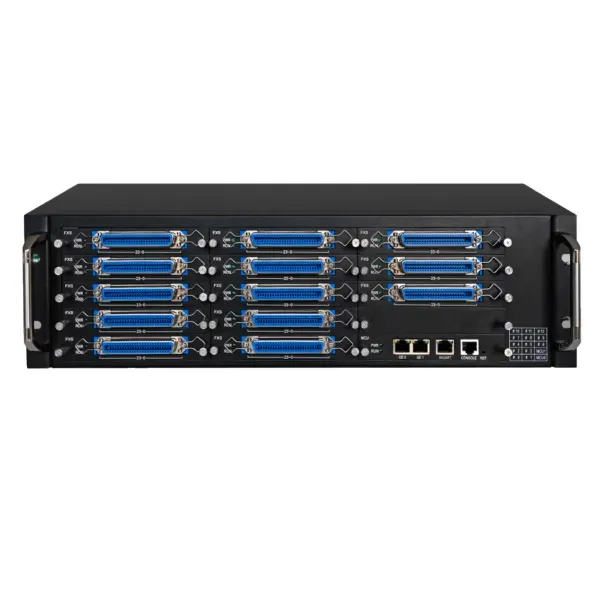
The Dinstar DAG3000-312S is designed for organizations that need to move a large installed base of analog extensions into a modern SIP or IP-PBX environment without replacing every handset, fax endpoint or analog line interface at once. Dinstar positions the platform as a high-density analog VoIP gateway in a compact 3U chassis, with support for up to 312 FXS voice interfaces through user boards and RJ21 connectivity. For hotels, campuses, hospitals, residential developments, service providers, industrial sites and large enterprises, this architecture can provide a controlled migration path from legacy analog telephony toward SIP-based communications while preserving useful field wiring and endpoint investments.
What the Dinstar DAG3000-312S is built to solve
Many large sites still depend on analog extensions because the endpoints are inexpensive, the cabling already exists, or specific rooms and devices do not need a full IP phone. Replacing hundreds of analog endpoints in one project can create avoidable capital cost, user disruption and recabling. The DAG3000-312S addresses that problem by aggregating analog subscriber lines and presenting them to a SIP-based telephony environment. This makes it relevant where a new IP PBX, softswitch or IMS/NGN platform must coexist with analog room phones, reception devices, fax machines, modems or legacy PBX interfaces.
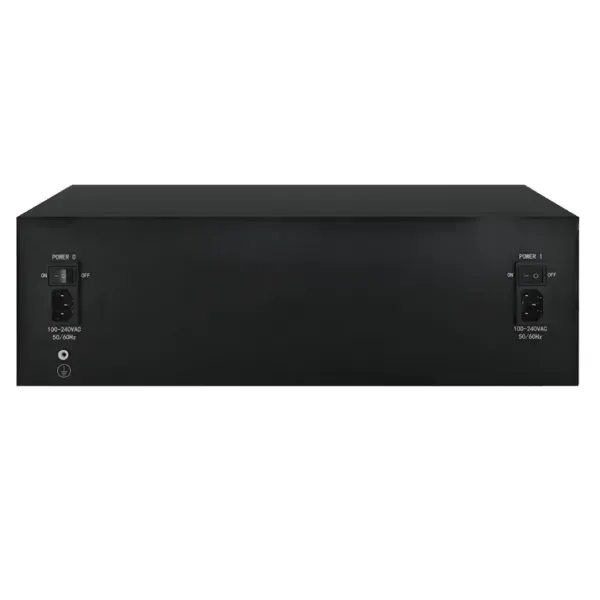
The official Dinstar product information identifies a maximum of 312 FXS ports in a 3U chassis, RJ21 50-pin telco interfaces, 312 concurrent calls for supported voice codecs, redundant power, dual bonded Gigabit Ethernet for failover and load balancing, up to 5 km line reach, SIP v2 interoperability, IPv4/IPv6, VLAN, VPN, QoS, TLS/SRTP, HTTPS, RADIUS, TACACS, SNMP, TR-069, auto-provisioning and Dinstar Cloud NMS. These capabilities make the platform suitable for projects where density, centralized management and resilience matter more than the convenience of deploying individual small gateways across many racks.
High-density migration
Consolidate large analog extension populations into a rack-based SIP gateway instead of distributing many small adapters. This can simplify inventory, rack planning, power, administration and fault isolation.
Voice and fax continuity
Support for standard voice codecs plus T.38 and T.30 bypass helps organizations retain analog voice and fax workflows while the core call-control platform moves to IP.
Operational resilience
Redundant power, Ethernet failover/load-balancing support, failover dial plans and centralized management tools are important for large environments where one chassis can serve many rooms or users.
Verified Dinstar DAG3000-312S technical highlights
| Gateway type | High-density FXS analog VoIP gateway |
| Maximum FXS density | Up to 312 FXS ports |
| Chassis | 3U |
| Analog interface | RJ21 50-pin telco |
| Concurrent calls | Up to 312 concurrent calls for supported voice codecs |
| Fax support | T.38 and T.30 bypass |
| Protocols / networking | SIP v2, IPv4/IPv6, VLAN, VPN and QoS |
| Security | TLS, SRTP, HTTPS, RADIUS, TACACS and access-control lists |
| Management | Web interface, auto-provisioning, SNMP, TR-069 and Dinstar Cloud NMS |
| Reliability features | Redundant power supplies, dual bonded GE failover/load balancing and failover dial plan |
Exact project configuration, installed user-board count, accessories, rack power arrangement, cabling and SIP platform compatibility should be confirmed before quotation. A high-density gateway can support a large subscriber population, so deployment planning should include failure-domain analysis, labeling, spare strategy and a documented rollback plan.
Compatibility, IP PBX integration and deployment planning
Dinstar states that the DAG3000-312S supports SIP v2 and is designed to interoperate with mainstream IP PBXs, softswitches and SIP servers. In a real project, standards support is the starting point rather than the final compatibility test. The deployment team should confirm the chosen registration model, codec policy, DTMF mode, number formatting, caller-ID behavior, fax method, supplementary services, failover behavior and any SIP normalization required by the call-control platform. Large migrations should be tested with a representative group of endpoints before hundreds of analog lines are moved.
For related architecture guidance, FourTeck Tanzania’s integrated IT and telecom overview explains how voice, switching, security and infrastructure should be planned together. Buyers can also use the FourTeck Tanzania technology shop to review broader business technology categories, the FourTeck Tanzania services page for implementation context, and the FourTeck Tanzania company page for information about the organization. The FourTeck Tanzania contact page is the verified path for quotation and requirement discussions.
Network design should isolate voice services appropriately, preserve predictable routing to the SIP platform, provide sufficient switching capacity and avoid accidental dependence on a single unmanaged access path. Because the gateway can terminate a very large number of analog endpoints, the Ethernet side is part of a critical communications path. VLAN design, QoS marking, DNS/NTP dependencies, firewall rules, monitoring, configuration backups and UPS-backed power should therefore be treated as operational controls rather than optional extras.
Who should consider the DAG3000-312S?
The strongest use case is a site with a large installed base of analog endpoints that must connect to a SIP-based communications core. Hospitality properties can use high-density FXS gateways when many guest rooms still use analog phones but the PBX core is being modernized. Hospitals, universities, residential developments and large campuses may have extensive copper distribution already in place. Service providers and managed-voice operators can also use the platform where many subscriber analog lines need to be delivered from centralized equipment.
The product is less appropriate when a site has only a handful of analog devices, when all users are ready for native SIP handsets, or when the physical copper topology makes centralized termination impractical. In those cases, a lower-density FXS gateway or direct IP-phone deployment may be simpler. The buying decision should therefore start with endpoint count, existing cabling, migration timing, fault-domain tolerance, rack space, power, target PBX, line-distance requirements and the operational preference for centralized versus distributed gateways.
Regional procurement and deployment guidance
Dinstar DAG3000-312S FXS VoIP Gateway Tanzania
Organizations in Tanzania evaluating the Dinstar DAG3000-312S should begin by mapping the analog estate rather than simply counting telephone handsets. A complete survey should identify how many analog extensions are currently active, whether any ports serve fax machines, modems, alarm dialers or other non-voice devices, how those lines are distributed through patch panels, and which call-control platform will replace or coexist with the legacy PBX. Because this chassis can support up to 312 FXS interfaces, a single deployment can represent a large operational dependency. Procurement should therefore include rack planning, UPS capacity, cable management, labeling, redundancy expectations and a tested migration sequence.
For Tanzania projects, the value of the DAG3000-312S is often strongest where existing copper infrastructure remains useful but the organization wants SIP-based call control, centralized numbering and easier integration between branches. Hospitality properties, campuses, large offices, residential developments, healthcare environments and institutional sites can benefit from preserving room wiring while modernizing the network core. Buyers should validate line lengths, connector requirements, PBX interoperability, fax behavior and DTMF before rollout. If the project spans several buildings, document which analog distribution frames connect to each gateway so faults can be isolated quickly.
A quotation request should include the required FXS count, the initial and future port target, the IP PBX or softswitch brand and version, expected concurrent-call behavior, fax requirements, rack location, power design, network topology and whether the customer needs installation, configuration or migration support. FourTeck Tanzania’s broader technology procurement guidance is relevant because gateway projects depend on switching, cabling, UPS and security. For organizations coordinating requirements beyond Tanzania, the FourTeck Africa site can provide a regional reference point without implying local stock or guaranteed service coverage.
Dinstar DAG3000-312S FXS VoIP Gateway Dar es Salaam
Dar es Salaam buyers frequently manage larger headquarters, hotels, multi-floor commercial buildings, educational institutions and distributed operational sites where analog telephony may still be deeply embedded. The DAG3000-312S can be useful when the business is replacing a traditional PBX with a SIP-based platform but wants to retain hundreds of analog room phones or existing copper runs. Rather than treating the gateway as a simple converter, IT teams should position it as part of the communications core. That means checking rack cooling, backup power, switch uplinks, VLANs, monitoring and the path between the gateway and the IP PBX.
A Dar es Salaam migration can be phased by floor, building or department. Start with a pilot group that includes ordinary analog phones and any special devices such as fax machines. Confirm caller ID, transfer behavior, call waiting, emergency dialing policy, DTMF, fax and line supervision. Once the pilot is stable, move additional blocks of ports using documented cutover sheets. The RJ21 high-density interface is efficient for large terminations, but it also requires disciplined labeling and distribution-frame documentation so technicians can trace each subscriber line quickly.
Procurement teams should ask for a bill of materials that clearly distinguishes the chassis, installed FXS capacity, power components, cabling or breakout requirements, rack accessories and any professional services. They should also define acceptance testing in advance. Useful tests include inbound and outbound calls, internal extension dialing, transfer, hold, fax where used, failover, alarm reporting and recovery after power interruption. FourTeck Tanzania’s verified contact page can be used to send the model, required port count, site details and target PBX so the quotation discussion begins with the correct scope.
Dinstar DAG3000-312S FXS VoIP Gateway Mwanza
For organizations in Mwanza, a high-density FXS gateway can support centralized telephony modernization where legacy copper remains installed across offices, hospitality properties, institutions or multi-building facilities. The decision should be driven by how many analog extensions genuinely need to remain. If the site has a mixed estate, it may be more economical to retain analog endpoints in bedrooms, common areas, warehouses or utility spaces while introducing IP phones for reception, managers and users who need richer features. The DAG3000-312S can become the bridge between those two operating models.
The gateway’s capacity means network and power planning deserve special attention. A WAN or LAN interruption affecting the SIP path can influence many users at once, so the design should consider resilient switching, dual Ethernet use, UPS-backed power, configuration backups and clear escalation procedures. Where the analog cable plant extends over long distances, line quality and distance should be tested on representative circuits instead of assuming every pair is healthy. Existing copper can be valuable, but old joints, moisture, poor terminations or undocumented cross-connects can create faults that are incorrectly blamed on the new gateway.
A Mwanza quotation should therefore include more than the gateway model. Buyers should provide port quantities, floor or building distribution, PBX details, any existing analog MDF/IDF design, fax requirements, expected growth and whether migration work is required. A simple spreadsheet that maps old extension, new SIP identity, RJ21 pair, building and user department can dramatically improve cutover control. Where the wider project also includes switches, cabling, racks or UPS equipment, these items should be assessed together so the voice platform is not commissioned on weak supporting infrastructure.
Dinstar DAG3000-312S FXS VoIP Gateway Arusha
Arusha deployments can be particularly relevant in hospitality, tourism, education, healthcare and multi-building commercial sites where large numbers of simple analog room or service phones remain practical. The DAG3000-312S allows the call-control layer to move to SIP while retaining analog endpoints that still meet user needs. For a hotel, for example, guest-room phones may not require full IP features, while reception, reservations and management can use richer SIP endpoints. A high-density FXS gateway helps those two endpoint strategies coexist within one telephony architecture.
Project design should start with the guest-room or extension count, growth allowance and the distribution of analog cabling. If multiple buildings are involved, determine whether copper already returns to a common equipment room or whether a distributed gateway design would reduce cable complexity. A centralized 312-port chassis is efficient when the physical plant is centralized, but it should not be forced into a topology where long or fragile copper runs create maintenance problems. The gateway’s support for SIP, fax, VLANs, QoS, security and centralized management should be paired with reliable switching and monitored power.
For procurement, ask vendors to separate product capability from project assumptions. Confirm the installed port count, user boards, connector format, rack depth, power feed, management approach and SIP interop testing. If the existing PBX has hospitality integration, billing, room status or other property-management dependencies, document those separately because the FXS gateway itself does not replace every PBX application. The gateway converts and manages analog subscriber access; the overall solution still depends on the PBX, network, numbering plan and applications that control the business workflow.
Dinstar DAG3000-312S FXS VoIP Gateway Dodoma
In Dodoma, organizations planning government, institutional, education, hospitality or enterprise telephony upgrades may need to preserve substantial analog infrastructure while moving core communications to IP. The DAG3000-312S is suited to projects where density matters and many analog extensions terminate near a centralized rack or distribution frame. Before specifying the maximum chassis capacity, teams should distinguish active ports from historical wiring. Old PBX installations often contain unused pairs, spare extensions and undocumented circuits. A verified port audit prevents over-purchasing and creates a cleaner migration plan.
Operational continuity should be designed explicitly. Determine how calls behave if the SIP server is unavailable, how the gateway is monitored, who has administrative access, how configuration backups are stored, and whether redundant power feeds are actually connected to independent UPS or power sources. Security controls such as HTTPS, TLS, SRTP, RADIUS, TACACS and access-control lists are useful, but they should be implemented as part of a broader network policy that restricts management access and documents administrator responsibilities.
For tender or quotation preparation, list the required analog capacity, service type for each group of ports, expected concurrent call volume, supported codecs, fax usage, target SIP platform, IP addressing, VLAN information, rack and power environment, and required installation scope. Include acceptance criteria such as successful registration, call completion, transfer, DTMF, fax where relevant, failover and monitoring. This turns the procurement from a model-number purchase into a measurable communications project and reduces ambiguity between equipment supply, configuration and migration responsibilities.
Dinstar DAG3000-312S FXS VoIP Gateway UAE
UAE projects often involve hotels, residential towers, campuses, hospitals, large enterprises and service providers with substantial analog-extension populations. The DAG3000-312S is relevant where those endpoints must be integrated with a modern SIP core without a full handset replacement. High-density aggregation can reduce the number of gateway appliances in a rack and simplify centralized administration. However, the business case should compare the cost of retaining analog endpoints against the operational benefits of moving selected users to native IP phones.
The gateway’s official feature set supports a design focused on resilience and security: redundant power, Ethernet failover/load balancing, SIP interoperability, TLS/SRTP, HTTPS, RADIUS, TACACS, IPv4/IPv6, VLAN and QoS. In a UAE enterprise environment, these features should be aligned with the organization’s network standards rather than left at defaults. Management interfaces should be restricted, configuration should be backed up, firmware policy should be documented and voice VLANs should be monitored. Where multiple properties are standardized, consistent templates can reduce deployment variance across sites.
For cross-market procurement or projects headquartered in the Emirates, buyers can reference FourTeck UAE for related regional technology requirements. The gateway quotation should still specify the actual country of deployment, rack and power conditions, installed capacity, SIP platform, cabling method and implementation scope. If the customer plans a regional architecture spanning Tanzania and the UAE, standardizing number plans, SIP security, gateway templates and monitoring methods can make support easier while allowing each site to retain the port density appropriate to its local building.
Dinstar DAG3000-312S FXS VoIP Gateway Uganda
Uganda-based organizations considering the DAG3000-312S should assess whether their analog lines are centralized enough to justify a high-density chassis. Universities, hospitals, hotels, large offices, residential developments and service-provider networks can all have significant copper estates, but the physical topology differs. If many analog pairs return to a central MDF, a 3U high-density gateway can be highly efficient. If the analog endpoints are spread over distant buildings without centralized copper, multiple lower-density gateways may be operationally simpler.
The migration plan should identify extension blocks, cabling routes, target SIP identities and which features each user group requires. The gateway can support standard telephony functions, but the behavior users experience is also controlled by the IP PBX or softswitch. Test call transfer, caller ID, voicemail integration, DTMF, fax and emergency numbers with the intended platform before wide rollout. Because a large number of endpoints can depend on one chassis, resilience, spares, UPS design and management access should be agreed in the project documentation.
Regional buyers can use FourTeck Uganda for Uganda-specific technology enquiries. For a strong quotation, provide the required port count, desired initial board population, expected growth, IP-PBX platform, analog wiring distribution, network topology, power availability and support expectations. This information allows the supplier to distinguish a simple equipment request from a migration project that also needs cabling, rack work, configuration, testing and documentation.
Dinstar DAG3000-312S FXS VoIP Gateway Kampala
Kampala organizations often run headquarters, hotels, campuses and mixed-use facilities where analog phones remain common even after the data network has been modernized. The DAG3000-312S provides a practical bridge when the organization wants SIP-based call control while keeping many analog endpoints. A successful project should distinguish user-facing requirements from infrastructure requirements. Users care about reliable dialing, transfer, voicemail and call quality, while IT teams must manage SIP registration, VLANs, security, monitoring, power and cabling.
Port density is an advantage only when the surrounding design is disciplined. Hundreds of analog circuits should be terminated and labeled systematically. Use consistent numbering between the physical pair, gateway port, extension and user or room. Document the IP address, SIP server, firmware version, gateway template and backup location. In large hospitality or residential deployments, this documentation becomes essential when a room reports a fault because technicians need to know whether the issue is the handset, copper pair, gateway port, SIP registration or PBX routing.
For Kampala procurement, include the current PBX type, migration objective, analog extension count, building distribution, fax/modem usage, and any requirements for staged cutover. Define whether installation and configuration are part of the quotation. Where the gateway is only one component of a broader network upgrade, switching capacity, firewall policy, UPS, racks and cabling should be specified in the same project plan. This reduces the risk that the telephony cutover is delayed by infrastructure that was assumed to be available but was never validated.
Dinstar DAG3000-312S FXS VoIP Gateway Arua
For Arua deployments, the key question is whether a centralized high-density gateway is preferable to a distributed approach. Sites with a main equipment room and large bundles of existing analog copper can benefit from the DAG3000-312S because it consolidates subscriber access into one managed chassis. Sites with smaller buildings separated by distance may prefer smaller gateways positioned closer to endpoint clusters. The correct design depends on cable topology, line condition, network resilience and the cost of maintaining copper versus extending the IP network.
Where the DAG3000-312S is selected, project planning should include line testing before migration. Existing analog environments can hide open circuits, noisy pairs, bridged taps and undocumented changes. Testing representative routes helps separate old cabling problems from gateway commissioning issues. The product’s stated long-line capability can be useful, but real performance depends on the actual cable plant and endpoint load. It is better to validate field conditions than to assume a theoretical distance guarantees operation on every circuit.
Arua buyers should also consider remote administration and support logistics. Centralized management, SNMP/TR-069 and Dinstar Cloud NMS can improve visibility, but secure remote access, backup procedures and alert ownership still need to be defined. For quotations, provide site location, rack readiness, power availability, network connectivity, analog port quantity and target SIP platform. If the deployment supports critical operations, ask for a spare strategy and documented replacement procedure so a hardware fault does not become an extended voice outage.
Dinstar DAG3000-312S FXS VoIP Gateway Mbarara
Mbarara organizations planning voice modernization can use the DAG3000-312S where the existing analog cable estate is still valuable and a large number of extensions must be retained. Healthcare facilities, hospitality properties, education campuses and larger commercial operations are examples where not every user needs an IP handset. A high-density gateway lets the organization modernize the PBX core first and decide separately when or whether individual analog endpoints should be upgraded.
The migration should be designed around service groups. Reception, security, guest rooms, administrative offices, fax lines and utility phones may have different call flows and testing requirements. Assigning these groups to documented port ranges can make future troubleshooting easier. The SIP platform should be configured with clear number plans, and the network should provide stable routing, time synchronization and QoS. If the site uses two network paths, test actual failover rather than assuming it works because the hardware supports redundant Ethernet features.
Procurement should include a readiness checklist covering rack space, ventilation, UPS, grounding, network ports, IP addressing and RJ21 termination. Confirm whether the quotation includes user boards at the required quantity or only the base chassis. The requested capacity should reflect both day-one extensions and realistic growth, but there is no benefit in paying for unused capacity without a plan. A phased board population can be sensible when expansion is expected over several years and the product configuration supports the intended growth path.
Dinstar DAG3000-312S FXS VoIP Gateway Gulu
Gulu deployments benefit from the same planning discipline as larger urban projects: confirm the analog endpoint population, physical cable paths and SIP platform before ordering. The DAG3000-312S can centralize hundreds of analog lines, but this also concentrates operational impact. The design should therefore account for power stability, network availability, environmental conditions, remote management and the practical time required to replace or restore service if a chassis problem occurs.
Where technical support must be performed from another city or country, documentation becomes especially important. Every gateway should have a recorded asset identifier, management address, firmware version, configuration backup, port map and escalation contact. Remote monitoring can show device status, but field technicians still need to know how the analog distribution is labeled. A simple port map linking extension number, room or department, cable pair and gateway port can save hours during fault isolation.
For a Gulu quotation, buyers should state whether they need equipment only or a complete migration service. Equipment-only supply may be appropriate when the customer has an experienced telephony team. A managed project can be more suitable when there is an undocumented legacy PBX, mixed fax usage or uncertain cabling. Regardless of delivery model, acceptance testing should cover representative calls, feature behavior, fax if relevant, SIP failover, Ethernet failover, configuration recovery and monitoring. These tests prove the operational design rather than only confirming that the chassis powers on.
Dinstar DAG3000-312S FXS VoIP Gateway Kenya
Kenyan enterprises and service providers may consider the DAG3000-312S for hotels, residential projects, campuses, hospitals, call environments and large businesses that need to integrate extensive analog endpoint estates with SIP. The commercial decision should compare a high-density centralized gateway with lower-density distributed alternatives. A single 312-port chassis can reduce appliance count, but it also creates a larger failure domain. The right architecture depends on building layout, cabling, redundancy requirements and operational support practices.
Organizations standardizing communications across East Africa can also use one gateway model as part of a repeatable design while varying the installed FXS capacity per site. Standard templates for SIP security, codec preference, VLANs, number manipulation, monitoring and backups can simplify multi-country support. Each deployment should still be validated against the local PBX, trunk provider and cable plant because standards compliance does not remove all interoperability differences.
For Kenya-specific procurement discussions, buyers can reference FourTeck Kenya. A useful request for quotation should state the exact model, required FXS count, chassis quantity, PBX or softswitch, rack environment, power requirements, target sites and whether professional services are required. If the gateway forms part of a wider branch modernization, include switching, firewall, UPS and structured-cabling requirements so dependencies are visible in one project scope rather than split across unrelated quotations.
Dinstar DAG3000-312S FXS VoIP Gateway Kuwait
Kuwait projects with large hotels, residential compounds, hospitals, enterprises or institutional campuses may retain hundreds of analog extensions even when the core voice system moves to SIP. The DAG3000-312S can provide a clean migration boundary by centralizing those analog interfaces in a 3U chassis. This allows the business to preserve endpoint investments while modernizing routing, numbering and call-control functions on an IP PBX or softswitch.
High-density deployments should be engineered for maintainability. Rack access, cable dressing, RJ21 breakouts, port labeling, power feed separation and network redundancy are all part of the solution. Where two power supplies are used, they should connect to the intended independent power or UPS feeds rather than both terminating on one unprotected source. Where dual Ethernet is used, switch topology and failover behavior should be tested during commissioning. Security features such as TLS/SRTP, HTTPS and AAA integration should be applied in accordance with the customer’s voice-security policy.
Kuwait buyers can use FourTeck Kuwait for Kuwait-focused enquiries. A complete quotation request should include the number of analog endpoints, site type, target PBX, fax requirements, installed board capacity, redundancy expectations, and whether configuration, cutover and documentation are required. For complex hospitality environments, also list any property-management or billing integrations handled by the PBX so the project team can distinguish gateway functions from application-layer requirements.
Dinstar DAG3000-312S FXS VoIP Gateway Ghana
Ghana-based organizations evaluating a high-density FXS gateway should focus first on the economics of preserving analog endpoints. In hotels, campuses, healthcare facilities, residential projects and larger enterprises, the existing copper distribution can represent a significant investment. If the cabling remains serviceable, the DAG3000-312S can extend its useful life while the core voice platform migrates to SIP. This can support a phased strategy in which feature-rich users receive IP phones and low-complexity locations remain analog.
The design should still account for the operational impact of concentration. Hundreds of lines depending on one chassis require dependable power, network paths, monitoring and a spare or recovery plan appropriate to the business. If voice service is business-critical, test not only normal calls but also restart recovery, Ethernet failover, SIP server failover and configuration restoration. A migration project should be scheduled in manageable blocks so faults can be traced without affecting the entire user base at once.
For procurement, Ghana buyers should provide clear capacity and integration information instead of requesting only a generic “312-port gateway price.” The quotation should specify day-one port count, future expansion, IP PBX or softswitch, line distances, rack and UPS readiness, management requirements, fax usage and required services. Where equipment will support several buildings, include a simple topology. This allows suppliers and engineers to determine whether one centralized chassis is suitable or whether multiple gateways would create a more maintainable and resilient architecture.
Dinstar DAG3000-312S FXS VoIP Gateway Nigeria
Nigeria has many large enterprise, hospitality, residential, education and healthcare environments where analog endpoint populations can remain substantial long after data networks have moved to IP. The DAG3000-312S is relevant when the business wants to consolidate analog subscriber access and connect it to a SIP-based communications core. The strongest business case comes from avoiding unnecessary handset replacement and reusing functional copper while gaining centralized call control.
Power and network resilience should be central to the design. A high-density voice gateway should be connected to appropriate UPS infrastructure, monitored network ports and redundant paths where required. The official hardware supports redundant power and bonded GE failover/load balancing, but those capabilities must be implemented correctly in the surrounding environment. The SIP platform should also have a defined resilience strategy so the gateway does not simply shift the single point of failure from the analog PBX to one IP server.
Nigeria procurement teams should request a configuration-specific bill of materials. Confirm the chassis, installed FXS boards, connectors, power modules, rack accessories, cabling or breakout components and any required support services. Include PBX details, extension count, fax lines, codec requirements and migration sequence. For large multi-site businesses, using consistent gateway configuration templates and documentation standards across branches can reduce operational variance even if each site has different port quantities and network providers.
Dinstar DAG3000-312S FXS VoIP Gateway Seychelles
Seychelles projects can involve resorts, hospitality groups, institutional facilities and distributed business sites where existing analog room phones remain useful while the communications core is upgraded. A high-density gateway such as the DAG3000-312S can be attractive for properties with many guest rooms and a centralized telecom room. The organization can modernize the PBX layer while avoiding a simultaneous replacement of every analog handset and room cable.
Island logistics make maintainability and spares planning particularly important. A deployment should document the exact installed user-board capacity, power supply arrangement, network interfaces, connector method and configuration backup. The customer should decide which components need to be held as spares and how quickly replacement equipment can be obtained. Remote management is useful, but physical faults still require clear local procedures and labeled cabling so on-site staff can identify the correct port and pair.
For a resort or hotel, the gateway should be tested with normal room calls, reception transfer, voicemail or PBX features, fax where used, and any operational call flows required by the property. If the property-management system integrates with the PBX, that application workflow should be tested separately because the gateway’s role is analog access, not hotel application logic. Procurement should therefore include both telephony and operational stakeholders so room numbering, cutover timing and guest-impact controls are agreed before installation begins.
Buying checklist for the Dinstar DAG3000-312S
Confirm day-one FXS ports, growth target and whether the proposed chassis includes the required user boards.
Map RJ21 termination, MDF/IDF distribution, line distances and the health of existing copper before cutover.
Record PBX/softswitch brand, version, registration method, codecs, DTMF, number plan, fax behavior and failover requirements.
Confirm rack space, cooling, UPS, redundant power use, switch connectivity, VLAN and management access.
Frequently asked questions
How many FXS ports does the Dinstar DAG3000-312S support?
Dinstar specifies support for up to 312 FXS voice interfaces in a 3U chassis using modular user boards. The actual installed capacity in a quotation should be confirmed because a chassis may be supplied with a specific board population rather than every port fitted from day one.
Can it connect analog phones to an IP PBX?
Yes. That is a primary use case. The gateway provides FXS interfaces for analog endpoints and SIP connectivity toward IP PBXs, softswitches and SIP servers. Exact feature behavior should be tested with the intended PBX before large-scale deployment.
Does the DAG3000-312S support fax?
Dinstar lists T.38 and T.30 bypass support. Fax performance can still depend on the end-to-end SIP path, PBX, trunk and network conditions, so organizations with critical fax workflows should perform real fax tests during pilot deployment.
Is the gateway suitable for hotels?
It can be suitable for hotels with many analog room phones and a centralized telecom room. The gateway can retain analog endpoints while the PBX core moves to SIP. Property-management, billing or room-status integrations are functions of the wider telephony platform and should be checked separately.
What information is needed for a quotation?
Provide the exact model, required FXS port count, quantity of chassis, PBX or softswitch, site location, rack and power details, analog wiring topology, fax requirements, growth plans and whether installation, configuration, migration, testing or support are required.
Related FourTeck resources
For Tanzania planning, review the FourTeck Tanzania integrated technology overview, the business technology shop, the services page, the about page and the quotation contact page. These pages help place the gateway within broader IP telephony, networking, structured cabling, UPS, security and implementation requirements.
Regional organizations can also reference FourTeck UAE, FourTeck Kenya, FourTeck Uganda, FourTeck Kuwait and FourTeck Africa for related market-specific technology requirements.
Decision recap
Choose the Dinstar DAG3000-312S when the project needs to connect a very large analog endpoint base to a SIP environment, values centralized management and can support the gateway with appropriate rack, power, network and cabling infrastructure. Consider a lower-density gateway when analog ports are few or highly distributed. Consider native IP phones where users need richer endpoint features and the cabling/network environment is ready for them.
The most important purchasing decision is not simply whether the chassis can support 312 ports. It is whether the proposed installed capacity, PBX integration, analog cable topology, resilience model and operational support process are suitable for the site.
Consultation and quotation checklist
Before requesting a quote, prepare: required FXS ports today; expected growth; number of chassis; target IP PBX/softswitch; existing analog PBX details; fax or modem requirements; cable distribution and approximate line distances; rack space; UPS availability; network switch and VLAN information; desired redundancy; management method; migration timing; and the scope of installation, configuration, testing and documentation.
Send those details through the verified FourTeck Tanzania contact page so the discussion can focus on configuration fit and project scope instead of a generic model-only price request.



Reviews
There are no reviews yet.