
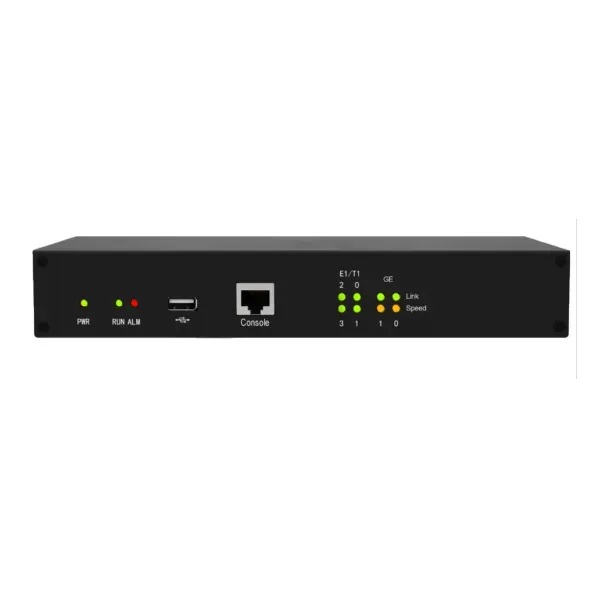
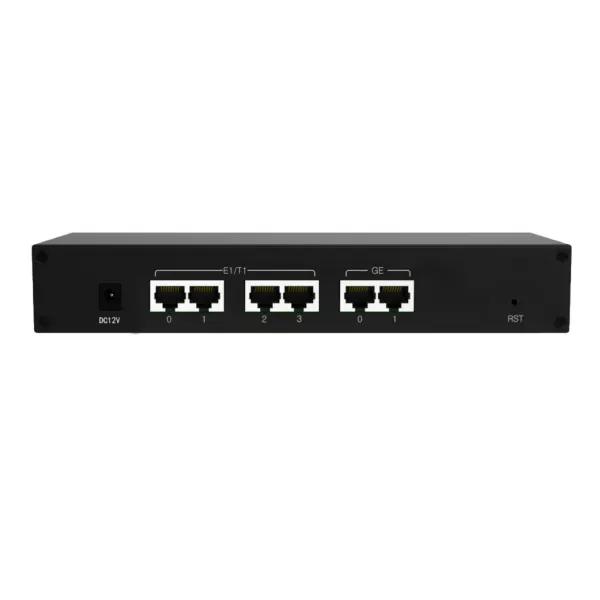
Dinstar MTG200 Digital VoIP Gateway
Modernize business telephony without discarding a working legacy PBX or digital PSTN connection. The Dinstar MTG200 bridges E1/T1 voice infrastructure with SIP-based VoIP, helping organizations plan a controlled migration between traditional trunks and IP communications. It is positioned by DINSTAR as a compact, cost-effective trunk gateway for SMEs and open-source VoIP environments, with support for ISDN PRI, SS7, R2 MFC, multiple SIP trunks, fax, flexible call routing and centralized management.
Best-fit discussion: E1/T1-to-SIP migration, legacy PBX integration, SIP trunk interworking, branch voice modernization and mixed PSTN/IP environments.
For a quotation, provide the number of E1/T1 circuits, signaling type, PBX/IP-PBX platform, required concurrent calls and preferred migration approach.
What is the Dinstar MTG200?
The Dinstar MTG200 is a digital VoIP trunk gateway built to interconnect traditional E1/T1 telephony and SIP-based IP networks. In a typical deployment, it can sit between an existing PBX or PSTN digital trunk and a VoIP platform, translating signaling and media so an organization can retain useful legacy infrastructure while introducing SIP trunks, an IP-PBX or an IP voice network. This makes the MTG200 relevant where a full telephony replacement would be disruptive, expensive or unnecessary.
DINSTAR’s current product information identifies the MTG200 family with 1/2 E1/T1 configurations and support for up to 60 simultaneous calls. The platform supports SIP v2.0, SIP-T, ISDN PRI, Q.Sig, optional SS7, R2 MFC, fax using T.38 or pass-through, multiple voice codecs, VLAN tagging, SNMP, web configuration, syslog, network capture and centralized management. Because exact port availability and optional signaling can depend on the ordered variant and commercial bundle, procurement should always match the required interface count and signaling method before purchase.
E1/T1 to SIP migration
Preserve digital trunk connectivity while moving call control or carrier connectivity toward SIP-based systems.
Flexible routing
Use routing and number-manipulation logic to direct calls between PSTN and IP domains according to deployment requirements.
Legacy protocol support
Interwork with ISDN PRI and, where correctly licensed or supported for the variant, SS7 and R2 MFC environments.
Operational visibility
Web management, SNMP, syslog, call statistics, packet capture and configuration backup support structured administration.
Verified Dinstar MTG200 capabilities
| Area | Verified capability | Practical buying relevance |
|---|---|---|
| Digital interfaces | E1/T1, RJ48-family interface depending on model revision | Confirm circuit type, impedance and ordered port count before deployment. |
| Call capacity | Up to 60 simultaneous calls | Size against busy-hour concurrency, not simply extension count. |
| PSTN signaling | ISDN PRI, Q.Sig, SS7 and R2 MFC support as documented; some functions are optional | Match the gateway configuration to the incumbent carrier or PBX signaling. |
| VoIP signaling | SIP v2.0, SIP-T, SIP/IMS registration, peer/access trunk modes | Useful for IP-PBX, softswitch and SIP-trunk interworking. |
| Voice & fax | G.711 A/µ-law, G.723.1, G.729AB, iLBC, AMR; T.38 and pass-through fax | Codec and fax mode should be aligned with provider and PBX policies. |
| Management | Web GUI, SNMP v1/v2/v3, syslog, network capture, backup/restore, firmware update and centralized management | Supports troubleshooting, monitoring and operational handover. |
| Routing | PSTN-IP, IP-PSTN and additional interworking paths; extensive dialing rules | Allows staged migration and controlled call-flow design. |
Who should consider the MTG200?
The MTG200 is most relevant when a business still has a useful E1/T1-based PBX, carrier circuit or telephony application but wants to adopt SIP without redesigning every endpoint at once. It can also be considered where an IP-PBX needs to connect to a digital PSTN service, where a call environment is consolidating trunks, or where a migration plan requires temporary coexistence between traditional and IP voice systems.
It is not automatically the right choice for every VoIP project. A site using only analog FXO/FXS lines needs a different gateway class. A high-density carrier or large call-center environment may need a higher-capacity DINSTAR MTG model. A cloud-only deployment with no E1/T1 requirement may not need a digital gateway at all. Selecting the MTG200 should therefore begin with the actual carrier handoff, PBX interface, signaling and concurrency requirements.
Compatibility and integration planning
DINSTAR positions the MTG200 for interoperability with Asterisk, FreeSWITCH and mainstream VoIP platforms. Compatibility in a production deployment, however, should be validated at the signaling and dial-plan level rather than assumed from the word “SIP.” The project team should document codec preferences, DTMF transport, caller-ID format, number presentation, inbound and outbound prefixes, SIP authentication or peer mode, NAT behavior, early media, fax handling, failover behavior and the exact digital trunk protocol on the legacy side.
For deployments that touch a broader business voice environment, FourTeck Tanzania’s IP PBX and VoIP solution context helps buyers consider the gateway together with call routing, extensions, reception flows, queues and network readiness. The technology services page is useful when the requirement includes design, configuration, testing, documentation or integration rather than a hardware-only purchase. Customers can also review the FourTeck Tanzania technology shop for surrounding infrastructure and use the Tanzania contact page to submit a project-specific request.
Deployment checklist before ordering
Confirm E1 or T1, number of physical trunks, line coding, framing and connector/cabling requirements.
Record whether the circuit uses PRI, Q.Sig, R2 MFC or an SS7 requirement and whether optional features are needed.
Document the IP-PBX, softswitch or SIP provider, authentication mode, codecs, transport and numbering format.
Estimate busy-hour simultaneous calls so the project stays within the gateway and trunk capacities.
Prepare IP addressing, VLANs, firewall rules, QoS, NTP, monitoring and secure management access.
Plan inbound, outbound, transfer, DTMF, CLI, fax, failover and representative long-duration call tests.
Dinstar MTG200 Digital VoIP Gateway Tanzania
For organizations evaluating the Dinstar MTG200 Digital VoIP Gateway in Tanzania, the main value is the ability to modernize telephony in controlled stages. Many business voice environments are not greenfield deployments: they may include a legacy PBX, an existing E1 digital trunk, SIP services introduced later, branch connectivity, call recording, reception workflows and a network that carries both data and voice. The MTG200 can become the interworking point between those domains when its capacity and signaling match the requirement. Instead of replacing every telephone and PBX component immediately, a project can preserve useful assets while moving selected traffic toward SIP.
Tanzania buyers should begin with the carrier handoff and PBX interface. Confirm whether the circuit is E1, the signaling used on that circuit, how many channels are active, whether caller ID and direct-dial ranges are present, and whether fax, modem or POS traffic remains operationally important. The official MTG200 feature set includes PRI, R2 MFC, optional SS7, T.38/pass-through fax and modem/POS support, but those capabilities need to be mapped to the exact telecom service rather than assumed to work identically in every network. The same care applies to SIP: codec order, DTMF, caller-number formatting and routing rules should be documented before cutover.
Network readiness is equally important. Voice quality depends on latency, loss, jitter and correct QoS, while gateway administration depends on secure management access and reliable monitoring. A Tanzania deployment plan should therefore include VLAN design where appropriate, firewall policy, time synchronization, backup of the gateway configuration, syslog or SNMP monitoring and a recovery plan. If the gateway is introduced into a site with an existing IP-PBX, the project should also test emergency and priority call paths, business-hours routing, inbound DID mapping, transfer behavior and failover scenarios.
For procurement, request a quotation with the exact E1/T1 port requirement, the signaling type, target SIP platform, expected call concurrency and any optional protocol need. That gives the supplier enough detail to confirm the appropriate MTG200 variant and avoid a generic quote that may not fit the live circuit. Organizations building a broader regional voice strategy can also review FourTeck Africa technology solutions for cross-market planning.
Dinstar MTG200 Digital VoIP Gateway Dar es Salaam
Businesses in Dar es Salaam often have the most complex telephony integration requirements in Tanzania because headquarters, commercial offices, contact teams, hospitality sites, logistics operations and service organizations frequently combine established PBX investments with newer SIP or IP-PBX systems. The Dinstar MTG200 can be evaluated as a bridge for an E1/T1-based environment that needs to connect to SIP while maintaining operational continuity. The project question is not simply whether the gateway supports SIP; it is whether the gateway matches the existing digital trunk and the intended call flows.
A Dar es Salaam implementation should start with a live telephony audit. Record the current PBX make and interface, E1 circuit details, incoming number ranges, outbound presentation rules, hunt groups, fax endpoints, call recording dependencies and any business application that listens for DTMF. Then map the intended state: perhaps a new IP-PBX will take control of extensions while the existing carrier circuit remains, or perhaps an older PBX will remain active while outbound traffic moves through a SIP provider. The MTG200’s flexible routing and dial-rule capabilities can support these staged scenarios when configured deliberately.
Resilience also deserves attention in a busy commercial site. The gateway should be connected to suitable UPS-backed power and a managed LAN, with configuration backups stored securely. Voice VLANs and QoS can help protect call traffic from large data transfers, but network design should reflect the actual topology rather than rely on default settings. Monitoring through SNMP or syslog can provide useful operational visibility, while packet capture can assist engineers during troubleshooting. Test calls should include local and international patterns used by the business, inbound DIDs, transfers, IVR selections, fax if required and realistic concurrent-call conditions.
When requesting an MTG200 quote for Dar es Salaam, include a photo or description of the existing telecom handoff, the number of E1/T1 ports, signaling, channel count, SIP platform and whether installation or configuration assistance is required. This supports accurate solution design without unsupported assumptions about stock, carrier behavior or site readiness.
Dinstar MTG200 Digital VoIP Gateway Mwanza
For Mwanza organizations, a digital VoIP gateway can be especially useful when the business has a stable legacy telephony system but wants better integration with IP communications, centralized routing or a new SIP service. The Dinstar MTG200 allows a project team to keep an E1/T1-side connection while introducing SIP on the IP side, which can reduce the need for a disruptive all-at-once PBX replacement. This is relevant to established offices, hotels, healthcare facilities, education environments, distribution operations and growing multi-site businesses that need a practical migration path.
The first design step in Mwanza should be to identify whether the voice requirement is genuinely digital trunk interworking. If the site uses analog PSTN lines, cellular gateways or purely cloud calling, another gateway family may be more appropriate. If an E1/PRI or compatible digital connection is present, document the signaling and the number of active channels. Next, review the target IP system and decide whether the MTG200 will route all calls or only selected prefixes. Number manipulation, dial rules and trunk priorities should be written down before implementation so business-critical calls do not depend on trial-and-error configuration.
For sites outside a large head-office environment, remote manageability can matter as much as raw capacity. The MTG200’s web interface, SNMP, syslog, backup/restore and centralized-management capabilities can help administrators maintain visibility without being physically next to the device for every diagnostic task. Secure management practice remains essential: use controlled administrator access, avoid exposing the management interface directly to the public internet, keep configuration backups and coordinate firmware changes with maintenance windows.
A good quotation request from Mwanza should state the legacy PBX or carrier interface, required E1/T1 port count, expected simultaneous calls, SIP destination, codec requirements and whether fax or modem/POS traffic is still needed. This information helps confirm whether the MTG200 is appropriately sized and whether optional signaling functions must be considered.
Dinstar MTG200 Digital VoIP Gateway Arusha
Arusha businesses in hospitality, travel, professional services, NGOs, education and multi-office operations may encounter a mixed telephony environment where an older PBX still serves users reliably but newer communications platforms are SIP based. The Dinstar MTG200 is designed for this kind of interworking challenge. By connecting the E1/T1 side of a traditional telephone system or service to a SIP network, it can support a phased transition that protects existing investments while enabling a more modern call-routing architecture.
Hospitality and service-oriented sites should pay particular attention to call-flow continuity. Existing extension plans, operator consoles, front-desk behavior, wake-up or PMS-related integrations, fax endpoints and external-number presentation can all be affected when a trunk path changes. Although the MTG200 provides the gateway function, the success of the deployment depends on a documented dial plan and a test sequence that reflects real user workflows. It is sensible to stage the change during a defined maintenance window and preserve a rollback plan until representative inbound and outbound calls are verified.
Network design should be assessed before moving production traffic. The gateway needs reliable Ethernet connectivity to the IP voice platform, and call quality can suffer if voice packets share a congested path without appropriate prioritization. Where the site has multiple buildings or remote branches, determine whether the SIP peer is local, centrally hosted or reached over a VPN/WAN link. The answer affects latency, firewall policy, routing and troubleshooting. SNMP and syslog can be integrated into existing monitoring practices so the gateway becomes a managed component rather than an isolated appliance.
For an Arusha quotation, provide the current carrier or PBX trunk type, E1/T1 quantity, signaling, concurrent call demand, IP-PBX or softswitch details and any special fax, modem or POS requirement. This avoids overbuying and helps distinguish a straightforward PRI-to-SIP migration from a project that requires broader telephony redesign.
Dinstar MTG200 Digital VoIP Gateway Dodoma
Organizations in Dodoma evaluating a Dinstar MTG200 should treat the gateway as part of a telephony migration architecture, not simply as another network appliance. The MTG200 is useful when E1/T1 digital voice infrastructure must interoperate with a SIP-based system. Government-facing businesses, institutions, professional offices, education sites and expanding enterprises may have legacy PBX assets that still serve users effectively while strategic plans move toward IP communications. A gateway can provide a controlled point of transition.
The design should start with the service boundary. Determine which device currently terminates the digital trunk, whether the PBX operates as network or user side for PRI, the numbering plan, and how inbound calls are distributed. If the migration introduces an IP-PBX, decide whether the MTG200 will terminate the carrier trunk and pass calls to SIP, or whether it will connect an existing digital PBX to a SIP provider. These are different topologies and should be documented before configuration. If SS7 or R2 MFC is involved, the exact requirement should be confirmed because protocol support and optional functions cannot be inferred from an E1 connector alone.
Operational planning in Dodoma should include protected power, secure rack placement, configuration backup and monitoring. Voice services often remain critical even when other IT services are unavailable, so the gateway and its connected switch, PBX and router should be considered together when sizing UPS support. Administrators should also define who can access the gateway, how changes are approved, where logs are collected and how firmware upgrades are tested. These practices make troubleshooting faster and reduce accidental configuration drift.
A procurement request should list the digital circuit type, current PBX, target SIP system, active channels, peak concurrency and required services such as fax. If multi-site expansion is expected, include that information as well so call routing, numbering and future capacity can be considered from the beginning rather than added after deployment.
Dinstar MTG200 Digital VoIP Gateway UAE
The Dinstar MTG200 can also be considered for UAE projects that need to interconnect E1/T1 or legacy PBX infrastructure with SIP-based telephony. In mature enterprise environments, migration often happens in phases because existing numbers, reception workflows, contact-center applications or PBX investments cannot be replaced immediately. A digital trunk gateway creates an interworking layer that allows the organization to modernize call control while preserving selected traditional interfaces.
UAE deployments should begin with the telecom service and regulatory/commercial conditions of the selected carrier. Technical compatibility is not the same as permission to use a particular service architecture, so customers should confirm their carrier’s supported handoff, SIP service terms and required routing model. On the gateway itself, administrators can plan SIP trunking, codec selection, DTMF mode, call routing, number manipulation and monitoring. If the E1 side uses PRI, verify framing, line coding and signaling parameters; if another protocol is involved, ensure that the ordered gateway configuration supports it.
High-quality implementation also requires network engineering. Place voice traffic on an appropriate LAN design, apply QoS where congestion is possible, secure the management interface and maintain configuration backups. Test inbound and outbound calls across the number plan, including transferred calls, IVR digits, external caller ID and fax where relevant. The MTG200 supports multiple maintenance and diagnostic functions, but their value depends on disciplined monitoring and documentation.
For UAE requirements involving broader infrastructure, customers can review FourTeck UAE technology solutions or the specialist IP PBX Dubai resource. These regional references are useful when an MTG200 requirement forms part of a larger IP telephony deployment rather than a standalone hardware purchase.
Dinstar MTG200 Digital VoIP Gateway Uganda
Uganda organizations considering the Dinstar MTG200 typically have one of two needs: connect an existing E1/T1 telephony environment to a SIP platform, or retain an established PBX while migrating carrier or inter-office calls toward IP. The gateway is designed to translate between these domains and can therefore be a useful component in a phased communications upgrade. It should be selected only after the project team confirms the physical trunk, signaling type and expected concurrent call load.
A nationwide or multi-branch Uganda deployment should also consider where call control will live. If the SIP PBX is centralized in Kampala while branches connect over WAN or VPN links, voice quality becomes dependent on those links as well as the gateway. Latency, packet loss, jitter, firewall policies and QoS should be checked before production cutover. If each branch has local call control, routing design may instead focus on least-cost paths, fallback behavior and consistent numbering across sites. The MTG200’s routing functions are useful, but the dial plan should be documented centrally to avoid overlapping rules.
Legacy interoperability deserves equal attention. PRI variants, R2 signaling and optional SS7 requirements should be confirmed with the telecom service provider or PBX documentation. Fax and modem/POS support may matter to organizations that still operate older line-dependent applications; these should be tested individually rather than treated as ordinary voice calls. Administrators can use web management, logs, SNMP and packet capture during commissioning and ongoing troubleshooting.
For Uganda-specific solution planning, the FourTeck Uganda site provides a regional technology reference. A complete quotation request should include port count, signaling, SIP platform, call concurrency, branch topology and whether configuration or migration support is required.
Dinstar MTG200 Digital VoIP Gateway Kampala
Kampala enterprises, contact teams, hotels and service organizations often run mixed-generation communications infrastructure. A legacy PBX may still provide stable extension service while SIP trunks, remote users and IP-PBX platforms are introduced for flexibility. In that situation the Dinstar MTG200 can act as a practical digital-to-IP bridge, allowing the migration plan to focus on call flows and service continuity rather than immediate replacement of every telephone component.
Before ordering, identify the exact digital connection. An E1 physical interface can carry different signaling methods, and the gateway must be configured to match. The project team should collect the PRI or other signaling settings, active channel count, incoming number range, outbound caller-ID behavior, route patterns and any special services. On the SIP side, confirm whether the peer is an IP-PBX, carrier SBC or softswitch and specify transport, codec, DTMF, NAT and authentication requirements. This information forms the basis of a clean test plan.
Kampala sites with high call volumes should use real busy-hour data when evaluating the MTG200’s up-to-60-call capacity. Extension count alone is a poor sizing metric because a company may have hundreds of extensions but relatively low external concurrency, or a smaller contact team may generate a very high trunk load. Monitoring existing trunks before migration can reveal the correct requirement. The gateway’s call statistics can then be used after deployment to check whether assumptions remain valid as the business grows.
Finally, include operational ownership in the design. Decide who will maintain backups, monitor logs, approve routing changes and coordinate firmware updates. The MTG200 provides the management tools, but reliable service depends on disciplined administration. For a Kampala quote, send the trunk and PBX details together with concurrency, migration goals and required implementation services.
Dinstar MTG200 Digital VoIP Gateway Arua
For a business or institution in Arua, the strongest reason to consider the Dinstar MTG200 is usually continuity during telephony modernization. If an existing PBX connects through an E1/T1 digital trunk but the organization wants SIP connectivity, centralized call control or an IP-based inter-office voice path, replacing the entire telephone system may not be the first practical step. A digital VoIP gateway can connect the old and new environments while the organization migrates on its own schedule.
Projects in locations where specialist telecom support may not always be immediately on site benefit from careful pre-configuration and remote-management planning. The MTG200 supports web administration, SNMP, syslog, configuration backup/restore and network capture, all of which can assist remote diagnosis. Those capabilities should be paired with secure access methods. Avoid exposing management directly to the internet; instead use a protected management network or approved VPN path and keep documented administrator credentials under organizational control.
Arua deployments should also include an explicit power and network continuity plan. The gateway, PBX, switch, router and SIP path form one service chain, so protecting only the gateway with a UPS will not maintain calls if the upstream network is unavailable. Similarly, call quality needs a stable IP path with suitable QoS when other data traffic competes for bandwidth. During commissioning, test representative call routes, DTMF, caller ID, transfers and fax/modem applications if the business still uses them.
For purchasing, avoid requesting only “one MTG200.” State whether one or two E1/T1 ports are needed, the signaling method, target SIP platform, peak concurrency and expected support scope. This allows the quotation to reflect the actual interworking requirement rather than a generic product description.
Dinstar MTG200 Digital VoIP Gateway Mbarara
Mbarara businesses upgrading from conventional digital telephony to SIP can use the Dinstar MTG200 as an interconnection point when E1/T1 infrastructure remains part of the environment. This approach can suit a growing enterprise that wants new IP-PBX functionality, branch calling or SIP trunk economics without immediately retiring a reliable legacy PBX. The gateway translates between traditional trunk signaling and SIP so both systems can coexist during a planned transition.
The main technical risk in such projects is assuming that all digital trunks are configured the same way. They are not. The implementation team should confirm framing, line coding, signaling, clocking expectations and number presentation with the carrier or PBX documentation. On the SIP side, record codec preference, DTMF, registration or peer mode, source/destination addressing and the dial-plan rules. A written call-flow matrix makes configuration and troubleshooting far easier than editing rules interactively during a cutover.
If the Mbarara site connects to a centralized IP-PBX in another city, test WAN quality before relying on the architecture. Packet loss and jitter are often more damaging to voice than raw bandwidth shortage. Apply appropriate QoS and monitor the path under normal business load. The MTG200’s SNMP, syslog and packet-capture capabilities can help isolate whether a problem is on the digital side, SIP signaling side or IP media path.
A quote request should therefore include technical and operational context: current PBX, E1/T1 port count, signaling, expected call concurrency, SIP destination, special fax/modem/POS needs and whether the project requires configuration, testing or documentation. This helps determine whether MTG200 is the correct fit or whether another gateway capacity is more appropriate.
Dinstar MTG200 Digital VoIP Gateway Gulu
In Gulu, the Dinstar MTG200 can support organizations that need a bridge between established digital voice services and newer SIP communications. The product is most useful when the site has a genuine E1/T1 requirement: for example, a legacy PBX with a digital trunk interface, a carrier E1 service that must connect to an IP-PBX, or a transition architecture where calls need to move between PSTN and IP domains. If the requirement is analog or cellular rather than digital E1/T1, a different gateway type should be selected.
A Gulu project should emphasize repeatable configuration and easy support. Prepare a network diagram showing the carrier or PBX, MTG200, Ethernet switch, router/firewall and SIP peer. Record IP addresses, VLANs, routing, firewall rules and the voice dial plan. Back up the gateway configuration after commissioning and again after major changes. Use NTP so logs have correct timestamps, and forward syslog or SNMP data to the organization’s monitoring platform if available. These simple practices can reduce troubleshooting time substantially.
Call acceptance testing should reflect real users. Do not stop after one successful outbound call. Test inbound DIDs or hunt-group calls, transfer behavior, DTMF through IVRs, caller ID, long-duration calls, simultaneous call load and any fax or modem application. If a backup SIP route or alternate carrier path exists, test failover and recovery under controlled conditions. Document the expected behavior so support teams know whether an event is a fault or part of the routing design.
For procurement, provide enough information to identify the right MTG200 variant and options. The digital port count, signaling and peak concurrency are essential. If an implementation team is also required, request configuration and test scope separately so the hardware purchase and professional-service deliverables are clear.
Dinstar MTG200 Digital VoIP Gateway Kenya
Kenya enterprises and integrators may consider the Dinstar MTG200 where E1/T1 PRI infrastructure must connect with SIP trunks, IP-PBX platforms or centralized voice services. The practical advantage of a digital gateway is that an organization can modernize the IP side while keeping a working legacy PBX or digital carrier interface. This can reduce project risk when a complete telephone-system replacement would affect many users, applications or operational procedures at once.
For a Kenya deployment, document the E1/T1 circuit and signaling first, then design the SIP side. Confirm whether the gateway should register to a SIP platform or operate as a peer, which codecs are accepted, how DTMF is carried, how numbers are normalized, and whether the deployment needs TLS/SRTP features supported by the documented platform. If fax is required, coordinate T.38 or pass-through settings end to end because fax reliability depends on more than the gateway alone.
Large Nairobi-based or multi-site organizations should also compare the MTG200’s call capacity with current trunk utilization and growth. Up to 60 simultaneous calls can be sufficient for many SME and branch scenarios, but higher-density environments should evaluate larger MTG platforms rather than stretch a low-density gateway beyond its intended role. Monitoring call statistics after deployment helps validate whether capacity assumptions remain appropriate.
Regional customers can reference FourTeck Kenya when the project is centered in Kenya. A useful request for quotation should include the city, existing PBX or carrier, port count, signaling, busy-hour call estimate, SIP platform and whether site installation, remote configuration or migration planning is needed.
Dinstar MTG200 Digital VoIP Gateway Kuwait
Kuwait businesses with established E1/T1 telephony can evaluate the Dinstar MTG200 when moving toward SIP-based communications. Rather than force a complete replacement of a functioning PBX, the gateway can interwork between the digital trunk side and an IP voice platform. This is useful for phased IP-PBX adoption, SIP trunk migration, branch consolidation and scenarios where legacy number plans or operator workflows must remain stable during the transition.
Carrier and PBX details should be confirmed before configuration. E1 physical connectivity alone does not identify the signaling method, so document whether the service uses PRI, R2 or another supported requirement and whether optional protocol support is necessary. On the SIP side, define authentication or peer mode, transport, codec preference, DTMF, caller-number formatting and any NAT considerations. If the organization uses an SBC, decide clearly whether policy and normalization will occur on the SBC or the MTG200 so the two devices do not apply conflicting transformations.
Security and management are equally important in Kuwait enterprise environments. Limit administrative access to trusted networks, use secure management methods where supported, send logs to monitored systems and retain configuration backups. If voice crosses a WAN between sites, test the path under peak data load and configure QoS based on the actual network architecture. Maintain change-control records for dial plans and trunk parameters because small routing edits can affect business-wide calling.
For Kuwait-based project context, customers can review FourTeck Kuwait. A quotation request should identify E1/T1 count, signaling, current PBX, intended SIP platform, expected concurrent calls and required implementation support so the proposal matches the live environment.
Dinstar MTG200 Digital VoIP Gateway Ghana
The Dinstar MTG200 can support Ghana organizations that are transitioning from a legacy digital trunk environment to IP telephony but still need to preserve E1/T1 connectivity. This commonly occurs when an existing PBX is reliable and familiar to users, while new requirements call for SIP trunks, an IP-PBX, centralized call routing or inter-branch voice. The gateway provides a technical bridge so the transition can be staged and tested rather than treated as a single high-risk cutover.
Planning should start with an inventory of the current phone system. Record E1/T1 interfaces, signaling, active channels, incoming DID ranges, fax numbers, hunt groups and call-routing rules. Then define the target architecture and decide which calls will traverse SIP. The MTG200’s routing and number-manipulation functions can support complex migration scenarios, but the safest approach is to keep rules simple, documented and aligned with the PBX and carrier configurations. If SS7 or R2 MFC is required, confirm the exact support level and ordered option.
The IP network should be validated before migration. Stable voice depends on low packet loss and manageable jitter, and the SIP control path may need explicit firewall rules. Place gateway management on a protected network, maintain configuration backups and use SNMP/syslog for visibility. Acceptance tests should cover inbound and outbound calling, DTMF, caller ID, transfers, fax where relevant and concurrent-load scenarios that resemble real business use.
Customers with a Ghana-centered deployment can consult FourTeck Ghana for regional solution context. When requesting the MTG200, include port count, signaling, SIP platform, expected concurrency and migration scope so technical fit can be checked before ordering.
Dinstar MTG200 Digital VoIP Gateway Nigeria
Nigeria’s large and diverse enterprise communications environments can include legacy PBXs, contact centers, carrier trunks and modern SIP platforms operating side by side. The Dinstar MTG200 is relevant to low-density digital trunk interworking where one or two E1/T1 connections need to be bridged to IP voice. Its role is to translate and route calls between traditional and SIP domains while preserving the business logic of the existing phone system.
Because Nigerian business sites can range from a single office to multi-city operations, capacity and topology should be assessed carefully. Up to 60 concurrent calls may be a good fit for a branch, SME or limited trunk-migration scenario, but larger contact centers or carrier environments may need higher-density MTG gateways. Measure existing trunk utilization where possible and include anticipated growth rather than sizing only from today’s extension count. Decide whether calls will be centralized through one gateway or distributed by site.
Integration design should identify the exact E1 signaling, SIP peer configuration, codec, DTMF, number normalization and routing. If the business uses an SBC, call recording platform or contact-center application, include those dependencies in testing. The MTG200’s maintenance features—web management, SNMP, syslog, packet capture and backups—support operations, but access should be secured and changes controlled. Power resilience also needs an end-to-end view covering gateway, switch, router and PBX.
For Nigeria-focused projects, FourTeck Nigeria provides relevant regional context. A well-defined RFQ should include city, digital trunk count, signaling, existing PBX, target SIP platform, concurrency, expected growth and whether implementation services are required.
Dinstar MTG200 Digital VoIP Gateway Seychelles
Seychelles organizations in hospitality, financial services, government-facing operations and professional services may need to modernize telephony without disrupting an established digital PBX. The Dinstar MTG200 can serve as the E1/T1-to-SIP bridge in such a migration, allowing the existing system to remain available while an IP-PBX, SIP trunk or centralized VoIP platform is introduced. This can be valuable where continuity and careful change windows are more important than replacing every component at once.
Island deployments also make remote manageability and pre-deployment validation especially important. Before shipment or installation, confirm the carrier handoff, signaling, channel count and connector details. Pre-plan SIP addressing, codec, DTMF, dial plan and number presentation. If remote engineers will support the gateway after commissioning, establish a secure management method, logging, NTP and configuration backup process from the start. The MTG200’s SNMP and syslog functions can integrate the voice gateway into broader IT monitoring rather than leaving it as an unmanaged telecom appliance.
For hospitality environments, verify every business-critical call flow, including reception, room or department calls, operator transfers, external dialing and any fax or legacy application still connected to the PBX. For offices, test inbound DIDs, outbound caller ID, voicemail or IVR DTMF and any branch-routing logic. If the SIP peer is off-island or reached through a WAN, assess packet loss and latency under actual operational conditions and apply QoS where appropriate.
A Seychelles request for quotation should therefore include more than a product name: specify E1/T1 port count, signaling, target SIP system, expected concurrent calls, application dependencies and support expectations. This gives the project team enough information to validate fit and prepare a controlled commissioning plan.
Choosing between MTG200 and a higher-capacity digital gateway
The MTG200 is positioned for compact, cost-conscious digital trunk interworking and up to 60 simultaneous calls. If a project requires more E1/T1 ports, substantially higher call concurrency, carrier-grade redundancy or a high-density contact-center architecture, a larger DINSTAR MTG platform may be more appropriate. DINSTAR’s MTG2000 family, for example, is designed for more E1/T1 interfaces and much higher call capacity. The choice should therefore follow the workload and resiliency requirement rather than brand or price alone.
Ask three questions: How many physical digital trunks are needed now and after growth? What is the real peak concurrent-call count? What level of hardware redundancy or maintenance availability does the business require? An MTG200 that fits comfortably within those boundaries can be an efficient solution. A project that is already near the limit should be designed around a larger platform from the beginning.
Quotation checklist for Dinstar MTG200 Tanzania
Frequently asked questions
What does the Dinstar MTG200 do?
It connects digital E1/T1 telephony environments with SIP-based IP voice networks, allowing legacy PBXs or digital carrier trunks to interoperate with VoIP systems.
How many calls can the MTG200 handle?
DINSTAR documents up to 60 simultaneous calls. Actual project sizing should consider the ordered port configuration, trunk channels and measured busy-hour demand.
Does the MTG200 support PRI?
Yes. ISDN PRI is a documented PSTN signaling option. Q.Sig, R2 MFC and SS7 support are also listed, with some capabilities described as optional, so the exact configuration should be confirmed for the ordered unit.
Can it connect to Asterisk or FreeSWITCH?
DINSTAR specifically positions the MTG200 as compatible with Asterisk, FreeSWITCH and mainstream VoIP platforms. Production interoperability should still be validated for codecs, DTMF, routing, fax and caller-ID behavior.
Does the MTG200 support fax?
Yes. The documented feature set includes T.38 and fax pass-through. End-to-end fax reliability depends on the connected SIP service, codec, network and fax equipment, so it should be tested during commissioning.
Can the MTG200 be remotely monitored?
The platform supports web management, SNMP, syslog, network capture, configuration backup/restore and centralized management. Remote access should be secured and limited to trusted administrators.
What information is needed for an MTG200 quote?
Provide the required E1/T1 port count, digital signaling, existing PBX or carrier handoff, target SIP platform, expected concurrent calls, fax/modem/POS requirements and whether configuration or migration services are needed.
Decision recap
Choose the Dinstar MTG200 when the requirement is a compact digital gateway that bridges E1/T1 telephony with SIP and the expected load fits within the platform’s documented call capacity. It is particularly useful for phased PBX modernization, PRI-to-SIP interworking and environments that need legacy and IP voice to coexist.
Before purchase, verify the digital port count, signaling, SIP peer, concurrency and application dependencies. If the project needs many more trunks, high-density call processing or redundant carrier-grade hardware, evaluate a higher-capacity MTG model rather than forcing the MTG200 into a role beyond its intended scale.
Talk to FourTeck about your VoIP gateway requirement
A productive consultation starts with the current voice architecture, not a model number alone. Share your PBX, E1/T1 circuit, signaling, SIP platform and migration goal. FourTeck can then align the request with the gateway role, surrounding LAN requirements and deployment scope. For Tanzania projects, use the verified FourTeck Tanzania contact page. No stock, delivery, local-office or authorization claim is implied by this page; availability and commercial terms should be confirmed in the quotation.



Reviews
There are no reviews yet.