
Fanvil access control • SIP video intercom • Tanzania
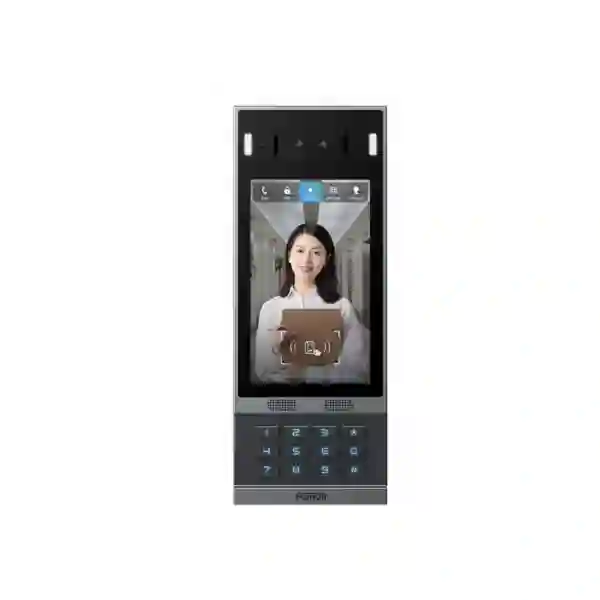
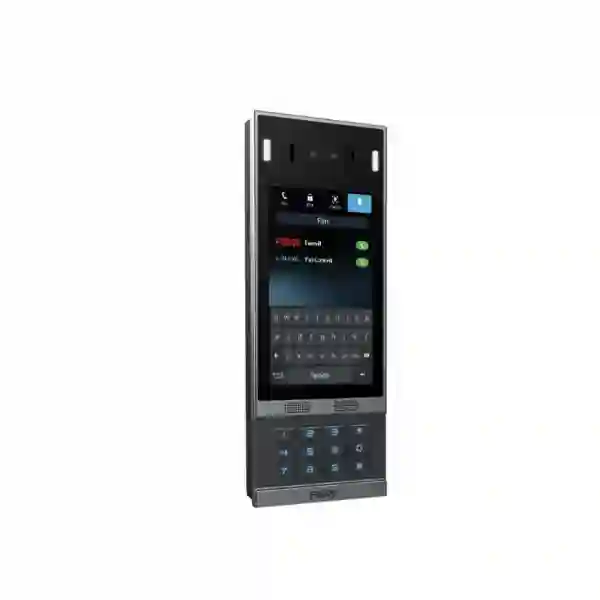
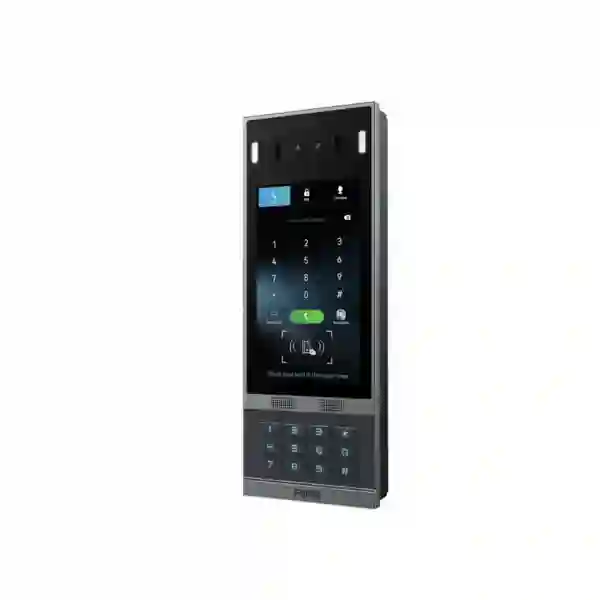
Fanvil i67 Face Recognition Door Phone
The Fanvil i67 Face Recognition Door Phone brings biometric access, visitor video communication and IP-based intercom into one professional entrance terminal. Fanvil positions the i67 for apartment, community and office-building scenarios, with a 7-inch IPS touchscreen, facial recognition, anti-spoofing liveness detection, dual-camera imaging, SIP communication and ONVIF compatibility. For Tanzania projects, the practical value is the ability to combine a modern visitor interface with controlled door release, card or PIN access, network integration and remote communication through compatible IP phones, indoor stations or mobile applications.
Direct answer
The Fanvil i67 is a network-connected face-recognition door phone designed for controlled entrances where businesses need identity verification, two-way audio/video communication and electronic door-release integration. It supports face, card, PIN and remote-opening workflows, making it suitable for reception entrances, apartment access points, controlled office doors, schools, hospitality sites and other managed buildings.
Why buyers shortlist it
Buyers considering the i67 are usually trying to reduce separate devices at the doorway. Instead of deploying an intercom, a biometric terminal and a separate visitor screen, the i67 can act as one integrated front-end. Its value depends on correct lock hardware, power design, network configuration, SIP compatibility and user-enrolment policy, so project planning matters as much as the device itself.
Verified Fanvil i67 features
Official Fanvil material describes the i67 as a facial-recognition door phone with a 7-inch IPS touch display and advanced liveness-based anti-spoofing intended to resist presentation attacks using photos, videos or masks. Fanvil also specifies two-way audio and video communication with compatible IP phones, indoor stations and mobile applications. The platform uses standard SIP for intercom communication and supports ONVIF for security-system interoperability, helping the door terminal fit into broader IP video and communication environments rather than operating as an isolated appliance.
A large portrait-format screen provides a clear user interface for visitor calls, PIN entry and local interaction.
Facial identification can be enabled for authorised users, with anti-spoofing liveness checks designed to improve resistance to fake-face presentation attempts.
The platform supports face, card, PIN and remote door-opening workflows, giving administrators flexibility for employees, residents, visitors and service personnel.
SIP enables IP intercom calling while ONVIF support helps integration with compatible video-management or surveillance environments.
Fanvil rates the enclosure for dust/water protection and impact resistance, important for controlled outdoor or semi-exposed entrance installations.
Power over Ethernet simplifies many installations by carrying power and network connectivity through structured cabling when the switching environment supports the required PoE standard.
Technical planning for an i67 deployment
A successful door-phone deployment starts with the entrance, not the product box. Confirm whether the doorway uses an electromagnetic lock, electric strike or another electrically controlled locking method; determine how egress must work; check whether a door contact, exit button, alarm input or secondary relay is required; and verify whether the lock power supply should be separate from the door phone. The i67 provides multiple short-circuit inputs and relay outputs as well as Wiegand and RS-485 capabilities, but the complete electrical design must match the actual lock hardware and site safety requirements.
Network design is equally important. The i67 should be placed on a managed network segment where IP addressing, PoE availability, SIP reachability, time synchronisation, firmware management and remote administration can be controlled. In larger projects, separating access-control and surveillance devices with VLANs can make troubleshooting and security policy clearer. Where SIP calling is required, confirm compatibility with the chosen PBX or SIP service and decide which extensions, indoor stations or security-desk endpoints should receive visitor calls. If ONVIF integration is planned, validate the required functions with the selected VMS or recorder before rollout.
User enrolment also needs a policy. A biometric reader can be technically capable while still being poorly managed if duplicate identities, expired users or unclear access schedules are left unmanaged. Define who can enrol users, how staff changes are handled, whether cards or PINs are issued as fallback methods and how access logs are reviewed. For businesses with privacy obligations, biometric information should be handled according to internal policy and applicable law, with clear responsibility for data retention and user administration.
FourTeck integration paths
The i67 is most useful when it is treated as part of a wider building technology design. FourTeck Tanzania works across access control, networking, IP telephony, CCTV and structured infrastructure, so buyers can evaluate the complete entrance workflow instead of selecting the reader independently. Explore the broader FourTeck Tanzania IT, telecom and security portfolio when the i67 must connect with switching, IP phones, surveillance and site infrastructure. Regional customers can also review FourTeck Uganda technology solutions, FourTeck Kenya business IT solutions, FourTeck Africa infrastructure solutions and FourTeck UAE IT and security solutions for multi-country projects.
Fanvil i67 Face Recognition Door Phone Tanzania
For Tanzania organisations, the Fanvil i67 fits projects where the entrance must do more than ring a bell. Offices, residential compounds, mixed-use buildings, schools, healthcare facilities, hospitality properties and controlled operational sites can use the unit as the visible doorway endpoint for identity verification and visitor communication. The strongest use case is a site that wants one networked terminal to present visitor calling, biometric recognition, card or PIN entry and remote unlocking to authorised staff. This can reduce the number of separate wall-mounted devices and gives administrators a more structured way to manage authorised users.
Tanzania buyers should start with the building layout. A main reception entrance with continuous staffing may prioritise visitor calling to a desk phone or indoor station, while a staff-only side entrance may use face or card credentials most of the time. A residential building may require a different call-routing plan for occupants. Warehouses and industrial locations may care more about durable installation, door-contact monitoring and clearly managed contractor access. The i67 can support these scenarios, but the correct configuration depends on who uses each entrance and what should happen when recognition fails, the network is unavailable or a visitor arrives outside normal hours.
Procurement teams should include the surrounding system in the quotation. Ask whether the project needs a PoE switch, UPS-backed network power, electric strike or magnetic lock, door closer, exit button, emergency release interface, additional indoor stations, IP phones, PBX configuration, mounting accessories and structured cabling. Confirm whether wall or flush mounting is appropriate for the entrance design. Where the terminal is installed externally, check exposure to direct rain, strong sunlight and physical impact even though the enclosure carries IP66 and IK07 ratings. Good weather protection also includes sensible mounting position, cable sealing and service access.
For organisations comparing suppliers in Tanzania, the useful decision criterion is not just the device price. Ask how the i67 will be configured, how SIP calls will be routed, how users will be enrolled, how access events will be administered, how the lock circuit will be powered and what documentation will be provided at handover. A well-planned i67 project can become part of a broader access-control, CCTV and IP-telephony environment rather than remaining a standalone entrance gadget. That integrated approach is particularly valuable for businesses planning multiple doors or future branch expansion.
Fanvil i67 Face Recognition Door Phone Dar es Salaam
Dar es Salaam projects often involve busy commercial premises, apartments, offices, hotels, education sites and multi-tenant properties where visitor volume is higher than at a small branch office. In that environment, the Fanvil i67 can serve as a front-door communication and access terminal that allows recognised users to enter while visitors initiate an audio/video call to reception, security or another configured endpoint. A practical design separates employee entry from visitor handling so the system remains easy to understand at peak times.
For a high-traffic office entrance in Dar es Salaam, consider how the screen will be positioned for users of different heights, whether direct afternoon sun will affect visibility, whether the mounting point is protected from accidental impact and whether the surrounding doorway has sufficient space for queuing. The i67’s weather and impact ratings are helpful, but installation quality still matters. Cabling should be concealed and protected, the network switch should have adequate PoE capacity, and lock wiring should follow a clear schematic so future maintenance does not require tracing undocumented cables.
Commercial buildings should also define call-routing rules. During office hours, visitors may call reception. After hours, the same button could be routed to security or another authorised endpoint if the chosen SIP architecture supports that call flow. Businesses with multiple tenants should confirm whether the intended directory and calling experience suits the property. Integrators should test audio intelligibility at the entrance, especially where traffic or street noise is significant, and should confirm how the terminal behaves when a remote party unlocks the door.
When preparing a Dar es Salaam quotation, provide the number of doors, lock type, approximate cable distance to the network room, availability of PoE, whether an IP PBX already exists, intended visitor-call destination and estimated number of authorised users. These details make it easier to determine whether the i67 is the correct front-end and what supporting equipment is required. For larger premises, also consider how access control relates to CCTV coverage at the doorway so that visitor events can be investigated consistently.
Fanvil i67 Face Recognition Door Phone Mwanza
In Mwanza, the Fanvil i67 can suit organisations that want to modernise controlled entrances without creating separate systems for visitor calling and staff identification. Corporate offices, healthcare sites, education facilities, hotels, residential projects and branch operations can use the door phone as a single entrance interface. The choice is especially relevant when the site already uses IP networking and wants the entrance terminal to communicate with SIP phones or indoor stations rather than relying on a traditional analogue intercom.
A Mwanza deployment should begin with a site survey of power, network and doorway conditions. Check whether structured cabling can reach the entrance within normal Ethernet design limits, whether the nearest switch has PoE capacity and whether UPS backup is needed for the switch, PBX and lock power system. If the network path fails but the electric lock still has power, the organisation should understand which access methods remain available and how authorised entry is handled. Designing these fallback behaviours is part of access-control planning, not an optional extra.
Face recognition can reduce reliance on cards for regular users, but enrolment quality matters. Users should be enrolled under consistent conditions, records should be maintained accurately and old accounts should be removed promptly. Where staff turnover is frequent, a clear process for adding and revoking credentials is essential. Card or PIN methods can also provide alternatives for approved users when biometric recognition is unsuitable or temporarily unavailable. The organisation should decide which methods are permitted for each user category instead of enabling every method by default.
For procurement, ask the supplier to identify every required component rather than quoting only the i67. A complete doorway may need the terminal, lock, power supply, request-to-exit device, door contact, emergency release, PoE switching, network configuration and SIP integration. If the entrance is part of a broader surveillance system, test ONVIF compatibility with the target VMS rather than assuming every platform exposes identical functions. This reduces surprises during commissioning and creates a cleaner handover for Mwanza IT and facilities teams.
Fanvil i67 Face Recognition Door Phone Arusha
Arusha buyers may consider the Fanvil i67 for hotels, safari and tourism offices, corporate compounds, schools, residences, healthcare properties and professional offices where controlled visitor handling is important. In hospitality and mixed-use settings, the door phone can help separate public approach areas from staff-only or resident-only spaces. Visitors can call an authorised endpoint, while enrolled users can use face, card or PIN access according to the configured policy.
Tourism and hospitality properties should pay close attention to visitor flow. A reception entrance used by guests may require a different access workflow from a back-of-house door used by staff or suppliers. The i67 is more valuable when each doorway has a clearly defined purpose. At a guest-facing entrance, intuitive calling and reliable two-way communication may be the priority. At a staff entrance, fast credential recognition and event logging may matter more. If a property has several doors, it may be preferable to standardise the network and access-control design rather than treating each entrance as a separate project.
Environmental planning is also important. Even with IP66 and IK07 ratings, technicians should avoid careless mounting where water can run directly into cable penetrations or where the screen is constantly exposed to harsh glare. Use suitable weatherproofing, cable management and mounting hardware. Verify PoE availability and confirm that the network switch has enough power budget not only for the i67 but also for other devices such as IP cameras and wireless access points connected to the same infrastructure.
Arusha procurement teams should ask for an integration plan that covers SIP registration, call destinations, unlock permissions, user enrolment, backup access methods, network segmentation and handover documentation. If the site uses CCTV, aligning the door phone with camera coverage can make entrance incidents easier to review. The decision should focus on the overall access workflow: who enters, who answers visitors, who can remotely unlock, how failed attempts are handled and who maintains the user database after installation.
Fanvil i67 Face Recognition Door Phone Dodoma
Dodoma organisations evaluating a modern entrance-control platform can use the Fanvil i67 where biometric entry, card/PIN access and SIP video intercom need to coexist. Government-related offices, professional buildings, education facilities, residential projects and commercial sites may all benefit from a single networked terminal that can authenticate authorised users and connect visitors to reception or security. The strongest projects are those where access rules are documented before hardware is installed.
For administrative and institutional environments, user governance is often as important as hardware specification. Decide which department owns the user database, who may enrol faces or issue cards, how temporary users are created and when credentials expire. A biometric system should not become a permanent collection of outdated records. Establish a process for leavers, transferred staff, contractors and short-term visitors. Also determine which users are allowed to unlock remotely through SIP endpoints or applications because remote release carries a different risk profile from local face recognition.
The physical door should be reviewed carefully. The lock type, door closer, frame condition and emergency egress arrangement all influence system reliability. A sophisticated terminal cannot correct a poorly aligned electric strike or an underspecified magnetic lock. For this reason, quotations should distinguish the i67 terminal from the complete door-hardware scope. Where life-safety systems or emergency release requirements apply, ensure the final design is reviewed according to the building’s applicable requirements rather than using a generic wiring diagram.
Network readiness in Dodoma should include PoE budget, switch management, VLAN design, PBX reachability and remote administration rules. If the site has branch connectivity, avoid unnecessarily exposing the door phone across insecure paths. For multi-site organisations, document naming, IP addresses, device location and firmware state from the beginning. A standardised deployment method makes later expansion easier and allows support staff to understand whether an issue belongs to the door hardware, access logic, SIP calling or the underlying network.
Fanvil i67 Face Recognition Door Phone UAE
For UAE projects, the Fanvil i67 can be considered for office towers, villas, residential communities, warehouses, schools, hospitality buildings and commercial facilities that need a high-end IP entrance terminal. The combination of facial recognition, anti-spoofing, card/PIN access, SIP intercom and ONVIF support makes the unit attractive where access control must connect with broader IP communications and surveillance architecture. The UAE market also includes many retrofit projects, so checking existing cabling, door hardware and PBX compatibility before purchase is essential.
Heat, sunlight and outdoor exposure should be evaluated even though the i67 carries an IP66 weather-protection rating and IK07 impact rating. A shaded or architecturally protected mounting location can improve screen usability and reduce environmental stress. In towers or compounds with many endpoints, PoE switching should be designed with sufficient port and power capacity, and the access-control VLAN should be documented. Security teams should know exactly which management interfaces are reachable and from where.
The i67 can communicate with SIP phones and indoor stations, so UAE businesses that already use IP PBX can potentially create a visitor workflow around existing communication endpoints. However, each PBX platform handles provisioning, DTMF and remote door-opening logic differently. Compatibility should be tested with the actual PBX and endpoint models rather than assumed. The same principle applies to ONVIF: confirm the intended live-view, recording or event-handling functions with the target VMS.
For a UAE quotation, provide the door count, building type, mounting preference, lock type, existing PBX/VMS brands, network topology and user population. That information helps define whether the i67 will operate as a simple single-door terminal or part of a larger integrated system. Buyers managing projects across Tanzania and the UAE can also standardise documentation and user-management procedures so that regional facilities teams follow a consistent operating model.
Fanvil i67 Face Recognition Door Phone Uganda
Uganda organisations can use the Fanvil i67 in access-control projects that need modern biometric authentication alongside IP intercom. The unit is especially relevant for businesses that already operate structured networks and want a door terminal that can call SIP extensions or indoor stations while also supporting authorised user entry. Corporate offices, schools, healthcare premises, hotels, residential projects and warehouses can all be suitable environments when the entrance workflow is clearly defined.
A country-wide organisation with multiple Uganda branches should consider standardisation. Using consistent VLAN rules, naming conventions, firmware management, user-enrolment procedures and door-hardware diagrams can reduce support complexity. Each site may still need different lock hardware or call routing, but the technical baseline can be common. The i67’s combination of SIP and ONVIF gives integrators flexibility to coordinate communications and surveillance, though each integration must be validated with the selected systems.
Power resilience is important for access infrastructure. PoE can simplify cabling, but the access-control system should be evaluated as a chain: door phone, PoE switch, PBX or call endpoint, lock power supply and network uplinks. A UPS-backed switch does not help if the lock power supply is unprotected, and a powered door terminal cannot complete a remote visitor call if the PBX or WAN path is down. Define which functions should continue during short outages and design the power architecture accordingly.
When requesting a Uganda quote, share whether face recognition will be the primary credential or one of several options, the expected number of users, whether card credentials are already in use, the number of doors and whether there is an existing access-control platform. The more clearly these requirements are stated, the easier it is to determine the i67’s role and avoid buying incompatible accessories or overcomplicating the deployment.
Fanvil i67 Face Recognition Door Phone Kampala
Kampala’s dense mix of offices, commercial properties, apartments, schools and hospitality facilities creates many entrance scenarios where the Fanvil i67 can be useful. At a corporate reception, it can present a professional touchscreen interface for visitors while enrolled staff use face or card access. In a residential property, it can connect callers to indoor stations. In a restricted business area, the focus may be secure user authentication and controlled remote release by authorised personnel.
Busy sites should evaluate transaction flow. If many employees arrive simultaneously, enrolment quality and user familiarity influence how quickly people pass through. If most users prefer cards, facial recognition may serve as an additional method rather than the only credential. If visitors need frequent assistance, call routing and audio quality become more important than biometric speed. The best configuration aligns the enabled functions with actual behaviour at the entrance rather than turning on every feature because it is available.
For network teams in Kampala, a separate access-control VLAN can help isolate infrastructure and simplify policy. The i67 can be powered by PoE, but switch selection should account for total PoE draw across phones, cameras, access points and door terminals. Addressing, DNS, NTP and firmware access should be planned centrally where possible. If a PBX is involved, confirm codec, DTMF and extension-routing requirements as part of commissioning.
A professional handover should include administrator credentials, device IP details, wiring information, lock-release logic, user-enrolment instructions and a tested visitor-call scenario. Businesses should also know how to back up configuration where supported and who is responsible for future firmware changes. These operational details often determine whether an access-control system remains dependable months after installation.
Fanvil i67 Face Recognition Door Phone Arua
For organisations in Arua, the Fanvil i67 can provide an integrated alternative to separate intercom and credential-reader devices at a controlled entrance. It is relevant to offices, institutions, hospitality properties, residences and operational sites where authorised users need managed entry while visitors require a communication path to staff. Because the i67 is network-based, the project should be planned around reliable LAN infrastructure rather than treated like a standalone keypad.
Sites with smaller local IT teams can benefit from a simple, well-documented design. Use consistent addressing, label the switch port, document the door wiring and keep user-administration procedures straightforward. If the entrance connects to a remote PBX or central security desk, check WAN dependency carefully. A local SIP endpoint or indoor station may provide a more resilient visitor workflow than relying entirely on a remote path, depending on the organisation’s architecture.
When facial recognition is used, enrol users carefully and confirm that the chosen operating policy is acceptable for staff and management. Backup methods such as card or PIN can be assigned where appropriate. The system administrator should periodically review authorised users instead of allowing the database to grow indefinitely. This is particularly important for contractors, temporary staff or organisations with seasonal personnel changes.
The quotation for an Arua project should identify whether existing locks and cabling can be reused. Retrofitting may reduce construction work, but only if the old infrastructure is electrically and physically suitable. Inspect cable condition, lock voltage, door alignment and network availability before assuming compatibility. The i67 itself is only one component in the entrance chain, so a reliable solution depends on correct mechanical, electrical and network integration.
Fanvil i67 Face Recognition Door Phone Mbarara
Mbarara businesses and institutions looking for an IP-based entrance system can consider the Fanvil i67 where face recognition and intercom need to work together. The terminal can support employee or resident access while giving unknown visitors a route to contact an authorised person. This dual role is useful for facilities that want to strengthen access control without losing the convenience of real-time visitor communication.
A key design question is who answers the call. A reception phone, security desk, indoor station or mobile application can each create a different user experience. Where the receiving endpoint changes by time of day, define the call flow before installation and test the actual operating scenario. Remote unlocking should be limited to authorised users and staff should understand how to verify a visitor before opening the door.
Infrastructure checks should include PoE capability, switch management, cabling route, lock power, egress devices and UPS protection. The i67’s IP66 and IK07 ratings support demanding entrance use, but the installer should still protect cable joints and choose a mounting position that minimises water ingress risk and excessive glare. If a flush-mount installation is planned, coordinate recess dimensions and finishing work early so the device is not forced into an unsuitable opening after construction.
For growing Mbarara sites, select supporting network equipment with expansion in mind. One door today may become several doors later, and the same LAN may also carry IP phones, cameras and wireless access points. A managed switching architecture with documented VLANs and sufficient PoE capacity provides a stronger foundation than adding unmanaged devices each time the site expands.
Fanvil i67 Face Recognition Door Phone Gulu
In Gulu, the Fanvil i67 can be a strong fit for organisations that want a modern, network-managed entrance with biometric access and visitor video intercom. Education facilities, healthcare sites, offices, residences and commercial operations can use the same device to authenticate regular users and allow visitors to call security, reception or another SIP endpoint. This reduces the need for a separate intercom panel beside a separate access reader.
The system should be designed around operating priorities. A school may focus on restricting public access during class hours while maintaining a clear visitor-call process. A healthcare facility may need staff access at controlled doors while reception handles visitors. A business office may want face recognition during normal hours and card or PIN fallback for selected users. The i67 supports flexible methods, but the administrator should define which methods apply to each group instead of allowing uncontrolled combinations.
Network security should not be overlooked. Change default credentials, restrict management access, place the device on an appropriate network segment and follow vendor firmware guidance. Where internet access is not needed for a function, avoid unnecessary exposure. If a central PBX or VMS is located elsewhere, use secure network architecture and clearly document dependencies so support teams can distinguish a local device fault from a WAN or server issue.
When comparing quotes in Gulu, check whether commissioning and handover are included. A lower equipment-only price may not include SIP registration, lock wiring, relay configuration, enrolment setup or testing. Ask for a clear scope listing the terminal, door hardware, cabling, network configuration, accessories and any required integration labour. This makes supplier comparisons more meaningful and reduces change requests after installation starts.
Fanvil i67 Face Recognition Door Phone Kenya
Kenya buyers can consider the Fanvil i67 for offices, apartments, schools, hotels, hospitals, warehouses and other properties where access control and IP intercom need to converge. The Kenyan market includes many businesses already using SIP telephony and PoE networks, which can make the i67 easier to integrate when the existing infrastructure is suitable. The device’s 7-inch touchscreen, face recognition, anti-spoofing, card/PIN support and remote door-opening capability address both regular-user access and visitor management.
A common procurement mistake is comparing only published product prices without checking installation scope. Two quotes can appear very different because one includes locks, power supplies, exit devices, PoE switching, cabling and commissioning while the other includes only the door terminal. Request a bill of materials and a written description of who supplies the lock, who configures SIP, whether user enrolment assistance is included and how testing will be performed.
For Nairobi and other high-density commercial locations, visitor call performance should be tested under real entrance noise. For campuses or compounds, network distance and building-to-building links may influence the architecture. Where many i67 terminals are deployed, central documentation of IP addresses, door names, SIP extensions and firmware versions becomes important. Standardised naming makes remote support and future expansion much easier.
If the project already includes CCTV, review whether the i67’s ONVIF support can be used in the intended VMS workflow. Interoperability standards improve flexibility, but different platforms may expose different levels of functionality. A proof-of-concept test is wise for large deployments. Kenya buyers can also compare related switching, PBX and surveillance requirements through the FourTeck Kenya site to keep the entrance solution aligned with the broader network.
Fanvil i67 Face Recognition Door Phone Kuwait
Kuwait projects can use the Fanvil i67 for premium residential entrances, offices, commercial buildings, schools and controlled facilities where a modern visual interface is expected alongside secure access methods. Face recognition with liveness-based anti-spoofing can simplify entry for enrolled users, while card and PIN options offer alternatives. Visitors can communicate through SIP-connected endpoints, which is useful where the property already operates IP phones or indoor stations.
Environmental conditions in Kuwait make mounting strategy important. Although the i67 is rated IP66 and IK07, prolonged direct sun and extreme exterior exposure should still be considered during design. Installers should position the terminal for comfortable screen viewing, protect cabling and ensure the enclosure is correctly sealed. If a shaded vestibule or covered entrance is available, it may provide a more user-friendly location while still preserving visibility and access control.
For villas or residential compounds, consider who needs credentials and how visitors are answered when residents are away. For commercial buildings, determine whether a security desk or reception team should control visitor release. Each operating model affects SIP routing, remote-opening permissions and backup access methods. The technology is flexible, but a clear policy prevents inconsistent use.
Kuwait procurement teams should also verify the complete door ecosystem. Confirm lock compatibility, exit hardware, emergency release requirements, PoE infrastructure, UPS protection and network segregation. For new construction, coordinate the i67 mounting location and cable paths before finishes are completed. For retrofit projects, inspect existing door hardware carefully rather than assuming an old access reader can be replaced without electrical changes.
Fanvil i67 Face Recognition Door Phone Ghana
Ghana organisations seeking integrated entrance security can evaluate the Fanvil i67 where face recognition, visitor calling and electronic locking need to be combined. Offices, apartment developments, schools, hospitality properties, clinics and industrial sites can use the device as a networked doorway endpoint. The 7-inch touchscreen gives visitors a clear interface, while authorised users can enter using configured credentials rather than waiting for reception.
A Ghana project should start by identifying the actual security objective. If the main problem is unauthorised tailgating, a door phone alone will not solve it; physical doorway design and staff policy also matter. If the main problem is inefficient visitor handling, SIP call routing and reception workflow deserve more attention. If the goal is removing shared PINs, face or card credentials may provide stronger individual accountability. Matching the configuration to the real problem creates better value.
For sites with unstable power, consider the entire power path. PoE makes the terminal easy to power from the network cabinet, but the switch and lock power supply should be protected appropriately if continued operation during short outages is important. Organisations should also define whether doors fail safe or fail secure according to their safety and security requirements. This decision belongs in the door-hardware design and should not be improvised during commissioning.
IT teams should document network addressing, SIP credentials, VLAN membership and management access. Access-control systems are security infrastructure, so default credentials and unnecessary exposure should be avoided. A clean handover should explain how users are added and removed, how visitor calls work, how logs are reviewed and how the device is reset or serviced without disrupting the whole building.
Fanvil i67 Face Recognition Door Phone Nigeria
Nigeria’s large commercial, residential and institutional market makes the Fanvil i67 relevant for many controlled-entry projects. The door phone can combine biometric recognition, card/PIN access and SIP visitor communication at offices, estates, hospitals, schools, hotels, warehouses and other secured premises. Its network-based design is particularly useful where organisations are already moving toward IP PBX, managed switching and integrated surveillance.
Large sites should avoid deploying entrance devices without a naming and documentation standard. Number doors consistently, assign documented IP addresses, record switch ports and label lock circuits. When dozens of terminals or cameras share a network, these practices reduce troubleshooting time. VLAN separation can also provide clearer security boundaries between user devices and physical-security systems.
For estates and multi-tenant properties, define how visitor calls are routed and whether residents or a central guard desk control door release. The i67 can support multiple communication scenarios, but the chosen PBX or indoor-station architecture determines the actual experience. A pilot installation can be useful before a large rollout so that call routing, audio quality, unlock commands and enrolment procedures are tested under real conditions.
Nigeria procurement teams should also distinguish product capability from project capability. The i67 supports advanced functions, yet success still depends on suitable locks, reliable cabling, protected power, network configuration and trained administrators. Ask bidders to explain the complete topology, not just the product specification. A good proposal should show how the door terminal, switch, SIP system, lock hardware and optional VMS fit together and how responsibility is divided during support.
Fanvil i67 Face Recognition Door Phone Seychelles
Seychelles properties can consider the Fanvil i67 for hotels, resorts, offices, premium residences and controlled service areas where a polished visitor interface is important. Face recognition can streamline access for regular staff or residents, while visitor calling provides a controlled way to communicate before releasing the door. Card and PIN methods can be retained for selected users or as alternate credentials.
Coastal and humid environments make installation quality particularly important. The i67 carries IP66 protection, but technicians should still use careful cable sealing, corrosion-aware mounting practices and a location that avoids unnecessary direct exposure. Enclosures, power supplies and door hardware around the terminal should also be selected for the environment; the protection rating of one device does not protect weaker accessories in the same system.
Hospitality properties should map the guest and staff experience separately. A front guest entrance may prioritise a simple call function and professional appearance, while staff service entrances may emphasise credential recognition and logged access. If a property has several buildings, determine whether SIP calls stay local or traverse site links. Network resilience becomes more important when the door function depends on communication between buildings.
For Seychelles procurement, provide details about door location, exposure, network availability, number of users, lock type and intended receiving endpoint. This enables a more accurate design and helps identify whether additional switches, fibre links, UPS capacity or indoor stations are required. A complete entrance system should be tested for both routine access and exception scenarios such as network interruption, failed recognition and after-hours visitor arrival.
Buying and quotation checklist
To prepare a useful quotation for the Fanvil i67, include the project details below. These questions reduce ambiguity and help distinguish a complete entrance solution from an equipment-only request.
- Number of doors and exact entrance locations.
- Door material and current lock type.
- Preferred wall or flush mounting.
- Existing network switch and available PoE capacity.
- Existing IP PBX, SIP phones or indoor stations.
- Existing CCTV/VMS platform if ONVIF integration is required.
- Approximate number of enrolled users.
- Required access methods: face, card, PIN and/or remote release.
- Need for exit button, door contact, emergency release or alarm input.
- Power-backup expectations for switch and lock hardware.
- Visitor call destination during and after business hours.
- Any requirement for multi-site standardisation, documentation or future expansion.
Fanvil i67 FAQ
Does the Fanvil i67 support face recognition?
Yes. Fanvil specifies high-precision face recognition with anti-spoofing liveness detection. The face function must be configured and authorised users must be enrolled before it can be used for door opening.
Can the i67 work with an IP PBX?
The i67 uses SIP for IP intercom communication, so it can be integrated with compatible SIP systems. PBX-specific registration, call routing, DTMF and remote-unlock behaviour should be tested with the actual platform.
Does it support ONVIF?
Yes. Fanvil specifies ONVIF compatibility. The exact functions available in a third-party VMS or recorder should be validated because implementations can vary between platforms.
Is the i67 suitable for outdoor entrances?
Fanvil rates the enclosure IP66 for dust/water protection and IK07 for impact resistance. Outdoor suitability still depends on correct mounting, cable sealing, environmental exposure and the protection of all surrounding lock and power components.
What entry methods can be used?
The platform supports face recognition, IC/ID card, PIN and remote-opening workflows. The chosen methods should match the organisation’s access policy and user groups.
What should be included in a complete i67 installation?
Beyond the door phone, a project may require lock hardware, power supply, exit devices, door contact, PoE switch, UPS, network cabling, SIP configuration, mounting accessories and commissioning. The exact bill of materials depends on the doorway and existing infrastructure.
Decision recap
Choose the Fanvil i67 when you need a premium IP door phone that combines face recognition, visitor video intercom, multiple access credentials and integration with compatible SIP and ONVIF environments. The product is particularly suitable where the organisation wants one entrance interface instead of separate intercom and access-reader devices.
Before ordering, validate the complete door design: lock, egress, PoE, network, PBX, user policy, mounting environment and handover process. The i67’s capability is strongest when these elements are planned together.
Consultation panel
For a quotation, share the number of doors, location, lock type, existing PBX/VMS, network availability and approximate user count. FourTeck can then review how the Fanvil i67 fits the surrounding access-control, IP telephony, CCTV and network environment. This is the fastest way to avoid missing accessories and to build a deployment scope that matches the actual site.



Reviews
There are no reviews yet.