
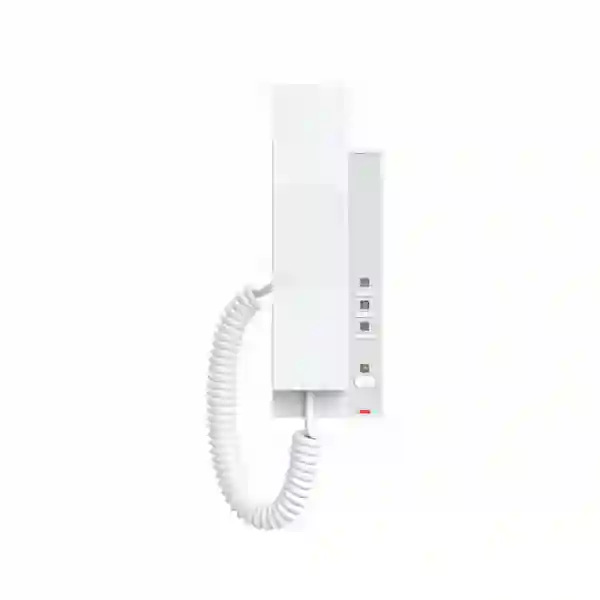
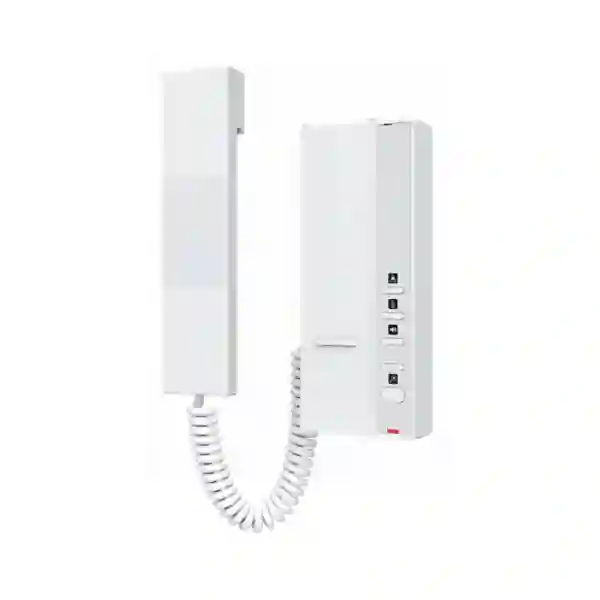
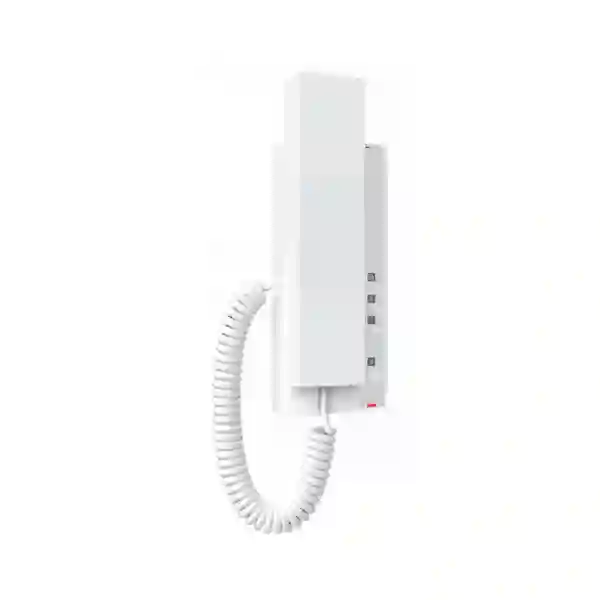
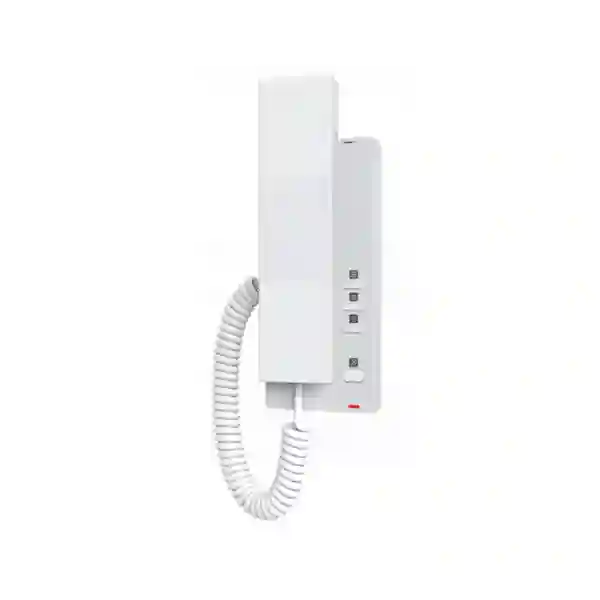
Fanvil i501W SIP Indoor Station
The Fanvil i501W SIP Indoor Station is a compact, screenless indoor endpoint designed for visitor calling, two-way intercom communication and remote door unlocking in residences, offices, hotels and other managed premises. It combines a magnetic handset, hands-free audio, two SIP lines and built-in dual-band Wi-Fi 6, making it especially useful where a clean wireless network connection is preferred but users still want a familiar handset experience. For Tanzania buyers, the most important purchasing questions are usually not limited to the handset itself: the door station, SIP platform, access-control logic, Wi-Fi coverage, power availability and installation position all affect the result. FourTeck Tanzania can help businesses structure those requirements before quotation and deployment.
Choose the i501W when you need a screenless SIP indoor station with 2.4/5 GHz Wi-Fi 6, two SIP lines, HD voice, handset and hands-free calling, and one-touch remote unlocking. The i501W uses a DC power supply; PoE support belongs to the wired i501 variant.
What the Fanvil i501W is designed to solve
A visitor intercom endpoint has to do several simple tasks consistently: alert the occupant, allow a clear conversation, provide a practical way to admit an approved visitor and fit the building’s communications architecture. The i501W addresses that workflow without using a display. It is therefore relevant for rooms, apartments, hotel spaces, offices, reception-adjacent areas and other locations where voice interaction is enough and a video screen is not required. Fanvil positions the i501/i501W family for residential communities, office buildings and hotels, with support for calls from door stations, intercom conversations and remote unlocking.
Dual-band Wi-Fi 6
The i501W supports 2.4 GHz and 5 GHz wireless networking with Wi-Fi 6. This can simplify data connectivity where Ethernet is inconvenient, provided the chosen mounting point has dependable wireless coverage.
Two SIP lines
Two SIP lines give integrators flexibility for registration and call handling. SIP design should still be checked against the intended PBX, door-phone system and routing requirements before purchase.
HD audio
Wideband G.722 and Opus support, a built-in 1W speaker and acoustic echo cancellation support clear voice interaction, including hands-free operation when that is more convenient than lifting the magnetic handset.
Door-control workflow
One-touch remote unlocking helps occupants admit visitors after a call. The unit also provides one short-circuit input, supporting practical integration scenarios with doorbell or related signaling arrangements.
Verified Fanvil i501W specifications
| Product type | Screenless SIP indoor station |
|---|---|
| SIP lines | 2 |
| Wireless | 2.4 GHz and 5 GHz Wi-Fi 6, 802.11 a/b/g/n/ac/ax |
| Ethernet | 10/100 Mbps adaptive network interface |
| Audio | HD audio; G.722 and Opus wideband codecs; additional narrowband codec support |
| Speaker / echo control | 1W speaker with Acoustic Echo Cancellation |
| Input | 1 × short-circuit input |
| Power | DC 5V / 1A; i501W does not use PoE |
| Installation | Desk or wall-mounted |
| Dimensions | 238 × 81 × 43.5 mm |
A procurement team should distinguish the i501W from the closely related i501. The i501W adds wireless connectivity but relies on a DC adapter, while the i501 variant is the model associated with PoE support. This distinction matters during installation planning because a wireless data path does not remove the need for local electrical power.
Compatibility, SIP integration and deployment planning
The i501W is not an isolated consumer doorbell. It is a SIP endpoint that works best when the rest of the communications path has been planned. Before ordering, confirm how the unit will register, which door station will call it, whether calls need to reach one room or multiple destinations, how unlocking is triggered, and whether the SIP platform needs specific transport, codec or DTMF settings. Fanvil documentation lists SIP 2.0 over UDP, TCP and TLS as supported protocol options and includes in-band, RFC2833 and SIP INFO DTMF methods. These capabilities provide integration choices, but actual interoperability should be validated against the selected PBX, door phone and access-control design.
Wireless design deserves equal attention. Dual-band Wi-Fi 6 can reduce dependence on a data cable, but walls, lift shafts, reinforced concrete, neighboring networks and access-point placement can affect stability. For a building with many indoor stations, network segmentation, device naming, IP addressing, SIP credentials and configuration backup should be documented so future support does not depend on memory. Where the wider environment includes business telephony, FourTeck Tanzania’s integrated IT and telecom portfolio is relevant because the same project may involve SIP services, IP phones, Wi-Fi, switching and access control rather than just one endpoint.
Power planning is a specific i501W consideration. Because this wireless model uses DC power rather than PoE, locate it where the adapter can be installed neatly and safely. In areas where power quality is inconsistent, the larger system design may also need protected power for network infrastructure and the SIP platform. None of those surrounding components should be assumed to be included with the indoor station; they should be listed explicitly in the quotation scope.
Who should consider the Fanvil i501W?
The strongest fit is a project that needs dependable audio visitor communication but does not require video on the indoor endpoint. Apartment developers can use screenless stations where residents only need to answer and unlock. Hotels and serviced accommodation can use them in rooms or operational areas when the architecture is based on SIP. Offices can place them at selected desks, reception areas or controlled zones to answer door calls. Villas and managed residences may prefer the magnetic handset for familiar operation while retaining hands-free capability.
A project should consider a different indoor station when occupants need live visitor video, touch-screen controls, multiple alarm inputs, building-management functions or Android applications. Fanvil’s wider indoor-station range includes display-based options for those requirements. The i501W’s advantage is not that it tries to do everything; it focuses on audio intercom, SIP connectivity and straightforward door control in a compact form.
Regional procurement and deployment guidance
Fanvil i501W SIP Indoor Station Tanzania
For Tanzania organizations evaluating the Fanvil i501W, the buying decision should begin with the complete visitor-entry workflow. Identify the entrances that generate calls, the people or rooms that must answer them, the door hardware involved, and the SIP system that will carry those calls. The i501W is suitable where voice communication and remote unlocking are sufficient, while its dual-band Wi-Fi 6 connection can be useful in completed buildings where adding a new Ethernet run would be disruptive. Because the unit still needs DC power, the proposed mounting location must have a practical power source even when the network path is wireless.
Tanzania deployments also benefit from checking wireless coverage at the exact installation point rather than assuming a nearby access point is enough. Concrete walls, floor separation and busy 2.4 GHz environments may influence performance. Using 5 GHz where appropriate can reduce congestion, but signal reach and access-point design still matter. For multi-floor residential or hospitality projects, create a consistent naming and registration plan so each indoor station can be identified by building, floor and room. That documentation helps when credentials, call routes or door permissions later need adjustment.
When requesting a Tanzania quotation, state the required quantity, intended building type, door-station model, SIP PBX or server, desired unlocking method, Wi-Fi environment and whether installation/configuration is part of the scope. FourTeck Tanzania can then relate the i501W to the surrounding communications and access-control design instead of treating it as a standalone handset. Buyers can use the FourTeck Tanzania contact page to provide these project details and request a tailored discussion.
Fanvil i501W SIP Indoor Station Dar es Salaam
Dar es Salaam projects often combine dense office environments, apartment developments, hotels, mixed-use properties and facilities with established Wi-Fi networks. In those situations, the i501W can be attractive as a voice-focused indoor station because the wireless data connection may reduce additional horizontal cabling at the final endpoint. The installation team should still survey the intended location, particularly in buildings with reinforced concrete, metal service areas, glass partitions or many neighboring wireless networks. A stable SIP intercom needs predictable connectivity during every visitor call, not merely an acceptable signal reading during an initial test.
For commercial buildings, plan call routing around actual reception and security procedures. A front entrance might need to ring a reception extension during working hours and a security point after hours. A tenant entrance may need calls directed to a specific office or room. Because the i501W supports two SIP lines, there is flexibility for account design, but the correct configuration should be established against the PBX and door station rather than assumed. If unlocking relies on DTMF or SIP signaling, test that action end to end before handover.
Procurement teams in Dar es Salaam should also separate endpoint cost from project cost. The station itself, DC power availability, Wi-Fi readiness, compatible door station, access-control hardware, SIP licensing where applicable, commissioning and documentation may all be distinct items. A useful quotation request includes floor plans or a device schedule, number of doors, number of indoor stations, existing PBX details and the preferred installation responsibility. This reduces revisions and makes it easier to compare proposals on equivalent scope.
Fanvil i501W SIP Indoor Station Mwanza
For Mwanza buyers, the i501W can suit offices, hotels, residential buildings and managed properties that need a straightforward audio endpoint for door calls. A key planning advantage is its wireless network option, but wireless should be treated as infrastructure rather than convenience alone. Check access-point placement, client capacity and coverage in corridors, rooms and reception areas where units will be mounted. If the building already separates staff, guest and operational networks, decide which VLAN or SSID should carry intercom traffic and whether the SIP server is reachable through the required firewall policies.
The physical mounting decision is equally important. Fanvil supports desk and wall installation, allowing the station to be positioned according to the user’s routine. In a hotel or residence, wall mounting can keep the unit consistently located. In an office, desktop use may be preferred where staff need the handset within reach. Regardless of mounting choice, allow for the DC adapter and cable routing because the i501W is not the PoE member of the pair. If a project specifically requires single-cable network and power delivery, compare the wired i501 or another appropriate endpoint rather than expecting PoE from the i501W.
A Mwanza RFQ should name the door station and SIP platform wherever possible. It should also state whether the project expects simple call-and-unlock operation or more complex schedules, forwarding and multiple answering points. That information helps determine whether the i501W is sufficient or whether a screen-based indoor station is more appropriate. Keeping the requirements explicit prevents an inexpensive endpoint choice from becoming expensive rework later.
Fanvil i501W SIP Indoor Station Arusha
Arusha hospitality, office and residential projects can use the i501W where occupants need a clear audio conversation with an entrance and a simple way to release the door. Hotels, lodges, serviced residences and office compounds may have multiple building zones, so the design should map door stations to the correct answering endpoints. A station installed in the wrong call group creates operational friction even when the hardware is functioning perfectly. Define reception hours, room-level calls, security escalation and fallback destinations before programming SIP accounts.
Wireless planning should account for the fact that guest Wi-Fi and operational device Wi-Fi usually have different goals. An indoor intercom is infrastructure; it should not depend on a guest network whose credentials, captive portal or traffic policy may change. A dedicated or appropriately segmented business SSID is normally easier to manage. Verify the 2.4 GHz and 5 GHz coverage at the mounting location and make sure the SIP signaling and audio path can reach the communication platform without restrictive firewall or isolation rules.
For Arusha procurement, include expected quantities and growth. A pilot with one station can prove basic compatibility, but a multi-building rollout needs a repeatable configuration plan, device inventory and documentation. Ask who will create SIP accounts, who will configure the door stations, who will test unlocking, and who retains configuration backups. These operational details are part of a dependable deployment even though they do not appear in the hardware specification table.
Fanvil i501W SIP Indoor Station Dodoma
In Dodoma, the Fanvil i501W can be considered for administrative offices, commercial properties, hospitality facilities and residences that need SIP-based visitor communication without a video display. Projects in institutional settings should document who is permitted to unlock which entrance and whether the indoor station is placed in a supervised location. One-touch unlocking is convenient, but the access process remains part of the organization’s security procedure. The endpoint should therefore be assigned to users who understand when a visitor should be admitted and when identity must be verified by another method.
Network teams should confirm the Wi-Fi path before installation. If enterprise wireless is in use, note the authentication method, SSID policy, client isolation settings and any VLAN rules that could prevent SIP registration. If the building is still at design stage, compare wireless convenience with wired infrastructure while cabling is easy to install. The i501W is valuable for wireless flexibility, but new-build projects may have different priorities around centralized power and network control. Choosing the model should follow the design rather than the other way around.
A complete Dodoma quotation request should identify the PBX, number of indoor stations, number and type of entrance devices, any existing electric locks or controllers, desired wall/desk placement and the team responsible for commissioning. If the broader project includes network switches, access points, IP telephony or access control, consolidating those dependencies into one bill of requirements can make technical review easier and reduce compatibility gaps.
Fanvil i501W SIP Indoor Station UAE
UAE buyers commonly evaluate indoor stations for villas, apartment projects, hotels, serviced residences and commercial premises where SIP intercom systems are already part of the ICT or ELV design. The i501W is particularly relevant when the project wants a compact audio-only endpoint with dual-band Wi-Fi 6 instead of a touch screen. During submittal review, distinguish clearly between the i501 and i501W power arrangements: the wireless i501W uses DC 5V / 1A, while PoE is associated with the i501. That detail affects containment, outlet planning and final installation drawings.
For larger UAE projects, compatibility testing should happen before bulk procurement. Validate registration to the intended SIP server, calls from the selected door station, two-way audio, DTMF behavior and remote unlocking. Confirm that wireless security settings are supported by the deployment design and that access points provide coverage at every indoor-station position. Hospitality and multi-dwelling projects also benefit from a repeatable naming convention that connects unit numbers to SIP extensions and physical door relationships.
Organizations coordinating UAE procurement can also review the broader FourTeck UAE technology portfolio when the indoor station is one element within an IP PBX, network, Wi-Fi, CCTV or access-control project. The quotation should state quantities, desired accessories, configuration scope and any required testing or handover documentation rather than relying only on the model number.
Fanvil i501W SIP Indoor Station Uganda
Uganda organizations considering the i501W should first decide whether an audio-only visitor endpoint matches the user experience they want. If the occupant only needs to hear the visitor and unlock the door, the screenless design can keep operation simple. If visual verification is part of policy, select a video-capable indoor station instead. This distinction is especially important in apartments, gated premises, offices and hospitality environments where access workflows differ by entrance and time of day.
The i501W’s Wi-Fi 6 support gives installers options where network cabling is unavailable at the final position, but a reliable wireless design is still required. Survey coverage, avoid dependence on public guest Wi-Fi, and test audio quality under normal network load. Because SIP is IP-based, the intercom traffic may also be affected by routing, firewall rules and WAN design if the SIP platform is hosted remotely. Local LAN registration can have different dependencies from a cloud PBX, so the deployment plan should state where the SIP server sits and how the unit reaches it.
For country-level project coordination, buyers can reference FourTeck Uganda for related regional IT, telephony and network solution context. A useful RFQ includes the quantity, door-phone model, SIP platform, expected call flow, unlocking requirement, Wi-Fi design and whether commissioning or training is requested.
Fanvil i501W SIP Indoor Station Kampala
Kampala offices, apartments, hotels and managed compounds may use the i501W where an existing or planned SIP system can carry door calls to indoor users. Urban wireless environments can be busy, so access-point selection and channel planning matter. The station supports both 2.4 GHz and 5 GHz Wi-Fi 6; installers can choose the band strategy according to coverage and network policy. Do not treat dual-band capability as a guarantee of performance in a poorly designed WLAN. Test the intended SSID and signal conditions at the actual wall or desk position.
Operationally, Kampala projects should define call handling before endpoint configuration. A residential unit may have a direct mapping from entrance to apartment. An office may need calls to ring reception, then transfer to security or another extension. A hotel could have different call flows for guest areas and staff-only doors. Two SIP lines offer useful flexibility, but the PBX and door station must be programmed to match the desired workflow. HD audio support helps conversation quality, while the handset gives users a familiar private answering mode when hands-free operation is not appropriate.
Budget planning should include the station, DC power arrangements, access-point readiness, door hardware, SIP configuration and testing. If the project is upgrading an existing intercom, document the current cabling and door-control method before assuming that every legacy component can be retained. A short technical discovery step can prevent mismatched interfaces and unexpected installation work.
Fanvil i501W SIP Indoor Station Arua
For Arua facilities, a practical reason to consider the i501W is the ability to use a wireless LAN for SIP connectivity at the endpoint. That can be helpful when retrofitting a finished office, residence or hospitality property where new data cabling would be difficult. However, the unit still requires local DC power, so a wireless design should not be confused with a completely cable-free installation. Plan the adapter location and ensure it can be protected from accidental disconnection.
The communication path should be tested as a system. A visitor initiates a call at the door station, the SIP platform routes it, the i501W rings, the occupant answers through the handset or hands-free mode, and an unlock command is sent when access is approved. Each stage depends on configuration. If there is a WAN link between sites or a cloud service, include that dependency in acceptance testing. If the design is local, verify LAN addressing, Wi-Fi stability and SIP registration after power restarts.
Arua buyers can improve quotation accuracy by stating whether the requirement is for new construction or retrofit, the number of doors and indoor stations, the selected SIP server, and whether the existing electric lock or access-control panel is staying in service. These facts help determine installation scope and whether extra interfaces, power supplies or network work are required. They also make it easier to compare proposals based on a common technical requirement rather than only unit price.
Fanvil i501W SIP Indoor Station Mbarara
Mbarara organizations can position the i501W in reception points, offices, residential units or hospitality spaces where a voice-only SIP intercom is appropriate. The magnetic handset can make the experience intuitive for users who prefer conventional telephone-style answering, while hands-free calling remains available for quick interaction. When the endpoint is assigned to a public or shared space, set volume and ringtone behavior according to the environment and make sure the unlock key cannot be used casually by unauthorized people.
For Wi-Fi, determine whether the building has a managed business WLAN or only general internet access. An infrastructure device benefits from stable credentials and predictable policies. If client isolation blocks required traffic or the SIP server lives on a different VLAN, network rules may need adjustment. The i501W supports SIP over UDP, TCP and TLS, but the selected transport should match the server and the organization’s security design. Codec negotiation should also be verified if the SIP environment restricts allowed codecs.
Before procurement, map each station to an extension and physical location. A simple spreadsheet listing device name, room, MAC address, SIP account, Wi-Fi network and associated door can reduce support time later. Include those documentation expectations in the project scope if a third party is commissioning the system. Good handover makes future expansion or replacement far easier than an undocumented collection of individually configured devices.
Fanvil i501W SIP Indoor Station Gulu
In Gulu, the i501W is worth considering when a project needs SIP visitor communication and remote unlocking but does not require an indoor video display. A screenless endpoint can reduce user complexity and keep the focus on answering, speaking and unlocking. This makes it relevant for controlled entrances in offices, accommodation facilities and residential properties. Selection should still begin with the door-side equipment because the indoor station is only one half of the visitor communication path.
Wireless deployment can simplify the network connection, particularly in retrofits, but robust coverage is necessary. Test at different times if the site experiences varying Wi-Fi load. For critical locations, document which access point serves the station and whether roaming behavior could cause unnecessary association changes. If the site uses UPS-protected network infrastructure, consider whether the station’s local DC power should also be protected when continuity during short power interruptions is important.
Gulu procurement requests should clarify whether configuration is centralized or performed at each device, whether a PBX already exists, and which party is responsible for credentials and firmware management. Fanvil publishes firmware for the i501/i501W family, so lifecycle support should include a controlled approach to updates rather than ad-hoc changes. Test configuration backup and recovery before a large rollout so a replacement unit can be commissioned predictably.
Fanvil i501W SIP Indoor Station Kenya
Kenya buyers searching for the Fanvil i501W often compare it with conventional IP phones, dedicated door-entry handsets and display-based indoor stations. The i501W is best understood as a purpose-built SIP indoor endpoint: it has no screen, but it provides a magnetic handset, hands-free audio, two SIP lines, programmable controls and remote unlocking. That combination can be more suitable than a general desk phone when the primary purpose is answering door calls and controlling access.
For apartments, hotels and offices, the Wi-Fi 6 option can help in retrofit areas while preserving SIP interoperability. The project team should confirm PBX registration, call routing and door unlock signaling before buying in volume. Because Kenya deployments can range from a single controlled entrance to multi-building properties, quantity alone does not determine complexity. Multi-site administration, SSID design, user permissions and documentation may become more important than the endpoint hardware itself as the system grows.
Regional buyers can also review FourTeck Kenya when the i501W requirement forms part of a larger voice, networking or security project. For accurate quotation, specify the exact i501W model, quantity, required accessories, door-phone model, SIP server and expected commissioning scope. Avoid basing procurement on an i501 specification sheet without checking the model differences, especially PoE versus DC power.
Fanvil i501W SIP Indoor Station Kuwait
Kuwait residential and commercial projects may use the i501W where an IP-based intercom needs a simple indoor voice station rather than a display panel. Villas, apartment buildings, offices and hospitality properties can benefit from the recognizable handset format and one-touch unlock function. The buying team should assess whether audio-only identification meets the site’s security policy. Where visual confirmation is mandatory, the correct solution is a video indoor station rather than adding expectations the i501W was not designed to meet.
Wi-Fi design should be coordinated with the building’s network policy. The station supports modern dual-band Wi-Fi, but stable SIP performance depends on signal strength, interference, authentication and correct routing to the SIP platform. If an enterprise WLAN has dynamic policies or frequent credential rotation, include the indoor station in the device-management process. Because the unit also has a 10/100 Mbps network interface, integration teams should follow current Fanvil documentation and project requirements when deciding how it will be connected.
For procurement, request a technical submittal that clearly states power, mounting, SIP lines, wireless standards, audio codecs and supported installation method. Match those points to the project specification rather than relying on product-name similarity. Also define whether the supplier’s scope stops at hardware delivery or includes SIP registration, door integration, labeling, testing and handover. These boundaries are important for avoiding gaps between ICT, security and electrical contractors.
Fanvil i501W SIP Indoor Station Ghana
Ghana businesses and property managers can consider the i501W for SIP-based entry communication in offices, residences, hotels and controlled facilities. Its value is straightforward: occupants can answer a door call by handset or hands-free, speak using HD audio and trigger remote unlocking when the visitor is approved. The screenless design keeps the endpoint focused and can be appropriate when video is already handled elsewhere or is not required by the access process.
A Ghana deployment should check three infrastructure layers before ordering: power, wireless and SIP. The i501W needs DC power at the station. It needs reliable 2.4 or 5 GHz Wi-Fi if wireless networking is used. And it needs a SIP platform or compatible call architecture for registration and routing. The door station also needs to support the intended call and unlock workflow. Treating these layers as separate checklist items makes design review easier and prevents a successful Wi-Fi connection from being mistaken for a completed intercom integration.
For multi-unit buildings, standardize configurations. Use predictable extension ranges, consistent device names and a documented mapping between doors and rooms. Decide who owns passwords and update procedures. If the system is part of a broader access-control project, confirm how door release is authorized and logged at the controller level. These steps support maintainability as the number of stations grows and make future troubleshooting more structured.
Fanvil i501W SIP Indoor Station Nigeria
Nigeria deployments can range from a single villa entrance to offices, estates, hotels and multi-building commercial facilities. The i501W fits projects where the indoor endpoint is primarily for voice intercom and door release. Its two SIP lines can support flexible account design, while dual-band Wi-Fi 6 can reduce the need for a dedicated data cable at the endpoint. The unit still requires a DC supply, so installation drawings should show both mounting and local power requirements.
For larger estates or offices, wireless capacity and segmentation should be considered from the start. Dozens of infrastructure devices on a WLAN should not be treated like occasional personal clients. Assign an appropriate SSID/VLAN, protect credentials, and ensure the SIP server and door stations are reachable according to policy. If internet connectivity is part of the SIP path, decide what should happen during WAN disruption. Local intercom resilience and cloud-dependent designs can behave differently, so expectations should be documented.
When obtaining a Nigeria quotation, describe the full topology rather than just asking for a unit price. Include entrance count, indoor-station count, PBX or hosted SIP service, door-locking hardware, networking environment and whether installation is new or retrofit. Ask for confirmation that the quoted item is the i501W specifically. That prevents confusion with the i501, which has a different connectivity and power profile even though both products share the same family name.
Fanvil i501W SIP Indoor Station Seychelles
Seychelles hotels, villas, serviced accommodation and commercial properties may value the i501W for discrete audio communication at controlled entrances. In hospitality-oriented environments, the magnetic handset offers an intuitive user experience, and wall mounting can keep the unit in a consistent location. The design team should decide whether guests, staff or both will use the station because button configuration and call routing may differ between public-facing and operational areas.
Wireless coverage across resort-style layouts, detached villas or multi-building sites requires deliberate planning. The i501W can use 2.4 GHz or 5 GHz Wi-Fi 6, but distance, building materials and outdoor transitions may make one centralized access point insufficient. Survey each indoor location and make sure the backhaul to the SIP server is dependable. If the property uses separate guest and staff networks, place intercom devices on an appropriate managed network rather than on transient guest access.
Procurement for island environments can also benefit from careful spare and lifecycle planning. Document model numbers, adapter requirements and configuration so replacement units can be prepared efficiently. Confirm firmware procedures and keep an inventory of device assignments. A quotation request should state expected quantities, project phases and whether commissioning must align with a refurbishment or opening schedule, without assuming availability or delivery dates until the supplier confirms them.
Buying guidance: i501W versus a screen-based indoor station
Choose i501W when
The project needs audio intercom, familiar handset operation, hands-free calling, SIP registration, wireless network connectivity and convenient door release. It is especially appropriate when a screen would add cost or complexity without improving the actual workflow.
Choose a video indoor station when
Occupants must visually identify visitors, monitor cameras, use touch controls or interact with richer building functions. Fanvil offers other indoor stations with displays; compare the required user experience rather than selecting solely on network features.
Quotation checklist for the Fanvil i501W
Related infrastructure around the i501W
A complete deployment may involve a SIP PBX, compatible door station, wireless access points, switches, firewall policies, electric lock or access controller, protected power and documentation. The correct mix depends on whether the project is a single home, office, hotel, apartment block or multi-site organization. For cross-border projects, the Uganda FourTeck site, Kenya FourTeck site and FourTeck UAE site provide regional context for broader IT and communications requirements. For Tanzania projects, the local FourTeck site is the primary reference for integrated telephony, networking, Wi-Fi and access-control planning.
Do not assume that a SIP indoor station will automatically interoperate with every door controller or PBX merely because all devices use IP. SIP registration, codec policy, DTMF method, door-release signaling and network security can differ. Confirm the actual component models and intended call flow before purchasing at scale.
Fanvil i501W FAQ
Does the Fanvil i501W support PoE?
No. Fanvil documentation differentiates the two models: the i501 supports PoE and power supply, while the i501W uses a DC power supply. The i501W’s wireless connectivity does not remove its local power requirement.
Does the i501W have a screen?
No. It is a screenless indoor station. It is designed for voice intercom and door-control workflows. Projects requiring visitor video should select a display-equipped indoor station.
What Wi-Fi does the Fanvil i501W support?
The i501W supports 2.4 GHz and 5 GHz Wi-Fi 6, with 802.11 a/b/g/n/ac/ax listed in Fanvil’s specifications. Actual performance depends on access-point design, coverage and network policy.
How many SIP lines are available?
The i501W supports two SIP lines. The implementation of those accounts and the final call flow should be planned with the SIP platform and door station.
Can users unlock a door from the station?
Yes. Remote door unlocking is a core function of the i501/i501W family. The project must still configure the door-side device and signaling method correctly for the intended access-control workflow.
Can the i501W be wall mounted?
Yes. Fanvil lists desk and wall-mounted installation. The final position should also allow neat DC power connection and stable Wi-Fi coverage.
Which audio codecs are supported?
Fanvil lists wideband G.722 and Opus, plus a range of narrowband codecs including G.711A/U and others. Codec selection should match the SIP system configuration.
Is it suitable for hotels and apartments?
Yes, those are among the environments Fanvil targets for the product family. Suitability for a specific property depends on whether audio-only indoor communication, the desired door-control method and the available network/power design match project requirements.
Decision recap
The Fanvil i501W is a focused choice for SIP-based visitor communication where audio, wireless networking and simple door release matter more than an indoor video screen. Its verified strengths include two SIP lines, dual-band Wi-Fi 6, HD audio with G.722 and Opus, 1W speaker with AEC, magnetic handset, hands-free calling, one short-circuit input, programmable controls and remote unlocking. The most important design caveat is power: the i501W uses DC power and should not be specified as a PoE endpoint.
For a reliable deployment, validate the door station, SIP platform, call routing, unlocking method, Wi-Fi coverage and mounting/power arrangements before bulk ordering. That approach gives procurement, ICT and security teams a shared definition of what the installed system must actually do.
Discuss your Fanvil i501W requirement with FourTeck Tanzania
Prepare the quantity, site type, door-station details, SIP platform, Wi-Fi environment and required installation scope, then contact FourTeck Tanzania for a project-focused quotation discussion. This helps confirm whether the i501W is the right endpoint and identifies any networking, telephony or access-control dependencies before deployment.



Reviews
There are no reviews yet.