
Business SIP Intercom • Tanzania
Fanvil i10D SIP Mini Intercom
The Fanvil i10D is the two-button audio model in Fanvil’s compact i10 SIP mini-intercom family. It is intended for indoor locations that need simple voice communication, programmable call actions and integration with door-control or other low-voltage systems without moving to a larger video intercom. For buyers in Tanzania, the most useful way to evaluate the i10D is to treat it as part of the complete voice, LAN, PoE and access-control design rather than as a stand-alone wall device.
What is the Fanvil i10D?
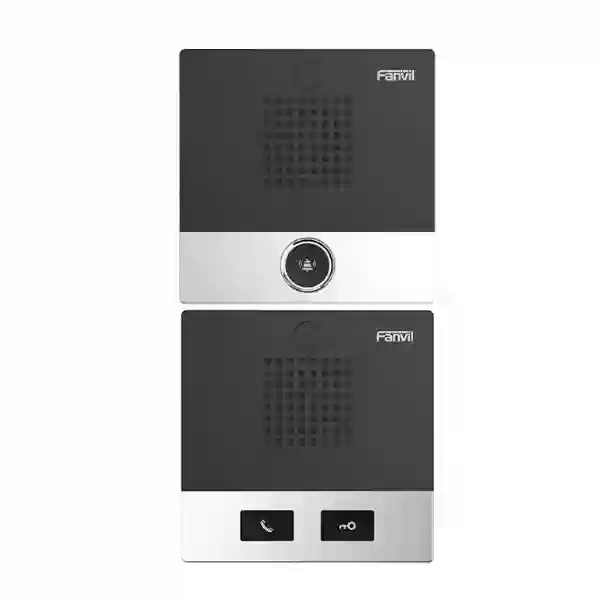
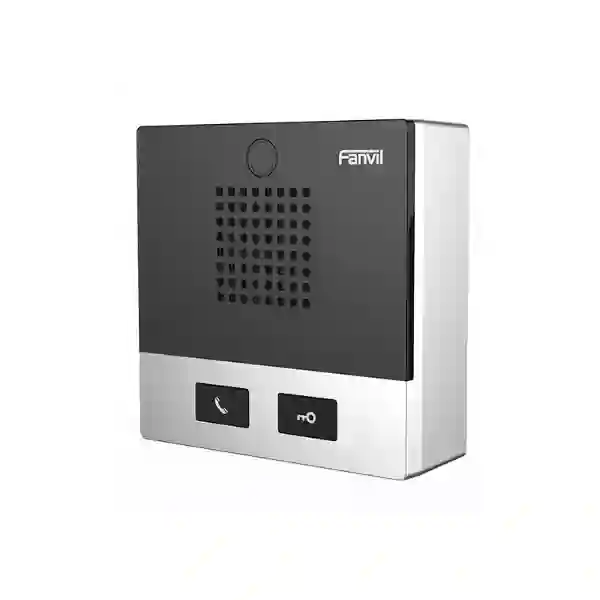
The Fanvil i10D is a compact SIP audio intercom with two hardware DSS buttons, two SIP lines and a built-in speaker. Fanvil specifies support for SIP over UDP, TCP and TLS, RTP and SRTP media, IPv4 and IPv6, VLAN, LLDP, Quality of Service, 802.1X network access authentication, OpenVPN and L2TP. The unit connects through a 10/100 Mbps Ethernet interface and can be powered by PoE or a 12V DC supply. For organizations already operating an IP PBX, the product can become another managed SIP endpoint on the voice network, allowing a visitor, employee or operator to trigger a call or predefined function from a wall-mounted location.
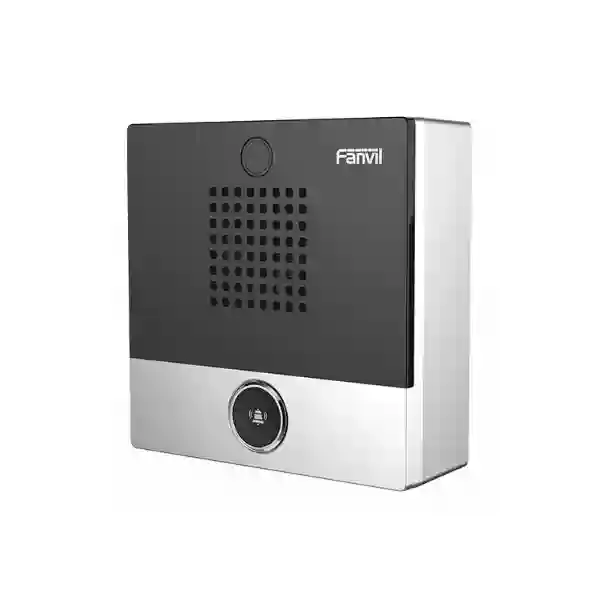
The i10D is important to distinguish from the i10V. The i10D is an audio model and does not contain the i10V camera. Its two-button arrangement is the reason many buyers consider it for controlled entrances, help points, internal service areas, reception-adjacent spaces and other locations where one button can initiate communication and another can be assigned to an additional action. Exact button behavior depends on configuration and the surrounding system, so a deployment should begin with the desired workflow rather than with assumptions about a default call sequence.
FourTeck Tanzania can help buyers connect this decision with the wider environment. The FourTeck Tanzania technology solutions overview explains how IP telephony, network switching, security and access control share infrastructure. The Tanzania IT, telecom and integration services page is useful when the requirement includes installation, configuration or wider project coordination rather than device-only supply.
Two SIP Lines
The i10D supports two SIP lines, allowing administrators to register the endpoint in a standards-based VoIP environment and design primary or alternate communication behavior around the PBX.
Two DSS Buttons
Unlike the one-button i10, the i10D provides two DSS buttons. They can be incorporated into practical call or control workflows after the required actions are defined and tested.
PoE or 12V DC
Power over Ethernet can simplify installation where a suitable PoE switch is available, while the documented 12V DC option provides another deployment path when local power is preferred.
IP54 Indoor Design
Fanvil rates the i10 family IP54 and specifies a -20°C to 50°C working range, while positioning the product for indoor scenes. Site placement should follow the manufacturer’s installation guidance.
Verified Fanvil i10D technical highlights
| Area | Fanvil i10D information | Buying implication |
|---|---|---|
| SIP | 2 SIP lines; SIP 2.0 over UDP/TCP/TLS | Confirm PBX registration, feature behavior and security settings before rollout. |
| Audio | G.711a/u, G.729AB, iLBC; G.722 and Opus; AEC; 1W speaker | Wideband audio capability depends on end-to-end codec support and network quality. |
| Network | 10/100 Mbps Ethernet, IPv4/IPv6, VLAN, LLDP, QoS, 802.1X | Plan the endpoint as part of a managed voice/security LAN. |
| Security | TLS, SRTP, OpenVPN and L2TP support are documented | Use only where compatible with PBX, certificates and network policy. |
| I/O | Short-circuit input and relay output; relay contacts documented up to DC30V/1A or AC125V/0.5A | Door, alarm or control integration must be electrically designed within rated limits. |
| Power | PoE or DC12V/1A | Choose the power method according to switch capability, UPS strategy and cable routing. |
| Physical | 88 × 88 × 31 mm; ABS housing; wall-mounted indoor deployment | Confirm mounting surface, back-box/cable entry and service access before installation. |
Where the i10D can fit
The i10D is best considered where audio communication and simple control actions are needed at a fixed indoor point. Examples can include controlled office doors, internal service entrances, reception support points, staff-only areas, education facilities, clinics, hospitality back-of-house locations and operational rooms where a compact wall endpoint is preferable to a desk phone. The device can also participate in broadcasting and intercom use cases supported by the wider Fanvil platform. Whether it is suitable for a specific site depends on the environment, mounting position, required intelligibility, PBX design and the electrical interface connected to the relay or input.
When the intercom is part of a door-security project, buyers should also review the FourTeck Tanzania access-control and network solution portfolio. A SIP intercom does not by itself define the entire door system. Locks, exit devices, controllers, emergency-release logic, power supplies, cabling and operational procedures can all influence the final design.
Compatibility, PBX integration and network planning
Fanvil lists compatibility across major SIP platforms including Asterisk, BroadSoft, 3CX, Metaswitch, Elastix and Avaya. That list is useful as a starting point, but procurement teams should still test the exact PBX version, provisioning method and feature workflow they expect to use. Successful SIP registration proves basic connectivity; it does not automatically confirm that every programmable key, directory, TLS certificate, codec choice, relay action, multicast feature or provisioning template behaves exactly as required in the production environment.
For a new deployment, create a pilot profile first. Assign a test extension, confirm inbound and outbound audio, check DTMF behavior, verify the two buttons, validate relay operation with the intended controller or lock interface, test VLAN and QoS settings, and confirm recovery after a switch or PBX restart. If TLS and SRTP will be enabled, verify certificates and time synchronization as part of the test. If 802.1X is used, coordinate the endpoint identity and access-switch policy before large-scale installation.
The intercom may be compact, but the LAN requirements are the same class of considerations that apply to other SIP endpoints. The Dinstar C60SP PoE business IP phone, Dinstar C62UP PoE business IP phone and Dinstar C62U SIP phone are examples of other standards-based voice endpoints available on the Tanzania site. They are not substitutes for the i10D, but they show how an intercom can coexist with desk extensions on the same carefully designed PBX environment.
Power, PoE and installation considerations
PoE is often the cleanest power choice because one Ethernet cable can provide both network connectivity and power from a compatible switch. It also makes centralized UPS planning possible when the switch and upstream network devices are protected. The practical design still needs a PoE budget check, cable test, correct patching and confirmation that the chosen network port is configured for the voice or security VLAN. Where PoE is not used, Fanvil documents 12V DC input, so the installer needs a suitable local supply and a safe cable route.
The mounting position should support clear two-way audio and comfortable button access. Because Fanvil positions the i10 family for indoor scenes despite its IP54 rating, procurement teams should not interpret IP54 as unrestricted outdoor approval. Consider splash exposure, direct weather, dust, heat sources, tampering risk, acoustics and physical reach. In loud or reverberant spaces, a site test can reveal whether the built-in speaker and microphone placement provide the required intelligibility.
Cabling quality is equally important. If the project includes new structured cabling, PoE switching or a wider LAN refresh, the FourTeck Tanzania services page and business technology shop provide context for integrating phones, switches, racks, cabling, UPS and access-control components in one deployment.
Fanvil i10D SIP Mini Intercom Tanzania
For organizations sourcing the Fanvil i10D SIP Mini Intercom in Tanzania, the most important purchasing question is whether the device fits the complete communication and access workflow. The i10D can be attractive for offices, institutions, hospitality operations, clinics, schools, warehouses and other indoor facilities that need a fixed SIP help point or entrance intercom with two programmable buttons. Its compact 88 mm square form factor helps in locations where a larger door station would be unnecessary, while PoE can simplify power and cabling when the site already has managed PoE switching.
Tanzania deployments can vary substantially between a modern office, an existing building being upgraded, a multi-floor institution and a remote branch. Before ordering, confirm the available Ethernet path, switch PoE capacity, PBX platform, VLAN design, IP addressing, firewall policy and power-continuity objectives. If the site has unstable utility power, a PoE architecture with UPS protection at the network rack may be operationally cleaner than a local DC adapter, provided the complete network path remains powered. If the intercom controls a door or external signaling circuit, document the voltage, current, relay logic and fail-safe or fail-secure behavior rather than treating the relay as a universal lock controller.
For procurement, specify the exact model as i10D so it is not confused with the one-button i10 or camera-equipped i10V. Include quantity, mounting locations, PBX brand and version, SIP server details, PoE availability, switch models, required button actions, relay use, and whether the project needs installation or only product supply. If several sites are involved, define one standard configuration and pilot it before cloning profiles. This is especially useful when administrators need consistent extensions, codec policy, security settings and documentation across branches.
FourTeck Tanzania can place the i10D requirement in a wider IT and telecom project context. Buyers can review FourTeck Tanzania’s integrated technology approach and use the Tanzania quotation and product-guidance form to describe the site. A strong quotation request should identify whether the goal is a single entrance endpoint, several intercom stations, or an integrated project involving IP phones, access control, switches and structured cabling.
Fanvil i10D SIP Mini Intercom Dar es Salaam
Dar es Salaam businesses often run busy reception areas, logistics offices, corporate floors, warehouses, hospitality properties, clinics, retail operations and mixed-use facilities where controlled communication at an entrance or internal service point can reduce unnecessary movement. In these environments the Fanvil i10D can serve as a compact SIP audio endpoint linked to a central PBX. A visitor or staff member can use a programmed button to reach reception, security or another extension, while the second button can be assigned to a separate communication or control function according to the organization’s workflow.
The network design deserves particular attention in larger Dar es Salaam offices where voice, Wi-Fi, CCTV, cloud applications and general data may share switches and uplinks. The i10D uses 10/100 Mbps Ethernet, which is more than sufficient for its SIP audio role, but call quality still depends on congestion, packet loss, delay and switch configuration. A voice or security VLAN can provide logical separation, QoS can prioritize delay-sensitive traffic, and LLDP can support a more structured endpoint environment. Administrators should decide whether the intercom sits in the same voice policy as desk phones or in a dedicated security segment with controlled access to the PBX and management systems.
Installation planning should include wall position, cable path, PoE source, acoustic conditions and the equipment controlled by the relay. An entry near a noisy loading bay may require a test of intelligibility before standardization. A polished lobby may require hidden cable routing and coordination with the door contractor. If the relay is being used to interface with an access-control circuit, the engineer should confirm electrical limits and the correct safe operating logic. The i10D should not be used as a substitute for a complete access-control design that considers egress, emergency release and door hardware.
A useful Dar es Salaam quotation request states the building type, quantity of intercoms, number of doors or call points, target PBX, desired extension routing, PoE availability, any door-controller interface and whether configuration, cabling or installation is required. For organizations expanding existing SIP estates, comparing the intercom requirement with the Dinstar C60S business SIP phone can help procurement teams map fixed entrance endpoints and employee desk phones into one extension plan without assuming the devices serve the same purpose.
Fanvil i10D SIP Mini Intercom Mwanza
Mwanza organizations considering the Fanvil i10D may be upgrading from analog entry communication, extending an existing SIP PBX to new operational areas, or creating standardized help points across multiple buildings. The device is particularly relevant when the requirement is voice-first: it provides two SIP lines, two DSS buttons, a built-in 1W speaker and wideband codec support without the additional video functions of the i10V. That distinction can reduce unnecessary complexity where identification is handled by reception procedures, CCTV or a separate access-control system rather than by a camera in the intercom itself.
For a branch or campus deployment in Mwanza, centralized management can be as important as the physical endpoint. Fanvil documents web management, configuration import and export, firmware upgrade, syslog, packet capture and auto-provisioning methods including FTP, TFTP, HTTP, HTTPS, DHCP option 66, SIP PnP and TR-069. These tools can help an IT team repeat settings across devices, but templates should be tested before they are applied broadly. A standard profile can define SIP server addresses, authentication, codec order, time settings, key assignments, network parameters and security settings.
A Mwanza site should also be evaluated for network resilience. If the intercom is expected to remain available during short electrical interruptions, PoE from a UPS-backed switch may provide a more centralized continuity strategy than a local adapter. That approach only works if the switch, router, firewall and PBX path are also protected. For sites using a hosted PBX, the internet connection becomes another dependency. For on-premises PBX environments, internal calling may remain available even when the WAN is down, depending on architecture. These operational expectations should be decided before equipment is commissioned.
When requesting pricing for Mwanza, include the model name i10D, quantity, PBX type, whether the project is new or an expansion, network-switch details, PoE status, intended use of each button and any relay-control requirement. If the site also needs phones for staff desks, the Dinstar C62U business IP phone is a useful internal reference for a higher-capacity SIP desk endpoint that can coexist with the intercom on a properly planned VoIP network.
Fanvil i10D SIP Mini Intercom Arusha
Arusha has a broad mix of hospitality, tourism administration, education, professional services, healthcare and commercial offices, and those environments often need controlled communication between public-facing and staff-only spaces. The Fanvil i10D can be useful where an indoor wall-mounted intercom should connect a guest, employee or delivery point to reception, security, facilities or another SIP extension. The two-button design allows a project to create two distinct user actions, but the exact labels and call behavior should be designed around the site rather than assumed from the hardware.
Hospitality and customer-facing environments should place special emphasis on acoustics and user clarity. A device can have HD audio codecs and echo cancellation yet still perform poorly if mounted beside loud machinery, strong airflow or a reverberant surface. During a pilot, test normal speech from the expected standing position, evaluate speaker volume, confirm that the receiving extension can understand the caller and verify how the system behaves when the called party does not answer. PBX routing can provide a fallback destination, ring group or time-based route when operationally useful.
Arusha organizations integrating the i10D with a door workflow should map responsibilities between the intercom, PBX and access-control system. The i10D offers relay and short-circuit interfaces, but the complete door design can include locks, controllers, door contacts, exit buttons, power supplies and emergency-release requirements. Treating these as separate procurement items without an integration drawing can create confusion during installation. A simple diagram showing which device powers and controls each component can prevent expensive rework.
For a quotation, describe the property type, number of endpoints, PBX, reception workflow, operating hours, target button functions, power method, network architecture and door hardware. Organizations with broader infrastructure requirements can use the FourTeck Tanzania services overview to frame cabling, switching and configuration as part of one project rather than as unrelated tasks. That approach is especially helpful when new intercoms are being installed alongside phones, Wi-Fi, CCTV or access-control upgrades.
Fanvil i10D SIP Mini Intercom Dodoma
Dodoma offices, institutions, campuses and growing businesses may choose the Fanvil i10D when a standards-based SIP intercom is required for a fixed indoor location. Its compact size is useful where the project needs clear two-way audio and programmable control without a large wall station. Government-related facilities, education sites, administrative offices and service organizations may also value the ability to integrate the endpoint into an existing IP PBX rather than running a completely separate analog intercom network.
Formal IT environments should pay particular attention to identity, security and change control. The i10D supports SIP over TLS and SRTP, but secure voice is an end-to-end system. Certificates, PBX configuration, time synchronization and firewall policy must agree with the endpoint settings. If the network uses 802.1X, validate the authentication workflow with the access switch. If VLAN assignment is enforced, document which segment the intercom belongs to and which management stations can reach its web interface. Disable or restrict unnecessary access according to the organization’s policy rather than leaving the device on a flat network.
Maintenance planning is also valuable. Record the device location, MAC address, IP assignment method, extension, firmware version, switch port and button functions. Save approved configuration backups and define who is responsible for firmware changes. When several endpoints are deployed, standard naming conventions make remote troubleshooting much faster. Syslog and packet-capture functions can help diagnose registration or audio problems, but they work best when the network topology is already documented.
Dodoma procurement teams can improve quotation accuracy by specifying exact quantities, use cases, building locations, PBX platform, intended security features, PoE switch capacity and integration requirements. If the project includes staff handsets as well as intercoms, review the Dinstar C62UP PoE phone as an example of a PoE desk endpoint that can share the wider voice infrastructure. The intercom and desk phone play different roles, but coordinated VLAN, QoS, provisioning and UPS planning can simplify support.
Fanvil i10D SIP Mini Intercom UAE
Organizations operating in both Tanzania and the UAE may consider the Fanvil i10D as part of a common SIP endpoint standard for entrances, internal service points or help stations. A shared model can simplify documentation and user expectations, but configuration should still reflect each site’s PBX, VLAN plan, door hardware and local operating procedures. The i10D supports the same core technologies wherever it is deployed: two SIP lines, HD audio codecs, PoE or 12V DC power, 10/100 Ethernet, programmable DSS buttons, relay I/O and centralized management features.
A UAE office with a mature managed LAN may prefer PoE so intercom power is centralized at the switch. If the same organization wants a repeatable architecture in Tanzania, standardizing switch port profiles, QoS policy and provisioning templates can reduce support differences between countries. The configuration should not be copied blindly, however. PBX addresses, dial plans, emergency procedures, time settings, security certificates and access-control logic can vary. A common design standard should define principles while leaving site-specific parameters under change control.
For multi-country procurement, separate device price from total deployed cost. The complete scope may include mounting, cable routes, PoE switch capacity, configuration, PBX licenses or extensions, access-control interfaces, testing and documentation. Clarifying these elements makes quotations more comparable. It also prevents a low hardware-only price from appearing equivalent to a fully installed, configured and tested solution.
Customers coordinating UAE requirements can reference FourTeck UAE IT and telecom solutions and FourTeck’s specialist IP phone and VoIP site for regional telephony context. For Tanzania procurement, keep the enquiry centered on the Tanzania project details so quantities, infrastructure and integration requirements are scoped against the actual destination site.
Fanvil i10D SIP Mini Intercom Uganda
Ugandan businesses evaluating the Fanvil i10D may be linking entrances, service counters or staff areas to an existing SIP PBX, or they may be planning a first structured VoIP environment. In either case, the i10D should be evaluated as an endpoint within the total communication system. Two SIP lines provide registration flexibility, while the two DSS buttons can support distinct actions for different users or departments. Because the unit is audio-only, it is best suited to workflows where voice communication is sufficient or where video surveillance is handled separately.
For distributed organizations, management and resilience matter. An IT team can use Fanvil’s documented auto-provisioning and web-management capabilities to maintain consistent settings across sites. Branches should still have a local record of switch ports, IP settings and extension assignments so troubleshooting does not depend entirely on one administrator. If PoE is used, confirm that the access switch has enough power budget and that upstream network devices are protected according to the organization’s continuity requirements.
Where the intercom is used for entry communication, the PBX call route should reflect staffing patterns. A daytime call might ring reception, while an after-hours call could route to security or another approved destination. That logic belongs in the PBX or associated call-control design and should be tested for unanswered calls, busy extensions and network outages. The relay interface should likewise be integrated according to the door hardware and controller design rather than treated as a generic unlock connection.
For organizations coordinating projects across East Africa, FourTeck Uganda’s IP PBX and VoIP solutions provide a regional reference for communication infrastructure. A quotation request should include the exact i10D quantity, branch locations, PBX platform, intended button functions, PoE or DC preference, security requirements and any access-control integration. These details make it easier to standardize without forcing every branch into an identical physical design.
Fanvil i10D SIP Mini Intercom Kampala
Kampala offices, commercial buildings, schools, healthcare facilities and multi-tenant sites can use SIP intercoms to connect an entrance or internal service point to reception, security or an operations team. The Fanvil i10D is suited to this type of voice-first workflow when two programmable buttons are desirable. One key might be configured to reach a reception group while another is assigned to a secondary function, although the precise setup should be defined by the organization’s call flow and safety policy.
Busy Kampala networks may already carry Wi-Fi, CCTV, cloud applications, desktop traffic and VoIP. A compact intercom adds little bandwidth, but poor network design can still affect audio. Packet loss, excessive delay or a misconfigured firewall can create one-way audio or registration instability. Using managed switching, documented VLANs and appropriate QoS can make the voice path more predictable. If the PBX is hosted, internet reliability and DNS become additional dependencies; if it is on premises, internal communication may be less WAN-dependent depending on the design.
Security teams should determine who is allowed to administer the i10D. The management interface should not be broadly exposed, and SIP credentials should be protected like other voice-system credentials. TLS and SRTP can be considered where supported end to end. Firmware updates should be tested before wide deployment. For organizations with several intercoms, centralized provisioning can reduce manual variation, but the provisioning server itself must be secured and controlled.
Kampala buyers should also define the physical environment. Confirm wall construction, indoor protection from direct weather, ambient noise, cable entry, nearby power if DC is used, and the door-controller interface. A good quotation therefore lists not only the device quantity but also the number of sites, PBX details, switch models, PoE budget, cabling requirements, desired key actions and installation scope. This is the information that turns a product request into a workable deployment plan.
Fanvil i10D SIP Mini Intercom Arua
Arua organizations may value the Fanvil i10D because a SIP intercom can extend central business calling to a doorway, service point or staff area without creating a second communications technology. A branch office can register the device to the same PBX framework used by other extensions, subject to network and licensing design. For a smaller location, this can keep user training simple: callers press a clearly labeled button, and the PBX determines which extension or group should receive the call.
Branch connectivity should be planned around what happens when the WAN connection fails. If the PBX is hosted elsewhere, the intercom may depend on internet or private WAN reachability. If an on-site gateway or PBX provides local survivability, internal calling may behave differently. Rather than assuming availability, test the real failure cases that matter to the business. Power is another dependency. PoE from a protected switch can centralize power, but the branch router, firewall and uplink equipment must also remain operational for remote PBX access.
Remote support benefits from consistent configuration. Record the device’s extension, switch port, MAC address, firmware, IP assignment and key mapping. Where practical, use a tested provisioning profile so replacement hardware can be introduced without rebuilding every setting manually. The objective is not merely convenience; standardized configuration reduces accidental differences that make troubleshooting difficult across branches.
For an Arua quotation, identify whether the intercom is part of a single-site installation or a larger Ugandan rollout. Include PBX location, branch network topology, local power conditions, PoE availability, intended button functions and any door-control connection. Where organizations also operate in Kampala, Gulu or Mbarara, keep a common technical standard but allow each site to document its own cabling, rack, network and physical-door details.
Fanvil i10D SIP Mini Intercom Mbarara
Mbarara businesses, institutions and distributed organizations may use the Fanvil i10D where a compact wall-mounted SIP endpoint is needed for controlled voice communication. In a professional office it can connect an entrance to reception. In an education or healthcare environment it may be considered for internal assistance points where the organization’s procedures allow. In a warehouse or operational building it can provide a fixed communication point, provided ambient noise and mounting conditions are tested before finalizing the design.
The two-button layout should be treated as a workflow feature, not merely a hardware specification. Define who will press each button, what they expect to happen, which extension or group receives the call, how unanswered calls are handled and whether either key has a control function. Labeling should be clear enough that an unfamiliar user can act without instructions. If the second button is used for a relay or door action, the electrical and safety implications deserve the same design discipline as the voice path.
From the network perspective, the i10D can operate on a managed Ethernet environment with VLAN and QoS support. Before installation, reserve or document the switch port, verify PoE operation if used, confirm DHCP or static addressing policy and test PBX registration. Security configuration may include TLS, SRTP, 802.1X or VPN functionality where the wider infrastructure supports it. Enabling features only on the endpoint without coordinating the PBX or switch can create service failures, so changes should be applied as part of a controlled network design.
Mbarara procurement teams should request a scope that distinguishes supply, configuration and installation. Hardware-only pricing may be appropriate for an IT department with established standards and installers. A complete deployment may instead need cabling, PoE switching, PBX configuration, door-interface coordination, testing, labeling and documentation. Making that distinction at quotation stage produces a clearer total project cost and reduces arguments about what was included after equipment arrives.
Fanvil i10D SIP Mini Intercom Gulu
Gulu organizations can evaluate the Fanvil i10D for indoor entrance communication and help-point applications where standards-based SIP is already part of the technology strategy. A compact intercom can be easier to support than a proprietary stand-alone system when the business already operates an IP PBX and managed network. It can use a dedicated extension and route calls to reception, security or another team according to the PBX dial plan.
For sites that are supported remotely, diagnostics and documentation are crucial. Fanvil’s web management, syslog and packet-capture functions can help administrators investigate registration failures or audio issues, while auto-provisioning can reduce repetitive setup. However, remote tools are most effective when the basic site record is accurate. Keep a simple asset sheet with location, switch port, IP address, extension, firmware, button assignments and relay function. That information can let a support engineer distinguish a PBX problem from a cabling or power fault before dispatching someone to the site.
Environmental placement should remain conservative. IP54 helps with dust and incidental moisture, but Fanvil describes the i10 family as designed for indoor scenes. An installer should avoid exposing the unit to uncontrolled rain or direct outdoor conditions merely because the IP rating seems robust. For semi-protected entrances, review the exact enclosure, mounting surface and exposure and follow the manufacturer’s guidance. The device’s -20°C to 50°C working range is useful, but temperature alone does not determine whether a location is suitable.
A Gulu buyer can request a more accurate quotation by identifying quantities, endpoint locations, PBX platform, WAN dependency, switch and PoE capability, desired call routing and whether access-control integration is required. If several Ugandan locations are being standardized, use FourTeck Uganda as the regional coordination reference while keeping each site’s engineering details separate.
Fanvil i10D SIP Mini Intercom Kenya
Kenyan businesses with SIP telephony can use the Fanvil i10D as a specialized wall endpoint for indoor entry, assistance or service communication. It is most suitable when a project needs two programmable buttons and audio rather than embedded video. For organizations operating branches in Kenya and Tanzania, selecting a common intercom platform can simplify spares, configuration templates and staff familiarity, but each branch still needs site-specific network, PBX and access-control parameters.
When standardizing across borders, define what is truly common. Hardware model, firmware policy, codec priority, security baseline, naming convention and documentation format can often be standardized. Extension numbers, SIP server addresses, VLAN IDs, emergency routing and door-control behavior may differ. Treating those values as variables inside a controlled template allows consistency without copying settings that belong to a different branch.
Kenyan sites with PoE infrastructure can power the i10D from access switches, which may simplify installation and support. If an intercom is business-critical, the switch, PBX and WAN path should be included in continuity planning. A UPS attached only to the endpoint’s switch is not enough if the router or hosted PBX connection goes down. Conversely, an on-premises PBX may provide a different survivability profile. The deployment team should test the failure modes that matter operationally rather than relying on theoretical feature lists.
For regional project coordination, FourTeck Kenya’s VoIP and business IT solutions provide a relevant network reference. Procurement teams should request the exact Fanvil i10D model, quantities by site, the intended function of each DSS key, PBX details, PoE design, access-control interface and installation scope. A standardized bill of materials can then be adapted by site without losing visibility into cabling, switch ports and local operational procedures.
Fanvil i10D SIP Mini Intercom Kuwait
Kuwait organizations evaluating the Fanvil i10D should begin with the intended indoor use case: entrance communication, internal assistance, staff access points or another fixed voice workflow. The product’s value comes from combining SIP communication, two configurable buttons and low-voltage I/O in a small wall-mounted format. It is not a video door station, so organizations that require visual identification should plan a separate camera system or evaluate a video-capable intercom model rather than assuming the i10D includes the i10V camera.
Climate is an important specification topic, but the working-temperature range should not be used to ignore installation classification. Fanvil positions the i10 series for indoor scenes. A location exposed to direct sun, weather or uncontrolled outdoor dust requires a separate suitability review. Indoor lobbies, protected corridors, reception entrances and controlled operational areas are more aligned with the manufacturer’s positioning. Where the surrounding environment is noisy, perform an audio test at realistic speaker volume and distance.
Network and PBX integration should be handled by the same engineering process used for other SIP endpoints. Assign appropriate VLAN and QoS policy, secure the management interface, confirm SIP credentials, choose supported codecs and test call routing. If secure signaling or media is required, validate TLS and SRTP with the PBX. The relay and input interfaces should be connected only after their electrical characteristics have been checked against the external system.
For a Kuwait quotation, include the exact quantity, building type, PBX, access-control platform, power method, network topology, button workflow and installation expectation. Multi-country organizations should also state whether the Kuwait site must follow an existing Tanzania or UAE configuration standard. That information helps distinguish parameters that can be standardized from those that must be engineered locally and reduces the risk of procurement ordering a device that is technically compatible but operationally unsuitable.
Fanvil i10D SIP Mini Intercom Ghana
Ghanaian organizations can consider the Fanvil i10D for compact indoor intercom requirements in offices, schools, healthcare facilities, hospitality sites, retail back-office locations and commercial buildings. Its two-button layout can support a simple dual-action workflow, while SIP registration allows the device to become part of an existing IP telephony environment. The best fit is where voice communication is the priority and the project either does not require video or already uses CCTV for visual monitoring.
The purchasing process should identify which system owns each function. The PBX manages extensions and call routing. The LAN provides addressing, VLANs and transport. The PoE switch or DC supply powers the device. The access-control system or external circuit handles the door or signaling logic. The i10D bridges some of these layers through SIP and relay I/O, but it does not replace them. Writing down this responsibility map is particularly useful on projects where separate contractors handle networking, telephony and doors.
For organizations with several Ghana sites, centralized configuration can reduce variation. A tested template can set SIP, codec, management and key parameters, while a deployment worksheet records local IP information and switch ports. Administrators should also define firmware ownership and credential storage. An intercom mounted in a public-facing area should not imply public access to its management plane; restrict administration to approved network segments and personnel.
Customers coordinating broader regional technology projects can use FourTeck Ghana as a local network reference. A complete quote request should include i10D quantities, site locations, PBX brand and version, PoE or DC preference, button functions, relay requirements, cabling scope and any need for commissioning. These details are more useful than asking only for a unit price because they expose the dependencies that determine whether installation will work smoothly.
Fanvil i10D SIP Mini Intercom Nigeria
Nigerian businesses looking for the Fanvil i10D typically have a commercial intent that goes beyond the hardware specification: they want a compact SIP mini intercom that can connect to an IP PBX, use PoE, provide two programmable buttons and interface with access-control or signaling equipment. Those requirements should be translated into a deployment design before quantity purchase. The device can fit office entrances, reception areas, internal help points and staff facilities, but the exact application depends on the site’s call flow, acoustics and security procedures.
Where a facility already has CCTV, the audio-only i10D can complement visual monitoring without duplicating a camera at every intercom location. A security operator could view a separate camera while communicating over the intercom, provided the operational process is intentionally designed. Where integrated video from the intercom itself is mandatory, buyers should evaluate a video model instead. Keeping this distinction clear prevents the common procurement mistake of ordering i10D because the broader i10 family literature mentions video features that belong to i10V.
Large Nigerian sites should also plan IP address management and switch topology. Voice and security endpoints are easier to support when switch ports are documented, VLANs are intentional and remote administration is restricted. If multiple intercoms are installed, use standardized provisioning and a consistent naming scheme. If branches register to a centralized PBX, test WAN quality, firewall rules and failure behavior. Hosted PBX deployments should include internet continuity in the risk assessment.
For Nigeria-focused project coordination, FourTeck Nigeria provides a relevant regional IT services reference. A strong quotation request lists quantities by location, PBX platform, PoE design, intended button mapping, access-control equipment, cable routes and installation responsibilities. This enables suppliers and integrators to compare the same scope and helps IT teams avoid receiving one quote for hardware only and another that quietly includes configuration and field work.
Fanvil i10D SIP Mini Intercom Seychelles
Seychelles buyers may consider the Fanvil i10D for protected indoor hospitality, office, institutional and service environments where a small SIP audio endpoint is preferable to a full video station. The two-button design can support different destinations or actions, while PoE simplifies installation when a managed switch is nearby. In hotel or resort administration environments, for example, the intercom might connect a staff service point with a reception, facilities or security extension according to the operating procedure established by the property.
Island environments make correct placement important. The i10D’s IP54 rating is useful, but Fanvil’s own positioning is for indoor scenes. Do not interpret the rating as permission for direct exposure to rain, salt spray or marine weather. Protected locations should still be assessed for humidity, corrosion risk, cable sealing and maintenance access. Where a semi-outdoor position is being considered, an installer should review the manufacturer’s guidance and choose a product specifically intended for the actual exposure if there is doubt.
Remote support can be a priority when specialist technicians are not always on site. Standardized settings, clear network documentation and configuration backups can reduce service time. Administrators should record how to reach the management interface securely, which PBX extension is assigned, what each DSS button does and how the relay is connected. A spare-unit strategy may also be useful for critical sites, but stock and availability should be confirmed at procurement rather than assumed.
A Seychelles quotation should specify the exact i10D model, quantity, site type, indoor mounting conditions, PBX platform, network and PoE infrastructure, button workflow and any door-control interface. If the organization operates properties in several countries, state whether the goal is a common intercom standard. The implementation can then preserve a consistent user experience while adapting VLANs, extensions, access-control logic and installation details to each property.
How to choose between i10D and adjacent intercom options
Choose i10D when
You need a compact audio-only SIP intercom, two DSS buttons, PoE or DC power, relay I/O and indoor IP54-rated construction, and you are comfortable handling visual verification through another system or not requiring video.
Compare i10 when
You need similar compact audio intercom functionality but only one DSS button. Procurement should verify whether the second i10D button has a real operational purpose before paying for functionality that will not be used.
Compare i10V when
The intercom itself must provide video. Fanvil documents the camera and 720p H.264 functions for i10V, not for i10D. Do not mix the video specifications into an i10D bill of materials.
Related FourTeck Tanzania products and project pages
A SIP intercom rarely exists in isolation. It may need a PBX extension, PoE switch, VLAN policy, UPS-backed network and desk phones for the people receiving calls. FourTeck Tanzania’s business technology shop is the starting point for adjacent product categories, while the services page covers broader implementation requirements. For customer-facing discussions, the contact and quotation page provides the verified enquiry route.
Dinstar C60SP PoE Business IP PhoneA PoE desk endpoint that illustrates how intercoms and user handsets can share centralized PoE and voice-network planning.
Dinstar C62U Business IP PhoneA higher-capacity business SIP handset for roles that need more line flexibility than a basic entry-level desk phone.
Dinstar C62UP PoE Business IP PhoneA PoE variant suited to projects where centralized power, managed switching and consistent SIP endpoint deployment are priorities.
Quotation checklist for Fanvil i10D
A quotation becomes much more accurate when the request describes the complete environment. Include the exact model name Fanvil i10D SIP Mini Intercom and the required quantity. State whether the project is new or an expansion, the PBX vendor and software version, the SIP extension or call-routing expectations, the location of each intercom, and whether the devices will use PoE or 12V DC power. If PoE is planned, provide the switch model and available power budget where known.
For access-control integration, explain what the relay is expected to operate and identify the existing controller, lock, power supply or external circuit. The i10D relay should not be connected to a load merely because the connectors physically fit. Electrical ratings, safe operating logic and life-safety requirements need confirmation. If a door contractor or security integrator is involved, identify who owns the final wiring and commissioning responsibility.
Also state whether the scope should include structured cabling, switch configuration, VLANs, QoS, PBX programming, provisioning, firmware standardization, mounting, testing, labeling, documentation, user training or post-installation support. This makes it possible to compare quotations on the same basis and helps prevent small but essential tasks from becoming unplanned additions.
Fanvil i10D FAQ
Does the Fanvil i10D have a camera?
No. The i10D is an audio intercom with two DSS buttons. The camera-equipped model in the family is the i10V. Procurement documents should keep those model specifications separate.
How many SIP lines does the i10D support?
Fanvil documents two SIP lines. The practical registration and call-routing design depends on the PBX and the organization’s workflow.
Can the Fanvil i10D use Power over Ethernet?
Yes. Fanvil documents PoE support as well as a 12V DC power option. Confirm the switch provides suitable PoE and has sufficient power budget for the complete deployment.
Is the i10D an outdoor intercom?
Fanvil describes the i10 family as designed for indoor scenes and specifies IP54 protection. The IP rating should not be interpreted as unrestricted outdoor approval. Follow the manufacturer’s installation guidance and assess weather exposure carefully.
What audio codecs are supported?
Fanvil lists G.711a/u, G.729AB and iLBC narrowband codecs plus G.722 and Opus wideband codecs. Actual call quality depends on the PBX, remote endpoint, codec negotiation and network conditions.
Can the i10D connect to an access-control system?
The device provides a relay output and short-circuit input, so it can participate in control integrations. The external circuit, voltage, current, lock type, controller logic and safety requirements must be designed and verified for the specific project.
Which PBX platforms can work with the i10D?
Fanvil lists compatibility with major platforms such as Asterisk, BroadSoft, 3CX, Metaswitch, Elastix and Avaya. Exact compatibility should still be validated against the production PBX version, security settings and required features.
Does the i10D support secure SIP?
Fanvil documents SIP over TLS and SRTP media support. Secure deployment requires matching PBX support, correct certificates, time synchronization and coordinated firewall policy.
Can several i10D units be centrally managed?
Fanvil documents auto-provisioning methods, web management, configuration import/export, firmware upgrades, syslog and packet capture. Organizations should build and test a standard template before using it across many endpoints.
What information should I send for a quotation?
Provide quantity, site, PBX platform, required button functions, PoE or DC preference, switch model, access-control interface, cabling status and whether you need supply only or installation, configuration and commissioning.
Decision recap
Choose the Fanvil i10D when you need a compact indoor SIP audio intercom with two buttons, two SIP lines, PoE or 12V DC power, relay I/O, IP54 protection and standards-based network features. Do not choose it expecting the integrated camera of i10V. The strongest deployment is one where the PBX call flow, network VLANs, power source, button actions and access-control interface are all defined before the device is mounted.
For Tanzania projects, use the verified FourTeck Tanzania contact page to request a quotation or compatibility review. Include the exact model, quantity and environment so the discussion can focus on a working communication solution rather than a hardware-only price.
Plan the intercom as part of the complete voice and access environment
FourTeck Tanzania can help review how the Fanvil i10D should register to your PBX, receive network and PoE connectivity, interact with door-control equipment and fit the required user workflow. A short description of the site, existing PBX, switch, door hardware and desired button behavior is usually more valuable than a long feature checklist.




Reviews
There are no reviews yet.