
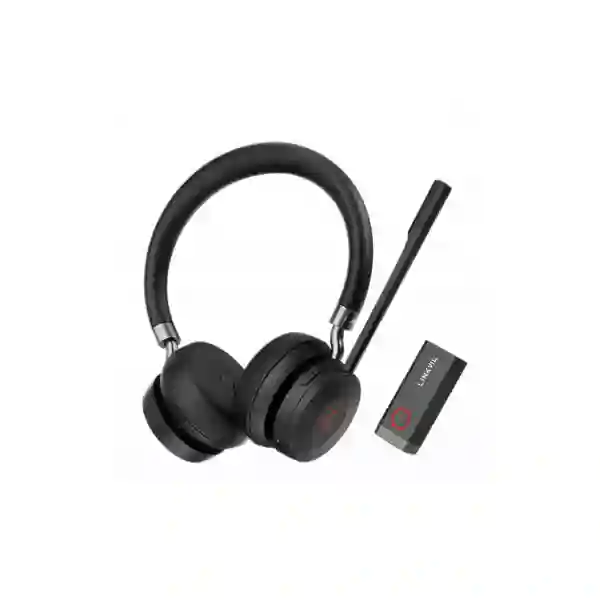
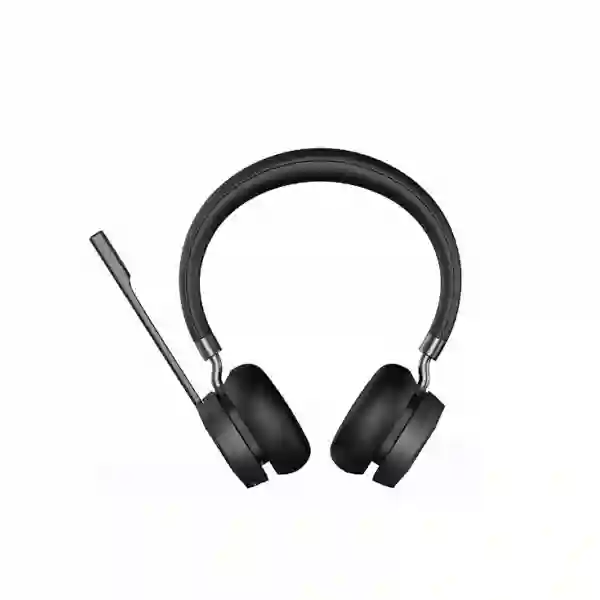
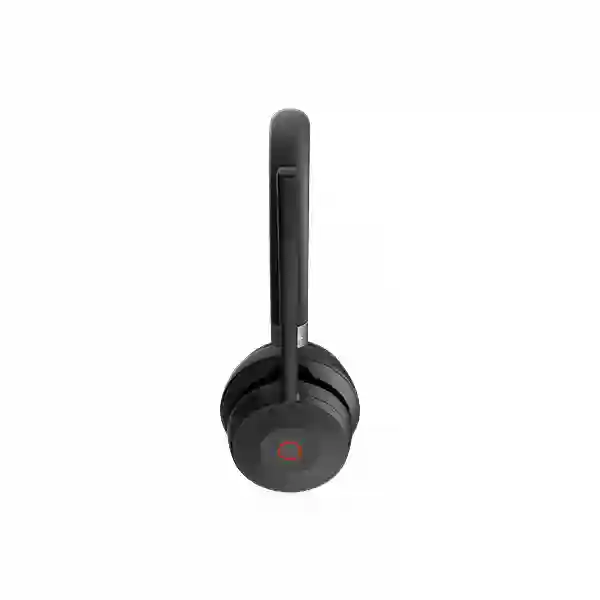
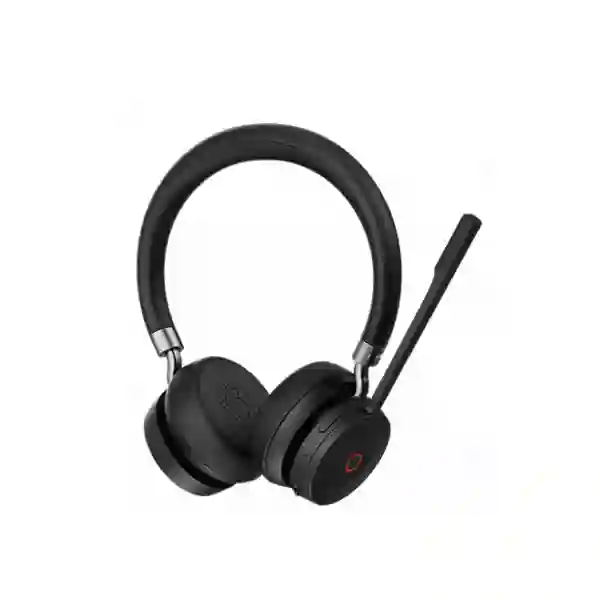
Fanvil DH602D Hybrid DECT and Bluetooth Wireless Headset
The Fanvil DH602D, part of the LINKVIL wireless communications portfolio, is designed for professionals who need to move between a computer, mobile device and compatible VoIP phone without treating each device as a separate audio workflow. It combines DECT mobility with Bluetooth 5.3 flexibility, a three-microphone AI Environmental Noise Cancellation system, stereo audio, a pre-paired DT10 dongle and serviceable components intended for sustained business use.

What the Fanvil DH602D is designed to solve
Modern office communication rarely stays on one device. A sales user may take a softphone call on a laptop, receive a mobile call a few minutes later, and then return to a desk-based VoIP workflow. The DH602D is built around that mixed-device reality. Fanvil specifies Bluetooth, DECT through the supplied DT10 dongle and USB cable connectivity, giving businesses several practical connection paths. Bluetooth pairing supports a list of up to eight devices and two simultaneous Bluetooth connections, while the DECT side is intended for stable office mobility. The official datasheet lists an open-area DECT range of up to 180 metres and an open-area Bluetooth range of up to 50 metres; real indoor performance naturally depends on walls, floors, radio conditions and building layout.
Voice quality is another central requirement. The DH602D uses three omnidirectional analogue microphones with AI Environmental Noise Cancellation, Acoustic Noise Suppression and Automatic Gain Control. The speaker is a 32 mm unit with a 20 Hz–20 kHz frequency range, while talk-mode bandwidth is specified at 100 Hz–8 kHz. For users working in shared offices, customer-service areas or busy administrative spaces, the benefit is not simply louder audio; it is a communication chain designed to improve voice pickup while maintaining stereo listening and full-duplex conversation.
For organizations evaluating headsets as part of a wider telephone deployment, FourTeck Tanzania can also help connect the endpoint choice to the broader voice environment. Review FourTeck Tanzania business technology solutions for the wider IP telephony, networking and collaboration context, or explore Tanzania IT and communication services when the headset forms part of a larger office rollout.
Verified DH602D highlights
Bluetooth 5.3, DECT via the DT10 USB-A/USB-C dongle, and USB-C cable connectivity support computer, mobile and compatible VoIP phone use cases.
A three-microphone array works with AI ENC, acoustic noise suppression and automatic gain control to support clearer professional calls in shared spaces.
Fanvil lists replaceable ear cushions and a replaceable lithium-polymer battery, helping organizations plan consumable replacement rather than treating the entire headset as disposable.
The official datasheet specifies up to 40 hours of Bluetooth talk time and up to 54 hours of Bluetooth music time, with usage patterns and settings affecting practical results.
Fanvil DH602D technical specifications
| Microphones | 3 omnidirectional analogue microphones; 100 Hz–10 kHz frequency range | Speaker | 32 mm; 20 Hz–20 kHz frequency range |
| Audio processing | AI ENC, ANS, AGC, full duplex | Hearing protection | EN50332 |
| Connectivity | Bluetooth, DT10 DECT dongle (USB-A/C), USB-C cable | Bluetooth | Version 5.3; HFP, HSP, A2DP, SPP, AVRCP |
| DECT range | Up to 180 m / 590 ft in open area | Bluetooth range | Up to 50 m in open area |
| Bluetooth pairing | Up to 8 remembered devices; 2 simultaneous Bluetooth connections | Secure DECT | Step C DSAA2 authentication; DSC2 128-bit encryption |
| Battery | 600 mAh lithium-polymer; replaceable | Charging | Approx. 3 hours at 5 V / 0.5 A; USB-C cable; optional charging stand |
| Talk time | Up to 12 h DECT; up to 40 h Bluetooth | Standby | Up to 92 h DECT; up to 142 h Bluetooth |
| Weight | Headset 180 g; DT10 dongle 20 g | Working environment | −10 °C to +60 °C; 10%–95% RH |
Specifications above are based on Fanvil’s DH602D datasheet. Fanvil notes that specifications may change and that shipped hardware/software features should be confirmed against the current product documentation. VoIP phone compatibility also varies by model and should be checked before procurement.
Deployment, compatibility and buying guidance
A headset purchase becomes more reliable when procurement teams confirm the user workflow before specifying quantities. For a laptop-led softphone environment, identify whether users will work primarily through DECT with the DT10 dongle, Bluetooth, or a wired USB-C fallback. For mobile-heavy users, confirm that the two-device Bluetooth workflow matches the intended phones and computers. For desk-phone environments, do not assume that every VoIP phone supports every control function. Fanvil explicitly states that compatibility varies by VoIP phone model, so the current compatibility list should be checked for answer, hang-up, mute and related behavior before a bulk order is finalized.
Power and maintenance planning also matters at scale. A 600 mAh replaceable battery, replaceable ear cushions and an optional DB11 charging stand give administrators choices for refresh and desk organization. Where headsets are issued to contact-centre users or staff on long shifts, keep replacement cushions and a small number of spare batteries in the lifecycle plan. For shared environments, define cleaning procedures and user assignment rather than moving ear cushions casually between staff.
If the DH602D is being introduced as part of a wider communications project, assess the PBX, SIP endpoint estate, call application and network quality at the same time. A headset cannot correct packet loss or unstable internet. Voice VLANs, switching, QoS and secure PBX configuration still determine the quality of the service behind the endpoint. For cross-border organizations, the FourTeck Africa technology portfolio provides a broader regional context for business communications and supporting infrastructure.
Regional procurement and deployment guidance
Fanvil DH602D Hybrid DECT and Bluetooth Wireless Headset Tanzania
For businesses in Tanzania, the Fanvil DH602D is most relevant where staff spend meaningful time on calls and need to move between desks, meeting areas and shared office zones without constantly reconnecting audio devices. Typical buyer profiles include customer-service teams, sales offices, professional-services firms, logistics coordinators, education administrators, hospitality back offices and multi-branch companies standardizing communication accessories. The purchasing decision should start with the communication platform in use: laptop softphone, mobile phone, compatible VoIP phone, or a combination. Because the headset supports Bluetooth 5.3, DECT via the DT10 dongle and USB-C cable connectivity, the same model can fit several work patterns, but the final control experience depends on the connected device and application.
Tanzanian procurement teams should treat the quoted wireless ranges as open-area laboratory-style reference values rather than guaranteed indoor coverage. Walls, reinforced concrete, multiple floors, metal partitions and radio congestion can reduce practical distance. In a normal office, test one unit in the real environment before committing to a large deployment. Move through the actual areas users visit while on calls, including corridors, reception areas and back offices. Confirm microphone pickup, call controls, user comfort and reconnection behavior. The three-microphone AI ENC system is useful for busy spaces, but acoustic conditions still matter; loud nearby conversations can never be made completely irrelevant by electronics.
Battery planning is also important. Fanvil specifies up to 12 hours of DECT talk time and up to 40 hours over Bluetooth, with a three-hour charge time. Decide whether desks need the optional charging stand or whether USB-C charging is sufficient. For fleets, include spare ear cushions and batteries in the maintenance plan because they are replaceable components. When the headset is part of a broader office telephony upgrade, align it with IP phones, PBX configuration and network quality rather than buying it in isolation. FourTeck Tanzania’s broader communications and infrastructure offering can support that project-level view.
Fanvil DH602D Hybrid DECT and Bluetooth Wireless Headset Dar es Salaam
In Dar es Salaam, the DH602D can suit organizations operating in dense commercial environments where employees regularly alternate between computer-based calls and mobile communication. Offices in shared buildings, financial and professional service environments, distribution companies, travel businesses, technology firms and customer-facing operations often have a mix of desk phones, laptops and smartphones. A hybrid headset reduces the need to maintain separate audio accessories for each device, provided compatibility is confirmed before rollout. The two simultaneous Bluetooth connections can be particularly useful for users who need a work laptop and a smartphone available at the same time.
When evaluating the headset for a Dar es Salaam office, conduct a practical radio and acoustic test. High-rise floors, reinforced walls, neighbouring wireless devices and dense Bluetooth use can all shape the real experience. DECT is designed to provide stable business mobility, but the published 180-metre range applies to open areas. Test the DT10 dongle from the user’s normal workstation and walk the routes people actually use. If the goal is to answer calls while moving to a filing area, supervisor desk or nearby meeting zone, validate those paths rather than relying on a specification alone. The same applies to Bluetooth: Fanvil states up to 50 metres in an open area, not a guaranteed multi-room figure.
For teams with high daily call volumes, comfort and lifecycle cost can be as important as wireless performance. The 180 g headset uses replaceable ear cushions and a replaceable battery, allowing administrators to service common wear items. Procurement teams should request a quotation that clearly separates standard package contents from optional accessories such as the DB11 charging stand. Confirm whether spare cushions and batteries are required from day one. If the deployment will integrate with IP phones, provide the exact phone models during quotation so compatibility can be checked against Fanvil’s current list before purchase.
Fanvil DH602D Hybrid DECT and Bluetooth Wireless Headset Mwanza
Businesses in Mwanza can evaluate the Fanvil DH602D when they want a consistent professional headset for branch offices, sales teams, service desks and operational staff who divide their time between computer applications and voice communication. The headset’s combination of DECT and Bluetooth creates a useful choice: DECT through the pre-paired DT10 dongle can support office movement, while Bluetooth can connect directly to mobile devices and compatible computers. Wired USB-C connectivity is also available, which can be useful as a straightforward connection method when a wireless workflow is not required.
For branch deployment in Mwanza, standardization is often more valuable than adding unnecessary device variety. Define one approved user profile for heavy callers, another for occasional callers if needed, and document how the DH602D is paired and charged. Fanvil’s controls include a call button, volume controls and a microphone boom that can mute or unmute through rotation. Staff training should cover these controls, the difference between DECT and Bluetooth modes, and the correct method for pairing so support teams do not receive avoidable tickets. The DT10 dongle supplied with the headset is pre-paired, simplifying initial setup for the intended DECT workflow.
Procurement should also account for support logistics. Because batteries and ear cushions are replaceable, a small pool of consumables can help keep devices in service instead of waiting for a complete headset replacement. The 600 mAh battery is specified for up to 12 hours of DECT talk time or up to 40 hours over Bluetooth, but actual endurance depends on usage, volume, radio conditions and battery age. For multi-site organizations, use the same configuration notes, naming conventions and troubleshooting checklist in Mwanza as in other offices. This makes headset support easier for central IT teams and helps ensure that a communication accessory becomes a managed endpoint rather than an unmanaged personal device.
Fanvil DH602D Hybrid DECT and Bluetooth Wireless Headset Arusha
In Arusha, organizations in tourism, hospitality administration, professional services, education, NGOs and general business operations may need headsets that work across mobile calls, computer meetings and office telephony. The Fanvil DH602D is positioned for this mixed communication environment. Its stereo design can support both call audio and general computer listening, while the three-microphone AI ENC system is intended to reduce environmental noise reaching the far end of a call. That can be useful in offices with open seating, reception activity or collaborative workspaces where complete acoustic isolation is not practical.
A good Arusha deployment should begin with compatibility verification and user-role mapping. Users who mainly join cloud meetings may prioritize Bluetooth or USB-C connection to a computer. Users attached to specific VoIP desk phones may prefer the DECT dongle if their phone model appears on the compatible list. Managers who alternate between a laptop and smartphone may benefit from the two simultaneous Bluetooth connections. Rather than assuming one mode is superior, match the mode to the daily workflow and test call controls in the exact applications staff use. Applications can treat answer, mute and hold commands differently, so a pilot avoids surprises.
Comfort should also be tested during a normal work shift. The headset weighs 180 g and uses replaceable ear cushions, but personal fit varies. Ask a representative group to wear the device through typical calling periods and provide feedback on pressure, heat and microphone positioning. Where the optional charging stand is considered, evaluate desk space and whether staff need a visible, consistent storage position. For hospitality and service organizations with rotating shifts, define ownership and cleaning procedures. A professionally managed headset program should include user assignment, replacement parts, charging practice and simple documentation so the technology remains dependable beyond the first month of deployment.
Fanvil DH602D Hybrid DECT and Bluetooth Wireless Headset Dodoma
For organizations in Dodoma, the Fanvil DH602D can support administrative offices, public-facing service teams, professional organizations and enterprises that require consistent voice communication across computers, mobile devices and compatible IP phones. The decision to adopt a hybrid DECT and Bluetooth headset is especially relevant when staff have more than one communication channel. Instead of issuing one Bluetooth headset for mobile use and another device for desk telephony, IT teams can examine whether the DH602D’s connection options cover the required workflows with fewer accessory types.
Before ordering at scale, prepare a simple device matrix. List the computer operating environment, calling application, smartphone types and VoIP phone models used by each department. Confirm the current Fanvil compatibility information for desk phones because the manufacturer specifically notes that compatibility varies by model. Test the supplied DT10 dongle on the target endpoints, then validate answer and hang-up actions, mute behavior, volume controls and reconnect behavior. Where Bluetooth is central to the design, test switching between the two simultaneously connected devices with real calls rather than relying only on pairing success.
For continuity, add charging and maintenance to the procurement plan. The headset supports USB-C charging and an optional charging stand. Fanvil specifies a three-hour charging time at 5 V/0.5 A and lists replaceable batteries and ear cushions as serviceable items. Organizations that rely on staff being continuously available should avoid waiting until components wear out before sourcing replacements. A small spares policy, combined with user training, can make the deployment easier to support. When Dodoma offices are part of a larger national network, keep the same headset profile, pairing instructions and support records used in Dar es Salaam, Mwanza and Arusha so central IT teams can troubleshoot consistently across Tanzania.
Fanvil DH602D Hybrid DECT and Bluetooth Wireless Headset UAE
Organizations in the UAE often run highly mixed communications environments, with desk phones, Microsoft or browser-based calling applications, mobile devices and meeting platforms in the same workplace. The Fanvil DH602D can be evaluated as a unified headset layer for these users because it combines Bluetooth 5.3, DECT through the DT10 dongle and USB-C connectivity. Sales teams, service desks, logistics operations and administrative users who move frequently between channels may gain the most from a hybrid model. For wider UAE infrastructure requirements, organizations can also review FourTeck UAE IT and telecom solutions.
Large or multi-floor UAE offices should test wireless performance inside the actual building. The published 180-metre DECT and 50-metre Bluetooth figures are open-area specifications. Concrete cores, glass, partitions, lifts, dense wireless activity and the physical location of the connected device can reduce usable distance. A pilot user should place calls from the intended desk and walk the normal path through work zones. This confirms whether the headset satisfies the mobility requirement and helps teams decide whether users should rely on DECT for desk-originated calls while reserving Bluetooth for mobile or laptop workflows.
For procurement, request clarity on package contents and options. Fanvil lists the DH602 headset, DT10 DECT dongle, 1.5 m USB-A-to-USB-C cable, quick-start guide and safety information in the standard package, while replacement cushions, the DB11 charging stand and replacement battery are optional. Verify compatibility for the exact VoIP phone models deployed. If the headset is part of a regional standard spanning UAE and African offices, document firmware or application requirements, approved connection methods and spare-part quantities centrally. Standardization reduces training and support variation while still allowing each site to validate local radio and desk conditions before rollout.
Fanvil DH602D Hybrid DECT and Bluetooth Wireless Headset Uganda
For Uganda-based businesses, the DH602D offers a practical option where unified communications increasingly blend smartphone, laptop and IP-telephony tasks. A company might use a cloud PBX for external calling, a browser or desktop client for internal collaboration, and mobile phones for field communication. The headset’s hybrid wireless design lets IT teams consider one professional model for these scenarios rather than supporting unrelated headsets for each device type. The key is to define which connection mode will be primary for each user and to verify VoIP phone compatibility before bulk procurement.
The DECT path is particularly useful for desk-based employees who need freedom to move around an office while staying on a call. Fanvil specifies up to 180 metres in an open area, but Ugandan office layouts should be tested directly because masonry, floor separation and radio conditions change practical coverage. Bluetooth 5.3 supports up to two simultaneous connections and a pairing list of up to eight devices, which can serve users who alternate between a phone and laptop. The three-microphone AI ENC arrangement helps reduce background noise at the microphone, but offices with very high ambient sound should still address seating and acoustic layout.
For regional companies operating in both Tanzania and Uganda, standardizing the headset can simplify spares, training and support. The FourTeck Uganda communication and IT solutions site provides the appropriate regional context for Uganda projects. During quotation, include user quantity, device models, preferred connection mode, expected daily call duration and any charging-stand requirement. Also define whether replacement ear cushions and batteries should be held as spares. This turns the purchase into a planned communication endpoint deployment rather than a one-time accessory order.
Fanvil DH602D Hybrid DECT and Bluetooth Wireless Headset Kampala
Kampala offices that manage customer calls, sales activity, professional services or distributed teams can benefit from a headset designed for device switching and office mobility. The DH602D combines DECT and Bluetooth without forcing users to rely on only one wireless method. This matters in environments where a desk user may spend the morning on a softphone, answer mobile calls during the day and occasionally connect through a compatible VoIP handset. Two simultaneous Bluetooth connections allow the headset to remain associated with two active Bluetooth devices, while the DT10 dongle provides the dedicated DECT path.
A Kampala deployment should be tested for three things: interoperability, radio reach and user comfort. Start with interoperability by connecting the headset to the real PBX endpoint or computer application and verifying answer, hang-up, mute, hold and volume behavior. Next, test radio reach across the actual office. Do not assume that open-area figures translate directly to rooms separated by reinforced walls or several floors. Finally, place the headset with a small pilot group for several working days. A 180 g headset can feel different across users, and a fit test is more useful than a short showroom demonstration for call-intensive roles.
Long-term support should be designed at the same time. Fanvil’s use of replaceable ear cushions and a replaceable battery gives organizations a way to renew common wear components. The specified 600 mAh battery provides different endurance by mode, so users should know whether their role is expected to run predominantly on DECT or Bluetooth. In contact-centre or reception settings, define a charging routine and keep spare consumables. For multi-branch businesses, give the Kampala site the same quick guide, pairing procedure and support checklist used elsewhere. Consistency reduces troubleshooting time and makes it easier to move trained staff between offices without changing their communication workflow.
Fanvil DH602D Hybrid DECT and Bluetooth Wireless Headset Arua
Organizations in Arua considering the Fanvil DH602D should focus on operational simplicity and supportability. In branch environments, a communication accessory is most valuable when users can set it up consistently and central IT can troubleshoot it without being physically present. The DH602D’s pre-paired DT10 dongle simplifies the default DECT connection, while Bluetooth pairing supports smartphones and compatible computers. USB-C cable connectivity offers an additional path when wireless operation is not needed or while troubleshooting a connection issue.
For branch procurement, document the exact equipment that will connect to the headset. If a VoIP phone is used, check the current Fanvil compatibility information before purchase. If the headset will connect to a laptop, test it with the actual softphone or collaboration application deployed by the company. If mobile use is important, validate call switching between the intended smartphones and computers. The published Bluetooth range is up to 50 metres in an open area, while DECT is up to 180 metres in an open area; branch walls and building materials can reduce both. A one-unit pilot is the safest way to confirm the real coverage requirement.
Support planning in Arua can also take advantage of serviceable parts. Ear cushions and the lithium-polymer battery can be replaced, which is useful when shipment lead times make complete-device replacement inefficient. Keep spare parts proportional to the installed base rather than waiting for wear to cause downtime. Because Bluetooth talk time is specified at up to 40 hours and DECT at up to 12 hours, explain to users that battery expectations differ by operating mode. For field or branch teams that frequently move between mobile and desk workflows, train them to recognize which mode is active, how to reconnect, how to mute with the microphone boom and how to place the headset on charge consistently at the end of the workday.
Fanvil DH602D Hybrid DECT and Bluetooth Wireless Headset Mbarara
For businesses in Mbarara, the DH602D can be assessed as a professional communications accessory for finance teams, service desks, distribution operations, education administration and branch offices that need a dependable headset across more than one device type. Its strongest procurement argument is flexibility rather than a single isolated specification. A user can work through the DT10 DECT dongle for a stable office connection, use Bluetooth 5.3 for smartphones or computers, and fall back to a USB-C cable connection when appropriate. This gives IT teams options without issuing several unrelated headsets.
The headset’s three-microphone system and AI ENC are relevant for open work areas, but buyers should still test the actual acoustic environment. Place the pilot user near the normal noise sources, such as neighbouring staff, office equipment or customer movement, and have a remote participant evaluate the transmitted voice. Test listening quality as well, because the 32 mm stereo drivers are designed for both communication and broader audio playback. The busylight and wear-detection functions can also support shared-office etiquette by making user status more visible, though team processes remain important.
When building a quotation for Mbarara, include more than the number of headsets. State the connected device models, whether optional DB11 charging stands are required, and whether replacement batteries or cushions should be included as spares. Confirm the delivery configuration rather than assuming optional accessories are standard. If users will connect to VoIP phones, provide exact model numbers so compatibility can be checked. For organizations with several Ugandan branches, maintaining one approved headset model can simplify inventory, documentation and user training. The greatest operational value appears when the device is incorporated into a repeatable endpoint standard, with clear pairing instructions, charging practices and escalation steps for central support teams.
Fanvil DH602D Hybrid DECT and Bluetooth Wireless Headset Gulu
In Gulu, the Fanvil DH602D can serve branch offices and professional users who need clear calls without being fixed to a chair or to one communication device. The hybrid design is particularly useful when the office relies on a mix of IP telephony and mobile communication. DECT through the supplied DT10 dongle provides the long-range office-oriented mode, while Bluetooth 5.3 supports direct connection to modern mobile and computing devices. For many users, that means fewer cable changes and less time spent selecting a different headset for each application.
A practical deployment plan should validate coverage instead of treating the open-area range figure as a building guarantee. Test from the user’s actual desk through doors, corridors and nearby work zones. Fanvil specifies up to 180 metres for DECT in open areas and up to 50 metres for Bluetooth in open areas; walls and interference alter these values. For offices where dependable mobility is the priority, compare DECT behavior with Bluetooth behavior during the pilot and select the primary mode accordingly. At the same time, verify that call controls operate as intended in the organization’s phone or softphone platform.
Long-term ownership is another relevant factor for Gulu branches. The ear cushions and battery are replaceable, enabling an organization to service wear items instead of retiring a functional headset immediately. The optional charging stand may be useful for reception or customer-service desks where the device needs a defined parking position. For remote support, create a one-page user guide covering power, Bluetooth pairing, DECT connection, mute behavior and charging. Keep a record of the connected endpoints and approved firmware or application versions. This makes it easier for a central IT team to diagnose whether a problem is caused by the headset, the dongle, the application, the PBX or the network path.
Fanvil DH602D Hybrid DECT and Bluetooth Wireless Headset Kenya
Kenyan organizations evaluating a business headset across offices, contact teams or hybrid workers can consider the Fanvil DH602D where both mobility and multi-device connectivity are important. The combination of DECT, Bluetooth 5.3 and USB-C gives procurement teams a flexible endpoint that can be mapped to different user roles. Heavy desk-based callers may prefer the dedicated DECT workflow through DT10, mobile-heavy managers may prioritize Bluetooth, and laptop users can select Bluetooth or wired USB-C according to application requirements. This flexibility is especially useful for businesses standardizing collaboration accessories across departments.
The specification review should include audio processing, security and lifecycle. Fanvil lists AI Environmental Noise Cancellation, Acoustic Noise Suppression, Automatic Gain Control, full-duplex technology and EN50332 hearing protection. Secure DECT is specified with Step C DSAA2 authentication and DSC2 128-bit encryption. The replaceable battery and cushions support maintenance, while the optional DB11 charging stand can improve desk organization. None of these features removes the need for a pilot: application compatibility, user comfort and radio conditions should still be verified in the actual Kenyan office where the headset will operate.
For companies with Kenya and Tanzania operations, the model can be evaluated as part of a shared device standard. The FourTeck Kenya IT and VoIP portfolio provides a regional reference for Kenyan requirements. During quotation, specify quantity, intended endpoints, whether users need charging stands and whether spare parts should be included. Confirm warranty and availability separately at the time of purchase rather than relying on assumptions from another market. A well-prepared bill of materials and deployment guide can make a cross-border rollout easier to support and reduce configuration differences between offices.
Fanvil DH602D Hybrid DECT and Bluetooth Wireless Headset Kuwait
For businesses in Kuwait, the Fanvil DH602D can be positioned for professional users who move between mobile calls, computer collaboration and compatible IP-phone workflows throughout the day. Hybrid connectivity is particularly relevant in organizations where office telephony and cloud collaboration coexist. Bluetooth 5.3 allows the headset to maintain two simultaneous Bluetooth connections, while DECT through the pre-paired DT10 dongle supports an office-focused wireless path. Users can also connect through USB-C cable, giving support teams a useful wired option when testing or when a wireless connection is not required.
Office layout should guide radio testing. Fanvil’s range values are measured for open areas, so internal walls, glass partitions, floors and nearby radio activity can reduce practical reach. Test a pilot unit from the real workstation and make calls while walking the normal path a user expects to cover. If the requirement is primarily a fixed-desk headset with occasional movement, Bluetooth may be sufficient; if extended desk-originated mobility is important, test the DECT mode carefully. Users should also confirm that the headset’s call button, microphone boom mute and other controls behave properly with the selected application or phone.
For procurement, build lifecycle items into the original discussion. Fanvil lists a replaceable 600 mAh battery, replaceable ear cushions and an optional DB11 charging stand. The battery is specified for up to 12 hours of DECT talk time or up to 40 hours of Bluetooth talk time, so operating mode affects charging expectations. In call-intensive departments, keep a small stock of service items and establish a cleaning policy. For larger Kuwait deployments, request a pilot, document the approved connection method and preserve a simple troubleshooting matrix. This helps determine whether a user issue belongs to the headset, endpoint, communication application or network rather than replacing hardware unnecessarily.
Fanvil DH602D Hybrid DECT and Bluetooth Wireless Headset Ghana
Ghanaian businesses looking for a professional hybrid headset can evaluate the Fanvil DH602D for customer service, sales, branch communication and office collaboration. Its design is most useful where users do not work on one device alone. Bluetooth 5.3 supports mobile and computing workflows, while the supplied DT10 dongle provides the DECT connection. Two simultaneous Bluetooth connections can reduce the friction of switching between a laptop and smartphone, and the pairing list can retain up to eight Bluetooth devices for environments where users regularly reconnect to known equipment.
The audio platform is intended for business communication rather than casual consumer listening alone. Three microphones support AI Environmental Noise Cancellation, and Fanvil also specifies Acoustic Noise Suppression and Automatic Gain Control. The stereo speakers cover 20 Hz–20 kHz, with talk mode defined at 100 Hz–8 kHz. In a Ghana office with open seating, these features can help, but a pilot should still evaluate the actual noise environment. The remote participant’s experience is the most important test: ask whether voice sounds natural and intelligible when neighbouring conversations and normal office activity are present.
For organizations importing or procuring the headset for multiple Ghana locations, prepare a complete requirement rather than requesting only a unit price. Specify endpoint models, quantity, user role, expected connection mode and any requirement for the optional charging stand. Confirm current stock, lead time and warranty at quotation stage because these are commercial conditions, not fixed product specifications. Consider ordering spare cushions and batteries with the initial batch when support logistics justify it. The replaceable components are valuable only if the organization actually plans for their use. Finally, document pairing and charging so users can resolve simple issues without waiting for IT, while keeping compatibility and network-related problems within the support team’s scope.
Fanvil DH602D Hybrid DECT and Bluetooth Wireless Headset Nigeria
In Nigeria, the Fanvil DH602D is relevant to organizations with call-heavy teams, multi-site offices and hybrid communication practices. Contact operations, financial and professional services, logistics coordination, technology companies and corporate support teams can all benefit from a headset that does not lock users into a single device type. The DH602D offers Bluetooth 5.3, DECT through the DT10 dongle and wired USB-C connectivity. That combination allows IT managers to define different usage patterns while keeping one core headset model in the approved endpoint catalogue.
For high-density offices, radio planning should be practical. The official DECT and Bluetooth ranges are open-area figures, so test units under real seating density, wall construction and local radio conditions. Where many users will occupy the same floor, run a small multi-user pilot rather than testing only one headset. Confirm that calls remain stable, that users can move through the required area, and that the desired application controls work correctly. The three-microphone AI ENC can improve far-end voice clarity, but acoustics and seating still influence results, especially in large contact environments.
Nigeria deployments should also consider power and maintenance discipline. The headset’s replaceable 600 mAh battery, USB-C charging and optional DB11 charging stand give organizations more than one charging strategy. Where power availability or desk-sharing patterns vary, define when and where devices will be charged instead of leaving it to individual habits. Keep spare cushions and batteries for larger fleets, and record which user or desk owns each headset. When rolling out across multiple cities or branches, maintain one setup guide and a standard compatibility checklist. This reduces configuration drift and makes remote troubleshooting easier. Procurement teams should request current commercial terms at quotation time, including availability and warranty, rather than assuming that conditions advertised in another country apply locally.
Fanvil DH602D Hybrid DECT and Bluetooth Wireless Headset Seychelles
Organizations in Seychelles can consider the Fanvil DH602D for offices, hospitality administration, travel operations, professional services and customer-facing teams that need a business headset across mobile and computer communication. In island environments where IT teams may prefer standardized equipment that can be supported consistently, a hybrid headset can reduce the number of accessory types in use. The DH602D combines Bluetooth 5.3 with DECT through the DT10 dongle, while USB-C cable connectivity provides a direct wired option for compatible computers and devices.
Procurement planning should pay particular attention to spares and compatibility. Fanvil makes the battery and ear cushions replaceable, which is useful when shipping a complete replacement headset is less efficient than holding small consumable parts locally. For a larger rollout, calculate a modest spare ratio based on user count and criticality, and consider whether the optional DB11 charging stand is needed at fixed desks. Before ordering, confirm the exact VoIP phones and collaboration applications in use because Fanvil states that phone compatibility varies by model. A small pilot can verify both controls and audio behavior before the organization commits to fleet quantities.
Wireless range must also be tested in the intended building. Fanvil quotes up to 180 metres for DECT and 50 metres for Bluetooth in open areas, but walls, hotel construction, office partitions and multi-floor layouts change real performance. Test the actual walking routes of reception, reservations, management or support users. If a user mainly works at one computer, Bluetooth or USB may be adequate; if desk-originated mobility is important, the DECT mode should receive more attention. Finally, document pairing, charging and basic troubleshooting so local staff can resolve simple issues quickly. A headset rollout is more resilient when accessories, user training and support processes are included alongside the device itself.
Who should choose the DH602D?
Users in sales, customer care, reception, dispatch or account management who spend substantial time speaking and need consistent microphone pickup.
Employees who switch between laptops, smartphones and compatible VoIP phones and want a single headset family to cover those work patterns.
Administrators who value serviceable ear cushions and batteries, controlled pairing, documented accessories and a repeatable deployment model.
Quotation checklist for the Fanvil DH602D
Frequently asked questions
Does the Fanvil DH602D support both DECT and Bluetooth?
Yes. Fanvil specifies DECT connectivity through the DT10 USB-A/USB-C dongle and Bluetooth 5.3. The headset can also connect through a USB-C cable.
Can the DH602D connect to two Bluetooth devices at once?
Yes. The official datasheet lists two simultaneous Bluetooth connections and a pairing list of up to eight devices.
What is the wireless range?
Fanvil lists up to 180 metres for DECT and up to 50 metres for Bluetooth in open areas. Indoor performance depends on walls, floors, interference and the location of the connected device.
How long does the battery last?
The datasheet specifies up to 12 hours of talk time in DECT mode and up to 40 hours in Bluetooth mode. Standby is listed at up to 92 hours in DECT mode and up to 142 hours in Bluetooth mode. Actual results vary with usage and battery condition.
Is the battery replaceable?
Yes. Fanvil lists a replaceable battery as an optional service item, along with replacement ear cushions. The DB11 charging stand is also optional.
Will the DH602D work with every VoIP phone?
No compatibility claim should be assumed for every phone. Fanvil explicitly states that compatibility varies by VoIP phone model, so the current compatibility list should be checked for the exact handset being used.
What comes in the standard package?
Fanvil lists the DH602 headset, DT10 DECT dongle, 1.5 m USB-A-to-USB-C cable, quick-start guide, and safety information and declaration. Optional accessories should be quoted separately.
Decision recap
Choose the Fanvil DH602D when the requirement is a professional stereo headset that combines DECT office mobility with Bluetooth multi-device flexibility, AI-assisted microphone noise reduction and serviceable components. The most important pre-purchase step is compatibility validation: confirm the exact VoIP phone or application, test the intended wireless mode in the real building, and decide whether optional charging stands or spare service items are required.
For a quotation, provide FourTeck with the user quantity, connected devices, expected call workflow and deployment locations. That information makes it possible to discuss the headset as part of the communication system rather than as an isolated accessory.
Consultation panel
Planning a DH602D rollout for one office or several regional sites? Share the number of users, laptop/softphone environment, mobile-device requirements, exact VoIP phone models and preferred wireless workflow. FourTeck can use those details to prepare a more relevant product discussion and help you identify compatibility questions before procurement.



Reviews
There are no reviews yet.