
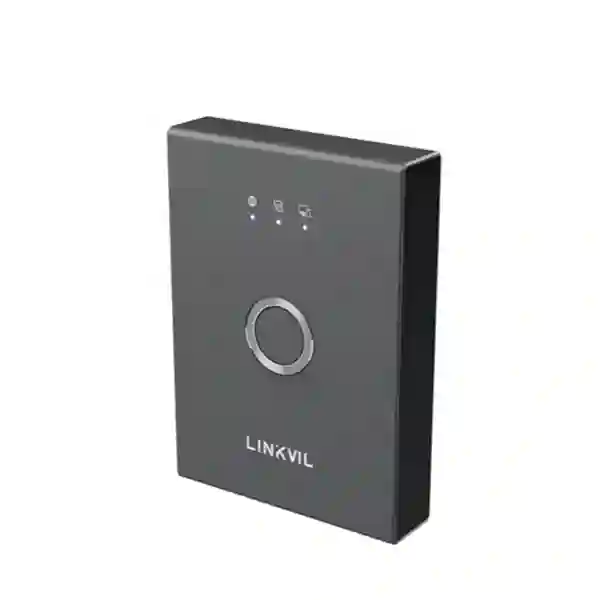
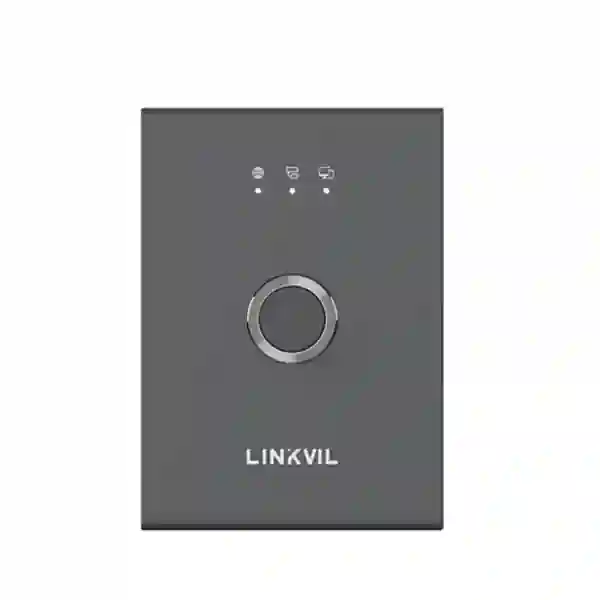
LINKVIL A710 3CX SBC
The LINKVIL A710 3CX SBC is a dedicated standalone device designed to bridge compatible local IP phones to a 3CX Cloud PBX or remote 3CX environment. It gives organizations a purpose-built option for branch offices, chain stores, distributed sites and remote workplaces where multiple desk phones need dependable access to a centrally hosted 3CX system. Rather than asking a user desk phone to take on the router-phone role, the A710 is deployed as a dedicated connectivity appliance on the same LAN as the phones it serves.
According to current 3CX guidance, the A710 supports up to 100 endpoints and 50 concurrent calls, supports PoE, is provisioned in the manner of a router phone, and should be assigned a static IP address or DHCP reservation where possible. The device itself is not a calling endpoint. This distinction matters when designing a branch: the A710 handles the connectivity role while users continue to place and receive calls from compatible IP phones and 3CX clients.
Endpoint registrations supported in the documented 3CX A710 deployment profile.
Concurrent calls supported according to current 3CX and LINKVIL product information.
Power-over-Ethernet support can simplify placement when a suitable PoE network is available.
What the LINKVIL A710 3CX SBC Does
A Session Border Controller in a 3CX deployment provides a controlled path between phones at a remote location and the central 3CX system. 3CX describes its SBC architecture as a way to combine SIP signalling and RTP media from a location and send that traffic through the 3CX connection, reducing many of the firewall and NAT complications that can otherwise arise when numerous remote phones each communicate independently with a remote PBX. The A710 brings that branch connectivity role into a compact appliance specifically recognized by 3CX as a standalone router option.
The device is particularly relevant when a business wants a dedicated piece of hardware for the branch connectivity function. It is not an IP phone, does not replace user handsets and does not independently originate ordinary user calls. It should be installed on the same LAN as the phones it will serve, using the network interface identified by 3CX guidance, and it needs to be provisioned in the 3CX administrative workflow. The final design should also consider switch PoE capacity, VLAN architecture, internet stability, firewall policy, QoS and how the organization will maintain power and connectivity during local outages.
For broader voice architecture, review FourTeck Tanzania’s business technology solutions, the IT and telecom services overview, and the Tanzania product shop. These pages help buyers place an SBC purchase in the wider context of IP PBX, IP phones, switching, wireless access and supporting infrastructure rather than treating it as an isolated box.
Verified A710 Deployment Highlights
Dedicated 3CX Router Role
3CX lists the Fanvil/LINKVIL A710 SBC as a recommended standalone router option. It serves local phones but is not itself a user phone.
Branch Capacity
Published product information identifies support for up to 100 terminal registrations, 100 SIP accounts and 50 simultaneous calls, making capacity planning straightforward for many branch environments.
PoE Support
PoE support can reduce the need for a separate local power adapter when the network switch and cabling provide the required PoE service.
3CX Provisioning
3CX documents RPS or manual provisioning URL methods, assignment to a user and the direct/router-phone deployment option for the A710.
Planning the A710 with the Rest of the Voice Network
A successful SBC deployment depends on more than the SBC. Branch phones require suitable switching, addressing, internet access and power. Voice VLANs can separate phone traffic from general client traffic, while QoS policies can help prioritize real-time voice where congestion exists. A PoE switch can power supported IP phones and potentially the A710, but the overall PoE budget must be calculated rather than assumed. If continuity during short power interruptions matters, the access switch, router, firewall and internet equipment may also need UPS-backed power.
The network should be documented before provisioning. Identify the phone count, expected simultaneous calls, VLAN ID, DHCP scope, gateway, DNS, internet links, firewall path and whether a static IP or DHCP reservation will be assigned to the A710. Confirm that the intended phones are supported by the current 3CX release. Firmware requirements can change, so deployment teams should follow the current 3CX A710 configuration guide rather than relying on an old installation note.
FourTeck can also help customers align this work with network and telecom services and the broader solutions described on the FourTeck Tanzania company page. For procurement discussions, use the verified FourTeck Tanzania contact page to share endpoint count, site count and 3CX environment details.
LINKVIL A710 3CX SBC Tanzania
Organizations searching for the LINKVIL A710 3CX SBC in Tanzania are often planning a cloud-hosted or centralized 3CX system with one or more offices that still rely on physical IP phones. The practical buying question is therefore not only whether the A710 is available, but whether it is the correct connectivity role for the number of phones, the branch topology and the organization’s support model. The A710 is useful when a dedicated branch appliance is preferred over assigning the router function to a user desk phone or maintaining a small computer solely for SBC duties. With documented support for up to 100 endpoints and 50 concurrent calls, it can address a wide range of small and mid-sized branch deployments while leaving room for sensible growth.
For Tanzania deployments, internet quality and power stability deserve early attention. A cloud PBX depends on WAN connectivity, so an office should assess its primary internet link, any secondary link, firewall design and the effect of congestion on voice. The A710 does not solve an undersized internet connection or poor LAN design by itself. Businesses should identify how many calls are likely to be active at the busiest hour, which handsets need to register through the device and whether phones are concentrated in one LAN or separated across routed networks. The 3CX guidance that the A710 be on the same LAN as the served phones is especially important during planning.
A Tanzania quotation should include the A710, compatible phones if required, PoE switching, network cabling, UPS protection and any firewall or routing changes required for the site. Buyers should also state whether they already have a 3CX deployment, whether it is cloud hosted or remote on-premises, which 3CX version is in use and whether existing phones are currently supported. This information makes compatibility checking faster and helps avoid buying a branch appliance before the endpoint design is understood.
FourTeck Tanzania positions voice as part of a wider business network. Customers can review IP PBX, IP phone and network solution context and discuss a structured A710 deployment through the Tanzania sales contact page. The goal is to confirm architecture, phone count and network readiness before ordering rather than relying on a model name alone.
LINKVIL A710 3CX SBC Dar es Salaam
For businesses in Dar es Salaam, the LINKVIL A710 3CX SBC fits well into branch and multi-site voice projects where a 3CX Cloud PBX serves users in offices, retail locations, logistics operations or service centers. Dar es Salaam organizations frequently need to connect office telephony with broader business networks, so the deployment should be planned alongside switches, internet gateways and security policies. The A710 can centralize the branch-side 3CX connectivity function for compatible IP phones, helping the site avoid treating each handset as an independent remote endpoint.
A deployment survey should begin with the number of desk phones today, projected growth and peak call concurrency. The A710’s published limits of up to 100 endpoints and 50 concurrent calls provide an upper boundary, but proper sizing should be based on actual business activity. A small office with 20 phones may have only a handful of simultaneous external calls, while a support or sales team can create much higher concurrency. The LAN layout also matters: phones intended to use the A710 should follow the supported 3CX topology and sit on the appropriate local network path.
Dar es Salaam sites should also consider resilience. If the organization depends on cloud calling, maintaining the switch, router, firewall and internet equipment during short power disruptions may be more important than powering the SBC alone. Dual-WAN internet can be considered where continuity requirements justify it, but failover behavior and SIP/voice recovery should be tested rather than assumed. Network teams should document DHCP reservations or static addressing, VLANs, switch ports and firmware versions for supportability.
When requesting a Dar es Salaam quotation, provide the 3CX environment, current phone models, site address, endpoint count, expected growth, available PoE switch capacity and whether structured cabling changes are required. FourTeck’s Tanzania services portfolio provides useful context for integrated deployment, while the contact page can be used for a model-specific quotation.
LINKVIL A710 3CX SBC Mwanza
In Mwanza, the LINKVIL A710 3CX SBC can support organizations that want centrally managed 3CX communications while keeping physical IP phones at the local office. This can be relevant for regional operations, professional offices, education, distribution, hospitality administration and businesses that coordinate frequently with head offices or other branches. The product’s value is not tied to a particular industry; it comes from providing a dedicated 3CX router/SBC role for compatible phones at a remote site.
The design should start with WAN dependency. Because a cloud-hosted PBX requires reliable connectivity, the site should assess internet performance during business hours instead of relying only on advertised bandwidth. Latency, packet loss and jitter can affect call quality even when download speed appears high. A voice-ready LAN should also avoid unmanaged changes that make troubleshooting difficult. VLAN separation, documented switch ports and appropriate QoS can help maintain predictable behavior when data, Wi-Fi, cameras and phones share the same infrastructure.
The A710 supports PoE, which can simplify installation if the selected switch has suitable PoE capacity. Power planning should still include the switch and upstream networking devices. Where a UPS is used, calculate runtime according to the complete communication path, not only the SBC. For addressing, 3CX recommends a static IP or DHCP reservation so the device remains consistently reachable. Deployment teams should also verify current firmware requirements immediately before commissioning because supported versions can change with platform updates.
A Mwanza procurement request should state whether the A710 will serve a new branch or replace an existing SBC platform, how many handsets need to register, whether the phones are already approved by 3CX and how much expected growth should be accommodated. Including these details allows a more useful quotation that can cover the required PoE switching, cabling and installation support instead of supplying the appliance without the surrounding network plan.
LINKVIL A710 3CX SBC Arusha
The LINKVIL A710 3CX SBC is relevant to Arusha businesses that operate a local team while keeping the 3CX platform centralized. Examples can include tourism administration, hospitality back offices, professional firms, NGOs, education and multi-branch commercial organizations. In these environments, phones at the branch need a reliable path to the central PBX, and the A710 provides a dedicated appliance for that role rather than combining SBC responsibility with a user’s handset.
Capacity planning should compare the published A710 limits with realistic peak usage. Up to 100 endpoints and 50 simultaneous calls is substantial for many branches, but it should not be interpreted as a universal recommendation to fill every deployment to the maximum. Networks need performance margin, growth room and an understanding of how many users actually call concurrently. The branch internet connection and upstream 3CX service must also support the traffic. If call recording, contact-center functions or other centralized services are used, those requirements should be included in the end-to-end assessment.
For Arusha sites with mixed voice and data networks, a managed PoE switch can simplify power and segmentation. Phones can be assigned to a dedicated voice VLAN while computers and guest Wi-Fi use separate network segments. The exact design depends on the router, firewall and switch platform, and compatibility should be verified before changes are made. The A710 itself should follow the supported 3CX provisioning workflow, including assignment in the admin console and the appropriate direct/router deployment option.
Buyers comparing the A710 with a software SBC on Windows, Debian or Raspberry Pi should consider lifecycle preferences as well as purchase price. A dedicated appliance can reduce the need to maintain a general-purpose operating system solely for SBC duty, while a software SBC may suit organizations that already operate suitable server infrastructure. The best choice depends on site scale, IT standards and support responsibility. A quotation request should therefore describe the current architecture, not simply ask for an A710 price.
LINKVIL A710 3CX SBC Dodoma
For organizations in Dodoma, the LINKVIL A710 3CX SBC offers a dedicated way to connect compatible branch IP phones to a centralized 3CX environment. It can be relevant where departments, project offices, public-sector support functions, associations, service companies or growing commercial teams want cloud-based 3CX calling without maintaining a full local PBX at each location. The A710’s purpose is specific: it acts as the branch connectivity device and does not replace the user handsets themselves.
Procurement should be connected to a simple branch design document. Record the expected number of registered endpoints, peak simultaneous calls, switch model, available PoE budget, internet service, firewall platform, VLAN design and addressing plan. The A710’s current documented capacity of up to 100 endpoints and 50 concurrent calls is useful for screening suitability, but the broader network still determines call experience. Voice traffic can become unstable when the WAN is congested or when local switches are oversubscribed, so basic monitoring and QoS planning remain relevant.
Power continuity should also be discussed for critical sites. Supplying the A710 from PoE can simplify cabling, but if the PoE switch loses power, both SBC connectivity and attached PoE phones may stop. UPS protection should therefore be sized for the switch, router/firewall and any necessary internet equipment where the business requires communication through short outages. Backup internet may also be considered, but it should be tested with the actual 3CX deployment and local routing policies.
A Dodoma buyer can use FourTeck Tanzania’s broader networking and IP telephony overview to identify related requirements and then provide the technical scope through the verified contact page. A complete request should include phone models, 3CX version, deployment type, branch count and any need for installation or network reconfiguration.
LINKVIL A710 3CX SBC UAE
UAE organizations with headquarters, branches, retail sites or service locations may use the LINKVIL A710 3CX SBC to give compatible IP phones at a remote site a dedicated connection path to 3CX. The device is particularly interesting when a business already uses cloud-hosted 3CX and wants an appliance-based branch option instead of a Windows or Linux SBC host. The published capacity of up to 100 endpoints and 50 concurrent calls can cover many office and retail branch profiles, subject to proper network and call-volume planning.
In multi-site UAE environments, standardization can be as valuable as raw capacity. Using a consistent branch design can make deployment and troubleshooting easier: documented voice VLANs, known PoE switch models, static reservations, approved phones, standard UPS sizing and a repeatable 3CX provisioning process. The A710 should be installed on the same LAN as the phones it serves, and the site should have stable internet connectivity to the 3CX system. Where corporate SD-WAN or complex firewalls are present, routing and policy should be reviewed before rollout.
The device can be evaluated against alternative 3CX designs, including router-capable desk phones or a software SBC running on a supported platform. A branch with only a few phones may not need a dedicated appliance, while a larger office may prefer to keep connectivity duties separate from any individual user’s phone. The decision should consider endpoint count, operational standards and the organization’s willingness to maintain a general-purpose OS for SBC service.
For UAE-related integrated IT and telecom requirements, buyers can review FourTeck UAE IT and telecom solutions. Regional procurement teams coordinating Tanzania and UAE sites can use the same planning checklist—3CX environment, branch count, phone models, switch/PoE capacity and expected concurrency—to make cross-border standardization discussions more precise.
LINKVIL A710 3CX SBC Uganda
The LINKVIL A710 3CX SBC can support Uganda organizations that run 3CX centrally while maintaining compatible desk phones at branch or remote locations. A dedicated branch appliance can be useful for companies that prefer not to place the router-phone responsibility on an employee’s handset and do not want to operate a separate PC simply for SBC service. Its documented capacity makes it relevant for many small and mid-sized sites, but suitability should always be checked against the actual number of endpoints and simultaneous calls.
Uganda projects should pay close attention to the internet path between the branch and the 3CX instance. Bandwidth alone is not sufficient; latency, packet loss, jitter and service stability influence voice quality. Where a site handles critical customer calls, teams may consider diverse internet paths and suitable UPS protection. The network switch should provide enough PoE for phones and the A710 where PoE is used, while VLAN and QoS policies should be documented to avoid accidental changes that disrupt voice.
Current 3CX documentation says the A710 should be placed on the same LAN as the phones, recommends static addressing or DHCP reservation and uses a router-phone style provisioning process. These details should be reflected in the implementation plan and handover notes. Firmware should be checked against the current 3CX requirement at the time of deployment rather than frozen to an old version in a procurement document.
Organizations coordinating sites in Uganda can also review FourTeck Uganda IP PBX, VoIP and networking solutions. When asking for a quotation, include the number of offices, phones per office, expected concurrency, PBX hosting location and existing network equipment. This makes it easier to decide whether the A710 should be supplied alone or as part of a broader voice and network package.
LINKVIL A710 3CX SBC Kampala
Kampala businesses considering the LINKVIL A710 3CX SBC often have a practical branch-management objective: keep the 3CX platform centralized while giving office phones a stable, supported route to that system. The A710 can serve as a dedicated router/SBC appliance for compatible local phones, which is useful in offices that want the connectivity function to remain independent of any single employee’s phone. This arrangement can simplify ownership when IT teams support many endpoints or several branches.
Before purchase, the site should establish whether the phone count and expected call load fit the documented capacity. Up to 100 endpoints and 50 concurrent calls offers generous scope for many branches, but network quality remains decisive. A busy office that shares one internet link among cloud applications, video meetings, backups and voice needs traffic management and monitoring. An undersized WAN or poorly configured LAN can create call-quality problems even when the SBC itself is operating correctly.
A Kampala deployment can be made easier through consistent naming and documentation. Record the A710 MAC address, switch port, IP reservation, voice VLAN, 3CX user assignment, provisioning date and firmware version. Keep a list of phones served through the device and note which branch depends on it. This information is valuable during future support, especially when organizations have multiple similar sites and need to distinguish one branch from another quickly.
When budgeting, account for the complete communication chain: A710, phones, PoE switching, network cabling, UPS, firewall/router and any required installation. A price comparison that omits these dependencies can make two designs look equivalent when they are not. Procurement teams can use FourTeck Uganda for regional solution context while coordinating standards with FourTeck Tanzania for cross-border deployments.
LINKVIL A710 3CX SBC Arua
In Arua, the LINKVIL A710 3CX SBC can be considered for branch sites that require physical IP phones connected to a centralized 3CX platform. A dedicated appliance is especially useful when the organization wants a clean separation between user endpoints and the branch-routing function. The A710 does not act as a conventional desk phone; instead, it provides the supported local bridge/router role for other compatible phones on the LAN.
Connectivity planning can be particularly important for sites where internet quality varies. Voice is sensitive to packet loss and delay, so IT teams should test the actual link used by the branch during busy periods. If a secondary internet service is part of the resilience plan, failover should be tested with live 3CX registration and calling. It is also useful to separate voice traffic from guest Wi-Fi and high-volume data workloads where the existing network equipment supports VLANs and QoS.
The documented A710 limits—up to 100 endpoints and 50 simultaneous calls—should be treated as capacity information, not a substitute for call analysis. Many branches will operate far below those numbers. What matters is whether the device and network provide adequate margin for the expected user base. Organizations should also check current 3CX supported phone lists and firmware guidance before installation because software ecosystems evolve over time.
Arua buyers should include the intended deployment location, phone count, phone models, current network topology and 3CX hosting details when requesting pricing. If the site also needs PoE switches, UPS protection or structured cabling, those requirements should be quoted together so the branch can be commissioned as a complete voice environment rather than as disconnected components.
LINKVIL A710 3CX SBC Mbarara
The LINKVIL A710 3CX SBC can be a practical branch voice component for Mbarara organizations using or moving toward centralized 3CX communications. The unit is purpose-built for the local router/SBC role and can support a substantial group of compatible phones without requiring a user workstation to remain powered solely for SBC service. This is valuable for branch offices where IT teams want an appliance that has one clearly defined responsibility.
Deployment should not begin at the product box. The first step is to document user count, phone count, expected call concurrency, internet connectivity and switch capacity. The A710 can handle up to 100 endpoints and 50 concurrent calls according to current published guidance, but a site with lower requirements may still choose it for standardization or operational simplicity. Conversely, large or unusual environments may need additional architecture review rather than simply assuming the device fits because the endpoint count is below 100.
Network teams should reserve a predictable IP address for the A710, place it according to 3CX’s same-LAN guidance and provision it through the supported administration process. PoE can simplify power delivery, provided the switch has enough budget. If a UPS is planned, protect the full call path: switch, internet router, firewall and ISP equipment where practical. Maintaining only the A710 during an outage will not preserve cloud calls if the surrounding network is offline.
For a Mbarara quote, include whether installation and configuration are required, whether handsets already exist and whether they are approved for the current 3CX system. Include any requirement for new switches or cabling, especially if existing ports are unmanaged or do not support PoE. These details help turn product procurement into a deployable design with fewer surprises at commissioning.
LINKVIL A710 3CX SBC Gulu
Gulu organizations with branch-based IP phones can use the LINKVIL A710 3CX SBC as part of a centralized 3CX architecture. Its role is to provide a dedicated local connectivity point for compatible phones while the PBX remains hosted elsewhere. This can help organizations standardize branch deployments without turning a user handset into the permanent router device or maintaining a full local computer solely to run SBC software.
A good deployment starts by measuring the business requirement. Count desk phones, common-area phones, reception devices and any other endpoints that need the branch path. Estimate busy-hour call concurrency and consider planned staff growth. Compare those numbers with the A710’s documented 100-endpoint and 50-call capability. The branch WAN should then be checked for stability and available capacity, particularly when the same link is used for cloud applications, surveillance uploads or large file transfers.
The LAN should be easy to troubleshoot. Managed switching, a clearly documented voice VLAN, predictable DHCP and correct DNS can reduce support time. 3CX recommends static IP addressing or DHCP reservation for the A710. The unit should be deployed on the same LAN as the phones it serves and provisioned through the supported router-phone workflow. Firmware compliance should be checked during staging and again if the installation is delayed significantly after purchase.
A Gulu procurement package may include the SBC, approved IP phones, PoE switches, patch leads, rack accessories and UPS protection. Buyers should distinguish between hardware supply and a complete deployment service so expectations are clear. For organizations with multiple Ugandan branches, standardized network templates and documentation can make future expansion significantly easier.
LINKVIL A710 3CX SBC Kenya
Kenya businesses deploying cloud-based 3CX across offices can consider the LINKVIL A710 3CX SBC when they need a dedicated branch appliance for local phone connectivity. It can suit distributed organizations that want a repeatable site design, including professional services, retail networks, logistics, hospitality, education and other environments where physical desk phones remain important. The key advantage is role separation: the A710 handles the branch router/SBC function while users keep normal compatible endpoints.
For Nairobi and other Kenyan sites, the network should be assessed as a system. The A710’s documented support for up to 100 endpoints and 50 simultaneous calls gives a clear scale reference, but voice quality also depends on the internet path and LAN. Managed PoE switching can power phones and simplify cabling. VLANs can isolate voice logically from other workloads, and QoS can help during periods of contention. Where dual internet circuits are used, failover behavior should be tested with 3CX rather than assumed from generic WAN tests.
The product can also be evaluated against a software 3CX SBC or a router-capable IP phone. Small sites may prefer a router phone when supported and appropriately sized. Larger or more standardized branches may prefer a dedicated A710 so no individual user endpoint carries the site-routing responsibility. Existing server infrastructure may make a software SBC equally sensible. Procurement teams should therefore compare operating model, maintenance requirements and resilience rather than only hardware purchase cost.
For regional support context, see FourTeck Kenya IT, VoIP and network solutions. Cross-border organizations can standardize on the same quotation data across Kenya and Tanzania: site count, phone count, concurrency estimate, 3CX hosting model, internet architecture, switch/PoE capacity and installation scope.
LINKVIL A710 3CX SBC Kuwait
The LINKVIL A710 3CX SBC can support Kuwait offices that use a centralized or cloud 3CX platform and require a dedicated local appliance for compatible IP phones. It is a targeted alternative to maintaining a general-purpose computer for the branch SBC role. With published support for up to 100 endpoint registrations and 50 concurrent calls, it can cover a broad range of office sizes, although actual site design should include concurrency and network analysis rather than relying only on the maximum values.
In Kuwait branch environments, organizations may already have sophisticated firewall, VLAN and managed switching designs. The A710 should be integrated into that architecture according to current 3CX requirements. Its local phones should follow the supported same-LAN model, addressing should be predictable, and firewall/security policies should not interfere with the required 3CX connection. Where voice is business critical, switch redundancy, UPS runtime and WAN failover can be considered at the overall network level.
Deployment teams should also verify current firmware and phone support. The A710 is part of a changing software ecosystem, so firmware requirements published by 3CX may be revised as releases evolve. Standard staging practice should therefore include a factory reset where required, current firmware check, provisioning, endpoint registration test, inbound/outbound call testing and a short failover or restart test before handover.
Kuwait organizations can review FourTeck Kuwait IP telephony and network solutions when coordinating an A710 purchase with phones, switching or installation. A complete quotation request should include number of sites, number of handsets at each site, expected simultaneous calls and whether the existing network provides PoE and suitable UPS-backed power.
LINKVIL A710 3CX SBC Ghana
Ghana organizations that use 3CX across dispersed offices can deploy the LINKVIL A710 3CX SBC as a dedicated branch connectivity device. It can be useful when the PBX is hosted centrally while each site retains compatible physical IP phones. Instead of running SBC software on a local PC or depending on one employee’s router-capable phone, the A710 provides a purpose-specific device for the branch role.
For Accra and regional locations, WAN stability is a core design factor. Cloud voice needs more than headline bandwidth; packet loss, latency and jitter should be checked under real office load. If the business uses backup internet, test 3CX behavior across failover. The branch LAN should be documented with manageable switching, appropriate PoE, VLAN separation where useful and a predictable IP assignment for the A710. Current 3CX guidance recommends a static IP or DHCP reservation.
Capacity should be based on the busy hour. The device’s up-to-100 endpoint and 50-concurrent-call specification provides ample headroom for many offices, but the right deployment depends on staff count, call behavior and future plans. Retail branches with moderate phone counts may value standardization, while high-volume customer-service environments should review concurrent call demand carefully and make sure the internet and 3CX licensing/service architecture are also sized appropriately.
For Ghana-related requirements, FourTeck Ghana business IT solutions provide regional context for IP telephony and supporting infrastructure. Procurement teams should specify whether they need appliance supply only or a complete package that includes compatible phones, PoE switching, UPS protection, network configuration and user handover.
LINKVIL A710 3CX SBC Nigeria
Nigeria businesses with distributed branches can use the LINKVIL A710 3CX SBC to create a dedicated local connectivity point for compatible phones attached to a centralized 3CX system. This architecture can suit companies that want to keep the PBX centralized while maintaining desk phones for reception, sales, customer support and general office users at remote sites. Because the A710 is not itself a handset, the phone selection remains a separate compatibility and user-experience decision.
Large Nigerian organizations should consider standard branch templates. A repeatable design can specify the A710 placement, switch type, PoE budget, voice VLAN, addressing, UPS, firewall policy and approved endpoint list. This makes rollout across many locations easier to support than one-off configurations. The documented 100-endpoint and 50-call capacity is substantial, but each branch should still be checked for its own call concurrency and internet conditions.
Power and connectivity resilience are often central to voice planning. If the site uses UPS or generator-backed infrastructure, ensure the full communications path is included: switch, router/firewall, WAN equipment and phones as needed. Backup internet should be validated under actual 3CX call conditions. A dedicated SBC cannot preserve calls if the upstream connection fails and no alternative path exists.
Organizations can review FourTeck Nigeria IT and telecom solutions when preparing a broader deployment. A useful request for quotation includes branch locations, phones per branch, expected busy-hour calling, existing 3CX version, hosting model, phone models and network equipment. This avoids the common problem of procuring SBC hardware before discovering that switching, cabling or endpoint compatibility also needs attention.
LINKVIL A710 3CX SBC Seychelles
The LINKVIL A710 3CX SBC can suit Seychelles organizations that need a dedicated way to connect compatible IP phones at an office, resort administration building, service location or other remote site to a centrally hosted 3CX system. A compact appliance-based branch design can be attractive where organizations want simple ownership and do not wish to maintain a local PC solely for the SBC role. The A710 remains a connectivity appliance rather than a replacement for user phones.
Island connectivity conditions make end-to-end planning important. Cloud voice relies on the internet path, so the site should evaluate latency, packet loss and reliability during peak periods. If connectivity is shared with guest Wi-Fi, video conferencing, surveillance or cloud backups, VLAN and QoS policies may help protect real-time voice. For critical sites, a secondary WAN connection can be considered, but failover and re-registration behavior should be tested with the actual 3CX environment.
The A710’s current published limits of up to 100 endpoints and 50 concurrent calls can accommodate many business sites. Actual planning should leave operational margin and consider future expansion. Power-over-Ethernet can simplify installation if the branch switch has enough PoE budget. Static addressing or DHCP reservation, clear switch-port documentation and current firmware checks can also make support more predictable.
A Seychelles quotation should state the number of offices, handsets, expected simultaneous calls, network switch model, available PoE, internet topology and installation requirements. If procurement is coordinated from Tanzania or another regional office, using a common design checklist can help standardize the user experience and make troubleshooting easier across sites.
Buying Guide: Is the A710 the Right 3CX SBC Choice?
Choose the A710 when you want a dedicated, supported branch device for compatible phones and your design fits its documented capacity. Compare it with router-capable phones when the branch is very small, and compare it with a software SBC when you already have appropriate server infrastructure or prefer virtualized services. There is no single architecture that is best for every branch. The right answer depends on endpoint count, expected simultaneous calls, IT standards, resilience targets and who will maintain the solution.
Confirm the phone ecosystem before ordering. The SBC is only one part of the solution. Check whether the phones are on the current 3CX supported list, whether the network can provide reliable PoE and internet connectivity, and whether the firewall and VLAN configuration match the planned design. If the organization already uses 3CX, identify the current version and hosting location. If it is a new deployment, define call flows, SIP trunk requirements and licensing separately because the A710 does not provide PBX licensing or carrier service by itself.
For a useful quotation, provide: number of sites; phones per site; phone models; expected busy-hour simultaneous calls; 3CX hosting model and version; existing switch models and PoE availability; firewall/router model; internet links; VLAN details; UPS requirement; and whether supply, configuration, installation, testing and documentation are required. This information helps distinguish a simple appliance purchase from a complete branch telephony project.
Related FourTeck Resources
Tanzania Technology Portfolio
Review IP PBX, IP phones, switches, Wi-Fi, firewall and supporting infrastructure that may form part of a 3CX branch design.
Services
Use the services overview when the requirement includes assessment, installation, configuration, troubleshooting or lifecycle support.
Product Shop
Browse the Tanzania shop when planning related IT and telecom hardware alongside the SBC.
About FourTeck Tanzania
Read the company profile for broader context on the Tanzania-focused IT, telecom and infrastructure approach.
Frequently Asked Questions
Is the LINKVIL A710 an IP phone?
No. Current 3CX guidance states that the A710 does not make calls itself. It functions as a standalone router/SBC device for compatible local phones.
How many phones can the A710 support?
Published 3CX and LINKVIL information identifies support for up to 100 endpoints or terminal registrations and up to 50 simultaneous calls. Actual deployment design should also account for network quality, expected concurrency and growth.
Where should the A710 be installed?
3CX specifies that it should be deployed on the same LAN as the IP phones it serves. The supported provisioning procedure should be followed from the current 3CX administration guide.
Does the A710 support PoE?
Yes. 3CX describes the A710 as supporting PoE. The connected switch must have adequate PoE capacity and suitable cabling.
Should the A710 have a static IP address?
3CX recommends assigning a static IP or using DHCP reservation where available so the branch device keeps a predictable address.
Can the A710 replace a 3CX license or SIP trunk?
No. The A710 provides the branch connectivity role. 3CX licensing, hosting and SIP carrier services are separate elements and should be specified independently.
How is the A710 different from a router phone?
A router-capable phone combines a user telephone with the branch-routing role. The A710 is a dedicated appliance without the phone function. This can be useful when the organization wants the branch connection to remain independent of a specific user endpoint.
Quotation Checklist
To obtain an accurate LINKVIL A710 3CX SBC quotation, send the following project information. It allows compatibility, capacity and related infrastructure to be reviewed before supply.
- Country, city and number of sites
- Number and models of IP phones at each site
- Expected simultaneous call volume
- Current 3CX version and hosting model
- Existing switch, PoE, VLAN and firewall environment
- Primary and backup internet arrangements
- UPS or power-continuity requirements
- Whether installation, configuration, testing and documentation are required
Decision Recap
The LINKVIL A710 3CX SBC is best understood as a dedicated branch connectivity appliance for supported 3CX phone deployments. It is not a PBX, not a SIP trunk and not a user phone. Its value is in providing a clearly defined, supported router/SBC function for local compatible phones, with documented scale of up to 100 endpoints and 50 concurrent calls. It also supports PoE and is provisioned through the 3CX workflow.
The buying decision should be made together with the branch network design. Confirm endpoint support, call concurrency, LAN topology, PoE capacity, internet quality, addressing, UPS requirements and current firmware guidance. When those elements are aligned, the A710 can be a clean way to standardize 3CX connectivity across branch offices and distributed sites.
Talk to FourTeck About Your 3CX Branch Design
Share your phone count, 3CX deployment model, branch locations and network details so the A710 can be evaluated as part of the complete voice path. FourTeck can discuss related IP phones, switching, Wi-Fi, firewall, cabling and deployment needs rather than treating the SBC as an isolated purchase.




Reviews
There are no reviews yet.