
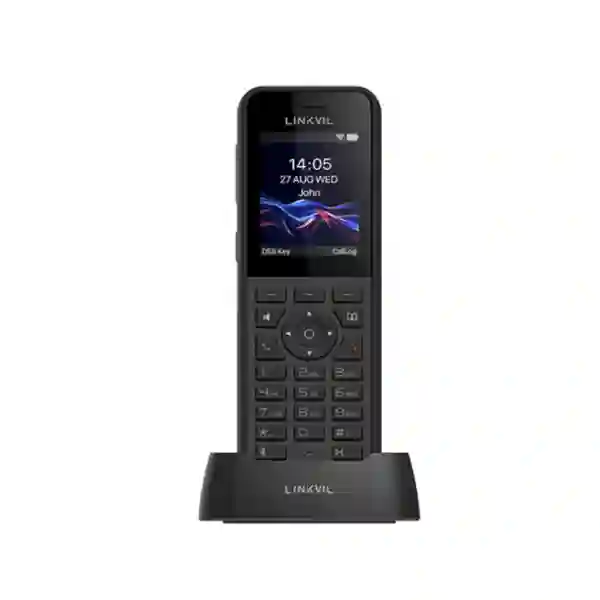
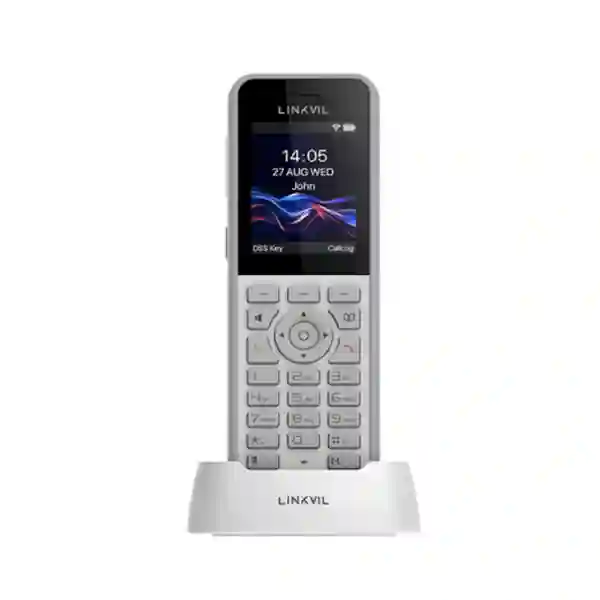
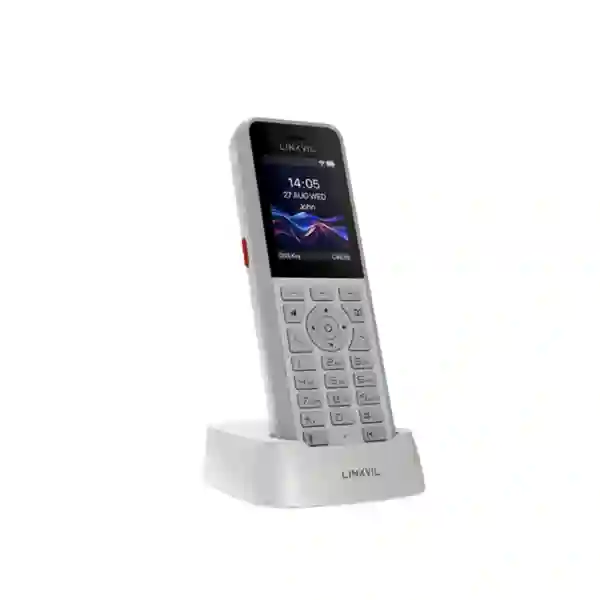
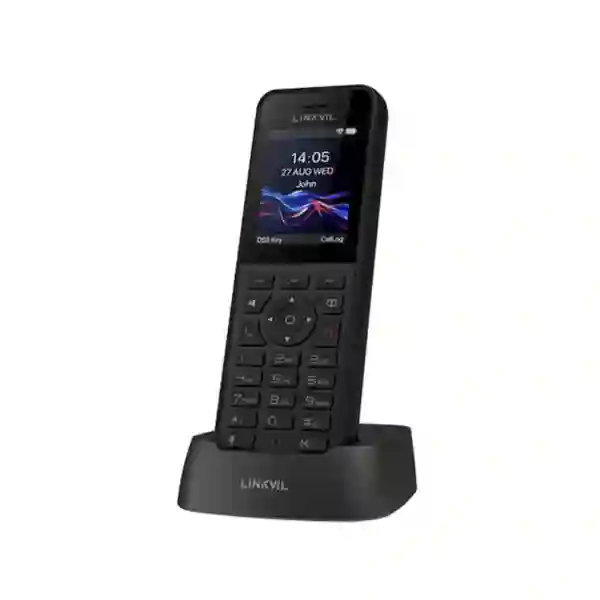
LINKVIL W626W Ruggedized Wi-Fi Phone
The LINKVIL W626W is a ruggedized SIP Wi-Fi handset created for people who need to stay reachable while moving through warehouses, factories, hospitals, logistics facilities, security environments and other demanding workplaces. It combines IP67 water-and-dust protection, tested 1.8-metre drop resistance, Wi-Fi 6 mobility, Bluetooth 5.0, HD audio, a dedicated PTT key, an emergency alarm key, safety-event functions and enterprise-oriented provisioning. For Tanzanian organisations, the important question is not only whether the handset is rugged; it is whether the Wi-Fi, SIP platform, roaming design, charging workflow and operational procedures are prepared to make a mobile voice deployment reliable.
W626W is a strong fit for organisations that want a durable Wi-Fi 6 SIP handset with IP67 protection, up to eight SIP accounts, a 3100mAh battery, PTT and alarm functions, Bluetooth headset support, WPA3/TLS 1.3 security and roaming assistance through 802.11k/v/r.
What the LINKVIL W626W solves
Desk phones work well when the user remains at a desk. Frontline teams are different. A warehouse supervisor may walk from receiving to racking, a maintenance engineer may move through machinery zones, a nurse may need to communicate while changing wards, and a security officer may patrol between indoor and outdoor-adjacent areas. In these cases, communication must move with the user. The W626W uses the organisation’s Wi-Fi network for SIP voice rather than depending on a fixed Ethernet connection, allowing staff to stay on the same business calling environment while mobile. This can reduce the operational gap between fixed office telephony and workers whose job requires constant movement.
Ruggedness is central to the design. LINKVIL specifies IP67 protection against water and dust and a safe drop height of 1.8 metres. The handset is also described with antibacterial material and chemical-cleaning resistance, which is relevant for healthcare, production and shared-device environments where equipment may be cleaned frequently. Those characteristics do not remove the need for sensible handling or a site-specific device policy, but they make the phone more suited to difficult workplaces than a typical office handset.
Communication quality is addressed through HD audio, two microphones, intelligent noise cancellation, acoustic shield technology, echo cancellation and wideband codecs including G.722 and Opus. The handset includes a loudspeaker, vibration, a physical keypad and dedicated keys that are easier to operate in practical work environments than a screen-only consumer device. A red alarm key can trigger an emergency call or alert workflow, while supported alarm events include man-down, no-movement and running detection. These functions should be mapped to the customer’s safety procedures and tested before being treated as part of a critical response process.
Key verified features of the W626W
IP67 rugged design
Designed for water and dust resistance with a specified safe drop height of 1.8 metres, supporting use in demanding industrial and operational environments.
Dual-band Wi-Fi 6
Supports 2.4GHz and 5GHz Wi-Fi 6 and 802.11k/v/r roaming features, helping properly designed wireless networks provide smoother mobility between access points.
Eight SIP lines
Supports up to eight SIP accounts, giving organisations flexibility for extension identities, departmental lines or other supported PBX call arrangements.
3100mAh battery
LINKVIL states up to 13 hours of talk time and up to 240 hours of standby time based on laboratory data. Real-world battery duration varies with use and radio conditions.
PTT and alarm functions
A dedicated Push-to-Talk key supports one-touch communication, while the red alarm key and safety-event functions can be integrated into suitable operational procedures.
Security controls
Supports SRTP, TLS 1.2/TLS 1.3, WPA/WPA2-PSK/WPA3 and 802.1X EAP, enabling deployment within modern enterprise security policies when correctly configured.
Bluetooth and USB-C
Bluetooth 5.0 supports compatible headsets, while USB-C is provided for charging and headset connection. A charging base with contact pins is also supported.
2.4-inch colour display
The 240 × 320 TFT display supports H.264 video decoding up to 4CIF according to the manufacturer, extending supported interactions beyond voice-only use.
LINKVIL W626W technical specification guide
| Area | Verified specification | Buying relevance |
|---|---|---|
| Wireless | Dual-band Wi-Fi 6; 802.11 a/b/g/n/ac/ax; 802.11k/v/r roaming | Confirm coverage, channel plan, roaming and voice quality across the actual site. |
| Bluetooth | Bluetooth 5.0 | Useful for compatible wireless headsets and mobile workflows. |
| Voice | 8 SIP lines, G.722/Opus wideband codecs, 6-way audio conference | Check PBX support, licensing and feature interoperability. |
| Display | 2.4-inch 240 × 320 TFT colour screen | Physical keypad and compact display suit quick field interactions. |
| Battery | 3100mAh; up to 13h talk / 240h standby, laboratory data | Plan charging rotations around real shift patterns rather than headline runtime alone. |
| Protection | IP67; 1.8m safe drop height; antibacterial and chemical-cleaning-resistant material | Appropriate for shared and demanding workplaces when cleaning practices follow manufacturer guidance. |
| Security | SRTP; TLS 1.2/1.3; WPA/WPA2-PSK/WPA3; 802.1X EAP | Allows alignment with enterprise WLAN and voice-security policies. |
| Management | FTP/TFTP/HTTP/HTTPS provisioning, DHCP Option 66, SIP PnP, TR-069, FDMCS | Important for repeatable rollout, configuration control and larger fleets. |
| Physical | 161 × 55 × 24.5mm; operating temperature -10°C to 45°C | Check site temperature and carrying method for the intended operational role. |
Deployment, compatibility and buying guidance
A rugged handset does not compensate for weak wireless design. Before purchasing a fleet of W626W phones, verify Wi-Fi coverage where calls actually occur: aisles, loading zones, staircases, production rooms, corridors, outdoor-adjacent areas and any location where staff may need PTT or emergency communication. Roaming support such as 802.11k/v/r is useful only when access points, security settings and radio conditions are configured in a compatible way. Voice traffic should be assessed for latency, jitter, packet loss, roaming interruption and congestion during realistic busy periods.
SIP compatibility should also be validated against the chosen IP PBX or hosted voice platform. The phone supports standard SIP features, but individual functions such as BLF behaviour, PTT workflows, directory integration, provisioning, call recording, emergency routing or advanced PBX applications can depend on the server platform and firmware combination. A pilot group is often more valuable than purchasing a large quantity before validation. Test registration, inbound and outbound calling, transfer, hold, conferencing, voicemail indication, directory access, headset operation and roaming between access points.
For larger environments, configuration management matters. The W626W supports multiple provisioning methods and management protocols, which can reduce manual setup. Administrators should decide how Wi-Fi credentials, SIP settings, security certificates, firmware, contacts and naming conventions will be controlled. Shared devices may need a different identity model from individually assigned handsets. Charging points should be positioned around shift patterns, and spare devices or batteries should be considered according to operational criticality rather than assumed as mandatory.
FourTeck Tanzania can help connect the handset decision with the wider infrastructure. Review FourTeck Tanzania’s integrated IT and telecom approach for the broader relationship between voice, wireless and network security. Buyers comparing voice endpoints can also use the Tanzania technology shop and telephony portfolio, while organisations that need deployment assistance can review FourTeck Tanzania services for planning, configuration and support context. For multi-country standardisation, the FourTeck Uganda technology portfolio and FourTeck Kenya solutions site can support regional procurement conversations without implying identical availability in every market.
Regional procurement and deployment guidance
LINKVIL W626W Ruggedized Wi-Fi Phone Tanzania
For organisations in Tanzania, the W626W is most relevant where staff need business telephony away from a desk but still inside a managed Wi-Fi environment. Warehouses, hospitals, manufacturing operations, logistics centres, hospitality back-of-house teams, retail stock areas and security functions are examples where a rugged SIP handset can simplify internal communication. The core buying decision should start with workflow: identify who carries the phone, how long each shift lasts, where they move, whether they need PTT, whether the alarm button will be incorporated into safety procedures, and which PBX extension or call group they need. Once those requirements are clear, device quantity and accessory needs become easier to define.
Tanzania deployments should also consider the condition of the existing wireless network. A W626W can support dual-band Wi-Fi 6 and assisted roaming, but practical call quality depends on access-point placement, interference, backhaul capacity and configuration. Warehouses with metal racking, clinics with dense internal walls, multi-floor offices and industrial sites with machinery can create radio conditions that differ sharply from an open office. A pre-deployment survey or pilot walk test can reveal weak zones before handsets are rolled out to a larger workforce. Organisations should test calls while moving, not only while standing next to an access point.
Procurement teams should request the exact model, colour if relevant, included charging base, 5V/2A adapter, rechargeable battery, belt clip and quick installation documentation. They should also verify PBX compatibility, Wi-Fi security, firmware and any required platform-side licences. LINKVIL publishes up to 13 hours talk time and 240 hours standby under laboratory conditions, so shift planning should be based on measured use after pilot deployment rather than assuming every user will achieve the laboratory maximum. If emergency and man-down functions are important, test those workflows end to end, document who receives alerts and train users on what the alarm key does. FourTeck can help build the quotation around the complete environment—handsets, Wi-Fi readiness, SIP configuration, provisioning, charging and deployment support—rather than treating the W626W as an isolated purchase.
LINKVIL W626W Ruggedized Wi-Fi Phone Dar es Salaam
Dar es Salaam businesses often operate across busy offices, warehouses, healthcare environments, distribution facilities, hospitality properties and mixed indoor operational spaces. In these settings, a rugged Wi-Fi handset can be valuable when employees need to remain on the corporate voice system while moving between work areas. A logistics supervisor may need to speak with receiving, dispatch and management without returning to a desk; a hospital support team may need a shared handset that can be cleaned; a hotel engineering team may need clear voice communication across service corridors and equipment rooms. The W626W’s IP67 rating, 1.8-metre drop resistance, antibacterial material, dedicated PTT key and alarm functions align well with those practical use cases.
The main technical risk in a Dar es Salaam deployment is usually not the handset specification but the wireless environment around it. High user density, neighbouring networks, reinforced walls, lifts, service areas and multiple floors can affect voice roaming. Organisations should map the routes that mobile users actually take and evaluate signal strength, channel reuse and roaming behaviour along those routes. Because the handset supports 2.4GHz and 5GHz Wi-Fi 6, planners can use the capabilities of a modern WLAN, but the site still needs sensible access-point density and wired backhaul. Voice can expose wireless weaknesses that ordinary email or web browsing may not reveal, because short interruptions are more noticeable during a live call.
For quotations in Dar es Salaam, useful information includes handset quantity, user roles, number of SIP extensions, PBX brand and version, Wi-Fi platform, security method, building layout, shift length and whether users need Bluetooth headsets. If the W626W will serve as part of a safety process, describe how emergency calls or alerts should be routed and who is responsible for response. If devices are shared, consider charging and sign-out procedures. A staged rollout can begin with a small group in the most demanding areas, allowing the business to validate roaming, battery endurance, audio quality and user acceptance before expanding. This approach gives procurement teams evidence from their own building instead of relying solely on published specifications.
LINKVIL W626W Ruggedized Wi-Fi Phone Mwanza
In Mwanza, organisations considering the W626W may include distribution operations, healthcare facilities, hospitality businesses, retail back rooms, workshops, manufacturing environments and multi-building sites where employees need to coordinate without being tied to fixed extensions. The handset is particularly relevant when the workflow combines mobility with a need for business-grade SIP calling. Rather than giving workers separate consumer mobile phones, an organisation can potentially keep internal calling, extension numbering, transfer and other supported PBX functions within the managed voice environment while users walk through Wi-Fi coverage zones.
A Mwanza deployment should begin by identifying where Wi-Fi is already reliable and where it is not. Large spaces can appear to have coverage while still containing dead areas behind storage, walls or machinery. If voice users move through those areas, calls may suffer even though a laptop used at a nearby desk seems fine. The W626W supports 802.11k/v/r roaming features, but the WLAN must support and be configured for suitable roaming behaviour. Test calls across access-point boundaries, measure performance during busy network periods, and separate voice traffic logically where the network design requires it. Security should be planned as part of the wireless profile, using supported options such as WPA3 or 802.1X where appropriate to the organisation.
Buyers should also plan device lifecycle and day-to-day handling. The 3100mAh battery and published laboratory runtime are useful indicators, but real shifts can include heavy PTT use, frequent roaming, high call volume and Bluetooth accessories that influence battery consumption. Charging bases should be placed where handsets can be returned consistently. If the phone is shared, assign device names and SIP identities that make troubleshooting practical. Maintain a record of firmware and configuration. For support requests, being able to state which handset, access point and call path were involved in an issue can save significant time. A good W626W project therefore includes not only rugged phones but also wireless validation, clear provisioning, documented ownership and a tested PBX configuration.
LINKVIL W626W Ruggedized Wi-Fi Phone Arusha
Arusha organisations can use the LINKVIL W626W where mobile staff need dependable internal voice across business premises. Hospitality properties, healthcare sites, logistics operators, service businesses, educational campuses and operational facilities can all have staff who move constantly while still needing extension-based communication. The W626W combines a familiar physical keypad with Wi-Fi 6, SIP calling, PTT, Bluetooth 5.0 and a rugged body, making it easier to treat mobility as part of the business telephony design rather than as a separate consumer-device problem.
Hospitality and campus-style environments deserve special attention to roaming. A user may travel from reception to a service area, between floors, through corridors or across adjacent buildings. The wireless network should be assessed along these movement paths. Outdoor areas should not be assumed to have useful coverage just because a nearby indoor access point is visible. For voice, stable handoff and predictable latency matter more than headline Wi-Fi speed. A pilot should include walking calls, PTT use and any critical alert workflow in the real environment. Where guest Wi-Fi shares infrastructure with operational devices, network segmentation and capacity planning become especially important so public usage does not degrade staff communications.
Arusha procurement planning should distinguish between a handset purchase and an operational communication project. The quotation request should include the number of users per shift, whether devices are individually assigned or pooled, the existing PBX, Wi-Fi system, headset requirements, charging locations and any need for directory or provisioning integration. For healthcare or shared-device scenarios, the W626W’s antibacterial and chemical-cleaning-resistant materials are relevant, but cleaning methods should still follow manufacturer recommendations. If the alarm key or man-down/no-movement features are being considered for worker safety, define escalation procedures and test them. The phone can provide the device-side capability; the organisation must provide the response process, network path and receiving systems that turn an alert into useful action.
LINKVIL W626W Ruggedized Wi-Fi Phone Dodoma
For businesses and institutions in Dodoma, the W626W can serve as a practical mobility endpoint when users need SIP calling across offices, service areas, stores, clinics, warehouses or other facilities covered by enterprise Wi-Fi. The handset supports up to eight SIP lines, allowing more flexibility than a basic single-purpose radio, while the physical PTT key supports rapid one-touch communication where that workflow is configured. The rugged IP67 enclosure and 1.8-metre drop rating are useful for users who carry a phone through active workplaces rather than placing it on a desk for most of the day.
Before ordering, Dodoma customers should confirm whether the existing WLAN was designed for voice mobility. Wi-Fi created mainly for stationary laptops may have access-point spacing, power levels or security settings that do not produce smooth roaming. The W626W supports modern Wi-Fi features, but network design still determines how well a call survives movement. Test all important areas, including staircases, entrances, storage rooms and connecting corridors. If a site has separate SSIDs or VLANs for voice, document the addressing, DHCP, DNS, QoS and firewall requirements. If the PBX is hosted off-site, internet stability and firewall/NAT behaviour also become part of the call path.
Procurement should include an implementation checklist rather than only a unit price. Confirm what is included in the box, how devices will be charged, who configures SIP accounts, how Wi-Fi credentials are loaded, whether certificates are needed, which firmware is approved, and how faults will be reported. The handset supports auto-provisioning methods that can help when quantities increase, reducing repetitive manual configuration. Businesses should also decide whether each employee receives a named device or whether phones are shared by role or shift. This affects directory configuration, extension identity and accountability. FourTeck can use those details to prepare a more accurate recommendation and avoid assumptions about stock, delivery, licences or site conditions that should instead be verified at quotation stage.
LINKVIL W626W Ruggedized Wi-Fi Phone UAE
For organisations in the UAE, the LINKVIL W626W can fit industrial, logistics, healthcare, hospitality, retail and facilities-management environments where staff operate within managed Wi-Fi coverage and need rugged SIP mobility. Distribution centres and large service facilities are especially relevant because workers may move long distances between operational zones while needing to remain reachable through a business extension. The W626W’s Wi-Fi 6 connectivity, physical PTT key, alarm key, IP67 protection and Bluetooth support address a different requirement from a fixed desk phone, while eight SIP lines and enterprise provisioning can support more structured voice deployments.
UAE deployments can also involve large warehouses, dense hospitality environments and multi-site enterprise networks. These settings should be tested carefully for roaming, interference and access-point capacity. Metal shelving and high ceilings can change radio propagation; guest networks can introduce load; large campuses can include transition areas between buildings. A voice handset depends on consistent RF performance, not merely visible signal. Where organisations use 802.1X authentication or stronger wireless security, confirm the exact profile and certificate process during the pilot. The W626W supports WPA3, 802.1X EAP, SRTP and TLS, but compatibility with the surrounding network and PBX should be validated rather than assumed.
Regional procurement teams should define whether the UAE deployment is independent or part of a standard used across branches in Tanzania, Uganda, Kenya or other markets. A common handset model can simplify training and configuration, but each site still requires its own Wi-Fi and PBX validation. Request a quotation using quantities, site count, PBX details, wireless platform, desired accessories and provisioning needs. Avoid comparing suppliers by handset price alone if one proposal includes configuration or testing and another does not. For a rugged voice project, operational readiness—coverage, roaming, charging, firmware, alert routing and user training—has a direct effect on value. A clear scope makes it easier to compare like-for-like proposals and plan deployment responsibly.
LINKVIL W626W Ruggedized Wi-Fi Phone Uganda
Ugandan organisations evaluating the W626W can use it as a business mobility endpoint for teams working throughout premises rather than at fixed desks. Potential environments include warehouses, hospitals, manufacturing facilities, campuses, hospitality operations, retail back rooms and security functions. The handset uses Wi-Fi for SIP communication, so it can extend a business voice system into areas where installing a fixed phone for every mobile user would not match the workflow. Dedicated PTT and alarm controls are especially useful where rapid communication is more important than navigating through menus.
The most important deployment question is whether Wi-Fi coverage is continuous across the user’s work path. Coverage maps designed for general internet access may not be sufficient evidence for voice. A mobile user can expose gaps between access points, slow handoffs or congested channels. Because the W626W supports dual-band Wi-Fi 6 and roaming assistance, it can make good use of a properly planned WLAN, but it cannot create radio coverage where the network is weak. Uganda customers should test calls through operational areas and verify how the handset behaves when moving between access points, using the same security method and PBX configuration intended for production.
For procurement, create a small requirements sheet: number of handsets, number of simultaneous users, individual versus shared assignment, shift length, PBX platform, Wi-Fi model, authentication method, PTT requirement, headset requirement and expected emergency workflow. This information helps determine whether a straightforward device supply is enough or whether wireless assessment, PBX configuration and provisioning support should be included. The published 13-hour talk time and 240-hour standby are laboratory figures, so real battery performance should be observed during pilot use. Organisations with several branches should also decide whether configuration templates will be standardised. Consistent naming, firmware and provisioning reduce support effort when the same phone is used across multiple sites.
LINKVIL W626W Ruggedized Wi-Fi Phone Kampala
Kampala deployments often combine offices with active operational spaces such as stores, warehouses, clinics, hotels, service facilities and multi-floor buildings. The W626W is relevant when employees move through those areas and still need access to SIP calling, extension features or quick PTT communication. The handset’s rugged construction and dedicated physical controls reduce dependence on fragile consumer devices in roles where equipment is frequently carried, shared or exposed to dust, moisture and accidental drops.
Dense urban wireless environments can make planning especially important. Nearby Wi-Fi networks, multiple floors, concrete walls and many client devices can all affect channel utilisation. Organisations should avoid assuming that because smartphones receive Wi-Fi, enterprise voice will automatically perform well. Walk through the facility while maintaining live calls, check areas where users pause or congregate, and observe handoffs between access points. If the network supports 802.11k/v/r, ensure settings are compatible with the handset profile. Consider whether voice traffic has an appropriate VLAN and QoS policy, and test the path all the way to the PBX or SIP provider.
Kampala buyers should also think about fleet management. Eight SIP lines provide flexibility, but most users may need only one extension; configuration should match real roles rather than enable features unnecessarily. A shared security handset may need different alarm routing from a warehouse picker’s handset. Bluetooth headsets may be helpful in some roles, while others may depend on the speakerphone or physical receiver. USB-C and charging-base options offer operational flexibility, but chargers should be assigned and placed so devices are consistently ready at shift change. When requesting pricing, include these workflow details and ask suppliers to state exactly what services and accessories are included. This produces a clearer procurement comparison and reduces installation surprises after the phones arrive.
LINKVIL W626W Ruggedized Wi-Fi Phone Arua
In Arua, the LINKVIL W626W can be considered for organisations that need reliable on-premises mobility without moving every operational call onto a cellular device. Warehouses, healthcare environments, institutional sites, service teams and security staff can benefit from a rugged SIP handset when their work is concentrated inside a Wi-Fi-covered facility. The physical keypad, PTT key and alarm key are practical for users who need fast actions, while IP67 protection and 1.8-metre drop resistance are suited to jobs where a standard office handset would be unrealistic.
Sites should evaluate the network before purchasing at scale. In locations with fewer access points or larger coverage areas, signal may become weak at the edge of buildings, storage areas or connecting corridors. Voice quality can deteriorate before general data usage becomes obviously unusable. A pilot should therefore include the most difficult routes and busiest periods. The W626W supports both 2.4GHz and 5GHz operation; network planners should choose bands, channels and power levels according to the local RF environment instead of forcing a single universal setting. If internet connectivity is used to reach a hosted PBX, that WAN path should be tested as well.
Arua procurement teams can keep the scope practical by defining the exact user group and beginning with the areas where mobility adds the most value. For example, a small set of warehouse or security users can validate call quality, PTT, emergency routing and battery endurance before the organisation expands. Shared devices need clear naming and charging ownership. Individually assigned devices may need personal directory and voicemail settings. The handset supports remote provisioning options, which become increasingly useful as the fleet grows. When requesting a quotation, avoid assumptions about local stock or delivery timing; ask for those items to be confirmed alongside quantities, warranty terms, accessories, configuration services and support scope. This makes the procurement record clear and avoids treating regional availability as a fixed product specification.
LINKVIL W626W Ruggedized Wi-Fi Phone Mbarara
Mbarara customers may look at the W626W when staff need to communicate across healthcare facilities, warehouses, hospitality sites, campuses, workshops or other buildings where movement is part of the job. A Wi-Fi SIP phone can give those users access to corporate calling features without returning to a fixed extension. The W626W adds ruggedisation and workplace-oriented controls to that mobility model, making it more appropriate than a typical office handset for users who carry the device throughout a shift.
Operational success depends on the network and call system. The handset supports up to eight SIP lines and multiple standard call features, but the connected PBX determines which functions are available in practice. Test transfers, queues, voicemail, caller ID, directory access and any emergency routing that matters to the organisation. On the wireless side, ensure access points provide sufficient overlap for roaming. Warehouses and healthcare facilities can have very different RF behaviour, so generic coverage estimates are not enough. The best evidence comes from live calls while following real user movement patterns.
For Mbarara procurement, consider how devices will be managed after installation. A small deployment can be configured manually, but larger fleets benefit from repeatable provisioning and documented templates. Decide how firmware updates will be controlled, how lost or replaced units will be reconfigured, and how Wi-Fi credentials are protected. Battery charging should be included in the operational plan; the 3100mAh specification and laboratory runtime are helpful but should be verified against local calling and roaming intensity. If workers use gloves or operate in noisy areas, pilot the keypad, PTT and audio under real conditions rather than relying solely on a desk test. A well-scoped quotation should therefore cover model quantity, accessories, Wi-Fi readiness, PBX integration, provisioning and user workflow so the handset is evaluated as part of the communication system.
LINKVIL W626W Ruggedized Wi-Fi Phone Gulu
For Gulu organisations, a rugged Wi-Fi handset is most useful when users move through a defined facility and need immediate access to business calls or PTT. Healthcare teams, warehouse staff, service technicians, security personnel and supervisors can all have this requirement. The W626W supports SIP communication over Wi-Fi 6, so it can operate as part of a managed enterprise telephony system while giving the user physical mobility. Its IP67 rating, drop resistance and chemical-cleaning-resistant design add resilience where devices are exposed to tougher daily handling.
Gulu sites should pay attention to the practical limits of Wi-Fi coverage. A phone can only roam across access points that are present, powered, connected and configured correctly. If the building has extensions, outdoor-adjacent spaces or rooms with thick walls, those areas may need additional assessment. Use real calls to identify weak transitions and verify that voice remains intelligible when other wireless clients are active. Where reliable power is important to the WLAN, consider how access points, switches and the PBX are supported during interruptions, because handset battery life alone does not keep the voice system available if the network infrastructure is offline.
When creating a quotation request, Gulu buyers should separate must-have requirements from optional features. A security team may place high priority on alarm and PTT behaviour, while a warehouse team may focus on roaming and battery endurance. A healthcare environment may prioritise cleanability and shared-device management. Confirm the SIP platform, directory method and wireless security approach. Test Bluetooth headset models if they are required. Document which accessories are included and whether additional charging points are necessary. If a regional IT team supports several sites, using common templates for Wi-Fi settings, SIP accounts, device names and firmware can simplify support. The goal is to deploy a repeatable communication tool that fits the workflow, not simply to introduce another handheld device that users must troubleshoot individually.
LINKVIL W626W Ruggedized Wi-Fi Phone Kenya
Kenyan businesses can evaluate the LINKVIL W626W for industrial, logistics, healthcare, hospitality, retail and campus operations where employees move through enterprise Wi-Fi coverage. The value proposition is strongest when the organisation already uses SIP telephony and wants mobile staff to remain part of the same extension plan. Instead of maintaining a separate calling method for warehouse or field-within-site teams, the W626W can bring rugged wireless calling, PTT and supported alarm workflows into the broader communications architecture.
Large warehouses and multi-building sites in Kenya can create challenging radio conditions. Access-point density, high ceilings, metal structures, client load and roaming configuration should be assessed. The W626W supports 802.11k/v/r, but the network must be engineered so those features have a useful environment in which to operate. Organisations should perform a voice-focused site test rather than relying only on general Wi-Fi coverage statistics. Security is another planning point: WPA3, 802.1X and TLS/SRTP capabilities can support enterprise policies, but the exact authentication profile and certificate process need to match the WLAN and PBX.
For procurement across Kenya and Tanzania together, a common model can help standardise user training and fleet management. However, each site’s RF conditions, PBX path and support arrangements remain distinct. Buyers should request clear scope for device supply, accessories, configuration, provisioning and any network assessment. If safety features are used, organisations should define alert recipients and escalation rather than assuming the phone itself provides a complete safety solution. Charging strategy should be tied to shift patterns, and pilot users should report battery performance under real call loads. This evidence supports more accurate fleet sizing. Regional standardisation is most valuable when it includes not just the handset model but also naming conventions, firmware, configuration templates, security policy and documentation.
LINKVIL W626W Ruggedized Wi-Fi Phone Kuwait
Kuwait organisations with warehouses, healthcare sites, industrial facilities, large hospitality properties and service operations can consider the W626W when staff need mobile SIP voice within controlled Wi-Fi coverage. The handset is designed for demanding environments rather than ordinary desk use, combining IP67 protection, a 1.8-metre drop rating, physical keys, PTT, alarm functions and Bluetooth connectivity. This makes it relevant to users who carry a device throughout a shift and may need immediate communication while handling other tasks.
The local environment should be considered carefully, particularly around temperature exposure and indoor/outdoor transitions. LINKVIL specifies an operating temperature range of -10°C to 45°C. Deployments should remain within manufacturer limits and should not assume that an IP67 rating makes the phone suitable for every environmental extreme. Where staff move between air-conditioned interiors and hotter loading or service zones, the organisation should assess real conditions. Wi-Fi coverage in such transition areas should also be tested, because doors, building materials and distance can create roaming challenges.
Kuwait procurement teams should define the surrounding communications architecture before selecting quantity. Confirm PBX compatibility, SIP account requirements, wireless security, access-point platform, device management and charging. If large quantities are planned, use the handset’s provisioning capabilities to reduce repeated manual setup. If Bluetooth headsets are required, test the chosen models and user controls. Alarm and man-down/no-movement functions should be validated as part of a documented operational procedure. A quotation should state whether it includes only hardware or also configuration, rollout, training and support. This matters when comparing proposals because a lower unit price can represent a different scope. A pilot deployment can confirm audio performance, roaming and battery endurance under actual workload before a larger purchase is approved.
LINKVIL W626W Ruggedized Wi-Fi Phone Ghana
In Ghana, the W626W is relevant to organisations that need dependable voice mobility inside business premises. Warehousing, manufacturing, healthcare, hospitality and security are practical examples because users in these environments can spend most of their time away from desks. By using Wi-Fi for SIP voice, the handset can integrate mobile workers into a standard IP-PBX numbering and call-routing plan. Rugged construction, PTT, alarm functions, a physical keypad and long published battery endurance make it purpose-built for operational roles.
Wireless readiness remains the deciding technical factor. Warehouses with metal racks, hospitals with partitioned rooms and multi-floor buildings can all create coverage patterns that differ from a conventional office. Ghana customers should test the W626W where users actually walk, including corners, staircases and loading areas. Observe call continuity when roaming between access points and when the network is busy. If voice is business-critical, review wired switch capacity, access-point power, internet/WAN availability for hosted PBX systems and resilience of network equipment. A handset cannot maintain SIP service when the wider network path is unavailable.
For buying and rollout, begin with a requirements matrix. List each user type, number of phones, expected call volume, PTT requirement, alarm workflow, headset preference and shift duration. Confirm the PBX, Wi-Fi authentication method and any directory or provisioning integration. Organisations using shared phones should develop a handover and charging routine. Teams using individually assigned phones can configure personal directories or voicemail according to policy. Treat LINKVIL’s runtime figures as laboratory guidance and verify local use patterns. Procurement should also ask suppliers to confirm exact availability, commercial warranty terms and delivery scope at the time of quotation rather than relying on generic assumptions. This keeps the product specification separate from variables that can change by country and supplier.
LINKVIL W626W Ruggedized Wi-Fi Phone Nigeria
Nigerian organisations with large operational teams can use the W626W to extend SIP telephony beyond fixed workstations. Distribution centres, hospitals, factories, hotels, campuses, retail operations and security departments can all benefit where users need extension-based calling while moving through Wi-Fi coverage. The phone’s rugged design and physical controls suit environments in which consumer smartphones may be unnecessarily complex, fragile or difficult to standardise as corporate voice endpoints.
Nigeria deployments may involve large buildings, dense wireless usage or multiple sites, so Wi-Fi planning should be treated as part of the voice project. The W626W supports Wi-Fi 6 and 802.11k/v/r assisted roaming, but access-point placement and configuration control the actual result. Test signal and call quality throughout the user’s route, not only in office areas. For hosted SIP systems, internet resilience and firewall/NAT settings also influence service. Organisations can improve troubleshooting by documenting which SSID, VLAN, access point and PBX extension each test device uses. This creates evidence when investigating intermittent issues.
A larger Nigerian deployment can benefit from central provisioning. The phone supports multiple auto-provisioning methods, making it possible to standardise settings across many handsets. Decide how firmware versions, credentials, directory entries and SIP parameters will be governed. Consider whether phones are issued to named employees or assigned by shift. Safety-related settings require even more discipline: alarm key, man-down and no-movement events should be connected to a tested response process, with clear ownership for monitoring. Charging and spare-device strategy should match the importance of uninterrupted communication. When soliciting quotations, specify accessories, services and support explicitly. Compare total project scope rather than only the device unit cost, especially when one supplier includes configuration or wireless assessment and another offers hardware only.
LINKVIL W626W Ruggedized Wi-Fi Phone Seychelles
For organisations in Seychelles, the W626W can be considered for resorts, hospitality operations, healthcare environments, warehouses, service facilities and security teams that need mobile voice within managed Wi-Fi areas. Hospitality is a particularly natural use case because engineering, housekeeping, security and operations staff often move through back-of-house corridors, service rooms and guest-support areas while needing fast internal communication. A rugged SIP handset can keep those calls within the business voice environment rather than relying on personal devices.
Property layout can make wireless design more complex. Separate buildings, landscaped spaces, reinforced structures and outdoor transitions can create gaps that are not obvious from an indoor floor plan. Although the W626W is IP67 rated, wireless coverage still determines where SIP service is available. Organisations should map staff routes and test calls at transitions between access points and buildings. For outdoor or semi-outdoor spaces, confirm that the WLAN itself was designed to provide coverage there. Do not interpret the handset’s rugged rating as a guarantee that every environmental or radio condition is supported.
Seychelles buyers should decide whether devices are assigned by role, department or individual user. A shared engineering phone may use a team extension and group directory, while a manager’s handset may need a personal account and Bluetooth headset. Charging points should be located where shift handovers occur. Because the device supports up to eight SIP lines, avoid overcomplicating configuration unless users truly need multiple identities. The strongest deployment is one where the phone behaves simply for the user while administration remains controlled behind the scenes. For procurement, provide building/site details, user count, PBX platform, access-point system and expected workflows. Ask for availability and delivery to be confirmed at quotation time, as those commercial factors can vary independently of the published W626W specification.
Quotation checklist for LINKVIL W626W
Including these details in the first request makes it easier to distinguish a simple handset quotation from a complete deployment proposal. It also reduces the chance of discovering after purchase that the network, PBX, accessories or operational process needs additional work.
LINKVIL W626W FAQs
Is the LINKVIL W626W waterproof and dust resistant?
The manufacturer specifies an IP67 protection rating and a safe drop height of 1.8 metres. IP ratings have defined test conditions, so deployment should still follow manufacturer guidance and should not assume the handset is suitable for every type of liquid exposure or environmental condition.
Does the W626W support Wi-Fi 6?
Yes. The W626W supports dual-band Wi-Fi 6 on 2.4GHz and 5GHz, including IEEE 802.11 a/b/g/n/ac/ax and 802.11k/v/r roaming assistance. Actual roaming quality still depends on the access-point network and configuration.
How many SIP accounts does the W626W support?
LINKVIL specifies support for up to eight SIP lines. PBX-side licensing, interoperability and call-feature behaviour should be confirmed with the platform used by the customer.
What is the W626W battery life?
The manufacturer specifies a 3100mAh battery, up to 13 hours of talk time and up to 240 hours of standby time based on laboratory data. Real-world duration varies with signal conditions, call volume, roaming, settings and connected accessories.
Does the phone have a push-to-talk key?
Yes. A dedicated PTT key supports one-touch call use where the communication environment is configured for it. The handset also has a dedicated alarm key and supported safety-event functions including man-down, no-movement and running detection.
Can the W626W use Bluetooth headsets?
Yes. The phone supports Bluetooth 5.0 and Bluetooth headset controls including answer, end, mute, redial and volume adjustment. Compatibility with a specific headset should be validated before standardising a large deployment.
Does it support secure enterprise Wi-Fi?
The W626W supports WPA, WPA2-PSK, WPA3 and 802.1X EAP, plus SRTP for voice encryption and TLS 1.2/TLS 1.3 for transmission encryption. The exact deployment should match the organisation’s WLAN and SIP security architecture.
How should we test the W626W before buying many units?
Use a pilot on the production Wi-Fi and PBX. Test registration, calling, transfer, hold, voicemail, directory, PTT, alarm workflows, Bluetooth accessories, charging, battery endurance and live call roaming across the real areas where employees work. This is more reliable than a desk-only demonstration.
Decision recap
Choose the W626W when ruggedness, Wi-Fi mobility, SIP integration, PTT, physical controls and enterprise security fit the user’s workflow. Validate Wi-Fi coverage and PBX compatibility before scaling. Treat battery figures as laboratory guidance, and connect safety functions to tested operational procedures.
Consultation panel
For an accurate recommendation, share the number of handsets, site type, PBX platform, Wi-Fi access-point system, roaming area, user shift length, PTT or emergency requirements, headset preference and deployment country. FourTeck can then help shape the scope around the complete communication environment.


Reviews
There are no reviews yet.