
FortiGate Firewall for Small Business
FortiGate Firewall for Small Business is a practical way for growing organisations to move beyond a basic internet router and build a managed security edge around users, applications, cloud services, branch links, Wi-Fi networks and business devices. Fortinet currently positions a range of FortiGate next-generation firewalls for small-business environments, with models that combine firewall policy, secure SD-WAN, VPN, application visibility and optional FortiGuard AI-powered security services within the FortiOS platform.
The important buying decision is not simply “which model is cheapest?” A suitable FortiGate should be chosen around the internet speed you actually use, the security inspection you plan to enable, the number and behaviour of users and devices, VPN needs, WAN links, branch connectivity, network segmentation, logging expectations and likely growth. FourTeck can help turn those operational details into a clearer appliance, subscription and deployment requirement.

Create policy around users, applications, destinations and network zones instead of relying only on basic port-based filtering.
Use more than one WAN path with policy and health checks so important applications can follow appropriate links.
Support encrypted connectivity between offices and approved remote-access designs, subject to the capabilities of the selected model and FortiOS release.
Add subscribed threat-protection services such as IPS, web and DNS security, malware protection and related controls according to the selected bundle.
What a FortiGate small-business firewall is designed to solve
A small company can face the same basic network-security problems as a much larger organisation, even when it has fewer employees. Staff use cloud applications, web services, email, online banking, collaboration tools and remote access. The office may also contain IP phones, cameras, printers, wireless access points, point-of-sale devices, servers and guest users. When every device sits behind a basic router on one unrestricted network, it becomes difficult to control who can reach what, identify risky traffic, build secure branch connections or apply consistent security policy.
FortiGate brings networking and security functions into FortiOS. In a well-designed small-business deployment, the firewall can act as the controlled boundary between internet links and internal networks, route traffic between authorised VLANs, enforce security policy, create site-to-site VPNs, participate in secure SD-WAN, and use subscribed FortiGuard services for deeper inspection. This consolidation can reduce the number of separate point products that a small IT team must administer, but it does not eliminate the need for good design. A powerful firewall cannot compensate for weak administrator passwords, missing endpoint protection, unmanaged switches, poor backups or an undocumented LAN.
For that reason, FourTeck approaches a FortiGate purchase as a network project rather than a box purchase. The FourTeck Tanzania services page explains how firewall, switching, Wi-Fi and supporting infrastructure can be considered together. That is useful when the firewall must separate guest wireless, cameras, voice endpoints and business systems instead of simply replacing the ISP router with identical network behaviour.
Current FortiGate options for small-business networks
Fortinet’s current small-business firewall page lists several FortiGate models spanning compact branches through higher-capacity environments. The manufacturer publishes interface counts and threat-protection reference figures to help buyers compare platforms. These values are useful for initial planning, but they are not a substitute for a complete sizing exercise because encrypted inspection, traffic mix, enabled services, VPN use, logging and future growth all influence the experience of a real deployment.
| FortiGate model | Published interfaces | Published threat protection | Planning perspective |
|---|---|---|---|
| FortiGate 30G | 4 × GE RJ45 | 500 Mbps | Compact offices and branches where a smaller security edge is appropriate. |
| FortiGate 40F | 5 × GE RJ45 | 600 Mbps | Established compact option for small sites that need professional security controls. |
| FortiGate 50G | 5 × GE RJ45 | 1,100 Mbps | Newer compact option when a small site needs more security-performance headroom. |
| FortiGate 60F | 10 × GE RJ45 | 700 Mbps | Popular small-office and branch platform where interface count matters. |
| FortiGate 70G | 10 × GE RJ45 | 1,300 Mbps | Growing offices that need additional inspected-traffic capacity. |
| FortiGate 80F | 8 × GE RJ45, 2 × shared port pairs | 900 Mbps | Larger branch or SMB sites requiring more interface flexibility. |
| FortiGate 90G | 8 × GE RJ45, 2 × 10 GE shared port pairs | 2,200 Mbps | Higher-demand offices with faster uplinks and more inspection capacity requirements. |
| FortiGate 120G | 4 × 10 GE SFP+, 18 × GE RJ45, 8 × GE SFP | 2,800 Mbps | Substantial SMB, head-office or aggregation requirements with broader interface needs. |
| FortiGate 200G | 8 × 10 GE SFP+, 8 × 5GE RJ45, 10 × GE RJ45, 4 × GE SFP | 6,000 Mbps | For larger organisations that have moved beyond typical compact-branch sizing. |
Manufacturer figures can change with product updates and test methodologies. Confirm the latest Fortinet datasheet and supported FortiOS features for the exact model before purchase. A current quotation should identify the precise appliance and subscription bundle rather than relying on a generic “small business firewall” description.
How to size a FortiGate for a small business
User count is useful, but it should never be the only sizing input. Ten designers synchronising large cloud files and holding frequent video meetings can generate more inspected traffic than forty light office users. A branch that carries CCTV viewing, VoIP, cloud backups and ERP traffic has a different profile from a professional office that mainly uses email and browser-based applications. Start with the busiest realistic traffic pattern, not the average employee count.
Record the current internet bandwidth, expected upgrade speed, peak utilisation, number of WAN links, important SaaS platforms, site-to-site VPNs, remote users, guest Wi-Fi demand, public services and internal network zones. Then identify which security functions will actually be enabled. Intrusion prevention, application control, web or DNS filtering, malware inspection and encrypted-traffic inspection consume resources differently from basic stateful firewall forwarding. Model selection should leave sensible capacity for traffic spikes, firmware evolution and business growth rather than operating at the edge of the platform from day one.
If you want a compact reference point, the FortiGate 30G Tanzania page explains how a specific small-office model can be assessed against bandwidth, FortiGuard services, IPsec connectivity and branch requirements. Buyers comparing several categories can also use the FourTeck Tanzania technology shop to frame the wider network dependencies around switches, Wi-Fi, servers and other business equipment.
Include internet speed, expected upgrade, users and devices, WAN links, VLANs, VPN tunnels, remote access, cloud applications, security services, guest traffic, public services, Wi-Fi design, switch environment, logging needs, expected growth and whether installation or migration is required. This creates a much stronger basis for comparing models than simply asking for “a FortiGate for 25 users.”
FortiGuard subscriptions, FortiCare and renewal planning
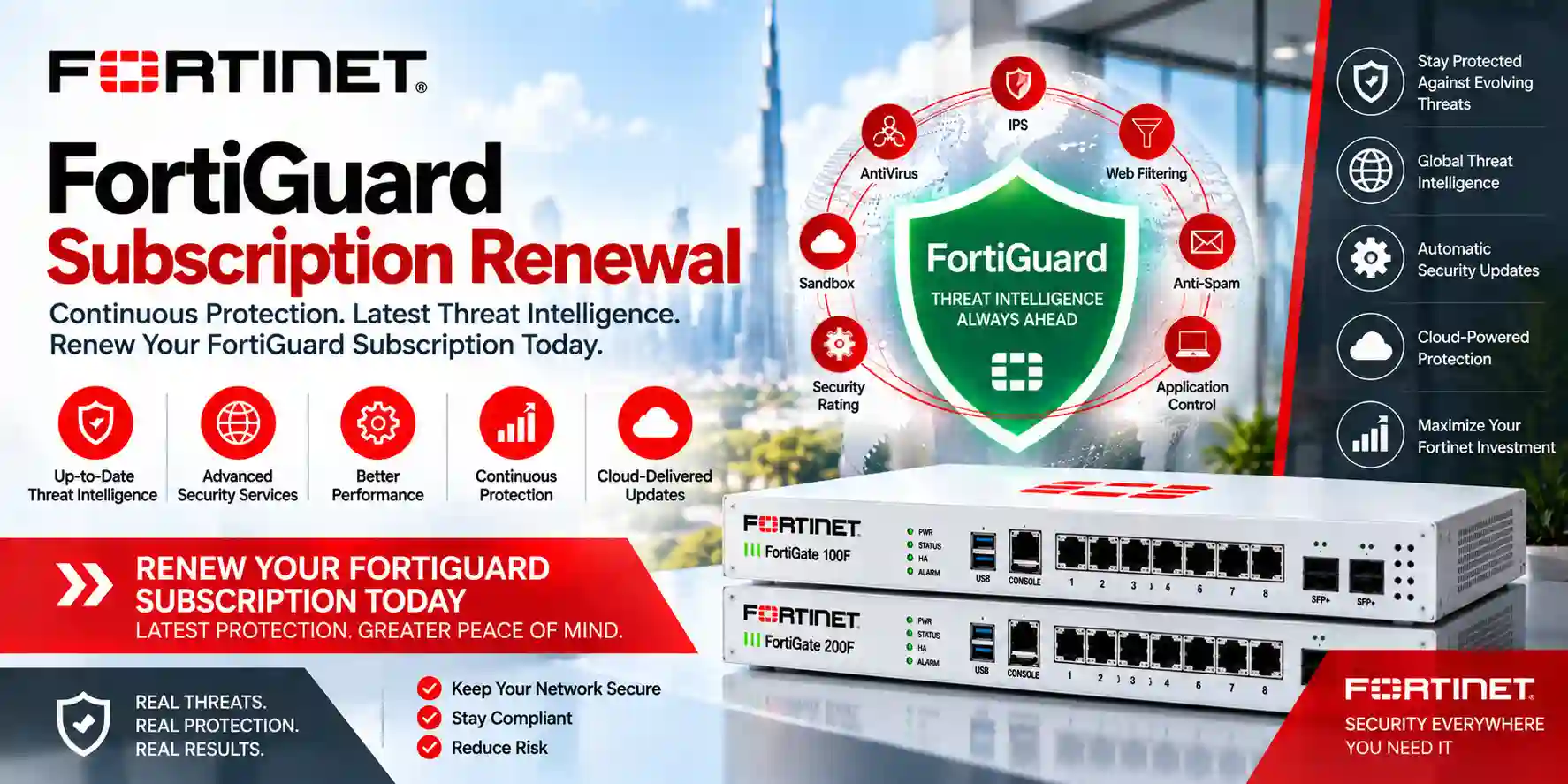
A FortiGate appliance and a FortiGate security bundle are not commercially identical. The physical firewall provides the platform, while subscribed FortiGuard services extend protection according to the selected package and term. A quotation can therefore look cheaper simply because it includes hardware only, uses a shorter service period or excludes security services that another proposal includes. Procurement teams should compare the same scope before deciding that one offer is better value.
Ask the supplier to identify the exact model, FortiCare support entitlement, FortiGuard service bundle, subscription duration and renewal date. Also confirm whether configuration, policy migration, VPN setup, firmware preparation, administrator hardening, testing, backup, documentation and user handover are part of the quoted work. If the business already owns a FortiGate, provide the serial-related subscription information through an appropriate secure process so renewal compatibility can be checked without guessing.
Renewal should be treated as a lifecycle task rather than an emergency purchase after services expire. Maintain a simple register of firewall model, location, responsible administrator, support contract, security-service term and planned renewal window. This is particularly important for companies with several branches because different deployment dates can create scattered renewal cycles that are difficult to manage.
Security architecture around the firewall
The firewall is strongest when the rest of the network gives it clear boundaries to enforce. Staff computers, guest wireless clients, CCTV devices, IP phones, servers, printers and building systems do not automatically need unrestricted access to one another. Managed switches and business Wi-Fi can map devices into appropriate VLANs, while the FortiGate applies policy between those zones. This reduces the number of unnecessary communication paths and makes troubleshooting easier because each network has a defined purpose.
Secure SD-WAN can also become part of the architecture when a company uses two internet links. The goal is not simply to “bond” connections. Decide which applications should prefer a particular circuit, which traffic can move during a failure, what health checks represent real internet availability, and whether business services depend on a fixed public IP. Voice and cloud applications may need different treatment from software updates or guest browsing during constrained backup operation.
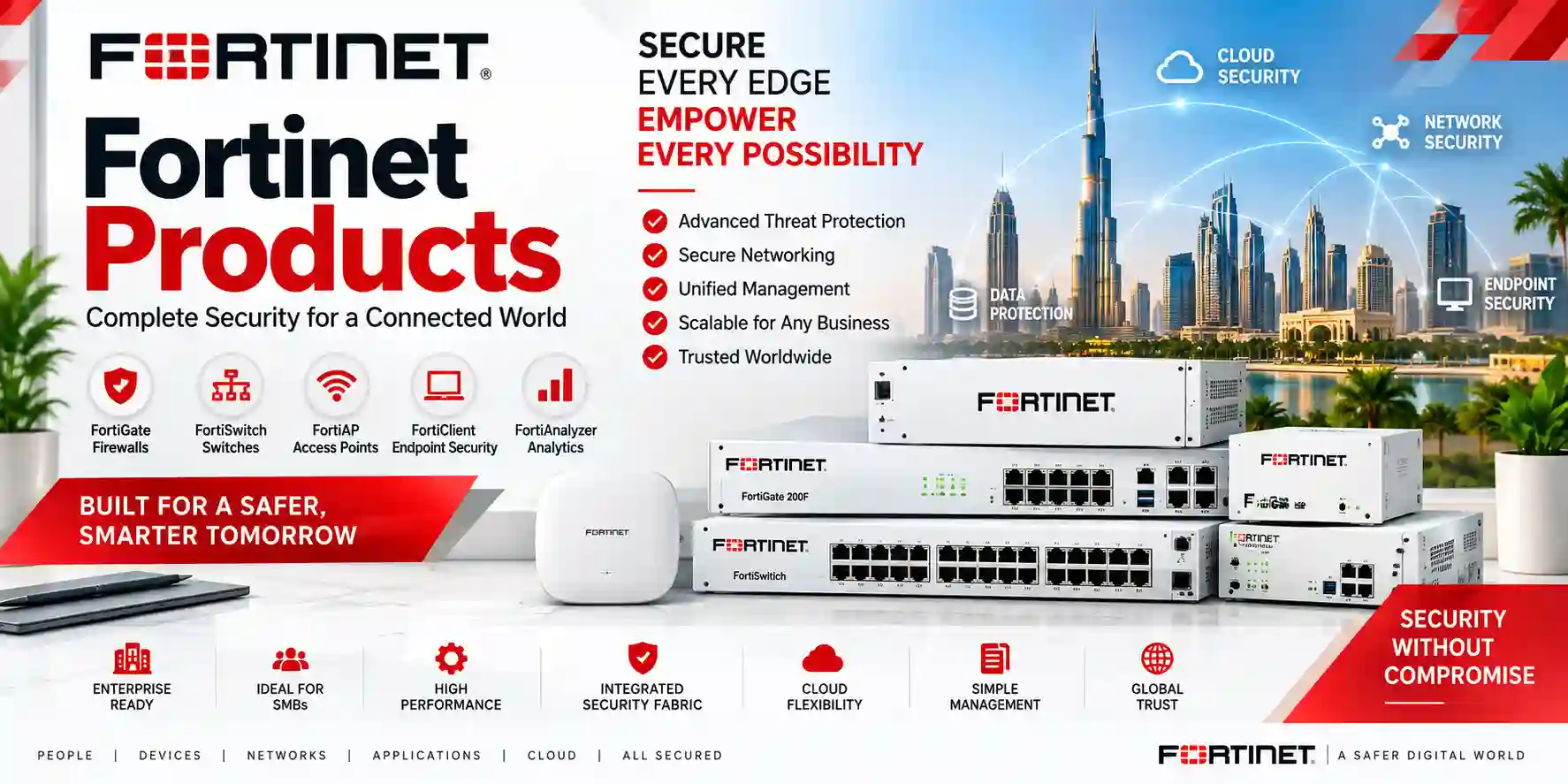
Fortinet’s small-business portfolio also includes FortiSwitch and FortiAP options that can integrate with FortiGate management approaches. The business value comes from coordinated policy and visibility rather than buying matching logos for every device. Existing third-party switches or wireless systems may remain perfectly valid if they support the required VLANs, capacity and operational controls. Compatibility should be tested against the actual design instead of assuming that a complete replacement is always necessary.
Fortinet ecosystem for a growing small business
A small company may begin with one FortiGate at the internet edge and later add more structured switching, wireless access points, endpoint controls, central management or analytics as requirements grow. The Fortinet ecosystem is designed so these functions can participate in a broader Security Fabric rather than remaining unrelated tools. This can be valuable for organisations that want consistent policy and visibility across several branches, but the architecture should expand only where there is a real operational need.
For example, a single office with one firewall may not need a separate management platform on day one. A retailer with dozens of branches may place much more value on central configuration and reporting. A company operating guest Wi-Fi, IP cameras and voice across the same access network may prioritise segmentation and switch integration. A remote-work-heavy organisation may care more about endpoint posture and secure application access. The correct roadmap is therefore driven by how the business operates, not by the number of Fortinet products available.
For regional organisations, FourTeck maintains separate resources for business technology requirements in Kenya and business technology requirements in Uganda. These can help procurement teams coordinate related projects without assuming that bandwidth, power, ISP handoffs, delivery conditions or implementation scope are identical in every country.
FortiGate Firewall for Small Business Tanzania
FortiGate Firewall for Small Business Tanzania is relevant to organisations that need stronger control over internet access, branch connectivity and internal network segmentation without moving immediately to a large enterprise security stack. A Tanzanian small business may depend on cloud accounting, Microsoft 365 or Google Workspace, online payments, web portals, IP telephony, CCTV, remote support tools and customer-facing Wi-Fi at the same time. These services create a mixed traffic environment where a consumer-grade router can become a weak point because it offers limited inspection, limited policy control and little visibility into how different device groups communicate.
The first design step should be to document the business rather than the firewall. Count users and devices, record the primary and backup internet links, identify critical applications and determine whether staff need branch-to-branch or remote access. If the office contains guest Wi-Fi, cameras, phones and servers, decide which systems need to communicate and which should remain isolated. A FortiGate can then enforce those boundaries when the switching and wireless environment preserves the VLAN design. This produces a cleaner security architecture than placing every device in one flat network and expecting the firewall to protect traffic it never sees.
Procurement in Tanzania should also separate hardware, subscription and implementation scope. Ask for the exact FortiGate model, the FortiGuard service package and duration, FortiCare support, power accessories, required transceivers if any, and whether configuration is included. If the firewall is replacing an existing device, list current VPNs, public services, VLANs, static routes, address objects and any special rules that business applications depend on. A migration is safer when those dependencies are known before cutover instead of discovered while users are offline.
The most useful quotation will therefore be based on a realistic network profile, not a generic request for “Fortinet firewall price Tanzania.” Share the city, internet bandwidth, expected growth, number of sites and whether the project is supply only, remote staging or a complete installation. That information allows a current FortiGate model to be evaluated for fit and gives procurement teams a clearer basis for comparing subscription terms and implementation assumptions.
FortiGate Firewall for Small Business Dar es Salaam
FortiGate Firewall for Small Business Dar es Salaam can suit professional offices, retail locations, hospitality businesses, clinics, schools, logistics operations, agencies and growing companies that rely heavily on internet services throughout the working day. In a busy commercial environment, the firewall often becomes the meeting point for fibre or wireless WAN circuits, cloud applications, IP phones, guest Wi-Fi, cameras, servers and remote users. That concentration of traffic makes correct sizing important. A model chosen only because the basic firewall-throughput number exceeds the ISP speed may still be undersized when intrusion prevention, web security, application control and encrypted inspection are enabled across a large share of traffic.
Dar es Salaam businesses with primary and secondary internet services can consider secure SD-WAN as part of the design. Before configuration, define what the second link is meant to accomplish. Some companies want business applications to prefer one provider and guest traffic to use another. Others want the backup link idle until the primary path degrades. A meaningful health check should measure more than whether the physical Ethernet interface is up; it should reflect whether useful destinations remain reachable. The team should also understand what happens to long-lived sessions, cloud security controls and public IP dependencies when traffic moves between providers.
Network segmentation is another valuable use case. Staff devices, payment systems, guest users, CCTV equipment, building systems and servers have different trust levels. Mapping those groups to VLANs and routing controlled traffic through the FortiGate can reduce unnecessary exposure. New offices have the advantage of designing switch ports, wireless SSIDs, addressing and firewall policy together. Existing offices can still move toward segmentation gradually by documenting device groups, introducing VLAN-capable switching and migrating one service at a time.
For a Dar es Salaam FortiGate quotation, include the WAN handoff type, bandwidth, number of users, approximate device count, security services required, VPN requirements, VLANs, switch environment and expected growth. State whether the project requires migration from another firewall, policy cleanup, SD-WAN configuration, IPsec tunnels, documentation or user handover. This turns a generic product request into a deployment plan that can be reviewed by both IT and procurement teams.
FortiGate Firewall for Small Business Mwanza
FortiGate Firewall for Small Business Mwanza is a practical consideration for trading businesses, clinics, education sites, hotels, warehouses, professional offices and branches that need consistent network security without maintaining a large local security team. A regional office may have fewer employees than a headquarters, yet it can still process sensitive transactions, connect to central systems, host cameras and phones, provide guest internet and depend on cloud software. The firewall therefore needs to be sized around the branch’s operational role rather than headcount alone.
Connectivity deserves careful attention. A Mwanza site may use fibre, wireless last-mile connectivity or another ISP delivery method depending on location and availability. The firewall must be configured around the handoff the provider actually supplies, including addressing, VLAN tags or upstream equipment where applicable. If the business adds a second circuit for continuity, secure SD-WAN can help monitor paths and steer traffic, but the backup link should be tested under realistic load. A 20 Mbps backup circuit cannot preserve the same user experience as a much faster primary service if every application continues without restriction.
For organisations with a central office elsewhere in Tanzania, IPsec VPN can provide encrypted branch connectivity. Plan the address space so sites do not use overlapping private networks, identify the applications that need access across the tunnel and keep unnecessary traffic local where appropriate. Cloud applications may not need to traverse headquarters at all, while ERP, file services or central voice systems may. This distinction affects both bandwidth and firewall policy. Remote administrator access should also follow a documented, supported method with strong authentication rather than exposing management interfaces directly to the internet.
A Mwanza procurement request should identify whether the FortiGate will be deployed as a standalone office firewall or as part of a wider branch standard. Include the desired FortiGuard services and term, FortiCare support, internet bandwidth, critical applications, VPN peers, current router or firewall and any network changes expected. Clear scope allows the appliance to be staged with useful settings before installation and reduces the risk of discovering missing subscription or configuration requirements after the hardware arrives.
FortiGate Firewall for Small Business Arusha
FortiGate Firewall for Small Business Arusha can support hospitality businesses, tourism operators, professional firms, NGOs, clinics, education sites, retail businesses and branches where staff and guest connectivity coexist. These environments often contain a wider mix of devices than the employee count suggests: laptops, phones, payment terminals, guest smartphones, IP cameras, printers, access-control devices and cloud-connected operational systems. The security goal is to give each category the access it needs without treating every connected device as equally trusted.
Guest Wi-Fi deserves particular attention in customer-facing environments. Visitors typically need internet access, not access to office printers, cameras, management interfaces or internal servers. Wireless SSIDs can map to separate VLANs, managed switches can preserve those tags across the LAN, and the FortiGate can restrict inter-zone traffic while applying appropriate internet policy. This architecture is stronger than relying on a separate Wi-Fi password while all devices still share the same internal subnet. The design should also consider whether guest traffic is inspected, rate-limited or separated onto a different WAN policy so customer usage does not interfere with critical business applications.
Arusha organisations that connect to Dar es Salaam or another headquarters can use site-to-site IPsec for encrypted communication, while secure SD-WAN can help when more than one internet path is available. The technical team should document critical applications and expected failover behaviour before implementation. Cloud booking platforms, payment systems, voice and video meetings may have different sensitivity to latency, packet loss and IP changes. Good policy is based on these application realities rather than treating all traffic identically.
Before requesting a FortiGate small-business quote in Arusha, provide internet speed, staff and guest device estimates, VLAN requirements, Wi-Fi platform, branch connectivity, remote-access expectations and the security services you intend to use. If an existing firewall is being replaced, include its major rules, VPNs and public services. Ask for the subscription term and implementation scope to be shown separately so finance teams can understand what is hardware, what renews and what work is required for a safe migration.
FortiGate Firewall for Small Business Dodoma
FortiGate Firewall for Small Business Dodoma is relevant to project offices, professional organisations, education sites, service providers, NGOs, contractors and growing businesses that need a structured security gateway for internet access and inter-office connectivity. A compact site may still have formal requirements around administrator control, logging, remote access and change management. FortiGate can provide the policy platform, but the organisation should define which networks and services matter before deciding on a specific model.
Start by separating business functions. Staff workstations, finance systems, guest access, IP cameras, servers and network-management interfaces should not automatically be placed in one unrestricted trust zone. Where the LAN supports VLANs, FortiGate policy can control the permitted flows between groups. This also makes future troubleshooting clearer because a rule can refer to a defined business network rather than a large mixed subnet containing unrelated devices. Administrative interfaces should be restricted to appropriate management networks or secure access paths and protected with strong authentication.
Capacity planning should consider the next internet upgrade as well as today’s connection. An office that expects bandwidth growth, more cloud use, additional CCTV or a second branch may be better served by a model with greater inspection headroom. Manufacturer threat-protection figures are more useful for security-heavy planning than raw firewall numbers, but they still represent test conditions rather than a guarantee of identical real-world performance. Policy complexity, TLS inspection, VPN, logging and concurrent traffic all influence results.
For a Dodoma quotation, specify whether the requirement is hardware supply, pre-configuration or complete deployment. List the WAN links, internal networks, user count, VPN peers, remote users and desired FortiGuard services. If documentation and change control matter, include configuration backup, as-built network information, administrator handover and acceptance testing in the scope. Procurement becomes much easier when these implementation elements are visible instead of being assumed to come with the appliance price.
FortiGate Firewall for Small Business UAE
FortiGate Firewall for Small Business UAE is frequently considered by branch offices, retail sites, professional firms, restaurants, clinics, warehouses and regional businesses that need a manageable security edge for high-speed internet and cloud-heavy operations. UAE sites can have fast broadband relative to their employee count, so selecting a firewall by user number alone can be misleading. A small team on a gigabit-class connection may create significant inspected traffic through cloud storage, collaboration platforms, online services and encrypted web applications.
The buying conversation should therefore distinguish basic firewall throughput from the performance of the security services that will actually be enabled. If broad intrusion prevention, web controls, application inspection and encrypted-traffic inspection are planned, choose a model with enough headroom for that workload and for future ISP upgrades. A compact branch may still fit an entry-level FortiGate, while a similarly sized office with faster links or heavier cloud traffic may justify a larger platform. The correct choice follows the traffic profile, not the floor area.
Regional companies operating between the UAE and East Africa can also use a common FortiGate policy framework while allowing each site to have the model and WAN settings appropriate to local conditions. Standardise naming conventions, VLAN purpose, logging expectations, administrator roles, VPN parameters and configuration backup. Avoid overlapping private IP ranges between countries because they complicate site-to-site VPN. If cloud applications depend on source IP restrictions, document how those services behave when SD-WAN changes the outgoing circuit.
A UAE quotation should state the exact appliance, FortiCare and FortiGuard terms, deployment scope and renewal period. If a firewall will be staged in one country and installed in another, confirm who owns final WAN configuration, registration, shipping responsibility, local cabling and acceptance testing. Cross-border projects benefit from clear documentation because licensing, power accessories, logistics and implementation responsibilities can otherwise become mixed into a single ambiguous product line.
FortiGate Firewall for Small Business Uganda
FortiGate Firewall for Small Business Uganda can support organisations that need secure internet access, branch VPN, application control and policy consistency across distributed locations. Small offices in Uganda may support cloud productivity, finance platforms, voice, guest Wi-Fi, cameras and branch-to-head-office systems through the same gateway. A FortiGate can consolidate firewall policy, secure SD-WAN and subscribed security services, but the platform should be chosen around the real traffic and connectivity profile of each site.
For a multi-branch business, consistency creates operational value. Use a repeatable address plan, VLAN purpose, naming convention, administrator policy, DNS approach and configuration-backup process. Build site-to-site IPsec with documented parameters and unique local subnets. Central teams can then recognise the same logical structure across Kampala, Mbarara, Gulu or other branches even when WAN providers and bandwidth differ. This standardisation reduces troubleshooting time and lowers the risk that each site evolves into an undocumented configuration that only one technician understands.
Subscription comparisons should also be standardised. A low hardware price may exclude FortiGuard services, use a shorter term or provide a different support entitlement from another offer. Ask every supplier to quote the same model, service package and duration if you want a meaningful commercial comparison. Then list implementation separately: staging, policy setup, VPN build, SD-WAN, migration, documentation and post-cutover support. This helps both finance and IT teams understand what will renew and what is one-time project work.
Before ordering, provide the branch list, internet bandwidth, approximate users and devices, critical applications, VPN dependencies and expected growth. If the organisation already operates FortiGate elsewhere, include the current standard and firmware strategy so a new branch can align with it. The goal is not to force identical hardware into every location; it is to keep the security architecture consistent while sizing each appliance according to its actual workload.
FortiGate Firewall for Small Business Kampala
FortiGate Firewall for Small Business Kampala is suitable for urban offices where cloud services, Wi-Fi, IP telephony, video meetings, online transactions and business internet share the same edge. Kampala buyers should be cautious about simple user-count rules. Twenty staff who use frequent video conferencing, large cloud synchronisation and VPN traffic can create a heavier firewall workload than a larger group with light browsing and email. Document peak traffic and the security services required before deciding whether a compact or higher-capacity model fits.
Segmentation can add substantial security value in mixed-use offices. Guest Wi-Fi should normally be separated from internal business resources. CCTV equipment can use its own network, while servers and finance systems may require tighter policies than general user devices. The FortiGate can enforce traffic between these zones when routing passes through the firewall, but managed switching and wireless infrastructure must preserve the VLAN design. If the LAN cannot carry tagged networks correctly, even a carefully written firewall rule set will not deliver the intended separation.
Kampala branches using two ISPs can use secure SD-WAN to apply health-aware path selection. Define the business objective before enabling it. Voice may need low latency; cloud productivity may need stable general internet; guest traffic may be deprioritised on a constrained backup link. Consider whether inbound services or cloud allow-lists depend on a specific public IP. Failover testing should include actual user workflows so the team understands what continues, what reconnects and what may temporarily fail when the primary path changes.
A strong Kampala quotation request includes WAN speeds, user and device counts, VLANs, VPN tunnels, FortiGuard services, preferred subscription duration and migration scope. Ask the supplier to state whether the offer includes only the appliance or also security services, FortiCare, configuration and support. That clarity is more valuable than comparing two headline prices that represent different commercial bundles.
FortiGate Firewall for Small Business Arua
FortiGate Firewall for Small Business Arua can be useful for regional branches where local IT resources are limited and the head office needs a security gateway that can be understood and supported remotely. In this type of environment, clean configuration often matters more than adding every available feature. Interfaces should have meaningful names, address objects should describe the systems they represent, policies should document business purpose and configuration backups should be maintained. These practices reduce dependence on undocumented local knowledge when troubleshooting must happen from another city.
Connectivity conditions should be measured realistically. A regional site may use a different access technology or provider from headquarters, and nominal bandwidth does not always reflect latency, packet loss or busy-hour performance. If a second connection is available, secure SD-WAN can monitor both paths and route traffic according to policy. Identify applications that are critical during degraded service. ERP access, cloud productivity or voice may deserve priority, while large software downloads and guest traffic can be restricted when the branch is operating on a smaller backup circuit.
Site-to-site VPN should be planned before installation. Confirm that local address ranges do not overlap with headquarters or other branches, document required routes and decide which services should cross the tunnel. Remote technical access also needs a supported, secure method with strong authentication; exposing the FortiGate management interface directly to the public internet is not a suitable substitute for proper administration design. If an older firewall is being replaced, audit existing remote-access methods and migrate them deliberately rather than discovering dependencies after cutover.
For an Arua quotation, include the WAN handoff, static-address requirements, local VLANs, central networks, approximate users and devices, subscribed security services and responsibility for physical installation. If configuration will be prepared remotely, specify who will connect ISP equipment, power, LAN cabling and console access if required. Clear responsibilities make regional deployments more predictable and reduce avoidable travel or downtime.
FortiGate Firewall for Small Business Mbarara
FortiGate Firewall for Small Business Mbarara can support growing branches that need secure cloud access and dependable connectivity back to central systems. A smaller site may still process customer data, financial transactions, voice traffic, cloud applications and operational information, so firewall selection should consider business impact as well as employee count. The aim is to create a controllable security boundary and a repeatable branch design rather than simply replace the ISP router with another device.
Growth planning is especially important. If a branch expects a faster internet circuit, additional cameras, more cloud use or a larger workforce within the useful life of the firewall, evaluate the future profile during procurement. Leaving reasonable performance headroom helps accommodate traffic spikes and new security policies. A platform that appears adequate when only basic firewalling is enabled may become constrained after the organisation adds intrusion prevention, web controls or more encrypted inspection. Use the manufacturer’s security-performance references as part of the analysis, but keep the actual application mix and service settings in view.
For organisations with several sites, Mbarara can follow a common branch blueprint: consistent VLAN names, standard IP ranges, documented DNS and NTP, controlled administrator access, configuration backup and repeatable IPsec parameters. Secure SD-WAN can handle primary and secondary links with site-specific health checks. Standardisation should make support easier without preventing local differences where providers, bandwidth or operational requirements are genuinely different.
A quotation should therefore include more than appliance quantity. Ask for the exact FortiGuard package, FortiCare term, staging or installation work, VPN configuration and documentation. Provide the current firewall model and any special rules if this is a replacement. Mention public services, allow-listed SaaS systems and inter-branch dependencies. When these details are captured before purchase, implementation teams can prepare a cleaner migration and procurement teams can compare offers on the same scope.
FortiGate Firewall for Small Business Gulu
FortiGate Firewall for Small Business Gulu is relevant to compact commercial, education, healthcare, hospitality and institutional sites that want a consistent security gateway with manageable administration. Regional branches often depend on remote support, so configuration clarity should be built in from the start. Name WAN and LAN interfaces logically, organise policies by business purpose, keep administrator accounts controlled and maintain recent backups. These practices make fault-finding and change review faster than a device filled with years of undocumented rules.
Internet continuity may be important when cloud systems support daily operations. A second connection can improve resilience, but only if the failover policy reflects the capacity of that link. Secure SD-WAN can monitor link quality and direct traffic, yet it cannot create bandwidth that does not exist. During a primary outage, priority applications such as business transactions or voice may need to continue while guest Wi-Fi and large downloads are limited. Define those priorities before an incident so the firewall can enforce a planned degraded-service mode.
Security services also require lifecycle attention. FortiGuard subscriptions should match the protection features that the organisation expects to use, and renewal dates should be recorded centrally. Firmware maintenance, configuration review and policy cleanup remain necessary after installation. Temporary rules created during troubleshooting should not become permanent by accident. Remote access and administrator management should use supported secure methods with strong authentication and should be included in the operating documentation.
When requesting FortiGate pricing for Gulu, state whether the site is standalone or part of a wider branch network. Include central-office networks, VPN requirements, WAN speeds, user count, key applications, selected security services and the preferred term. For remote implementation, identify who will connect the ISP handoff, local switch and power, and how acceptance testing will be performed. Clear local responsibilities help a staged firewall arrive ready for the environment rather than as a generic factory-default appliance.
FortiGate Firewall for Small Business Kenya
FortiGate Firewall for Small Business Kenya can be used by offices, branches, clinics, schools, retailers, logistics businesses and hospitality organisations that need stronger network control around cloud applications and distributed operations. Kenyan buyers frequently face the same procurement challenge as other regional markets: the model name alone does not tell you whether the quotation includes the security services, support term and implementation work needed for a complete deployment. A useful comparison therefore starts with a standard requirement rather than comparing isolated appliance prices.
Sizing should reflect internet bandwidth, number and type of users, VPN traffic, inspection services and expected growth. A compact office can still have high traffic if it uses online backup, cloud collaboration, video meetings and large SaaS platforms. Conversely, a larger office with moderate traffic may not require an oversized appliance. FortiGate’s secure SD-WAN capabilities can be useful where companies operate multiple ISPs or branch links, while IPsec VPN can connect offices that require access to central resources. The address plan should be coordinated across sites to avoid overlapping private networks.
For multi-country organisations, Kenya may share a common policy framework with Tanzania or Uganda while using locally appropriate WAN settings and hardware capacity. Standardise firewall naming, VLAN purpose, administrator roles, logging, VPN parameters and backup procedures. Then adapt link health checks, public IP details and local ISP settings. This approach gives central IT teams consistency without pretending every branch has identical infrastructure.
Procurement teams should send the city, delivery requirement, user and device count, internet speed, number of branches, FortiGuard services, subscription term and expected implementation scope. If the business is coordinating several countries, keep each site’s model, serial record, license date and configuration owner documented. Clear asset and renewal records make regional FortiGate deployments easier to maintain long after the initial purchase.
FortiGate Firewall for Small Business Kuwait
FortiGate Firewall for Small Business Kuwait is relevant to professional offices, retailers, clinics, hospitality businesses, warehouses and project locations that need a managed security edge around fast internet and cloud applications. Small-business sites can have substantial bandwidth even with a modest number of employees, so it is important to distinguish raw firewall capacity from inspected-traffic performance. If the organisation plans to enable broad intrusion prevention, application control, web security and encrypted inspection, the firewall needs enough security-performance headroom for those features as well as future WAN growth.
Kuwait-based companies with branches elsewhere in the Gulf or Africa can use IPsec VPN and consistent network policy to connect sites. A regional architecture should avoid overlapping subnets, use clear device naming and maintain central documentation of tunnel parameters and security rules. If multiple internet links are installed at headquarters or branch locations, secure SD-WAN can steer traffic based on health and policy. The team should test real business applications during failover instead of assuming that a green dashboard means every workflow remains usable.
Subscription planning matters commercially. Hardware-only offers, one-year service packages and multi-year security bundles represent different scopes. Ask suppliers to state the FortiCare support level and FortiGuard service term clearly, then compare implementation separately. Policy migration, site-to-site VPN, remote access, SD-WAN, logging, documentation and administrator handover may be project services rather than part of the appliance price. This distinction prevents procurement from approving a low initial figure that later requires unplanned work or subscriptions.
A Kuwait quotation request should include WAN bandwidth, users and devices, public services, VLANs, VPN peers, remote users and expected security controls. For regional businesses, identify which office acts as the main hub and which applications must cross country links. Good design keeps local internet traffic local where appropriate, protects central services through encrypted connectivity and gives IT teams a consistent policy framework they can understand across sites.
FortiGate Firewall for Small Business Ghana
FortiGate Firewall for Small Business Ghana can support offices, retail companies, schools, healthcare sites, professional firms, hospitality operations and growing branch networks that rely on cloud services and secure internet access. The firewall can become the policy point between users, servers, guest traffic and external services, but the value depends on how clearly those groups are defined. A flat network where every device can communicate freely is harder to secure than a segmented design with explicit business rules.
For Ghana deployments, begin with a practical inventory: users, laptops, phones, cameras, printers, wireless access points, servers and any operational devices. Group them by trust and purpose, then decide which connections are required. Staff may need internet and selected server access; guest users usually need internet only; cameras may need the recorder but not general office PCs. Managed switches and Wi-Fi preserve these network zones while the FortiGate enforces policy between them. This is often a more valuable security improvement than purchasing a larger firewall while keeping the LAN completely flat.
Branch connectivity can use IPsec VPN when a Ghana office needs encrypted access to headquarters or another regional site. Address planning should be coordinated early, especially when companies are joining networks that were built independently and may reuse the same private subnets. Where two ISPs are available, secure SD-WAN can provide policy-based path selection, but application priorities and backup-link capacity should be defined so the failover design matches business expectations.
When requesting a quotation, provide internet speed, expected upgrade, critical applications, security services, VPN tunnels and desired subscription term. Ask for hardware, FortiGuard, FortiCare and project services to be itemised. If migration is required, share the existing firewall model and major configuration dependencies. This gives suppliers enough context to recommend a suitable FortiGate class and gives procurement teams a cleaner way to compare complete offers rather than headline appliance prices.
FortiGate Firewall for Small Business Nigeria
FortiGate Firewall for Small Business Nigeria can serve branch offices, professional firms, schools, clinics, retailers, hospitality businesses, logistics teams and distributed companies that need more structured security than an ISP router provides. In fast-growing environments, the firewall should be selected with the next stage of the network in mind. More cloud applications, additional sites, faster internet circuits, voice, CCTV and remote work can increase the workload well before the employee count changes dramatically.
A practical Nigeria design begins with the internet and application map. Record primary and backup links, peak throughput, important SaaS platforms, public services, branch VPN and remote access. Then identify which FortiGuard controls are required. Security services change the performance profile, so sizing should use relevant inspection figures and preserve headroom. If the business expects a large bandwidth upgrade, it may be more economical to select the next suitable appliance class during initial procurement than replace an undersized firewall soon after installation.
Multi-site companies can gain operational consistency from a standard branch template. Keep VLAN purpose, policy naming, administrator controls, DNS, NTP, logging and backup procedures consistent while allowing WAN details to vary by site. Secure SD-WAN can manage provider diversity and IPsec can protect inter-office traffic. The configuration should also define what happens during degraded service so priority applications remain usable when a backup connection has less capacity than the primary circuit.
For a Nigeria FortiGate quotation, include city, user and device count, WAN bandwidth, VLANs, VPN peers, critical applications, service bundle and preferred subscription length. Ask whether the offer includes staging, policy migration, tunnel configuration, testing and documentation. Clear implementation scope is particularly useful for distributed businesses because the device may be configured by one team and physically installed by another. The more precisely those responsibilities are defined before shipment, the smoother the final cutover is likely to be.
FortiGate Firewall for Small Business Seychelles
FortiGate Firewall for Small Business Seychelles can be relevant to hospitality properties, professional offices, retailers, service companies, clinics, education sites and island businesses where dependable internet access supports both staff operations and customer experience. A single location may carry office traffic, guest Wi-Fi, booking systems, payment services, IP telephony, CCTV and cloud applications through the same edge. Security design should keep these services organised so customer connectivity does not automatically gain access to internal business resources.
Hospitality and guest-heavy environments benefit from deliberate segmentation. Guest SSIDs can map to isolated VLANs, office devices can remain on protected networks, cameras can communicate with their recording platform and management interfaces can be limited to authorised administrators. The FortiGate becomes useful as the policy enforcement point between these zones, while managed switches and wireless infrastructure preserve the separation. If guest demand is significant, bandwidth management and WAN policy should also ensure that customer browsing does not consume capacity required by booking, payment or communication systems.
Connectivity resilience may be especially important when cloud systems are business-critical. If multiple internet paths are available, secure SD-WAN can monitor them and make policy-based decisions. The backup design should reflect real capacity and latency. Test cloud login, payment, voice, VPN and administration during failover so staff understand which services continue and which may need to reconnect. Where a Seychelles location connects to a regional headquarters, IPsec can protect inter-site traffic, provided addressing and route design are coordinated.
A quotation request should state the site type, number of staff and guests, internet connections, security services, VPN needs, network zones and support term. If equipment must be shipped or pre-staged for an island location, define who supplies final WAN credentials, connects local switching, performs physical installation and confirms acceptance tests. Documentation, configuration backup and spare-access planning are particularly valuable when on-site technical resources are limited and remote administration is expected to carry much of the ongoing support load.
Buying checklist: what to include in a FortiGate small-business quotation
Users, devices, internet speed, expected upgrade, VLANs, server traffic, guest Wi-Fi and the number of branches.
IPS, application control, web or DNS security, malware protection, encrypted inspection and any policy requirements that affect performance.
WAN links, static IPs, site-to-site VPN, remote access, public services, SD-WAN objectives and failover expectations.
Exact appliance, FortiCare, FortiGuard package, subscription duration, renewal date, accessories and any transceiver requirements.
Staging, migration, rule conversion, VPN setup, SD-WAN, testing, backup, documentation, handover and post-cutover support.
Firmware strategy, renewal ownership, configuration backup, administrator access, log retention and expected replacement horizon.
Frequently asked questions about FortiGate for small business
Which FortiGate firewall is suitable for a small business?
The suitable model depends on internet bandwidth, the security inspection you will enable, user and device behaviour, VPN traffic, interface requirements and growth. Fortinet currently lists models such as 30G, 40F, 50G, 60F, 70G, 80F and 90G within its small-business firewall range, with larger options available when capacity or interfaces demand them. Compare the security-performance figures relevant to your use case rather than choosing only by user count or raw firewall throughput.
Do I need a FortiGuard subscription?
FortiGuard subscriptions provide security services and threat intelligence according to the selected bundle. If your security design relies on services such as IPS, web or DNS security, malware protection or other subscribed capabilities, the quotation should include the appropriate package and term. Hardware-only and bundled offers are not equivalent, so compare them carefully.
Can FortiGate replace the office router?
In many designs, FortiGate can perform routing and firewall functions at the internet edge, but the final architecture depends on the ISP handoff, public IP requirements, VLANs, switching, wireless design and any upstream equipment that must remain. Confirm the actual provider setup before assuming the ISP device can be removed.
Can a small business use two internet connections with FortiGate?
Yes, FortiGate secure SD-WAN can participate in multi-WAN designs. A useful configuration defines application priorities, link health, failover behaviour and backup-link capacity rather than simply connecting two circuits. Public IP dependencies and long-lived sessions should also be considered before rollout.
How should I compare FortiGate prices from different suppliers?
Compare the exact model, FortiGuard bundle, FortiCare entitlement, service duration, accessories and implementation scope. One price may be hardware only while another includes security subscriptions and deployment work. Ask for line-item clarity so procurement teams are comparing equivalent offers.
What information should I send for a FortiGate quotation?
Send the city, number of users and devices, internet speed, expected growth, WAN links, VLANs, VPN tunnels, remote-access needs, critical applications, desired security services, existing firewall model and whether installation, migration or configuration is required. This gives the supplier enough information to discuss fit rather than guess from a model name.
Decision recap for small-business buyers
A strong FortiGate small-business deployment begins with the workload, not the appliance label. Document internet speed, application behaviour, users and devices, security inspection, VPN, network zones and expected growth. Use Fortinet’s published small-business model data as a reference, then confirm the latest datasheet and supported features for the exact device being quoted. Choose enough capacity for the security services you actually intend to run and leave room for reasonable growth.
Treat FortiGuard, FortiCare and implementation as visible parts of the commercial decision. A firewall without the required subscription or without a migration plan may be cheaper on the first purchase order but incomplete for the intended security outcome. Ask for clarity on what renews, who owns the configuration, how backups are maintained and what documentation will remain after deployment.
Most importantly, connect the firewall to the wider LAN design. Segmentation, switching, Wi-Fi, endpoint security, backups and administrator practices all influence how well the security architecture works. The correct FortiGate is the model that fits the whole environment and can be operated consistently after installation, not simply the model with the largest number on a product sheet.
Talk to FourTeck about your FortiGate requirement
Send the business requirement you already know: country and city, user count, internet speed, existing firewall, branch list, VPN requirement, security-service expectations and preferred subscription term. FourTeck can use that information to narrow the FortiGate options and prepare a more meaningful commercial discussion around appliance, licensing and deployment scope.
For projects that combine firewalling with switching, Wi-Fi, servers, telephony or other infrastructure, include the wider network context rather than treating every category as an unrelated order. This makes it easier to identify VLAN, PoE, cabling, bandwidth and security dependencies before equipment is purchased.