
Cisco ASR 9000 Series • Compact Service Edge
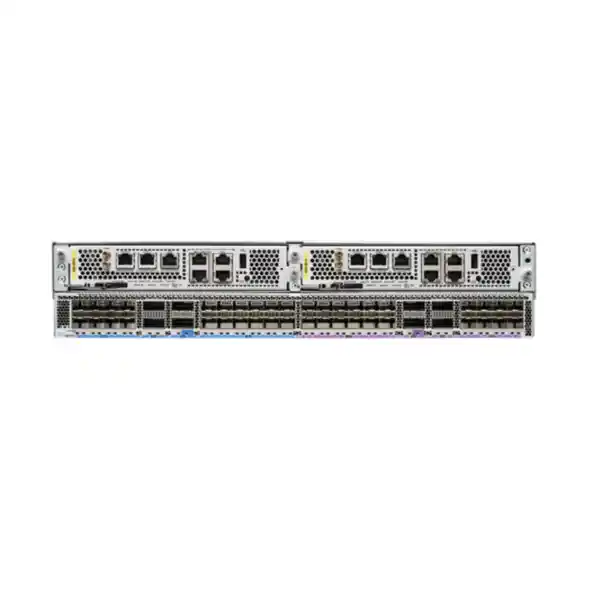
Cisco ASR 9902 Aggregation Services Router
The Cisco ASR 9902 is designed for network teams that need carrier-class routing, dense multi-rate Ethernet and high availability in a compact two-rack-unit platform. It delivers up to 800 Gbps of nonblocking, full-duplex capacity and uses Cisco IOS XR, making it a practical choice for service-provider aggregation, provider edge, internet edge, peering, data-centre interconnect, mobile edge and demanding enterprise WAN roles.
For buyers in Tanzania, the key purchasing question is not simply whether the chassis is powerful enough. A successful order must align the router with the required 100G, 40G, 25G and 10G interface mix, optics, AC or DC power architecture, software release, feature licences, rack design, timing requirements and upstream service handoffs. FourTeck Tanzania can prepare a configuration-focused quotation after these requirements are confirmed.
Fast answer: what the ASR 9902 is built to do
Who should consider this router?
The ASR 9902 fits organisations that have outgrown ordinary branch or campus routing and need a platform intended for high-throughput service delivery. Typical buyers include internet service providers, mobile and fixed-network operators, data-centre operators, large enterprises, financial institutions, content networks, public-sector infrastructure teams and organisations building regional WAN or inter-site backbones. It is especially relevant where multiple high-speed circuits must terminate in a small rack footprint without giving up carrier-oriented operations, timing or redundancy.
Cisco positions the platform across business provider edge, metro aggregation, cloud edge, internet peering, data-centre interconnect, broadband network gateway, internet edge and enterprise WAN use cases. Those labels describe very different networks, so the final design still needs engineering. A peering router may prioritise 100G uplinks and routing scale, while a metro aggregation location may need a wider mix of 10G and 25G access-facing links, precise timing or optical transport integration. A BNG deployment also depends on the selected IOS XR release and supported feature set rather than the chassis name alone.
The ASR 9902 is less suitable when the requirement is primarily low-speed branch connectivity, integrated Wi-Fi, basic firewalling or a small number of WAN ports. It is also not the right choice simply because future growth is expected. Buyers should compare the 800 Gbps platform ceiling, fixed port mix and expected service scale against realistic three-to-five-year traffic plans. If the design requires substantially more switching capacity, native 400G density, extensive modular expansion or different service-scale targets, a larger ASR 9000 platform or another Cisco routing family may be a better architectural fit.
Integrated port architecture and capacity planning
The fixed board exposes 48 physical ports. Cisco documents two QSFP-DD ports capable of 10G, 40G and 100G Ethernet; six QSFP28 ports capable of 10G, 40G and 100G Ethernet; sixteen SFP28 dual-rate ports capable of 25G or 10G Ethernet; and twenty-four SFP+ ports capable of 10G Ethernet for LAN or WAN/OTN use. This broad interface mix is one of the main reasons the ASR 9902 works well as an aggregation platform: high-speed uplinks can coexist with many lower-rate service or access-facing connections without adding a separate line-card chassis.
| Port group | Quantity | Supported rates / role | Planning use |
|---|---|---|---|
| QSFP-DD | 2 | 10G / 40G / 100G Ethernet | High-capacity uplinks, peering or core-facing links |
| QSFP28 | 6 | 10G / 40G / 100G Ethernet | Flexible high-speed aggregation and interconnect |
| SFP28 | 16 | 25G / 10G Ethernet | Dense server, access, metro or service-facing links |
| SFP+ | 24 | 10G LAN and WAN/OTN | High-density 10G services and optical transport integration |
Port count alone should not be used as the design limit. The fixed board has an 800 Gbps data-bandwidth ceiling, so an engineer should model the intended simultaneous traffic profile, protection paths, link aggregation, oversubscription policy and future headroom. The fact that a faceplate can accept many pluggables does not mean every theoretical combination should be treated as a line-rate production design without checking Cisco’s supported port-mode and software documentation for the exact release.
Optics also matter. Cisco notes that supported transceivers are shared with other ASR 9000 modular and compact platforms, but each proposed optic, reach, wavelength, breakout or coherent use case should still be checked against the current Cisco Optics Compatibility Matrix and the selected IOS XR release. For a quotation, specify the handoff speed, fibre type, distance, connector type and whether the link terminates directly on another router, a transport system, a data-centre switch or a service-provider demarcation device.
Resilience for aggregation and service-edge roles
The platform is built around redundant components rather than a single control and power path. Cisco documents support for two route processors, two AC or DC power modules in a 1+1 arrangement and three fans in a redundant configuration. It also includes software redundancy capabilities through IOS XR. These characteristics are important in aggregation sites because a router failure can affect many downstream links at once; reducing single points of failure at the chassis level is therefore a basic design requirement rather than a premium extra.
Hardware redundancy does not by itself create an end-to-end resilient service. A robust deployment should also consider diverse upstream paths, separate power feeds, redundant optical routes, dual-homed downstream devices, routing convergence, failure-domain design and maintenance procedures. If both power supplies are connected to the same failed source, or both upstream circuits share a common fibre path, the chassis can remain healthy while the service is unavailable. The ASR 9902 should therefore be planned as one element in a complete availability architecture.
The two route processors are particularly useful where operational continuity and control-plane resilience matter. Cisco’s fixed-chassis route processor uses a 64-bit Intel CPU and 32 GB of DDR4 memory. Exact software scale, feature support and behaviour during upgrades depend on the IOS XR train and configuration, so maintenance planning should use Cisco release documentation for the target software version. Production teams should define rollback, configuration backup, software qualification and change-control procedures before the router is introduced into a critical network.
Cisco IOS XR and operational consistency
The ASR 9902 runs Cisco IOS XR, the same operating-system family used across the ASR 9000 portfolio. For teams already operating ASR 9000 routers, that can reduce the operational gap between a compact edge location and larger core or aggregation systems. Common tooling, procedures, configuration concepts and troubleshooting skills can be more valuable over the life of a network than a simple comparison of chassis purchase prices.
IOS XR is a carrier-oriented, modular operating system with a strong emphasis on availability, programmability and service-provider operations. Cisco continues to publish current ASR 9000 configuration guides covering areas such as MPLS, segment routing, L2VPN and Ethernet services, BNG, NetFlow, system security and software installation. Feature availability should always be checked against the exact ASR 9902 hardware, release and licence combination; the existence of a feature in the wider ASR 9000 software family does not automatically guarantee that every mode or scale is supported on every chassis and release.
For new deployments, software selection should be part of the architecture phase rather than an afterthought. The engineer should identify required services first, then map them to a supported IOS XR release, required feature licences, operational tooling and upgrade path. This is especially important when the router will perform multiple roles, such as combining internet edge routing with transport handoff, service aggregation or subscriber functions. Building the bill of materials before confirming the software requirement can lead to missing licences, incompatible optics or redesign later.
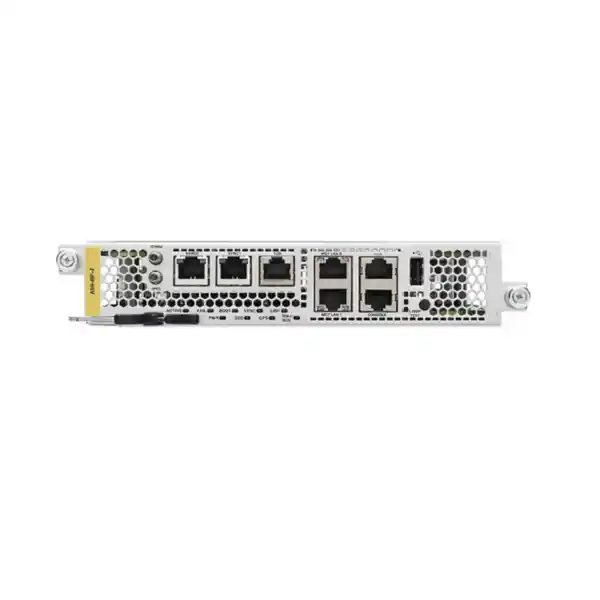
Operational integration should also cover management connectivity. The route processor provides console and auxiliary serial interfaces, two management Ethernet interfaces, USB, GPS timing connectivity and two BITS interfaces. Plan an out-of-band management design where possible, document access control and logging, and confirm how configuration backups, monitoring, telemetry and software images will be managed. A high-capacity router should be treated as a managed infrastructure system, not simply as a forwarding appliance.
MACsec and link-security considerations
Cisco documents MACsec support on the ASR 9902, with all integrated ports described as MACsec-capable in the platform data sheet. Current Cisco ASR 9000 security documentation also lists the ASR 9902 among supported chassis. MACsec is based on IEEE 802.1AE and is used to encrypt Ethernet traffic between compatible devices, which can be valuable for inter-site, metro, data-centre interconnect and provider-facing links where Layer 2 link confidentiality is required.
A buyer should not assume that MACsec becomes active merely because the physical port supports it. Cisco’s ordering information shows separate MACsec right-to-use licensing for different speeds under the traditional licensing model, and current software support depends on the selected IOS XR release and configuration. Confirm the remote endpoint, key-management approach, required throughput, port speed and licence entitlement before ordering. When encryption is a mandatory security control, it should be tested in the intended topology and software release.
MACsec addresses protection on Ethernet links; it is not a replacement for broader network security architecture. Routing-policy controls, management-plane security, role-based access, authentication, logging, software maintenance, DDoS strategy, segmentation and application-layer controls remain separate considerations. The ASR 9902 should be integrated into the organisation’s security baseline, including approved software versions and change procedures.
Timing and synchronization for mobile and transport networks
Timing is a differentiator when a router sits at the mobile edge or participates in transport networks that require network synchronization. Cisco documents hardware-based IEEE 1588 support, SyncE across Ethernet ports, GPS and BITS interfaces, and support for PTP Telecom profiles including G.8265.1, G.8275.1 and G.8275.2. These capabilities allow the platform to participate in packet-based timing architectures rather than relying only on ordinary IP forwarding.
The presence of timing interfaces does not eliminate the need for a timing design. Engineers should identify the required clock source, profile, accuracy target, boundary or transparent-clock behaviour, holdover expectations, network asymmetry and redundancy. The physical and logical path between the grandmaster, transport network and downstream equipment also affects performance. When the ASR 9902 is planned for 4G or 5G transport, timing requirements should be agreed with the radio and transport teams before optics and topology are finalised.
For enterprise deployments that do not need telecom synchronization, these interfaces may remain unused. Their value is that the same compact platform can serve more specialised transport scenarios when the project requires them. This makes the router attractive to operators that want to standardise hardware across metro aggregation, mobile edge and general IP service roles while maintaining one IOS XR operational environment.
OTN, DWDM and data-centre interconnect planning
The twenty-four SFP+ interfaces support 10G LAN and WAN/OTN operation, and Cisco describes DWDM support based on Optical Transport Network technology defined by ITU-T G.709. In appropriate designs, OTN and DWDM capabilities can help connect packet routing more directly with optical transport, which may reduce the number of separate devices or regeneration stages needed in a metro or inter-site design. The exact benefit depends on the transport architecture, reach and optical components selected.
Data-centre interconnect is another documented use case. A 2RU router with multiple 100G ports and dense 10G/25G interfaces can sit between data-centre switching environments, service-provider circuits and long-haul or metro transport. Before using it in a DCI role, determine whether the requirement is routed IP connectivity, encrypted Ethernet links, OTN handoff, peering, MPLS-based services or another architecture. That decision affects optics, licensing, routing design, resiliency and monitoring.
Coherent and coloured optical designs require particularly careful validation. Pluggable form factor does not by itself prove compatibility with the intended wavelength, reach, FEC mode or transport system. Use Cisco’s current optics compatibility information and the optical network design to confirm every transceiver. For third-party transport equipment, verify both ends of the link, required standards and operational ownership. This is important in Tanzania where a deployment may span a private campus, a metro fibre provider, a carrier hotel or multiple service-provider domains with different demarcation responsibilities.
When a customer already has an optical transport layer, the simplest and most supportable design may be a standard grey Ethernet handoff to that system. When router-based OTN or DWDM is appropriate, it should be chosen because it simplifies the architecture or meets a defined engineering requirement, not simply because the chassis supports the capability.
Common deployment scenarios
Metro aggregation
Aggregate many 10G and 25G access or service links into higher-speed 40G or 100G uplinks. Plan oversubscription, protection and growth rather than simply filling every port.
Provider edge
Use the compact chassis where service-provider routing features, resilience and multi-rate interfaces are required at an edge point. Validate service scale and licences for the intended IOS XR release.
Internet peering and edge
Terminate high-speed upstream or peering links in a small footprint. Confirm routing-table, policy, telemetry and DDoS design requirements as part of the wider edge architecture.
Data-centre interconnect
Connect data-centre networks to metro or wide-area transport using 10G to 100G interfaces, with optional MACsec or optical features when supported and licensed.
Mobile edge
Combine compact depth, front-to-back airflow, multi-rate Ethernet and telecom timing functions for transport locations serving mobile infrastructure.
Broadband Network Gateway
Cisco documents BNG support on the ASR 9902 beginning with IOS XR 7.6.2. Subscriber designs must still be matched to the required scale, feature set and current release documentation.
Enterprise WAN core or edge
Large organisations can use the platform for regional WAN aggregation, border routing or high-capacity edge connectivity when operational requirements justify a carrier-class IOS XR platform.
Cloud connectivity edge
Aggregate high-speed connectivity toward cloud on-ramps or service-provider networks, with routing, redundancy and traffic engineering designed around the actual service handoffs.
Planning an ASR 9902 deployment in Tanzania
A Tanzania deployment should start with the circuits and sites rather than the chassis. Document the number of locations, current and forecast traffic, upstream providers, circuit speeds, demarcation interfaces, fibre types and resiliency targets. For an ISP or metro network, this may include multiple access rings and upstream peering links. For a bank, enterprise or public-sector WAN, it may include data-centre interconnects, regional sites, internet edge links and private services. The ASR 9902 can address several of these roles, but only when the physical and logical design is explicit.
Power design is equally important. The chassis supports up to two 1.6 kW AC modules or up to two 1.6 kW DC modules, with 1+1 redundancy. Cisco states that AC and DC modules must not be mixed. Before ordering, confirm the site’s available power type, feed redundancy, PDU or rectifier arrangement, connector requirements and backup-power strategy. Where mains stability is a concern, the wider site design should include correctly sized UPS or DC plant capacity and generator strategy according to the organisation’s engineering standards. No assumption should be made that the router’s redundant PSUs protect against loss of the upstream electrical source.
Environmental conditions matter in equipment rooms, edge shelters and shared facilities. Cisco specifies an operating range of 5 to 40 degrees Celsius, nominal relative humidity of 10 to 85 percent and operating altitude up to 4000 metres, with stated limitations that may apply when high-power optics are used. The chassis uses front-to-back airflow. Rack layout should therefore preserve the intended air path, avoid recirculation and account for neighbouring equipment that exhausts in the opposite direction. Cooling design should be based on the complete rack load, not only on the router.
Fibre and optics should be ordered only after the handoff details are known. A 100G interface could use different optical standards depending on whether the link crosses a short data-centre row, a campus, a metro fibre span or an optical transport network. The same applies to 25G and 10G. Ask the carrier or remote-site team for exact interface specifications, connector type, wavelength requirements and responsibility for optics at each end. This reduces the risk of ordering pluggables that fit physically but do not match the link budget or service handoff.
Software and licensing should be confirmed before procurement. Identify whether the project needs advanced routing, specific VRF scale, MACsec, optical functions, BNG or other licensed capabilities. Cisco’s traditional model lists separate feature licences for functions such as increased VRF scale, in-line CGv6 translation, advanced optical capability, MACsec and other service features. Cisco also offers flexible-consumption variants. The commercial model should be selected with the intended software features and lifecycle plan, not solely the initial hardware price.
Finally, define who will operate the router. A platform designed for carrier and service-edge roles benefits from engineers familiar with IOS XR, routing policy, monitoring and maintenance workflows. If the internal team has not deployed IOS XR before, include knowledge transfer, lab validation, configuration standards and operational documentation in the project scope. The goal is not merely to install a powerful router; it is to place a supportable system into production with known recovery and upgrade procedures.
Physical, power and environmental specifications
| Form factor | 2RU fixed chassis |
|---|---|
| Dimensions | 3.45 × 17.3 × 19 in. (87.63 × 439.74 × 482.60 mm), including ejector bracket/lever as specified by Cisco |
| Chassis weight | 46.39 lb (21.04 kg) with two RPs, two PSUs and three fans |
| Rack mounting | 2-post or 4-post, 19-inch and 23-inch options |
| Airflow | Front to back |
| Power modules | Up to two 1.6 kW AC or up to two 1.6 kW DC modules, 1+1 redundant; AC and DC cannot be mixed |
| Operating temperature | 5 to 40°C, subject to documented optic-related limitations |
| Operating humidity | 10 to 85% relative humidity, nominal |
| Operating altitude | 0 to 4000 m, subject to documented optic-related limitations |
These values are useful for rack and facility planning but should be checked against the exact hardware configuration and current Cisco installation documentation before deployment. Installation teams should also allow for cable management, fibre bend radius, service access, grounding and the weight of associated equipment. The 19-inch chassis depth is compact for this class of router, but total rack depth must include front and rear cabling and airflow clearance.
Licensing and ordering: avoid a chassis-only quotation
Cisco lists the base traditional-business-model chassis as ASR-9902, while a flexible-consumption chassis is listed as ASR-9902-FC. The route processor, power supplies, fan tray, rack-mounting kits, cable-management components and air filter have separate ordering identifiers in Cisco documentation. In practice, a complete quote should reflect the required hardware, power, optics, software and licences rather than presenting the chassis part number as if it were a complete production system.
Feature licensing can materially change the bill of materials. Cisco’s published ordering information includes licences for fixed-port VRF scale, in-line CGv6 translation, advanced optical capabilities, MACsec at different speeds, tunnel protocols, advanced mobile functions and nV host functions, among others. Licensing models evolve, so the final entitlement should be validated against Cisco’s current ordering tools and the chosen software release at the time of quotation.
Optics are another major variable. A project may require short-reach multimode modules, single-mode optics, longer-reach interfaces or optical-transport components. Do not select transceivers solely from the connector cage type. Fibre distance, attenuation, wavelength, remote equipment, breakout mode, FEC and software compatibility all influence the correct part. For complex deployments, an interface schedule that lists every port and its remote endpoint is one of the most reliable ways to build an accurate bill of materials.
For procurement in Tanzania, ask for a quote that clearly separates the router chassis, route processors, power supplies, mounting accessories, optics, licences and any support or professional services included in the proposed scope. That structure makes technical review easier and reduces ambiguity when comparing alternatives.
How to decide if the ASR 9902 is the right size
Start with traffic and interface requirements. Add the expected peak throughput of each service, include resilience paths, then apply a realistic growth factor. Compare that result with the 800 Gbps platform capacity and the fixed interface mix. If the design already approaches the chassis ceiling on day one, the compact form factor may create an early upgrade problem even if the current ports technically fit.
Next, consider service complexity. A router carrying simple IP transit has different resource and operational requirements from a platform acting as provider edge, BNG, encrypted DCI and timing node at the same time. The ASR 9902 supports a broad service portfolio, but scale is not defined by bandwidth alone. Routing tables, VPNs, subscriber sessions, policies, counters, telemetry and encrypted interfaces can all influence the design. Use Cisco’s feature and scale documentation for the target software release to validate the intended service mix.
Then consider modularity. The ASR 9902 provides a powerful fixed set of interfaces in only 2RU, which is ideal when those interfaces match the requirement. A modular chassis is more appropriate when port types are expected to change substantially, when much higher capacity is required, or when future expansion cannot be predicted. Fixed platforms can reduce space and complexity, but only when the chosen port distribution remains useful over the equipment lifecycle.
Finally, compare operational fit. If the organisation already uses IOS XR, ASR 9000 operational consistency may be a strong reason to choose the 9902. If the team standardises on another network operating system or needs branch-oriented integrated services, a different router family may lower operational overhead. The best platform is the one that satisfies throughput, interfaces, services, resilience and operations together.
Pre-order checklist
Define whether the router will be used for aggregation, PE, internet edge, peering, DCI, mobile edge, BNG or enterprise WAN.
List every required 100G, 40G, 25G and 10G connection, remote endpoint, distance and fibre type.
Model current peak traffic, failover traffic and realistic growth against the 800 Gbps platform ceiling.
Choose AC or DC, confirm dual-feed design and verify rack power, UPS or DC-plant capacity.
Select IOS XR based on required features, support policy and operational qualification.
Identify any VRF scale, MACsec, optical, BNG, mobile or other feature entitlements required.
For mobile or transport networks, document PTP, SyncE, GPS and BITS requirements.
Plan management, monitoring, configuration backup, change control, software upgrades and support ownership.
Frequently asked questions
How much capacity does the Cisco ASR 9902 provide?
Cisco’s detailed ASR 9902 platform documentation specifies up to 800 Gbps of nonblocking, full-duplex capacity and an 800 Gbps maximum data bandwidth for the fixed board. Capacity planning should also account for the chosen port modes, failover traffic and service-scale requirements.
What Ethernet speeds are supported?
The integrated faceplate supports 100G and 40G on QSFP-DD and QSFP28 groups, 25G and 10G on SFP28 ports, and 10G on SFP+ ports. Cisco also documents 10G operation on the QSFP groups in supported modes. The exact optic and port-mode combination must be checked against current compatibility documentation.
Does the ASR 9902 support redundant power?
Yes. It supports up to two 1.6 kW AC power modules or up to two 1.6 kW DC modules in a 1+1 redundant arrangement. Cisco specifies that AC and DC power modules cannot be mixed in the same chassis.
Does it support MACsec?
Yes, Cisco documents MACsec capability on the integrated ports and lists the ASR 9902 as a supported chassis in current ASR 9000 security documentation. Deployment still depends on a compatible IOS XR release, remote endpoint and required licensing for the intended speed and use case.
Can the ASR 9902 be used as a Broadband Network Gateway?
Cisco documents BNG support on ASR 9902 routers from IOS XR Release 7.6.2. BNG architecture should be validated against the current release because subscriber scale, access methods, redundancy and supported features can depend on software and design choices.
Is the router suitable for mobile-edge networks?
It can be. Cisco specifically identifies mobile-edge use and highlights the compact 2RU depth, front-to-back airflow, PTP Telecom profiles and multi-rate ports. Hardware-based IEEE 1588, SyncE, GPS and BITS interfaces provide timing options that are relevant to mobile transport. The end-to-end synchronization design must still be engineered for the target radio and transport network.
Can I order the chassis without optics and add them later?
The chassis and many accessories have separate ordering identifiers, so a bill of materials can be structured around the required deployment. However, production readiness depends on compatible optics, licences, power components and software. It is better to define the intended links before ordering so that the complete design is reviewed together.
Does the ASR 9902 support 400G interfaces?
The ASR 9902 data sheet documents integrated Ethernet rates up to 100G. Buyers who require native 400G ports or significantly higher chassis capacity should evaluate other ASR 9000 platforms or current Cisco routing options that are designed for those interface speeds.
What should I provide for a Tanzania quotation?
Provide the required router role, port speeds and quantities, fibre distances, AC or DC preference, rack type, software or service requirements, redundancy expectations and any timing, MACsec, BNG or optical needs. If you already have upstream carrier handoff specifications, include them. This allows the proposed configuration to be reviewed as a complete system rather than as a chassis-only request.
Request a Cisco ASR 9902 configuration review and quote
Share your target topology, interface speeds, fibre distances, power preference and required network services. The configuration can then be checked for chassis fit, optics, licensing, redundancy and operational requirements before a commercial quote is prepared.
Recommended next step: send an interface schedule or a simple network diagram together with your expected current and three-year traffic requirements.




Reviews
There are no reviews yet.