
Cisco Meraki MR76
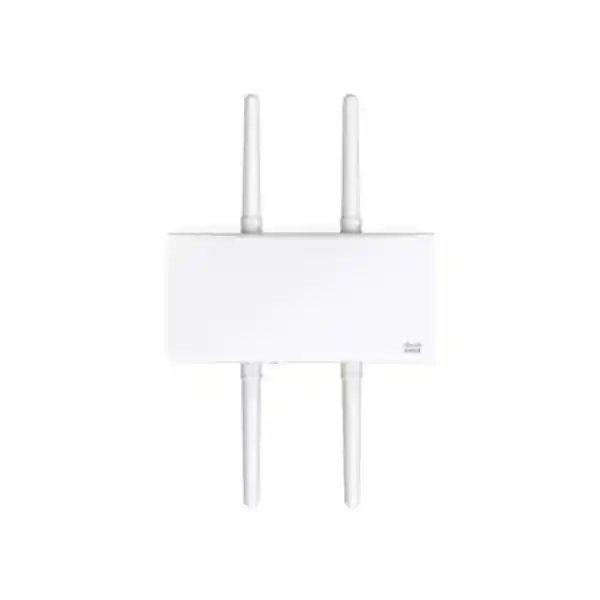
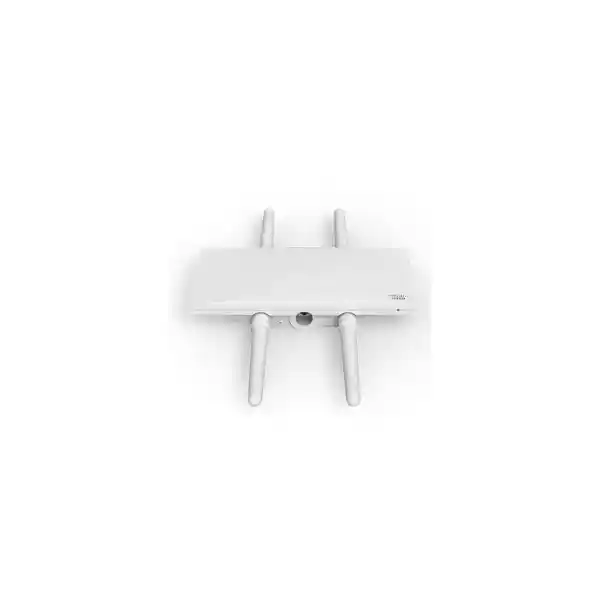
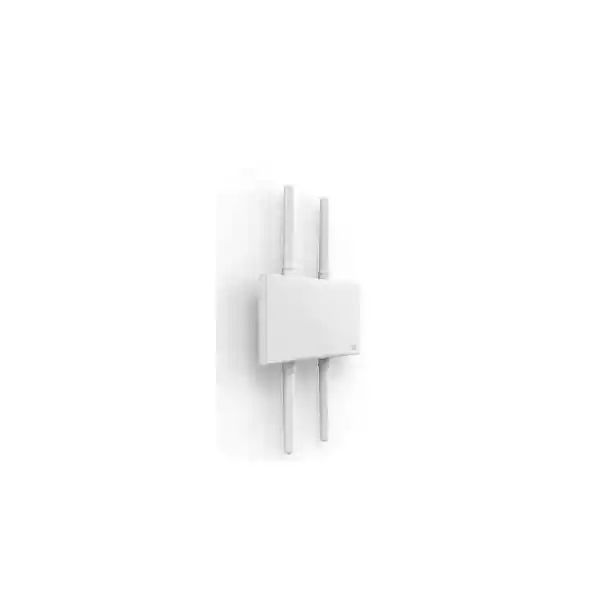
Cisco Meraki MR76 is a rugged enterprise-class outdoor Wi‑Fi 6 access point for organizations that need centrally managed wireless coverage across campuses, industrial compounds, hospitality grounds, warehouses, logistics yards, schools, offices with outdoor spaces and other demanding environments. The MR76 combines dual-band 802.11ax radios, 2×2:2 MU-MIMO and OFDMA, a dedicated security and RF-management radio, Bluetooth Low Energy, four external N-type antenna connectors, one Gigabit Ethernet interface, 802.3af Power over Ethernet and an IP67-rated enclosure. For business buyers, the practical decision is not simply whether the MR76 is fast enough. A successful project also depends on antenna type, mounting position, cable routes, PoE availability, wired backhaul, RF conditions, client density, VLAN design, internet capacity and Meraki licensing.
What the MR76 is built for
The MR76 is positioned for rugged outdoor high-performance wireless where standard indoor access points are unsuitable. Typical scenarios include outdoor campuses, industrial sites, courtyards, loading areas, hospitality grounds and controlled point-to-point links. Its external antenna connectors let the designer choose antennas suited to the required coverage pattern rather than accepting one fixed integrated pattern.
How it is managed
The MR76 is part of the Cisco Meraki cloud-managed wireless portfolio. Centralized management is especially useful for multi-AP and multi-site environments because administrators can monitor wireless health, apply configuration consistently and troubleshoot without relying only on local access to each device. Licensing and dashboard requirements should be included in procurement planning.
What to confirm before ordering
Confirm the antenna model, mounting method, PoE source, cable distance, outdoor cable protection, lightning and grounding practices, client density, target coverage, VLANs, firewall rules and license term. The MR76 has four external N-type antenna connectors and antennas are sold separately, so the bill of materials should be reviewed carefully.
Cisco Meraki MR76 verified technical highlights
| Wireless generation | Wi‑Fi 6 / IEEE 802.11ax |
| Radio design | Dual-band client radios with 2×2:2 MU-MIMO and OFDMA, plus a dedicated security/RF-management radio and Bluetooth Low Energy radio |
| Interfaces | 1 x 10/100/1000 BASE-T Ethernet and 4 x external N-type female antenna connectors |
| Power | 802.3af compatible PoE, 37-57 V; maximum power consumption listed by Cisco as 15 W |
| Environmental design | Rugged industrial enclosure, water and dust sealed, IP67 rated, vibration and shock tested |
| Antenna note | External antennas are required and sold separately; antenna selection should match the intended coverage pattern and regulatory domain |
Deployment, integration and buying guidance
Outdoor wireless projects succeed when radio design and infrastructure design are treated as one job. An MR76 installed in the correct location with the wrong antenna can create coverage gaps, overshoot the target area or increase interference. An access point with strong RF coverage can still perform poorly if its Ethernet uplink is unstable, the switch cannot provide suitable PoE, the cable run is exposed to weather without proper protection, or the internet connection is already congested. For this reason, procurement should begin with a site objective: define the physical area, expected users, client device types, critical applications, roaming requirement and whether the installation is primarily coverage-driven or capacity-driven.
The MR76 supports external antennas, which is a significant advantage when a project needs a deliberate RF pattern. Omnidirectional antennas can be appropriate for broad area coverage around a mounting point, while directional options can focus energy toward a specific yard, corridor, building-to-building path or outdoor zone. Antenna gain, mounting height, orientation and local regulatory limits should be considered together. Buyers should therefore avoid ordering only the access point and assuming every antenna is interchangeable.
At the wired layer, the MR76 uses a Gigabit Ethernet uplink and can be powered using 802.3af PoE. The chosen switch should have sufficient PoE budget for all connected access points and other devices. In a larger design, administrators may separate corporate, guest and operational traffic using VLANs and firewall policies. Guest access should be isolated from sensitive internal systems, and management access should be restricted to appropriate administrators. These design decisions matter just as much as raw radio speed.
FourTeck Tanzania’s business technology shop guidance explains compatibility, capacity, PoE, uplink and lifecycle checks that are relevant before buying an outdoor access point. The Tanzania technology services page is also useful when the requirement includes cabling, switching, firewall integration, network documentation or wider site planning. For regional projects, buyers can also review FourTeck Kenya, FourTeck Uganda and FourTeck UAE for related regional technology requirements.
Cisco Meraki MR76 Tanzania
For organizations evaluating Cisco Meraki MR76 in Tanzania, the most useful starting point is to define the outdoor space and the operational reason Wi‑Fi is needed there. A corporate campus may need employee connectivity between buildings, a hotel may require guest coverage around external leisure areas, a school may need controlled connectivity across open courtyards, and a logistics site may need reliable access for handheld terminals and supervisors in loading zones. These use cases place different demands on antenna pattern, mounting height, client density and roaming behavior. The MR76 is attractive for such projects because it combines Wi‑Fi 6 capability with a rugged IP67-rated form factor and external antenna flexibility, but the final design should be built around the site rather than around a generic access-point count.
Tanzania deployments can involve long cable paths, exposed mounting points, multiple building types and varying power conditions. A project plan should therefore confirm where the Ethernet cable will originate, whether the switch provides suitable 802.3af PoE, how the cable will be protected outdoors, how the device will be grounded according to the installation environment and where the antenna system will be positioned. If the site has multiple access points, channel planning and transmit power should be coordinated so that access points complement rather than fight each other. If users need to roam while using voice, video or operational applications, coverage overlap and client behavior become especially important.
Procurement teams searching for a Cisco Meraki MR76 supplier in Tanzania should also include licensing, antenna selection, mounting accessories and implementation scope in the quotation request. The access point’s external antennas are not a minor afterthought: they determine how RF energy is distributed. Likewise, cloud management is part of the operating model, so the responsible IT team should know who will administer the Meraki Dashboard, how configuration changes will be controlled and how licenses will be tracked over the product lifecycle. A complete quotation is easier to compare when every supplier states what is included and excluded.
For a practical MR76 Tanzania quote, provide the number of outdoor zones, approximate dimensions, expected users, any known obstructions, preferred mounting locations, available PoE switching, internet bandwidth, VLAN or guest-network requirements and whether the project must integrate with an existing Meraki organization. This information allows the bill of materials and deployment assumptions to be reviewed before purchase, reducing the risk of missing antennas, incorrect mounting components or unsuitable cabling.
Cisco Meraki MR76 Dar es Salaam
Cisco Meraki MR76 buyers in Dar es Salaam often have requirements that mix offices, hospitality properties, commercial compounds, warehouses, schools and multi-building business sites. In these settings, outdoor Wi‑Fi is commonly expected to extend the managed corporate network beyond indoor meeting rooms and work areas into yards, parking areas, walkways, courtyards or building-to-building zones. The MR76 can fit this need when the project benefits from an IP67-rated outdoor enclosure, external antenna choices and centralized Meraki cloud management. The design should begin with a site walk or accurate layout rather than a simple assumption that one outdoor access point will cover every area equally.
Dense construction, reflective surfaces, metal structures, trees, walls and neighboring wireless networks can all affect radio behavior. Dar es Salaam organizations should therefore distinguish between a coverage problem and a capacity problem. If only a few users need basic connectivity across a large open area, antenna pattern and mounting height may dominate the design. If many users gather in a hospitality zone, event space, campus courtyard or operational yard, capacity, channel reuse and wired uplink quality become more important. The MR76’s Wi‑Fi 6 capabilities can improve efficiency with compatible clients, but good RF design remains essential.
Business buyers should also check the network behind the access point. A PoE switch with enough power budget, a stable Gigabit Ethernet path, correctly configured VLANs and a suitable firewall policy are part of the end-to-end solution. Guest networks should be isolated from sensitive internal resources, and operational devices may require their own segment. Where the MR76 forms part of a broader Meraki environment, consistent naming, tags, site templates and dashboard administration can simplify support across multiple locations.
For quotation preparation in Dar es Salaam, include the exact site type, number of access points, coverage goals, antenna preference if known, mounting height, available switch model, cable distance and whether installation or configuration support is required. Asking for the complete scope helps procurement compare like with like instead of comparing only the cost of the access point hardware.
Cisco Meraki MR76 Mwanza
Organizations considering Cisco Meraki MR76 in Mwanza may be planning wireless connectivity for educational campuses, hospitality properties, offices with external compounds, storage facilities, industrial sites or distributed operational areas. An outdoor access point becomes valuable when users or devices need secure connectivity beyond the normal indoor office footprint. The MR76 provides a rugged Wi‑Fi 6 platform with external antenna connectors, which gives the network designer more control over how coverage is shaped. This is particularly useful where the wireless requirement is not a simple circular area but a defined yard, corridor, walkway or link between zones.
A Mwanza deployment should be engineered around the physical environment. Before selecting antenna hardware, identify where clients will actually be used, whether there is line of sight, how high the access point can be mounted and what obstacles may block or reflect the signal. A directional antenna can be useful when coverage needs to be concentrated, while an omnidirectional pattern may be better for users surrounding a central point. Because antennas are sold separately for the MR76, procurement should insist that the quotation clearly lists the proposed antenna part and why it matches the design.
The supporting LAN should receive equal attention. The MR76 uses a Gigabit Ethernet uplink and supports 802.3af PoE, so the selected network switch must provide appropriate PoE and have sufficient total power budget. If the switch also powers cameras or phones, calculate the complete load rather than checking only that a PoE port exists. VLAN design can separate staff, guest and device traffic, while firewall rules determine which networks can reach business resources.
For a useful Cisco Meraki MR76 Mwanza quotation, share site drawings where available, estimated client count, outdoor application types, intended SSIDs, switch details, firewall platform and the expected management model. A clear requirement gives the supplier enough information to include antennas, mounts, licensing and configuration tasks instead of leaving important costs to appear later.
Cisco Meraki MR76 Arusha
Cisco Meraki MR76 in Arusha can suit organizations that need managed outdoor wireless across business campuses, hospitality environments, educational properties, logistics spaces, offices with landscaped grounds or other locations where indoor access points cannot provide the required reach. The important distinction is that outdoor wireless is not simply indoor Wi‑Fi moved outside. Weather exposure, antenna direction, mounting, cable protection, RF interference and the distance between clients and the access point all become more significant. The MR76 addresses the hardware side with an IP67-rated rugged enclosure and external N-type antenna connections, while design choices determine the actual user experience.
Hospitality and campus environments around Arusha may place extra emphasis on roaming and predictable guest access. If users move between indoor and outdoor zones, the wireless design should provide sufficient overlap without creating excessive co-channel interference. SSID strategy should remain disciplined; adding many SSIDs increases management and airtime overhead. Guest access can be isolated from internal systems, while employee and operational networks can be mapped to suitable VLANs and firewall policies. Central Meraki management makes it easier to maintain consistent settings across several access points or properties, but administrative ownership should be clearly assigned.
The physical installation also deserves planning. Confirm whether the mounting surface can support the selected bracket, whether cable routing remains within Ethernet distance limits, whether surge and grounding practices are appropriate and whether the PoE source is protected by suitable power infrastructure. In an environment where business operations depend on Wi‑Fi, UPS protection for the switch and upstream network can be as important as the access point itself.
Arusha buyers requesting MR76 pricing should ask for a complete bill of materials and not only the AP. Include the antenna type, mounting components, PoE approach, license term, cabling scope and configuration or testing services. This creates a more accurate project comparison and helps avoid an installation where the core device arrives before the accessories needed to use it.
Cisco Meraki MR76 Dodoma
Organizations sourcing Cisco Meraki MR76 in Dodoma may be planning outdoor Wi‑Fi for public-sector compounds, education, office campuses, commercial properties, warehouses or institutions with users spread across several buildings. The MR76 is designed for rugged outdoor Wi‑Fi 6 deployments and offers flexibility through external antennas. That flexibility is valuable when the target is a specific courtyard, approach road, open operational area or building-to-building path, but it also means the antenna system must be deliberately chosen. A generic quotation that lists only the access point is incomplete for most projects.
Wireless coverage should be planned from measurable requirements. Identify where a reliable signal is needed, how many simultaneous users are expected, what applications are important and which client devices will connect. Administrative browsing has different performance expectations from video meetings, voice applications, cloud systems or operational scanning devices. Wi‑Fi 6 technologies such as OFDMA and MU-MIMO can help improve efficiency with compatible clients, but capacity still depends on channel availability, interference, client distribution and the wired path behind the access point.
For Dodoma sites with several network segments, the MR76 can participate in a structured design where employee, guest and operational devices are separated by SSID, VLAN and policy. The switch should provide 802.3af PoE and enough total power budget. The firewall should have rules that match the intended access model. Central Meraki administration can reduce the need to manage each AP independently, which can be valuable for organizations with several buildings or branches, but licensing should be budgeted as an operating requirement rather than discovered after hardware purchase.
A strong MR76 Dodoma RFQ should include location drawings, coverage areas, user estimates, switch and firewall models, cable availability, expected SSIDs, existing Meraki organization details and any installation constraints. The more complete the requirement, the easier it is to produce a quotation that procurement, IT and project teams can evaluate consistently.
Cisco Meraki MR76 UAE
Cisco Meraki MR76 projects in the UAE often involve outdoor business spaces, logistics yards, hospitality properties, schools, campuses, industrial facilities and distributed enterprise sites where centralized cloud management is operationally attractive. The MR76’s rugged IP67 enclosure and external antenna design allow it to be engineered for outdoor coverage rather than treated as a generic indoor AP. UAE projects should place particular attention on mounting exposure, heat, cable routing, antenna selection and local wireless regulatory requirements, while also confirming that the selected antenna and power approach align with Cisco guidance.
For multi-site businesses, Meraki Dashboard can provide a common operational view across branches and properties. That can simplify configuration consistency and troubleshooting, but organizations should define administrator roles, change-control procedures, alert handling and license ownership. A cloud-managed platform is most useful when there is a clear operating model behind it. Branch standards can include consistent SSID naming, VLAN mapping, access policies and monitoring expectations while still allowing site-specific RF tuning.
The wired network remains a key dependency. Each MR76 needs suitable Ethernet and 802.3af PoE. Large sites should check switch PoE budgets, uplink capacity and redundancy expectations. Outdoor cable pathways, patching and surge protection should be designed by qualified personnel for the environment. Guest wireless should be isolated from corporate resources, while operational devices can be segmented according to security needs.
UAE buyers can use FourTeck’s Cisco network switch guidance to review PoE, VLAN, uplink and Meraki switching considerations around wireless deployments. For an MR76 quotation, state the site, antenna coverage requirement, AP quantity, switch platform, license term and whether configuration, installation or testing is required.
Cisco Meraki MR76 Uganda
Cisco Meraki MR76 in Uganda can support organizations that need durable outdoor wireless across business compounds, universities, schools, hospitality properties, NGO facilities, logistics centers, warehouses and branch environments. The product is particularly relevant when IT teams want the management simplicity of the Meraki cloud platform while still needing a weather-resistant access point with external antenna choices. The AP hardware, however, is only one part of the project. RF design, PoE switching, cabling, internet capacity, firewall policy and licensing all affect whether the solution performs as expected.
Uganda projects should define whether the requirement is broad outdoor coverage, connectivity along a particular path, service to a concentrated user zone or a point-to-point style application. Those objectives lead to different antenna choices. Since the MR76 uses four external N-type connectors and antennas are sold separately, procurement should confirm the exact antenna before the order is finalized. Mounting height and orientation should be based on the site, not copied from another deployment.
Power and upstream network design also deserve careful review. The MR76 supports 802.3af PoE and a Gigabit Ethernet connection. A managed switch can support VLAN separation for staff, guests and devices, while the firewall enforces access boundaries. If the deployment includes several APs, consistent configuration, channel planning and dashboard organization can make expansion and troubleshooting easier.
For a Cisco Meraki MR76 Uganda quotation, provide the expected coverage area, number of users, applications, available switch and firewall details, cable route, power conditions and preferred license period. Buyers can also consult FourTeck Uganda for related regional infrastructure planning and procurement discussions.
Cisco Meraki MR76 Kampala
Kampala businesses evaluating Cisco Meraki MR76 often need outdoor Wi‑Fi that works as part of a larger managed network rather than as an isolated hotspot. Office compounds, schools, universities, hotels, mixed-use properties and logistics businesses can require coverage around entrances, parking zones, external work areas or between buildings. In such environments, the MR76 provides a rugged Wi‑Fi 6 platform and flexible external antenna system, while Meraki Dashboard offers centralized administration. The engineering task is to connect those capabilities to the actual shape and density of the site.
A Kampala deployment should start by mapping user locations and applications. A parking or gate area may have a small number of devices that need reliable reach. A hospitality courtyard may have many guest devices that create a capacity requirement. A school compound may require roaming between buildings. These scenarios should not be designed with the same antenna and transmit settings. RF surveying and post-install validation are useful where the environment is complex or performance is business-critical.
Network segmentation should also be planned before configuration. Staff, guest and operational traffic may need different VLANs, firewall permissions and bandwidth policies. The access point’s Gigabit Ethernet uplink should connect to a managed PoE switch with enough total PoE budget. If the upstream internet connection is the bottleneck, adding high-performance access points will not solve slow cloud access, so WAN capacity and firewall performance should be reviewed as part of the system.
When requesting MR76 pricing in Kampala, ask the supplier to state whether antennas, mounting parts, licensing, cabling, configuration and testing are included. This prevents a low headline hardware price from hiding required components. Sharing the site plan and current network details allows a more useful technical and commercial proposal.
Cisco Meraki MR76 Arua
Cisco Meraki MR76 in Arua can be considered for organizations that operate across compounds, education sites, hospitality grounds, warehouses, branch facilities or other locations where users need business-grade Wi‑Fi outside standard indoor rooms. The rugged IP67 design makes the MR76 suitable for outdoor deployment, while the external antenna connectors let the network designer choose a coverage pattern matched to the project. This flexibility is important because an outdoor requirement may need coverage in one direction rather than around the full mounting point.
For Arua projects, define the operational priority before choosing the installation position. If users carry tablets or phones through an open work area, the goal may be broad roaming coverage. If the objective is connectivity to a remote building or gate, a focused antenna pattern can be more appropriate. Client device capability should also be considered, because real performance depends on both the access point and the client radio. Wi‑Fi 6 provides efficiency improvements, but older devices will continue to operate according to their own supported standards and capabilities.
The switch, cabling and power path should be treated as part of the purchase. The MR76 can use 802.3af PoE, but the switch must have sufficient available budget. Cable routes exposed to weather need appropriate installation practice. VLANs can separate guest and business traffic, and upstream firewall rules should reflect the organization’s security policy. Meraki cloud management can help an IT team support remote branches, provided the organization has reliable internet connectivity and a clear license plan.
An MR76 Arua quotation request should state the intended coverage dimensions, user count, available mounting points, switch model, cable distances and whether the buyer needs installation or only equipment supply. Clarifying these details early helps avoid mismatched antennas or missing accessories during deployment.
Cisco Meraki MR76 Mbarara
Businesses and institutions sourcing Cisco Meraki MR76 in Mbarara may require outdoor wireless for education, hospitality, logistics, office compounds, commercial properties or operational sites. The MR76 offers a strong fit where the organization wants Wi‑Fi 6, weather-resistant hardware and cloud-based administration. The product should still be selected as part of a complete wireless design. The number of access points, antenna choice and mounting positions depend on real coverage and capacity requirements rather than the nominal wireless data rate.
A useful Mbarara design exercise separates areas by purpose. Staff working outdoors may require access to internal applications. Guests may need internet-only access. Operational devices can require stable connectivity and restricted network permissions. Each group can be mapped to an SSID and VLAN strategy that supports both usability and security. The firewall should enforce the intended boundaries so that guest users cannot reach sensitive resources.
Because the MR76 uses external antennas, buyers should expect the antenna decision to be documented. Coverage around a central outdoor area, along a narrow zone and toward another building can require different patterns. Cabling and PoE should also be documented. A Gigabit Ethernet uplink and 802.3af-compatible PoE can simplify deployment when the existing switch is suitable, but PoE capacity must be checked across all powered devices.
For a Cisco Meraki MR76 Mbarara quotation, include the current network topology, internet bandwidth, access-point quantity, client estimates, target coverage, mounting constraints and license requirement. If the project is an upgrade, list existing access points and known coverage complaints. This allows the new design to solve documented issues rather than simply replacing hardware model-for-model.
Cisco Meraki MR76 Gulu
Cisco Meraki MR76 deployments in Gulu can address outdoor connectivity needs for schools, offices, institutions, hotels, operational compounds and sites where users move between buildings. The product’s Wi‑Fi 6 radios and dedicated RF/security radio are designed for enterprise use, while the rugged enclosure is suited to outdoor installation. The value of these features is maximized when the RF environment is planned carefully and the upstream network is ready to support the AP.
For example, an education site may have high user concentration at certain times of day, while an operational compound may have a smaller number of devices spread across a larger area. The first case emphasizes capacity and channel planning; the second may emphasize antenna reach and positioning. Gulu buyers should communicate these patterns during design because the same physical area can require different solutions depending on how users behave.
The MR76’s external antenna architecture gives design flexibility but adds a procurement responsibility: the correct antennas and mounting accessories need to be quoted. Installation should also account for outdoor-rated cable practice and a suitable PoE source. Central dashboard management can be useful for an organization with limited on-site IT resources, because approved administrators can monitor and configure the network remotely, but stable upstream connectivity and active licensing remain important.
A good MR76 Gulu purchasing request includes site size, user patterns, applications, current switch and firewall, license preference, antenna coverage objectives and implementation scope. This information allows the seller to respond with a complete configuration rather than an isolated hardware price that may not reflect the actual deployment cost.
Cisco Meraki MR76 Kenya
Cisco Meraki MR76 in Kenya is relevant to enterprises, schools, universities, hospitality properties, logistics companies, industrial facilities and branch networks that need rugged outdoor Wi‑Fi with centralized management. Nairobi campuses, coastal hospitality environments, warehouses and multi-building sites can all create different radio challenges. The MR76 can support these scenarios when the deployment is designed around the exact environment, with antenna selection playing a major role because the unit uses external N-type connectors.
Kenya buyers should define whether the requirement centers on users, operational devices or a point-to-point style link. A corporate courtyard full of laptops and phones creates a different RF profile from a warehouse yard with handheld terminals. Client density, traffic type, roaming expectations and interference should inform how many APs are installed and where they are placed. If multiple APs are used, automatic cloud management can assist operations, but sound site planning remains essential.
At the LAN layer, check PoE capacity, uplink bandwidth, VLAN design and the firewall. Guest wireless should be isolated, employee traffic should receive appropriate access to business systems, and operational endpoints may require specific security policies. Cabling and mounting should be planned for outdoor conditions. Organizations with existing Meraki infrastructure should also confirm dashboard organization, licensing and configuration standards so the new MR76 units fit the current environment cleanly.
For procurement support, FourTeck Kenya’s IT products guidance outlines broader network and infrastructure buying considerations. An MR76 Kenya quote should include quantity, antennas, mounts, licenses, PoE assumptions and service scope so the total project can be evaluated accurately.
Cisco Meraki MR76 Kuwait
Cisco Meraki MR76 in Kuwait can be used for outdoor enterprise wireless around campuses, hospitality sites, compounds, schools, logistics facilities and commercial properties. High outdoor temperatures, exposed mounting locations and long cable routes increase the importance of following vendor installation guidance and selecting appropriate supporting infrastructure. The MR76’s IP67-rated enclosure is designed for rugged environments, while external antenna options allow the RF pattern to be matched to the target area.
Wireless planning should identify expected users and applications at peak times. A small number of operational devices may prioritize reliability and coverage. A guest area may prioritize capacity and internet access. An education environment may require both. The Meraki platform can provide centralized monitoring and policy management across multiple access points, but it does not replace the need for physical RF planning. Mounting height, antenna orientation, neighboring networks and building materials can all affect performance.
The wired network must provide Gigabit Ethernet and suitable 802.3af PoE. Where several powered devices share a switch, calculate the overall PoE budget. The firewall and VLAN plan should isolate guest users from corporate systems and give operational devices only the access they require. License term, cloud administration and alert ownership should be agreed before handover so the organization knows how the network will be operated after installation.
Kuwait buyers requesting MR76 pricing should ask for the exact access point, antenna model, mounts, licensing, cabling assumptions and services in one bill of materials. This makes competing quotations easier to compare and reduces the chance that critical accessories are omitted from the initial purchase.
Cisco Meraki MR76 Ghana
Cisco Meraki MR76 in Ghana can support outdoor Wi‑Fi projects for offices, educational institutions, hotels, warehouses, commercial compounds and multi-site organizations. Where IT teams want remote visibility and consistent management, the Meraki cloud model can simplify administration across several APs or branches. The MR76 also provides external antenna flexibility and a rugged enclosure suited to outdoor use, making it appropriate when the wireless requirement extends beyond normal indoor office coverage.
The project should begin with a clear statement of what success means. If the objective is to cover an outdoor guest area, capacity and client experience may matter most. If the objective is to connect operational devices across a yard, coverage reliability may be the priority. If the requirement involves several buildings, roaming and backhaul design become important. These decisions determine whether the chosen antenna and AP placement are appropriate.
Ghana deployments should also check PoE, cabling and network segmentation. The MR76 can receive power through 802.3af PoE, but the switch must have sufficient power budget. Staff and guest SSIDs should be mapped to the correct VLANs and firewall policies. For organizations already using Meraki security or switching, consistent dashboard structure and naming can make network operations easier.
Procurement teams should request a complete MR76 Ghana proposal that identifies antennas, mounting, licensing and installation dependencies. If the project will expand later, ask how additional APs will be incorporated and whether current switching, internet and firewall capacity can support growth. Planning those dependencies at the buying stage is usually less disruptive than discovering them after installation begins.
Cisco Meraki MR76 Nigeria
Cisco Meraki MR76 in Nigeria is suited to organizations looking for cloud-managed outdoor Wi‑Fi across enterprise campuses, warehouses, factories, hospitality sites, schools, institutions and branch environments. Outdoor business connectivity can be challenging because user density, site size, obstacles and local interference vary widely. The MR76 provides a rugged Wi‑Fi 6 platform with external antennas, but selecting the right antenna and mounting position is central to achieving the required coverage.
Large Nigerian sites should avoid judging wireless design by maximum data rate alone. Capacity depends on airtime, client capability, traffic type, interference, channel width and how many users connect to each AP. A site with voice or video devices may need stronger roaming and latency planning than a site used mainly for occasional web access. A warehouse or industrial area may contain metal shelving or equipment that changes propagation dramatically. Site-specific planning is therefore important.
Power and internet resilience can also influence user experience. The AP can be powered using 802.3af PoE, and the upstream switch, firewall and internet service should be protected according to the organization’s operational requirements. If power is lost to the PoE switch, the wireless network goes offline even when the AP itself is correctly installed. UPS strategy and network redundancy may therefore be relevant for critical sites.
For an MR76 Nigeria quotation, include access-point count, antenna requirements, license period, switching environment, expected SSIDs, user density, mounting constraints and deployment support needs. A detailed RFQ enables procurement to compare complete solutions rather than hardware-only prices and makes it easier for IT teams to understand the ongoing operating model.
Cisco Meraki MR76 Seychelles
Cisco Meraki MR76 in Seychelles can fit hospitality, resort, education, commercial and institutional projects that require managed Wi‑Fi in outdoor areas. Coastal and island environments can increase the importance of mounting materials, cable protection and maintenance practices, so the access point should be treated as one component within a carefully designed outdoor installation. The MR76 provides an IP67-rated enclosure and external antenna system, while Meraki cloud management can support centralized administration across multiple areas or properties.
Hospitality projects in particular should separate guest experience from business network security. Guest wireless may need broad coverage and controlled internet access, while staff devices and operational systems require different permissions. VLANs and firewall policies can create those boundaries. Capacity should be evaluated at peak occupancy rather than average use. Pool decks, outdoor dining spaces, walkways and event areas can concentrate many devices in specific zones, which may require more than one access point even when signal coverage appears strong.
External antenna selection allows coverage to be shaped to the property. An omnidirectional pattern may be appropriate for users distributed around a central point, while directional coverage can target a long terrace or another building. The best choice depends on real geometry, not product marketing. Cabling routes, PoE supply and grounding should also be reviewed with local installation conditions in mind.
A Cisco Meraki MR76 Seychelles quotation should specify AP quantity, proposed antennas, license term, mounting scope, network integration and any site-survey assumptions. Buyers should also clarify whether configuration includes guest networking, VLANs, dashboard onboarding and acceptance testing so the commercial offer reflects the complete deployment rather than only the equipment.
Related infrastructure for an MR76 deployment
PoE switching
Check that the access switch supports the required PoE standard and has sufficient total power budget for the MR76 plus phones, cameras and other powered devices. Managed switching also simplifies VLAN and troubleshooting requirements.
Firewall and segmentation
Staff, guest and operational networks should be separated according to business policy. The firewall determines which networks can reach internal applications and how guest internet access is controlled.
Cabling and mounting
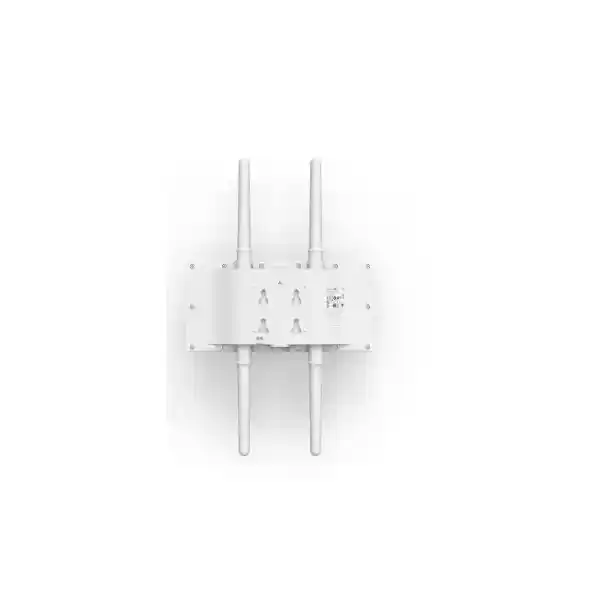
Outdoor cable routes, mounting surfaces and physical protection require advance planning. Installation should follow Cisco guidance and applicable local practices for outdoor networking equipment.
Licensing and operations
Include Meraki licensing in budget and lifecycle planning. Define dashboard administrators, alerts, configuration ownership and renewal responsibility so management remains clear after handover.
Cisco Meraki MR76 quotation checklist
To prepare an accurate quotation, provide as much of the following as possible. This helps separate the equipment cost from design, licensing and installation assumptions.
- Number of MR76 access points required or number of outdoor zones to be covered.
- Approximate dimensions, site plans and mounting heights.
- Expected concurrent users and main applications.
- Required staff, guest and operational SSIDs.
- Existing network switch model and available PoE budget.
- Firewall model, VLAN environment and internet bandwidth.
- Preferred Meraki license term or existing organization details.
- Antenna requirement, if already specified by a network design.
- Cabling, mounting, configuration, testing and handover scope.
Cisco Meraki MR76 FAQs
Is the Cisco Meraki MR76 an outdoor access point?
Yes. Cisco positions the MR76 as a rugged outdoor Wi‑Fi 6 access point. Its enclosure is IP67 rated and designed for outdoor and industrial-style use cases.
Does the MR76 include antennas?
The MR76 uses four external N-type antenna connectors and Cisco states that antennas are sold separately. The correct antenna should be selected according to the required coverage pattern and regulatory domain.
What PoE does the MR76 use?
Cisco documentation lists the MR76 as 802.3af compatible, using 37-57 V PoE, with maximum power consumption listed as 15 W. The upstream switch still needs sufficient total PoE budget.
Is the MR76 Wi‑Fi 6?
Yes. The MR76 is an 802.11ax Wi‑Fi 6 access point. It supports 2×2:2 operation, MU-MIMO and OFDMA on its client-serving radios.
Does the MR76 require a Meraki license?
Meraki access points are managed through the Meraki cloud platform and licensing should be included in procurement and lifecycle planning. Confirm the license term and current commercial model when requesting a quotation.
What should I send for an MR76 quote?
Send the site location, number and size of outdoor areas, user estimate, existing switch and firewall details, required SSIDs, mounting constraints, desired license term and whether antennas, cabling, installation and configuration are needed.
Decision recap
Choose Cisco Meraki MR76 when your project specifically needs a rugged outdoor Wi‑Fi 6 access point, external antenna flexibility and Meraki cloud management. Do not choose it only because it has a strong enterprise specification. First verify that the target coverage pattern, antenna system, PoE switching, cabling, licensing model and management process fit the site.
FourTeck Tanzania can help turn those requirements into a clearer bill of materials and quotation discussion. If you already have a site drawing, current switch model and expected user count, include them with your request so the response can address the real deployment instead of offering a generic access-point price.


Reviews
There are no reviews yet.