
Cisco Meraki MS130R-8P Tanzania
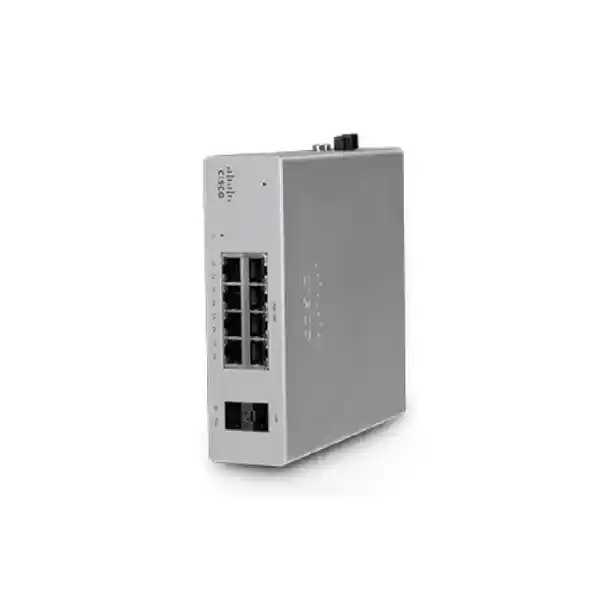
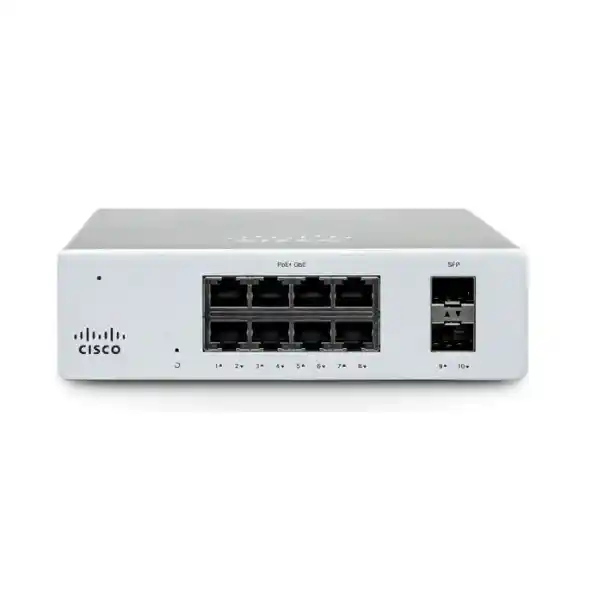
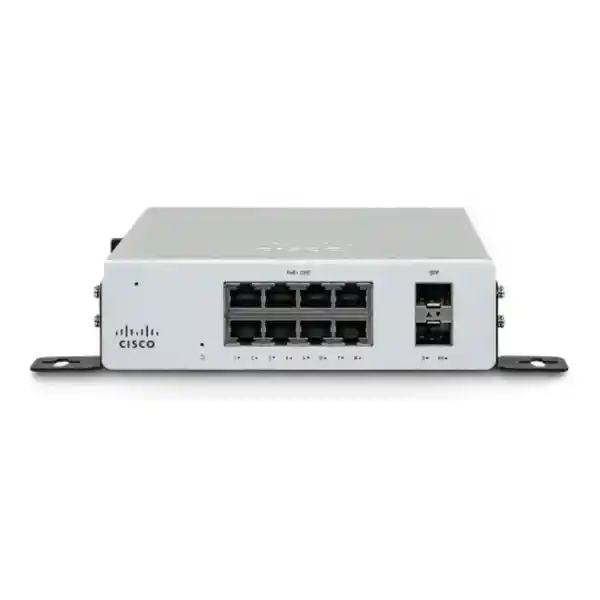
Cisco Meraki MS130R-8P is a ruggedized, cloud-managed Layer 2 access switch built for locations where ordinary office networking hardware may face heat, cold, space constraints, dust-prone utility areas or non-traditional mounting requirements. Cisco positions the MS130R family for ruggedized use, and the MS130R-8P combines eight 1GbE RJ45 access ports with two 1GbE SFP uplinks, centralized Meraki Dashboard management and up to 240W total Power over Ethernet capacity. Its operating temperature range extends from -40°C to 70°C, making it relevant to industrial cabinets, warehouses, surveillance networks, transport facilities, utility rooms, outdoor-adjacent enclosures and branch environments where temperature tolerance matters.
For Tanzania buyers, the value of the MS130R-8P is not simply that it has eight Ethernet ports. The more important question is whether the switch fits the full deployment: the number and type of powered devices, uplink design, available power source, physical mounting, environmental conditions, Meraki licensing, cloud connectivity, VLAN design, security policy and expansion plan. A switch powering outdoor access points, IP cameras or operational devices should be sized by PoE demand and uplink traffic as well as port count. FourTeck Tanzania can help prepare the bill of materials, compare the switch against related Meraki access options and align switching with wireless, firewall, cabling and UPS requirements before procurement.
What is the Cisco Meraki MS130R-8P?
The MS130R-8P is the ruggedized member of Cisco Meraki’s MS130 access-switch family. It is designed around simple cloud operations rather than local command-line administration. Organizations can use Meraki Dashboard to provision, monitor and manage switching alongside other Meraki infrastructure. That operational model can be useful for distributed businesses because configuration standards, port settings, VLANs, alerts and firmware practices can be coordinated across several sites without an administrator being physically present at every branch. Cloud management does not remove the need for good LAN design, but it can make repeatable deployment and day-to-day visibility substantially easier.
Official Cisco documentation lists eight 1GbE RJ45 ports, two 1GbE SFP uplinks, a 20Gbps switching capacity, 802.3bt PoE capability, a 30W per-port budget and a 240W total switch PoE budget. Power is supplied through external AC-adapter or DIN-rail power-supply options, and mounting options include desktop, wall and DIN rail. These characteristics make the switch particularly interesting where network equipment has to be installed close to operational devices rather than in a climate-controlled server room.
Verified specifications and planning points
| Item | Cisco Meraki MS130R-8P |
|---|---|
| Access ports | 8 × 1GbE RJ45 |
| Uplinks | 2 × 1GbE SFP |
| PoE | 802.3bt support, 30W port budget, up to 240W total switch budget |
| Switching capacity | 20Gbps |
| Operating temperature | -40°C to 70°C |
| Mounting | Desktop, wall mount and DIN rail options |
| Power approach | External AC adapter or DIN-rail AC power-supply options |
| Management | Meraki cloud management with applicable licensing |
Where this rugged switch fits
The MS130R-8P is most relevant where a compact managed switch needs to sit close to field devices or in an environment that is less comfortable than a conventional office rack. Examples include surveillance aggregation points, industrial cabinets, transport or logistics sites, building-service spaces, hot utility rooms, warehouse zones, sheltered outdoor-adjacent cabinets and remote branch installations. The 240W PoE budget can support networks that need to power several cameras or access points, but the exact design should total the maximum expected draw of every connected device and retain reasonable headroom.
For wireless projects, the switch can provide PoE and wired connectivity to access points, while the two SFP uplinks can connect an edge cabinet back to a main distribution location over fiber when required. For surveillance, it can power IP cameras and carry video traffic toward an NVR or VMS network. For operations environments, it can provide centrally managed wired ports for controllers, terminals or networked equipment. In all cases, the network should be segmented appropriately rather than allowing every endpoint to share one flat VLAN.
Licensing and cloud management
Meraki switching is built around cloud administration, so licensing belongs in the initial procurement discussion rather than being treated as an afterthought. Cisco documentation maps MS130R-8P to the MS licensing family, and buyers should confirm the required license type and term when requesting a quotation. Procurement teams should also document which Meraki organization will own the device, who will hold administrator access and who is responsible for renewals. This is especially important for companies operating multiple branches because a device can be technically installed but operationally awkward if ownership and licensing are not aligned with the company’s central IT structure.
Related FourTeck Tanzania resources
A rugged switch normally sits inside a broader network. Review the FourTeck Tanzania business technology shop to frame adjacent hardware, the technology services page for deployment and lifecycle planning, and the Cisco Meraki CW9162I-MR when a Meraki-managed indoor Wi-Fi 6E access point is part of the same branch design.
For higher-capacity wireless needs, compare the Cisco Meraki CW9164I-MR. For outdoor wireless architectures, the Cisco Meraki CW9163E-MR provides useful adjacent context. These internal pages help buyers evaluate how access points and rugged switching may fit into one cloud-managed architecture.
Cisco Meraki MS130R-8P Tanzania
Businesses evaluating Cisco Meraki MS130R-8P in Tanzania should begin by identifying the physical site and the devices the switch will serve. A head office, warehouse, clinic, school, retail branch, hospitality property, camera aggregation point and remote operational site can each place very different demands on the access switch. In a conventional air-conditioned office, a standard access switch may be sufficient. The MS130R-8P becomes more compelling when the network edge must operate in a hotter, colder, tighter or less protected location and still remain centrally manageable through Meraki Dashboard.
Tanzania deployments should document the expected PoE load carefully. Eight Ethernet ports do not automatically mean eight powered endpoints can be attached without planning. Cameras, wireless access points, phones and specialist devices draw different levels of power, and real requirements can increase when features such as heaters, infrared illumination or higher radio activity are enabled. Add the maximum planned consumption of connected devices, compare it with the switch budget and include margin for replacement models or growth. Where the switch sits far from the main rack, the two SFP uplinks can be useful for fiber connectivity, especially when copper distance, electrical interference or building separation makes fiber preferable.
Cloud management can help a central Tanzania IT team support sites in several cities without treating every switch as an isolated appliance. Port naming, VLAN standards, alerting, firmware governance and administrator roles should still be designed in advance. A branch switch is much easier to troubleshoot when each port is documented by device, purpose and VLAN. Procurement requests should therefore include location, quantity, endpoint types, PoE requirements, uplink medium, mounting preference, available power, Meraki license term and any existing Dashboard organization information. That creates a stronger quotation than simply requesting an eight-port switch.
Cisco Meraki MS130R-8P Dar es Salaam
Dar es Salaam organizations often operate in dense commercial buildings, warehouses, port-related environments, hospitality properties, retail branches and mixed-use sites where network equipment can be distributed well beyond a central server room. The MS130R-8P is useful when a small number of endpoints must be connected in a cabinet or technical area where temperature tolerance and flexible mounting matter. Rather than extending long copper runs back to one rack, a design may place the switch closer to cameras, access points or operational devices and use fiber uplinks toward the core where appropriate.
In multi-floor buildings, the switch can form part of an edge architecture in which each floor or operational zone has a compact access point. The two SFP uplinks provide design flexibility, but network architects should still check whether 1Gbps uplinks are sufficient for aggregate traffic. A group of high-resolution cameras or several busy access points can generate meaningful load. When the site has heavy traffic, uplink utilization should be estimated rather than assumed. VLAN segmentation should separate corporate users, guest wireless, CCTV, voice and building systems where business policy requires different trust levels.
For Dar es Salaam procurement, include the physical cabinet or mounting plan, ambient temperature, electrical supply, UPS strategy, fiber type, transceiver requirements and whether the switch will sit in a Meraki network that is already managed centrally. If the equipment is part of a new office or warehouse, cabling and patching should be designed at the same time. If it is a retrofit, confirm the condition of existing fiber and copper, labeling, rack space and power. These practical details have more impact on installation success than the product model alone.
Cisco Meraki MS130R-8P Mwanza
For Mwanza businesses, the MS130R-8P can support branch networking in operational environments where a compact cloud-managed switch is preferable to a larger rack-mounted access platform. Sites with surveillance cameras, Wi-Fi access points, reception devices or warehouse endpoints may benefit from placing a rugged access switch closer to the equipment it serves. This can simplify cable runs, provided uplinks, power, enclosure design and network security are planned correctly.
A distributed business with IT leadership based elsewhere can use Meraki Dashboard to apply common configuration standards to the Mwanza branch. That is valuable only when the organization has a clear operational model: who can change ports, who receives alerts, how configuration changes are approved, when firmware updates occur and how switch inventory is documented. A remote-management platform improves visibility, but governance prevents accidental variation between sites.
Mwanza buyers should also review the power environment. Network continuity depends on the switch, its external power supply, upstream internet equipment and any connected PoE devices. UPS protection should be sized for the complete local network segment rather than only the switch. If the switch powers cameras or access points that are expected to remain available during short outages, runtime calculations should account for their combined draw. A quotation request should include endpoint quantities, expected PoE demand, required uptime, uplink method, license term and any installation accessories.
Cisco Meraki MS130R-8P Arusha
Arusha deployments can span offices, hospitality venues, tourism operations, education facilities, warehouses and distributed business sites. In these environments, the MS130R-8P can be a practical edge switch when network equipment must be installed outside the traditional server-room environment. The broad operating-temperature range and DIN-rail option make it relevant to cabinets and technical enclosures where a standard desktop or rack switch may be less suitable.
Hospitality and guest-facing sites should consider how the switch interacts with wireless and surveillance networks. An access point may need PoE and a staff or guest VLAN mapping, while cameras may require separate security policies and continuous recording traffic. Using one switch for both categories can be efficient, but port roles, uplink bandwidth and PoE demand should be documented. The Meraki management model can give administrators a shared operational view across switching and other Meraki devices when the broader stack is deployed.
Before ordering for an Arusha project, buyers should confirm whether the installation is indoor, sheltered, cabinet-based or exposed to unusual temperature conditions. They should identify the mounting method, power supply option, cable pathways and any fiber requirements. If the switch will connect remote cameras or outdoor wireless access points, protection of the full cable route, grounding approach and enclosure should be considered as part of the site design rather than assuming the rugged switch alone solves every environmental risk.
Cisco Meraki MS130R-8P Dodoma
Dodoma organizations considering the MS130R-8P may be planning government, education, enterprise, branch, security or campus-style connectivity where centrally managed infrastructure is useful. A compact rugged switch can support a localized device cluster such as cameras at a perimeter point, access points in a separate building, networked equipment in a utility area or branch endpoints in a space without a conventional rack.
The key design decision is where the switching boundary should sit. Placing the switch closer to endpoints can reduce long copper runs, but it creates a local dependency on power, uplink connectivity and enclosure conditions. Fiber backhaul through the SFP ports may provide a cleaner inter-building connection where distances are longer or electrical separation is desirable. If both SFP links are used, administrators should understand whether the design is for redundancy, separate paths or distinct network functions and configure the topology accordingly.
For procurement teams in Dodoma, a useful request includes the network diagram, endpoint count, maximum PoE load, fiber distance, transceiver type, existing Meraki environment and required license term. It is also useful to state whether configuration, installation, testing and documentation are expected as part of the project. This separates the hardware purchase from the complete deployment scope and helps avoid missing accessories or implementation tasks.
Cisco Meraki MS130R-8P UAE
UAE projects often place network infrastructure in warehouses, logistics facilities, retail sites, industrial areas, outdoor-adjacent cabinets and technical rooms where ambient conditions can be demanding. The MS130R-8P is relevant when an eight-port cloud-managed PoE switch must tolerate a wider temperature range than ordinary office access switches. Buyers should still separate environmental tolerance from enclosure design: protection from water, dust ingress, direct solar load, electrical faults and physical tampering depends on the complete installation, not only the switch specification.
For multi-country organizations with headquarters or procurement teams in the UAE, Meraki cloud management can support standardized branch networking across Tanzania, Uganda, Kenya and other regions. The technical benefit comes from consistent templates, VLAN naming, port policies and administrator roles. Hardware standards should be documented together with licensing terms, spares strategy, supported transceivers and installation practices so regional sites remain operationally similar even when building conditions differ.
FourTeck customers coordinating regional projects can also review FourTeck UAE for broader UAE technology requirements. The network-link decision should remain tied to the project: use the Tanzania site for Tanzania procurement and the UAE site for UAE-focused discussions rather than assuming one region’s commercial terms or availability apply automatically in another.
Cisco Meraki MS130R-8P Uganda
Uganda organizations can use the MS130R-8P in branch, security, warehouse and operational networks where cloud administration and environmental tolerance are useful. A common design pattern is to deploy a small rugged switch near powered edge devices while retaining centralized network policy at a main office. This works well only when the uplink, remote access, power protection and device documentation are planned as carefully as the switch itself.
If the switch powers surveillance devices, planners should identify camera wattage, recording traffic and any nighttime power increase caused by infrared or auxiliary features. If it powers wireless access points, radio capability, PoE requirement and backhaul traffic should be checked. If mixed device types share the switch, VLANs and access policies should define which endpoints can communicate. The 240W budget is substantial for an eight-port platform, but design should still be based on measured or documented endpoint requirements.
For Uganda-specific regional coordination, customers can use FourTeck Uganda alongside the Tanzania operation when projects span both markets. Keep licensing ownership and Meraki organization structure consistent so devices in different countries remain visible to the intended central IT team.
Cisco Meraki MS130R-8P Kampala
Kampala deployments commonly involve offices, retail environments, hospitality, education and enterprise branches where IT teams need visibility across several locations. The MS130R-8P can serve compact edge areas that have a limited number of wired endpoints but meaningful PoE requirements. Its cloud-managed model is especially useful when a central network team wants to monitor port status and configuration without dispatching a technician for routine administration.
Dense commercial buildings may create practical cabling challenges. If cameras or access points are far from the main rack, a distributed access switch can shorten endpoint cable runs, while fiber uplinks provide a path back to the main network. The design should verify available fiber cores, transceiver compatibility, path diversity and uplink utilization. Installing a rugged switch in a cabinet does not replace structured cabling discipline; labeling, patching and documentation remain essential.
When preparing a Kampala quotation, include the number of switches, connected devices, PoE estimates, mounting method, local power arrangement, fiber requirements and Meraki license term. If the branch already uses Meraki firewalls or wireless, provide existing organization details so the deployment can be planned within the correct management structure.
Cisco Meraki MS130R-8P Arua
Arua sites may benefit from the MS130R-8P where central IT resources are located in another city and the local branch needs dependable, remotely manageable switching. Cloud visibility can simplify basic troubleshooting because administrators can inspect link state, port status and configuration remotely, but remote management depends on working power and upstream connectivity. For that reason, WAN resilience and UPS planning are important when the switch supports business-critical devices.
In smaller branches, eight access ports may be sufficient for a focused set of devices such as cameras, access points, phones and local operational equipment. Growth should still be considered. If the branch is likely to add many desks or cameras, a larger switch may be more economical than adding several small units later. The MS130R-8P is strongest when its ruggedness, compact form and PoE density match the actual deployment rather than when it is selected only because it is available.
Procurement should therefore state the expected three-to-five-year endpoint count, not only today’s count. Include projected Wi-Fi expansion, camera growth and any planned new buildings. This gives the design team enough context to decide whether one rugged eight-port switch is correct or whether the site needs a broader access-layer plan.
Cisco Meraki MS130R-8P Mbarara
Mbarara businesses in healthcare, education, retail, hospitality, logistics or branch operations may need networking in areas that are not ideal for standard office switches. A rugged cloud-managed model can support edge cabinets near parking areas, service spaces, camera clusters or wireless zones, provided the enclosure, power and cabling are designed correctly. The extended temperature range reduces one environmental constraint but does not make the switch weatherproof by itself.
A practical Mbarara design should map every intended port before purchase. Port one might serve an outdoor access point, ports two through five cameras, another port a controller and the remaining connections local network devices. That map makes it possible to calculate PoE demand, VLAN requirements and uplink load. It also reveals whether the eight-port form factor leaves enough spare capacity for maintenance and future expansion.
The switch should be commissioned with clear naming, management permissions and documentation. When Meraki Dashboard is shared across several branches, consistent device names and tags make monitoring easier. A quotation request should specify whether the customer needs hardware only or also configuration, installation, testing and handover documentation.
Cisco Meraki MS130R-8P Gulu
Gulu branch networks can use the MS130R-8P where a compact rugged edge switch needs to power devices and remain manageable from a central location. The model is particularly useful when the local installation has a small endpoint count but high PoE density, such as several cameras or access points. Because the total switch budget reaches 240W, power planning is more flexible than on many compact switches, although actual endpoint compatibility and per-port requirements must be confirmed.
For remote sites, maintenance planning matters as much as initial installation. Record the switch serial details, power supply, transceivers, connected devices and cable paths. Keep spare strategies realistic: a branch that is difficult to reach may benefit from pre-approved replacement hardware or documented recovery procedures. Meraki cloud management can help identify faults remotely, but physical failures still require field intervention.
If Gulu is part of a larger Uganda rollout, standardize the bill of materials where practical. The same switch, transceiver type, mounting method and license term across similar branches can simplify procurement and support. Standardization should not override site-specific requirements, especially where endpoint count or environmental conditions differ.
Cisco Meraki MS130R-8P Kenya
Kenya organizations evaluating rugged Meraki switching may use the MS130R-8P in industrial, logistics, branch, retail, surveillance or outdoor-adjacent networking designs. The product is best treated as an edge infrastructure component rather than a stand-alone purchase. Its usefulness depends on how it connects to the distribution network, which devices it powers and how the Meraki management organization is structured.
In multi-site networks, administrators can define repeatable branch standards and use cloud management to reduce configuration drift. A Kenya deployment should still validate local procurement requirements, license ownership, transceiver needs and the environment in which the switch will operate. If the switch is mounted in a cabinet near cameras or wireless equipment, cabinet ventilation, physical security and cable entry should be reviewed.
Regional buyers can coordinate Kenya requirements through FourTeck Kenya. For groups operating both Kenya and Tanzania, a shared technical standard can simplify IT operations while each country’s quotation, logistics and commercial scope remain separately confirmed.
Cisco Meraki MS130R-8P Kuwait
Kuwait projects can place networking hardware in high-temperature environments where ruggedized specifications are a meaningful design factor. The MS130R-8P’s extended operating range makes it suitable for consideration in warehouses, utility zones, industrial spaces and sheltered cabinets where standard access switches may have narrower thermal limits. The complete enclosure must still be assessed for dust, direct heat sources, moisture and electrical conditions.
PoE planning is important where the switch powers cameras or access points across a distributed site. Add endpoint draw using vendor data, confirm cabling quality and validate uplink traffic. If cameras record centrally, aggregate video can consume significant bandwidth. If the switch serves wireless access points, peak user traffic may create a different utilization pattern. The two SFP uplinks can provide fiber connectivity, but their 1Gbps rate should be matched to expected total traffic.
Kuwait-focused requirements can be coordinated through FourTeck Kuwait. Organizations standardizing across Gulf and African operations should keep Meraki ownership, administrator roles and license-renewal processes clearly documented.
Cisco Meraki MS130R-8P Ghana
Ghana organizations may consider the MS130R-8P for branch, security, logistics and operational networking where a rugged compact switch provides a better fit than a conventional office model. The switch’s cloud-managed approach can support organizations whose network team is centralized but whose endpoints are spread across several sites. This operational model is valuable when documentation and configuration standards are consistent.
For CCTV applications, planners should evaluate the number of cameras, maximum PoE requirement, recording destination and whether any uplink will carry all streams simultaneously. For Wi-Fi, confirm access-point power needs and expected aggregate traffic. For industrial or utility connections, verify Ethernet compatibility and any segmentation requirements. The switch provides connectivity, but security policy belongs in the larger network architecture.
Customers with Ghana projects can review FourTeck Ghana for country-specific coordination. A regional procurement team should avoid assuming that one market’s pricing, stock or delivery conditions automatically apply elsewhere; each quotation should be confirmed for the destination country.
Cisco Meraki MS130R-8P Nigeria
Nigeria deployments can involve large branch networks, logistics facilities, retail sites, warehouses, surveillance systems and operational areas where remotely managed switching is useful. The MS130R-8P offers a focused eight-port format with a comparatively strong PoE budget, making it relevant to distributed camera or wireless clusters. Network architects should assess whether the compact port count is sufficient and whether 1Gbps SFP uplinks match the aggregate traffic profile.
In organizations with many sites, lifecycle management becomes a major benefit of standardization. Using the same switch at similar branches can simplify templates, training, spares and monitoring. However, each site should still be checked for temperature, mounting, power, endpoint count and uplink medium. A rugged switch should be selected because the environment requires it, not merely because it appears more durable.
Nigeria-specific projects can be coordinated through FourTeck Nigeria. For multi-country enterprises, central IT can maintain common Meraki operational standards while procurement and deployment are adapted to the local site.
Cisco Meraki MS130R-8P Seychelles
Seychelles organizations in hospitality, commercial operations and distributed property environments may require networking in utility areas, service buildings or edge cabinets away from a central comms room. The MS130R-8P can be considered where compact size, cloud management, PoE and a broad temperature range are useful. Because island and coastal environments can involve humidity and corrosive conditions, enclosure and installation materials should be selected with the full environment in mind; the switch specification alone should not be treated as protection against every exposure.
Hospitality networks often combine guest Wi-Fi, staff devices, cameras and operational systems. These services should be logically segmented and supported by suitable upstream firewall policy. A small edge switch may power nearby access points or cameras, while fiber uplinks connect back to the main building. If several remote buildings are involved, topology documentation and fiber labeling become important for maintenance.
For procurement, include site type, cabinet conditions, endpoint models, PoE requirement, fiber distances, required transceivers, license term and responsibility for commissioning. This provides enough detail to distinguish a hardware-only request from a complete network deployment.
Buying and sizing checklist
List every camera, access point, phone, controller and wired device that will connect now and during the expected lifecycle.
Use documented maximum draw, not average assumptions, and retain margin for future replacements or expansion.
Check fiber type, transceivers, distance and whether 1Gbps SFP uplinks are sufficient for the aggregate traffic.
Include the switch, external power supply and all PoE endpoints when estimating backup runtime.
Request the appropriate Meraki switching license term and document Dashboard ownership and renewal responsibility.
Record ambient temperature, enclosure, mounting method, cable entry, dust, moisture risk and physical access before installation.
Frequently asked questions
Is the Cisco Meraki MS130R-8P a rugged switch?
Yes. Cisco positions the MS130R as the ruggedized MS130 model for hot, cold or tight environments. Its documented operating range is -40°C to 70°C. Installation conditions must still be evaluated for water, dust, enclosure design, physical protection and power quality.
How many ports does the MS130R-8P have?
It provides eight 1GbE RJ45 access ports and two 1GbE SFP uplinks. The port count should be compared with current endpoint requirements and realistic growth.
What is the PoE budget?
Cisco documentation lists up to 240W total switch PoE budget, with a 30W per-port budget. Buyers should total the documented maximum demand of all powered endpoints.
Does the MS130R-8P require a Meraki license?
Meraki cloud-managed switching uses licensing. The appropriate license term should be included in procurement and renewal responsibility should be recorded as part of lifecycle planning.
Can it be mounted on DIN rail?
Cisco lists desktop, wall-mount and DIN-rail mounting options for the MS130R-8P, making it suitable for different cabinet and edge-installation layouts.
Quotation checklist
For a useful Cisco Meraki MS130R-8P quotation, provide the quantity, deployment city and country, endpoint list, PoE requirements, mounting preference, ambient conditions, uplink type, fiber distance, required transceivers, existing Meraki organization details, preferred license term, UPS requirement, VLAN or segmentation needs and whether installation/configuration is included. If the switch will support cameras or access points, include those models where known so compatibility and power can be checked as one design.
Decision recap
Choose the Cisco Meraki MS130R-8P when you need a compact, ruggedized, cloud-managed eight-port access switch with strong PoE capacity, SFP uplinks and flexible mounting for non-traditional environments. Consider a different switch if you need substantially more than eight access ports, higher-speed uplinks or a feature set outside the MS130R design. The best purchasing decision is based on endpoint count, power, environment, traffic, license model and future growth rather than the model name alone.
Plan your Cisco Meraki rugged switching deployment
FourTeck Tanzania can help convert the requirement into a practical bill of materials covering the MS130R-8P, Meraki licensing, SFPs, wireless access points, firewall integration, cabling, mounting, power and deployment scope. Share the site details and endpoint list so the quotation reflects the real network rather than a hardware-only assumption.


Reviews
There are no reviews yet.