
FOURTECK TANZANIA · PRODUCT SELECTION
Cisco Secure Firewall 1240 Tanzania
Specify a business firewall around your inspection workload, connectivity and operating team. Review the hardware, software and deployment requirements before requesting a configuration-specific quotation.
Choose the appliance around the traffic you need to protect
The Cisco Secure Firewall 1240 is a rack-mounted security appliance for organisations evaluating a controlled internet edge, branch connectivity and separation between business networks. For a Tanzania deployment, the buying decision should start with the applications that must remain available, the traffic that requires inspection and the team responsible for daily operation. Request a FourTeck Tanzania quotation with your bandwidth, network layout, software preference and security requirements so the proposed configuration can be reviewed against a defined workload.
This page focuses on selecting and specifying the 1240. A useful purchase brief separates hardware capacity, security subscriptions, management, installation and ongoing support. Those items affect both the initial cost and the work required after deployment. If your project involves replacing an existing firewall, include the current configuration and an application inventory in the assessment, using a secure exchange method for sensitive information. The aim is to obtain a clearly described solution with measurable acceptance criteria.
Treat the appliance as one component of the wider network. Switching, internet service, addressing, endpoint protection and operational ownership all influence the result. A larger firewall cannot correct an unreliable upstream connection or an application that depends on an undocumented route. Equally, a fast internet circuit does not establish which inspection services will run successfully at peak load. Evaluate these dependencies together before committing to the order.
Verified specifications at a glance
Use the following manufacturer figures as comparison points for the stated software and test conditions. They are not a guarantee of throughput for your application mix.
| Software / measurement | Cisco published result |
|---|---|
| Threat Defense: firewall + AVC, 1024-byte test | 18 Gbps |
| Threat Defense: firewall + AVC + IPS, 1024-byte test | 12 Gbps |
| Threat Defense: NGIPS, 1024-byte test | 15 Gbps |
| Threat Defense: TLS decryption | 3.2 Gbps |
| ASA: stateful firewall, 1500-byte UDP test | 20 Gbps |
AVC means application visibility and control; IPS means intrusion prevention. Cisco’s TLS benchmark uses 50% TLS 1.2 traffic under its specified cipher and key conditions. Results vary with software, packet sizes, protocols and enabled features.
Understand the performance figures before comparing quotations
Choose the benchmark that resembles the intended security policy. A stateful forwarding result answers a different question from an inspection result. When two proposals use different software modes or different test conditions, a simple comparison of their largest numbers can lead to an unsuitable choice. Ask each supplier to identify the measurement behind its sizing recommendation and to explain the assumed traffic profile.
Build a traffic picture from a representative operating period. Record ordinary working hours, month-end activity, backups, software distribution and any scheduled transfers. Note whether heavy traffic crosses the firewall between internal networks or only travels to the internet. Include applications that create many short sessions, because total bandwidth alone can hide connection pressure. These measurements make a sizing discussion more useful than a user count without context.
Allow room for planned changes, but make that allowance specific. Adding another branch, moving a backup service or inspecting a larger share of encrypted traffic can change demand in different ways. A practical assessment should name those changes and examine their busiest credible combination. Do not assume every published maximum can be achieved simultaneously. Where the workload is uncertain, include a representative validation exercise in the project scope rather than presenting a theoretical number as an operational commitment.
Select Threat Defense or ASA deliberately
The 1240 is available with Threat Defense or ASA software. Select the required software before finalising the hardware order, policy migration and management plan. These are distinct operating environments; a specification should not combine an ASA benchmark with an assumed Threat Defense feature set.
For a new project, describe the security outcomes first: the traffic to permit, the applications to identify, the threats to inspect and the evidence administrators need during an incident. For an existing Cisco environment, document the operating software and release already in use. The review can then determine whether continuity with the current design or a change in operating approach is appropriate. Existing staff familiarity matters, but it should be considered alongside the controls the business actually requires.
A migration between operating environments deserves its own scope. Inventory objects, translations, tunnels, rules and management dependencies, then establish how each required behaviour will be represented in the target configuration. Do not treat a successful import or a clean syntax check as complete acceptance. Business application tests should demonstrate that required access works and unwanted access remains restricted. Schedule time for policy review, operator training and a recoverable cutover.
Match the physical interfaces to the network
Prepare a port allocation before ordering optics or cabling. List the internet handoff, internal switch connection, server segment, management path and any other required physical links. For each connection, record the medium, speed, remote equipment and distance. This simple worksheet often exposes a mismatch between the proposed appliance and the existing infrastructure before equipment arrives.
An optical slot does not establish that a particular transceiver, cable or far-end configuration will work. Confirm the supported module against the chosen software release and the remote switch. Fibre type, connector, wavelength and reach must match the intended path. Ask the quotation to list optics explicitly, including whether they are included or optional, so there is no ambiguity during installation.
Keep interface capacity separate from internet service capacity. A fast internal uplink can be useful even when the external circuit is slower, especially if the design routes traffic between internal zones through the firewall. Conversely, a high-speed uplink will not increase a lower-speed provider handoff. Document which paths carry inspected traffic and which remain elsewhere in the network. This prevents procurement from treating the interface list as a substitute for an actual traffic design.
Build the security subscriptions into the buying decision
Cisco lists Standard, IPS, Malware Defense, URL Filtering and Cisco Secure Client licensing in its Threat Defense onboarding documentation. The exact entitlements and term must be checked against the intended configuration; a hardware line item alone should not be interpreted as confirmation that every security service is included.
Ask for an itemised proposal that identifies the security functions being purchased, their subscription period and the account in which they will be registered. Assign an internal owner for entitlement records and renewals. If another team controls the organisation’s Cisco licensing account, involve it before deployment rather than discovering access problems during the maintenance window.
Translate commercial terms into operational questions. Which capabilities depend on an active subscription? Who monitors expiration dates? What support arrangement covers software questions, and what arrangement covers physical replacement? Which activities belong to the installation engagement and which require a separate ongoing service? The answers should be written into the quotation or service scope.
Compare proposals over the same period. A lower initial price can reflect a shorter subscription, omitted management or a narrower support scope. Keep assumptions visible in the procurement comparison, and request clarification where terms differ. This does not require buying every available option; it requires matching the purchased services to the controls and responsibilities agreed for the deployment.
Choose a management model your team can operate
Cisco documents local Firewall Device Manager deployment for this model family, alongside central and cloud-delivered management workflows. Confirm that the selected management method supports the target software release, required features and licensing arrangement before implementation.
Start with operating responsibilities. Identify who can change policy, who reviews security events, who approves changes and who provides cover when the primary administrator is unavailable. A single-site team may prioritise a straightforward local workflow, while a distributed organisation may need shared policy administration and consistent records across locations. The preferred approach should reflect those needs and the team’s available skills.
Management connectivity also deserves a place in the network design. Decide how authorised administrators reach the system during normal operation and during a WAN fault. Record the dependencies on name resolution, time services and authentication. Avoid a recovery plan that relies entirely on the same service being repaired. Where an alternative access method is needed, assess and secure it as part of the project.
Include management in acceptance testing. An administrator should be able to perform a controlled change, confirm it took effect, find the corresponding evidence and restore the previous approved state when appropriate. That exercise tests the working process as well as the appliance. It also reveals gaps in account access or documentation before the installation team hands over responsibility.
Plan encrypted traffic inspection around real applications
Encrypted traffic deserves its own assessment. Decide which applications require content inspection and which require an exception based on business policy, technical compatibility and approved handling of sensitive information. Do not estimate this requirement by assuming all traffic behaves like a single test stream.
Create a pilot group with representative endpoints and applications. Include managed browsers, business clients, software update services and any application known to enforce its own certificate expectations. Record what succeeds, what fails and why. An exception should have an owner and a defined reason, so a temporary compatibility workaround does not silently become permanent.
Certificate distribution, endpoint administration and user communication can be as important as the firewall configuration. Establish how required trust settings will reach approved devices and how support staff will recognise inspection-related failures. Test both ordinary use and less frequent actions such as signing in after a password change or downloading a large update.
After the pilot, use observed demand to refine sizing and scope. Measure the inspected traffic share during busy periods and preserve capacity for expected growth. A phased rollout gives the team a chance to resolve application issues while keeping the intended security objective visible. It should end with a documented policy, approved exceptions and a repeatable method for reviewing new applications.
Use segmentation to make access requirements explicit
A useful segmentation design starts with business relationships. List the groups that need to communicate: staff devices, application servers, guest clients, infrastructure administration and specialised equipment. Then identify the minimum access each group needs. The number of VLANs is less important than whether the enforcement points actually control the intended paths.
For example, a hypothetical office may need employee access to a business application while guest devices need only internet connectivity. A separate equipment network may require access to a central recorder or management server without general access to staff computers. These are design examples, not a statement that every organisation requires the same zones or that a particular deployment is already configured.
Trace the route between each pair of networks. If a core switch forwards traffic directly, that traffic may not cross the firewall at all. Decide where each boundary will be enforced and document the decision. This avoids buying inspection capacity for a traffic path that never reaches the appliance, or assuming internal separation exists merely because VLANs have different numbers.
During testing, include prohibited flows as well as permitted ones. Confirm that legitimate work remains possible, then verify that a guest or restricted device cannot reach resources outside its approved scope. Keep the results with the network documentation so future changes can be checked against the original access intent.
Specify VPN requirements by application and location
A VPN requirement should describe what must communicate, not just how many tunnels appear on a diagram. Identify each remote location, its address space, peer equipment, expected traffic and required applications. Include existing address overlaps early, because they can complicate connectivity even when both ends support suitable encryption.
Separate site-to-site connectivity from individual remote access. A branch tunnel and an employee client connection have different authentication, address allocation and support needs. Ask the technical proposal to identify the software compatibility and licensing required for each use case. Do not treat a published peer limit as the number of users that can perform every workload at full speed.
Plan for the behaviour of applications during an interruption. Some sessions can reconnect quickly; others may need a fresh sign-in or a manual retry. Decide which applications are critical and include their recovery behaviour in the test plan. If internet links change, check the consequences for peer addressing, routing and any service that depends on a particular public address.
Use secure handling for tunnel credentials, certificates and private keys. General project documents should identify owners and configuration relationships without exposing secrets to everyone who receives the handover pack. The operating team needs enough information to diagnose a failed connection while keeping authentication material in an appropriately controlled location.
Treat resilience as a system design
The platform supports active/standby high availability, while the chassis has a single internal power supply. These are different aspects of resilience. A second appliance, if selected, must be specified as part of a complete design rather than assumed from the purchase of one unit.
Begin with the cost of an outage and the business recovery objective. Determine which failure scenarios the project must address: appliance failure, provider failure, switching failure, loss of power or a configuration error. Each scenario can require a different response. Two firewalls connected through one failed switch will not restore a path that depends on that switch.
If a pair is required, verify the exact hardware, software, licensing, interface and synchronisation requirements before ordering. Include the necessary connections and switching arrangements in the design. Evaluate each unit against the expected surviving workload rather than treating the pair as an automatic doubling of usable inspection capacity.
Define what a failover test must prove. Observe application behaviour, management reachability and logging during a controlled interruption, then test restoration to the intended operating state. Record any limitations or manual steps. Resilience is valuable when the team knows what happens during a fault; an untested diagram alone cannot establish a recovery time or guarantee uninterrupted sessions.
Prepare the rack, power and maintenance access
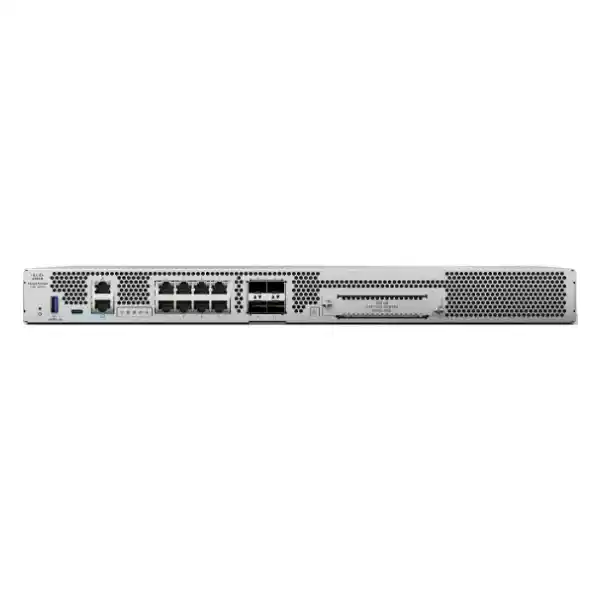
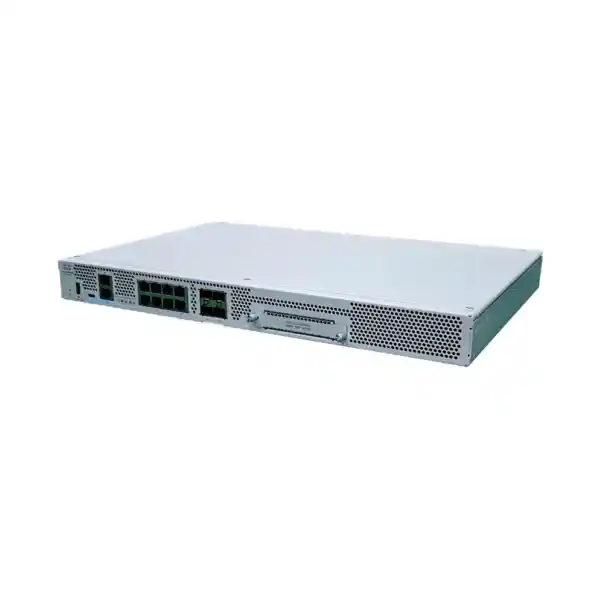
The hardware guide identifies the 1240 as a 1 RU rack-mounted appliance with eight Gigabit Ethernet network ports, four 1/10-Gbps SFP+ slots, dedicated management connectivity and a 960-GB SSD. It has no redundant power supply. Check supported accessories and installation details for the ordered configuration.
Before delivery, review rack space, cable reach, airflow clearance and access for servicing. Avoid judging fit only from the height of the appliance. Power connectors, cable bends, fibre management and the ability to identify ports during troubleshooting all affect a usable installation. Confirm the mounting hardware and country-appropriate power connection in the purchase scope.
Consider the equipment that must remain powered alongside the firewall. A backup power plan should include the provider handoff and the switches needed for essential applications. Define the desired runtime and have the complete load assessed, rather than selecting backup power solely from the appliance’s published consumption.
Provide a clear asset record once equipment is installed. Record serial numbers, physical location, cable labels and the responsible support contact in controlled documentation. If hardware replacement becomes necessary, these details reduce the time spent identifying the unit and its connections. They also help prevent an accidental disconnection when multiple similar devices share the rack.
Use a staged migration with an agreed rollback point
A replacement project should begin with evidence from the existing environment. Gather the network diagram, active rules, translations, routing information and application dependencies. Review unused or temporary entries with their owners. Avoid deleting unfamiliar rules solely because their purpose is not immediately obvious; investigate them before deciding whether they belong in the new design.
Build a test list around business tasks. Examples include signing into the main application, completing an ordinary transaction, reaching a branch service and accessing approved external resources. Ask the relevant owners to identify activities that happen infrequently, such as a scheduled reporting run. Those workflows are easy to miss in a short cutover test.
Prepare the new configuration and validate what can be checked before the maintenance window. Define who authorises the change, who performs it and who can decide to roll back. Set a time limit or clear failure conditions so the team does not spend an entire window improvising while business services remain unavailable.
Keep rollback practical. Preserve the previous approved configuration, record cabling changes and confirm how the old path would be restored. After a successful change, capture the final state and any unresolved items. A completed migration should leave a usable operational record, including the reasons for important decisions, rather than only a device that currently passes traffic.
Make logging useful to the people who will respond
Decide which questions the operations team needs logs to answer. Typical examples include why an application was blocked, whether a tunnel interruption coincided with a provider problem and which policy change preceded a service issue. Logging choices should support those questions without collecting material that no one is assigned to review.
Set ownership for event review and escalation. A dashboard does not provide an incident response process by itself. Define which events require immediate attention, which belong in a routine review and which indicate a capacity or configuration problem. Ensure the people responsible can access the necessary records during the hours when the business needs coverage.
Include time accuracy, retention and storage responsibilities in the design. Records are difficult to correlate when systems use inconsistent clocks or when relevant events expire before an investigation begins. If external logging or a monitoring platform is required, include its connectivity, licensing and operating cost separately in the proposal.
Test the evidence path during commissioning. Generate an agreed benign test event, locate it, interpret it and verify that the intended administrator can act on it. This is a more useful handover exercise than simply showing that a logging option is enabled. Repeatable operational checks help the customer maintain the value of the installation as applications and policies change.
Illustrative deployment scenarios
A branch with growing cloud application use may evaluate this appliance when the project needs a documented security boundary and room for a measured workload. The assessment should examine busy-hour demand, encrypted inspection and any access to central systems. The purchase decision should follow those measurements rather than an assumption that every branch has similar needs.
An office with local application servers may place greater emphasis on internal traffic paths. In that case, review where users reach servers, which systems are exposed externally and whether the proposed firewall sees the relevant communication. Include internal throughput in sizing if those flows will cross the appliance. A large internet benchmark alone does not answer this design question.
A business replacing an older Cisco installation may prioritise policy continuity and a predictable cutover. The useful starting point is the required behaviour of the existing environment, followed by a review of what should change. Budget for configuration analysis and application testing instead of assuming hardware replacement is an isolated purchasing task.
A multi-site organisation may value consistent administration and repeatable documentation. Assess management, account ownership and support responsibilities across locations while preserving each site’s actual network differences. These scenarios are examples for requirements gathering. They do not establish sector certification, a fixed user capacity or a promise that one configuration suits every Tanzania organisation.
Compare the 1240 with alternatives using the same assumptions
Keep the shortlist focused on requirements that affect the decision. Compare inspected throughput, encrypted traffic demand, physical connections, management, resilience and total subscription cost. Ask for evidence where an alternative is proposed as a better fit. A recommendation should explain the relevant constraint rather than rely on a model’s position in a product range.
Use the same workload and term when reviewing quotations. A hardware-only proposal and a proposal that includes security subscriptions, optics, migration and support are different scopes. Mark omitted items clearly so a lower total is not mistaken for a like-for-like saving. Also identify which assumptions would require a revised design or additional expenditure.
Consider operational fit alongside capacity. A platform can meet a benchmark and still be difficult for the available team to manage. Training needs, change procedures, access to support and the ability to recover from a configuration problem all belong in the comparison. These are practical ownership considerations, not reasons to choose a larger appliance automatically.
If the requirements include chassis-level redundant power, a different interface mix or workload beyond the validated design, reopen the hardware selection. It is better to resolve a hard requirement before purchase than to describe an accessory or future change as though it removes a fundamental platform limitation.
What to include in a Tanzania quotation request
Provide a short description of the organisation’s network and the role of the new firewall. Include the number of sites, current appliance if any, internet circuit capacities, expected growth and the applications most sensitive to interruption. A rough diagram is useful even when a complete network document is unavailable.
Add a traffic and connectivity brief: internal segments, relevant server locations, VPN requirements, provider handoff media and the need for optical uplinks. Identify the security services you expect to enable and whether encrypted inspection is part of the requirement. Where a detail is unknown, mark it for discovery rather than guessing.
State the commercial scope separately. Ask the quotation to distinguish appliance, software option, subscription term, management, optics, installation, migration, support and any second unit required for resilience. Request explicit confirmation of supply arrangements, delivery expectations and the applicable support or warranty terms. Those details need confirmation for the actual offer.
Share the deployment location, preferred maintenance window and technical contact so implementation requirements can be assessed. Do not send passwords, private keys or unrestricted configuration exports through a general enquiry. Begin with a non-sensitive overview and agree a suitable secure method if detailed configuration review is needed.
Acceptance checks to agree before deployment
Agree the acceptance record while the design is being reviewed. It should identify each required outcome, the person who will test it and the evidence needed for sign-off. That makes completion understandable to both procurement and technical teams and reduces ambiguity about whether additional work belongs to the original scope.
Connectivity checks should exercise actual business workflows from their normal source networks. Security checks should verify that the intended restrictions and inspection policies apply. Operational checks should cover administrative access, backups, licensing visibility and the ability to retrieve useful events. Where resilience is included, add controlled failure and recovery tests with suitable safeguards.
Use a representative observation period after cutover to identify recurring issues that a brief test might miss. Include scheduled business processes and coordinate with the application owners. Document any exceptions, their impact, the person responsible and the planned resolution. An unresolved issue should not disappear simply because the core internet connection is working.
Finish with an approved configuration baseline and an ownership handover. Record who maintains the system, who approves future policy changes and where the final documentation is kept. This converts the purchase into an operable service boundary with a clear maintenance process, which is the practical outcome a business needs from the investment.
Questions buyers ask
Does the headline throughput describe full threat inspection?
No. Compare the result for the exact software and enabled services you intend to use. The table above separates forwarding with application visibility, combined intrusion inspection and TLS decryption. These measurements represent different test conditions. For procurement, ask for sizing against your expected traffic mix and inspection policy rather than selecting whichever published figure is largest.
Can I choose a firewall from the number of employees alone?
Employee count is useful context, but it does not describe application demand. Two organisations with the same headcount can have very different traffic patterns because of backups, hosted services, remote users or internal transfers. Provide peak traffic information and the main business workflows. If those measurements are unavailable, include discovery and workload validation in the project before finalising the selection.
Are security subscriptions and remote-access licensing included?
Only the actual quotation can establish the purchased bundle. Ask for the selected entitlements, term, management arrangement and remote-access requirements to be listed explicitly. Do not infer them from the model name or a hardware photograph. Confirm account ownership and registration responsibilities before deployment so the customer can administer its purchased services and plan renewals.
Does buying one unit provide a redundant firewall service?
No. A single appliance purchase does not establish a complete redundancy design. If the business requires resilience, specify the failure scenarios and assess the necessary appliances, network connections, power arrangements and software requirements. Include recovery tests in the acceptance plan. This makes the expected behaviour clear instead of relying on an assumption that redundancy is included.
Can existing fibre connections be reused?
Possibly, after checking the installed fibre, connectors, optics, link distance and equipment at the other end. Confirm support for the exact transceiver and software combination. Reusing an existing cable can be sensible, but it should follow verification of its type and condition. Ask the proposal to identify any required replacement optics or patch leads before the installation date.
Can the existing firewall configuration simply be copied?
Plan a reviewed migration. The correct approach depends on the current platform, target software and configuration features. Document required application behaviour, resolve obsolete or ambiguous rules and test translations and connectivity. Even where tools assist conversion, the business should validate the result. Keep a practical rollback plan and assign owners to the applications used for acceptance.
What is the Tanzania price and availability?
Request a configuration-specific quotation from FourTeck Tanzania. The offer should identify the appliance option, subscriptions, accessories and services so you can understand the total scope. Confirm pricing, supply status, delivery and support terms directly for that offer. This page does not represent a live inventory feed or a fixed-price bundle.
What should be ready before installation starts?
Prepare the approved design, provider details, rack and power arrangements, licensing access, management plan and application test list. Assign a contact who can coordinate with the internet provider and application owners. Agree the maintenance window and rollback decision before changes begin. A complete preparation record helps the team use installation time for controlled implementation instead of resolving avoidable purchasing or access gaps.
Request your Cisco 1240 quotation
Send FourTeck Tanzania your network overview, expected workload, preferred software, required subscriptions and installation scope. Ask for an itemised proposal so hardware, licensing and deployment responsibilities can be reviewed together.
For implementation planning, review our Cisco firewall installation and configuration service and identify the tasks your project needs.


Reviews
There are no reviews yet.