
ENTERPRISE & DATA CENTRE SECURITY · TANZANIA
Cisco Secure Firewall 6160
For organisations evaluating a high-capacity security gateway, the 6160 brings Cisco’s data centre firewall platform into a rack appliance built for demanding traffic volumes. Assess it for enterprise internet edges, server-network boundaries and consolidated security infrastructure where inspection capacity, resilient design and high-speed connectivity must be planned together.
Start with your traffic profile: request a FourTeck Tanzania quotation specifying the software image, inspection requirements, interface plan and availability objective. Hardware, subscriptions, management and implementation scope should be confirmed together before ordering.
Decide whether this platform fits your network
A firewall at this scale should solve a defined infrastructure problem. The starting point may be an existing security gateway that cannot sustain the required inspected traffic, a data centre refresh that introduces faster switching, or a consolidation project that moves several security boundaries onto fewer systems. In each case, the useful question is how much traffic the enforcement point must handle while applying the controls the business actually intends to use.
Consider the 6160 when your design review identifies a requirement for a substantial physical security platform and your team can support the associated operational model. Include network engineering, security operations, facilities and procurement in the discussion. A design can meet its throughput target and still fail commercially if it leaves out optical interfaces, software entitlements, management infrastructure or the work needed to migrate business applications.
For a smaller office or an environment dominated by modest internet access, begin with a broader sizing exercise rather than choosing this model solely for its headline capacity. The right purchase is the platform that meets the workload, resilience and operating requirements with a sensible expansion margin. Oversizing can consume budget that would otherwise support better monitoring, stronger endpoint controls or a more thoroughly tested availability design.
Keep the appliance decision distinct from the final architecture decision. A single unit, a redundant pair and a clustered deployment answer different questions about maintenance, failure response and scale. Ask for a proposed topology that shows normal forwarding, expected behaviour during faults and the management path used when production connectivity is impaired. That drawing is a practical basis for evaluating the complete solution.
Read performance figures in the context of your workload
| Operating software and test | Published throughput |
|---|---|
| Threat Defense: firewall + application visibility and control, 1024-byte traffic | 600 Gbps |
| Threat Defense: firewall + application control + IPS, 1024-byte traffic | 550 Gbps |
| Threat Defense: IPsec, 1024-byte TCP with Fastpath | 450 Gbps |
| Threat Defense: TLS decryption | 100 Gbps |
| ASA: stateful inspection, 1500-byte UDP | 650 Gbps |
These are manufacturer benchmark figures, not a commitment to the same throughput on every network. Cisco notes that enabled features, protocol mix, packet sizes and software releases affect performance. Keep software and test conditions attached to every number when comparing proposals. In particular, a firewall-only measurement, an inspection measurement and a decryption measurement describe different workloads and should not be treated as interchangeable.
Build a sizing brief from measured traffic wherever possible. Useful inputs include busy-hour throughput, concurrent sessions, the rate of new connections, the proportion of encrypted applications and the number of distinct security zones. Record both ordinary demand and unusual but legitimate events, such as backup windows, software distribution or the start of a working day. An average collected across an entire month can hide the short bursts that create the most visible application delays.
Specify what growth means for your organisation. More users, more hosted applications and faster access links do not necessarily produce the same traffic pattern. A new application may create many short sessions without generating much bandwidth, while a data replication job may move large volumes over relatively few connections. Ask the sizing review to consider these dimensions separately, then document the margin reserved for future demand and for operation during a component failure.
A useful acceptance exercise uses representative applications with the intended policies enabled. Agree on measurement points, test duration and the definition of an acceptable result before the equipment arrives. Include response time and error rates alongside traffic volume. If a test cannot reproduce a particular production workload, record that limitation explicitly so a successful laboratory check is not mistaken for complete validation of every business service.
Choose Threat Defense or ASA before finalising the order
Cisco supports Firewall Threat Defense and Adaptive Security Appliance software on this platform. Threat Defense is the option to evaluate for next-generation inspection requirements; ASA is an alternative software path for stateful firewall deployments. The software choice affects the design, management workflow and applicable performance figures. Do not assume that a feature described for one image will be available in the same form on the other.
Translate your requirements into an explicit software decision. If the project brief includes intrusion prevention, application-based controls, web policy or malware inspection, list the expected behaviour for each control and validate the appropriate Threat Defense capability and entitlement. If the requirement centres on an established ASA design, assess that design against the intended ASA release rather than treating an operating-system change as a routine hardware replacement.
Existing skills matter, but they should be considered alongside the desired outcome. A team familiar with one management interface still needs to understand how changes are reviewed, deployed and reversed on the selected platform. Request a demonstration of the proposed workflow using an example policy change that resembles your environment. This makes the operating model more tangible than a list of supported features.
Make software selection visible in the quotation and handover documents. Record the intended image, release, licensing assumptions and management arrangement, together with any migration dependencies. Avoid accepting a generic appliance description where the business case depends on a particular inspection function. A clear order specification reduces the chance that hardware arrives while the team is still debating the software architecture.
Plan ports, optics and switch connections as one design
Fixed interface reference
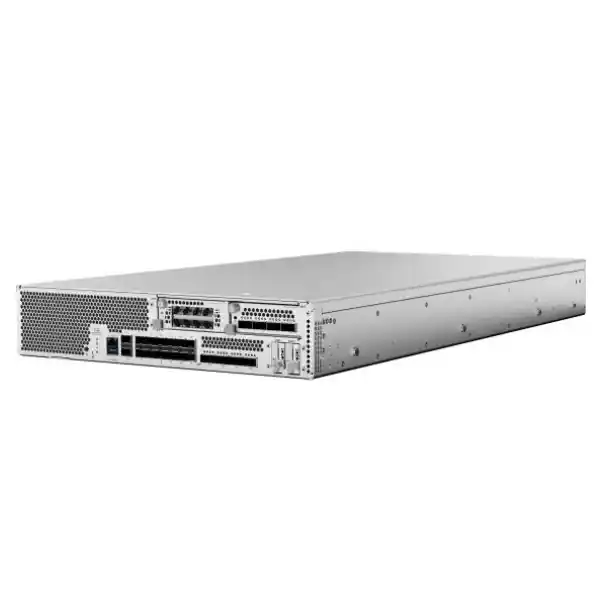
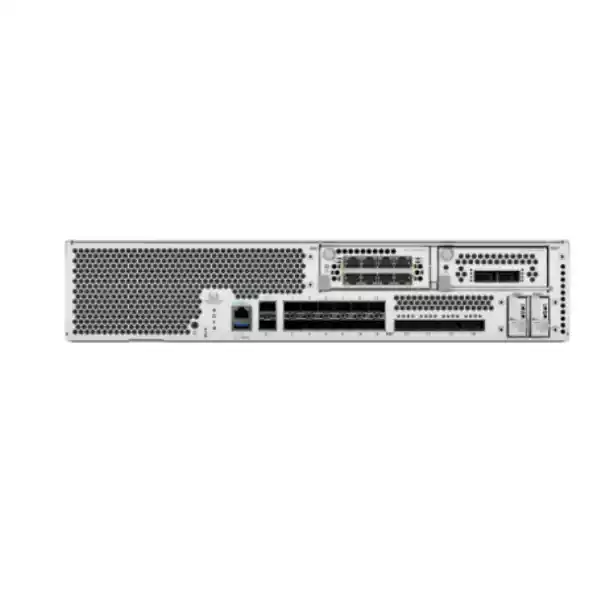
Cisco lists twelve fixed SFP56 data ports supporting 1/10/25/50 Gigabit Ethernet and four fixed QSFP56 data ports supporting 40/100/200 Gigabit Ethernet, alongside two SFP28 management ports supporting 1/10/25 Gigabit Ethernet. Confirm the supported transceiver, selected speed and software requirements for each connection. The chassis also has two expansion slots; the order should state whether these are populated and which modules are supplied. Use the final port schedule to separate fixed interfaces, optional module ports and management connections, so switch connectivity and future expansion are based on the equipment actually being purchased.
The platform combines fixed high-speed interfaces with two network-module expansion slots. Cisco’s hardware guidance describes dedicated management ports and model-specific transceiver support. Treat supported port speeds and approved optics as configuration details to verify against the exact hardware and software being ordered. An expansion option is not evidence that the corresponding module, optical transceiver or cable is included in a base quotation.
Prepare a port schedule that names each firewall interface, the device at the opposite end, the required speed and the physical media. Include security-zone connections, inter-device links, management access and any connections reserved for resilience. Where several logical networks share a physical connection, document the tagging and ownership arrangements. This helps the switching and security teams confirm that the proposed design can be cabled and operated as intended.
Optical planning should include fibre type, distance, connector requirements and the optical module at both endpoints. If an existing fibre route is being reused, confirm its suitability instead of relying only on the fact that it previously carried traffic. A faster firewall does not correct an incompatible optical pair, a damaged patch lead or an incorrectly mapped switch port. Include a verification step before the production migration window.
Separate capacity requirements from connector convenience. A connection that fits physically may still have incompatible speed or configuration requirements. Ask for the bill of materials to identify modules and optics by their verified manufacturer identifiers, with quantities tied to the port schedule. Reserve any future capacity deliberately, including the physical ports and rack access needed to use it, rather than assuming all expansion can be added without an operational change.
Deployment scenarios to discuss during assessment
Enterprise internet edge
Assess the aggregate application load passing between trusted networks and external services. Include public applications, outbound access and any branch traffic that returns through the central site. Identify which flows need inspection and which paths must stay available during planned maintenance.
Data centre segmentation
Map the server groups and trust boundaries that should be separated. Identify the application conversations crossing each boundary before placing an enforcement point in the path. The proposed design should make approved dependencies clear enough for application owners to review.
Security infrastructure consolidation
Inventory the responsibilities of every system being replaced. Include less obvious functions such as address translation, specialised access exceptions and event forwarding. Consolidation should have a documented recovery strategy so an issue in a shared component does not become an unplanned organisation-wide outage.
These are assessment scenarios rather than pre-approved designs. For Tanzania operations, include the actual hosting arrangement, facilities conditions, branch dependencies and support responsibilities in your brief. A local business requirement does not by itself establish product stock, delivery timing or a particular service scope. Ask for those commercial details to be confirmed against the proposed configuration and project location.
Specify the hardware and subscriptions separately
Cisco’s ordering guide distinguishes the Threat Defense appliance part number CSF6160-A-TD-K9 from the ASA appliance part number CSF6160-A-ASA-K9. These are manufacturer ordering identifiers, not a verified FourTeck listing SKU. The guide also lists separate Threat Defense, URL filtering and malware-related licensing options. Ask for the proposed order to identify the applicable bundle and entitlements rather than assuming the model name describes a complete security subscription package.
Structure the quotation so the purchasing team can see what each line contributes. Hardware should identify the intended appliance configuration; software should explain the licensed security functions and subscription periods; management should state the chosen administration platform; and services should describe the work being purchased. If support is required, request a separate explanation of its scope and contractual terms. This makes competing proposals easier to compare without reducing the decision to the lowest initial equipment price.
Assign a named owner for entitlement administration within your organisation. That person should understand where subscriptions are recorded, who receives renewal information and how changes in the technical design affect the purchase. Account access and procurement ownership deserve attention before installation, especially where the hardware buyer, security administrator and external implementation team are different people. Keep credentials out of ordinary quotation documents and use an approved secure process for any sensitive account exchange.
Ask for a full-term budget view that includes the subscriptions you intend to retain, the management arrangement and any agreed support. This is a planning request, not an assumption that every item renews on the same schedule. Record commencement dates, renewal responsibilities and the approval process for future changes. A clear entitlement schedule gives finance and IT a shared reference when the initial project team has moved on to other work.
Establish a management and change-control model
For Threat Defense deployments, Cisco documents central administration through Secure Firewall Management Center and cloud-delivered management options. Confirm the supported device and manager release combination before deployment. The proposed management arrangement should be stated explicitly; the appliance model alone does not establish where policies, events and administrator access will be managed.
Choose the operating workflow before building the first production policy. Identify who can request a rule, who checks its business justification, who approves it and who deploys it. Define a separate process for urgent changes so emergency access does not become permanent access by default. The best interface is of limited value if nobody can explain why a rule exists or which business owner can authorise its removal.
Discuss the management network as an infrastructure dependency. The design should identify administrator access paths, name resolution, time services and the connectivity needed by the chosen management system. Decide how the team will reach the equipment during a network incident and how that access will be controlled. Management recovery should be tested with the people who would actually respond to an outage, rather than assumed from a topology diagram.
Give monitoring requirements their own scope. Decide which events need immediate attention, which belong in routine reporting and which are useful only for investigation. Establish an owner for responding to alerts and an agreed route for escalation. If events will be forwarded into another monitoring platform, validate the integration and retention requirements during assessment. Buying a powerful appliance does not automatically create an effective security operations process.
Design resilience around the failure you need to survive
The published Threat Defense specifications list active/standby high availability and active/active operation with clustering. Those options still require a suitable topology and configuration. Treat resilience as a design objective covering the complete traffic path, including switches, links, power and operational procedures. Two appliances connected to the same single point of failure may not provide the business outcome the buyer expects.
Start with a plain-language requirement: which services must continue if one appliance is unavailable, and what interruption can the business accept? Then identify the links, equipment and facilities dependencies involved in keeping those services running. Include planned upgrades as well as unexpected faults. A maintenance event can expose an overlooked dependency just as clearly as a hardware failure, particularly when all traffic is forced through the remaining path.
Reserve capacity for degraded operation. If a design normally distributes work across several resources, ask how much inspection can be sustained after one resource is lost. Check this against the busy period rather than the quietest period observed during commissioning. Also consider the practical response: who receives the fault, who decides whether to roll back a change and who can access the equipment if a physical intervention is needed?
Write an acceptance test for each agreed failure scenario. Record the applications used, the expected transition, the observed behaviour and the recovery steps. Include a return-to-normal check so the team knows that redundancy has actually been restored after the test. Do not describe the result as uninterrupted service unless that exact outcome has been demonstrated and is consistent with the agreed deployment and commercial scope.
Treat encrypted inspection as a policy project
The need to understand encrypted traffic is a common reason to evaluate a modern security platform, but the purchase discussion should go beyond the decryption benchmark. Identify which applications the organisation wants to inspect, the purpose of that inspection and the users or systems affected. Some services have application-specific requirements that need testing before a policy is rolled out broadly. The security design should reflect those dependencies instead of treating all encrypted sessions as equivalent.
Agree on the scope with the relevant application, privacy and governance owners. Document the intended handling of sensitive traffic, approved exceptions and the process for reviewing those exceptions. These are organisational decisions that cannot be settled by appliance capacity alone. Where certificates are involved in the approved design, plan their distribution, ownership and renewal using the organisation’s established security practices.
Use a staged test plan for important applications. A practical pilot might include browser-based business tools, software updates, automated service connections and integrations that do not involve a person watching a browser window. Check success and failure cases, including certificate validation and application retries. Capture the reason for any exception and assign an owner who can revisit it when the application or policy changes.
Budget operational time for maintaining this policy. Applications evolve, certificates expire and business needs change. The person investigating a failed connection needs enough documentation to distinguish a network fault from an inspection-policy decision. Define how users report problems and what evidence the support team collects. That preparation helps the organisation keep inspection useful without turning troubleshooting into repeated guesswork.
Build rules around named applications and trust boundaries
Begin the policy design with a list of business services and their approved communication paths. For each path, identify the source, destination, application owner and business reason. Mark dependencies that are still uncertain so they can be tested before enforcement. This is especially valuable when replacing an older firewall whose rules contain years of undocumented exceptions. A migration offers an opportunity to clarify access without forcing every change into the cutover window.
Separate the decision to move a rule from the decision to retain it permanently. During discovery, ask application owners to confirm whether historical access is still needed. Record rules that must be carried forward temporarily, together with a review date and a person responsible for validation. This supports a controlled transition while keeping the final policy from becoming a direct copy of avoidable legacy complexity.
Review address translation and routing alongside access control. A business application can fail even when the security rule appears correct if its traffic follows an unexpected path or uses a different translated address. Document the expected path for published services, branch access and internal application conversations. Where several teams administer the path, agree on the evidence each team will provide during testing so responsibility remains clear.
Keep acceptance criteria understandable to business owners. A test such as completing a purchase, submitting a form or synchronising a defined data set often gives a clearer result than checking only whether two addresses can communicate. Pair those business tests with technical observations collected by the implementation team. The combination makes it easier to show that the firewall is enforcing the intended boundary while the application continues to work.
Check rack, power and maintenance access before delivery
The 6160 is a rack appliance, and facilities readiness should be reviewed before the installation date is agreed. Ask the facilities team to check the selected chassis dimensions, fully configured load, mounting arrangement and required service access against the actual rack. Rack-unit availability alone does not establish that an appliance fits comfortably or can be maintained without disturbing adjacent equipment.
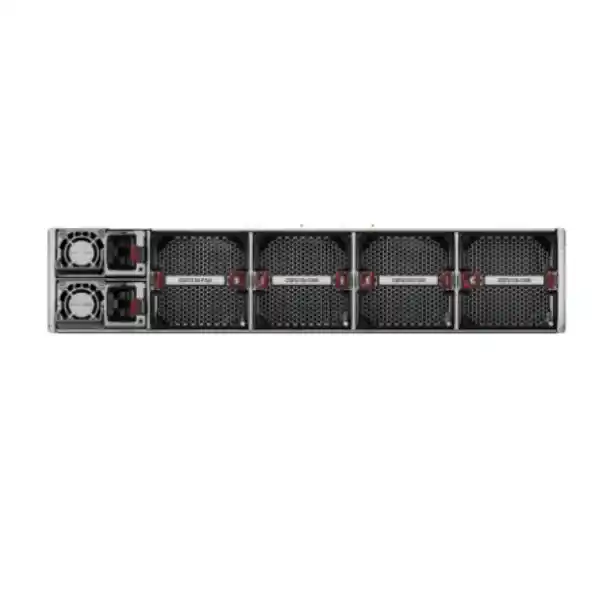
Confirm the selected power-supply type and the conditions under which the proposed configuration provides redundancy. Have qualified facilities personnel validate the power distribution and protection arrangement using Cisco’s installation requirements and the exact bill of materials. Include the switching and management components needed to keep the security path useful during a power event. A project should not rely on a generic assumption that every rack outlet has the same capacity or resilience.
Cooling and cabling deserve a physical review. Leave the required airflow paths clear, plan cable routing so connectors are not under strain and allow access to field-replaceable parts. Include labels that match the approved port schedule. Where several contractors share the rack, establish responsibility for the final inspection so a cabling change does not quietly undermine the installation after the firewall team has finished.
Cisco’s maintenance guidance requires managed procedures for network-module replacement; a change to a different module type can require a chassis restart. Plan expansion and maintenance as controlled activities with an appropriate service window. Keep the relevant hardware instructions available to authorised staff, document the installed configuration and ensure that any proposed spare component is checked for compatibility before it is needed during an incident.
Prepare a migration that can be reviewed and reversed
A replacement project should produce an agreed baseline before the production window. Capture the current addressing, routes, translated services, access policies, VPN dependencies and monitoring arrangements. Identify the applications that matter most to the business and the people who can validate them. Keep the baseline securely and record when it was collected, especially if configuration work continues on the existing system during the planning period.
Ask the implementation proposal to explain the migration method for your actual source platform and release. Cisco documents supported Threat Defense migration paths and prerequisites, but support for a migration workflow does not mean every existing configuration can be moved without review. Interface mapping, management access and policy behaviour need validation. A transition from a different operating system or vendor should have its own assessment rather than relying on an unqualified promise of automatic conversion.
Break the cutover into observable stages. The team should know when physical links will change, when routing or address translation will move and when application testing begins. Assign a person to coordinate decisions and a separate contact for business validation. Record the point at which rollback remains practical and the conditions that trigger it. This reduces the risk of spending the entire maintenance window troubleshooting without an agreed decision path.
After the move, compare the delivered state with the approved design. Check that temporary test access has been removed, monitoring is active and the operational team has the documents it needs. Keep the old equipment available for the agreed transition period if that forms part of the approved plan. Retirement should include the organisation’s established handling of configuration data, account access and equipment ownership.
For project-scoping information, review FourTeck Tanzania’s Cisco firewall installation and configuration guidance. Agree the specific responsibilities, deliverables and exclusions in the quotation for your deployment.
Define what a successful handover includes
A useful handover demonstrates the outcomes purchased and explains how the customer will operate the result. Ask for an accurate topology, an interface schedule, a software and entitlement record, a summary of the approved policy and a secure configuration-backup process. The documents should describe the delivered environment, including any approved deviations from the original design. A proposal document that was never updated after installation is an incomplete operating reference.
Include evidence from the agreed performance and application tests, plus the results of any resilience checks. Record unresolved items with an owner and a follow-up action. If part of the environment could not be tested, explain what remains unverified and how that affects acceptance. This gives the buyer a practical view of readiness rather than a simple statement that the equipment powers on and passes traffic.
Make the support boundary explicit. Confirm who handles routine policy changes, who investigates an application problem, who administers subscriptions and who manages a vendor case when required. Ask for the applicable contractual support terms and escalation process in writing. Delivery timing, availability, warranty coverage and any on-site work should be confirmed for the actual order; they should not be inferred from the model name or from another organisation’s deployment.
Questions buyers ask before requesting a quotation
Is the 6160 suitable for a normal branch office?
Evaluate it against measured requirements. This is a substantial enterprise and data centre platform, so a branch with modest traffic may be better served by a differently sized appliance. Include the need for inspection, local operations and resilience in the comparison. The correct choice depends on the workload and architecture rather than employee count alone.
Does a quoted throughput number include every security feature?
Check the precise test description. The performance table separates software images and workloads, and the figure for one test should not be applied to a different combination of controls. Ask for sizing based on your chosen features and representative traffic, including expected encrypted sessions, connection rates and demand during a failure.
Are optics and expansion modules included?
Confirm the itemised bill of materials. Supported hardware options are not an inclusion statement for a particular offer. Match every required connection to an interface, a compatible optical or electrical connection and the corresponding remote port. State which components are supplied, reused or provided by another contractor before approving the order.
Can we keep our existing firewall management system?
That requires a compatibility assessment of the existing manager, its release and the intended device software. Describe the current management arrangement in the quotation request and ask whether an upgrade or a different management option is needed. Include event retention, administrative access and the migration process in that assessment.
Will the new appliance automatically preserve all existing rules and VPNs?
Request a source-to-target migration review. Configuration transfer, compatibility and application behaviour depend on the existing platform and selected software. Plan policy review, interface mapping and business testing before cutover. Keep a documented rollback decision and avoid treating successful configuration import as proof that every service works.
How do we obtain a price in Tanzania?
Request a configuration-specific quotation from FourTeck Tanzania. Provide traffic measurements, required inspection functions, software preference, connection speeds, appliance quantity and deployment scope. Ask the quotation to confirm the commercial terms for that configuration, including any subscriptions and agreed services. No local price or stock commitment is stated on this page.
Request a 6160 configuration review and quotation
Share a short network brief with FourTeck Tanzania covering your current firewall, busy-hour traffic, critical applications, encrypted inspection requirements, interface speeds and availability objective. Include whether the project is a new deployment, a hardware refresh or a wider migration. Identify the people responsible for networking, facilities and application testing so the scope can be reviewed with the right teams.
Ask for an itemised proposal covering the appliance, chosen software, applicable subscriptions, management, connectivity components and any agreed implementation work. If the main requirement is a broader architecture review, explore the Tanzania site’s Cisco data centre firewall solutions guidance. Confirm the final configuration and commercial terms before placing the order.



Reviews
There are no reviews yet.