
Dinstar MTG3000T Transcoding Gateway Tanzania
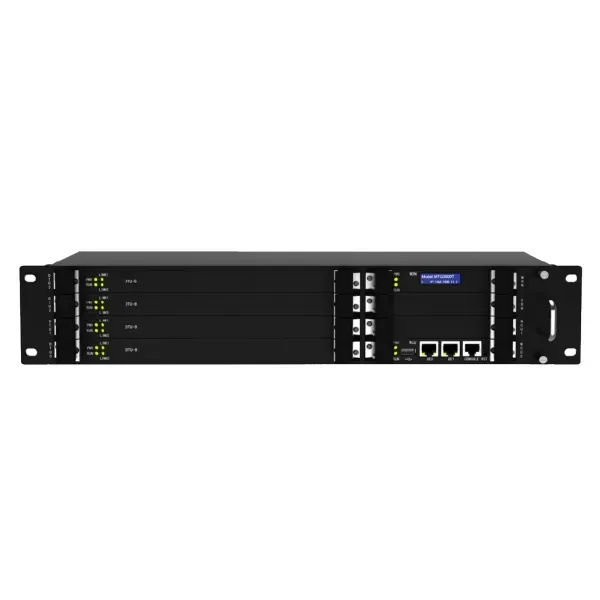
The Dinstar MTG3000T is a high-density transcoding gateway built for IP-to-IP voice codec conversion in carrier, service-provider, call-center and large-enterprise environments. It is designed to bridge codec differences between SIP and IMS-oriented voice platforms while keeping the interconnection manageable and scalable. Dinstar publishes support for popular codecs including G.711 A/μ-law, G.723.1, G.729A/B, iLBC, G.726 and AMR, with actual transcoding capacity varying by codec pair. The platform also supports multiple SIP trunks, SIP/IMS registration, dual power supplies, two Gigabit Ethernet interfaces, web management, SNMP, configuration backup and restore, call tracing and other operational tools. For organizations in Tanzania planning a high-volume VoIP interconnect, the important buying question is not simply the maximum session figure; it is how many concurrent calls must be transcoded between specific codecs, how the gateway will connect to softswitches or IMS infrastructure, and what redundancy, monitoring and support processes are required.
Dinstar specifies up to 1568 sessions for G.711-to-G.729 transcoding, while other codec combinations have different limits.
The MTG3000T focuses on converting voice streams between IP systems rather than serving as a traditional E1/T1 PSTN gateway.
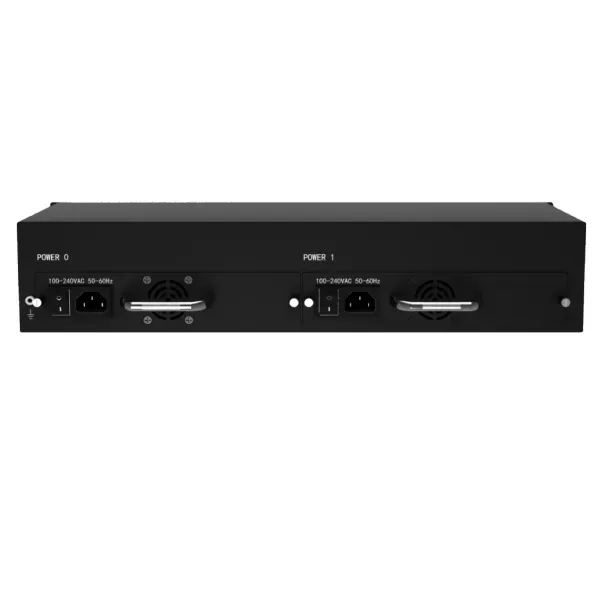
Dual power supplies, multiple SIP trunks and scalable processing boards support designs where service continuity matters.
Web GUI, SNMP, provisioning, logging, tracing, network capture and backup tools help operations teams manage the gateway.
What the Dinstar MTG3000T solves
Large voice networks often need to connect systems that support different codecs. A service provider may receive G.729 traffic from one interconnect, hand calls to an IMS core expecting G.711, or integrate platforms where AMR, G.723.1, iLBC or G.726 appear in different parts of the call path. Without an appropriate transcoding layer, calls can fail to negotiate media correctly, voice quality can suffer, or expensive capacity may be wasted by forcing every connected platform into one codec profile. The MTG3000T provides a dedicated place to perform this conversion at scale. It can therefore be considered by operators, contact centers, wholesale voice providers and large distributed organizations that need predictable codec mediation between SIP domains.
The gateway should be sized from the actual traffic matrix. A headline session figure is useful only when it matches the codec pair in production. Dinstar lists 2048 sessions for G.711-to-G.711 and G.711-to-G.726, 1568 for G.711-to-G.729, 1344 for G.711-to-G.723, 960 for G.711-to-iLBC, 832 for G.711-to-AMR and 896 for G.723-to-G.729. These values make pre-deployment traffic analysis essential. Buyers should document busy-hour concurrent calls, expected codec mix, growth margin, fax or modem requirements, SIP trunk count, registration requirements, failover expectations and monitoring needs before selecting the final hardware configuration.
Verified features and technical highlights
| Area | MTG3000T capability | Planning value |
|---|---|---|
| VoIP sessions | Up to 2048 VoIP sessions | Supports dense IP voice environments when correctly sized. |
| Transcoding | Codec-pair capacity varies; up to 1568 sessions for G.711↔G.729 | Capacity planning must use the real codec mix. |
| Codecs | G.711 A/μ-law, G.723.1, G.729A/B, iLBC, G.726, AMR | Useful where connected platforms have different media capabilities. |
| SIP | SIP, SIP-T, multiple SIP trunks, peer/access modes | Supports service-provider and enterprise SIP interconnect patterns. |
| Accounts | Up to 256 SIP accounts | Supports multiple registration scenarios where required. |
| Network | 2 Gigabit Ethernet ports | Provides high-speed IP connectivity for voice traffic. |
| Fax | T.38 and pass-through fax | Useful where fax remains part of a VoIP migration. |
| Management | Web GUI, SNMP, cloud management, backup/restore, console, tracing and capture | Supports day-two operations and troubleshooting. |
| Power | Redundant power supply design | Helps remove a single power-module dependency. |
Deployment and buying guidance
A successful MTG3000T project begins with an interconnect diagram. Document each SIP peer, source and destination codec, expected calls per second, busy-hour concurrency, RTP addressing, NAT behavior, QoS policy, redundancy path and logging requirement. Confirm whether fax, modem or POS traffic is present, because those services can require different media handling from standard voice. Clarify whether the gateway will operate between internal platforms, between an enterprise voice estate and a carrier, or inside a service-provider core. The correct design should also identify where session border control, security filtering, routing logic and billing functions reside; the MTG3000T is primarily a transcoding platform and should not be treated as a substitute for every other network function.
For procurement, request a quotation that identifies hardware configuration, processing capacity, power arrangement, accessories, software/firmware expectations and support scope. If the deployment is business-critical, include a maintenance plan covering configuration backup, firmware review, health monitoring, spare strategy and escalation procedures. A lab validation or controlled pilot is advisable when the environment includes several vendors or unusual codec combinations. This reduces risk before large call volumes are moved through the gateway.
Dinstar MTG3000T Transcoding Gateway Tanzania
For Tanzania operators, call centers and enterprise voice teams, the Dinstar MTG3000T is most relevant when the communication environment has moved beyond a simple office PBX and now requires high-volume media conversion between SIP systems. A Tanzanian deployment may involve an IP PBX estate, hosted voice platform, carrier SIP trunk, contact-center application, international voice partner or IMS-facing interconnect that does not use the same preferred codec end to end. In that situation, the MTG3000T can become a dedicated transcoding layer so each platform can continue using the codec profile that best fits its own network design. The model supports common voice codecs and can scale to large concurrency levels, but the final specification should be calculated from the real codec pair rather than from a single maximum figure.
Tanzania buyers should prepare a traffic and topology brief before requesting pricing. Include peak simultaneous calls, expected codec combinations, SIP trunk count, whether SIP registration is needed, RTP network ranges, public/private addressing, whether traffic crosses a firewall or session border controller, and any fax, modem or POS requirements. Power resilience is also important for telecom infrastructure, so the MTG3000T dual-power design should be integrated with an appropriate UPS and rack power plan rather than treated as complete power protection by itself. Monitoring through SNMP, event logs, call trace and packet capture should be connected to the operations process from day one.
FourTeck Tanzania can help organizations translate a voice architecture into a procurement-ready requirement. The wider FourTeck Tanzania IT and telecom portfolio is relevant where the transcoding project also depends on IP PBX, network switching, firewalls, structured cabling, racks, UPS systems or related infrastructure. A complete quotation should distinguish the gateway itself from configuration, integration, testing and ongoing support so stakeholders can compare solutions accurately.
Dinstar MTG3000T Transcoding Gateway Dar es Salaam
Dar es Salaam is the most likely Tanzanian market for high-density voice interconnection because it hosts a large concentration of enterprises, service providers, contact centers, hospitality groups, financial operations and regional headquarters. For a Dar es Salaam organization, an MTG3000T project should be framed around service continuity and interconnect compatibility. If a customer has several SIP carriers, an on-premises or hosted contact-center platform and a separate unified-communications system, codec mismatch can create avoidable media negotiation problems. The gateway can provide a controlled location for codec translation instead of forcing every upstream and downstream platform to use one common setting.
Before deployment, the technical team should profile call traffic over a representative business period. Busy-hour concurrency matters more than average daily call volume. A contact center with short, frequent calls can also have different call-attempt patterns from an enterprise headquarters with longer conversations. The gateway design should reserve adequate headroom for peaks, failure scenarios and future expansion. Network teams should also confirm VLANs, routing, RTP paths, QoS markings and firewall policies. Voice should not share a congested or poorly documented path simply because the transcoder itself has Gigabit Ethernet interfaces.
For procurement in Dar es Salaam, buyers should request clear scope around rack installation, power connection, base configuration, SIP peer creation, codec policy, monitoring, acceptance testing and handover documentation. If the gateway will carry revenue-generating voice traffic, define fault escalation and backup procedures in advance. The aim is to deploy a maintainable interconnect, not just install an appliance. FourTeck can support the surrounding telecom and network planning so the MTG3000T sits within a coherent architecture rather than becoming an isolated box with undocumented dependencies.
Dinstar MTG3000T Transcoding Gateway Mwanza
In Mwanza, the MTG3000T can fit organizations that operate regional communications hubs, contact-center functions, distributed branch networks or service-provider voice infrastructure serving the Lake Zone. The central planning issue is often not just scale but consistency across links that may have different carrier arrangements, bandwidth characteristics and equipment generations. A transcoding layer can help normalize media between a modern SIP core and connected systems that still depend on bandwidth-efficient codecs such as G.729 or other legacy voice profiles. Because the MTG3000T supports multiple codec families, it can be evaluated where the network cannot standardize immediately on a single codec.
Mwanza buyers should verify how traffic reaches the gateway. If branch calls traverse WAN links before reaching the transcoder, latency, packet loss and jitter should be measured independently from transcoding performance. A gateway can convert codecs, but it cannot compensate for a fundamentally unstable network path. QoS, link utilization, routing symmetry and failover behavior remain essential. Where the organization has two internet or MPLS paths, testing should confirm what happens to active and new calls during path changes and how quickly SIP peers recover.
The procurement brief should also identify who owns each layer of the system. One team may manage the SIP platform, another the WAN, and another the carrier contract. Clear responsibility for monitoring, configuration backup and change control helps reduce troubleshooting delays. FourTeck can help Mwanza customers develop a requirements list covering codec traffic, SIP trunks, network dependencies, power protection, rack space and acceptance tests. That structured approach is especially useful when a voice project must integrate equipment from several vendors without relying on assumptions about interoperability.
Dinstar MTG3000T Transcoding Gateway Arusha
Arusha organizations may evaluate the Dinstar MTG3000T when they operate international call flows, hospitality reservations, NGO communications, conference operations, regional offices or multi-site enterprises that connect to different SIP providers. These environments can produce a mixed codec estate because external providers, cloud applications and local voice systems are not always configured the same way. A dedicated transcoding gateway can create a predictable media boundary between them, allowing each connected system to maintain an appropriate codec policy while the MTG3000T handles conversion in the middle.
A practical Arusha design should begin with call scenarios rather than product features. Map inbound calls, outbound calls, transfers, conference legs, call recording, IVR paths and any branch-to-branch traffic. Identify which scenarios need transcoding and which can pass through without conversion. This avoids consuming processing resources unnecessarily. If fax is still used for reservations, finance or administration, test T.38 and pass-through operation with the actual carrier and receiving systems. Modem or POS support should also be validated in the intended workflow instead of assumed from a feature list.
Operational simplicity matters where specialist telecom staff are limited. Use the gateway’s web interface, SNMP, logging and configuration backup features as part of a documented support routine. Maintain diagrams, SIP peer details, codec rules and escalation contacts. For organizations that need related network or business communications support, the Tanzanian FourTeck platform can assist with IP PBX, IP phones, switching, firewalling and power infrastructure. The strongest project outcome is a voice path that is understandable, monitored and recoverable after a fault or configuration change.
Dinstar MTG3000T Transcoding Gateway Dodoma
Dodoma enterprises, public-sector environments, institutions and large organizations can consider the MTG3000T where voice networks need to interconnect multiple platforms at significant scale. In an environment with centralized SIP services and many departments or remote sites, codec differences can appear when older systems coexist with newer unified-communications platforms. The transcoder can reduce pressure to replace every endpoint or voice platform at once by mediating codecs at a central integration point. That makes it particularly relevant to phased migration projects where legacy and current systems must operate together for an extended period.
For Dodoma deployments, governance is as important as technical capacity. Document which SIP trunks and IP ranges are authorized, who can change routing or codec policy, how configuration backups are stored and how incidents are recorded. The MTG3000T supports management and troubleshooting functions such as SNMP, call trace, syslog and network capture; these are most useful when they feed a defined operational process. If the voice network supports critical public-facing functions, define maintenance windows and fallback procedures before commissioning.
Sizing should use measured or forecast busy-hour traffic. Different codec pairs consume different transcoding resources, so a design based only on total extensions can be misleading. Include growth margin and consider failure scenarios that could move additional traffic onto one gateway. The quotation should separate hardware, configuration, integration testing and post-deployment support. FourTeck can assist with requirements gathering and associated telecom/network components, helping Dodoma buyers avoid the common problem of ordering a high-capacity gateway without a complete plan for SIP routing, rack power, monitoring and network readiness.
Dinstar MTG3000T Transcoding Gateway UAE
In the UAE, the MTG3000T is a relevant platform for carriers, managed communication providers, high-volume contact centers and enterprises that connect multiple SIP or IMS environments. The market frequently combines international voice, cloud communications, branch connectivity and multi-vendor infrastructure, making codec interoperability a practical engineering concern. The MTG3000T can be positioned as a dedicated media-transcoding layer when G.711, G.729, G.723.1, iLBC, G.726 or AMR must be converted between systems. The correct design should still minimize unnecessary transcoding because every conversion consumes processing resources and can add complexity to troubleshooting.
UAE procurement teams should request a detailed bill of scope rather than comparing only appliance prices. Confirm the number of processing boards, expected codec-pair capacity, power configuration, rack requirements, software baseline, management method and support responsibilities. The design should also account for session border controllers, firewalls and SIP routing platforms already present in the network. Security policy, NAT behavior and RTP address ranges need to be defined so signaling and media follow predictable paths.
For organizations with regional operations, standardizing gateway configuration and monitoring can simplify support across several countries. A common template can define SIP peer naming, codec preference, logging, NTP, administrator access and backup procedures while still allowing site-specific routing. FourTeck’s UAE technology solutions platform can be referenced when a project also needs voice, networking, security or infrastructure support in the Emirates. Any final deployment should be validated against the telecom provider’s technical requirements and the customer’s internal compliance policies.
Dinstar MTG3000T Transcoding Gateway Uganda
Uganda service providers, large enterprises and contact centers can use the MTG3000T as part of a SIP interconnect design where voice systems do not share the same codec capabilities. A national or multi-branch environment may connect older PBXs, modern IP PBXs, hosted platforms and carrier trunks at the same time. When those systems prefer different media formats, centralized transcoding can make migrations and integrations easier to manage. The Dinstar platform’s support for several common codecs and high session density makes it appropriate for projects where a small office gateway would not provide enough processing capacity.
The Ugandan design should distinguish media conversion from call control. SIP routing, security policy and numbering plans may reside on other systems, while the MTG3000T concentrates on codec mediation. That separation can make troubleshooting cleaner if responsibilities are documented. Technical teams should test failover, NAT, DTMF, fax, call transfer and long-duration calls because interoperability issues often appear outside a basic inbound/outbound test. Monitoring should include CPU or processing utilization, SIP peer status, error logs and call quality indicators where available in the wider voice environment.
For buyers who need related IP PBX, VoIP, CCTV or networking support, FourTeck Uganda provides a regional technology reference point. A procurement request should include location, traffic estimate, codec matrix, number of SIP trunks, redundancy requirement and desired implementation scope. Providing those details helps produce a more useful quotation and reduces the risk of choosing a configuration that is technically capable but poorly matched to the real call profile.
Dinstar MTG3000T Transcoding Gateway Kampala
Kampala is a strong fit for high-capacity transcoding projects because it concentrates corporate headquarters, telecom operations, financial services, customer-service centers and regional technology teams. In these environments, voice platforms are often upgraded in stages. A new SIP or cloud system may need to coexist with an established call-center application or an existing carrier interconnect. The MTG3000T can provide codec conversion between these domains without forcing a simultaneous replacement of every component. This can support controlled migration while keeping the media boundary clearly defined.
A Kampala deployment should be engineered with peak traffic and resilience in mind. Use real call records or a defensible forecast to estimate concurrent transcoding by codec pair. Add headroom for promotions, seasonal peaks, outbound campaigns or failover events. If a second site or backup trunk can send traffic to the same gateway during an outage, include that additional load in the design. The network path should have stable latency and low packet loss, with QoS protecting RTP from bulk data traffic. Power should be conditioned through UPS and appropriate rack distribution even though the gateway itself has redundant supplies.
Operations teams should define how configuration changes are approved and backed up. A simple baseline document can record software version, SIP peers, codec rules, IP addresses, routes, admin access and test numbers. After major changes, run a repeatable acceptance set covering inbound, outbound, DTMF, transfer, fax if required, codec negotiation and failover. This turns the MTG3000T into a controlled network element rather than a difficult-to-diagnose black box.
Dinstar MTG3000T Transcoding Gateway Arua
Arua organizations may not always need the maximum scale of the MTG3000T, but the platform can be relevant where a regional hub aggregates voice from several sites or connects to centralized systems elsewhere. The buying decision should therefore start with architecture, not geography. If local branches send SIP traffic to a central gateway, WAN quality and routing become critical. Transcoding should occur where it simplifies the end-to-end design and where the operations team can monitor it effectively. Locating a gateway in a regional data room only makes sense if power, connectivity, physical security and support processes are adequate.
For an Arua-centered network, bandwidth-efficient codecs may be important on some links, while central platforms may prefer G.711 for compatibility or quality. The MTG3000T can mediate between those choices. However, a design should identify exactly which calls require conversion so processing capacity is not consumed unnecessarily. Teams should also test DTMF, IVR interactions and any fax or modem services because those functions can behave differently from normal voice media across mixed networks.
Procurement documentation should include the number of branches, call concurrency, codec matrix, SIP peer list, available rack space and power strategy. If remote administration will be used, restrict management access to approved networks and integrate logging into the organization’s support workflow. A planned configuration backup and recovery process is particularly important when specialist staff are not permanently based at the installation site. FourTeck can help convert these operating needs into a structured technical scope before equipment is ordered.
Dinstar MTG3000T Transcoding Gateway Mbarara
Mbarara businesses, institutions and regional operators can consider the MTG3000T when a centralized voice platform needs to interwork with several SIP systems or codec profiles. The gateway is particularly useful when migration is gradual: one part of the estate may already use a modern SIP service while another still depends on older equipment or bandwidth-conscious codec settings. By separating codec conversion from the endpoint estate, the project can reduce pressure to change every connected platform at the same time.
Network readiness should be checked carefully. If voice traffic crosses branch links, confirm latency, jitter and packet loss during busy periods. A transcoder will not fix congestion caused by undersized WAN links or unmanaged backup traffic. QoS, VLAN design and firewall rules should be reviewed together with the voice configuration. Where possible, test the intended call path with real carrier trunks before full migration. Call transfer, hold, IVR navigation, DTMF and fax can expose interoperability issues that are not visible in a simple test call.
Mbarara buyers should also plan operational ownership. Decide who receives SNMP alerts, who can access the web GUI, who stores configuration backups and who coordinates with the SIP carrier during incidents. Keep a known-good baseline and a change log. This level of discipline is more valuable than adding unnecessary complexity. The MTG3000T’s management tools support this approach, but the process still needs to be defined by the customer or implementation partner. A quotation should therefore make the installation and support scope explicit, not assume that all integration work is included with hardware supply.
Dinstar MTG3000T Transcoding Gateway Gulu
For Gulu-based organizations, the MTG3000T can support a regional communications architecture where calls from branches, service-provider links or institutional systems converge on a central SIP platform. High-density transcoding may be relevant if the organization expects significant simultaneous traffic or if it provides communication services to many users. Where call volume is smaller, the same planning framework should still be used to determine whether a high-capacity platform is justified or whether a smaller gateway would be more economical.
A Gulu deployment should treat voice quality as an end-to-end responsibility. Codec conversion is only one component. Packet loss, jitter, bandwidth contention, firewall behavior and unstable WAN routing can all reduce call quality even when the transcoder is operating correctly. Build test cases that cover both normal and degraded conditions. If a primary link fails, verify where calls reroute, whether SIP registrations recover, whether media follows the new path and whether capacity remains sufficient during the failure state.
For lifecycle management, keep gateway documentation with the wider network records. Include physical rack position, power feeds, management IP, SIP peers, codec policies, software version, admin contacts and recovery steps. SNMP and syslog can help remote teams identify problems earlier, while call trace and packet capture can support deeper troubleshooting. Buyers should request these operational deliverables as part of an implementation scope when they do not have an in-house voice engineering team. This makes the investment easier to support over time and reduces dependence on undocumented individual knowledge.
Dinstar MTG3000T Transcoding Gateway Kenya
Kenya has a broad ecosystem of enterprise voice, contact-center, ISP and carrier networks where a high-density transcoder can be relevant. The MTG3000T is suited to environments that need IP-to-IP conversion among several codecs while supporting many concurrent calls. A Nairobi or regional service-provider environment may connect cloud telephony, legacy PBXs, wholesale SIP trunks and international partners, all with different codec preferences. A dedicated transcoding layer allows those systems to interoperate without changing every endpoint or carrier profile.
The design should account for traffic growth and failure scenarios. If multiple SIP trunks normally share calls, determine what happens when one route is unavailable and another takes the full load. The transcoder should be sized for the highest credible concurrency during those conditions, not only the average day. Because Dinstar publishes different capacities for different codec pairs, the engineering team should build a traffic matrix rather than use the largest session number in isolation. This is especially important for call centers and wholesale voice where traffic can change quickly.
For complementary IP PBX, VoIP phone, network security and infrastructure requirements, FourTeck Kenya provides regional solution coverage. A Kenyan quotation request should identify the preferred deployment city, call volume, SIP carriers, codec requirements, redundancy target and implementation expectations. If the gateway is part of a migration, provide details of both the current and target architectures. This helps the implementation team plan a controlled cutover with measurable acceptance criteria instead of treating the project as a simple equipment replacement.
Dinstar MTG3000T Transcoding Gateway Kuwait
Kuwait enterprises and telecom environments can use the MTG3000T where SIP interconnects must bridge different media capabilities at scale. Large organizations often combine contact-center systems, enterprise telephony, branch networks and carrier services from different technology generations. Centralized transcoding can make those integrations more predictable by creating a defined point for codec conversion. The model’s support for several established codecs makes it suitable for mixed environments, while its dense session capacity can support large traffic volumes when matched to the correct codec pair.
Kuwait buyers should pay close attention to data-center integration. Confirm rack space, power feeds, UPS, cooling, management VLANs, firewall rules and IP addressing before the appliance arrives. SIP signaling and RTP media should be documented separately because they may follow different routes through session border controllers or security devices. If the project includes carrier connectivity, obtain technical interconnect parameters in writing and include them in pre-commissioning tests.
Capacity planning should include growth and maintenance conditions. If one processing path is unavailable or traffic is rerouted, remaining resources should still support business needs. Operational teams should configure monitoring and maintain backups so changes can be rolled back when required. A procurement package that includes installation, configuration, testing and documentation is often more useful than hardware-only pricing for a mission-critical gateway. FourTeck can help buyers prepare a complete technical request that covers the gateway and the surrounding SIP, network and infrastructure dependencies without making unsupported assumptions about carrier-specific behavior.
Dinstar MTG3000T Transcoding Gateway Ghana
Ghanaian service providers, call centers and large enterprises can evaluate the Dinstar MTG3000T when they need to connect SIP domains with different codec requirements. Accra-based operations may handle local and international traffic through several partners, while distributed organizations may aggregate calls from branches before sending them to a central platform. In both cases, codec mediation can reduce interoperability friction. The gateway’s role should be defined clearly: it converts media between supported codecs and participates in SIP interconnection, while wider security, billing, routing and policy functions may remain on other platforms.
A Ghana project should start with an inventory of current voice systems and a target-state diagram. Record all codecs currently used, which systems can be reconfigured, and where transcoding is unavoidable. Avoid converting media simply because the gateway is available; direct codec pass-through is preferable when both endpoints support the same profile and policy permits it. This preserves processing capacity and keeps call paths simpler. For unavoidable conversions, size the system using Dinstar’s published codec-pair limits and add practical headroom.
Where customers need wider IT and telecom support, FourTeck Ghana can support regional solution discussions. Procurement teams should provide call concurrency, codec requirements, SIP peers, fax or modem needs, rack and power information, and desired support coverage. Testing should include call establishment, DTMF, transfers, long-duration calls, failover and representative peak load. This structured approach gives decision-makers a clearer basis for comparing a high-density transcoding gateway with alternative architectures.
Dinstar MTG3000T Transcoding Gateway Nigeria
Nigeria’s large telecom and contact-center market creates many scenarios where codec interoperability and high concurrent call volumes matter. Service providers, fintech support centers, customer-care operations and large multi-site enterprises may connect several SIP carriers, legacy voice platforms and cloud communication systems. The MTG3000T can serve as a centralized transcoding layer so these platforms exchange voice even when their preferred codecs differ. Its high density is most valuable when the design is based on measured traffic and a defined codec matrix rather than on extension count alone.
Nigerian deployments should also plan carefully for power and network continuity. Dual power supplies improve appliance resilience, but the rack still needs reliable UPS and power distribution. Likewise, two Gigabit Ethernet ports provide network connectivity, but upstream switching, routing and carrier links need their own redundancy strategy. If failover shifts a large amount of traffic onto one gateway or one SIP route, include that scenario in capacity testing. Operations teams should monitor logs and SIP state so they can distinguish network faults from gateway or carrier issues quickly.
FourTeck’s Nigeria technology solutions site is relevant for organizations that also need broader IT, networking or communication support. A strong request for quotation should state installation location, expected concurrent calls, codecs, carrier interconnect details, number of SIP trunks, monitoring requirements and whether configuration or migration services are needed. For multi-vendor deployments, a controlled proof-of-concept can validate interoperability before the gateway is placed into a full production traffic path.
Dinstar MTG3000T Transcoding Gateway Seychelles
Seychelles buyers may evaluate the MTG3000T for carrier, hospitality, government, financial or enterprise environments where voice traffic connects to international or regional SIP systems. Although the total market is smaller than some neighboring regions, a centralized communications platform can still require robust codec mediation when multiple carriers or technology generations are involved. The gateway can provide a dedicated conversion point between supported codecs, helping preserve compatibility while the organization modernizes its wider voice architecture.
Because island connectivity and support logistics can influence operations, remote management and documentation deserve particular attention. Configure secure administrative access, SNMP monitoring, syslog and configuration backup before the gateway enters production. Keep spare accessories and recovery documentation appropriate to the business impact of an outage. If the environment depends on international WAN paths, measure latency and packet loss during peak times and avoid assuming that codec conversion will solve transport-quality problems.
Sizing should be realistic. A high-capacity model is justified where concurrency, growth or redundancy needs require it; otherwise, buyers should compare smaller gateway options. If the MTG3000T is selected, document which codec pairs will consume most resources and how traffic is distributed across SIP trunks. Acceptance testing should cover representative destinations, DTMF, transfer, fax if applicable, and failover behavior. FourTeck can help Seychelles customers define these technical requirements and prepare a quotation scope that includes the gateway, network dependencies and support expectations without assuming stock, lead time or local service coverage until those items are confirmed.
Compatibility, integration and sizing checklist
List source and destination codecs for every major call path and estimate peak concurrent conversions per pair.
Identify trunks, peer/access mode, registration needs, numbering, outbound proxy use and interaction with SBCs or softswitches.
Confirm RTP subnets, NAT, QoS, routing symmetry, MTU, latency, jitter and packet loss across every relevant path.
Define SNMP, logging, backup, access control, firmware governance, escalation and acceptance-test procedures.
Related FourTeck regional resources
Customers planning multi-country voice infrastructure can coordinate requirements across the FourTeck network. Use the Tanzania technology portfolio for local telecom and infrastructure context, FourTeck Uganda for Uganda voice and IT projects, FourTeck Kenya for Kenya communications and network solutions, FourTeck Ghana for Ghana projects, and FourTeck Nigeria for Nigerian IT and communications requirements. These links are useful when one organization needs a common procurement or design approach across several operating regions.
Frequently asked questions
What is the Dinstar MTG3000T used for?
It is a high-density IP-to-IP transcoding gateway used to convert voice streams between supported codecs in SIP and IMS-oriented environments. It is aimed at carriers, service providers, call centers and large enterprises that need many concurrent media conversions.
How many transcoding sessions does MTG3000T support?
Capacity depends on the codec pair. Dinstar publishes examples including 1568 sessions for G.711 to G.729, 1344 for G.711 to G.723, 960 for G.711 to iLBC, 832 for G.711 to AMR, 896 for G.723 to G.729, and 2048 for G.711 to G.711 or G.711 to G.726.
Does the MTG3000T support SIP trunks?
Yes. Dinstar lists multiple SIP trunks, SIP and SIP-T support, peer/access trunk modes, outbound proxy support and SIP/IMS registration with up to 256 SIP accounts.
Can it support fax?
Dinstar specifies T.38 and pass-through fax support. Fax interoperability should still be tested with the actual SIP carrier, PBX and destination environment before production rollout.
What should I provide for a quotation?
Provide expected concurrent calls, codec pairs, number of SIP trunks or peers, deployment country and city, power and rack requirements, redundancy expectations, management requirements, fax or modem needs, and whether configuration, migration or support services are required.
Quotation checklist
For a faster and more accurate Dinstar MTG3000T quotation, share the target location, current voice platform, connected carriers or SIP systems, peak simultaneous calls, source and destination codecs, expected growth, number of SIP trunks, IP addressing/NAT design, fax or modem requirements, rack and power arrangement, monitoring method, required migration window and desired support scope. If replacing an existing transcoder, include the current model and reason for replacement. If building a new interconnect, provide a simple topology diagram and traffic forecast. This information helps separate the hardware requirement from integration work and reduces ambiguity during technical review.
Decision recap
Choose the Dinstar MTG3000T when the project genuinely requires high-density IP voice transcoding, multiple SIP interconnects and operational features appropriate for service-provider or large-enterprise environments. Do not size it from a single headline capacity figure. Match the model and processing configuration to the real codec pairs and busy-hour load, then validate interoperability with the actual SIP platforms and carriers. Build the deployment around stable networking, resilient power, secure management, monitoring and documented recovery procedures. For smaller environments, compare lower-capacity gateways rather than over-purchasing. For larger environments, consider growth and failover traffic so the chosen configuration continues to meet demand after the first phase of deployment.
Plan your MTG3000T deployment with FourTeck
FourTeck can help review the commercial and technical scope for a Dinstar MTG3000T project in Tanzania and selected regional markets. Share your call-volume estimate, codecs, SIP architecture and deployment expectations so the requirement can be checked before quotation. Availability, delivery, warranty and service coverage should be confirmed at quotation stage rather than assumed from the product page.



Reviews
There are no reviews yet.