
Fanvil H1-2 Wire Hotel Phone Tanzania
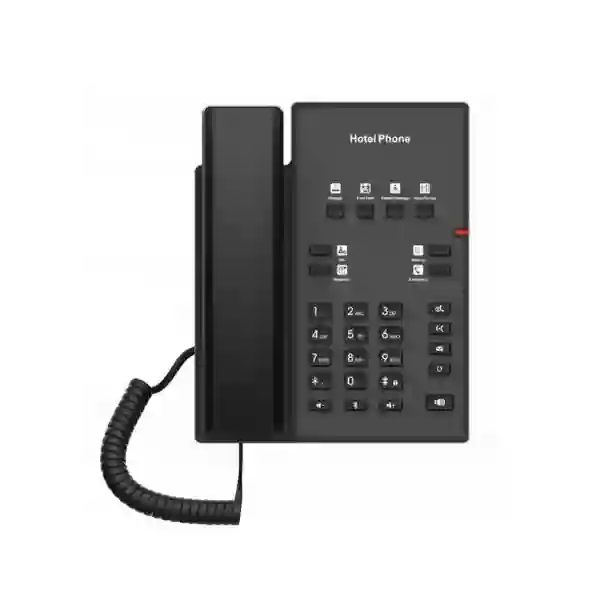
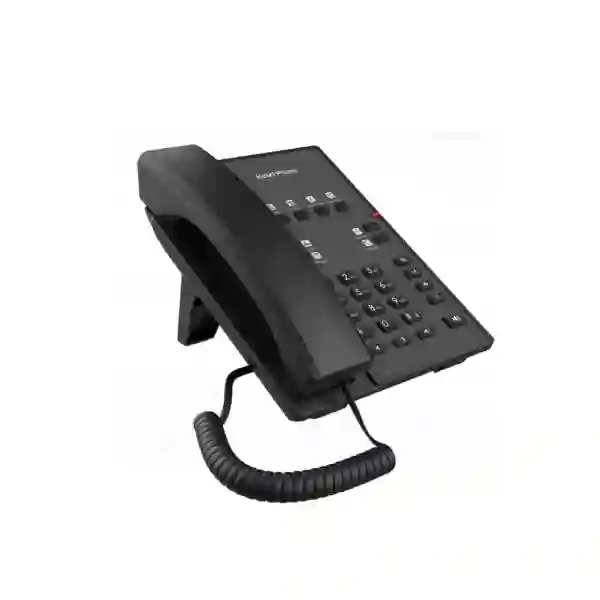
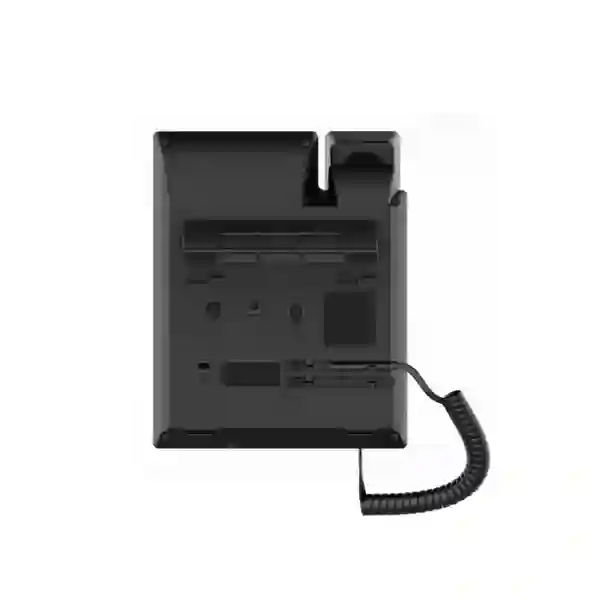
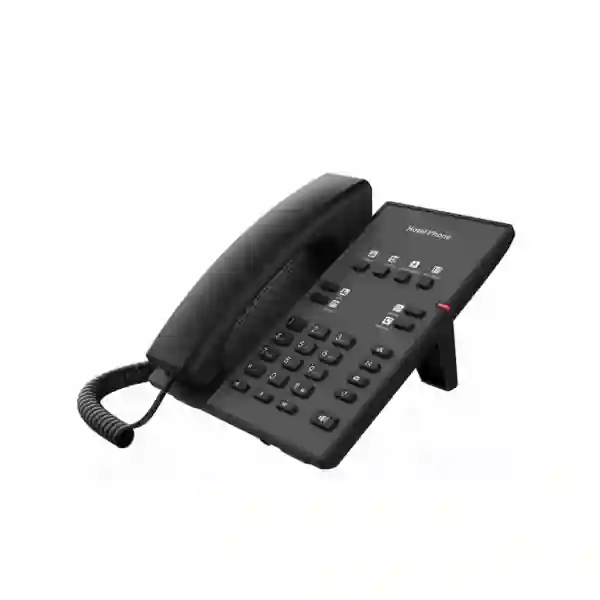
The Fanvil H1-2 Wire Hotel Phone is designed for hospitality projects that need the simplicity of a guest-room telephone together with SIP-based communications and the practical advantage of compatible two-wire cabling. For hotels renovating older properties, replacing ageing analogue room phones, or introducing centralized IP telephony without pulling new Ethernet to every room, the H1-2 Wire offers a focused migration path. The phone uses a 6P2C RJ11 two-wire interface for the supported two-wire network connection, provides two SIP lines, eight DSS keys for commonly used hotel services, and supports HD voice codecs including G.722 and Opus. It can be installed on a desktop or wall mounted with the required accessory, and it can receive power from a compatible Fanvil two-wire PoE environment or a 12V DC power supply.
What the Fanvil H1-2 Wire solves
Many existing hotels were cabled for traditional two-wire room telephones long before structured Ethernet became standard. Re-cabling hundreds of rooms can involve access restrictions, decorative repairs, furniture movement, ceiling work and operational disruption. The H1-2 Wire is specifically relevant where the existing cable plant is suitable for Fanvil’s two-wire solution and the project team wants SIP functionality without automatically assuming that every room must receive a new Ethernet run. A correct design still requires a survey: the condition, topology and termination of existing pairs should be checked, and the selected Fanvil two-wire PoE switching components must be sized for the number of rooms and the installation layout.
The guest-facing design is intentionally straightforward. Twelve standard dial keys are supported together with eight DSS keys and dedicated hold, transfer, redial, message-waiting and volume controls. This makes it practical to present recognizable hotel service shortcuts for reception, housekeeping, room service, concierge, security, reservations or other destinations defined by the property. The exact labels and call behavior depend on the PBX configuration, service design and faceplate preparation, so hotels should define the guest journey before final configuration rather than simply copying extension numbers from an old system.
Hospitality-focused controls
Eight DSS keys can be configured around the hotel’s preferred service workflow, helping guests reach frequently used departments without memorizing internal extensions.
Two-wire migration path
The RJ11 two-wire interface is designed for Fanvil’s two-wire architecture, which can be useful when compatible legacy room cabling is available and a full Ethernet rewire is undesirable.
SIP and voice quality
The platform supports SIP over UDP, TCP or TLS, RTP/RTCP/SRTP, common narrowband codecs, and wideband G.722 and Opus for clear voice where the PBX and network support them.
Verified technical specification
| Area | Fanvil H1-2 Wire detail |
|---|---|
| Scenario | Hotel / hospitality room communication |
| SIP lines | 2 |
| Service keys | 8 DSS keys |
| Interface | 6P2C RJ11 two-wire interface, power interface, RJ9 handset interface, security slot |
| Power | 12V DC / 1A or compatible 2-Wire PoE switch supply |
| Voice | HD voice, G.722 and Opus wideband codecs; G.711a/u, G.723.1, G.726 and iLBC among supported narrowband codecs |
| Networking and security | IPv4/IPv6, DHCP, static IP, PPPoE, VLAN, LLDP, QoS, 802.1X, L2TP, OpenVPN, SIP over TLS and SRTP |
| Installation | Desktop; wall mounting supported with separately purchased accessory |
| Operating temperature | 0°C to 45°C |
Deployment, PBX compatibility and buying guidance
A quotation for the H1-2 Wire should be built around the whole communication path, not the handset alone. The project team should identify the existing PBX or proposed IP PBX, verify SIP registration and codec policies, document the number of rooms, check every two-wire circuit that may be reused, determine where the Fanvil two-wire switches will be installed, and confirm whether the required topology is supported. Voice VLANs, IP addressing, time services, provisioning, firewall policies and power continuity also matter because a SIP room phone depends on a functioning network and call platform even though the room-side physical connection is two-wire.
For large room counts, a pilot is sensible before mass rollout. A pilot can confirm line quality, registration behavior, call transfer, message-waiting indication, service-key programming, speaker and handset audio, PBX dial plan, faceplate presentation and physical placement. It also gives the hotel a chance to validate housekeeping and maintenance procedures. If the property uses an existing PMS, call accounting platform or hospitality PBX feature set, those integrations should be reviewed separately because the phone is an endpoint and does not by itself guarantee a particular property-management workflow.
Related FourTeck resources
For broader hospitality planning, review FourTeck hotel phone solutions for Africa, which explains PBX, room, cabling and service-key considerations. The FourTeck Tanzania technology portfolio covers IP PBX, IP phones, switching, Wi-Fi, cabling and supporting infrastructure that may form part of a hotel modernization project. Organizations with regional procurement can also use FourTeck Kenya and FourTeck Uganda for neighboring-market requirements, while FourTeck’s wider IT and telecom portfolio can support multi-country standards and related communications projects.
Fanvil H1-2 Wire Hotel Phone Tanzania
For hotel operators in Tanzania, the Fanvil H1-2 Wire is most compelling when a property wants to modernize guest-room calling but the existing building already contains serviceable two-core telephone cabling. Properties in Dar es Salaam, Zanzibar-connected resort operations, Arusha tourism corridors, Mwanza, Dodoma and secondary towns often include a mix of older buildings and newer extensions. That makes a room-by-room infrastructure audit important. Instead of assuming that every extension requires new Cat6, the project team can check whether the existing pairs are suitable for a supported Fanvil two-wire architecture, identify cable faults or undocumented splices, and decide which floors or wings are sensible candidates for reuse. This can be particularly valuable in occupied hotels where intrusive recabling would affect room availability or interior finishes.
The buying process should begin with room count, PBX details and the required guest services. A 40-room property with a simple reception workflow has different needs from a resort with multiple restaurants, spa, housekeeping zones, concierge, security and separate operator functions. The H1-2 Wire’s eight DSS keys can support a clear guest-facing service map, but the labels, call destinations and after-hours behavior should be planned before installation. Two SIP lines give the endpoint flexibility for standard hospitality call handling, while HD voice, speakerphone support and common voice codecs help the phone fit a modern SIP environment. Tanzanian buyers should also include the two-wire PoE switching layer, rack position, UPS protection, IP PBX, SIP trunk or gateway needs, and any required network segmentation in the project scope.
For procurement, ask for an itemized quotation rather than a handset-only price. The quote should separate phones, two-wire switching components, wall-mount accessories where needed, power options, configuration, cabling remediation, PBX licensing or trunks if applicable, delivery, installation and testing. This approach makes it easier for hotel finance and IT teams to compare proposals on the same basis. It also reduces the risk of buying room phones that cannot be deployed because the switching topology or existing cabling was never validated. FourTeck can use the supplied room schedule, PBX information and site notes to help shape a relevant Tanzania quotation without making assumptions about stock, delivery time or compatibility.
Fanvil H1-2 Wire Hotel Phone Dar es Salaam
Dar es Salaam hotels range from compact business properties and serviced apartments to large waterfront and conference-oriented sites. In these environments, room telephony is often expected to remain simple for guests while integrating cleanly with reception, reservations, housekeeping, engineering and security workflows. The Fanvil H1-2 Wire can suit renovation projects where existing two-wire telephone pairs are available and the property wants a SIP endpoint rather than maintaining a purely analogue extension network. The design decision is not based only on the age of the cable. Each riser, floor distribution point and room pair should be checked for continuity, unwanted bridge taps, damaged joints and undocumented rerouting before it is accepted for reuse.
Dar es Salaam properties also need to think about the supporting equipment room. The two-wire PoE switch, IP PBX, gateway or SIP edge, core network and internet service may all sit in a central rack or telecom room. That room should have organized patching, ventilation and suitable power protection. If guest voice is considered operationally important during short power interruptions, the switches, PBX and upstream network should be connected to a UPS sized for the actual load and runtime expectation. The phone itself can be powered through the compatible two-wire switching solution, but continuity depends on the rest of the call path remaining available.
When configuring the H1-2 Wire for a Dar es Salaam business hotel, eight DSS keys can be mapped to the destinations guests use most often, such as reception, housekeeping, room service, security, reservations, transport desk, wake-up assistance or operator. A resort or conference hotel may choose a different set. Two SIP lines allow more than a minimal single-extension arrangement, while TLS and SRTP support can be considered where the PBX and network security design use encrypted signaling and media. Before bulk purchase, test a sample phone against the live PBX and representative room pair. Verify voice quality, MWI behavior, call transfer, key labeling, emergency call routing and wall or desktop placement. A pilot on one floor can reveal cabling or configuration issues before the project expands across the property.
Fanvil H1-2 Wire Hotel Phone Mwanza
Mwanza hospitality buyers evaluating the Fanvil H1-2 Wire should focus on practical migration planning and maintainability. A hotel may already have analog room phones connected through long-standing copper pairs, while the back office has moved to an IP PBX or is preparing for a broader communications upgrade. The H1-2 Wire can bridge that modernization strategy when the existing pairs are compatible with the supported Fanvil two-wire solution. This is useful when room renovation budgets prioritize interiors, guest Wi-Fi or security upgrades and management wants to avoid opening walls simply to provide Ethernet to every bedside or desk.
A Mwanza project should document the building by floor and wing. Record each room number, cable endpoint, distribution frame position, phone placement, wall-mount requirement and service-key label. If multiple buildings or detached villas are involved, confirm whether the two-wire design is appropriate for each segment rather than extending it beyond the supported architecture. Network planners should also define voice addressing, DHCP or static configuration, SIP server details, DNS and time services, VLAN policy, QoS and remote administration. The H1-2 Wire supports IPv4 and IPv6 along with common network and management protocols, but configuration should remain as simple as the hotel requires.
Operationally, the phone’s eight DSS keys can reduce guest confusion by presenting direct access to departments. For a lakeside hotel, those destinations might include reception, housekeeping, restaurant, security, transport coordination and conference support. The exact assignments should reflect the property, not a generic template. Procurement teams should request enough spare units and accessories for sensible maintenance planning, while avoiding unsupported assumptions about failure rates or warranty. They should also identify who will own firmware management, PBX changes, faceplate updates and room moves after handover. A well-documented rollout makes future troubleshooting easier because maintenance staff can relate a room number to a switch port, SIP identity and cable pair. FourTeck can use that documentation to prepare a more accurate quote and deployment discussion for Mwanza properties.
Fanvil H1-2 Wire Hotel Phone Arusha
Arusha’s hospitality market includes city hotels, safari gateways, lodges, conference properties and accommodation serving international and domestic travelers. In this setting, the Fanvil H1-2 Wire can be considered where the guest-room communication requirement is intentionally simple but the operator wants modern SIP management and the ability to reuse compatible two-wire cabling. Guest phones do not need to behave like executive desk phones. They need to be immediately understandable, dependable and aligned with hotel service flows. The H1-2 Wire’s dedicated keypad, function controls and eight DSS keys support that type of room experience.
For a lodge or multi-building property near Arusha, infrastructure topology deserves special attention. Two-wire cable routes may run through older distribution points, and some rooms may have been extended or altered over time. The project team should trace and test the actual pairs before deciding how many endpoints can be migrated through the Fanvil two-wire switching layer. If part of the property already has structured Ethernet while another part relies on telephone pairs, a mixed architecture may be more sensible than forcing one approach everywhere. The IP PBX can still provide a consistent extension plan, while different physical access methods serve different buildings or room blocks.
Arusha hotels should also design DSS keys around the guest journey. Common choices may include front desk, restaurant, housekeeping, security, excursion or transport desk, maintenance, spa and operator. The important point is that each key should have a clear operational owner and predictable response path. If a service is unavailable after hours, the PBX can route calls to an alternative destination instead of leaving a dead button. Procurement should therefore bring together hotel operations, IT and finance before final quantities are approved. Confirm room count, spare ratio, wall brackets, two-wire switches, rack and UPS needs, PBX licenses, configuration services and commissioning. A controlled pilot in representative rooms can validate audio, key functions, labeling and physical fit before large-scale deployment.
Fanvil H1-2 Wire Hotel Phone Dodoma
For hotels, government guest facilities, serviced apartments and institutional accommodation in Dodoma, the Fanvil H1-2 Wire provides a useful option when SIP communications are required but existing room telephone cabling remains an important asset. Newer buildings may already have Ethernet at every room, in which case a conventional PoE hotel phone could be the more direct choice. The H1-2 Wire becomes particularly relevant when the property has two-wire pairs in place and wants to evaluate whether those cables can support a managed upgrade through Fanvil’s dedicated two-wire network technology.
A Dodoma deployment should start with an infrastructure inventory rather than a model order. Map the main equipment room, floor distributors, cable pairs and intended handset position. Check whether the room phone needs to be on a desk, bedside table or wall, and include the separate wall-mount accessory where required. Confirm where the two-wire PoE switches will be located and how they will connect back to the IP network. The phone supports static addressing, DHCP and PPPoE, plus VLAN, LLDP and QoS functions, giving the network team flexibility. In most hotel environments, however, consistent centralized provisioning and a clear voice VLAN policy are more valuable than enabling every available option.
The H1-2 Wire supports two SIP lines and common call functions including hold, transfer, redial, hotline and voicemail-related workflows. The eight DSS keys are the guest-facing strength of the design because they can be labeled around property services. In Dodoma, a business-oriented hotel may prioritize reception, restaurant, meeting services, housekeeping, security and transport. A long-stay facility may use different labels. Before approval, the hotel’s management team should decide who answers each destination and how unanswered calls are handled. Quotation requests should include the PBX brand and version, number of phones, floor plan or room list, available cabling information and any required commissioning. These inputs allow the proposed solution to be checked as a system rather than treating each phone as an isolated purchase.
Fanvil H1-2 Wire Hotel Phone UAE
In the UAE, hotel telephony projects often involve a wide range of property types, from compact city hotels and serviced apartments to resorts, branded residences and large hospitality developments. The Fanvil H1-2 Wire is particularly relevant to refurbishment projects where existing two-core room cabling is available and management wants to introduce SIP-based endpoints without automatically replacing every cable run. The cost case should be evaluated at project level: cable reuse can reduce disruption, but the design still needs compatible Fanvil two-wire switching, PBX integration, testing, rack space and commissioning.
For UAE properties with strong brand standards, the service-key experience matters as much as the physical connection. The H1-2 Wire provides eight DSS keys that can be assigned to property-specific destinations. A city business hotel may use front desk, housekeeping, room service, concierge, valet, security, reservations and operator; a resort may replace some of those with spa, recreation or guest relations. The faceplate and labels should be prepared so guests understand the services immediately, and the PBX should define after-hours routing so a shortcut remains useful even when the primary department is closed.
Technical teams should verify SIP registration, codecs, TLS or SRTP policy, VLANs, QoS, addressing and remote management before rollout. For large towers, room inventories should be tied to switch ports and extension numbers so moves and faults can be traced. UPS protection for PBX, two-wire switches and upstream network devices may be included where the property requires continuity during brief power events. Hotels with PMS, call accounting or specialized hospitality middleware should separately validate those integrations rather than assuming that a standards-based SIP endpoint automatically delivers every hospitality feature. Procurement teams can request a quotation covering phones, compatible Fanvil two-wire infrastructure, accessories, configuration and commissioning, while confirming current availability and project-specific commercial terms at the time of purchase.
Fanvil H1-2 Wire Hotel Phone Uganda
Ugandan hotels and lodges considering the Fanvil H1-2 Wire can use it as part of a staged migration from legacy room telephones to SIP communications where compatible two-wire cabling can be retained. This can be attractive in established properties because guest rooms may be spread across several floors or blocks, while renovation access is limited. The right approach is to inspect existing pairs, understand how they terminate and determine whether Fanvil’s two-wire switching design fits the actual topology. Cable reuse should be treated as an engineering option, not as an automatic guarantee for every old telephone circuit.
For countrywide projects, standardization is valuable. A hotel group with properties in Kampala, Entebbe, Jinja or regional towns can create a common extension naming convention, DSS key layout, provisioning profile and troubleshooting document even if room counts differ. The H1-2 Wire’s eight DSS keys can be labeled consistently for reception, housekeeping, restaurant, security, operator and other services. Standard call routing helps staff move between properties and simplifies support, while local differences can still be handled through PBX configuration.
Ugandan procurement teams should identify all infrastructure dependencies before requesting final pricing. The list may include phones, Fanvil PN-series two-wire PoE switching, IP PBX or hosted SIP service, network uplinks, racks, UPS, cabling remediation, configuration and testing. If rooms require wall mounting, include the appropriate accessory rather than assuming it ships with the phone. A pilot is especially useful for older properties because it can validate cable condition and voice quality on representative room pairs. The H1-2 Wire supports G.722 and Opus as wideband codecs along with established narrowband options, but final audio quality depends on the PBX, network and selected codec. FourTeck Uganda and FourTeck Tanzania can support regional planning conversations for organizations operating across both markets.
Fanvil H1-2 Wire Hotel Phone Kampala
Kampala’s mix of business hotels, serviced apartments, conference venues and established properties creates a practical use case for the Fanvil H1-2 Wire when renovation constraints make new room cabling inconvenient. A property may have a capable IP network in public and back-office spaces while guest rooms still rely on two-wire telephone pairs. The H1-2 Wire allows the room endpoint strategy to be reviewed without assuming that every legacy cable must be abandoned. A compatible Fanvil two-wire PoE switch provides the supported bridge between those room pairs and the IP environment.
Because Kampala hotels often handle meetings, corporate guests and events, the phone’s DSS keys can be designed around high-frequency guest requests. Front desk, room service, housekeeping, conference support, security, transport desk, reservations and operator are examples, but the actual configuration should reflect the property’s staffing. Good call-flow design matters more than filling every key. If a department is not staffed continuously, the PBX should send the call to a secondary destination or queue. This turns the room phone into a reliable service interface rather than a decorative handset.
During technical planning, confirm the PBX supports the required SIP functions and define whether signaling or media encryption will be used. The H1-2 Wire supports SIP over TLS and SRTP in addition to standard SIP transport options. Network access control, VPN and VLAN features are also available, though hotels should enable only what fits their operational model. For installation, test room pairs, verify switch capacity, confirm power protection and document the link between room number, pair, switch port and SIP extension. Procurement should include representative sample testing before large quantities are committed. This is particularly valuable when an old building has undergone several renovations and the original telephone documentation is incomplete. Clear documentation at handover can save substantial troubleshooting time later.
Fanvil H1-2 Wire Hotel Phone Arua
In Arua, hotels, lodges and accommodation facilities may prioritize dependable communications that can be maintained without unnecessary infrastructure complexity. The Fanvil H1-2 Wire can suit sites where existing two-wire room cabling is serviceable and a SIP-based hotel phone is preferred. Rather than approaching the project as a simple handset replacement, operators should first document the current telephone layout and identify which room pairs return to the same distribution area. This helps determine whether a compatible Fanvil two-wire PoE switching design can be implemented efficiently.
The endpoint itself is deliberately compact in function. It provides two SIP lines, HD voice support, eight DSS keys, a standard keypad, speakerphone, volume controls and dedicated telephony function keys. That makes it suitable for guests who need fast access to a small set of services without navigating a complex screen. Arua properties can prepare a service map around their operation: reception, restaurant, housekeeping, security, transport, maintenance, reservations or another department. If the hotel has a small staff where one person covers several functions, the PBX can route multiple labeled services to the same extension or ring group while preserving clear labels for guests.
Regional procurement also benefits from good spare and support planning. Hotels should decide who can replace a phone, trace a pair, change a DSS label or update a SIP credential after the initial installation. Keep a record of extension numbers, room assignments, switch ports, IP settings and firmware versions. For sites with intermittent grid conditions, review UPS protection for the central communication equipment and internet router according to the desired uptime. The phone’s two-wire power method does not remove the need to protect the central switch and PBX. A quotation request should therefore include room count, existing PBX, cable information, required service keys, preferred mounting and destination so the solution can be sized correctly.
Fanvil H1-2 Wire Hotel Phone Mbarara
Mbarara hotel and lodge projects can consider the Fanvil H1-2 Wire when they want the operational benefits of SIP room telephony while retaining compatible telephone pairs already installed in guest areas. This can be useful during phased refurbishment because a property can modernize the communications core and room endpoints without making room-wall cabling the first activity. The decision should still be based on testing. Existing copper may have joints, moisture exposure, altered routing or mixed termination practices, so representative pairs should be checked before the project assumes reuse across every room.
For hospitality management, the phone’s value lies in simple guest access. Eight DSS keys can represent the property’s most important services and two SIP lines support normal IP-telephony call handling. The handset and hands-free modes use HD audio capabilities where the network and codec choice allow. Functions such as hold, redial, transfer and message-waiting indication provide familiar hotel operation without creating a crowded user interface. The hotel can define labels in the language and terminology that best fit its guests, while the PBX handles the destinations behind those labels.
A Mbarara deployment should also consider maintenance practicality. If the hotel has a small technical team, centralized provisioning and a consistent room numbering scheme can simplify troubleshooting. Each phone should be associated with its room, cable pair, switch port and SIP identity. The two-wire PoE switch should be installed in an accessible and ventilated location, ideally with organized power and UPS protection if continuity is required. For multi-building compounds, verify whether cable distances and topology fit the chosen solution before assuming that one switch can serve all areas. Quotations should show the handset and infrastructure elements separately so management can understand the full modernization cost and compare it against an Ethernet rewire or continued analogue operation on a like-for-like basis.
Fanvil H1-2 Wire Hotel Phone Gulu
Gulu hospitality properties assessing the Fanvil H1-2 Wire should first decide what they want the room telephone system to achieve. If the main goal is dependable access to reception, housekeeping, restaurant, security and a few other services, a focused hospitality endpoint can be more appropriate than a feature-heavy office phone. The H1-2 Wire adds the ability to operate within Fanvil’s supported two-wire architecture, making it relevant when older room cabling is already in place and the project wants to move toward SIP.
The two-wire approach can reduce the amount of new cabling required in suitable buildings, but it should not be treated as a shortcut around design. The project still needs a compatible switch, IP network uplink, PBX, addressing plan and power strategy. In Gulu, where a property may include several blocks added at different times, cable tracing is particularly important. Test sample rooms in each building section and compare the physical path with the proposed two-wire switch location. If some rooms have good Ethernet while others have reusable telephone pairs, a hybrid endpoint strategy may provide the cleanest result.
The H1-2 Wire supports two SIP lines, G.722 and Opus, speakerphone operation, eight DSS keys and standard call features. Use those capabilities to create a simple guest interface and predictable staff workflow. Avoid programming buttons that lead to unattended extensions. Instead, build ring groups or escalation routes in the PBX for services that need broader coverage. For procurement, include spare planning, wall accessories if required, faceplate preparation, configuration and commissioning. Ask the supplier to confirm the exact bill of materials for the room count and switching design rather than extrapolating from a single-phone price. This approach gives hotel owners a clearer view of total project cost and reduces unexpected infrastructure purchases during installation.
Fanvil H1-2 Wire Hotel Phone Kenya
Kenyan hospitality groups, city hotels, safari properties and serviced apartments can use the Fanvil H1-2 Wire as part of a room-telephony modernization plan where compatible two-wire cabling is available. This is particularly relevant to established hotels that want SIP management but do not want to make a full Ethernet rewire a prerequisite for every room. The phone is not a conventional analogue device simply because it uses RJ11 cabling at the room. It is a SIP endpoint designed to work through Fanvil’s two-wire network technology, so the supporting switch and network design are essential parts of the solution.
For Kenya projects, procurement teams should differentiate the H1-2 Wire from the standard Fanvil H1. The normal H1 uses Ethernet and integrated PoE, while H1-2 Wire is the dedicated two-wire version. Mixing specifications from the two products can lead to incorrect cabling or switching assumptions. The H1-2 Wire supports two SIP lines, eight DSS keys, HD voice, desktop placement and optional wall mounting. It can be powered by the compatible two-wire PoE switch or 12V DC. Those verified characteristics should be the basis of the bill of materials.
Large hotel groups can benefit from a standard configuration template across Nairobi, Mombasa, Kisumu, Nakuru, Naivasha and resort locations. Define the same service-key positions where operationally possible, create repeatable extension naming, maintain configuration backups and document how every room maps to the central switch. Where properties use different PBXs, test the SIP registration and feature behavior separately. Quotation requests should include destination, number of rooms, PBX details, cabling status and desired service labels. Multi-country groups operating in Tanzania and Kenya can also align their hotel phone standards while allowing site-specific variations in cabling, network equipment and support arrangements.
Fanvil H1-2 Wire Hotel Phone Kuwait
Kuwait hotels and serviced residences planning room upgrades may consider the Fanvil H1-2 Wire when existing two-wire telephone cabling is an asset worth retaining. Renovation projects in occupied properties often need to balance technology improvements with minimal disruption to guest rooms. A two-wire SIP architecture can be useful where the existing pairs test well and the selected Fanvil switching design fits the floor layout. The project should compare this approach against new Ethernet cabling on cost, installation impact, manageability and future requirements rather than choosing solely on handset price.
Guest experience should remain central. The H1-2 Wire provides eight DSS keys that can be labeled for hotel services, plus dedicated hold, transfer, redial, message-waiting and volume controls. In a Kuwait city hotel, shortcuts could include front desk, housekeeping, room service, concierge, valet, security, reservations and operator. In a serviced residence, maintenance or resident services might take priority. The hotel should decide these destinations before faceplates are finalized and ensure each button has a live call route during relevant service hours.
From an IT perspective, the phone supports common SIP transport options, encrypted SIP over TLS, SRTP, IPv4/IPv6, VLAN, LLDP, QoS, 802.1X and VPN capabilities. The network team should select only the features required by policy and verify interoperability with the PBX. For large deployments, centralized configuration and firmware procedures should be documented. Power and rack planning remain important because the two-wire switches and PBX are central points of service. Include suitable UPS protection where continuity is part of the hotel requirement. Commercially, ask for a complete project quotation that identifies phones, two-wire switching, accessories, configuration, commissioning and any infrastructure work separately. This helps buyers compare solutions based on deployment readiness instead of a headline unit price.
Fanvil H1-2 Wire Hotel Phone Ghana
Ghanaian hotels, guesthouses, resorts and serviced apartments can evaluate the Fanvil H1-2 Wire when an existing room telephone network is based on two-wire pairs and management wants a path to SIP. The strongest case is often found in renovation projects where rooms are already finished and the cost or disruption of installing new Ethernet would be significant. Before committing to the architecture, the property should inspect its cable routes, distribution frames and terminations. Old cabling that has been repeatedly joined or diverted may require remediation even if a two-wire solution is technically suitable in principle.
The H1-2 Wire provides a hotel-oriented interface rather than an office-phone experience. Two SIP lines support basic line flexibility, while eight DSS keys can give direct access to hotel departments. Ghana properties can label those keys around their actual operating model, whether that means reception, restaurant, housekeeping, security, transport, conferencing, maintenance or another service. The PBX should then provide the call groups and fallback routing necessary to make each shortcut reliable. Guests should not need to know internal extension numbers or navigate an IVR for common requests.
Project planning should include the compatible Fanvil two-wire PoE switching layer, the IP PBX or SIP platform, LAN uplinks, IP addressing, voice quality policy, firewall rules, rack space and power protection. The H1-2 Wire supports QoS and common network-control features, but voice performance depends on the complete system. A pilot room or floor can verify speech quality, speakerphone behavior, call transfer, MWI and service keys before wider rollout. When asking for pricing in Ghana, provide room quantity, building count, existing telephone system, cable information and desired installation method. A well-scoped request allows suppliers to separate endpoint cost from switching and deployment services and reduces the chance of receiving an incomplete quote.
Fanvil H1-2 Wire Hotel Phone Nigeria
Nigeria’s hospitality market covers large urban hotels, business properties, resorts, apartments and regional accommodation, often with buildings that have evolved through multiple technology generations. The Fanvil H1-2 Wire can be useful when a property wants SIP room telephony but still has usable two-wire telephone pairs to the rooms. The migration concept can reduce the amount of intrusive recabling in suitable sites, but the existing cable plant must be treated as a technical asset that needs verification. A survey should identify pair quality, distribution points, room numbering and any areas where the cable path is uncertain.
In a busy Nigerian hotel, the eight DSS keys can serve as a guest-service front end. They may be assigned to front desk, housekeeping, restaurant, room service, concierge, security, maintenance and operator, while the PBX manages ring groups and overflow. This is especially useful when departments operate on shifts. A guest presses one clear label, while the underlying call logic can change without changing the physical phone. The two SIP lines provide flexibility for extension design, and HD voice codecs can improve clarity where the rest of the voice platform supports them.
For projects in Lagos, Abuja, Port Harcourt or other cities, centralized management and documentation are important if hundreds of rooms are involved. Record the relationship between each room, pair, two-wire switch port and SIP account. Use controlled provisioning so replacement units can be configured consistently. Review UPS capacity for the central switches and PBX, since room phones cannot operate through the two-wire power path if the central equipment is down. If the hotel integrates telephony with PMS, billing or call accounting, test those workflows separately during the pilot. Procurement should request current commercial terms and availability at the time of order rather than relying on online listings, and should compare the complete solution including switches, accessories, installation and commissioning.
Fanvil H1-2 Wire Hotel Phone Seychelles
Seychelles resorts and hospitality properties often place a premium on minimizing disruption to guest areas, particularly where rooms or villas are distributed across landscaped sites and interior finishes are expensive to disturb. The Fanvil H1-2 Wire can be relevant when a property has serviceable two-wire phone cabling and wants to explore a SIP upgrade without replacing every room run with Ethernet. The potential benefit is practical, but island resort layouts can be complex. The engineering team should trace cable routes carefully, especially where buildings are separated, distribution points are outdoors or cabling has been modified over time.
The hotel-facing functionality is straightforward: two SIP lines, eight DSS keys, HD voice, speakerphone, dedicated call controls and support for desktop or optional wall placement. Resorts can use the DSS keys for reception, guest relations, housekeeping, restaurant reservations, room service, spa, transport or security. Villas with a more personalized service model may use a direct butler or host line. The key labels and routing should be designed with operations staff so guests receive an immediate response path rather than an internal extension that may be unattended.
For island deployments, spares and documentation deserve early attention. A small number of preconfigured spare handsets can simplify replacement planning, while accurate records of room-to-port mapping help local technical teams troubleshoot quickly. The central two-wire switches, PBX and network equipment should be installed in suitable environmental conditions and protected according to the site’s power strategy. If network or telecom equipment is concentrated in a main communications room, plan how remote blocks connect back to that room and verify the supported architecture before procurement. Quotations should identify shipping destination, quantities, required accessories, switching components, configuration and any onsite or remote commissioning expectations. This avoids assuming that a unit price alone reflects the real cost of deploying room telephony across a resort.
Compatibility, security and operations checklist
Before ordering the Fanvil H1-2 Wire, confirm the exact PBX or hosted SIP service, supported SIP registration method, codec policy, extension quantity, service-key destinations, voicemail or message-waiting requirements, wall-mount needs, faceplate language and room inventory. For the physical layer, verify cable condition, pair routing, distribution points and the selected Fanvil two-wire PoE switch capacity. For the network layer, confirm addressing, VLAN, QoS, time synchronization, DNS, security policy and how administrators will reach the devices for configuration. For continuity, review the power path from UPS to switch, PBX and upstream router.
Security should be proportionate to the environment. The phone supports SIP over TLS, SRTP, 802.1X, HTTPS and VPN options, but these capabilities only add value when they are configured consistently with the PBX, certificates and network policy. Disable unnecessary services, use strong administrator credentials, keep firmware under change control and limit management access to trusted networks. Large hotels should maintain a standard configuration template and documented exception process rather than configuring every room differently.
Frequently asked questions
Is the Fanvil H1-2 Wire the same as the standard Fanvil H1?
No. The H1-2 Wire is the dedicated two-wire version. It uses a 6P2C RJ11 interface for Fanvil’s supported two-wire network architecture. The standard H1 is an Ethernet-based hotel IP phone. Buyers should keep the model suffix clear because the required switching and room cabling approach are different.
Can it reuse old hotel telephone cabling?
It is designed for compatible two-wire deployment and can be useful where serviceable pairs already exist. That does not mean every old telephone cable is automatically suitable. Cable condition, topology, terminations and the complete Fanvil two-wire design should be checked before a bulk order.
How many SIP lines and hotel service keys does it support?
The H1-2 Wire supports two SIP lines and eight DSS keys. Hotels can program the keys for common destinations such as reception, housekeeping, room service or security, subject to the PBX configuration and the property’s operating workflow.
Does it support HD voice?
Yes. Fanvil lists wideband G.722 and Opus support along with several established narrowband codecs. Actual call quality depends on the PBX, network, codec negotiation and the wider voice path.
Can the phone be wall mounted?
Fanvil lists desktop use and wall mounting, with the wall-mount accessory purchased separately. Include that accessory in the bill of materials for rooms where the phone cannot sit on a table or bedside surface.
What should I provide for a quotation?
Provide the number of rooms, building or floor layout, existing PBX brand and version, whether the current room cabling is two-wire, desired service-key labels, preferred mounting method, project location and any installation or configuration requirement. For larger projects, photos or a cabling schedule can help shape the technical review.
Quotation checklist
To prepare a useful Fanvil H1-2 Wire quotation, collect: total room quantity; spare-unit requirement; number of floors or buildings; existing cable type and known condition; PBX or SIP platform details; service-key destinations; wall-mount quantity; preferred faceplate wording; two-wire switch location; rack and UPS requirements; IP addressing and VLAN policy; desired installation, configuration and testing scope; and destination for delivery. Supplying this information helps the proposal address the real deployment rather than only listing handsets.
Decision recap
Choose the Fanvil H1-2 Wire when your hospitality project needs a simple SIP room phone and the ability to work through a supported two-wire Fanvil infrastructure is a meaningful advantage. Its strongest fit is renovation: hotels with reusable telephone pairs, clear room-service workflows and a desire to centralize voice management on an IP PBX. Compare it with standard Ethernet hotel phones when new structured cabling is already available. The best decision comes from validating the cabling, PBX and switching design together before purchasing the room endpoints.
Consult FourTeck about your hotel phone project
FourTeck can review the room count, existing telephone cabling, PBX environment, service-key plan and supporting network so the H1-2 Wire is evaluated as part of a complete hotel communication design. Request a quotation with your property details, quantities and deployment requirements. Availability, commercial terms, delivery and implementation scope should be confirmed for the specific project and destination.



Reviews
There are no reviews yet.