
SIP Intercom • Access Control • Business Communication
Fanvil i10 SIP Mini Intercom
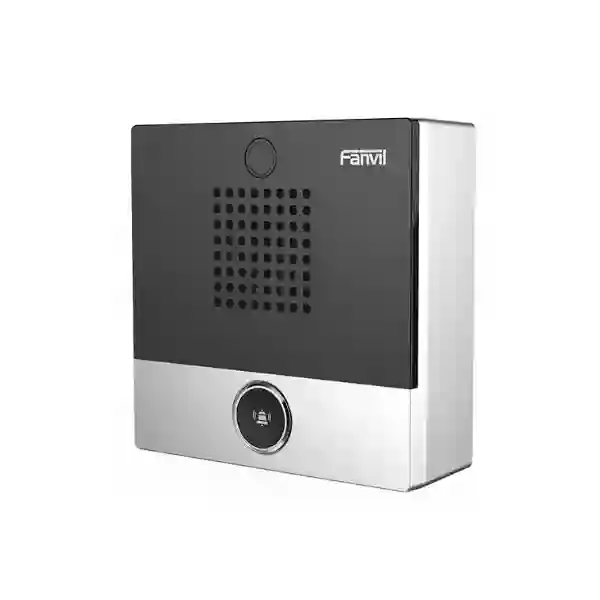
The Fanvil i10 SIP Mini Intercom is a compact, one-button audio intercom for organizations that want a standards-based SIP endpoint for internal security communication, controlled-entry workflows and business broadcasting. Fanvil specifies two SIP lines, 10/100 Mbps Ethernet, Power over Ethernet, IP54 dust and water protection, a built-in 1W speaker, Acoustic Echo Canceller, a built-in short-circuit input/output interface, wall mounting, and broad SIP-platform compatibility. For Tanzanian businesses, the strongest value is not simply its small size: it can become part of a wider voice, access-control and network design when the PBX, PoE switching, VLAN policy, door hardware and security workflow are planned together.
Two SIP Lines
The i10 supports two SIP lines, giving administrators flexibility for registration, call routing and intercom workflows on compatible IP PBX platforms.
IP54 Indoor Design
Fanvil positions the i10 family for indoor scenes while specifying IP54 dust and water protection and an operating range from -20°C to 50°C.
PoE & 10/100 Ethernet
A 10/100 Mbps Ethernet interface with PoE support simplifies deployment where compatible switching can provide both network connectivity and power.
Audio Intercom
A built-in 1W speaker, full-duplex communication and Acoustic Echo Canceller support clear two-way voice when the network and PBX are correctly configured.
What the Fanvil i10 SIP Mini Intercom is designed to do
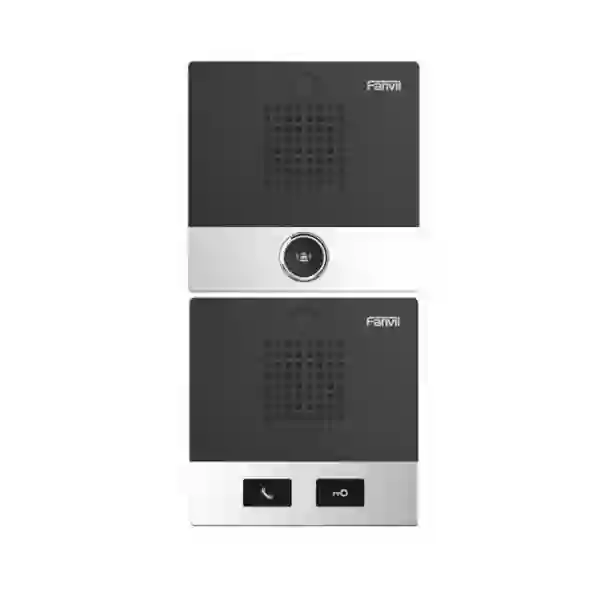
The Fanvil i10 is the one-button audio model in the i10/i10V/i10D mini-intercom family. It is intended for applications where a user needs a compact wall-mounted SIP calling point rather than a desk telephone. Pressing the programmable call key can initiate a predefined communication flow, while auto-answer and intercom features can support controlled two-way conversations. The product is therefore relevant to reception zones, staff entrances, controlled internal doors, service counters, warehouses, clinics, schools, offices, hospitality back-of-house areas and other environments where people need to contact a responsible desk, extension or security point quickly.
The built-in short-circuit input/output interface is especially important because it allows the intercom to participate in a broader access-control design. A practical deployment may involve a door contact, release relay, lock controller, exit button or other low-voltage control workflow, but the exact wiring must be designed around the connected equipment and the i10 electrical limits. The intercom should not be treated as a complete door-security system by itself. Door hardware, power supply, life-safety requirements, network policy, user permissions and PBX call routing all need to be defined before installation.
Fanvil also positions the series for broadcasting, making the i10 useful where SIP and multicast functions are part of the communication architecture. This can support announcements or notification scenarios in compatible environments. As with all SIP devices, actual feature behavior depends on the PBX, firmware, provisioning profile, network, codec selection and security configuration. A pilot unit is recommended for larger projects so that call routing, button actions, auto answer, relay behavior, audio levels, VLAN settings and secure signaling can be validated before multiple devices are installed.
Verified Fanvil i10 technical highlights
SIP and call functions
Fanvil specifies two SIP lines, auto answer and intercom functionality. SIP 2.0 is supported over UDP, TCP and TLS, with RTP/RTCP and SRTP available for media transport and security-oriented deployments.
Audio codecs
The documented codec set includes G.711a/u, G.729AB and iLBC for narrowband operation plus G.722 and Opus for wideband audio. AEC, VAD, CNG, BNE, PLC and adaptive jitter handling support voice quality under normal VoIP conditions.
Network functions
The i10 supports 10/100 Mbps Ethernet, IPv4/IPv6 operation, static addressing, DHCP, PPPoE, 802.1X, VLAN, LLDP, QoS, L2TP and OpenVPN. These options help integrate the intercom into managed enterprise networks.
Physical deployment
Fanvil documents wall mounting, IP54 protection, ABS housing, PoE support and DC power. The original i10 family datasheet lists an operating temperature range of -20°C to 50°C, making environmental review part of site planning.
i10 vs i10V vs i10D: choose the correct Fanvil model
| Model | Call buttons | Camera | Best-fit decision |
|---|---|---|---|
| i10 | 1 | No | Choose for a simple single-destination audio intercom workflow. |
| i10V | 1 | Yes | Evaluate when a built-in camera and video communication are required. |
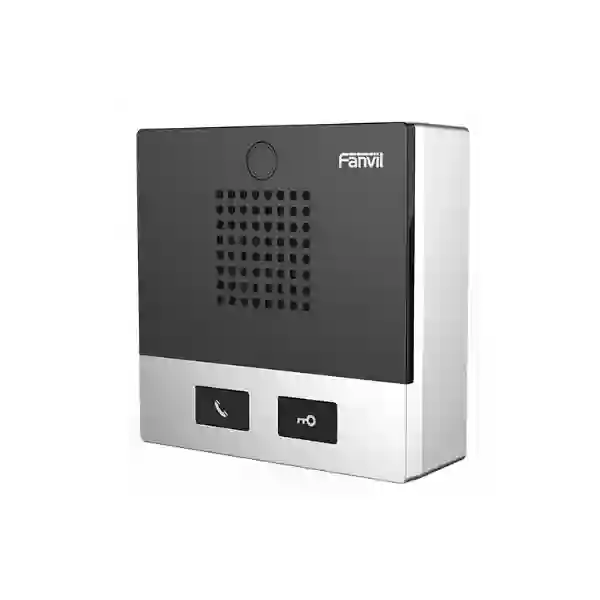
| i10D | 2 | No | Consider when two separate programmable call destinations are needed. |
This page is specifically about the Fanvil i10 audio model. Camera specifications belong to the i10V and should not be attributed to the i10. Procurement teams should use the full exact model number on quotations and purchase orders to avoid receiving the wrong variant.
Compatibility, PBX integration and network design
Fanvil lists compatibility with major platforms including Asterisk, BroadSoft, 3CX, Metaswitch, Elastix and Avaya. That is useful for initial product selection, but commercial deployments should still verify the exact PBX release and the functions the project expects to use. Basic SIP registration can succeed even when advanced behavior such as programmable button actions, multicast, auto answer, remote provisioning, TLS certificates or relay-control workflows needs additional configuration. For projects involving many intercoms, testing one device against the production PBX can prevent repeated configuration errors later.
The i10 supports VLAN, QoS and 802.1X, so it can fit a managed LAN rather than operating as an unmanaged device on a flat network. A security-minded design can place intercoms in an appropriate voice or IoT VLAN, restrict communication to required PBX and management services, use secure signaling where supported end to end, and document switch ports and device addresses. Because the intercom may be positioned near a public or semi-public area, network isolation deserves the same attention as the physical mounting.
PoE can simplify installation by carrying power and data over one Ethernet cable from a compatible switch. This also makes centralized UPS protection possible when the PoE switch itself is backed by suitable power protection. Where DC power is used instead, the local power source should be included in continuity planning. Before ordering, check switch PoE availability, cable routes, wall-box condition, VLAN requirements, PBX registration method, relay wiring, receiving extension and user responsibilities.
Fanvil i10 SIP Mini Intercom Tanzania
Organizations evaluating the Fanvil i10 SIP Mini Intercom in Tanzania should start with the operational purpose rather than the product name alone. The i10 is most useful when a single physical call point must connect to an existing or planned SIP environment. Common examples include a staff entrance calling reception, a controlled internal door calling security, a service hatch contacting an operations desk, a warehouse point communicating with a supervisor or a restricted room using a dedicated intercom extension. The one-button design keeps the user action simple, while the two SIP lines and programmable functions give the administrator more flexibility behind the scenes. For a business already using IP PBX, the device can be treated as another managed SIP endpoint rather than a separate analog intercom system.
A Tanzania deployment should also account for network and power conditions at the exact installation point. The i10 uses 10/100 Ethernet and supports PoE, so a managed PoE switch can provide a clean single-cable connection and centralize power protection. Voice traffic should be separated and prioritized where appropriate, especially at sites that also carry CCTV, Wi-Fi, file transfers and cloud applications on the same LAN. If the device is used with a door-control workflow, confirm the electrical characteristics of the connected relay or controller instead of assuming any lock can be wired directly. Physical mounting, indoor exposure, cable protection and accessibility to unauthorized users should be reviewed during the site survey.
Procurement teams in Tanzania can improve quotation accuracy by supplying the number of intercom points, receiving extensions, PBX model and version, switch model, available PoE, desired VLAN, door or relay requirements, cabling status and whether centralized provisioning is required. Buyers can also review FourTeck Tanzania’s business technology shop to understand related networking and telephony categories, and FourTeck Tanzania services for installation and integration context. This broader view helps ensure the intercom is specified as part of a working communication and security system, not as an isolated box.
Fanvil i10 SIP Mini Intercom Dar es Salaam
For businesses in Dar es Salaam, the Fanvil i10 can fit busy commercial environments where staff need a simple way to reach reception, security or an operations desk from a fixed location. Office buildings, logistics facilities, clinics, schools, hospitality properties and multi-tenant workplaces can all have points where a conventional desk phone is unnecessary but a dedicated SIP intercom is practical. The single programmable button reduces ambiguity for visitors or employees because the action can be mapped to a predetermined destination. A front-of-house door can call reception, while an internal controlled area can route to security or a supervisory extension. The PBX can then apply normal business rules such as ringing groups, time schedules or alternative destinations depending on the platform configuration.
Dense Dar es Salaam sites frequently combine voice, CCTV, wireless and business data on the same switching infrastructure. This makes LAN planning important. The i10 supports VLAN, QoS, 802.1X and secure SIP options, giving network administrators tools to avoid simply placing the device on an unrestricted flat network. PoE can also reduce the need for a separate power adapter near the door, reception wall or corridor location. If the PoE access switch is connected to a suitable UPS, the organization can retain intercom power during short utility interruptions, subject to the rest of the PBX and network path remaining available. Cable routes should be protected and labeled, especially where the device sits in publicly accessible areas.
A Dar es Salaam quotation request should identify whether the i10 will be used only for voice calling or will also interact with an access-control input/output workflow. Include the PBX, receiving extension or ring group, number of devices, switch ports, PoE availability, cable distance, indoor mounting conditions and any required integration with door controllers. For businesses refreshing the wider voice environment at the same time, related endpoints such as the Dinstar C60S business IP phone can illustrate how desk phones and intercoms can share the same structured SIP architecture while serving different user roles.
Fanvil i10 SIP Mini Intercom Mwanza
Mwanza organizations planning a Fanvil i10 deployment may be expanding an existing IP PBX, replacing an older analog intercom or adding a dedicated communication point at a new door or operational area. In each case, the main decision is whether a one-button audio SIP intercom matches the workflow. If every call should go to the same reception, security desk or extension group, the i10 can be a clean fit. If different buttons are required for different destinations, the i10D may be more appropriate; if visual verification is required at the device, the i10V family member should be evaluated instead. Making that model distinction before procurement avoids paying for the wrong hardware or trying to add functions the selected model does not contain.
Remote manageability is another useful consideration for Mwanza sites, especially for companies whose IT administrators support multiple branches. Fanvil documents web management, online upgrade functions and network services that allow the endpoint to be integrated into a managed deployment. The practical advantage is consistency: extension naming, SIP server details, network settings, time configuration, security parameters and button behavior can be documented and repeated. Administrators should maintain a device register containing location, MAC address, IP information, firmware level, extension and switch port. This turns a small intercom into a supportable network asset rather than an undocumented wall device that becomes difficult to troubleshoot later.
Before shipment or installation in Mwanza, confirm the network outlet, PoE capability, receiving extension, access-control wiring, wall-mount position and the acoustic conditions around the device. A noisy industrial or loading environment may require careful placement because the intercom’s audio performance still depends on ambient sound and the user’s distance from the device. Businesses modernizing their network can compare the i10 requirements with broader PoE SIP endpoint planning, particularly where centralized switch power and UPS continuity are part of the architecture.
Fanvil i10 SIP Mini Intercom Arusha
Arusha businesses in hospitality, tourism administration, education, healthcare, professional services and general commerce may use the Fanvil i10 where a compact indoor communication point needs to link to a SIP-based reception or security workflow. Hospitality properties can use a dedicated call point in staff-only access zones or service areas; offices can place one near a controlled entrance; schools and clinics can use fixed intercom points where employees need fast access to a known destination. Because the i10 is designed around one programmable button, it is most effective when the expected caller should not need to navigate menus or remember an extension number. The PBX handles the intelligence while the user sees a simple physical interaction.
For Arusha installations, the surrounding environment should be reviewed carefully. Fanvil specifies IP54 protection and a broad operating temperature range, but the product is positioned for indoor scenes. Installers should therefore avoid treating the rating as permission for exposed outdoor mounting. A sheltered interior or protected indoor location is the correct planning assumption unless Fanvil documentation for a specific installation says otherwise. Wall construction, cable routing, network outlet placement and access by the public all affect how securely and neatly the unit can be installed. If the device is linked to a door controller, define the lock and controller architecture independently and confirm that the i10 relay interface is being used within its electrical limits.
Arusha procurement teams should specify whether the intercom must call one extension, a ring group or a time-based destination; whether calls should auto-answer at the receiving phone; whether SIP TLS or SRTP is required; and whether the device will be isolated in a voice/security VLAN. The receiving endpoints may be standard desk phones, receptionist consoles or soft clients depending on the PBX. Organizations comparing endpoint types can review the Dinstar C62U business IP phone as an example of a multi-account desk endpoint that can receive SIP calls from specialized devices such as the Fanvil i10.
Fanvil i10 SIP Mini Intercom Dodoma
Dodoma offices, institutions, service organizations and growing businesses can use the Fanvil i10 where fixed-location communication needs to be reliable but uncomplicated. A one-button SIP intercom can support internal security points, controlled entrances, public-service counters or staff zones without requiring a full desk telephone. The device can register to a compatible PBX and call a predefined destination, while the PBX controls what happens if the primary recipient is busy, unavailable or outside working hours. This separation is useful because administrators can modify call logic centrally without physically changing the intercom. It also allows the same intercom concept to be repeated across departments or branch sites while preserving a consistent user experience.
Organizations with formal network-security requirements should take advantage of the i10’s managed-network capabilities rather than installing it with default settings. 802.1X, VLAN support, secure SIP signaling and SRTP can contribute to a stronger design when the switch, PBX, certificates and policy enforcement are configured correctly. These features are not automatic guarantees of security; they are building blocks. Administrators should change default credentials, limit management access, use current firmware supported by the vendor, document the device, and restrict unnecessary traffic at the switch or firewall. The device’s physical placement also matters because a publicly reachable network endpoint should not expose connectors or cabling that can be easily tampered with.
For procurement in Dodoma, a useful bill of materials may include the i10, PoE switch capacity, structured cabling, wall-mount preparation, PBX configuration, receiving endpoint, relay interface components where required and UPS protection for the network. The exact scope should be defined before the quotation is approved. Businesses needing broader network and access-control planning can use the FourTeck Tanzania technology overview to connect SIP telephony, switching, security and access-control requirements in one project view rather than buying each component independently.
Fanvil i10 SIP Mini Intercom UAE
For UAE operations, the Fanvil i10 can serve as a compact SIP intercom in offices, commercial buildings, warehouses, clinics, schools, hospitality back-of-house zones and other indoor areas where a fixed one-button communication point is preferable to a desk phone. Multi-country organizations that also operate in Tanzania may benefit from standardizing intercom logic across sites: the same device class can call reception, security or operations through local PBX policies while the configuration template, documentation standard and network-security principles remain consistent. This approach reduces variation for IT teams and makes replacement, troubleshooting and user training easier across different offices.
UAE enterprise networks frequently use managed PoE switching, VLAN segmentation and centralized UPS systems. The i10 aligns well with that architecture because it supports PoE, VLAN, QoS, 802.1X and SIP security options. Before deployment, engineers should define whether the intercom belongs in a voice VLAN, security-device VLAN or another isolated segment and which systems it must reach. If access-control integration is required, door-controller design should remain a separate engineering task rather than assuming the intercom alone provides every safety and locking function. The i10’s relay interface can participate in a controlled workflow, but compatibility and electrical limits must be checked.
Organizations coordinating UAE and Tanzania requirements can use FourTeck UAE for broader UAE IT, telecom and security planning and the FourTeck IP phone specialist site for additional VoIP context. A complete UAE quotation request should specify device quantity, building type, exact indoor locations, PBX platform, receiving extensions, switch and PoE status, cabling, security policy, relay requirements and whether standardized provisioning across multiple branches is expected. These details determine the deployment more accurately than the intercom model alone.
Fanvil i10 SIP Mini Intercom Uganda
Ugandan organizations considering the Fanvil i10 may be building a first SIP intercom system, adding secure communication to an existing IP PBX or standardizing door and service-point communication across several branches. The i10 is best suited to a simple user interaction: press one button and reach a defined destination. The PBX can then determine whether the call rings one extension, several phones or a schedule-based group. This is useful for offices, schools, clinics, hospitality environments, warehouses and service organizations where a dedicated calling point needs to be easy for employees or visitors to understand. Because the device supports two SIP lines, administrators also have room for alternate registration or routing strategies where the PBX supports them.
For multi-site Uganda deployments, configuration discipline matters more than feature count. Each intercom should have a clear device name, extension, MAC address record, switch port, VLAN, firmware level and receiving destination. Where centralized provisioning is used, templates should be tested before they are applied to many units. A pilot installation can confirm audio level, button behavior, auto answer, relay actions and network-security settings. PoE is particularly useful for branch deployments because the intercom can be powered from the same managed switch as other voice and security endpoints, simplifying local power arrangements and allowing centralized UPS protection where the network rack is designed for it.
Regional technology teams can use FourTeck Uganda for Uganda-focused IP PBX, VoIP and networking context. When requesting a Fanvil i10 quotation, include the exact number of locations, whether each device calls the same or different departments, the PBX platform, network and PoE details, door-control requirements, expected call flow and installation responsibility. If the intercom is part of a larger voice refresh, compare desk endpoints, switch capacity and UPS requirements at the same time so the final design supports every extension class consistently.
Fanvil i10 SIP Mini Intercom Kampala
Kampala businesses can deploy the Fanvil i10 at entrances, reception-adjacent locations, internal security points, service windows and operational zones where a dedicated one-button intercom is more appropriate than a conventional handset. In larger offices, the receiving side may be a receptionist, security team or ring group rather than a single person. The value of SIP is that the physical device remains simple while the communication logic can be managed centrally in the PBX. If staffing changes, administrators can modify the destination or schedule without replacing the wall endpoint. This makes the i10 practical for organizations where operational roles change more often than the physical building layout.
A Kampala LAN may already carry cloud applications, CCTV, Wi-Fi, voice and general business traffic. The i10’s VLAN and QoS capabilities make it possible to integrate the intercom without leaving voice quality to chance. Network administrators should verify that the access switch can provide PoE, that the selected port belongs to the intended VLAN, and that the PBX is reachable through required firewall policies. Where secure SIP is enabled, certificate trust and TLS settings must be aligned at both ends. If 802.1X is used, the switch authentication workflow should be tested with the exact firmware. These checks are more important in a managed enterprise environment than simply confirming that the Ethernet link comes up.
Kampala procurement requests should describe the actual use case: who presses the button, who should answer, whether the call destination changes after hours, whether the relay will control another system, and whether the device needs to be centrally provisioned. Include cable distance, wall type, indoor exposure, power plan and PBX details. This gives installers enough information to define not only the intercom but also the switch port, configuration and associated hardware needed for a complete working point.
Fanvil i10 SIP Mini Intercom Arua
Arua organizations may value the Fanvil i10 because it creates a simple, fixed communication point that can be supported remotely as part of a larger SIP system. A branch office, institution, clinic, warehouse or service facility does not necessarily need a complex touchscreen intercom at every location. Where one physical button should call a predetermined destination, the i10 can reduce user error and keep the interface consistent. The receiving extension may be local or part of a centralized PBX architecture, subject to network design and SIP connectivity. This can be useful for organizations whose IT team manages several geographically separated sites and wants standardized hardware behavior.
Remote support becomes easier when the deployment is documented before installation. The IT team should record the intercom’s extension, address, MAC, firmware, switch port and call destination, and it should retain a tested configuration backup or provisioning profile where appropriate. A spare unit can then be introduced with less guesswork if replacement is ever required. Because the device supports PoE, branch sites can avoid placing an extra local adapter at the wall if the network switch provides suitable power. This also makes the communications rack the logical place for UPS protection, although continuity still depends on the PBX, router and wider network path remaining operational.
Before an Arua deployment is approved, the project team should validate the cable run, wall mounting, indoor environmental conditions, network segmentation, receiving phone or soft client, and any door-controller interface. If the intercom is installed where visitors can access it, cable and connector protection should be part of physical-security planning. A quotation should distinguish between device supply, configuration, installation, PBX changes, cabling and access-control work so procurement can see the real project scope instead of assuming every dependency is included in the unit price.
Fanvil i10 SIP Mini Intercom Mbarara
Mbarara businesses, schools, clinics and branch operations can use the Fanvil i10 where a small audio intercom must become part of a managed IP voice environment. A typical deployment could involve a controlled staff entrance that calls administration, a service point that calls a supervisor, or an internal door that calls a security desk. The one-button design is intentionally focused: users do not need to know extension numbers or operate a full telephone. That simplicity can improve consistency at locations where many different people may use the device. Administrators can still apply PBX features such as ring groups, alternate routing or schedules behind the scenes.
Audio performance should be assessed in the actual environment. The i10 includes a 1W speaker, AEC and wideband codec support, but a device mounted beside loud machinery, traffic or echoing hard surfaces may not behave like one installed in a quiet reception corridor. Site planning should therefore consider mounting height, user distance and ambient noise. Network quality is equally important. Packet loss, congestion and poor QoS can make any SIP endpoint sound unreliable. Where several voice and security devices share one switch, the network team should review PoE budget, VLAN design and uplink capacity rather than adding endpoints without checking the infrastructure.
For Mbarara procurement, specify whether the i10 is replacing an analog intercom or being added to an existing SIP platform. That distinction affects cabling, PBX configuration and migration planning. Provide the number of units, call destinations, switch and PoE details, cable availability, relay use and support responsibility. If multiple branch sites are involved, standardize the naming convention and configuration profile from the first installation. This creates a repeatable deployment method that reduces troubleshooting time as the organization expands.
Fanvil i10 SIP Mini Intercom Gulu
Gulu offices and institutions evaluating the Fanvil i10 can treat it as a specialized SIP endpoint rather than as a stand-alone security appliance. Its strongest use is a defined communication workflow: someone presses the button at a fixed location and the PBX routes that call to the correct person or group. This could support reception, internal security, staff-only access or operations. The i10’s compact wall-mounted format makes it suitable where desk space is irrelevant and the user should not need a keypad or screen. A two-button requirement should be directed toward the i10D, while a video-verification requirement should be evaluated against the i10V rather than assuming the base i10 includes a camera.
Standardization is helpful for Gulu sites that belong to a larger organization. Using the same firmware level, SIP profile, VLAN policy and documentation format across branches can make remote support more predictable. IT teams should test registration, outbound intercom calls, incoming call behavior, audio levels, relay triggers and any multicast or broadcasting functions that are required. Changes should be logged so that replacement devices can be configured consistently. Because the i10 supports both PoE and managed network features, it can fit cleanly into structured Ethernet infrastructure instead of relying on an ad-hoc power and cabling arrangement.
A practical Gulu quotation request should list exact quantities, building areas, receiving extensions, PBX type, switch model, available PoE, cabling condition, wall-mount requirements and any access-control integration. If the site has limited on-premises technical resources, preconfiguration and clear port labeling can reduce installation risk. Procurement should also decide whether installation and PBX programming are included in the same scope or handled by separate teams. Defining those responsibilities early avoids a common problem where hardware arrives but no one owns the final system integration.
Fanvil i10 SIP Mini Intercom Kenya
Kenyan organizations can use the Fanvil i10 as a compact one-button audio intercom for offices, schools, clinics, warehouses, hospitality properties and commercial facilities that already use or plan to deploy SIP telephony. The product is particularly relevant when a business wants to avoid maintaining a separate analog intercom platform. Instead, the i10 can register to the same standards-based communications environment as desk phones and other SIP endpoints, subject to PBX compatibility and network design. This allows reception or security teams to answer the call on ordinary business phones while the caller uses a fixed wall unit designed for a single task.
Kenya deployments should evaluate whether the one-button i10, two-button i10D or camera-equipped i10V best matches the desired workflow. The decision should be based on user interaction, not on small price differences. If visual verification is mandatory, selecting the audio-only i10 would create a functional gap from the start. If one call destination is sufficient, the base model keeps the interface simple. Managed PoE switching, VLANs and centralized UPS protection can then support the endpoint at the network layer. Access-control wiring should be engineered separately so the relay interface is used safely with the selected controller and lock system.
Companies coordinating Tanzania and Kenya operations can consult FourTeck Kenya for Kenya-focused VoIP and networking context. For procurement, provide site count, intercom quantity, PBX platform, call destinations, PoE switch details, cabling, security policy and installation scope. Testing one unit before a larger rollout is especially useful when the project requires secure SIP, 802.1X, custom DSS actions or relay integration. A validated pilot becomes the reference for later sites and reduces the chance of repeating the same configuration issue across many locations.
Fanvil i10 SIP Mini Intercom Kuwait
Kuwait businesses can consider the Fanvil i10 for controlled indoor communication points where a compact SIP device is preferable to a larger door phone or desk handset. Office entrances, internal doors, warehouse service points, clinics, education facilities and back-of-house hospitality areas are examples of environments where one-button calling can be useful. The user experience remains simple, while the PBX determines how the call is handled. That can include a fixed extension, reception group or time-based routing policy depending on the communications platform. Because the i10 is based on standard SIP, it can participate in a wider business telephony design rather than creating a separate communications island.
Structured Kuwait enterprise networks often already provide managed PoE access switching. This aligns with the i10’s PoE support and makes centralized power protection possible when the rack is connected to a suitable UPS. Security teams can use VLAN segmentation, 802.1X and secure SIP options where the surrounding infrastructure supports them. These features should be configured deliberately and tested rather than simply enabled without planning. The device’s IP54 rating and temperature specification do not change Fanvil’s positioning of the unit for indoor scenes, so exposed outdoor installation should not be assumed from the rating alone.
Cross-regional organizations can use FourTeck Kuwait for Kuwait-focused IT, PBX, VoIP and networking guidance. A complete quotation should define the number of units, PBX and SIP service, receiving extension groups, switch and VLAN design, PoE availability, relay integration, mounting and cabling. If the project is part of a multi-country rollout, agree on a common configuration template and device-documentation standard so Kuwait, Tanzania and other offices can be supported with the same operational process.
Fanvil i10 SIP Mini Intercom Ghana
Ghanaian businesses and institutions can deploy the Fanvil i10 when they need a fixed audio intercom integrated with an IP PBX rather than a stand-alone analog point-to-point system. The one-button workflow is suitable for predictable tasks such as calling reception, security, facilities or an operations desk. This can help offices, educational sites, clinics, warehouses and hospitality facilities keep the public-facing interaction simple while allowing administrators to manage call routing centrally. Two SIP lines provide configuration flexibility, and standard SIP support allows the device to operate within a broader communications environment when the PBX and features are compatible.
Ghana deployments should include both physical and network design. The intercom should be mounted where the caller can reach and hear it clearly, while cabling and connectors remain protected. Managed PoE switching can simplify power and allow the endpoint to be placed on a controlled VLAN. Where 802.1X or secure SIP is required, authentication and certificate behavior should be tested before multiple devices are installed. If access control is part of the project, the lock, controller, door contact, exit mechanism and emergency-release requirements should be designed as a complete door system. The i10 relay interface can be one component of that workflow but should not be treated as the entire access-control architecture.
Businesses coordinating projects in Ghana can use FourTeck Ghana for related regional technology planning. To request an accurate i10 quotation, provide the device count, exact indoor locations, PBX platform, call-flow description, network and PoE status, cabling, security requirements and installation responsibility. If the system must scale to multiple buildings, document naming, VLAN and provisioning standards from the first installation so later additions remain consistent rather than becoming individually configured exceptions.
Fanvil i10 SIP Mini Intercom Nigeria
Nigerian organizations can use the Fanvil i10 for one-button SIP communication at controlled indoor locations where a conventional phone would be unnecessary or awkward. The device can suit office buildings, education, healthcare, hospitality, logistics and service environments where users need to contact a known destination quickly. Its role is especially clear in larger facilities: a person at a door or service point presses one button, while the IP PBX handles ringing, forwarding, group behavior or schedules. This centralized logic can reduce the need to modify the physical endpoint when staffing patterns or receiving departments change.
For Nigeria deployments, network resilience and power planning deserve attention. Using PoE can simplify local installation and allow the intercom to receive power from a centrally protected switch, but the rest of the network path must also remain available for calls to continue. Voice VLANs and QoS can help prevent other data traffic from degrading the intercom experience. Because the unit may be placed near an access point to a building or restricted area, network segmentation and physical protection should be considered together. Administrators should limit management access and document every device so the intercom does not become an unmanaged endpoint on the corporate LAN.
Organizations with Nigerian operations can review FourTeck Nigeria for broader regional IT and communications context. A useful request for quotation should state the number of intercoms, PBX platform, receiving destinations, switch and PoE status, cabling, VLAN policy, relay use and whether installation and configuration are required. Where many sites are involved, a pilot should be validated first and turned into a documented standard for the remaining rollout. That approach reduces variation and gives support teams a known reference configuration.
Fanvil i10 SIP Mini Intercom Seychelles
Seychelles businesses in hospitality, professional services, education, healthcare and commercial operations can use the Fanvil i10 where an indoor one-button SIP intercom is required for a defined communication task. Resorts and hospitality properties, for example, may have staff-only doors, service areas or internal operational points where a fixed call button is more suitable than issuing a phone to every location. Offices can use the same concept for reception-adjacent access or controlled rooms. The i10’s compact form helps it fit discreetly into these environments while still registering as a managed SIP endpoint on the business network.
The site environment should be assessed carefully. Although Fanvil specifies IP54 protection, the i10 family is described for indoor scenes, so installations exposed directly to weather or salt-laden outdoor conditions should not be assumed suitable without specific vendor confirmation. A protected indoor or sheltered location remains the safer planning approach. Network and power planning should also account for PoE availability, switch location, UPS capacity and cable paths. If the device is connected to access-control equipment, verify the controller and relay wiring separately from the SIP configuration so neither the communications nor the door-safety requirements are overlooked.
For a Seychelles quotation, describe the business environment, number of intercoms, exact indoor locations, intended call destinations, PBX platform, network design, PoE switching, cable availability and whether the system will interact with doors or other security devices. Hospitality projects should also identify after-hours routing and operational responsibilities so intercom calls always reach a staffed destination. If the organization has properties in multiple countries, the same provisioning, naming and documentation standards can be reused while the physical installation is adapted to each site.
Related FourTeck Tanzania products and planning resources
The Fanvil i10 is not a desk phone, but it operates in the same SIP and Ethernet ecosystem as business telephony endpoints. When planning a complete deployment, it is useful to review the receiving phones, PoE switching, PBX behavior and user roles together. The Dinstar C60S illustrates a simple two-account desk endpoint for general users, while the Dinstar C60SP PoE phone is relevant where centralized PoE power is part of the voice architecture.
For users needing more line capacity, the Dinstar C62U business phone and Dinstar C63G Gigabit business phone provide useful comparison points for reception, administrative or higher-feature desk roles. These links are not substitutes for confirming Fanvil compatibility; they show how specialized intercom endpoints and ordinary user phones can coexist in one managed SIP environment.
Buyers can also use the FourTeck Tanzania shop, services page and about FourTeck Tanzania page to connect product selection with networking, installation, security and lifecycle planning. These resources are useful when the intercom is one component of a wider office, branch or building-technology project.
Fanvil i10 buying checklist
1. Confirm the exact model
Use “Fanvil i10” when you need the one-button audio model. Do not assume the base i10 has the camera found on the i10V.
2. Define the call destination
Specify which extension, ring group or schedule should receive calls and what happens when the primary destination does not answer.
3. Verify network and PoE
Check switch PoE capability, VLAN policy, 10/100 Ethernet suitability, cable route, IP addressing and PBX reachability.
4. Engineer relay integration
If the intercom interacts with access-control equipment, document the controller, lock, power supply and relay wiring within the supported electrical limits.
5. Plan security
Use appropriate credentials, firmware, VLAN segmentation, management restrictions and secure SIP features where the PBX and network support them.
6. Test before scale
For multi-unit projects, validate one device with the real PBX, switch, access-control workflow and receiving phones before full rollout.
Quotation checklist for the Fanvil i10
A useful quotation request should include enough information to determine the complete working scope. Provide the quantity of Fanvil i10 units, exact building locations, whether each unit calls the same or different destination, the PBX brand and software version, switch models, available PoE, VLAN requirements, cabling status, wall-mount conditions, required security features and whether an access-control relay will be used.
Also state whether the request is for product supply only or includes installation, PBX configuration, network changes, testing, documentation and support. For multi-site projects, identify the countries or branches involved and whether one standard configuration should be repeated. Clear project inputs allow the quotation to distinguish required hardware from optional accessories and integration work.
Frequently asked questions
Does the Fanvil i10 have a camera?
No. The i10 is the one-button audio model. The i10V is the camera-equipped model in the original i10/i10V/i10D family. Buyers should specify the exact model number on quotations and orders.
Does the Fanvil i10 support PoE?
Yes. Fanvil documents PoE support together with a 10/100 Mbps Ethernet interface. The connected network switch must provide compatible PoE power and sufficient budget.
Can the i10 work with an IP PBX?
Yes. The i10 is a SIP intercom and Fanvil lists compatibility with major platforms including Asterisk, BroadSoft, 3CX, Metaswitch, Elastix and Avaya. Exact feature behavior should still be validated with the specific PBX version.
Can the Fanvil i10 integrate with access control?
The device includes a short-circuit input/output interface and Fanvil positions the family for access-control integration. The complete door system, relay wiring, controller and electrical limits must be engineered for the actual installation.
Is the Fanvil i10 suitable for outdoor installation?
Fanvil describes the i10 family as designed for indoor scenes while specifying IP54 protection. Buyers should not interpret IP54 alone as confirmation for exposed outdoor deployment; the exact mounting environment should be reviewed.
What should I provide for a Fanvil i10 quotation?
Provide quantity, PBX platform, call destination, PoE and switch details, cabling, installation location, relay requirements, security policy and whether configuration or installation services are required.
Decision recap
Choose the Fanvil i10 when your project needs a compact, one-button, audio-only SIP intercom for an indoor business environment. Its strongest fit is a controlled workflow where one physical point calls a defined extension or group and can integrate with managed Ethernet, PoE and access-control infrastructure. Choose the i10D when two physical call buttons are necessary, and evaluate the i10V when a built-in camera is required.
The final purchasing decision should consider the complete system: PBX compatibility, switch and PoE capacity, VLAN and security policy, door-control architecture, cabling, mounting conditions, power continuity and the receiving endpoints. When those dependencies are confirmed before ordering, the i10 can be deployed as a clean, supportable part of the business communications environment.
Discuss your Fanvil i10 requirement with FourTeck Tanzania
Share your quantity, location, PBX platform, PoE switch details, call flow and access-control requirements. FourTeck can use these inputs to help structure the product selection and wider deployment scope without assuming unsupported stock, delivery, warranty or authorization claims.


Reviews
There are no reviews yet.