
FortiCamera FCM-MC51 Tanzania
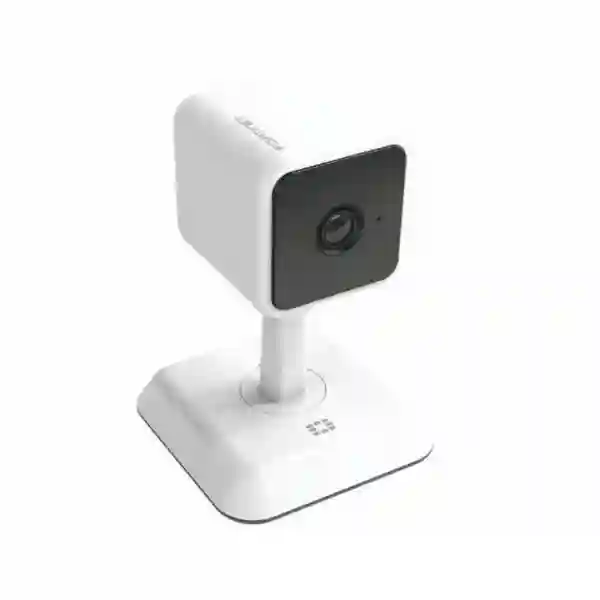
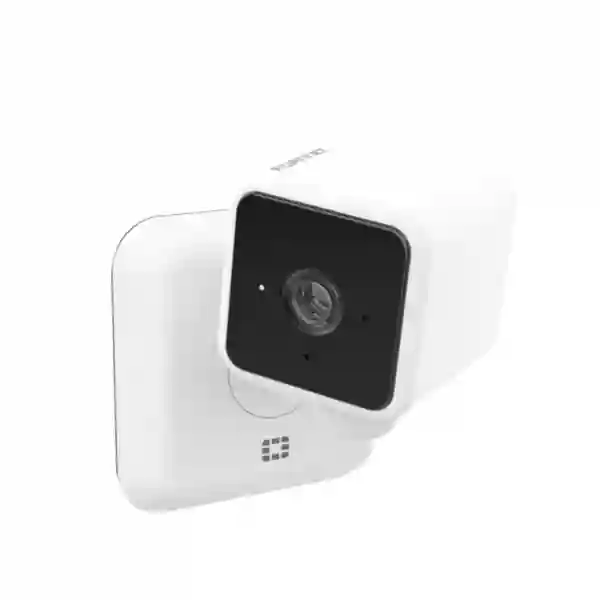
FortiCamera FCM-MC51 is a compact indoor mini-cube IP camera for organizations that want professional network video surveillance in offices, reception areas, retail interiors, service counters, corridors and other controlled indoor spaces. Fortinet lists the model with a 5 megapixel sensor, 8 metre IR LED, 3.16 mm fixed lens, one 10/100 Ethernet port with IEEE 802.3af PoE, audio, HDR, Wi-Fi and BLE. FourTeck helps Tanzania buyers turn those capabilities into a practical procurement plan by reviewing camera quantity, viewing requirements, network connectivity, PoE availability, recording architecture and management expectations before quotation.
Fortinet-listed camera resolution for detailed indoor monitoring.
Integrated infrared illumination supports monitoring in low-light indoor areas.
Power and network connectivity can be planned over compatible Ethernet infrastructure.
Mini-cube form factor intended for indoor deployment rather than exposed outdoor use.
FortiCamera FCM-MC51 Overview
The FCM-MC51 sits within Fortinet’s network-based video security portfolio. Its compact mini-cube format is useful where the camera should be easy to position without the larger physical profile of a bullet or dome unit. The fixed 3.16 mm lens makes purchasing and deployment straightforward when the field of view has been assessed in advance. The 5 MP imaging capability provides a strong foundation for indoor business surveillance, while HDR can help where a scene contains challenging differences between bright and dark areas.
Connectivity is flexible. The camera includes a 10/100 Ethernet interface with 802.3af PoE, allowing compatible switching infrastructure to carry both network data and electrical power. Fortinet also lists Wi-Fi and BLE. These interfaces should be treated as deployment options rather than a reason to skip network design: buyers should still confirm camera placement, wireless conditions, VLAN design, available PoE budget, recording bandwidth and security policy before installation.
Fortinet positions FortiCamera devices with FortiRecorder and FortiCentral as part of its video-security ecosystem. FortiCentral provides on-site video management for connected FortiRecorder and FortiCamera devices. The correct recording and management design depends on camera count, retention expectations, monitoring workflow and the exact Fortinet products selected. FourTeck can help prepare a bill of materials and quotation around those requirements without assuming that every site needs the same recorder, storage capacity or management model.
Verified FCM-MC51 Specification Highlights
| Product type | Mini-cube indoor IP camera |
| Resolution | 5 megapixel |
| Infrared | 8 m IR LED |
| Lens | 3.16 mm fixed lens |
| Wired network | 1 × 10/100 Ethernet |
| Power over Ethernet | IEEE 802.3af PoE |
| Other listed capabilities | Audio, HDR, Wi-Fi and BLE |
| Environment | Indoor use |
Deployment, Integration and Buying Guidance
A good camera purchase begins with the scene rather than the model number. For each FCM-MC51 position, identify what the operator must actually see: a general overview, entry activity, a reception desk, a corridor, a till area or an indoor asset zone. Because the lens is fixed, physical placement and viewing angle should be confirmed before a multi-camera order. The 8 m IR capability is also a planning value, not a promise that every low-light scene will look identical; surfaces, ambient lighting, reflections and mounting position affect the final result.
For wired deployments, confirm that the access switch supports the required 802.3af PoE and has enough aggregate PoE budget for the planned cameras. Separate surveillance traffic logically where appropriate, document IP addressing and apply access controls to management interfaces. Where Wi-Fi is considered, conduct a realistic wireless assessment rather than assuming that indoor coverage automatically provides stable camera connectivity. Video traffic is continuous and can expose weak coverage, congestion or interference that ordinary laptop use may not reveal.
Recording design is equally important. Define retention days, expected viewing frequency, incident-export workflow, user permissions and whether centralized monitoring is needed across one or several sites. Fortinet offers FortiRecorder appliances and FortiRecorder VM options, while FortiCentral can provide video management for connected devices. Exact capacity must be calculated from the selected architecture and recording settings rather than inferred from camera resolution alone.
FortiCamera FCM-MC51 Tanzania
For Tanzania organizations, FortiCamera FCM-MC51 is relevant where an indoor surveillance project needs a compact network camera that can fit into a structured IT environment. Offices, education facilities, clinics, retail interiors, hospitality administration areas, service businesses and distributed corporate branches may use mini-cube cameras where discreet indoor positioning is more appropriate than weather-rated outdoor hardware. The key procurement question is not simply whether the camera has 5 MP resolution; it is whether its fixed lens, 8 m IR range, indoor rating and connectivity options match the exact scene and network design.
Tanzania buyers should prepare a site-by-site camera schedule. Record the room or area, mounting point, approximate distance to the subject, lighting conditions, available Ethernet cabling, PoE switch port and the required recording retention. This creates a cleaner quotation and reduces the risk of buying cameras before the infrastructure is ready. For sites with existing network security architecture, surveillance VLANs, administrator access and recorder connectivity should be planned together rather than treated as an isolated CCTV project.
FourTeck can assist with the commercial and technical discussion around the FCM-MC51, FortiRecorder choices and related Fortinet infrastructure. Buyers comparing broader Fortinet security can also review FourTeck Tanzania technology solutions as a starting point for connected security requirements. For regional Fortinet architecture references, FourTeck Africa provides an additional path for multi-country planning.
Before requesting a Tanzania quote, state the quantity, whether the project is new or an expansion, the desired recording platform, existing PoE switching, retention target and installation city. This allows the conversation to focus on a complete solution rather than a camera-only price. Availability, commercial terms and exact accessories should be confirmed at quotation time.
FortiCamera FCM-MC51 Dar es Salaam
Dar es Salaam businesses often operate from offices, retail units, clinics, hospitality premises, logistics facilities and multi-floor commercial buildings where indoor video surveillance needs to coexist with busy data networks. FCM-MC51 can be considered for reception areas, controlled corridors, office entrances, customer-service spaces and other interior locations where a compact 5 MP camera is appropriate. Its PoE capability is especially useful in structured-cabling projects because power and data can be delivered through compatible Ethernet infrastructure, reducing the need to place a separate electrical outlet at every camera position.
For a Dar es Salaam deployment, survey the camera view before ordering. A fixed 3.16 mm lens means framing is determined largely by mounting position, so installers should check height, direction and distance. HDR can be valuable in interiors where windows or doors introduce strong backlighting, while the integrated 8 m IR LED supports low-light operation within its designed range. Neither capability removes the need for good placement: reflective glass, bright exterior light and highly variable room illumination should be considered during the survey.
Network planning should cover switch location, PoE budget, cable routes, IP addressing, surveillance VLAN policy and recorder reachability. Organizations with several Dar es Salaam branches should also decide whether monitoring is local, centralized or split by site. Fortinet’s wider video platform includes FortiRecorder and FortiCentral, making it possible to discuss camera deployment as part of a managed video architecture rather than as standalone endpoints.
A useful quotation request includes camera quantity per site, floor plans where available, retention expectations, monitoring stations, existing switches and any requirement to integrate the surveillance network with a wider Fortinet environment. FourTeck can then help scope the purchase while keeping unverified assumptions about stock, delivery time or installation coverage out of the design decision.
FortiCamera FCM-MC51 Mwanza
Mwanza organizations evaluating indoor IP surveillance can use the FCM-MC51 where compact camera placement, network connectivity and centralized recording are more important than outdoor weather resistance. Typical business scenarios can include reception desks, internal corridors, office common areas, training rooms, retail interiors and controlled access points. The camera’s 5 MP imaging, 8 m infrared illumination and fixed 3.16 mm lens provide a defined hardware profile that procurement teams can compare against the geometry and lighting of each proposed location.
A Mwanza project should distinguish camera requirements from recording requirements. The camera captures the video, but retention, playback performance, user access and export workflow depend on the chosen recorder and management architecture. Fortinet lists FortiRecorder products alongside FortiCamera and provides FortiCentral for management of connected video devices. Buyers should therefore document how many cameras will be active, how long footage must be retained and who needs access before finalizing recorder capacity.
PoE can simplify physical deployment where structured Ethernet is available. Confirm the switch supports 802.3af, verify total power capacity and keep surveillance network design documented. If Wi-Fi is proposed for a particular camera position, test signal quality and congestion at that exact location. Wireless convenience should not replace a stability assessment for a stream that may operate continuously.
For procurement, provide FourTeck with the FCM-MC51 quantity, proposed sites, current switching equipment, recording objective and whether the camera estate is part of a broader security refresh. Customers with operations beyond Tanzania can reference FourTeck Uganda and FourTeck Kenya for neighboring-market technology planning while keeping each local quotation specific to its project.
FortiCamera FCM-MC51 Arusha
Arusha businesses in hospitality, professional services, education, administration and retail may need indoor cameras that are compact enough for customer-facing environments yet designed as managed IP endpoints. FortiCamera FCM-MC51 fits that conversation with its mini-cube design, 5 MP resolution, HDR, audio capability and integrated IR. Because Fortinet specifies indoor use, project teams should reserve it for protected interior areas and select a suitable outdoor-rated camera for exposed exterior locations.
In hotels, offices and public-facing business interiors, the most important design step is mapping each camera to a purpose. A reception overview needs a different field of view from a corridor or staff entrance. The FCM-MC51’s fixed lens means the desired composition should be verified at the proposed mounting point. Where entrances create bright backgrounds, HDR may assist scene handling, but actual image quality should still be validated under the site’s lighting conditions.
Arusha deployments can benefit from PoE when network closets and Ethernet cabling are already part of the building design. One cable can support compatible power and wired network connectivity, simplifying endpoint installation. IT teams should still account for switch capacity, UPS strategy, VLANs and recorder connectivity. For larger properties, camera traffic should be considered when designing uplinks between floors or buildings.
When asking for an Arusha quotation, include the camera count, floor or building areas, existing network hardware, retention period and viewing workflow. If the organization also needs perimeter cameras, higher-range IR or outdoor environmental protection, state that separately so the indoor FCM-MC51 is not forced into a role for which it is not specified. FourTeck can use this information to discuss a mixed-camera Fortinet surveillance design where appropriate.
FortiCamera FCM-MC51 Dodoma
Dodoma organizations planning network video for administrative offices, institutions, training environments, clinics and commercial premises can consider the FCM-MC51 for protected indoor areas. Its mini-cube format is useful where a relatively small camera body is preferred, while 5 MP imaging supports detailed video capture. The 8 m IR LED is intended to support low-light viewing within indoor distances, and HDR can help with contrast-heavy scenes.
For institutional projects, procurement documentation should identify exact quantities and functions rather than using a single generic CCTV count. Separate cameras needed for entrances, corridors, reception areas, waiting spaces and internal asset zones. Confirm whether audio functionality is appropriate under the organization’s policy and applicable rules before enabling it. The presence of a feature on the camera does not mean it should automatically be activated in every deployment.
A resilient design also considers the infrastructure behind the camera. Check PoE switching, UPS-backed network closets, recorder storage, user permissions and backup procedures for exported evidence. FortiRecorder and FortiCentral can form part of the wider Fortinet video-security workflow, but exact product sizing should follow the number of cameras and operational requirements. Do not size storage from resolution alone; frame rate, recording mode, compression settings and retention targets all matter.
Dodoma buyers can prepare a stronger request for quotation by providing a camera schedule, desired retention period, existing network topology and any multi-site management needs. FourTeck can then discuss FCM-MC51 procurement alongside compatible video-security components, with final availability and commercial terms confirmed during quotation rather than assumed from a web page.
FortiCamera FCM-MC51 UAE
UAE buyers considering FCM-MC51 typically need a compact indoor IP camera for offices, retail interiors, clinics, reception areas, service counters or controlled commercial spaces. The model combines 5 MP video, an 8 m IR LED and a 3.16 mm fixed lens with wired PoE networking, Wi-Fi, BLE, audio and HDR. This makes it a versatile endpoint, but the correct deployment still depends on scene geometry, network policy and recording requirements.
In high-density office and retail environments, a wired PoE connection can provide a predictable foundation for continuous video. Check the access switch’s 802.3af support, remaining PoE budget and uplink capacity. If wireless connectivity is being considered, validate radio conditions in the actual installation area because busy commercial premises may contain many competing access points and client devices. Network segmentation and controlled administrative access are also important for camera estates.
The UAE procurement conversation should include the recorder, retention period and management workflow. Fortinet’s network-video portfolio supports on-premises and cloud-oriented approaches across different products; FCM-MC51 should not be confused with the separate FCM-MC51-C cloud-camera model. Buyers who need the cloud-specific variant should request it by exact model code so the quotation does not substitute one for the other.
For wider UAE IT and security requirements, customers can review FourTeck UAE and the specialist Fortinet UAE resource. A useful request includes quantity, installation emirate, indoor areas, recorder requirements, PoE infrastructure and any Fortinet integration objective. Final price, stock and delivery timing should be confirmed at quotation time.
FortiCamera FCM-MC51 Uganda
Uganda organizations can consider FortiCamera FCM-MC51 for indoor network surveillance where a compact camera and Fortinet-oriented management architecture are desirable. The product is suitable for evaluating internal office, retail, education, healthcare and service-business scenes that fall within the capabilities of its fixed lens and 8 m IR illumination. Because the unit is specified for indoor use, external gates, yards and exposed building perimeters should be assessed for a different weather-rated camera model.
A nationwide or multi-branch Uganda project should standardize documentation even when individual sites differ. Use a camera schedule with location, purpose, mounting position, network connection and recording requirement. This helps technical teams decide whether each position genuinely suits the FCM-MC51 and gives procurement teams a repeatable basis for quotations. Standardization can also make support easier without forcing identical camera placement into buildings with different layouts.
For PoE deployments, calculate power budgets and switch-port availability before camera delivery. For remote branches, consider WAN implications if video will be viewed centrally. Continuous video traffic can be substantial, so central monitoring design should be based on realistic bandwidth and operational needs rather than assuming every stream must traverse a WAN continuously.
FourTeck’s Uganda technology site can support regional procurement conversations. Buyers should specify FCM-MC51 exactly, particularly because Fortinet also lists the FCM-MC51-C cloud variant. Include camera quantity, city, recorder requirement, retention period and network details when requesting a quote.
FortiCamera FCM-MC51 Kampala
Kampala has a wide range of office, retail, hospitality, education and healthcare environments where indoor IP video is part of a broader business network. FCM-MC51 can serve compact indoor positions such as reception zones, office corridors and service areas where the 3.16 mm fixed lens produces an appropriate view. Buyers should avoid selecting by megapixels alone; camera height, distance to the subject and scene width determine whether the model is a practical fit.
PoE is useful for Kampala buildings with structured cabling because the camera can connect to a compatible 802.3af switch over Ethernet. This can simplify endpoint power design and allows network administrators to keep camera connectivity within managed switching infrastructure. Confirm cable quality, switch capacity and backup power strategy. If surveillance must remain operational during short utility interruptions, the power path to switches and recorders should be considered as part of the design.
For organizations with several Kampala premises, define where footage is recorded and where operators view it. FortiRecorder and FortiCentral are relevant elements in Fortinet’s video-security ecosystem. The exact architecture should be selected after determining camera count, retention and access needs. A camera-only quotation may not reveal the full cost or infrastructure requirements of a usable surveillance system.
Kampala procurement teams should provide quantities, proposed locations, retention goals and existing PoE switching when contacting FourTeck. If the project also includes firewalling or secure network segmentation, the surveillance network can be reviewed alongside the wider Fortinet design rather than added as an unmanaged overlay.
FortiCamera FCM-MC51 Arua
Arua businesses and institutions planning indoor surveillance may value a camera that can connect directly to managed IP infrastructure without requiring a large enclosure. FortiCamera FCM-MC51 provides 5 MP imaging, integrated 8 m IR and a fixed lens in a mini-cube format. It is intended for indoor use, so procurement should distinguish protected interior monitoring from outdoor security requirements at the start of the project.
For smaller sites, it can be tempting to buy cameras first and decide recording later. A better approach is to define retention and playback needs before the order. Determine how many days of footage matter operationally, whether recording is continuous or event-oriented according to the chosen platform, who needs viewing access and how incident clips will be exported. These decisions influence recorder and storage requirements even though they do not change the FCM-MC51 hardware specification.
Where Ethernet cabling is available, 802.3af PoE can simplify installation. Remote or branch locations should also consider network resilience, UPS support and how administrators will reach camera and recorder interfaces. Wi-Fi may offer flexibility, but stable continuous video deserves a site-specific wireless check. Do not assume a strong phone signal at a location proves that a camera stream will be consistently reliable.
For an Arua quote, list the number of cameras, building areas, proposed network method, recorder preference and any need for centralized viewing from Kampala or another site. FourTeck can use these inputs to discuss the correct Fortinet video components and commercial options without making unsupported assumptions about local stock or delivery.
FortiCamera FCM-MC51 Mbarara
Mbarara organizations can evaluate FCM-MC51 for indoor surveillance in business premises where compact mounting, PoE connectivity and professional network management are useful. Potential scenes include reception spaces, office corridors, retail interiors, internal service desks and controlled rooms. The 5 MP specification supports detailed video, while the fixed 3.16 mm lens means the installation team should verify the scene width and mounting distance before ordering large quantities.
Lighting deserves attention during design. The camera includes an 8 m IR LED and HDR, but real sites may include reflective surfaces, windows, display lighting or deep shadows. A survey should identify these conditions so mounting can be adjusted. For businesses operating after normal hours, evaluate the actual low-light scene rather than relying only on daytime positioning.
The network layer should be treated as part of the surveillance system. Check 802.3af PoE capacity, switch uplinks, IP addressing and segmentation. Keep camera administration restricted to authorized staff and document credentials and firmware-management responsibilities under the organization’s security procedures. Where a FortiGate, FortiSwitch or other Fortinet infrastructure already exists, the camera network can be designed with consistent segmentation principles.
Mbarara buyers requesting a quotation should identify the exact FCM-MC51 model, camera quantity, recorder requirement, retention period and existing network equipment. This prevents confusion with the FCM-MC51-C cloud model and gives FourTeck enough context to discuss a complete solution rather than an isolated unit price.
FortiCamera FCM-MC51 Gulu
Gulu offices, education facilities, clinics, NGOs, retailers and service organizations may consider FortiCamera FCM-MC51 when they need an indoor IP camera with a compact footprint. The model’s 5 MP imaging, 8 m infrared illumination, fixed 3.16 mm lens, audio, HDR, Wi-Fi, BLE and PoE Ethernet create several deployment choices, but every project should still begin with a defined surveillance purpose and network plan.
For branch environments, one of the most useful planning exercises is separating local recording from remote viewing. Keeping recording close to the site can reduce unnecessary WAN dependency, while authorized staff may still need remote access for incident review or oversight depending on the selected architecture. The correct approach depends on bandwidth, policy and operational needs. Fortinet’s FortiRecorder and FortiCentral portfolio provides options that can be assessed for the required scale.
Physical installation should protect the camera from accidental movement and place it where the fixed lens captures the intended area. Network installation should verify PoE power, cable integrity and logical segmentation. For Wi-Fi deployment, perform a proper signal and interference check. For audio, review organizational policy and applicable privacy requirements before activation.
A Gulu procurement brief should include camera count, site type, desired retention, monitoring location and current switch infrastructure. If the requirement covers multiple Uganda cities, keep each site survey distinct even if the same camera model is standardized. This helps FourTeck prepare a more accurate discussion of hardware and supporting components.
FortiCamera FCM-MC51 Kenya
Kenya businesses evaluating Fortinet video security can consider FCM-MC51 for indoor spaces where a mini-cube camera suits the visual and physical environment. The camera is not an outdoor bullet or vandal-rated dome; its strength is a compact indoor format paired with 5 MP imaging, short-range IR, fixed-lens simplicity and flexible network connectivity. This distinction matters for mixed projects that include both internal and perimeter surveillance.
For offices in Nairobi or distributed sites elsewhere in Kenya, PoE can simplify installation when compatible switching is available. Network teams should calculate power budgets, reserve switch ports and decide how camera traffic is segmented. If video is transported between branches, WAN capacity and security policy need to be included in the design. Central viewing can be useful, but unnecessary continuous backhaul of every stream may create avoidable bandwidth demand.
Recording and management should be specified as separate line items in the buying process. FortiRecorder models support different camera scales, and FortiCentral provides management capabilities for connected Fortinet video devices. Exact sizing requires camera count and retention information. The FCM-MC51 should also be ordered by its exact model code so it is not confused with the cloud-enabled FCM-MC51-C variant.
Kenya buyers can review FourTeck’s Fortinet Kenya solution guidance and Fortinet Kenya product category when planning wider security infrastructure. For the camera quotation itself, provide quantity, city, recording requirement and PoE environment.
FortiCamera FCM-MC51 Kuwait
Kuwait organizations can use the FCM-MC51 buying discussion to address compact indoor surveillance for offices, clinics, education facilities, retail interiors and professional-service locations. Its fixed 3.16 mm lens and mini-cube form factor favor planned indoor viewpoints. The 5 MP sensor, HDR and 8 m IR are useful capabilities, but buyers should still validate actual field of view and lighting at the mounting location.
Modern Kuwait office networks often already use managed switches and segmented LANs, making 802.3af PoE a practical way to connect cameras. Confirm that the selected switch provides enough power and that surveillance traffic has an appropriate VLAN and access policy. Wireless connectivity is available on the camera, but wired Ethernet may be preferable where continuous stream stability and predictable network behavior are priorities.
Procurement should also define whether the site needs local FortiRecorder hardware, a virtual recording approach or another supported Fortinet architecture. Retention, number of cameras and user access influence the decision. FortiCare support for the camera is listed by Fortinet as a separate support item, so support requirements should be discussed as part of the commercial package rather than assumed to be included with hardware.
For regional assistance, buyers can use FourTeck Kuwait. Send the exact FCM-MC51 code, quantity, installation area, desired recording duration and network details. This supports a cleaner quote and helps distinguish the standard FCM-MC51 from the FCM-MC51-C cloud-camera variant.
FortiCamera FCM-MC51 Ghana
Ghana businesses planning indoor IP surveillance can evaluate FCM-MC51 for reception areas, corridors, internal customer spaces and other protected locations where a compact camera is appropriate. The product’s technical profile is clear: 5 MP mini-cube IP camera, 8 m IR LED, 3.16 mm fixed lens, 10/100 Ethernet with 802.3af PoE, audio, HDR, Wi-Fi and BLE. That makes comparison easier, but suitability still depends on the scene.
For Accra offices or distributed operations, survey camera positions and identify which areas genuinely fit an indoor fixed-lens model. Outdoor entrances exposed to weather should be assigned to an appropriate outdoor-rated product. For indoor positions, note distance, lighting and any windows that could affect exposure. The integrated IR is designed for limited indoor range, so larger dark spaces may require a different camera or improved lighting strategy.
From the network side, verify PoE switching and decide how video endpoints will be segmented. Plan recorder connectivity and retention before purchase. If central staff will view footage from multiple sites, include WAN bandwidth and access controls in the architecture. FortiCentral can provide management for connected FortiRecorder and FortiCamera devices, making it relevant where administrators want a Fortinet-centered operational workflow.
Ghana buyers can consult FourTeck Ghana for regional technology discussions. A useful FCM-MC51 quotation request contains quantity, city, site type, recorder requirement, retention target and existing PoE switch information, with current commercial availability confirmed during the quotation process.
FortiCamera FCM-MC51 Nigeria
Nigeria organizations with offices, retail branches, healthcare facilities, schools and service locations may consider FCM-MC51 as an indoor component of a larger network surveillance system. The mini-cube design can work well where a compact device is preferred. Its 5 MP resolution supports detailed indoor monitoring, while HDR and 8 m IR address common lighting challenges within the product’s intended scope.
For Lagos, Abuja or multi-state deployments, standardizing a camera model can simplify procurement, but every site should still be surveyed. The fixed 3.16 mm lens does not offer motorized optical adjustment, so framing depends on where the unit is mounted. Large spaces, long corridors or exterior zones may call for other FortiCamera models. A mixed-camera design can be more effective than forcing one model into every position.
Power reliability and network resilience should be considered together. PoE centralizes camera power at the switch, which can be advantageous when network closets are backed by UPS systems. Confirm the full power path and recorder availability if continuous surveillance is operationally important. For remote viewing, secure access and bandwidth planning are essential, particularly across multiple branches.
Nigeria buyers can visit FourTeck Nigeria for regional procurement context. When requesting the FCM-MC51, provide the exact model, quantity, intended indoor locations, recording duration and management requirement. Avoid using the FCM-MC51-C specification interchangeably, as that is a separate cloud-enabled model.
FortiCamera FCM-MC51 Seychelles
Seychelles businesses in hospitality, administration, retail and professional services may require compact indoor surveillance in reception spaces, back-office areas, corridors and internal service zones. FortiCamera FCM-MC51 is designed for indoor use and combines a 5 MP camera with a fixed lens, short-range IR, HDR and multiple connectivity options. For island properties where interior and exterior monitoring are often planned together, it is important to reserve the FCM-MC51 for protected indoor positions and select appropriately rated models for exposed environments.
Hospitality environments can contain challenging lighting transitions between bright exterior doors and indoor spaces. HDR is relevant to these scenes, but mounting should still be tested. The 8 m IR LED can assist after-hours indoor viewing within its range. Because the lens is fixed, installers should confirm that the proposed viewpoint captures the operationally important area without relying on later optical zoom adjustment.
For network deployment, PoE can reduce endpoint power complexity and make camera connectivity part of managed switching. In properties with several buildings, check uplinks and recorder location. If Wi-Fi is considered, test coverage at each mounting point and account for guest wireless density where applicable. Surveillance traffic should be separated and administered according to the organization’s security policy.
Seychelles procurement requests should include camera count, property type, recording retention, PoE infrastructure and whether monitoring occurs on-site or from another location. FourTeck can discuss the FCM-MC51 within a wider Fortinet video-security architecture, while exact availability, logistics and commercial terms are confirmed for the specific project.
Related Fortinet and FourTeck Resources
A surveillance project often touches switching, segmentation, firewall policy, remote access and branch connectivity. The FourTeck Tanzania website is the primary local starting point for product and solution enquiries. For neighboring operations, Fortinet Kenya solutions explain broader Fortinet architecture, while FourTeck Uganda supports Uganda-oriented requirements.
Organizations operating across Africa can also use FourTeck Africa as a regional reference. Buyers with UAE or Kuwait operations can review FourTeck UAE, Fortinet UAE and FourTeck Kuwait. West African requirements can be directed through FourTeck Ghana and FourTeck Nigeria.
These links are useful for regional coordination; the actual FCM-MC51 purchase should always be quoted against the correct destination, quantity and solution scope.
FortiCamera FCM-MC51 FAQ
What is FortiCamera FCM-MC51?
It is a Fortinet 5 MP mini-cube indoor IP camera with an 8 m IR LED, 3.16 mm fixed lens, 10/100 Ethernet with 802.3af PoE, audio, HDR, Wi-Fi and BLE.
Is FCM-MC51 an outdoor camera?
No. Fortinet lists FCM-MC51 for indoor use. Outdoor or exposed positions should be assessed for an appropriately environmental-rated camera.
Does FCM-MC51 support PoE?
Yes. Fortinet specifies one 10/100 Ethernet port with IEEE 802.3af PoE. Confirm the selected switch supports the standard and has sufficient PoE budget.
Does it have infrared night viewing?
Fortinet specifies an 8 m IR LED. Actual results depend on scene conditions, mounting, reflections and ambient light.
What is the difference between FCM-MC51 and FCM-MC51-C?
They are distinct Fortinet order models. FCM-MC51 is the standard camera described on this page. Fortinet separately lists FCM-MC51-C as a cloud-enabled variant with a 512 GB SD card. Request the exact model required.
Can FCM-MC51 work with FortiRecorder?
Fortinet lists FortiCamera and FortiRecorder together in its network-based video-security portfolio. The recorder model and capacity should be selected according to camera count, retention and management requirements.
How do I request a Tanzania quotation?
Send FourTeck the exact model FCM-MC51, quantity, installation city, indoor areas, desired retention, existing PoE switching and recorder requirement. Current price, availability and delivery terms can then be confirmed for the project.
Quotation Checklist
Prepare the exact model and quantity, installation location, camera placement plan, existing PoE switches, recording retention, viewing stations, remote-access needs and any multi-site requirements. If you need accessories or FortiCare support, include those requirements in the request so the commercial scope can be reviewed together.
Decision Recap
Choose FCM-MC51 when the required position is indoors and the 5 MP mini-cube format, fixed 3.16 mm lens, 8 m IR, PoE and listed connectivity features fit the scene. Reassess the model if the camera will be outdoors, needs a different lens profile or must cover a distance beyond the intended indoor use case.
Plan Your FortiCamera Deployment with FourTeck
A reliable surveillance system is more than a camera list. FourTeck can help structure the conversation around camera suitability, PoE networking, recorder selection, retention, segmentation and regional procurement. Share the number of FCM-MC51 cameras you are considering and the environments they need to cover so the quotation can reflect the actual project scope.



Reviews
There are no reviews yet.