
FORTINET ENTERPRISE NETWORK SECURITY
FortiGate 201G (FG-201G) Tanzania
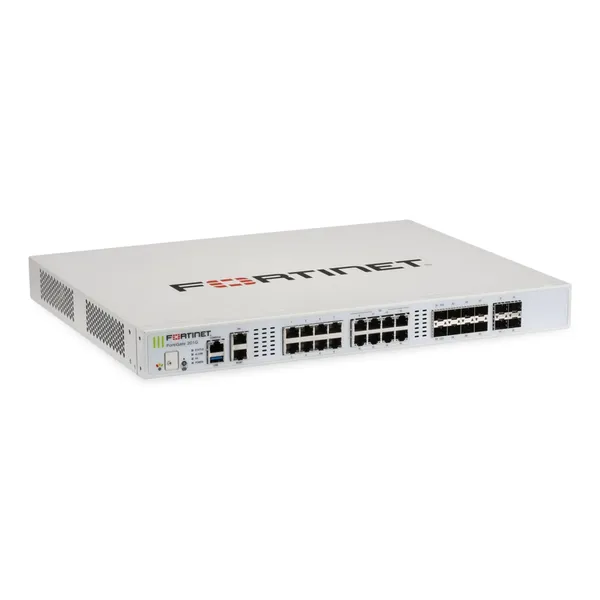
FortiGate 201G is the storage-equipped model in Fortinet’s 200G platform, combining enterprise firewall performance, secure SD-WAN, VPN, threat inspection and 480 GB onboard SSD capacity in a 1RU appliance. For Tanzanian organisations modernising an internet edge, regional branch hub, campus perimeter or multi-site WAN, the FG-201G provides a practical way to consolidate routing and security while retaining flexible copper and fibre connectivity.
FortiGate 201G Overview and Verified Platform Highlights
The FG-201G is suited to organisations that need more capacity than a compact branch firewall while still wanting a straightforward rack-mount platform. Fortinet’s published product matrix lists firewall throughput of 39/39/26.5 Gbps for 1518/512/64-byte UDP packets, 36 Gbps IPsec VPN throughput at 512-byte packet size, 9 Gbps IPS throughput using an enterprise mix, 7 Gbps NGFW throughput and 6 Gbps threat-protection throughput. These are vendor laboratory figures rather than guaranteed production results; actual performance depends on enabled security profiles, traffic mix, encryption, policy complexity, firmware, topology and other deployment conditions.
The platform provides 8 x 10GE SFP+, 8 x 5GE RJ45, 10 x GE RJ45 and 4 x GE SFP interfaces according to Fortinet’s matrix, giving architects choices for ISP handoffs, core switching, server segments, DMZs and branch aggregation. The 201G variant adds 480 GB local storage, useful when a design benefits from local logs alongside central analytics or reporting. Dual AC power supplies and the 1RU format also fit conventional enterprise racks and high-availability planning.
Secure SD-WAN
Use multiple WAN paths with application-aware policies and security controls in the same FortiOS platform, reducing the need to treat routing and perimeter protection as separate projects.
VPN and Segmentation
Plan site-to-site IPsec, controlled remote connectivity and segmented network zones for offices, data services, guest access, operational networks and cloud-facing workloads.
Onboard Storage
The 201G’s 480 GB SSD differentiates it from a storage-free appliance design and can support local operational visibility where local log retention is part of the architecture.
Technical Planning for FG-201G
Firewall sizing should never be based on headline firewall throughput alone. A useful bill of materials starts with internet bandwidth, expected growth, number of WAN links, encrypted traffic percentage, IPS and web-security requirements, remote-access demand, east-west segmentation, VPN topology, high-availability requirements, logging strategy and the number of physical or virtual network zones. If the appliance will inspect substantial HTTPS traffic, size against the security services actually enabled rather than an uninspected forwarding number.
Procurement teams should also specify the required FortiCare and FortiGuard service term rather than assuming that appliance hardware alone provides every continuously updated security service. Bundle choice can affect web filtering, intrusion prevention, malware protection and other threat-intelligence-backed capabilities. Before ordering, document transceiver requirements, rack power, UPS design, patching, management access, migration windows and whether a second matching unit is required for high availability.
For a broader regional Fortinet reference, organisations can review Fourteck Fortinet UAE for Fortinet-focused material, Fourteck Uganda for Uganda projects, Fourteck Kenya for Kenya requirements, and Fourteck Africa for wider African technology planning. These links provide regional context; product availability, licensing and project scope should be confirmed for each quotation.
FortiGate 201G Tanzania
Tanzania buyers evaluating the FortiGate 201G are often balancing three priorities: enough inspection capacity for growing internet use, reliable connectivity between locations, and a security platform that can be administered consistently as the organisation expands. The FG-201G is relevant to headquarters, larger branches, universities, healthcare networks, hospitality groups, logistics operations, financial organisations, manufacturers and service businesses that have outgrown entry-level firewall appliances. A Tanzania deployment can use the appliance as an internet-edge firewall, SD-WAN hub, VPN concentrator or segmentation gateway, but the exact role should be defined before selecting subscriptions and interfaces.
A sensible Tanzania sizing exercise begins with measured peak traffic rather than only the purchased ISP speed. Identify Microsoft 365 and SaaS traffic, ERP access, cloud backups, video meetings, CCTV flows, guest Wi-Fi, branch tunnels and remote-user demand. Then determine which flows require IPS, application control, web filtering or deeper inspection. This matters because security inspection is a different workload from basic packet forwarding. Fortinet’s published enterprise-mix figures provide a useful comparison baseline, but production headroom should be retained for growth and policy changes.
Connectivity planning is another reason to consider this model. The mixture of 10GE SFP+, 5GE copper, GE copper and GE SFP interfaces can accommodate varied ISP and switching designs without forcing every link into one media type. Organisations connecting fibre core switches, copper access infrastructure and multiple WAN services can map interfaces before installation and reserve ports for HA, management and future segmentation. The 480 GB SSD can complement a logging design, although organisations with compliance or long retention requirements should separately plan central log storage and reporting.
When requesting a FortiGate 201G Tanzania quotation, include the appliance quantity, desired support term, required FortiGuard services, HA requirement, transceivers, VPN scope, existing firewall model and target cutover date. This produces a more meaningful quotation than asking for hardware price alone. Fourteck Tanzania can then discuss the commercial configuration without making assumptions about stock or licensing. For related solution context, visit Fourteck Tanzania and use the contact route below for a project-specific discussion.
FortiGate 201G Dar es Salaam
For Dar es Salaam organisations, firewall planning commonly intersects with dense office connectivity, cloud applications, multiple service-provider circuits and links to warehouses, branches or regional operations. The FortiGate 201G can serve as a consolidated security edge where an organisation needs high-speed firewalling, IPsec connectivity and security inspection without building separate routing and security stacks. Its rack-mount format is appropriate for structured server rooms and data cabinets where power, cooling and physical access are controlled.
A Dar es Salaam head office should begin with a traffic inventory. Separate business-critical applications from guest internet, backups, voice, video, public services and administrative access. If two or more WAN services are available, decide whether they will operate as active/active paths, primary/backup links or application-specific routes. Secure SD-WAN can then be designed around measurable service-level objectives instead of simple link failover. This is particularly valuable when cloud ERP, collaboration tools or inter-branch applications need predictable path selection.
The physical port mix on the 201G supports gradual network upgrades. A business can retain GE connections for existing devices while using faster copper or 10GE fibre links toward modern core switching. Before procurement, confirm SFP/SFP+ optics, cable type, switch capabilities and whether upstream equipment negotiates at the intended speed. High availability should also be considered for sites where firewall downtime would interrupt a large workforce or customer-facing operation; HA requires a complete design including matching appliances, power, cabling and configuration, not merely a second box.
Dar es Salaam buyers should request a quote that clearly states whether they need hardware only or a security bundle, the subscription duration, support level and any migration assistance. If replacing an existing firewall, provide current WAN details, VLAN count, VPN peers, public NAT requirements and critical policies. That information makes it easier to estimate migration effort and avoid carrying obsolete rules into the new platform. A planned cutover should include configuration backup, rollback steps, DNS and public-service checks, and post-migration validation.
FortiGate 201G Mwanza
FortiGate 201G Mwanza projects can be shaped around regional offices, education, healthcare, distribution, hospitality, industrial activity and businesses that need secure links back to a main data environment. In these networks, the firewall may need to do more than filter internet traffic: it can terminate site-to-site VPNs, separate user and server zones, steer traffic across multiple WAN paths and enforce consistent application policies. The 201G’s performance class gives architects room to consolidate these functions, subject to proper sizing.
For a Mwanza site connected to Dar es Salaam or other branches, document every inter-site application before choosing tunnel architecture. Some traffic may need direct internet breakout while sensitive ERP, directory, voice or management flows travel through encrypted site-to-site links. Avoid routing all traffic through a distant hub by default unless security and compliance requirements call for it. Secure SD-WAN policies can be designed to use the best available path while maintaining security controls at the branch edge.
Power and physical environment deserve equal attention. Install enterprise firewalls in a controlled rack with reliable UPS capacity, clear cable labelling and appropriate ventilation. If the business relies on redundant power inputs, connect them to independently protected power paths where the site design allows. Keep console and management access documented for recovery. The 1RU appliance format makes rack integration straightforward, but adequate airflow and service access should still be preserved.
A Mwanza procurement request should describe the number of sites, WAN speeds, VPN peers, expected user growth, desired security services and logging requirements. The onboard SSD can support local operational logging, while larger retention or consolidated multi-site analysis may call for additional Fortinet logging and management components. Include renewal planning in the original purchase discussion so security services do not become an afterthought. The result should be a lifecycle plan covering deployment, subscription term, configuration ownership, monitoring and eventual capacity review.
FortiGate 201G Arusha
Arusha businesses considering the FG-201G may include hospitality groups, tour and travel operations, NGOs, professional offices, educational organisations and regional enterprises that depend on reliable cloud access and secure connections between sites. For these environments, user experience is closely tied to internet path quality. A firewall deployment should therefore combine security policy with WAN design, ensuring critical booking, finance, collaboration and business applications receive appropriate connectivity while risky or non-business traffic is controlled.
The 201G can be positioned at a main Arusha office or as a regional hub when the number of branches and bandwidth requirements justify its capacity. Use VLAN and zone design to separate corporate endpoints, guest Wi-Fi, servers, voice, cameras and administrative systems. Segmentation reduces unnecessary trust between device groups and creates clearer security policy. The design should remain understandable: dozens of poorly documented zones can be as difficult to operate as one flat network, so segmentation should follow business risk and operational ownership.
For organisations handling guest networks, internet access should be isolated from internal systems and subject to its own policy. Where FortiAP or FortiSwitch integration is planned, confirm the desired management architecture and capacity rather than assuming every access component must be controlled by the firewall. The FG-201G can participate in the broader Fortinet Security Fabric, but each component should solve a defined operational requirement.
When preparing an Arusha quotation, include current and expected internet bandwidth, the number of employees and guest devices, major SaaS platforms, remote access needs and any public-facing services. If the firewall will protect a hotel, campus or multi-building site, include switching topology and fibre uplinks so the interface plan is correct. Ask for licensing to be itemised by term and service bundle. This makes comparisons clearer and helps procurement distinguish the appliance cost from recurring security intelligence and support services.
FortiGate 201G Dodoma
FortiGate 201G Dodoma deployments can suit administrative offices, institutions, enterprises, campuses and organisations that require controlled connectivity to branches, cloud platforms and central services. A well-designed firewall project starts by identifying information flows and trust boundaries rather than simply replacing an old appliance port for port. The 201G offers sufficient interface diversity to redesign WAN, LAN, DMZ and management connectivity while keeping migration manageable.
For offices that use several external systems, create a policy inventory that records source, destination, application, business owner and justification. This makes migration cleaner and provides a foundation for future audits. Avoid importing years of broad legacy rules without review. Application control, IPS and web security policies should be applied according to risk, and exceptions should have owners and review dates. Where encrypted traffic inspection is considered, assess certificate deployment, privacy requirements and application compatibility before enabling it broadly.
The 201G’s VPN capacity makes it relevant to multi-site designs, but tunnel count is only one planning dimension. Consider routing, failover, overlapping subnets, dynamic routing needs, authentication and how remote locations will be monitored. For critical connections, test failover under realistic application load. A backup circuit that technically connects but cannot support essential traffic may not meet the continuity objective.
Dodoma procurement teams can improve quote accuracy by specifying whether the project is a new deployment, replacement or HA expansion. Provide the current firewall, WAN services, rack environment, support expectations and required subscription period. If local storage is important, define what logs must remain on the appliance and for how long; the 480 GB SSD is a useful resource but does not remove the need for a retention policy. A clear requirements document lets technical and purchasing teams evaluate the FG-201G against actual operational needs rather than model name alone.
FortiGate 201G UAE
In the UAE, FortiGate 201G is relevant to regional headquarters, large offices, logistics operations, retail groups, hospitality networks and enterprises connecting GCC and African sites. The appliance can act as an internet perimeter, secure SD-WAN hub, VPN gateway or segmentation firewall. Its 480 GB SSD is useful for organisations that want local storage as part of their operational logging plan, while the mixed high-speed interface set supports modern campus and data-room connectivity.
UAE buyers frequently need to compare hardware-only purchasing with one-, three- or multi-year security and support bundles. The correct choice depends on required FortiGuard services and FortiCare coverage, so procurement should request exact bundle descriptions rather than comparing only total prices. Projects with HA should price two matching appliances plus the required subscriptions, optics and implementation scope. If an existing FortiGate is being replaced, export and review the configuration, but use migration as an opportunity to remove stale objects and overly permissive rules.
For multi-country organisations, the UAE firewall may become a regional hub. In that role, architects should assess aggregate VPN traffic, route scale, branch failover, cloud connectivity and whether internet breakout belongs centrally or at each country site. Secure SD-WAN policies can prioritise applications and steer traffic across available circuits, but they should be backed by meaningful health checks and documented failover behaviour.
Fourteck maintains a dedicated regional Fortinet resource at Fortinet UAE by Fourteck. UAE procurement discussions should state the delivery destination, required appliance and bundle, support term, transceiver list and whether configuration or migration is in scope. Stock and lead time should be confirmed at quotation stage rather than assumed from a web page.
FortiGate 201G Uganda
Uganda organisations can use FortiGate 201G as a central security platform when a network has grown beyond the needs of compact branch firewalls. Potential environments include head offices, universities, healthcare groups, financial operations, logistics networks and enterprises with multiple branches. The model is particularly relevant when high-speed VPN, stronger inspection headroom and a broad interface mix are needed together.
A Uganda deployment should map the relationship between the central site and branches before hardware is ordered. Document ISP bandwidth at each site, whether branches have one or two WAN connections, and which applications must remain available during an outage. If the 201G operates as the hub, calculate aggregate traffic rather than sizing from the head-office internet circuit alone. Branch traffic, cloud breakout and security inspection can create very different load patterns.
Security subscriptions should align with the threat controls the organisation intends to use. FortiGuard-backed services are not simply labels on a quotation; they support continuously updated security functions. Procurement and IT teams should agree on the service bundle, term and renewal owner before deployment. FortiCare support should likewise be considered part of lifecycle planning. Where regulations or internal policy require longer log retention, design central logging rather than relying only on the appliance SSD.
For regional information, Fourteck Uganda provides a Uganda-focused route for technology enquiries. A useful FG-201G quote request includes user scale, WAN bandwidth, branch count, VPN needs, existing firewall, desired licensing term, HA requirement and implementation scope. That information helps distinguish a straightforward appliance purchase from a larger migration and network redesign.
FortiGate 201G Kampala
Kampala headquarters and larger business sites may need a firewall that can protect high-volume cloud usage while aggregating connectivity from branches across Uganda. The FortiGate 201G can fill this role when its capacity aligns with measured requirements. A central Kampala deployment can combine internet security, site-to-site VPN, application policy, segmentation and SD-WAN functions under FortiOS, reducing the number of separate edge devices that administrators must maintain.
For a headquarters design, start with core connectivity. Determine whether the firewall connects directly to a core switch, a distribution pair, WAN routers or service-provider equipment. Reserve suitable high-speed ports and confirm optics before purchase. Use dedicated management practices and document console access. If the business requires resilient operation, consider an HA pair and ensure upstream and downstream topology does not leave a single point of failure elsewhere.
Kampala organisations with many branches should define routing standards and IP addressing centrally. Overlapping subnets make VPN consolidation difficult, while inconsistent VLAN naming and undocumented NAT rules slow troubleshooting. A firewall refresh is a good opportunity to standardise these elements. Secure SD-WAN can then make branch path selection more predictable, especially when locations have connections from different providers.
Before requesting price, list the exact FortiGuard and FortiCare expectations, deployment services, optics, rack accessories and any complementary management or logging components. Ask for the quote to separate one-time hardware from recurring services. This makes budget planning easier and helps avoid a future security-service gap. For businesses migrating from another vendor, include a sanitized policy count and VPN inventory so the implementation effort can be scoped without exposing credentials or sensitive configuration secrets.
FortiGate 201G Arua
Arua sites often need secure connectivity back to a larger organisational hub while maintaining dependable local internet access. FortiGate 201G may be appropriate where the site itself is substantial or where it serves as a regional aggregation point; smaller offices should be sized against their real needs rather than automatically adopting a headquarters-class appliance. The goal is to balance security capacity, resilience and lifecycle cost.
For regional connectivity, identify which applications can break out locally and which must traverse a VPN to Kampala or another hub. Local breakout can reduce latency for SaaS services, while central routing may remain appropriate for protected internal applications. SD-WAN policies should reflect these distinctions. Health checks should monitor meaningful destinations so failover responds to actual service quality rather than merely whether an interface is electrically up.
Physical installation also matters. Place the firewall in a secure, ventilated rack with UPS protection and labelled cabling. Where dual power is used, avoid connecting both supplies to the same unprotected power source if the facility design provides independent circuits. Keep configuration backups in a controlled location and document who has administrative access. These operational basics often have as much impact on availability as the appliance specification.
An Arua quote request should identify whether the site is standalone, a branch or a regional hub; the expected bandwidth; the number of tunnels; security services; and the desired support term. If the project is part of a Uganda-wide rollout, standardise templates while allowing site-specific addressing and WAN conditions. This reduces configuration drift and makes troubleshooting easier across locations.
FortiGate 201G Mbarara
Mbarara enterprises, institutions and regional operations evaluating FortiGate 201G should focus on the workloads that will cross the firewall during normal business and failure scenarios. A site may have moderate day-to-day traffic but experience much higher load when a primary WAN fails and backup paths carry additional VPN or cloud traffic. Capacity planning should include these events rather than only average utilisation.
Segmentation is a valuable design consideration for organisations with office users, servers, cameras, guest networks, payment systems or operational equipment. The 201G can enforce policy between zones, but successful segmentation depends on understanding application dependencies. Before tightening rules, identify DNS, authentication, printing, management and update traffic that crosses network boundaries. Test changes in stages so security improvement does not unexpectedly disrupt business services.
If the Mbarara site connects to other Uganda locations, use a consistent VPN and routing design. Document tunnel endpoints, encryption settings, routing preferences and failover. For remote administration, use strong authentication and limit management exposure. Avoid exposing administrative interfaces broadly to the internet. Where central management is planned, define how configuration changes are approved and how emergency local access works if connectivity to the manager is unavailable.
Procurement should ask for the exact FG-201G appliance and clearly described services rather than a generic “Fortinet firewall” quote. Include the required term, FortiCare level, FortiGuard package, HA quantity and optics. If installation is requested, define whether the scope includes rack mounting, policy migration, VPN creation, SD-WAN setup, testing and documentation. Clear scope prevents commercial ambiguity and gives technical teams a measurable acceptance checklist.
FortiGate 201G Gulu
For Gulu organisations, a firewall project can be driven by branch expansion, cloud adoption, stronger cyber-security requirements or replacement of ageing edge equipment. FortiGate 201G offers substantial capacity, but the correct decision depends on whether the site needs this performance class. A large regional hub, campus or institution may benefit from its interface density and storage; a smaller branch may be better served by another FortiGate model with central policy consistency.
Where the 201G is selected, create a deployment diagram showing WAN links, LAN/core connections, server zones, guest networks and VPN relationships. Assign interface purposes before installation and reserve capacity for future growth. The presence of 10GE and 5GE interfaces enables faster internal links, but connecting a faster port does not automatically improve application performance if ISP bandwidth, switching or endpoint capacity remains the bottleneck.
Security policies should be built around business requirements. Use least-privilege principles for administrative access, separate public services from user networks, and apply threat inspection where it provides value. FortiGuard services can supply updated intelligence for subscribed security functions; the chosen package should match the organisation’s intended controls. Keep renewal dates visible to both IT and procurement so services can be reviewed before expiry.
A Gulu quotation should state whether the appliance will be purchased individually or as part of a multi-site standard. Multi-site projects benefit from shared naming, policy templates and monitoring conventions. Include training or documentation needs in the scope if local administrators will operate the platform. A technically sound firewall that nobody understands is difficult to maintain, so operational handover should be part of the project plan.
FortiGate 201G Kenya
Kenya organisations can deploy FortiGate 201G at enterprise offices, campuses, regional hubs and larger branches where inspection capacity, VPN scale and multi-gigabit connectivity are required. Nairobi-based headquarters may use the appliance to aggregate branch tunnels or secure multiple internet links, while other large sites can use it as a local edge with direct cloud access. The design should reflect application geography rather than forcing every location into the same traffic path.
For cross-border businesses operating between Kenya, Tanzania and Uganda, establish an IP addressing and routing plan that avoids overlap and simplifies encrypted connectivity. Decide which applications are hosted locally, in a regional data centre or in public cloud platforms. This determines whether traffic should traverse site-to-site VPNs, local internet breakout or private connectivity. SD-WAN can assist with path steering, but governance and consistent policy remain essential.
The FG-201G’s 480 GB SSD can support local logs and troubleshooting, but regional enterprises should consider centralized analytics when several firewalls are deployed. Centralized management can also reduce configuration drift if change processes are well defined. Before adding management platforms, establish ownership, backup procedures and administrator roles so the tooling improves operations rather than adding complexity.
For Kenya-focused enquiries, review Fourteck Kenya. A procurement brief should include the exact model, required security bundle, subscription term, support expectations, HA design and optics. If the device is intended to replace an existing firewall, include current peak utilisation and enabled security features. Comparing new capacity with actual inspected traffic provides a stronger basis for sizing than comparing only the old and new model numbers.
FortiGate 201G Kuwait
Kuwait enterprises considering FortiGate 201G may be modernising a corporate edge, connecting branches, protecting cloud application access or standardising security across GCC operations. The appliance combines high-speed interfaces with FortiOS security and networking functions, making it suitable for designs that want firewall, SD-WAN and VPN capabilities in a common platform. Its 1RU chassis fits conventional enterprise racks, while dual AC power supports resilient power planning.
In a Kuwait deployment, environmental and rack planning should not be overlooked. Confirm cooling, clean power, UPS capacity and cable management before installation. If the firewall will connect to high-speed fibre infrastructure, validate transceiver compatibility and fibre type. For copper multi-gigabit links, confirm switch port capabilities and cabling. These checks prevent a high-performance appliance from being constrained by mismatched physical infrastructure.
For organisations with multiple WAN providers, define how business applications should behave during degradation, not only complete outages. SD-WAN policies can incorporate performance measurements, but thresholds should be tested against real application sensitivity. Voice and interactive applications may react differently from bulk backup traffic. A clear application-priority model helps administrators create policies that support user experience while maintaining security inspection.
Commercially, request the FG-201G hardware, support and security services as clearly itemised components. Specify the required term and renewal expectations. If a high-availability pair is required, include both appliances and confirm that licensing and support align with the architecture. Avoid assuming current stock, delivery timing or price until a formal quote is issued, because enterprise security products and service bundles can vary by project and term.
FortiGate 201G Ghana
Ghana businesses can consider FortiGate 201G for corporate headquarters, financial environments, educational campuses, hospitality groups, industrial sites and organisations connecting multiple locations. A central Accra or regional deployment may use the appliance for internet security, VPN aggregation and application-aware WAN control. The value comes from matching these capabilities to a clear architecture rather than enabling every available feature without an operational plan.
Start by defining trust zones and data flows. Public-facing services should be isolated from internal user networks, administrative interfaces should be tightly restricted, and guest connectivity should not share unrestricted access with corporate resources. For site-to-site VPN, document routes and failover paths. If branches use local internet breakout, apply equivalent security policy standards so protection does not depend on traffic returning to headquarters.
The appliance’s published throughput gives useful sizing reference points, but Ghana projects should preserve headroom for encrypted traffic growth and future security profiles. Cloud adoption can change traffic patterns quickly: collaboration, backup, endpoint updates and SaaS platforms can all increase bandwidth and inspection demand. Measure current usage and estimate growth over the intended appliance lifecycle instead of sizing only for today.
A Ghana quotation should specify the desired FortiGuard bundle, FortiCare term, appliance quantity, optics, HA requirement and implementation scope. If central logging or management is required, include it as a separate design decision. Procurement teams should also identify who will own subscription renewals and configuration backups. This lifecycle discipline helps keep the firewall effective after the initial installation rather than treating security as a one-time hardware purchase.
FortiGate 201G Nigeria
Nigeria organisations with high-volume office networks, distributed branches and substantial cloud usage may evaluate FortiGate 201G as a secure enterprise edge. Lagos, Abuja and other major business centres can present demanding combinations of WAN connectivity, SaaS use, remote users and inter-site traffic. The FG-201G’s performance class and port density make it a candidate for these environments when a sizing exercise confirms the fit.
Multi-link design is especially important for organisations where internet continuity affects revenue or customer service. Instead of configuring a backup link that is rarely tested, define active health checks and scheduled failover testing. Determine which applications should move to the secondary path and whether the backup service has enough capacity for critical operations. Secure SD-WAN can automate path selection, but the underlying connectivity still needs appropriate diversity and capacity.
For security, separate prevention policy from visibility goals. Some traffic may require full security profiles, while trusted internal flows may have different inspection requirements. Policies should be based on risk and documented exceptions. Use role-based administration and strong authentication for firewall management. Maintain configuration backups and change records, particularly when several administrators or service providers share responsibility.
Nigeria procurement should request a model-specific quote that identifies FG-201G, service bundle, term and support level. If the project includes multiple locations, list quantities by site and note whether configurations will be standardised. Ask for optics and accessories to be itemised. Do not assume web-listed availability applies to the current project; confirm stock and lead time during quotation. This approach gives purchasing teams a complete view of the deployment cost rather than an isolated appliance figure.
FortiGate 201G Seychelles
Seychelles organisations considering FortiGate 201G may include hospitality groups, financial services, public institutions, larger enterprises and businesses with international connectivity requirements. In island environments, WAN resilience and careful remote administration can be particularly important. A firewall should therefore be designed as part of a broader continuity plan that covers multiple links where available, secure remote access, configuration recovery and local operational procedures.
The 201G can support an enterprise edge with secure SD-WAN and VPN capabilities, but project teams should model the actual internet services available at the site. A high-throughput firewall cannot compensate for limited upstream capacity, so sizing should balance security headroom with realistic WAN bandwidth. Where a secondary link is available, decide whether it is used continuously or reserved for failover, and test business-critical applications over that path.
For hospitality and guest-facing networks, segmentation is essential. Guest Wi-Fi should be separated from property systems, finance, administration and management interfaces. Similar separation can be applied to cameras, IoT devices and building systems according to risk. The firewall can enforce these boundaries, but switching and wireless architecture must support the VLAN and routing design. Document dependencies before applying restrictive policies.
Seychelles buyers should include remote-support expectations in the procurement brief. Specify the desired subscription term, security services, HA requirement, optics and whether configuration assistance is needed. Keep a local recovery procedure for situations when remote connectivity is unavailable. For regional procurement, confirm shipping, availability and support arrangements in the formal quote rather than relying on assumptions. A well-documented deployment makes future troubleshooting and renewal significantly easier.
FortiGate 201G Buying and Quotation Checklist
A complete request should state: FG-201G quantity; single appliance or HA pair; current and future WAN bandwidth; number of ISP links; number of branches and VPN peers; remote-access requirements; required FortiGuard services; FortiCare support term; expected logging retention; copper and fibre interface requirements; SFP/SFP+ optics; rack and UPS environment; existing firewall model; desired migration scope; and target implementation window. For multi-country deployments, add each site’s bandwidth and topology instead of applying one assumption everywhere.
The selection decision should also consider whether 480 GB onboard storage is valuable for the organisation. The FG-201G is specifically the storage-equipped member of its pair, so buyers that do not need local SSD capability can compare the related platform options. Conversely, local storage should not be mistaken for a complete long-term SIEM or compliance retention strategy. Determine how logs will be used, who reviews them, and whether central analytics are required.
FortiGate 201G FAQ
What is the FortiGate 201G?
FortiGate 201G is a Fortinet next-generation firewall appliance in the 200G platform. The 201G variant includes 480 GB onboard SSD storage and combines FortiOS firewalling, VPN, secure SD-WAN and security inspection capabilities in a 1RU appliance.
What are the published FG-201G performance figures?
Fortinet’s product matrix lists 39/39/26.5 Gbps firewall throughput for 1518/512/64-byte UDP, 36 Gbps IPsec VPN, 9 Gbps IPS, 7 Gbps NGFW and 6 Gbps threat protection for the 200G/201G platform under stated test conditions. Production performance varies with configuration and traffic.
Does FortiGate 201G have local storage?
Yes. Fortinet lists 480 GB local storage for the 201G variant. Buyers should still design log retention and central analytics according to operational or compliance requirements.
Can FG-201G be used for SD-WAN and VPN?
Yes. FortiGate combines secure SD-WAN and VPN capabilities with firewall security. The correct topology depends on WAN providers, branch count, application paths, security policy and resilience requirements.
What should I provide for a FortiGate 201G Tanzania quote?
Provide appliance quantity, desired FortiGuard and FortiCare term, WAN bandwidth, branch/VPN requirements, HA needs, optics, existing firewall details and required deployment or migration scope. Stock, delivery and final commercial terms should be confirmed in the quotation.
Decision Recap and Consultation
Choose the FG-201G when your design needs the 200G platform’s enterprise performance class together with 480 GB onboard SSD storage, multi-gigabit copper and 10GE fibre options, VPN, secure SD-WAN and FortiOS security capabilities. Validate the choice against inspected traffic, growth, HA, licensing, logging and interface requirements before purchase.
Fourteck can use your requirements to prepare a model-specific discussion for Tanzania or a coordinated regional deployment. Share a sanitized network summary rather than passwords, private keys or confidential credentials.
*Performance figures are Fortinet-published laboratory values and should be interpreted with the vendor’s test conditions. Actual results vary by configuration, traffic and enabled security functions.


Reviews
There are no reviews yet.