
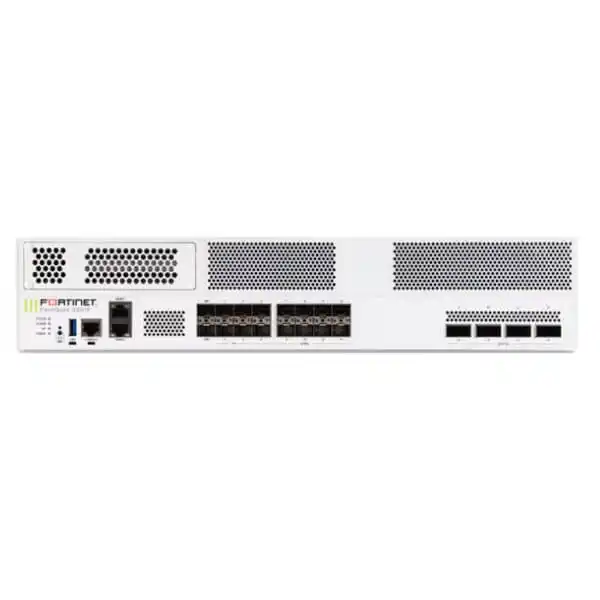
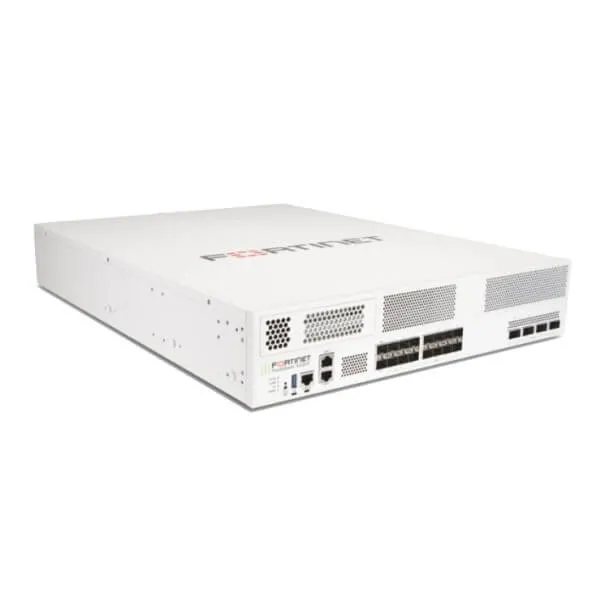
FortiGate 3200F (FG-3200F) Tanzania
FortiGate 3200F is a high-capacity 2RU next-generation firewall for organizations that need to protect large data-center, campus, internet-edge and hybrid-network traffic flows without treating security as an afterthought. The platform combines high-speed firewalling, intrusion prevention, application control, encrypted-traffic inspection, VPN, SD-WAN capabilities and Fortinet Security Fabric integration through FortiOS. For Tanzanian enterprises evaluating a firewall for a core network or data-center edge, the practical decision is not only maximum throughput: interface design, inspected traffic, VPN load, high availability, segmentation, subscription services, logging and future growth all need to be sized together.
FortiGate 3200F verified performance at a glance
Fortinet’s current FortiGate 3200F Series data sheet lists the FG-3200F with 387/385/178.5 Gbps IPv4 firewall throughput for 1518/512/64-byte UDP packets, 63 Gbps IPS throughput, 47 Gbps NGFW throughput, 45 Gbps threat-protection throughput and 105 Gbps IPsec VPN throughput. It supports 70 million concurrent TCP sessions and 800,000 new TCP sessions per second. These published figures make the appliance relevant to large environments, but they should be interpreted according to the security functions enabled and the traffic mix expected in production.
Published IPv4/IPv6 firewall throughput at larger packet sizes.
Published IPS throughput for enterprise traffic mix.
Published NGFW throughput with security controls applied.
Published threat-protection throughput.
Published IPsec VPN throughput using 512-byte packets.
Interfaces, capacity and hardware design
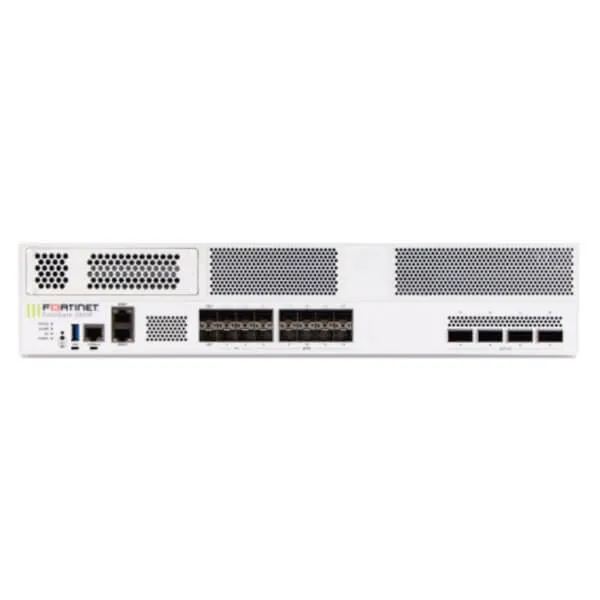
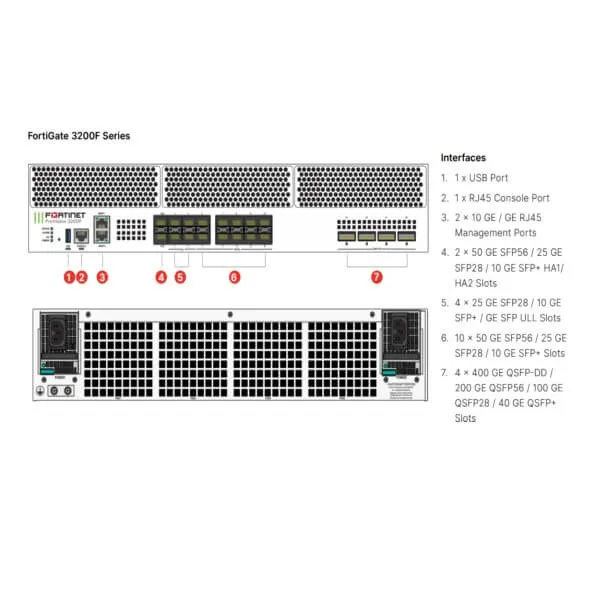
The FG-3200F provides four hardware-accelerated ports supporting 400GE QSFP-DD, 200GE QSFP56, 100GE QSFP28 or 40GE QSFP+ operation. It also provides ten hardware-accelerated slots supporting 50GE SFP56, 25GE SFP28, 10GE SFP+ or GE SFP, plus four ultra-low-latency 25GE/10GE/GE slots and two dedicated HA-capable 50GE/25GE/10GE/GE slots. Two 10GE/GE RJ45 management ports, USB 3.0 and an RJ45 console port support administration. The FG-3200F has no onboard SSD storage; buyers who require onboard storage should compare the related FG-3201F rather than assuming the two models are identical.
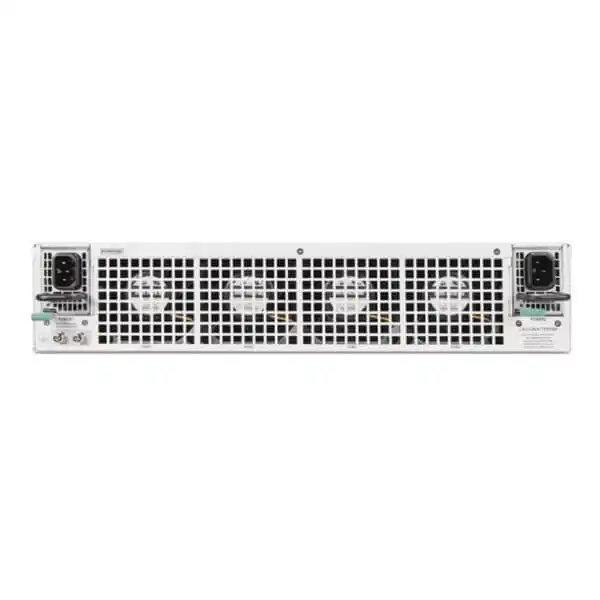
The chassis is a 2RU rack-mount system measuring approximately 88.9 × 443 × 607.1 mm and weighing about 20 kg. Fortinet specifies dual hot-swappable AC power supplies for 1+1 redundancy, front-to-back airflow and a 0°C to 40°C operating-temperature range. Average/max power consumption is listed at 520W/865W. These physical details matter during procurement because rack depth, cooling, power feeds, optics, cable management and upstream switching should be confirmed before installation.
Where the FG-3200F fits
The FortiGate 3200F is aimed at environments where traffic volume, encrypted applications, segmentation and large session counts can exceed the comfortable operating range of branch or midrange firewalls. Typical design contexts include enterprise data-center internet edges, large campus cores, service-provider-adjacent enterprise networks, private-cloud gateways, east-west segmentation, high-capacity VPN aggregation and hybrid environments that connect local infrastructure to cloud services. It can also be considered where organizations want high-speed interfaces and headroom for future bandwidth upgrades.
Sizing should start from the real workload. A procurement team should document current and expected internet bandwidth, inter-VLAN or internal inspection traffic, number of users and devices, public services, SSL/TLS inspection policy, remote-access demand, site-to-site tunnels, logging architecture and high-availability objectives. The published firewall number is not a substitute for this exercise. Security inspection can be substantially more demanding than basic packet forwarding, so the 63 Gbps IPS, 47 Gbps NGFW and 45 Gbps threat-protection figures are often more useful reference points for security-heavy designs.
FortiOS, FortiGuard and Security Fabric considerations
FortiGate appliances run FortiOS, which converges networking and security functions on the same platform. Depending on the selected services and configuration, an FG-3200F deployment can incorporate firewall policy, IPS, application control, web and DNS controls, malware protection, VPN, SD-WAN, segmentation and centralized security workflows. FortiGuard security services are subscription-based components, so hardware procurement should be paired with a clear licensing discussion rather than treating the appliance alone as the complete security outcome.
Organizations should decide which FortiGuard services they need, the support level required, the desired subscription term and how renewals will be governed. Security teams should also determine whether logs remain on existing infrastructure or are forwarded to platforms such as FortiAnalyzer or a third-party SIEM. For centralized administration, FortiManager may be relevant in multi-device estates. The objective is to match licenses and management tooling to operational requirements instead of purchasing a broad bundle without a deployment plan.
High availability and resilient network design
Fortinet lists Active-Active, Active-Passive and clustering high-availability configurations for the series. A resilient design should look beyond buying two appliances. The upstream and downstream network paths, routing, switch redundancy, power feeds, transceiver compatibility, HA heartbeat interfaces and failure domains must all support the availability target. A firewall pair connected to a single upstream switch or a single power source can still leave a critical single point of failure.
Change management is equally important. Configuration synchronization, firmware lifecycle, rollback planning, backup validation and failover testing should be included in the operating procedure. For large Tanzanian enterprises and regional organizations, planned maintenance windows and documented recovery steps can reduce the operational risk associated with security-platform upgrades.
Related FourTeck Tanzania infrastructure
A high-capacity firewall depends on the surrounding network. Review FourTeck Tanzania’s integrated business technology portfolio to coordinate security with the rest of the environment. The site’s technology shop provides a starting point for product procurement. For projects involving core connectivity, the Tanzania site explains network switches, routing and LAN infrastructure, while Wi-Fi and wireless access-point planning is relevant when firewall policy extends to wireless users. Data-center deployments can also depend on servers, storage, virtualization and backup, structured cabling, fiber, racks and UPS, and integrated IT support and lifecycle services. For the final bill of materials, use the FourTeck Tanzania contact page.
FortiGate 3200F Tanzania
For organizations procuring the FortiGate 3200F in Tanzania, the strongest use case is usually a large network where security inspection and connectivity must scale together. Banks, telecom environments, large industrial organizations, universities, government institutions, data-center operators and multi-site enterprises may need to aggregate substantial internet, WAN, cloud and internal traffic while maintaining segmentation and threat inspection. The FG-3200F’s four 400GE-capable interfaces make it suitable for designs where the firewall must connect to modern high-capacity switching without immediately becoming the narrowest point in the architecture.
A Tanzania quotation should identify the exact appliance, optics and cabling, FortiGuard/FortiCare subscription term, required high-availability quantity, management and logging requirements, rack and power dependencies, and implementation scope. If the project replaces an existing firewall, include the current interface map, VLANs, routing protocols, NAT rules, VPNs, public IPs, authentication dependencies and maintenance constraints. This allows migration planning to begin before the equipment reaches the rack.
Local infrastructure conditions should be treated as engineering inputs rather than assumptions. Confirm available rack depth, front-to-back airflow, UPS capacity, redundant power feeds and the fiber standards used by connected switches. For sites with multiple carriers, determine whether internet resilience will use static routing, dynamic routing, SD-WAN policies or another approved design. For regulated or security-sensitive organizations, define log retention, administrative access, change approval and backup procedures as part of the deployment documentation.
FourTeck can help prepare a requirement-driven bill of materials and implementation discussion without assuming stock, price or delivery timing. Buyers should request a current quotation because enterprise firewall pricing varies with hardware, service bundles, subscription duration and project scope. Regional requirements can also be coordinated through the broader FourTeck Africa network when the same security standard must extend beyond Tanzania.
FortiGate 3200F Dar es Salaam
Dar es Salaam organizations often operate the largest corporate headquarters, data rooms, colocation footprints and internet-facing systems in Tanzania, making capacity planning particularly important for an FG-3200F deployment. A headquarters firewall may carry office internet traffic, server publishing, cloud access, branch VPNs, partner connectivity and remote-user sessions simultaneously. Instead of sizing from ISP bandwidth alone, architects should map traffic that will cross security zones internally and identify which flows require IPS or encrypted-traffic inspection.
For a data-center or large office in Dar es Salaam, physical integration deserves early attention. The appliance is 2RU and approximately 607 mm deep, so rack clearance, cable bend radius and airflow should be checked. Dual power supplies support a resilient design, but they provide the most value when connected to appropriately designed independent power paths or UPS infrastructure. High-speed 100GE/200GE/400GE connectivity also requires compatible optics, fiber and switching; these items should appear explicitly in the bill of materials rather than being left until installation day.
Migration planning is another major procurement concern. If the FG-3200F replaces an existing security gateway, teams should inventory firewall objects, NAT, routing, VPN tunnels, certificates, authentication, published applications and monitoring integrations. Large rule sets often contain obsolete entries, so migration can be an opportunity to review policy rather than reproduce years of configuration debt. A staged cutover plan with rollback criteria is preferable to treating replacement as a simple cable swap.
Businesses can combine the firewall project with FourTeck Tanzania guidance for switching, fiber, racks, UPS, server connectivity and support. Where a Dar es Salaam organization also has UAE infrastructure, the FourTeck Fortinet UAE specialist site can support cross-region planning while the Tanzania contact page remains the appropriate starting point for the local requirement.
FortiGate 3200F Mwanza
For enterprises in Mwanza, an FG-3200F project may be driven by a major regional hub, industrial operation, large campus, financial environment or organization consolidating security for multiple sites. The key question is whether the workload genuinely requires a data-center-class platform. Procurement teams should compare inspected throughput, session scale, VPN demand and interface requirements with the expected three-to-five-year growth profile. Buying only from the maximum firewall figure can lead to an unsuitable design in either direction.
Connectivity architecture should account for the circuits actually available to the site and the business impact of an outage. If multiple WAN services are present, the firewall can participate in a resilient design, but carrier diversity, physical paths and upstream dependencies need to be understood. A second circuit that shares the same physical route may not provide the expected resilience. SD-WAN policy can help steer applications across links, while site-to-site IPsec can secure connections to Dar es Salaam, cloud networks or other branches, subject to the organization’s architecture.
Operational support is as important as the initial installation. Administrators should have controlled management access, documented backups, a firmware policy and a clear escalation route. Log forwarding should be designed according to security-monitoring and retention requirements. If the site has a smaller local IT team, centralized management and consistent templates can reduce day-to-day complexity, particularly when the same organization operates multiple FortiGate devices across Tanzania.
A Mwanza quotation should therefore include the appliance and subscriptions plus optics, HA requirements, rack/power dependencies, migration services and any centralized management or analytics components. FourTeck can use this information to structure a project discussion while avoiding unsupported assumptions about local stock or lead time. The objective is a security platform that matches the site’s actual traffic and operational model.
FortiGate 3200F Arusha
Arusha businesses evaluating the FortiGate 3200F may include large hospitality groups, regional headquarters, international organizations, educational institutions and enterprises with distributed sites. These environments can combine guest connectivity, corporate users, server applications, cloud services, voice, surveillance and partner access. The firewall design should separate these functions into appropriate security zones and apply policy based on business need rather than allowing a flat network to grow around a powerful appliance.
Segmentation planning should identify user networks, server zones, management networks, guest services, IoT or building systems and externally published applications. Where traffic crosses these zones through the firewall, the expected internal throughput becomes part of sizing. The FG-3200F’s high session capacity and fast interfaces provide substantial headroom, but architecture still determines whether traffic follows an efficient path. Core switching, routing and firewall responsibilities should be clearly divided.
For organizations with international operations, VPN and cloud connectivity may be as important as local internet security. Fortinet lists 105 Gbps IPsec VPN throughput for the series, but tunnel design should consider routing, encryption domains, redundancy, authentication and the performance of the remote endpoint. Remote-access requirements should also be separated from site-to-site connectivity and aligned with the organization’s identity and access policies.
Before ordering for an Arusha project, prepare an interface schedule, expected bandwidth, user/device counts, required FortiGuard services, HA objective and integration list. Include the upstream switch models and intended transceiver types. FourTeck can then help turn those requirements into a quotation and deployment discussion, including related network infrastructure where needed.
FortiGate 3200F Dodoma
In Dodoma, large public-sector, institutional and enterprise networks may evaluate the FG-3200F when they need a high-throughput security gateway for a central facility, shared services environment or growing campus. Procurement should be tied to an approved security architecture. The model’s capacity can support demanding workloads, but controls such as administrator separation, logging, configuration backup, certificate management and change approval are necessary to translate appliance capability into a dependable security service.
For environments with strict governance, define which traffic is inspected, who can change policy, how emergency changes are recorded and where security logs are retained. High availability should be tested rather than assumed. Planned failover exercises can verify routing convergence, session behavior and monitoring alerts before an unplanned event exposes a weakness. Documentation should include physical port mapping, logical zones, addressing, routes, VPNs and service dependencies.
Power and cooling are relevant to the installation plan. Fortinet lists an average power consumption of 520W for the FG-3200F and front-to-back forced airflow. A pair of appliances plus high-speed switches and optics can add meaningful heat and electrical load to a rack. UPS and environmental planning should therefore consider the complete rack rather than the firewall in isolation.
For a Dodoma quotation, include required subscription duration and support level alongside the hardware. If procurement rules require a detailed bill of materials, specify transceivers, patching, management/logging components and implementation scope separately. FourTeck Tanzania can help structure the technical requirement and coordinate related infrastructure through its integrated networking and security portfolio.
FortiGate 3200F UAE
Organizations sourcing the FortiGate 3200F for UAE data centers or regional headquarters commonly need very high-speed perimeter security, hybrid-cloud connectivity and standardized controls across multiple sites. The four 400GE-capable interfaces are particularly relevant where the firewall connects to high-capacity core or data-center switching. A design should identify which links require 400GE, 100GE, 50GE, 25GE or 10GE operation and confirm supported optics before procurement.
Regional enterprises often connect UAE infrastructure with offices in East Africa, making consistent VPN, segmentation and management policy valuable. The firewall can form part of that standard, but remote sites may use smaller FortiGate models sized for their local traffic. Standardization should focus on policy, naming, monitoring and operational procedures rather than forcing the same appliance size into every location.
Licensing should be reviewed as a lifecycle cost. FortiGuard services and FortiCare support are not interchangeable with the hardware itself, and subscription term affects the commercial proposal. Security teams should decide which protections are required and whether centralized FortiManager/FortiAnalyzer or existing SIEM tooling will be used. The design should also include high availability, redundant power and upstream/downstream path diversity.
For UAE-specific Fortinet requirements, the FourTeck Fortinet UAE site and FourTeck firewall specialist site provide relevant regional pathways. Tanzanian organizations coordinating the same architecture can keep the local project aligned through FourTeck Tanzania.
FortiGate 3200F Uganda
Ugandan enterprises considering the FG-3200F should first establish whether the deployment is a national data-center edge, a large enterprise core or a central security hub for multiple branches. The platform’s published 45 Gbps threat-protection throughput and 70-million-session capacity provide substantial scale, but a correct design still depends on inspected traffic, internet growth, internal segmentation and VPN aggregation.
A cross-border organization operating in both Uganda and Tanzania can benefit from a common FortiOS policy model while using appropriately sized hardware at each site. Site-to-site IPsec, dynamic routing and SD-WAN can support resilient interconnection, but the remote links and counterpart devices must be included in capacity planning. Security rules should be designed around applications and trust boundaries rather than copied blindly between countries.
For procurement, document subscription term, support expectations, optics, HA quantity and management requirements. The physical environment should support a 2RU chassis with front-to-back airflow and dual AC power. If the firewall will be installed in a shared rack, confirm available depth, cooling and power before finalizing the order.
The FourTeck Uganda site provides a regional route for Ugandan requirements, while FourTeck Tanzania can coordinate Tanzanian elements of the same enterprise standard. This approach is useful for organizations that want one architecture and documentation method across East African branches without assuming identical local infrastructure.
FortiGate 3200F Kampala
Kampala is a likely location for large corporate headquarters, financial operations, service providers and shared IT environments that can justify a high-capacity firewall. An FG-3200F deployment at a central Kampala site may aggregate branch VPNs, public applications, cloud connectivity and internet traffic. Architects should separate these flows in the design so that security policy, routing and troubleshooting remain manageable as the network grows.
If the appliance protects public-facing services, consider dedicated DMZ zones, load-balancer relationships, NAT requirements, certificates and upstream DDoS strategy. If it also acts as a campus segmentation firewall, calculate internal east-west traffic separately from internet bandwidth. The fastest internet circuit is only one part of the load. Inspection of data-center traffic can drive much higher aggregate throughput through the appliance.
For resilience, an HA pair should connect to redundant network paths where the availability requirement justifies it. The dual power supplies should be integrated with the facility’s power architecture, and monitoring should cover both appliance health and upstream dependencies. Firmware and signature updates need planned operational ownership.
Kampala buyers should request a project-specific quotation rather than rely on public overseas pricing because the commercial package depends on licenses, term, optics and services. A clear bill of materials also makes comparison easier: hardware, subscriptions, transceivers, implementation, migration and support can be evaluated as separate components.
FortiGate 3200F Arua
For Arua, the FG-3200F would normally be considered only where a large regional facility, aggregation point or organization-wide security architecture genuinely requires data-center-class capacity. Many branch environments will be better served by smaller models, so sizing should be evidence-led. The decision should compare real bandwidth, number of tunnels, security inspection load and expected growth rather than selecting a model solely because it offers higher specifications.
Where Arua is part of a distributed network, the central FG-3200F may reside elsewhere while the local site uses a branch FortiGate and connects securely by IPsec or SD-WAN. This can reduce unnecessary hardware cost while preserving common policy and management. If the 3200F is deployed locally, rack, power, cooling and high-speed switching must support the appliance properly.
Remote operational sites benefit from strong documentation. Administrators should know how to restore configuration, identify WAN failures, escalate hardware faults and maintain secure management access. Central logging and management can improve visibility where local technical resources are limited. The security design should also define how business-critical traffic behaves during link degradation or failover.
Arua procurement discussions should therefore start with topology and workload. FourTeck’s regional network can help coordinate a consistent design across Uganda and Tanzania, with final availability and commercial terms confirmed through a current quotation rather than assumed from another market.
FortiGate 3200F Mbarara
Mbarara organizations with large campuses, regional operations or data-center functions can evaluate the FG-3200F when security inspection, VPN aggregation or network-core bandwidth demands exceed midrange platforms. The 400GE-capable interface options provide design flexibility, but most deployments should choose interface speeds based on actual switching and traffic requirements rather than using the highest speed by default.
Segmentation can be particularly useful for organizations combining office users, servers, surveillance, guest access, operational technology and third-party connections. Each zone should have defined trust rules, and high-volume flows should be identified before routing them through inspection. This protects performance and makes the policy easier to audit.
Subscription planning is another procurement issue. Threat-prevention capabilities depend on the selected FortiGuard services and ongoing updates, while FortiCare addresses support entitlements. Buyers should ask for the exact bundle and duration on the quotation. Renewal dates should be recorded as part of lifecycle management so the security posture does not depend on an unnoticed expiry.
For Mbarara deployments connected to other East African branches, a standardized configuration framework can simplify support. Interface naming, address objects, VPN templates, logging destinations and change procedures can follow common conventions while each site retains the bandwidth and hardware size appropriate to its role.
FortiGate 3200F Gulu
In Gulu, a FortiGate 3200F requirement should be validated against the scale of the site and its role in the wider network. A regional data hub or large institution may need substantial session capacity and VPN performance, whereas a normal branch may not. This distinction matters because enterprise security budgets should balance firewall capacity with switching, resilient connectivity, power, logging and operational support.
If the site acts as a central VPN hub, document the number of remote locations, expected tunnel bandwidth and routing model. Fortinet publishes support for large numbers of IPsec tunnels on the platform, but operational manageability remains important. Naming conventions, standardized proposals, route summarization and monitoring can make a large VPN estate easier to troubleshoot.
Environmental readiness should be included in pre-installation checks. The 2RU chassis needs suitable rack depth, ventilation and stable power. High-speed optics and fiber should be selected to match the connected equipment. A site survey or detailed remote checklist can prevent delays caused by missing rack space, incompatible transceivers or insufficient power distribution.
For organizations operating across Gulu, Kampala and Tanzanian locations, consistent security policy can improve governance. FourTeck regional sites can support procurement discussions in the relevant markets while technical teams maintain a shared architecture and documentation standard.
FortiGate 3200F Kenya
Kenyan enterprises and data centers may consider the FortiGate 3200F for high-throughput perimeter security, large-scale segmentation, cloud interconnection and VPN concentration. The model’s high-speed interface mix allows connection to modern data-center fabrics, but the security design should specify where inspection occurs and how routing is divided between the firewall and switching layer.
For multi-country businesses, Kenya can be part of a common East African security standard with Tanzania and Uganda. A shared FortiOS baseline can define administrator controls, logging, object naming and security profiles. Hardware sizing can still vary by site. This avoids overprovisioning small branches while keeping operational practices consistent.
When requesting a Kenyan quotation, include FortiGuard/FortiCare term, HA requirements, optics and implementation scope. Public list prices from other countries should not be treated as the final project price because enterprise firewall procurement is bundle- and region-dependent. Buyers should also identify whether existing FortiManager, FortiAnalyzer or SIEM infrastructure must be integrated.
The FourTeck Kenya site provides a relevant regional route for Kenya projects. For organizations headquartered in Tanzania, the Tanzania team can coordinate the local architecture while maintaining common standards across both markets.
FortiGate 3200F Kuwait
Kuwait data-center and enterprise buyers may evaluate the FG-3200F for high-capacity internet edges, secure hybrid-cloud connectivity and internal segmentation. High interface density and 400GE capability are useful where core networks operate at very high speeds. The final design should nevertheless be driven by inspected traffic and application flows, not by port speed alone.
Data-center facilities should verify rack depth, cooling and power. Fortinet specifies front-to-back airflow and dual hot-swappable AC supplies. Where high availability is required, two appliances, redundant switches and independent power paths should be considered as one architecture. The cost and design of optics can also be significant at high speeds, so transceivers and fiber types should be specified early.
Security services should be selected according to policy. IPS, application control, web security and malware protection can be part of the FortiGuard service strategy, while centralized management and analytics may be added according to the estate. Subscription and support terms should be stated explicitly in procurement documentation.
For Kuwait-specific procurement, the FourTeck Kuwait site is the appropriate regional resource. Multinational organizations can align that deployment with Tanzanian sites through a shared architecture while obtaining commercial terms in the relevant market.
FortiGate 3200F Ghana
Ghanaian enterprises can consider the FG-3200F where a central data center, financial network, telecom environment or large corporate campus requires substantial inspected throughput and session scale. A requirements document should identify internet capacity, internal segmentation, branch VPNs, cloud connectivity and published services. This provides a defensible basis for sizing and subscription selection.
If the firewall serves as the central hub for multiple locations, routing and VPN architecture should be designed for growth. Dynamic routing can reduce manual route management in appropriate environments, while SD-WAN can help control path selection across multiple links. Security teams should also plan certificate management, administrator authentication and logging before migration.
The FG-3200F has no onboard SSD, so logging and analytics requirements should be addressed through the broader architecture. Organizations that specifically require onboard storage should compare the FG-3201F and confirm the exact model on the quotation. This is an important procurement distinction because similar model names can conceal material hardware differences.
The FourTeck Ghana site supports Ghana-focused requirements. Regional IT teams can use common security standards across Ghana and Tanzania while adapting connectivity, hardware size and implementation details to each site.
FortiGate 3200F Nigeria
Nigeria’s large enterprise, financial, telecom and data-center environments can create the traffic scale that makes an FG-3200F relevant. High-capacity internet, private WANs, cloud services and internal application traffic can all traverse the security layer. Architects should model peak and sustained traffic with the intended inspection features enabled, using Fortinet’s NGFW and threat-protection figures as more realistic references than raw firewall throughput for security-intensive workloads.
A large Nigerian deployment may also need substantial VPN concentration. Fortinet publishes 105 Gbps IPsec throughput and support for large tunnel counts, but real architecture should account for encryption settings, remote peer capacity, routing and WAN quality. Where branches use different access providers, SD-WAN can support policy-based path selection while the security team maintains consistent inspection.
High availability should include physical and logical dependencies. Redundant firewalls connected through one switch, one power source or one carrier path do not eliminate every failure mode. The project design should map upstream routers, core switches, power, optics and management systems. Monitoring and change control should cover the entire path.
For Nigerian procurement, use the FourTeck Nigeria site for regional discussions. Organizations with Tanzania operations can align policy and documentation while sourcing each deployment through the appropriate regional channel.
FortiGate 3200F Seychelles
In Seychelles, the FG-3200F may be appropriate for a large centralized environment, service platform or organization whose security requirements substantially exceed those of a conventional branch. Because island environments can make logistics and specialist access important planning factors, the project should include spares strategy, support entitlement, configuration backups and a clear escalation process alongside the appliance itself.
Connectivity resilience should be evaluated from end to end. Multiple logical links are most useful when their physical dependencies are understood. The firewall can support routing, VPN and SD-WAN strategies, but carrier architecture and application priorities determine how effectively those functions improve continuity. Critical services should have documented behavior for link failure and restoration.
For a data-center deployment, confirm rack depth, airflow, UPS capacity and optics. The appliance’s high-speed interfaces can connect to modern switching, but only when compatible transceivers and fiber are available. A detailed bill of materials can reduce the risk of receiving the firewall before the supporting components needed to place it into service.
Seychelles organizations operating alongside East African or UAE sites can standardize security policy and management while selecting site-appropriate hardware. FourTeck’s regional network, including FourTeck UAE and FourTeck Africa, can provide regional context, while Tanzanian requirements should continue through the Tanzania contact route.
FortiGate 3200F quotation checklist
To obtain a useful quotation, provide the expected internet and internal inspected bandwidth, number and speed of required interfaces, high-availability requirement, FortiGuard/FortiCare term, number of VPN sites and remote users, existing firewall model, routing protocols, logging/management platform, rack/power environment, required optics and preferred implementation window. For migration projects, include an anonymized summary of interfaces, VLANs, routes, NAT, VPNs and major security zones. This helps separate hardware selection from migration complexity and reduces late bill-of-material changes.
FortiGate 3200F FAQs
What is the FortiGate 3200F firewall throughput?
Fortinet lists IPv4 and IPv6 firewall throughput of 387/385/178.5 Gbps for 1518/512/64-byte UDP packet sizes. Security-service performance is lower and should be considered separately: the published IPS figure is 63 Gbps, NGFW throughput 47 Gbps and threat-protection throughput 45 Gbps.
Does the FG-3200F support 400GE?
Yes. Fortinet lists four hardware-accelerated ports that can support 400GE QSFP-DD as well as 200GE, 100GE and 40GE modes, subject to supported transceivers and configuration.
What is the difference between FG-3200F and FG-3201F?
A key hardware difference in Fortinet’s data sheet is onboard storage. The FG-3200F lists no onboard storage, while the FG-3201F lists two 960GB SSDs. Buyers should verify the exact model and full bill of materials before ordering.
Can FortiGate 3200F be deployed in high availability?
Fortinet lists Active-Active, Active-Passive and clustering HA configurations. A production HA design should also address redundant switching, power, routing and failure domains.
How should FortiGate 3200F be sized for Tanzania?
Start with inspected traffic, internet and WAN growth, internal segmentation, VPN demand, SSL inspection, session scale, interface speeds and HA requirements. Use the published NGFW and threat-protection figures when security services will be active rather than relying only on raw firewall throughput.
Does the price include FortiGuard services?
That depends on the exact bundle quoted. Hardware-only and bundled subscriptions are different commercial items. Request a quotation that states the FortiCare/FortiGuard package and subscription duration explicitly.
Decision recap
Choose the FG-3200F for evaluation when the requirement includes data-center-class throughput, very large session scale, high-speed 400GE/200GE/100GE connectivity, substantial VPN aggregation or a need for significant inspection headroom. Validate the design against Fortinet’s security-service throughput figures, not just raw firewall performance. Confirm whether the FG-3200F’s lack of onboard SSD fits the logging architecture, or whether the FG-3201F should be considered. Treat subscriptions, optics, HA, rack/power, management, analytics and migration as part of the solution rather than optional afterthoughts.
Consult FourTeck Tanzania about FG-3200F
Send FourTeck your bandwidth, topology, VPN, inspection, HA and subscription requirements for a project-specific FortiGate 3200F discussion. A structured requirement makes it easier to validate the model, prepare the correct bill of materials and identify related switching, fiber, rack, UPS, management and migration needs.




Reviews
There are no reviews yet.