
FORTINET HIGH-CAPACITY NETWORK SECURITY
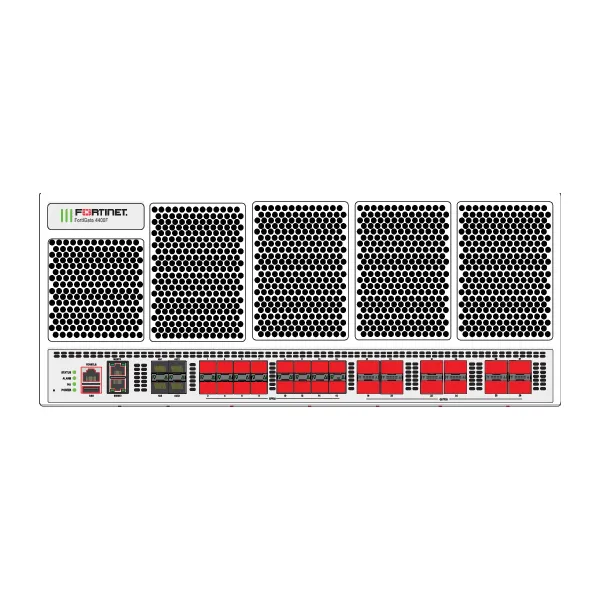
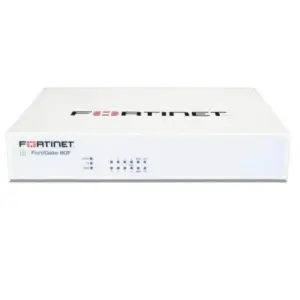
FortiGate 4401F (FG-4401F)
FortiGate 4401F is built for organizations that need high-throughput firewalling, encrypted connectivity, advanced inspection and dense high-speed interfaces at enterprise or data-center scale. For Tanzania projects, the important buying decision is not simply whether the appliance has a large headline throughput figure. The design must align interface speeds, security inspection, VPN demand, resilience, optics, subscriptions, logging, rack power, cooling and future traffic growth.
What is the FortiGate 4401F?
The FortiGate 4401F, ordered as FG-4401F, is part of Fortinet’s FortiGate 4400F Series. Fortinet positions this class for high-performance security-driven networking across large edges, data centers and hybrid IT architectures. The FG-4401F is the storage-equipped AC-powered model in the family. Official Fortinet ordering information specifies 12 high-speed 100GE/40GE QSFP28 slots, 18 25GE/10GE SFP28 slots in the ordering description, two GE RJ45 management ports, NP7 and CP9 hardware acceleration, and two 1.92TB storage devices. Fortinet hardware-acceleration documentation further describes the platform architecture with six NP7 processors and the front-panel interface groups used by the 4400F/4401F family.
This combination makes the FG-4401F relevant where a security gateway must sit between very fast network zones rather than merely protect a conventional office internet circuit. Typical design discussions include data-center north-south security, high-bandwidth internet edges, aggregation environments, large private-cloud networks, segmented enterprise cores, service-provider edge security and environments with substantial IPsec requirements. The exact suitability still depends on enabled inspection, traffic profile, packet sizes, encrypted sessions, application mix and the resilience design.
NP7 network processors and CP9 content processing acceleration support high-performance packet and security workloads.
QSFP28 and SFP28 connectivity supports architectures built around 100/40/25/10GbE network links.
The FG-4401F variant includes two 1.92TB storage devices according to Fortinet ordering information.
Verified FG-4401F technical highlights
| Area | Verified platform detail | Planning relevance |
|---|---|---|
| Model | FortiGate 4401F / FG-4401F | Storage-equipped AC variant |
| Acceleration | NP7 and CP9; Fortinet architecture documentation identifies six NP7 processors | Designed for accelerated networking and security processing |
| High-speed ports | 12×100/40GE QSFP28 plus SFP28 connectivity | Check optics, breakout requirements and upstream switch compatibility |
| Management | 2×GE RJ45 management ports | Supports separated management design |
| Storage | 2×1.92TB | Useful for the storage-equipped 4401F model; logging architecture should still be planned for operational requirements |
Procurement note: published performance values are test-condition dependent. Size a production firewall around the security services that will actually be enabled, encrypted-traffic requirements, expected concurrent sessions, connection rates, interface utilization and growth rather than choosing from firewall throughput alone.
Security, VPN and data-center design considerations
A high-capacity firewall can become a central enforcement point for segmentation, internet access, application control, intrusion prevention, secure remote connectivity and inter-zone policy. In a data center, the traffic pattern may be very different from an office edge. Large east-west flows, backup traffic, virtualization, storage replication, public services, cloud interconnects and application tiers can create bursty or sustained loads. The architecture should map which flows actually traverse the firewall and which can be hardware-offloaded under the selected FortiOS design.
For IPsec, define the number of sites, expected encrypted bandwidth, routing model, redundancy, dynamic routing needs and failover behavior. For SSL inspection, determine which traffic categories require inspection, what certificate deployment is feasible and how privacy or application exceptions will be handled. For high availability, include physical port mapping, heartbeat design, upstream and downstream redundancy, power feeds and maintenance procedures. A technically powerful appliance can still become a single point of operational risk when the surrounding topology is not designed with equal care.
FourTeck Tanzania’s firewall, VPN and network security planning sits within a broader infrastructure approach. The same project often depends on managed switching and LAN infrastructure, servers and storage, business Wi-Fi, structured cabling, fiber, racks and UPS, and integrated IT lifecycle services. These dependencies matter because the firewall cannot compensate for an undersized core, incorrect optics, weak rack cooling or undocumented network segmentation.
FortiGate 4401F Tanzania
Organizations evaluating FortiGate 4401F in Tanzania are typically dealing with a network-security requirement where capacity, resilience and long-term architecture matter more than a simple appliance replacement. A procurement team may be refreshing a data-center perimeter, consolidating multiple security zones, increasing internet capacity, adding private-cloud workloads, connecting branches through IPsec, or preparing for higher volumes of encrypted traffic. The first step should be to document present and forecast traffic rather than select the FG-4401F solely because it occupies a high-performance position in the FortiGate portfolio.
For a Tanzania deployment, prepare the current WAN speeds, expected upgrade path, number and speed of core links, VLAN or VRF structure, public services, remote sites, VPN bandwidth, high-availability requirements and security subscriptions. Also record the switching platform on each side of the firewall and the exact optics or DAC requirements. The FG-4401F exposes very high-speed interfaces, so transceiver selection and fiber type should be treated as part of the bill of materials. Rack depth, available rack units, power feeds, UPS design and cooling also belong in the procurement checklist.
Security policy should be discussed before migration. Legacy rules often accumulate duplicate objects, temporary exceptions and broad access that should not automatically be copied to a new platform. A migration is an opportunity to classify network zones, define management access, review inbound publishing, document NAT, standardize object naming and establish backup and change-control practices. Where FortiGuard services are required, the exact subscription bundle and term should be confirmed against the organization’s inspection requirements instead of assumed.
FourTeck can use this information to frame a quotation discussion covering the appliance, applicable subscriptions, optics, high-availability requirements and related infrastructure. Buyers with broader regional responsibilities can also reference FourTeck Africa technology solutions when coordinating multi-country standards. No stock, lead-time or pricing assumption should be made until the requested configuration and commercial availability are checked for the project.
FortiGate 4401F Dar es Salaam
For enterprises in Dar es Salaam, FG-4401F projects are likely to arise in environments with substantial connectivity concentration: headquarters, data centers, financial-service infrastructure, large campuses, hosting environments, telecom-related networks and organizations aggregating traffic from many branches. The sizing exercise should start with actual link utilization and service requirements. If multiple carriers terminate at the same site, document each circuit, BGP or static-routing design, failover objectives and whether inbound services must remain reachable during a carrier failure.
A high-capacity perimeter also needs a suitable core. Check whether upstream and downstream switches can deliver the intended 100, 40, 25 or 10GbE connectivity and whether link aggregation, redundant paths or breakout interfaces are planned. Fiber patching, optics standards and rack layout should be drawn before installation. This avoids discovering during deployment that a firewall interface is electrically or optically incompatible with the adjacent network equipment.
Dar es Salaam organizations running internet-facing applications should separately document DMZ services, load balancers, reverse proxies, public IP allocations and application dependencies. For internal segmentation, identify server, user, guest, management, backup, voice and operational networks that need controlled communication. Inspection policies can then be applied according to risk rather than turning every service on indiscriminately. This is particularly important when the firewall is expected to carry large volumes of legitimate business traffic.
Operational readiness is equally important. Define who will administer FortiOS, where configuration backups will be kept, how firmware changes will be tested, how logs will be retained and how an HA failover will be validated. A quotation request should therefore include the desired support and subscription term alongside the hardware. FourTeck Tanzania’s verified contact and quotation page can be used to submit the site requirements for a configuration review.
FortiGate 4401F Mwanza
A FortiGate 4401F requirement in Mwanza should be justified by the traffic and role of the site. A regional hub may aggregate branch VPNs, host centralized applications, provide internet breakout or act as a disaster-recovery location. Those roles create different sizing priorities. A VPN aggregation site emphasizes encrypted throughput and tunnel design; an application-hosting site emphasizes segmentation and inspection; a backup location may have high-volume replication windows that must coexist with normal production traffic.
Connectivity resilience deserves specific attention. If a Mwanza facility uses more than one WAN service, define whether the objective is simple failover, active-active utilization, application-aware steering or separate paths for different services. The firewall configuration should align with the routing policy and with what each carrier actually provides. Avoid assuming that adding a second circuit automatically produces resilient inbound and outbound connectivity; routing, addressing, DNS and public-service dependencies can change the design.
Physical infrastructure should also be part of the project. High-performance security appliances belong in a controlled rack environment with documented power feeds, suitable UPS protection, ventilation and organized fiber/copper patching. If the firewall is installed in an existing rack, verify space and cable management before ordering. If it forms an HA pair, consider how both units connect to independent switching paths and power sources so that maintenance of one component does not defeat the redundancy objective.
For procurement, provide an interface map, expected bandwidth, security functions, subscription term, VPN count, HA requirement and preferred management/logging architecture. That information enables a more meaningful FG-4401F quotation than a request for hardware alone. Related network and power requirements can be discussed alongside the firewall so the deployment arrives as a coherent design rather than disconnected components.
FortiGate 4401F Arusha
Organizations in Arusha considering the FortiGate 4401F may include large hospitality groups, regional headquarters, institutions, campuses or businesses connecting multiple operational sites. The central question is whether the firewall is serving as a high-capacity security hub. If branch networks, cloud applications, guest services, corporate users and hosted workloads converge at one location, segmentation and traffic engineering become as important as raw throughput.
Hospitality or campus-style environments can have highly variable traffic. Guest internet demand may rise sharply at particular hours while administrative systems, voice, surveillance, building systems and staff applications must remain predictable. Separate security zones and appropriate policy can reduce unnecessary lateral access. Where guest networks are involved, the firewall design should be coordinated with wireless controllers or access points, switching VLANs and the authentication approach. For enterprise applications, document which services must communicate across zones so security rules can be explicit rather than broad.
If Arusha is one site in a wider Tanzania network, the FG-4401F could potentially serve a central role while smaller branches use appropriately sized devices. In that architecture, standardize addressing, VPN templates, routing, monitoring and naming conventions. The objective is operational consistency: a technician should be able to understand how a new site connects without reverse-engineering every branch. Central logging and management requirements should be included in the design conversation where relevant.
Before requesting pricing, record the number of sites, internet circuits, anticipated encrypted bandwidth, user and server networks, public services and growth horizon. Include rack and optics requirements. This prevents a quote from omitting transceivers or subscriptions needed for the intended deployment and helps determine whether the FG-4401F is appropriately sized for the actual architecture.
FortiGate 4401F Dodoma
For Dodoma projects, the FG-4401F may be evaluated for large institutional, enterprise or centralized network environments where security policy must cover substantial traffic and many network segments. Procurement documentation should distinguish mandatory technical requirements from preferences. Mandatory items might include specific high-speed uplinks, HA operation, IPsec capacity, inspection services, management separation and subscription coverage. Preferences may include migration timing, monitoring workflows or future expansion interfaces.
A formal network diagram is valuable before implementation. Show carrier handoffs, core switches, server zones, management networks, VPN peers, public services and any downstream security devices. This makes it easier to determine where NAT occurs, which routing protocols are needed and how failure scenarios should behave. For HA, document what happens when a firewall, switch, link or power feed fails rather than testing only a single appliance reboot.
Security inspection should reflect the organization’s risk model and application behavior. Intrusion prevention, application control, web security and encrypted-traffic inspection can be valuable, but each service needs policy, exceptions, logging and operational ownership. A firewall deployed with every possible feature enabled but no process for reviewing events can create noise rather than useful security outcomes. Conversely, a high-capacity appliance used only for basic routing may not justify the investment.
For quotation preparation in Dodoma, include current and planned bandwidth, session-intensive applications, VPN requirements, high-availability topology, interface speeds, subscription duration and any centralized management or analytics needs. This provides a basis for technical validation and commercial configuration without inventing availability, warranty or delivery commitments.
FortiGate 4401F UAE
Organizations coordinating Tanzania and UAE infrastructure can use the FG-4401F as part of a standardized Fortinet architecture where the technical requirement supports this performance class. Multi-country standardization can simplify policy naming, VPN templates, firmware governance, logging and operational documentation, but the appliance size should still reflect each site’s traffic. A large UAE data center and a smaller Tanzania branch do not need identical hardware simply because they share a security standard.
For UAE deployments, high-speed data-center switching, internet peering, cloud connectivity and large server estates can make 100/40/25GbE interface planning particularly relevant. Document whether links use single-mode or multimode fiber, required reach, connector standards and whether QSFP28 breakout is part of the topology. Confirm transceiver compatibility before procurement. When an HA pair is used, map redundant switch connections and power feeds rather than placing both units behind the same failure domain.
Cross-border businesses should also define site-to-site encryption and routing between Tanzania, UAE and other offices. Determine which applications need direct private connectivity, which can use cloud access locally, and which traffic should not traverse international VPN links. A clean routing and security design can reduce latency and avoid backhauling traffic unnecessarily.
For specialist regional context, buyers can review FourTeck’s Fortinet UAE resource and FourTeck firewall solutions in Dubai. These network resources can support procurement conversations where a customer is coordinating standards across Tanzania and the UAE.
FortiGate 4401F Uganda
For Uganda deployments, the FG-4401F should be evaluated against the role of the central site, security inspection profile and expected growth. Large organizations may use a central firewall for internet access, data-center segmentation, branch VPN aggregation or a combination of these functions. Each workload should be quantified because combined traffic can create different demands from a simple internet edge.
If the Uganda network connects branches in Kampala, Arua, Mbarara or Gulu, define how routes are exchanged and how failover works. A hub-and-spoke design may be operationally simple, while other environments may require direct branch connectivity or SD-WAN policies. The right choice depends on applications, carrier diversity and resilience objectives. Security policy should be standardized enough to manage centrally while still allowing site-specific exceptions where justified.
Procurement should include optics, rack infrastructure, power and licensing. A high-speed firewall can expose bottlenecks elsewhere: 100GbE ports do not create 100GbE application performance if the adjacent switching, server interfaces or WAN services are slower. Likewise, enabling deep inspection changes the relevant performance envelope. Use the intended production policy as the sizing reference.
Regional buyers can use FourTeck Uganda for Uganda-specific technology discussions while maintaining a consistent architecture with Tanzania operations. Multi-country projects benefit from a shared bill-of-materials format, naming convention and acceptance-test checklist.
FortiGate 4401F Kampala
Kampala organizations assessing the FG-4401F are often best served by treating the project as a network-architecture exercise rather than a firewall swap. Inventory internet links, data-center connections, server VLANs, cloud services, remote-access requirements, branch tunnels and published applications. Capture peak traffic rather than monthly averages, because security gateways must handle busy periods without creating avoidable bottlenecks.
If the firewall replaces an older platform, export and review the existing rule base. Identify unused policies, obsolete objects, duplicated NAT and temporary exceptions. Migration is a chance to simplify the policy model and improve documentation. Plan management access separately from user traffic and restrict administrative services to approved networks. Backups, administrator roles and change control should be established before production cutover.
Kampala data-center or headquarters projects should map high-speed interfaces carefully. The FG-4401F’s QSFP28 and SFP28 connectivity gives design flexibility, but optics and neighboring equipment must match. Determine whether each connection is 100, 40, 25, 10 or lower speed, and whether breakout is required. Include spare-port strategy for future expansion instead of consuming every interface on day one.
A useful quotation request states the appliance quantity, HA requirement, subscription duration, optics, rack accessories, expected security functions and desired implementation scope. It should also state whether centralized logging or management is already available. This reduces commercial ambiguity and makes competing configurations easier for procurement teams to compare on a like-for-like basis.
FortiGate 4401F Arua
In Arua, an FG-4401F deployment would generally need a clear high-capacity role to justify this platform class. If the site is a regional aggregation point, disaster-recovery facility or major service hub, document the traffic that makes a high-end firewall necessary. If it is a conventional branch, a different FortiGate model may be more proportionate. Model selection should follow measured requirements, not a desire to standardize every location on the largest appliance.
For a regional hub, WAN resilience can be more important than headline interface capacity. Define available carriers, failover behavior and how critical applications operate when one path is unavailable. If satellite, wireless or other alternate connectivity forms part of continuity planning, account for different latency and bandwidth characteristics. VPN timers, application routing and monitoring thresholds may need to reflect those differences.
Physical planning should include rack security, power stability, UPS runtime and environmental conditions. An enterprise firewall should not be installed without adequate ventilation or on an undocumented power circuit. For an HA pair, independence of power and switching paths is important; two appliances connected to one failing upstream device do not provide end-to-end resilience.
When requesting an Arua quotation, provide a concise network diagram and traffic profile. Include expected VPN peers, internet bandwidth, inspection services and the intended role of integrated storage. This lets the technical review determine whether FG-4401F is appropriate and what additional components are necessary.
FortiGate 4401F Mbarara
For Mbarara enterprises, universities, healthcare networks or regional business hubs, the FG-4401F can be considered when a central security gateway must handle large volumes of traffic, many security zones or substantial encrypted connectivity. Start with application criticality. ERP, voice, collaboration, clinical systems, research traffic, backups and guest access can have very different performance and policy requirements.
Segmentation can reduce the impact of a compromised endpoint by limiting unnecessary communication between network groups. Define server, user, guest, IoT, management and other operational zones according to the organization rather than copying a generic template. Security rules should identify the business service being permitted, source and destination, required ports and inspection profile. This makes later audits and troubleshooting easier.
Bandwidth planning should include internal traffic that crosses the firewall, not only internet speed. If server-to-user or inter-zone traffic is inspected, the firewall may process much more data than the WAN circuit suggests. Similarly, backup or replication jobs can create concentrated loads outside normal office hours. Collect monitoring data from existing switches and gateways to understand these patterns before final sizing.
For procurement, identify the desired support/subscription period, high-availability design, transceivers and any Fortinet management or analytics components already in use. A well-scoped bill of materials helps avoid a situation where the appliance arrives before compatible optics, rack planning or licenses are ready.
FortiGate 4401F Gulu
A Gulu FG-4401F project should begin by confirming whether the site acts as a major aggregation or service location. High-end firewalls are most valuable when their interface density and processing capacity solve a defined problem. For a regional data hub, that problem might be encrypted branch connectivity, segmentation between large server networks, high-speed internet access or consolidation of several older security gateways.
Resilience planning should consider the whole path from carrier to application. Dual firewalls alone do not protect against a single core switch, single power feed, single fiber path or single upstream router. Draw failure domains and decide which failures the design must tolerate. Where budget requires phased improvement, document the current limitations so operations teams understand what redundancy the system does and does not provide.
Security subscriptions should be selected according to required functions. The appliance hardware and FortiOS platform provide the foundation, while FortiGuard services and support choices affect the security capability and lifecycle model. Confirm the exact bundle and term at quotation stage. Avoid assuming that every quoted FG-4401F package includes the same services.
For installation readiness, prepare addressing, routing, VLANs, NAT, VPN parameters and an approved migration window. Establish rollback criteria and keep a verified backup of the previous configuration. Acceptance testing should cover connectivity, inspection, VPNs, failover and logging rather than simply checking that users can browse the internet.
FortiGate 4401F Kenya
Kenya-based organizations with Tanzania operations may want consistent Fortinet standards across both countries. Consistency is useful for policy templates, administrator training, VPN configuration and documentation, but hardware sizing should remain site-specific. Nairobi data centers, regional hubs and Tanzania offices may have different link speeds and security workloads even when managed by the same team.
When FG-4401F is considered for a Kenya data-center edge, map 100/40/25/10GbE requirements and ensure the switching fabric can support the desired topology. High-speed links should have documented optics, fiber type and redundancy. If the firewall protects cloud or colocation connectivity, include those paths in traffic forecasts. For internet edges, include DDoS architecture and upstream-provider responsibilities in the broader design discussion rather than assuming the firewall alone addresses every availability threat.
Cross-border VPNs between Kenya and Tanzania should be designed around application flows and latency. Decide whether internet access exits locally in each country or is centralized. Local breakout can reduce unnecessary backhaul for SaaS traffic, while centralized inspection may simplify some policies; the correct balance depends on connectivity and governance requirements.
Customers coordinating projects can review FourTeck Kenya alongside the Tanzania site. A shared requirements template covering bandwidth, interfaces, subscriptions, HA and optics helps regional procurement compare deployments without forcing identical equipment into different environments.
FortiGate 4401F Kuwait
For Kuwait environments, FG-4401F can be evaluated for high-capacity enterprise and data-center security where dense high-speed connectivity and accelerated processing are required. Regional organizations that also operate in Tanzania may benefit from common FortiOS policy standards, centralized operational procedures and consistent VPN design. The key is to standardize architecture and governance while allowing appliance sizing to match each site’s traffic.
Data-center procurement should identify rack, power and cooling requirements alongside the firewall. Confirm whether AC or DC variants are required; FG-4401F is the AC storage-equipped model, while Fortinet lists a separate FG-4401F-DC variant. Do not substitute variants without checking the facility power architecture. High availability also needs separate physical planning for each unit’s power and network paths.
If the project uses high-speed QSFP28 or SFP28 links, confirm transceivers and cable reach. Procurement teams should request a complete bill of materials rather than comparing appliance-only prices. Subscription bundles, support terms, optics and implementation can materially change what is included in two apparently similar quotes.
Regional customers can consult FourTeck Kuwait for Kuwait-related technology requirements while maintaining coordination with Tanzania deployments. Documentation should record the final SKU, subscription term and accessories for each country so future renewals and spares are easier to manage.
FortiGate 4401F Ghana
Ghana enterprises evaluating FortiGate 4401F should begin with workload definition. A firewall serving a large data center, financial network, service-provider edge or multi-site hub can have requirements for very high session counts, fast VPN, high-speed interfaces and advanced inspection. A smaller headquarters may not need the same platform. Traffic measurements and growth assumptions should drive the decision.
For a centralized hub, document branch count, VPN topology, internet circuits, public applications and internal zones. If the firewall will inspect east-west traffic between server segments, include that traffic in sizing. If encrypted application inspection is required, test or estimate using the relevant security profile rather than relying on uninspected firewall throughput.
Operational processes should accompany the hardware: configuration backups, administrator access controls, firmware maintenance, event review and periodic policy cleanup. Central management and analytics can be considered where multiple FortiGate devices are deployed. The best design reduces operational inconsistency as the network grows.
For Ghana-specific coordination, FourTeck Ghana can complement a Tanzania-led regional procurement discussion. Use a common specification sheet that lists exact appliance model, power variant, subscriptions, optics, HA and services so each country’s quote is technically comparable.
FortiGate 4401F Nigeria
Nigeria’s large enterprise and service-provider environments can create the kind of scale where an FG-4401F assessment is appropriate. Large internet links, extensive branch estates, private-cloud infrastructure and high session volumes should be documented separately. Peak connection rates can matter for environments with many users or internet-facing services, while encrypted throughput may dominate a VPN hub. Understanding the traffic shape helps determine whether this model and its configuration fit the use case.
For multi-site organizations, avoid allowing every branch to evolve a unique rule base. Define standard zones, naming, VPN parameters and logging requirements. Exceptions should be documented with a business reason. This makes centralized troubleshooting easier and reduces configuration drift. If Tanzania and Nigeria sites communicate directly, document the required application flows and routing so VPN policies remain narrow and understandable.
Data-center links require exact physical specifications. Confirm QSFP28/SFP28 speed, optics, fiber, neighboring switch capabilities and redundancy. Also verify rack power and cooling. A complete deployment plan should include maintenance access and cable labeling because high-density interfaces can become difficult to troubleshoot when patching is undocumented.
Regional procurement teams can use FourTeck Nigeria for Nigeria-specific requirements. Quotations should clearly identify whether security subscriptions, support and optics are included; appliance model names alone do not make two offers equivalent.
FortiGate 4401F Seychelles
Seychelles organizations considering FG-4401F may include hospitality groups, large institutions, service providers or regional operations with centralized infrastructure. The platform should be selected when its capacity and high-speed interface options match a real requirement. Island connectivity and international links can make resilience architecture especially important, but the design must reflect the actual carriers and services available to the customer rather than assumptions.
For hospitality or multi-property networks, separate guest, staff, management, voice, surveillance and operational technology traffic according to business need. If properties connect to a central data center through VPN, define which applications require centralized access and which internet traffic can exit locally. This can reduce unnecessary backhaul and make outages easier to contain.
A high-capacity firewall project should also include a recovery plan. Keep configuration backups, document administrator access and establish how the organization will operate if a WAN link, firewall unit or core switch fails. If HA is required, test failover under controlled conditions before declaring the deployment complete. Monitoring should cover interfaces, tunnels, system resources and security events relevant to the operating model.
For a Seychelles quotation coordinated through the FourTeck network, provide the site diagram, carrier speeds, required subscriptions, optics, HA design and implementation scope. This allows technical validation without making unsupported claims about local inventory, delivery time or on-site coverage.
FG-4401F quotation checklist
✓ Current and planned internet/WAN bandwidth
✓ Core/data-center link speeds
✓ Number of security zones and VLANs
✓ IPsec VPN sites and encrypted bandwidth
✓ Remote-access requirements
✓ Public applications and NAT requirements
✓ HA requirement and topology
✓ QSFP28/SFP28 optics and fiber type
✓ Required FortiGuard services and term
✓ Logging/management architecture
✓ Rack, power and UPS details
✓ Migration and implementation scope
Related infrastructure for a FortiGate 4401F deployment
The firewall should be planned with the systems around it. High-speed network switching provides the physical and logical paths into the appliance. servers, storage and virtualization infrastructure define many protected workloads. Wi-Fi infrastructure introduces staff, guest and device segments that need appropriate policy. fiber, rack and UPS planning supports the physical deployment. FourTeck Tanzania sales consultation connects these requirements into a quotation discussion.
For organizations operating across multiple markets, the FourTeck network includes Tanzania, Kenya, Uganda, Ghana, Nigeria, Kuwait and specialist Fortinet UAE resources. These links are useful when a procurement or IT team needs consistent regional architecture while retaining site-specific sizing.
FortiGate 4401F FAQs
What is the difference between FG-4400F and FG-4401F?
Fortinet’s ordering information identifies the FG-4401F as the storage-equipped AC model, with two 1.92TB storage devices. The FG-4400F ordering entry does not list that integrated storage. Confirm the exact SKU required for the project.
Does the FortiGate 4401F support 100GbE?
Yes. Fortinet documents twelve 100/40GE QSFP28 interfaces for the 4400F/4401F platform. The deployment still requires compatible transceivers, fiber or DACs and matching adjacent network equipment.
How should an FG-4401F be sized?
Use the production traffic profile: enabled security inspection, encrypted traffic, IPsec demand, concurrent sessions, connection rates, interface speeds and future growth. Do not use maximum firewall throughput as the only sizing metric.
Should FG-4401F be deployed as a high-availability pair?
That depends on the organization’s availability requirement. For critical edges, an HA design may be appropriate, but redundancy must include surrounding switches, links and power paths to remove practical single points of failure.
Which FortiGuard subscription should be purchased?
Choose services according to the required inspection and support functions and confirm the exact current bundle at quotation stage. Subscription contents and commercial terms should not be assumed from the appliance SKU alone.
What information should be sent for a Tanzania quote?
Provide WAN speeds, core link speeds, VPN requirements, security services, HA topology, subscription term, optics, rack/power details and implementation scope. A network diagram is especially useful for complex data-center projects.
Decision recap
FortiGate 4401F is a high-capacity Fortinet security platform with NP7/CP9 acceleration, high-speed QSFP28/SFP28 connectivity and integrated storage in the FG-4401F variant. It should be evaluated for demanding enterprise, data-center and aggregation roles where those capabilities align with measured traffic and security requirements. The purchasing decision should include subscriptions, optics, HA, switching, rack power, cooling, logging and migration—not the appliance in isolation.
Consult FourTeck Tanzania
Send your current topology, bandwidth, required security services and target deployment model to FourTeck Tanzania for configuration and quotation discussion. Commercial availability, pricing, warranty terms, delivery and implementation scope should be confirmed for the specific project rather than assumed.

Reviews
There are no reviews yet.