
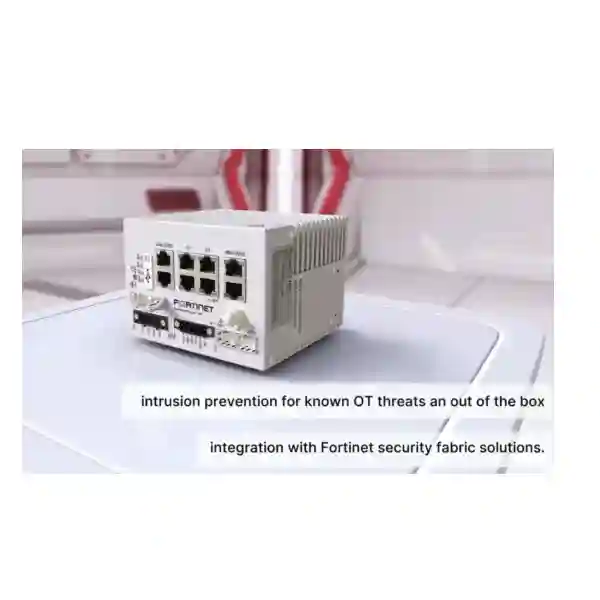
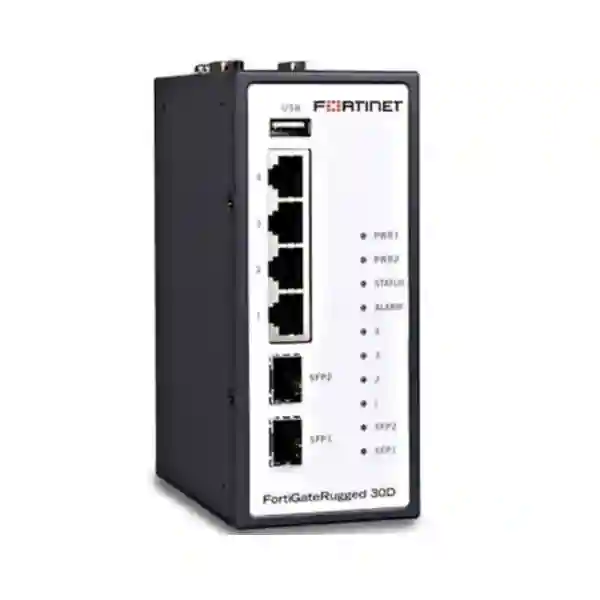
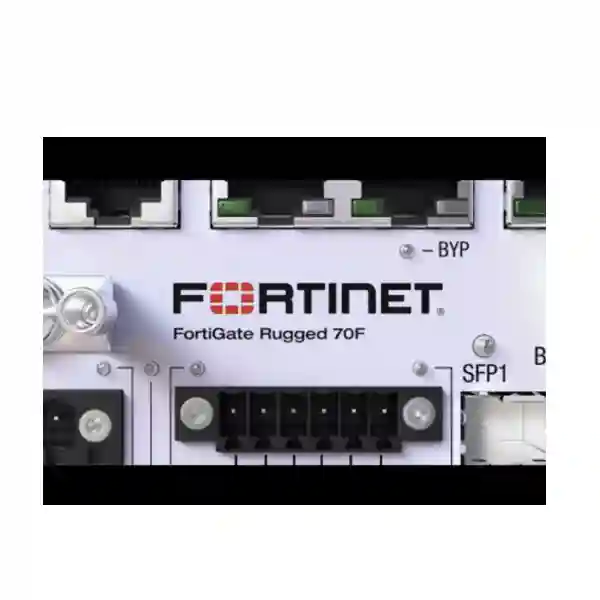
FortiGate Rugged Series
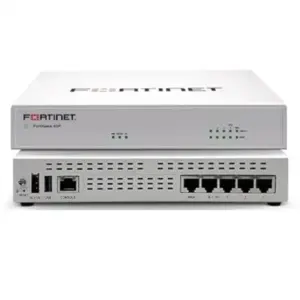
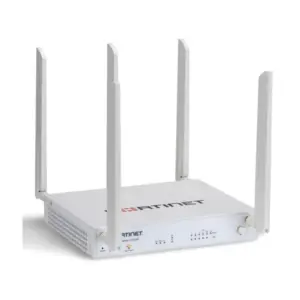
Industrial next-generation firewall options for operational technology, critical infrastructure and harsh-environment networks. Fortinet positions FortiGate Rugged appliances for industrial and OT deployments where conventional office-oriented security hardware may not suit environmental, power, interface or connectivity requirements.
Designed for demanding OT and industrial environments, with current models spanning FGR-50G-5G, FGR-60F families, FGR-60G families, FGR-70F families and FGR-70G families. Exact capabilities vary by model.
The portfolio includes copper and fiber-capable interfaces, bypass options on selected models, serial connectivity, redundant DC inputs and cellular variants. Model selection should start from the site design rather than a single throughput number.
FortiGate Rugged uses FortiOS and can participate in a broader Fortinet security architecture. Security-service licensing, firmware support and management requirements should be confirmed for the exact appliance and project.
What is the FortiGate Rugged Series?
FortiGate Rugged Series is Fortinet’s family of ruggedized next-generation firewalls for industrial networks and operational technology. The important distinction is deployment context. A firewall installed in a controlled office rack faces different temperature, power, mounting, vibration, interface and connectivity requirements from a firewall installed near production equipment, inside an industrial cabinet, at a utility location or at a remote infrastructure site. Rugged FortiGate models are designed around these more demanding scenarios while retaining the FortiGate security and networking platform.
Current Fortinet information lists several Rugged firewall choices. Buyers may encounter FGR-50G-5G, FGR-60F and FGR-60F-3G4G, FGR-60G and FGR-60G-M12, FGR-70F and cellular variants, and FGR-70G variants. These are not interchangeable specifications. Port layout, processor generation, cellular capability, bypass interfaces, digital I/O, power range and security performance can differ. A procurement request should therefore identify the exact model, intended security services, WAN design and environmental requirements.
For Tanzania projects, the most useful buying conversation normally starts with the industrial process and network topology: what assets need protection, where trust boundaries should exist, what protocols traverse the firewall, how the site reaches the internet or control center, whether fiber or copper is required, whether cellular backup is needed, and what happens operationally if a link or security appliance is unavailable.
FortiGate Rugged Series models and selection points
| Model family | Planning focus | Connectivity note |
|---|---|---|
| FGR-50G-5G | Compact rugged edge with integrated 5G option | Verify SIM, antenna, carrier and coverage requirements |
| FGR-60F / 60F-3G4G | Established industrial NGFW platform | Cellular variant adds 3G/4G LTE and GPS capabilities |
| FGR-60G / 60G-M12 | Newer rugged platform choices | M12 variant is relevant where industrial connector design is required |
| FGR-70F family | Higher security capacity than 60F generation for some inspection profiles | Available with non-cellular and cellular variants |
| FGR-70G family | Current-generation industrial edge security | Selected variants include 5G connectivity; confirm exact SKU |
OT firewall sizing: what to specify before requesting a quote
Start with the actual traffic path. Record WAN bandwidth, east-west traffic that will cross security zones, expected VPN use, the number of protected segments, interface media, redundancy requirements and the inspection services that will be enabled. Raw firewall throughput should not be treated as the only sizing figure because IPS, application control, threat protection and encrypted traffic inspection create different workloads. For an industrial site, also document ambient conditions, cabinet design, DC power availability, grounding, fiber requirements, serial devices, cellular coverage and maintenance access.
OT networks often prioritize predictable operations and controlled change. Deployment planning should therefore include a rule migration method, rollback plan, configuration backup, firmware policy, logging destination, administrator access method and maintenance window. Where the firewall separates process zones, rules should be based on required communications rather than broad trust. Industrial protocol visibility and security-service entitlement should be validated against the precise FortiOS version and FortiGuard subscription selected for the project.
FortiGate Rugged Series Tanzania
Organizations evaluating FortiGate Rugged Series in Tanzania commonly need to protect industrial sites, utility infrastructure, production networks, remote facilities, transport systems or operational locations where a standard office firewall may not be the natural hardware choice. The procurement process should begin with the physical and logical environment. Identify whether the appliance will sit in a control room, cabinet, plant area, communications shelter or remote enclosure; confirm temperature and power conditions; and map the IT and OT networks that must communicate through it. Tanzania deployments can also involve mixed connectivity, including fixed internet, private WAN, fiber between operational areas and cellular links for backup or remote reachability. The Rugged portfolio offers multiple connectivity approaches, but the exact model must be selected against the intended topology.
A Tanzania quotation request is stronger when it includes internet or WAN speed, number of sites, VLAN or zone count, VPN requirements, preferred copper or SFP connectivity, cellular requirements, expected security subscriptions and any industrial protocols that need inspection. For remote sites, consider how administrators will reach the device securely and how logs will be collected when the WAN is unstable. For plants and facilities with strict change control, include maintenance windows, configuration backup and rollback expectations. If the site already uses FortiGate, FortiSwitch, FortiAP, FortiManager or FortiAnalyzer, state the versions and management model so compatibility can be checked rather than assumed.
FourTeck Tanzania’s business technology shop explains capacity and compatibility checks that apply to firewall procurement, while the Tanzania contact page provides the route for a model-selection or quotation enquiry. Buyers should request the exact FGR model and subscription term on the final commercial offer and verify included accessories, power components and transceivers before approval.
FortiGate Rugged Series Dar es Salaam
Dar es Salaam buyers may be planning security for manufacturing, logistics, port-related operations, warehouses, utilities, building infrastructure or distributed commercial sites. In these environments, the firewall decision should be tied to network boundaries rather than simply placed at the internet edge. A Rugged appliance can be considered where industrial conditions, DC power, cabinet mounting, serial connectivity, bypass design or cellular resilience are important. Map which systems belong to enterprise IT, which belong to OT, which third parties require access, and which traffic must cross between zones. That map becomes the basis for interface count, policy design and logging.
For sites using more than one internet or WAN service, document the desired failover behavior and whether application steering or SD-WAN policies are required. A cellular-capable FGR variant may be relevant for some locations, but coverage, carrier support, antenna placement and data-plan design must be checked at the actual site. Do not select a cellular model solely because it exists. In a facility with dependable fiber and separate backup connectivity, another model may fit better. Likewise, fiber uplinks, bypass pairs and serial ports should be matched to the installed network equipment.
Procurement teams in Dar es Salaam should request a bill of materials that separates appliance hardware, FortiGuard services, FortiCare support, transceivers, power accessories and implementation work. This makes renewal obligations and deployment dependencies visible. The final acceptance plan can include firmware baseline, administrator hardening, configuration backup, security-zone tests, VPN tests, failover tests and logging verification. For broader network dependencies, FourTeck Tanzania’s main IT and network security overview describes how firewalls interact with switching, Wi-Fi, servers and other infrastructure.
FortiGate Rugged Series Mwanza
A FortiGate Rugged Series project in Mwanza can be relevant where organizations operate industrial, processing, logistics, utility or remote-connected environments and need a hardened security gateway close to operational systems. The first design question is what failure or compromise the firewall is intended to contain. Separate production assets from user networks, contractor access, guest services and internet-facing systems according to operational need. Then identify the communications that must remain available between those zones. This approach produces a clearer policy set and avoids buying a rugged appliance without a defined security architecture.
Connectivity planning is especially important when a site depends on links back to a head office, data center or cloud platform. Record primary and secondary WAN options, expected latency, bandwidth, VPN encryption demand and the behavior required during an outage. Where cellular is being considered, verify the specific FGR cellular model, supported radio configuration and external antenna requirements, then assess real coverage at the intended installation point. For fixed links, verify whether RJ45 or SFP interfaces are needed and whether industrial switching already provides the required media conversion.
Environmental and electrical details belong in the procurement specification. Confirm DC input requirements, grounding, enclosure ventilation, mounting method and access for maintenance. Rugged hardware reduces certain environmental constraints but does not remove the need for correct cabinet engineering. Buyers should also decide how the firewall will be monitored, where logs will be retained, who can administer it and how configuration changes will be approved. If the project includes a broader LAN refresh, the FourTeck Tanzania services page can be used to frame installation, configuration and lifecycle requirements alongside the appliance request.
FortiGate Rugged Series Arusha
Arusha organizations considering FortiGate Rugged may have operational sites that combine business IT, building systems, security devices, remote facilities and specialized equipment. A useful architecture identifies trust zones first: enterprise users, servers, management systems, cameras, building or industrial controllers, vendor access and external networks should not automatically share unrestricted connectivity. The Rugged firewall can provide a policy enforcement point where its environmental and interface characteristics suit the installation.
Model selection should compare current FGR options using the security workload that will actually be enabled. If IPS, application control and other FortiGuard services are required, size against the relevant protected traffic rather than only the highest published firewall number. Check the number and type of physical interfaces, fiber needs, bypass requirements, cellular resilience and serial connectivity. Where a project expects future expansion, reserve realistic interface and performance headroom without oversizing blindly. Subscription terms also matter because industrial security functions, threat intelligence and support entitlements may depend on the chosen service bundle.
Before deployment, document IP addressing, VLANs, routing, VPN peers, administrator roles, logging, time synchronization, firmware baseline and backup procedures. For a brownfield site, capture the existing traffic flows before introducing restrictive policy so essential operations are not interrupted by assumptions. Maintenance teams should know how to identify whether a fault belongs to the firewall, WAN, switch, endpoint or application. The quotation should clearly identify hardware, licensing, support term and optional accessories. This procurement discipline makes later renewals and troubleshooting easier and provides a stronger basis for comparing commercial offers.
FortiGate Rugged Series Dodoma
Dodoma deployments may include institutional facilities, utilities, infrastructure, distributed offices or operational sites that need stronger segmentation and controlled remote access. FortiGate Rugged should be evaluated when the firewall must operate in an industrial-style environment or provide interfaces and power characteristics suited to field infrastructure. The project should define the security boundary in operational terms: which systems are critical, which users or vendors need access, what communications are mandatory, and which connections should be blocked by default.
Remote administration deserves particular attention. Avoid designing an OT firewall that can only be managed through the same link it is expected to recover when that link fails. Depending on the site, an alternate management path, cellular connectivity or local maintenance procedure may be appropriate. If a cellular FGR model is proposed, confirm carrier compatibility and signal conditions. If the site relies on fiber, specify the correct SFP type and distance. If bypass behavior is important to process continuity, verify the exact model and port pair rather than assuming every Rugged appliance implements it identically.
For procurement, provide the number of protected zones, bandwidth, VPN requirements, desired subscription term and support expectations. Include existing Fortinet management products if present. A quotation checklist should also cover mounting, DC power, transceivers, antennas for cellular models, spare requirements and implementation scope. FourTeck Tanzania’s company overview and contact workflow can support a broader project discussion when the firewall is one component of a network, server, surveillance or communications deployment.
FortiGate Rugged Series UAE
UAE projects can place rugged firewalls in utilities, energy, transport, manufacturing, outdoor infrastructure and remote operational environments where heat, cabinet design, DC power and resilient connectivity must be considered together. The selection process should separate environmental suitability from cybersecurity capacity. A device may be physically appropriate but undersized for the inspection workload, or powerful enough for traffic while lacking the desired connector, cellular or bypass arrangement. Review both dimensions before approving an FGR model.
For industrial sites, map conduits between security zones and document the protocols, source systems, destinations and operational owners. This creates a practical basis for least-privilege policy and makes future rule reviews easier. If the site connects to a control center or cloud service, specify VPN throughput needs and redundancy. If 5G is part of the WAN design, assess signal, antenna placement, carrier services and whether cellular is primary, backup or out-of-band connectivity. Current Rugged options include 5G-capable models, but the exact radio and SIM behavior is model specific.
Organizations coordinating procurement through the UAE can also review FourTeck UAE for regional IT integration context and FourTeck’s Fortinet-focused UAE resource when planning a broader Fortinet environment. Commercial documents should still name the exact appliance SKU, service bundle, term, accessories and implementation responsibilities so there is no ambiguity between hardware capability and subscribed security services.
FortiGate Rugged Series Uganda
Uganda organizations can evaluate FortiGate Rugged for industrial plants, utilities, field infrastructure, transport, distributed operations and remote sites where standard enterprise firewall hardware may not fit the physical environment. Start with a site inventory that includes power, mounting, temperature, network media, WAN options and the systems being protected. Then map IT-to-OT and OT-to-OT communications. This makes it possible to define firewall zones and policies around real operational dependencies.
Remote locations often make connectivity resilience a central requirement. A cellular-enabled FGR model can be useful in an appropriate design, but it should be chosen only after checking mobile coverage, antenna positioning, carrier requirements and expected data use. Fixed WAN and private network links may remain preferable for primary connectivity, with cellular used for failover or management. VPN topology should also account for central monitoring, branch-to-branch communication and third-party maintenance access.
Buyers should compare appliance performance under the security services they intend to enable and verify licensing for required FortiGuard capabilities. Implementation planning should include firmware, administrator access, backups, logging and acceptance tests. For Uganda-specific project coordination, FourTeck Uganda provides regional IT and network-security context. A complete request should state the exact site count, bandwidth, interface media, VPN needs, cellular requirement and desired subscription period.
FortiGate Rugged Series Kampala
Kampala-based teams may use FortiGate Rugged as part of an architecture that protects production sites, utility assets or remote branches managed from a central office. In that scenario, the head-office design and the field-site design should be considered together. Define how policies are administered, how logs return to a central platform, how VPN tunnels are authenticated and how engineers gain approved access to operational systems. Central visibility is useful only when field connectivity and change-control procedures are dependable.
When comparing FGR models, review interface count, SFP requirements, bypass ports, cellular capability and the security throughput appropriate to enabled services. For sites that need LTE or 5G, verify the exact cellular variant and antenna arrangement. For sites connected through private WAN or fiber, a non-cellular model may be simpler. Redundant DC power inputs on Rugged platforms can support resilient cabinet designs, but the upstream power architecture still needs appropriate protection and engineering.
A Kampala procurement team coordinating multiple sites should standardize where practical: firmware branch, subscription tier, naming conventions, logging, backup process and approved rule templates. Standardization reduces support complexity while still allowing site-specific addressing and policy. Before purchase, request an itemized quote that identifies hardware, support, security services, transceivers, power accessories, antennas where applicable and configuration scope. This prevents a low hardware-only price from being mistaken for a complete deployable solution.
FortiGate Rugged Series Arua
For Arua and surrounding remote operational environments, resilience and maintainability can be as important as headline security performance. A firewall may protect a small number of critical devices yet still require rugged hardware because the installation is in a cabinet, utility location or field communications environment. Document the local power source, environmental conditions, physical access constraints and expected maintenance interval. Those details can influence the choice between FGR models more directly than user count.
Connectivity should be designed around what happens during failure. If the primary WAN is unavailable, determine whether the site must continue local operations, establish a backup tunnel, or simply retain secure management. Cellular-capable Rugged models may support resilient designs, but coverage and carrier conditions should be validated. If remote technicians require access, use controlled VPN and authentication workflows rather than exposing management interfaces directly. Logging should be buffered or forwarded according to the connectivity available.
Procurement should include spares strategy, configuration backups and clear ownership for subscription renewal. Remote sites can be expensive to revisit because a small accessory was omitted, so verify DIN or wall mounting needs, DC power arrangements, SFP modules, antennas and cabling before shipment. The exact FGR SKU should be written on the order and checked against Fortinet documentation so model-specific assumptions do not enter the project.
FortiGate Rugged Series Mbarara
Mbarara projects may involve processing, utilities, logistics, facilities or distributed operations where industrial network segmentation is required. A useful design begins by identifying critical assets and communication flows rather than starting with a firewall rule list. Group assets into security zones based on function and risk, then allow only the traffic needed for operations. This creates a more understandable policy and supports later audits or troubleshooting.
The Rugged model should fit both environment and workload. Verify operating conditions, power, mounting, interface media and the expected throughput when security inspection is enabled. If the site uses serial-connected infrastructure, confirm the precise model’s serial capabilities. If bypass ports are required for a continuity design, confirm the exact pair and intended behavior. If cellular connectivity is needed, select the correct LTE or 5G variant and plan antennas and SIM services as part of the installation.
A complete commercial request should state appliance quantity, subscription tier and term, support requirement, accessories, implementation scope and acceptance criteria. For multi-site deployments, include central management and logging requirements. This lets suppliers quote the operational solution rather than a bare appliance. After installation, retain a documented configuration baseline, network diagram, recovery procedure and renewal record so the security gateway remains maintainable throughout its lifecycle.
FortiGate Rugged Series Gulu
Gulu buyers assessing a rugged firewall for remote infrastructure or industrial systems should give special attention to serviceability. Determine who can reach the site, what diagnostic information is available remotely and what equipment must remain operational during a WAN outage. A rugged appliance can address physical deployment needs, but operational resilience also depends on network design, power, backups, monitoring and clear recovery procedures.
Choose the FGR model only after confirming ports and media. Count copper interfaces, fiber uplinks, bypass needs, serial requirements and WAN connections. Consider whether cellular is required and whether it serves as primary access, failover or management. For cellular models, antenna placement and local signal conditions are part of the design. Security sizing should account for the inspection services and VPN traffic expected in production, with sensible capacity for growth.
For deployment, define administrator roles, secure management sources, logging, time synchronization, configuration backups and firmware policy. Where the firewall protects OT, test new policies in a controlled manner and coordinate changes with operational owners. Procurement documentation should name the exact hardware and subscription rather than using only the generic phrase FortiGate Rugged Series. This helps avoid mismatches between generations and variants and gives finance and technical teams a common reference for future renewals.
FortiGate Rugged Series Kenya
Kenya has a broad range of industrial, energy, transport, manufacturing and distributed infrastructure environments where ruggedized security appliances may be considered. The FortiGate Rugged decision should be tied to the location of the security boundary and the conditions around it. If the device sits near operational equipment, check temperature, power, mounting and interface requirements. If it sits in a controlled data room, determine whether rugged hardware is still required or whether another FortiGate family is more appropriate.
For OT segmentation, identify required communications between controllers, supervisory systems, engineering workstations, enterprise applications and external support users. Apply policy to those defined flows and log security-relevant events. FortiGuard industrial security capabilities and protocol inspection should be checked against the selected service and FortiOS release. Performance sizing should use the relevant inspection workload, not only raw forwarding figures.
Regional project teams can consult FourTeck Kenya when the procurement or integration scope includes Kenyan sites. For a cross-border standard, define a small approved set of FGR models and subscription tiers, then allow local differences for WAN media, cellular carriers and power. This balances standardization with the practical realities of each installation and simplifies lifecycle management across multiple locations.
FortiGate Rugged Series Kuwait
Kuwait industrial and infrastructure projects can place demanding requirements on field networking, including environmental exposure, distributed assets, remote connectivity and strict operational continuity. FortiGate Rugged models should be evaluated as part of the complete cabinet and network design. Confirm environmental limits for the exact appliance, DC power architecture, grounding, mounting and any enclosure cooling or protection requirements. Ruggedized does not mean that installation engineering can be ignored.
Security architecture should define zones and conduits between operational systems, enterprise services and external networks. Where remote vendors require access, establish authenticated, logged and time-bounded methods rather than permanent broad rules. For WAN resilience, compare fixed links and cellular options and determine the required failover behavior. Current FGR families include cellular variants, but LTE and 5G capabilities differ by model, so the procurement document must state the exact variant.
Commercial evaluation should compare complete lifecycle cost: appliance, FortiGuard subscription, FortiCare support, accessories, implementation and renewal. The quotation should identify what is included and what is optional. This is particularly important for transceivers, antennas, power accessories and subscription bundles. A pre-deployment checklist covering addressing, routes, policies, VPNs, logging, firmware and rollback can reduce commissioning risk at operational sites.
FortiGate Rugged Series Ghana
Ghana projects in utilities, mining, processing, logistics and other industrial environments may require firewalls positioned close to operational equipment or at remote sites. The FortiGate Rugged portfolio gives designers multiple choices, but a category-level name is not enough for procurement. Specify the environmental conditions, physical interfaces, WAN design, security workload and support term before selecting the exact FGR appliance.
Where sites use a mixture of fiber, copper and cellular connectivity, draw the intended topology and mark every firewall interface. This quickly exposes whether SFP capacity, bypass pairs or cellular variants are needed. For remote links, define VPN topology and monitoring. For industrial protocol inspection, identify the actual protocols and validate support under the intended FortiOS and security service. Avoid assuming that every OT protocol or security feature is enabled in every subscription.
For Ghana-specific coordination, FourTeck Ghana can provide regional technology context. Cross-site projects should also document a common firmware and configuration standard, backup method and renewal calendar. The result is a more maintainable security estate than a collection of independently purchased firewalls with inconsistent licensing and policy.
FortiGate Rugged Series Nigeria
Nigeria’s industrial, energy, manufacturing, logistics and infrastructure environments can involve remote sites, variable connectivity and operational systems that require controlled segmentation. FortiGate Rugged can be evaluated for these locations where hardened hardware and industrial-oriented connectivity are relevant. Begin with a risk and communications map: identify critical assets, enterprise dependencies, third-party access, internet exposure and the traffic that must remain available during network disruption.
A multi-site design should distinguish central services from field-site needs. Some locations may need cellular backup; others may have resilient fiber. Some may require serial connectivity or bypass behavior; others may prioritize higher security inspection capacity. Standardize only where requirements overlap. Current Fortinet Rugged generations provide different processors, interfaces and cellular options, so model selection should be evidence based.
Organizations with Nigerian sites can use FourTeck Nigeria as a regional reference for broader IT integration. Procurement documents should state the exact FGR model, FortiGuard bundle, FortiCare term, accessories and professional-service scope. Commissioning should verify routing, segmentation, VPNs, failover, logging and administrator access before the firewall is accepted into production.
FortiGate Rugged Series Seychelles
Seychelles organizations may operate distributed facilities, utilities, hospitality infrastructure, transport or remote technical sites where connectivity and maintenance access require careful planning. A rugged firewall can be appropriate where the installation environment calls for industrial hardware, but selection should remain tied to verified site conditions. Document power, enclosure, temperature, network media and the operational assets being protected before choosing a model.
Island and remote-site designs should consider how the firewall is managed when primary connectivity is unavailable. A cellular-capable FGR variant may be useful in some locations, subject to carrier and signal validation, while other sites may rely on diverse fixed links. Define whether backup connectivity carries business traffic, management traffic or both. VPN and logging architecture should account for available bandwidth and the importance of central visibility.
For procurement, include exact model, quantity, security-service bundle, support term, transceivers, power accessories, antennas if applicable and configuration scope. Retain configuration backups and a clear recovery procedure. Where specialist travel is costly, good documentation and remote diagnostics have high operational value. A well-scoped Rugged firewall project therefore combines hardware selection, cybersecurity policy, connectivity design and lifecycle planning rather than treating the appliance as a standalone purchase.
Related Tanzania network and security planning
A rugged firewall normally depends on surrounding infrastructure. Review FourTeck Tanzania’s integrated technology overview for the relationship between security, switching and infrastructure; use the Tanzania technology shop to frame firewall and network purchasing checks; review technology services when configuration and lifecycle support are part of scope; and use the contact page for quotation and model-selection requests. Relevant cross-border resources include FourTeck sites for UAE, Uganda, Kenya, Ghana and Nigeria where regional projects require coordination.
FortiGate Rugged Series FAQ
What is FortiGate Rugged Series used for?
It is Fortinet’s ruggedized NGFW family for industrial and operational technology environments. Typical design concerns include harsh conditions, DC power, industrial interfaces, segmentation, VPN, remote connectivity and security inspection.
Which FortiGate Rugged model should I choose?
Choose by environmental conditions, interface requirements, cellular needs, security throughput, VPN workload, required FortiGuard services and future growth. Exact specifications vary substantially across FGR models and generations.
Are cellular FortiGate Rugged models available?
Yes. Fortinet lists Rugged variants with integrated 3G/4G LTE or 5G capabilities. Radio, SIM and GPS characteristics depend on the exact model, so verify the current datasheet and local carrier requirements.
Can FortiGate Rugged protect OT networks?
That is a primary positioning of the family. Effective OT protection still requires correct segmentation, policy, protocol visibility, subscription selection, monitoring and change control.
What should I include in a quotation request?
Include site count, bandwidth, protected zones, interface media, VPN requirements, cellular requirement, desired FGR model if known, FortiGuard and FortiCare term, accessories, implementation scope and expected deployment environment.
Quotation checklist
Before requesting pricing, collect: exact site and use case; number of appliances; WAN and protected traffic bandwidth; copper, SFP and serial requirements; bypass requirement; cellular/LTE/5G need; VPN topology; security services; central management and logging; FortiCare term; FortiGuard bundle; mounting and power; transceivers and antennas; migration needs; configuration and testing scope; and any existing Fortinet products that must integrate with the new firewall.
Decision recap
FortiGate Rugged Series is best evaluated as an industrial security platform, not merely as a faster or tougher office firewall. Select the precise FGR model by matching environmental conditions, connectivity, security inspection, VPN, OT segmentation and lifecycle requirements. Confirm current Fortinet specifications and subscriptions on the final bill of materials, then test the design against the real operational traffic before production cutover.
Talk through the requirement
Send FourTeck Tanzania the site type, bandwidth, network diagram if available, number of security zones, preferred interfaces, cellular requirement and subscription term. This provides a practical starting point for model selection and quotation preparation without inventing requirements that have not been confirmed.


Reviews
There are no reviews yet.