
FortiMail FML-400F Tanzania
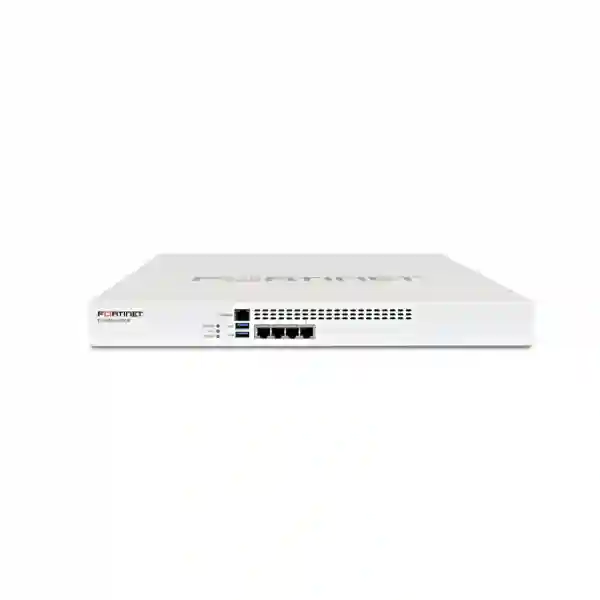
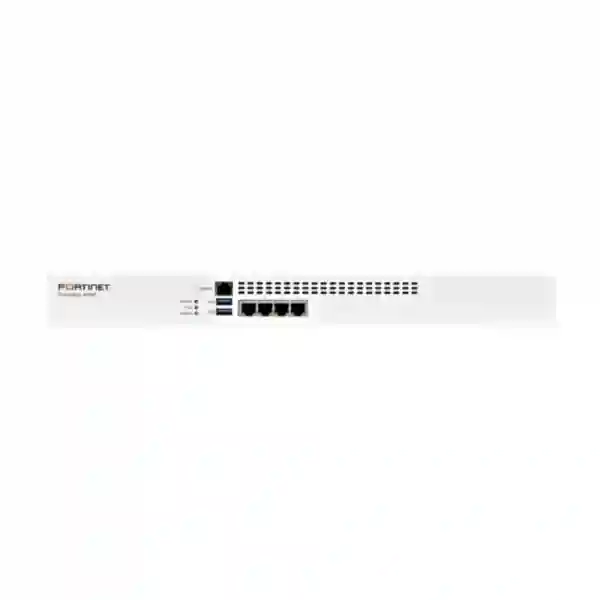
FortiMail FML-400F is the FortiMail 400F hardware email security appliance for organizations that want dedicated, policy-driven protection for business email. Fortinet positions the 400F for small-to-midsized organizations and equips it with four Gigabit Ethernet RJ45 interfaces, two 1 TB drives for 2 TB total storage, 8 GB memory, software RAID 0/1 and a rack-mount 1U chassis. It is designed to help security teams inspect inbound and outbound mail, reduce exposure to phishing, business email compromise, impersonation, malware and spam, and strengthen controls around sensitive outbound information. For Tanzanian organizations evaluating a dedicated secure email gateway, the important buying decision is not only appliance capacity: mail flow, protected domains, Microsoft 365 or Google Workspace use, retention expectations, security subscriptions, high-availability requirements and integration with the wider security stack should all be reviewed before ordering.
Email routing messages per hour in Fortinet’s published test conditions.
FortiGuard Antispam plus Virus Outbreak messages per hour under published test conditions.
Storage using two 1 TB drives with software RAID 0/1 support.
Published protected email-domain capacity before applicable advanced-management expansion.
FortiMail 400F Overview and Business Value
Email remains a critical business channel for invoices, purchase orders, customer communication, identity workflows and cloud-service notifications. That makes it a valuable target for attackers who rely on social engineering as well as malicious attachments and links. FortiMail provides a dedicated control point for organizations that want email inspection and policy enforcement beyond the native controls of their mail platform. Fortinet describes FortiMail as an AI-powered email security platform using layered detection technologies, FortiGuard threat intelligence, machine learning, large-language-model techniques, heuristics, optical scanning and anti-evasion capabilities to identify complex threats. The platform can be used in on-premises, cloud and hybrid email environments and can integrate with Microsoft 365 and Google Workspace.
For procurement teams, FML-400F is the appliance SKU identified by Fortinet for FortiMail 400F. It is not a FortiGate firewall and should not be confused with the FortiGate 400F series. Its purpose is email security. A correct project therefore starts with mail architecture rather than internet bandwidth alone. Buyers should document the number of mail domains, expected message volume, mailbox platform, routing topology, inbound and outbound filtering requirements, data-loss-prevention needs, quarantine workflows, administrator roles, logging expectations and subscription term. That information makes it easier to determine whether FML-400F is an appropriate hardware platform and which services should accompany it.
Verified FortiMail FML-400F Specifications
| Specification | FortiMail 400F | Planning relevance |
|---|---|---|
| Interfaces | 4 × 10/100/1000 RJ45 | Supports integration into the mail-security network path. |
| Storage | 2 × 1 TB | Important for quarantine, local data and operational planning. |
| RAID | Software RAID 0, 1 | Allows storage layout to be considered according to operational priorities. |
| Memory | 8 GB | Published hardware specification. |
| Form factor | 1U rack mount | Requires suitable rack space, power and cooling. |
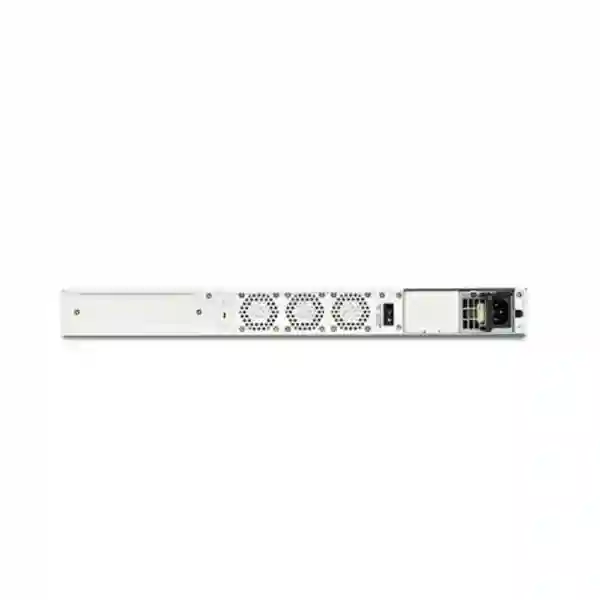
| Power supply | Single; dual optional | Discuss resilience requirements during quotation. |
| Protected domains | 70 | Useful when consolidating multiple organizational domains. |
| Server-mode local mailboxes | 400 | Relevant only where server mode is part of the design. |
| Email routing | 250K messages/hour | Fortinet test figure based on 100 KB messages without queuing. |
| Antispam + Virus Outbreak | 200K messages/hour | Published performance under Fortinet test conditions. |
| Enterprise ATP | 150K messages/hour | Published figure with the corresponding security processing profile. |
Published performance is a sizing reference, not a guarantee for every production environment. Message size, enabled security profiles, traffic mix, encryption, API use, policy complexity and software version can affect real-world behavior. A sizing discussion should therefore use actual or estimated mail statistics rather than selecting the appliance only from a headline throughput number.
Email Threat Protection and Integration
FortiMail is designed to protect inbound mail from sophisticated phishing, business email compromise, impersonation, account takeover, malicious attachments and other email-borne threats. Outbound inspection can help identify malicious activity originating from compromised accounts or devices, while data-loss-prevention functions can support policies intended to reduce inappropriate transmission of sensitive information. Centralized quarantine on the 400F can help administrators manage suspicious messages and user workflows. Organizations should define who can release quarantined messages, how exceptions are approved and how policy changes are audited.
Fortinet also positions FortiMail as part of the Fortinet Security Fabric. Integrations with FortiSandbox, FortiSIEM and FortiSOAR can extend analysis, event visibility and response workflows. This matters for organizations already using Fortinet security products because email telemetry does not need to remain isolated from network and security operations. Buyers considering a broader Fortinet architecture can review FourTeck Tanzania security solutions and the regional Fortinet solutions portfolio in Kenya for related firewall, management, wireless and security options.
FortiMail FML-400F Tanzania
Tanzanian organizations evaluating FortiMail FML-400F commonly have a mix of cloud email, local infrastructure, branch connectivity and users who exchange commercially sensitive documents every day. The purchasing conversation should begin with the email platform and risk profile. A company using Microsoft 365 may want to strengthen native controls with gateway or supported API-oriented protection, while an organization operating Exchange or a hybrid mail environment may prioritize secure mail routing, policy enforcement and centralized quarantine. Institutions with multiple brands, subsidiaries or departmental domains should also map protected domains before ordering so that the design reflects the actual environment rather than a rough user count.
For businesses in Tanzania, resilience planning is equally important. The FML-400F is a 1U rack appliance, so the project should include rack space, appropriate power, cooling, network interfaces, DNS and mail-flow changes, backup procedures and administrator access. Fortinet lists a single power supply with an optional dual-power configuration for this model. Where email availability is operationally critical, buyers should discuss redundancy at the architecture level rather than assuming a single appliance alone provides end-to-end continuity. The design may need to consider upstream connectivity, mail queues, DNS records, secondary routing and high-availability requirements.
Procurement teams requesting a FortiMail 400F Tanzania quotation should provide expected daily and peak message volumes, average message size if known, number of domains, email platform, number of administrators, desired subscription duration and any requirement for DLP, API integration, sandboxing, SIEM or centralized reporting. FourTeck can use that information to frame a more accurate commercial discussion without making unsupported assumptions about licenses or deployment scope. Buyers can also explore the wider FourTeck Africa technology portfolio when a project spans several countries.
FortiMail FML-400F Dar es Salaam
Dar es Salaam organizations often operate high-volume commercial workflows involving finance, logistics, professional services, retail, hospitality, education and regional administration. In these environments, email security is not only a spam-filtering requirement. Payment instructions, supplier banking details, invoices, HR documents and executive correspondence can all be targets for impersonation or business email compromise. FortiMail FML-400F gives IT teams a dedicated appliance for applying layered inspection and policy controls before suspicious mail reaches users and for inspecting outbound traffic according to configured policies.
A Dar es Salaam deployment should document the existing mail path before any MX, relay or connector changes are made. If the organization uses Microsoft 365 or Google Workspace, administrators should determine which supported FortiMail integration model matches their requirements. If mail servers are hosted locally or in a private data center, the network team should map public DNS, firewall rules, NAT, mail relays and monitoring. The 400F includes four GE RJ45 interfaces and is rack mounted, making it suitable for a structured server-room or data-center installation where power and cooling are planned.
When requesting pricing, Dar es Salaam buyers should distinguish hardware, subscriptions, optional components, implementation and ongoing support. This prevents an appliance-only quote from being mistaken for a complete security project. Security teams should also agree on quarantine ownership, false-positive handling, allow-list governance, incident escalation and reporting. These operational details determine whether the platform becomes a useful security control or merely another device in the rack. FourTeck can discuss the FML-400F alongside broader Fortinet network security requirements so that email protection is aligned with perimeter security, endpoint controls and centralized monitoring.
FortiMail FML-400F Mwanza
Organizations in Mwanza may need email protection for headquarters, distributed branches, education environments, healthcare operations, trading businesses, service companies and institutions that rely on email for customer and supplier communication. FortiMail FML-400F can provide a centralized security layer even when users work across several sites, because the design focuses on protecting mail flow rather than placing a separate appliance at every branch. This can simplify policy consistency when a central mail platform serves users in multiple locations.
The sizing process should examine peak message traffic rather than assuming employee count directly predicts appliance load. Automated alerts, scanners, business applications, ERP systems and customer platforms can generate substantial email volume. Fortinet publishes 250,000 messages per hour for email routing, 200,000 per hour with FortiGuard Antispam plus Virus Outbreak processing, and 150,000 per hour with FortiGuard Enterprise ATP under its stated test conditions using 100 KB messages. Production traffic can differ, so real mail statistics are preferable when available.
Mwanza procurement teams should also plan subscription ownership and renewal dates from the beginning. Email protection is a continuously operated security service, and its value depends on maintaining the services and support required by the chosen design. A useful quotation request therefore identifies the desired support term, security-service level and deployment responsibilities. If the organization already uses FortiGate, FortiAnalyzer, FortiManager or FortiSandbox, that should be stated because Fortinet Security Fabric integration may influence the architecture and monitoring workflow. FourTeck can help structure those requirements before commercial selection.
FortiMail FML-400F Arusha
Arusha businesses and institutions frequently serve international partners, travelers, NGOs, education users, professional-services clients and regional supply chains. Those communication patterns can increase exposure to impersonation attempts because staff regularly receive messages from unfamiliar external senders. FortiMail FML-400F is relevant where an organization wants a dedicated email-security control that can evaluate message reputation, content and behavior using Fortinet’s layered detection approach while providing administrators with centralized policies and quarantine functions.
Deployment planning should include trusted mail sources, business applications that send automated messages, multifunction devices, website forms and third-party platforms. If these systems are not documented, legitimate automated mail can be disrupted by a poorly planned migration. A phased implementation can establish baseline policies, monitor results, tune exceptions and then strengthen controls. Administrators should avoid broad permanent allow lists because they can weaken protection if a trusted sender is later compromised.
For Arusha buyers, the FML-400F quotation should be matched to operational responsibility. Some organizations have an internal security team that wants granular policy control; others need external implementation assistance and clear handover documentation. Ask for a scope that identifies mail-flow configuration, policy creation, administrator training, testing, backup, logging and escalation responsibilities. The physical appliance also requires a suitable 1U rack position and environmental planning. These practical details help turn the product purchase into a maintainable email-security service rather than an isolated hardware acquisition.
FortiMail FML-400F Dodoma
Dodoma organizations considering FortiMail FML-400F may include government-related institutions, education, professional services, healthcare, NGOs and businesses handling formal correspondence and sensitive records. Email security in these environments should combine threat prevention with predictable policy administration. FortiMail supports controls for inbound and outbound mail and, on the 400F, includes DLP and centralized quarantine capabilities. Those functions can help security teams establish rules for sensitive information and suspicious messages, provided policies are designed around actual business processes.
Before deployment, stakeholders should identify data categories that need additional protection, such as financial information, personnel records or confidential project documents. DLP should not be treated as a switch that automatically understands every organization. Effective policies require dictionaries, patterns, exceptions, ownership and an escalation process. Similarly, quarantine policies need defined review responsibilities so that legitimate business mail is not delayed unnecessarily.
A Dodoma procurement request should include the number of protected domains, mailbox platform, peak traffic, integration requirements, rack and power environment, required subscription period and any need for redundancy. If the project is part of a wider security modernization initiative, email events may also need to feed a SIEM or incident-response workflow. FortiMail’s integration with the Fortinet Security Fabric can be relevant for organizations standardizing on Fortinet. FourTeck can assist with requirement capture and quotation preparation while the customer retains control over the final architecture and security policies.
FortiMail FML-400F UAE
Organizations with operations linking Tanzania and the UAE may want consistent email-security policies across regional offices. FortiMail FML-400F can be evaluated as a dedicated appliance for a centralized or regionally segmented architecture, depending on mail routing, data-residency considerations and business continuity requirements. The product’s protected-domain capacity and policy scale can support organizations with multiple business units, but architecture should be based on actual domains, traffic and administrative boundaries.
UAE procurement teams often compare hardware appliances with cloud-hosted email security. A physical FML-400F provides a customer-controlled appliance form factor, while Fortinet also offers virtual and cloud FortiMail options. The right choice depends on whether the organization prefers local appliance ownership, cloud delivery, operational control, infrastructure responsibility and integration model. A comparison should therefore include total operational requirements rather than hardware price alone.
For cross-border deployments, define where logs are retained, which administrators can access quarantine and reports, and how incidents are escalated between teams. Also document mail connectors, DNS ownership and change-control windows before migration. FourTeck customers with UAE infrastructure requirements can review FourTeck UAE technology solutions while coordinating FortiMail requirements with their Tanzania environment. This supports a more coherent regional procurement conversation without assuming that every site needs the same topology.
FortiMail FML-400F Uganda
Uganda organizations evaluating FML-400F can use the same core planning method: identify mail platform, domains, message volumes, threat profile and required integrations before selecting hardware and subscriptions. Businesses operating between Uganda and Tanzania may prefer centralized governance so that phishing, impersonation and outbound-data policies follow common standards. However, centralized policy does not necessarily mean a single physical deployment; connectivity, mail routing and continuity requirements should determine the architecture.
FortiMail can complement FortiGate rather than replace it. FortiGate protects network traffic and provides firewall and secure-networking functions, while FortiMail is focused on email security. Organizations using both can consider Security Fabric integration and centralized operational processes. Uganda buyers can explore the FourTeck Uganda portfolio when coordinating firewall and email-security projects.
For a quotation, provide the desired license term, appliance quantity, optional power-supply requirement, mail-system details and deployment scope. Avoid assuming that a FortiGate security bundle automatically licenses FortiMail; FortiMail is a separate product family with its own licensing and service considerations. A documented bill of materials should identify exactly what is included. This makes renewal planning clearer and helps technical teams understand which capabilities depend on active services.
FortiMail FML-400F Kampala
Kampala enterprises, NGOs, financial-service operations, education organizations and multi-branch companies can face targeted email attacks that imitate executives, suppliers or trusted partners. FortiMail FML-400F is relevant when the organization needs a dedicated email security gateway with stronger inspection, policy control, quarantine and data-protection features. Its 70 protected-domain specification can be useful for groups managing multiple brands or domains, although domain associations and licensing should be reviewed for the intended configuration.
A Kampala implementation should be coordinated with the team managing Microsoft 365, Google Workspace, Exchange or other mail infrastructure. Administrators need access to DNS and mail-routing settings, and testing should verify inbound delivery, outbound relaying, SPF/DKIM/DMARC-related workflows where applicable, quarantine notifications and business application mail. Security teams should also establish baseline reports so they can measure blocked threats and investigate anomalous patterns after go-live.
Commercial evaluation should separate the appliance from implementation and recurring security services. Ask suppliers to identify part numbers, terms and optional items rather than quoting a single unexplained total. This is especially useful when comparing proposals. FourTeck can assist Kampala buyers through its Uganda operation while regional organizations can coordinate standards with Tanzania. The objective is a maintainable deployment with clear ownership, not simply the lowest initial hardware cost.
FortiMail FML-400F Arua
Arua organizations with branch connectivity to central offices can protect email centrally rather than placing email-security hardware at each user location. This can be useful for distributed institutions, NGOs, education organizations and businesses where mailboxes are hosted centrally or in cloud services. FortiMail FML-400F can enforce common security policies while branch users continue accessing their normal mail platform.
Connectivity reliability should still be considered. If mail routing depends on a central security gateway, DNS and queue behavior should be designed so temporary network problems do not create unnecessary message loss. Administrators should understand how upstream mail systems retry delivery and how FortiMail queues messages. Monitoring and alerting should notify the responsible team when queues grow or connectors fail. These operational controls are as important as threat-detection settings for dependable business email.
For Arua procurement, organizations should provide a network and mail-flow diagram where possible. Even a simple diagram showing internet, mail provider, firewall, FortiMail, mail server and administrator network can prevent misunderstandings during quotation and implementation. Include expected growth so the solution is not sized only for today’s traffic. FourTeck can help translate those requirements into a bill-of-materials discussion and coordinate related Fortinet products where a wider security architecture is planned.
FortiMail FML-400F Mbarara
Mbarara businesses and institutions can use FortiMail FML-400F to add a dedicated layer of email threat prevention for users who depend on cloud or server-based mail. The platform’s role is especially relevant when phishing and impersonation attempts are difficult to control through user awareness alone. Technical controls and user training should work together: FortiMail can filter and analyze messages, while staff still need procedures for verifying unusual payment requests, credential prompts and changes to supplier details.
The appliance supports centralized quarantine, which can reduce the need for every suspicious message to be handled directly in a user’s inbox. Administrators should configure notification and release workflows according to business risk. High-risk departments such as finance may require stricter policies than general informational mailboxes. Policy design should therefore reflect job functions and business processes rather than applying exceptions broadly across the organization.
Mbarara buyers should ask how the proposed deployment will be backed up, updated and monitored after installation. Configuration documentation, administrator credentials, renewal ownership and escalation contacts should be part of project handover. If the organization already has Fortinet infrastructure, integration opportunities should be reviewed. A well-documented deployment makes future troubleshooting and renewal work easier and reduces dependence on undocumented individual knowledge.
FortiMail FML-400F Gulu
Gulu organizations evaluating FortiMail 400F may be protecting staff spread across offices, field locations and cloud applications. Email security remains centrally relevant because users can receive malicious messages regardless of where they connect from. A secure email gateway or supported cloud integration can inspect mail before users interact with it, helping reduce exposure to malicious attachments, deceptive links and impersonation attempts.
The technical design should account for trusted automated senders such as payroll, ERP, ticketing, monitoring and customer-service platforms. During migration, these sources should be inventoried and tested. Administrators should also review outbound relay restrictions so that internal applications cannot be abused to send unauthorized mail. Logging should make it possible to trace message handling without exposing sensitive information unnecessarily.
For procurement in Gulu, compare proposals on completeness: exact FML-400F appliance, security subscriptions, support duration, optional hardware, implementation tasks, training and post-deployment support. If pricing differs significantly, check whether the scope differs before concluding that one offer is cheaper. FourTeck can help buyers clarify these components and align FortiMail with other security controls. This approach supports better lifecycle planning and reduces surprises at renewal time.
FortiMail FML-400F Kenya
Kenyan organizations with Tanzania operations can use FortiMail FML-400F as part of a shared regional email-security strategy. A group with common Microsoft 365 tenants, centralized Exchange infrastructure or shared security operations may want consistent policies and reporting across both markets. The architecture should still respect organizational boundaries, domain ownership and business continuity needs. FortiMail’s multi-domain capabilities can be useful, but the design should be verified against the exact number of protected domains and administrative requirements.
Fortinet publishes FML-400F as an email security appliance with four GE RJ45 ports and 2 TB storage. It supports DLP and centralized quarantine and is positioned for small-to-midsized organizations. These characteristics make it a candidate for organizations that want a dedicated hardware control rather than relying solely on a SaaS security layer. Cloud-first organizations should still compare FortiMail Cloud and virtual options because operational responsibility and deployment flexibility differ.
FourTeck’s Fortinet Kenya solutions page provides regional context for Fortinet deployments. When coordinating Kenya and Tanzania procurement, standardize the information requested from each site: users, domains, mail provider, peak messages, retention, subscriptions, integrations and support expectations. Consistent requirements make cross-country quotations easier to compare and help technical teams avoid incompatible assumptions.
FortiMail FML-400F Kuwait
Kuwait businesses that collaborate with East African operations can evaluate FML-400F for a regional or local email-security architecture. The decision should account for where mail is hosted and where security administrators work. If all users are on a cloud mail platform, a cloud-native or API-based option may deserve comparison. If the organization prefers dedicated hardware, local routing control and appliance-based policy administration, FortiMail 400F can be considered within its published capacity.
Physical deployment requires rack space, power, cooling and network connectivity. Fortinet specifies 100–240V AC input, average power consumption of 77 W and front-to-back forced airflow for the 400F. Data-center teams should validate these requirements against their rack design. The optional dual power supply can also be discussed where power-path resilience is required, but broader mail availability still depends on network, DNS and upstream services.
A Kuwait quotation should clearly identify subscription terms and renewal responsibilities. Security services change the protection available to the appliance, so buyers should avoid comparing hardware-only and fully licensed proposals as though they were equivalent. Regional procurement teams can use the same evaluation checklist across Kuwait and Tanzania to simplify governance: exact model, services, term, optional hardware, implementation, documentation and support. This creates a clearer total solution comparison.
FortiMail FML-400F Ghana
Ghana organizations looking for dedicated email security can evaluate FortiMail FML-400F where mail volume and domain requirements fit the platform. The appliance can support organizations that need inbound threat filtering, outbound controls, DLP and centralized quarantine. Its value is strongest when policies are integrated with the organization’s incident-response process, because blocked or suspicious messages can provide useful indicators about targeted campaigns and compromised accounts.
Security teams should decide which events need escalation and which can be handled automatically. For example, repeated impersonation attempts against executives may justify investigation beyond simple blocking. Integration with FortiSIEM or FortiSOAR can be relevant in Fortinet-centered environments, while FortiSandbox can add analysis capabilities for suspicious content according to the selected architecture and services. These integrations should be scoped rather than assumed in an appliance purchase.
Ghana procurement teams can standardize a request-for-quotation template that includes domains, mailboxes, message traffic, cloud provider, desired security services, rack environment, deployment assistance and support term. If the project is coordinated with Tanzania, use a common template so regional teams compare like-for-like requirements. This helps avoid duplicate tools and inconsistent security policies across business units.
FortiMail FML-400F Nigeria
Nigeria enterprises often manage high volumes of customer, supplier and internal email, making message security an important part of broader cyber-risk management. FortiMail FML-400F can provide a dedicated inspection layer for organizations whose traffic fits its published capacity. Fortinet’s layered detection approach is intended to address phishing, business email compromise, impersonation, malware and account takeover risks, while outbound controls can help reduce misuse of compromised accounts and accidental data exposure.
Large organizations should pay particular attention to domain and policy scale. The 400F supports 70 protected email domains and published recipient-based policy limits of 400 per domain and 1,500 per system for incoming or outgoing use. If an organization exceeds these requirements or anticipates rapid growth, sizing should consider a larger model or alternative architecture rather than forcing the deployment into an unsuitable platform. Capacity planning should include growth over the intended hardware lifecycle.
For regional groups operating in Nigeria and Tanzania, centralized security standards can reduce operational inconsistency. Define common anti-phishing, malware, quarantine and DLP principles while allowing documented local exceptions. Procurement should likewise use consistent licensing and support terms where possible. FourTeck can help frame the FortiMail requirement as part of a broader regional Fortinet discussion without assuming identical infrastructure at every location.
FortiMail FML-400F Seychelles
Seychelles organizations in hospitality, financial services, government, professional services and tourism-related sectors often rely on email communication with international customers and suppliers. This external communication creates legitimate diversity in sender locations and message types, which can make simplistic filtering ineffective. FortiMail’s layered inspection and reputation capabilities are designed to analyze more than basic sender identity, helping organizations apply stronger controls while maintaining legitimate communication.
A deployment should include careful tuning for reservation platforms, payment systems, travel partners, automated customer messages and cloud applications. Security administrators should test these flows before enforcing strict policies. DLP requirements may also be relevant where customer or financial information is transmitted by email, but policies should be aligned with internal governance and applicable legal requirements rather than relying on generic templates.
For Seychelles procurement, hardware logistics are only one part of the project. Subscription activation, remote implementation, configuration backup, monitoring and renewal planning should be documented. If technical administration is centralized in another country, secure management access and clear change-control procedures are essential. FML-400F can be considered where its capacity and form factor fit the organization’s needs, while FortiMail cloud or virtual options may also merit comparison for infrastructure-light deployments.
How to Select and Size FortiMail 400F
Start with measured data where possible. Export message counts from the current mail gateway or cloud platform and identify average and peak hourly traffic. Count active domains, shared domains and business units. Document the mail platform and any third-party relays. List security controls currently used and the problems the organization wants to solve. Then identify integrations with FortiGate, FortiSandbox, FortiSIEM, FortiSOAR or other systems. Finally, define retention, quarantine, reporting and administration requirements. These inputs create a defensible sizing decision.
Do not size solely by mailbox count. Two organizations with the same number of employees can have very different mail volumes because of automated systems, customer communications and attachments. Likewise, published performance figures are based on defined test conditions and should be treated as comparative guidance. If expected traffic approaches platform limits, allow headroom for growth and security processing rather than designing around the maximum number.
FortiMail Licensing, Subscription and Renewal Planning
Fortinet describes FortiMail hardware appliances as using perpetual licensing with annual subscription services. Exact ordering options and service bundles should be confirmed against the current Fortinet ordering guide and quotation. Procurement teams should avoid assuming that all security capabilities are included indefinitely with the hardware purchase. The commercial proposal should show appliance, subscription, support term and optional components separately enough that the customer understands what must be renewed.
Renewal ownership should be assigned before go-live. Record serial numbers, contract references, service expiration dates and administrative accounts in the organization’s asset-management process. This helps prevent a security service from reaching expiration unnoticed. For multi-country groups, consider aligning renewal dates where practical to reduce administrative overhead, while ensuring that co-terming or renewal changes are confirmed through the authorized commercial process.
Deployment Checklist for FortiMail FML-400F
Before installation
Document domains, mail routes, DNS ownership, mail servers, cloud connectors, public IPs, firewall rules, automated senders, message volumes, rack space, power and management access.
During migration
Test inbound and outbound delivery, quarantine notifications, business applications, trusted senders, policy actions, administrator alerts and message tracing before full enforcement.
After go-live
Review false positives, blocked threats, queue health, policy exceptions, backup status, administrator activity, subscription status and reporting. Tune policies through controlled change management.
Related Fortinet Security Planning
Email security works best as one layer of a broader security architecture. A malicious message that reaches a user can lead to credential theft, endpoint compromise or unauthorized network access, while a compromised endpoint can generate malicious outbound mail. Organizations should therefore coordinate FortiMail with firewall policy, endpoint protection, identity security, DNS controls, logging and incident response. Fortinet’s Security Fabric approach is intended to share context across security products and support coordinated workflows.
For Tanzania projects, start with the FourTeck Tanzania technology portal. Regional teams can also reference FourTeck Uganda, Fortinet Kenya solutions and FourTeck Africa when planning cross-border security requirements. These links provide regional paths for related technology discussions rather than changing the Fortinet specifications of the FML-400F itself.
FortiMail FML-400F Quotation Checklist
For a useful quotation, provide: organization name and country; required quantity; email platform; number of protected domains; approximate mailboxes; peak or daily message volume if available; current email gateway; required subscription term; Microsoft 365 or Google Workspace integration requirement; DLP requirement; quarantine workflow; FortiSandbox, FortiSIEM or FortiSOAR integration; rack and power requirements; redundancy expectations; installation location; implementation scope; administrator training needs; and target deployment window. Where exact data is unavailable, state that clearly so assumptions can be identified rather than hidden.
FortiMail FML-400F FAQ
What is FortiMail FML-400F?
FML-400F is Fortinet’s SKU for the FortiMail 400F hardware email security appliance. It provides four GE RJ45 interfaces, 2 TB storage, 8 GB memory and software RAID 0/1 in a 1U rack-mount form factor.
What size organization is FortiMail 400F designed for?
Fortinet positions the 400F for small-to-midsized organizations. Suitability should still be confirmed from actual message traffic, domains, security processing and growth requirements.
Does FortiMail 400F protect Microsoft 365 and Google Workspace?
Fortinet supports protection for cloud email services including Microsoft 365 and Google Workspace. The 400F datasheet lists Microsoft 365 and Google Gsuite email API integration as optional. Confirm the current licensing and supported integration model for the intended software release.
Does FML-400F include DLP?
Yes, Fortinet’s current FortiMail datasheet lists Data Loss Prevention for the 400F. Effective DLP still requires policy design, dictionaries or patterns, exceptions and operational ownership.
How many domains can FortiMail 400F protect?
Fortinet lists 70 protected email domains for the 400F and notes that an advanced management license increases the protected-domain limit by 50 percent. Confirm current licensing before ordering.
What is the FortiMail 400F email-routing performance?
Fortinet publishes 250,000 messages per hour for email routing, 200,000 with FortiGuard Antispam plus Virus Outbreak and 150,000 with FortiGuard Enterprise ATP, based on its stated test conditions using 100 KB messages without queuing. Production performance varies with configuration and traffic.
Is FortiMail 400F the same as FortiGate 400F?
No. FortiMail 400F is an email security appliance. FortiGate 400F is a next-generation firewall platform. They serve different security functions and can be used together within a broader Fortinet architecture.
How do I request FortiMail FML-400F price in Tanzania?
Request a quotation with quantity, email platform, domains, traffic, desired subscription term and deployment scope. This allows the proposal to reflect the required appliance, services and implementation rather than an incomplete hardware-only price.
Decision Recap
Choose FortiMail FML-400F for evaluation when your organization needs a dedicated 1U email-security appliance in the FortiMail family and your domain, message-volume and integration requirements align with the published platform capacity. Validate mail architecture, security subscriptions, redundancy, DLP, quarantine, cloud integration and lifecycle support before ordering. Compare hardware, virtual and cloud FortiMail delivery models if infrastructure ownership is still undecided. The most useful next step is to provide FourTeck with your mail platform, domain count, message volume and desired security outcomes for a scoped quotation discussion.
Consult FourTeck About FortiMail FML-400F
Share your current email environment and target protection requirements. FourTeck can help structure the commercial request around the exact FML-400F appliance, required services, deployment planning and related Fortinet integration. Availability, pricing, delivery, warranty and support terms should be confirmed in the current quotation rather than assumed from web content.



Reviews
There are no reviews yet.