
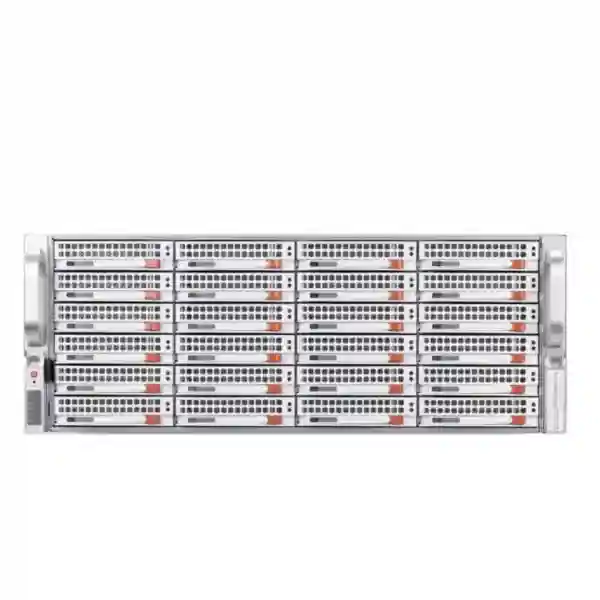
FortiManager FMG-3750G Tanzania
FortiManager FMG-3750G is designed for organizations that need centralized control of very large Fortinet estates. It brings policy administration, device configuration, workflow, automation and operational visibility into a unified management platform for distributed security environments. For Tanzanian enterprises, service providers, financial institutions, government environments, universities, large industrial groups and organizations operating many branches, the key buying question is not simply whether centralized management is useful; it is whether the management platform has enough device scale, storage, interface capacity and operational structure for the intended environment.
Devices/VDOMs supported by default according to Fortinet’s current FortiManager data sheet.
Maximum Devices/VDOMs with supported device add-on licensing.
Usable storage after the documented default RAID 50 configuration.
Two 25GbE SFP28 interfaces complement two 10GbE RJ45 interfaces.
FortiManager FMG-3750G overview
FortiManager is Fortinet’s centralized network and security management platform. The FMG-3750G sits at the large-enterprise end of the hardware range and is intended for environments where administrators need a consistent operational model across a large number of Fortinet devices. Centralized management can reduce the operational friction created when policies, objects, device settings and changes are administered independently at many sites. Fortinet positions FortiManager as a single-pane management environment across the Security Fabric, including FortiGate and FortiOS-based networking products such as FortiSwitch, FortiAP and FortiExtender.
The current Fortinet data sheet specifies 384 TB of SAS SED HDD capacity using 24 x 16 TB drives plus 60 TB of NVMe SED SSD capacity using 4 x 15 TB drives. Usable storage is stated as 336 TB after RAID, with RAID 50 as the default. Supported RAID levels include RAID 0/1, 1s/5, 5s/6, 6s/10/50/60. The appliance is a 4 RU rackmount system with removable drives, redundant hot-swap power supplies and TPM support. These characteristics make rack planning, power availability, cooling, physical access and maintenance procedures important parts of procurement rather than afterthoughts.
Verified FMG-3750G technical specifications
| Default Devices/VDOMs | 10,000 |
| Maximum Devices/VDOMs | 100,000 with supported device add-on license |
| Sustained log rate | 150 |
| GB/day | 10 |
| Raw storage | 384 TB SAS SED HDD + 60 TB NVMe SED SSD |
| Usable storage | 336 TB, RAID 50 default |
| Interfaces | 2 x 10GbE RJ45, 2 x 25GbE SFP28 |
| Form factor | 4 RU rackmount |
Centralized management and operational value
Large security estates create operational problems that are different from those of a single firewall. Teams must control who can make changes, maintain reusable policy objects, coordinate upgrades, preserve configuration consistency and understand which administrative domain owns each device. FortiManager addresses these needs through centralized administration, policy packages, workflow and automation capabilities. Fortinet also highlights zero-touch provisioning, SD-WAN overlay orchestration, REST API automation, scripts, connectors and automation stitches as capabilities of the FortiManager platform.
For procurement teams, the practical requirement is to map the proposed FMG-3750G to the actual number of managed devices and VDOMs, expected growth, administrative domains, redundancy design, software version and support requirements. A high-capacity platform should be purchased as part of an operating model: define administrators, approval processes, naming standards, configuration backups, change windows and recovery procedures before large-scale onboarding.
Integration with the Fortinet Security Fabric
FortiManager can orchestrate FortiGate deployments and extends management across FortiOS-based networking components. Organizations planning branch standardization can use centralized templates and policies to reduce differences between sites. That is particularly useful when many offices use similar WAN, SD-WAN, VPN, segmentation or security-policy patterns but still require site-specific addressing and local exceptions.
For related infrastructure planning, review FourTeck Tanzania’s integrated IT and security portfolio, technology shop, and product guidance and quotation page. FortiManager projects commonly intersect with firewall, switching, Wi-Fi, server, rack, UPS and structured-cabling requirements, so the management appliance should be considered within the complete infrastructure design.
FortiManager FMG-3750G Tanzania
For organizations in Tanzania, FMG-3750G is most relevant where the security environment is already large or expected to scale substantially. A national enterprise with many branches, a managed service environment, a large financial network, a public-sector organization or a group operating multiple business units can accumulate hundreds or thousands of managed security objects and devices. Centralization becomes valuable because each additional independently administered site increases the workload associated with policy consistency, configuration backup, administrator access and controlled change.
Tanzania procurement planning should begin with an inventory. Count physical and virtual Fortinet devices, VDOMs, administrative domains and expected additions over the platform’s planned life. Identify the FortiOS versions in use and confirm FortiManager compatibility before migration. Document WAN links, management network paths, DNS and NTP dependencies, rack space, power feeds and backup procedures. The FMG-3750G is a 4 RU appliance with redundant hot-swap power supplies, so data-centre readiness matters.
A centralized platform also changes operational responsibility. Organizations should decide which administrators can edit shared objects, who approves policy installations, how emergency changes are handled, and how configuration standards are tested before broad rollout. For multi-site deployments, templates can reduce repetitive work while preserving approved differences. This approach is particularly useful for Tanzanian organizations connecting head offices, branches, campuses, warehouses or operational sites through VPN and SD-WAN.
When requesting a quotation, include the current device and VDOM count, three-to-five-year growth estimate, FortiManager software requirements, desired support coverage, rack environment and whether high availability or migration assistance is required. FourTeck’s Tanzania contact page provides a route for product-selection and quotation discussions.
FortiManager FMG-3750G Dar es Salaam
Dar es Salaam buyers considering FMG-3750G are likely to be planning centralized security operations for head offices, data centres, branch networks or managed environments. The city’s concentration of corporate, financial, logistics, hospitality and service organizations can create network estates that extend well beyond one building. In that situation, the value of FortiManager is operational consistency: administrators can work from a central management layer instead of treating every FortiGate or Fortinet-managed site as an isolated configuration.
A Dar es Salaam deployment should be designed around the management network as carefully as the production network. Determine where the appliance will be racked, how administrators will reach it, which devices will register to it and how management traffic is protected. The documented 4 RU form factor and redundant power supplies should be included in rack and UPS planning. The two 10GbE RJ45 and two 25GbE SFP28 interfaces provide high-speed connectivity options, but transceiver, cabling and switch compatibility must be confirmed for the chosen topology.
Organizations with branches elsewhere in Tanzania should also plan how policies are separated between common corporate standards and location-specific requirements. Reusable objects and templates can simplify administration, but governance is important: uncontrolled shared changes can affect many sites. Establish review and approval practices that match the business impact of centralized policy deployment.
For quotation preparation, provide the device estate, VDOM count, intended FortiManager version, expected expansion, rack details, network interfaces required and support expectations. If the FMG-3750G will replace an existing FortiManager, include the current model, software release and migration objective so compatibility and change planning can be discussed before procurement.
FortiManager FMG-3750G Mwanza
For Mwanza organizations, centralized Fortinet management can be particularly useful when the main operational site must coordinate security policy with remote offices, distribution points, retail locations, educational campuses or other facilities. The FMG-3750G is designed for very large estates, so sizing should be justified by the total environment rather than the device count at one Mwanza location. A group headquartered or operating in Mwanza may manage devices across Tanzania or neighboring markets from a central security operations function.
Before selecting this platform, build a device register that distinguishes physical FortiGate units, virtual appliances and VDOMs because Fortinet’s licensing counts managed network devices and VDOMs. The default capacity is 10,000 Devices/VDOMs, while the documented maximum is 100,000 with supported add-on licensing. This gives significant growth headroom, but licensing and architecture should still be validated for the intended deployment.
Infrastructure readiness is also important. A 4 RU management appliance requires suitable rack space, cooling, redundant power planning and network connectivity. Organizations should decide whether management traffic will use dedicated interfaces or controlled management VLANs, and whether administrators will connect through protected jump hosts or other approved access paths. Configuration backup and recovery procedures should be documented before production onboarding.
For multi-branch operations, define a standard branch template covering naming, VPN, SD-WAN, address objects and baseline policy, then document which parameters can vary. That turns FortiManager into an operational standardization tool rather than merely a remote configuration console. A quotation request should include present scale, forecast growth, migration requirements and the broader Fortinet architecture.
FortiManager FMG-3750G Arusha
Arusha enterprises can use centralized security management to coordinate policies across hospitality properties, tour operations, NGOs, education environments, regional offices and distributed business sites. Where many Fortinet gateways protect different locations, local configuration practices can gradually diverge. FortiManager provides a structured platform for maintaining common policy objects, device settings and administrative workflows while still allowing approved site-specific requirements.
FMG-3750G should be considered when the overall estate demands its high scale. The model supports 10,000 Devices/VDOMs by default and can scale to the documented 100,000 maximum with supported device add-on licensing. Buyers should not select it only because it is the largest appliance; they should compare current device counts, growth, operational workload, resilience objectives and support requirements against other FortiManager deployment options.
For an Arusha-based operations team, network reachability to remote sites is a practical design issue. Management traffic must be reliable and appropriately protected, and change windows should account for sites with different connectivity characteristics. Templates and staged policy processes can reduce the risk of broad configuration mistakes. Administrators should also maintain clear ownership of shared objects so a change intended for one group does not unexpectedly affect another.
Physical deployment requires a suitable data-centre or server-room environment. The 4 RU chassis, redundant hot-swap power supplies, removable storage and high-speed interfaces should be matched to rack, UPS, cooling and switching resources. Include these infrastructure details in the bill of materials and quotation discussion rather than treating the appliance as a standalone purchase.
FortiManager FMG-3750G Dodoma
Dodoma organizations planning centralized management may include public-sector bodies, national institutions, education networks and enterprises with geographically distributed sites. FortiManager can provide a common operational layer for security policy, device configuration and administrative control across these environments. For large estates, the benefit is not only faster configuration; it is the ability to establish repeatable change practices and maintain a clearer view of how security settings are applied across many devices.
The FMG-3750G’s scale should be evaluated against the full national or organizational footprint. Count Devices/VDOMs, identify administrative domains, review software compatibility and forecast expansion. Fortinet documents 10,000 default Devices/VDOMs and a maximum of 100,000 with supported add-on licensing. Organizations should confirm the exact licensing package and support services needed for their deployment at quotation stage.
Change governance is especially important for environments where policies affect critical services. Define role-based administrator access, review steps, scheduled installations, backup procedures and emergency rollback expectations. Use reusable templates where they improve consistency, but maintain documented exceptions for sites with different WAN, VPN or segmentation needs. Centralization should improve control without removing the operational context of individual locations.
For physical installation, plan 4 RU rack space, redundant power, cooling and suitable network interfaces. If 25GbE SFP28 connectivity is intended, confirm compatible optics or direct-attach components and the upstream switching design. A complete quotation request should combine appliance requirements with licensing, support, migration, installation and integration needs.
FortiManager FMG-3750G UAE
UAE enterprises often operate complex regional networks linking headquarters, branches, cloud environments and international sites. FMG-3750G can serve as a centralized management platform when the Fortinet estate reaches a scale where manual device-by-device administration becomes inefficient. FortiManager’s policy, automation and orchestration capabilities are relevant to organizations standardizing security controls across many business units or customer environments.
The purchasing process should distinguish management scale from firewall throughput. FMG-3750G is a management appliance, so the key metrics are managed Devices/VDOMs, administrative design, storage, software compatibility and management connectivity. Fortinet specifies 10,000 Devices/VDOMs by default and up to 100,000 with supported add-on licensing. The appliance also includes substantial local storage and high-speed network interfaces for enterprise deployments.
For UAE projects that are part of a wider Middle East or Africa architecture, define whether one FortiManager will manage devices across countries and business units. Administrative domains and access roles should reflect organizational boundaries. Network paths between managed devices and the central platform should be resilient and secured, and maintenance windows should account for time zones and business operating hours.
FourTeck’s Fortinet UAE specialist site and UAE technology solutions site provide regional context for Fortinet and infrastructure requirements. Buyers should request a complete bill covering hardware, applicable licensing, support and any required deployment services.
FortiManager FMG-3750G Uganda
Ugandan organizations with extensive branch networks can use FortiManager to standardize security administration across sites while retaining centralized visibility. Banks, service providers, public institutions, education groups, retail networks and large enterprises may have enough distributed Fortinet infrastructure to benefit from formalized policy packages, templates and administrator workflows.
The FMG-3750G is a high-scale model and should be sized against the complete managed estate. Include physical devices, virtual devices and VDOMs in the count, then forecast growth. A central platform can also support operational separation between teams or customer environments when the architecture and administrative domains are designed appropriately.
Connectivity between the management platform and remote Ugandan sites should be part of the deployment plan. Administrators need predictable management reachability, secure access paths and recovery procedures for devices that become unreachable during a change. Template-driven deployment is useful, but policies should be tested on representative sites before broad rollout. Maintain configuration backups and document exceptions rather than allowing undocumented local drift.
For regional sourcing and project discussions, see FourTeck Uganda IT and network security solutions. A useful quotation request states the number of managed Devices/VDOMs, current FortiManager or FortiGate versions, required support, growth horizon and whether migration, high availability or implementation assistance is expected.
FortiManager FMG-3750G Kampala
Kampala is a natural location for centralized network and security operations serving distributed Ugandan organizations. A FortiManager FMG-3750G deployment can consolidate administrative work for large Fortinet estates, helping teams manage common objects, policies, templates and device settings from a structured platform. This can reduce repetitive configuration work and make policy changes easier to review across many sites.
Before procurement, confirm that the environment actually requires FMG-3750G scale. Fortinet’s current data sheet lists 10,000 default Devices/VDOMs and a maximum of 100,000 with supported device add-on licensing. The capacity provides room for very large estates, but the project should still define licensing, administrative domains, software version and support coverage precisely.
Kampala data-centre planning should include the appliance’s 4 RU rack requirement, redundant power supplies, cooling and interface design. The system provides two 10GbE RJ45 and two 25GbE SFP28 interfaces. If high-speed optical connectivity is used, confirm the exact network components and upstream switch compatibility. Management networks should be protected from general user traffic and administrator access should follow the organization’s security controls.
For branch rollout, create a controlled baseline for VPN, SD-WAN, addressing and policy objects, then identify which fields are site-specific. This improves repeatability while avoiding careless cloning. Include current topology, device inventory and migration constraints in the quotation so the proposed deployment reflects the real operating environment.
FortiManager FMG-3750G Arua
For organizations operating in Arua, the need for FMG-3750G would normally arise from participation in a much larger distributed network rather than from a single local site. A branch, institution or service operation in Arua can be centrally managed together with other locations through FortiManager, allowing headquarters or a security operations team to maintain consistent policy and configuration practices.
Remote-site management benefits from disciplined templates. Standard interface naming, VPN parameters, address objects and baseline rules can simplify support, while site-specific WAN details and local networks remain configurable. Administrators should avoid making broad shared-object changes without understanding their impact across all attached policy packages. Review and staged deployment practices become more important as the number of managed sites grows.
Connectivity conditions should also influence operational procedures. If a remote site has constrained or intermittent links, teams need a plan for configuration installation, device recovery and local escalation. Centralized management does not remove the need for documented site information. Maintain circuit details, device serial information, IP addressing, local contacts and last-known configuration state as part of operational records.
The FMG-3750G’s large capacity makes it suitable for central environments that aggregate many such sites. Procurement should therefore be driven by the total Devices/VDOMs under management, projected expansion and support model. For Arua deployments within a Ugandan architecture, the management appliance may be located centrally while the branch devices remain managed over secured network paths.
FortiManager FMG-3750G Mbarara
Mbarara organizations that are part of national branch networks can benefit from consistent security policy delivered through centralized FortiManager administration. Rather than maintaining separate configuration conventions at each branch, teams can establish common templates and objects for WAN, VPN, segmentation and security policy, while retaining approved local variations.
FMG-3750G should be evaluated at enterprise scale. Its documented 10,000 default Devices/VDOMs capacity is far beyond the needs of a typical single branch, so the business case normally depends on managing many locations, tenants or virtual domains from a central platform. The maximum can reach 100,000 Devices/VDOMs with supported add-on licensing, subject to Fortinet’s licensing and deployment requirements.
For operational reliability, define what happens when a remote device cannot communicate with FortiManager. Administrators should know how to confirm device status, restore connectivity and avoid repeated policy pushes during unstable links. Maintenance windows, change records and configuration backups help ensure centralized management remains controlled. A test group of representative branches can be useful before deploying major policy changes across the estate.
Procurement documentation should include the complete network scope rather than listing only FMG-3750G. Identify FortiGate models, software releases, VDOMs, branch counts, intended administrative domains, management connectivity and support expectations. This gives suppliers and technical teams enough context to confirm whether the selected architecture is appropriate.
FortiManager FMG-3750G Gulu
A Gulu site can be incorporated into a centrally managed Fortinet environment where policy and configuration are controlled from a national or regional operations center. This model is useful for organizations that want consistent security settings across geographically separated offices without requiring every location to maintain its own specialist administration team.
The value of FortiManager is strongest when standards are clearly defined. Decide which firewall objects and rules are corporate, which are site-specific and which can be delegated to local administrators. Administrative domains and role permissions should reflect operational responsibility. Central management should reduce configuration drift while preserving enough flexibility for genuine local differences.
Remote connectivity is a practical consideration for Gulu. Policy deployment and device communication depend on reliable management paths, so teams should understand WAN dependencies and have procedures for recovering devices after failed or interrupted changes. For sites using dual WAN or SD-WAN, the management architecture should account for failover behavior and how the device remains reachable when a primary circuit is unavailable.
FMG-3750G is intended for the central high-scale layer rather than as a branch appliance. Its 4 RU chassis, extensive storage and high-speed interfaces fit data-centre deployment. When a Gulu location is part of the managed estate, include it in the total Devices/VDOMs count and in the policy-template design, but size the central FortiManager according to the entire organization’s footprint and future growth.
FortiManager FMG-3750G Kenya
Kenyan enterprises and regional groups can use FortiManager FMG-3750G as a central management platform for large Fortinet deployments spanning branches, campuses, data centres and cross-border operations. The model is particularly relevant where administrators need to coordinate a large number of FortiGate and FortiOS-based network devices under common operational standards.
Regional organizations should decide whether management will be centralized in one country or distributed by administrative domain. A single platform can simplify shared policy and visibility, but governance must reflect business units, regulatory responsibilities and operational ownership. Role-based access, approval workflows and clear naming conventions help reduce mistakes when many teams work on the same management system.
Capacity planning should include Devices/VDOMs, growth and storage requirements. Fortinet lists 10,000 default Devices/VDOMs and up to 100,000 with supported add-on licensing for FMG-3750G. Physical planning includes 4 RU rack space, redundant power and suitable connectivity. High-speed interfaces should be integrated with compatible switching and cabling.
For Kenyan regional requirements, visit FourTeck Kenya. When requesting a quote, state whether the project is a new deployment or migration, list existing Fortinet models and software versions, provide the device and VDOM count, and describe any multi-country management requirements. This helps align hardware, licensing and implementation planning.
FortiManager FMG-3750G Kuwait
Kuwait organizations operating large Fortinet environments can consider FMG-3750G where centralized policy administration and device orchestration are required at significant scale. Enterprises with many sites, managed-service operations and institutions with segmented administrative responsibilities can use FortiManager to reduce repetitive device-level administration and maintain a more structured change process.
The appliance’s scale should be matched to actual demand. The documented default is 10,000 Devices/VDOMs, with a supported maximum of 100,000 using device add-on licensing. This makes licensing design and growth forecasting important. Organizations should also confirm the FortiManager software release intended for deployment and compatibility with the FortiOS versions across the managed estate.
Data-centre preparation should account for the 4 RU form factor, redundant hot-swap power supplies and storage configuration. Network design should determine whether the two 10GbE RJ45 or two 25GbE SFP28 interfaces will be used and what upstream infrastructure is required. Management access should be restricted and monitored according to organizational security policies.
For multi-site operations, develop repeatable templates for common settings and maintain a documented exception process. The goal is not to make every site identical, but to make differences intentional and supportable. Quotation requests should include scale, licensing, support, migration and implementation requirements rather than hardware alone.
FortiManager FMG-3750G Ghana
Ghanaian enterprises with distributed Fortinet deployments can use FortiManager to coordinate security policy, device configuration and administrative workflows across a large estate. A central platform is particularly useful when branch expansion causes local firewall configurations to diverge and troubleshooting begins to depend on individual administrator knowledge.
FMG-3750G provides substantial scale, but procurement should begin with accurate inventory. Count Devices/VDOMs, identify administrative domains and note software versions. Estimate growth over the planned lifecycle and determine whether the default 10,000 capacity is sufficient or whether add-on licensing may eventually be required. Licensing assumptions should be confirmed as part of the formal quotation.
Operational design should cover policy approval, administrator roles, backup, upgrade coordination and recovery. Centralization can make large changes easier to execute, which also means mistakes can have wider impact. Staged deployment, peer review and tested rollback procedures are therefore important. Templates should capture common branch standards while allowing controlled local parameters.
Physical deployment requires suitable rack, power and cooling resources. The appliance’s 4 RU chassis and high-capacity storage make it a data-centre-class system. For regional procurement, organizations should provide the complete architecture and intended support model so the hardware is quoted alongside relevant licensing and deployment requirements.
FortiManager FMG-3750G Nigeria
Nigeria’s large enterprise, financial, telecom, energy, public-sector and distributed commercial networks can create the kind of scale where centralized Fortinet management becomes operationally important. FMG-3750G is designed for large environments and can provide a central point for policy administration, configuration standards and automation across extensive device estates.
Organizations with many branches should use FortiManager as part of a governance model. Define shared objects, branch templates, administrator permissions and policy ownership. Separate routine standardized changes from exceptional site-specific work. Where multiple teams or business units share the platform, administrative domains and access roles should be planned before onboarding devices.
The documented capacity of 10,000 default Devices/VDOMs and up to 100,000 with supported add-on licensing provides substantial expansion potential. However, the appropriate architecture depends on more than device count. Consider software compatibility, resilience, management network design, maintenance processes, storage, support and the operational team’s ability to manage centralized change safely.
A procurement request should include a device inventory, FortiOS versions, VDOM counts, expected growth, desired support level and migration requirements. For multi-country groups, identify which locations will be managed and whether policies are globally shared or regionally separated. This information helps turn a product quote into a deployment plan rather than an isolated hardware purchase.
FortiManager FMG-3750G Seychelles
Organizations in Seychelles may participate in regional hospitality, financial, government or multi-island networks where centralized security management reduces the need to administer every gateway independently. FMG-3750G would generally be selected for a broader enterprise or service-provider estate rather than a small standalone environment, so sizing should reflect the complete network under management.
For geographically separated sites, reliable management connectivity and clear recovery procedures are essential. Administrators should know how remote FortiGate devices behave if connectivity to FortiManager is interrupted and should maintain appropriate local access procedures for emergencies. Policy changes should be staged and tested, particularly where remote access to a site depends on the same firewall being modified.
The appliance provides high-scale device management, large storage capacity and high-speed interfaces, but the surrounding infrastructure must support it. Plan 4 RU rack space, redundant power, cooling and upstream network connections. Confirm optics and switch compatibility if using 25GbE SFP28 interfaces. Maintain backups and document administrator access, device registration and upgrade procedures.
For a Seychelles requirement that is part of an East African or international architecture, provide the full regional topology during quotation. Include device and VDOM totals, growth estimates, software versions, administrative separation and support expectations. This allows the management design to reflect both local sites and the wider organization.
Related FourTeck infrastructure and regional resources
FortiManager works within a wider network-security architecture. FourTeck Tanzania’s business technology overview explains integrated firewall, switching, Wi-Fi, server and infrastructure planning. The Tanzania technology shop is useful for product browsing, while the Tanzania quotation page is the correct route for an FMG-3750G enquiry. Regional projects can also reference Fortinet UAE solutions, FourTeck UAE, FourTeck Uganda, and FourTeck Kenya.
FMG-3750G buying and sizing checklist
Prepare an accurate count of managed physical devices, virtual devices and VDOMs. Record FortiOS versions and any existing FortiManager version. Estimate three-to-five-year growth. Define administrative domains and teams. Decide whether high availability is required. Document rack space, power, cooling and upstream interfaces. Confirm support and licensing requirements. Identify whether migration, installation, configuration or knowledge transfer is required. For multi-country environments, list all managed regions and connectivity paths. This information reduces ambiguity and helps technical teams validate the design before purchase.
FortiManager FMG-3750G FAQs
How many devices can FMG-3750G manage?
Fortinet’s current data sheet lists 10,000 Devices/VDOMs by default and a maximum of 100,000 with supported device add-on licensing. Each VDOM on a physical or virtual device counts as one licensed network device.
What storage does FMG-3750G include?
Fortinet specifies 384 TB using 24 x 16 TB SAS SED HDDs plus 60 TB using 4 x 15 TB NVMe SED SSDs, with 336 TB usable storage after the default RAID 50 configuration.
What network interfaces are available?
The current Fortinet data sheet specifies two 10GbE RJ45 and two 25GbE SFP28 interfaces, plus a DB9 console port.
Is FMG-3750G supported by FortiManager 8.0?
Yes. Fortinet’s FortiManager 8.0.0 supported-model documentation lists FMG-3750G among the supported hardware models.
What information should I provide for a quote?
Provide device and VDOM counts, current Fortinet models and software versions, expected growth, support requirements, rack environment, management topology, desired licensing and whether migration or implementation assistance is needed.
Decision recap
FortiManager FMG-3750G is a data-centre-class centralized management appliance for very large Fortinet environments. Its defining procurement characteristics are high managed-device scale, extensive storage, 4 RU rackmount hardware, redundant power and high-speed network interfaces. The strongest deployment outcomes come from combining the appliance with clear policy governance, administrator roles, compatibility planning, repeatable templates, controlled change processes and documented recovery procedures.
Request an FMG-3750G consultation
Send FourTeck the expected Devices/VDOMs, existing Fortinet environment, software versions, growth target and deployment location. This allows the discussion to cover hardware, licensing, support, rack requirements and migration scope together.




Reviews
There are no reviews yet.