
FortiSwitch FS-1024E Tanzania
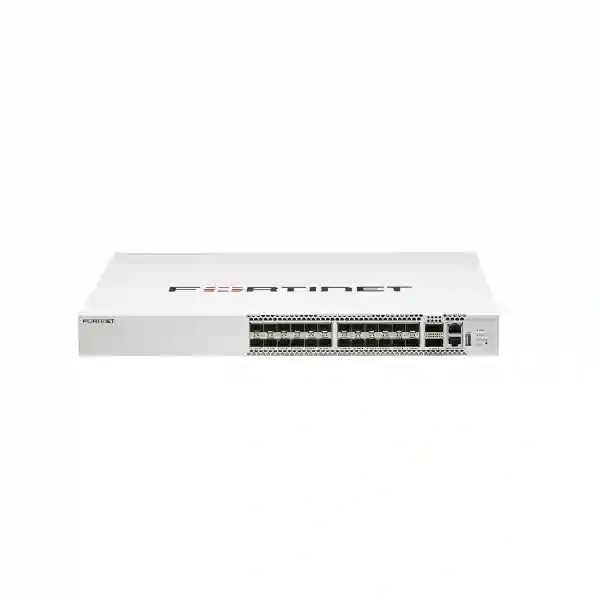
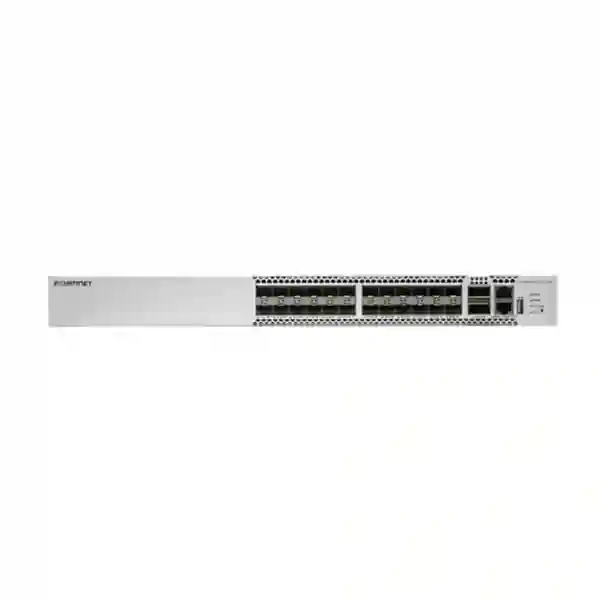
FortiSwitch FS-1024E is a high-speed Fortinet campus-core and data-center switch for organizations that need dense 10 Gigabit fiber connectivity, 100 Gigabit uplinks, low-latency forwarding and resilient power in a compact 1RU platform. The model provides 24 × 10G/1G SFP+/SFP ports and 2 × 100G/40G QSFP28/QSFP+ ports, with 880 Gbps switching capacity and 1309 Mpps packet forwarding. It can operate as a standalone switch or participate in a Fortinet architecture with FortiGate management, giving network teams a practical path to combine high-performance switching with security-oriented operations.
What the FS-1024E is designed to solve
Modern server rooms, campus backbones and aggregation layers frequently outgrow conventional Gigabit switching. Virtualized servers, storage traffic, backup jobs, high-density wireless infrastructure, firewall clusters and inter-building links can create sustained demand for faster east-west and north-south connectivity. FS-1024E addresses that requirement with twenty-four fiber-based 1/10GbE access or aggregation interfaces plus two high-speed 40/100GbE ports. This port mix makes the platform useful where many 10GbE connections need to converge onto faster backbone links without moving immediately to a much larger chassis.
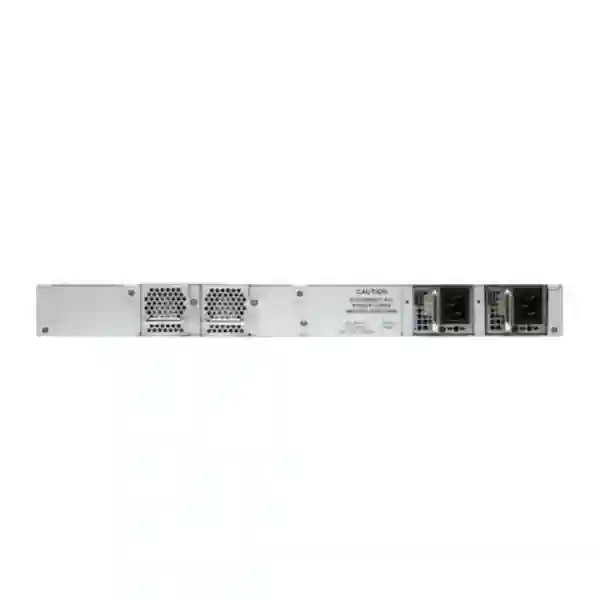
The switch is also designed for operational resilience. Fortinet specifies dual hot-swappable AC power supplies, front-to-back airflow and a rack-mountable 1RU chassis. For infrastructure teams, these details matter because a core or aggregation switch often supports many downstream systems. Redundant power can be planned across separate power sources where the facility design supports it, while front-to-back airflow aligns with common hot-aisle/cold-aisle rack practices. Procurement should still include a review of rack depth, power distribution, cooling, transceiver types, fiber standards and peer-device compatibility before ordering.
SFP+/SFP slots for fiber-based server, aggregation and backbone connections.
QSFP28/QSFP+ interfaces for high-capacity uplinks and backbone connectivity.
Duplex switching capacity with 1309 Mpps forwarding specified by Fortinet.
Hot-swappable power supplies for resilient infrastructure planning.
Verified technical specification highlights
| Specification | FortiSwitch FS-1024E |
|---|---|
| Network interfaces | 24 × 10G/1G SFP+/SFP; 2 × 100G/40G QSFP28/QSFP+ |
| Switching capacity | 880 Gbps duplex |
| Forwarding | 1309 Mpps at 64 bytes |
| MAC address storage | 64K |
| VLANs supported | 4K |
| Packet buffer | 8 MB |
| Memory / storage | 8 GB DDR4, 32 MB NOR flash, 8 GB SSD |
| Form factor | 1RU rack mount |
| Power | 100–240V AC, 50–60 Hz; dual hot-swappable AC |
| Maximum power consumption | 176 W |
| Operating temperature | 0°C to 45°C |
| Airflow | Front to back |
These specifications should be treated as the baseline for design, not as a substitute for compatibility checking. Optics, breakout behavior, cable type, distance, FortiOS/FortiSwitchOS version, neighboring switch capabilities and required routing features should be reviewed for the exact project. This is particularly important when a 100GbE port must interoperate with a lower-speed peer or when existing transceivers are intended for reuse.
FortiGate integration and management choices
Fortinet positions FortiSwitch with standalone and integrated deployment choices. In a FortiGate-centered environment, compatible FortiSwitch infrastructure can be managed through FortiLink so administrators can coordinate network access and security operations from the Fortinet ecosystem. For organizations already using FortiGate at the internet edge or data-center boundary, this can reduce the separation between firewall and switching administration. Standalone deployment remains relevant when the switch must fit an existing multi-vendor network or when operational policy calls for independent switch management.
The correct choice depends on the network architecture. A greenfield Fortinet environment may prioritize integrated visibility and policy workflows, while a data center with established routing, monitoring and automation practices may prioritize standalone operation. Before deployment, document VLANs, trunks, link aggregation, routing adjacencies, management addressing, administrative access, logging, NTP, authentication, monitoring and configuration backup. This preparation helps keep the switch implementation aligned with change-control and recovery requirements.
Use cases for Tanzania organizations
FS-1024E is most relevant when the network requirement genuinely needs high-speed fiber aggregation. Typical designs can include top-of-rack server connectivity, firewall aggregation, campus core switching, data-center distribution, virtualization clusters, storage-adjacent networks, high-speed links between network zones and aggregation of multiple access switches. It is not a PoE access switch, so projects needing direct power for IP phones, cameras or wireless access points should plan compatible PoE access-layer switches separately and use the FS-1024E higher in the network hierarchy.
For a headquarters or campus, the switch can aggregate downstream switching blocks and provide 100GbE uplinks toward a core, firewall or another high-capacity switch. For a server environment, its SFP+/SFP density can support 10GbE server or appliance connections where the selected transceivers and cabling match both ends. For a security architecture, it can sit alongside FortiGate platforms to provide the high-speed switching layer needed between protected network segments. In each case, sizing should consider current port use and realistic growth rather than simply selecting the fastest available hardware.
FortiSwitch FS-1024E Tanzania
Tanzania buyers evaluating the FortiSwitch FS-1024E are typically planning a network where ordinary 1GbE access switching is no longer enough at the aggregation or core layer. The practical starting point is a port map. List every server, firewall, storage system, distribution switch and backbone connection that will attach to the device, then record the required speed, media type and distance. The FS-1024E offers twenty-four 1/10GbE SFP/SFP+ positions and two 40/100GbE QSFP-family positions, so it is especially suitable for fiber-heavy designs. A port map also prevents a common procurement mistake: buying the switch but overlooking the required optics, fiber patch leads, breakout assemblies or compatible modules at the far end.
Tanzania projects should also account for power and environmental readiness. The switch is a 1RU platform with dual hot-swappable AC supplies and front-to-back airflow. In a properly designed rack, the two power inputs can be incorporated into the facility’s resilience plan. Cooling should be assessed against the equipment load and room conditions, and rack placement should preserve the intended airflow direction. For sites using UPS systems or generators, network continuity planning should consider the entire path—including firewalls, upstream carrier equipment and downstream switches—not only the FS-1024E.
For procurement, request a quotation that clearly separates the switch, required transceivers, cabling, support requirements and any deployment services. If the network already uses FortiGate, state the firewall model and software environment so FortiLink and management expectations can be reviewed. If the design is multi-vendor, provide the peer-switch and server NIC models where possible. FourTeck can use this information to help build a more complete bill of materials rather than treating the switch as an isolated item. For broader Fortinet planning, visit FourTeck Tanzania and discuss the switching requirement with the sales team.
FortiSwitch FS-1024E Dar es Salaam
In Dar es Salaam, the FS-1024E can fit organizations building higher-capacity server rooms, headquarters networks, service-provider-adjacent environments, hospitality backbones, financial systems, logistics operations and multi-floor enterprise campuses. The purchasing question should not begin with port count alone. Network teams should identify how much traffic must cross the aggregation layer during busy periods, whether 10GbE server links are already deployed, whether 100GbE uplinks are needed now or reserved for growth, and whether the design requires Layer 3 routing at the switch. Fortinet specifies IPv4/IPv6 routing support, but the precise feature set should always be checked against the intended software release and design.
Fiber planning is particularly important. An SFP+ slot does not by itself determine optical reach or fiber type. The transceiver, wavelength, multimode or single-mode cabling, connector path and far-end interface all have to match. For links between floors, buildings or racks, document the physical route and measured distance before choosing optics. Where existing optical modules are being reused, verify support rather than assuming compatibility. For 100GbE links, confirm whether the peer uses QSFP28, what speed it supports and whether a direct or breakout design is required.
Dar es Salaam procurement teams can improve quotation accuracy by sharing a simple topology diagram with device models, quantities and link speeds. Include whether the project is a new deployment, a replacement for an older core switch, or an expansion. State any requirement for installation windows, migration planning, configuration assistance and post-change testing. This makes it easier to distinguish hardware supply from engineering scope and avoids vague assumptions about stock or delivery. A well-defined request also allows the switch, optics and FortiGate integration to be reviewed as one solution rather than separate line items.
FortiSwitch FS-1024E Mwanza
For Mwanza organizations, the FS-1024E is a strong candidate when a central site must consolidate multiple high-bandwidth network segments. Universities, healthcare environments, larger commercial facilities, manufacturing operations, regional offices and data-intensive businesses may reach a point where 10GbE aggregation becomes a practical requirement. The switch’s 24 SFP/SFP+ positions allow a fiber-oriented design, while the two QSFP28/QSFP+ positions create a path for 40GbE or 100GbE backbone links. The value comes from matching that capability to a real topology rather than deploying capacity without a clear traffic plan.
A Mwanza rollout should include a migration strategy if the FS-1024E replaces an existing core. Document VLAN IDs, spanning-tree behavior, link aggregation, routing interfaces, default routes, dynamic routing, management networks and monitoring before the cutover. Capture the existing configuration and produce a rollback plan. If the new switch will connect to older 1GbE fiber equipment, confirm the intended SFP modules and port behavior. If it will connect to modern 10GbE servers, verify NIC optics or DAC compatibility and rack distances.
Resilience planning should include more than dual power. Consider whether a single switch is an acceptable failure domain or whether the network design needs paired core devices, redundant links and multi-chassis aggregation. Fortinet lists link aggregation capabilities for the platform, but the final architecture must be engineered around supported topology and software. Procurement teams should therefore ask for a solution discussion that covers redundancy objectives, not merely a unit price. This produces a bill of materials aligned to business continuity and makes later expansion easier to plan.
FortiSwitch FS-1024E Arusha
Arusha businesses evaluating the FortiSwitch FS-1024E may include hospitality groups, institutions, regional headquarters, large office environments and organizations consolidating server or network infrastructure. For these environments, one useful design approach is to separate access, aggregation and security roles. PoE access switches can serve endpoints such as access points, phones and cameras, while the FS-1024E provides higher-speed fiber aggregation. A FortiGate can then provide the required security boundary and policy enforcement. This layered approach keeps the FS-1024E focused on the high-capacity role for which its interface mix is designed.
When planning the uplinks, calculate oversubscription intentionally. Twenty-four 10GbE connections can represent substantial aggregate demand, but real workloads rarely transmit at maximum simultaneously. The two 100GbE interfaces give designers options for upstream capacity, yet the correct topology depends on traffic patterns, redundancy and peer-device capability. Backup systems, virtualization migration, video workloads and storage traffic can produce bursts that differ significantly from ordinary office use. Measuring current utilization before migration gives a better basis for design.
Arusha procurement requests should specify whether transceivers are required and the approximate fiber distances. This matters because the switch chassis and optics are separate design decisions. Include rack and power details, desired support term, planned management mode and any FortiGate integration requirement. For multi-site organizations, also explain whether configuration standards must be repeated at other branches. FourTeck can then discuss the switch as part of a scalable network architecture, with quotation scope based on the actual project rather than unsupported assumptions about deployment.
FortiSwitch FS-1024E Dodoma
In Dodoma, organizations planning government-adjacent, institutional, education, enterprise or centralized IT networks may consider the FS-1024E where 10GbE fiber aggregation and 100GbE uplink capability fit the technical requirement. A core-switch decision should be driven by architecture, not brand familiarity alone. Begin with the number of distribution blocks, server connections, firewall interfaces and inter-building links. Then identify which connections need Layer 2 adjacency and which should be routed. This helps determine whether the FS-1024E’s capacity and interface layout align with the intended network.
Operational controls are equally important. Management access should be isolated appropriately, administrator authentication should follow organizational policy, configurations should be backed up, and monitoring should be connected to the existing operations process. Change documentation should include interface descriptions and link destinations so troubleshooting remains manageable after installation. For FortiGate-integrated deployments, management workflows can be designed around the Fortinet environment; for standalone use, ensure the switch fits the organization’s established logging and monitoring tools.
For a formal quotation in Dodoma, provide the exact model FS-1024E, quantity, required optics, link distances, expected deployment date and whether professional configuration is needed. If the project has tender specifications, share the technical requirements so each line can be checked against official Fortinet data. Avoid relying on generic reseller specification tables when a current Fortinet data sheet is available. This is especially important for features that can vary by software release or closely named model variants such as FS-T1024E.
FortiSwitch FS-1024E UAE
UAE buyers often evaluate high-speed switching for data centers, headquarters, system integrators and multi-site enterprise projects. The FS-1024E can serve as a compact fiber aggregation platform where 24 10GbE-class links and two 40/100GbE links suit the topology. Projects should distinguish the FS-1024E from the similarly named FS-T1024E: the FS-1024E uses SFP/SFP+ interfaces for its twenty-four primary ports, while the T1024E variant uses multi-gigabit copper interfaces. This difference is fundamental to cabling, optics and endpoint compatibility.
For UAE deployments, review rack airflow, redundant power feeds, optics and support requirements as a complete infrastructure package. Data-center designs may also need structured labeling, out-of-band management, spare optics and documented replacement procedures. When the switch connects to FortiGate firewalls, identify the firewall interface speeds and desired redundancy pattern. When it connects to third-party platforms, verify interoperability for LACP, VLANs, routing and optical standards before the implementation window.
Organizations coordinating a Tanzania project from the UAE can use FourTeck’s regional network to discuss cross-market requirements without assuming identical logistics in each country. For broader UAE technology support, FourTeck UAE provides a regional point of reference. Final availability, commercial terms and delivery arrangements should always be confirmed through a current quotation for the specific destination and bill of materials.
FortiSwitch FS-1024E Uganda
Uganda organizations considering FS-1024E may be planning a central data room, enterprise campus, service aggregation layer or regional network hub. The switch’s 10GbE fiber density can support server and distribution links, while 100GbE ports provide higher-capacity uplink options. Before selecting the model, determine whether the environment genuinely needs fiber on all twenty-four primary interfaces. If the requirement is predominantly copper multi-gigabit access, another FortiSwitch model may be a better architectural fit.
For cross-border organizations operating in both Tanzania and Uganda, standardization can simplify spares, documentation and administrator training. However, standardization should not override site-specific needs. Each location may have different rack layouts, fiber plant, carrier handoffs, server interfaces and power resilience. Build a site bill of materials that identifies the switch, optics, patching and upstream/downstream dependencies. This reduces the chance of receiving the main chassis while missing small components required for commissioning.
FourTeck’s Uganda technology site can support regional procurement conversations. Buyers should provide the target city, exact model, quantity and design requirements and request confirmation of current commercial conditions. Technical teams should separately validate firmware, optics and topology before migration. Keeping commercial confirmation and technical validation as explicit steps helps prevent assumptions from entering the project plan.
FortiSwitch FS-1024E Kampala
Kampala enterprise networks can use the FS-1024E as a high-speed aggregation or core component when there is a clear requirement for 10GbE fiber and 100GbE uplinks. Typical planning inputs include the number of server racks, distribution switches, firewall ports, storage links and backbone circuits. The switch’s 880 Gbps switching capacity provides substantial headroom for a compact 1RU device, but actual network performance still depends on topology, optics, peer devices and configuration.
A migration in Kampala should include pre-staging whenever possible. Define VLANs, trunks, routing, LAGs, management IP addressing and administrator access before the maintenance window. Label every fiber pair and verify transmit/receive paths. If the deployment introduces 100GbE for the first time, check patch-panel and fiber specifications rather than assuming existing infrastructure will support the selected optics. Test critical application paths after cutover, including server access, internet routing, VPN reachability and management systems.
Commercial requests should state whether the requirement is chassis only or a complete deployment kit. A complete request can include transceivers, patch cables, rack accessories where applicable, configuration scope and support expectations. This allows the quotation to reflect the project more accurately and gives procurement a clearer basis for comparison between offers. Current availability and delivery should be confirmed at quotation time rather than inferred from a web page.
FortiSwitch FS-1024E Arua
For Arua sites, the business case for FS-1024E is strongest when the location acts as a regional aggregation point or hosts infrastructure that benefits from multiple 10GbE fiber connections. A smaller branch with ordinary office endpoints may not need a data-center-class switch, so sizing should begin with actual traffic and topology. Where a regional hub connects servers, security appliances and downstream switches, the FS-1024E can provide a compact platform with room for high-speed uplinks.
Power continuity deserves careful attention. Dual hot-swappable power supplies improve device-level resilience, but both inputs should not simply be connected to the same unprotected source if the objective is fault tolerance. Facilities teams can review separate PDUs, UPS paths and generator strategy according to site capability. Network designers should also consider redundancy beyond the chassis, including alternative links and whether a second core device is required by the organization’s availability target.
When requesting an Arua quotation, include installation context. State whether the switch will connect to FortiGate, existing third-party switches, servers or optical transport equipment. Provide required speeds and distances. This gives the supplier enough information to discuss suitable optics and avoids treating every SFP+ or QSFP module as interchangeable. A clear requirement is particularly valuable for remote deployments where a missing transceiver or incorrect cable can delay commissioning.
FortiSwitch FS-1024E Mbarara
Mbarara organizations building larger institutional, healthcare, education, commercial or regional networks may use FS-1024E to consolidate high-speed fiber connections at the core. The platform supports 4K VLANs and IPv4/IPv6 routing according to Fortinet’s current data sheet, making it suitable for segmented environments when configured for the required design. VLAN scale alone should not drive selection; the architecture should define segmentation boundaries, routing ownership and security enforcement before configuration begins.
Where FortiGate provides the security boundary, network teams can decide whether routing should occur on the firewall, the switch or a combination based on inspection requirements and traffic flows. Moving every internal flow through a firewall can provide security visibility but may alter performance requirements; routing more traffic on the core can reduce firewall transit but changes policy enforcement. This is a design decision that should be made deliberately, with FortiGate and FortiSwitch capacities considered together.
For procurement, create a line-by-line checklist covering switch quantity, optics, fiber patching, management method, rack location, power feeds, support, configuration and migration. If the network will grow, reserve ports and uplink capacity based on a documented expansion forecast. This helps the FS-1024E remain useful as the environment evolves rather than becoming fully occupied immediately after installation.
FortiSwitch FS-1024E Gulu
Gulu buyers should approach FS-1024E as infrastructure for a high-capacity network layer rather than a general-purpose desktop access switch. Its SFP/SFP+ interfaces favor optical or compatible direct-attach connectivity, and it does not provide PoE ports. If users, phones, cameras and access points need powered Ethernet, deploy appropriate PoE access switches and aggregate them upstream. This separation can create a cleaner design in which endpoint connectivity, backbone switching and firewall security each have defined roles.
Before installation, audit the fiber plant. Record connector types, fiber category, path length and existing optics. Older fiber routes may limit the practical options for 10GbE or 100GbE, so testing or remediation may be needed. Where new fiber is being installed, design it around both current requirements and plausible future uplink speeds. The network team should also document spare strands and patch-panel labeling to simplify future troubleshooting.
A Gulu quotation should be based on the complete intended link plan. If the project is phased, identify which optics are needed in phase one and which can wait. This can make budgeting clearer while preserving a defined expansion path. Ask for current commercial confirmation for hardware and accessories and avoid assuming that a product page indicates live stock. Technical acceptance should include link tests, redundancy tests and configuration backup before the project is considered complete.
FortiSwitch FS-1024E Kenya
Kenya enterprises can consider FS-1024E for campus-core, aggregation and data-center applications where dense 10GbE fiber connectivity and 100GbE uplinks are appropriate. Multi-country businesses often want consistent architecture across Nairobi and Tanzania operations, and Fortinet switching can support that objective when the site requirements are comparable. A shared design standard can define VLAN naming, management, logging, redundancy and security integration while still allowing each location to use the optics and port allocation it needs.
The model should be compared against the wider FortiSwitch family before purchase. A requirement for more 10GbE ports, different uplink density, multi-gigabit copper or PoE can point to another platform. Fortinet’s portfolio spans access through campus core and data center, so choosing by model number alone is unnecessary. The FS-1024E is particularly clear in purpose: twenty-four 1/10GbE fiber slots, two 40/100GbE uplinks and substantial switching performance in 1RU.
For Kenya-specific Fortinet context, see Fortinet solutions from FourTeck Kenya. Organizations coordinating purchases across Kenya and Tanzania should request destination-specific quotations because taxes, logistics, support scope and availability can differ. From a technical perspective, keep the architecture consistent by documenting approved transceivers, software versions and configuration standards for each site.
FortiSwitch FS-1024E Kuwait
Kuwait data-center and enterprise projects may use FS-1024E where compact 10GbE aggregation and 100GbE backbone connectivity match the rack design. Environmental planning remains important even in modern facilities: confirm front-to-back airflow alignment, available rack depth, power feeds and cooling capacity. Fortinet specifies a maximum power consumption of 176 W for the FS-1024E, but facility planning should account for all adjacent equipment and redundancy infrastructure.
Network engineers should also confirm optical standards before procurement. The switch provides the slots; the actual link characteristics depend on selected modules and cabling. For 100GbE uplinks, determine whether the far end is 100GbE or 40GbE and whether breakout is part of the design. For 10GbE ports, identify whether links are short rack-level connections or longer fiber runs. This prevents last-minute changes when the switch arrives.
Regional buyers can reference FourTeck Kuwait for market-specific technology enquiries. A Tanzania-bound project managed by a Kuwait organization should still use a Tanzania-specific bill of materials and commercial confirmation. Separating the engineering standard from local procurement details gives multi-country IT teams consistency without assuming identical supply conditions.
FortiSwitch FS-1024E Ghana
Ghana organizations with high-speed campus or server infrastructure can evaluate FS-1024E for aggregation and core roles. The most useful assessment compares current interface utilization with expected growth. If a site has many 10GbE servers or distribution links and needs a path to 100GbE upstream connectivity, the model’s port mix can be efficient. If most endpoints are 1GbE copper and require PoE, a different access-layer platform should handle those connections while FS-1024E sits higher in the hierarchy.
Operational readiness includes monitoring and configuration governance. Define who administers the switch, how changes are approved, where backups are stored and how alerts are handled. For integrated Fortinet environments, management can align with FortiGate workflows; standalone environments should connect to established monitoring and authentication systems. The objective is to ensure that high-performance hardware does not become an unmanaged point of operational risk.
For a Ghana project coordinated with Tanzania, maintain a shared technical template but verify each site’s fiber and power environment independently. Cross-country standardization works best when it covers configuration conventions and approved hardware while allowing local differences in link distance and facility design. Request current commercial confirmation for each destination rather than extrapolating price or availability from another market.
FortiSwitch FS-1024E Nigeria
Nigeria enterprises, campuses and data-center operators may consider the FS-1024E for high-throughput aggregation where many 10GbE fiber links converge. With 880 Gbps switching capacity and 1309 Mpps forwarding, the hardware has substantial performance for a 1RU platform. The design still needs to account for traffic patterns, routing, redundancy and security inspection. A fast switch cannot compensate for an undersized firewall, congested uplink or mismatched optical path elsewhere in the network.
Power architecture should be documented before deployment. Dual hot-swappable supplies provide a basis for resilient power, while UPS and generator strategy remain site responsibilities. Consider how the upstream firewall, downstream switches, management systems and carrier equipment behave during power events. For critical sites, test recovery procedures and ensure configuration backups are available outside the device.
Nigeria procurement teams should provide a topology and link schedule with their request for quote. Include quantities, optics, distances, desired support and whether implementation assistance is needed. This helps separate verified product capabilities from project-specific services and prevents assumptions about what is included. Where the same organization operates in Tanzania, the topology can be standardized while the bill of materials is adjusted to local fiber and facility conditions.
FortiSwitch FS-1024E Seychelles
Seychelles organizations with centralized hospitality, government, financial, service or enterprise infrastructure may use high-speed fiber aggregation to connect server rooms, buildings and security systems. FS-1024E can be considered where 10GbE links and 40/100GbE uplinks match the design. Because island deployments can make replacement logistics and site visits more consequential, planning the complete bill of materials—including appropriate spare optics and documented configuration backups—can be especially valuable.
The network team should verify fiber distances and environmental conditions before ordering optics. For campus links, identify whether cabling is multimode or single-mode and document connector paths. For rack-level server links, consider the approved connection method for the equipment at both ends. If the switch is part of a Fortinet Security Fabric design, confirm the FortiGate integration and management approach before staging.
Procurement should also distinguish hardware resilience from architecture resilience. Dual power supplies protect against certain power-component failures, but a single switch can still represent a concentration point. Organizations with strict availability targets should evaluate redundant switching, diverse links and tested failover. FourTeck can discuss the FS-1024E requirement as part of a broader network bill of materials, while current supply and delivery terms should be confirmed for the specific Seychelles project.
Selection, optics and compatibility checklist
A successful FS-1024E purchase begins with the physical and logical design. Count required 1/10GbE links and identify which are SFP versus SFP+. Record the required 40/100GbE uplinks and peer interfaces. Measure fiber distances and identify multimode or single-mode cabling. Confirm whether any direct-attach or breakout connections are planned. Document FortiGate integration requirements, VLANs, routing, LAGs and redundancy. Confirm rack space, airflow direction, power feeds and management connectivity. Finally, identify support and implementation scope. Completing these items before ordering makes it much easier to build an accurate quotation.
Compatibility deserves explicit validation because high-speed networking involves more than matching connector shapes. Transceiver coding, optical standard, wavelength, fiber type and supported speed must align. When connecting to third-party switches or server adapters, validate both ends. When using 100GbE interfaces at a different speed, check the official Fortinet documentation for supported port behavior and breakout requirements. Avoid assuming that every QSFP module or cable can negotiate every lower speed.
Related Fortinet planning
The FS-1024E is often only one component in a secure network. FortiGate can provide firewalling and security policy at the network edge or between zones; FortiSwitch access models can connect users and devices; FortiAP can address wireless access; and centralized Fortinet tools may be considered for larger environments. The exact combination depends on the project. A campus with many PoE endpoints will have different access-layer needs from a server-heavy data center, even if both use the FS-1024E at aggregation.
For organizations comparing regional approaches, FourTeck’s wider technology network can provide additional context alongside the Tanzania site. Keep the final design grounded in current official vendor documentation and a site-specific assessment.
FortiSwitch FS-1024E FAQ
How many ports does the FortiSwitch FS-1024E have?
Fortinet specifies 24 × 10G/1G SFP+/SFP ports plus 2 × 100G/40G QSFP28/QSFP+ ports. It also has a 10/100/1000 service port and an RJ-45 serial console port for management purposes.
What is the switching capacity of FS-1024E?
The current Fortinet data sheet lists 880 Gbps duplex switching capacity and 1309 Mpps packet forwarding at 64-byte packets.
Does FS-1024E provide PoE?
No. Fortinet lists no PoE ports or PoE budget for the FS-1024E. Use appropriate PoE access switches for powered endpoints and aggregate them to the FS-1024E where the architecture requires it.
Can FortiSwitch FS-1024E work with FortiGate?
Fortinet positions FortiSwitch for standalone or integrated deployment, and FortiSwitch models can be managed through FortiGate in supported FortiLink designs. Confirm the intended FortiGate model, software versions and topology for the specific deployment.
Is FS-1024E a copper switch?
Its twenty-four main network interfaces are SFP/SFP+ slots rather than fixed copper BASE-T ports. Buyers needing twenty-four multi-gigabit copper interfaces should not confuse FS-1024E with the FS-T1024E variant.
What should I provide for a Tanzania quotation?
Provide the exact model, quantity, required 10GbE and 100GbE link counts, fiber distances, peer-device models, optics requirements, deployment location, desired support and whether configuration or migration assistance is required. This supports a more accurate bill of materials.
Quotation checklist
Before requesting a FortiSwitch FS-1024E quote, prepare: switch quantity; list of 1/10GbE connections; list of 40/100GbE connections; fiber type and approximate distance for each optical link; required transceivers or DACs; peer-device models; FortiGate model if integration is planned; rack and power information; target deployment schedule; support expectations; and configuration or migration scope. A topology diagram is highly useful even when it is simple.
Decision recap
Choose the FS-1024E when the project needs a compact Fortinet switch centered on dense 10GbE fiber connectivity, high-capacity 40/100GbE uplinks, Layer 2/Layer 3 capability and redundant hot-swappable power. Reconsider the model if the requirement is primarily copper access, endpoint PoE or a substantially different port density. The best procurement outcome comes from validating the complete topology and optics before purchase, then aligning management with either a standalone workflow or a supported FortiGate-integrated design.
Plan your FortiSwitch FS-1024E deployment with FourTeck
Share your topology, link speeds, fiber distances, FortiGate environment and target location. FourTeck can help structure the procurement conversation around the exact switch, optics and deployment scope required for your Tanzania or regional project. Pricing, availability, delivery and support terms should be confirmed in the current quotation.


Reviews
There are no reviews yet.