
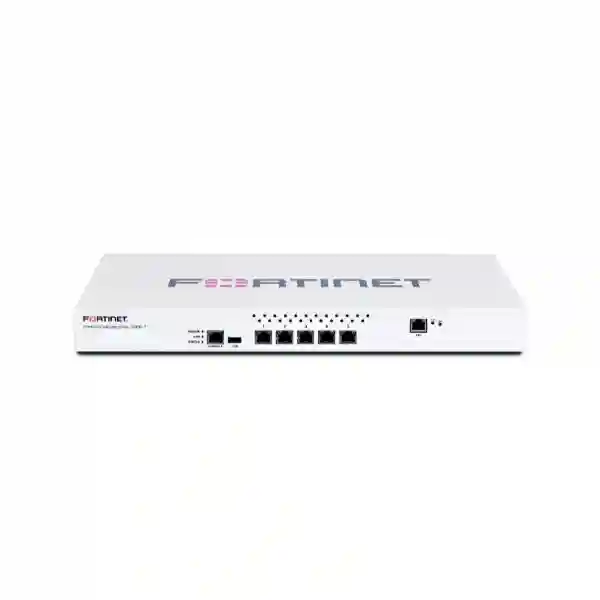
FortiVoice FVE-5000H Tanzania
FortiVoice FVE-5000H is a large-enterprise Fortinet business phone system for organizations that want a centralized IP PBX platform capable of supporting substantial extension and SIP trunk requirements. Fortinet lists the FVE-5000H for up to 5,000 extensions and 500 VoIP trunks, with optional FortiFone Softclient, Call Center, Hotel Management, Call Trunks and Notification capabilities. For Tanzania enterprises, universities, hospitality groups, healthcare networks, public institutions, financial organizations, logistics operators and multi-site companies, the purchasing discussion should start with user counts, call concurrency, branch topology, carrier services, endpoint mix, resilience expectations and integration requirements rather than appliance price alone.
FortiVoice FVE-5000H Overview
The FVE-5000H sits at the high-capacity end of Fortinet’s FortiVoice hardware portfolio. Its role is to provide enterprise telephony functions from a dedicated appliance while giving administrators a platform for extensions, trunks and communications applications. A successful deployment is not simply a matter of installing an IP PBX. Organizations should map extension numbering, departments, hunt groups, reception workflows, auto attendants, emergency calling requirements, call recording policies where applicable, remote-worker needs, branch connectivity, voice VLANs, quality-of-service policies and backup procedures before migration.
Official Fortinet positioning makes the appliance relevant to large organizations consolidating substantial user populations.
Capacity planning should still account for actual concurrent call demand, carrier design and redundancy requirements.
Fortinet lists Softclient, Call Center, Hotel Management, Call Trunks and Notification as add-on options for this platform.
Planning a FortiVoice FVE-5000H Deployment
Large voice deployments benefit from a discovery phase. Procurement and IT teams should document the number of employees, common-area phones, meeting-room devices, reception consoles, analog devices, remote users, contact-center agents and expected growth. The design should also identify SIP service providers, number-porting requirements, inbound and outbound routing, branch survivability expectations, WAN dependencies and any existing PBX that must coexist during migration. This information helps create a quotation that reflects the complete solution rather than only the core appliance.
Network readiness is equally important. Voice quality depends on stable LAN switching, appropriate VLAN design, sensible QoS, sufficient WAN performance and disciplined troubleshooting. Where branches communicate over VPN or private WAN links, the design should evaluate latency, jitter, packet loss and failover behavior. Security policy should cover administrative access, account privileges, firmware maintenance, configuration backups, SIP exposure and controlled remote connectivity. Buyers can also review broader Fortinet security options through FourTeck Tanzania and regional requirements through FourTeck Uganda, FourTeck Kenya, FourTeck Ghana and FourTeck Nigeria.
FortiVoice FVE-5000H Tanzania
For Tanzania organizations, the FVE-5000H is most relevant where voice communications need to serve a large employee base or consolidate multiple departments and sites. Typical evaluation areas include headquarters telephony, campus communications, contact-center requirements, hospitality operations, healthcare administration and multi-branch business calling. A Tanzania procurement team should first establish the current extension count and expected three-to-five-year growth, then separate ordinary office users from call-intensive roles such as reception, customer care, reservations and sales. That distinction improves endpoint and trunk planning.
Carrier connectivity deserves specific attention. The appliance’s published VoIP-trunk capacity does not remove the need to confirm SIP service availability, numbering, routing, failover and commercial terms with the chosen telecommunications provider. If an organization is replacing a legacy PBX, the migration plan should document existing numbers, analog lines, fax or door-phone dependencies, paging, recording requirements and business-critical call flows. Staged cutover can reduce disruption by validating representative departments before wider migration.
Tanzania buyers should request a quote that separates the appliance, support entitlement, optional applications, phones, gateways where required, switching, configuration, migration and training. This makes comparisons more meaningful and helps finance teams understand recurring versus one-time costs. FourTeck can use the resulting bill of requirements to discuss a suitable architecture without assuming that every deployment needs every optional module.
FortiVoice FVE-5000H Dar es Salaam
Dar es Salaam enterprises often operate headquarters, customer-service teams, warehouses, retail locations or distributed offices where reliable business calling is tied closely to daily operations. An FVE-5000H project should therefore begin with workflow mapping: who answers the main number, how calls move between departments, which users need direct inward dialing, how after-hours calls are handled and what happens when a WAN or carrier service is unavailable. These operational questions are more useful than choosing a PBX solely from a headline extension figure.
Organizations with busy customer-facing teams should estimate concurrent calls at peak periods and identify queueing, reporting, supervisor and recording needs before selecting call-center options. Companies with branches outside Dar es Salaam should document how sites connect to headquarters and whether centralized telephony remains acceptable during WAN interruptions. Voice VLANs, PoE switching, UPS coverage and configuration backups should be included in the infrastructure review.
For quotation preparation, provide the present phone count, projected growth, branch count, SIP carrier details, existing PBX model, endpoint preferences, analog-device requirements and any integration objectives. A clear requirement allows suppliers to distinguish mandatory components from optional enhancements and gives the customer a better basis for technical and commercial comparison.
FortiVoice FVE-5000H Mwanza
Organizations evaluating FortiVoice FVE-5000H in Mwanza may include regional headquarters, healthcare groups, educational institutions, hospitality businesses, manufacturers, distributors and service organizations. The central question is whether a high-capacity centralized PBX matches the organization’s scale and operating model. Buyers should count not only desk-phone users but also common-area devices, reception positions, meeting spaces, remote staff and future sites.
A Mwanza deployment should include a network-readiness assessment before handover. Switching capacity, PoE budget, VLAN configuration, DNS and DHCP design, WAN quality and firewall policy all influence voice reliability. If remote branches depend on the central appliance, test realistic traffic paths and define escalation procedures for carrier or network faults. For businesses migrating from analog or hybrid systems, gateways and transitional routing may be necessary depending on retained devices and lines.
Procurement documentation should identify what is included in the base hardware and what requires separate licensing, services or accessories. Fortinet lists several optional FortiVoice capabilities; the exact combination should be matched to the project. Asking for a structured bill of materials, implementation scope and support term helps avoid ambiguity during evaluation.
FortiVoice FVE-5000H Arusha
Arusha businesses considering the FVE-5000H may place particular emphasis on hospitality, travel operations, institutions, corporate offices and organizations coordinating multiple sites. Hotel or guest-service environments should map front-desk calling, room or staff extensions, reservations workflows, emergency procedures and any property-management integration requirements before deciding on optional hotel-management functionality. Integration feasibility should always be verified against the exact third-party systems in use.
For corporate environments, directory planning and extension governance become important at scale. A consistent numbering plan, standardized phone profiles and documented call-routing rules make administration easier as departments change. Remote and mobile staff may require softclient planning, but organizations should evaluate authentication, network security and user-support processes alongside convenience.
A useful Arusha quotation request should specify user classes rather than only a total quantity. Separate executives, standard office users, receptionists, contact-center agents, common areas and remote users. This helps determine endpoint features and avoids applying an expensive one-size-fits-all phone profile across the organization.
FortiVoice FVE-5000H Dodoma
Dodoma organizations evaluating enterprise communications frequently need formal procurement documentation, predictable administration and a clear migration plan. For an FVE-5000H project, the technical specification should state the required extension capacity, trunking approach, redundancy expectations, endpoint quantities, optional applications, integration scope, implementation responsibilities and acceptance criteria. This prevents a procurement exercise from comparing offers that contain materially different components.
Large institutions should also define administrative roles. PBX administrators, help-desk staff and department coordinators may need different levels of access. Configuration changes should be documented, backups protected and software maintenance scheduled. Where voice services support public-facing operations, a rollback plan and staged migration can reduce risk during cutover.
Before purchase, verify the exact Fortinet orderable items and support terms applicable to the required configuration. The base model name should not be confused with support bundles that include FortiCare terms. FourTeck can help turn a requirements document into a quotation discussion while the customer retains a clear distinction between hardware, optional features and services.
FortiVoice FVE-5000H UAE
For organizations coordinating Tanzania and UAE operations, a common communications architecture can simplify extension planning, support processes and procurement standards. The FVE-5000H may be evaluated for a central or major regional deployment where its published capacity aligns with the enterprise user base. Cross-border organizations should nevertheless avoid assuming that carrier services, numbering rules or emergency-calling requirements are identical between markets.
The design should separate platform standardization from telecom-provider specifics. Phone profiles, administrative procedures and security controls can often be standardized, while SIP services and numbering must be validated locally. Multi-region companies should also define where the PBX is hosted physically, how remote offices reach it and what business continuity measures apply if an international link fails.
For broader UAE technology sourcing and coordination, customers can consult FourTeck UAE. A cross-region bill of materials should clearly state which components are destined for each site and which services are locally procured.
FortiVoice FVE-5000H Uganda
Uganda enterprises considering the FVE-5000H should evaluate whether centralized enterprise telephony supports their headquarters and branch strategy. Large organizations with offices across multiple cities can benefit from consistent extension plans and shared administration, but WAN resilience becomes increasingly important when branch calling depends on a central system.
The planning exercise should document user counts per site, concurrent call expectations, carrier services, network links and critical departments. A financial institution may prioritize controlled administration and call records; a university may prioritize campus extension scale; a hospitality group may emphasize front-desk and guest-service workflows. These different operating models should produce different implementation scopes even when the appliance model is the same.
Uganda buyers can coordinate regional requirements through FourTeck’s Uganda site while keeping the Tanzania project specification aligned where shared standards are desirable. Quotes should identify support terms, optional applications and endpoint quantities explicitly.
FortiVoice FVE-5000H Kampala
Kampala headquarters and large institutions may use enterprise telephony as a shared service for several departments or branches. Before selecting the FVE-5000H, map the busiest calling periods, receptionist workload, queue requirements, direct numbers and inter-branch call patterns. Capacity figures are a starting point; the operational design determines whether the platform is configured effectively.
Network teams should prepare voice VLANs, QoS and monitoring before endpoint rollout. Procurement teams should separately identify handsets, softclients, gateways and optional applications. If the project replaces an existing PBX, number migration and user training should be scheduled so employees understand new dialing and voicemail workflows.
A pilot group representing several departments can expose routing or usability issues before mass deployment. This is especially useful for organizations with custom reception procedures or complex after-hours rules.
FortiVoice FVE-5000H Arua
Arua operations linked to a larger enterprise may evaluate the FVE-5000H as part of a centralized communications design rather than as an isolated site purchase. In this scenario, WAN dependency, branch survivability and support escalation matter as much as extension capacity. The project should document what users can still do during a link interruption and how calls are restored after connectivity returns.
Endpoint planning should reflect local roles. A regional office may need standard desk phones, reception devices, conference endpoints and selected softclient users rather than a uniform device for everyone. Network readiness should include PoE capacity and UPS planning for switches and phones where continuity is important.
When requesting a quote, include the Arua user count within the wider enterprise total and state whether numbers and trunks are local or centralized. This makes the architecture easier to assess and prevents assumptions about carrier services.
FortiVoice FVE-5000H Mbarara
Mbarara businesses and institutions considering enterprise voice should define growth and branch integration early. A high-capacity PBX can be attractive for standardization, but the final design should be based on measured requirements. Document the number of active extensions, expected new departments, remote staff and peak external calling.
Organizations with customer-service functions should identify whether queueing, reporting or supervisor capabilities are required and confirm the appropriate FortiVoice options. For general office users, simpler call features may be sufficient. This segmentation can make endpoint and license planning more efficient.
Implementation planning should include configuration backup, administrator access, firmware maintenance, user onboarding and support ownership. These operational items are easy to overlook in hardware-focused quotations but strongly influence the long-term quality of the deployment.
FortiVoice FVE-5000H Gulu
For Gulu sites participating in a multi-location voice environment, the key decision is how much functionality should be centralized and how much local resilience is required. The FVE-5000H can provide substantial central capacity, but branch connectivity must be engineered appropriately. Assess WAN reliability, bandwidth competition and failover procedures before moving critical voice traffic.
A clear numbering plan also matters when multiple locations share one platform. Prefixes or structured ranges can make administration and troubleshooting easier, while direct inward dialing can be assigned according to business need and carrier availability. Document emergency and external calling policies during design rather than after rollout.
For procurement, distinguish appliance capacity from the number of endpoints actually required at the Gulu location. A centralized system may support thousands of users overall while a regional site needs only a subset of phones and licenses.
FortiVoice FVE-5000H Kenya
Kenya organizations with Tanzania operations may seek a common communications standard across both markets. The FVE-5000H can be considered where the combined enterprise scale justifies a high-capacity appliance, but each country’s carrier and numbering requirements should be validated independently. A regional design should state whether the platform is centralized or whether separate systems interoperate.
For multi-country projects, create a site matrix listing users, endpoints, SIP services, WAN links, local support contacts and critical call flows. This makes it easier to identify which requirements can be standardized and which are location-specific. Security and administration policies should be consistent where possible, including privileged access and configuration backup.
FourTeck Kenya can support Kenya-side technology discussions while Tanzania requirements remain documented for the local project. Procurement teams should request clearly separated pricing and scope by destination.
FortiVoice FVE-5000H Kuwait
Kuwait-linked enterprises considering a common FortiVoice strategy should first determine whether the FVE-5000H will serve a single large site or participate in a broader regional architecture. User scale, SIP connectivity, endpoint standards and business continuity should be documented before commercial evaluation.
Cross-border projects benefit from a consistent configuration baseline, but local telecom regulations and carrier offerings must be confirmed in each market. Avoid assuming that number portability, emergency calling or SIP service features are identical. The architecture should also consider latency between sites and define how remote offices operate if the primary system becomes unreachable.
A regional bill of materials should distinguish centrally purchased hardware from locally sourced telecom services. This gives procurement teams better control of responsibilities and avoids mixing recurring carrier costs with platform costs.
FortiVoice FVE-5000H Ghana
Ghana organizations evaluating the FVE-5000H can use the same disciplined sizing approach: count users by role, estimate peak concurrent calls, document carrier trunks and identify optional applications. Large capacity should support an actual business requirement rather than simply provide unused headroom.
Multi-site businesses should assess WAN resilience and voice quality between branches. Contact-center teams should document queue behavior, supervisor needs and reporting expectations. Hospitality or institutional buyers should identify specialized workflows and verify integration compatibility before procurement.
For Ghana-side coordination, FourTeck’s Ghana presence can be used as a regional technology reference while Tanzania procurement remains scoped independently. A structured quotation should make hardware, support, phones, options and services easy to compare.
FortiVoice FVE-5000H Nigeria
Nigeria enterprises with large user populations may evaluate the FVE-5000H for centralized business calling, contact-center support or multi-site standardization. The technical team should establish concurrency and WAN requirements rather than equating the maximum extension count with simultaneous call capacity. Carrier architecture, failover and routing remain separate design considerations.
Large deployments should use formal change management. Number plans, auto attendants, call permissions and administrative roles should be documented so changes can be reviewed and reversed when necessary. Security teams should include the voice platform in access-control, monitoring and backup policies.
Regional buyers can use FourTeck Nigeria for Nigeria-specific coordination while maintaining separate Tanzania requirements. This is particularly useful for groups seeking consistent endpoint standards or administrative processes across subsidiaries.
FortiVoice FVE-5000H Seychelles
Seychelles organizations assessing a high-capacity FortiVoice platform should pay close attention to the relationship between centralized communications and connectivity resilience. Hospitality groups, service organizations and multi-property operators may have specialized call flows that require careful mapping before migration.
Hotel environments should document reception, reservations, room or staff calling, emergency procedures and any integration expectations. Corporate environments should focus on extension structure, SIP services, remote users and business continuity. In either case, verify compatibility with third-party systems rather than assuming an integration is supported.
Quotations should include only the options actually required and identify implementation assumptions clearly. This helps decision-makers compare solutions on a like-for-like basis and plan support responsibilities after handover.
Compatibility, Integration and Network Readiness
An enterprise IP PBX touches many parts of the IT environment. Review switching, VLANs, DHCP, DNS, firewall policy, WAN routing, SIP connectivity, identity processes and endpoint provisioning. Where third-party phones, gateways, recording platforms or business applications are proposed, confirm support against current Fortinet documentation and the exact software release. Compatibility should never be assumed from standards terminology alone.
Voice traffic should be separated and prioritized appropriately where network congestion could affect call quality. Administrators should monitor packet loss, latency and jitter, especially across branch links. UPS protection for the PBX, switches and critical network equipment should be considered according to the organization’s continuity objectives.
Buying and Quotation Checklist
Prepare the following before requesting a FortiVoice FVE-5000H quotation: current and projected extension counts; peak concurrent external calls; SIP carrier and trunk requirements; branch locations; endpoint quantities by user type; analog-device needs; softclient users; call-center, hotel-management or notification requirements; WAN topology; redundancy objectives; migration timeline; support term; installation responsibilities; training needs; and any third-party integration requirements.
FortiVoice FVE-5000H FAQs
How many extensions does FortiVoice FVE-5000H support?
Fortinet lists the FVE-5000H for up to 5,000 extensions. Actual deployment design should still consider endpoint types, calling patterns, software options and future growth.
How many VoIP trunks are listed for the FVE-5000H?
Fortinet lists 500 VoIP trunks for the FVE-5000H. Confirm carrier services and the required concurrent-call design separately.
What add-ons does Fortinet list?
Fortinet’s product page lists FortiFone Softclient, Call Center, Hotel Management, Call Trunks and Notification as add-ons for this model.
What information is needed for a Tanzania quote?
Share user count, branch count, endpoint needs, carrier requirements, concurrent-call estimates, optional application needs, existing PBX details, migration scope and preferred support term.
Decision Recap and Consultation
FortiVoice FVE-5000H is designed for large enterprise communications requirements, with Fortinet publishing capacity for up to 5,000 extensions and 500 VoIP trunks. The most useful next step is to validate whether that scale matches the organization, then build a complete design around trunks, phones, network readiness, optional applications, migration and support. FourTeck can review the requirement and prepare a commercial discussion without assuming stock, price or delivery terms until they are confirmed.




Reviews
There are no reviews yet.