
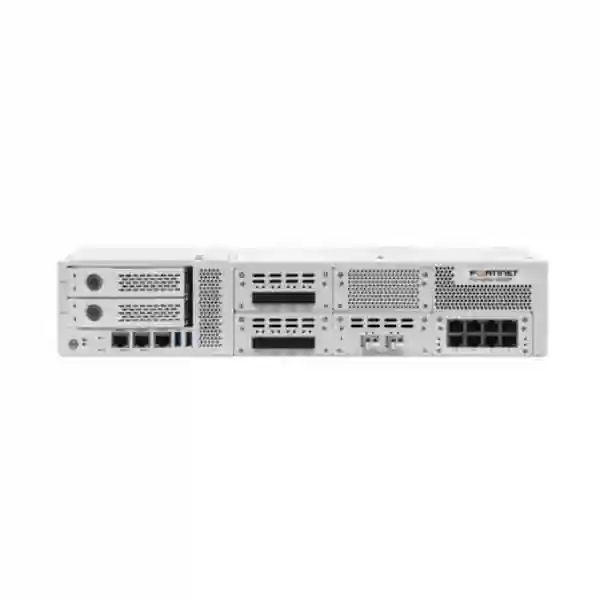
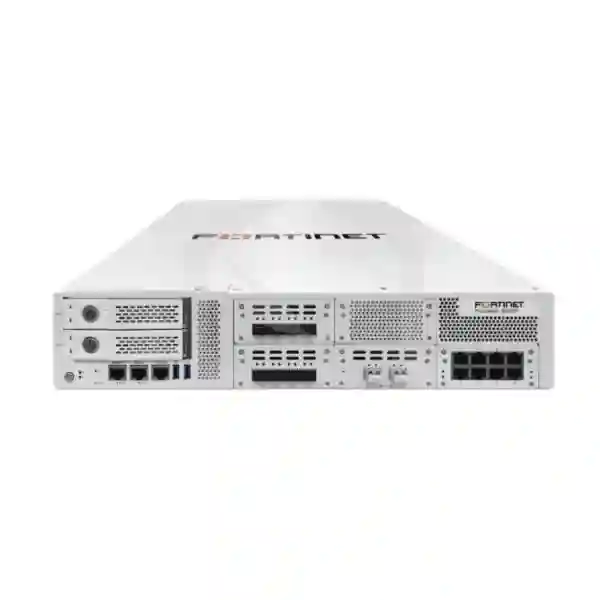
FortiWeb FWB-3000F Tanzania
FortiWeb FWB-3000F is a high-capacity hardware web application firewall designed for organizations that need dedicated protection for public-facing and private web applications and APIs. Fortinet positions FortiWeb as a web application and API protection platform, and its current FortiWeb data sheet identifies FWB-3000F as the ordering SKU for the FortiWeb 3000F appliance. For Tanzanian enterprises, financial institutions, service providers, government environments, universities, healthcare groups, ecommerce operators and other organizations running important web services, the appliance provides a purpose-built point at which application-layer traffic can be inspected and security policy applied before requests reach protected application servers.
FortiWeb 3000F: verified platform overview
Fortinet publishes 10 Gbps protected WAF throughput for FortiWeb 3000F. The current data sheet describes FWB-3000F hardware with 10 x 10 GE SFP+ ports, of which two provide bypass capability, eight GE RJ45 bypass ports, two GE management ports, dual AC power supplies and two 960 GB SSD drives. These characteristics make the platform relevant where web application security must sit in a high-throughput data-center or enterprise architecture. Actual project performance and capacity should still be validated against the traffic profile, enabled security functions, TLS usage, application behavior and high-availability design rather than selected from a headline throughput figure alone.
Fortinet-published protected WAF throughput for FortiWeb 3000F.
Ten 10 GE SFP+ interfaces support high-speed application delivery designs.
Dual AC power supplies and bypass-capable interfaces support enterprise architecture planning.
What FortiWeb FWB-3000F protects
A traditional network firewall and a web application firewall solve different security problems. FortiWeb is intended to protect the application layer, where attacks can be carried inside otherwise legitimate HTTP or HTTPS sessions. This is important for internet banking portals, customer self-service systems, ecommerce platforms, ERP and CRM web front ends, government portals, university systems, partner applications and APIs. FortiWeb security capabilities are designed around application and API protection, including mechanisms for attack detection, bot mitigation, API discovery and protection, signature-based controls and machine-learning-assisted security functions. The precise policy set should be chosen for the application rather than enabled indiscriminately.
For procurement teams, FWB-3000F should therefore be evaluated as part of an application-security architecture, not as a simple replacement for an edge router or general-purpose next-generation firewall. Organizations already standardizing on Fortinet can also consider how FortiWeb fits alongside other Fortinet security components. For broader Fortinet planning, visit FourTeck Fortinet solutions; for wider African technology projects, FourTeck Africa provides a regional route for related infrastructure discussions.
Key FortiWeb FWB-3000F capabilities for buying teams
Web application protection
Apply application-aware security controls to HTTP and HTTPS services and reduce exposure to common and emerging web attack techniques.
API security
Plan protection around APIs as first-class application assets, including discovery, traffic visibility and policy enforcement appropriate to modern application architectures.
Bot and abuse controls
Use application-layer controls to help distinguish legitimate use from automated abuse, with tuning based on business workflows and acceptable user behavior.
TLS-aware inspection
Design encrypted application delivery so the WAF can inspect protected traffic while certificates, ciphers, application ownership and operational responsibilities remain controlled.
Technical specifications
| Item | Fortinet-published FWB-3000F detail |
|---|---|
| Product | FortiWeb 3000F |
| Ordering SKU | FWB-3000F |
| Protected WAF throughput | 10 Gbps |
| 10 GE interfaces | 10 x 10 GE SFP+ ports, including 2 bypass |
| GE bypass | 8 x GE RJ45 bypass ports |
| Management | 2 x GE management ports |
| Power | Dual AC power supplies |
| Storage | 2 x 960 GB SSD |
Performance values are vendor-published reference figures. Real deployments should be sized for the intended traffic, security policy, TLS workload, application mix, redundancy and growth requirements.
Licensing, subscriptions and quotation planning
A useful FortiWeb quotation is more than a hardware line item. Procurement teams should define the required appliance, support term, security-service bundle, high-availability requirement, optics or transceivers, rack and power considerations, expected application count, expected throughput, TLS profile and implementation scope. Fortinet offers different FortiWeb service and support combinations, so the commercial bundle should be checked against the project rather than inferred from the base FWB-3000F hardware SKU. FourTeck can prepare a project-oriented quotation after the required term and deployment design are established.
FortiWeb FWB-3000F Tanzania
Organizations searching for FortiWeb FWB-3000F in Tanzania are typically planning protection for applications that have become central to customer service, payments, internal operations or digital transformation. The purchasing question is therefore not simply whether a WAF can block a list of attacks. A stronger evaluation starts with the applications being protected, where they are hosted, how users reach them, how much legitimate traffic they process, which APIs they expose, how certificates are managed, and what level of downtime the organization can tolerate. FortiWeb 3000F is positioned for high-capacity hardware deployments, making those architecture questions particularly important before procurement.
For a Tanzania deployment, begin by inventorying internet-facing domains and applications, their back-end server pools, authentication flows, API endpoints and peak traffic. Separate business-critical services from lower-risk applications so policy tuning and rollout can be staged. Where applications are hosted in a local or regional data center, confirm the path between upstream connectivity, load balancers, FortiWeb and application servers. Where services span cloud and on-premises environments, document routing and ownership clearly. The WAF should be introduced with a deployment plan that gives security teams visibility without unexpectedly disrupting valid customer transactions.
Availability planning matters as much as attack prevention. Dual AC power supplies and bypass-capable interfaces provide useful hardware characteristics, but resilient service still depends on the overall architecture. Buyers should discuss whether the project requires an HA pair, redundant switches, diverse power feeds, monitoring integration, configuration backup and documented recovery procedures. A quotation should also identify support duration and subscription requirements so the commercial comparison reflects the full intended lifecycle rather than only the appliance cost.
Tanzanian buyers can use FourTeck to align the FWB-3000F requirement with broader cybersecurity and infrastructure planning. Where an organization is also reviewing perimeter controls, secure connectivity or related Fortinet architecture, the project can be considered alongside the broader Fortinet ecosystem instead of treating WAF deployment as an isolated purchase. For a scoped commercial response, use the FourTeck Tanzania contact page and include expected throughput, application count, deployment topology and desired support term.
FortiWeb FWB-3000F Dar es Salaam
For enterprises in Dar es Salaam evaluating FortiWeb FWB-3000F, the most useful starting point is the application delivery path. Large commercial environments may operate customer portals, online ordering systems, payment-connected applications, ERP interfaces, partner portals and APIs across data-center, colocation and cloud infrastructure. A WAF project should map these services before selecting interfaces, policies and rollout stages. FortiWeb 3000F offers the capacity and high-speed interfaces required for demanding environments, but the design should be based on measured application traffic and expected growth.
Security teams should identify which applications are public, which are partner-only and which are internal but business critical. That classification influences policy strictness, logging, authentication integration and change-control procedures. Application owners should participate because false positives can affect legitimate business workflows if policies are introduced without learning and tuning. A phased implementation—visibility, policy validation, enforcement and ongoing optimization—often provides a more manageable operational path than attempting to enforce every control at once.
Dar es Salaam procurement teams should also specify network dependencies in the request for quotation. Confirm SFP+ requirements, switching interfaces, rack space, power feeds, upstream and downstream redundancy, support period and whether professional implementation assistance is required. If the application environment must remain available during maintenance or component failure, discuss an HA design and the surrounding network architecture rather than assuming appliance bypass alone satisfies business continuity requirements.
The final bill of materials should be linked to a documented scope: protected applications, traffic assumptions, security subscriptions, support, optics, deployment services and operational handover. This makes vendor comparison more meaningful and reduces the chance of receiving quotes that appear similar but cover different service terms. FourTeck can use those details to frame an FWB-3000F proposal for a Dar es Salaam project without making assumptions about stock, delivery dates or licensing that need current confirmation.
FortiWeb FWB-3000F Mwanza
Organizations in Mwanza considering FortiWeb FWB-3000F may be protecting centralized applications used by branch offices, customers, suppliers or field operations. In these environments, application security and connectivity are closely related. The WAF can protect the web and API layer, while the surrounding WAN, firewall, DNS, load-balancing and server architecture determines how users reach those services. A good design therefore starts with a simple traffic-flow diagram showing clients, public DNS, upstream security controls, FortiWeb, application servers and any external API dependencies.
Capacity planning should distinguish internet bandwidth from protected WAF throughput. A 10 Gbps vendor-published WAF figure does not mean every environment will experience an identical result under every combination of encrypted traffic and security policy. Measure peak and average traffic, concurrent user patterns, seasonal demand and anticipated digital-service growth. Include API traffic as well as browser traffic. Where applications use large uploads, downloads or long-lived sessions, document those behaviors so policy testing reflects real use.
Mwanza buyers should also consider operational ownership. Decide who will monitor WAF events, approve policy changes, renew subscriptions, manage certificates and coordinate with application developers when an alert points to vulnerable application behavior. WAF technology is most effective when it becomes part of an application-security process rather than an appliance installed and left unchanged. Logging should feed the organization’s incident workflow, and policy exceptions should have owners and review dates.
For quotation preparation, provide the number and type of applications, hosting location, estimated traffic, HA requirement, preferred support term and integration needs. If the project includes wider network modernization, document that separately so the WAF scope remains clear while interfaces with switching, routing and next-generation firewall services can still be planned. This gives decision-makers a transparent basis for evaluating the FWB-3000F against actual application risk and capacity requirements.
FortiWeb FWB-3000F Arusha
FortiWeb FWB-3000F can be relevant to Arusha organizations running high-value web applications for hospitality, travel, education, public services, enterprise operations or customer engagement. These services can contain payment workflows, personal data, booking functions, account access and APIs that deserve application-aware protection. The selection process should identify the business consequence of an application outage or compromise and then translate that risk into availability, inspection, logging and support requirements.
Application discovery is a useful pre-deployment task. Record each hostname, public IP, back-end server pool, certificate, API endpoint, authentication dependency and external integration. Identify applications that are maintained internally versus supplied by third parties. This matters because WAF policy tuning sometimes requires coordination with developers or software vendors when application behavior changes. A structured inventory also helps teams avoid protecting only the obvious public website while overlooking APIs or secondary portals that expose sensitive functionality.
Network teams should validate where FortiWeb will sit in relation to load balancers, routers, firewalls and application servers. The FWB-3000F provides multiple high-speed interfaces and bypass options, but port availability should be mapped to the chosen topology. Confirm whether 10 GE optics are needed, whether existing switches support the planned links and whether redundant paths are required. Power and rack planning should account for dual supplies and the organization’s resilience objectives.
When requesting an Arusha quotation, include the deployment mode, number of protected services, throughput assumptions, subscription/support period, HA requirement and implementation scope. Avoid comparing only the hardware price when offers may include different FortiCare or FortiWeb service bundles. A properly normalized commercial comparison gives procurement and technical teams a clearer view of lifecycle cost and what operational capability will be available after installation.
FortiWeb FWB-3000F Dodoma
For organizations in Dodoma, FortiWeb FWB-3000F may fit projects protecting government-facing portals, institutional systems, education platforms, enterprise applications and APIs where application availability and security monitoring are important. Procurement should begin with requirements rather than a model number alone. Document the applications, expected traffic, security objectives, hosting architecture, retention and reporting needs, support expectations and change-control process. This establishes whether the 3000F’s capacity and interface profile align with the environment.
Public-facing services often involve multiple teams: network security, server administrators, application owners, developers, database teams and external software suppliers. Define responsibilities before enforcement begins. The WAF team needs a process for investigating alerts and validating whether suspicious requests represent attacks, application defects or unusual but legitimate use. Application owners need a clear route for testing policy changes. This governance is particularly important for systems that cannot tolerate unexpected disruption.
High availability should be considered end to end. The FWB-3000F has dual AC power supplies and bypass-capable network interfaces, but resilient application delivery also depends on switching, routing, upstream connectivity, DNS, server capacity and the selected FortiWeb architecture. Buyers with strict availability objectives should request an HA design and confirm how maintenance, software upgrades and component failures will be handled. Monitoring and configuration backup should form part of the operational plan.
A Dodoma procurement package should state whether the requirement is appliance-only or includes subscriptions, support, optics, installation, policy migration, testing, training and documentation. Clear scope reduces ambiguity between quotations. FourTeck can review these inputs and prepare a commercial proposal aligned to the stated project, while current availability, lead time and subscription details should be confirmed at quotation stage rather than assumed in advance.
FortiWeb FWB-3000F UAE
UAE enterprises searching for FortiWeb FWB-3000F frequently operate complex application estates spanning private data centers, public cloud, customer portals and APIs. The 3000F hardware platform can serve as a high-capacity WAF layer where organizations require dedicated appliances and 10 GE connectivity. The architecture should nevertheless be selected according to where applications live and where inspection is most effective. Cloud-hosted services, on-premises workloads and hybrid environments can have different routing, latency and operational requirements.
For regulated or security-sensitive environments, build the requirement around application inventory, data sensitivity, threat exposure, audit needs and operational response. TLS certificate ownership should be agreed before implementation. API protection should be included in discovery because modern applications may expose significant functionality through endpoints that are less visible than browser-facing pages. Bot mitigation requirements should be based on actual abuse scenarios such as scraping, automated account activity or transaction abuse rather than treated as a generic checkbox.
Commercial planning should distinguish FWB-3000F base hardware from FortiWeb service bundles and FortiCare support. Different subscription terms can materially change a quote. Buyers should normalize offers by term, service level, included security services, optics, HA quantity and implementation scope. For UAE Fortinet requirements and related security infrastructure, FourTeck’s Fortinet UAE specialist site can support broader project discussions, while FourTeck UAE covers wider enterprise technology requirements.
Before purchase, technical teams should validate throughput assumptions with their own application profile and define a testing plan. A successful WAF rollout includes baseline observation, policy tuning, controlled enforcement, monitoring integration and a process for continuous adjustment as applications change. This operational discipline is as important as selecting a capable appliance.
FortiWeb FWB-3000F Uganda
Ugandan organizations evaluating FortiWeb FWB-3000F should first decide which digital services justify dedicated application-layer protection. Candidate workloads can include online banking, customer portals, ecommerce, enterprise web systems, mobile-app APIs and partner integrations. Once the scope is known, traffic and availability requirements can be mapped to the 3000F’s published 10 Gbps WAF throughput and high-speed interface set. This avoids oversizing or undersizing based solely on organization size.
A WAF deployment should complement rather than duplicate the network firewall. Perimeter firewalls control network access and broader threat policy; FortiWeb focuses on web application and API behavior. In a layered architecture, teams should document where TLS terminates, how original client information is preserved, how health checks work and how application servers are reached. Any load balancer or reverse-proxy dependencies should be captured during design.
Procurement teams should ask for a complete commercial scope that states appliance quantity, support and subscription term, required transceivers, implementation services and any HA configuration. Operational teams should also define who will own certificate renewal, security-policy tuning, event monitoring and escalation to developers. Without this ownership, even a well-sized WAF can become difficult to maintain as applications evolve.
For projects extending across Uganda, FourTeck Uganda provides a regional technology route for related requirements. When requesting an FWB-3000F quotation, include protected application count, expected throughput, topology and support duration so the response can be aligned with the intended deployment rather than based on generic assumptions.
FortiWeb FWB-3000F Kampala
Kampala enterprises often centralize web services used by customers and branch locations, making application security an important part of data-center and hybrid-cloud planning. For FortiWeb FWB-3000F, start with a list of production applications and APIs, then identify their business owners, traffic patterns, certificates and server pools. This creates the foundation for sizing and for deciding which services should be onboarded first.
High-traffic applications may have sharp peaks around payments, registrations, campaigns or reporting cycles. Use monitoring data where possible rather than average internet bandwidth. Include encrypted traffic, API calls and expected growth. The published 10 Gbps protected WAF throughput is a useful model reference, but project sizing should consider enabled features and actual traffic characteristics. If resilience is mandatory, specify an HA requirement and review the surrounding switching and power architecture as part of the same design.
Policy rollout should be coordinated with application teams. Modern applications change frequently, and new API endpoints or authentication workflows can alter traffic behavior. Establish a change process in which significant application releases are communicated to the security team, policies are reviewed, and exceptions are documented. Integrating WAF alerts into existing monitoring or incident-management workflows can also help events receive consistent attention.
A Kampala quotation request should state whether deployment, migration, testing and administrator handover are required in addition to hardware and subscriptions. It should also identify the preferred support term and any transceiver requirements. Clear requirements allow procurement teams to compare equivalent offers and avoid confusing a low initial hardware figure with the complete lifecycle cost of the intended security solution.
FortiWeb FWB-3000F Arua
For organizations in Arua, a FortiWeb FWB-3000F project may support centralized applications accessed over distributed networks. In this scenario, the WAF protects the application service itself while WAN quality and branch connectivity remain separate design considerations. Teams should identify where the application servers reside and ensure traffic can be routed through the selected FortiWeb deployment without creating unnecessary complexity or a new single point of failure.
Application scope is more important than physical user location. A portal hosted centrally can serve users across many cities and countries, so capacity planning should consider total demand. Inventory domains, APIs, authentication services, certificate requirements and server pools. Where third-party developers maintain an application, agree on a contact path for investigating blocked requests or security findings. This helps the security layer and application lifecycle work together.
The FWB-3000F’s high-speed ports make it suitable for substantial environments, but interface planning should match the actual network. Confirm whether existing switching uses 10 GE SFP+, what optics are needed and whether bypass interfaces are part of the design. Dual AC supplies can connect to resilient power architecture where available. If uninterrupted application access is a business requirement, discuss HA appliances and redundant network paths explicitly.
For procurement, request a bill of materials that clearly separates hardware, support, subscriptions, optics and services. Ask that validity and lead time be stated in the formal quotation because those details can change. This approach gives Arua buyers a practical way to assess FortiWeb 3000F without relying on unverified stock or delivery assumptions and keeps the decision tied to technical and operational requirements.
FortiWeb FWB-3000F Mbarara
Mbarara organizations can approach FortiWeb FWB-3000F selection by connecting cybersecurity requirements to business applications. Start with the services whose compromise or outage would have the largest operational impact. These might include customer portals, payment-related systems, business web applications, institutional platforms or APIs used by mobile and partner systems. Prioritizing these workloads makes the WAF rollout easier to plan and measure.
Before enforcement, capture normal application behavior. Security controls are more effective when teams understand valid request patterns, upload behavior, API methods and authentication flows. Application owners should be available during tuning so blocked requests can be investigated quickly. Where legacy applications cannot be patched immediately, WAF controls may provide useful risk reduction, but they should not become a substitute for fixing application vulnerabilities and maintaining secure software.
Sizing should consider traffic, encryption, policy complexity and growth. The FWB-3000F’s published 10 Gbps protected WAF throughput provides a reference point, while actual project performance depends on configuration and traffic. Organizations requiring high availability should include a second appliance and supporting network redundancy in design discussions where appropriate. Power, rack space, optics and management connectivity should be captured before ordering.
A well-structured Mbarara RFQ should list appliance model, required support period, desired FortiWeb service bundle, HA requirement, interface accessories and deployment scope. It should also identify whether training, documentation and post-deployment tuning are expected. This creates a clear commercial baseline and helps technical stakeholders confirm that the proposal covers the operational lifecycle rather than only the initial installation.
FortiWeb FWB-3000F Gulu
For Gulu buyers, FortiWeb FWB-3000F should be evaluated against the applications being protected rather than the number of employees in the organization. A smaller organization can operate a high-value public platform, while a larger organization may have modest web traffic. Document peak throughput, number of applications, API use, TLS requirements, availability objectives and expected growth. These inputs are more useful for model validation than broad company-size labels.
Deployment planning should include the complete request path. Identify DNS, upstream firewall, router, load balancer, FortiWeb, server network and application dependencies. Decide where certificates are stored and who renews them. Confirm whether the WAF will be introduced into an existing production path or deployed alongside a migration. For critical applications, prepare rollback steps and test plans before changing traffic flows.
Operational security should include alert review, policy tuning, configuration backup and coordination with developers. Attack signatures and machine-learning-assisted controls can provide important protection, but application context remains necessary. Teams should investigate recurring events and correct underlying application weaknesses when possible. Changes to APIs or login workflows should trigger policy review so security does not drift away from the actual application.
Gulu procurement teams should request explicit subscription and support terms and avoid assuming that every FWB-3000F offer contains the same bundle. If HA is required, confirm appliance quantity and associated services. If 10 GE links will be used, identify compatible optics separately. These details make the quotation technically useful and reduce the risk of additional unplanned components during implementation.
FortiWeb FWB-3000F Kenya
Kenyan enterprises deploying digital financial services, ecommerce, customer platforms and API-driven applications may evaluate FortiWeb FWB-3000F for a dedicated application-security layer. The appliance’s 10 Gbps published protected WAF throughput and 10 GE interfaces place it in a capacity range intended for substantial workloads. Selection should still be based on measured traffic and the security services that will be enabled, particularly where encrypted traffic and APIs represent a large proportion of requests.
A useful design workshop should cover application inventory, hosting location, load balancing, certificates, API exposure, bot risks, logging and high availability. For hybrid environments, determine whether all relevant traffic can practically traverse a hardware WAF or whether the application portfolio needs a mixed architecture. The objective is consistent application protection without introducing inefficient routing simply to force every workload through one location.
Kenyan procurement teams should normalize quotations by support term, security subscription, appliance quantity, optics and implementation services. A hardware-only quote is not directly comparable with a multi-year bundle. Ask for each component to be clearly identified and ensure the planned support period aligns with internal budgeting. Current stock and delivery should be confirmed at the time of quotation rather than assumed from a web page.
For wider Kenya technology requirements, visit FourTeck Kenya. For an FWB-3000F project, provide the application count, peak traffic estimate, HA requirement, subscription term and expected implementation scope. This enables a proposal to be built around the actual application-security objective rather than generic product positioning.
FortiWeb FWB-3000F Kuwait
Kuwait organizations considering FortiWeb FWB-3000F may be protecting enterprise portals, customer-facing applications, APIs and digital services hosted in private data centers or hybrid environments. The first step is to define the security boundary: which applications will sit behind FortiWeb, which traffic enters from the internet or partner networks, and whether internal users also traverse the WAF. This scope drives topology and capacity planning.
Encrypted traffic is a core design consideration. Teams should inventory certificates, decide where TLS terminates and establish secure certificate-management procedures. Application owners should identify sensitive workflows such as authentication, payment, file upload and API transactions so policies can be tested against realistic use. Bot controls should be tuned to business behavior, particularly for applications where automated clients may also be legitimate.
High availability and lifecycle support should be included from the beginning. The FWB-3000F includes dual AC supplies and bypass-capable ports, but overall resilience depends on appliance topology and adjacent infrastructure. If downtime objectives require redundancy, request an HA design and validate switching, routing and power dependencies. Ensure the quote identifies FortiCare and FortiWeb service terms, because bundle duration can significantly affect commercial comparisons.
For regional infrastructure planning, FourTeck Kuwait can be used for related technology discussions. A FortiWeb RFQ should include expected throughput, application and API count, desired subscription period, interface requirements and implementation scope so technical and commercial teams are working from the same assumptions.
FortiWeb FWB-3000F Ghana
Ghanaian organizations evaluating FortiWeb FWB-3000F can use application risk as the basis for procurement. Identify services that handle customer accounts, transactions, sensitive records or business-critical integrations, then map how those applications are delivered. A WAF can provide specialized controls for web and API traffic, while network firewalls and endpoint security continue to address other layers of the environment. This layered view helps prevent unrealistic expectations from any single product.
Capacity planning should combine current measurements with growth assumptions. Record peak web throughput, TLS usage, API volume, session behavior and anticipated new services. The published 10 Gbps protected WAF throughput helps establish the model’s performance class, but real deployment results depend on traffic and configuration. If the environment is much smaller, validate whether a lower FortiWeb model could meet requirements; if growth or consolidation is expected, include that in the decision.
Deployment should include an onboarding sequence for applications. Begin with visibility and validation, tune policies with application owners, then enforce controls under change management. Integrate alerts into security operations and document exceptions. When application code changes, revisit policy behavior. This process reduces the risk of treating the WAF as a static perimeter device when the applications behind it may change frequently.
Ghana procurement teams should request explicit details for hardware, FortiWeb services, FortiCare, optics, HA quantity and professional services. Current pricing, availability and delivery terms should be confirmed in the quotation. Clear commercial scope allows decision-makers to compare equivalent configurations and understand which costs recur during the security platform’s operating life.
FortiWeb FWB-3000F Nigeria
Nigeria’s large digital-service environments can generate demanding application-security requirements, particularly where customer portals, financial applications, ecommerce systems and APIs operate at scale. FortiWeb FWB-3000F provides a high-capacity hardware WAF option with 10 Gbps published protected throughput and multiple 10 GE interfaces. Buyers should translate application demand into a technical profile before deciding that this model is the appropriate capacity point.
Start with peak traffic rather than monthly averages. Include API requests, mobile application back ends, file transfers and encrypted sessions. Identify which applications require the strongest availability and whether maintenance windows are acceptable. If the business requires continuous service, an HA design may be appropriate, but redundancy must include adjacent network and power dependencies. Bypass interfaces are useful hardware features, not a complete business-continuity architecture on their own.
Security policy should be application-aware. Different services can require different rules, rate controls, bot handling and exceptions. Establish communication between security teams and developers so application releases do not unexpectedly conflict with WAF policy. Use logs and alerts as part of incident response, and investigate recurring attack patterns rather than simply accumulating events. Where vulnerabilities are found, prioritize code or platform remediation while using WAF controls as part of layered risk reduction.
Nigeria procurement requests should identify the required subscription and support term, appliance quantity, optics, deployment services and training expectations. For related regional infrastructure, FourTeck Nigeria can support wider technology discussions. A complete FWB-3000F scope gives stakeholders a better basis for commercial comparison than an isolated request for the lowest hardware price.
FortiWeb FWB-3000F Seychelles
Organizations in Seychelles may operate customer-facing digital services for hospitality, finance, government, communications and other sectors where availability and trust are important. FortiWeb FWB-3000F can provide dedicated web application and API protection when the workload justifies its performance class. Because island environments can place particular importance on infrastructure planning and support logistics, the technical and commercial scope should be completed before ordering.
Begin with application inventory and traffic measurement. Determine where services are hosted, whether traffic reaches them through local data-center infrastructure or external cloud services, and which applications need hardware-based WAF protection at the selected location. Avoid routing cloud workloads inefficiently simply to centralize inspection; the security architecture should follow application placement and operational requirements.
Resilience planning should cover power, switching, routing, appliance redundancy, configuration backup and recovery procedures. The FWB-3000F includes dual AC power supplies and bypass-capable interfaces, but high availability is an architectural outcome rather than a single feature. If an HA pair is required, include both appliances and relevant subscriptions in the commercial request. Identify any 10 GE optics and compatible switching requirements as separate bill-of-material items.
For a Seychelles quotation, state the number of protected applications and APIs, peak throughput, support term, desired security-service bundle and implementation scope. Ask for current lead time and availability to be confirmed in the formal offer. This keeps procurement grounded in verifiable commercial information while technical teams can focus on policy design, testing, monitoring and ongoing application-security operations.
Compatibility and integration checklist
Before finalizing FWB-3000F, validate switching and transceiver compatibility, VLAN and routing design, load-balancer placement, server addressing, DNS flow, certificate management, authentication dependencies, logging destinations and monitoring systems. For Fortinet environments, document the intended integration with other security products rather than assuming every integration is automatic. Where third-party load balancers, SIEM platforms or application delivery components are used, confirm supported methods and software versions during detailed design.
Related security and infrastructure planning
FortiWeb protects applications and APIs, but secure digital services also depend on network segmentation, next-generation firewall policy, endpoint security, identity controls, secure remote access, DNS, server hardening and reliable connectivity. Organizations planning a broader refresh can use FourTeck’s broader technology portfolio to frame related requirements. Keeping the WAF scope distinct while documenting its dependencies makes implementation responsibilities clearer.
FortiWeb FWB-3000F quotation checklist
Frequently asked questions
What is FortiWeb FWB-3000F?
FWB-3000F is the ordering SKU for Fortinet FortiWeb 3000F, a hardware web application firewall designed to protect web applications and APIs.
What is the FortiWeb 3000F WAF throughput?
Fortinet publishes 10 Gbps protected WAF throughput for FortiWeb 3000F. Actual results depend on traffic and configuration, so project sizing should consider the real application profile.
Does FWB-3000F replace a FortiGate firewall?
They address different layers. FortiWeb is specialized for web application and API protection, while FortiGate is a next-generation firewall platform for broader network security and secure networking. Many architectures use both for layered controls.
Does the FWB-3000F include bypass interfaces?
Fortinet’s current data sheet lists two bypass-capable 10 GE SFP+ ports and eight GE RJ45 bypass ports for FWB-3000F.
How should I request a FortiWeb 3000F quote?
Provide application count, expected peak throughput, API usage, deployment topology, HA requirement, desired support and subscription term, optics requirements and implementation scope. This helps produce a quotation aligned with the actual project.
Can FortiWeb protect APIs as well as websites?
Yes. Fortinet positions FortiWeb as a web application and API protection platform. API inventory and traffic behavior should be included in deployment planning and policy design.
Decision recap
FortiWeb FWB-3000F is a high-capacity hardware WAF for organizations that need dedicated application and API security. Its published 10 Gbps protected WAF throughput, 10 GE SFP+ connectivity, bypass interfaces, dual AC power and dual SSD storage make it suitable for substantial enterprise architectures. The right buying decision still depends on application inventory, traffic, security policy, high availability, subscriptions, support and implementation requirements. Validate those inputs before finalizing the bill of materials.
Consult FourTeck about FortiWeb FWB-3000F
Share your application-security scope with FourTeck for a project quotation. Include the protected applications and APIs, estimated peak traffic, hosting architecture, high-availability requirement, preferred support term and any implementation services you need. FourTeck can then frame the commercial requirement around the intended deployment instead of relying on a generic appliance-only request.



Reviews
There are no reviews yet.