
FORTINET SECURE WIRELESS BRANCH PLATFORM
FortiWiFi 70G (FWF-70G) Tanzania
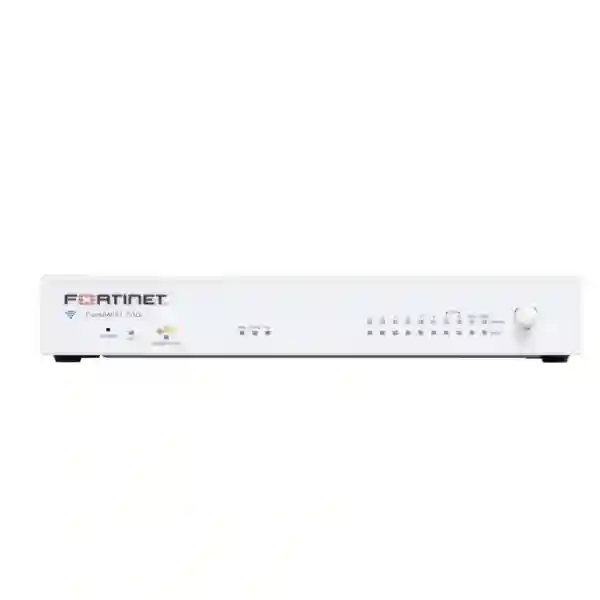
The FortiWiFi 70G brings firewalling, Secure SD-WAN and business Wi-Fi into one FortiOS-based appliance for distributed offices. For Tanzania buyers, it is particularly relevant where a branch needs a compact security gateway, wired network connectivity and integrated dual-radio Wi-Fi 6 without treating each function as a separate management island.

Fortinet-published firewall throughput for the FortiGate/FortiWiFi 70G family under specified test conditions.
Dual-radio 802.11a/b/g/n/ac/ax wireless capability for integrated branch connectivity.
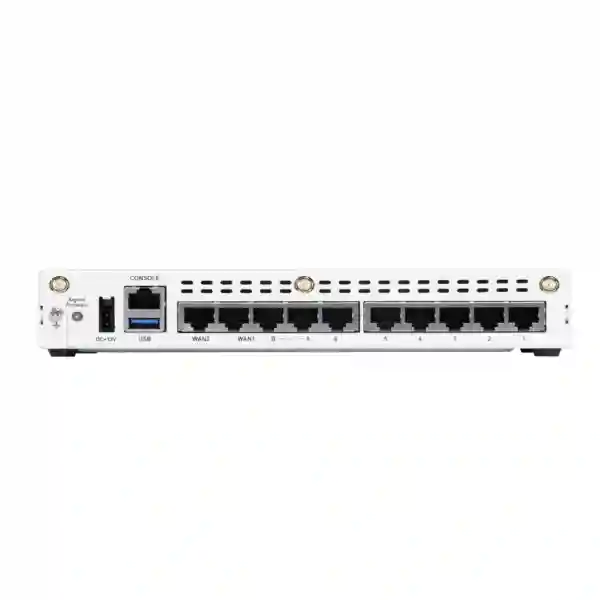
A practical wired interface set for WAN, internal, DMZ and FortiLink-oriented deployment roles.
One operating environment for converged networking and security functions.
What the FortiWiFi 70G is designed to solve
A branch network often accumulates separate devices for internet routing, firewall policy, VPN, wireless access and WAN failover. That can increase configuration overhead and make troubleshooting slower. Fortinet positions the 70G series as a converged next-generation firewall and SD-WAN platform for distributed enterprise sites. The FortiWiFi variant adds integrated wireless, making it useful when the project calls for both secure edge connectivity and local Wi-Fi from the same appliance.
The correct buying decision still depends on workload. Maximum firewall figures should never be treated as the only sizing metric. Internet speed, encrypted traffic inspection, IPS, application control, VPN usage, wireless client density, future bandwidth upgrades and subscription choices all influence practical fit. FourTeck Tanzania’s firewall and network-security planning emphasizes these design inputs rather than selecting a firewall only from headline throughput.
Verified FortiWiFi 70G technical highlights
| Deployment positioning | Distributed office / branch |
| Wireless | Dual radio; IEEE 802.11a/b/g/n/ac/ax |
| Ethernet | 10 × GE RJ45 total: 2 WAN, 1 DMZ and 7 internal/switch-role ports as published in Fortinet material |
| Firewall throughput | Up to 10 Gbps for 1518/512/64-byte UDP tests |
| IPsec VPN throughput | Up to 7.1 Gbps, 512-byte test |
| IPS throughput | Up to 2.5 Gbps, enterprise mix |
| NGFW throughput | Up to 1.5 Gbps, enterprise mix |
| Threat protection throughput | Up to 1.3 Gbps, enterprise mix |
Performance values are vendor test figures and real deployment performance varies with configuration, traffic profile and enabled security services.
Security and SD-WAN
FortiOS combines firewall policy, segmentation, VPN, application-aware controls and SD-WAN functions within one platform. This can be valuable for a Tanzania branch with two internet circuits, a head-office VPN, cloud applications and separate staff, guest and device networks. A design can use policy and segmentation to limit unnecessary lateral access while SD-WAN policies help determine how available WAN links are used.
For projects that require multi-link resilience, review FourTeck’s broader networking and firewall solution scope alongside the FWF-70G so ISP circuits, addressing, failover objectives and VPN dependencies are documented before configuration.
Integrated Wi-Fi 6
The FWF-70G includes dual-radio 802.11ax wireless. Integrated Wi-Fi can reduce the number of separate components in a compact branch, but radio design still matters. Building materials, client density, floor layout, channel use and where the firewall can physically be installed affect wireless results. A firewall placed inside a metal rack, for example, may not be the ideal radio location.
For larger floors, multiple rooms or higher client density, consider the site as a wireless design problem rather than assuming one integrated radio will cover everything. FourTeck Tanzania also covers business Wi-Fi and wireless access-point planning for environments that need additional APs.
Licensing and security-service planning
The appliance and the security-service entitlement should be treated as separate procurement questions. Fortinet offers FortiGuard security services and FortiCare support options in different bundles and terms. The correct quotation should therefore identify whether the requirement is hardware only or includes the desired protection and support term. Avoid comparing quotations only by appliance name: two FWF-70G offers can represent materially different subscription coverage.
Before requesting pricing, specify the expected security functions, preferred subscription duration and support expectations. This also makes future renewal planning clearer. For wider regional Fortinet requirements, FourTeck’s Fortinet UAE specialist site provides an additional Fortinet-focused reference point, while FourTeck Africa supports broader multi-country technology discussions.
FortiWiFi 70G Tanzania
For organizations evaluating the FortiWiFi 70G in Tanzania, the strongest use case is a branch or compact business site that benefits from converging secure internet access, wired LAN connectivity, VPN, SD-WAN and Wi-Fi 6. A buyer should begin with the internet circuits and the applications the site depends on. Cloud ERP, Microsoft 365, video meetings, remote desktop, voice, file transfers and site-to-site traffic create different patterns, and the firewall must be sized for the security inspection that will actually be enabled rather than for basic forwarding alone.
Tanzania deployments can also involve different connectivity and power conditions from one site to another. The procurement brief should state whether the branch has one or two ISPs, whether public IP addressing is available, whether a VPN must terminate at another FortiGate, and whether business-critical traffic requires failover. If guest Wi-Fi, staff Wi-Fi and IoT devices share the location, plan segmentation from the start. The FWF-70G’s integrated wireless is useful, but the physical installation position must provide suitable radio coverage; where it cannot, external access points may be a better design.
Operational details matter after installation. Define who will administer FortiOS, how configuration backups are handled, how firmware changes are approved, how security subscriptions are renewed and how alerts are reviewed. If the branch connects to a head office, document tunnel networks, routing and failover behavior. If the site hosts services, identify DMZ and inbound-access requirements before rules are created. FourTeck Tanzania’s IT integration and lifecycle services can be considered where the requirement extends beyond appliance supply into configuration and broader infrastructure coordination.
FortiWiFi 70G Dar es Salaam
A Dar es Salaam business may evaluate the FWF-70G for a corporate branch, professional office, retail operation, hospitality back office, logistics site or growing SME that wants a compact security edge. Start by mapping the WAN environment. Where two internet services are available, define whether the objective is simple failover, active use of both links or application-aware path selection. Secure SD-WAN capabilities are most useful when the policy reflects real business priorities instead of treating every flow identically.
The wireless requirement should be surveyed separately from the firewall requirement. Integrated Wi-Fi 6 can be convenient for a modest office, reception area or branch, but coverage depends on walls, room arrangement and device density. If the ideal WAN termination point is in a communications rack or secluded equipment room, that may conflict with the ideal wireless position. In such cases, use the FWF-70G as the secure edge and extend coverage with appropriately positioned access points.
For a useful quotation, provide internet bandwidth, number of users and devices, VPN requirements, current firewall details, expected wireless coverage, number of network segments and required subscription term. FourTeck Tanzania’s verified Dar es Salaam technology enquiry route specifically asks firewall buyers to share internet speed, VPN use, branch connectivity and expected security services. That information makes it easier to distinguish between a straightforward FWF-70G purchase and a project that also needs switching, access points, UPS protection or structured cabling.
FortiWiFi 70G Mwanza
In Mwanza, the FWF-70G can suit organizations looking to standardize a branch edge around FortiOS while reducing separate wireless and firewall hardware at smaller sites. Typical planning begins with the branch’s role: is it primarily a user office, a sales branch, a warehouse, a service location or a site that must remain connected to central applications? That answer affects VPN, segmentation, wireless and resilience priorities.
If the site relies on cloud applications, internet availability can matter as much as raw firewall capacity. Document the primary ISP, any backup link and the behavior expected during an outage. For site-to-site VPN, determine whether both WAN paths should maintain tunnel availability and how routing changes during failover. Where IP phones, CCTV cameras or business applications share the LAN, create a clear VLAN and policy plan rather than leaving all endpoints on one flat network.
Wireless planning should account for the actual building. Integrated Wi-Fi 6 may be sufficient for a compact workspace, while a warehouse or multi-room facility may require dedicated access points. Procurement teams should also consider UPS capacity for the firewall, ISP equipment and switching so a short power event does not take the whole branch offline. The FourTeck Tanzania network-switching and infrastructure portfolio is relevant when the firewall is one component of a broader branch refresh rather than an isolated replacement.
FortiWiFi 70G Arusha
Arusha organizations considering the FortiWiFi 70G may include offices, tourism and hospitality operations, service businesses, education environments and multi-site companies. The FWF-70G can consolidate secure edge and local wireless functions, but the project should be designed around user experience and risk. Guest access, staff access, operational devices and management interfaces should not automatically share the same trust level.
For hospitality or customer-facing environments, integrated wireless can serve a defined area, but guest demand can vary considerably. Estimate concurrent devices, not only employee count. If the site needs broad guest coverage, outdoor areas or multiple floors, a dedicated access-point architecture is usually easier to position and scale. The firewall can still enforce segmentation, internet policy and VPN while external APs handle radio coverage.
For branch connectivity, document central resources and business-critical applications. If the Arusha site connects to Dar es Salaam or another regional office, specify the networks that need site-to-site access and whether voice, ERP or management traffic needs preferential treatment. FourTeck Tanzania’s contact page identifies an Arusha office and provides a central enquiry path for product selection and quotations. Use the Arusha FourTeck contact route with model, quantity, bandwidth, users and deployment context so the request can be evaluated as a network design rather than only a part number.
FortiWiFi 70G Dodoma
For a Dodoma branch or office, the FWF-70G can provide a unified edge where secure internet access, VPN, Wi-Fi and WAN policy need to be managed consistently. Organizations with central systems should identify which services remain usable if the primary internet circuit fails. This turns SD-WAN planning into a business-continuity exercise: critical cloud, voice or VPN flows can be considered separately from lower-priority browsing and updates.
Security policy should reflect business roles. A guest network should not inherit access to internal servers; management interfaces should be limited; device networks can be segmented; and inbound publishing should use deliberate rules rather than broad exposure. If remote administrators or staff require access, choose the remote-access method and authentication approach before rollout. FortiGuard services and FortiCare coverage should also be included explicitly in procurement documentation when required.
Physical deployment is part of reliability. Confirm ventilation, power, UPS support, cabling and the position of the integrated Wi-Fi antennas. A secure equipment room may be excellent for the firewall but poor for radio propagation, so test whether integrated wireless meets the coverage objective. FourTeck Tanzania lists a Dodoma office on its verified contact page; buyers can use the Dodoma product and project enquiry page to provide the FWF-70G model, quantity, site role, ISP bandwidth and integration requirements.
FortiWiFi 70G UAE
UAE procurement teams may use the FortiWiFi 70G as a repeatable branch standard where compact offices need FortiOS security, SD-WAN and Wi-Fi 6. For organizations operating between the UAE and Tanzania, standardization can simplify policy naming, VPN templates, monitoring and subscription renewal. It does not mean every branch has identical bandwidth or radio needs; it means the architecture follows consistent principles while each site is sized individually.
Before cross-region procurement, confirm the exact wireless region variant and commercial bundle appropriate to the destination. Do not assume that a reseller part number from one market is automatically the correct regulatory variant for another. Subscription term, FortiCare level and FortiGuard service bundle should also be written into the bill of materials so quotations are comparable.
For UAE-side Fortinet projects, use FourTeck’s Fortinet UAE specialist resource and FourTeck firewall solutions in Dubai for regional firewall discussions. Multi-country IT teams should additionally document IP addressing, VPN topology, centralized logging, change control and renewal ownership so the branch standard remains supportable after deployment.
FortiWiFi 70G Uganda
Uganda organizations evaluating FWF-70G can focus on the same core branch questions: WAN resilience, VPN topology, wired port needs, wireless coverage and enabled security inspection. A compact FortiWiFi can reduce separate appliances at a small site, while FortiOS gives IT teams a consistent security and networking framework across branches.
When a Uganda site connects to Tanzania, Kenya or a central data environment, document tunnel relationships and routing before rollout. Overlapping private IP ranges between branches can complicate VPN deployment, so addressing should be reviewed early. If dual ISPs are used, decide whether both should support branch tunnels and how applications behave when a path changes. For wireless, estimate device concurrency and coverage area rather than selecting the integrated radio solely because it is included.
Procurement should identify the correct regional appliance variant and desired security subscription. If a company operates several Ugandan sites, a consistent configuration template can make expansion easier while allowing local differences in ISP, subnet and Wi-Fi settings. For regional coordination, FourTeck Uganda is the relevant FourTeck network site, while the Tanzania page remains useful for Tanzanian branch requirements.
FortiWiFi 70G Kampala
A Kampala office with cloud applications, remote users and branch VPN requirements can use the FWF-70G as a consolidated security edge. The project should start with application flows: what must reach headquarters, what is internet-only, which users need remote access, and which device groups should be isolated. These answers translate into VLANs, firewall policies, VPN design and SD-WAN rules.
Integrated Wi-Fi 6 can be useful in a compact office, but Kampala offices in multi-room or multi-floor buildings should verify coverage rather than assuming the firewall’s installation point is ideal for wireless. Additional access points can be managed as part of a broader Fortinet environment where appropriate. The switch layer also matters if IP phones, cameras or APs require PoE; the base FWF-70G itself should not be confused with PoE-specific variants.
A procurement request should include exact model, region requirement, bundle term, expected users, internet speed and any existing Fortinet environment. For organizations with Kampala and Tanzania operations, maintaining a documented standard for policies, firmware, backups and renewals can reduce support variation across branches. FourTeck Uganda provides the regional route for Uganda requirements.
FortiWiFi 70G Arua
For an Arua branch, the value of the FWF-70G may be less about maximum throughput and more about consolidating essential branch functions into a manageable platform. Where internet options are constrained or variable, define the primary and backup connectivity strategy and determine which services need continuity. SD-WAN policy can then reflect actual priorities such as VPN, voice, cloud business systems and general internet access.
Remote support is another design consideration. Configuration backups, administrator access, monitoring and documented ISP details become important when specialist staff are not permanently on site. Segmenting staff, guest and operational devices can also limit unnecessary exposure. The integrated wireless capability may cover a compact branch, while larger or unusual buildings should be assessed for dedicated AP placement.
When requesting the FWF-70G for Arua, include the destination, expected ISP links and correct regulatory-region requirement so the exact part can be confirmed rather than inferred. Security subscriptions should be stated by required service and duration. For cross-border organizations, align the Arua configuration with the wider branch standard while preserving site-specific addressing and connectivity. FourTeck Uganda is the appropriate regional FourTeck reference for Uganda-side procurement discussions.
FortiWiFi 70G Mbarara
Mbarara businesses can evaluate the FortiWiFi 70G for branches that need firewall security, VPN and Wi-Fi from a compact appliance. A good design separates the product-selection question from the site-design question. The appliance may provide suitable capacity, yet the project can still fail if wireless coverage, ISP resilience, VLANs or power protection are overlooked.
Start with the users and applications. Determine how much traffic is internet-bound, what crosses a branch VPN and whether encrypted inspection or advanced threat services will be enabled. Then review wired endpoints and wireless clients. If the site has cameras, phones and access points, switching and PoE requirements should be planned separately. The FWF-70G’s integrated wireless can complement this design, but radio placement should be validated.
For organizations standardizing multiple branches, use repeatable naming, policy groups, backup procedures and renewal records. This helps IT teams troubleshoot a Mbarara site using the same operational language as Kampala or Tanzania locations. The regional procurement request should specify exact appliance variant and desired FortiGuard/FortiCare term. FourTeck Uganda can support the Uganda-side technology discussion.
FortiWiFi 70G Gulu
A Gulu deployment may prioritize stable branch access, centralized policy and manageable remote operations. The FWF-70G’s combination of wired interfaces, dual-radio Wi-Fi 6, NGFW functions and Secure SD-WAN makes it relevant when a branch wants one FortiOS edge instead of separate router, firewall and small wireless gateway devices.
Connectivity should be documented before equipment is ordered. Identify primary and backup WAN services, public addressing, VPN endpoints and any applications that cannot tolerate extended path changes. If a branch has only one viable circuit today, the design can still reserve a second WAN strategy for later expansion. Security rules should follow business zones, with guest and device networks separated from trusted users where appropriate.
Remote administration should use controlled access and clear change procedures. Keep configuration backups and subscription records, and plan firmware maintenance instead of treating the firewall as a set-and-forget device. If integrated Wi-Fi does not reach the required area, add correctly positioned access points rather than compromising firewall placement. For Uganda regional requirements, refer to FourTeck Uganda; for Tanzania branches, coordinate through FourTeck Tanzania.
FortiWiFi 70G Kenya
Kenya organizations can use the FortiWiFi 70G as a branch standard where FortiOS, integrated Wi-Fi 6 and SD-WAN align with the network architecture. Multi-country businesses operating in Kenya and Tanzania can benefit from consistent firewall policy structures and VPN design while still sizing each site for its own ISP bandwidth, user density and application mix.
Cross-border consistency is especially useful for centralized IT teams. Define common objects, logging expectations, administrator roles, firmware policy and renewal ownership. At the same time, do not clone configurations blindly: subnet addressing, WAN circuits, wireless channels and local service-provider conditions vary by site. If the branch needs more wireless coverage than the integrated radio can provide, use dedicated access points and let the FWF-70G remain the security edge.
Procurement teams should verify the exact regional variant, support level and FortiGuard bundle before comparing prices. A hardware-only quote and a multi-year security bundle are not equivalent. For Kenya-specific enquiries, FourTeck Kenya is the matching FourTeck regional resource. Tanzania requirements can be coordinated separately while retaining the same overall branch-security standard.
FortiWiFi 70G Kuwait
Kuwait branches considering the FWF-70G should evaluate it against secure throughput needs, WAN design, wireless coverage and operational management. The platform is designed for distributed offices, making it relevant to businesses that want NGFW, SD-WAN and integrated Wi-Fi in a compact desktop form factor.
Where the Kuwait branch connects to a regional headquarters or cloud environment, map the traffic flows before building VPN and SD-WAN policy. Determine whether internet breakout is local, whether security inspection applies to all web traffic and how backup connectivity should behave. Wireless planning should consider where the appliance can physically be mounted and whether that location provides acceptable 2.4 GHz and 5 GHz coverage.
For a quotation, specify the exact FWF-70G requirement, correct wireless region, quantity, security subscription term and support expectations. Organizations with Kuwait and East Africa branches can standardize documentation and policy structure without assuming identical configurations. FourTeck Kuwait is the relevant network site for Kuwait technology requirements, while Tanzania procurement should use the Tanzania contact route.
FortiWiFi 70G Ghana
For Ghana branch networks, the FortiWiFi 70G can provide a compact FortiOS platform for internet security, VPN, SD-WAN and integrated Wi-Fi. The model is best assessed by workload rather than employee count alone. A small team transferring large files, using encrypted cloud applications and maintaining several VPN tunnels may create a different security load from a larger office with lighter traffic.
Branch design should identify network zones and wireless audiences. Staff, guests and operational devices can have different access policies. If the integrated Wi-Fi is used, ensure the firewall can be installed where radio coverage remains practical; otherwise use external access points. For WAN resilience, document ISP handoffs and define how tunnels and cloud traffic should respond when the primary link fails.
Multi-country organizations can gain operational consistency by using common FortiOS standards across Ghana and Tanzania while keeping local IP and ISP details distinct. Procurement documentation should identify the correct region variant and subscription bundle. For Ghana-specific technology discussions, FourTeck Ghana is the matching regional FourTeck site.
FortiWiFi 70G Nigeria
Nigeria deployments of the FWF-70G can be considered for distributed offices that need secure branch connectivity and integrated wireless. Where multiple WAN services are used for resilience, Secure SD-WAN policy can help organize path selection, but the design should be based on measurable application needs. Define critical services, acceptable failover behavior and VPN dependencies before implementation.
Power resilience is also part of network resilience. The firewall, ISP equipment and switching should be included in the site’s protected power plan so short interruptions do not defeat a redundant-WAN design. For wireless, verify the radio environment and coverage area. A compact office may benefit from integrated Wi-Fi 6, whereas a larger facility should use appropriately located access points.
Security-service licensing should be specified in the bill of materials, along with the support term and exact regional appliance. For businesses with Nigeria, Ghana, Kenya, Uganda and Tanzania operations, common configuration principles can make support easier across borders. FourTeck Nigeria is the regional FourTeck resource for Nigeria requirements.
FortiWiFi 70G Seychelles
Seychelles businesses considering the FortiWiFi 70G may value consolidation where branch space and device count are important. A single FortiOS appliance can provide firewall policy, VPN, SD-WAN and integrated Wi-Fi 6, but the design should still account for the characteristics of the site and available connectivity.
For hospitality, professional offices or distributed operations, guest and business traffic should be separated. If a property requires broad guest coverage, the integrated radio should not be assumed to replace a properly designed multi-AP wireless system. The FWF-70G can instead operate as the security gateway while dedicated APs provide coverage. WAN planning should identify any backup connection and determine which traffic is most important during degraded connectivity.
Procurement should confirm the exact regulatory variant and FortiGuard/FortiCare bundle. Organizations linking Seychelles operations with East Africa or UAE sites should document VPN addressing and management responsibility before deployment. For wider African regional coordination, FourTeck Africa is a useful network reference, while Tanzania requirements can be handled through the dedicated Tanzania site.
Related Tanzania infrastructure to plan with the FWF-70G
Network switching
Managed switches provide VLANs, endpoint connectivity and PoE where phones, cameras or external access points require it. See FourTeck Tanzania LAN infrastructure.
Wireless expansion
Use dedicated APs where building size, client density or firewall placement makes integrated Wi-Fi insufficient. See Tanzania Wi-Fi planning.
UPS and cabling
Protect the edge, ISP equipment and switches, and keep cabling documented. Review structured cabling, racks and UPS solutions.
Integration services
Configuration, testing and documentation can be coordinated through FourTeck Tanzania services.
FWF-70G quotation checklist
Frequently asked questions
Does the FortiWiFi 70G include Wi-Fi 6?
Yes. Fortinet lists the FWF-70G with dual-radio 802.11a/b/g/n/ac/ax wireless. Actual coverage and capacity depend on the installation environment and client mix.
How many Ethernet ports does the FWF-70G have?
Fortinet publishes 10 GE RJ45 interfaces for the FortiWiFi 70G, with WAN, DMZ and internal/FortiLink-oriented roles depending on configuration.
Is the FWF-70G suitable for dual-WAN?
The appliance provides dedicated WAN connectivity and FortiOS includes Secure SD-WAN. The correct dual-WAN configuration depends on ISP handoffs, addressing, failover goals, VPN design and application policy.
Do I need a FortiGuard subscription?
The required subscription depends on the security services and support coverage your organization wants. Ask for the exact bundle and term to be stated in the quotation so hardware-only and subscription-inclusive offers are not confused.
What should I send FourTeck Tanzania for an accurate quotation?
Provide model, quantity, location, internet bandwidth, users/devices, VPN needs, Wi-Fi coverage expectations, existing network details and desired subscription term. Use the FourTeck Tanzania contact form.
Decision recap
Choose the FortiWiFi 70G for evaluation when a distributed office needs a compact FortiOS edge combining NGFW security, Secure SD-WAN, multiple GE interfaces and integrated Wi-Fi 6. Validate the decision against inspected security throughput, WAN bandwidth, VPN load, wireless coverage and subscription requirements. For larger wireless areas, treat integrated Wi-Fi as one part of the architecture rather than a substitute for RF planning.
Consult FourTeck Tanzania about FortiWiFi 70G
Send the exact FWF-70G requirement together with bandwidth, users, VPN, wireless coverage and security-service expectations. FourTeck can use those details to frame a more meaningful product and project discussion.



Reviews
There are no reviews yet.