
Grandstream DP750 Tanzania
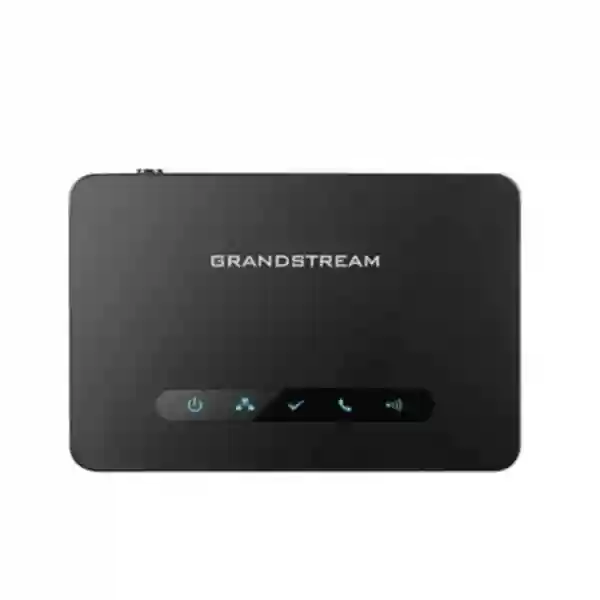
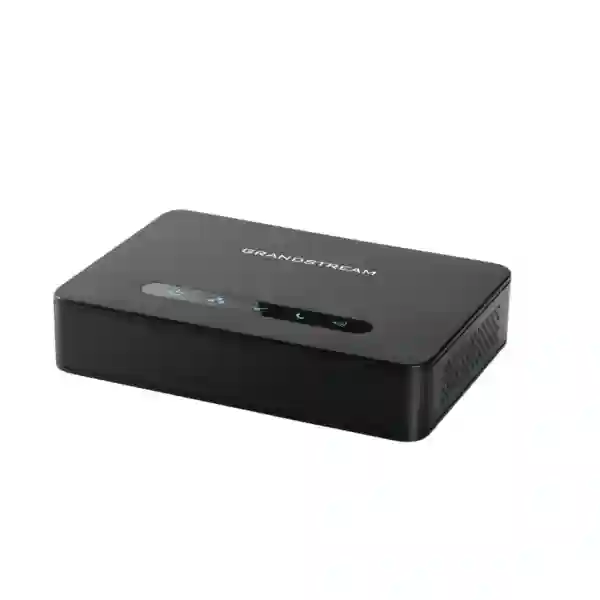
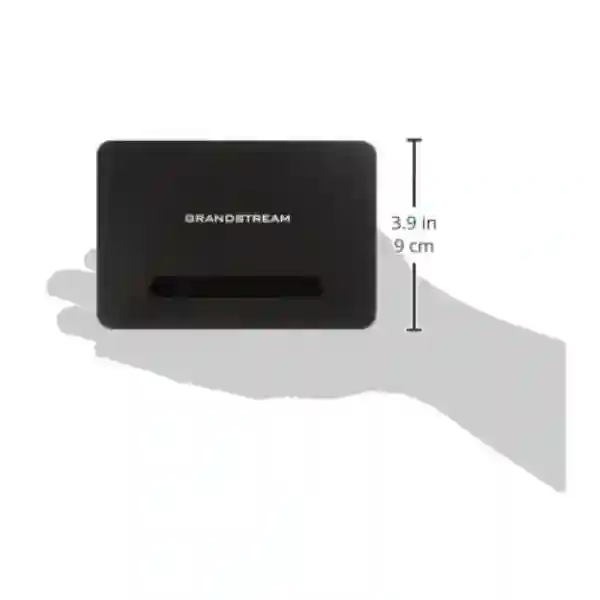
The Grandstream DP750 is a DECT VoIP base station for organisations that want cordless mobility without giving up the control, call routing, security and central management associated with SIP telephony. It can pair with up to five compatible Grandstream DECT handsets, support up to ten SIP accounts and handle up to five concurrent calls. Grandstream specifies a wireless range of up to 300 metres outdoors and 50 metres indoors under suitable conditions, making the DP750 relevant to offices, shops, clinics, warehouses, workshops, hospitality environments, residences and other sites where users need to move away from a fixed desk while remaining reachable on a business extension.
What the Grandstream DP750 solves
Many businesses have users who cannot remain beside a desk phone. Reception staff may need to walk between counters, warehouse supervisors may move between aisles, clinic staff may move between rooms, and hospitality teams may need extension mobility within a property. The DP750 provides a bridge between that mobility requirement and a SIP-based phone system. Instead of relying on consumer cordless phones with limited PBX integration, organisations can deploy compatible Grandstream DECT handsets against a centrally connected IP base station and register SIP accounts that map to business extensions, ring groups or other call flows.
The base includes integrated Power over Ethernet, so a compatible PoE network can carry both power and data over the Ethernet connection. That can simplify installation where a suitable PoE switch is available and can help planners position the base in a better radio location rather than close to a wall outlet. For organisations using Grandstream UCM IP PBXs, the product also supports Grandstream Zero Config provisioning. Other supported provisioning approaches include TR-069 and XML configuration files, giving administrators options for structured deployment and ongoing management.
Verified DP750 feature highlights
Cordless capacity
A DP750 system supports up to five compatible Grandstream DECT handsets. This is suitable for small teams, shared-service areas and distributed staff who need cordless extensions without deploying a separate base for every handset.
SIP flexibility
The system supports up to ten SIP accounts and up to ten lines per handset, while allowing up to five concurrent calls across the DECT system. This supports extension mapping and shared-line scenarios.
Voice and conferencing
Full HD audio and three-way voice conferencing support everyday business communications. Supported codecs include G.711, G.723.1, G.729A/B, G.726-32, iLBC, G.722 and OPUS.
Security controls
Grandstream documents DECT authentication and encryption plus SIP-side security technologies including TLS, SRTP and HTTPS, helping administrators protect account credentials and voice traffic when configured appropriately.
Technical specifications and planning notes
| Category | DP750 detail |
|---|---|
| Handsets | Up to 5 compatible Grandstream DECT handsets |
| SIP accounts | Up to 10 SIP accounts per system |
| Concurrent calls | Up to 5 concurrent calls per DECT system |
| Wireless range | Up to 300 m outdoors and 50 m indoors, subject to building and radio conditions |
| Ethernet | One 10/100 Mbps auto-sensing Ethernet port with integrated PoE |
| Provisioning | TR-069, XML configuration files, Grandstream UCM Zero Config and related supported methods |
| Security | DECT authentication/encryption; TLS, SRTP and HTTPS support |
| Ring modes | Circular, Linear, Parallel and Shared modes |
Quoted radio ranges are manufacturer maximums rather than guaranteed room-by-room performance. Concrete, reinforced walls, metal shelving, lift shafts, machinery, neighbouring RF activity and base-station placement can reduce usable coverage. A site survey or practical placement test is recommended when coverage is business-critical.
Compatibility, deployment and buying guidance
The DP750 should be purchased as part of a complete cordless VoIP design rather than as an isolated box. Confirm the handset model you intend to pair, the number of users, the number of simultaneous calls, the SIP platform, the available PoE infrastructure and the required coverage area. Grandstream documentation identifies compatibility with DP-series DECT handsets and specifically documents use with models such as DP720, DP722 and DP730 in current setup guidance. Handset availability and regional frequency variants should be checked at quotation stage.
For a single reception desk with occasional movement, one base and one handset may be sufficient. A retail floor or workshop may need several handsets sharing selected SIP identities. A multi-room property may need careful base placement to avoid weak areas. A DP750 supports a maximum of five concurrent calls, so call-capacity planning matters if all users routinely place or receive calls at once. Organisations requiring larger handset counts, wider coverage or more modern high-density DECT architecture should compare the DP750 with newer Grandstream DECT platforms before committing to a design.
Grandstream DP750 Tanzania
For buyers in Tanzania, the Grandstream DP750 is most relevant where a SIP-based phone environment needs mobility across a compact or medium-size site. Businesses in professional services, retail, clinics, education, hospitality, workshops and light industrial operations can use the base station to keep selected users connected as they move between work areas. Procurement teams should begin by identifying the number of cordless users, the extensions or SIP accounts they need, the expected peak call concurrency and whether an existing PBX or hosted SIP service is already in place. That information prevents overbuying handsets while also avoiding a design that runs into the DP750 system limits during busy periods.
Tanzania deployments also benefit from attention to building materials and network readiness. The advertised maximum range of 300 metres outdoors and 50 metres indoors is a useful planning reference, but it is not a guarantee inside real buildings. Thick masonry, reinforced concrete, metal roofing, equipment rooms and shelving can attenuate DECT signals. Position the base in a central, elevated and network-accessible point whenever practical. If a PoE switch is available, integrated PoE can simplify this placement by removing the need for a separate nearby power outlet. If PoE is not available, confirm the correct power arrangement before installation.
A Tanzanian quotation request should state the PBX or SIP provider, handset quantity, preferred handset models, number of required extensions, expected concurrent calls and whether provisioning assistance is required. It is also useful to specify whether the installation is new or an expansion of an existing Grandstream system. For broader communications planning, buyers can review the FourTeck Tanzania technology portfolio for related voice, networking and infrastructure requirements. The objective should be a correctly matched cordless SIP design, not simply the purchase of a base station without considering handsets, network power, security and call routing.
Grandstream DP750 Dar es Salaam
Dar es Salaam organisations often operate across offices, reception areas, showrooms, clinics, hotels, warehouses and customer-facing environments where staff cannot remain at a fixed desk. The DP750 can fit these settings when the requirement is for a small group of cordless SIP extensions connected to an IP telephony platform. Before requesting a quote, map the movement path of each user and identify where calls must remain reliable. A receptionist may need coverage between the lobby and back office; a warehouse coordinator may need to move between dispatch and storage; a hospitality supervisor may need to move between service areas. These different patterns influence base placement more than floor area alone.
Network readiness is equally important. The base provides a 10/100 Mbps Ethernet port with PoE, which is convenient when the LAN already includes suitable PoE switching. Business buyers should confirm VLAN, DHCP, DNS, SIP transport and firewall policies with their administrator or service provider. Features such as TLS and SRTP can improve protection when the SIP platform supports them and they are configured consistently at both ends. If the DP750 will register to a remote hosted PBX, internet stability and firewall configuration become part of the voice-quality discussion alongside the local DECT radio environment.
For procurement in Dar es Salaam, ask for the complete bill of materials rather than only the base. State how many compatible Grandstream handsets are required, whether belt clips or charging positions matter, how many simultaneous calls are expected and whether the deployment must integrate with a Grandstream UCM or another SIP platform. Buyers comparing multiple voice options should also consider lifecycle, firmware support and expansion needs. A small deployment that is likely to double in user count may justify evaluating a higher-capacity DECT platform at the outset. FourTeck can use this information to prepare a more relevant configuration and quotation rather than treating every DP750 request as identical.
Grandstream DP750 Mwanza
In Mwanza, the Grandstream DP750 can serve businesses that want reliable cordless access to SIP calling in offices, retail sites, service counters, clinics, education facilities and operational workplaces. The main design question is not simply whether the DP750 reaches the manufacturer-stated maximum range, but whether it delivers usable coverage across the specific rooms and pathways where staff work. Walls, doors, racks, metal surfaces and floor transitions all change radio behaviour. A practical deployment therefore starts by locating the base near the centre of the intended service area and avoiding hidden corners, locked cabinets or dense equipment zones that may unnecessarily weaken the DECT signal.
The ability to support up to five handsets and ten SIP accounts gives buyers room to design shared or individual extension arrangements. For example, a small front-office team might use individual accounts for direct calling while also participating in a shared inbound ring group. The DP750 supports Circular, Linear, Parallel and Shared ring modes, allowing call presentation to be aligned with the way staff handle enquiries. Five concurrent calls are supported across the system, so a busy site should compare expected peak utilisation with this ceiling instead of assuming each handset can always run independent simultaneous traffic without system-level constraints.
When preparing a Mwanza procurement request, include the current phone system, number of cordless users, handset model preference, number of SIP registrations and network switch details. If the business has no existing IP PBX, state that clearly so the broader solution can include call control rather than only endpoints. If the organisation already uses a hosted SIP service, provide the provider’s technical requirements where available. This reduces configuration uncertainty and helps determine whether features such as encrypted SIP transport can be enabled. Buyers should also plan for firmware maintenance, secure administrator credentials and periodic configuration backups as part of normal voice-system administration.
Grandstream DP750 Arusha
Arusha businesses in hospitality, tourism support, professional services, healthcare, retail and administration may prefer cordless IP phones when employees need to remain reachable while moving through a property. The DP750 is designed for that type of cordless SIP requirement and can pair with up to five compatible Grandstream DECT handsets. For a hotel office, clinic, tour-operation desk or service facility, the value lies in maintaining extension-based communication without forcing every user to return to a fixed desk phone. The system also supports three-way conferencing and HD audio, useful for routine coordination calls when the connected SIP environment is configured to support the required voice quality.
Coverage planning in Arusha should be based on the building, not marketing distance alone. Indoor range is specified up to 50 metres, but rooms separated by reinforced walls or multiple floors can reduce effective performance. Place the base where the radio path to users is relatively open and where Ethernet connectivity is reliable. Integrated PoE can make a central mounting point easier to achieve. If the property already uses managed switching, voice VLAN and quality-of-service policies can be reviewed so SIP traffic receives consistent LAN treatment. DECT radio coverage and IP network quality are separate layers, and both must work well for a good user experience.
A useful Arusha quotation brief includes the quantity of users, type of work area, expected roaming zone, number of incoming lines, PBX model, and whether shared ring groups are required. Buyers should also note whether handsets need special characteristics such as ruggedness, long battery life or larger displays, because the handset choice affects the overall solution even though the DP750 is the base station. Where expansion beyond five handsets is likely, compare alternative Grandstream DECT architecture before purchase. This approach protects the organisation from selecting a system that meets today’s minimum requirement but becomes restrictive after staff growth or site reconfiguration.
Grandstream DP750 Dodoma
For Dodoma offices, institutions, service organisations and commercial operations, the DP750 offers a structured way to add cordless extensions to a SIP telephony environment. It is especially practical for users who alternate between a desk, reception point, meeting room, records area or service counter. Rather than forwarding every internal call to a mobile network, a DECT handset can remain part of the organisation’s PBX dial plan and internal extension structure. That can make call transfer, pickup and ring-group workflows more consistent for teams already using IP telephony.
Capacity should be confirmed before ordering. The base can support up to five compatible handsets, up to ten SIP accounts and up to five concurrent calls. Those limits are usually sufficient for a small cordless team, but they should be compared with peak usage rather than average usage. An office with five handsets where several users frequently handle calls at the same time should confirm that the five-call ceiling is appropriate. The number of SIP accounts also affects how individual identities, departmental lines and shared numbers are assigned. Good planning at this stage keeps the configuration understandable for administrators and users.
Dodoma buyers should provide their network and telephony context in the quotation request. Mention whether PoE is available, whether the DP750 will connect to a local or cloud PBX, whether TLS/SRTP is required, and whether there is a dedicated voice VLAN. If there is no existing SIP service, request a complete solution design rather than assuming the base station alone provides public telephone connectivity. The DP750 is an endpoint platform that depends on a SIP account and call-control environment. Administrators should also plan secure passwords, current firmware and controlled remote management. These details are small compared with the purchase price of the overall system, but they strongly influence stability and security after deployment.
Grandstream DP750 UAE
UAE buyers often evaluate DECT VoIP for offices, retail environments, hospitality properties, clinics, warehouses and service facilities where staff need mobility inside a managed business network. The DP750 provides a compact entry point for deployments requiring up to five cordless handsets. It is best positioned where the site already has a SIP-capable PBX or hosted voice platform and where administrators want cordless extensions to participate in business call routing. Grandstream’s support for multiple SIP accounts, shared lines, ring-group modes, HD audio and standard telephony features makes the base suitable for structured business communication rather than simple standalone cordless calling.
The UAE procurement process should verify the correct regional DECT variant and compatibility before purchase. Grandstream documents different DECT frequency allocations for different markets, so importing an arbitrary hardware variant without confirming local suitability is not recommended. Buyers should also review current product lifecycle, firmware availability and handset compatibility when choosing a legacy model. In a new project, expansion requirements may justify comparison with newer Grandstream DECT systems that support different capacity or coverage characteristics. For specialist Grandstream sourcing and deployment context in the UAE, buyers can review the FourTeck Grandstream UAE resource.
A complete UAE quote request should identify the number of handsets, SIP account count, preferred PBX, expected call concurrency, coverage area and PoE availability. If the base will sit on a managed enterprise network, include VLAN and security requirements so voice traffic can be planned correctly. The DP750 supports TLS, SRTP and HTTPS, but security still depends on coordinated settings across the base, PBX and network. For organisations with multiple branches, standardising provisioning, firmware and extension templates can reduce support effort. The right design is therefore a combination of radio planning, network architecture, SIP configuration and handset selection rather than a single hardware choice.
Grandstream DP750 Uganda
Ugandan businesses considering the Grandstream DP750 should focus on the practical relationship between mobility, SIP capacity and site coverage. The base supports up to five compatible Grandstream DECT handsets, making it suitable for small teams who need to answer business extensions while moving around a workplace. A retail shop may use handsets between a counter and stock room, a clinic may use them between reception and treatment areas, and a workshop may use them between office and operational zones. The base keeps these users connected to the SIP environment without depending on cellular forwarding for every internal movement.
Coverage should be tested against the actual construction of the site. Grandstream specifies up to 300 metres outdoors and 50 metres indoors, but reinforced walls, metal structures and multiple floors can reduce usable range. Integrated PoE gives installers flexibility to position the base where coverage is stronger, provided the network switch supports suitable PoE. Administrators should also check quality-of-service settings, DHCP and DNS reliability, firewall policies and SIP provider requirements. A strong DECT signal cannot compensate for an unstable IP path to the PBX, just as a good LAN cannot compensate for poor radio placement.
For Uganda-wide requirements, prepare a bill of materials that includes handset quantity, base stations, power or PoE needs and any PBX components. If the deployment involves branches, define whether each site has local call control or registers to a central or hosted PBX. For regional procurement information, the FourTeck Uganda technology site can provide related context. Buyers should avoid assuming that a DP750 quotation automatically includes handsets, SIP service, installation or PBX licensing; these are separate scope items unless expressly stated. Clear scope at quotation stage helps compare offers accurately and prevents missing components at installation time.
Grandstream DP750 Kampala
Kampala offices and commercial sites often need cordless communication across busy floors, reception points, back offices and service areas. The DP750 can address this requirement for a small SIP-based team by supporting up to five compatible handsets and five concurrent calls. The most effective deployment starts with workflow mapping: identify who needs mobility, where they move and which numbers they must answer. A shared departmental line may be more useful than five independent numbers in some environments, while other organisations will prefer individual SIP extensions plus a common ring group.
The base supports Circular, Linear, Parallel and Shared ring-group behaviours, allowing administrators to align call distribution with business practice. For example, parallel ringing may suit a small service team where the first available employee answers, while linear or circular patterns may be preferred when calls need a defined distribution sequence. These features should be designed at the PBX and endpoint level together. The DP750 is not a replacement for call-control logic; it is a capable DECT endpoint platform that participates in a larger SIP system.
Kampala buyers should also evaluate network resilience. If the base registers to a cloud PBX, the quality of the internet connection influences call stability. If it registers to an on-site PBX, LAN switching and power resilience become especially important. PoE can simplify cabling and can allow the voice infrastructure to benefit from a centrally protected UPS when the switch is backed up. Security should include strong administration passwords, restricted management access, current firmware and encrypted SIP where the service supports it. A useful quotation request therefore includes technical and operational requirements, not only the model number and quantity.
Grandstream DP750 Arua
For organisations in Arua, the Grandstream DP750 can be a practical cordless VoIP base where a small number of employees need to remain on internal extensions while moving through a workplace. This can include front-office staff, stores personnel, clinic teams, education administrators and service businesses. The base supports up to five compatible DECT handsets, so it is most appropriate when the cordless requirement is clearly bounded. If the business expects rapid growth, multiple buildings or significantly more users, capacity planning should be done before standardising on this platform.
Arua deployments should consider power and network continuity as part of the voice design. Integrated PoE can make the base easier to mount in a radio-friendly position and, when connected to a UPS-backed PoE switch, can also reduce the number of individual power points that need backup. The DP750 still depends on the PBX and network path, so resilience must be considered end to end. If an internet-hosted SIP service is used, router stability and WAN connectivity are part of the call experience. If an on-premises PBX is used, local switching and PBX power become the priority.
When requesting a quote for Arua, provide a simple coverage sketch or description of the building, the number of handsets and the location of the network cabinet. Mention whether the phones will be used for normal office calls, shared departmental answering, warehouse coordination or another workload. This helps determine whether the standard handset choice is suitable and whether the expected five-call capacity is enough. It also gives the supplier enough information to recommend placement and supporting infrastructure. The result is a more useful procurement decision than selecting a cordless base solely on its maximum advertised distance.
Grandstream DP750 Mbarara
Mbarara businesses can use the DP750 where employees require cordless extension access inside offices, clinics, retail sites, hospitality environments and operational facilities. The system offers a useful combination of SIP flexibility and manageable scale: up to five handsets, ten SIP accounts and five concurrent calls. That profile makes it especially relevant to a small department or a defined work area. Instead of thinking of the product as a complete phone system, buyers should view it as a DECT access layer connected to an existing or planned SIP call-control platform.
Radio planning should consider the actual shape of the property. Long corridors, concrete partitions, metal roofing, storage racks and equipment can all influence signal propagation. The manufacturer’s indoor and outdoor maximums are a starting reference, not a substitute for a placement test. Where possible, position the DP750 centrally and avoid placing it inside metal cabinets or at the far end of the building merely because that is where the network rack is located. PoE is valuable because it allows Ethernet power to follow the selected radio position when structured cabling reaches that point.
For Mbarara procurement, decide whether each user needs an individual extension, whether departments share inbound numbers, and how calls should ring. The DP750’s ring modes support several patterns, but the complete behaviour may also depend on the PBX. If the organisation uses a Grandstream UCM, Zero Config can simplify supported provisioning workflows. Other environments can use standards-based SIP configuration and supported automated provisioning methods. Before purchase, confirm handset compatibility, regional frequency variant and current firmware support. These checks reduce avoidable integration problems and make the quotation easier to compare on a like-for-like basis.
Grandstream DP750 Gulu
In Gulu, the DP750 is relevant to organisations that want a small cordless VoIP solution for staff moving between reception, service areas, offices, stores or operational spaces. Because it integrates with SIP, users can remain part of the organisation’s normal extension plan rather than switching to separate consumer cordless lines. This supports familiar business functions such as hold, transfer, forwarding, call pickup and conferencing, subject to PBX configuration and service support. For teams that already rely on SIP telephony, keeping cordless users in the same environment can simplify call routing and administration.
The base supports five handsets and five concurrent calls, so Gulu buyers should compare those limits with expected growth. A deployment with two or three users has comfortable headroom, while a site that expects to reach five busy users quickly should review call patterns carefully. The system supports up to ten SIP accounts, giving administrators flexibility to present more than one line identity to handsets. Shared and parallel ringing can be useful for service teams, while individual accounts can preserve direct-dial identities for specific staff.
Network and power planning should accompany the handset decision. Integrated PoE can reduce cabling complexity and support better base placement. Administrators should ensure that DHCP, DNS and time services are reliable and that firewall rules allow the required SIP and RTP traffic. Where supported by the PBX or SIP provider, TLS and SRTP can help protect signalling and media. A well-prepared Gulu quotation request should therefore include the number of users, current PBX, WAN dependency, switch type, PoE availability, desired ring behaviour and coverage zone. This provides enough information to design a complete working solution rather than merely supply hardware.
Grandstream DP750 Kenya
Kenyan buyers commonly consider cordless SIP phones for offices, shops, clinics, warehouses, hospitality properties and service environments. The DP750 provides a familiar Grandstream option for a small DECT deployment with up to five compatible handsets. Its support for ten SIP accounts and five concurrent calls gives organisations flexibility to build individual and shared extension workflows. Businesses comparing products should confirm whether they need the DP750 specifically or whether a newer DECT base would provide better expansion, handset choice or lifecycle fit for a new installation.
For deployment, the key considerations are coverage, network quality and SIP integration. Up to 300 metres outdoors and 50 metres indoors are manufacturer maximums, and real-world buildings can deliver less. Offices with concrete walls, warehouses with metal racking and properties spread across multiple floors should treat a site test as part of the design process. The 10/100 Ethernet port with integrated PoE helps because the base can be positioned at a more favourable point when PoE cabling is available. Security capabilities such as TLS, SRTP and HTTPS should be matched with compatible PBX settings.
Kenya procurement teams can use the FourTeck Kenya technology site for regional product and solution context. A quote request should specify handset quantity, preferred handset model, SIP provider or IP PBX, extension count, concurrent call requirement and whether installation or remote configuration is part of scope. If a buyer sees significantly different market prices, the comparison should account for regional hardware version, included accessories, warranty terms, taxes and whether the listing includes only the base or a handset bundle. Clear scope is more important than comparing headline prices that may refer to different package contents.
Grandstream DP750 Kuwait
Kuwait businesses can consider the DP750 when they need a compact DECT VoIP layer for a limited group of mobile extension users. Office administrators, retail staff, clinic teams, warehouses and hospitality departments may benefit from cordless calling linked to the same SIP system used by desk phones. The DP750 supports a maximum of five compatible handsets, ten SIP accounts and five concurrent calls, so its best fit is a small team rather than a high-density deployment. Buyers should compare current Grandstream alternatives if the project is new and likely to grow.
Regional frequency compliance is particularly important when sourcing DECT equipment. Different markets use different frequency allocations, and Grandstream documents several regional DP750 variants. Procurement teams should therefore confirm that the supplied unit is appropriate for local use rather than relying on an overseas listing that happens to have the lowest price. The same diligence applies to power accessories, firmware, warranty and handset compatibility. A correctly sourced base is the foundation for a supportable deployment.
From an infrastructure perspective, integrated PoE helps installers place the base where radio coverage is favourable. For managed networks, voice VLANs, QoS and secure SIP settings should be planned consistently. If the DP750 will register to a hosted PBX, the WAN path should be stable and firewall settings should follow provider guidance. For wider regional IT procurement and communications requirements, buyers can refer to the FourTeck UAE and Gulf technology portal. A complete Kuwait quote should identify the PBX, handset quantity, call concurrency, coverage area and desired support scope so that the supplied configuration matches the business requirement.
Grandstream DP750 Ghana
For businesses in Ghana, the Grandstream DP750 can be used to extend SIP telephony to employees who need cordless mobility within a defined work area. A service desk, clinic, retail floor, warehouse office or hospitality back office can use compatible Grandstream DECT handsets to maintain extension access away from a fixed desk. The base supports up to five handsets and five concurrent calls, providing a clear capacity envelope that procurement teams can compare with expected user numbers and peak calling demand.
Coverage planning should consider both radio and network layers. The DECT side is influenced by distance, walls, floors and metal objects, while the IP side depends on Ethernet, PoE, LAN switching, PBX reachability and internet quality where a cloud service is involved. Integrated PoE can simplify deployment and make it easier to locate the base centrally. Administrators should avoid hiding the unit in a network cabinet simply because the cable terminates there; extending structured cabling to a better location can produce more reliable cordless performance.
Ghana buyers should include technical context when asking for pricing. State whether the system is new or an expansion, which PBX or SIP provider is in use, how many compatible handsets are needed and whether shared lines or individual extensions are required. Clarify whether installation, configuration and user training are expected in the quote. The hardware supports provisioning mechanisms such as TR-069 and XML files, and Grandstream UCM systems can use Zero Config, but the chosen method should match the organisation’s management practice. Security policies should cover firmware maintenance, administrator credentials and encrypted communications where supported. This turns the purchase into a managed voice solution rather than an unmanaged endpoint deployment.
Grandstream DP750 Nigeria
Nigerian organisations evaluating cordless SIP telephony can use the DP750 for small workgroups that need mobility within offices, clinics, retail premises, hospitality properties, logistics environments and service facilities. The system supports up to five compatible handsets, so its scale is easy to understand and budget. Ten SIP accounts allow multiple line identities, while up to five concurrent calls support a small team’s active traffic. Call routing can be shaped through ring-group modes and PBX logic to suit reception, customer service or departmental workflows.
Power resilience is a practical consideration in voice deployments. Because the DP750 supports PoE, organisations can power it from a suitable PoE switch, which may in turn be connected to central UPS or other protected power infrastructure. This does not guarantee service continuity because the PBX, router and WAN may also require backup, but it can simplify the endpoint side of the design. Network administrators should additionally verify LAN quality, VLAN settings and firewall behaviour. If a hosted PBX is used, test call quality across the normal internet connection during realistic traffic conditions.
Nigeria procurement requests should distinguish the base station from handset bundles and from the SIP service itself. Listings in different markets may include different accessories or regional variants, so buyers should avoid comparing only the headline model name. Specify compatible handset requirements, regional frequency suitability, PBX platform, desired encryption, number of extensions and installation scope. For broader West African sourcing, a complete bill of materials should also identify switches, PoE capacity and any PBX hardware or licensing. This approach makes the final quotation operationally meaningful and reduces surprises during commissioning.
Grandstream DP750 Seychelles
Seychelles businesses in hospitality, professional services, retail and administration may value the DP750 where a small number of users need cordless access to SIP extensions inside a property. Hotels, guest-service offices, clinics and service teams often have users moving between desks and operational areas, making DECT more practical than a fixed phone for selected roles. The DP750 supports up to five compatible handsets and provides business telephony functions such as hold, transfer, forwarding, conferencing and call pickup when configured within a compatible SIP environment.
Property layout matters strongly in island hospitality and mixed-building environments. The manufacturer’s outdoor range figure can be helpful for open areas, but walls, rooms, reinforced construction and changes in elevation can shorten practical coverage. One centrally positioned base may cover a compact property, while a larger site may need a different architecture. Before purchase, map the intended roaming path and test likely base locations. Integrated PoE supports flexible placement and can reduce dependence on a local power socket, provided structured cabling and an appropriate PoE switch are available.
For Seychelles procurement, include the complete operational requirement with the quote request: number of users, handset preferences, coverage zones, PBX or hosted SIP platform, inbound numbers, extension plan and expected peak concurrency. If the solution must integrate with hotel systems, call accounting, paging or other applications, describe that requirement explicitly so compatibility can be assessed rather than assumed. The DP750 supports standard SIP and a range of provisioning mechanisms, but third-party integration should always be checked against the specific platform. Clear technical scoping is particularly useful when equipment and support may be coordinated across borders because it reduces the risk of receiving an unsuitable regional variant or incomplete bundle.
Industries and practical use cases
Retail
Cordless extensions can help staff answer calls while moving between customer-facing areas and stock rooms, reducing the need to remain beside a counter phone.
Healthcare
Clinics and small healthcare facilities can keep selected staff reachable between reception, consultation and administration areas while retaining PBX extensions.
Hospitality
Supervisors and service teams can use cordless SIP extensions within suitable coverage areas for coordination without relying entirely on mobile calls.
Warehousing
A DECT handset can support communication between dispatch desks, supervisors and operational areas, provided the building’s radio conditions support the required coverage.
DP750 deployment checklist
- Confirm the number of cordless users and whether five handsets provide enough capacity.
- Estimate peak simultaneous calls and compare that requirement with the five-call system limit.
- Confirm the SIP PBX or hosted provider and gather account/provisioning requirements.
- Check the correct regional DECT frequency variant for the deployment country.
- Select compatible Grandstream DECT handset models based on user needs.
- Survey likely base locations and avoid cabinets, dense metal structures and unnecessary obstructions.
- Verify Ethernet and PoE availability at the intended base location.
- Plan VLAN, QoS, firewall and secure SIP settings with the network administrator.
- Use strong administrator credentials and maintain current supported firmware.
- Document extension assignments, ring groups and support ownership before handover.
Frequently asked questions
How many handsets can the Grandstream DP750 support?
The DP750 supports up to five compatible Grandstream DECT handsets. The exact handset model and regional compatibility should be confirmed before purchase.
How many SIP accounts and simultaneous calls are supported?
Grandstream specifies up to ten SIP accounts per system and up to five concurrent calls across the DP750 DECT system.
What is the DP750 wireless range?
Grandstream specifies up to 300 metres outdoors and 50 metres indoors. Actual coverage can be lower because of walls, floors, metal structures, interference and base placement.
Does the DP750 support PoE?
Yes. The base has a 10/100 Mbps Ethernet port with integrated Power over Ethernet, which can simplify placement when a suitable PoE network is available.
Can the DP750 work with a Grandstream UCM IP PBX?
Yes. Grandstream documents UCM integration and Zero Config provisioning support. Configuration requirements depend on the UCM model and firmware environment.
Is the DP750 the handset?
No. The DP750 is the DECT VoIP base station. Compatible Grandstream DECT handsets are separate endpoint devices and should be included in the bill of materials as required.
Quotation checklist
To receive a useful Grandstream DP750 quotation, include the deployment country and city, number of handsets, handset models if already selected, current PBX or hosted SIP provider, number of SIP accounts, expected concurrent calls, coverage description, PoE availability, installation requirement and any security or integration requirements. If the project spans more than one site, provide quantities and PBX details per site. This information helps separate a simple hardware request from a full communications project and reduces the likelihood that required components are omitted.
For buyers comparing regional sourcing options, FourTeck’s network includes specialist and country resources such as FourTeck Uganda, FourTeck Kenya, Grandstream UAE and FourTeck UAE. These links are useful when a project spans offices or procurement teams across different markets.
Decision recap
Choose the Grandstream DP750 when the requirement is a small, standards-based cordless SIP deployment with up to five compatible DECT handsets, up to ten SIP accounts, five concurrent calls, PoE and business-oriented provisioning and security capabilities. Before purchase, validate regional hardware suitability, current handset compatibility, lifecycle fit, coverage, PBX integration and growth expectations. If the organisation requires more handsets, wider coverage, higher density or a new long-term standard, compare newer Grandstream DECT platforms as part of the same decision.
Talk to FourTeck about your DP750 requirement
Share your handset count, PBX platform, coverage area and site location so the proposed configuration can be matched to your real deployment. FourTeck can evaluate the DP750 as part of a broader voice and network requirement rather than treating the base station as an isolated purchase.



Reviews
There are no reviews yet.