
GRANDSTREAM HOSPITALITY IP TELEPHONY
Grandstream GHP630W Tanzania
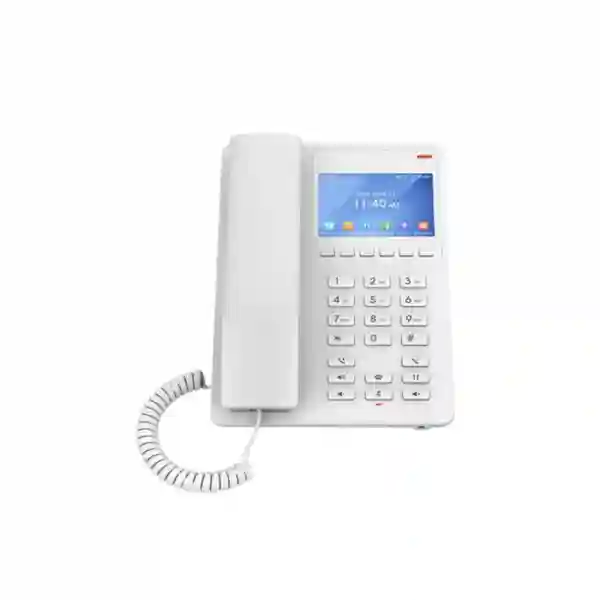
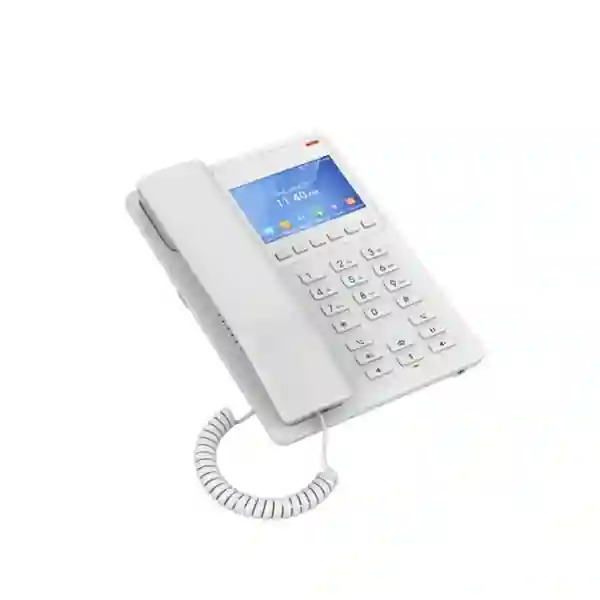
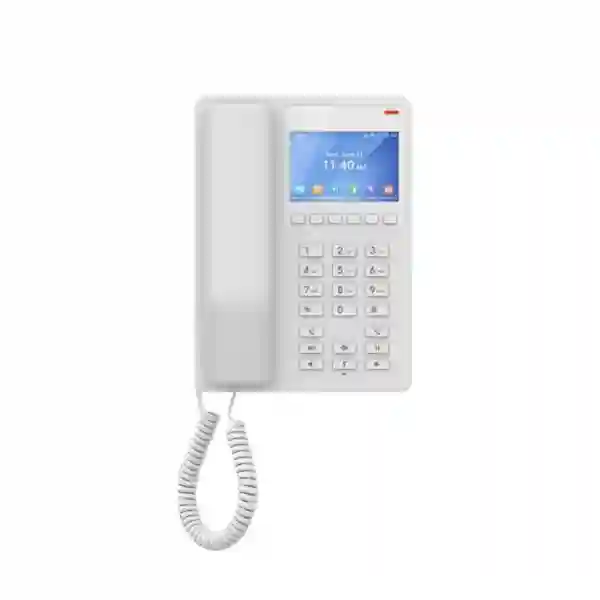
The Grandstream GHP630W is a compact hotel IP phone created for guest rooms and other environments that need straightforward calling, centralized administration and a modern color display without the complexity of a full executive desk phone. Grandstream specifies the GHP630W with a 3.5-inch 480×320 color LCD, two SIP accounts and two lines, six context-sensitive soft keys, ten speed-dial keys, three-way voice conferencing, an HD handset, full-band Opus support, integrated dual-band 2.4 GHz and 5 GHz 802.11 a/b/g/n/ac/ax Wi-Fi 6, a 10/100 Mbps Ethernet interface, Hearing Aid Compatibility and a USB Type-C port for charging an external device. The model is white and is part of the GHP630/GHP631 family.
What the Grandstream GHP630W is designed to solve
Hospitality telephony is different from ordinary office telephony. A hotel room handset should make common tasks obvious to a guest, give administrators a consistent configuration model and avoid consuming more desk space than necessary. At the same time, a property may need dozens or hundreds of endpoints with the same extension logic, speed-dial destinations, firmware policy and security settings. The GHP630W addresses that requirement with a focused interface and centralized management through Grandstream Device Management System, or GDMS. This makes the phone relevant not only for hotels but also for serviced apartments, hospitals, dormitories, residential facilities, retail counters and other locations where a simple, centrally managed SIP endpoint is appropriate.
The built-in Wi-Fi 6 capability is especially important in projects where a dedicated Ethernet drop is not available at every intended phone position, or where the property wants more placement flexibility. Wireless voice still depends on good RF coverage, capacity planning and secure network design, so Wi-Fi should not be treated as a substitute for network planning. In a wired deployment, the Ethernet interface can be used for network connectivity. Power method and accessories should be checked against the exact project bill of materials and the current Grandstream installation guidance before purchase. For the GHP630W wireless model, Grandstream documentation describes power by the supplied or compatible external power adapter or USB Type-C charging method, whereas the non-W GHP630 is the PoE-focused variant.
Guest-friendly controls
Ten speed-dial keys and six context-sensitive soft keys can simplify access to frequently used destinations and functions when the phone is configured around the property’s call flow.
Central administration
GDMS supports remote configuration, provisioning, monitoring and lifecycle administration, which is useful when a property manages many rooms or multiple sites.
Flexible installation
The GHP630W can be used on a desktop or wall mounted, helping planners fit it into bedside tables, desks, reception-style spaces or compact guest areas.
Voice resilience
Grandstream lists full-band Opus and an advanced jitter-resilience algorithm designed to tolerate up to 30% packet loss without impacting voice quality under the stated test conditions.
Verified Grandstream GHP630W specifications
| Area | GHP630W detail | Why it matters |
|---|---|---|
| Display | 3.5-inch 480×320 color LCD | Provides a clearer guest interface than label-only hotel handsets. |
| Accounts and lines | 2 SIP accounts, 2 lines | Supports a focused hospitality extension setup without excessive line complexity. |
| Wireless | Dual-band 2.4/5 GHz 802.11 a/b/g/n/ac/ax Wi-Fi 6 | Adds deployment flexibility when wired ports are limited or inconvenient. |
| Network | One auto-negotiation 10/100 Mbps Ethernet port | Suitable for SIP voice and management traffic when a wired connection is preferred. |
| Keys | 6 context-sensitive soft keys; 10 configurable speed-dial keys | Helps surface front desk, housekeeping, room service or other property-defined functions. |
| Conference | Up to 3-way voice conferencing | Allows simple multi-party voice calls where required. |
| Management | GDMS, TR-069 and encrypted XML provisioning options | Supports standardized configuration across multiple endpoints. |
| Security | Secure boot, unique device certificate, encrypted configuration support, TLS, SRTP and 802.1X capabilities | Supports a more controlled endpoint security baseline when configured correctly. |
| Accessibility | Hearing Aid Compatibility and handset volume boost support | Useful for inclusive guest-room communication planning. |
| USB | USB Type-C port for charging external devices, up to the manufacturer-stated limit | Adds a convenient charging point near the bedside or desk phone. |
Compatibility and deployment planning
The GHP630W is a SIP endpoint, so procurement should begin with the voice platform rather than with the handset alone. Confirm the IP PBX or hosted SIP environment, extension count, required codecs, authentication method, VLAN design, DHCP or static addressing policy, DNS and NTP availability, firewall behavior, emergency calling requirements and the way the property expects guests to reach reception or services. The phone supports standard SIP and common IP networking protocols, but successful interoperability still depends on the selected PBX and the features enabled by that system.
For a new hotel or serviced residence, create a room-number-to-extension plan before mass provisioning. Decide which speed-dial keys should reach reception, housekeeping, room service, security, reservations or emergency assistance. If the same template will be used across several floors, buildings or properties, define site-specific variables separately from the shared configuration. For Wi-Fi deployment, conduct coverage and capacity validation in guest-room areas rather than assuming that a strong mobile-phone signal guarantees consistent voice roaming or low latency. The related Fourteck Tanzania technology services page explains how voice, switching, Wi-Fi and security dependencies can be planned together.
Grandstream GHP630W Tanzania
For hospitality projects in Tanzania, the Grandstream GHP630W is most relevant where guest-room telephony must be simple for visitors yet manageable for the IT or operations team. The built-in Wi-Fi 6 radio gives project planners another connectivity option for hotels, lodges, serviced apartments, hospitals, student residences and similar facilities where adding a dedicated Ethernet outlet to every phone position may be difficult. That does not remove the need for infrastructure planning. Wireless voice quality depends on access-point placement, interference, client density, channel design, authentication and the quality of the path from the access point to the SIP platform. Before ordering phones in volume, it is sensible to validate a representative room, corridor and floor so the chosen deployment model is based on the actual building.
A Tanzania quotation should therefore specify more than the handset quantity. It should identify the extension plan, PBX platform, intended network method, number of guest rooms, whether the phone will be desk or wall mounted, the speed-dial destinations to be programmed and whether the property wants centralized provisioning through GDMS. Procurement teams should also confirm the power adapters, mounting accessories and any local plug requirements included in the project scope. The GHP630W’s USB Type-C charging port can be useful near a bedside or guest desk, but it should be treated as a convenience feature rather than the primary reason for selection.
The phone’s two SIP accounts and lines are appropriate for a focused room-extension role. Ten speed-dial keys can be mapped to high-value guest functions, reducing the need to remember internal numbers. The 3.5-inch color LCD can display contextual information more clearly than a minimal analog handset. The HD handset, Opus support and jitter-resilience technology are relevant where call clarity matters, though network design remains the foundation of dependable voice. For broader telephony architecture, the Fourteck Tanzania integrated IT and telecom overview explains how IP phones, switches, Wi-Fi and security fit into a shared infrastructure.
When comparing the GHP630W with the non-wireless GHP630 or the black GHP631-series variants, decide first whether Wi-Fi 6 is required and whether the project has a visual standard for white or black room hardware. Standardizing on one model and one provisioning template can simplify spares, staff familiarity, documentation and future room additions. For purchasing guidance, the Fourteck Tanzania shop describes the compatibility, capacity and lifecycle checks that should be completed before ordering business technology.
Grandstream GHP630W Dar es Salaam
In Dar es Salaam, the GHP630W can fit hotel and serviced-apartment projects that need a compact room phone but do not want room telephony to become a separate unmanaged island. Urban hospitality properties often combine guest Wi-Fi, staff networks, CCTV, access control, point-of-sale systems, IPTV or smart-room devices on the same broader infrastructure. The correct approach is to give voice its own deliberate network treatment rather than simply connect phones wherever capacity appears to be available. If the GHP630W is deployed over Wi-Fi 6, the wireless design should preserve predictable coverage in rooms and corridors while controlling guest traffic, staff traffic and voice endpoints through appropriate segmentation and authentication.
Dar es Salaam buyers commonly benefit from conducting a sample-room deployment before releasing a large order. A practical pilot can confirm handset placement, wall-mount or desk preference, Wi-Fi signal quality, call registration, extension numbering, speed-dial behavior, display readability, guest instructions and the experience of calls to reception. It can also reveal small installation issues such as power-outlet position, cable visibility, furniture clearance and the need for labels or customized guest information. Once the pilot template is approved, GDMS can help administrators maintain a consistent configuration across the larger estate.
For procurement, document whether the requirement is a replacement project or a new hotel opening. Replacement projects may need to coexist temporarily with analog gateways, existing PBX extensions or older SIP phones while rooms are upgraded in phases. New-build projects offer more freedom to standardize addressing, VLANs, call routing and device naming from the beginning. In both cases, the GHP630W should be evaluated as part of the complete calling workflow: guest to front desk, guest to hotel service, incoming calls to rooms where permitted, emergency dialing policies and staff support when a room phone is reported faulty.
If the property is also replacing switches or access points, voice requirements should be included in those designs from day one. The Fourteck Tanzania services catalogue covers IP PBX, IP phones, network switching and Wi-Fi as connected systems. A quotation request should include room count, existing PBX make and model, whether Wi-Fi or Ethernet is preferred, floor plans where available, expected project phasing and the quantity of spare units required for operations.
Grandstream GHP630W Mwanza
For properties in Mwanza, the Grandstream GHP630W can be considered for hotels, guest accommodation, healthcare facilities and residential environments that need SIP calling with centralized administration. The useful buying question is not simply whether Wi-Fi 6 is present, but whether the building network can provide predictable voice performance at every intended phone location. Multi-floor buildings, thick walls, service areas and irregular room layouts can create RF variation that is not obvious from reception or public-area Wi-Fi performance. A Wi-Fi voice endpoint should be tested where it will actually sit, particularly in rooms at the edge of access-point coverage.
Mwanza deployments may also involve a mix of new and existing infrastructure. A property upgrading from analog room phones might retain its existing room numbering and front-desk procedures while moving the call-control layer to SIP. That transition should be documented carefully. Determine whether outside callers can reach rooms directly, whether room-to-room dialing is allowed, how voicemail is handled, what happens after checkout, and which service keys should remain available when a guest changes. A good hotel telephony configuration reduces front-desk workload because common calls follow clear routes and room endpoints remain consistently programmed.
The GHP630W’s ten speed-dial keys allow a property to expose the most important destinations without forcing a guest to learn internal codes. Examples might include reception, housekeeping, restaurant, security or reservations, but the exact mapping should follow the hotel’s operations rather than a generic template. The two SIP lines can support the core room-call requirement, while three-way conferencing offers a simple option for multi-party voice situations. Its color LCD is useful where clearer on-screen prompts are preferred, and the white enclosure may suit light-colored guest-room interiors.
Procurement documentation should include quantity, room blocks, floor allocation, spare percentage, mounting type, power method, PBX details, Wi-Fi SSID and security method if wireless, and the configuration owner after handover. Centralized GDMS provisioning can reduce repetitive setup, but administrators still need a controlled template, password policy and update procedure. Buyers can use the Fourteck Tanzania contact page to submit the exact model, quantity and site context for a quotation discussion rather than requesting a generic hotel-phone price.
Grandstream GHP630W Arusha
Arusha hospitality environments range from business hotels to safari-linked accommodation, lodges, serviced residences and institutional facilities. For these settings, the GHP630W’s value comes from combining a compact hospitality-focused user experience with IP-based management. The model can be placed on a desk or wall mounted, and its integrated Wi-Fi 6 capability can help when the most practical phone position does not have dedicated Ethernet. In properties with dispersed buildings, cottages or wings, however, wireless coverage should be validated building by building. Distance, walls, roofing materials, outdoor transitions and power availability can change the deployment strategy significantly.
A property with several accommodation blocks may choose separate Wi-Fi coverage zones while maintaining one logical voice design. The phone’s SIP identity, room number and service buttons can remain standardized even when access points or switches differ across buildings. GDMS can support centralized device administration, which is useful when operational staff need visibility of many endpoints. Administrators should still define who is allowed to change configuration, how credentials are protected, when firmware is updated and how a replacement phone is brought into service without rebuilding the configuration manually.
Arusha procurement teams should also think about operational resilience. If room telephony is business-critical, ask what happens when the local internet connection fails, when a wireless access point is offline or when a power interruption affects network infrastructure. The answer depends on whether the PBX is on-site or cloud-based, how switches and access points are powered, and whether backup power exists for the voice path. The GHP630W itself is only one part of that path. A reliable handset cannot compensate for an unavailable SIP server or a wireless network with insufficient coverage.
For a new lodge or hotel wing, a practical quotation package should include a room schedule, desired service-key map, extension numbering plan, PBX platform, expected number of concurrent calls, preferred wall or table installation, wireless coverage information and the required handover documentation. Where the project extends beyond phones, the Fourteck Tanzania solutions overview provides context for coordinating telephony with Wi-Fi, switching, firewalls, UPS systems and structured infrastructure rather than purchasing the endpoints in isolation.
Grandstream GHP630W Dodoma
In Dodoma, the Grandstream GHP630W can serve hospitality, accommodation, healthcare and institutional projects that want to modernize room calling with a SIP endpoint and centralized configuration. The phone’s two SIP accounts and lines keep the interface focused, while the 3.5-inch color display, service-oriented key layout and ten speed-dial keys make it practical for guest-facing use. Built-in Wi-Fi 6 gives designers flexibility when room cabling is limited, but a hotel should validate RF conditions before committing to wireless connectivity across every room.
A well-planned Dodoma deployment begins with the call flow. Define what happens when a guest presses reception, dials another room, calls an outside number or attempts an emergency call. Decide whether housekeeping and service departments have dedicated extension groups and how unanswered calls are escalated. These decisions live in the PBX, but the phone interface should reflect them clearly. Speed-dial keys are most useful when they point to stable services that remain consistent across all rooms. Avoid filling every key merely because it is available; a smaller number of obvious functions can create a cleaner guest experience.
The management model also deserves attention. GDMS can be used to configure and monitor Grandstream endpoints centrally, helping IT teams standardize settings and reduce room-by-room manual work. That benefit becomes greater as the property grows or adds another building. A replacement workflow should be documented so operations staff know how to identify a faulty phone, how a spare is assigned to the correct room profile and how changes are logged. Security settings, administrator passwords and firmware maintenance should be part of the handover, not an afterthought.
For procurement, request confirmation of the exact GHP630W variant, included accessories, power components and warranty terms rather than assuming they are identical across every channel. The product is white; buyers who require a black aesthetic can review the GHP631W family equivalent. When a project also needs PBX, switches, Wi-Fi or cabling, a combined requirements document can reduce omissions. The Fourteck Tanzania shop guidance highlights compatibility, infrastructure and lifecycle checks that help purchasing teams compare complete offers instead of looking only at unit price.
Grandstream GHP630W UAE
For UAE hospitality projects, the GHP630W is relevant to hotels, serviced apartments, hospitals, dormitories and similar environments where large numbers of room endpoints must be administered consistently. Properties in the UAE often operate sophisticated converged networks with guest Wi-Fi, IPTV, building systems, access control and business applications sharing the same physical infrastructure. In that environment, a hotel phone should be integrated into an intentional voice design with its own addressing, security and quality-of-service considerations. The GHP630W’s Wi-Fi 6 capability offers placement flexibility, while GDMS gives administrators a mechanism for centralized provisioning and monitoring.
Before a UAE rollout, confirm how the hotel’s PBX connects to the public telephone service and what local carrier or SIP-trunk requirements apply to the central call platform. The phone itself is a SIP endpoint, so service-provider compatibility is normally determined at the PBX or session-border layer rather than by treating each room handset as an independent carrier device. For an existing property, assess whether the new phones will be introduced floor by floor and whether old and new endpoints need to coexist during the migration.
Room design can also influence the choice between the GHP630W and other GHP variants. The white GHP630W can complement light hospitality interiors, while the related GHP631W provides a black finish. The 3.5-inch color LCD, ten speed-dial keys and USB-C charging port can support a modern bedside or desk experience. However, power availability, furniture placement and cable management still need to be confirmed in a mock-up room before mass deployment. A sample room is the best place to validate phone position, guest reach, screen visibility, wall-mount practicality and the appearance of power cabling.
For UAE project coordination, Fourteck UAE provides a regional technology reference for integrated IT and telecom requirements. A useful quotation request should include room count, property type, rollout schedule, existing PBX, preferred connectivity method, number of service buttons, desired provisioning method and any requirement for spares or phased delivery. This keeps the commercial comparison focused on the complete operating requirement rather than on the handset alone.
Grandstream GHP630W Uganda
For Uganda, the Grandstream GHP630W can fit hotel-room, serviced-apartment, healthcare, education and residential projects where organizations want modern SIP calling with centralized administration. The model’s integrated dual-band Wi-Fi 6 radio is useful where a dedicated data outlet is not available at the bedside or room desk, but the design should be based on actual wireless coverage rather than on assumptions. Hotels frequently optimize Wi-Fi for guest internet use in common areas and may discover that room-edge coverage is less consistent for fixed voice endpoints. A pre-deployment survey or controlled pilot can identify those gaps before phones are ordered in volume.
The GHP630W is particularly attractive when a property wants service dialing to be obvious. Ten speed-dial keys can be configured for high-frequency destinations such as reception, housekeeping, restaurant or security. The exact selection should match how the property operates. Some hotels may prefer fewer service buttons with clearer labeling, while hospitals or residential facilities may assign different functions altogether. Two SIP accounts and lines provide the core calling capability without turning the guest phone into a feature-heavy office handset.
Uganda projects should also define their provisioning and support workflow. GDMS can simplify centralized administration, but it should be accompanied by documented room naming, extension allocation, administrator access control and replacement procedures. If a spare phone is needed after deployment, operations staff should know how to associate it with the correct room configuration quickly. Firmware updates should be planned and tested rather than applied unpredictably during busy occupancy periods.
For organizations operating across East Africa, consistency can simplify support. A hotel group with properties in Uganda, Kenya and Tanzania can use common naming conventions, configuration templates and procurement checklists even when each site has a different room count or network topology. Regional planning should still respect the infrastructure at each property. Buyers can reference Fourteck Kenya for related East African communication and networking context while using the Tanzania site for the present procurement discussion.
Grandstream GHP630W Kampala
Kampala hotels and serviced residences often need guest telephony that can be deployed consistently across many rooms while remaining easy for front-desk and IT teams to support. The GHP630W provides a compact user interface with a color LCD, ten speed-dial keys, two SIP accounts and lines, three-way calling and Wi-Fi 6. For a city property with established business Wi-Fi, the wireless option can reduce dependence on a dedicated room Ethernet point, but it should only be selected after confirming that the WLAN is designed for stable voice endpoints and not solely for transient guest browsing.
A practical Kampala rollout can start with one representative floor. Test the phone in rooms near and far from access points, behind typical walls and near elevators or service areas that may influence RF conditions. Confirm registration stability, call setup, audio quality and the behavior of the phone after an access-point reboot or brief network interruption. If roaming is not required because the phone remains fixed in one room, the priority is not mobility but stable association and low-latency connectivity to the SIP platform.
The color display and configurable keys should be treated as part of the guest journey. A property can align labels with the services that genuinely matter and keep the layout predictable from room to room. Staff training should include how to verify extension identity, how to reboot or replace a phone, when to escalate a network issue and how to distinguish a handset fault from a PBX or Wi-Fi problem. Central monitoring through GDMS can help administrators identify endpoint status without visiting every room.
Commercial evaluation should compare the complete deployment package: phones, power accessories, mounting requirements, PBX licenses where applicable, WLAN readiness, provisioning effort, documentation and support scope. A lower handset price can be offset by missing accessories or by network work discovered later. Procurement teams should therefore request an itemized scope and state whether the project is new-build, renovation or replacement. This creates a clearer basis for evaluating the GHP630W against other Grandstream GHP models or alternative SIP hotel phones.
Grandstream GHP630W Arua
In Arua, the GHP630W can be evaluated for hotels, lodges, healthcare accommodation and institutional residences that want an IP-based room phone with simple guest controls. The most important design question may be infrastructure consistency. Where buildings have mixed cabling quality or where adding network outlets is disruptive, the integrated Wi-Fi 6 radio offers an alternative path. That flexibility still requires reliable access-point coverage, stable power for network equipment and a SIP platform that remains reachable under normal operating conditions.
Smaller properties can benefit from the same provisioning discipline used in larger hotels. Assign a clear extension to each room, create a standard speed-dial map, document the PBX route for reception and services, and maintain a list of device identities. This reduces confusion when staff replace a handset or when rooms are renovated. The GHP630W’s GDMS support can centralize configuration, but a documented local process remains valuable because technology management should not depend on one person remembering how the system was built.
For guest use, simplicity is the advantage. Two SIP accounts and lines cover the basic room-phone requirement, the 3.5-inch color display provides visible prompts, and dedicated keys can reduce the need for printed extension lists. The USB Type-C charging port may be appreciated at a bedside table where guests already expect charging options, though hotels should verify their wider electrical and charging strategy rather than relying on the phone as the only source. Hearing Aid Compatibility can also be relevant when the property wants to consider accessibility in guest communication.
Arua buyers should ask suppliers to clarify exactly what is included: handset, base, power supply, mounting parts, configuration work and warranty terms. If the site has limited technical support, include remote-management and replacement procedures in the project scope. If Wi-Fi coverage needs improvement, address that before large-scale phone deployment. A room telephone is a visible endpoint, but its reliability is determined by the entire voice path from device to network to PBX. Planning those dependencies early produces a more predictable installation and a more useful quotation.
Grandstream GHP630W Mbarara
Mbarara hospitality and institutional projects can use the GHP630W where there is a need for a compact SIP phone that staff can provision consistently and guests can operate without a complicated feature set. The phone combines a color LCD, programmable soft keys, ten speed-dial positions, two SIP accounts and Wi-Fi 6. In properties undergoing refurbishment, wireless connectivity may be attractive because it can reduce the need to open finished walls for a new data point, but it should be balanced against power-outlet availability and the quality of the existing wireless network.
The first project step should be to document the existing telephone system. Identify the PBX, current room extension range, outside-line rules, emergency dialing process, front-desk transfer behavior and any departments that require dedicated service keys. If the project replaces analog phones, determine whether the property wants to maintain the same guest dialing habits or use the upgrade as an opportunity to simplify them. The GHP630W can present a clean interface, but the PBX configuration determines where calls ultimately go.
For multi-floor properties, test a sample room on each distinct floor or building type. Wireless signal behavior can change with construction materials, furniture and access-point placement. If Ethernet is available, compare the operational simplicity of a wired path with the placement flexibility of Wi-Fi. The correct answer may differ from one property to another. Administrators should also decide whether phones receive addresses from a dedicated voice network, how DNS and time services are provided, and how remote management access is secured.
A complete Mbarara quotation should separate endpoint quantity from deployment services. Include configuration template creation, PBX registration, speed-dial programming, room mapping, testing, user or staff handover and any network changes. This allows procurement teams to compare offers on a like-for-like basis. After installation, maintain a small number of preplanned spares when operational requirements justify it, with a documented method for assigning the correct room profile. The goal is not only to buy a phone, but to make room telephony easier to support throughout the property lifecycle.
Grandstream GHP630W Gulu
For Gulu hotels and accommodation facilities, the GHP630W provides a modern path from simple room telephony to centrally managed SIP communication. Its Wi-Fi 6 capability can be valuable where guest-room Ethernet is inconsistent, while the 3.5-inch color LCD and speed-dial keys create a familiar room-phone experience. As with any wireless voice device, the right question is whether the WLAN can deliver stable service at the fixed phone position. A phone may remain associated to one access point for long periods, so signal quality, interference, authentication and backhaul reliability should be checked before rollout.
Properties with limited on-site IT resources should give special attention to remote administration and clear documentation. GDMS can provide centralized configuration and monitoring of Grandstream endpoints, reducing the need to visit each room for routine changes. But the property should retain a record of room numbers, MAC addresses or device identities, extensions, speed-dial templates and any exceptions. That information speeds troubleshooting and helps a future technician understand the system without starting from zero.
Guest-service design should remain simple. The ten speed-dial keys do not have to be filled with every internal department. Choose destinations that guests genuinely use and that the hotel can support consistently. Reception, housekeeping and security may be more valuable than rarely used functions. If restaurant or spa services change by season or location, update the template in a controlled way rather than applying ad hoc room-by-room edits. Two SIP accounts can also be used where the PBX design needs a secondary line identity, but the final configuration should remain understandable to operations staff.
When requesting a Gulu quote, include the number of rooms, number of buildings, existing voice system, preferred connectivity method and any requirement for wall mounting. Ask for the exact model suffix so the wireless GHP630W is not confused with the non-W GHP630. Verify power accessories and warranty terms in the supplier offer. If the project includes Wi-Fi improvements or a new PBX, procure those as coordinated parts of the same solution so room phones are not delivered before the network and call-control layers are ready.
Grandstream GHP630W Kenya
In Kenya, the GHP630W can support hospitality and accommodation projects that want a centrally managed room phone with built-in Wi-Fi 6. Hotels in Nairobi, Mombasa and other markets may have very different building layouts, guest profiles and network architectures, so selection should be based on the property rather than on a generic country-wide template. The phone’s two SIP accounts, color LCD and service keys are suited to room calling, while GDMS can assist IT teams that manage many endpoints or several properties.
A Kenyan hotel group planning multiple sites should separate the common design from local variables. Common elements might include extension conventions, key labels, security settings, firmware policy and device naming. Local variables include room count, WLAN SSID, IP addressing, PBX location, emergency routing and service extensions. This approach creates a standard without forcing every property into the same technical topology. It also simplifies staff training because the guest-facing behavior can remain similar even when the infrastructure behind it differs.
The GHP630W is especially worth considering in renovations where new Ethernet cabling is costly or visually disruptive. Built-in 802.11ax support gives more flexibility, but voice traffic should use a network designed for predictable latency and stable authentication. Guest Wi-Fi networks often use captive portals or policies that are unsuitable for fixed SIP devices, so room phones should normally be placed on an appropriate managed WLAN or wired voice network rather than simply joining the guest internet SSID. Security segmentation also helps protect administrative interfaces from unnecessary exposure.
For regional project references, Fourteck Kenya covers business VoIP and network solutions. When preparing a quotation, include room quantity, desired configuration, whether existing Grandstream or third-party PBX infrastructure will be retained, expected installation phasing and the responsibility for WLAN readiness. The best commercial comparison will show both handset cost and the work required to make every room endpoint operational, documented and supportable.
Grandstream GHP630W Kuwait
Kuwait hospitality projects can consider the Grandstream GHP630W when they need a compact guest-room SIP phone with a modern display and centralized provisioning. Large properties may have hundreds of endpoints, making configuration consistency more important than the features of any single handset. GDMS support can help administrators provision and monitor devices centrally, while the phone’s two SIP accounts, speed-dial keys and three-way calling provide the core room-communication functions without introducing the visual complexity of a multi-line office executive phone.
Wireless deployment can be useful in renovation projects, serviced apartments or rooms where the furniture plan places the phone away from a network outlet. The built-in dual-band Wi-Fi 6 radio supports 2.4 GHz and 5 GHz connectivity, but a property should create an endpoint WLAN policy suitable for voice. Captive-portal guest Wi-Fi is generally not the right place for managed room phones. Administrators should instead use appropriate authentication, segmentation and controlled access to the PBX and management services. If a wired Ethernet path is available and operationally simpler, that option should also be assessed.
Because guest rooms are part of a designed interior, confirm the appearance of the white GHP630W in a mock-up room. Check bedside-table dimensions, wall-mount height, handset cord reach, power cable routing and whether the USB-C charging port will be accessible without clutter. The related GHP631W offers a black finish for properties with different aesthetic requirements. The decision between variants can therefore include both network architecture and interior standardization.
Kuwait procurement documentation should include the hotel’s PBX platform, room-extension range, service-key list, desired number of spares, power accessories, installation responsibility and handover documentation. For a hotel group with operations in several Gulf and African markets, keep the guest-facing configuration consistent where possible while validating local carrier and emergency-dialing requirements separately. This balances operational standardization with the technical reality of each country and property.
Grandstream GHP630W Ghana
In Ghana, the Grandstream GHP630W is relevant to hotels, serviced apartments, hospitals, dormitories and similar facilities that want a simple room phone integrated with an IP telephony environment. The product’s Wi-Fi 6 support can simplify placement where room cabling is limited, while GDMS provides a centralized administration path for larger estates. The 3.5-inch color screen, configurable keys and ten speed-dial positions also allow the guest interface to be adapted around a property’s service model rather than relying on a printed directory alone.
A Ghana deployment should begin by separating business requirements from technical details. Business requirements include which services a guest needs to call, whether room-to-room dialing is enabled, how reception transfers calls, and what the property does during checkout or room change. Technical details include PBX registration, VLAN or WLAN design, DHCP, security, codecs, firmware and power. When both are documented, the phone configuration becomes easier to maintain because every setting has a clear operational reason.
For properties using Wi-Fi, room testing matters. A wireless survey can identify coverage gaps, but practical SIP testing adds another layer by confirming registration stability and call quality from actual room positions. Where possible, test during realistic network load rather than only when the hotel is quiet. If the voice network shares infrastructure with cameras, guest internet and back-office systems, switching and firewall policies should preserve predictable treatment for telephony traffic.
The Fourteck Ghana technology site provides broader context for IP PBX, IP phones, Wi-Fi and structured networking in that market. For GHP630W procurement, request an itemized quote that states the exact model, quantity, accessories, configuration services, warranty basis and any network work. Avoid relying on unverified stock or delivery claims; instead confirm availability and lead time at the time the project is ready to purchase. This is especially important when a hotel needs a single consistent model across a large room count.
Grandstream GHP630W Nigeria
Nigeria’s hospitality market includes large city hotels, serviced apartments, healthcare accommodation and institutional facilities where centralized room telephony can reduce operational complexity. The GHP630W offers a compact SIP endpoint with Wi-Fi 6, two accounts and lines, a color LCD, ten speed-dial keys and GDMS management. These capabilities are useful when a property wants to standardize room endpoints while retaining flexibility in how each phone reaches the network.
For a new Nigerian hotel, define the voice architecture before handset procurement. Establish the PBX, trunk strategy, internal extension range, reception workflow, emergency-dialing process and network segmentation. Then map the GHP630W configuration to that architecture. For renovations, audit the existing room infrastructure to determine whether data cabling, Wi-Fi coverage and power outlets match the intended phone locations. If a project moves from analog phones to SIP, include gateway or migration considerations so the transition can occur in phases without disrupting occupied rooms.
Power resilience can be a critical operational consideration for voice systems. The phone, wireless access point or switch, PBX and internet path may all require suitable backup power depending on the property’s continuity requirements. A room handset cannot remain usable if the network or call-control layer is unavailable. Projects should therefore identify which infrastructure components are protected by UPS or generator-backed circuits and what level of continuity is expected during an outage. This is a system-design issue rather than a handset specification.
The Fourteck Nigeria site offers regional context for IP telephony, networking and business IT solutions. A GHP630W quotation should include the exact room count, spare strategy, mounting preference, connectivity method, existing PBX, service-key requirements and configuration responsibilities. Requesting these details together helps procurement compare complete solutions and reduces the chance that phones arrive before the supporting network or PBX work is ready.
Grandstream GHP630W Seychelles
In Seychelles, resort and hospitality environments can benefit from a room phone that combines a compact form factor with centralized management and wireless deployment flexibility. The GHP630W’s integrated Wi-Fi 6 is particularly relevant to properties with villas, detached rooms or resort layouts where adding a dedicated Ethernet drop may be more disruptive than in a conventional city hotel. Wireless should still be engineered carefully because separate structures, outdoor pathways, thick walls and environmental conditions can create coverage variation between rooms.
For villa-style resorts, each room or building should be treated as part of the communication system, not as an isolated endpoint. The access point serving the phone needs a stable backhaul to the PBX, and the property should understand what happens if that link is interrupted. If the PBX is cloud-hosted, internet resilience matters. If it is on-site, local switching and power become central. The GHP630W can register over Wi-Fi, but the reliability of guest calling depends on the complete path.
The handset interface can be configured around resort services such as reception, concierge, housekeeping, dining or security. The exact set should reflect what is genuinely available at the property. Ten speed-dial keys give flexibility, but clear labeling and consistent behavior across villas are more important than maximizing the number of programmed functions. The color LCD and white chassis can work well in contemporary guest-room designs, while the USB-C charging port adds a practical bedside convenience.
Seychelles procurement teams should plan logistics and spares carefully because replacement lead times can matter more for island properties. That does not mean over-ordering blindly; it means agreeing on an operational spare policy based on room count, support model and acceptable downtime. The quotation should state the exact model, accessory pack, power supply, configuration work and warranty terms. For multi-property groups, keep a standardized configuration template and documentation set so replacement devices can be commissioned predictably even when a site is geographically remote.
Related Fourteck resources for a complete deployment
A hotel IP phone should be purchased in the context of the systems it depends on. Use the Fourteck Tanzania home page to review the broader telecom, networking and infrastructure scope; the Tanzania technology shop for product-selection guidance; the Tanzania services page for IP PBX, IP phone, Wi-Fi and network planning; and the Fourteck Tanzania contact page when you are ready to provide model, quantity and site requirements. For multi-country projects, Fourteck UAE, Fourteck Kenya, Fourteck Ghana and Fourteck Nigeria provide regional context for related telecom and IT requirements.
How to choose between GHP630W and related GHP models
Choose GHP630W when
You want the white GHP630-series design and need integrated dual-band Wi-Fi 6 for flexible network connectivity. Confirm the project’s power method and accessories.
Consider GHP630 when
A wired Ethernet deployment is preferred and PoE is central to the design. The non-W model is the wired variant in the same white GHP630 family.
Consider GHP631W when
You want comparable wireless GHP63x functionality but need the black finish associated with the GHP631W variant.
Grandstream GHP630W quotation checklist
✓ Exact model: Grandstream GHP630W, white Wi-Fi 6 variant.
✓ Total room quantity plus any planned operational spares.
✓ Existing or proposed IP PBX and SIP environment.
✓ Wi-Fi or Ethernet connectivity preference for each room type.
✓ Desktop or wall-mount installation requirement.
✓ Power adapter and local power connection requirements.
✓ Room extension range and desired service-key mapping.
✓ GDMS provisioning, administrator access and firmware policy.
✓ Installation phasing, pilot-room testing and handover documentation.
Grandstream GHP630W FAQs
Does the GHP630W have Wi-Fi 6?
Yes. Grandstream specifies integrated dual-band 2.4 GHz and 5 GHz 802.11 a/b/g/n/ac/ax Wi-Fi 6 for the GHP630W and GHP631W wireless variants.
How many SIP accounts does the GHP630W support?
The GHP630W supports two SIP accounts and two lines, which suits the focused calling requirements of hotel rooms and similar environments.
Can the GHP630W be wall mounted?
Yes. Grandstream documents desktop and wall-mount installation options. The intended room layout should be checked before bulk installation so handset reach, height and power cabling are suitable.
Can it be centrally managed?
Yes. The GHP Series is supported by Grandstream Device Management System for centralized provisioning, configuration, management and monitoring. Grandstream also documents TR-069 and encrypted XML provisioning options.
Is the GHP630W only for hotels?
No. Grandstream positions the series for hotels and also for apartments, dormitories, hospitals, retail and other environments that need a compact SIP phone.
Does it support USB-C charging?
Yes. Grandstream includes a USB Type-C port for charging external devices within the manufacturer’s stated power limit.
Does it support hearing aids?
Grandstream lists Hearing Aid Compatibility and handset volume-boost support for the GHP63x family.
Will the GHP630W work with any SIP PBX?
It is a standards-based SIP endpoint, but interoperability should still be validated with the specific PBX, firmware, authentication method and features required by the project. Do not assume every optional PBX function behaves identically across vendors.
Decision recap
Choose the Grandstream GHP630W when the project needs a compact white hospitality-oriented SIP phone with a 3.5-inch color screen, two SIP accounts, Wi-Fi 6, GDMS administration, programmable service access and USB-C charging. It is strongest when the phone is part of a planned PBX and network design rather than treated as a standalone device.
Before purchase, confirm the exact room count, PBX compatibility, wireless or wired strategy, power method, mounting requirement, speed-dial template, provisioning approach, warranty terms and project responsibilities. For large deployments, validate a pilot room first and use the results to finalize the broader rollout.
Consultation panel
For a useful Grandstream GHP630W quotation, send the model name, quantity, city or project location, number of rooms, existing PBX, preferred Wi-Fi or Ethernet connection, wall or desk installation preference and any required service buttons. If you are replacing an existing hotel phone system, include the current PBX and room-extension format so compatibility and migration can be discussed before ordering.



Reviews
There are no reviews yet.