
Grandstream GWN7660 Tanzania
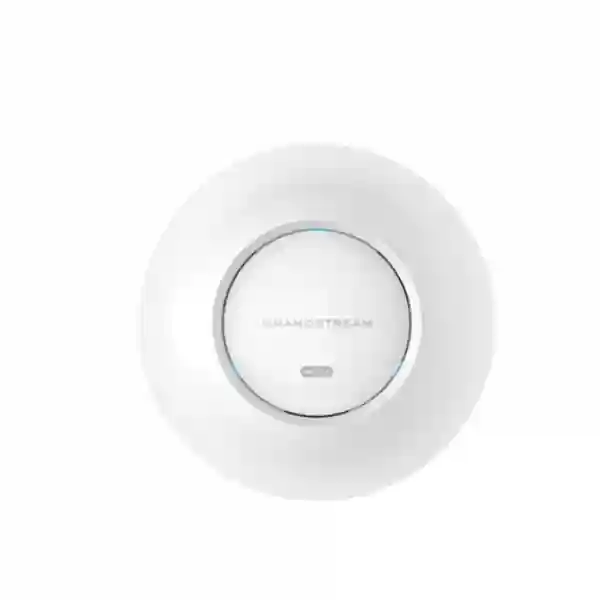
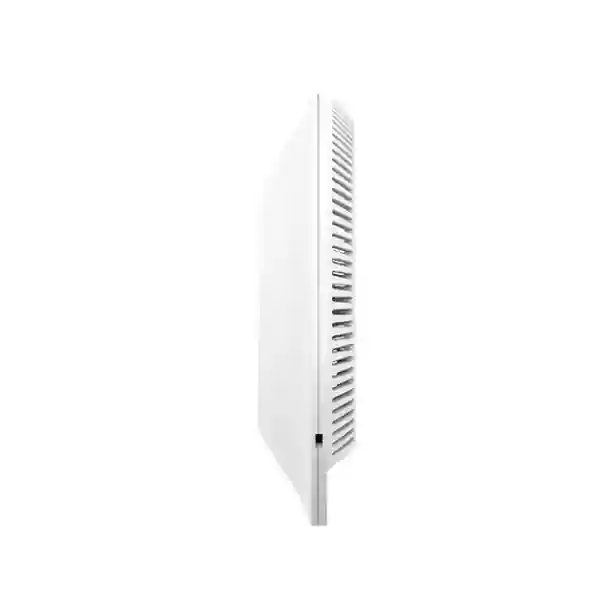
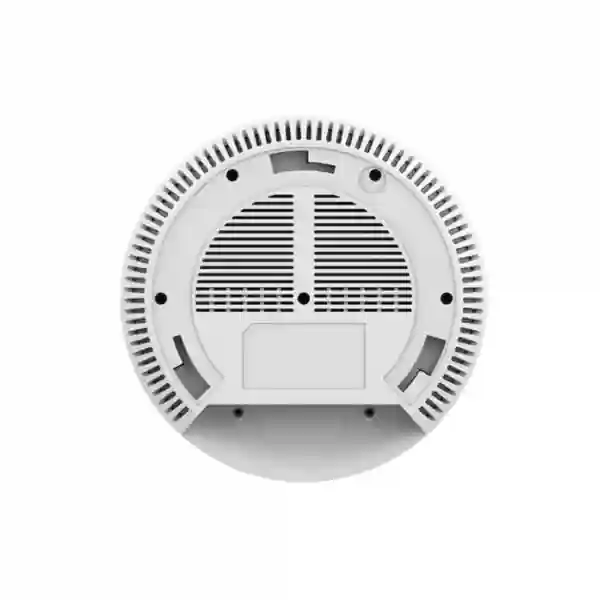
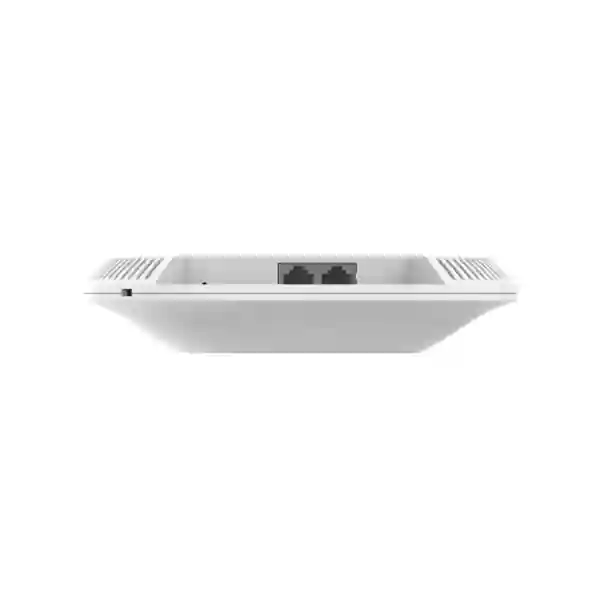
The Grandstream GWN7660 is an indoor 802.11ax Wi-Fi 6 access point built for organisations that need higher wireless efficiency, dependable business coverage, secure access and easier management across medium-density to high-density environments. Grandstream specifies 1.77Gbps aggregate wireless throughput, two Gigabit Ethernet ports, dual-band 2×2:2 MU-MIMO with DL/UL OFDMA, up to 175 metres of coverage under suitable conditions, advanced Quality of Service, PoE/PoE+ power support and multiple management choices. For Tanzania buyers, the value is not only the access point itself; good results depend on placing it correctly, connecting it to suitable switching, designing channels and SSIDs carefully, separating guest and business traffic, and validating capacity against the actual number and behaviour of client devices.
Wi-Fi 6 / IEEE 802.11ax • 1.77Gbps aggregate wireless throughput • 2× Gigabit Ethernet • dual-band 2×2:2 MU-MIMO • DL/UL OFDMA • PoE/PoE+ • advanced QoS • WPA3 support • embedded controller plus GDMS Networking / GWN Manager management choices.
What is the Grandstream GWN7660?
The GWN7660 is a Grandstream indoor business wireless access point designed around Wi-Fi 6 technology. It is intended for environments where many phones, laptops, tablets, handheld terminals, Wi-Fi phones and other client devices may need reliable wireless access at the same time. Its dual-band 2×2:2 radio design uses MU-MIMO and OFDMA features associated with 802.11ax to improve radio efficiency when many compatible clients share the network. Grandstream positions the model for small-to-medium businesses, multi-floor buildings and commercial locations, while its feature set also makes it relevant to hospitality, training areas, clinics, schools, retail sites and professional offices when the coverage and capacity plan fits the site.
The access point should be viewed as one part of the LAN rather than as an isolated device. Performance depends on the wired network, internet connection, PoE budget, VLAN design, firewall policy, radio interference, client capabilities, building materials and AP placement. A strong wireless signal does not automatically mean a fast or stable application experience. For example, a meeting room with many simultaneous video calls may require more careful channel reuse and uplink planning than an office with light web and email usage, even if both have similar floor area. FourTeck Tanzania therefore recommends matching the GWN7660 to a practical wireless plan instead of choosing access point quantity from floor size alone.
Wireless performance
Grandstream lists up to 1.77Gbps aggregate wireless throughput, combining 2.4GHz and 5GHz radio capacity. Real application throughput varies with channel width, interference, distance, client radio capability, network design and airtime contention.
Business density
The GWN7660 is designed for dense wireless environments. Capacity figures from vendor materials should be treated as platform limits, not as a promise that every associated client can sustain heavy traffic simultaneously.
Flexible management
The product includes an embedded controller for local GWN AP management and can also be managed through Grandstream cloud and on-premises software platforms, helping organisations choose the operating model that suits their IT process.
Grandstream GWN7660 key verified features
| Area | Verified capability | Buyer relevance |
|---|---|---|
| Wireless standard | IEEE 802.11 a/b/g/n/ac/ax | Supports modern Wi-Fi 6 clients while retaining backward compatibility with earlier Wi-Fi generations. |
| Radio architecture | Dual-band 2×2:2 MU-MIMO with DL/UL OFDMA | Designed to use airtime more efficiently in multi-client environments. |
| Aggregate wireless throughput | Up to 1.77Gbps | Provides a strong platform for business data, cloud applications, voice and general multimedia traffic when the LAN is designed correctly. |
| Ethernet | 2× autosensing Gigabit Ethernet ports | Useful for wired backhaul and deployment flexibility. |
| Power | PoE / PoE+ | Can simplify ceiling or wall installation where a nearby mains socket is undesirable. |
| Coverage | Up to 175 metres under suitable conditions | Useful as a planning reference only; real indoor coverage depends heavily on walls, interference, mounting and client radios. |
| Security | WPA3 support, secure boot and device-specific security mechanisms | Supports a modern wireless security posture when configured with appropriate authentication and segmentation. |
| Management | Embedded controller, GDMS Networking and GWN Manager options | Allows local, cloud-oriented or on-premises management strategies depending on the deployment. |
Why Wi-Fi 6 matters for business networks
Wi-Fi 6 is valuable when a wireless network must serve many active devices efficiently rather than merely advertise a higher headline speed. OFDMA can divide radio resources so that compatible clients use airtime in a more organised way, while MU-MIMO can improve simultaneous communication with multiple devices. In practical business environments, those capabilities can help when employees carry several devices, meeting rooms fill with participants, guest networks experience bursts of activity, or cloud applications become central to daily work. The actual improvement depends on client support and the rest of the network, so a Wi-Fi 6 access point should be accompanied by appropriate wired switching, internet capacity and radio planning.
For voice-over-Wi-Fi, video meetings and latency-sensitive applications, advanced QoS is particularly relevant. However, QoS cannot compensate for severe interference, weak signal, saturated uplinks or an underperforming internet circuit. Businesses considering the GWN7660 should therefore review where users gather, which applications are critical, how traffic should be separated, whether roaming is required and how many simultaneous active clients are expected during busy periods. This provides a stronger basis for deciding AP quantity and placement than relying only on the maximum coverage figure.
Management choices for single-site and multi-AP deployments
The GWN7660 supports Grandstream’s distributed management approach. An embedded controller can manage a group of local GWN access points without requiring a separate hardware controller. Organisations that prefer centralised management across larger or distributed environments can use Grandstream’s networking management platforms. This flexibility matters when a business begins with one office and later adds floors, branches or additional sites. Before deployment, decide who will own wireless administration, how configuration backups and firmware changes will be handled, which administrators need access, and whether cloud or on-premises management better fits internal policy.
Compatibility, switching and installation planning
A GWN7660 deployment should start at the switch. Confirm that the selected switch supports the required PoE standard, has enough total PoE budget for all connected access points and other powered devices, and provides enough uplink capacity for expected traffic. Managed switching is preferred where staff, guest, voice and IoT traffic need separate VLANs. The firewall or gateway should be prepared to route and filter those VLANs according to business policy. Cabling quality also matters: an access point installed with old, damaged or poorly terminated cable can underperform even when its radio design is strong.
Placement should account for walls, ceilings, shelving, machinery, glass, neighbouring wireless networks and areas of high user concentration. Mounting an AP in a corridor may create visible coverage but poor capacity in enclosed meeting rooms. Likewise, placing every AP at maximum transmit power can increase co-channel interference and produce sticky roaming behaviour. A better design balances cell size, channel reuse and expected client movement. Businesses can review FourTeck Tanzania’s integrated networking and Wi-Fi overview, the technology services page, the business technology shop, the FourTeck Tanzania approach and the Tanzania contact page when planning a broader LAN or procurement scope.
Grandstream GWN7660 Tanzania
For organisations purchasing the Grandstream GWN7660 in Tanzania, the most useful buying process begins with the intended environment rather than with a device count. A corporate office may need reliable staff access, isolated guest Wi-Fi and stable connectivity for video meetings. A hotel may care about room coverage, roaming, captive-portal options and predictable performance during occupancy peaks. A school may need separation between administrative devices, teaching resources, student access and visitor traffic. Warehouses and operational buildings introduce different challenges because shelving, machinery, long aisles and open bays change how radio signals travel. The GWN7660 can fit many of these indoor use cases, but the access-point layout should be selected from coverage and capacity requirements together.
Tanzania buyers should also assess the wired network before adding Wi-Fi 6. If the existing switch cannot provide the required PoE budget, lacks VLAN features or has congested uplinks, the wireless upgrade may expose those weaknesses rather than solve them. Check cable runs, rack condition, UPS support, firewall capacity and internet connectivity as part of the quotation. Where voice, video conferencing or cloud applications are business critical, define performance expectations during peak usage and plan QoS across the complete path rather than only on the AP.
Procurement teams can make quotations easier to compare by asking suppliers to state the exact access-point model, quantity, PoE assumptions, mounting accessories, cabling scope, switching dependencies, configuration scope and management approach. Avoid comparing only unit price when one quotation includes installation and wireless configuration while another supplies hardware only. The Grandstream GWN7660 supports a scalable architecture, but scalability comes from consistent SSIDs, VLANs, channel planning, documentation and management practices as much as from the device itself. For multi-site organisations, define a standard naming convention and configuration template so new branches can be added with fewer inconsistencies.
FourTeck Tanzania can be approached for requirement review and quotation preparation without assuming stock, delivery time or local office presence. Share a floor plan where possible, indicate the number of users and wireless devices, list high-priority applications, identify guest-network requirements and describe the current switch and firewall environment. This allows the conversation to focus on whether GWN7660 is correctly sized for the project and what supporting infrastructure is required.
Grandstream GWN7660 Dar es Salaam
Dar es Salaam businesses often operate in wireless environments where density changes significantly across a single site. Reception areas, conference rooms, training spaces and shared offices can have many active client devices at once, while storage rooms or back-office spaces may have lighter demand. The GWN7660 is relevant to this pattern because its Wi-Fi 6 architecture is designed for multi-client efficiency, but good performance still depends on deliberate placement. A single high-power access point placed centrally is not always the best approach in a building with concrete walls, partitioned offices, multiple floors or neighbouring Wi-Fi networks. Planning smaller, better-positioned cells can produce more consistent service.
A Dar es Salaam procurement request should describe the building type, floor count, ceiling options, typical daily users and the busiest areas. If the site supports VoIP over Wi-Fi or frequent video meetings, identify those rooms separately so capacity can be prioritised. Guest Wi-Fi for customers, contractors or visitors should normally be isolated from business systems through VLANs and firewall policy. The GWN7660’s multiple SSID capability can support this logical separation, but each SSID should have a clear purpose because excessive broadcast overhead can reduce wireless efficiency.
Power and network resilience are also practical considerations. When access points use PoE, the switch becomes part of the wireless power chain; placing the switch and upstream network equipment on appropriate UPS protection can help the Wi-Fi service survive short power disturbances. Businesses should confirm whether the switch PoE budget remains sufficient when all APs, phones and cameras are powered simultaneously. Where internet access is mission critical, wireless design should be reviewed together with firewall, WAN and failover strategy so a well-designed radio network is not limited by a single congested or unstable upstream path.
For quotations in Dar es Salaam, ask for a clear scope that separates hardware supply, installation, cabling, configuration, testing and support. Include any requirement for captive portals, employee authentication, guest bandwidth limits, VLAN integration or central management. If the organisation has branches elsewhere in Tanzania, it may be useful to standardise the GWN management model and SSID naming so remote sites are easier to administer. The goal is a predictable wireless service that can be documented, monitored and expanded rather than a collection of independently configured access points.
Grandstream GWN7660 Mwanza
Organisations considering the Grandstream GWN7660 in Mwanza may include offices, educational facilities, healthcare environments, hospitality properties, retail operations and branch locations that need dependable indoor Wi-Fi. These environments can differ greatly in construction and user behaviour. A training room may create a short burst of high device density when a session starts, while a hotel may have sustained evening demand across many rooms. A business office may concentrate usage around meeting rooms and cloud applications during working hours. The GWN7660 can support these patterns when coverage and capacity are planned together.
Start by identifying where people actually use wireless applications. Do not assume that every room needs identical radio capacity. In areas with thick walls, long corridors or several enclosed rooms, more access points at controlled transmit power can be better than relying on a small number of high-power cells. For multi-floor premises, vertical signal leakage should be considered because an AP on one floor can interfere with channels used above or below. Channel planning and post-installation testing are therefore important parts of a professional deployment.
The wired side should be checked at the same time. Two Gigabit Ethernet interfaces give the GWN7660 useful connectivity options, but the network must still provide correct VLANs, DHCP, routing, firewall policy and PoE power. If existing switches are unmanaged, guest isolation and central policy enforcement may be limited. If the network carries CCTV traffic, IP phones and business data on the same infrastructure, segmentation becomes more important. A single flat LAN may work at small scale but becomes harder to secure and troubleshoot as the site grows.
Mwanza buyers should request deployment documentation that records AP names, locations, switch ports, VLANs, SSIDs and administrator ownership. This small discipline helps future troubleshooting and expansion. When requesting a GWN7660 quote, include expected device count, key applications, floor plan, current switch model and whether Wi-Fi must support guest access, voice, handheld devices or roaming between areas. This context helps determine if the GWN7660 is the best fit and how many units are appropriate without inventing a one-size-fits-all coverage formula.
Grandstream GWN7660 Arusha
Arusha has a mix of hospitality, tourism-related businesses, professional offices, institutions and commercial sites where indoor Wi-Fi quality influences both staff productivity and visitor experience. The Grandstream GWN7660 can be suitable for properties that need Wi-Fi 6 efficiency, guest access and centralised management, but hospitality-style deployments should pay particular attention to room layout and building materials. Signal that looks strong in an open lobby may drop sharply through multiple walls, bathrooms, service areas or reinforced structures. A site survey or at least a detailed floor-plan review can prevent underestimating access-point quantity.
Guest Wi-Fi design should separate convenience from internal security. Visitors generally need internet access, not access to business printers, servers, cameras or administration systems. VLAN separation and firewall policies can enforce that boundary, while captive-portal features may be used where the organisation wants an acknowledgement or controlled guest workflow. Staff networks can then use stronger authentication and different bandwidth or access policies. The GWN7660 supports multiple SSIDs, but a clean design uses only the SSIDs that have a defined operational purpose.
Roaming is another consideration in properties where users move between rooms, corridors, reception and shared areas. Roaming quality depends on client behaviour as well as AP configuration, so placement and transmit-power tuning should encourage devices to move to the strongest appropriate access point. Simply adding more APs can make roaming worse if cells overlap too heavily on the same channels. For voice-over-Wi-Fi or mobile operational devices, test roaming along real movement paths instead of evaluating only stationary speed tests.
When requesting a quotation in Arusha, identify whether the project is new construction, a wireless refresh or an expansion. New projects can coordinate cabling and mounting points before ceilings are closed, while refresh projects may need to work around existing cable routes and switch locations. Ask the proposal to state assumptions about PoE, switching, cabling, configuration, testing, central management and ongoing support. This approach gives the buyer a clearer total project picture than comparing the AP price alone.
Grandstream GWN7660 Dodoma
For Dodoma organisations, the Grandstream GWN7660 can form part of a modern indoor wireless network for offices, institutional buildings, training facilities, clinics, education and commercial environments. A common wireless mistake is to treat coverage as the only design goal. In reality, capacity can be the limiting factor long before the signal disappears. An access point might cover a large physical area, but if many active users are sharing airtime for video, cloud applications and file transfers, additional cells may be required to distribute the load.
Planning should therefore estimate concurrent active devices, not only registered users. A single employee may bring a laptop and phone, while meeting participants may add tablets or guest devices. IoT endpoints can increase association counts even if their bandwidth use is low. The GWN7660’s Wi-Fi 6 features help organise multi-device airtime, but the radio still operates within finite spectrum. Separating high-density zones, choosing clean channels and using the 5GHz band effectively can improve real-world results.
Dodoma deployments should also document network security. Wireless staff traffic may need access to internal applications, while guests should normally be restricted to the internet. Operational devices can be placed in dedicated VLANs with only the network access they require. WPA3 support provides a modern security option, but authentication design must match client compatibility and organisational policy. Administrators should also define a firmware and configuration-backup process so the wireless environment remains maintainable after installation.
If the site is expanding, request a design that leaves practical headroom in switch ports, PoE capacity and addressing. It is easier to add a new access point when the rack, VLAN structure and management platform were planned for growth. Buyers can share an existing network diagram, switch models, floor plans and current problem areas when asking FourTeck Tanzania for guidance. This helps distinguish whether the GWN7660 project is primarily a coverage refresh, a capacity upgrade, a security improvement or part of a broader LAN modernisation.
Grandstream GWN7660 UAE
Organisations evaluating the Grandstream GWN7660 in the UAE often have highly connected office environments with cloud services, video conferencing, wireless collaboration devices, IP telephony and large numbers of mobile endpoints. The GWN7660 can fit small-to-medium enterprise wireless deployments where Wi-Fi 6, dual Gigabit Ethernet, PoE power and flexible Grandstream management are appropriate. As with any enterprise AP, the advertised maximum radio figures should be used as design references rather than guaranteed application throughput because client capability, channel use, interference and upstream network performance determine real results.
Office fit-outs are a good opportunity to coordinate AP locations with structured cabling, ceiling plans and meeting-room density. Access points should not be hidden behind metal services or placed only where cable happens to be convenient. High-occupancy boardrooms and training areas may need dedicated capacity even when nearby corridors already show strong signal. In open offices, transmit-power tuning and channel reuse can matter more than adding many radios. The objective is predictable roaming and sufficient airtime in the places where people actually work.
Security design should use appropriate segmentation for staff, guest, voice and device traffic. A modern AP can provide multiple SSIDs, but VLAN and firewall policy must continue the separation beyond the wireless edge. Management access should be restricted, firmware should be maintained and administrative credentials should be handled according to internal IT policy. Where organisations have multiple branches, central management can help keep SSID and security configurations consistent.
FourTeck’s UAE technology portfolio can be explored through FourTeck UAE, while Grandstream-focused buyers can also review the wider regional FourTeck network. For a GWN7660 quotation, provide quantity, office layout, switch and PoE details, management preference and any requirement for guest portals or voice over Wi-Fi. That information makes it easier to compare a hardware-only request with a complete installation and configuration scope.
Grandstream GWN7660 Uganda
The Grandstream GWN7660 can support Ugandan businesses that are modernising office Wi-Fi, adding branch connectivity or replacing consumer wireless routers with a more manageable access-point architecture. A business AP is most valuable when it is deployed as part of a structured LAN: Ethernet backhaul, PoE switching, VLANs, firewall rules and central management should all be considered. Wi-Fi 6 improves efficiency for compatible clients, but it does not remove the need for good RF planning or sufficient internet capacity.
For offices and institutions in Uganda, a practical first step is to map the areas where users report weak coverage, slow performance or dropped connections. Those symptoms can have different causes. Weak signal may result from distance or walls; slow performance may come from interference or too many active clients; dropped sessions may be related to roaming, DHCP, upstream congestion or poor cabling. Replacing an AP without diagnosing the pattern can move the problem rather than solve it. A GWN7660 deployment should therefore include testing of both signal and application behaviour.
Where guest access is needed, separate visitor traffic from business resources. Managed switches and firewall policy can preserve this separation from the AP through the LAN. For multi-branch organisations, consistent SSID names, VLAN assignments and administrator roles make support easier. Cloud or on-premises management can reduce the need to treat each AP as an isolated device. Firmware and configuration changes should still follow an approved process, especially when wireless service is business critical.
Regional buyers can review FourTeck Uganda for broader networking and business communication context. When asking for a GWN7660 proposal, include current switch models, number of users, device types, high-density rooms, existing SSIDs and internet links. This lets the supplier identify dependencies such as PoE upgrades, additional cabling or firewall configuration before installation rather than discovering them during deployment.
Grandstream GWN7660 Kampala
Kampala offices frequently combine staff laptops, smartphones, conferencing systems, wireless phones, printers and guest devices on the same premises. The GWN7660 can provide a structured Wi-Fi 6 access layer for such environments, but capacity planning should focus on busy periods. A boardroom may be quiet most of the day and then suddenly host twenty or thirty connected devices during a meeting. Reception areas can see visitor peaks, while shared workspaces may have a steady mix of heavy and light users. Planning from average usage alone can therefore underestimate the radio load.
A strong design identifies application priorities. Web browsing and email are tolerant of short delays, while voice and interactive video are more sensitive to latency, jitter and loss. Advanced QoS features can help prioritise important traffic, but the wired LAN and WAN should enforce a consistent quality strategy. If the internet circuit is saturated, wireless QoS at the AP cannot create bandwidth that does not exist. Likewise, a congested switch uplink can limit performance even when the radio has available capacity.
Kampala businesses should also decide how the GWN7660 will be managed. A small single-site deployment may be comfortable with embedded controller management, while larger or distributed organisations may prefer centralised tools for monitoring and configuration. Whatever the method, administrator access should be controlled and documented. Avoid sharing one generic admin credential across an organisation without ownership or change procedures.
For procurement, request a quotation that identifies whether PoE switches, patching, new cable runs, brackets, configuration and testing are included. Ask how guest and staff traffic will be separated, how AP channels will be planned and what handover documentation will be provided. This makes the commercial comparison more meaningful. If the project is part of a broader Uganda rollout, standardising the wireless template at the Kampala site first can create a repeatable reference for other branches while still allowing site-specific RF adjustments.
Grandstream GWN7660 Arua
Arua organisations considering the GWN7660 may be looking for a manageable business Wi-Fi platform for branch offices, institutions, retail environments, clinics, hospitality or other indoor facilities. In branch deployments, simplicity and remote visibility often matter as much as raw wireless speed. A centrally manageable AP can reduce the need for ad-hoc local configuration and helps technical teams maintain consistent SSIDs and policies across locations. The GWN7660’s Grandstream management options can support that operational model when configured carefully.
Branch networks should be designed so a local issue is easy to diagnose. Label the access point and switch port, document its IP address and management method, and record which VLANs and SSIDs are in use. If the AP becomes unreachable, technicians should be able to determine whether the problem is PoE power, cabling, switching, DHCP, firewall policy or the device itself. Good documentation is especially valuable where travel to a site is less convenient than remote troubleshooting.
Coverage planning should account for the actual building. Long corridors, solid walls, storage areas and metal roofing or shelving can all change signal behaviour. Rather than assuming the vendor’s maximum coverage distance applies indoors, use it only as a theoretical reference. A site with many rooms may need several lower-power cells, while a more open space can use fewer access points. After installation, test common devices in the places where staff work, not only immediately beneath the AP.
Arua buyers should include network dependencies in the purchasing request. State whether an existing managed PoE switch is available, whether guest access is needed, whether the branch connects to headquarters by VPN, and which applications must remain reliable. If internet bandwidth is limited, bandwidth policies may be needed so guest usage does not affect business applications. The result should be a balanced design in which GWN7660 capabilities are matched to the site rather than treated as a universal solution.
Grandstream GWN7660 Mbarara
Businesses and institutions in Mbarara can use the GWN7660 as part of an indoor Wi-Fi 6 upgrade where secure, centrally managed wireless access is required. The most important question is whether the current network can support the upgrade. Wi-Fi performance is influenced by Ethernet backhaul, switch quality, PoE capacity, DHCP design, firewall throughput and internet service. If those layers are weak, a new AP can improve local radio capability without fully improving the user experience.
For a new deployment, identify the number of client devices rather than just the number of employees. Modern users commonly carry multiple wireless devices, and shared equipment such as tablets, scanners or meeting-room systems adds to the total. Estimate peak simultaneous use and note any areas where groups gather. This capacity view is especially important for training spaces, lecture rooms, clinics, retail customer areas and hospitality. Wi-Fi 6 efficiency is useful in these conditions, but channel planning remains essential because neighbouring APs share finite spectrum.
Security configuration should be defined before handover. Decide whether staff use a shared password or enterprise authentication, how guests connect, which networks can access internal resources, and who can administer the APs. WPA3 support is useful for modern client fleets, while compatibility with older devices should be tested where needed. Firmware updates should be planned so the wireless estate remains current without causing unexpected downtime during busy periods.
For Mbarara quotations, separate optional services from mandatory dependencies. A proposal may include AP hardware, managed PoE switching, structured cabling, mounting, configuration, coverage testing and documentation. Buyers should know which items are included and which existing components are assumed. If the business expects future expansion, request spare PoE capacity and available switch ports so new APs can be added without immediately replacing supporting infrastructure. This lifecycle view makes the GWN7660 purchase easier to sustain over time.
Grandstream GWN7660 Gulu
The Grandstream GWN7660 is relevant to Gulu sites that need a move from stand-alone wireless routers toward a managed access-point design. Stand-alone routers often create overlapping DHCP services, inconsistent passwords and difficult roaming when several units are added over time. A business AP architecture separates wireless access from routing, allowing the organisation to manage SSIDs, VLANs and radio settings more systematically while the firewall or gateway handles network policy and internet access.
When upgrading an existing Gulu site, document what is already working before removing old equipment. Identify current IP addressing, printers, phones, cameras, guest networks and any devices that rely on static settings. A wireless refresh should not accidentally disrupt unrelated services. Where the GWN7660 is added to an existing LAN, confirm that switch ports are correctly configured for the VLANs that each SSID requires and that DHCP scopes exist for those networks.
Physical placement deserves equal attention. Ceiling mounting can often provide more balanced coverage than putting an AP inside a cabinet or on a desk, but each site is different. Avoid locating APs directly beside large metal objects or sources of radio interference. If several units are deployed, channel reuse should be planned so adjacent APs do not compete unnecessarily. Transmit power can then be tuned to create predictable cell boundaries that help roaming clients move cleanly between coverage areas.
Gulu procurement teams should ask suppliers to define what success will be tested at handover. Examples include reaching agreed coverage zones, connecting to staff and guest SSIDs, verifying internet access and VLAN isolation, confirming AP management visibility and testing representative applications. A speed test beside the AP alone is not enough. A useful handover checks the network from the user perspective and records configuration details for future support. The GWN7660 can then become a maintainable part of the organisation’s LAN rather than another device that only one installer understands.
Grandstream GWN7660 Kenya
Kenyan organisations evaluating the GWN7660 may include professional offices, education, hospitality, healthcare, retail, warehouses and distributed branch networks. Wi-Fi 6 can improve efficiency in these environments when users carry modern devices and several applications compete for wireless airtime. The GWN7660’s dual-band 2×2:2 design, OFDMA, MU-MIMO, dual Gigabit interfaces, PoE support and management flexibility make it a practical model to consider for indoor business deployment.
The right quantity depends on more than floor area. A large open office with moderate client density can have different requirements from a smaller space divided by concrete walls. A classroom with many active laptops may need more capacity than a quiet corridor with similar dimensions. For warehouses, shelving and goods can alter RF propagation as inventory changes. Each project should therefore distinguish coverage zones from capacity zones and reserve design attention for locations where applications are most important.
Businesses with multiple Kenyan branches can benefit from configuration standardisation. A common SSID structure, VLAN model and management platform simplifies support, while individual AP placement and channels remain site specific. If branch traffic connects to central services by VPN, the firewall and WAN design should be reviewed alongside Wi-Fi. Poor upstream connectivity can appear to users as a wireless problem even when the AP is functioning correctly.
FourTeck’s regional presence can be reviewed through FourTeck Kenya. For a GWN7660 quotation, include the number of sites, estimated active clients, expected applications, guest access needs, existing switch and firewall models and whether new cabling is required. Ask the proposal to describe configuration, testing and handover rather than listing hardware only. This is especially useful when comparing different suppliers because apparently similar quotations can include very different engineering scope.
Grandstream GWN7660 Kuwait
In Kuwait, the Grandstream GWN7660 can be considered for indoor business networks in offices, retail locations, clinics, education, hospitality and other commercial facilities where Wi-Fi 6 is required. Buildings with dense interiors, meeting spaces and high device counts need more than a nominal coverage estimate. Wireless design should account for walls, doors, ceiling services and the concentration of users during busy periods. The AP’s up-to-175-metre coverage reference is useful for understanding vendor positioning, but indoor placement should be decided from actual environmental conditions.
Air-conditioning systems, metal ceiling structures and dense fit-outs can affect radio propagation, so ceiling positioning should be coordinated with the building layout. In high-density offices, several carefully tuned APs can outperform fewer devices set to maximum power. Channel planning on 2.4GHz and 5GHz should reduce unnecessary overlap, and client steering policies should be tested with the devices used by staff. Wireless design should also consider whether legacy clients require older standards and whether WPA3 can be adopted without compatibility issues.
From a network perspective, confirm managed PoE switching, VLAN support and uplink capacity. Guest networks should be isolated from business resources, while voice-over-Wi-Fi or collaboration traffic may need policy attention. The firewall and internet connection should be sized for peak application use. Central management becomes more useful when several APs or branches are deployed because configuration consistency and firmware visibility can reduce support effort.
When requesting a GWN7660 quotation for Kuwait, define whether the requirement is hardware supply only or a complete wireless deployment. Include expected quantity, ceiling or wall mounting needs, cable availability, PoE switching, SSIDs, authentication requirements, guest access, VLANs and management preference. If an existing Wi-Fi network is being replaced, provide information about dead zones and recurring performance complaints. That context helps distinguish radio issues from upstream network problems and creates a more accurate scope.
Grandstream GWN7660 Ghana
Ghanaian businesses can use the Grandstream GWN7660 as part of an indoor Wi-Fi 6 design for offices, hotels, schools, clinics, retail, warehouses and other commercial environments. The model’s business value comes from combining current wireless technology with flexible management rather than from a single maximum-speed figure. A modern deployment should create clear staff, guest and device policies, use managed switching and PoE, and provide enough radio capacity in high-demand zones.
For hospitality and customer-facing environments, guest access should be easy to use without exposing internal systems. A separate VLAN with internet-only firewall policy is a common approach. In offices, staff may need access to printers, servers or cloud applications while visitor devices remain isolated. If wireless phones or video conferencing are used, test latency-sensitive applications during peak load. A network can pass a simple speed test and still deliver poor calling experience if interference, roaming or packet loss is present.
Management planning is equally important. Decide who will monitor access points, perform firmware updates and respond to alerts. A branch network that depends entirely on one person remembering local passwords becomes difficult to maintain. Grandstream’s embedded and central management options can support a more repeatable operating model. Configuration backups and naming conventions should be part of the handover so future additions follow the same standard.
Businesses planning Ghana projects can review FourTeck Ghana for broader networking context. A GWN7660 request should include floor plans, peak user counts, existing network equipment and the applications that matter most. Avoid deciding AP quantity from a generic square-metre figure, because wall construction and user density can change the design substantially. The quotation should explain assumptions about cabling, PoE, configuration and testing so procurement understands the full deployment scope.
Grandstream GWN7660 Nigeria
Nigerian organisations evaluating the GWN7660 may need wireless coverage for dense offices, financial or professional services, education, retail, hospitality, healthcare and distributed branches. The Wi-Fi 6 platform is especially relevant where many compatible clients share the network and the organisation wants better control than consumer routers typically provide. Two Gigabit Ethernet interfaces and PoE support make the AP easier to integrate into structured business LANs, while management options can support single-site and multi-site administration.
A resilient design should examine power and upstream connectivity alongside wireless. If PoE switches and the firewall are connected to suitable UPS capacity, access points can remain powered through brief disturbances even though wider internet availability depends on the WAN design. Multi-WAN or failover strategy may be important for businesses where cloud systems are essential. Wireless users often describe any internet outage as “Wi-Fi down,” so operations teams should be able to distinguish AP health from WAN or DNS problems.
High client counts also make segmentation more important. Guest devices, staff endpoints, voice, IoT and operational systems can be separated with SSIDs and VLANs, then controlled through firewall policy. The goal is not to create unnecessary complexity but to prevent unrelated device groups from sharing the same trust boundary. Administrators should document which VLAN each SSID maps to and how authentication is handled. This makes troubleshooting and security review more predictable.
FourTeck’s regional technology coverage is available through FourTeck Nigeria. For procurement, compare proposals on the same assumptions: exact model, quantity, PoE and switch requirements, cabling, configuration, installation, testing, management setup and support. A lower hardware price can become a higher project cost if essential accessories or engineering tasks are excluded. Providing floor plans and user-density information at the quotation stage helps create a more defensible design.
Grandstream GWN7660 Seychelles
The Grandstream GWN7660 can be considered for indoor Seychelles deployments in hotels, offices, guest facilities, professional services, retail and institutional environments. Island hospitality and multi-building properties often need careful distinction between indoor and outdoor coverage. The GWN7660 is an indoor access point; areas exposed to weather should use an appropriate outdoor-rated model rather than extending the indoor unit beyond its intended environment. This product boundary should be kept clear during design.
For hotels and guest-oriented sites, room-by-room coverage can be challenging because walls, doors and bathrooms attenuate signals. A strong corridor signal does not guarantee reliable in-room performance. Capacity also changes throughout the day as guests return to rooms and use streaming, calling and cloud applications simultaneously. A practical design uses floor plans, identifies high-demand common areas and validates performance in representative rooms. Central management can then help monitor AP health and configuration across the property.
Guest networks should be isolated from internal operations. Hotel systems, administration, payment devices, CCTV and staff endpoints should not share an unrestricted network with visitors. Multiple SSIDs and VLANs can support separation, with firewall rules defining permitted traffic. If captive portals are used, ensure the process is simple for guests and does not create unnecessary support calls. Bandwidth policies can also protect business applications from excessive guest demand when upstream internet capacity is limited.
For a Seychelles quotation, clarify whether the requirement covers only GWN7660 units or a complete Wi-Fi solution including PoE switches, cabling, firewall changes, mounting and configuration. Include building plans, number of rooms or work areas, estimated concurrent clients and any outdoor zones that require separate equipment. Ask for a handover that documents AP locations, switch ports, SSIDs, VLANs and management access. That information becomes especially valuable when future technicians need to expand or troubleshoot the network without redesigning it from the beginning.
Common GWN7660 use cases
Offices
Staff laptops and phones, guest access, meeting rooms, cloud applications and voice-over-Wi-Fi can share a centrally managed wireless design.
Hospitality
Indoor guest areas can use Wi-Fi 6 access with segmentation, roaming and central administration, while outdoor spaces should use suitable weather-rated models.
Education
Classrooms, administration and staff networks can be separated by policy while wireless capacity is aligned with active devices.
Retail and clinics
Business systems, staff access and visitors can be placed on defined network segments so convenience does not remove security boundaries.
Regional FourTeck network
Organisations coordinating projects across several countries may benefit from a consistent technology architecture while still respecting local site conditions. The wider FourTeck network includes FourTeck UAE for UAE technology requirements, FourTeck Kenya for Kenyan business IT, FourTeck Uganda for Uganda networking and communications, FourTeck Ghana for Ghana projects and FourTeck Nigeria for Nigeria technology requirements. These links provide regional context for organisations standardising wireless, switching, security and communications across multiple countries.
GWN7660 selection and quotation checklist
Before requesting a quote, prepare: site location; floor plans; approximate usable area; construction details where known; number of employees and guest users; approximate concurrent wireless devices; high-density rooms; voice or video requirements; existing switch models; available PoE budget; firewall or router model; current internet capacity; need for guest Wi-Fi; VLAN requirements; authentication method; management preference; cabling availability; mounting constraints; expected expansion; and whether the quotation should include supply only, configuration, installation, testing, documentation or support.
This checklist helps a supplier avoid guessing. It also gives procurement teams a consistent basis for comparing proposals. If two quotations recommend different AP quantities, ask each supplier to explain the assumed capacity and coverage model. If one includes switching or cabling changes, confirm why those dependencies are required. A technically complete quotation is often easier to evaluate than a low unit price with undefined installation scope.
Frequently asked questions
Is the GWN7660 a Wi-Fi 6 access point?
Yes. Grandstream identifies the GWN7660 as an 802.11ax Wi-Fi 6 indoor access point. It also supports earlier IEEE 802.11 standards for backward compatibility with suitable client devices.
What is the wireless throughput of the GWN7660?
Grandstream lists 1.77Gbps aggregate wireless throughput. Real application throughput is lower and depends on client capabilities, radio conditions, interference, channel width, network design and upstream connectivity.
Does the GWN7660 support PoE?
Yes. The model supports PoE/PoE+ power options. Buyers should still verify the switch PoE standard and total power budget for the full deployment.
How many GWN7660 access points do I need?
There is no reliable universal quantity based only on square metres. The answer depends on walls, floor layout, interference, active client count, application demand, roaming requirements and mounting locations. A floor-plan review or wireless survey provides a better basis.
Can GWN7660 be used for guest Wi-Fi?
Yes, it supports multiple SSID and captive-portal-oriented business wireless features. Guest traffic should normally be mapped to a dedicated VLAN and restricted by firewall policy so visitors cannot reach internal business systems.
Can the GWN7660 be centrally managed?
Yes. Grandstream provides embedded local controller functionality plus central management options through its networking management platforms. The best method depends on AP quantity, site count and IT policy.
Is GWN7660 suitable for outdoor installation?
The GWN7660 is an indoor model. Outdoor areas should use an access point designed and rated for outdoor exposure rather than placing the indoor unit in weather-exposed locations.
What information should I send for a Tanzania quotation?
Send the number of users and devices, floor plan, current switch and firewall details, internet connection information, guest-network requirements, high-density rooms and whether you need supply only or installation, configuration and testing.
Decision recap
Choose the Grandstream GWN7660 when your indoor wireless project needs Wi-Fi 6, business-grade management, PoE deployment, strong multi-client efficiency and integration into a structured LAN. Do not choose it only because of a headline speed or coverage figure. The best result comes from matching AP quantity and placement to the building, validating the PoE and switching layer, separating traffic with appropriate VLANs, and documenting management and support responsibilities. For very high throughput, outdoor coverage or specialised environments, compare other Grandstream models and architectures before standardising.
Talk to FourTeck Tanzania about your GWN7660 requirement
Share your site layout, device count, current switch and firewall environment, and the applications that matter most. FourTeck can use that information to discuss product fit, supporting infrastructure and quotation scope. A clear requirement makes it easier to avoid undersized wireless coverage, unnecessary hardware or missing dependencies.



Reviews
There are no reviews yet.