

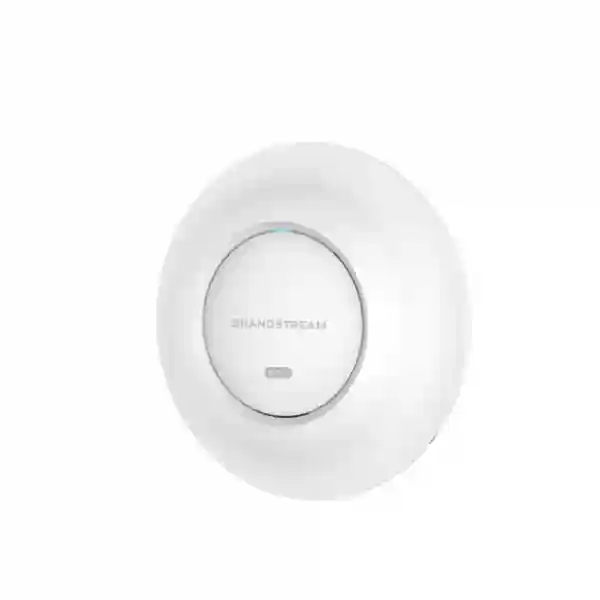
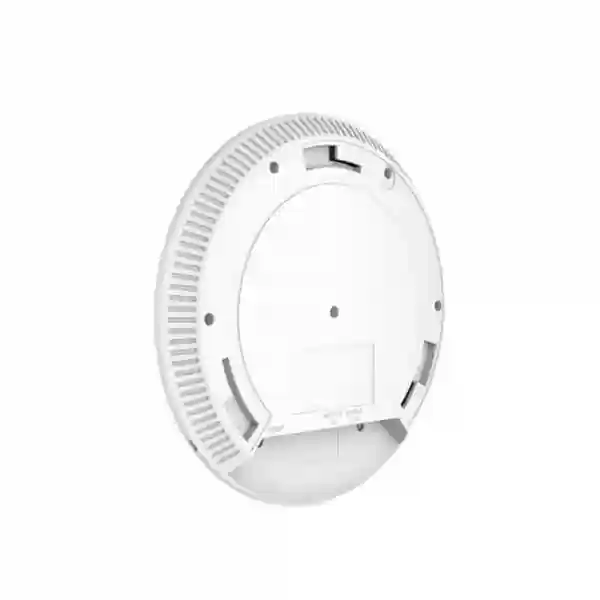
Grandstream GWN7664E High-Performance AX6000 Wi-Fi 6 Access Point
The Grandstream GWN7664E is an enterprise-grade indoor 802.11ax Wi-Fi 6 access point designed for organizations that need higher wireless capacity, multi-gigabit uplinks and flexible network management without adding unnecessary controller hardware. It combines dual-band 4×4:4 MU-MIMO, uplink and downlink OFDMA, advanced quality-of-service controls and two 2.5 Gigabit Ethernet ports to support demanding business wireless networks. Grandstream specifies up to 6Gbps aggregate wireless throughput, up to 5Gbps aggregate wired throughput, a coverage range of up to 175 meters under suitable conditions and support for up to 512 concurrent Wi-Fi clients.
For buyers evaluating the GWN7664E in Tanzania, the important question is not only headline speed. The access point is best considered as part of a complete wireless design that includes RF planning, structured cabling, PoE+ switching, VLAN architecture, security policy, roaming requirements and the expected number and behavior of client devices. FourTeck can help organizations prepare a quotation around those practical requirements so the chosen access-point count, switching capacity and management method match the site rather than relying on a one-size-fits-all assumption.
Up to 6Gbps aggregate wireless throughput for high-performance indoor wireless networks.
Dual-band multi-user MIMO and OFDMA help the AP serve many active devices efficiently.
Multi-gigabit wired connectivity helps reduce uplink bottlenecks in performance-focused deployments.
Designed for business environments where many phones, laptops, tablets and IoT devices share the WLAN.
What the Grandstream GWN7664E is designed to solve
Business Wi-Fi increasingly carries a mixture of voice, cloud applications, video conferencing, point-of-sale traffic, mobile devices, guest access and operational systems. A conventional low-capacity access point can become a bottleneck even when the internet connection itself is fast. The GWN7664E addresses this problem by combining Wi-Fi 6 radio efficiency with multi-gigabit wired interfaces and management choices that suit both single-site and distributed networks. OFDMA improves the way radio resources are divided among clients, while MU-MIMO helps the access point communicate with multiple compatible devices efficiently. Advanced QoS is especially relevant where real-time applications such as voice and video must coexist with ordinary data traffic.
The GWN7664E also supports multiple SSIDs and VLAN-oriented network design. This allows an administrator to separate business traffic, guest traffic, voice devices and other categories according to policy. WPA3 support and Grandstream security functions such as secure boot, digital-signature protection, a unique security certificate and a randomized default password contribute to a stronger device-security baseline. These capabilities are most effective when they are deployed within a broader security design that includes correct VLAN segmentation, firewall policy, identity controls and disciplined firmware management.
Verified GWN7664E technical highlights
| Wireless standard | IEEE 802.11 a/b/g/n/ac/ax |
| Wireless capacity | Up to 6Gbps aggregate wireless throughput |
| Radio architecture | Dual-band 4×4:4 MU-MIMO with DL/UL OFDMA |
| Client capacity | Up to 512 concurrent Wi-Fi clients |
| Coverage | Up to 175 meters; actual coverage varies by building, interference, placement and client characteristics |
| Network interfaces | 2 x 2.5 Gigabit Ethernet ports |
| SSIDs | 32 total, 16 per radio |
| Security | WPA/WPA2, WPA/WPA2 Enterprise, WPA3, secure boot and certificate-based device protections |
| Power | 802.3at PoE+, maximum power consumption 21W |
| Mounting | Indoor wall or ceiling mounting; mounting kit included |
| Management | Embedded controller, Grandstream cloud management and GWN Manager on-premise management |
Management options for single-site and multi-site Wi-Fi
One of the GWN7664E’s useful design choices is that organizations can manage it in more than one way. The embedded controller is suitable when a local deployment needs direct management without a separate controller appliance. Grandstream states that the embedded controller can manage up to 50 local GWN access points. For broader environments, Grandstream’s cloud-based management platform can centralize administration across multiple locations, while GWN Manager provides an on-premise software option for organizations that prefer to keep management infrastructure under their own control.
The right management approach depends on operating model rather than product speed. A hotel or office with a limited number of APs may prefer the embedded controller for simplicity. A business with branches in Dar es Salaam, Arusha and Mwanza may value cloud administration because wireless policies and monitoring can be coordinated more consistently. A larger enterprise with internal IT governance requirements may prefer an on-premise management platform. Buyers should decide the management method before deployment because it affects change control, monitoring, administrative access and support procedures.
Office and enterprise floors
The GWN7664E is suited to business floors where laptops, mobile phones, collaboration tools and cloud applications create continuous demand. Correct placement and channel planning are important so multiple APs work as a coordinated WLAN rather than competing for airtime.
Hospitality and guest access
Hotels, serviced apartments and conference venues can use multiple SSIDs, captive portal functions and network segmentation to separate guest connectivity from staff and operational systems while maintaining centralized administration.
Voice and real-time traffic
Advanced QoS and Wi-Fi 6 efficiency make the GWN7664E relevant for voice-over-Wi-Fi, video meetings and other latency-sensitive traffic, provided the LAN, WAN and RF design are configured to support those applications end to end.
Deployment and buying guidance
A successful GWN7664E deployment starts with site information. Floor plans, wall materials, ceiling height, device density, expected traffic and the location of network cabinets all influence access-point quantity and placement. The published coverage figure is a laboratory-style maximum reference rather than a promise that a single AP will cover every building. Concrete walls, metal shelving, dense office partitions and neighboring wireless networks can shorten useful range. For critical environments, an RF survey or at least a structured placement review is far more useful than selecting AP count only from square-meter estimates.
Switching also matters. Because the GWN7664E includes two 2.5G network interfaces and can draw up to 21W through 802.3at PoE+, the access switch should be checked for both port speed and PoE budget. A network can technically connect the AP to a slower uplink, but doing so may limit the benefit of a high-capacity access point. Likewise, deploying many access points on a PoE switch with insufficient total power budget can cause avoidable reliability problems. A quotation should therefore consider AP quantity, PoE+ switch capacity, uplink design, fiber or copper backbone requirements and any firewall or VLAN changes needed.
Wireless security should be planned at the same time as performance. Businesses often need separate employee, guest, voice, IoT or payment-network SSIDs. The GWN7664E supports multiple SSIDs and enterprise security methods, but the value comes from assigning those SSIDs to appropriate VLANs and applying firewall rules between them. Buyers should also define administrator roles, firmware-update procedures, password policy and monitoring responsibilities before installation.
FourTeck network resources
Customers can explore broader regional technology resources through FourTeck Tanzania for local product and solution information, FourTeck Uganda for Uganda-focused procurement, FourTeck Kenya for Kenya-focused ICT requirements, FourTeck Ghana for West African project enquiries and FourTeck Nigeria for Nigerian networking and communications requirements.
These regional resources are useful when organizations are preparing multi-country standards, branch rollouts or procurement specifications that should remain consistent across several operating markets.
Grandstream GWN7664E Tanzania
Organizations searching for the Grandstream GWN7664E in Tanzania are usually trying to solve one of three problems: an existing wireless network has become crowded, a new site needs business-grade Wi-Fi from the start, or a multi-floor facility requires a centrally managed access-point architecture. The GWN7664E is well aligned with these requirements because its Wi-Fi 6 radio design, dual 2.5G Ethernet ports and support for up to 512 clients provide a strong foundation for higher-density indoor networks. In Tanzania, buyers should evaluate the product as part of the total LAN design rather than as an isolated ceiling device. PoE+ switching, structured cabling, firewall capacity, internet bandwidth and VLAN policy all influence the user experience.
For Tanzanian offices, universities, schools, healthcare facilities, hotels, financial-service branches, retail environments and professional-service firms, the key procurement task is to translate expected usage into an access-point plan. A branch with many cloud-connected laptops may require a different design from a hotel where hundreds of guest devices connect intermittently. A training center may experience short periods of intense concurrent usage, while a head office may need consistent roaming across several floors. The GWN7664E’s 4×4:4 MU-MIMO and OFDMA capabilities are valuable in these situations because they improve airtime efficiency, but radio planning remains essential.
Tanzania projects should also consider power and switching. The access point uses 802.3at PoE+ and has a published maximum consumption of 21W. When multiple GWN7664E units are planned, the total PoE budget of the access switch should be calculated with headroom. Multi-gigabit switching is desirable where the network is expected to use the AP’s capacity fully. Businesses with existing Gigabit-only switching can still discuss upgrade paths, but the wired topology should be reviewed so the wireless layer is not constrained by avoidable bottlenecks.
A well-prepared Tanzania quotation should include the number of access points, installation environment, required SSIDs, switch port requirements, management preference, expected user count, floor plans where available and any integration with IP telephony or guest portals. This information allows a more useful commercial discussion than requesting only a unit price. It also reduces the risk of buying high-performance APs without the supporting network design needed to achieve reliable business Wi-Fi.
Grandstream GWN7664E Dar es Salaam
Dar es Salaam businesses often operate in network environments where user density changes throughout the day. Corporate offices, hotels, training venues, clinics, retail operations and shared commercial buildings may have many devices competing for airtime at the same time. The GWN7664E is relevant to these settings because it combines Wi-Fi 6 efficiency with a high-capacity radio architecture and two 2.5G wired interfaces. A Dar es Salaam deployment should begin by identifying where people actually use Wi-Fi: meeting rooms, reception areas, open offices, guest spaces, corridors, training rooms and high-traffic service areas. Access points can then be placed to support those usage zones rather than simply being distributed at equal distances.
Multi-floor buildings deserve particular attention. Concrete slabs, lift cores and service areas can reduce signal propagation between floors, so relying on an AP installed one level away may produce inconsistent performance. The GWN7664E supports ceiling and wall mounting, giving installers flexibility to position devices according to the building. For offices using Wi-Fi calling, video meetings or cloud applications, consistent coverage and roaming matter more than achieving a strong signal in only one central point.
Dar es Salaam buyers should also check switch capability before ordering. Two 2.5G ports give the AP substantial wired capacity, but that advantage is best used with appropriate multi-gigabit switching and correctly sized PoE+. If an existing switch provides only standard Gigabit ports, the network may still operate, but the design should acknowledge the resulting limitation. Where multiple APs are deployed, VLANs can separate corporate users, guests and special devices, while QoS can help protect voice and video traffic from less time-sensitive traffic.
For procurement, provide the number of floors, approximate user count, peak device count, current switching model, available cabling and intended management method. These details help shape a GWN7664E Dar es Salaam quotation around the real project instead of treating every site as identical.
Grandstream GWN7664E Mwanza
For organizations considering the Grandstream GWN7664E in Mwanza, wireless reliability may be required across offices, hospitality properties, educational environments, medical facilities and commercial buildings where users depend on cloud services throughout the working day. The GWN7664E is designed for indoor business Wi-Fi and provides the capacity needed for many simultaneous connections, but good results still depend on correct placement and upstream network design. Buildings with thick masonry, long corridors or partitioned rooms can create coverage shadows that are not visible from a simple floor-area calculation.
A Mwanza project can benefit from preparing an RF-oriented placement plan before installation. The published range of up to 175 meters is a maximum reference and is not a guarantee for every building. Walls, neighboring Wi-Fi networks, furniture, shelving and device capabilities all affect usable coverage. For a hotel or campus-style property, several APs at controlled power levels may provide a better experience than one device operating at maximum power. This approach helps improve roaming and reduces areas where client devices remain connected to a distant access point.
The GWN7664E supports 32 SSIDs in total and includes VLAN and QoS functions, which are useful where one physical wireless system needs to support different user groups. A Mwanza hospitality deployment might separate guest access from staff operations; a school might separate administration, teaching staff and student devices; a company might maintain distinct networks for employees, visitors and operational equipment. The network firewall and switching layer should enforce those boundaries consistently.
When requesting a quotation in Mwanza, include the expected number of connected users, whether guest access is required, the current switch model, available PoE capacity and whether cloud or local management is preferred. If voice-over-Wi-Fi or video conferencing is important, mention it early so channel planning, QoS and internet bandwidth can be reviewed together. The GWN7664E can be a strong AP for Mwanza business networks when the wired and wireless layers are planned as one system.
Grandstream GWN7664E Arusha
Arusha has a wide variety of commercial environments that can place very different demands on wireless infrastructure. Hotels, tour operators, conference facilities, professional offices, educational institutions and healthcare organizations may all need dependable connectivity, but their traffic patterns are not the same. The GWN7664E provides Wi-Fi 6 capacity and high-density client support that can fit these environments, while its management options make it possible to administer a single location or multiple sites using a consistent operational model.
Hospitality and conference environments in Arusha should pay special attention to guest density. A meeting room that is lightly used most of the day can suddenly host many phones and laptops when an event begins. OFDMA and MU-MIMO can improve efficiency under these conditions, but the WLAN still needs adequate channel reuse, sensible transmit-power settings and sufficient wired capacity. In guest environments, captive portal requirements, VLAN separation and bandwidth policies should be discussed before deployment so the access points are configured for the intended customer experience.
For offices and professional firms, the GWN7664E can support collaboration applications, cloud storage, voice and mobile devices across multiple work areas. The two 2.5G network interfaces are especially relevant when the access layer is being modernized with multi-gigabit switching. PoE+ simplifies physical installation because power and data can be delivered through the Ethernet cabling, although the switch’s total power budget must be checked carefully when many APs are installed.
Arusha buyers should prepare basic site data before asking for final quantities. Useful information includes floor plans, wall type, ceiling height, expected peak device count, preferred mounting positions and any existing cabling limitations. A strong quotation also identifies whether the network needs guest access, multiple SSIDs, inter-VLAN security, centralized monitoring or integration with Grandstream Wi-Fi-capable phones. This planning makes the GWN7664E part of a scalable wireless architecture rather than a standalone hardware purchase.
Grandstream GWN7664E Dodoma
Businesses and institutions evaluating the Grandstream GWN7664E in Dodoma often need wireless connectivity that can support administration, meetings, cloud applications, mobile users and guest access without becoming difficult to manage. The GWN7664E offers a high-capacity Wi-Fi 6 platform with 4×4:4 MU-MIMO, OFDMA, advanced QoS and dual 2.5G ports. These features are useful for modern office environments, but they should be matched with a clear network design that defines which users connect, what applications they run and how wireless traffic reaches the wider LAN and internet.
Public-sector style office layouts, education facilities and multi-department buildings can benefit from segmentation. Different SSIDs can be mapped to separate VLANs so internal staff, guests and specialized devices do not automatically share the same network path. The AP’s WPA3 and enterprise security options provide strong wireless authentication choices, while firewall policy and identity controls should enforce access between network zones. Security should therefore be treated as an architecture decision rather than only an access-point setting.
Dodoma deployments also need realistic coverage planning. A published range figure cannot account for every wall, corridor, stairwell or neighboring radio source. Multiple access points placed strategically can create a more consistent user experience, especially for mobile staff moving between meeting rooms and offices. If voice-over-Wi-Fi is expected, roaming behavior and signal overlap should be considered carefully. The GWN7664E’s advanced QoS can prioritize real-time traffic, but effective voice performance also depends on switching, firewall and WAN latency.
When preparing a GWN7664E Dodoma request, organizations should provide expected client numbers, floor count, coverage areas, PoE switch details and management preference. The embedded controller may suit a smaller local design, while cloud or on-premise management can be considered for larger or distributed networks. The goal is to size the wireless layer for actual operational requirements and leave room for growth without purchasing unnecessary equipment.
Grandstream GWN7664E UAE
Organizations comparing the Grandstream GWN7664E in the UAE often focus on high-density offices, hospitality properties, retail operations, education and distributed business environments. The AP’s Wi-Fi 6 radio architecture and dual 2.5G Ethernet ports make it suitable for sites where the wired network is already moving beyond conventional Gigabit access. In a UAE project, the GWN7664E should be evaluated together with multi-gigabit switching, PoE+ power planning, internet bandwidth and the organization’s security framework.
Large office floors and shared commercial spaces can generate a high number of simultaneous associations even when each individual user consumes moderate bandwidth. The GWN7664E supports up to 512 concurrent clients, but design decisions should not be based on that maximum alone. Client density, application type, roaming needs and RF conditions determine how many APs a site requires. Conference spaces, training rooms and hospitality meeting facilities often benefit from higher AP density because demand is concentrated in specific zones rather than evenly spread across the building.
Multi-site organizations in the UAE can also consider centralized Grandstream management. A cloud platform can simplify visibility across several branches, while on-premise management may better match internal governance requirements. The embedded controller remains useful for smaller local deployments. Whichever method is chosen, administrators should standardize SSIDs, VLAN assignments, firmware policy, access permissions and monitoring so the wireless environment is easier to support.
For quotation preparation, UAE buyers should share site count, floor plans, expected user density, available PoE switching and whether guest access or voice-over-Wi-Fi is required. It is also useful to identify any existing Grandstream phones, switches or networking platforms that need to be integrated. The GWN7664E offers strong performance potential, but the best procurement decision comes from matching the AP to the building, applications and operations model rather than selecting solely by advertised speed.
Grandstream GWN7664E Uganda
For Uganda deployments, the Grandstream GWN7664E is relevant to organizations modernizing business Wi-Fi in offices, educational sites, healthcare environments, hospitality properties and branch networks. Its Wi-Fi 6 design, dual 2.5G ports and support for up to 512 clients create a high-capacity platform for indoor wireless access. Buyers should, however, approach the AP as part of a complete network. Cabling quality, switch capacity, PoE+ power, WAN bandwidth and security policies all influence the real-world result.
Uganda organizations with several branches can benefit from centralized management because SSIDs, security settings and firmware policies can be coordinated across locations. This reduces the operational burden compared with configuring each access point independently. Local IT teams can also use the embedded-controller model for smaller deployments. The selection between embedded, cloud and on-premise management should reflect the number of sites, internal support resources and any governance requirements around remote administration.
In high-density areas, OFDMA and MU-MIMO help the GWN7664E use radio resources efficiently. This is useful where many users connect during meetings, training sessions or guest events. Nevertheless, client count should not be treated as the only sizing factor. The type of application matters: hundreds of lightly active phones create a different load from dozens of laptops participating in simultaneous video meetings. A wireless design should therefore consider both device quantity and traffic behavior.
A Uganda quotation request should include expected AP quantity, building layout, client count, current switches, VLAN requirements and any need for guest portals or voice-over-Wi-Fi. Where an organization is standardizing across East Africa, the same GWN7664E architecture can be discussed alongside related FourTeck regional resources so network policies remain consistent while each country’s site conditions are handled individually.
Grandstream GWN7664E Kampala
Kampala offices, hotels, schools, clinics and commercial facilities can place substantial demands on wireless networks because users increasingly depend on cloud software, video communication and mobile devices throughout the day. The GWN7664E can serve as a high-performance indoor access point for these environments, particularly where many devices share the same coverage area. Its two 2.5G interfaces are also useful for network upgrades where conventional Gigabit uplinks could become a limitation.
Kampala deployments should identify high-demand zones before selecting quantities. Reception areas, conference rooms, training spaces and open offices may need different access-point density. Placing one powerful AP in the middle of a floor is not always the best design because walls and client-device transmit power can limit two-way communication. Multiple well-positioned APs can improve roaming and reduce contention. The GWN7664E supports the radio features required for efficient Wi-Fi 6 service, but placement remains a central engineering decision.
Security and guest access are also common requirements. Multiple SSIDs and VLAN support allow IT teams to create separated wireless services for staff, guests and dedicated device groups. WPA3 can strengthen wireless protection, while the upstream firewall should control communication between network segments. Businesses using IP phones or collaboration applications can also use QoS policies to protect latency-sensitive traffic.
Before requesting a Kampala quote, buyers should gather switch model details, PoE budget, floor plans and estimates of peak device count. If an existing WLAN is being replaced, it is useful to identify current dead zones and performance complaints. This evidence helps determine whether the project needs only new AP hardware or also changes to switching, cabling, firewall policy or internet capacity. A properly scoped GWN7664E deployment can therefore improve not just speed, but the manageability and predictability of the entire wireless environment.
Grandstream GWN7664E Arua
Organizations considering the Grandstream GWN7664E in Arua may be upgrading from consumer-style Wi-Fi or extending an existing business network to support more staff, visitors and connected devices. The GWN7664E provides enterprise-oriented features including Wi-Fi 6, 4×4:4 MU-MIMO, OFDMA, multiple SSIDs, advanced QoS and management options that scale beyond a single device. This makes it suitable for offices, education, hospitality, healthcare and other indoor facilities that need structured wireless administration.
An Arua deployment should pay close attention to the relationship between wireless coverage and the wired network. The access point can deliver high aggregate wireless capacity, but the connection back to the switch must be able to carry that traffic. The two 2.5G interfaces provide multi-gigabit options, while PoE+ can supply power through the network cable. Buyers should verify cable condition, switch port speed and available PoE budget so the AP is supported properly.
In smaller sites, the embedded controller can simplify administration because there is no requirement for a dedicated hardware controller. As the network grows, centralized management can help maintain consistent SSIDs, passwords, VLANs and firmware. This is especially useful for organizations with branch locations because administrators can establish repeatable standards rather than creating a different configuration at every site.
For Arua procurement, the most useful quotation request includes the building type, expected number of devices, existing switch and firewall details, any guest-network requirement and whether voice or video applications are business-critical. The access point’s published coverage range should be treated as a planning reference rather than a guaranteed result. A practical design should consider wall materials, interference and user movement to determine the correct number and position of APs.
Grandstream GWN7664E Mbarara
The Grandstream GWN7664E can fit Mbarara organizations that need to increase Wi-Fi capacity while keeping management straightforward. Wi-Fi 6 features are particularly useful in offices, learning environments, hospitality sites and clinics where many client devices connect at once. Rather than serving clients sequentially in the same way as older wireless designs, OFDMA and multi-user MIMO improve how radio resources are shared among compatible devices, which can reduce contention in busy coverage areas.
Mbarara buyers should map the intended wireless services before installation. An employee network may require access to internal systems, while a guest SSID should usually be isolated from business resources. IoT or payment-related devices may need separate security treatment. The GWN7664E can broadcast multiple SSIDs and support VLAN-based designs, but segmentation must also be configured on switches and firewalls. Wireless security is therefore strongest when AP configuration is aligned with the wider network policy.
The access point requires PoE+ and can consume up to 21W. For a site with many APs, the switch’s aggregate power budget should be checked rather than looking only at per-port support. Multi-gigabit ports are another consideration because the GWN7664E offers two 2.5G Ethernet interfaces. If the project is intended to support high local traffic or future growth, using appropriate switching can preserve more of the AP’s capability.
A Mbarara quotation can be prepared more accurately when buyers provide a rough floor plan, user count, key application list and details of existing network infrastructure. Where coverage must extend across several floors or wings, the design should consider roaming and channel reuse rather than placing APs based only on distance. This method helps the GWN7664E deliver consistent business Wi-Fi as user numbers grow.
Grandstream GWN7664E Gulu
For Gulu businesses, educational institutions and service organizations, upgrading to a business-grade Wi-Fi 6 platform can improve both user capacity and operational control. The Grandstream GWN7664E is designed for indoor deployments and combines high wireless throughput with enterprise management features. Its 32 total SSIDs, WPA3 support, advanced QoS and management choices allow IT teams to create a structured WLAN instead of relying on independent access points with unrelated configurations.
Gulu sites should assess their physical environment carefully. Long corridors, thick walls and separated office areas can create uneven wireless coverage. The maximum published range of the GWN7664E is useful as a technical reference, but actual coverage depends on the building and client devices. Strategic placement of several APs can produce better roaming and more balanced client distribution. This is particularly important where staff move between rooms while using calls, messaging or cloud applications.
Network capacity should be planned end to end. The GWN7664E provides two 2.5G ports and can support a large number of clients, but internet bandwidth, firewall throughput and switching must keep pace with wireless demand. If a site experiences slow cloud applications, simply replacing the AP may not solve the problem if the bottleneck is elsewhere. A project review should therefore look at WAN capacity, LAN uplinks, PoE budget and VLAN design together.
For procurement in Gulu, organizations can provide the number of rooms or floors, estimated peak client count, required SSIDs and existing equipment models. If the site needs centralized control across other Ugandan locations, that requirement should also be included. The GWN7664E’s flexible management architecture makes it possible to choose a local or centralized approach based on operational needs.
Grandstream GWN7664E Kenya
Kenyan organizations considering the GWN7664E are often balancing three requirements: faster wireless access, support for more concurrent devices and easier management across one or more sites. The AP’s Wi-Fi 6 architecture, 4×4:4 MU-MIMO, OFDMA and dual 2.5G Ethernet connectivity address these needs at the access layer. It is suitable for indoor business environments such as offices, hospitality, education, clinics, retail and branch networks where user density can be significant.
A Kenya project should consider whether the wireless network is primarily serving ordinary office traffic or more demanding applications such as high-definition collaboration, large file transfers, cloud desktops or voice over Wi-Fi. Those applications influence access-point density and switching requirements. Multi-gigabit switch ports can better match the GWN7664E’s wired interfaces, while adequate PoE+ budget ensures stable power delivery. Where APs are installed at scale, the total switch power budget should be calculated with room for operational headroom.
Centralized management is also valuable for organizations with sites in Nairobi, Mombasa, Kisumu or other cities. Policies for SSIDs, VLANs, guest access and firmware can be standardized, reducing configuration drift. The embedded-controller option still provides a practical path for smaller standalone installations. The correct choice depends on IT staffing, branch count and governance requirements.
Kenya buyers should submit floor plans where possible and indicate current network equipment, expected client density and any voice or guest-access requirements. This allows the GWN7664E to be sized as part of a complete architecture. For organizations operating in both Kenya and Tanzania, maintaining similar wireless standards across countries can simplify support, while each site’s RF design and local procurement considerations remain distinct.
Grandstream GWN7664E Kuwait
In Kuwait, the Grandstream GWN7664E can serve as a high-capacity indoor access point for offices, hospitality properties, education, healthcare and commercial environments where many users expect dependable Wi-Fi. Its Wi-Fi 6 radio design is well suited to dense device populations, and the two 2.5G interfaces can integrate with modern multi-gigabit access switching. The AP also provides centralized management choices that can support both local deployments and larger distributed organizations.
Kuwait projects should distinguish between internet speed and wireless capacity. A fast WAN connection does not guarantee strong Wi-Fi if coverage is uneven, radio channels are congested or client devices are concentrated around too few APs. Likewise, a powerful AP cannot overcome an overloaded firewall or slow switch uplink. Planning should therefore evaluate the complete path from user device to access point, switch, firewall and internet service.
For commercial buildings and offices, segmentation is often important. Employee, visitor, voice and operational traffic may need separate SSIDs and VLANs. The GWN7664E supports the wireless elements of this design, while switches and firewalls enforce routing and access policy. Advanced QoS can help prioritize latency-sensitive traffic, but quality targets should be applied across the whole network.
A Kuwait quotation request should specify the required coverage area, expected peak users, floor count, existing PoE switching and preferred management model. If the network is being upgraded from older Wi-Fi technology, include details of current pain points such as poor roaming, dead zones or slow conference-room performance. This allows the GWN7664E deployment to be planned around business outcomes rather than just replacing hardware one for one.
Grandstream GWN7664E Ghana
Organizations sourcing the GWN7664E for Ghana may require a wireless platform that can support growing device counts without making administration overly complex. The access point provides Wi-Fi 6, high aggregate throughput, two 2.5G network ports, support for up to 512 clients and multiple management options. This combination is useful for office, hospitality, education, healthcare and service-sector environments where reliable wireless access is now part of everyday operations.
Ghana deployments should consider client behavior as carefully as client quantity. A site with many smartphones performing light background traffic differs from a training venue where dozens of laptops simultaneously access cloud platforms. OFDMA and MU-MIMO improve efficiency in busy networks, but a high-quality design may still require several APs to divide clients across radio cells. Proper channel planning and transmit-power control can reduce interference and improve roaming.
The GWN7664E’s PoE+ requirement should be included in the bill of materials. Switches must support 802.3at and have enough total power for all connected APs. The dual 2.5G ports also make switching speed relevant. Where the network backbone is being refreshed, multi-gigabit access ports can better support future wireless capacity. Existing Gigabit networks can be assessed to determine whether they remain adequate for the expected traffic profile.
For Ghana procurement, provide site plans, user estimates, switch models and required network segments. Organizations operating branches in multiple West African countries can also use centralized management to align SSIDs and policies across sites. A well-scoped GWN7664E project therefore combines hardware selection with cabling, power, switching, security and operational planning.
Grandstream GWN7664E Nigeria
Nigeria deployments can place heavy demands on business Wi-Fi, especially in offices, hotels, educational facilities, healthcare sites and commercial locations with large numbers of mobile devices. The GWN7664E is designed for these types of indoor environments and combines 4×4:4 MU-MIMO, OFDMA, up to 6Gbps aggregate wireless throughput and two 2.5G ports. These specifications make it a strong access-layer option when the rest of the network is designed to support the traffic.
For multi-floor offices and larger commercial spaces, access-point quantity should be derived from capacity and coverage together. Thick walls, interference and dense client groups can reduce the usefulness of a simple range calculation. Meeting suites, training rooms and reception areas may need additional AP capacity even when signal coverage appears adequate. The objective is to maintain usable airtime and roaming quality during busy periods, not just to display a strong Wi-Fi icon.
Nigeria organizations with distributed branches can use centralized management to standardize configuration across locations. SSID naming, VLAN assignments, password policy and firmware procedures can be handled consistently, reducing operational variation. Local embedded management remains appropriate for smaller sites that do not require multi-branch visibility. The management model should be selected according to support workflow and administrative control.
A useful GWN7664E Nigeria quotation request includes expected AP count, building type, client density, switch specifications, firewall model and whether voice, guest access or IoT segmentation is required. Where the project includes a switch upgrade, the buyer should consider PoE+ budget and multi-gigabit ports at the same time. This approach helps ensure that investment in a high-performance AP is not limited by the wired infrastructure behind it.
Grandstream GWN7664E Seychelles
For Seychelles businesses, hotels, professional offices and service environments, wireless networks often need to support both operational staff and guest-facing connectivity. The GWN7664E provides a business-grade Wi-Fi 6 platform with high wireless capacity, multiple SSIDs, advanced QoS and centralized management choices. These features are valuable where a single property contains different user groups and applications that should be separated for performance and security.
Hospitality is a good example. Guest devices may generate unpredictable demand, while property-management systems, staff devices and voice applications require stable access. The GWN7664E can participate in a segmented design where guest and business traffic use different SSIDs and VLANs. Captive portal features can support guest-access workflows, while firewall rules protect internal systems. Access-point placement should be planned around rooms, corridors, common areas and construction materials rather than relying on a single coverage number.
For properties with several buildings or floors, centralized management can simplify monitoring and policy changes. IT teams can maintain a consistent wireless standard while still adjusting radio settings for each area. PoE+ can reduce the need for separate electrical outlets at AP locations, though the switch’s total power budget and cabling quality must be checked. Multi-gigabit ports are useful where the access layer and backbone are capable of carrying higher throughput.
Seychelles buyers should prepare a quotation request with building layout, expected room or user count, guest-access requirements, current switching and internet capacity. If the network carries voice or video, note those applications so QoS and roaming can be reviewed. The GWN7664E can be a strong component of a modern hospitality or enterprise WLAN when the complete network is designed around the site’s operational needs.
Compatibility, switching and integration considerations
The GWN7664E uses standard Ethernet networking and 802.3at PoE+, making it practical to integrate into many business LANs. However, compatibility should be reviewed at the system level. A switch needs sufficient PoE+ power, and multi-gigabit ports are desirable where the AP’s 2.5G interfaces are expected to operate at full speed. VLAN configuration must be consistent between access points, switches and firewall interfaces. RADIUS or enterprise authentication, if required, should be planned with the organization’s identity system. Guest portals and bandwidth policies should also be tested against the intended user experience.
For organizations using Grandstream Wi-Fi-capable phones, the GWN7664E is positioned by Grandstream for voice-over-Wi-Fi environments. This does not remove the need for RF design. Voice traffic is sensitive to delay, packet loss and roaming interruptions, so AP placement, channel reuse and QoS should be configured deliberately. Similarly, video collaboration can consume significant bandwidth and may expose weaknesses in WAN links or firewall performance that are unrelated to the access point itself.
GWN7664E quotation checklist
Frequently asked questions about the GWN7664E
Is the GWN7664E a Wi-Fi 6 or Wi-Fi 6E access point?
The GWN7664E is an 802.11ax Wi-Fi 6 access point operating on the 2.4GHz and 5GHz bands. It is not a 6GHz Wi-Fi 6E model. Buyers should use the official specification rather than relying on reseller listings that may label the product incorrectly.
How many users can the GWN7664E support?
Grandstream specifies support for up to 512 concurrent Wi-Fi clients. Actual network design should still consider the applications those clients run, RF conditions, available internet bandwidth and access-point density.
Does the GWN7664E require a separate hardware controller?
No dedicated hardware controller is required for a basic deployment. The access point includes an embedded management controller, and Grandstream also provides cloud and on-premise management options for larger or distributed networks.
What switch should be used with the GWN7664E?
The access point uses 802.3at PoE+ and includes two 2.5G Ethernet ports. A switch should therefore be checked for PoE+ support, available total power budget and the port speeds required by the planned workload. Multi-gigabit switching is useful when the deployment is intended to take advantage of higher wired throughput.
Can the GWN7664E be used for guest Wi-Fi?
Yes. The platform supports multiple SSIDs, VLAN-based segmentation and captive portal capabilities. A secure guest design should also include firewall isolation and appropriate bandwidth or access policies.
Is one GWN7664E enough for an entire office?
It depends on the building. The published range is up to 175 meters under suitable conditions, but walls, interference, floors and client density can reduce practical coverage. Business deployments should be sized from the site layout and expected usage, not from the maximum range figure alone.
Decision recap
Choose the GWN7664E when the requirement is a high-capacity indoor Wi-Fi 6 access point with 4×4:4 MU-MIMO, OFDMA, dual 2.5G interfaces, PoE+ and flexible Grandstream management. It is particularly relevant to medium- and high-density business areas, multi-floor sites, guest networks and environments carrying voice or video traffic.
Before purchase, confirm AP quantity, PoE+ switch budget, multi-gigabit requirements, VLAN design, management method and expected client behavior. These design decisions determine whether the wireless network can take advantage of the product’s capabilities.
Consultation and project scoping
For a useful GWN7664E proposal, share your city or country, number of floors, approximate user count, current switch and firewall models, expected applications and whether guest Wi-Fi, roaming or voice is required. This information helps shape a quotation around the actual environment and can identify whether the project also needs PoE+ switching, cabling changes, segmentation or centralized management.


Reviews
There are no reviews yet.