
Grandstream GXP2130 v2 Tanzania
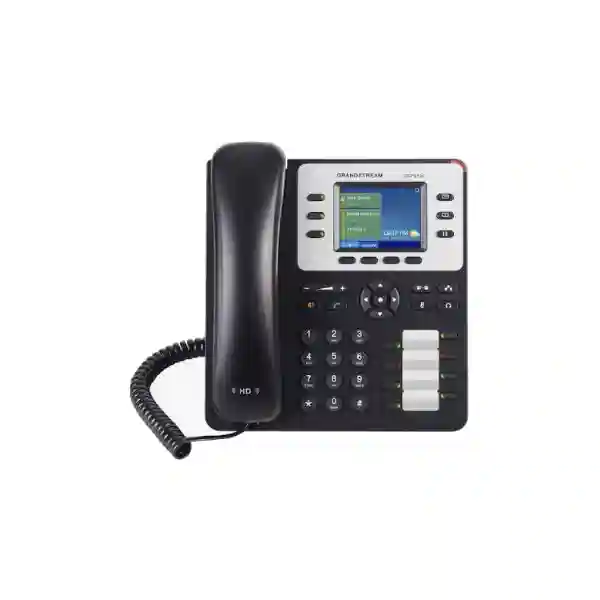
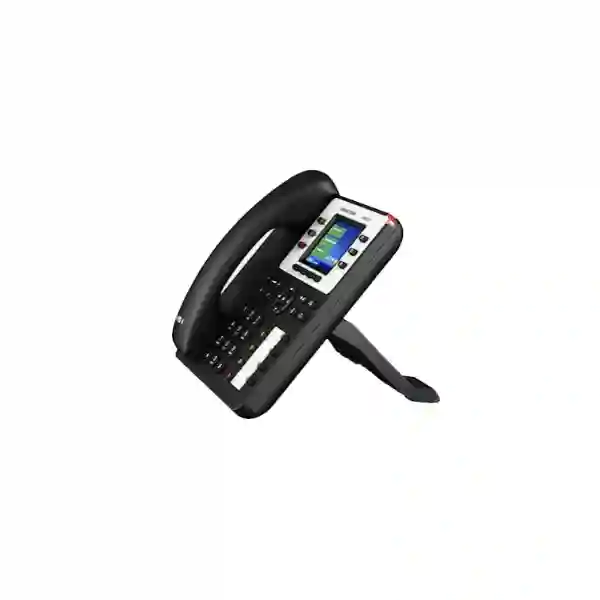
The Grandstream GXP2130 v2 is a flexible enterprise-grade IP phone designed for desks that need clear voice quality, fast access to frequently used extensions and dependable SIP connectivity without the complexity of a large executive console. Grandstream specifies support for 3 lines and 3 SIP accounts, a 2.8-inch 320×240 color LCD, 8 dual-color BLF/speed-dial keys, 4 programmable context-sensitive soft keys, dual Gigabit Ethernet ports with integrated PoE, Bluetooth, HD audio and 4-way voice conferencing. For organizations in Tanzania, those capabilities make the phone relevant for reception support positions, sales desks, supervisors, administrative teams, service counters and other users who need more call-control visibility than an entry-level SIP handset.
Plan the phone together with SIP/PBX settings, PoE availability, voice VLAN design, QoS, headset requirements and provisioning. FourTeck can help review these elements before quotation and rollout.
What the Grandstream GXP2130 v2 is designed to solve
A business desk phone has to do more than register to a SIP account. In many offices the person using the handset needs to see whether colleagues are available, transfer calls quickly, place a caller on hold, move between line appearances, use a headset and access common call functions without searching through deep menus. The GXP2130 v2 addresses that middle ground between a basic single-purpose desk phone and a much larger multi-line console. Its dedicated BLF/speed-dial keys give visible access to frequently contacted extensions, while three SIP accounts allow organizations to separate identities or line assignments according to the PBX design.
The dual Gigabit Ethernet design is also important in office deployments where a computer shares the same wall outlet path as the phone. Rather than forcing a separate data run for every desk, the phone can participate in a structured network design with the PC connected through the handset’s switched Ethernet ports. Integrated PoE can simplify desk cabling when the connected switch provides standards-based power. The real deployment value, however, depends on the broader LAN: voice VLANs, switch PoE budgets, QoS, DHCP options, firewall behavior, PBX configuration and internet stability should all be considered where applicable.
FourTeck’s Tanzania technology portfolio covers IP PBX, SIP, IP phones, network switching and integrated infrastructure planning. Buyers can review the broader FourTeck Tanzania business technology portfolio when the GXP2130 v2 is part of a wider office communication or network upgrade rather than a stand-alone replacement handset.
Verified GXP2130 v2 feature set
Call handling
Grandstream specifies 3 lines, 3 SIP accounts and 4-way voice conferencing. This is useful for users who routinely receive, transfer and coordinate business calls without requiring a large number of separate line keys.
Display and programmable keys
The phone uses a 2.8-inch 320×240 color-screen LCD, 8 dual-color BLF/speed-dial keys and 4 programmable context-sensitive soft keys, providing a compact but information-rich desktop interface.
Network connectivity
Dual switched auto-sensing 10/100/1000 Mbps Ethernet ports support Gigabit desktop networking, while integrated PoE can supply power when the upstream switching infrastructure is correctly designed.
Voice and headset flexibility
HD audio is available on the handset and speakerphone. The model also includes integrated Bluetooth and EHS support for compatible Plantronics headsets, giving users options for hands-free work.
Provisioning
Grandstream documents automated provisioning through mechanisms including TR-069 and encrypted XML configuration files, as well as zero-configuration deployment with compatible Grandstream UCM IP PBX systems.
Security
The GXP2130 v2 supports technologies including TLS and SRTP for protected signaling and media workflows when these are correctly configured and supported by the PBX or service platform.
Technical planning for a reliable deployment
A successful IP phone rollout starts with the call platform. Confirm whether the phone will register to an on-premises IP PBX, a hosted SIP service, a Grandstream UCM appliance or another standards-based telephony platform. The GXP2130 v2 is designed around SIP interoperability, but features such as BLF, voicemail indicators, directories, conferencing behavior and remote provisioning can depend on server support and configuration. It is therefore better to validate the intended call workflow before ordering a large quantity.
The network layer comes next. Where PoE will be used, verify that the access switch has sufficient powered ports and budget for the planned number of phones. If a workstation will be connected through the phone, ensure the switch uplink, cabling and VLAN design match the required desktop performance. Voice traffic benefits from predictable latency and loss characteristics, so QoS policies should be coordinated from the phone and access switch through the relevant routed network. In multi-site deployments, WAN links and VPN paths also become part of the voice-quality discussion.
Provisioning deserves equal attention. Manually programming a handful of phones can be manageable, but manual configuration becomes difficult to audit and repeat as extension counts grow. A structured template can standardize SIP server addresses, extension naming, time settings, firmware policies, BLF assignments and security options. Grandstream’s supported provisioning methods make this practical, while the actual workflow should match the organization’s PBX, device-management approach and change-control process.
For projects that combine telephony with switching, firewalls, Wi-Fi, servers or structured cabling, the FourTeck Tanzania services overview provides context on integrated design, installation, configuration, testing and support activities that can surround an IP phone deployment.
Who should consider the GXP2130 v2?
This model is particularly suitable for office users who need visible extension status and regular call transfer functions but do not require the very high line counts of larger executive endpoints. Typical examples include team supervisors, sales coordinators, customer-service desks, administrators, branch managers, front-office support users and shared business desks. The eight physical BLF/speed-dial keys can reduce the number of menu steps needed to reach commonly used extensions, while three SIP accounts provide enough flexibility for many departmental call patterns.
It may be less appropriate for very simple common-area users who only make occasional calls, or for receptionists who need dozens of immediately visible programmable keys. In those cases, a simpler endpoint or a higher-capacity model may fit better. The right selection is therefore based on user role, expected call volume, number of monitored extensions, headset use, display preference, network design and the organization’s PBX platform rather than the model name alone.
Grandstream GXP2130 v2 Tanzania
For Tanzania businesses, the Grandstream GXP2130 v2 fits naturally into modern IP telephony projects where the organization wants desk phones to work as part of a structured network rather than as isolated devices. A deployment may begin with a small office replacing analogue extensions, a branch that needs more consistent call handling, or a larger organization standardizing endpoints across departments. The phone’s three SIP accounts allow administrators to map user identities or call roles according to the PBX design, while the eight BLF/speed-dial keys can be assigned to frequently contacted colleagues, queues or functions supported by the call platform. This can be useful where staff regularly transfer callers between accounts, operations, sales, reception and management.
Tanzania deployments should be planned around the quality of the local LAN and available power design. Because the GXP2130 v2 includes Gigabit Ethernet and integrated PoE, organizations can build cleaner desk installations when managed PoE switches are already part of the network. The switch configuration should account for voice VLANs, port security, LLDP or other provisioning methods where appropriate, and the total PoE budget. UPS-backed switching can also help keep desk phones available through short power events, although total continuity still depends on the PBX, router, firewall, internet connection and any upstream service provider.
Procurement teams in Tanzania should confirm the exact hardware version, quantity, required power accessories, headset requirements and PBX compatibility before finalizing a quotation. If the organization operates several branches, consistent extension naming, BLF layouts and provisioning templates can reduce support effort. It is also useful to document who owns firmware updates, SIP credentials, configuration backups and replacement procedures. These operational details often matter more than a small difference in purchase price because they influence how quickly a phone can be deployed or replaced later.
FourTeck Tanzania presents IP telephony as part of a broader business technology environment that can include PBX, switching, firewalling and cabling. Organizations evaluating the GXP2130 v2 can use that integrated perspective to align the handset with the rest of the office network and avoid purchasing endpoints before the voice platform and LAN requirements are understood.
Grandstream GXP2130 v2 Dar es Salaam
In Dar es Salaam, many GXP2130 v2 requirements are likely to come from customer-facing offices, logistics teams, professional firms, hospitality operations, retail administration, service companies and multi-branch businesses where a dependable desk phone remains important even when staff also use mobile and collaboration applications. The practical benefit of a SIP desk phone is that it can give a user a stable extension identity, dedicated call controls and predictable audio behavior during long working sessions. The GXP2130 v2 adds useful visibility through its eight BLF/speed-dial keys, allowing a team to create shortcuts for colleagues or functions that are contacted repeatedly throughout the day.
A Dar es Salaam office should first check whether the existing network is voice-ready. If data and voice share the same switch infrastructure, network administrators should consider VLAN separation, quality-of-service markings and uplink capacity. Where a PC passes through the phone’s Gigabit ports, structured cabling should be tested and patching should be documented so troubleshooting is straightforward. If PoE is used, the switch must provide suitable power on every intended phone port. In a larger floor plan, the phone rollout should be coordinated with rack capacity, UPS runtime and port availability rather than handled desk by desk without a network plan.
The second issue is call-flow design. A business can have excellent phones and still frustrate callers if ringing groups, queues, business hours, voicemail and transfers are not configured clearly. Before deployment, map the journey of common calls: main number to reception, reception to department, unanswered extensions to voicemail or a backup group, and after-hours calls to the appropriate destination. BLF keys should then be programmed around those real workflows. A supervisor may monitor team extensions; a sales coordinator may need speed dials to account managers; an administrator may require quick access to reception, finance and operations.
For procurement, provide the number of users, PBX or hosted-SIP platform, required extensions, headset preference, switch model and expected installation location. That information makes it easier to prepare a relevant quotation and to identify whether the GXP2130 v2 is the correct endpoint for every desk or whether a mixed model strategy would be more efficient.
Grandstream GXP2130 v2 Mwanza
Mwanza organizations evaluating the Grandstream GXP2130 v2 may be planning a new IP PBX, replacing older desk phones or extending a centralized communications platform to an additional site. The phone is well suited to a branch-office pattern because it combines common enterprise calling features with compact physical controls. Three SIP accounts can support different extension identities according to the PBX design, while BLF keys help users see and reach important colleagues without remembering extension numbers. This can be especially useful in offices where reception, stores, sales, administration and management exchange calls frequently.
Branch connectivity should be evaluated carefully when the PBX is located elsewhere. If the Mwanza site registers to a PBX in another city, country or cloud environment, voice performance depends on WAN quality as well as local switching. Packet loss, high latency and unstable internet paths can affect conversation quality even when the phone itself is functioning correctly. A resilient design may include appropriate QoS, reliable routing, a secondary connectivity strategy where justified and clear firewall policies for SIP and media traffic. Network changes should be tested against the actual telephony platform rather than relying on generic port-opening rules.
Power planning is also part of branch reliability. The GXP2130 v2 supports PoE, so a properly sized PoE switch can remove individual power adapters from desks and simplify cable management. However, if all phones rely on that switch, the switch becomes a key dependency. Placing network switching, router/firewall equipment and PBX hardware where applicable on appropriate backup power can improve continuity during short disturbances. Administrators should document switch ports, extension numbers, phone MAC addresses and configuration ownership so replacement or troubleshooting does not depend on one person’s memory.
For Mwanza procurement, it is useful to share the desired quantity, whether the phones are for a single office or several sites, the number of monitored extensions per user and whether Bluetooth or EHS headset use is important. These details help decide whether the GXP2130 v2 offers the right balance of call controls and cost for each role.
Grandstream GXP2130 v2 Arusha
Arusha businesses often have communication needs that cross front-office, reservations, administration, logistics, sales and management functions. In such environments, a desk phone should make transfers and internal coordination quick without forcing users to depend entirely on a computer softphone. The GXP2130 v2’s dedicated BLF/speed-dial keys are useful for mapping frequently contacted departments or colleagues, while the color screen and context-sensitive soft keys keep core call functions visible. Bluetooth can support compatible wireless accessories, and EHS capability can be relevant for users who spend significant time on calls and prefer a supported headset workflow.
For hospitality and service-oriented environments around Arusha, endpoint selection should be role based. Front-desk or reservations users may need rapid call transfers and visibility of other extensions, while a back-office user may only need a basic phone. Standardizing every desk on the highest-feature device can increase costs unnecessarily, but selecting a phone that is too simple for call-intensive roles can slow staff down. The GXP2130 v2 is strongest where users need several programmable keys, three SIP identities and a higher level of desk call control than an entry-level endpoint provides.
Network readiness remains essential. If the site uses multiple VLANs for staff data, guest Wi-Fi, CCTV and voice, the voice VLAN should be planned so phones receive correct addressing and reach the PBX reliably. QoS policies can help prioritize real-time traffic where congestion occurs. If the phone shares an Ethernet path with a workstation, confirm that switch ports and cabling support the expected Gigabit data path. When using PoE, check the switch’s total power budget rather than only the number of physical ports.
Before requesting an Arusha quotation, document the number of desk users, PBX platform, SIP trunk or line design, expected call flow, preferred headset type and whether remote provisioning will be used. This preparation helps turn a handset purchase into a controlled deployment and reduces the chance of discovering compatibility or capacity issues after devices arrive.
Grandstream GXP2130 v2 Dodoma
Organizations in Dodoma considering the Grandstream GXP2130 v2 may be upgrading administrative offices, project teams, educational environments, professional services or distributed departments that rely on consistent internal calling. The model’s three-line design provides practical flexibility without the size of a large attendant console. Eight BLF/speed-dial keys can be configured around everyday communication paths, for example reception, procurement, finance, operations, management and support. Where the PBX provides presence information, BLF indicators can help a user decide whether to transfer a call immediately or choose another destination.
A good Dodoma deployment should treat the phones as managed network endpoints. That means assigning a repeatable provisioning method, deciding how firmware is maintained, protecting administrative access and documenting extension ownership. Grandstream supports automated provisioning technologies, which can reduce manual work when several handsets share a common configuration baseline. Unique user credentials and extension-specific settings still need controlled handling, but templates can standardize common values such as time zones, SIP server addresses, feature-key behavior and security preferences.
The network should also be checked for voice quality. A call can be affected by LAN congestion, an overloaded firewall, unstable WAN service or incorrect QoS even when the desk phone hardware is healthy. For sites that connect back to a central PBX, test the full route under normal business traffic. Where reliable calling is operationally important, consider how backup power and secondary connectivity would affect the PBX, firewall, switches and internet service as a complete chain.
Procurement teams should avoid assuming that every extension has identical needs. Some users may benefit from the GXP2130 v2 because of Bluetooth, BLF keys and three SIP accounts, while common-area or low-usage desks may be better served by a simpler endpoint. Sharing a user-role list with the quotation request makes it easier to build a balanced bill of materials and plan the correct accessories.
Grandstream GXP2130 v2 UAE
For UAE organizations, the Grandstream GXP2130 v2 remains relevant where businesses require a standards-based SIP desk phone with Gigabit networking, PoE and dedicated BLF keys for office call handling. Companies operating across Dubai, Abu Dhabi, Sharjah or other emirates may use a mixture of cloud telephony, on-premises PBX and multi-site communication systems. The GXP2130 v2 can fit these environments when its SIP capabilities and provisioning options are compatible with the chosen platform. The three-account design is particularly useful for staff who need more than one line identity but do not require a large executive endpoint.
UAE deployments often place strong emphasis on standardized office fit-outs and predictable device management. When dozens of endpoints are installed across floors or branches, provisioning should be repeatable, network ports should be labeled, PoE budgets should be known and extension assignments should be documented. The phone’s Gigabit pass-through capability can be useful where each desk has one structured Ethernet outlet and a connected workstation, but the final design should still consider security segmentation and whether the workstation and phone belong to separate VLANs.
Buyers comparing GXP2130 v2 options should also confirm lifecycle expectations, available firmware support and whether a newer Grandstream GRP-series model may be preferred for a fresh large-scale deployment. The GXP2130 v2 remains an established model with current vendor documentation and firmware resources, but device selection should reflect the organization’s standardization policy and expected service life. For branch replacements, keeping compatibility with an existing installed base may be valuable; for a completely new estate, comparing current alternatives can be sensible.
Regional buyers can also review the FourTeck Grandstream UAE resource when the requirement spans Grandstream phones, PBX platforms and related communication products. A quotation request should include user count, branch count, PBX platform, quantities and required accessories so the recommendation can be matched to the deployment rather than only the model name.
Grandstream GXP2130 v2 Uganda
Uganda businesses evaluating the GXP2130 v2 can use it as a dependable desk endpoint in SIP-based office communication systems where users need fast access to colleagues and clear control over several line appearances. The combination of three SIP accounts and eight BLF/speed-dial keys makes it useful for branch administrators, coordinators, reception support users and supervisors. The phone can also support headset-oriented working through Bluetooth and EHS-compatible accessories, which may improve comfort for staff who spend extended periods handling customer or internal calls.
A Uganda deployment should begin by confirming the PBX architecture. If extensions register locally, administrators need to plan LAN addressing, switch ports and provisioning. If the PBX is hosted or located in another branch, WAN stability and firewall policy become more important. Avoid treating SIP as simply another web application: real-time media can be sensitive to packet loss and jitter, and NAT behavior can affect registrations or audio paths. Testing the intended design before a broad rollout is a practical way to identify issues early.
PoE can simplify office cabling by carrying power and network connectivity over the Ethernet connection, but the access switch needs enough capacity for the full phone estate. Businesses should calculate both port count and power budget, then consider whether the switch and upstream router are protected by suitable backup power. In a branch where all communication depends on one switch, continuity planning should focus on the entire chain, not just the handset.
Organizations with projects in Uganda can consult the FourTeck Uganda technology site for regional product and solution context. When requesting the GXP2130 v2, include the quantity, intended city or site, PBX model, number of monitored extensions, headset needs and whether installation or configuration support is required.
Grandstream GXP2130 v2 Kampala
In Kampala, the GXP2130 v2 is a practical candidate for busy office desks that need more direct call-control buttons than a basic SIP phone offers. Customer service, administration, finance, sales and logistics teams can use the BLF/speed-dial keys to reduce repetitive dialing and make transfers faster. The phone’s three SIP accounts can be mapped according to the organization’s extension strategy, while the four programmable context-sensitive soft keys provide additional control during active calls. HD audio on the handset and speakerphone supports clear conversations when network conditions and codecs are configured appropriately.
Kampala offices often combine IP phones with PCs, Wi-Fi access points, cameras and other PoE devices on the same switching infrastructure. That makes capacity planning important. The phone itself has dual Gigabit ports and integrated PoE, but the network design should make sure voice traffic is not competing unnecessarily with heavy backups, camera streams or large file transfers. Managed switching with VLAN and QoS features can help create predictable behavior, while the firewall and internet connection must also be sized for the overall business workload.
If a company has several Kampala branches, a common endpoint profile can make support easier. Standard BLF positions, extension naming, firmware policy and provisioning templates reduce variation. A replacement phone can then be brought into service with less manual configuration, provided credentials and device records are well managed. Where Bluetooth or EHS headsets are used, accessory compatibility should be checked before ordering in quantity rather than assumed from connector type alone.
For quotation preparation, list the number of users by role, required phone quantity, PBX platform, SIP trunk/provider arrangement, existing PoE switch models and any need for installation or remote provisioning. This information helps determine whether every user should receive the GXP2130 v2 or whether a combination of endpoint types would better match the Kampala office’s actual call patterns.
Grandstream GXP2130 v2 Arua
For an Arua office or branch, the GXP2130 v2 can provide a consistent SIP desk-phone experience when the communications platform is centralized elsewhere. That is often an important design consideration because the local phone may be only one component in a chain that includes a remote PBX, internet connectivity, firewall policies and central provisioning. The phone supports standard SIP operation and automated configuration methods, making it suitable for organizations that want a repeatable endpoint profile across locations.
The eight BLF/speed-dial keys can be particularly helpful in a smaller branch where staff frequently contact headquarters, neighboring departments or a central reception. Instead of memorizing extensions, users can have the most important destinations visible on the phone. Three SIP accounts also allow administrators to accommodate different identities or call routes when the PBX design requires them. The exact behavior of BLF and shared-line features should be confirmed against the selected PBX because these services depend on server-side support as well as the handset.
Connectivity resilience deserves attention in branch locations. If all voice calls traverse one internet link, an outage will affect registered phones regardless of handset quality. Businesses should evaluate whether a secondary connection is justified by the operational impact of downtime and how the PBX handles re-registration after path changes. Local UPS protection for network equipment can also help during short power interruptions, but should be sized for the switch, router and any on-site PBX components, not just the phones.
When requesting the GXP2130 v2 for Arua, provide details about the central PBX location, number of extensions, expected concurrent call activity, switch and router equipment, and whether the phones will be managed by local or central IT. This allows the procurement and deployment plan to reflect the branch topology rather than treating the phone as an isolated purchase.
Grandstream GXP2130 v2 Mbarara
Mbarara organizations can consider the GXP2130 v2 for offices where employees handle a steady flow of customer, supplier and internal calls and need quick access to selected extensions. The model’s compact footprint, color display and dedicated BLF keys provide more direct control than a basic handset while remaining straightforward for general business users. Bluetooth support can be useful for compatible wireless headsets or mobile-device workflows, and EHS support gives another path for headset integration where the accessory combination is supported.
A useful buying exercise is to divide users into call profiles. A receptionist may require more monitored extensions than eight physical BLF keys provide. A general employee may need only one SIP account and few programmable buttons. A supervisor or departmental coordinator may fit the GXP2130 v2 very well because the phone provides a middle level of capability. Matching models to roles can control project cost and improve usability at the same time. It also prevents buying advanced features for desks that will never use them.
For installation, verify structured cabling and PoE switch readiness. Gigabit connectivity is useful when the user’s PC shares the phone’s network path, but cable quality, switch configuration and VLAN design all affect the final result. Voice traffic should be given an appropriate quality-of-service strategy where the network becomes busy. If the site has CCTV or heavy data traffic, separating those workloads logically can help keep communications predictable.
A quotation request for Mbarara should include phone quantities, user roles, PBX type, whether the system uses SIP trunks or another service, headset needs and the desired level of configuration assistance. Where several branches will receive the same phone, ask for a standard provisioning template and documentation approach so extensions can be supported consistently after rollout.
Grandstream GXP2130 v2 Gulu
In Gulu, the Grandstream GXP2130 v2 can support branch telephony for offices that want a consistent SIP endpoint with enough programmable controls for regular internal coordination. Three SIP accounts allow a flexible extension setup, while the eight BLF/speed-dial keys can be mapped to frequently used contacts or supported PBX functions. For teams that communicate with a headquarters or several departments throughout the day, those direct keys can reduce the time spent searching directories or manually entering extension numbers.
The deployment should be designed around network conditions rather than assuming every branch has the same infrastructure. If the Gulu site connects to a remote PBX, test the path for latency, jitter and packet loss under actual business load. If voice is carried across VPN links, verify that encryption overhead and firewall inspection do not create bottlenecks. If a local PBX is installed, make sure it and the switching equipment share an appropriate power-protection strategy so a short interruption does not leave powered phones without call service.
Management practices also matter. Grandstream’s provisioning capabilities can help central IT maintain common settings across locations, but every endpoint should still be recorded with its assigned extension, user, MAC address and physical location. Configuration backups and firmware policies reduce uncertainty when devices are replaced or moved. For businesses with limited on-site technical staff, clear documentation can be as valuable as the hardware itself because it allows remote support teams to understand how the branch is built.
Before buying GXP2130 v2 phones for Gulu, define the number of desks, expected call roles, PBX location, current switch capacity and whether remote management is required. A structured requirement lets the supplier recommend the phone, accessories and related network components as one usable system rather than supplying handsets without deployment context.
Grandstream GXP2130 v2 Kenya
Kenya buyers searching for the Grandstream GXP2130 v2 often compare it with other Grandstream GXP or newer GRP models for office extensions, reception-support roles and call-intensive desks. The GXP2130 v2 sits in a useful middle position: more programmable call controls than a basic IP phone, but fewer lines and keys than larger high-end models. Its three SIP accounts, eight BLF/speed-dial keys, Bluetooth, Gigabit Ethernet and integrated PoE make it practical for many established business VoIP environments.
For Nairobi or branch deployments, the procurement decision should include the installed PBX and the organization’s future standardization plan. A company with an existing fleet of GXP21xx phones may prefer consistency in firmware, user experience and provisioning. A business building a completely new large estate may also want to compare current Grandstream GRP endpoints. The best choice depends on lifecycle planning, user needs and platform compatibility rather than treating one model as universally better.
Network planning is similar across multi-site Kenyan operations: managed PoE switching, voice VLANs, QoS, stable routing and documented patching all contribute to dependable service. Where a PC connects through the phone, Gigabit pass-through helps avoid constraining desktop traffic. Where branches register to a central PBX, WAN behavior must be tested. Administrators should avoid exposing phone management pages unnecessarily and should use secure configuration methods supported by the phone and PBX.
Kenya procurement teams should provide quantities, delivery locations, PBX details, extension count and required headsets when requesting a quote. For regional organizations operating in both Kenya and Tanzania, it can also be useful to standardize naming, provisioning and support procedures across sites so a user moving between branches sees a consistent communications environment.
Grandstream GXP2130 v2 Kuwait
Kuwait organizations considering the GXP2130 v2 may be replacing phones in an existing SIP estate, standardizing branch desks or equipping users who need a modest number of line appearances with dedicated programmable keys. The phone’s dual Gigabit ports and PoE support fit structured enterprise cabling, while Bluetooth and EHS headset support can accommodate staff who need hands-free calling. Three SIP accounts provide enough flexibility for many office roles without introducing the larger interface of a high-line-count executive phone.
In a managed office environment, deployment should focus on repeatability. Rather than configuring each handset manually, organizations can use supported provisioning methods to distribute common settings and then apply extension-specific credentials. This approach can reduce errors and simplify replacement. Administrators should still maintain a device inventory, protect management access and define firmware update procedures. Any automated configuration server should itself be secured because it can control a large number of endpoints.
For network design, verify that access switches have the required PoE capacity and that voice VLAN settings are consistent across floors or branches. If a workstation is connected through the handset, make sure the network policy allows the phone and PC to receive the correct logical network assignments. QoS should be coordinated through the access, routing and WAN layers where applicable rather than configured only at the endpoint. If SIP trunks or hosted services are involved, firewall and NAT behavior should be tested using the real provider settings.
A Kuwait quotation request should identify whether the project is for expansion, replacement or a new PBX rollout; the number of phones; headset requirements; and the existing call platform. Those details help distinguish a simple hardware purchase from a deployment that also needs provisioning, switching, firewall changes or communication-system integration.
Grandstream GXP2130 v2 Ghana
Ghana businesses can use the Grandstream GXP2130 v2 as a feature-rich desk endpoint for SIP environments that need clear call control and extension monitoring. The phone offers three SIP accounts, eight BLF/speed-dial keys and a color display in a form factor suited to general enterprise desks. Its built-in Bluetooth and HD audio support can improve convenience for compatible headsets and hands-free use, while dual Gigabit Ethernet and integrated PoE align with managed office network designs.
For Accra and branch locations, it is worth considering how much call visibility each user actually needs. Staff who regularly transfer callers among departments benefit more from BLF keys than users who make only occasional calls. A purchasing plan can therefore assign the GXP2130 v2 to supervisors, administrative coordinators and service desks while using simpler endpoints for low-volume roles. This role-based strategy keeps the user experience aligned with job needs and can make the overall telephony budget more efficient.
The phone should be integrated with a well-prepared network. PoE switch ports, VLAN settings, DHCP behavior, DNS reachability and QoS all contribute to successful registration and call quality. In branch architectures, internet or private-WAN reliability can be a larger risk than the endpoint itself. Businesses should decide what happens when connectivity fails: whether calls can route through another path, whether critical users have alternative contact methods and how quickly phones re-register when the network returns.
When sourcing GXP2130 v2 phones in Ghana, buyers should confirm the intended PBX, quantity, location, power approach and accessory requirements. They should also ask how provisioning and firmware maintenance will be handled after installation. A complete quotation is more useful when it reflects the communication design and support model rather than listing only the handset unit price.
Grandstream GXP2130 v2 Nigeria
Nigeria is a large and varied market for business telephony, so the Grandstream GXP2130 v2 can appear in many different environments: professional offices, service companies, logistics operations, hotels, schools, healthcare administration, branch networks and customer-support teams. The model gives users three SIP accounts and eight BLF/speed-dial keys, which is enough for many desks that need regular transfer and monitoring functions without moving to a large attendant-style endpoint.
For Lagos, Abuja and multi-branch deployments, call quality should be treated as an end-to-end network responsibility. The handset supports Gigabit Ethernet, but high local link speed does not compensate for packet loss or poor WAN performance. Businesses should review internet paths, firewall processing, VPN design and competing traffic on the LAN. Voice VLANs and QoS can improve control, particularly where CCTV, cloud backups, file transfers and general internet browsing share the same infrastructure.
Power resilience may also influence the design. Integrated PoE can simplify desk deployment because the phone receives power from the network switch, but that centralizes dependence on the switching layer. If telephone availability is important during short power disturbances, backup power should cover the relevant PoE switch, router/firewall, PBX where local, and upstream connectivity equipment. Organizations should calculate realistic runtime based on the complete load rather than assuming that PoE alone provides continuity.
Nigeria buyers should request a quotation that includes the exact phone quantity, user roles, PBX platform, whether the phones are replacements or new extensions, and any headset or installation requirements. For a new deployment, asking for a sample configuration or pilot can reduce risk before a large quantity is rolled out. This is particularly useful when BLF, directory services or advanced call features must interoperate with a specific third-party PBX.
Grandstream GXP2130 v2 Seychelles
Seychelles organizations may use the Grandstream GXP2130 v2 in hospitality, administration, professional services and distributed office settings where reliable internal extensions and straightforward call transfers are important. The phone’s three SIP accounts provide flexibility for several identities or line assignments, while eight BLF/speed-dial keys allow frequent destinations to be placed directly on the desktop. For reception-support users and supervisors, this can reduce dependence on printed extension lists and make day-to-day call handling faster.
In island and distributed-site environments, supportability should influence product selection. A standardized phone model is easier to document, provision and replace than a collection of unrelated endpoints. Grandstream’s automated provisioning options can help maintain consistent settings, while inventory records should map each handset to its user, extension, MAC address and site. Where spare-device strategy is important, keeping a tested replacement configuration can reduce downtime when a phone needs to be swapped.
Connectivity between properties or branches should also be reviewed. If the PBX is centralized, a remote phone’s service depends on WAN or internet availability. Voice traffic can be affected by congestion and route changes, so quality should be tested during busy periods. On the LAN, managed PoE switches simplify power and data distribution, but the network should include suitable segmentation and power backup if telephony is operationally critical. Headsets should be selected only after checking compatibility with the phone’s Bluetooth or EHS options.
A Seychelles quotation request should include the number of sites, phones per site, PBX location, network topology, desired extension features and installation expectations. This makes it possible to plan not only the GXP2130 v2 units but also the supporting switching, provisioning and documentation that allow the phones to remain manageable across locations.
Compatibility and integration checklist
Before deploying the GXP2130 v2, confirm the SIP platform supports the features your users actually need. Basic registration is only the first step. BLF subscriptions, shared lines, voicemail indicators, directories, call pickup, transfer behavior and server-side conferencing can vary among PBX systems. If an existing platform is being retained, test one phone with the planned firmware and configuration before ordering a large batch. If a new Grandstream UCM system is part of the project, the GXP series can benefit from Grandstream’s zero-configuration workflow, but extension plans and network settings should still be designed carefully.
Headset compatibility is another practical detail. The model supports Bluetooth and EHS with compatible Plantronics equipment, but not every accessory combination behaves identically. Define whether users need wired, Bluetooth or EHS-connected headsets and verify the required cables or adapters. For call-intensive teams, comfort and microphone performance deserve the same attention as the desk phone itself.
For multi-system office projects, review the FourTeck Tanzania company and solution approach to understand how voice, networking, security and infrastructure planning can be coordinated instead of handled as unrelated purchases.
Buying guidance: GXP2130 v2 versus a simpler or larger phone
| User profile | What matters | GXP2130 v2 fit |
|---|---|---|
| General office user | A few lines, reliable transfers, clear audio | Good when BLF and Gigabit are useful; may be more than very light users need. |
| Supervisor / coordinator | Monitor several extensions, transfer quickly, headset use | Strong fit because of 8 BLF keys, Bluetooth and EHS options. |
| Receptionist with many extensions | Large number of visible keys and line appearances | May need a higher-capacity endpoint or expansion-capable model. |
| Common area / occasional caller | Simple dialing and basic SIP registration | A simpler phone may be more economical. |
Quotation checklist for Grandstream GXP2130 v2
Providing this information before requesting pricing helps the supplier confirm whether the GXP2130 v2 is technically appropriate and whether related switching, PBX, cabling or accessory items should be included in the same project discussion.
Frequently asked questions
How many SIP accounts does the Grandstream GXP2130 v2 support?
Grandstream specifies support for 3 lines and up to 3 SIP accounts. The way those accounts are used depends on the PBX or SIP service and the organization’s extension design.
Does the GXP2130 v2 support PoE?
Yes. The phone includes integrated Power over Ethernet and dual Gigabit Ethernet ports. The upstream switch must provide suitable PoE capacity for the number of phones being powered.
Does it have Bluetooth?
Yes, Bluetooth is a documented feature of the GXP2130 v2. Grandstream distinguishes this from the earlier v1 hardware, which does not provide the same Bluetooth capability.
Can the phone monitor other extensions?
The GXP2130 v2 includes 8 dual-color BLF/speed-dial keys. BLF behavior depends on compatible PBX support and correct provisioning.
Can it work with a Grandstream UCM PBX?
Yes. Grandstream documents zero-configuration provisioning with its UCM series IP PBX systems. Extension design, network settings and firmware policy should still be planned before a large rollout.
Is the GXP2130 v2 suitable for reception?
It can suit reception-support roles that need up to eight directly visible BLF/speed-dial keys. A main receptionist who must monitor many more extensions may need a higher-capacity endpoint or an expansion-capable model.
What should I check before buying for Tanzania?
Confirm the PBX platform, phone quantity, PoE switch capacity, extension plan, BLF requirements, headset compatibility, network readiness and provisioning method. Ask for current availability and commercial terms rather than assuming stock or delivery time.
Does the phone support secure voice technologies?
Grandstream documents support for TLS and SRTP, among other security mechanisms. Effective security depends on enabling compatible settings on both the phone and the PBX or service platform.
Decision recap
Choose the Grandstream GXP2130 v2 when the user needs three SIP accounts, a compact color display, Gigabit networking, PoE, Bluetooth, HD audio and eight physical BLF/speed-dial keys for everyday business call control. It is especially useful for supervisors, coordinators and customer-facing desks that need more visibility than a basic endpoint but do not require a very large line-key layout.
The handset should be purchased as part of a defined communication design: confirm PBX compatibility, extension roles, voice VLANs, PoE capacity, QoS, headset needs, provisioning and support ownership. This gives the organization a more predictable deployment and helps avoid buying phones that do not match the way users actually work.
Plan your Grandstream GXP2130 v2 deployment with FourTeck
FourTeck can discuss the GXP2130 v2 as part of an IP telephony requirement that may also involve an IP PBX, SIP trunk planning, managed PoE switching, structured cabling, firewall policy and deployment documentation. Share your location, number of users, PBX platform, current network equipment and expected call flow so the requirement can be reviewed in context.
For broader regional projects, FourTeck can also help connect requirements across Tanzania, Uganda, the UAE and other supported markets through its regional technology network. Commercial details such as current price, availability, lead time and warranty terms should be confirmed at quotation stage because they can change and should not be assumed from a product page.



Reviews
There are no reviews yet.