
Grandstream GXW4108 Tanzania
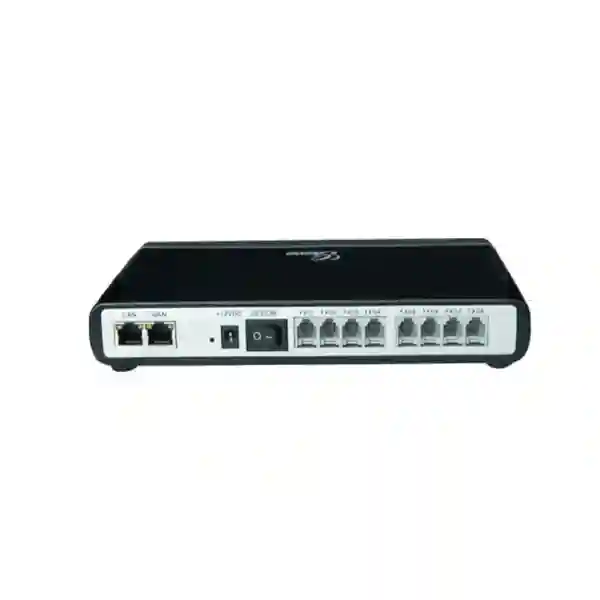
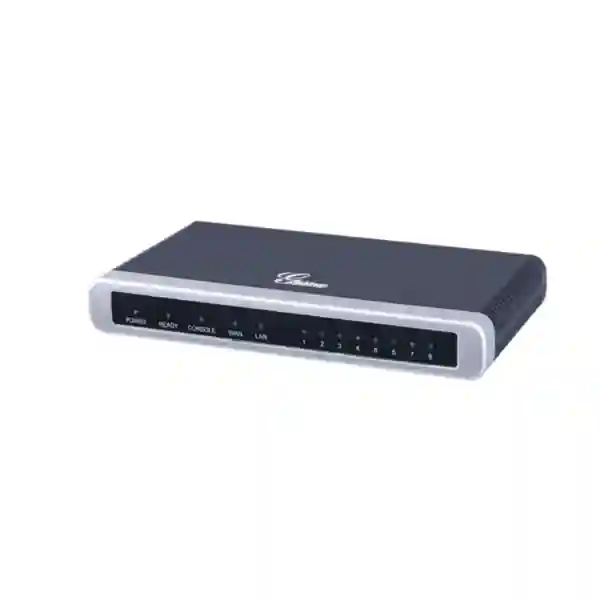
The Grandstream GXW4108 is an enterprise analog VoIP gateway built to bridge up to eight traditional PSTN lines into SIP-based communications. For organizations that already have analog carrier lines but want to use an IP PBX, hosted SIP platform, softswitch or branch VoIP architecture, the GXW4108 provides a practical migration path without requiring every external telephone circuit to be replaced at once. Its eight RJ11 FXO interfaces are designed for PSTN connections, while two 10/100 Mbps Ethernet ports place the gateway on the IP network. The platform supports SIP signaling, multiple voice codecs, caller-ID formats, T.38 fax relay, flexible DTMF handling, SRTP and browser-based management.
For Tanzanian businesses, the buying decision should begin with the real telephone environment: how many analog trunks are active, which PBX or call-control platform is in use, whether incoming caller ID is provided by the carrier, what dial tone and disconnect supervision are available, and whether the gateway will be used locally or between branches. FourTeck can help customers assess these dependencies and plan a deployment around actual call flows. Grandstream currently lists the GXW4104/GXW4108 family in its product archive, so quotation should include a current-availability check and, where appropriate, comparison with newer Grandstream FXO gateway options.
Connect up to eight analog PSTN lines through RJ11 FXO interfaces for SIP-based call routing.
Designed for use with leading IP PBXs, softswitches and SIP-based environments when properly configured.
T.38 fax relay, G.711 pass-through options and multiple voice codecs support mixed business communication needs.
Useful where organizations want to retain analog trunks while modernizing call control and internal telephony.
What the Grandstream GXW4108 does
An FXO gateway sits between analog telephone lines and an IP communications platform. The FXO side receives the electrical and signaling characteristics of a PSTN line, while the IP side converts call signaling and media into SIP/RTP traffic that can be handled by an IP PBX or softswitch. With eight FXO ports, the GXW4108 can bring multiple conventional external lines into a centralized IP telephony environment. This is valuable for organizations that cannot or do not want to move every trunk to native SIP immediately, but still want features such as extension dialing, IVR, ring groups, queues, call routing and branch connectivity from an IP PBX.
The gateway does not replace the PBX itself. It is the bridge between analog carrier circuits and SIP call control. In a typical deployment, each PSTN line connects to an FXO port. The gateway then communicates with the PBX over Ethernet using SIP. Depending on the architecture, the GXW4108 can be configured against a SIP server profile and route inbound or outbound calls according to dial plans. Grandstream documentation also describes interconnection with UCM systems through SIP peer-trunk methods or registration-based approaches. The correct method depends on the PBX design, security policies, routing requirements and numbering plan.
Before purchase, customers should therefore confirm the number of active analog lines, their carrier signaling behavior, required incoming and outgoing call paths, PBX compatibility, IP addressing, VLAN design and power protection. A gateway can solve a specific interoperability problem very effectively, but successful deployment depends on these surrounding details being correct.
Verified Grandstream GXW4108 specifications
| Telephone interfaces | 8 RJ11 FXO ports on the GXW4108 model |
| Network interfaces | Two 10/100 Mbps RJ45 Ethernet ports |
| IP signaling | SIP (RFC 3261) |
| Voice codecs | G.711, G.723, G.726, G.729A/B/E, G.728 and iLBC as listed in the official datasheet |
| Fax | T.38 Group 3 fax relay up to 14.4 kbps, with G.711 fax pass-through support |
| QoS | DiffServ, ToS and 802.1P/Q VLAN tagging |
| Media security | SRTP support |
| DTMF methods | In-audio, RFC2833 and SIP INFO methods |
| Provisioning | TFTP and HTTP |
| Caller ID | Bellcore Type 1 & 2, ETSI, BT, NTT and DTMF-based caller ID support |
| Power | 12V DC output adapter; 100–240VAC, 50–60Hz input |
| Mounting | Desktop or wall mounting |
Deployment planning and compatibility
A successful GXW4108 installation starts with the analog lines. Carrier-side call progress tones, disconnect behavior, caller-ID format and polarity reversal can differ between environments. Those parameters affect how the gateway detects call states, presents incoming numbers and releases calls cleanly. During commissioning, technicians should test inbound calls, outbound calls, hang-up detection, busy tone behavior, caller ID, DTMF interaction with IVRs and any fax requirement. This testing is especially important when the gateway is introduced into an older PBX estate where previous analog equipment may have been tuned differently.
On the IP side, the gateway needs stable Ethernet connectivity to the PBX or SIP server. Voice traffic benefits from clear IP addressing, suitable VLAN design, predictable routing and Quality of Service where the network is shared with heavy data applications. If the PBX is hosted or located at another site, firewall rules, NAT behavior, WAN latency and packet loss must also be considered. Avoid assuming that a gateway alone will fix poor voice quality caused by an unstable network path.
For organizations using Grandstream UCM platforms, Grandstream publishes configuration guidance for connecting GXW410X gateways to UCM systems as either a SIP peer trunk or through registration. Other SIP-based PBXs can also be compatible, but the exact configuration should be validated against the PBX vendor’s requirements. The safest procurement approach is to provide FourTeck with the PBX make and model, firmware level, number of PSTN lines, desired inbound destinations, outbound dialing pattern and any special fax or emergency routing requirement.
If the project is a new deployment rather than an expansion of an existing GXW4108 estate, customers should also compare the GXW4108 with currently marketed Grandstream FXO options such as the HT841/HT881 family. That comparison should consider port count, security, management, routing architecture, lifecycle and compatibility rather than focusing only on purchase price.
Lifecycle and quotation note
Grandstream lists GXW4104/GXW4108 in its product archive. This makes lifecycle verification important. FourTeck should not be asked to assume factory-new availability, a particular firmware level, warranty term or delivery date without confirmation. For a replacement or installed-base expansion, provide the existing gateway model and configuration. For a new project, request a comparison between GXW4108 availability and current Grandstream FXO gateway alternatives. This keeps the design supportable and avoids purchasing hardware that may not be the best lifecycle fit.
Related FourTeck Tanzania solutions
IP PBX and VoIP
A GXW4108 normally works as part of a broader IP telephony architecture. Review FourTeck Tanzania’s IP PBX and VoIP guidance when planning IVR, queues, extensions, call routing and branch connectivity.
Product and category sourcing
Use the Tanzania shop to review related business technology categories and create a broader bill of materials around phones, networking and supporting infrastructure.
Implementation services
Gateway installation often touches PBX configuration, LAN design, firewall policy and documentation. The services page provides context for integrated deployment and support requirements.
Grandstream GXW4108 Tanzania
In Tanzania, the Grandstream GXW4108 is most relevant to organizations that still receive business calls over analog PSTN trunks but want to centralize call control on an IP PBX. This can include established offices migrating from a conventional PBX, branch networks that need to expose local analog lines to a central SIP platform, hotels or service businesses retaining carrier circuits, and institutions that want to phase a telephony upgrade rather than change every component at once. The eight FXO ports are useful when the requirement is larger than a single or dual-line adapter but still fits within a compact gateway footprint.
Procurement in Tanzania should begin with an inventory. Count the active analog lines, identify which lines carry published business numbers, record whether fax traffic is still required, and map existing PBX extensions and call groups. The next step is to establish the desired end state: will the GXW4108 feed a Grandstream UCM, another on-premises IP PBX, or a remotely hosted SIP platform? Will all outgoing calls use PSTN trunks, or will the system mix PSTN and SIP trunks? Are branches expected to route calls through the gateway? Answers to these questions determine dial plans and failover behavior.
Network readiness is equally important. The gateway’s Ethernet connection should be placed on a stable LAN with appropriate addressing and access to the PBX. Where voice VLANs are used, VLAN tagging and switch configuration must be consistent. If remote SIP traffic crosses the internet, the project should assess firewall and NAT behavior rather than opening broad inbound rules. Power protection is also sensible for voice infrastructure because a gateway, PBX, switch and router form one service chain. A UPS can help maintain that chain through short disturbances, subject to the site’s wider power design.
For a Tanzania quotation, supply the PSTN line count, PBX details, site location, required call flows and any fax or caller-ID requirements. Because the GXW4108 is listed in Grandstream’s product archive, also request an availability and lifecycle check. That allows FourTeck to determine whether matching an existing installed base makes sense or whether a current FXO gateway is a better long-term purchase.
Grandstream GXW4108 Dar es Salaam
Dar es Salaam businesses often have a mixture of newer IP networking and older telephony circuits, which makes an FXO gateway relevant during staged modernization. A company may have upgraded switching, Wi-Fi and firewalls while still keeping established analog business numbers connected to a legacy PBX. The GXW4108 can provide a bridge between those analog trunks and a SIP-based PBX so the organization can modernize internal extensions and call handling without making the PSTN migration a prerequisite for the entire project.
For offices, logistics operations, professional services firms, retail headquarters and multi-branch businesses in Dar es Salaam, the design conversation should focus on call flow rather than simply port count. Reception may need all published numbers to land on one queue or IVR. Departments may require distinct inbound routes. Outbound calls may need prefix-based trunk selection or least-cost rules. After-hours calls may be redirected through the PBX. The GXW4108 supplies the analog trunk interface, while the PBX controls these service features.
Carrier-line behavior should be tested during deployment. Disconnect supervision and call-progress tones influence whether the system clears calls correctly. Caller-ID delivery should be verified on each line if the business depends on incoming-number display. If users interact with banking, carrier or customer-service IVRs, DTMF method should be confirmed. Fax requirements should also be tested rather than assumed, particularly when calls traverse multiple networks.
A Dar es Salaam quote should include gateway hardware availability, PBX configuration scope, network changes if needed, patching and labeling, UPS considerations, testing and documentation. For organizations planning a fresh telephony platform rather than replacing an existing GXW4108, request a current-product comparison. This approach avoids treating the gateway as an isolated box and instead ensures that analog line integration, user extensions, network security and operational support work as one system.
Grandstream GXW4108 Mwanza
For organizations in Mwanza, the GXW4108 can be useful when a site still depends on multiple analog lines but wants SIP-based telephony features or centralized branch management. The business case can be particularly strong when telephone numbers are already known to customers and changing carrier access would create operational disruption. Instead of replacing every external circuit immediately, the gateway allows those analog trunks to be presented to an IP PBX while internal extensions move to SIP phones or other modern endpoints.
Branch design deserves special attention. A Mwanza office may need local incoming PSTN calls handled by staff on-site while also sharing extension dialing with a headquarters elsewhere. In that case, the architect must decide whether the PBX is local or centralized, what happens if the WAN link fails, and whether local outbound calls must continue during an inter-site outage. The GXW4108’s role should be defined within that resilience model. A gateway alone cannot guarantee branch survivability if call control, DNS or routing is unavailable.
The LAN should provide predictable connectivity between the gateway and the call-control platform. Even though the device uses 10/100 Mbps Ethernet and voice consumes modest bandwidth, call quality can still be affected by packet loss, jitter or poor WAN conditions. Voice traffic should not be treated as bulk data. Where shared links are heavily used, traffic prioritization and capacity planning may be needed. Network documentation should record gateway IP addresses, PBX trunk settings, port-to-line mapping and recovery procedures.
For procurement in Mwanza, request confirmation of current GXW4108 availability and provide a clear line inventory. If the project is expanding an existing Grandstream deployment, note the firmware and current configuration so compatibility can be assessed. If it is a new project, compare the archived GXW4108 platform with currently marketed Grandstream FXO gateways before making a lifecycle decision.
Grandstream GXW4108 Arusha
Arusha organizations in hospitality, tourism, education, professional services and multi-site operations may encounter a practical transition challenge: traditional telephone lines remain useful, but the internal communications platform needs modern call routing, extension mobility and easier administration. The Grandstream GXW4108 is designed for this kind of hybrid environment. Its eight FXO ports can accept analog PSTN lines and convert them into SIP/RTP sessions for an IP PBX or softswitch.
Hospitality and customer-facing environments should map inbound numbers carefully. A main line may need to reach reception, reservations or a call queue, while other lines may be reserved for departments or operational use. The PBX can implement those flows after the GXW4108 presents the trunks. For outbound calling, businesses should define whether all users can seize all PSTN lines or whether routing restrictions apply. These details are part of PBX configuration and should be included in the implementation scope.
Arusha deployments should also consider physical installation quality. The gateway can be desktop or wall mounted, but the broader telephony equipment should be organized near network switching and protected power where practical. Analog line cables should be labeled consistently with the gateway ports. Network-side patching should identify the switch and VLAN. A documented layout makes fault isolation much faster if a carrier line, FXO port or SIP route later develops a problem.
When asking FourTeck for a GXW4108 quote in Arusha, include the number of PSTN circuits, PBX platform, extension count and whether installation or configuration assistance is required. Since the product family appears in Grandstream’s archive, the quotation process should also establish whether GXW4108 is appropriate for an installed-base requirement or whether a newer Grandstream FXO model offers a better fit for a fresh deployment.
Grandstream GXW4108 Dodoma
In Dodoma, public-sector offices, institutions, NGOs, enterprises and branch operations may need to connect established analog telephone lines to a modern IP communications system. The GXW4108 provides eight FXO interfaces that can act as PSTN trunks for a SIP-based PBX. This allows organizations to modernize extension management, call routing and internal telephony while continuing to use existing external analog circuits where those circuits remain operationally useful.
A structured procurement specification should describe required outcomes rather than naming the gateway alone. State how many analog trunks must be connected, how many simultaneous external calls are expected, which departments should receive incoming calls, what outbound restrictions apply, and whether any lines are dedicated to specific functions. If the site uses an IVR, confirm DTMF operation. If fax remains part of a workflow, include fax testing in acceptance criteria. If caller ID matters for reception or help-desk processes, confirm carrier delivery and gateway detection.
The network and power environment should be part of the same design. The GXW4108, PBX, router and Ethernet switch must remain reachable to one another for calls to work. Voice VLANs, static addressing or DHCP reservations, firewall controls and configuration backups can improve maintainability. Where equipment is installed in a rack or communications room, label PSTN lines and Ethernet connections so future troubleshooting does not depend on undocumented knowledge.
For Dodoma projects, FourTeck can use the requirements to determine whether a GXW4108 matches the current environment and whether procurement should include gateway configuration, PBX integration, testing and documentation. Because the model is in Grandstream’s product archive, ask for a current availability and successor comparison during quotation rather than assuming long-term availability.
Grandstream GXW4108 UAE
For organizations with operations in the UAE and Tanzania, the GXW4108 may appear in installed Grandstream voice estates where analog trunks still coexist with SIP infrastructure. A common cross-border requirement is standardization: IT teams want the same extension logic, PBX administration and branch dial plan even when external carrier services differ by country. An FXO gateway can help isolate those differences by presenting local analog lines to a common SIP-based call-control model.
The UAE section of a multi-country project should not assume that analog line behavior is identical to Tanzania. Carrier signaling, numbering, caller-ID presentation and regulatory requirements can differ. Each site therefore needs local validation. From a systems perspective, IT teams can standardize configuration templates, naming conventions, security controls and documentation while still adjusting tone profiles and trunk settings to match the carrier environment.
Where the PBX is centralized, cross-border WAN design becomes important. Voice quality depends on stable routing and low packet loss, and security teams should avoid exposing SIP management unnecessarily. VPN or controlled private connectivity may be appropriate depending on the architecture. Branch survivability should also be discussed if local PSTN calls must remain available during WAN disruption.
FourTeck’s regional network can support broader planning across markets. For UAE-related requirements, review FourTeck UAE technology solutions while keeping the Tanzania deployment aligned to the local carrier and infrastructure conditions. If the GXW4108 is being specified for a new UAE/Tanzania rollout, compare it with current Grandstream FXO hardware because lifecycle consistency across countries may be more valuable than matching an older model number.
Grandstream GXW4108 Uganda
Ugandan organizations with analog PSTN lines and SIP-based telephony can use the same architectural approach as Tanzania: the FXO gateway terminates analog carrier circuits and presents them to the IP PBX. The GXW4108’s eight ports make it appropriate where several lines need to be integrated without deploying multiple small adapters. Multi-country companies can also use a standardized Grandstream PBX and gateway strategy while keeping carrier-specific parameters local to each site.
For procurement, identify whether the requirement is a replacement for an existing GXW4108 or a new design. Replacement projects should preserve a copy of the old configuration and document how each FXO port maps to carrier numbers. New projects should assess current Grandstream alternatives, because lifecycle support and long-term spares can be more important than reusing an older bill of materials. PBX interoperability, fax needs and caller-ID behavior should be tested on the actual lines.
When Tanzania and Uganda branches communicate frequently, internal extension dialing can reduce dependence on external calling between offices, depending on the PBX architecture and network. The gateway’s analog lines can then be used for local public telephone access. This separation between local trunks and inter-branch SIP calling can simplify cost allocation and call routing, but it requires careful dial-plan design to avoid loops or unintended trunk use.
For Uganda projects, the regional FourTeck site at FourTeck Uganda can provide market-specific context. Cross-border IT teams should use a shared configuration standard while validating local carrier behavior independently. Availability, delivery, installation coverage and warranty should all be confirmed at quotation rather than assumed from another country’s deployment.
Grandstream GXW4108 Kampala
Kampala offices can encounter the same hybrid-telephony challenge as other established business centres: analog PSTN lines remain in service while internal communications move toward SIP phones, IP PBX platforms and unified call management. In this scenario, the GXW4108 can integrate up to eight analog trunks so the PBX can apply IVR, queues, ring groups and route selection without abandoning working public telephone numbers.
A Kampala deployment should begin by deciding where call control resides. A local PBX provides direct local control, while a centralized or hosted PBX can simplify administration across branches. Each model has network implications. If SIP signaling and RTP must cross a WAN, the path must be stable and secured. If the local branch needs PSTN calling during WAN failure, survivability requirements should be designed explicitly rather than inferred from the presence of the gateway.
Operational teams should insist on port mapping and call-flow documentation. For each of the eight FXO ports, record the carrier number, intended use, inbound destination and outbound permissions. Document SIP trunks or registrations on the PBX and retain configuration backups. Test disconnect detection by placing real calls and verifying both sides release correctly. Test caller ID on each incoming line, because carrier presentation can vary.
For buyers comparing pricing in Kampala, the lowest hardware price should not be the only criterion. A gateway that is configured poorly can create one-way audio, lingering calls, failed DTMF or routing confusion. Include design, configuration and acceptance testing in the project where internal expertise is limited. Since GXW4108 is an archived Grandstream family, request current availability and alternative-product guidance before placing a new standard order.
Grandstream GXW4108 Arua
Arua businesses and institutions may use FXO gateways where conventional telephone circuits remain available but centralized SIP telephony is desirable. The GXW4108 allows up to eight PSTN lines to participate in an IP PBX environment, giving administrators a way to modernize internal call management while continuing to use analog carrier access. This can be useful for branch sites that need local public numbers but are managed by an IT team elsewhere.
Remote-site design should prioritize simplicity and recoverability. Configuration should be backed up, port mappings should be labeled, and basic troubleshooting steps should be documented. A local user should be able to identify whether a problem is with a specific PSTN line, the gateway, the LAN or the upstream PBX. Remote administrators benefit from predictable IP addressing and secure management paths. Avoid exposing management interfaces directly to the public internet.
Connectivity constraints also influence architecture. If the PBX is hosted away from Arua, WAN quality and outage behavior matter. The design should specify whether incoming local PSTN calls need to work when the WAN is unavailable and what users should experience during an outage. If uninterrupted local calling is critical, the broader solution may require local call-control or failover mechanisms beyond simply adding an FXO gateway.
When requesting GXW4108 for Arua, state whether the need is replacement, expansion or new deployment. Existing systems may justify model matching for consistency, while new systems should compare current products and supportability. Confirm power, rack or wall-mount location, PBX compatibility, line characteristics and acceptance tests in advance. A clear scope reduces commissioning delays and makes remote support more practical after handover.
Grandstream GXW4108 Mbarara
Mbarara organizations considering a GXW4108 are typically solving a specific integration problem: analog lines must continue serving customers, but an IP PBX is preferred for internal extensions and routing. The eight FXO ports make the gateway suitable for sites with several PSTN circuits and allow those lines to be grouped, prioritized or assigned through PBX routing logic. The value comes from combining old and new telephony layers without requiring an abrupt cutover.
The engineering team should map the existing environment before equipment is ordered. Identify line providers, telephone numbers, departments using each number, any fax circuits and the current PBX behavior. Then design the future call flows. Determine how incoming calls should be answered, whether an auto-attendant is needed, which users can make outgoing calls and what happens after business hours. The GXW4108 provides the trunk interfaces, but the PBX enforces these policies.
For branch environments, network and power planning is part of voice reliability. Connect the gateway to managed switching where possible, document the port and VLAN, and ensure the PBX route is stable. Provide appropriate UPS protection for the communications chain if business requirements justify it. Keep analog cables separated and labeled so a fault on one carrier line can be isolated quickly without disturbing the others.
A Mbarara quote should distinguish hardware-only procurement from a configured solution. If FourTeck is expected to assist with the PBX, include make, model, firmware and administrator access arrangements in the project scope. Because GXW4108 belongs to Grandstream’s archive, confirm whether obtaining that exact model is necessary or whether a current model can meet the same business requirement with a stronger lifecycle position.
Grandstream GXW4108 Gulu
In Gulu, an FXO gateway can support organizations that want to retain local analog telephone service while connecting users through an IP PBX. The Grandstream GXW4108’s eight FXO ports can terminate multiple PSTN lines and convert calls to SIP/RTP for processing by the PBX. That architecture can give branch users modern extensions and internal dialing while keeping established external numbers available to customers and partners.
The most important design question is continuity. If the PBX is in another city or country, what should happen when the WAN link is interrupted? Some organizations can tolerate temporary loss of centralized calling, while others require local inbound and outbound service. The answer may influence whether the PBX is local, whether backup connectivity is required and how failover is configured. Do not rely on a generic product feature list to answer a site-specific resilience requirement.
Commissioning should include end-to-end calls for every PSTN port. Verify incoming ringing, caller ID, outgoing dialing, busy tone, release after hang-up and DTMF operation. If fax is used, perform real fax tests rather than checking configuration alone. Document analog line numbers and gateway port mapping. These practical steps reduce the likelihood of discovering carrier-specific behavior after the site has gone live.
For Gulu procurement, share the line inventory and PBX platform with FourTeck. Ask whether the GXW4108 is being sourced to match an existing estate or specified for a new deployment. That distinction matters because the product is archived by Grandstream. A new design may benefit from currently marketed FXO hardware, while an expansion may prioritize compatibility with existing configuration and spares.
Grandstream GXW4108 Kenya
Kenyan businesses with analog trunks and SIP-based PBXs use FXO gateways for the same core purpose: preserving PSTN connectivity while gaining modern call-control features. The GXW4108 can connect eight analog lines, which suits offices where several public numbers or trunks must remain active. For multi-country organizations, similar gateway architecture can simplify operational documentation across Kenya and Tanzania even when carrier-side settings differ.
A Nairobi or regional Kenya site may route local PSTN calls into a centralized PBX and use IP connectivity for extension-to-extension calls between branches. This can reduce complexity for users because internal numbering can remain consistent. However, the design should establish how each site behaves if inter-branch connectivity fails. Local trunk access, emergency dialing and after-hours routing need explicit rules, especially where call control is centralized.
Buyers should compare total deployment requirements rather than only gateway pricing. Confirm PBX interoperability, network configuration, carrier line behavior, fax needs, caller ID and configuration support. If a project spans multiple sites, standard templates for IP addresses, port mapping, trunk naming and backup procedures make support easier. Carrier-specific tone and disconnect settings can then be documented as site exceptions rather than changing the whole design.
For Kenya-specific requirements, consult FourTeck Kenya while keeping Tanzania procurement separate. Because the GXW4108 is an archived Grandstream model, current product availability should be checked independently in each market. A cross-border standard should ideally prioritize lifecycle alignment and maintainability, not simply the fact that one branch already owns an older gateway.
Grandstream GXW4108 Kuwait
Kuwait deployments may include legacy analog lines, on-premises PBXs and newer SIP platforms in the same organization. The GXW4108 can bridge eight analog PSTN circuits to SIP, allowing call-control modernization without immediate replacement of every external line. For businesses operating across Kuwait, Tanzania and other countries, this can fit a broader strategy in which each branch uses local trunks but shares a common IP telephony architecture.
Local carrier behavior must still be validated at each Kuwait site. Caller-ID format, disconnect supervision, numbering and tone settings are not assumptions that should be copied directly from Tanzania. The project team should test those parameters during commissioning and document the working configuration. If the gateway communicates with a centralized PBX, network security and latency also become part of the solution.
From a procurement perspective, organizations should decide whether GXW4108 is required because of an existing installed base or simply because it appears in an older specification. If the latter, a current FXO gateway may be preferable. Grandstream’s newer HT841/HT881 family provides current analog gateway options with 4/8 FXO configurations, so lifecycle and feature comparison is sensible before standardizing on archived hardware.
A Kuwait/Tanzania multi-site project should keep common documentation standards, naming conventions and acceptance tests while allowing country-specific carrier settings. Request separate confirmation for stock, warranty, delivery and local service arrangements in each market. Those commercial factors can change independently and should never be inferred from another country’s quotation.
Grandstream GXW4108 Ghana
Ghanaian organizations that continue to use analog carrier circuits can integrate them into SIP-based telephony through an FXO gateway such as the GXW4108. Its eight PSTN-facing ports make it useful for businesses with multiple lines that want IP PBX functions without discarding existing external numbers. This model is particularly relevant in upgrade projects where the external carrier layer and the internal phone system are modernized at different times.
For a Ghana branch, document every line before migration. A phone number that appears unused may actually serve fax, alarms, a published department contact or backup routing. Once the line inventory is understood, the PBX design can assign incoming destinations and outgoing permissions. Testing should include caller ID and call release because these depend on the carrier interface as well as the gateway configuration.
If a Ghana site participates in a regional PBX design with Tanzania, internal extension dialing can be standardized while local PSTN lines remain attached to each branch gateway. Security controls, VPNs and QoS may be required when calls cross WAN links. The project should define which traffic stays local and which traverses the inter-site network, including fallback behavior during outages.
For commercial planning, use the regional FourTeck network where appropriate and confirm GXW4108 availability separately. Because Grandstream archives the model family, customers should compare current options for new installations. A good regional standard is one that can be supported, replaced and documented consistently over the expected life of the communications platform.
Grandstream GXW4108 Nigeria
Nigeria has a wide variety of business communications environments, from single offices to distributed enterprise sites. Where analog PSTN lines remain part of the telephony mix, the GXW4108 can act as an eight-port bridge into a SIP PBX. The device is not a substitute for call control; it enables the existing analog trunks to participate in a modern IP telephony system where routing, IVR, user extensions and policy are managed centrally.
For distributed organizations, gateway placement should follow the trunks. Local analog lines normally terminate at the local site, while the PBX may be local, centralized or hosted. If SIP traffic leaves the site, plan the WAN path, firewall policy and fault behavior. Voice can remain bandwidth-efficient while still being sensitive to latency, jitter and packet loss. A redundant internet path may help some branches, but it should be justified by service requirements rather than assumed to be necessary.
Operational documentation becomes essential when several gateways exist. Use consistent device names, IP ranges, trunk labels and port mapping. Keep backups and note any carrier-specific tone settings. This allows a support engineer to compare sites quickly while respecting local differences. During acceptance, place real inbound and outbound calls on each configured port and test call clearing, caller ID and DTMF.
Nigeria buyers should also assess lifecycle. An archived GXW4108 may be sensible for replacement or standardization within an established estate, but a new deployment should compare current Grandstream FXO products. Request exact availability, warranty and delivery terms at quotation. This avoids basing a project plan on assumptions drawn from listings in another country.
Grandstream GXW4108 Seychelles
Seychelles organizations in hospitality, professional services, government and multi-site operations may need to integrate established analog telephone circuits with IP-based internal communications. The GXW4108 can connect up to eight PSTN lines to a SIP platform, providing a bridge between carrier access and modern PBX features. This can support staged migration where the business wants to upgrade internal phones and call handling while retaining public numbers already known to customers.
Hospitality environments should define call routing in detail. Incoming lines may serve reservations, reception or back-office teams, while outbound permissions can vary by user role. If the PBX is responsible for billing, call reporting or room-service workflows, integration requirements should be clarified before selecting the gateway. The GXW4108 provides trunk connectivity, but application-level functionality depends on the PBX and surrounding systems.
Island and remote-site planning can make maintainability especially important. Use labeled cabling, configuration backups and clear port mappings. Where technical support may be remote, secure management access and simple fault-isolation procedures can reduce downtime. A technician should be able to determine whether a failure lies with the carrier circuit, the gateway, the Ethernet network or the PBX without trial-and-error changes.
For Seychelles procurement, confirm carrier compatibility and exact commercial terms before purchase. Since the GXW4108 is an archived product family, new deployments should compare current Grandstream alternatives. If the requirement is to replace an existing unit with minimal configuration change, provide the old model, firmware and backup so the migration path can be evaluated properly.
Buying guide: when GXW4108 is a good fit
The GXW4108 is best understood as a specialized integration device. It can be a good fit when an organization has up to eight analog PSTN lines that must connect to a SIP environment, when matching an existing Grandstream deployment matters, or when a replacement is needed for an installed gateway. It can also be useful in migration projects where analog trunks will remain for a period while the internal PBX and endpoints move to IP.
It may be a weaker fit when the project is completely new and current Grandstream FXO platforms offer a stronger lifecycle position; when the organization can move directly to native SIP trunks and no analog carrier circuits need to remain; or when more than eight FXO ports are required and a different architecture would simplify management. The right choice depends on carrier services, PBX design, line count, support horizon and procurement availability.
Ask for a solution-level quote rather than a model-only price when the environment is complex. The gateway must interoperate with the PBX, LAN, firewall, analog trunks and dialing rules. A complete quote can therefore be more useful when it states configuration scope, testing responsibilities, documentation and any current-product alternative.
Quotation checklist
✓ Number of active analog PSTN lines and telephone numbers
✓ Existing PBX make, model and firmware level
✓ Required incoming call destinations, IVR and queues
✓ Outbound call permissions and routing rules
✓ Caller-ID and DTMF requirements
✓ Fax-over-IP or analog fax requirements
✓ Site, rack/wall-mount and network information
✓ Whether GXW4108 is replacement hardware or a new design
Grandstream GXW4108 FAQ
How many PSTN lines can the GXW4108 connect?
The GXW4108 provides eight RJ11 FXO ports, allowing up to eight compatible analog PSTN lines to connect to a SIP-based IP PBX or softswitch environment.
Is the GXW4108 an IP PBX?
No. It is an FXO gateway. It converts between analog PSTN lines and SIP/RTP. Call-control functions such as extensions, IVR, queues and routing are typically handled by an IP PBX or softswitch.
Can GXW4108 work with Grandstream UCM?
Grandstream publishes configuration guidance for connecting GXW410X gateways with UCM6XXX systems, including SIP peer-trunk and registration-based approaches. The exact configuration should match the PBX model, firmware and call-routing design.
Does GXW4108 support fax?
The official datasheet lists T.38 Group 3 fax relay up to 14.4 kbps and automatic switching to G.711 for fax pass-through. Real-world fax operation should still be tested with the actual carrier and PBX path.
Does GXW4108 support VLAN and QoS?
Grandstream lists DiffServ, ToS and 802.1P/Q VLAN tagging. These features can help integrate the gateway into a managed voice network, but switches and routers must also be configured consistently.
Is GXW4108 still a current model?
Grandstream lists the GXW4104/GXW4108 family in its product archive. Buyers should therefore confirm current availability, support expectations and newer alternatives before specifying it for a new project.
What newer Grandstream option should I compare?
Grandstream currently presents the HT841/HT881 family among its analog VoIP gateway options. The HT881 includes eight FXO ports. A comparison should consider the complete feature set, compatibility and lifecycle rather than port count alone.
What information should I send for a Tanzania quote?
Send the number of analog lines, PBX make/model, site location, desired inbound and outbound call flows, caller-ID needs, fax requirements and whether the request is a replacement or a new deployment. That information helps determine the correct gateway and configuration scope.
Decision recap
Choose the Grandstream GXW4108 when the technical requirement is specifically to bridge up to eight analog PSTN lines into a SIP-based communications environment and when the model’s lifecycle status is acceptable for the project. Verify the analog lines, PBX interoperability, call routing, DTMF, caller ID, fax, LAN design and power protection before deployment. For existing installations, matching the GXW4108 may reduce change. For new installations, compare current Grandstream FXO gateways before standardizing.
FourTeck can help turn the requirement into a practical quotation covering gateway selection, PBX integration, network considerations and testing. No stock, delivery, warranty or regional service assumption should be made until confirmed for the specific quote.
Plan your GXW4108 or FXO gateway deployment
Send FourTeck your current telephone-line count, PBX details and target call flow. The team can use that information to confirm whether GXW4108 is appropriate, assess available alternatives, and prepare a quotation that reflects the actual integration work rather than hardware alone. For direct enquiries, use the verified FourTeck Tanzania contact page.



Reviews
There are no reviews yet.