
Grandstream UCM6301 Tanzania
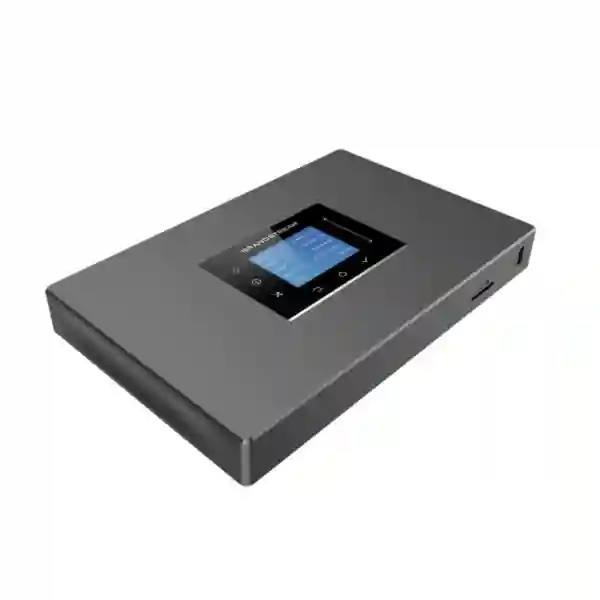
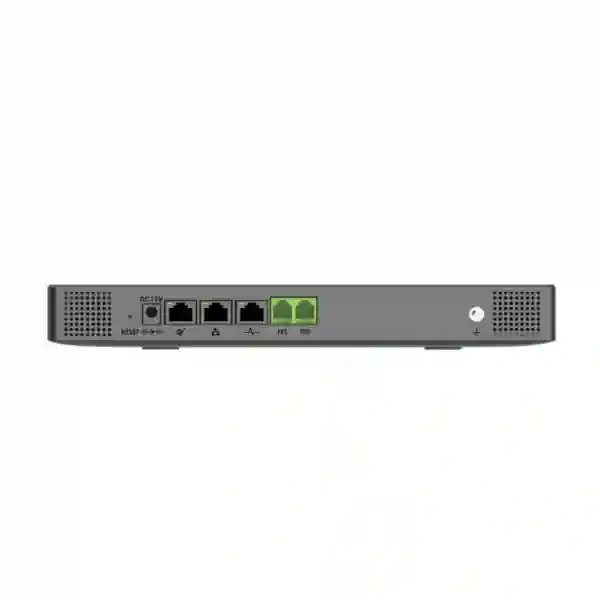
The Grandstream UCM6301 is a compact unified communications appliance for organizations that want to centralize business calling, SIP extensions, analog line integration, call routing, conferencing, remote collaboration and administration without building a complex multi-server telephony environment. For Tanzanian businesses evaluating an IP PBX for headquarters, branches, hotels, schools, clinics, professional offices, logistics operations, retail groups or customer-service teams, the UCM6301 offers a practical entry point into the UCM6300 platform while retaining strong capacity for growth. Grandstream specifies support for up to 500 users, up to 75 concurrent G.711 calls and up to 50 concurrent SRTP calls on this model. The appliance also includes one FXS port, one FXO port, three self-adaptive Gigabit Ethernet ports with PoE+, USB 3.0 and an SD card interface, allowing organizations to connect IP endpoints while retaining useful analog and peripheral options.
Maximum supported users, suitable for growing small and medium organizations that need more headroom than an entry-level PBX.
Maximum concurrent G.711 calls, useful when sizing busy offices, hospitality environments and customer-facing teams.
Maximum concurrent SRTP calls, helping planners account for encrypted-media requirements during system design.
Integrated analog connectivity for a PSTN line and analog endpoint, with lifeline capability specified by Grandstream.
Grandstream UCM6301 overview
The UCM6301 belongs to Grandstream’s UCM6300 series of IP PBXs, a family created to unify voice, video, data, mobility and collaboration functions on one communications platform. The system runs on an Asterisk-based telephony operating environment and supports SIP-based communications, secure signalling, remote access, conferencing, call queues, auto attendants and integration functions. This makes it particularly useful for organizations that want a controllable on-premise PBX while still enabling remote users and modern collaboration workflows. Instead of managing separate appliances for basic telephony, voicemail, IVR, call routing and conferencing, an organization can consolidate many of those functions into a centrally administered platform.
For buyers in Tanzania, the model is attractive when the primary goal is to build a structured business phone system around IP phones, SIP trunks and branch connectivity while still accommodating some analog interfaces. It is important to size the PBX based on active extensions and simultaneous call demand rather than employee count alone. A company may have 250 employees but only 30 to 40 simultaneous calls at peak times, while a smaller contact-oriented business may generate a much higher concurrent-call ratio. The UCM6301 therefore suits projects where its 500-user and 75-call limits provide sufficient operating margin after accounting for growth, conferencing, remote users and encrypted calling.
Grandstream also provides its Wave applications and browser-based collaboration options for UCM environments, allowing appropriately configured users to communicate from desktops and mobile devices. Remote usage should be planned with bandwidth, firewall policy, secure access and user authentication in mind. Organizations that expect very large conference groups, heavier call-center loads or much higher simultaneous-call demand should compare the UCM6301 with larger UCM6300 models before procurement rather than simply selecting by extension count.
Key verified UCM6301 features
Business telephony capacity
Supports up to 500 users and up to 75 concurrent G.711 calls. This capacity is useful for SMEs, multi-department offices and distributed organizations that need substantial extension headroom without moving immediately to a larger PBX.
Secure communications
Grandstream documents support for SRTP, TLS, HTTPS, SSH and 802.1X-related security functions. The UCM6301 supports up to 50 concurrent SRTP calls using G.711, which is an important sizing point when encrypted media is required.
Integrated analog connectivity
One FXS and one FXO RJ11 port allow the system to connect a legacy analog endpoint and a PSTN line directly. This is valuable in migration projects where some traditional connectivity must remain in service.
Gigabit networking
Three self-adaptive Gigabit ports can operate in switched, routed or dual modes and include PoE+ capability. Network design should still be aligned with the organization’s VLAN, QoS and security architecture.
Conferencing and meetings
The platform supports multimedia meeting functions, WebRTC-based participation and voice conferencing. Organizations should verify meeting-mode limits for the exact firmware and use case during project sizing.
Provisioning and management
Grandstream supports auto-discovery and ZeroConfig-style provisioning for compatible Grandstream SIP endpoints, simplifying deployment of larger phone fleets and reducing repetitive handset configuration.
Technical specifications and planning notes
| Users | Up to 500 | Size against active extensions and future growth. |
| Concurrent calls | Up to 75 G.711 | Peak busy-hour traffic is the key procurement metric. |
| Concurrent secure calls | Up to 50 SRTP G.711 | Important for security-focused deployments. |
| FXS | 1 × RJ11 | For analog endpoint integration. |
| FXO | 1 × RJ11 | For analog PSTN line integration. |
| Network ports | 3 × self-adaptive Gigabit ports with PoE+ | Can support switched, routed or dual-mode network design. |
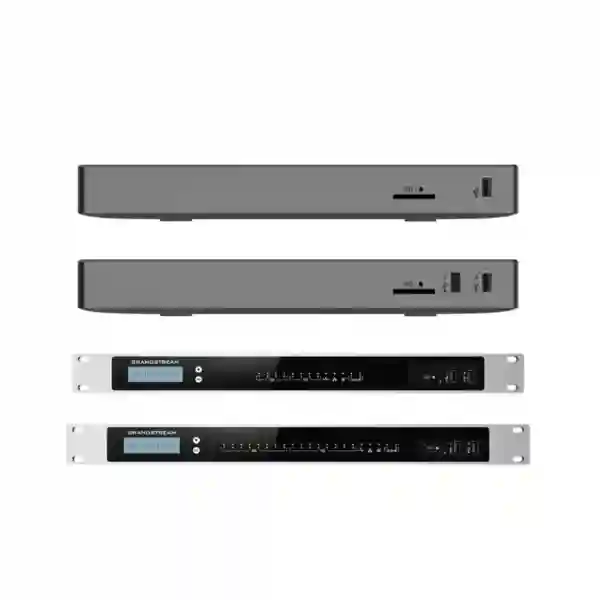
| Peripheral interfaces | 1 × USB 3.0, 1 × SD card interface | Useful for approved storage and peripheral workflows. |
| Mounting | Desktop or wall mount | Plan ventilation, secure placement and cable access. |
| Dimensions | 270 × 175 × 36 mm | Compact footprint for communications rooms and offices. |
Compatibility and integration guidance
A UCM6301 deployment should begin with a complete communication map: how many extensions are required, which users need desk phones, which users work remotely, what SIP trunk services will be used, whether analog PSTN connectivity must remain, which departments need call queues, and which business applications need telephony integration. Because the UCM6301 exposes APIs for third-party integration and supports standard SIP communications, it can form the core of a broader communications stack. However, every integration should be validated against the target application, current firmware and security policy before rollout.
For endpoint planning, Grandstream IP phones can benefit from the platform’s auto-provisioning capabilities, helping administrators apply extension settings, network options and feature templates consistently. Organizations may also integrate SIP-compatible devices from other vendors, but feature parity and provisioning depth can vary. If the deployment includes door phones, paging endpoints, cordless devices, video phones or analog adapters, confirm codec, SIP, dial-plan and network requirements during design rather than after installation.
Network readiness is equally important. Voice systems depend on stable latency, low packet loss and proper QoS. Separating voice and data traffic with VLANs, controlling DHCP options, securing management access and documenting firewall rules can materially improve reliability. Remote users add NAT traversal and internet-path considerations, so remote connectivity should be tested from realistic user networks rather than only from the head office. Where call recording or extensive conferencing is required, capacity, retention and storage requirements should be documented before the system goes live.
Who should consider the UCM6301?
The UCM6301 is a strong candidate for businesses that want a centralized PBX with room for hundreds of extensions but do not require the much higher call capacity of larger UCM6300 models. Typical examples include multi-department corporate offices, hotels with staff and guest-service extensions, education institutions, medical and professional practices, distribution businesses, logistics operators, multi-branch retailers, NGOs, service companies and growing contact-oriented teams. The most important qualification question is not simply “How many staff do you have?” but “How many extensions, simultaneous calls, remote users and conferencing participants do you expect at peak time?”
If the answer shows that peak call traffic will remain comfortably below 75 G.711 calls and secure-call requirements below 50 SRTP calls, the appliance may provide healthy operating margin. If forecasts approach those ceilings, it is usually better to compare a higher-capacity model before purchase. A PBX is infrastructure, so buying for today’s exact peak without allowance for growth can cause an avoidable upgrade later.
Grandstream UCM6301 Tanzania
For organizations across Tanzania, the Grandstream UCM6301 can serve as the foundation for a modern office telephony environment that connects departments, branches and remote employees through one managed communications platform. Tanzanian buyers commonly evaluate business phone systems when replacing aging analog PBXs, moving to SIP trunks, adding new offices, standardizing extensions across sites, improving reception call handling or enabling hybrid work. The UCM6301 is well aligned with these projects because it combines SIP telephony, analog connectivity, conferencing and centralized administration in a single appliance.
Procurement planning in Tanzania should include more than the PBX hardware itself. A complete solution may require IP phones, PoE switches, structured cabling, SIP trunk services, UPS protection, network segmentation, firewall rules, headsets, paging devices and user training. The first step is to document the number of current extensions and expected growth over the next three to five years. Next, estimate simultaneous call demand during the busiest hour. Reception desks, reservations teams, sales groups, support departments and customer-service lines can create much higher concurrency than ordinary office extensions. This is where the verified UCM6301 capacity of up to 75 G.711 calls becomes the central sizing factor.
Tanzanian organizations with multiple sites should also decide whether each branch needs independent survivability or whether extensions can register back to a central UCM. The right topology depends on internet reliability, security policy and business continuity requirements. A headquarters-led design can simplify administration, while distributed systems can provide local autonomy. For remote employees, planners should confirm upload bandwidth, NAT traversal, VPN or secure remote-access policy, and endpoint security. The UCM6301 supports secure communications technologies, but successful deployment still depends on strong passwords, restricted management access, current firmware and disciplined network configuration.
For procurement support, FourTeck Tanzania can help buyers frame the correct bill of materials around the communication requirement rather than selecting isolated devices. Explore FourTeck Tanzania technology solutions to understand the wider infrastructure context, and use regional FourTeck resources such as FourTeck Africa when planning cross-border deployments. A well-prepared quotation request should specify extension count, expected concurrent calls, SIP trunk provider, required phones, analog lines, remote users, conferencing needs and any integrations such as CRM, hotel PMS or access-control systems.
Grandstream UCM6301 Dar es Salaam
Dar es Salaam businesses often manage communication environments that combine head-office staff, customer-facing departments, logistics teams, field personnel and branch locations. For these organizations, the Grandstream UCM6301 can provide a structured approach to call routing and extension management while supporting the shift from legacy analog telephony to SIP-based communications. A deployment may begin with a single main number and reception IVR, then expand into departmental queues for sales, accounts, service, reservations or technical support.
The UCM6301’s integrated FXO port can be helpful where one analog PSTN line must remain connected during a transition, while the FXS port can accommodate a compatible analog endpoint. For larger analog requirements, dedicated gateways should be included in the design. Companies moving to SIP trunks should evaluate trunk capacity independently of PBX capacity. A PBX capable of 75 concurrent calls cannot create external call channels that have not been purchased from the service provider, and a large SIP trunk allocation does not override the UCM6301’s own call-processing limit. Both sides must therefore be sized together.
Network design is especially important in busy Dar es Salaam offices where voice traffic shares links with cloud applications, video meetings, file transfers and Wi-Fi users. Administrators should define voice VLANs where appropriate, prioritize real-time traffic, protect the PBX management interface, and ensure reliable power through suitable UPS systems. If the organization operates multiple floors or buildings, PoE switch capacity and structured cabling should be included in the communication plan. Grandstream’s zero-configuration capabilities can simplify endpoint rollout when compatible phones are used, but every endpoint should still be tested for dial plan, emergency numbers, outbound route permissions and failover behavior.
Companies requesting a UCM6301 quotation in Dar es Salaam should provide their current PBX model, number of users, phone types, external lines, branch locations and any pain points in the existing system. This makes it easier to determine whether the UCM6301 is sufficient or whether a larger UCM model would provide better long-term headroom. Buyers sourcing additional phones for a regional project can also review FourTeck IP phone solutions for endpoint planning and compare regional availability without assuming that every listed model is locally stocked.
Grandstream UCM6301 Mwanza
Mwanza organizations considering a new IP PBX may include hotels, schools, healthcare facilities, transport operators, distributors, professional offices and multi-branch businesses that need more control over internal and external calling. The UCM6301 is suitable when the project requires a centralized phone system with a substantial extension ceiling, integrated call routing and support for modern SIP endpoints. A typical deployment could include reception, management, finance, warehouse, service desk and mobile workers on one numbering plan.
For a Mwanza site, internet quality and business continuity should be considered early. Internal extension-to-extension calling remains local to the PBX and LAN, but SIP trunks, remote users and external integrations depend on network availability. Organizations that cannot tolerate communication disruption should discuss redundant internet access, UPS runtime, firewall resilience and alternate routing strategies. The UCM6301 itself offers flexible network interfaces, but resilience is an end-to-end design matter involving routers, switches, power and service providers.
Hotels and service businesses may be especially interested in IVR, queues, wake-up calling, voicemail and integration capabilities. These features should be mapped to operational workflows before implementation. For example, the front desk may require direct transfer keys, housekeeping may use simple extensions, managers may need mobile access, and reservations staff may require queues or call recording. Education institutions may instead prioritize inter-department extensions, paging workflows and controlled outbound permissions. The same PBX can support different business types, but the configuration must reflect the actual organization rather than a generic template.
A good Mwanza quotation brief should state whether the project is a fresh deployment or replacement, whether existing cabling can be reused, how many analog devices remain, which users need desk phones, and how many remote extensions are required. The buyer should also indicate anticipated growth. If the expected concurrent call volume is modest but the extension count is large, the UCM6301 can be particularly attractive. If high-volume contact-center traffic is planned, concurrency should be modeled carefully before ordering.
Grandstream UCM6301 Arusha
Arusha’s mix of hospitality, tourism, professional services, NGOs, education and business operations creates diverse communication requirements. A hotel may need extensions across reception, reservations, administration and guest-service departments, while an NGO may require secure collaboration between local staff and remote teams. The UCM6301 can provide a single communications core for both scenarios, provided its user and call limits match the project.
Hospitality deployments should pay particular attention to call-flow design. Reception should be able to route callers efficiently without forcing guests or customers through unnecessarily complex menus. Queue announcements, time conditions and after-hours routing can help businesses manage inbound demand, but they must be configured around actual staffing. For properties using a hotel management system, API or PMS integration requirements should be documented and verified before procurement. Do not assume that every application will integrate automatically simply because an API is available.
Arusha organizations with international partners may also value remote collaboration through Wave and browser-based meeting functions. Remote users should be onboarded with strong account security, controlled permissions and tested audio paths. Conference usage deserves separate planning because participant limits and media processing can affect resources. If conferencing is a primary workload rather than an occasional feature, the project team should compare meeting requirements against the latest Grandstream documentation and potentially consider a larger system.
From a procurement perspective, buyers should ask for a complete solution scope: PBX, phones, licenses or subscriptions where applicable, gateways, switches, cabling, UPS, configuration, migration and training. This reduces the risk of comparing quotations that include different assumptions. Organizations expanding into neighboring East African markets can also consult FourTeck Kenya and FourTeck Uganda for region-specific technology planning when a multi-country rollout is involved.
Grandstream UCM6301 Dodoma
Dodoma organizations seeking an IP PBX often need a system that can scale from a simple office deployment into a structured multi-department communication environment. The Grandstream UCM6301 offers this flexibility through support for hundreds of users, integrated call-processing features, conferencing, remote collaboration and secure SIP communications. Government-related contractors, education providers, professional offices, associations and service businesses can all benefit from a managed extension plan that replaces ad-hoc mobile-only communication with predictable internal routing.
A well-designed Dodoma deployment should start with numbering and call-policy design. Departments can be assigned extension ranges, outbound dialing permissions can be restricted by role, and inbound numbers can be routed to IVRs, receptionists or queues. Time-based routing can send calls to alternate destinations after working hours. Voicemail policies should be standardized, and critical users should know how to retrieve messages remotely. These operational decisions matter as much as hardware selection because they determine whether the phone system actually simplifies daily work.
Security planning should include changing default credentials, restricting web administration, maintaining current firmware, using TLS and SRTP where appropriate, segmenting voice devices, and monitoring unusual call patterns. Toll fraud can create significant cost exposure on any internet-connected PBX, so outbound permissions and international dialing should be configured conservatively. Remote extensions should use secure access methods rather than unrestricted SIP exposure. The UCM6301 provides security capabilities, but administrators must still implement them correctly.
When asking for a quotation in Dodoma, organizations should share a realistic growth forecast. If the initial project has 80 users and is likely to grow to 200, the UCM6301 has ample extension headroom. If a centralized national operation is expected to approach several hundred highly active agents, the 75 concurrent-call ceiling may become the more relevant limit. Evaluating both extension and concurrency metrics prevents under-sizing and avoids unnecessary overspending.
Grandstream UCM6301 UAE
For UAE organizations or Tanzania-based companies with operations in the Emirates, the Grandstream UCM6301 can support branch communication, centralized extension plans and cross-office SIP connectivity. UAE projects often combine office users, customer-service teams, warehouses, showrooms and remote employees, so the PBX should be sized by concurrency and workflow rather than only headcount. The UCM6301’s 500-user ceiling gives substantial extension flexibility, while the 75-call G.711 limit defines the key capacity boundary.
UAE deployments should account for telecom-provider requirements, approved trunking options and local network/security policy. SIP trunk selection should be validated with the service provider, and businesses should not assume that an internet connection alone guarantees compatibility. Where analog lines or devices remain, the built-in single FXO and FXS interfaces can support limited legacy integration; larger analog requirements may require gateways. Multi-site designs should consider whether to centralize the PBX or keep independent systems per office depending on resilience requirements.
For cross-border procurement, document the exact model, required quantity, phone models, accessories, power requirements, support scope and delivery destination. Avoid comparing prices without confirming whether quotations include VAT, installation, configuration, SIP trunk setup or support. Regional technology projects can use FourTeck UAE as an additional resource for UAE-focused infrastructure planning while keeping the Tanzania deployment requirements separately documented.
Organizations connecting UAE and Tanzania offices can create unified dialing patterns and controlled inter-office calling using SIP technologies, but cross-site quality depends on internet routing and security. Test WAN links, firewall traversal, codec behavior and failover before moving critical users. If large numbers of employees will place simultaneous calls between countries, include those calls in capacity calculations at both ends of the design.
Grandstream UCM6301 Uganda
Ugandan businesses evaluating the UCM6301 often seek a scalable replacement for analog PBX systems or a platform that can connect multiple offices through SIP. The appliance is well suited to companies that need organized extension dialing, IVR, call queues, voicemail and conferencing without running separate application servers for basic unified communications. Its support for up to 500 users gives organizations room to add departments and branches over time.
The procurement process should include a review of SIP trunk availability, internet quality and endpoint requirements. In branch-heavy businesses, administrators may want central control while preserving local continuity. That can involve redundant connectivity, local analog fallbacks or separate PBX nodes depending on operational risk. The UCM6301’s one FXO port is useful for limited analog-line connection, but it should not be treated as a replacement for a dedicated gateway when several PSTN lines are needed.
Uganda projects can also benefit from standardized Grandstream endpoint provisioning. Where compatible phones are used, centrally managed templates reduce repetitive setup and simplify future changes. Administrators should still create a documentation pack containing extension assignments, admin credentials, trunk details, dial plans, backup procedures and recovery instructions. Good documentation is essential when support personnel change or when a branch experiences an outage.
For Uganda-focused planning, FourTeck Uganda technology solutions can provide regional context alongside the Tanzania project. Buyers should request quotations based on a complete bill of materials and avoid relying on a PBX-only price when switches, handsets, gateways, cabling or professional configuration are also necessary.
Grandstream UCM6301 Kampala
Kampala companies can use the UCM6301 to consolidate communications across sales, support, finance, administration and branch operations. In busy commercial environments, the value of an IP PBX is often less about internal extension calling and more about controlling how customer calls enter and move through the organization. IVR menus, hunt groups, queues and time conditions can reduce missed calls and create consistent routing.
When sizing a Kampala deployment, identify peak inbound and outbound traffic separately. A business with 150 extensions may require only 20 simultaneous calls, while a service center with 60 agents may use far more. The UCM6301 can process up to 75 G.711 calls, so contact-intensive projects should leave margin for internal transfers, conferencing and growth. If traffic projections approach the platform limit, choosing a larger model at the outset can be more economical than an early replacement.
Remote work is another common requirement. Wave and supported remote-access functions can extend communications beyond the office, but security and connectivity must be designed carefully. Users should have strong credentials, devices should be protected, and administrators should monitor registrations and call records for anomalies. Internet paths should be tested during peak periods, especially when staff depend on softphones from home or while traveling.
A Kampala buyer should ask the integrator to document what is included in installation: extension configuration, IVR recording, SIP trunk setup, handset provisioning, user training, backup configuration, firewall changes and post-installation support. Clear scope avoids disputes and makes competing quotations easier to evaluate on a like-for-like basis.
Grandstream UCM6301 Arua
Arua organizations may prioritize reliability and simplicity when moving from small analog systems to IP telephony. The UCM6301 can provide a centralized communications platform with enough extension capacity for growing institutions while supporting both SIP endpoints and limited analog connectivity. For schools, healthcare providers, NGOs, distributors and service organizations, this can reduce the need for isolated phone lines and create a unified internal numbering plan.
Connectivity planning is especially important where branch links or internet service may vary. Internal calls on the local network can continue independently of external SIP services, but remote users and cloud-facing functions rely on WAN availability. Buyers should therefore consider UPS protection, router reliability, backup internet options and local support procedures. If a business cannot tolerate external-call downtime, alternate trunk or failover designs should be discussed during implementation.
The UCM6301’s integrated one FXO and one FXS ports are useful for gradual migration. An organization can retain an analog line or device while moving most users to IP phones. This should be planned as a transition strategy rather than an assumption that many analog circuits can be connected directly. Dedicated gateways remain the correct approach for larger analog requirements.
For Arua procurement, provide a clear list of departments and user roles. That allows the PBX configuration to reflect business needs instead of simply creating extensions. Reception, management, security, finance, field teams and service departments may each need different outbound permissions, ring strategies and voicemail settings. A structured requirements document improves both quotation accuracy and final usability.
Grandstream UCM6301 Mbarara
Mbarara businesses looking for a professional phone system can deploy the UCM6301 as a central platform for IP phones, SIP trunks and internal communication. The system is particularly suited to organizations that expect to grow beyond a basic handful of extensions and want features such as IVR, queues, conferencing, voicemail and remote user support available from the same core appliance.
A typical Mbarara deployment could connect an office, warehouse, reception desk and remote managers. Administrators can create extension groups, define outbound permissions and route incoming numbers to the correct departments. Call queues are useful for sales or service teams, while time conditions can route after-hours calls differently. These features help companies create consistent communication processes even when staffing changes.
Network readiness should be assessed before phones are installed. Switch ports, PoE budget, cabling quality, DHCP design and internet performance all influence user experience. Voice traffic should not compete unmanaged with heavy backups or large file transfers. QoS and VLAN design can help maintain call quality, while monitoring provides evidence when troubleshooting intermittent issues.
Mbarara buyers should consider support and recovery procedures as part of the project. Backups should be scheduled, firmware updates should be planned rather than applied casually, and an administrator should know how to restore service if configuration changes cause problems. A PBX is business-critical infrastructure; good operational discipline preserves the value of the hardware long after installation.
Grandstream UCM6301 Gulu
Gulu organizations may adopt an IP PBX to reduce dependence on separate lines, improve internal calling and provide more professional handling of inbound customer calls. The UCM6301 supports a broad range of business communication functions in a compact appliance and can accommodate up to 500 users, giving institutions room to expand without replacing the core system simply because more extensions are added.
The most important sizing task is estimating simultaneous traffic. A school or administrative office may have hundreds of extensions but relatively low concurrency, while a customer-service operation with fewer users can generate higher call loads. The UCM6301’s 75 concurrent G.711 call ceiling should therefore be compared against busy-hour estimates and future expansion. Secure-call requirements should also account for the 50 concurrent SRTP-call limit.
For organizations using remote staff, internet stability, user authentication and endpoint security should be included in the deployment plan. Administrators should avoid exposing management services broadly to the public internet and should follow secure remote-access practices. Strong passwords, controlled permissions and monitoring of call detail records help reduce the risk of misuse.
A Gulu quotation request should include the desired number of IP phones, phone classes, analog requirements, SIP trunk channels, cabling scope and configuration services. Buyers should also identify whether they need call recording, queue reporting, conference functions or third-party integration. Clear requirements let suppliers recommend the correct architecture instead of quoting a generic bundle that may omit essential components.
Grandstream UCM6301 Kenya
Kenyan organizations frequently evaluate the UCM6301 as a business IP PBX for offices, hotels, schools, clinics, distributors and service businesses. The model’s combination of 500-user capacity, 75 concurrent G.711 calls, integrated analog ports and Gigabit networking makes it suitable for many SME and mid-market environments. The most effective deployments begin with a communications design rather than a device list.
Buyers should document SIP trunk requirements, extension count, phone models, branch connectivity and call flows. Kenya has an active market for SIP and IP telephony, but provider compatibility, channel counts and numbering arrangements should be confirmed before deployment. If the organization has multiple branches, decide whether to centralize the PBX or place systems at separate sites. Centralization simplifies management, while local systems may provide better independence during WAN outages.
When comparing prices in Kenya, verify whether the quoted amount includes taxes, phones, installation or only the PBX appliance. Public reseller listings vary widely, and some pages incorrectly apply specifications from larger UCM6300 models to the UCM6301. The correct model-specific ceiling is 500 users and 75 concurrent G.711 calls. Buyers should rely on official Grandstream documentation for technical validation rather than reseller summaries alone.
For regional information, FourTeck Kenya can support Kenya-specific planning. Cross-border organizations can standardize numbering, phone models and policies across Tanzania and Kenya, but each site’s internet, telecom and support environment should be evaluated independently.
Grandstream UCM6301 Kuwait
Kuwait businesses considering the UCM6301 can use it to centralize office telephony, branch calling and collaboration in a compact platform. The appliance is suited to organizations that need hundreds of possible extensions but moderate concurrent call volumes. Hotels, offices, clinics, retail groups and service companies can configure IVR, queues, conferencing, voicemail and remote users around a shared communications core.
Telecom-provider compatibility should be validated before committing to SIP trunk design. Trunk capacity, number allocation, firewall policy and emergency calling requirements can vary by provider and project. Where analog circuits remain, the one FXO port can support a limited legacy connection, but projects with several analog lines should use the appropriate gateway hardware.
Cross-border groups linking Kuwait with Tanzania should plan bandwidth and security for inter-site calling. A private WAN, VPN or secure SIP architecture may be appropriate depending on corporate policy. Call-quality testing should include actual international network paths during busy periods. The PBX can support sophisticated routing, but unreliable WAN performance cannot be solved by PBX configuration alone.
A complete Kuwait procurement package should identify handset requirements, PoE switching, cabling, UPS, configuration and support. Buyers should distinguish hardware warranty from professional support and clarify how firmware upgrades, backups and remote assistance will be handled after commissioning.
Grandstream UCM6301 Ghana
Ghanaian businesses can deploy the UCM6301 as a unified communications platform when they need structured business telephony with support for substantial extension growth. The system is suitable for organizations migrating from analog PBXs, adopting SIP trunks or connecting multiple departments and remote users under one dialing plan.
The 500-user specification should not be confused with call capacity. The UCM6301 supports up to 75 concurrent G.711 calls, and contact-heavy operations must size around that figure. Secure media requirements also have a separate 50-call SRTP limit. These distinctions are important for hotels, call-handling teams and multi-branch companies that may have many simultaneous sessions.
Network design should include managed switching, voice VLANs where practical, QoS, power resilience and secure firewall rules. If users work remotely, the organization should define approved devices and access methods. Administrators should regularly review call records and registration activity, maintain firmware and protect administrative credentials.
For procurement, companies should request an itemized bill of materials so they can distinguish the PBX appliance from phones, gateways, switches, cabling and installation. A well-scoped project is easier to support and expand. Regional groups can use FourTeck’s wider Africa resources when designing a consistent communications standard across several countries.
Grandstream UCM6301 Nigeria
Nigeria’s diverse business environment includes fast-growing companies, multi-branch retailers, logistics firms, professional services, schools, hotels and customer-support operations that can benefit from centralized IP telephony. The Grandstream UCM6301 offers enough extension capacity for many such organizations while keeping management within a compact on-premise appliance.
Because Nigerian businesses may operate across several cities, branch design deserves careful attention. Centralized extensions can create a unified numbering plan, but WAN reliability and bandwidth must support real-time voice. Businesses that need high resilience may choose redundant links or distributed systems. Security is equally important; SIP services should not be left broadly exposed, and outbound calling permissions should be restricted according to role.
High-volume teams should model call traffic rather than relying on user count. The UCM6301 can support 75 concurrent G.711 calls, but a busy call center can reach that limit with far fewer than 500 registered users. If call peaks are expected near the ceiling, compare larger models. Conversely, an organization with many low-activity extensions may remain comfortably within capacity for years.
Nigeria-focused procurement should specify required phones, headsets, gateways, SIP channels, remote users and support scope. Businesses integrating CRM or other applications should validate the exact workflow and API requirements before installation. A successful PBX project connects technology design to business process, not simply to a list of hardware.
Grandstream UCM6301 Seychelles
Seychelles businesses, including hotels, tourism operators, professional offices and service organizations, can use the UCM6301 to centralize voice communications and improve how calls move between reception, reservations, administration and remote teams. The platform’s extension capacity provides room for properties or organizations with many users, while its call-processing ceiling supports moderate to substantial simultaneous traffic.
Hospitality environments should define guest-service workflows carefully. Front-desk transfers, reservations queues, after-hours routing, voicemail and wake-up functions can all contribute to service quality. If a hotel requires integration with property-management software, the exact compatibility path should be confirmed before procurement. API availability does not automatically guarantee integration with every PMS.
Island connectivity and business continuity may also influence design. External SIP services and remote users rely on internet links, so organizations should consider redundant connectivity and power protection where uninterrupted communications are essential. Local extension calling can remain available on the LAN, but external trunks and cloud-facing services may be affected by WAN outages.
When requesting pricing for a Seychelles project, include the number of rooms or staff extensions, phone types, analog devices, SIP trunk channels, remote users and support expectations. Shipping and project logistics should be quoted explicitly rather than assumed. The goal is to build a complete communication solution whose capacity and resilience align with the business operation.
Related products and solution components
A UCM6301 installation rarely stands alone. Most projects also require SIP phones, PoE switches, structured cabling, suitable routers or firewalls, UPS protection, SIP trunk service and sometimes analog gateways. Endpoint choice should reflect user roles. Receptionists may benefit from phones with more programmable keys and expansion options, while ordinary staff may need simpler models. Executives and meeting rooms may require video or advanced collaboration endpoints. Cordless and Wi-Fi phones can support mobile staff in warehouses, hospitality or healthcare environments.
For broader endpoint research, review FourTeck IP phone solutions. For regional infrastructure planning beyond Tanzania, explore FourTeck Africa solutions. Tanzania-based buyers should keep the final procurement scope tied to locally relevant requirements and verified availability rather than assuming cross-site stock or delivery terms.
UCM6301 quotation checklist
Frequently asked questions
How many users does the Grandstream UCM6301 support?
Grandstream specifies support for up to 500 users on the UCM6301. Capacity planning should also consider simultaneous calls, remote usage, conferencing and growth rather than using user count alone.
How many concurrent calls can the UCM6301 handle?
The model supports up to 75 concurrent calls using G.711 and up to 50 concurrent SRTP calls using G.711. These are important limits for customer-service and high-call-volume environments.
Does the UCM6301 support analog lines?
Yes. It includes one FXO RJ11 port for a PSTN line and one FXS RJ11 port for an analog endpoint. Larger analog requirements normally call for external gateways.
Can the UCM6301 support remote workers?
Yes, the UCM6300 ecosystem supports remote collaboration and Wave clients. Secure remote-access design, bandwidth and firewall policy should be planned carefully.
Is UCM6301 suitable for a hotel?
It can be suitable for hotels when extension count, concurrent call requirements and integration needs fall within its limits. PMS integration and guest-room workflows should be verified before purchase.
Does UCM6301 support call queues and IVR?
Yes. Grandstream documents configurable call queues and multi-level IVR capabilities within the UCM6300 platform, making it useful for reception, sales and service routing.
Can Grandstream phones be provisioned automatically?
The platform supports auto-discovery and ZeroConfig provisioning for compatible Grandstream SIP endpoints, which can simplify larger phone deployments.
What information is needed for a UCM6301 price quotation in Tanzania?
Provide extension quantity, peak concurrent calls, required phone models, SIP trunk channels, analog interfaces, branch locations, remote users, integration needs and installation scope. This produces a more meaningful quotation than requesting the PBX price alone.
Decision recap
Choose the Grandstream UCM6301 when you need a compact on-premise IP PBX with room for up to 500 users and up to 75 concurrent G.711 calls, integrated analog connectivity, Gigabit networking, conferencing, call queues, IVR, secure communications and remote collaboration options. The best fit is an organization whose busiest-hour call traffic remains comfortably within the platform limits after allowing for growth. If projected traffic is close to 75 simultaneous calls or the organization expects very large meetings and high-volume contact-center activity, compare larger UCM6300 models before purchasing.
Plan your Grandstream UCM6301 deployment
A successful IP PBX project starts with requirements, not hardware. Prepare your extension list, call-volume estimate, phone requirements, SIP trunk details, analog lines, branch topology and integration needs. FourTeck can use that information to help structure a practical communication solution around the UCM6301 and related network components.




Reviews
There are no reviews yet.