
Grandstream WP820 Tanzania
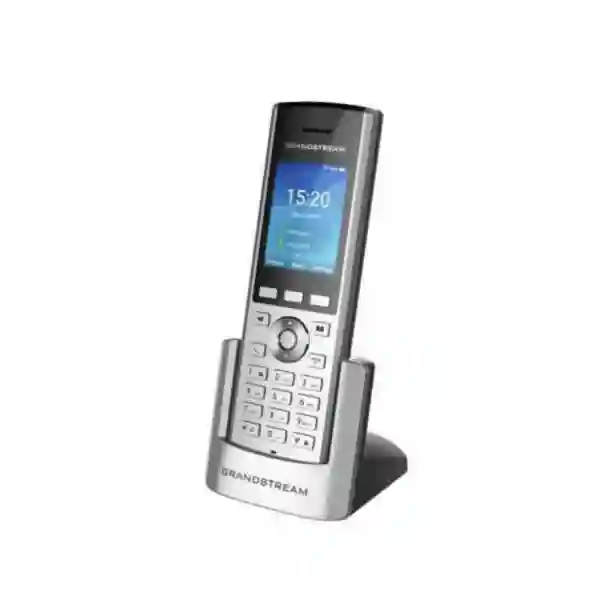
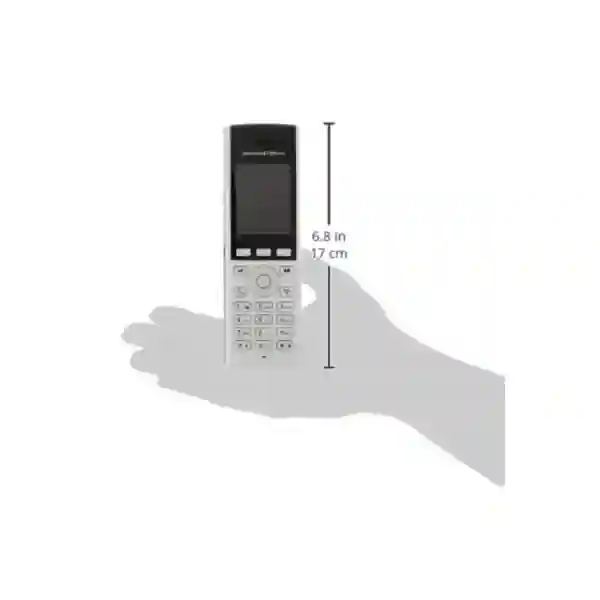
The Grandstream WP820 is a portable enterprise Wi-Fi IP phone for organisations that want business SIP calling without tying users to a desk. It is designed for environments where staff move between rooms, aisles, floors or operational zones while remaining reachable through the organisation’s voice system. Grandstream specifies dual-band 802.11a/b/g/n Wi-Fi, roaming support, integrated Bluetooth, HD voice with dual microphones, two SIP accounts and two lines. A 1500mAh rechargeable battery is rated for up to 7.5 hours of talk time and up to 150 hours of standby, making the handset suitable for many normal shift-based communication scenarios when charging routines are planned correctly.
For a business buyer in Tanzania, the important question is not only whether the WP820 has wireless connectivity. The more important issue is whether the existing Wi-Fi network can support voice roaming, acceptable latency, stable coverage and appropriate security from one work area to another. FourTeck can help customers evaluate the handset in the context of IP PBX compatibility, SIP provisioning, wireless coverage, access-point placement, VLAN design, Quality of Service and operational user requirements. The aim is to deploy a mobile VoIP endpoint as part of a dependable communications system rather than treat it as an isolated device.
Designed for standard SIP deployments where users need portable access to business calling features.
Integrated 802.11a/b/g/n connectivity across 2.4GHz and 5GHz with roaming support.
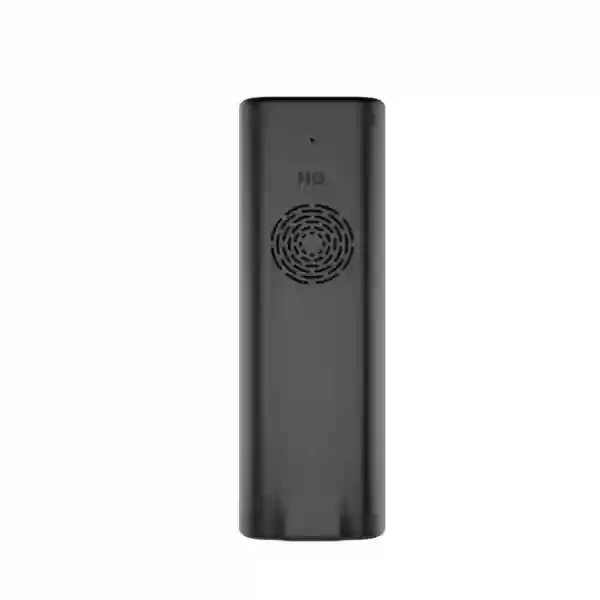
Bluetooth pairing, dual microphones, HD voice, AEC and Grandstream Noise Shield technology support practical mobile calling.
1500mAh rechargeable battery with up to 7.5 hours talk time and up to 150 hours standby under vendor-rated conditions.
What the Grandstream WP820 is designed to solve
Conventional desk phones work well where people remain at fixed workstations, but many organisations have employees whose duties require constant movement. Warehouse supervisors walk between receiving, storage and dispatch zones. Retail managers move between sales floors, stock rooms and service counters. Hospitality staff work across corridors, service areas and guest-facing spaces. Security teams patrol buildings and compounds. Medical and care environments also include staff who cannot remain beside a fixed telephone. The WP820 addresses this mobility requirement by placing SIP telephony on the enterprise Wi-Fi network.
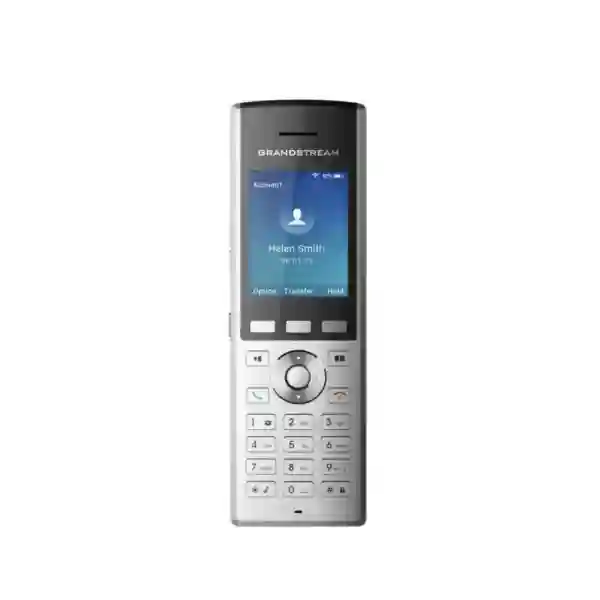
The handset includes a 2.4-inch 240 by 320 TFT colour display, a backlit keypad, speakerphone, vibration motor, proximity sensor, accelerometer and configurable button that can be used for functions such as push-to-talk or panic calling where the configured system supports the required workflow. Grandstream also documents support for 3-way audio conferencing, call hold, transfer, forwarding, call waiting, downloadable phonebooks and common provisioning methods. These capabilities make the device more than a simple wireless extension: it can participate in a managed SIP environment with features expected from an enterprise voice endpoint.
The WP820 should nevertheless be selected with its generation and wireless standard in mind. It supports Wi-Fi 4-class 802.11a/b/g/n operation rather than newer Wi-Fi 5 or Wi-Fi 6 technologies found in later Grandstream portable models. For many established business networks that can be perfectly workable, especially when access-point coverage and roaming are well designed. Buyers building a new high-density wireless environment should compare the WP820 against newer models such as the WP822, WP825 or newer WP8xx devices to decide whether the WP820’s feature set, battery profile and wireless generation are the right fit.
Verified Grandstream WP820 specifications
| Area | WP820 capability |
|---|---|
| SIP | 2 SIP accounts and 2 lines; SIP RFC3261 support |
| Wireless | Dual-band 802.11a/b/g/n Wi-Fi with roaming support |
| Bluetooth | Integrated Bluetooth for compatible headsets and mobile-device functions |
| Display | 2.4-inch 240 x 320 TFT colour LCD |
| Audio | HD audio, dual microphones, AEC, Noise Shield; codecs include G.711, G.729A/B, G.722, iLBC and Opus |
| Battery | 1500mAh rechargeable Li-ion; up to 7.5 hours talk time and up to 150 hours standby |
| Ports | Micro-USB charging and 3.5mm headset jack |
| Security | SRTP, TLS, 802.1X, user/admin passwords and encrypted configuration-file support |
| Durability | Grandstream specifies drop safety from 1.2 metres |
| Provisioning | TFTP/HTTP/HTTPS firmware methods, encrypted XML configuration, TR-069 and manual options |
Specifications above are based on Grandstream’s published WP820 product and documentation material. Real-world battery life, roaming behaviour and voice quality depend on factors such as firmware, radio conditions, access-point configuration, call activity, headset use and network design.
Deployment, compatibility and Wi-Fi planning
A portable Wi-Fi phone can expose weaknesses in a wireless network that ordinary laptop use may not reveal. A laptop can tolerate a short pause while roaming between access points; a live voice call may make that pause audible. For this reason, WP820 deployment should begin with coverage and roaming validation. Signal strength should remain usable along the actual paths staff walk, not only at desks or meeting tables. Access points should use a channel plan that limits co-channel interference, and transmit power should be balanced so clients can move between cells rather than remain attached to a distant radio.
Voice traffic should also be considered in the LAN design. Where the network supports it, organisations may separate voice devices into an appropriate VLAN, apply Quality of Service policies and ensure DHCP, DNS, NTP, SIP and RTP traffic can reach the necessary services. The WP820 supports 802.11e WMM and Layer 3 QoS mechanisms documented by Grandstream. Security settings must be matched carefully to the enterprise WLAN, especially where WPA Enterprise or 802.1X is used. Authentication design, certificates and roaming settings should be tested with the exact access-point platform rather than assumed compatible from standards alone.
The WP820 is a SIP endpoint, so the buyer should confirm interoperability with the intended IP PBX or hosted SIP platform, desired codecs, feature codes and provisioning approach. FourTeck’s Tanzania IT and telecom solutions overview explains how IP telephony, Wi-Fi, switching and security are considered together. Buyers can also review the FourTeck Tanzania technology shop when comparing related equipment for the broader project.
Who should consider the WP820?
The strongest use case is an organisation that already has dependable business Wi-Fi and needs voice mobility inside that coverage area. Retail stores can give supervisors a handset that keeps them connected while they move between the floor and stock areas. Warehouses can use portable SIP extensions for team leads and operational coordinators. Hotels and service environments can give selected staff a device that works across planned Wi-Fi zones. Security, facilities and maintenance teams can remain reachable without depending on personal mobile numbers. Offices can use the WP820 for employees who move frequently between rooms or buildings but still need extension-based calling.
It can also make sense where the organisation wants to avoid a separate DECT radio system and already has suitable Wi-Fi infrastructure. That does not mean Wi-Fi is automatically better than DECT; the decision depends on coverage, handset quantity, roaming behaviour, call density, cabling and management preferences. A site with weak or consumer-grade Wi-Fi may be better served by upgrading wireless first. A site requiring extreme drop protection, waterproofing or longer battery endurance should compare rugged or newer models rather than assume the WP820 is the best match.
The procurement conversation should therefore include user role, number of handsets, building layout, existing access points, IP PBX platform, calling pattern and charging routine. This avoids selecting a phone solely from a feature list and discovering later that coverage, security or provisioning is the limiting factor.
Grandstream WP820 Tanzania
For organisations looking for the Grandstream WP820 in Tanzania, the purchasing decision should begin with the business mobility problem the phone is expected to solve. The WP820 is designed for enterprise portable voice over Wi-Fi, which makes it relevant to workplaces where employees need to move while remaining connected to a SIP-based communications system. In Tanzania this can include corporate offices, warehouses, hospitality properties, education campuses, retail businesses, service centres, clinics, industrial facilities and security operations. The handset’s dual-band 802.11a/b/g/n Wi-Fi gives network teams a choice between 2.4GHz and 5GHz bands according to the site’s design, while roaming support is intended to help the phone move through multi-access-point environments.
The most important local procurement step is to evaluate the Wi-Fi environment before assuming that a portable IP phone will behave like a desk phone. Voice requires continuous connectivity. Buildings with thick walls, long corridors, metal shelving, multiple floors or outdoor transition areas can create coverage gaps that are easy to overlook when testing only with laptops. A Tanzania deployment should therefore review access-point positions, signal overlap, interference, wired uplinks and power resilience. If users are expected to make calls while walking, roaming behaviour should be tested along real work routes. Where the organisation already uses managed Wi-Fi, the WP820 can be assessed against the existing authentication, VLAN and QoS policies.
Buyers should also define the voice platform. The WP820 supports two SIP accounts and two lines, common voice codecs, TLS and SRTP, plus enterprise provisioning methods. That makes it suitable for many standard SIP environments, but exact compatibility with the chosen PBX or hosted provider should be confirmed. For multi-site organisations, extension numbering, branch connectivity and central management may matter as much as the handset itself. FourTeck can help prepare a quotation around quantity, deployment locations, intended PBX, headset requirements, charging arrangements and related network equipment. The objective is to source the WP820 as a functioning part of the communications environment, not simply as a boxed endpoint.
Grandstream WP820 Dar es Salaam
Businesses searching for the Grandstream WP820 in Dar es Salaam often operate in environments where staff mobility and reliable internal communication directly affect day-to-day service. Offices with several departments, retail locations, logistics operations, hotels, warehouses and service facilities may all benefit from portable SIP handsets when teams must move away from fixed desks. The WP820 offers a practical way to place a business extension on the enterprise Wi-Fi network, provided that network coverage is designed for continuous voice rather than occasional data use.
In a Dar es Salaam office or commercial building, a Wi-Fi assessment should consider floor layout, wall materials, lift cores, stairwells and areas where users commonly walk while speaking. For warehouses, metal racks and stored goods can influence radio behaviour. In hospitality spaces, guest Wi-Fi traffic should not automatically share the same policy as voice endpoints. A well-designed deployment can separate employee voice traffic, prioritise real-time packets and maintain consistent authentication as devices roam. The WP820’s support for 2.4GHz and 5GHz Wi-Fi provides design flexibility, but the correct band and channel strategy depends on the site rather than the phone alone.
Procurement teams should provide the number of handsets, intended user groups, expected shift duration, current PBX information and the make or model of the wireless infrastructure. This helps determine whether the project is a straightforward handset purchase or requires additional access points, network configuration or PBX work. The vendor-rated battery figures of up to 7.5 hours talk time and 150 hours standby are useful planning references, but active call volume and radio conditions affect actual endurance. A practical Dar es Salaam quotation should therefore include how and when handsets will be charged, whether spare batteries or multi-battery charging are relevant, and whether users need Bluetooth or wired headsets. These operational details can be more important than comparing price alone.
Grandstream WP820 Mwanza
For customers evaluating the Grandstream WP820 in Mwanza, the value of a Wi-Fi IP handset is closely tied to the movement pattern of staff. A portable extension can be useful in hotels, trading businesses, distribution operations, healthcare environments, education sites, workshops and multi-room offices where employees need to receive or place internal and external calls while away from a desk. Because the WP820 works over Wi-Fi, organisations can potentially use existing wireless infrastructure for voice as long as that infrastructure is stable, secure and properly planned.
A Mwanza deployment should identify every zone in which calls must remain usable. The network team should distinguish between basic Wi-Fi coverage and voice-ready coverage. A phone may show a network but still experience poor audio if interference, congestion or roaming delays are excessive. Walk tests should include entrances, corridors, stairs, storage areas and other work paths. Access points should have appropriate wired connectivity, and the LAN should not create bottlenecks between the wireless edge and the PBX or internet connection. Where a hosted SIP service is used, internet stability and firewall configuration also become part of call quality.
The WP820 supports two SIP accounts, which may be useful for users who need access to more than one configured identity or service, subject to the PBX design. Bluetooth can support compatible headsets, while the 3.5mm jack provides another headset option. Push-to-talk or panic-button functions may be valuable in selected operational environments, but organisations should verify how those features integrate with their chosen communication workflow rather than assume a complete safety system is created by the handset alone. When requesting a quotation in Mwanza, buyers should state quantity, PBX platform, Wi-Fi environment, building type, expected call usage and accessory needs. Clear project information allows the handset and network requirements to be evaluated together.
Grandstream WP820 Arusha
The Grandstream WP820 can fit Arusha organisations that need staff to remain reachable while moving through offices, hospitality properties, service areas, retail environments, campuses or operational facilities. The handset provides SIP-based business calling over enterprise Wi-Fi instead of requiring users to remain beside a wired desk phone. This is particularly useful where a job role involves frequent movement between customer-facing and back-office areas, or where supervisors need a single extension that follows them through several work zones.
Hospitality is one example where planning matters. A hotel may have strong guest-room Wi-Fi but still need separate consideration for staff voice. Coverage in service corridors, kitchens, loading areas, back offices or outdoor transitions may differ from coverage designed for guests. Voice traffic should be prioritised appropriately and protected from unnecessary exposure. In offices and educational environments, authentication and roaming between access points need similar attention. The WP820 supports enterprise security features including TLS, SRTP and 802.1X-related access control capabilities, but the final security posture depends on how the WLAN, PBX and credentials are configured.
Arusha buyers should also consider whether the WP820’s Wi-Fi 4 radio aligns with the long-term network plan. If the site is already well served by 802.11n-compatible coverage and the handset features meet the requirement, the WP820 may remain a practical choice. If the organisation is investing in a new higher-density Wi-Fi architecture, comparing newer Grandstream Wi-Fi phone models may be sensible. The right procurement approach is therefore role-based rather than model-based. Define who will carry the phone, how long they are away from charging points, where calls must work, which PBX will register the device and what accessories are required. FourTeck can use those details to prepare a more relevant product and deployment discussion for Arusha customers.
Grandstream WP820 Dodoma
Organisations searching for a Grandstream WP820 in Dodoma may be planning mobile voice for offices, institutions, service facilities, warehouses or multi-building work environments. The handset is useful where SIP telephony already forms part of the communications platform but employees need more mobility than a desk endpoint provides. Because it registers over Wi-Fi, the WP820 can extend business calling into areas covered by the enterprise wireless network without deploying a separate cable to each user’s current location.
For Dodoma sites, the first technical task is to confirm whether the wireless network provides adequate coverage and capacity in the areas where the handset will actually be used. Voice roaming is sensitive to weak overlap between access points, congestion and poor channel planning. A site survey or practical walk test can identify locations where a call might become unstable. If the project spans several floors or buildings, the switching and routing design should also be checked so voice VLANs, DHCP services and PBX reachability remain consistent. Power continuity for network equipment may matter too, because a battery-powered handset cannot place a call if the access points, switches or PBX lose power.
From a procurement perspective, buyers should identify handset count, user roles and the current telephony platform. The WP820 supports common SIP features, HD voice and several codecs, but the exact feature experience depends on the PBX and provisioning profile. Centralised configuration is especially useful when many handsets are deployed because it reduces manual setup and supports more consistent settings. Dodoma buyers can request the handset alone when infrastructure is already ready, or discuss a broader scope that includes Wi-Fi, IP PBX, switching and configuration. The most useful quotation is one that reflects the actual environment, not just a per-unit price disconnected from deployment needs.
Grandstream WP820 UAE
For UAE organisations evaluating the Grandstream WP820, the handset is relevant to environments where enterprise Wi-Fi is already widely deployed and staff require portable SIP calling. Warehousing, hospitality, retail, healthcare, security, facilities management and large office environments are common scenarios for mobile voice. The WP820’s dual-band 802.11a/b/g/n support and roaming capability can integrate with many established WLAN deployments, while Bluetooth and headset connectivity support hands-free workflows for selected users.
The UAE market also includes many businesses with high-density wireless networks and modern Wi-Fi infrastructure. In these environments, buyers should compare the WP820 against newer Grandstream models rather than selecting solely on model familiarity. Wi-Fi 5 and Wi-Fi 6 portable phones can offer advantages on networks designed around newer standards. The WP820 remains useful when its feature set, SIP compatibility and battery profile match the operational need, but architecture should drive the decision. Coverage surveys should include warehouses with high racks, hospitality back-of-house zones, concrete service areas and any locations where users transition between indoor and outdoor spaces.
For organisations with regional offices, the UAE may also be part of a broader telephony standardisation project. A single SIP platform can simplify numbering and policy, but cross-site call quality depends on WAN and internet design. Buyers can review the broader FourTeck regional network through FourTeck Kenya and FourTeck Uganda when planning multi-country technology requirements. A UAE quotation request should include quantity, current PBX, access-point platform, expected call density, headset requirements and whether the project needs configuration assistance. This information makes it possible to evaluate the WP820 in the context of the whole communications system.
Grandstream WP820 Uganda
The Grandstream WP820 is relevant to Ugandan businesses that want a portable SIP phone for staff working within managed Wi-Fi coverage. Instead of depending on a fixed desk extension, a user can carry the handset between work zones and remain connected to the business PBX where the WLAN provides stable service. This can support operations in offices, hotels, retail branches, warehouses, health facilities, schools and service centres where mobility is part of the job.
A Uganda deployment should be planned around the network path from handset to PBX. If the PBX is on-premises, the Wi-Fi, switching and voice VLAN need reliable internal connectivity. If the service is hosted, internet stability and firewall policies become equally important. When branches connect over VPN or private WAN links, latency and bandwidth should be reviewed for voice use. The WP820 supports SIP, RTP, TLS and SRTP plus multiple codecs, but these protocols still rely on the surrounding infrastructure being correctly configured.
Operational planning should include charging. The vendor rates the 1500mAh battery for up to 7.5 hours of talk time and up to 150 hours standby, but continuous use can reduce the time between charges. Teams working long shifts should define charging points and handover routines. The separately available GMC08 battery charger can be considered where spare-battery workflows are appropriate. Procurement teams should also decide whether Bluetooth or wired headsets are required, and whether push-to-talk functions will be part of the communication design. Buyers seeking regional project coordination can visit FourTeck Uganda. For Tanzania-led regional procurement, the Tanzania FourTeck contact route can be used to describe quantities, destinations and technical requirements before a quotation is prepared.
Grandstream WP820 Kampala
Kampala organisations may consider the Grandstream WP820 when employees need extension-based calling across offices, hospitality properties, clinics, retail premises or logistics facilities. A portable Wi-Fi phone is most effective when the user spends significant time away from a fixed desk but still needs predictable access to PBX calling features. The WP820 can serve this role with two SIP accounts, a colour display, HD audio, Bluetooth and enterprise-oriented provisioning options.
In a multi-floor Kampala building, voice roaming should be tested around stairwells, lifts, reception areas, corridors and rooms at the edge of access-point coverage. Concrete construction and internal partitions can affect signal strength. More access points do not automatically solve the problem; placement, channel reuse and transmit power need to be coordinated. Where several Wi-Fi networks operate nearby, interference can also affect performance. Using 5GHz may provide cleaner spectrum in some environments, while 2.4GHz may provide different coverage characteristics. The correct choice is site-specific.
A business deploying multiple handsets should standardise configuration. Extension naming, firmware, wireless profiles, SIP settings and directory access are easier to support when documented. Grandstream supports mass-provisioning approaches that can reduce repetitive manual work. The PBX should also be configured with appropriate failover and call-routing behaviour so users understand what happens when a line is busy or a device is offline. Kampala buyers requesting a WP820 quotation should therefore provide more than quantity. Useful information includes PBX brand, network design, building size, expected roaming areas, number of simultaneous calls and accessory requirements. This allows procurement to address practical operation and not just availability of the handset.
Grandstream WP820 Arua
The Grandstream WP820 can support Arua organisations that need voice mobility inside business premises covered by Wi-Fi. The device is not a cellular phone; it is a SIP handset that depends on the organisation’s wireless network and PBX or SIP service. That distinction is important because performance is shaped by local infrastructure. A well-designed office or facility network can make a portable Wi-Fi extension convenient and responsive, while weak coverage can create poor audio or dropped calls regardless of the handset’s feature list.
Arua buyers should map the areas where users need to receive calls. If staff move between an office and a storage building, the wireless design should confirm whether continuous roaming is possible or whether calls will normally end before transition. If the handset is used mainly within one building, fewer roaming zones may be involved, but signal strength and interference still matter. Businesses using internet-based SIP services should also consider connection stability and backup connectivity if voice is operationally important.
The WP820 includes Bluetooth, a 3.5mm headset jack, a speakerphone and a configurable key that can support functions such as push-to-talk or panic calling depending on configuration. These capabilities can suit operational users, but accessory and workflow requirements should be defined before purchase. The handset’s 1.2-metre drop-safety rating adds useful resilience, yet it should not be mistaken for the higher ruggedisation or waterproofing offered by some newer models. If the intended environment is physically demanding, model comparison is advisable. When requesting a quotation for Arua, include intended quantity, workplace type, PBX platform, Wi-Fi details and whether configuration or network assessment is required. This information helps determine if the WP820 fits the job or whether another endpoint would be more appropriate.
Grandstream WP820 Mbarara
Mbarara organisations looking for a Grandstream WP820 may be seeking a practical way to provide mobile staff with PBX extensions across Wi-Fi-covered premises. The handset can be useful for retail, hospitality, education, healthcare, service and warehouse environments where users move regularly and cannot rely on a conventional desk phone. Because the device is SIP based, it can participate in standard business telephony workflows such as extension dialing, hold, transfer and conference calling when those features are supported by the PBX configuration.
For reliable operation, the wireless network should be evaluated from a voice perspective. Data applications can recover from brief interruptions without a user noticing, but voice is real time. Access points should provide predictable overlap, and the network should minimise congestion and delay. Where the business has guest Wi-Fi, staff devices and operational equipment on the same infrastructure, segmentation can help organise traffic and improve security. QoS policies can also protect voice during periods of heavy data use, though they need to be applied consistently through the WLAN, switching and routing path.
Mbarara buyers should consider lifecycle and support needs. A single handset may be simple to configure manually, while a fleet benefits from standardised firmware and central provisioning. Phonebook integration, extension labels, wireless credentials and security settings should be documented so replacement devices can be prepared quickly. Battery planning also matters: active users may need a charging routine during breaks or between shifts. The 1500mAh battery and vendor-rated talk time are useful planning figures, not a guarantee for every workload. A well-prepared quotation request should include how many users need phones, their work pattern, the existing PBX, access-point platform, building layout and expected accessories. That level of detail supports a more dependable Mbarara deployment.
Grandstream WP820 Gulu
For businesses and institutions in Gulu, the Grandstream WP820 can provide portable SIP calling where an enterprise Wi-Fi network already covers the areas in which staff work. The handset is suited to mobile roles such as supervisors, facilities personnel, service teams, security staff or managers who need to remain reachable while moving. Instead of forwarding all communication to personal mobile phones, an organisation can keep selected conversations within the managed PBX environment and preserve extension-based call routing.
The key design question is whether the existing WLAN is ready for continuous voice. A site with one access point at reception may provide general internet access but not dependable coverage throughout a warehouse or campus. The project should identify voice-critical areas and test transitions between them. Grandstream documents roaming support for the WP820, but actual roaming behaviour depends on the access-point environment, authentication design and radio conditions. If a call needs to remain active while a user walks between coverage cells, that scenario should be tested before a large rollout.
Gulu procurement teams should also confirm PBX compatibility and desired feature behaviour. Two SIP accounts can allow flexible registration arrangements, while codecs such as G.722 and Opus support wideband audio when the network and PBX support them. Security features including TLS and SRTP can help protect signaling and media in compatible deployments. If the business uses directories, Grandstream documents LDAP and XML phonebook capabilities that may simplify contact access. The purchase decision should therefore include configuration requirements, not only hardware. Buyers can submit quantity, current telephony setup, network details, work areas and accessory needs to obtain a quotation that reflects the complete communication requirement.
Grandstream WP820 Kenya
Kenyan businesses evaluating the Grandstream WP820 can use it as a portable SIP endpoint in environments where staff need to move through Wi-Fi-covered premises. The handset is relevant to hospitality, warehousing, retail, health, education, security and general enterprise operations. Its integrated dual-band Wi-Fi allows the organisation to use existing WLAN infrastructure for voice, while Bluetooth and headset connectivity support mobile users who need hands-free communication. Two SIP accounts and two lines provide straightforward compatibility with many standard PBX designs.
The Kenya deployment decision should consider whether existing access points were designed for real-time mobility. A Wi-Fi network that works well for email and browsing may still have coverage edges or roaming delays that affect calls. Voice planning should review channel allocation, client density, backhaul capacity, VLANs and QoS. In a warehouse, high shelving and movement of stock can affect radio conditions. In hotels and offices, walls and floor slabs may create different coverage patterns from those shown on a simple floor plan. A practical assessment should therefore test with actual handsets or comparable voice devices along real user routes.
Regional organisations can also coordinate telephony standards between Kenya and Tanzania. Consistent handset profiles, extension plans and PBX policies make support easier when several branches use similar equipment. Buyers can review FourTeck Kenya for local technology solutions while Tanzania projects can be coordinated through the FourTeck Tanzania site. A procurement request should identify country or city, quantity, PBX platform, network environment and intended use. If the project includes access points, switches or IP PBX work, include those requirements in the same enquiry so dependencies can be assessed together.
Grandstream WP820 Kuwait
The Grandstream WP820 is a practical consideration for Kuwait businesses needing portable voice over Wi-Fi in warehouses, offices, hospitality properties, retail facilities or operational environments. The phone allows a user to carry a SIP extension while moving through the organisation’s wireless coverage. Its enterprise-oriented features include roaming support, Bluetooth, HD voice, programmable functions and common security protocols. The built-in 1500mAh battery supports mobile use without requiring a fixed power connection during normal operation.
Kuwait projects may involve large commercial buildings or warehouse environments where indoor radio conditions vary significantly. Access points should be positioned for capacity and handoff behaviour, not only basic coverage. A voice device needs consistent network service in corridors, loading areas, work zones and staff spaces. In high-density Wi-Fi environments, buyers should compare the WP820’s 802.11n generation against newer portable Wi-Fi phone models. If the WLAN is already based on newer standards, a newer endpoint may offer a better long-term alignment. If the site already has a stable 802.11a/b/g/n-compatible deployment and the WP820’s features match the use case, it may remain an efficient choice.
Procurement should include the intended SIP platform, codec requirements, wireless security method and number of simultaneous mobile users. For facilities operating around the clock, charging and spare-battery planning can become part of the design. The optional multi-battery charging accessory documented by Grandstream may be relevant for shift operations. Headset selection should also consider user comfort and environmental noise. By supplying these details before ordering, Kuwait customers can evaluate whether the WP820 fits the operational model instead of treating the device as a generic cordless phone.
Grandstream WP820 Ghana
Ghana organisations searching for the Grandstream WP820 may be planning mobile voice for teams that work away from fixed desks. The handset connects to a SIP PBX over enterprise Wi-Fi and is therefore well suited to buildings where wireless coverage already supports operational devices. Retail supervisors, hotel staff, warehouse coordinators, maintenance teams and managers are examples of users who may benefit from carrying an extension rather than relying on desk phones in multiple locations.
The wireless design should be reviewed before purchase. Because voice packets are time sensitive, congestion or weak coverage can become audible quickly. A Ghana site should verify signal quality in the work areas, check how the phone roams between access points and ensure network policies prioritise voice appropriately. If the environment uses WPA Enterprise or 802.1X, authentication behaviour should be tested. If the PBX is hosted, the internet connection and firewall should be able to support the required SIP and RTP traffic securely. These checks can prevent a situation in which the handset is blamed for problems caused by the surrounding network.
The WP820 supports HD voice, Bluetooth and a colour display, giving users familiar business-phone functionality in a portable form factor. Its drop-safety rating can provide added resilience for normal operational use, though it is not a substitute for rugged waterproof equipment where harsh conditions demand that level of protection. Ghana buyers should request a quotation with quantity, workplace type, existing PBX, access-point details, expected shift patterns and accessories. For regional deployments coordinated from Tanzania, the FourTeck Tanzania team can use that information to determine whether the requirement is limited to handsets or should include broader Wi-Fi and telephony planning.
Grandstream WP820 Nigeria
For Nigerian enterprises, the Grandstream WP820 can serve as a mobile SIP endpoint where employees need to communicate across Wi-Fi-covered workplaces. Large offices, warehouses, retail operations, hotels, healthcare facilities and service environments can all have user groups that benefit from portable voice. The handset combines dual-band Wi-Fi, two SIP accounts, Bluetooth, HD audio and enterprise provisioning in a device designed to move with the user.
In larger Nigerian deployments, scale changes the planning approach. A few handsets may be simple to configure, but dozens or hundreds require consistent provisioning, Wi-Fi profiles, firmware management and extension naming. Access-point capacity also needs to account for the number of concurrent voice clients, not just total wireless devices. VLANs and QoS can help separate voice from bulk data traffic, while reliable switching and uplinks reduce congestion. If branches share one PBX, WAN performance and failover should be considered so a local internet problem does not produce unexpected communication gaps.
The handset should also be compared with newer Grandstream WP-series devices. The WP820’s Wi-Fi 4 radio may be entirely adequate in an established network, but businesses investing in new infrastructure may prefer newer Wi-Fi generations and longer battery specifications available on later models. The decision should be based on environment, compatibility, lifecycle expectations and price. Nigerian buyers should prepare quantities, user roles, PBX information, Wi-Fi platform, security requirements and accessory needs before requesting a quote. That allows the supplier to distinguish between a basic product request and a project that needs network or configuration support.
Grandstream WP820 Seychelles
In Seychelles, the Grandstream WP820 can be attractive to hospitality, services and business environments where staff move between different zones but still need a consistent internal extension. Hotels, resorts, offices and facilities with managed Wi-Fi can use a portable SIP handset to keep selected employees connected without depending on fixed desks. The WP820’s dual-band wireless support, roaming capability, Bluetooth and HD audio are all relevant to this type of mobile communications requirement.
Wireless planning is especially important across properties with separate buildings, outdoor pathways or service areas. Wi-Fi coverage designed mainly for guests may not provide the same continuity required for operational voice. Staff communication areas should be mapped independently and access-point placement reviewed for handoff behaviour. Outdoor or semi-outdoor coverage may require dedicated equipment, and network teams should avoid assuming an indoor access point will support every transition. If calls need to continue while users move between buildings, that requirement should be tested carefully before rollout.
Seychelles buyers should also consider resilience. A Wi-Fi handset depends on access points, switching, PBX services and often internet connectivity, so power backup and network redundancy may be relevant to important operational communications. The WP820 itself offers substantial standby time, but battery endurance does not protect upstream infrastructure. A complete design should therefore consider UPS support for network equipment and clearly defined fallback communication procedures. When requesting a quotation, provide handset quantity, property layout, access-point platform, PBX details and the user roles that will carry the phones. This information makes it easier to judge whether the WP820 is suitable or whether another model or network change would provide a better fit.
WP820 buying checklist
WP820 versus newer Grandstream Wi-Fi phones
The WP820 remains useful, but buyers should compare it with newer Grandstream Wi-Fi phone models before standardising a new fleet. Grandstream’s current WP range includes models with newer wireless standards, larger batteries or ruggedised designs. The WP822 and WP825, for example, use 802.11ac Wi-Fi and 2000mAh batteries, while the WP825 is positioned with stronger ruggedisation than the WP820. Newer WP8x6 models move further into Wi-Fi 6. These differences do not automatically make the WP820 unsuitable; they simply mean the purchase should be matched to the existing network and expected lifecycle.
Choose the WP820 when its two-line SIP functionality, 802.11a/b/g/n Wi-Fi, Bluetooth, battery profile and price align with the project. Consider a newer model if the environment specifically benefits from newer Wi-Fi generations, longer battery life, additional lines or more rugged construction. For an existing deployment already standardised on WP820, replacement or expansion requirements may also justify continuing with the same model where lifecycle and availability permit. FourTeck can help compare the options against network design and user workflow rather than comparing specifications in isolation.
Frequently asked questions about the Grandstream WP820
Does the Grandstream WP820 use Wi-Fi or DECT?
The WP820 is a Wi-Fi SIP phone. Grandstream specifies integrated dual-band 802.11a/b/g/n Wi-Fi and roaming support. It does not require a DECT base station, but it does depend on suitable wireless LAN coverage and a compatible SIP service or PBX.
How many SIP accounts does the WP820 support?
Grandstream specifies two SIP accounts and two lines for the WP820. Exact calling features depend on how the PBX or hosted SIP service is configured.
What is the WP820 battery life?
Grandstream rates the 1500mAh battery for up to 7.5 hours of talk time and up to 150 hours of standby. Actual runtime varies with call activity, Wi-Fi conditions, display use, Bluetooth and battery age.
Can the WP820 roam between access points?
Yes, roaming support is part of the product design. Successful real-world roaming still depends on the access-point environment, radio planning, authentication method and network configuration. Testing is recommended before a larger rollout.
Does the WP820 support Bluetooth headsets?
The handset includes integrated Bluetooth and Grandstream documents headset pairing capability. A 3.5mm headset jack is also available. Compatibility should be checked for the exact headset model.
Is the WP820 suitable for warehouses?
It can be suitable where the warehouse has reliable voice-ready Wi-Fi and the 1.2-metre drop-safety rating meets operational needs. Metal racking, stock and large open areas can affect radio behaviour, so a wireless assessment is important. Harsh environments may justify comparison with more rugged models.
Can FourTeck help with WP820 configuration?
FourTeck Tanzania supports enquiries covering IP phones, IP PBX, Wi-Fi, networking and integrated technology projects. Describe the current PBX, WLAN and quantity required so the scope can be assessed before quotation.
Decision recap
The Grandstream WP820 is best viewed as a mobile SIP endpoint for businesses that already have, or are willing to build, a voice-ready Wi-Fi environment. Its dual-band 802.11a/b/g/n connectivity, two SIP accounts, Bluetooth, HD audio, portable battery operation and roaming support make it practical for many established enterprise networks. It is particularly relevant when staff need to move through offices, stores, hotels, warehouses or service facilities while remaining connected to the company phone system.
Before purchasing, confirm PBX compatibility, Wi-Fi coverage, roaming expectations, wireless security, charging routines and whether newer Grandstream WP models provide a better long-term fit. A small amount of design work before procurement can prevent call-quality issues after deployment.
Request a Grandstream WP820 quotation
Send FourTeck Tanzania the quantity required, target city or country, PBX platform, current Wi-Fi environment and any headset, charging or deployment requirements. If you are unsure whether the WP820 is the right model, include the user’s role and the areas where the phone must work so alternatives can be considered. You can use the verified FourTeck Tanzania contact page to start the discussion.



Reviews
There are no reviews yet.