
IP audio for planned announcements
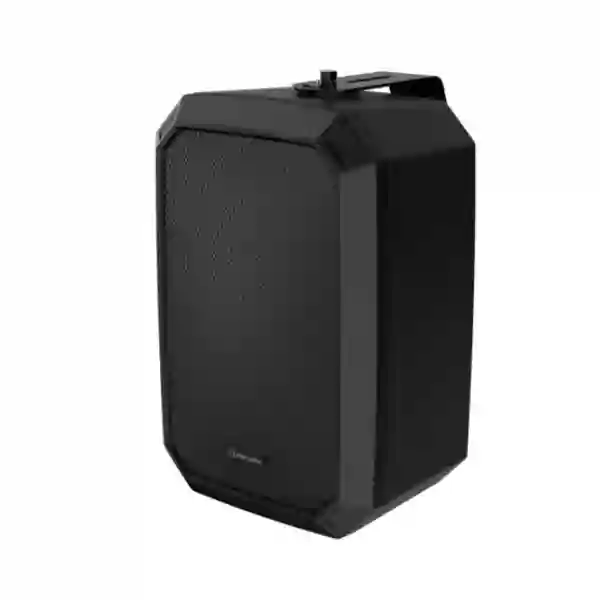
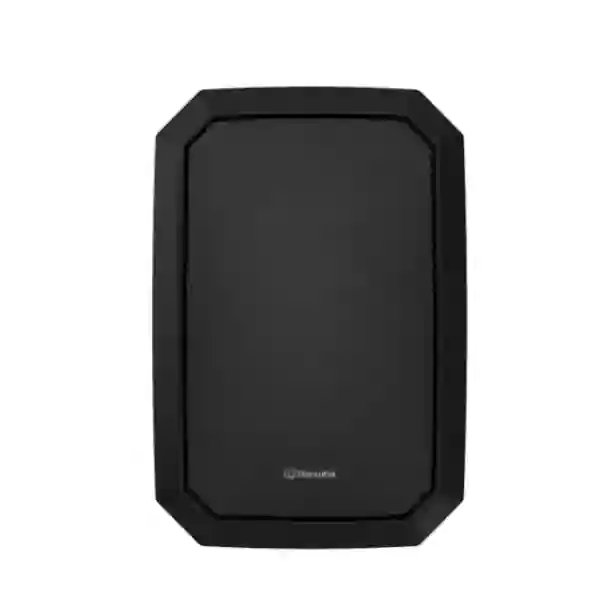
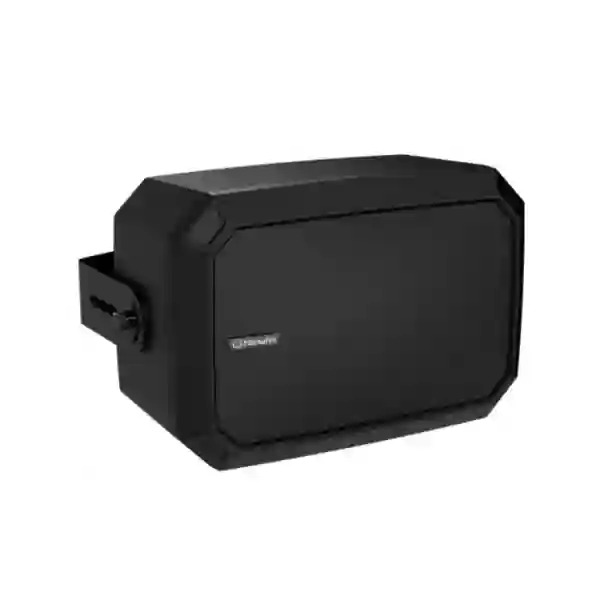
Hanwha SPA-W100B IP Wall Speaker in Tanzania
The Hanwha SPA-W100B IP wall speaker is a black, network-connected audio endpoint for premises that need clear, controlled announcements, scheduled messages and appropriate background audio. It combines a 10 W Class D amplifier with PoE or PoE+ connectivity, two-way audio functions and practical integration features. Start with your listening zones, language needs, IT infrastructure and mounting conditions to determine whether it is the right fit.
Request a project-specific quote with your floor plan, intended zones and existing network details. Availability, accessories, local pricing and service scope should be confirmed in the actual proposal.
At a glance: what the speaker offers
10 W Class D
Built-in amplifier for network-based paging and scheduled audio.
PoE and PoE+
Single wired Ethernet endpoint; confirm switching power and output target.
1 GB + microSD
Internal storage with supported SDHC expansion up to 32 GB.
IP54 enclosure
Consider protected exterior or indoor placement, subject to site conditions.
SIP and SUNAPI
Integration capabilities requiring validation with the chosen platform.
Events and relay
One dry-contact input and one normally open output; design circuits correctly.
Technical specification — read with the installation context
| Parameter | Manufacturer specification / planning note |
|---|---|
| Model / finish | Hanwha Vision SPA-W100B / black |
| Device category | IP wall-mounted network speaker |
| Amplifier | Built-in 10 W Class D |
| Maximum SPL | 97 dB with PoE; 101 dB with PoE+ |
| Speaker frequency range | 120 Hz to 20 kHz (-10 dB) |
| Line-output frequency response | 20 Hz to 20 kHz; not the same as speaker range |
| Audio formats | WAV and MP3, subject to published encoding limits |
| Power and networking | IEEE 802.3af PoE / 802.3at PoE+; 10/100 Base-T Ethernet |
| Storage | 1 GB internal; microSD SDHC up to 32 GB |
| Input / output | 1 dry-contact input; 1 normally open dry-contact output |
| Protection and environment | IP54; -20 to +50 °C; 10–85% non-condensing RH |
| Dimensions / mass | 170 × 250 × 134 mm; 2.5 kg |
| Published integration | SIP, SUNAPI, ONVIF Profile S; verify required functions in deployment |
Figures reflect reviewed Hanwha Vision model information. Verify the latest regional datasheet and any software or accessory dependencies for the proposed order. Output levels and operational compatibility must be validated under actual site conditions.
Choosing the right network speaker for a real site
A network speaker is useful when announcements need to reach a defined location without a separate analogue amplifier circuit for every destination. The Hanwha SPA-W100B IP wall speaker combines a speaker enclosure, amplifier and network audio functionality in a single wall-mounted unit. Rather than judging it by amplifier wattage alone, determine who must hear the message, what background noise is present, and whether announcements originate from a person, a schedule, a telephone system or another approved event source.
This unit is most persuasive where a building already has managed Ethernet infrastructure and the owner wants addressable audio points. A receptionist may need to page a waiting area, a manager may schedule a closing reminder, or a security operator may issue a site-specific instruction. Each workflow has different needs for latency, audibility, power resilience and permissions. Define those needs before choosing the speaker, controller configuration or quantity. A successful design starts with the message and the listener, not with a catalogue specification.
Core benefits without overlooking the trade-offs
The SPA-W100B brings together two-way audio, scheduled playback, background music, text-to-speech and network-based control. A built-in 10 W Class D amplifier simplifies the endpoint design, while standard Ethernet allows central administration alongside other compatible IP audio components. The internal storage and supported audio files can reduce reliance on a continuously streaming source for selected prerecorded messages, provided playback is configured correctly. A dry-contact interface also supports carefully designed event-related workflows.
These features do not make the device universally suitable. A wall speaker that performs well in a corridor may be the wrong choice for a high-noise loading yard. A site relying on Swahili text-to-speech needs a separate language plan because Swahili is not among the manufacturer-listed TTS languages. An IP54 rating is not the same as waterproofing for every outdoor exposure. The buyer should also verify the chosen SIP platform and network policies. Treat features as design options that require commissioning, not as automatic guarantees.
Understand the 10 W amplifier and quoted loudness
Hanwha specifies an integrated 10 W Class D amplifier. That specification identifies the internal amplifier design, not a promise that every person at a certain distance will hear a message. Sound pressure varies with power mode, location, room absorption, competing equipment, listener position and programme material. The manufacturer states a maximum sound pressure level of 97 dB when powered using standard PoE and 101 dB using PoE+. That difference matters when comparing available power budgets and testing an installation.
Even a relatively high maximum level does not eliminate the need for an intelligibility survey. A brief announcement can be loud but difficult to understand in a reverberant lobby or a warehouse with machinery. Take measurements at normal occupied positions and adjust quantity, orientation and spacing before increasing volume. In a quiet office, excessive output can be distracting and unnecessary. The objective is clear, appropriately controlled communication at the intended listening points, with an appropriate reserve for routine changes in ambient noise.
Avoid confusing frequency-response figures
The specifications include two different frequency figures that can appear contradictory when copied into retail listings. Hanwha lists 20 Hz to 20 kHz for its line-output frequency response and 120 Hz to 20 kHz as the speaker frequency range at the stated minus-10 dB reference. The line-output figure should not be presented as the loudspeaker’s practical low-frequency performance. Distinguishing those measurements helps buyers avoid choosing a paging speaker for a bass-heavy sound-system requirement it was not designed to fulfil.
For voice, the important assessment is whether consonants, instructions and names remain intelligible under site conditions. For background music, assess tonal balance, expected volume, programme rights and whether an ambient sound system is more suitable. The speaker incorporates a two-way driver arrangement, with a 5-inch low-frequency driver and a 0.5-inch high-frequency driver according to Hanwha. A demonstration using representative announcements and audio material is more informative than a single bandwidth number.
PoE versus PoE+: make power part of the design
The unit supports IEEE 802.3af PoE and IEEE 802.3at PoE+. This can reduce separate power wiring because the Ethernet connection carries network traffic and device power. However, switch capability, per-port allocations, total PoE budget and cable quality still need verification. A switch described as PoE capable may not deliver the planned aggregate power to every endpoint when all connected devices operate together. Review the vendor’s power requirements alongside the switch’s actual available budget rather than relying on an unqualified port count.
PoE+ is especially relevant when the design assumes the manufacturer’s 101 dB maximum sound pressure figure. Under standard PoE, the corresponding published figure is 97 dB. Do not design for the higher number and then install an af-only switch. Document the intended class at every location, allow headroom, and test during simultaneous operation. Where announcements are operationally important, decide whether the network switch needs a UPS and whether the upstream audio source will remain available during a power interruption.
The network is part of the audio system
The speaker uses 10/100 Base-T Ethernet, and the installation manual identifies Category 5e cabling and a nominal cable distance limit of 100 metres for the Ethernet connection. Survey actual pathways, bends and installation conditions before treating that maximum as a complete cabling plan. The switch, patch panel, cable, connector and speaker are one operational chain. A faulty termination can make an otherwise correctly configured paging system appear unreliable, especially when a cable must also carry PoE power.
For a larger Tanzanian facility, place speakers on a documented logical network and identify the person responsible for IP addressing, multicast handling and change control. The manufacturer’s system supports network audio functions, but a site’s firewall, VLAN, multicast settings and routing rules determine how those functions behave. Test a representative cross-building message and an individual-zone message before scaling. Avoid placing voice-control endpoints on an unrestricted guest network, and keep a clear record of assigned addresses and management access.
SIP integration and telephone-based paging
SIP support can be useful when staff want to initiate paging from a compatible telephone or communications platform. Hanwha identifies SIP-related functions, DTMF support and audio codecs including PCMU, PCMA and specified Speex variants in its integration documentation. The manufacturer also describes tests with selected SIP endpoints and an Asterisk-based PBX. These are useful engineering references, but they do not guarantee every version of every IP PBX will work without configuration or interoperability testing.
Before procurement, describe the desired call flow in plain language: who dials, which zone responds, whether a live operator can interrupt scheduled playback, and how failed calls are reported. Agree on SIP registration, authentication, codec selection, dialing logic and concurrency requirements with the PBX administrator. If the customer already has a communications platform, validate the actual software release and licensing arrangement. Avoid promising seamless integration solely because two product brochures mention SIP.
Hanwha ecosystem and integration interfaces
The SPA-W100B sits within Hanwha Vision’s IP audio offering, alongside other speaker formats and supporting audio devices. The published integration details include SUNAPI, ONVIF Profile S and network public-address functions. That can be valuable for systems integrators who prefer a coordinated environment rather than several disconnected audio products. However, the presence of a protocol on a specification sheet is only the beginning of a compatibility assessment: control functions, authentication, events and firmware releases must be tested.
A good project specification names the exact source devices, destinations and actions. For example, identify whether the source is an authorised operator, a scheduled message or a separately validated event from another system. State whether audio must be sent to a single endpoint, a group or several zones at once. Document the expected outcome when a controller, speaker or network connection is unavailable. This preparation prevents an integration project from becoming an open-ended promise to connect everything to everything.
Scheduling recurring announcements with purpose
The built-in scheduler is useful for repeated messages that do not need a person to speak each time. A facility might schedule visitor instructions, shift notices, opening reminders or a routine informational announcement. To make this useful, create a message register showing the intended audience, approved wording, playback times, volume and review owner. Check local time settings and the device’s time synchronisation because even a correctly recorded audio file can become confusing if played at the wrong moment.
Scheduling is not a substitute for an emergency communications plan. Define priority rules for live paging, recorded alerts and background music, then validate those rules with the selected audio system. Keep prerecorded messages short enough to be understood, especially in noisy rooms where a listener may miss the beginning. Test weekdays, weekends and exceptions rather than assuming every area follows the same calendar. A clear schedule also makes routine changes easier when the building’s hours or occupants change.
Text-to-speech in a multilingual environment
Text-to-speech can shorten the process of preparing announcements when the text is in a supported language. Hanwha’s current model information lists English variants and several European languages; the full language list and voice options should be confirmed for the intended firmware. Swahili is not listed as an included TTS language in the manufacturer materials reviewed. A buyer should therefore not expect to type a Swahili message into the interface and obtain a supported native Swahili voice automatically.
Where Swahili is important, consider professionally recorded Swahili announcement files, with clear pronunciation and approval by someone responsible for the message. The model supports WAV and MP3 audio formats within the published technical limits, which makes a recorded-message workflow worth evaluating. Test the files in the actual playback environment before deployment. For mixed-language premises, choose languages based on listeners and operational requirements, and avoid overly long announcements containing the same instruction several times.
Background music and announcement priority
Background music can improve the atmosphere of a reception area, shop or hospitality space when volume is appropriate and business rules permit it. The SPA-W100B includes a background-music function, but music should remain secondary to important paging messages. During design, define what happens when someone makes a live announcement, when a scheduled notice begins, and when two audio sources request the same endpoint. The required priority behaviour should be verified through system configuration and acceptance tests.
Do not confuse audio capability with permission to rebroadcast commercial recordings. The premises operator should check the rights and licensing arrangements applicable to its chosen material. It is also worth considering the impact of sound leakage into nearby offices, classrooms or neighbouring premises. Quiet periods, zone-specific volume profiles and local tests may matter more to staff and visitors than the maximum published output. If high-fidelity entertainment audio is the primary requirement, assess a dedicated music solution instead of assuming a paging device is the best fit.
Internal memory and recorded-audio management
The unit includes 1 GB of internal memory and a microSD slot for SDHC media up to 32 GB according to the published specification. These resources can support an operational plan built around stored messages and supported playback functions. The manufacturer lists WAV and MP3 files with defined bit-rate and sampling-rate ranges. Check the actual audio files against the supported profile, and consider the storage requirements of several languages or different message variants rather than assuming every encoding will be accepted.
Give each recorded file a clear name, purpose, author and review date. For example, staff should be able to tell the difference between a general welcome announcement and an instruction used during a security incident. Keep a controlled backup of approved recordings outside the speaker, and document a process for replacing outdated messages. Local storage helps with playback organisation, but it does not remove the need for a reliable endpoint, sensible access permissions and a tested method of restoring the desired configuration.
Event triggers, contacts and relay use
Hanwha specifies one dry-contact input channel and one normally open dry-contact output channel for the model. These interfaces create options for linking appropriate external events or outputs to an approved audio process, depending on electrical design and system configuration. A dry-contact input is not an invitation to wire an arbitrary powered signal into the device. Confirm the exact permitted interface behaviour from the installation manual and have qualified personnel document the circuit before connecting equipment.
Use the event capability for carefully scoped actions such as notifying staff about a validated facility event or supporting a local operating workflow. For any life-safety, evacuation, fire or security use, establish whether the complete system meets the applicable project requirements; this speaker’s presence alone does not certify such a system. Decide what happens during a network failure, false trigger or prolonged contact closure. Verify the relay’s load and interface requirements rather than using it as an undocumented replacement for an approved control panel.
Device permissions and cyber hygiene
An IP speaker with network access and audio controls should be managed like other connected building equipment. The manufacturer documents password protection, user roles, authentication features, access logs and network protocols. These features need an actual security configuration. During commissioning, replace default or temporary credentials, allocate administration to named operators and limit access to the management interface. An unattended, broadly accessible audio endpoint can create both nuisance and operational risks even when its sound system works perfectly.
Coordinate the speaker’s network placement with the customer’s IT policy. Restrict management interfaces to authorised segments, document necessary services and avoid opening internet access simply to make commissioning convenient. Confirm the supported firmware-update process and review security advisories through legitimate vendor channels. Maintain a device inventory showing location, model, firmware and responsible owner. Audio system administrators should also have a documented procedure for disabling obsolete users, checking logs and escalating unexpected broadcasts.
Plan the physical location before ordering
A wall-mounted speaker directs sound from a specific position, so location matters. Determine the likely listener height and movement pattern, identify surfaces that cause echoes, and consider whether furniture, displays or stored goods could obstruct the path. Mounting near a noisy fan or a reflective corner may reduce clarity even when measured volume is substantial. Draw likely coverage areas on the floor plan and check each against the desired message type instead of relying solely on a speaker count per square metre.
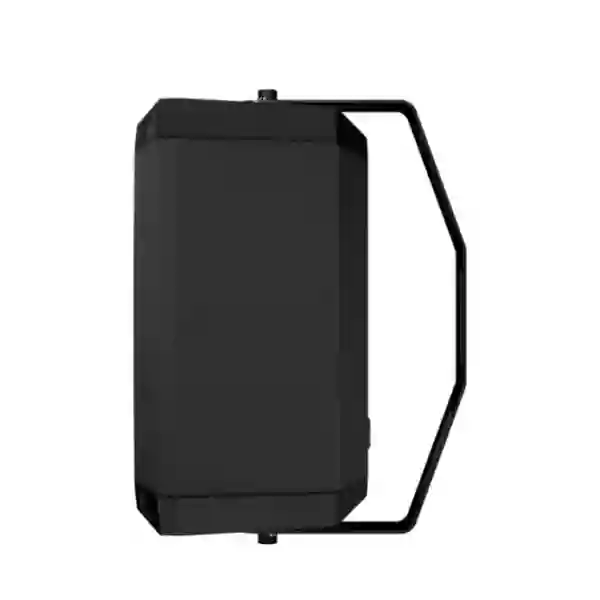
The unit is specified at approximately 170 mm wide, 250 mm high and 134 mm deep, with a weight of 2.5 kg. Those details matter for mounting surfaces, clearances and service access. A suitable fixing method depends on the wall construction and site conditions. Include allowance for the cable route and protected termination, and do not place the speaker where a bracket or cable will create a hazard. Commission the orientation using a real voice message from typical listening positions.
IP54 is protection, not unlimited outdoor exposure
IP54 provides a defined level of protection against dust ingress and splashing water, and Hanwha markets the speaker for appropriate outdoor use. This does not mean that the unit is suitable for submersion, pressure washing, persistent exposure to driven rain or installation in every exposed location. A covered walkway, protected loading entrance or sheltered wall may offer a more manageable operating environment than an uncovered pole facing seasonal weather. Evaluate the whole installation, not only the enclosure rating.
For Tanzania, site-specific exposure to sun, moisture, wind-driven dust and rain should influence the mounting plan. Check the manufacturer’s stated operating limits, ensure cable entries are protected in accordance with instructions, and avoid locations where water can collect around connectors. Assess corrosion risk and the need for suitable accessories without assuming that a third-party bracket or enclosure is automatically approved. Where the environment is unusually harsh, seek the correct environmental specification before proceeding with procurement.
Temperature, humidity and real-world conditions
The published operating-temperature range is minus 20 to plus 50 degrees Celsius, with 10 to 85 percent relative humidity under non-condensing conditions. These ratings describe specified operating limits rather than a blanket guarantee for every warehouse, outdoor enclosure or unventilated plant room. Direct solar heating and heat buildup near a roof can produce local temperatures different from a regional weather report. Condensation may also appear during overnight changes even when daytime humidity seems manageable.
Inspect the intended installation position at the times when conditions are most demanding. Consider whether cleaning procedures, steam, exhaust, chemical vapours or vibration introduce risks beyond the published specification. Where power and audio are operationally important, document what staff should do if an endpoint reports a fault or becomes inaudible. Environmental planning helps select the correct hardware once, rather than repeatedly replacing a device that was mounted in the wrong location.
Speech intelligibility matters more than peak volume
To evaluate speech intelligibility, play representative names, numbers, directions and short safety-neutral instructions from the speaker at the level expected during normal operation. Walk the actual circulation paths, pause at waiting locations and check for masking from machinery or crowds. An empty building often sounds different from the same site while occupied. Strong reverberation can blur fast speech; raising the volume may make the problem worse rather than better.
A sensible commissioning method uses repeatable test recordings, consistent observer positions and documented results. Note where speech is unclear, then adjust positioning, timing, signal processing or the number of speakers as appropriate. Consider how people with different hearing needs will receive essential information and whether complementary visual communication is required. The objective is not simply to prove that the speaker can produce sound but to confirm that listeners can act on the intended message with reasonable clarity.
Offices, reception areas and shared workspaces
In offices, network speakers can support reception paging, meeting-room transitions, visitor announcements and selected building notices. A wall-mounted endpoint may be attractive where ceiling installation is inconvenient or a particular waiting area needs defined coverage. Administrative access can be limited to authorised personnel so that routine announcements remain predictable. If the office is divided into meeting rooms and open-plan areas, the content and volume should not be identical in every space.
Ask whether visitors need to understand the message while moving, sitting or speaking with staff. Check where reflections and background music interfere with voice. Establish quiet periods and rules for non-urgent announcements so routine paging does not become a distraction. If a corporate phone system will initiate messages, validate the SIP configuration on the customer’s own network. The cost of configuring groups, accounts and schedules should be considered alongside the purchase price of the speakers.
Retail shops and customer-facing premises
A retail deployment might use a speaker for store-opening messages, closing reminders, staff calls or gentle background music. The important distinction is between messages intended for customers and messages intended only for staff. Use zones or alternative communications channels where private instructions must not be audible across the shop floor. A wall speaker placed behind a high display can give uneven coverage; one positioned near a busy entrance may become masked by traffic and customer conversations.
Plan announcements around the store’s workflow rather than filling every available scheduling slot. Make public messages concise, inclusive and easy to understand. Recorded messages in the appropriate customer language can be useful where the device’s TTS language choices do not match local needs. Always verify rights to music content and whether sound levels are acceptable to neighbouring occupants. Test volume while the shop is operating, not only early in the morning before customers arrive.
Schools, training centres and institutional campuses
Education sites often need different messages for classrooms, corridors, administrative offices and common areas. A network audio approach can help organise those destinations, but the operational plan needs clarity on who can initiate messages and which areas should be interrupted. Timetabled reminders may suit a scheduler; urgent instructions require a separately validated workflow and appropriately trained staff. Do not assume a general-purpose speaker constitutes a certified emergency notification system.
Acoustic conditions vary sharply between a small office and a long, reflective corridor. In instructional spaces, a loudspeaker should not regularly interrupt learning or produce an overly harsh voice signal. Identify periods when announcements are appropriate, define exceptions and confirm how a teacher or administrator will know that a message reached the intended zone. Multilingual recorded announcements can support comprehension, with actual wording approved by the institution. Include the IT team in plans for school network segmentation, login control and backup power.
Hotels, conference areas and hospitality venues
Hospitality environments place a premium on message timing and guest experience. Reception paging, conference-room transition notices and background audio may all be valid uses, but they should not compete with each other. A hotel may need separate sound profiles for a lobby, corridor and meeting foyer. Installers should assess the acoustic character of each area and avoid broadcasting routine staff communication into guest spaces where it is not needed.
For events and conferences, test the desired source of announcements before the venue opens. Check how a staff member can stop, correct or repeat an announcement and how recorded messages are changed between events. If the customer wants entertainment-level music, establish whether a dedicated audio system is necessary. Integration and operating policies should be written down so that temporary staff do not need administrative network privileges merely to send a routine message. Well-planned audio is discreet until a clear instruction is genuinely required.
Warehouses and light-industrial workplaces
Warehouses create difficult audio conditions because high shelving, moving vehicles, machinery and variable occupancy all affect what people can hear. A wall speaker may be useful near an office entrance, dispatch desk or sheltered loading point, but the design should be evaluated carefully for large noisy spaces. The SPA-W100B’s published peak sound pressure figure is not proof that it will cover an entire industrial hall. A horn-style device or additional endpoints may be more appropriate for some areas.
Map separate listening zones for administration, loading and circulation before choosing the final mix of devices. Test intelligibility during representative operations and establish how important messages will be supplemented where noise or hearing protection interferes. Protect Ethernet routes from mechanical damage, inspect mounting surfaces and include dust and moisture conditions in the specification. When the audio system is associated with process alarms or security incidents, validate the relevant control logic, safety obligations and failover arrangements independently.
Multiple floors and multi-building sites
A campus with multiple floors or buildings benefits from naming zones in a way that operators understand. Rather than identifying destinations only by device IP address, use consistent labels such as reception, north corridor or loading entrance in the design documentation. The manufacturer describes multicast audio, zones and groups, including substantial published system capacities. Actual usable capacity and concurrent operations depend on the chosen architecture, configuration and software, so confirm them against the proposed deployment.
Start with a simple matrix showing who may speak to each zone, which messages can reach all buildings and which recordings remain local. Then test that the network passes the required traffic without introducing unexpected delay, duplication or interruption. If several buildings use separate switching domains, include routing, multicast handling and failure isolation in the assessment. A large number of supported groups is not by itself an operating plan; a clear naming convention and change process make the system usable.
Network resilience and power continuity
When a paging workflow becomes part of everyday operations, power outages and switch maintenance become communications risks. A PoE-powered speaker stops operating when its supplying switch loses power, even though it does not have a separate mains adaptor at the speaker. A controller or source device may also be necessary for some broadcast workflows. Identify those dependencies and decide which ones need protected power or a documented manual alternative.
In facilities where power interruption is a realistic planning concern, consider a correctly sized UPS for critical switches and associated equipment. UPS capacity must be calculated from the actual system load and desired runtime, not assumed from the number of connected endpoints. During commissioning, simulate an agreed power or network failure and confirm how the operators detect it. Critical business processes should never depend on an untested assumption that locally stored audio, a controller or a SIP call will always survive every outage.
Commission the audio and network together
A successful handover should include device discovery, secure credentials, IP configuration, firmware documentation and a recorded result for each speaker. Test basic playback before complex integration. Next confirm scheduled messages, live paging, zone selection, appropriate volume, and any event or relay workflow that has been approved. If SIP is used, test calls from each intended endpoint and confirm the behaviour of busy, unanswered or interrupted sessions. Keep a dated commissioning checklist rather than relying on verbal assurance.
Perform acceptance tests during realistic occupancy and background-noise conditions whenever possible. Record problem locations and corrective actions, then repeat the tests after changes. Confirm the customer’s designated operators can send a message without needing unrestricted administrative access. Hand over both technical documentation and a short operational guide: how to initiate a routine page, whom to contact when a speaker is silent, how to request a recording change, and what to do when the network is unavailable.
Audio monitoring and ongoing support
The model’s published functionality includes speaker testing, connection verification and system logging. These can assist a support team, but monitoring is valuable only if someone knows when and how to act on a fault. Decide how an administrator will review device status, whether a regular manual test is needed, and how the organisation will record recurring incidents. Test the monitoring features in the actual configured network rather than assuming every fault will automatically create an external alert.
Schedule periodic checks of mounting hardware, protected cabling, audio clarity and stored-message relevance. Staff changes should trigger reviews of user access. When firmware or network settings are changed, verify that core paging and scheduling functions still operate as expected. Keep exported configuration information and approved message files in the customer’s established backup process. A maintainable installation is one where another qualified administrator can understand the system without reconstructing undocumented decisions from memory.
Compare wall, ceiling and horn-style speakers
Wall, ceiling and horn speakers solve different acoustic and architectural problems. The wall-mounted SPA-W100B can suit targeted announcements in corridors, entrances, reception areas or other locations where directional wall placement is practical. A ceiling-style unit may distribute sound more evenly across a typical suspended-ceiling room when the correct installation is available. A horn-style unit may suit selected outdoor or noisy industrial voice applications, subject to its actual acoustic and environmental specification.
Do not assume that two speakers from the same manufacturer have interchangeable coverage, mounting arrangements, sound quality or power demands. Compare the intended programme material, the listener locations, aesthetics, required loudness and susceptibility to weather. A mixed design can be more effective than using one format everywhere. Before changing a specified speaker type, review mounting loads, audio levels, network budgets and the commissioning procedure so that the replacement serves the same operational objective.
Network audio versus conventional analogue PA
A conventional public-address system can be an appropriate choice for facilities with established amplifier wiring and centralised zones. IP speakers offer a different architecture: each networked endpoint has its own power, connectivity and configuration requirements. The benefit is potentially finer addressing and integration with digital workflows; the trade-off is dependence on switches, structured cabling, software settings and network administration. Neither design is automatically cheaper, simpler or more resilient in every building.
If upgrading an existing premises, begin with an inventory of speakers, amplifiers, cables and message sources. Determine what can be retained and what must be replaced for the desired functionality. Plan whether the new IP audio endpoints will operate alongside existing audio equipment or form a separate system, and document any bridging hardware or engineering work. Compare costs across procurement, cable routes, switch capacity, installation, training and long-term maintenance rather than judging only a single loudspeaker price.
Project scope, accessories and total installed cost
An accurate quotation requires more than the product model. The buyer should specify intended quantity, mounting locations, number of audio zones, network equipment already available, SIP or controller requirements, any approved event integration and expected language content. Include site-survey findings or a marked floor plan where possible. Ask the supplier to distinguish device supply from mounting accessories, network changes, configuration, recording work, commissioning, training and subsequent support.
Do not assume that the product price includes a PoE+ switch, suitable brackets for every wall, a UPS, audio source equipment or installation services. Verify which items are included and which are optional. Also clarify local availability, payment conditions, warranty terms and delivery expectations in the actual quotation instead of relying on a foreign retailer listing. This makes competing proposals comparable and reduces changes during installation. If there is uncertainty about a technical requirement, resolve it before treating a quoted cost as final.
Tanzania deployment considerations
For a Tanzanian business, reliable communication depends on the specific building rather than a generic national template. Evaluate the local power arrangement, the existing LAN, and whether staff need announcements in English, Swahili or another language. Do not assume Swahili text-to-speech is built in; prerecorded Swahili audio is a practical option to investigate. Indoor locations, covered exterior corridors and exposed service areas may need different combinations of hardware and protective measures.
Where procurement spans several sites, collect one site sheet for each location. Record the number of listening zones, indoor or outdoor exposure, background noise, connectivity between buildings and who will manage the system. Confirm local commercial facts separately, including price in Tanzanian shillings, current stock, shipping, warranty and installation eligibility, because these are not established by the manufacturer specification. A buyer should receive a proposal based on measured requirements and clearly described assumptions rather than unsupported claims of universal coverage.
Decision checklist: is this model a good fit?
The SPA-W100B deserves consideration when the project needs wall-mounted IP audio, a suitable managed Ethernet connection, a clear role for schedules or live paging, and an environment compatible with its enclosure and operating limits. It is especially relevant when the operator wants the option of integrating approved network-audio controls rather than running a purely analogue announcement line. A modest, well-defined installation is often the best way to validate the workflow before expanding to more zones.
Choose a different approach, or seek further design work, if the site is continuously exposed to severe weather, extremely noisy, dependent on unsupported TTS languages, unable to provide a reliable network, or intended for a safety-certified alarm function the full proposed system has not been approved to perform. Before ordering, confirm realistic sound coverage, power class, supported call flow and mounting feasibility. An appropriate solution is one that the customer can understand, operate and maintain after handover.
What to provide when requesting a quotation
To obtain a meaningful recommendation, share a short description of the premises and the messages you want to broadcast. Helpful details include floor plans, typical background-noise conditions, an estimate of intended zones, the location of any existing network switches, and whether live paging must originate from a telephone system. If audio is needed outdoors, describe the mounting exposure rather than simply saying the device is weatherproof. Identify any languages or prerecorded messages that matter.
Also state whether the project is new or is an expansion of an existing system, and whether installation, configuration or operator training is expected. The next step is to review those details against the SPA-W100B’s verified features and identify any additional components or tests required. Request confirmation of current local availability and commercial terms through the supplier’s normal quotation process. This avoids promising a fixed package where the final design depends on site conditions, language needs and the customer’s IT environment.
Frequently asked questions
These are the questions that most directly affect purchasing, integration and installation decisions for a networked wall speaker. Confirm any final system-specific requirement against the current technical documentation and the proposed configuration.
Is the Hanwha SPA-W100B a Wi-Fi speaker?
No. The published specification identifies 10/100 Base-T Ethernet and PoE or PoE+ power. Plan a wired network connection to the intended endpoint, with a suitable switch, compatible cable and protected termination. If the building relies mainly on Wi-Fi, a separate network design is required rather than assuming the speaker joins a wireless network by itself.
What is the difference between PoE and PoE+ for this speaker?
Both are supported powering methods, but Hanwha publishes different maximum sound pressure figures. The figure is 97 dB with standard PoE and 101 dB with PoE+. The higher figure should not be assumed when the device is attached to an af-only switch. Verify per-port and total switch power budgets before installation.
Can it play background music and announcements?
The model lists background music, scheduling and paging functions. The important project decision is how those functions interact. Test whether a live announcement takes the intended priority, whether each zone receives the correct programme, and how routine messages are stopped or corrected. Audio playback capability does not remove the premises operator’s responsibility for music permissions.
Does its text-to-speech support Swahili?
Swahili is not among the TTS languages listed in the reviewed manufacturer materials. Do not buy the speaker on the assumption that native Swahili synthesis is supported. A recorded Swahili message in a supported audio format can be considered and tested, with pronunciation and wording approved by the organisation before it is used operationally.
Can the speaker be installed outdoors?
Hanwha identifies an IP54 enclosure and outdoor-related use, but suitability depends on the actual exposure. IP54 is not a guarantee against heavy driven rain, immersion, pressure washing or severe environmental conditions. Select mounting positions, cable entry protection and accessories according to the current manufacturer instructions and the site’s weather and maintenance conditions.
Does it work with every SIP PBX?
No universal compatibility guarantee should be made. SIP integration and selected tested clients or platforms are documented, but interoperability depends on the PBX release, codec settings, authentication, dial plan and intended workflow. Test the exact system and its required paging features before treating the integration as part of the delivered specification.
What audio files can it use?
Hanwha lists WAV and MP3 support with published bit-rate and sampling-rate conditions, together with 1 GB internal memory and a microSD slot for supported SDHC media up to 32 GB. Check the current manual and confirm sample files play correctly before producing a large library of recorded announcements or using a particular memory card.
How many speakers are needed in one building?
There is no reliable universal number. Quantities depend on the floor plan, walls, shelving, background noise, listening locations, mounting height and target speech intelligibility. Start with a site layout and representative tests. A room may need fewer speakers than a long corridor or warehouse, and a different speaker style may be preferable in some zones.
Can the device replace a certified fire-alarm system?
Do not assume so. An IP speaker can be part of carefully designed operational messaging, but a life-safety or evacuation application requires assessment of the complete system, relevant approval requirements, supervision, power resilience and emergency procedures. The SPA-W100B model description alone does not establish certification of a proposed site-wide emergency communication design.
What network cable and switch should be used?
The installation information identifies a wired Ethernet link, Category 5e cable and suitable PoE or PoE+ switching. Verify actual switch standards, cable distance, quality, port budget and any required multicast handling. Follow the current official installation guide, especially when the endpoint is outdoors or located far from an equipment room.
Is the white version the same product?
The black SPA-W100B and white SPA-W100W are separately named models in Hanwha’s range. The correct colour and exact model should appear in the final quotation. Do not treat similar-looking products as interchangeable without checking the current manufacturer’s specification, mounting requirements and any revision-specific differences.
What should the supplier confirm for a Tanzania order?
Ask for the exact model and colour, currently applicable specification, local stock or lead-time confirmation, quoted currency and taxes, warranty terms, included accessories, and whether installation and commissioning are in scope. Request an itemised plan for switches, cabling, controller or PBX integration, and operator training. Avoid assuming these services are automatically bundled with the speaker.
Request a Hanwha SPA-W100B project quotation
Share the proposed installation environment, planned number of zones, intended broadcast sources, language requirements and whether the available Ethernet switches supply PoE+. Ask for a confirmed scope covering the exact black SPA-W100B model, any additional equipment, configuration, commissioning and local commercial terms. A site-specific review is the best way to match an audio endpoint to the people who need to hear it.
Ask FourTeck Tanzania for a project-specific recommendation and quotation.




Reviews
There are no reviews yet.