
Thermal network surveillance · Tanzania buying guide
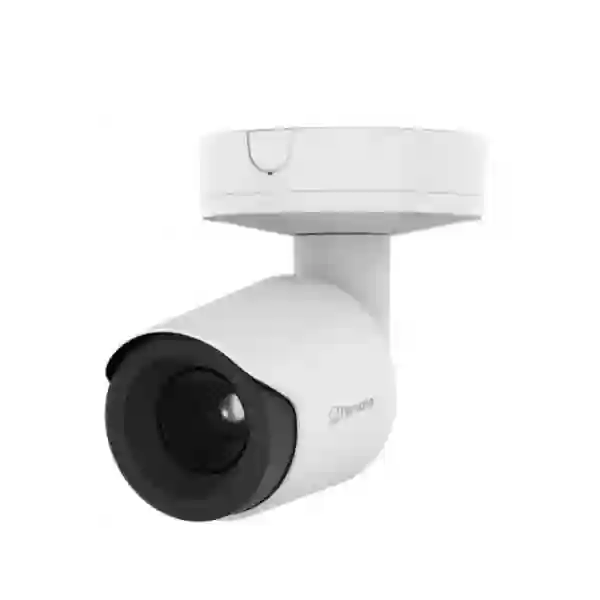
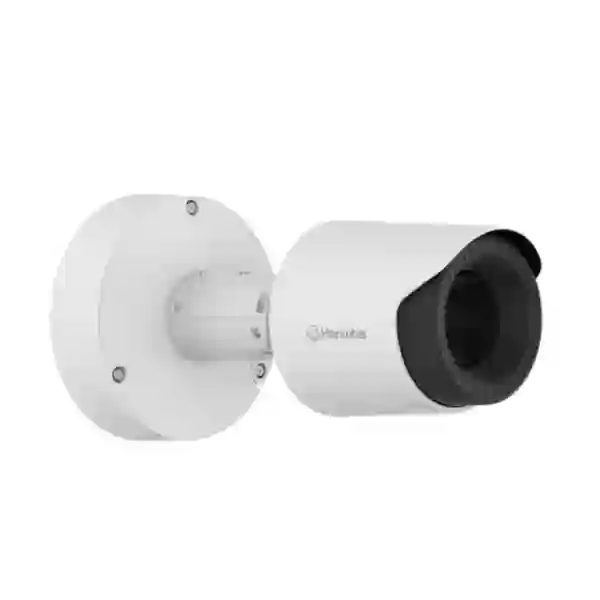
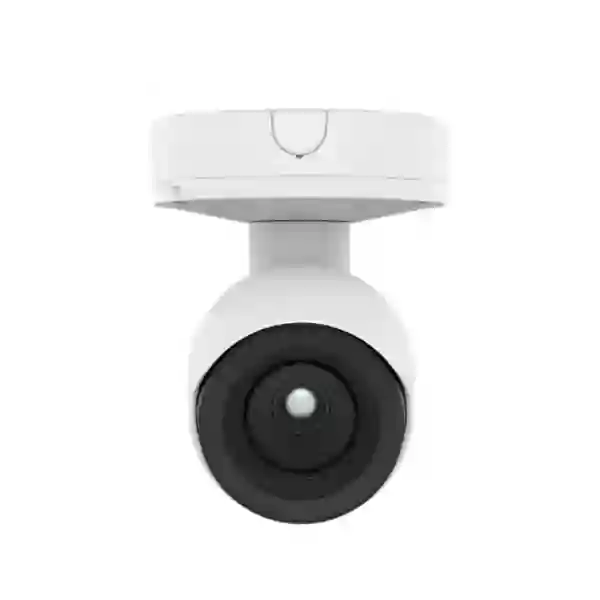
Hanwha TNO-C4042T VGA AI Thermal Camera
Detect meaningful activity in difficult light using a 640 × 480 thermal sensor, 13 mm fixed lens and AI classification of people, vehicles and vessels. Plan the installation around the actual target distance, monitoring objective and an 8 fps maximum frame rate.
Verified specifications at a glance
| Sensor | 640 × 480 uncooled microbolometer |
|---|---|
| Lens | 13 mm fixed, athermalized, F1.0 |
| Thermal sensitivity | NETD ≤16 mK at 25°C, F1.0 |
| View | 49.1° H × 36.4° V |
| Output | Up to 1280 × 960 upscaled; 8 fps maximum |
| AI classes | Person, vehicle and vessel |
| Network | Gigabit Ethernet; ONVIF S/G/T/M; RTSP |
| Power | IEEE 802.3af Class 3 PoE or 12 V DC |
| Storage | One microSD slot, up to 1 TB |
| Protection | IP66/IP67, IK10; NEMA 4X |
| Operating temperature | −40°C to +60°C |
Manufacturer reference specifications; verify firmware, installation conditions, accessories and regional supply for the actual project. The quoted higher output resolution is upscaled, not native thermal resolution.
What the TNO-C4042T is designed to do
When a conventional security camera cannot depend on visible light, thermal surveillance provides a different way to monitor a scene. The Hanwha TNO-C4042T thermal camera registers infrared energy from objects and turns relative temperature contrast into a view that operators can use in darkness. This makes it relevant to exposed boundaries, sensitive infrastructure and coastal observation points where lighting is limited or impractical. Unlike an ordinary color CCTV unit, it is intended to recognize thermal shapes rather than reproduce the colors and fine visual details of a scene.
The particular advantage of this model is the combination of a native 640 × 480 thermal detector, a fixed 13 mm lens and edge AI that classifies people, vehicles and vessels. It is a defined surveillance tool, not an all-purpose replacement for visible-light cameras, precision thermometers or access-control readers. A good design gives it a clear surveillance objective: which events should produce an alert, at what distance, from which direction and with what response. Those answers matter more than simply choosing the highest advertised output resolution.
A buyer’s quick answer
Choose this model for a project that needs thermal event detection across a relatively wide monitored scene and can accept an 8-frame-per-second stream. The 13 mm optic supplies a 49.1° horizontal field of view, which makes lens placement and the width of the approach corridor central to the design. Hanwha specifies a minimum object distance of 5 metres, so a mounting point aimed at activity immediately under the camera needs special attention.
Do not select the TNO-C4042T solely on the strength of a theoretical long-range detection figure. Hanwha separately publishes AI classification distances and Johnson-criteria detection, recognition and identification values, which answer different questions. For a reliable specification, identify the target type, minimum size, expected movement, alarm purpose, background, weather and planned camera height. Discuss those conditions before finalizing the number of cameras. The most useful procurement outcome is a coverage plan that shows where a person, vehicle or vessel should trigger an actionable event and how operators will verify it.
Understanding the native thermal image
The imaging device is an uncooled microbolometer with 640 × 480 sensing elements, 17-micrometre pixels and an 8–14 micrometre spectral response. NETD is specified at no more than 16 mK at 25°C and F1.0. This sensitivity figure describes how small a thermal difference the sensor can resolve under stated testing conditions. It does not mean that every person can be found at every distance, or that the camera measures a person’s body temperature to medical accuracy.
Several encoded sizes are supported, including 640 × 480 and an upscaled 1280 × 960 output. Upscaling can make the video easier to present on a display or interface, but it does not create a new 1280 × 960 thermal sensor. This distinction should appear clearly in technical comparisons. The thermal display can use palettes such as Whitehot and Blackhot, allowing teams to choose a presentation that suits the background and operator preference. Image settings should be assessed using footage from the actual site rather than judging only by a showroom demonstration.
Why the 13 mm lens matters
The TNO-C4042T has a 13 mm fixed-focus, athermalized F1.0 lens. Hanwha specifies 49.1° horizontal, 36.4° vertical and 62.3° diagonal angles of view. In practical design, these values determine how much ground or water appears in the image at a given range. The lens gives useful width but does not allow remote optical zooming to tighten a distant view after installation.
Athermalized optics help maintain optical performance across temperature changes without requiring a motorized focus adjustment in normal use. Even so, camera placement remains a design task. A lens that covers a broad gate or shoreline may show a distant target as a relatively small number of thermal pixels. Conversely, positioning a camera to improve distant classification may require another camera to cover the near-side blind area. For expansive boundaries, confirm overlap and avoid treating one device as a universal solution. The 13 mm configuration should also not be confused with the 19 mm, 35 mm or 60 mm configurations elsewhere in Hanwha’s VGA AI thermal family.
AI detection: people, vehicles and vessels
This camera uses on-device analytics to identify three object classes: person, vehicle and vessel. Its AI engine supports object detection and intelligent event rules including line crossing, movement direction, intrusion, enter, exit and loitering. Classification helps a monitoring team distinguish relevant activity from general motion, potentially reducing the volume of events that require attention. The result still depends on installation, scene quality, the selected rules and the surveillance environment.
For a pedestrian boundary, a virtual line could be positioned where a person enters a controlled area. At a vehicle approach, a directional crossing rule may be preferable to indiscriminate motion alerts. Near a jetty or waterfront, vessel classification may add useful context to shoreline surveillance. In every case, the event should have a defined response: on-screen notification, alarm output, recording bookmark or operator verification. False alarms can never be ruled out. Ask for a commissioning test with representative movements and conditions before relying on analytics as a critical control.
AI classification distances explained
Hanwha’s published AI detection figures for this 13 mm configuration are up to 108 metres for a person approximately 1.8 metres tall, up to 153 metres for a vehicle approximately 1.45 metres tall and up to 366 metres for a vessel approximately 2.4 metres above the waterline. These are manufacturer-defined reference results, not guaranteed operating radii. Different heights, thermal contrast, partial obstruction, weather, mounting geometry and the desired confidence can materially change real-world performance.
An organization protecting an access road should not read the vehicle figure as a promise of identity, registration-plate capture or forensic recognition. Similarly, a vessel-classification figure does not guarantee that a small craft can always be identified at the stated distance. Use the distances as planning inputs, then perform an on-site or representative-view test. The procurement requirement should state what the system must recognize, at what range and under which conditions. This creates a measurable acceptance criterion for the integrator and avoids disputes arising from impressive but misunderstood catalogue numbers.
Do not confuse thermal DRI with AI analytics
A separate set of figures on the manufacturer’s specification sheet uses Johnson’s detection, recognition and identification criteria. For a person, the listed reference distances are 420 metres for detection, 105 metres for recognition and 53 metres for identification. For a vehicle, they are 1,074 metres, 269 metres and 134 metres respectively. These are optical-resolution criteria based on pixels per metre. They are not the same as AI person or vehicle classification, and they do not describe facial recognition, vehicle number-plate reading or certainty of automated alarm generation.
This distinction is important in tenders, security-system drawings and comparative quotations. A thermal silhouette can sometimes be detected well beyond the range where its type can be classified confidently. Identifying an object category is also different from determining an individual’s identity or reading visible text. Specify whether the objective is to notice an object, decide its general class, follow its movement or capture evidence of who or what it is. Visible-light cameras or complementary sensors may still be needed for those last tasks.
Video frame rate and recording expectations
The maximum published frame rate is 8 fps for H.265, H.264 and MJPEG at the supported output resolutions. This is suitable for some monitoring and event-detection purposes, but it is not equivalent to smooth 25 or 30 fps video. Rapid motion, very fast vehicles or applications demanding detailed analysis of movement between frames deserve extra evaluation. The camera should not be presented as a 30 fps model.
Hanwha lists H.265 and H.264 compression, plus MJPEG, variable or constant bitrate options for the interframe codecs and AI-based WiseStream. A recording design should be based on actual codec, scene activity, frame rate, quality settings and retention period rather than a guessed fixed bandwidth. The device supports up to five streaming profiles and up to twenty unicast users according to the product sheet, but system-wide performance also depends on the network and recorder. Test live viewing, recording and playback together; a successful live preview alone does not prove the end-to-end evidence workflow.
Perimeter security in industrial compounds
Industrial boundaries often combine open ground, buildings, gates, service roads and vegetation. A thermal camera can help a guard station monitor activity where lighting changes or where the risk is an approaching person rather than a need to see clothing color. The TNO-C4042T is worth considering at locations where its 13 mm view covers a defined zone and analytics can be configured around meaningful boundaries.
The design still needs a layered approach. Fences, lighting, guard procedures, access control and visible-light cameras all contribute information that thermal imagery alone does not provide. A person partly concealed by a structure may not present enough thermal area for consistent classification; glass, walls and other solid barriers are not transparent to ordinary long-wave thermal imaging. For a large compound, divide the boundary into monitored segments, assess cross-camera overlap and establish who receives alerts after hours. Plan routine cleaning and inspection of the camera housing, mounts and connected infrastructure so the installation remains serviceable over its intended life.
Coastal and water-facing monitoring
Thermal vessel classification is especially relevant to waterfronts, harbours, shore facilities and marine infrastructure where an operator must distinguish boats from movement along land. The camera’s AI vessel category can be configured as part of a wider surveillance strategy, potentially supporting early notification when a vessel enters a defined view. A high mounting position may help with an open water scene, although distance and perspective must still suit the lens.
Waterfront deployment introduces particular challenges: wind-driven movement, glare on adjacent visible-light cameras, salt exposure, vibration, fog and rapidly changing weather. The camera’s published enclosure and environmental ratings support consideration for harsh outdoor use, but actual mounting hardware, connectors, cable entries and maintenance intervals need equal attention. The thermal image cannot provide a vessel registration, color or detailed visual identification on its own. For incident evidence, a project might pair the thermal alarm with a suitably aimed visible-light camera and a documented operator response. Do not infer navigational safety suitability or maritime regulatory approval from the surveillance specification.
Critical infrastructure and utility assets
Utilities, energy facilities, communication compounds and water infrastructure may require unattended boundary monitoring outside normal staffed hours. Thermal imaging can assist at dark approach routes and fenced operational areas where early awareness of entry matters. The key question is whether the camera’s class detection and coverage geometry correspond to the actual threat: a person entering a protected zone, a vehicle approaching a restricted service road, or unexpected presence near a remote installation.
Projects in this category should put resilience and information security beside image quality. Define power continuity, network paths, local recording contingencies, cybersecurity ownership and incident escalation before selecting mounting positions. Where assets are remote, avoid assuming that cloud access will always be available; local connectivity may be intermittent and should be surveyed. The TNO-C4042T supports edge recording, secure network protocols and event outputs, but an effective operational system depends on correct configuration and maintenance. No camera by itself replaces physical protection, safety procedures, site personnel or an auditable incident process.
Smart alerts and event rules
The camera supports virtual lines and area-based rules for events such as crossing, loitering, intrusion, entry and exit. It also lists conventional event types including motion, tampering, shock, audio-related detection and temperature-change detection. These functions are different and should not be mixed into a single undefined promise of ‘intelligent security’. An installer should document which exact rule is enabled in each monitored zone, why the threshold was chosen and what output follows.
A useful commissioning sequence begins by observing the unmodified thermal scene over representative periods. Next, choose only the object classes that matter; draw zones away from irrelevant roads or movement where possible; and test approaches in different directions. Finally, confirm that an event reaches the intended recorder or guard interface with a sensible label and timestamp. Overly sensitive rules can overwhelm users, while overly narrow rules may miss the event they were meant to capture. Adjust after reviewing actual event samples. Where audio analytics is considered, first verify the physical audio installation and any privacy obligations applicable to the project.
Integration with VMS and recording platforms
The specified network interfaces include a shielded RJ-45 Gigabit Ethernet port, RTSP and ONVIF Profiles S, G, T and M, together with Hanwha’s SUNAPI interface. These standards and APIs provide integration options, but they are not a guarantee that every function will operate on every third-party recorder or video management system. Basic video may appear before AI metadata, event search, recording triggers or camera configuration controls have been integrated.
Before procurement, name the actual NVR or VMS product and its software version. Ask the integrator to check camera firmware support, ONVIF profile use, analytic event mapping, secure streaming, retention and time synchronization. Demonstrate the specific workflow that matters: a person crosses a line, an alert is generated, footage is recorded, and an authorized operator can locate and export the clip. Confirm any licensing costs for the recorder or platform separately; there is no basis for assuming they are bundled with the camera. Record compatibility evidence in the project submittal instead of relying only on a shared protocol logo.
Local storage and continuity planning
Hanwha specifies one microSD, SDHC or SDXC edge-storage slot supporting up to 1 TB. Edge storage can support event recording or provide a useful local record depending on configuration. It should not be mistaken for an automatically redundant archive or a guaranteed substitute for a managed recording system. Storage endurance, card quality, write patterns, temperature and the site’s maintenance approach remain important.
For a Tanzania site where connectivity is uncertain, plan what should happen if the uplink disappears. Does the camera record locally, does the VMS indicate disconnection, and how will missing data be reconciled when service returns? The device supports multiple event actions, including recording to local media or NAS, along with file transfer and notifications under appropriate settings. These features require deliberate configuration. Establish retention and deletion policies consistent with the organization’s requirements, and confirm that exported evidence has correct timestamps and authorized access controls. A storage estimate should use measured camera bitrate and realistic recording patterns, not a single universal number.
Power requirements and electrical design
The model accepts IEEE 802.3af Class 3 Power over Ethernet or a 12 V DC supply. Hanwha lists a PoE maximum consumption of 7.8 W and typical consumption of 7.4 W, with 12 V DC figures of 8.1 W maximum and 7.8 W typical. These numbers help size a power budget, but installers must allow for the whole network: switches, links, recorders, protective devices and any accessories.
On a remote pole or industrial perimeter, practical reliability begins with the power distribution design. Check cable distance, conductor quality, switch PoE capacity, earthing and appropriate surge protection. Where uptime matters, determine which equipment is backed by a UPS and for how long. A camera with low rated power is still unavailable if its upstream switch has no power. The supply method, cable routing and protective arrangements should be documented on the installation drawing and checked against current manufacturer guidance and local electrical requirements. Avoid using improvised supplies or assuming an unspecified accessory is included.
Weather resistance, mounting and maintenance
The enclosure is listed as IP66 and IP67 with IK10 impact resistance, NEMA 250 Type 4X and relevant NEMA TS 2 and MIL-STD-810H test references. Published operating temperature is -40°C to +60°C with non-condensing humidity conditions. These are product-level specifications, not proof that every possible deployment or attached component will withstand continuous exposure without maintenance. The camera body uses aluminum and polycarbonate, and the manufacturer lists a diameter of 107.3 mm, a length of 275 mm and a weight of 2 kg.
Mounting should account for the camera’s physical size, nearby vibration, safe maintenance access and the effect of wind on the supporting structure. Check the appropriate wall, pole, ceiling or adaptor arrangement against the chosen surface and accessory list. Route cables so water cannot track into unprotected connectors, and respect the manufacturer’s installation instructions. An outdoor security design is only as durable as its weakest junction, network connector or support. Plan periodic inspections, particularly in wet, dusty or coastal conditions, without inventing a universal maintenance interval.
Cybersecurity and system administration
The product sheet lists secure boot, signed and encrypted firmware, device certificates, password and access protections, HTTPS, secure streaming options, IEEE 802.1X network authentication, audit logging and AES-256 encryption for SD-card partitions. It also identifies a hardware secure element with FIPS 140-3 Level 3 and CC EAL6+ credentials. Such features make the camera suitable for consideration within a managed security architecture, but they do not create security by themselves.
The installer and asset owner should agree on credential management, user roles, firmware approval, network segmentation, time synchronization, log collection and a process for handling reported vulnerabilities. Use encrypted management connections, restrict unnecessary services and avoid exposing camera interfaces openly to the internet. Confirm which settings are enabled by default and which require explicit administrator action. Any compliance assessment must examine the complete deployed system and relevant requirements; the presence of a security component or international standard in a datasheet should not be presented as an approval by a Tanzanian regulator or as proof that the entire installation is certified.
Privacy and responsible monitoring
Thermal video may show less facial detail than a visible-light camera, but it remains surveillance data. Depending on the deployment, footage and event information can still relate to identifiable people through location, time and accompanying records. Organizations should establish a legitimate monitoring purpose, define who may view footage, apply proportionate retention and provide appropriate notices where required. Local legal obligations need review by the project owner and qualified advisers rather than being assumed from the camera specification.
The TNO-C4042T supports configurable privacy masking, secure access and logging features. Those controls should be matched to the site plan: exclude neighbouring property or unnecessary public areas where feasible, restrict operator privileges and document who may export recordings. Avoid using thermal cameras to infer health status or medical conditions; this product is not presented here as a medical thermometer. Establish an escalation rule before enabling automated alerts. Responsible monitoring means obtaining useful safety information without gathering more personal data than the operation needs.
Selecting a position on a real site
A successful placement survey begins with an annotated site plan and a clear list of targets. Mark fences, gates, roads, vehicle standing areas, buildings, foliage, poles and water-facing boundaries. For each proposed camera, note the intended viewing direction, target distance, near blind zone, likely obstructions and the way a person or vehicle will move through the image. The 49.1° horizontal view and 5-metre minimum object distance should be part of that exercise.
A thermal site test also needs to consider heat backgrounds. A target may contrast differently against sun-warmed concrete, machinery, vegetation and wet ground over the course of a day. Weather, atmospheric conditions and camera height can influence visibility and object size. Mounting higher does not automatically improve classification: an extreme downward angle can change the apparent shape that an analytic model sees. Plan an acceptance walk-test along the critical approach paths, use representative vehicles where vehicle events are required, and record where each detection does or does not meet the intended objective.
What thermal cameras cannot replace
Thermal cameras are valuable because they are not dependent on visible illumination in the same way as color cameras. That difference also creates limits. A thermal image generally does not show natural colors, readable number plates, printed signage or faces with the detail required for ordinary visual identification. It also does not see through walls or standard glass, and dense obstruction can hide a thermal target. Severe rain, fog, humidity or environmental conditions may degrade practical detection even when the camera remains operational.
The right answer for many security projects is complementary coverage. A thermal camera may detect and classify activity, while a separate visible-light unit provides context or identity evidence where conditions permit. Access-control logs, intrusion sensors and guard procedures may help decide whether an alert represents a threat. This is a system architecture choice, not an indication that the thermal model has failed. If a proposed design promises all-weather certainty, medical temperature measurement, number-plate reading or indisputable identification from this device alone, request a demonstration and a corrected statement of capability before accepting the proposal.
Comparing the TNO-C4042T with other lens options
Hanwha’s wider VGA AI thermal family includes 13 mm, 19 mm, 35 mm and 60 mm lenses, with different model identifiers and frame-rate variants. A different lens changes the tradeoff between width of view and how many thermal pixels a distant subject occupies. This is why a long fence, a distant gate and a relatively wide compound entrance may require different optics even when all three projects ask for thermal surveillance.
The TNO-C4042T should be evaluated as the specific 13 mm, 8 fps model. Do not carry over a detection distance, field of view or 30 fps specification from a neighbouring family member. For distant narrow corridors, a longer focal-length configuration may be more appropriate; for broad near-side coverage, the 13 mm field could be advantageous. Compare both equipment and installation implications: how many positions will be needed, how much overlap is required, what structures can carry the cameras and how operators will use the resulting view. Ask for an optical coverage calculation rather than deciding solely from model names.
Choosing thermal versus visible-light CCTV
A visible-light camera and a thermal camera respond to different information. Conventional CCTV is generally preferred for facial evidence, clothing descriptions, colors, text and details within adequate lighting. Thermal imaging is useful where the primary task is detecting heat contrast and classifying an object when the scene is dark or visual conditions are difficult. Selecting one over the other should follow the evidence requirement, not an assumption that one technology is universally superior.
For a vehicle entrance, a color or infrared-illuminated camera may capture information that this thermal unit cannot. On a perimeter beyond the illuminated zone, thermal detection may contribute a more useful alert. At a waterfront facility, a mixed arrangement can separate wide-area awareness from detailed verification. The main operational question is what the guard or control-room staff must do after an event. If the workflow requires recognizing a person, the thermal alert must connect to another means of identification. If it requires rapid awareness of unauthorized approach, camera analytics and scene coverage may take priority over color detail.
Commissioning and acceptance testing
Treat commissioning as proof of the planned security outcome, not merely proof that a live image appears. Begin with power and network checks, firmware identification, secure administration, clock synchronization and image orientation. Verify the configured stream at the expected 8 fps maximum, then confirm the recorder handles the required codec and analytics event messages. Make sure every privacy mask and designated exclusion zone is in the right position.
Next, run structured events. Have a test person cross a line in both allowed and restricted directions, move around typical site obstructions and pause inside an area if loitering alerts matter. Repeat relevant tests with vehicles or vessels when those classifications are in scope and safe to demonstrate. Review nuisance events from animals, moving foliage and unrelated traffic. Document the distance, camera height and conditions for each successful or unsuccessful trial. Finish by checking event retrieval, retention, alarm escalation and loss-of-network behavior. A signed acceptance sheet gives the owner and installer a common reference for later maintenance.
Operations, training and lifecycle ownership
Security systems lose value when nobody owns their daily operation. Determine who receives thermal alerts, who is allowed to acknowledge them, which events require an immediate response and which can be reviewed later. Operators should know that an AI label is a classification suggestion rather than an identity judgment. They should also understand the limitations of 8 fps imagery and why a display’s upscaled pixels do not equate to additional physical sensor detail.
The system owner should maintain an inventory of camera model, firmware, network address assignment, mounting location, credential custodian and recording destination. Establish a regular process to review the actual false-alert rate, missed-event reports, image obstruction and storage health. If vegetation grows or site access patterns change, existing virtual lines and regions may no longer be appropriate. Retest after major configuration changes, relocation or relevant firmware updates. This continuing governance is more important than treating thermal analytics as a one-time installation. Training should include what to do when the camera is disconnected or the alerting platform is unavailable.
Quotations and installation information for Tanzania
For a Tanzania procurement enquiry, the useful starting point is a project brief rather than only a request for a unit price. State whether the application is industrial perimeter security, a vehicle entrance, utility infrastructure, a coastal site or another clearly defined scene. Provide a site drawing, approximate target distances, mounting heights, existing network equipment, available power and the intended recording platform. Include an expected retention period and any restrictions on recording adjacent areas.
Ask the supplier to identify the exact model TNO-C4042T on the quotation, distinguish the 8 fps version from other variants, list proposed mounting accessories and confirm firmware and recorder compatibility. Request separate confirmation of product price, currency, current stock, lead time, taxes, delivery terms, warranty and installation scope. None of these commercial terms can be assumed from a global datasheet. FourTeck Tanzania can be approached for a project-specific quotation and suitability review, but the quotation must establish the commercial details and service scope actually being offered.
Practical deployment checklist
Before committing to the purchase, confirm the intended AI class, target size, expected range, horizontal field of view and the actual alarm boundary. Review whether eight frames per second are acceptable for the motion involved. Check whether the monitoring team needs an accompanying visible-light camera for visual evidence. Determine the number of cameras required to avoid near zones or side approaches being left out of view.
For infrastructure, confirm IEEE 802.3af PoE or 12 V DC at the mounting point, the switch budget, cable lengths, earthing, surge protection and backup supply. Verify the VMS or NVR model, event integration, storage calculations and secure remote administration. For outdoor resilience, examine exposure, mounting hardware, water-tight cable entries and maintenance access. For governance, document user roles, privacy masking, retention and incident response. Finally, write down the desired acceptance tests before work begins. A quotation covering these items is far more useful than one listing only the camera and a generic installation line.
FAQ: Is the output resolution native 1280 × 960?
No. The native thermal detector is 640 × 480. The manufacturer allows upscaled output to 1280 × 960, which changes presentation size without changing the number of sensing elements. A buyer evaluating thermal detail should use the native sensor and optics to compare cameras. Output size alone cannot establish how reliably a distant person or vehicle will be detected.
FAQ: Can the camera see in complete darkness?
It images emitted infrared energy and therefore does not need ordinary scene illumination to form a thermal view. Complete darkness is a typical reason to consider this product. However, an image still depends on thermal contrast, clear line of sight, atmosphere and scene conditions. Darkness capability should not be described as guaranteed detection of every object regardless of temperature or obstruction.
FAQ: Does it identify a person by face?
No facial identification function is established for this thermal camera. Its published AI classes are person, vehicle and vessel. Classification of a human-shaped thermal subject is different from knowing who that person is. If an investigation or access-control workflow requires identity evidence, plan for a suitable separate visible-light imaging device or another authorized identification method.
FAQ: Does it measure exact body or equipment temperature?
The device specification includes temperature-change detection, but the supplied product information does not justify advertising this model as a calibrated radiometric temperature-measurement instrument. It is primarily presented as a surveillance thermal camera. Projects requiring exact temperatures, certified measurement accuracy or medical screening need a separately verified radiometric or specialized solution and an appropriate measurement protocol.
FAQ: Is the 8 fps rate enough for vehicle monitoring?
It may be appropriate for certain vehicle-presence and movement alerts, depending on speeds, distances and the response objective. Eight frames per second is not equivalent to ordinary high-frame-rate evidential video. For fast traffic or fine timing analysis, trial the exact 8 fps stream under representative movement. Do not confuse this model with a related 30 fps variant when making a specification.
FAQ: Is it compatible with an existing NVR?
The TNO-C4042T publishes ONVIF Profiles S, G, T and M, along with RTSP and SUNAPI support. These interfaces offer integration paths, but complete compatibility depends on the particular NVR or VMS, its firmware, software and license. Verify not only the live picture but also thermal event messages, timestamp accuracy, recording, playback and export before ordering.
FAQ: What power and storage does it support?
The specified power methods are IEEE 802.3af Class 3 PoE or 12 V DC. Maximum listed consumption is 7.8 W over PoE and 8.1 W over 12 V DC. It also provides one microSD-family card slot with stated capacity up to 1 TB. A switch, power supply, memory card or recorder should never be assumed to be included unless explicitly listed in the quotation.
FAQ: Does IP67 mean zero maintenance outdoors?
No. The IP66/IP67 and IK10 ratings are useful enclosure specifications, and NEMA 4X and relevant environmental tests support challenging outdoor deployments. They do not eliminate installation errors, cable-entry leaks, damaged seals, dirty surfaces, corrosion risks in accessories or the need to inspect mountings. The complete installed assembly must be designed, commissioned and maintained for the particular location.
FAQ: Can I obtain a price or delivery time in Tanzania?
Pricing, stock, delivery and installation coverage have not been independently established for this exact FourTeck Tanzania offer. Request a written quotation identifying model TNO-C4042T, all relevant accessories, power and storage components, installation scope and commercial terms. Specify the intended site and quantities so that any recommendation is linked to the actual deployment rather than a generic catalogue description.
FAQ: What should I send with my enquiry?
Provide the number of monitored areas, a site plan or approximate dimensions, target types, desired detection distances, lighting conditions, camera mounting options and whether water-facing surveillance is involved. Add details of existing switches, network links, recording software and power continuity. If the site has retention or privacy rules, include those requirements too. This helps distinguish a suitable 13 mm thermal installation from a design that needs different optics or companion cameras.
Closing recommendation and next step
The Hanwha TNO-C4042T thermal camera is a serious option for projects seeking heat-based awareness and AI classification in defined perimeter or waterfront scenes. Its strengths are a native VGA thermal sensor, sensitive imaging, a fixed 13 mm view, built-in person/vehicle/vessel analytics and a rugged, network-ready design. The important limits are equally clear: 8 fps maximum streaming, no ordinary color detail, no verified facial or plate recognition, and performance that must be validated at the target site.
Request a FourTeck Tanzania project-specific quotation and configuration review for the exact TNO-C4042T. Include your coverage drawing, expected targets, recording platform and power arrangements. Ask for a documented line-item proposal and acceptance plan. Product availability, pricing, warranty, accessories and service arrangements are subject to confirmation in that quotation. The most dependable purchasing decision is the one that matches verified camera characteristics to measurable operational requirements.
Request a project-specific quotation
Ask FourTeck Tanzania to review the target distances, camera locations, analytics configuration, recording platform and itemized equipment list for your intended site. Request confirmation of current product supply and commercial terms. No unverified price or delivery promise is implied.




Reviews
There are no reviews yet.