
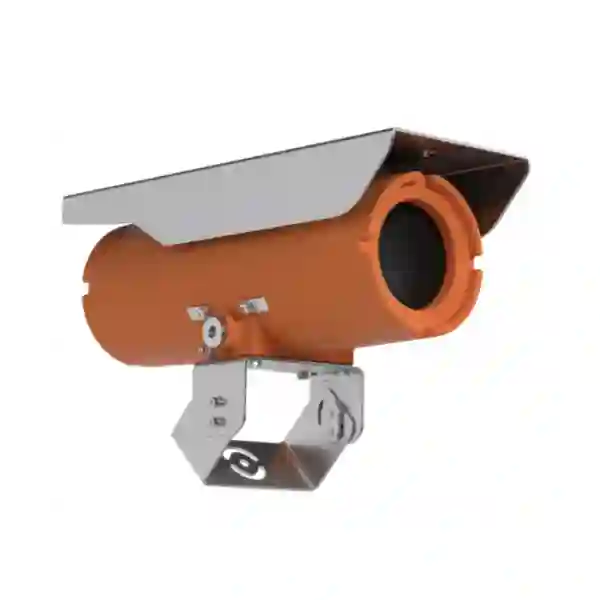
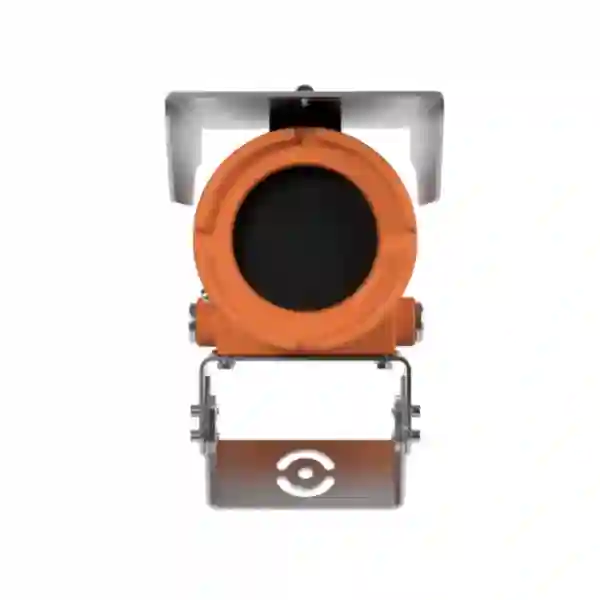
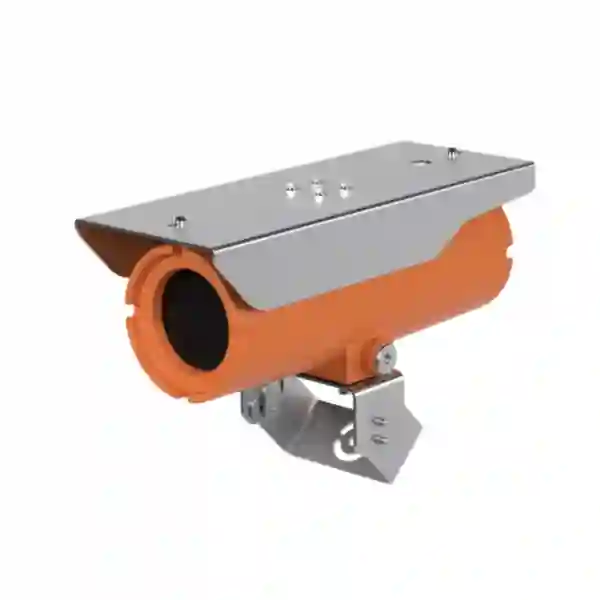
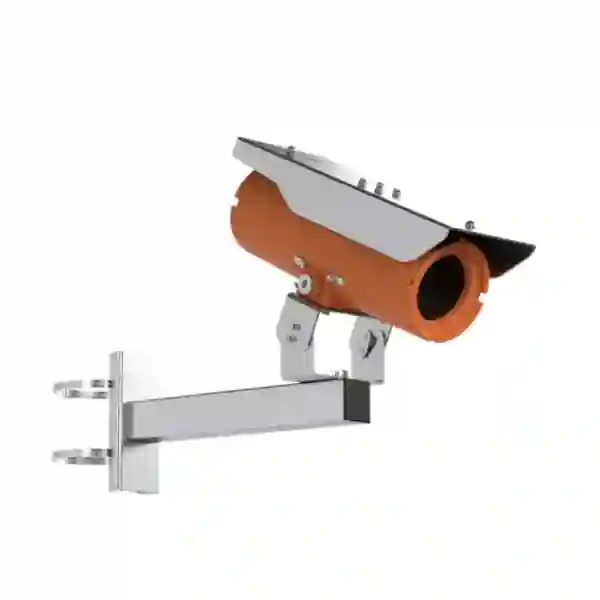
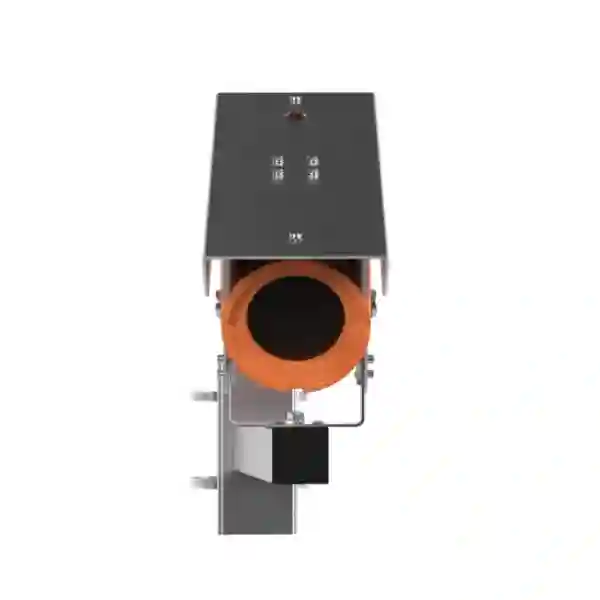
Hanwha TNO-X6323EPT1-Z Explosion-Proof 2MP Zoom Camera
A documented industrial network camera for projects that need hazardous-area equipment selection and remote optical inspection. Designed around a Full HD image, 32× optical zoom and the manufacturer’s identified explosion-protection markings.
Quick buying answer
Choose this model for a fixed-direction industrial observation point where optical zoom is valuable and the equipment markings may be suitable for the classified area after engineering review. Request a quotation with the current certificate, accessory schedule, power design and installation requirements. Do not order solely on the basis of a generic explosion-proof label, an older datasheet, or an unverified assumption about Tanzania stock.
Next step: Request a technical quotation for the exact model and proposed site classification.
Specifications at a glance
| Manufacturer / model | Hanwha Vision / TNO-X6323EPT1-Z |
|---|---|
| Camera type | 2MP network explosion-proof zoom camera |
| Maximum image resolution | 1920 × 1080 (Full HD) |
| Lens / zoom | 4.44–142.6 mm / 32× optical |
| Video compression | H.265, H.264, MJPEG |
| Stream features | Multiple streams; WiseStream II |
| Image processing | Day/night ICR; WDR listed as 120 dB on current product overview; gyro-assisted DIS |
| Media | SD memory support; current overview states up to 256 GB |
| Housing | Powder-coated aluminium |
| Manufacturer-listed hazardous markings | cFMus; Class I/II/III Division 1 groups B–G; ATEX/IECEx gas and dust markings |
| Environmental specification | IP66 / Type 4X in earlier manufacturer datasheet; recheck latest revision |
| Network power | IEEE 802.3bt PoE; up to 90 W with heaters in earlier datasheet |
| Operating temperature | –50°C to +55°C in earlier manufacturer datasheet; verify for ordered variant |
| Accessories to assess | Optional F2XX-WM wall mount and F2XX-PM pole mount |
Who this camera is for
Industrial surveillance becomes difficult when the point of observation is classified for flammable gas, vapour or combustible dust. Ordinary outdoor CCTV may offer waterproofing and high resolution yet lack the construction and documentation required for equipment inside a hazardous zone. This camera addresses that different selection problem: it places a network zoom imaging assembly within a purpose-built enclosure identified by the manufacturer for hazardous locations. Buyers should start with the facility's classification drawing, the equipment schedule and the needed view rather than treating the phrase explosion-proof as a universal permission to install. An operations manager may want an overview of a loading manifold; a safety engineer may need to inspect a specific instrument from a protected position; a security designer may need to send live video back to a control room. In each case the engineering review still determines whether this exact equipment, wiring method and mounting arrangement are suitable. The practical buying question is not simply whether it records video, but whether it helps capture a useful view within a defensible hazardous-area design.
Consider it when a stationary observation point can cover the required target and optical zoom helps operators inspect changing details at different distances. Where the process demands constant physical tracking across a broad angle, ask for a suitably certified pan-tilt system instead. Where safety classification does not require hazardous-location equipment, compare the project benefit against a conventional industrial camera. That comparison can prevent paying for a certification or enclosure that the design does not require.
The value of 32× optical zoom
The 4.44–142.6 mm motorised zoom range is a useful reason to shortlist this model. At the wide end, the published horizontal field of view is approximately 61.8 degrees; at the long end it narrows to roughly 2.19 degrees in the earlier manufacturer datasheet. A wide image helps establish context, while a narrow image can show a selected detail from farther away. This does not guarantee recognition of a number plate, gauge or face at a particular distance; those outcomes depend on pixel density, target size, motion, lighting, haze and camera placement. The lens does not make a distant object physically larger in the scene, but it changes how many available pixels are assigned to that object. A proper layout therefore includes sample imagery or a field-of-view calculation before a project team decides the position and focal length.
Zoom should also be distinguished from panning or tilting. The lens can change magnification within its mounted direction. It does not automatically give an operator mechanical freedom to look behind equipment or around corners. For installations with several separate target directions, multiple fixed views or an appropriately rated moving camera may be necessary. In a hazardous process area, this distinction affects hardware selection long before commissioning.
Full HD imaging and image-detail expectations
The rated output is 1920 by 1080 pixels, commonly described as 2MP or Full HD. This can be a sound fit for process observation, perimeter approaches and equipment oversight when the lens is aimed and sized for the task. Resolution alone is not a promise that every valve tag, dial or small indicator will be readable. At the wide end, a large scene shares the same pixel budget; when zoomed in, a smaller part of the scene receives more detail. A buyer evaluating this model against a higher-resolution fixed lens camera should compare the desired view, target distance, lighting and recording bitrate rather than assuming one headline number settles the choice.
Frame rate is another decision variable. An earlier model datasheet lists up to 60 frames per second for H.264 and H.265 streams under supported configurations. Faster frame rates can be useful where forklifts, vehicles or moving machinery appear in view, but they also affect bandwidth and storage. Confirm current firmware capability and the video management system's supported profiles before treating 60 fps as a final project setting.
Day and night performance without overpromising
The camera includes day/night operation with a removable infrared-cut filter and low-light settings. The earlier technical document lists 0.05 lux in colour and 0.005 lux in black and white under stated shutter and aperture conditions. These are test-condition figures, not guarantees of a clear image under darkness, rain or process smoke. A camera may be able to produce an image in low light while still needing additional illumination for a moving person, readable markings or evidence-quality detail. Shutter choice is particularly important: a long exposure makes a static scene brighter but can blur fast movement.
The published model overview does not establish that the device incorporates an infrared illuminator. Do not specify built-in IR lighting without separate confirmation. Any external illuminator intended for a classified location must itself be selected and installed for that environment, including its supply, cable entries and mounting. The most useful question for the project team is what must remain recognisable at night, and under what lighting and movement conditions. That makes a lighting survey and practical acceptance test more valuable than a generic promise of night vision.
Managing strong contrast and camera movement
Backlit access gates, bright sky above dark pipe racks and reflective metal equipment can create difficult contrast. The current manufacturer product overview lists 120 dB wide dynamic range and gyro-assisted digital image stabilisation. WDR is designed to help retain information across bright and dark regions; stabilisation is designed to lessen the visual impact of modest vibration. Neither eliminates every problem. Strong reflection, a blocked lens, severe movement or rapidly changing illumination can still degrade the picture. Proper orientation, sensible shutter settings and secure mounts remain essential parts of the design.
A legacy datasheet circulated for this model shows a different WDR figure from the current product overview. For quotation and acceptance criteria, use the latest confirmed manufacturer revision for the exact supplied variant rather than combining incompatible figures from different versions. The same principle applies to frame rate, firmware-dependent functions and memory limits. Keeping the specification revision with the project documentation protects both the buyer and installer from a mismatch at delivery.
Understanding the hazardous-area markings
Hanwha Vision identifies this product with cFMus approval for Class I, II and III Division 1 classifications and groups B, C, D, E, F and G, alongside ATEX/IECEx markings including II 2 G Ex db IIB+H2 and II 2 D Ex tb IIIC. These are specific equipment markings, not a blanket statement that every zone or substance is covered. A design professional must map the installation's gas or dust group, zone or division, temperature requirements, ambient limits and required equipment protection level against the exact certificate and instructions. Regional rules may use different classification conventions, and one naming system should not be treated as automatically interchangeable with another.
For a purchase decision, request the certificate references, complete marking plate information, environmental ratings and installation manual for the exact ordered assembly. Review whether every accessory, cable gland, sealing fitting and connection method is approved for the planned configuration. The enclosure supports a hazardous-location design only when the system is installed and maintained as required. Any site approval, import clearance or Tanzanian regulatory acceptance must be confirmed separately; the published manufacturer markings do not establish local regulatory permission by themselves.
Why enclosure materials and finishes matter
The camera uses a powder-coated aluminium enclosure. That construction is distinct from the lighter polymer bodies common in many standard CCTV products. The enclosure is part of the certified equipment configuration and should not be modified or substituted casually. Its finish, fasteners, window, cable entry arrangement and grounding method are all relevant to preserving intended protection. Industrial buyers should assess the surrounding chemical exposure, airborne dust, washdown practice, vibration and possible physical damage. Corrosion resistance must be evaluated against actual site conditions; a material description alone does not guarantee suitability for every chemical or coastal environment.
Cleaning and inspection procedures deserve attention at the proposal stage. Any permitted cleaning agent, protective lens film replacement, surface repair or fastening procedure should come from the manufacturer instructions. If a facility requires frequent aggressive cleaning or has unusual corrosion exposure, request written confirmation of compatibility before purchase. During maintenance, inspection of the window and enclosure condition can be as important to reliable video as checking network availability.
Ingress protection is not explosion protection
An older technical datasheet lists IP66 and Type 4X for the camera assembly. An IP rating addresses ingress of dust and water under defined tests, while hazardous-location approval addresses ignition protection for specified conditions. These are different engineering questions. Neither rating alone answers whether a device may be installed at a particular plant location. A weatherproof outdoor camera could still be unsuitable in an explosive atmosphere; conversely, a hazardous-area certified assembly still requires correct sealing and protection against the site's weather, mechanical and chemical conditions.
Ask the installer to explain how entry glands, cable routes, brackets and protective devices preserve the applicable ratings in the complete installation. Consider water running along a cable, condensation, cleaning jets and exposure from the mounting side. Outdoor suitability is a system outcome, not simply a label on the carton. Where a particular ingress standard or environment condition is an approval requirement, check it against the latest certificate and datasheet rather than relying on a marketing description.
Power-over-Ethernet planning for hazardous locations
The earlier manufacturer datasheet specifies IEEE 802.3bt power over Ethernet and a maximum of 90 W with heaters active. This means project teams should not assume that a basic low-power PoE port can support the complete camera assembly. The equipment schedule should identify the approved source and actual delivered budget, cable run, conductor arrangement, network topology and any surge protection. A PoE label does not settle whether a chosen switch or injector has enough capacity under the worst allowed environmental conditions. Verify the latest electrical requirements against the supplied hardware and the manufacturer's installation instructions.
Electrical design inside hazardous areas carries requirements beyond Ethernet functionality. The appropriate cable and entry arrangements, bonding, separation, sealing and protective devices must be selected by qualified personnel using the applicable site classification and electrical rules. A convenient existing data outlet should never be treated as proof of installation suitability. Obtain a wiring drawing and a confirmed power budget as part of the quotation so the camera, switching equipment and hazardous-area connection methods are assessed together.
Temperature and the Tanzanian site environment
A previously published datasheet lists an operating range from minus 50 degrees Celsius to plus 55 degrees Celsius for the PoE configuration. These values are manufacturer equipment limits, not a prediction of temperature at a specific Tanzanian project. The temperature at the camera can exceed nearby ambient readings because of sun exposure, proximity to heated plant and restricted airflow. Enclosure temperature constraints, permissible environmental conditions and surface-temperature implications may also be relevant under the hazardous-area certificate. Confirm all these factors from the latest documentation before a mounting point is signed off.
For a facility in Tanzania, survey shade, dust, rain exposure, airborne salt or chemical vapours, vibration and available maintenance access rather than assuming a generic tropical specification fits. Include a local risk assessment where the device faces a hot pipe, tank roof or exposed sunlit wall. If conditions fall outside documented limits, select a different mounting position or engineered solution instead of trying to rely on unverified margins.
Video codecs and stream design
H.265, H.264 and MJPEG are manufacturer-listed encoding choices for this camera, with multi-stream operation and WiseStream II. Different codecs provide tradeoffs in storage efficiency, processing demand and compatibility with recorders or video-management platforms. A project team should decide which streams operators view live, which ones are recorded, and whether remote or mobile users need lower-resolution profiles. A camera supporting several streams does not mean every viewing client can display every codec or combination at its maximum setting.
Plan a simple profile schedule: high-detail recording for the most important scene, a practical live stream for control-room displays, and a lower-bandwidth view when communications are constrained. Measure real movement and lighting changes because these affect compressed video bitrate. Verify retention requirements and network capacity against the chosen frames per second, picture settings and recorder policy. Avoid choosing an aggressive low bitrate merely to make a storage quotation look attractive when the mission depends on seeing fine detail.
Storage and event recording
The current manufacturer overview lists SD memory slots and a maximum 256 GB figure. A circulated older specification document refers to two SD/SDHC/SDXC slots and a higher aggregate number. Because that presentation is not fully consistent across versions, confirm slot count, supported card type, usable limit and firmware behaviour against the current manual for the delivered camera. Memory cards may support edge recording or local resilience, but they should not be treated as a complete replacement for a properly designed evidence and retention policy.
Storage requirements depend on motion, frame rate, compression, image complexity and continuous versus triggered capture. Consider what must happen during loss of network connectivity: should footage be stored locally, how is it retrieved, and what happens when the medium fills? Cards also have endurance and environmental considerations. Request a validated storage estimate and recorder integration test before procurement, especially where recorded video may be required for incident review or operational investigations.
Video management and interoperability
An earlier manufacturer sheet lists ONVIF Profile S/G, SUNAPI and support for a number of central management workflows. This creates integration options, but those labels should not be interpreted as automatic support for every feature in every third-party recorder. Video transport, lens control, alarms, metadata, event recording and firmware management may each require a separate compatibility check. The practical approach is to identify the intended video management system, its version and the actual features needed, then confirm them in an integration matrix.
Ask for a commissioning demonstration that includes viewing the stream, changing the optical zoom, receiving required events and recovering from a network interruption. Where a buyer has an existing mixed-brand estate, confirm ONVIF functions at the relevant profile and firmware levels rather than trusting a generic statement that the camera is ONVIF-compatible. The goal is to avoid delivering a technically valid image while leaving operators without the controls or alarms they expected.
Network architecture and cybersecurity
A hazardous-area IP camera still belongs on an industrial network and requires a normal cybersecurity design. Segment video equipment appropriately, control administration rights, limit unnecessary external exposure, and use supported secure management and time synchronisation settings. The earlier document lists HTTPS authentication, network filters and access logging among available functions. Current firmware, patch policy and customer security requirements must be verified before installation. A camera should not be exposed directly to the public internet simply because an operator wants remote viewing.
Use a dedicated administration process for credentials, changes and backup configuration. Record switch ports, IP addresses, device versions and responsible maintainers in the as-built file. Remote access is better designed through managed network controls or the approved security architecture than through ad hoc port forwarding. For an industrial site, coordinate these decisions with both operational technology personnel and corporate IT because maintenance windows and change control may differ from a normal office CCTV deployment.
Analytics as operator assistance
Historical documentation for the model lists functions including motion detection, tampering, virtual line, defocus and other video analytics. These can help operators prioritise events or investigate an unusual scene, but actual availability can depend on camera configuration and firmware. Analytics performance also depends on perspective, scene motion, weather, lighting and background activity. It should not be described as a fail-safe industrial process sensor, a fire detector or a substitute for a safety instrumented system.
Define the desired event in plain language before enabling a rule. For example, is the goal to notice someone entering a restricted access path, or to detect that the camera view is obscured? Then agree on false-alarm tolerance, recording actions and operator response. Test the rule under realistic day, night and maintenance conditions. That provides a meaningful acceptance criterion without promising impossible detection accuracy or assuming every documented analytics feature is enabled on the supplied variant.
Fixed zoom versus motorised PTZ
A common product-selection mistake is to associate the word zoom with a mechanically moving pan-tilt-zoom head. This model is sold as an explosion-proof zoom camera; its optical zoom changes the field of view while the housing remains fixed in the selected direction. A PTZ product with certified motors can reorient its camera, but it introduces different coverage, mechanical, maintenance and potentially price considerations. Digital pan/tilt functions, where supported, operate within the captured image and do not make the physical camera look behind an obstruction.
For a pump skid with one clear inspection direction, fixed zoom can be a straightforward choice. For a large storage yard where operators must rotate between opposite directions, another architecture may be more appropriate. Work out whether each critical event must be seen simultaneously: a single moving camera cannot necessarily record a close-up and a wide overview at the same time. The right design follows the number of critical views, not the attractiveness of a zoom number on a datasheet.
Mounting hardware and mechanical planning
Hanwha identifies F2XX-WM and F2XX-PM as optional wall and pole mounting accessories for this model. A manufacturer-issued earlier document also illustrates a general mount, protection cable and protective lens film associated with the camera package. Confirm the precise supplied kit and optional items in the final quotation rather than assuming every illustrated accessory comes with every regional order. Weight, structural loading, reach, maintenance clearance and viewing obstructions should inform bracket selection, especially when the camera is mounted above machinery or an access route.
A mechanical design should address vibration, corrosive exposure, cable strain, secure fasteners, grounding or bonding requirements and secondary retention as directed by the current installation manual. Pole mounts must match the actual pole geometry and site loads. Wall mounts require an engineered fixing substrate, not merely a dimensionally compatible plate. Never modify a certified enclosure or drill additional holes to make a bracket fit without written confirmation that the required protection and approval remain valid.
Cable entry and grounding
A robust industrial installation routes cables to protect them from abrasion, impacts, heat and unwanted water paths. In a hazardous location, cable entry and sealing details may be essential to the certified method of protection. The design should show the exact glands, fittings, approved cable type, any conduit seals, bonding and route into the safe network zone. These details must come from the current manufacturer instructions and the applicable installation code, not from a generic CCTV diagram found online.
The product drawings identify a grounding lug and secondary retention feature, but the project should not guess how those are used. Ask the qualified contractor to provide an installation method statement, identified components and inspection plan. The installation is only ready for handover after the equipment marking, wiring, terminations, fastening and any required inspection records have been checked against the planned hazardous-area scheme.
Positioning for useful process images
Determine the viewing objective before choosing mounting height. A camera directed at a tank top may provide useful context but not a readable level indicator; a very narrow gauge close-up may miss the surrounding activity. Create a view schedule with each target, the distance, desired detail and lighting condition. Use the optical zoom range to explore practical framing, and retain a separate overview camera if understanding movement across the entire scene is important. Ask whether steam, exhaust, dust clouds or structures are likely to block the image during normal operation.
Camera location also affects maintenance access and safety. A position with a perfect field of view but no approved means of access can become costly to service. Where a process may need shutdown or a special permit to access equipment, include those constraints in the layout. Review the view schedule with operations personnel because they know when vehicles, cranes, valves or temporary plant obstruct sight lines. This is a better way to confirm camera value than relying only on an office-based drawing.
What to specify for a control room
Control-room staff normally need an understandable picture, stable viewing layouts and a predictable response to alarms. Define the primary live stream, acceptable delay, operator permissions and preferred zoom control. If the camera is part of a larger video wall, account for display scaling; a 1080p feed can look very different on a single monitor from a small tile among dozens of cameras. Set the required recording quality separately from the viewing quality so a lower-bandwidth display does not inadvertently become the evidence archive.
Document a naming convention that matches site equipment or zones rather than leaving an unhelpful factory device name. Check whether the existing VMS can save and recall lens settings, display alarms and export footage as the operations team expects. Train operators on what zoom can and cannot do, and record a normal wide-view position if that suits the site. The goal is a usable monitoring tool, not merely a stream that passes a technical connectivity test.
Practical applications in industrial facilities
Potential use cases include observing process areas, equipment approaches, selected tank or pipe assemblies, restricted access corridors and hazardous-location infrastructure where a documented camera assembly is required. These are examples for design consideration, not a claim that any particular industrial site or hazardous material automatically falls within the camera's approval. At a loading interface, for example, fixed zoom might support a control-room view of equipment and nearby movement. At a pipe rack, it could help personnel inspect a chosen segment from a safer operating position.
Suitability is driven by the classification, target, required evidence detail and actual access conditions. A highly reflective metallic surface can be difficult under direct light, while steam or airborne dust may hide a target regardless of camera resolution. A buyer should create a shortlist of site-specific scenes and confirm them with an integrator before deciding quantity or mounting positions. In Tanzania, the same principle applies across industries: the site survey determines the practical configuration, not a generic countrywide application claim.
Approach to project budgeting
An explosion-proof camera quotation is not just the cost of the camera body. The total system may include an approved mounting assembly, rated cable entry hardware, appropriate PoE power, switching and network equipment, surge protection, recording licenses, retention storage, commissioning, inspection and documentation. The installer may also need to coordinate permit procedures and equipment access with the operating facility. Price comparisons should therefore use a common scope of supply, stated exclusions and the same installation assumptions.
No verified Tanzania selling price, stock position, delivery window or warranty for this listing has been supplied. Request those commercial details in a formal quotation instead of relying on pricing displayed for another territory. Ask bidders to identify model variant, certificate revision, accessories, commissioning deliverables and any support commitments. That makes technical and commercial offers comparable without suggesting that a reseller price from elsewhere is a local offer.
How to compare alternative cameras
A meaningful comparison starts with the classification and the images the buyer needs. Compare approved gas or dust groups, temperature limits, documentation, lens coverage, real camera motion, network power, enclosure material and environmental suitability. Then compare video resolution, low-light expectations, storage integration and long-term support. A higher megapixel camera might offer more wide-scene detail while a long optical zoom camera can help inspect a narrow distant target. The correct answer depends on which view must be recorded and under what conditions.
Do not compare marketing phrases like rugged, industrial or explosion-proof without asking what each one means in the relevant certificate. Confirm whether a product is a fixed camera, zoom camera, PTZ head or multi-sensor unit. Ask the vendor to make a compliance matrix against the site's specification, showing confirmed matches, required options and unresolved gaps. If an alternative better satisfies an important requirement, select it even if this model appears to have more features on paper.
Documentation to request before purchase
Before a purchase order, request the latest datasheet and installation manual for the exact part number, the hazardous-location certificate and marking details, an environmental specification, a dimensional drawing and an accessory list. The supplier should also confirm current firmware and supported VMS functions if those are central to the design. If the project needs a particular national approval or inspection record, make it a separate named requirement in the request for quotation. A manufacturer's international product feature list should not be interpreted as evidence that every country-specific administrative requirement has been satisfied.
A good submittal pack tells the consultant which assertion comes from which revision. It resolves the published variation in WDR and SD storage presentation before these become acceptance criteria. Include a cable and network schematic, power budget, mounting drawing, device schedule and testing plan. This removes ambiguity when the delivered equipment reaches site and gives the facility's engineering and safety personnel a practical basis for approval.
Commissioning and acceptance tests
Commissioning should verify both camera performance and site compliance. On the video side, confirm optical zoom endpoints, image orientation, focus, recording profiles, time synchronisation, alarms and access permissions. Record test views under the conditions that matter to the operator, including night or backlit scenes when practical. On the network side, check power stability, device recovery after interruption, switch budget and expected bandwidth. Document firmware version and the approved configuration at handover.
Hazardous-area installation verification is a separate professional activity. Appropriate personnel should check equipment marking, protection method, entry hardware, bonding, installation workmanship and any required records against applicable rules and the manufacturer's instructions. The operational acceptance certificate should not be mistaken for hazardous-area installation approval. Assign responsibilities for these two strands in advance so that neither is overlooked when commissioning schedules are tight.
Maintenance and long-term operation
A camera in an industrial facility can fail to provide usable video even while the network reports it online. Dust on the window, a loose mount, a changed lens position, condensation and an obstructed view can gradually undermine the picture. Build visual inspection and cleaning into the site's maintenance schedule using the approved procedure for the enclosure. Review image quality after process changes, new structures or relocation of lighting. Keep records of firmware, configuration changes and the replacement of any permitted accessory components.
Hazardous-area maintenance should follow the facility's safe-work controls and the equipment certification requirements. Do not open, modify or service the housing casually in an active classified location. A change to a seal, fastening method or cable entry may affect the original protection design. Where repairs are needed, involve authorised personnel and consult the appropriate documentation. Clear spare-parts and support arrangements reduce operational risk without relying on an unverified promise of local service coverage.
Why a survey is worth doing before quotation
A concise site survey can prevent the most expensive mistakes. It should record the exact scene to be observed, camera-to-target distances, classification and gas or dust groups, mounting structure, light sources, environmental exposure, cable route, switching location and maintenance access. It should also identify existing VMS infrastructure and the decision-makers who will review the design. For a new plant, a reviewed drawing may be the starting point; for an existing facility, field measurements and operator interviews are usually valuable.
A survey does not need to become an open-ended exercise. It can result in a view schedule, a few representative images, a network and power outline, and a list of documentation required for approval. With those inputs, the supplier can provide a much more useful technical offer than a camera-only price. If site access is not possible, provide current engineering drawings and clearly flag the assumptions that remain unverified.
Tanzania procurement and project coordination
For a Tanzanian project, use the facility's engineering specification as the controlling document and confirm how international hazardous-area markings will be assessed within the applicable local approval and installation framework. Coordinate between the security integrator, electrical engineer, site HSE team and network administrators early. A camera purchase that appears straightforward to procurement can become difficult if a connection method, accessory or certificate is rejected at technical review. Written confirmation of these issues before ordering is preferable to resolving them on site.
FourTeck Tanzania can be approached for a product enquiry, but this page does not assert local inventory, installation coverage, an exclusive manufacturer relationship, delivery lead times or an approved service location. State the actual project region, required quantity, classification and commissioning scope when requesting a quotation. These details help define what has to be checked, and they avoid implying that the same commercial or engineering arrangement applies to every site in the country.
What to include in your enquiry
A useful technical enquiry names the exact camera model and quantity, states whether the location is gas- or dust-classified, and attaches a relevant drawing or marked-up photo when sharing is permitted. Describe the required view, approximate target distance, minimum lighting, recording retention, VMS brand and network constraints. Tell the supplier whether wall or pole mounting is envisaged. If the team has a certified equipment schedule, share the relevant marking and ambient requirements rather than requesting only an “explosion-proof camera.”
Ask for an itemised quotation that identifies any exclusions and dependencies: power hardware, approved cable entries, mounting bracket, spare accessories, integration testing, delivery, documentation and commissioning. Request the latest certificate details and manual for review. Do not share confidential plant drawings in public web forms; use an approved business communication channel. The objective is to determine fit and price against a defined requirement, not to turn a product brochure into an unqualified site approval.
Frequently asked questions
Is the TNO-X6323EPT1-Z an explosion-proof CCTV camera?
Hanwha Vision markets the model as an explosion-proof network zoom camera and lists cFMus and ATEX/IECEx hazardous-area markings. Suitability depends on matching the exact marking, certificate conditions and installation method to the facility classification. A qualified engineer should make that determination; a sales description alone is insufficient.
What video resolution does the camera provide?
The published resolution is 1920 × 1080, or Full HD 2MP. Whether that is sufficient for an application depends on the scene width, distance, optical zoom position, lighting, motion and recording quality. Define the target detail and confirm it with a view design or site acceptance image.
Does it support 32× optical zoom?
Yes. The manufacturer lists a 4.44–142.6 mm lens with 32× optical zoom. The optical zoom narrows or widens the observed view; it does not mechanically rotate the enclosure toward a different direction. Ask for a pan-tilt model if remote physical repositioning is part of the requirement.
Does this camera physically pan and tilt?
It is described as a network zoom camera, not as a motorised physical pan-tilt head. Optical zoom and any supported digital PTZ features should not be confused with mechanical movement. A fixed mounting direction must be planned to cover the intended scene.
Does it work in low light?
Manufacturer documents list day/night operation with an infrared-cut filter and low-light capability. Actual footage depends on exposure, available light and motion. The current product overview does not establish an integrated IR illuminator, so plan supplemental lighting separately where necessary and ensure any accessory suits the hazardous area.
Which video compression formats are supported?
H.265, H.264 and MJPEG are listed by the manufacturer. WiseStream II and multiple streaming are also published capabilities. Confirm recorder support, chosen profiles and real bandwidth under the intended scene conditions, particularly if several control-room and recording streams will run together.
What hazardous areas can it be used in?
The manufacturer identifies Class I, II and III Division 1 groups B through G and ATEX/IECEx gas and dust markings. These markings must be interpreted against the exact certificate and the site classification. They do not mean that the product is automatically approved for every explosive atmosphere or every jurisdiction.
What power supply is required?
An earlier model datasheet specifies IEEE 802.3bt PoE and up to 90 W with heaters operating. Do not assume a standard low-power PoE switch port is sufficient. Confirm the current electrical manual, complete power budget and approved hazardous-area connection design for the supplied variant.
Can it record to an SD card?
The current Hanwha Vision overview identifies SD memory support up to 256 GB. Older technical literature describes slots and capacity differently, so confirm the supported card arrangement and firmware for the exact shipment. Size the principal recording and retention system independently of edge storage.
Which mounting accessories can be considered?
Hanwha Vision lists optional F2XX-WM wall mounting and F2XX-PM pole mounting accessories. The final accessory selection depends on structure, loads, installation method and the certified configuration. Check what comes in the supplied kit and what must be added to the quotation.
Is the listed hazardous-area certification a Tanzania approval?
Not by itself. Manufacturer-listed international approvals are relevant evidence for engineering review, but the project must independently establish the applicable local installation, inspection and regulatory requirements. This page makes no claim that an automatic Tanzania-specific approval has been granted.
Is price or stock in Tanzania confirmed?
No verified local price, stock quantity, delivery date or warranty terms are available from the information used for this content. Request a written quotation identifying the exact model, accessories, commercial terms and supporting technical documents for the proposed project.
What should I send to request a quote?
Share model and quantity, site classification, gas or dust group if known, expected ambient conditions, target distance, mounting preference, VMS requirements and desired commissioning scope. A marked-up site drawing or equipment schedule, sent through an approved private channel, will help produce a more accurate technical proposal.
Can it replace a safety or fire detection system?
No. Video and camera analytics may help an operator observe a scene, but this model must not be presented as a replacement for certified gas detection, fire detection or safety instrumented functions. Such systems require their own design, approvals and operating procedures.
Why should a facility verify the latest datasheet?
Manufacturer overview pages and older technical sheets can show different figures for certain features, including wide dynamic range and local memory. The correct purchase specification is the latest applicable revision for the exact supplied assembly and firmware, backed by the corresponding certificate and manual.
Request a hazardous-area camera quotation
For a Tanzania industrial surveillance requirement, enquire about Hanwha TNO-X6323EPT1-Z with your site classification, required camera views, mounting preference and recording system details. Ask for the latest technical documents, suitable accessories, system power plan, commercial terms and confirmed supply conditions. Product selection remains subject to project engineering review.
Contact FourTeck Tanzania to request a project-specific technical and commercial offer.




Reviews
There are no reviews yet.