
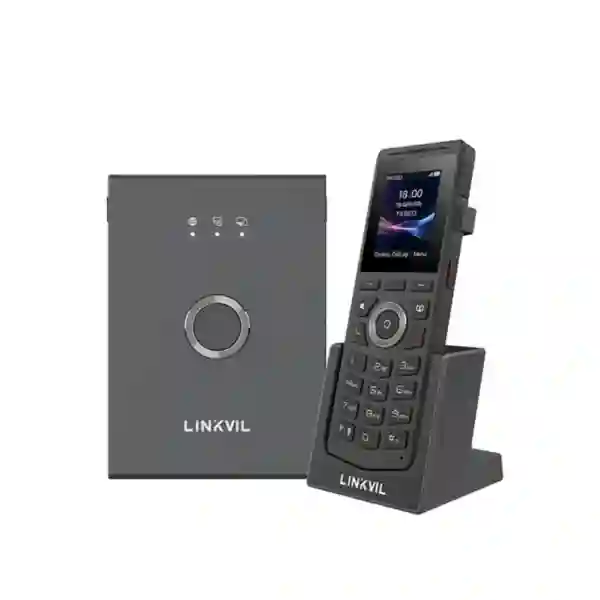
LINKVIL W610D DECT Handset Tanzania
The LINKVIL W610D DECT Handset is designed for organizations that want the mobility of a cordless business phone without giving up the familiar controls, voice quality and manageability expected from a professional communications endpoint. Built around DECT wireless technology, the W610D is well suited to staff who move through offices, hotels, warehouses, retail floors, clinics, residential facilities and other operational spaces where a fixed desk phone can limit productivity.
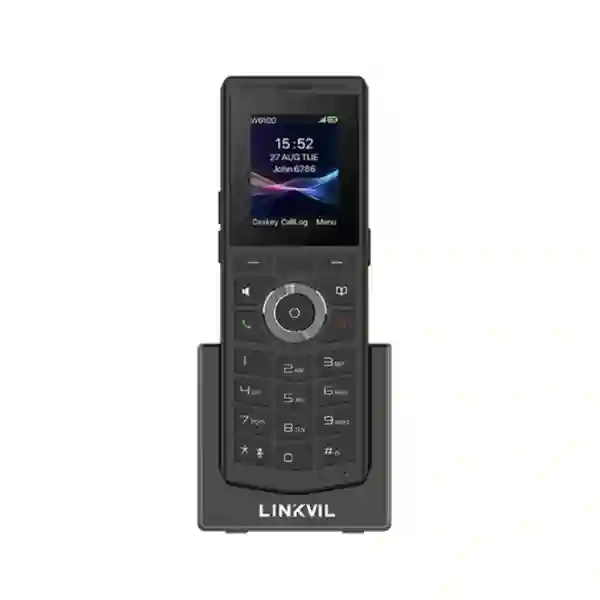
For buyers in Tanzania, the W610D is especially relevant when a project requires a dedicated business handset with a compact color screen, physical keypad, headset flexibility, vibration alerts and practical battery endurance. The handset includes a 2-inch 240×320 color display, Bluetooth 5.0, a 3.5 mm headset connector, USB-C charging, HD voice functions, a configurable side key and a rechargeable 1900mAh battery rated by the manufacturer for up to 8 hours of talk time and up to 160 hours of standby time. It is designed to work with the Fanvil/LINKVIL DECT ecosystem, including the W710D base used in the W710P system.
Portable DECT mobility
Give employees freedom to move while staying reachable on a dedicated business handset rather than relying on personal mobile phones for every internal or customer call.
HD voice and headset choice
The W610D supports HD voice functions and allows headset connectivity through Bluetooth or a standard 3.5 mm interface, giving users a choice of hands-free working styles.
Business-ready battery
A 1900mAh rechargeable battery is rated for up to 8 hours of talk time and up to 160 hours of standby, supporting day-to-day mobile roles when charging is planned appropriately.
LINKVIL W610D overview and verified features
The W610D combines the practical attributes of a cordless handset with features normally expected in a managed business telephony environment. Its 2-inch 240×320 color screen is sized for quick menu navigation, caller information and access to handset functions without making the unit bulky. The physical keypad and side key keep common actions tactile, which can matter for reception staff, warehouse operators, supervisors and hospitality teams who need to act quickly while walking or handling other tasks.
Manufacturer documentation lists support for four SIP lines on the handset, a local contact capacity of up to 1,000 entries, remote XML/LDAP phonebook support, call history, voicemail indication, do-not-disturb, call forwarding, call waiting, speed dial, intercom and local 6-way conferencing functions. The exact availability of SIP services, directories and calling features depends on the connected DECT base, PBX or SIP platform and the way the system is provisioned. For procurement, it is therefore important to evaluate the handset as one component of the complete voice solution rather than as a standalone radio device.
Durability is another practical consideration. Fanvil lists a drop height of 1.8 meters for the W610D and supplies a belt clip for mobile use. Incoming vibration alerts help staff notice calls in noisy or busy environments. The handset can be charged through the desktop charging base or its USB-C charging interface, while a 3.5 mm headset jack and Bluetooth 5.0 broaden accessory choices. These details are particularly useful for teams that need cordless voice but prefer a purpose-built business endpoint with predictable controls, rather than depending on smartphones and consumer messaging applications.
| Specification | Verified detail |
|---|---|
| Display | 2.0-inch 240×320 color LCD |
| Wireless technology | DECT; Bluetooth 5.0 for compatible accessories |
| Battery | 1900mAh rechargeable lithium battery |
| Battery endurance | Up to 8 hours talk time; up to 160 hours standby |
| Headset options | Bluetooth or 3.5 mm headset jack |
| Charging | Desktop charging base and USB-C interface |
| Drop rating | Manufacturer states drop-safe from 1.8 meters |
| Voice | HD voice with noise-reduction related audio processing |
Compatibility and deployment planning
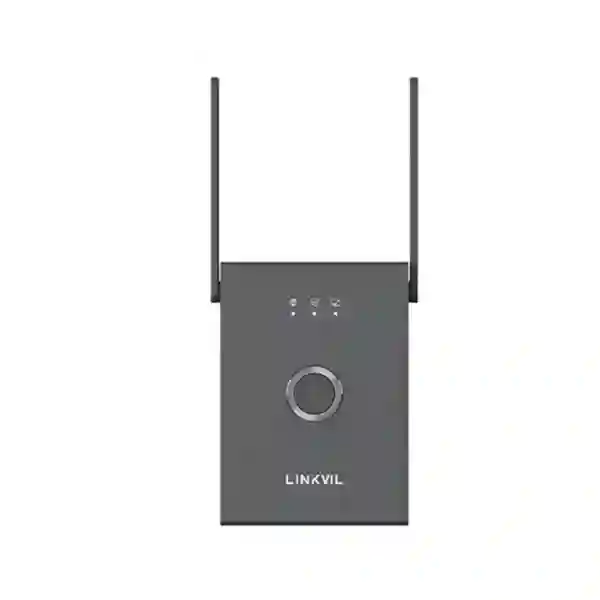
The W610D is a DECT handset and should be planned together with a compatible Fanvil/LINKVIL DECT base. Fanvil’s W710P package combines the W610D handset with the W710D base. That system supports multiple handsets and simultaneous calls, making it suitable for expanding a cordless deployment beyond a single user. Before ordering, identify the number of mobile users, the number of concurrent calls expected at busy times, indoor layout, outdoor requirements, PBX or SIP platform, VLAN and network policy requirements, power availability for the base and the preferred headset type.
Wireless range should always be treated as an environmental planning value rather than a guarantee. The W710P documentation cites up to 50 meters indoors and up to 300 meters outdoors for the system, but actual range is influenced by walls, reinforced concrete, metal shelving, lift shafts, floor separation, radio interference and placement of the DECT base. Warehouses and hotels can be especially sensitive to these factors. A site assessment and sensible base placement can reduce dead zones and improve roaming expectations.
LINKVIL W610D DECT Handset Tanzania
Organizations searching for the LINKVIL W610D DECT Handset in Tanzania are typically looking for a mobile extension solution that remains tied to a controlled business telephony platform. This makes the W610D relevant to companies that want staff to move away from desks while preserving business numbers, internal extension workflows and centralized voice administration. Typical use cases include front-desk and back-office coordination, warehouse supervision, retail floor assistance, hospitality operations, maintenance teams, clinic support staff and service environments where staff need to remain reachable while moving between rooms or operational zones.
For Tanzania deployments, start by separating handset quantity from base-station design. The W610D itself is the user endpoint, while the compatible DECT base connects the cordless environment to the wider IP telephony system. Procurement teams should document the number of intended handsets, busy-hour call concurrency, PBX type, SIP registration method, network segmentation, PoE availability for associated infrastructure and any directory or provisioning requirements. This avoids a common purchasing mistake in which handsets are ordered before the required base capacity and call-path design are confirmed.
The W610D’s combination of HD voice, vibration alert, belt clip, Bluetooth 5.0, 3.5 mm headset port and physical controls can be valuable in Tanzanian workplaces where mobile staff need a purpose-built communication device. The 1900mAh battery and the manufacturer’s stated endurance of up to 8 hours talk time and 160 hours standby can cover many normal shifts, but charging practice should still be included in the operating plan. For larger teams, spare charging positions and handset labeling can simplify shift changes and asset control.
FourTeck Tanzania can help buyers organize a quotation around the complete requirement rather than only the handset. Useful information to provide includes the number of users, existing PBX or hosted SIP service, office or site dimensions, floor count, building materials, expected call volume, headset preference and whether the project is a new deployment or an expansion of an existing Fanvil/LINKVIL installation. For broader technology requirements, visit the FourTeck Tanzania technology portal to review related business IT and communications options.
LINKVIL W610D DECT Handset Dar es Salaam
In Dar es Salaam, the LINKVIL W610D can serve businesses that need cordless mobility across offices, hotels, distribution operations, retail environments and service facilities. The city’s mix of multi-floor commercial buildings, warehouses, hospitality properties and customer-facing operations creates several situations where employees need to answer calls while away from a desk. A DECT handset can provide a more controlled alternative to personal smartphones when the organization wants internal extensions, managed contact lists, predictable call handling and a dedicated device for work.
Project planning should focus first on radio coverage and call capacity. Buildings with reinforced concrete, lifts, metal partitions or dense shelving can reduce practical DECT coverage. A warehouse near an industrial or logistics zone may have very different propagation characteristics from an open-plan office or hotel corridor. The best quotation request therefore includes basic floor plans, expected user movement and a list of areas where reliable calling is essential. Where possible, a test placement or site survey should be used to confirm assumptions before a larger rollout.
The W610D offers features that suit staff who need to move continuously: incoming-call vibration, a belt clip, a configurable side key, Bluetooth 5.0 and a 3.5 mm headset connection. In hospitality, for example, supervisors can remain reachable while moving between reception, housekeeping and service areas. In distribution or retail, floor staff can receive calls without returning to a fixed telephone. The physical keypad can also be simpler for teams that prefer conventional telephone controls rather than touchscreen-only devices.
Dar es Salaam buyers should also check PBX compatibility, SIP account design, directory requirements and device provisioning before ordering. If the deployment will use the W710D base, confirm how many handsets and concurrent calls are needed and how the base will connect to the network. For projects that extend beyond Tanzania, FourTeck’s regional resources such as FourTeck Africa can help frame wider multi-country requirements without assuming identical infrastructure or regulatory conditions in every location.
LINKVIL W610D DECT Handset Mwanza
For Mwanza organizations, the LINKVIL W610D offers a practical cordless endpoint for teams that need to stay connected while moving through offices, service facilities, hospitality properties, retail floors or storage areas. Mobile voice requirements often arise when one member of staff covers several zones and cannot remain near a desk phone. A dedicated DECT handset helps keep the business communication workflow separate from personal mobile service and can integrate with a SIP-based phone system through the appropriate DECT base.
A useful procurement approach is to map the daily movement of each user role. Receptionists may need to hand off calls to supervisors who move through the premises; warehouse staff may need to receive short operational calls while checking inventory; maintenance personnel may need to remain reachable across multiple rooms or buildings. Once those movement patterns are understood, the number of handsets, base placement and coverage priorities become easier to estimate. Physical obstacles should be considered because radio range changes substantially with construction materials and building layout.
The W610D’s vibration alert, belt clip and headset options make it suitable for roles where the handset must remain accessible without constantly being held. Bluetooth 5.0 allows compatible wireless headsets, while the 3.5 mm port supports a wired option. The 2-inch color display provides a compact interface for caller information and menus. The manufacturer’s stated battery endurance of up to 8 hours talk time and 160 hours standby is useful for shift planning, but organizations should still establish charging routines so devices are ready at shift changes.
When requesting a Mwanza quotation, specify whether the handset is for a new system, an expansion or replacement. Include the installed PBX brand and version where known, the current Fanvil/LINKVIL base model if one is already present, the number of simultaneous calls required and whether centralized directories or automatic provisioning are expected. These details help avoid ordering an endpoint without the surrounding infrastructure needed to use it effectively.
LINKVIL W610D DECT Handset Arusha
Arusha businesses in hospitality, tourism support, professional services, retail and operations can use the LINKVIL W610D where employees need to move between customer areas, offices and service spaces while remaining connected to the organization’s voice system. The handset is particularly useful when the organization prefers dedicated business devices instead of asking staff to use personal mobile numbers for internal communications. Through a compatible DECT base and SIP platform, the W610D can become an extension of the company’s existing call-handling environment.
Hospitality environments are a good example of why layout matters. Guest rooms, stairwells, service corridors, thick walls and separate buildings can all affect coverage. A quoted outdoor or indoor maximum should never be treated as a guarantee across an actual property. The W710P system documentation lists up to 50 meters indoor and 300 meters outdoor range, but real installations require sensible placement and validation. Buyers should identify critical zones such as reception, back office, maintenance areas and guest-service spaces before finalizing quantity or topology.
The handset itself provides a balanced set of mobile work features. The W610D supports incoming-call vibration, Bluetooth 5.0, a 3.5 mm headset connection, HD voice and a configurable side button that can be adapted for quick access functions. The 1.8-meter stated drop tolerance adds reassurance for staff who carry the phone throughout the day. USB-C charging is convenient when a compatible power source is available, while the desktop charging base provides a predictable resting point between shifts.
For Arusha procurement, define whether staff need individual named handsets or shared shift handsets. Shared devices may require a clearer process for charging, handover, cleaning and assignment. Named devices may benefit from individualized directories or speed-dial programming. A complete quotation should include handset quantity, base capacity, expected call concurrency, network readiness, PBX details and any required headset accessories so the solution can be evaluated as a working system rather than a single hardware purchase.
LINKVIL W610D DECT Handset Dodoma
In Dodoma, the LINKVIL W610D can support administrative offices, educational facilities, service organizations, hotels, healthcare-related environments and growing businesses that want cordless voice mobility within a managed telephony solution. The main advantage is not simply that the handset is wireless; it is that mobile staff can remain part of the business calling environment with defined extensions, call handling rules and centralized administration through the connected DECT and SIP infrastructure.
Before purchasing, organizations should document how many users need mobility at the same time. A team may own ten handsets but only require a smaller number of concurrent external calls, while another site may need most mobile users available simultaneously. These requirements influence base capacity and PBX configuration. If the deployment is based on Fanvil’s W710D/W710P architecture, confirm the number of supported terminals and calls against the current project requirements rather than assuming every system scales without limits.
The W610D gives users a compact 2-inch color display, physical keypad, vibration alert, side key, Bluetooth support and a 3.5 mm headset jack. These features can be useful for staff who move between offices or service points and need fast access to calls without unlocking a smartphone or opening an application. The belt clip provides a simple carrying option, while USB-C and the charging base make it possible to establish a regular charging station for teams.
A Dodoma buyer should include network information in the procurement process even though the handset itself communicates over DECT. The base still forms part of an IP environment and may require suitable switching, VLAN configuration, IP addressing, PBX reachability and power arrangements. Providing these details at quotation stage can reduce deployment surprises and helps ensure the handset is purchased with the correct supporting infrastructure.
LINKVIL W610D DECT Handset UAE
For UAE deployments, the LINKVIL W610D suits organizations that need mobile voice communication across offices, hotels, warehouses, retail environments and operational facilities. Buyers should pay special attention to the regional DECT frequency variant and product compliance appropriate for the destination market. Fanvil publishes multiple DECT frequency bands for different regions, so procurement should use the correct model and regulatory variant rather than assuming that a handset sourced for one market is automatically suitable for another.
The handset’s practical features fit many mobile roles: Bluetooth 5.0 and a 3.5 mm port provide headset flexibility; vibration alerts help in busy environments; the belt clip supports hands-free carrying; and the 1.8-meter drop specification is useful where phones may be exposed to frequent handling. Up to 8 hours of manufacturer-rated talk time can cover many business shifts, but users with intensive calling patterns should have an explicit charging routine.
For multi-site UAE organizations, standardization can simplify support. Using the same handset family across multiple branches can make training, accessories, charging and replacement procedures more consistent, provided the PBX and DECT base architecture has been validated. Organizations should still review each site individually because office density, wall construction and expected concurrent calls can differ significantly.
FourTeck’s UAE technology presence at FourTeck UAE can be useful for projects centered in the Emirates, while Tanzania-focused procurement can continue through FourTeck Tanzania. When preparing a cross-border requirement, include quantities by country, destination, existing PBX platform, requested accessories and deployment timeline so product variants and system design can be addressed accurately.
LINKVIL W610D DECT Handset Uganda
Ugandan businesses can consider the LINKVIL W610D for mobile employees who require a reliable cordless handset integrated with a business voice platform. Suitable environments include hotels, office campuses, warehouses, retail operations, clinics and service organizations. The W610D is particularly appropriate when the requirement is for a dedicated work telephone with physical keys, controlled provisioning and centralized communication policies rather than general-purpose smartphone use.
Deployment planning should identify coverage zones before hardware quantity. A single-floor office with light partitions is fundamentally different from a warehouse with metal racking or a property split across buildings. Indoor radio range is affected by physical obstructions, and outdoor figures are normally measured under favorable conditions. The W710P documentation provides reference range values, but a real Uganda deployment should confirm actual site conditions before promising coverage.
The W610D supports useful mobility features including vibration alert, Bluetooth 5.0, a 3.5 mm headset interface and a configurable side key. Its 2-inch color screen keeps the device compact while providing a straightforward display for call information and menus. The manufacturer rates the battery for up to 8 hours of talk and 160 hours of standby, which supports many normal use cases when handsets are returned to charge as part of operational routine.
For Uganda-focused sourcing and project context, buyers can also refer to FourTeck Uganda. A good quotation brief should state whether the deployment is new or existing, expected handset count, concurrent call requirement, PBX or hosted SIP platform, building size, number of floors and any headset or directory requirements.
LINKVIL W610D DECT Handset Kampala
Kampala organizations often need mobile communication across busy offices, hotels, retail outlets, warehouses and mixed-use facilities. The LINKVIL W610D provides a dedicated DECT endpoint for staff who need to remain reachable as they move between desks, counters, stores, service areas and operational zones. By pairing with a compatible base and SIP system, the handset can keep users within the organization’s normal extension plan and call-management processes.
The first planning question is where calls must work reliably. For a hotel, this could include reception, service corridors, housekeeping areas and back offices. For a warehouse, it could include loading areas, storage aisles and administrative rooms. For a corporate office, it may involve meeting rooms, reception and multiple floors. Mapping these requirements before ordering helps determine base placement, coverage expectations and whether the environment needs more than one radio cell or a different architecture.
The W610D’s belt clip, vibration alert and headset support are practical in a city environment where staff frequently alternate between conversation and hands-on work. Bluetooth 5.0 supports compatible wireless headsets, while the 3.5 mm connector allows wired options. The USB-C charging interface and desktop charger can simplify power routines, but organizations should decide whether handsets are assigned individually or pooled for shifts because that affects labeling, charging and user settings.
Kampala buyers should request a solution-level quote that includes the handset, compatible DECT base, any necessary network components and configuration scope. Stating current PBX details and the desired number of simultaneous calls makes it easier to validate the design and avoid mismatched capacities.
LINKVIL W610D DECT Handset Arua
For businesses and institutions in Arua, the LINKVIL W610D can provide cordless voice mobility when employees need a dedicated work handset for internal or customer-facing communications. Rather than replacing the business phone system, the handset extends it into areas where staff move frequently. This can be useful for hospitality teams, administrators, stores personnel, clinic support roles and operational staff who cannot remain beside a fixed desk phone.
A practical design starts with the physical site. Thick walls, long corridors, multiple structures and metal storage areas can all reduce DECT coverage. Organizations should list critical locations and identify where calls must remain available. When a project is cost sensitive, this step is still important because underestimating coverage can result in additional equipment or redesign later. A small amount of planning before procurement often reduces installation risk.
The W610D is equipped with a color display, HD voice functions, vibration alert, Bluetooth 5.0 and a 3.5 mm headset port. Staff can carry it using the included belt clip and use the configurable side key for quick-access functions. Battery capability of up to 8 hours of talk time and up to 160 hours standby, as stated by the manufacturer, supports common mobile work patterns when the handset is charged routinely.
When requesting a quote for Arua, include the number of handsets, number of concurrent calls, existing PBX details and whether any Fanvil/LINKVIL DECT base is already installed. Also identify if the project requires centralized contacts, automatic provisioning, headset accessories or deployment support. This information makes the quotation more accurate and helps confirm compatibility.
LINKVIL W610D DECT Handset Mbarara
Mbarara businesses looking for cordless workplace communication can use the LINKVIL W610D as part of a compatible DECT and SIP phone system. The handset is suited to mobile work roles that still need conventional telephone functions such as answering, transferring, forwarding, speed dialing and accessing business directories. This can help organizations maintain more consistent communication procedures than relying on ad hoc personal mobile calls.
The W610D is compact but includes several features suited to continuous work use: a 2-inch color screen, vibration alert, side key, belt clip, Bluetooth 5.0, wired headset jack and USB-C charging. The 1.8-meter drop specification is useful in active environments, although normal care is still required. A charging base provides a defined storage point, which can be especially useful for shared handsets at reception or shift-change stations.
Coverage should be validated against the actual building rather than purchased purely from a distance specification. Walls, floors and shelving change radio performance. A buyer should therefore describe the site when requesting a quotation, including floor count, approximate dimensions and any challenging zones. The base-station architecture and expected concurrent calls must also be matched to the number of users.
For organizations expanding an existing phone system in Mbarara, compatibility information is especially important. Provide the PBX model, software version where available, current SIP configuration and details of any installed DECT base. A compatibility-first approach is more reliable than assuming that any cordless handset can register to any base.
LINKVIL W610D DECT Handset Gulu
The LINKVIL W610D can serve Gulu organizations that need staff mobility with a dedicated enterprise-style handset. In offices, hospitality venues, healthcare-adjacent environments, stores and service operations, employees may need to answer calls while away from a fixed workstation. A DECT handset allows the business to keep that communication within a managed system and can reduce dependence on personal mobile numbers for routine operational calls.
For procurement, clarify the difference between handset features and system features. The W610D offers the user interface, audio, battery, headset connectivity and mobile controls. Registration, SIP connectivity, external calling and overall capacity depend on the DECT base and the upstream PBX or SIP service. This distinction matters when expanding an existing installation because a new handset must be supported by the existing base and system capacity.
The W610D’s manufacturer-rated battery life, vibration alert, belt clip and drop resistance make it suitable for users who carry the device throughout the working day. Bluetooth 5.0 can be convenient for wireless headsets, while the 3.5 mm port provides a simple wired option. The color display and physical keypad allow straightforward operation for users who do not need a smartphone-style interface.
A Gulu quotation request should state how many mobile users require service, the estimated number of simultaneous calls, existing telephony platform and the areas where coverage is needed. If the handset will be shared, include the required quantity of chargers and a process for shift handover. These operational details are small but can strongly influence user satisfaction after deployment.
LINKVIL W610D DECT Handset Kenya
Kenyan businesses can use the LINKVIL W610D in hotels, offices, logistics facilities, retail operations and other sites where staff need a controlled cordless extension. Because the handset belongs to a DECT system rather than functioning as an independent cellular phone, organizations can integrate mobile staff into existing business calling workflows while maintaining centralized SIP connectivity through the appropriate base.
The device provides a useful balance between mobility and simplicity. It has a 2-inch 240×320 color display, physical keypad, Bluetooth 5.0, 3.5 mm headset connectivity, vibration alert, belt clip and USB-C charging. The 1900mAh battery is rated for up to 8 hours of talk time and up to 160 hours standby. These characteristics suit users who need dependable access to voice calls without carrying a larger smart device.
For larger Kenyan sites, radio design is central to the project. Coverage values published for the W710P system are useful planning references, but actual buildings must be assessed for obstacles. Warehouses with high metal racks, hotels with numerous rooms and offices with reinforced walls can all reduce range. The deployment may require careful base positioning and a review of whether the chosen system architecture supports the intended scale.
For Kenya-specific project resources, visit FourTeck Kenya. Buyers preparing regional rollouts across Kenya and Tanzania should separate quantities, frequency variants, deployment environments and support requirements by country rather than treating all sites as identical.
LINKVIL W610D DECT Handset Kuwait
Kuwait deployments of the LINKVIL W610D should begin with product-variant and regulatory checks because Fanvil publishes different DECT frequency bands for different markets. The correct regional version should be confirmed before procurement. Once that is established, the handset can be considered for office, hospitality, retail, storage and service environments where users need to move while remaining part of a business SIP telephony platform.
The W610D’s Bluetooth 5.0 and 3.5 mm headset options can be useful for customer-service or supervisory roles, while vibration alerts help users notice incoming calls in busy areas. The color display and physical keypad give the handset a familiar telephone experience. Its stated drop resistance and belt clip support day-to-day mobility, though organizations should still provide appropriate storage and charging procedures.
For indoor sites, construction materials and layout can have a strong effect on DECT range. Large commercial buildings may require more careful planning than a small office. Buyers should specify the number of floors, approximate dimensions, critical call zones and expected concurrent calls. Where the W710D base is selected, its capacity must be checked against the project rather than inferred from handset quantity alone.
For Kuwait-focused procurement context, visit FourTeck Kuwait. Cross-border businesses can standardize around a handset family while still validating regional radio requirements and local deployment conditions for each country.
LINKVIL W610D DECT Handset Ghana
In Ghana, the LINKVIL W610D is suited to organizations that need a dedicated cordless extension for staff moving within a workplace. Hotels, offices, warehouses, retail businesses and service teams can benefit when employees must stay reachable without remaining at a desk. Integration through a compatible DECT base keeps the device within a business telephony system rather than turning communication into an unmanaged collection of personal mobile calls.
The handset offers a straightforward combination of display, keypad, audio and accessory support. Bluetooth 5.0 and the 3.5 mm headset port allow different headset styles. Vibration alert is useful in louder environments, while the belt clip helps users carry the handset securely. USB-C charging and the desktop base provide flexible ways to restore battery power, and the manufacturer states up to 8 hours talk time and 160 hours standby.
Ghana projects should distinguish between small single-area installations and wider sites that may require more planning. The maximum range figures associated with the W710P solution are not a substitute for examining walls, floor separation and metal obstacles. Buyers should also confirm PBX or hosted SIP compatibility, directory requirements and provisioning processes.
A complete procurement brief includes handset count, base requirements, concurrent call estimate, PBX details, site layout and preferred accessories. This allows the quotation to reflect the working solution rather than only the endpoint price and helps prevent compatibility or capacity issues later.
LINKVIL W610D DECT Handset Nigeria
Nigerian organizations seeking a cordless business handset can evaluate the LINKVIL W610D for staff who need mobility inside offices, hotels, retail locations, service centers, warehouses and operational facilities. The handset is designed for DECT use with a compatible Fanvil/LINKVIL base, allowing mobile users to remain part of the organization’s SIP calling environment and extension plan.
The W610D’s main practical strengths are straightforward: compact color display, physical keys, HD voice capability, vibration alert, Bluetooth 5.0, 3.5 mm headset support, USB-C charging and a dedicated charging base. Its 1900mAh battery is rated for up to 8 hours of talk and up to 160 hours standby. These features make it appropriate for teams that value a dedicated voice tool with conventional controls and manageable accessories.
Large sites should not treat published range as a guarantee. Concrete walls, metal shelving and multiple floors can change results significantly. When requesting a quote, include the areas in which staff must remain reachable and any known problem zones. Also indicate how many users may be on calls simultaneously because system capacity is a different requirement from the total number of registered handsets.
For Nigeria-focused technology context, organizations can reference FourTeck Nigeria. Regional companies comparing Tanzania and Nigeria projects should confirm the correct DECT frequency variant and avoid assuming one inventory item suits every destination.
LINKVIL W610D DECT Handset Seychelles
Seychelles businesses, particularly hotels, resorts, offices and service operations, may find the LINKVIL W610D useful where staff need to remain reachable across a property without depending on personal mobile devices. A purpose-built DECT handset can support operational communication while keeping users connected to a managed business phone system through a compatible base and SIP platform.
Hospitality properties often present unique radio challenges because guest rooms, service corridors, landscaped areas and separate buildings can create irregular coverage. The W710P system’s published indoor and outdoor ranges provide a useful reference, but actual installation planning should consider building materials, distance between structures and the areas in which calls are operationally critical. It may be better to design around required zones than to assume uninterrupted coverage across an entire property.
For mobile hotel or facility staff, vibration alerts, the belt clip and optional headset use can improve practicality. Bluetooth 5.0 enables compatible wireless headsets, while the 3.5 mm jack supports wired accessories. The handset’s drop rating and physical keypad suit repeated handling, and the charging base offers a natural location for shift handover. Battery life should be matched to actual call volume because intensive use can reduce the time between charges.
A Seychelles quotation request should include the number of buildings, approximate coverage areas, handset quantity, concurrent calls, existing PBX or SIP service and any requirements for directories or provisioning. For isolated or multi-building sites, a site-specific radio plan is especially important before committing to final quantities.
Use cases and buying guidance
The LINKVIL W610D is most compelling where staff mobility and controlled voice communications overlap. A warehouse supervisor may need calls while checking dispatch areas. A hotel manager may move between reception, guest areas and back office. A retail supervisor may need to remain reachable across a floor while helping customers. A clinic administrator may move between reception and service rooms. In each case, the value comes from carrying a dedicated extension rather than being tied to a desk.
Buyers should compare the W610D against both desk phones and Wi-Fi handsets. A desk phone is usually simpler when a user rarely moves. A Wi-Fi handset can be appropriate when the organization already has engineered enterprise Wi-Fi coverage for voice. DECT can be attractive when the goal is purpose-built cordless telephony with a dedicated radio system and predictable handset behavior. The best choice depends on the site, call volume and network strategy rather than on one technology being universally superior.
Quotation checklist for LINKVIL W610D
✓ Number of handsets required
✓ Number of simultaneous calls expected
✓ Existing PBX or SIP platform
✓ Existing DECT base model, if any
✓ Number of floors and approximate site dimensions
✓ Critical indoor and outdoor coverage zones
✓ Headset preference: Bluetooth or 3.5 mm
✓ Shared or individually assigned handsets
✓ Directory / provisioning requirements
✓ Country of deployment for the correct regional variant
Frequently asked questions
Is the LINKVIL W610D a standalone phone?
The W610D is a DECT handset and is intended to work with a compatible Fanvil/LINKVIL DECT base. The W710P package combines the W610D handset with the W710D base. SIP registration and network connectivity are handled through the system architecture rather than by treating the handset as an independent cellular device.
How long does the W610D battery last?
Fanvil states up to 8 hours of talk time and up to 160 hours of standby time from the 1900mAh rechargeable battery. Actual battery life can vary with call duration, Bluetooth use, signal conditions, display settings and normal battery aging.
Can the W610D use a Bluetooth headset?
Yes. The handset supports Bluetooth 5.0 and also provides a 3.5 mm headset jack, giving users both wireless and wired headset options subject to accessory compatibility.
What is the practical DECT range?
The W710P system documentation cites up to 50 meters indoors and up to 300 meters outdoors. Real performance depends on the building and radio environment. Concrete, metal, multiple floors, walls and interference can reduce usable range, so critical sites should be assessed before large deployment.
Is the W610D suitable for warehouses and hotels?
Yes, those are among the use cases identified by the manufacturer. The handset’s mobility features, belt clip, vibration alert, headset options and drop specification make it relevant, but coverage and base placement should be engineered for the specific building.
Decision recap
Choose the LINKVIL W610D when you need a dedicated business DECT handset with a color screen, HD voice, Bluetooth 5.0, 3.5 mm headset support, vibration alert, practical battery endurance and compatibility with the Fanvil/LINKVIL DECT ecosystem. The most important buying decision is not simply the handset quantity: confirm the compatible base, PBX integration, simultaneous call requirement, radio coverage and correct regional product variant.
For the most useful quotation, provide FourTeck Tanzania with your user count, site layout, current telephony platform, destination country and required accessories. This makes it easier to structure a complete solution and avoid compatibility gaps.
Consult FourTeck Tanzania
FourTeck can help scope the LINKVIL W610D within a wider IP telephony requirement, including handset quantity, DECT base selection, network readiness and compatible accessories. For general FourTeck technology information, visit FourTeck global, or use the contact action below to request a Tanzania-focused quotation.



Reviews
There are no reviews yet.