
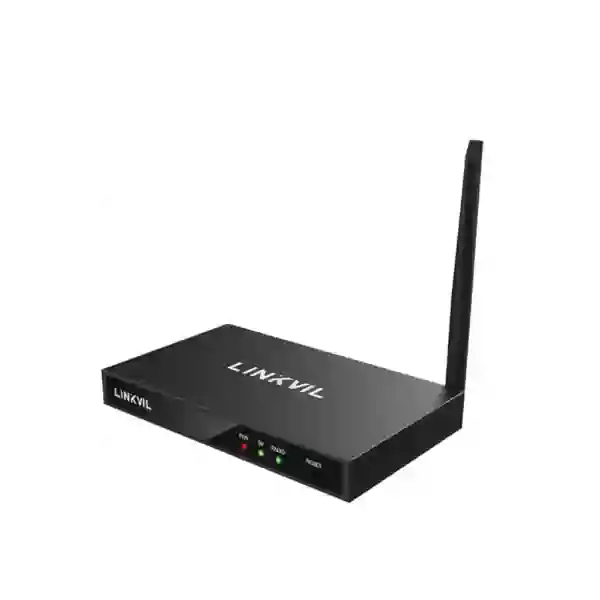
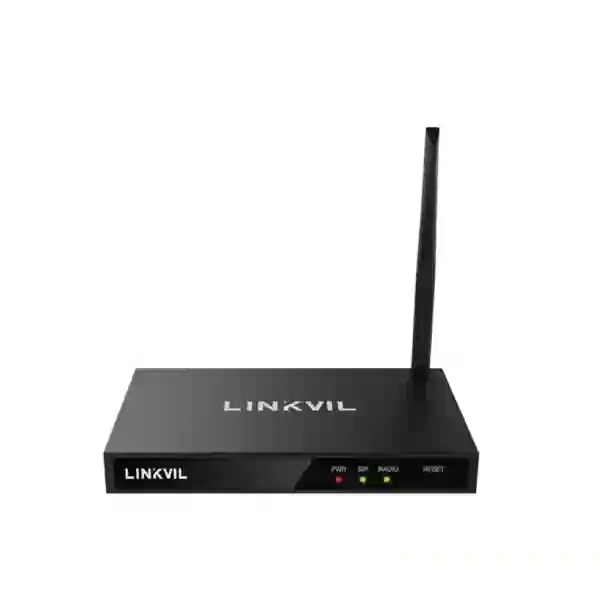
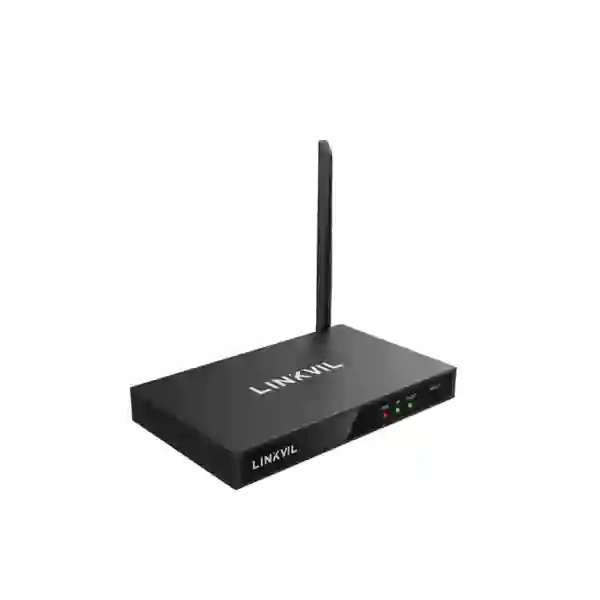
LINKVIL W712 RoIP Gateway
The LINKVIL W712 is a purpose-built RoIP gateway that bridges traditional analog or DMR II two-way radio communication with standards-based SIP devices. It is designed for organizations that already depend on radio for operational communication but also want the reach, routing flexibility and centralized management of an IP voice environment. By combining a built-in UHF 400–470 MHz radio module with SIP connectivity, the W712 can create a practical bridge between field radio users and office, security, hospitality, campus or industrial communication endpoints.
Verified core functions: analog/DMR II radio integration, SIP v1/v2, two SIP lines, HD audio, call recording, dual 10/100 Ethernet, web management, 802.3at PoE, USB 2.0 and TF-card support.
Typical fit: security teams, industrial parks, warehouses, hospitality sites, campuses, community security and other environments where radio and IP communication need to work together.
What the LINKVIL W712 solves
Many organizations have two separate communication worlds. Field personnel, guards, maintenance teams and operational staff may use portable two-way radios because radios are fast, familiar and practical for push-to-talk communication. Office personnel, reception, management or control-room users may rely on SIP phones and an IP PBX. Without a gateway, these groups can remain isolated, forcing staff to carry multiple devices or relay messages manually. The LINKVIL W712 addresses that gap by providing an interconnection point between compatible UHF radio communication and SIP-based voice systems.
The gateway is particularly useful when an organization wants to modernize gradually rather than discard a functioning radio estate. LINKVIL states that the W712 supports one analog or DMR II digital radio connection and one SIP call connection, with two SIP lines available for registration. It supports mainstream analog/digital radio compatibility including Motorola and Hytera families, but exact radio interoperability, channel planning and regional radio-frequency licensing should always be checked before deployment. The published radio frequency range is UHF 400–470 MHz, and the vendor quotes an indicative communication distance of 1–3 km in an urban open area depending on the actual environment. That distance is not a guaranteed project radius because buildings, terrain, antenna placement, interference and local RF rules can materially change radio performance.
Radio + SIP bridge
Built-in UHF 400–470 MHz radio capability can connect compatible analog or DMR II radio workflows to SIP communication devices.
HD audio
The W712 supports wideband G.722 and Opus in addition to common narrowband codecs, helping preserve clear voice where the complete call path supports them.
Recording and logs
Call recording and call logs for radio and SIP activity support operational review, subject to organizational policy and applicable recording rules.
Flexible power and mounting
The gateway supports DC power and 802.3at Class 4 PoE through the WAN interface, with desktop or wall-mounted installation options.
Verified LINKVIL W712 technical specifications
| Radio | UHF 400–470 MHz; compatible with analog/DMR II radio workflows |
| SIP | SIP v1 RFC2543 and SIP v2 RFC3261 over UDP/TCP/TLS; two SIP lines |
| Media | RTP/RTCP/SRTP; G.722 and Opus wideband; G.711A/U, G.729A/B, iLBC, G.723.1 and G.726-32K narrowband |
| Network | Dual 10/100 Mbps Ethernet; IPv4/IPv6; static IP, DHCP and PPPoE; VLAN; L2TP/OpenVPN |
| Storage interfaces | USB 2.0 Type-A and TF card interface, with TF card capacity up to 128 GB stated by the manufacturer |
| Power | DC 12 V / 2 A interface and 802.3at Class 4 PoE via WAN |
| Management | Web portal, configuration import/export, firmware upgrade, packet capture, syslog and auto-provisioning via FTP/TFTP/HTTP/HTTPS/DHCP Option 66/SIP PnP/TR-069 |
| Physical | 209 × 126 × 26.3 mm device size; operating temperature -10°C to 50°C; desktop or wall mounting |
Planning a W712 deployment
A successful RoIP project begins with workflow, not hardware. Identify who currently speaks on radio, who needs to join from SIP phones, what channels are used, how calls are initiated, whether recordings are required, and who will administer the gateway. Then confirm the radio model, analog or DMR II mode, UHF channel plan, antenna placement, SIP platform, codec policy, network VLAN, IP addressing and power method. Because the W712 can be powered from an 802.3at PoE switch, it can be located where a single network cable supplies connectivity and power, provided the switch has adequate PoE budget. If DC power is used, the electrical and UPS strategy should be considered separately.
The W712 has two 10/100 Mbps Ethernet interfaces rather than Gigabit ports. That is sufficient for the gateway’s voice-oriented traffic profile, but the surrounding network still needs good design. Voice traffic benefits from predictable latency, controlled congestion, secure VLAN design and correct firewall rules. Where SIP TLS, SRTP, OpenVPN or other security functions are selected, both ends of the communication path must be configured consistently. Recording can use local storage, but retention, access control, privacy and backup policies should be defined by the customer rather than treated as an appliance-only setting.
Related FourTeck Tanzania resources
For the broader buying process, visit the FourTeck Tanzania technology shop to review business IT and communication categories, the FourTeck Tanzania services page for deployment and integration context, and the About FourTeck Tanzania page for regional business-technology scope. Buyers building the SIP endpoint side of a W712 deployment can also compare the Dinstar C60S SIP phone, Dinstar C60SP PoE phone, Dinstar C60U-T 4G IP phone and Dinstar C62U business IP phone. These related endpoints do not replace the radio gateway; they illustrate standards-based SIP endpoints that can form part of a wider IP voice environment when compatibility and call-flow requirements are confirmed.
LINKVIL W712 RoIP Gateway Tanzania
Organizations evaluating the LINKVIL W712 RoIP Gateway in Tanzania are often trying to solve a practical communications problem: field teams already rely on two-way radio, while offices, reception desks, security control rooms or remote supervisors use IP telephony. The W712 can become the integration point between those workflows. Its built-in UHF 400–470 MHz radio module supports compatible analog and DMR II radio communication, while the SIP side can register to a standards-based IP voice environment. This makes the product relevant to security operations, industrial sites, warehousing, hospitality administration, campuses, logistics facilities, property management and other environments where immediate radio communication needs to reach users beyond the radio network.
For Tanzania procurement, buyers should define the radio environment before requesting a quotation. State the existing radio brand and model, whether the system is analog or DMR II, the channels and operating practices in use, the approximate site layout, and which SIP platform will receive or originate calls. The W712 supports mainstream radios including Motorola and Hytera families, but exact radio interoperability should still be validated for the intended configuration. Radio-frequency use must also follow applicable Tanzanian regulations and licensing conditions. The manufacturer’s 1–3 km urban-open-area range figure is only a planning reference; actual radio reach depends on antenna position, obstructions, RF conditions and terrain.
On the IP side, the gateway supports two SIP lines, SIP over UDP/TCP/TLS, RTP/RTCP/SRTP, IPv4/IPv6, VLAN, OpenVPN and L2TP. These functions allow the W712 to fit managed business networks, but the surrounding switch, firewall, PBX and security policy must be configured correctly. For projects using recording, decide who can access recordings, how long they are retained and whether local TF-card or USB storage fits the organization’s operational policy. A Tanzania quotation should therefore include gateway quantity, radio models, SIP server details, switch and PoE availability, mounting location, recording requirement, antenna considerations and any installation or configuration scope.
LINKVIL W712 RoIP Gateway Dar es Salaam
Dar es Salaam organizations frequently operate across offices, warehouses, logistics yards, construction environments, hotels, retail facilities, gated properties and security-managed premises. In these settings, two-way radios can remain the fastest tool for floor or field coordination while business teams increasingly depend on SIP telephony. The LINKVIL W712 is relevant where these two communication methods need a controlled bridge. A security guard or operations team using compatible UHF analog/DMR II radios can be linked into a SIP communication path used by reception, a control room, supervisors or another authorized endpoint.
Deployment in a dense urban environment should focus on network and RF planning. Radio performance can be influenced by concrete buildings, steel structures, surrounding radio activity and antenna placement, so the published 1–3 km figure should never be treated as a guaranteed radius. A site survey and confirmation of legal channel use are more useful than relying on nominal distance. The Ethernet side should be placed on an appropriate VLAN where practical, with firewall rules limited to the services required by the SIP platform and management team. If 802.3at PoE is available, the W712 can be powered centrally from a managed PoE switch, potentially simplifying cabling and UPS design.
Dar es Salaam buyers should also define operational ownership. Someone must manage SIP credentials, firmware, channel settings, logs and recording storage. Web-based administration and configuration export/import simplify lifecycle management, but they do not replace documentation. A useful quotation request lists radio make and model, SIP PBX, number of radio groups to integrate, whether one gateway per workflow is required, network addressing, PoE availability, recording duration, wall or desktop mounting preference and any need for remote support. This produces a more accurate bill of materials than requesting only a unit price for the W712.
LINKVIL W712 RoIP Gateway Mwanza
In Mwanza, a LINKVIL W712 deployment can make sense for organizations that have operational staff dispersed across a property, facility or campus while administrative users remain on SIP phones. Warehouses, hospitality properties, education sites, commercial facilities and security teams may already have radio habits that are difficult or unnecessary to replace. The W712 provides an upgrade path that preserves compatible radio communication while adding a SIP bridge. That can allow a control point to participate in radio conversations through an IP communications environment and can create a more structured connection between field and office users.
The most important planning decision is whether the existing radio estate is compatible with the W712’s UHF 400–470 MHz analog/DMR II capability. Buyers should record the radio models, mode, frequencies and channel configuration rather than assuming every handheld will work identically. The gateway supports mainstream analog/digital radio brands, but a pilot is sensible where a large installed base is involved. The same approach should be used for SIP integration: register and test the W712 with the intended PBX, verify call direction, audio levels, codec behavior, recording and any security requirements before scaling the deployment.
Mwanza sites that are supported remotely can benefit from the W712’s web management, syslog, packet capture, configuration backup and firmware functions. Standardized settings and documented addressing make future troubleshooting easier. Because the appliance has dual 10/100 Ethernet, bandwidth is not usually the limiting factor for voice, but LAN quality still affects real-time traffic. Include voice-aware switching, stable uplinks and proper VLAN design where the broader network is busy. A complete procurement brief should state radio details, SIP platform, number of gateways, power method, network topology, storage requirement and mounting environment, giving the supplier enough information to plan integration instead of simply shipping hardware.
LINKVIL W712 RoIP Gateway Arusha
Arusha has a diverse mix of hospitality, tourism administration, education, security, logistics and commercial operations where radios and IP telephony can coexist. A lodge, hotel, campus or operations center may use radios for housekeeping, maintenance, security or grounds teams while the front office and management team use SIP desk phones. The LINKVIL W712 can bridge these environments without requiring every operational user to move away from radio. Its ability to connect compatible analog/DMR II UHF communication with SIP can support a phased modernization strategy and reduce the need for staff to relay messages between separate systems.
Hospitality and campus deployments need especially clear call-flow design. Decide which radio channel should connect to which SIP identity, who is permitted to initiate communication, and what happens when the SIP destination is unavailable. Recording may be useful for incident review or operational accountability, but organizations should define a lawful, documented recording policy rather than enabling storage by default. The W712 supports USB and TF-card storage and provides call logs, while web management helps administrators review configuration and maintenance status.
For Arusha procurement, radio coverage should be assessed against buildings, terrain and operating zones. The manufacturer’s distance figure depends on environment, so a property with multiple structures or elevation changes may need a different radio design from an open yard. On the network side, PoE can simplify placement if suitable 802.3at switching is available. Buyers should provide building or site layout, existing radio inventory, SIP server details, switch model, VLAN approach, power continuity requirements and desired recording behavior. If the SIP side also requires desk endpoints, FourTeck Tanzania’s related IP phone pages can help identify basic or PoE-capable options, but the final design should always confirm interoperability between the gateway, PBX and endpoint functions actually required.
LINKVIL W712 RoIP Gateway Dodoma
Organizations in Dodoma considering the LINKVIL W712 are likely to value controlled, documented communication across offices, institutional buildings, campuses, warehouses, security posts or public-facing facilities. The W712 is not simply a radio accessory; it is an integration appliance designed to connect compatible UHF analog/DMR II radio communication with a SIP system. That distinction matters because it allows operational teams to retain fast push-to-talk workflows while authorized office or control-room users participate through an IP voice platform.
Institutional buyers should put governance at the center of the deployment. SIP credentials, administrator passwords, network addressing, permitted radio channels, recording access and firmware ownership should be documented. The product supports SIP over TLS, SRTP, OpenVPN and web administration, but secure capability only produces a secure result when certificates, firewall rules, passwords and access controls are managed properly. The device can also produce syslog information and packet captures useful for troubleshooting, which can be valuable in environments where changes and incidents need to be traceable.
A Dodoma bill of materials should clarify whether the gateway will be wall mounted in a secure communications area or placed on a desktop, whether 802.3at PoE is available, and whether recording storage is required. For any installation using the built-in radio module, the legal and technical radio plan must be confirmed independently of the SIP configuration. Organizations should avoid assuming that one gateway will automatically cover every site or radio group. Instead, map communication zones, radio channels, user groups and SIP destinations, then decide how many integration points are required. This planning produces a maintainable system and reduces the risk of discovering channel, coverage or call-routing limitations only after equipment arrives.
LINKVIL W712 RoIP Gateway UAE
For UAE businesses, the LINKVIL W712 can support warehouses, industrial facilities, hospitality operations, property management, security teams and multi-site organizations that use radios for operational communication while relying on SIP for office and control-room telephony. The value of the gateway is integration: a compatible UHF 400–470 MHz analog or DMR II radio workflow can be connected to SIP without requiring a complete replacement of existing radio endpoints. This can be particularly useful when a company is standardizing communications across regions and wants comparable radio-to-IP architecture in the UAE and Tanzania.
UAE network environments often have managed switching, PoE and segmented VLANs already in place, making it practical to deploy the W712 as a controlled network endpoint. Its 802.3at PoE support can reduce the need for a local adapter and can allow centralized UPS-backed power where the switching design supports it. Security teams should use HTTPS management, strong credentials and appropriate network restrictions. SIP TLS and SRTP can be considered where the PBX and certificate environment support them. If OpenVPN or L2TP is used, the network design should be documented so remote communication does not bypass organizational security policy.
Regional buyers can consult FourTeck UAE technology solutions for broader infrastructure planning. A quotation should include radio brand/model, analog or DMR II mode, required channels, SIP PBX, number of integration points, network topology, PoE switch details, mounting preference and recording policy. Because radio operation is regulated, the channel plan and licensing requirements should be reviewed for the actual UAE use case rather than copied from another country. The same caution applies to cross-border standardization: hardware can be common while radio-frequency permissions, site conditions and operating practices remain location specific.
LINKVIL W712 RoIP Gateway Uganda
Ugandan organizations using two-way radios for security, warehousing, hospitality, education or field coordination can use the LINKVIL W712 as a bridge into an IP telephony environment where the compatibility and radio plan are appropriate. The gateway’s purpose is to connect a traditional analog or DMR II UHF radio workflow with SIP, allowing office or control users to participate through a standards-based voice platform. This can be valuable for businesses that already have useful radio assets and want to extend communication beyond the radio-only user group.
Uganda deployments should separate three design questions. First, confirm RF compatibility and legal channel use. Second, verify SIP registration and required call behavior with the exact PBX. Third, prepare the IP network so the gateway has reliable, secure connectivity. The W712 supports VLAN, IPv4/IPv6, SIP over TLS and SRTP along with OpenVPN and L2TP. It can be powered by 802.3at PoE, which is attractive at sites where a central UPS protects network equipment. Local DC power remains an option where PoE is not available.
For regional context, buyers can review FourTeck Uganda communication and IT solutions. A good quotation request should state the intended city or site, radio inventory, channel count, SIP server, internet or WAN design if remote connectivity is involved, PoE capability, recording requirement and support expectations. Organizations with several Ugandan branches should also decide whether configuration will be standardized centrally. The W712 supports configuration export/import and auto-provisioning methods, which can help repeat deployments, but each site should still be validated because RF conditions, network addressing and operational roles can differ.
LINKVIL W712 RoIP Gateway Kampala
Kampala offices, commercial facilities, warehouses and security-managed sites may have a particularly strong need to combine radio mobility with SIP call routing. Staff on a floor, yard or property can continue using compatible two-way radios, while supervisors and office personnel communicate through SIP endpoints. The LINKVIL W712 provides the bridge between these user groups. The product is compact enough for communications rooms or wall-mounted installations, yet includes the management, storage and network functions needed for a business integration appliance.
In a busy Kampala LAN, voice quality depends on predictable network behavior. The gateway itself uses dual 10/100 Ethernet, but real-time communication can still suffer if voice packets share congested paths without sensible switching and QoS design. A dedicated voice or communications VLAN can improve operational clarity and security. Firewall access should be limited to necessary SIP, media, management and support paths. If the SIP service sits across a WAN, latency, jitter, packet loss and failover should be tested under realistic traffic conditions rather than only during a quiet installation window.
The radio side deserves equal attention. Walls, surrounding buildings and antenna placement can materially change effective range. Buyers should test the intended radio group with the gateway before depending on it for a critical workflow. Recording and call logs can aid incident review, but the organization should define who can retrieve recordings and how storage is protected. A Kampala purchasing brief should therefore include operational users, radio channels, site layout, SIP server, WAN path, network switch model, PoE budget, mounting location and storage policy. If the requirement spans several branches, document a standard configuration template while still validating RF and network conditions at each site.
LINKVIL W712 RoIP Gateway Arua
Arua businesses and institutions may use the LINKVIL W712 where a local radio system needs a controlled connection to SIP telephony or a remote communications point. This can support security desks, warehouses, educational facilities, hospitality operations, utilities or service organizations that want to preserve radio communication for mobile staff while allowing an office user to join through an IP endpoint. The gateway’s built-in UHF 400–470 MHz radio capability removes the need to treat radio and SIP as entirely separate systems.
For sites with limited local IT staffing, manageability is important. The W712 provides a web management portal, firmware upgrade, configuration import/export, syslog and web-based packet capture. These functions can help a remote administrator diagnose registration, network or configuration issues, provided access is secured and documented. Organizations should avoid exposing the management interface broadly to the internet. Remote administration should instead follow the company’s VPN, firewall and privileged-access policies.
Power and connectivity resilience may also influence the installation. PoE can allow the gateway to operate from a central switch and UPS, while DC power can be used where PoE infrastructure is unavailable. Neither method removes the need to plan for WAN or PBX availability if the SIP path is remote. A practical Arua quotation should specify the radio system, PBX location, internet or private-WAN path, intended recording policy, number of gateways and whether configuration support is required. If the device will connect critical safety or security workflows, the customer should also define fallback communication procedures so radio users retain an understood operating method if the IP network or gateway is unavailable.
LINKVIL W712 RoIP Gateway Mbarara
Mbarara organizations can consider the LINKVIL W712 when they need to combine mobile two-way radio users with a structured SIP communication system. A typical application might involve security or facilities staff on radio and supervisors, reception or administration on SIP phones. Instead of forcing one group onto unfamiliar devices, the gateway creates an integration point between compatible UHF analog/DMR II radio and SIP. This can extend an existing communication investment while providing a path toward more centralized call routing and management.
Before procurement, map the communication pattern in detail. Identify which radio group needs to reach SIP, whether calls need to flow in both directions, which SIP destination should answer, and how unanswered communication is handled. Confirm audio level and codec performance in a pilot. The W712 supports G.722 and Opus wideband codecs on the SIP side, but end-to-end quality depends on the PBX, endpoint and network. Radio audio has different characteristics, so practical testing matters more than a codec list alone.
Mbarara sites may also benefit from local recording for selected workflows. The device provides USB and TF-card interfaces and supports call recording, yet retention and access should be governed by customer policy. For installation, choose a secure location with suitable antenna placement and either 802.3at PoE or stable DC power. The quotation request should include radio frequencies and models, SIP system, gateway quantity, switch model, VLAN requirements, storage preference and mounting arrangement. Where the W712 connects to remote sites, include WAN details and expected network resilience. This produces a deployment plan that accounts for communication continuity rather than treating the gateway as a standalone appliance.
LINKVIL W712 RoIP Gateway Gulu
In Gulu, the LINKVIL W712 can be relevant to organizations that coordinate people across larger properties or operational areas and already rely on radios for immediate communication. The gateway offers a way to bring that workflow into a SIP environment, allowing authorized users on IP phones or other SIP endpoints to communicate with radio users through a managed integration point. It can support gradual modernization because compatible radio users do not necessarily need new handheld devices simply because an office introduces VoIP.
A reliable Gulu deployment should be designed around site reality. Radio coverage needs to be tested where staff actually work, not only near the communications room. Buildings, equipment, terrain and antenna height can change coverage. The vendor’s range figure is conditional and should not be treated as a service guarantee. On the SIP side, confirm the PBX can register the W712 and supports the desired transport, codec and routing behavior. If secure SIP is required, test TLS and SRTP with the actual PBX certificate configuration.
For organizations with multiple locations, configuration consistency can lower support effort. The W712 supports provisioning and configuration backup, so IP, SIP and management settings can be standardized where appropriate. RF settings and channel permissions, however, must remain specific to the local radio plan. A Gulu procurement request should identify the operational objective, radio model, SIP system, number of sites, WAN design, PoE availability, recording requirement and support model. Customers should also document fallback communications for critical functions. A gateway can improve interoperability, but operational resilience depends on the complete chain: radio coverage, device power, LAN, WAN, SIP service and trained users.
LINKVIL W712 RoIP Gateway Kenya
Kenyan organizations evaluating the LINKVIL W712 may be looking to connect security, warehouse, hospitality, campus or facilities radio communication with SIP-based business telephony. The W712 supports UHF 400–470 MHz analog/DMR II radio integration and standards-based SIP, which makes it useful where existing radio systems remain operationally valuable but management or control-room teams increasingly work from IP communication tools. A shared architecture can reduce manual message relaying and help bring radio communication into a more structured business environment.
Kenya projects should verify both technical compatibility and radio regulations before rollout. Handheld make, model, mode, frequency and channel configuration all matter. The W712’s published compatibility with mainstream radio brands should be treated as a starting point, not a substitute for testing. The network design should also define voice VLAN, management access, PoE or DC power and any VPN path used between locations. Because the gateway supports web management and auto-provisioning, larger organizations can create repeatable deployment profiles, but each site still needs local validation.
For wider business communication and network planning in Kenya, see FourTeck Kenya IT and VoIP solutions. Procurement teams should request the W712 as part of a scoped integration rather than as an isolated box. Include number of radio groups, intended SIP destinations, PBX type, site count, switch and PoE capability, recording expectations, antenna environment and whether remote management is required. If the gateway will be shared between teams, define who owns changes and incident troubleshooting. Clear ownership is especially important when radio, network and PBX administration are handled by different departments or service providers.
LINKVIL W712 RoIP Gateway Kuwait
Kuwait businesses using two-way radios in industrial, hospitality, logistics, property, retail or security environments can use the LINKVIL W712 to bridge compatible radio communication into a SIP system. This is useful when mobile operational users need the immediacy of push-to-talk radio while supervisors or control-room staff prefer desk phones and structured call routing. The W712 combines a built-in UHF radio module with SIP, recording, Ethernet and web management in a compact appliance suitable for desktop or wall mounting.
High-quality integration begins with a channel and call-flow plan. Identify which radio group is connected, which SIP account receives or places calls, and whether the gateway participates in ordinary office extensions or a dedicated operations path. Verify radio-frequency legality and licensing for the intended Kuwait deployment. On the IP side, managed VLANs, secure administration and stable SIP registration are important. PoE support can simplify communications-room installation, especially where the switch and UPS infrastructure are already standardized.
FourTeck’s Kuwait business IT and VoIP portal provides related regional context for telephony, networking and security. A buyer requesting the W712 should provide radio model and channels, SIP PBX, gateway quantity, site details, network addressing, PoE capability and recording requirement. For industrial or security use, include resilience expectations and maintenance ownership. The W712 provides logs and management tools that can assist support teams, but continuous communication depends on more than the gateway alone. Radio coverage, network health, PBX availability, power continuity and user operating procedures should all be considered in the same project plan.
LINKVIL W712 RoIP Gateway Ghana
Organizations in Ghana can deploy the LINKVIL W712 where radio remains important for mobile operations but an IP voice environment is becoming the central communication platform. Security teams, warehouses, hospitality operations, campuses and industrial facilities are examples where staff may use radios away from desks while management or reception relies on SIP phones. By bridging compatible analog/DMR II UHF communication to SIP, the W712 can connect these groups without requiring an immediate full replacement of radio devices.
The design should begin with radio compatibility and coverage. UHF 400–470 MHz is the supported radio range, but the actual channel configuration and regulatory permission must be checked for the specific Ghana use case. Antenna position, structural obstructions and local RF conditions influence practical range. On the SIP side, test registration, call routing, audio quality and recording with the intended PBX. Where security features such as SIP TLS, SRTP or VPN are used, the full network and certificate path should be validated before go-live.
Businesses coordinating regional technology can also review FourTeck Ghana IT solutions. A quotation brief should list radio brands and models, number of gateways, SIP platform, location, PoE or DC power preference, VLAN design, storage needs and whether configuration or remote support is part of the scope. For organizations with many sites, a standardized configuration template can make maintenance easier, while local radio and network variations are documented as exceptions. This balance between standardization and site-specific validation helps prevent a common problem: copying one working configuration into a different environment without checking whether the RF, IP or operational assumptions still apply.
LINKVIL W712 RoIP Gateway Nigeria
Nigerian businesses with distributed operational teams may find the LINKVIL W712 useful when field or security staff depend on radios while administrative teams use VoIP. Warehouses, large commercial properties, logistics operations, hospitality sites, campuses and industrial environments can all have this split. The W712 creates a standards-based bridge between compatible UHF analog/DMR II radio communication and SIP, helping organizations connect workflows rather than forcing every user onto the same endpoint type.
Large or multi-site deployments need disciplined architecture. One gateway should not be assumed to serve an unlimited number of independent radio groups. The vendor specifies one analog/DMR II radio connection and one SIP call connection, so project designers should map each communication path and size the number of gateways accordingly. SIP registration, codecs, security and call routing should be tested against the actual PBX. Network paths between sites should be assessed for latency, jitter and packet loss, especially where a central PBX serves remote facilities.
For regional IT and communication context, visit FourTeck Nigeria technology services. Nigerian procurement teams should include site count, radio systems, SIP server, WAN topology, PoE switching, mounting conditions and recording policy in a quotation request. Radio-frequency use must follow local regulation, and organizations should test coverage under real site conditions. If the W712 supports security or operational communication, establish monitoring and fallback procedures so staff know what to do if the gateway, PBX, LAN or WAN becomes unavailable. The product improves interoperability, but resilient operations depend on the complete communications design and clear ownership.
LINKVIL W712 RoIP Gateway Seychelles
Seychelles hospitality, property, security and facilities environments can have strong use cases for radio because staff are mobile across resorts, buildings and operational areas. At the same time, front-office and management teams may work from SIP-based phone systems. The LINKVIL W712 can connect these two communication layers where the radio system is compatible, allowing authorized SIP users to participate in operational radio communication without carrying a separate handheld.
Island and hospitality environments require careful site planning. Coverage between buildings, around concrete structures or across varied terrain can differ significantly from an open-area range figure. Antenna position and channel planning therefore matter. Organizations should verify local regulatory requirements for UHF operation and should test the actual radio models that will communicate through the W712. On the network side, many resorts already use managed switching and segmented networks for guests, staff, CCTV and administration. The gateway should be placed in an appropriate secure VLAN with only necessary management and SIP access.
For remote support, web management, logging and configuration export can simplify maintenance, but secure access practices are essential. Recording can support incident review or service coordination where policy allows, yet storage and retention need documented ownership. Seychelles buyers should provide property layout, radio fleet information, SIP/PBX details, switch and PoE availability, mounting location, recording needs and whether the gateway must communicate to another site over a WAN. A pilot at the actual property is especially useful when the system will support guest-facing service or security operations because it verifies coverage, audio and workflow before the organization relies on the integration in daily operations.
Compatibility, security and management checklist
Radio compatibility
Confirm radio brand, exact model, analog or DMR II mode, frequency/channel plan, antenna needs and local regulatory requirements.
SIP integration
Confirm PBX address, transport, credentials, codec policy, inbound/outbound route, secure media requirements and how the gateway should appear in the dial plan.
Network readiness
Prepare VLAN, IP addressing, firewall policy, PoE budget, UPS coverage and WAN performance where the PBX is remote.
Recording governance
Define whether recording is permitted, who can retrieve files, retention duration, storage medium and how recordings are protected or backed up.
Frequently asked questions about the LINKVIL W712
What is the LINKVIL W712 used for?
It is a Radio over IP gateway that interconnects compatible analog/DMR II UHF radio communication with SIP communication devices. It is useful when field or operational users remain on radio while office or control users work through IP telephony.
Which radio frequency range does the W712 support?
The manufacturer specifies UHF 400–470 MHz. Actual channel use must comply with the applicable radio regulations and licensing rules in the deployment country.
Does the W712 support DMR?
Yes. LINKVIL states compatibility with analog and DMR II digital radio workflows. Exact interoperability with the intended handheld or base radio should still be tested.
Can the W712 be powered by PoE?
Yes. The official specifications list 802.3at Class 4 PoE through the WAN interface, as well as DC 12 V power.
Does the W712 support recording?
Yes. Call recording is supported, and the hardware includes USB 2.0 and a TF-card interface for storage. Recording use should follow organizational policy and applicable law.
How many SIP lines are supported?
The official datasheet lists two SIP lines. Project designers should also note the stated one radio connection and one SIP call connection when mapping communication workflows.
Can I manage the W712 remotely?
The gateway provides a web management portal, provisioning functions, configuration import/export, syslog and packet capture. Remote access should be implemented through secure network controls rather than exposing the management interface directly.
Quotation checklist for LINKVIL W712 projects
To prepare an accurate quotation, provide: gateway quantity; existing radio manufacturer and exact models; analog or DMR II mode; approved operating frequencies/channels; intended radio-to-SIP workflow; SIP PBX or server platform; number of sites; LAN/VLAN information; PoE switch model and available PoE budget; WAN details where the SIP system is remote; recording and storage requirements; desktop or wall mounting preference; antenna/site considerations; and whether installation, configuration, testing or remote support is required. Avoid using price alone to compare proposals. Confirm that each quotation has the same assumptions for radio compatibility, accessories, power, configuration and integration scope.
Decision recap
Choose the LINKVIL W712 when the project requires a compact bridge between compatible UHF 400–470 MHz analog/DMR II radio communication and SIP. It is especially attractive when existing radios should remain in service while an organization introduces IP telephony, centralized communication, recording or remote operational access. The strongest deployment is one where radio compatibility, legal frequency use, SIP routing, VLANs, power, recording governance and support ownership are all confirmed before purchase. The gateway is not a substitute for RF planning or network engineering; it is the integration component that connects those two domains.
Talk to FourTeck about radio-to-SIP integration
FourTeck Tanzania can discuss the W712 as part of a wider communication design that includes IP PBX, SIP phones, switching, PoE, VLANs, firewall rules and deployment support. The objective is to confirm the communication workflow first, then align the gateway, radio environment and network around that requirement. For projects that span regions, additional FourTeck resources include FourTeck Africa, FourTeck Kenya, FourTeck Uganda, FourTeck Kuwait, FourTeck Ghana and FourTeck Nigeria.




Reviews
There are no reviews yet.