
Yealink business telephony • Tanzania
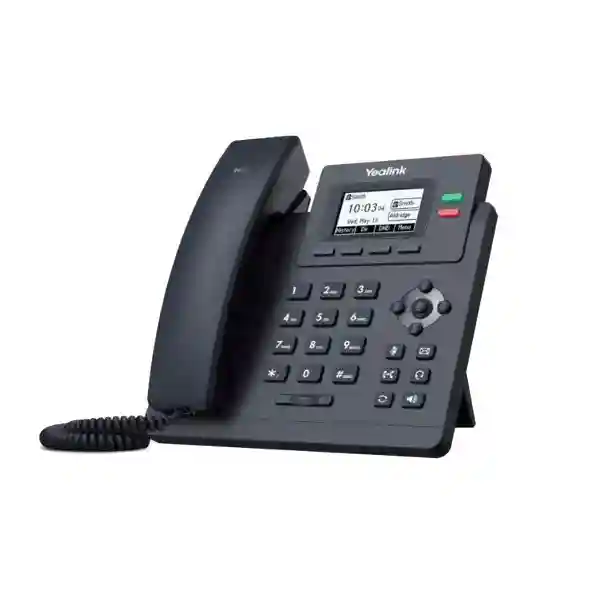
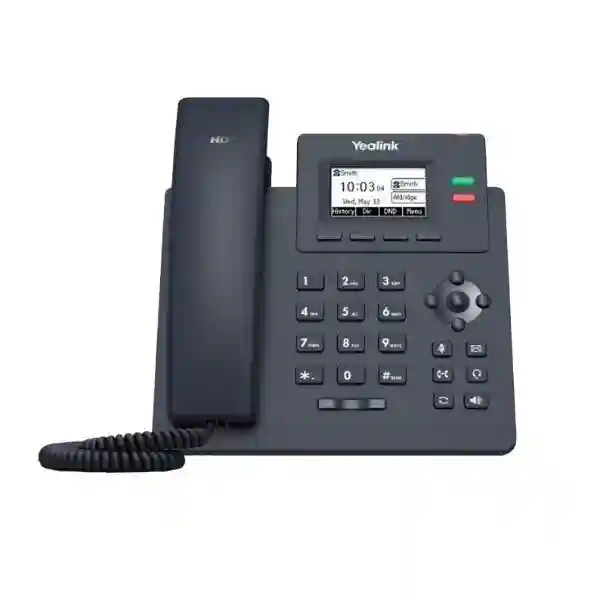
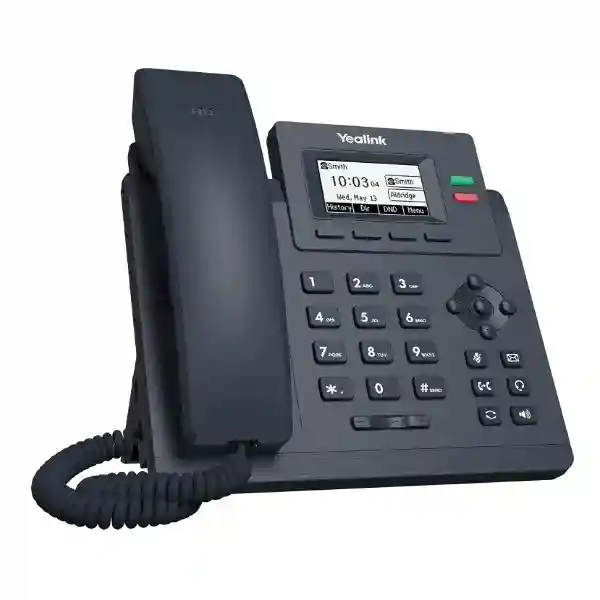
Yealink SIP-T31W
The Yealink SIP-T31W is a compact business IP phone designed for users who need reliable SIP calling with the flexibility of built-in dual-band Wi-Fi. Official Yealink documentation specifies support for two VoIP accounts, a 2.3-inch 132×64-pixel backlit graphical LCD, two 10/100 Ethernet ports, Power over Ethernet, HD voice, Smart Noise Filtering, local 5-way conferencing and integrated 2.4 GHz/5 GHz Wi-Fi using IEEE 802.11a/b/g/n/ac. For offices in Tanzania that need straightforward desk telephony without forcing every phone position to depend on a dedicated Ethernet data outlet, that combination can simplify deployment while preserving the option of wired networking.
What the Yealink SIP-T31W solves
Many organisations want a desk phone that is simpler than an executive multimedia endpoint but more flexible than a basic wired-only SIP handset. The SIP-T31W fits that middle requirement. Its integrated Wi-Fi allows a phone to join a suitable business wireless network when a physical Ethernet outlet is inconvenient, while its Ethernet ports and PoE support preserve conventional wired deployment. That makes the model useful for ordinary office desks, shared work areas, temporary positions, branch locations, receptions with modest line requirements and controlled environments where cabling flexibility matters.
The model should still be treated as part of a complete voice system rather than an isolated appliance. SIP registration, PBX compatibility, extension planning, call routing, voice VLANs, Quality of Service, Wi-Fi coverage, firewall rules, DHCP options, provisioning methods and power design all influence real-world performance. FourTeck Tanzania can help buyers compare those dependencies before a quotation is finalized. Explore the FourTeck Tanzania technology solutions overview, the business technology services page, and the Tanzania business IT shop for the surrounding telephony, switching, Wi-Fi and infrastructure context.
Verified Yealink SIP-T31W features
Dual-band Wi-Fi
Integrated IEEE 802.11a/b/g/n/ac Wi-Fi supports 2.4 GHz and 5 GHz bands, with Yealink listing a dynamic transmission rate of up to 433 Mbps. This gives deployment teams a wireless path when a dedicated desk cable is not practical.
Business voice
Yealink HD Voice, G.722 wideband audio, Smart Noise Filtering and a full-duplex hands-free speakerphone support clear everyday business calling when the network and PBX are correctly configured.
Two SIP accounts
The phone supports up to two VoIP accounts, making it appropriate for standard users who need one or two extensions, identities or service registrations rather than a high-density multi-line console.
Flexible power and network
Two 10/100 Mbps RJ45 Ethernet ports and IEEE 802.3af Class 2 PoE support allow deployment from a PoE switch. Yealink also lists an external AC adapter option for sites where PoE is unavailable.
Local conferencing
Local 5-way conferencing can bring several parties into a voice discussion without requiring users to operate a separate conference device for every small collaborative call.
Management and security
Yealink documents browser, phone and auto-provisioning management, HTTPS, SRTP, TLS 1.3, AES256 configuration-file encryption, 802.1X, IPv6, secure boot and WPA2/WPA3 wireless security support.
Technical specification summary
| Display | 2.3-inch 132×64-pixel graphical LCD with backlight |
| SIP accounts | Up to 2 VoIP accounts |
| Wi-Fi | Built-in 2.4/5 GHz, IEEE 802.11a/b/g/n/ac |
| Ethernet | 2 × RJ45 10/100 Mbps ports |
| Power | IEEE 802.3af PoE Class 2; optional external AC adapter |
| Audio | HD handset, HD speaker, G.722, Smart Noise Filtering, full-duplex speakerphone |
| Conference | Local 5-way conferencing |
| Directories | Local phonebook up to 1,000 entries; XML/LDAP remote phonebook support |
| Headset | RJ9 headset port and EHS wireless-headset support |
| Mounting | Two-angle stand and wall-mountable design |
| Dimensions | 188 × 189 × 162 × 50 mm as listed by Yealink |
Compatibility, deployment and buying guidance
The SIP-T31W uses standard SIP and should be evaluated against the actual PBX or hosted voice platform intended for deployment. Standard-protocol support does not automatically guarantee that every proprietary PBX feature, provisioning template, certificate workflow or hosted service will behave identically. Before purchase, confirm registration method, authentication, codec policy, extension count, voicemail behavior, transfer method, BLF requirements, firmware expectations and whether the selected platform has a tested profile for the model.
For wired installations, verify that the access switch provides the required PoE capability and that the voice network uses appropriate VLAN and QoS policy. For wireless installations, treat Wi-Fi as production voice infrastructure. Confirm signal strength at the exact desk, access-point capacity, channel design, band selection, roaming expectations and separation between staff, guest and voice traffic. A phone that can connect to 5 GHz Wi-Fi still depends on a stable access point and well-designed RF environment. FourTeck’s network and infrastructure services are relevant when phone deployment is part of a larger office upgrade.
For procurement, specify quantity, preferred power method, PBX platform, SIP service or trunk environment, required headset type, desk or wall mounting, Wi-Fi or Ethernet usage, and whether central provisioning is expected. This avoids ambiguous quotations where adapters, headsets, wall-mount accessories or implementation services are assumed but not documented.
Yealink SIP-T31W Tanzania
For organisations evaluating the Yealink SIP-T31W in Tanzania, the strongest buying case is straightforward business telephony with flexible network placement. Many offices need phones for ordinary extension users, reception overflow positions, shared desks, branch teams, supervisors and administrative staff without requiring a large color display or a high number of line keys. The SIP-T31W’s two SIP accounts, familiar keypad layout and compact display suit that type of everyday calling. Built-in dual-band Wi-Fi can be especially useful where the office layout changes, where a phone desk does not have a dedicated network outlet, or where a short-term position needs a business extension without immediate recabling. Where structured cabling and PoE already exist, the same model can be deployed conventionally over Ethernet.
Tanzania deployments should begin with the voice architecture rather than the handset alone. Buyers should identify the PBX or hosted service, the number of extensions, reception and queue requirements, branch connectivity, SIP trunk conditions, voicemail expectations and any recording policy. Network readiness is equally important. Voice traffic benefits from consistent latency, sensible QoS and stable switching. When Wi-Fi is used, a site survey or at least practical coverage validation at the intended desks is advisable because weak or congested wireless can produce symptoms that appear to be phone faults. For wired phones, confirm PoE budget across the switch rather than assuming every PoE-labeled switch can power an unlimited number of endpoints.
Procurement teams in Tanzania should request quotations that clearly state phone quantity, exact model, included accessories, adapter status, delivery scope and configuration responsibilities. If the phones will be centrally provisioned, document the preferred provisioning method, firmware baseline and naming convention. If headsets are required, identify whether users need basic wired headsets or supported EHS wireless-headset functionality. If phones will share the desk network connection with a computer, remember that the SIP-T31W has 10/100 Mbps Ethernet rather than Gigabit Ethernet; this can matter for desktop data throughput in faster wired environments.
FourTeck Tanzania positions IP phones as part of a wider communication and network environment. Buyers can review the Tanzania technology shop for product planning, the services catalogue for deployment context and the Tanzania contact page to prepare a quotation request. A useful request includes the PBX platform, quantity, office location, network method and expected user roles.
Yealink SIP-T31W Dar es Salaam
Dar es Salaam buyers often need telephony that can fit offices ranging from small professional practices to larger corporate floors, retail administration spaces, logistics operations, service businesses and multi-branch organisations. The SIP-T31W is most appropriate where users need standard extension features and reliable SIP calling rather than an executive touchscreen. Its dual-band Wi-Fi can reduce dependence on a physical Ethernet drop at every desk, which can help during office moves, temporary seating arrangements or staged fit-outs. That convenience should not replace network planning: business Wi-Fi used for voice should be tested for signal quality, capacity and interference in the actual seating areas.
For a new Dar es Salaam office, the phone decision is best coordinated with switching, wireless coverage and the PBX. A PoE-enabled switch can simplify wired deployments by carrying power and data on one cable, while UPS protection at the network rack can help preserve phone operation during short power disturbances if the internet connection and PBX remain available. In wireless deployments, phones still need power, so desk outlets and adapter availability must be considered. The right approach depends on whether the objective is permanent structured cabling, rapid rollout, flexible seating or a mix of wired and wireless endpoints.
Existing offices should audit their current extension plan before replacing phones. Document direct numbers, hunt groups, call queues, voicemail, reception routing, after-hours rules and any legacy analog devices that remain. The SIP-T31W supports common business functions such as hold, transfer, forwarding, call waiting, DND, call pickup and BLF-related features, but the PBX must provide and configure the corresponding service. Organisations that expect many monitored extensions or numerous programmable keys may need a higher-class phone; the T31W is designed as an entry-level two-line model.
When requesting a Dar es Salaam quotation, include the number of desks, whether Wi-Fi or Ethernet will be used, whether PoE is available, the PBX brand or hosted service, and any headset requirements. This enables a quotation to address dependencies rather than only unit price. For wider voice-system planning, the FourTeck Tanzania business technology overview explains how IP phones connect with switching, Wi-Fi and telephony infrastructure.
Yealink SIP-T31W Mwanza
Businesses considering the Yealink SIP-T31W in Mwanza may be planning telephony for branch offices, distribution teams, education facilities, clinics, hospitality operations, professional offices or growing commercial sites. In these settings, a phone with built-in Wi-Fi can be valuable when desks are spread across areas where structured data cabling is incomplete or difficult to extend quickly. The T31W can also work as a conventional Ethernet endpoint, so buyers are not locked into one connectivity method. That flexibility is useful when different parts of a site have different network readiness.
The network should be assessed before ordering a large quantity. For Wi-Fi, test 2.4 GHz and 5 GHz coverage, client density and access-point placement. Voice is sensitive to interruptions, so a wireless network that appears acceptable for occasional web browsing may still need improvement for continuous calling. For Ethernet, confirm switch port availability, PoE support and VLAN configuration. If computers will be connected through the phone’s second Ethernet port, account for the phone’s 10/100 Mbps switch when deciding whether that path matches the workstation’s data-speed requirement.
Mwanza procurement planning should also consider remote management. Yealink supports auto-provisioning methods such as FTP, TFTP, HTTP and HTTPS, alongside browser and phone configuration. For organisations with many phones or more than one branch, standardized templates can simplify extension setup, security settings, firmware control and future replacement. Documenting each extension, MAC address, user, location and configuration profile makes support more predictable. A well-managed endpoint estate is usually more valuable than individually configured phones that become difficult to troubleshoot later.
A quotation request should therefore cover more than hardware quantity. State whether the phones are replacing an existing system, adding extensions to a current PBX or forming part of a new deployment. Include the calling platform, network topology, Wi-Fi availability, PoE switch details, headset requirements and expected implementation scope. FourTeck Tanzania can use those inputs to align the handset with the surrounding voice and network design rather than treating it as an isolated device purchase.
Yealink SIP-T31W Arusha
Arusha organisations often combine office communication needs with hospitality, tourism, education, NGO, professional-service and multi-site operational requirements. The Yealink SIP-T31W can serve standard desk users who need a familiar fixed handset, two SIP accounts and common business calling functions without the complexity of a premium endpoint. Built-in Wi-Fi gives deployment teams an additional option in properties or offices where the phone location does not align neatly with existing structured cabling. For permanent high-use positions, wired Ethernet and PoE may still be preferred when available because they provide predictable connectivity and centralized power.
For hospitality or guest-facing businesses, distinguish administrative telephony from guest-room or specialized hospitality requirements. The SIP-T31W is a general business SIP phone and should be selected where its feature set matches the user role. Reception users who monitor many extensions, handle high call volumes or require a large programmable-key field may benefit from a different model class. Back-office users, reservations teams, supervisors and ordinary office extensions may be better aligned with a two-account endpoint. Defining these roles before purchase prevents overbuying some desks and under-specifying others.
Wireless deployments in Arusha should be tied to a proper access-point design. Building materials, room layout, neighboring networks and the number of connected devices influence call stability. A phone supporting 5 GHz does not by itself guarantee a clean channel or adequate coverage. Similarly, a wired deployment should verify switch capacity, PoE power and voice VLAN policy. If branch connectivity depends on VPN or internet-based SIP services, firewall and WAN stability must be considered in the same design.
When asking for a quotation, include user count, branch count, preferred connectivity, PBX platform, SIP trunk status, headset needs and whether provisioning or configuration support is required. For organisations planning a broader office refresh, the FourTeck Tanzania integrated technology services page is relevant because telephony often shares switching, Wi-Fi, firewall and UPS infrastructure with the rest of the business network.
Yealink SIP-T31W Dodoma
For Dodoma offices, institutions, service organizations and branch operations, the Yealink SIP-T31W offers a practical path to SIP telephony where users need dependable core calling features and flexible network attachment. The two-account design is suited to ordinary extension users, while local 5-way conferencing can support quick internal or external discussions without a separate conference bridge for every call. The backlit monochrome display keeps the interface simple and focused. Built-in dual-band Wi-Fi can help when a desk location is operationally useful but a network cable is unavailable, while PoE makes wired deployments cleaner when managed switching is already in place.
Government, education and structured administrative environments often benefit from standardization. Rather than choosing a different phone for every person, define endpoint classes: standard user, reception, executive, conference room and specialized user. The SIP-T31W can fill the standard-user class where two SIP accounts and basic line keys are sufficient. Standard templates for extension naming, firmware, certificates, VLAN settings and directory configuration can reduce support effort across departments or sites. Yealink’s documented auto-provisioning and management capabilities support that type of consistent rollout.
Network quality remains fundamental. If phones connect by Wi-Fi, measure coverage where the handsets will actually sit and consider the number of simultaneous wireless clients. If phones connect through Ethernet, verify that PoE is available on the required ports and that switch power budgets remain within design limits. QoS and VLANs can help organize voice traffic, but they should be configured end-to-end rather than enabled only on one device. Where calls traverse VPNs or public internet links, WAN resilience and firewall policy become part of the voice design.
A Dodoma procurement request should list quantity, user categories, PBX or hosted platform, connectivity method, need for adapters, headset requirements and deployment expectations. Buyers should also ask for exact inclusions so that wall mounting, power accessories and implementation services are not assumed. The goal is a complete and supportable voice endpoint deployment, not simply a carton count of phones.
Yealink SIP-T31W UAE
Organisations sourcing the Yealink SIP-T31W for UAE offices may value the same combination of two SIP accounts, Wi-Fi, PoE and straightforward user operation, particularly for standard desk users and branch deployments. UAE sites frequently have mature structured cabling, managed switching and centrally administered PBX platforms, so the T31W can be deployed over Ethernet with PoE where appropriate. Built-in dual-band Wi-Fi remains useful for flexible seating, temporary desks, serviced-office environments or areas where extending a data outlet is inconvenient. The selection should be based on the intended user role and the existing voice platform rather than Wi-Fi capability alone.
For multi-country businesses with offices in Tanzania and the UAE, endpoint standardization can simplify support. A shared model can use common provisioning conventions while local SIP trunks, dial plans, emergency calling requirements and carrier settings remain region-specific. Technical teams should separate the reusable endpoint template from settings that depend on the local telephony service. This makes it easier to maintain consistent security, firmware and user behavior without assuming that every branch has identical carrier or regulatory conditions.
The UAE market also includes many PBX and hosted-voice options. Before purchase, verify that the chosen platform supports the needed features on the T31W, especially provisioning, BLF, voicemail indication, transfer behavior and directory integration. If a desktop computer will pass through the phone’s Ethernet switch, remember the 10/100 Mbps limitation. Where users need Gigabit pass-through, Bluetooth, a larger color screen or more programmable keys, another Yealink model may be a better match.
For related regional expertise, FourTeck’s IP phone specialist site provides broader business telephony context, while FourTeck UAE covers regional IT requirements. The most useful quotation request includes exact quantity, PBX platform, power method, connectivity choice, headset needs and whether configuration support is required.
Yealink SIP-T31W Uganda
For Uganda businesses, the Yealink SIP-T31W is relevant to organisations that need a standard office SIP endpoint with more placement flexibility than a wired-only phone. Two SIP accounts cover the needs of many general users, while HD voice and a full-duplex speakerphone support ordinary desk conversations and hands-free calls. Dual-band Wi-Fi can help in branch offices, renovated workspaces or desks without structured cabling, but reliable voice still depends on access-point quality and internet or WAN stability. Where PoE switching is available, wired deployment can simplify centralized power and reduce the number of desk adapters.
Uganda organisations with multiple branches should plan provisioning and extension structure centrally. Use consistent extension ranges, device names, firmware policies and password standards. If branches connect to a central PBX over VPN or other WAN links, check latency, packet loss and failover design. A phone can be correctly configured and still deliver poor calls if the branch link is unstable. Where local survivability or backup calling is important, discuss that requirement at the PBX and network level rather than expecting the endpoint to solve it independently.
The T31W also supports management features that can help standard deployments, including auto-provisioning and web-based administration. Security settings should be aligned with the environment: HTTPS for management, secure SIP transport where supported by the call platform, SRTP where configured, strong credentials and protected provisioning files. For Wi-Fi, WPA2/WPA3 support is documented by Yealink, but the exact enterprise authentication design should be validated against the chosen wireless platform.
For regional planning, FourTeck Uganda covers IP PBX, VoIP and networking requirements. Buyers coordinating Uganda and Tanzania sites can use one procurement specification for the endpoint while documenting country-specific trunks, dial plans and implementation scope separately. This keeps the hardware standard clear without hiding local network and carrier differences.
Yealink SIP-T31W Kampala
Kampala offices can use the Yealink SIP-T31W as a standard desk endpoint for sales teams, administrative users, finance staff, customer-service positions, branch employees and shared work areas where two SIP identities are sufficient. Wi-Fi can be attractive in leased offices and changing floor plans because it gives deployment teams another connectivity option. However, phone placement should follow the wireless design rather than assume coverage everywhere. Check the actual signal and call quality at the desk, particularly in dense offices with many laptops, mobile devices and neighboring access points.
When the phone is connected by Ethernet, the network can provide both data and PoE power. This is often simpler to support in fixed seating environments because the phone remains tied to a known switch port and VLAN. If a computer is daisy-chained through the handset, the T31W’s Fast Ethernet interfaces should be considered against the workstation’s bandwidth requirements. In modern offices where desktop users need higher wired throughput, it may be better to provide the computer with its own network connection or select a phone with Gigabit pass-through.
Call-system planning should define more than extensions. Identify the incoming-number strategy, reception rules, hunt groups, queues, voicemail, business hours, after-hours destinations and branch calling. The T31W exposes endpoint features, but those functions depend on PBX configuration. If users require extensive BLF monitoring or many programmable keys, classify those positions separately and select a model designed for heavier call handling. Standard users can remain on the T31W, producing a more balanced bill of materials.
Kampala buyers should request quotations with exact hardware quantities and explicit accessory status. State whether adapters are needed, whether PoE will be used, whether headsets are required and who will perform provisioning. Where the project spans offices in Uganda and Tanzania, align firmware, security and naming standards so support teams can troubleshoot consistently across both countries.
Yealink SIP-T31W Arua
For organisations in Arua, the Yealink SIP-T31W can fit branch telephony projects where a simple, standards-based IP phone is preferred and the network may need flexible connectivity. Dual-band Wi-Fi can help where adding structured cabling is difficult, while Ethernet and PoE remain available for fixed desks with managed switching. Because branch environments may depend on a central PBX located elsewhere, the WAN path deserves as much attention as the handset. Stable routing, controlled firewall policy and adequate internet quality are essential for voice traffic that crosses public or private links.
A practical branch design should define what happens when the main link is unavailable. Some organisations may accept temporary loss of central calling; others may require backup connectivity, mobile fallback or a locally survivable voice design. Those choices sit above the SIP-T31W itself but directly affect user experience. A phone can support registration and calling only while the required service path is reachable. Procurement discussions should therefore include business-continuity expectations rather than focusing only on endpoint quantity.
Wireless use should be tested carefully. If the access point is far from the desk or serves many clients, voice may suffer from jitter or retransmissions. Prefer controlled business Wi-Fi with known channel planning and separate guest access. For wired use, PoE simplifies powering the handset from the network cabinet, where the switch can also be protected by UPS. This can be particularly useful when power quality varies, although continued calling still depends on the PBX and upstream connectivity remaining operational.
When requesting the SIP-T31W for Arua, provide the branch size, PBX location, type of network link, preferred wired or wireless method and user roles. This allows the phone to be evaluated as part of the complete communication path. For Uganda-wide voice and networking context, FourTeck Uganda can be referenced alongside the Tanzania procurement specification.
Yealink SIP-T31W Mbarara
Mbarara businesses planning an IP telephony refresh can use the Yealink SIP-T31W for users who need a straightforward two-account desk phone with familiar call controls, built-in Wi-Fi and PoE. It is particularly suitable when the goal is to standardize ordinary staff extensions while reserving more advanced endpoints for receptionists, executives or contact-center positions. That role-based approach can make a rollout easier to manage because each device class has a defined purpose instead of every employee receiving the same feature-heavy model.
For sites migrating from analog or older digital systems, document the existing calling workflow before configuration. List extension numbers, direct inward dial numbers if used, department groups, transfer patterns, voicemail and any devices such as fax machines, door phones or paging adapters that may require special integration. The T31W handles standard SIP endpoint functions, but legacy interfaces and analog devices may require gateways or dedicated ports on the PBX. Identifying those dependencies early prevents surprises during cutover.
Network preparation should cover address assignment, VLANs, QoS, DNS, NTP, provisioning access and firewall rules. If phones will use Wi-Fi, define the SSID, authentication method and band strategy, then validate coverage under normal business load. If phones will use PoE, check the total switch power budget for the full quantity of phones plus any access points, cameras or other powered devices sharing the switch. Good documentation makes later support much easier.
Mbarara procurement teams should ask suppliers to separate endpoint cost from installation, PBX licensing, SIP service, switching and cabling. The SIP-T31W does not itself create an external telephone service; it registers to a compatible system. A clear scope makes it easier to compare quotations fairly and ensures that required supporting components are visible before purchase approval.
Yealink SIP-T31W Gulu
The Yealink SIP-T31W can serve Gulu branch offices and institutions that need a compact SIP endpoint with flexible wired or wireless deployment. Built-in 2.4 GHz and 5 GHz Wi-Fi is useful where cabling is limited, but buyers should not treat wireless voice as plug-and-play. The access point, RF environment and upstream link all affect calls. In fixed offices with available structured cabling, Ethernet and PoE often provide a simpler support model because phone connectivity and power are centralized through the switch.
For remote or branch operations, central provisioning can reduce the need for technicians to configure every phone manually. Yealink documents auto-provisioning through several common protocols, and standard templates can store extension, network and feature settings. A controlled process should protect provisioning credentials and configuration files, use secure transport where practical, and maintain a known firmware baseline. Documenting serial or MAC information against each user or desk also simplifies replacement and troubleshooting.
User training can be brief but should not be skipped. Staff should know how to place and transfer calls, use hold, access voicemail, engage DND and join local conference calls where appropriate. They should also understand who to contact if the phone loses registration or Wi-Fi. Many support tickets become faster to resolve when users can distinguish between no power, no network, no SIP registration and a problem with a specific call feature.
A Gulu quotation should include exact model naming, quantities, power approach and implementation scope. If the project includes a new PBX, switches or Wi-Fi, request a combined bill of materials so dependencies are visible. If the phones are only being added to an existing system, provide the PBX make, version and current provisioning method so compatibility can be checked before ordering.
Yealink SIP-T31W Kenya
Kenya businesses evaluating the Yealink SIP-T31W can position it as a standard-user Wi-Fi-capable SIP phone for offices, branches and operational sites. Its two VoIP accounts and compact backlit display keep the device focused on everyday calling, while dual-band Wi-Fi provides flexibility where desks are not served by wired outlets. In structured offices, PoE and Ethernet remain valuable because they simplify centralized power and predictable network attachment. The correct deployment method should follow the site design rather than assume that wireless or wired is universally better.
Larger Kenya deployments should map user roles before ordering. Receptionists and supervisors who monitor many extensions may need more keys or expansion options, while standard staff can use the SIP-T31W. Meeting spaces may need dedicated conference devices rather than a desk phone. This role-based model keeps the endpoint estate manageable and avoids paying for unused features on every desk. It also makes support documentation clearer because each phone class has a known feature profile.
Where Kenya and Tanzania offices share a central IT team, standardization can extend to firmware, provisioning, security settings, directory configuration and naming conventions. Country-specific SIP trunks and emergency-calling arrangements should remain separately documented. A shared endpoint model simplifies spares and user familiarity, but it should not lead teams to assume that carrier settings are identical across countries.
For regional reference, FourTeck Kenya covers VoIP business phones, IP PBX systems and enterprise networking. Buyers should request a quotation with quantity, user categories, PBX platform, power method, connectivity choice and any provisioning requirement. Where desktop data traffic will pass through the phone, note that the T31W uses 10/100 Mbps Ethernet and assess whether that matches the workstation requirement.
Yealink SIP-T31W Kuwait
Kuwait organisations can use the Yealink SIP-T31W where standard staff need a practical SIP desk phone with the option of Wi-Fi or PoE Ethernet. The model is not intended to replace higher-end executive or receptionist endpoints; instead, it provides a focused feature set around two VoIP accounts, HD voice, common call handling and local 5-way conferencing. This makes it suitable for broad standardization across ordinary desks while specialized roles use different endpoints where necessary.
Office fit-outs should decide early whether phones will be powered from PoE switches or local adapters. PoE can reduce desk clutter and bring phone power under centralized UPS protection, while Wi-Fi may reduce data cabling at certain positions but does not remove the need for power. If both are used, document which desks follow each method. Configuration standards should also define VLAN policy, QoS, NTP, directory sources, certificates and firmware so the phone estate remains consistent.
Kuwait buyers should check PBX interoperability before bulk purchase. SIP standards provide a common foundation, but advanced features such as BLF, provisioning, remote directories and voicemail indicators depend on the call platform. A proof-of-concept phone can be useful for a larger rollout, especially when the PBX is customized or hosted by a third party. Confirm how the handset will be provisioned, whether credentials are generated centrally and who owns firmware management after deployment.
For Kuwait market context, FourTeck Kuwait covers business IT and communication requirements. A complete quotation should separate phones, PBX or licensing, SIP service, PoE switching, cabling and implementation so procurement teams can see exactly what is included and compare alternatives on equivalent scope.
Yealink SIP-T31W Ghana
Ghana organisations planning IP telephony can deploy the Yealink SIP-T31W for standard extension users who need dependable voice, two SIP accounts and straightforward desk controls. Built-in dual-band Wi-Fi adds flexibility for offices where cabling is incomplete, leased spaces that change frequently or branch desks that need to be activated quickly. Ethernet and PoE are still available for permanent structured deployments, allowing the same endpoint model to be used across different site conditions.
The business value of the phone depends on the surrounding call design. Define incoming-number routing, IVR, reception, department queues, voicemail, branch dialing and after-hours behavior before mass provisioning. The phone can present these services to users, but the PBX controls how the organization actually handles calls. Where users require many monitored extensions, advanced color screens or additional connectivity such as Bluetooth, compare other model classes rather than forcing the T31W into a role it was not designed for.
For Wi-Fi deployment, test coverage at the desks during normal working hours when the network is loaded. For wired deployment, confirm switch port and PoE availability. Security should include protected administrator credentials, HTTPS management where used, secure provisioning and SIP security features supported by both endpoints and the PBX. Yealink documents TLS 1.3, SRTP and WPA2/WPA3 capabilities, but actual use depends on compatible configuration across the environment.
For regional solutions, FourTeck Ghana includes business telephony and networking in its solution portfolio. Ghana buyers should share quantity, branch count, PBX platform, network method, headset needs and implementation expectations when requesting the SIP-T31W, enabling the quotation to cover the actual deployment rather than only the handset unit.
Yealink SIP-T31W Nigeria
Nigeria businesses can consider the Yealink SIP-T31W for offices and branches that want an entry-level SIP phone with Wi-Fi flexibility, PoE support and familiar business call controls. The model works best for standard users whose daily work involves one or two SIP identities, ordinary transfer and hold functions, voicemail and occasional conferencing. It should not be selected purely because it is wireless; buyers should first decide whether the user role, PBX features and network environment match the phone.
For larger Nigerian deployments, WAN and power resilience can be as important as endpoint specification. If branches register to a centralized PBX, assess primary and backup connectivity, firewall policy and the operational impact of link failure. PoE switches protected by UPS can keep wired phones powered during short local interruptions, but calling still depends on the PBX and network path remaining reachable. Wi-Fi phones need local power at the desk and stable wireless coverage. A business-continuity plan should state which components are expected to remain available during an outage.
Centralized provisioning becomes increasingly valuable as phone counts grow. Use consistent extension templates, time settings, directory configuration, security credentials and firmware baselines. Restrict management access and protect provisioning servers. Keep an inventory mapping each device to its user and site. This reduces manual work when phones are moved, replaced or reassigned and makes troubleshooting faster for distributed support teams.
Procurement teams should compare quotations on total scope: endpoint, power accessory, headset, PBX licensing, SIP service, switch capacity, cabling, configuration and support. Market listings sometimes mix specifications from similar Yealink models, so the exact SIP-T31W should be confirmed against Yealink’s current datasheet before approval. FourTeck can use the official model specification as the baseline and document any project-specific assumptions separately.
Yealink SIP-T31W Seychelles
Seychelles organisations in hospitality, professional services, administration and multi-site operations may find the Yealink SIP-T31W useful where a simple business phone needs both Ethernet and Wi-Fi deployment options. The model’s two SIP accounts are suitable for many standard extension users, while local 5-way conferencing provides basic collaboration without requiring a separate meeting device. In properties where room layout, heritage structures or operational constraints make new cabling difficult, dual-band Wi-Fi can offer practical flexibility for selected administrative desks.
Wireless voice should still be engineered carefully. Hospitality and dense office environments can contain many guest devices, access points and neighboring networks. Separate business voice from guest traffic where possible, use managed wireless infrastructure and validate coverage in the actual phone locations. For permanent back-office desks, wired Ethernet may remain easier to monitor and support. PoE can centralize power in the network cabinet, which may be useful when combined with suitable UPS protection.
For organisations with multiple islands, properties or remote offices, the architecture should define whether phones register to a central PBX, a hosted platform or local systems. Directory structure, inter-site dialing, SIP trunks and failover depend on that decision. If calls traverse internet links, bandwidth alone is not enough; latency, jitter and packet loss matter. A small proof of concept can help verify the complete path before a wider rollout.
A Seychelles quotation request should state site count, phone quantity, user roles, PBX platform, connectivity method and whether configuration will be performed centrally. Include any headset and mounting needs. If the project is part of a regional standard across Tanzania, Kenya, Uganda or the UAE, maintain common endpoint and provisioning standards while recording local telecom and network differences for each site.
Related FourTeck resources
A Yealink phone deployment is more reliable when voice, switching, wireless and support responsibilities are planned together. The FourTeck Tanzania home page explains the integrated IT and telecom approach. The Tanzania shop provides buying guidance across IP phones, IP PBX, switches and wireless infrastructure. The services page covers IP PBX, phones, networks and support. The contact page is the verified route for quotation discussions, while the about page provides company context.
For projects outside Tanzania, relevant network resources include FourTeck Uganda for IP PBX and VoIP projects, FourTeck Kenya for business VoIP and networking, FourTeck Ghana for business telephony and IT, FourTeck Kuwait for regional IT solutions, FourTeck UAE and the FourTeck IP phone specialist site.
Frequently asked questions
Does the Yealink SIP-T31W have built-in Wi-Fi?
Yes. Yealink specifies integrated dual-band 2.4 GHz and 5 GHz Wi-Fi using IEEE 802.11a/b/g/n/ac. This allows wireless network connection without an external Wi-Fi dongle, although the phone still needs power.
How many SIP accounts does the SIP-T31W support?
The official Yealink datasheet lists support for up to two VoIP accounts. Users who need significantly more line appearances or extensive programmable keys should compare a higher-class model.
Does it support Power over Ethernet?
Yes. The SIP-T31W supports IEEE 802.3af Class 2 PoE. A compatible PoE switch or injector can provide power over Ethernet. Yealink also lists an external AC adapter option.
Can it be used with a PBX from another brand?
The phone uses standard SIP, but compatibility should be confirmed with the specific PBX or hosted service. Registration may work broadly while advanced features such as BLF, directory integration, provisioning or voicemail behavior can depend on platform-specific support.
Is the SIP-T31W suitable for receptionists?
It can handle standard call functions, but receptionists who monitor many extensions or need a large number of programmable keys may be better served by a more advanced model. The T31W is primarily an entry-level two-account phone.
Does the phone support headsets?
Yes. Yealink lists an RJ9 headset port and support for EHS wireless headsets. The exact headset and EHS accessory should be checked for compatibility before ordering.
Can the phone be centrally provisioned?
Yes. Yealink documents auto-provisioning through FTP, TFTP, HTTP and HTTPS, along with PnP and TR-069-related management capabilities. The preferred method should match the organisation’s PBX and device-management design.
Quotation checklist
For an accurate Yealink SIP-T31W quotation, provide the following details so the phone, power, network and call-platform requirements can be evaluated together:
Decision recap
Choose the Yealink SIP-T31W when you need a standard business SIP desk phone with two accounts, built-in dual-band Wi-Fi, PoE, HD voice, local 5-way conferencing and centralized provisioning options. Its strongest fit is ordinary office users and branches where connectivity flexibility matters. Before ordering, verify PBX interoperability, power method, network quality, Wi-Fi coverage and the need for Fast Ethernet versus Gigabit pass-through.
Do not choose it solely because it is inexpensive or wireless. Reception-heavy roles, high-speed desktop pass-through, larger color displays, Bluetooth requirements or many programmable keys may justify a different endpoint. A role-based phone standard normally gives better value than using one model for every employee.
Consult FourTeck Tanzania
FourTeck Tanzania can help structure a Yealink SIP-T31W requirement around the actual phone system, extension count, switching, Wi-Fi, PoE, provisioning and support environment. Share the intended quantity, user roles, PBX platform and office locations so the quotation can reflect the complete requirement rather than only the handset model.



Reviews
There are no reviews yet.