
Yealink W78H DECT Handset Tanzania
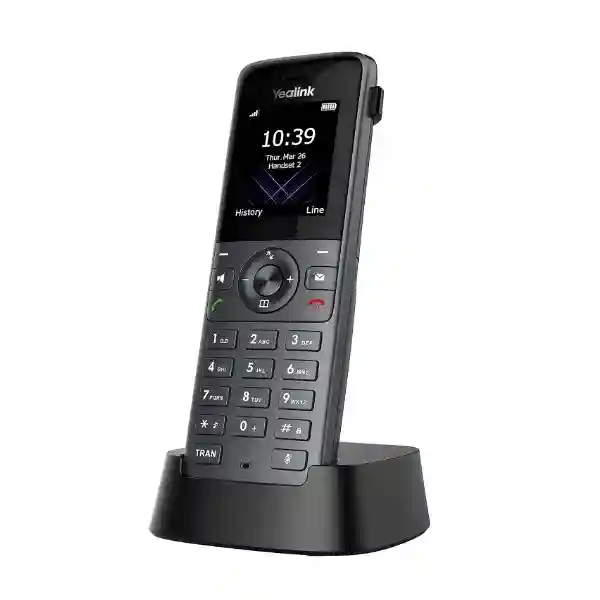
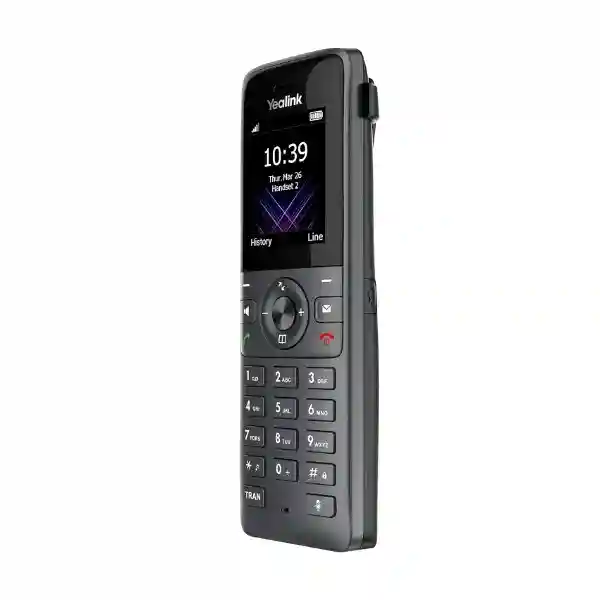
The Yealink W78H is a premium cordless DECT handset for organisations that want users to move around a workplace without giving up the call-handling features of a business VoIP system. It combines a 2.4-inch 240 × 320 TFT colour display, HD audio, full-duplex speakerphone operation, flexible noise reduction, Bluetooth 5.1, a 3.5 mm headset jack, vibration alert and quick charging in a compact business handset. The handset is designed for Yealink DECT environments rather than as a standalone phone: it must be registered to a compatible Yealink DECT base or multi-cell platform.
For Tanzania buyers, the practical decision is not simply whether the W78H has the desired features. It is also important to confirm the base station, DECT coverage, user count, SIP platform, PBX compatibility, headset requirements and the way staff move through the building. Fourteck Tanzania can help buyers frame those requirements before quotation so that the handset is ordered as part of a workable voice solution rather than as an isolated device.
Teams that need cordless business calling, headset flexibility, reliable alerts and compatibility with Yealink single-cell or multi-cell DECT systems.
What the Yealink W78H solves
Mobility during calls
DECT lets staff carry the handset while moving between desks, counters, corridors or operating areas covered by the selected Yealink DECT system. This is useful where a fixed desk phone would force a user to choose between answering calls and performing mobile duties.
Hands-free working
Built-in Bluetooth 5.1 and a 3.5 mm headset jack give users two practical headset options. This supports reception, supervisors, sales teams and operational staff who need to keep their hands free while remaining on a call.
Calls in noisy workplaces
The W78H combines HD audio, flexible noise reduction and a vibration alert. The vibration function is especially useful where an audible ring may be less noticeable, while the audio design helps users maintain clearer conversations.
Scalable DECT design
A W78H can be used with the Yealink W70B for single-cell deployments and with compatible W75, W80 and W90 platforms for broader multi-cell environments. That creates a migration path from smaller offices to larger sites when system design and compatibility are planned correctly.
Verified Yealink W78H specifications
| Display | 2.4-inch 240 × 320 TFT colour screen with backlit keypad and icon-based user interface |
| Audio | HD audio, full-duplex speakerphone, Flexible Noise Reduction / noise cancellation, Hearing Aid Compatibility |
| Headsets | Bluetooth 5.1 and 3.5 mm headset jack |
| Talk time | Up to 21 hours in ideal conditions |
| Standby time | V0: up to 166 hours; V1–V4: up to 320 hours in ideal conditions |
| Quick charge | 10 minutes of charging for up to 2 hours of talk time |
| Calls per handset | Up to 2 simultaneous calls per handset |
| DECT range | Up to 50 metres indoors and 300 metres outdoors in ideal conditions; real coverage depends on the building and radio environment |
| Compatible Yealink systems | W70B single-cell plus compatible W75, W80 and W90 multi-cell systems; firmware and system capacity should be checked before deployment |
| Physical | 151 × 49.5 × 21 mm; current Yealink support data lists handset weight at 126.5 g; space grey |
| Package | Handset, charging cradle, rechargeable battery, belt clip and power adapter |
Technical values above are based on current Yealink product and support information. Battery and radio figures are stated for ideal conditions; building materials, interference, configuration, call behaviour and hardware revision can affect real-world results.
Compatibility and deployment planning
The W78H is best understood as a handset within a Yealink DECT architecture. For a smaller business or a single coverage zone, the W70B is the usual single-cell companion. Yealink states that the W78P system, which pairs a W70B base with a W78H handset, can support up to 10 handsets, 10 SIP accounts and 20 simultaneous calls across the system, with up to two simultaneous calls per handset. Larger or more complex premises can use compatible Yealink multi-cell platforms such as W75, W80 or W90, where roaming and handover can help maintain calls as users move through correctly designed radio coverage.
Coverage figures should never be treated as guaranteed building dimensions. Walls, reinforced concrete, metal shelving, lift cores, floor separation, machinery, other radio systems and the density of users can alter practical DECT performance. A warehouse, hotel, school, clinic, retail floor and multi-storey office can therefore need very different base placement even when their total floor area appears similar. Buyers should provide floor plans, user movement patterns and any known difficult areas when requesting a multi-cell recommendation.
PBX and SIP compatibility also matters. The DECT base, not the handset alone, participates in the IP telephony environment. Confirm the intended PBX or hosted SIP platform, provisioning method, required directories, call features, extension count and network design before ordering. For broader voice-system planning, review Fourteck Tanzania’s integrated IT and telecom overview, browse the Tanzania technology shop, and use the services page to understand how handset selection connects with PBX, switching, cabling and support requirements.
Buying guidance before requesting a quotation
1. Confirm the base system
State whether you already have a W70B, W75, W80 or W90 environment, or whether the quotation should include the required base infrastructure.
2. Count mobile users
List the number of staff who need handsets now and expected growth. Include shifts and shared-handset scenarios because registered devices and simultaneous calls are different planning quantities.
3. Map movement
Identify where calls must continue: reception, stores, warehouse aisles, corridors, guest floors, workshops, loading areas or multiple buildings. This is essential for multi-cell design.
4. Check headset needs
Decide whether Bluetooth or wired headsets are required, and confirm the exact headset model rather than assuming every accessory will work identically.
Yealink W78H Tanzania
Businesses evaluating the Yealink W78H in Tanzania are usually trying to solve a mobility problem inside a business phone system: staff need to answer and manage calls while moving away from a fixed desk. The handset suits environments where users circulate between offices, service counters, stock areas, reception points, meeting rooms or operational zones but still require extension-based calling. In a Tanzania deployment, the first design question should be whether one DECT cell is enough or whether the premises need a multi-cell design. A small office with predictable movement may be well served by a W70B-based system, while a multi-floor building, larger warehouse, hospitality property or dispersed workplace can require W75, W80 or W90 planning. The correct answer depends on radio coverage and capacity, not merely the number of handsets.
Procurement teams should also separate the handset from the complete voice solution. The W78H does not replace the DECT base, SIP account, PBX, switching, internet connection or power protection required by the overall system. A quotation should therefore identify whether the customer already has compatible Yealink DECT infrastructure and whether new base stations, PoE switching, configuration or PBX work are needed. In offices that rely on voice calling for sales, customer service or internal coordination, it is useful to review how calls are routed, how voicemail is handled and whether staff need shared or personal extensions before choosing quantities.
For Tanzania organisations with branches or future expansion plans, standardising on a compatible handset family can simplify training and spares, while multi-cell architecture can provide a structured route to broader coverage. Bluetooth 5.1, the wired headset jack, vibration alert and quick charging are particularly relevant to users who spend long periods away from a desk. Availability, lead time, pricing and exact hardware revision should be confirmed at quotation stage rather than assumed. Fourteck Tanzania can use the stated site, user count, PBX platform and coverage requirement to prepare a more accurate recommendation.
Yealink W78H DECT Handset Dar es Salaam
For organisations in Dar es Salaam, the Yealink W78H can fit office, hospitality, retail, distribution and service environments where staff need to remain reachable while moving through a building. A typical commercial site can include reception, management offices, store rooms, customer areas and utility spaces separated by walls that affect radio coverage differently. Rather than treating Yealink’s ideal indoor range as a guarantee, buyers should map the routes along which users actually carry the handset and identify areas where uninterrupted calling matters. A single-cell W70B design may be sufficient for compact sites, while larger premises can justify a W75, W80 or W90 multi-cell design with deliberate base placement.
Dar es Salaam deployments often benefit from considering voice together with the LAN and power environment. The DECT base connects to the IP network and the PBX or hosted SIP service, so call quality also depends on stable switching, correct VLAN and QoS policies where used, suitable internet connectivity for hosted services, and power continuity for the network equipment. If an organisation is replacing legacy cordless or analogue phones, the project should document the extension plan, inbound call routing, reception workflow, voicemail behaviour and any line or SIP trunk dependencies before migration. That planning reduces the risk of buying handsets before the call platform is ready.
The W78H is especially attractive for supervisors, front-office teams, mobile administrators and staff who need a headset while moving. Bluetooth 5.1 allows wireless headset use, while the 3.5 mm port gives a wired alternative. Vibration alert adds another notification method in louder spaces. When requesting a Dar es Salaam quotation, include handset quantity, existing Yealink base model if any, PBX brand or SIP service, floor count, approximate coverage areas and headset requirements. Pricing, stock and delivery arrangements should then be confirmed against the specific project rather than assumed from generic online listings.
Yealink W78H DECT Handset Mwanza
Mwanza businesses looking for a cordless business phone can consider the Yealink W78H when staff movement is part of daily work. The handset can support roles that shift between a desk, customer area, stock room, workshop or service point, provided the Yealink DECT base architecture is designed for the space. The radio plan should start with the shape and construction of the premises. Thick masonry, metal structures, shelving and level changes can reduce the practical distance of a DECT signal, so a site with modest floor area can still need more careful placement than an open-plan office of similar size.
The W78H offers business features that can matter in these environments: HD audio, full-duplex speakerphone, flexible noise reduction, vibration alert, Bluetooth 5.1 and a wired headset connection. Its quick-charge capability can be useful where handsets are heavily used across a workday, although charging routines should still be defined for shared devices and shift-based teams. The handset’s current Yealink documentation distinguishes standby performance by hardware revision, with V0 rated up to 166 hours and V1 through V4 up to 320 hours in ideal conditions. Buyers who consider standby time important should therefore confirm the supplied revision during quotation.
For procurement in Mwanza, the quotation should make clear whether the request is for additional handsets to an existing compatible system or for a complete new DECT solution. Additional W78H units must fit within base and system capacity; a new deployment also needs the appropriate base station, network connectivity and PBX or SIP service. Organisations with several departments can map extensions by role and decide whether each handset is individually assigned or shared. Providing these details early makes it easier to size the solution, avoid missing accessories and prepare a deployment plan that supports later growth.
Yealink W78H DECT Handset Arusha
In Arusha, the Yealink W78H is relevant to offices, hospitality operations, travel and service businesses, education facilities and other organisations where staff need professional voice calling while moving through the site. Hospitality and customer-facing environments are a useful example: front-office staff may need to leave a desk but still receive calls, supervisors may walk between service areas, and back-office users may need to consult colleagues without returning to a fixed extension. A cordless DECT handset can address that requirement when the underlying base system has enough radio coverage and call capacity.
The right architecture depends on site layout. A compact office can use a W70B single-cell base, while broader properties may need W75, W80 or W90 multi-cell infrastructure. Multi-cell should not be specified from marketing range figures alone. The project should identify stairwells, concrete cores, outdoor transitions, service areas, guest floors and any spaces where a dropped call would create operational difficulty. Roaming and handover are valuable only when base placement and overlap are planned correctly. For deployments connected to a hosted PBX, internet reliability and network policy also deserve attention.
The W78H’s Bluetooth 5.1 support is useful for users who need a wireless headset, while a 3.5 mm jack provides a wired option. Vibration alert can help staff notice incoming calls in busy or noisy settings, and the belt clip supports mobile use. When requesting an Arusha quotation, specify whether the handsets are for a new system or an expansion, the number of simultaneous users, the existing phone platform, the physical areas to cover and whether accessories such as headsets are required. Fourteck can then align handset quantities with the larger telephony design instead of treating the request as a standalone equipment purchase.
Yealink W78H DECT Handset Dodoma
For organisations in Dodoma, the Yealink W78H provides a business-focused option for cordless extension mobility. The handset may fit administrative offices, institutions, professional services, retail operations and multi-room workplaces where users need to make and receive calls beyond a fixed desk. Planning should begin with user roles. A manager who moves between meeting rooms, a receptionist who covers several counters and an operations employee walking through storage or service areas all have different movement patterns, call volumes and headset needs. Those differences help determine whether a single-cell or multi-cell DECT platform is the better fit.
A W70B-based deployment can support up to 10 handsets and 20 simultaneous calls across the system according to Yealink’s W78P information, but capacity should be checked against the exact intended configuration and firmware. Larger sites can use compatible W75, W80 or W90 multi-cell systems. Radio coverage needs on-site judgement because ideal-distance specifications do not account for every building. Where offices have dense walls, multiple floors or separated blocks, base placement and handover zones become more important than a simple distance measurement.
Procurement in Dodoma should also capture the surrounding network and PBX requirements. If the organisation already has a Yealink DECT base, identify its model and current registered devices. If the solution is new, state the PBX or hosted SIP platform, available network ports, PoE capability where relevant, internet service and any call-routing requirements. The W78H’s HD audio, vibration alert, Bluetooth 5.1 and quick charging offer strong user-facing benefits, but these features produce the best outcome when the voice platform underneath them is stable and correctly configured. Quotations should confirm exact supply scope, hardware revision, accessories, availability and delivery terms.
Yealink W78H DECT Handset UAE
UAE buyers considering the Yealink W78H often have a wide range of deployment types, from conventional offices to hospitality, retail, warehouses and multi-floor commercial sites. The key selection advantage of the W78H is that it can sit within both compact and scalable Yealink DECT designs: W70B for single-cell environments and W75, W80 or W90 options for larger multi-cell coverage. In a high-density commercial building, radio planning should consider walls, lifts, service cores and adjacent wireless systems. In a warehouse, racks and metal structures can become the main coverage challenge. In hospitality, continuous movement between guest-facing and service areas can make roaming design especially important.
The handset itself supports a 2.4-inch colour display, HD audio, full-duplex speakerphone, noise reduction, Bluetooth 5.1, a 3.5 mm headset connection and vibration alert. Those capabilities suit users who need to remain mobile while handling customer or internal calls. The quick-charge feature can add operational flexibility for frequently used handsets, though businesses should still provide charging routines and spare strategy where devices are shared across shifts. Buyers should distinguish between the W78H handset and the W78P package: a standalone W78H requires a compatible DECT system, while the W78P is the paired system concept that includes the W70B base.
For related UAE business telephony planning, the Fourteck UAE technology site and Fourteck IP phone specialist site provide broader context for IP phones and voice infrastructure. A useful quotation request should include the number of users, building layout, existing base stations, PBX platform, SIP account needs, headset preferences and whether seamless roaming is required. Availability, final pricing, VAT treatment, warranty terms and delivery scope should be confirmed in the specific commercial offer.
Yealink W78H DECT Handset Uganda
For Uganda organisations, the Yealink W78H can form part of a modern IP telephony environment where staff need cordless mobility rather than fixed desk-only calling. Its most important architectural characteristic is compatibility with Yealink DECT bases: the handset works with W70B for single-cell use and compatible W75, W80 and W90 multi-cell systems. This gives buyers a way to match the deployment to the actual site. Smaller offices can start with a compact design, while hotels, schools, warehouses, health facilities, offices with multiple floors and other larger environments can consider a multi-cell layout where roaming and handover are operational requirements.
The W78H includes Bluetooth 5.1 and a 3.5 mm headset jack, so users can select either wireless or wired headset operation when compatible accessories are chosen. Vibration alert is useful where normal ringing may be missed, and HD audio with flexible noise reduction supports clearer voice interaction. Yealink lists up to 21 hours of talk time under ideal conditions and quick charging that can provide up to two hours of talk after a ten-minute charge. Standby time differs by hardware revision, so buyers should not compare offers solely on an old datasheet without checking the actual revision supplied.
Uganda customers planning branch or city deployments can also review Fourteck Uganda’s IP PBX, VoIP and networking guidance. A complete request should list handset quantities, existing DECT hardware, the PBX or SIP service, approximate site dimensions, floor count, expected roaming areas and any network work required. That information helps distinguish a simple handset expansion from a larger voice-system project. Quoted stock, delivery, configuration scope and support arrangements should always be confirmed for the specific order rather than inferred from regional marketing pages.
Yealink W78H DECT Handset Kampala
Kampala businesses may use the Yealink W78H where mobile staff need extension calling across offices, service areas, hospitality properties, retail floors or operational facilities. The buying conversation should start with the user’s movement rather than with the handset specification alone. If users stay within a compact office, a W70B single-cell solution can be appropriate. If they move across multiple floors, corridors, separated departments or larger premises, the W75, W80 or W90 multi-cell families may provide the better architecture. The actual base count and placement require assessment because structural materials and radio conditions can shorten practical range.
Kampala organisations that already operate a Yealink DECT system should provide the exact base model, firmware level where available, number of registered handsets and remaining capacity. This is especially important when adding units to an established installation. A new project should instead document the PBX or hosted VoIP platform, SIP extensions, reception requirements, call queues or ring groups, external trunking and network availability. Although the W78H supports rich call features such as transfer, hold, call waiting, conference and directories, the exact behaviour of many functions also depends on the connected DECT base and PBX platform.
The W78H user experience is particularly suited to mobile business roles because it combines a colour screen, backlit keypad, belt clip, vibration alert and headset flexibility. Bluetooth 5.1 supports wireless headset use, while the 3.5 mm jack provides a straightforward wired option. Buyers who need long shifts should ask which hardware revision is supplied because standby ratings vary across revisions. A Kampala quotation request is strongest when it includes quantities, desired accessories, floor plans or coverage notes and the expected installation scope, allowing the proposal to address the complete working system rather than only the handset line item.
Yealink W78H DECT Handset Arua
In Arua, the Yealink W78H can be considered by organisations that need mobile business calling inside offices, service premises, education facilities, hospitality sites, stores or operational spaces. The handset’s value comes from allowing staff to remain connected to a Yealink DECT voice system while moving within designed coverage. For smaller sites, a W70B base may provide the required footprint. For more complex premises, multi-cell options such as W75, W80 or W90 can be assessed. The choice should be based on actual movement paths, wall construction, floor separation and simultaneous call requirements rather than a simple square-metre estimate.
Arua buyers should also think about maintainability. If several employees share handsets, each device can be labelled and assigned a charging location, while directories and extension naming can be standardised. If handsets are personal, the organisation can align extensions with staff roles and apply a consistent provisioning process. Bluetooth 5.1 can support users who need a wireless headset, while the 3.5 mm connection provides a wired alternative. Vibration alert can help in busy or noisy environments, and quick charging can reduce disruption if a handset has not been placed on its cradle for a full charging cycle.
Before placing an order, confirm whether the request is handset-only or includes the base station and PBX integration. A complete project may need SIP configuration, network switching, cabling, internet access for hosted services, power backup and user training. These dependencies are particularly important when replacing analogue cordless phones because the new DECT environment sits on the IP network and may use different call-routing logic. A clear Arua quotation brief should therefore include current telephony equipment, required extensions, coverage areas, handset quantity and any headset needs. Stock status, delivery timeline and support scope should be confirmed in the quotation itself.
Yealink W78H DECT Handset Mbarara
Mbarara organisations evaluating the Yealink W78H can use it as a mobile extension endpoint within a Yealink DECT phone system. It is suitable where staff need to move between working areas without relying on personal mobile phones for internal business calls. Typical use cases can include administration teams, retail supervisors, hotel staff, warehouse coordinators and service personnel. The handset itself is only one part of that solution. A compatible base or multi-cell system must provide the radio connection and link the handset to the IP telephony platform.
For a small Mbarara office, the W70B can support a straightforward single-cell design, subject to the building and required coverage. When users need to walk further, move between floors or maintain active calls across a larger facility, a W75, W80 or W90 multi-cell architecture may be more appropriate. It is useful to mark dead-zone risks before ordering: concrete walls, stair cores, dense storage, metal roofing structures and adjacent equipment can all influence radio behaviour. Multi-cell systems should be planned around overlapping coverage and call capacity rather than installed by evenly spacing bases without measurement.
The W78H provides a strong day-to-day feature set for these mobile roles. The 2.4-inch colour display and backlit keypad help navigation, HD audio and noise reduction support voice clarity, and vibration alert adds an extra notification method. Bluetooth 5.1 and a 3.5 mm port support headset choices. For procurement, identify whether users need individual chargers at assigned desks, whether devices will be shared between shifts and whether headsets form part of the order. Also provide the PBX or SIP platform and existing Yealink base details. This allows the quotation to include compatibility and capacity checks rather than treating every W78H request as an identical purchase.
Yealink W78H DECT Handset Gulu
For Gulu buyers, the Yealink W78H offers business cordless calling when staff need freedom from a fixed desk. It can support reception coverage, supervisors moving between teams, administrators who circulate through departments, and operational users who need an extension while checking stock or equipment. Because the handset connects through Yealink DECT infrastructure, the first technical task is to determine coverage and capacity. A W70B single-cell design may be practical in a compact office, while wider or multi-level sites can be evaluated for W75, W80 or W90 multi-cell deployment.
Voice quality is influenced by more than the handset. The IP network carries calls from the DECT base toward the PBX or SIP provider, so network stability, switch configuration, internet performance for hosted systems and power availability all contribute to the result. Organisations can improve resilience by documenting voice VLANs where used, keeping switches and network equipment on appropriate backup power, and maintaining configuration records. These are not unique to Gulu, but they become especially important when a business depends on the cordless phone system for customer or operational communication.
From the user’s perspective, the W78H combines HD audio, noise reduction, speakerphone operation, vibration alert, Bluetooth 5.1 and a wired headset port in a compact handset. Quick charging can be useful for shared or heavily used devices. Buyers should confirm the supplied hardware revision because Yealink’s current data shows different standby ratings across revisions. When requesting pricing for Gulu, provide handset quantity, existing DECT base information, required extensions, PBX platform, coverage description and installation expectations. This helps the supplier distinguish a simple add-on handset order from a complete new telephony deployment and quote the necessary components without implying unverified local stock or delivery times.
Yealink W78H DECT Handset Kenya
Kenya organisations can consider the Yealink W78H when business users need cordless VoIP mobility with professional call controls and headset flexibility. The handset can work in a W70B single-cell system for smaller sites or within compatible W75, W80 and W90 multi-cell environments for broader coverage. This makes it relevant to conventional offices as well as hotels, schools, retail groups, warehouses, clinics and service operations where staff move during calls. The specific DECT architecture should be determined by building layout, user count and simultaneous call demand rather than by selecting the handset first and solving coverage later.
For Kenya procurement teams, there are several practical questions worth putting into the request for quotation. Is the order adding handsets to an existing Yealink system, or is it a complete new deployment? What PBX or hosted SIP platform is in use? How many employees need a handset and how many are likely to be in simultaneous calls? Which areas of the building must have coverage? Are Bluetooth headsets needed? Does the customer need installation, configuration and user onboarding, or supply only? These questions define the real scope and help avoid a quote that contains handsets without the infrastructure required to operate them.
The W78H provides a modern 2.4-inch colour display, HD audio, full-duplex speakerphone, noise reduction, vibration alert, Bluetooth 5.1 and a 3.5 mm headset jack. Quick charging supports busy users, while the belt clip helps mobile work. For regional IT and voice context, visit Fourteck Kenya, which covers VoIP phones, IP PBX and related business technology. Product price, Kenyan tax treatment, stock position, exact revision, warranty and logistics should be validated in the actual quotation because those commercial conditions can change.
Yealink W78H DECT Handset Kuwait
Kuwait businesses seeking a professional cordless handset can evaluate the Yealink W78H as part of a Yealink DECT IP phone environment. The model is designed for users who need to walk through the workplace while retaining access to business calling. In an office this can mean managers, reception cover or facilities staff; in hospitality it can support mobile operational roles; in retail or warehousing it can help supervisors remain available while moving away from fixed workstations. The appropriate system may be W70B single-cell for compact premises or compatible W75, W80 and W90 multi-cell infrastructure where coverage and roaming are more demanding.
Building construction matters when sizing DECT. Concrete, reflective surfaces, metal storage and the geometry of corridors or service areas can affect radio propagation, so an ideal range figure should not be converted directly into a promised radius. Multi-cell projects should identify where users must maintain active calls and where bases can be placed with network connectivity and power. The IP side of the system should also be reviewed: PBX compatibility, SIP accounts, VLAN design, quality of service and internet performance for hosted voice can all influence the user experience even when radio coverage is good.
The W78H offers Bluetooth 5.1 for wireless headsets and a 3.5 mm jack for wired alternatives, along with HD audio, full-duplex speakerphone operation, noise reduction and vibration alert. These functions suit call-intensive or mobile staff, while quick charging can reduce downtime when batteries are low. A Kuwait quotation should state the required quantity, existing Yealink DECT equipment if any, PBX or cloud voice platform, site type, number of floors, roaming needs and headset models. Final commercial terms, supply availability and delivery schedule should be confirmed against the project rather than assumed from online product descriptions.
Yealink W78H DECT Handset Ghana
Ghana organisations can use the Yealink W78H when employees need a cordless business extension that remains part of an IP PBX or hosted voice environment. The handset is particularly useful where roles are mobile within a premises: reception and administration teams, hospitality supervisors, retail managers, school staff, warehouse coordinators and technical personnel may all benefit from answering calls without returning to a desk. To make that practical, buyers need the correct Yealink DECT architecture. A W70B can serve single-cell requirements, while W75, W80 and W90 systems address broader multi-cell scenarios where seamless movement is needed.
A Ghana deployment should be planned around the physical site. Concrete walls, floor slabs, storage racks and long corridors affect DECT differently, so the number of bases should come from the coverage requirement rather than a simple handset count. Capacity also matters: a site can have many registered handsets but only a subset in calls at the same time. The project brief should therefore list total users and expected concurrent calls. If the business already has a Yealink system, the exact base model and current registration load should be provided so expansion can be assessed correctly.
The W78H includes a 2.4-inch colour screen, HD audio, noise reduction, vibration alert, Bluetooth 5.1, a wired headset port and quick charging. These features create a strong mobile user experience, but they still depend on a stable network and PBX configuration. For broader Ghana technology planning, Fourteck Ghana covers IP PBX, IP phones and related infrastructure. When requesting a quote, include handset quantities, site coverage, PBX details, headset needs and installation scope. Price, warranty, availability, shipping and tax should be confirmed in the formal offer.
Yealink W78H DECT Handset Nigeria
Nigeria businesses considering the Yealink W78H can use it as a mobile extension device within a Yealink DECT voice environment. The model is relevant to offices, hospitality, retail, education, healthcare administration, warehouses and other workplaces where staff move through the premises while still needing dependable business calling. A small site can evaluate the W70B single-cell base, while a larger office, hotel, campus or distribution facility may require W75, W80 or W90 multi-cell infrastructure. The number and position of bases should be determined from the building and movement pattern, not simply from advertised range.
For Nigerian deployments, power and network resilience deserve deliberate attention because the DECT base, switches, router, firewall and PBX or internet connection form part of the call path. Where voice is operationally important, organisations can consider UPS support for network equipment and ensure that hosted-voice connectivity has the reliability expected by the business. Voice VLAN and QoS design may also be useful in larger networks. These infrastructure decisions are separate from the handset specification but are necessary to deliver consistent performance from any IP telephony solution.
The W78H contributes a strong set of end-user features: HD audio, full-duplex speakerphone, noise reduction, vibration alert, Bluetooth 5.1 and a 3.5 mm wired headset port. Yealink also provides quick charging and long talk time under ideal conditions. For regional procurement context, visit Fourteck Nigeria. A useful quote request should include quantities, current PBX, existing DECT hardware, building size, simultaneous call estimate, roaming requirement and accessories. Final stock, lead time, tax, warranty and delivery should be confirmed specifically for the order rather than assumed.
Yealink W78H DECT Handset Seychelles
In Seychelles, the Yealink W78H can be particularly relevant to hospitality, resorts, offices, retail and service organisations where staff need mobile extensions across customer-facing and operational areas. A cordless business handset can help supervisors, front-office staff, administrators and service teams remain reachable without carrying personal mobile phones for every internal call. The W78H supports that workflow when connected to an appropriate Yealink DECT system. Smaller premises can assess the W70B single-cell base, while larger properties can examine W75, W80 or W90 multi-cell architecture where roaming and handover are important.
Island and hospitality properties can have complex layouts: guest blocks, back-of-house corridors, service areas, outdoor transitions and reinforced structures can all affect radio coverage. A DECT design should therefore begin with the areas in which calls must remain active. Multi-cell planning should ensure useful overlap without assuming that an ideal outdoor range applies through walls and floors. Network connectivity to each base, PBX location or cloud service, internet reliability and power protection should also be included in the project scope. If the property has several buildings, the voice design may need to account for how the LAN connects those areas.
The W78H’s vibration alert can be helpful in busy service environments, while Bluetooth 5.1 and the 3.5 mm headset jack provide flexibility for users who need hands-free operation. HD audio, noise reduction and the colour interface support day-to-day business use. When requesting a Seychelles quotation, list the required handsets, site layout, current PBX, existing Yealink bases if any, areas requiring roaming and accessories. Commercial factors such as freight, duties, availability, warranty handling and delivery timing should be established in the quotation because these can vary by project and cannot be inferred from the handset specification alone.
Related Fourteck resources
A W78H deployment may involve more than handsets. Use the Fourteck Tanzania shop to explore complementary business technology, the Fourteck Tanzania services page when installation or integration is part of the requirement, and the Fourteck Tanzania company overview for wider solution context. Regional projects can also reference Fourteck Uganda, Fourteck Kenya, Fourteck Ghana, Fourteck Nigeria and Fourteck UAE for country-level IT, VoIP and communications planning.
These links are intended as planning context rather than claims of stock or identical commercial terms in every market. Product availability, technical scope and logistics should be checked for each destination.
Yealink W78H FAQs
Does the Yealink W78H work by itself?
No. The W78H is a DECT handset and needs a compatible Yealink DECT base or multi-cell system. It can be used with the W70B and with compatible W75, W80 and W90 platforms.
What is the difference between W78H and W78P?
W78H refers to the handset. W78P refers to the DECT IP phone system concept that pairs a W78H handset with a W70B base station. This distinction matters when comparing quotations because a handset-only price does not represent a complete new system.
Can the W78H use a Bluetooth headset?
Yes. Yealink specifies built-in Bluetooth 5.1 and also provides a 3.5 mm headset jack. The exact headset model should still be checked for compatibility and user preference.
How far can the W78H work from a base?
Yealink lists ideal DECT range of up to 50 metres indoors and 300 metres outdoors. Real range can be lower because walls, floors, metal objects, radio interference and building design affect coverage. A site survey or practical coverage plan is better for larger deployments.
How many W78H handsets can the W70B support?
In the W78P/W70B system, Yealink specifies support for up to 10 handsets, 10 SIP accounts and 20 simultaneous calls across the system. Confirm firmware and the complete device mix when expanding an existing system.
What battery life should I expect?
Yealink lists up to 21 hours of talk time in ideal conditions. Standby rating depends on hardware revision: V0 is listed up to 166 hours and V1 through V4 up to 320 hours. Actual results depend on usage and conditions.
Is the W78H suitable for a warehouse or hotel?
It can be, especially where staff need mobile voice communication and vibration alert, but coverage must be engineered for the property. Warehouses with metal racking and hotels with multiple floors can require multi-cell designs rather than a single base.
Does the W78H support roaming?
When used with compatible Yealink multi-cell systems such as W75, W80 or W90, the W78H can participate in seamless roaming and handover. Correct base placement and system design are essential for that experience.
Quotation checklist
For a useful Yealink W78H quotation, provide the information that affects system design rather than only the model name. This helps the proposal identify whether you need handsets alone, a single-cell base, multi-cell infrastructure, PBX work or accessories.
Decision recap
Choose the Yealink W78H when you need a premium cordless business handset with Bluetooth 5.1, a wired headset option, vibration alert, HD audio, quick charging and compatibility with a scalable Yealink DECT ecosystem. It is a strong fit for users who move around the workplace and still need professional extension calling. Do not choose it as if it were a standalone cordless phone; confirm the compatible base, PBX environment and radio coverage first.
For small sites, start by evaluating W70B single-cell coverage and capacity. For larger or multi-floor premises, plan W75, W80 or W90 multi-cell deployment around actual movement and building construction. Confirm hardware revision when battery standby performance matters, and include network, SIP, headset and installation requirements in the quotation so the final system is complete.
Talk to Fourteck about your DECT design
Share your site type, handset quantity, existing phone system and coverage requirement. Fourteck can help structure the request around handset compatibility, DECT base selection, PBX integration, network readiness and deployment scope. The objective is to quote the components required for a working business voice solution without assuming stock, lead time or site conditions that have not been verified.
You can also review the Fourteck Tanzania overview to understand the wider IT, networking and communications approach before requesting a project quotation.


Reviews
There are no reviews yet.