
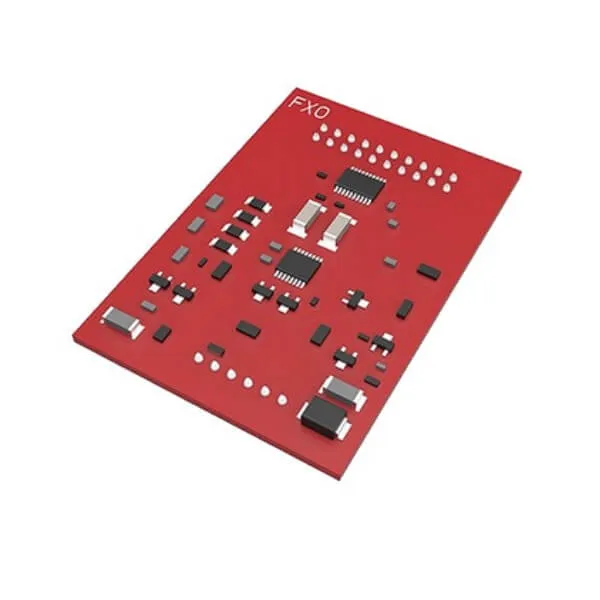
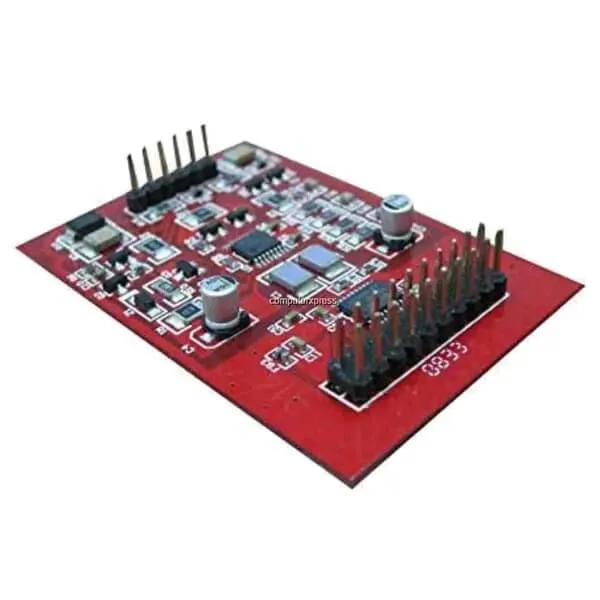
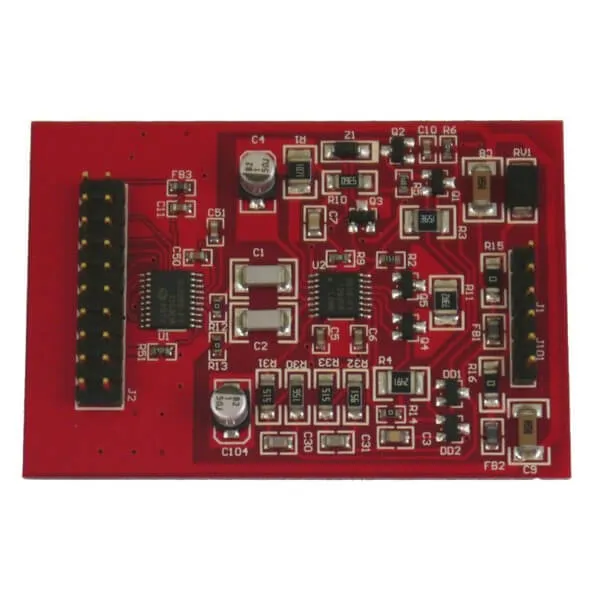
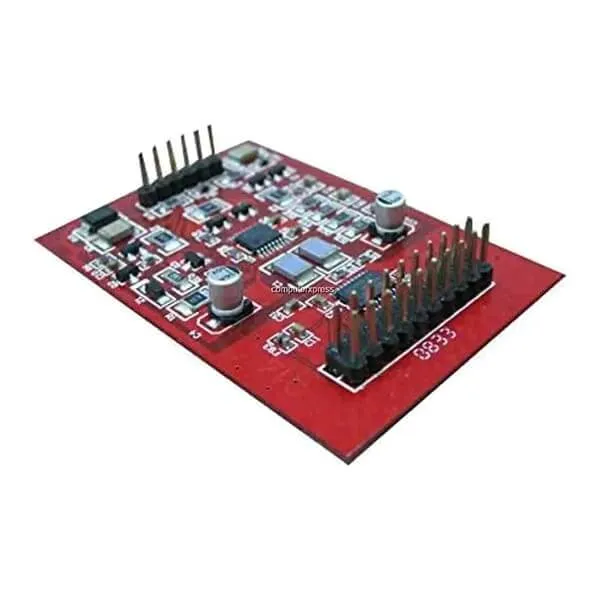
Yeastar O2 FXO Module
The Yeastar O2 FXO Module is a two-port analog trunk expansion module designed to connect two PSTN/POTS lines to compatible Yeastar PBX platforms. For organisations that still depend on conventional carrier lines, need analog trunks alongside SIP services, or want a staged transition from legacy telephony to IP communications, the O2 module provides a focused way to add physical FXO connectivity without replacing the entire phone system. FourTeck Tanzania can help procurement and technical teams confirm the exact Yeastar PBX model, available module capacity, required expansion board, analog line characteristics and desired call-routing plan before the module is ordered and installed.
Connect two analog PSTN/POTS lines to a supported Yeastar PBX. Compatibility and slot requirements should be checked against the exact PBX model and generation.
The O2 module provides two FXO interfaces for terminating two analog PSTN lines.
Useful when a business wants to keep selected analog lines while moving extensions and call handling to an IP PBX.
Some Yeastar systems accept modules directly while larger systems may require an EX08 expansion board.
Quotation planning should include the PBX model, number of lines, routing requirements, cabling and installation scope.
What the Yeastar O2 FXO Module does
FXO stands for Foreign Exchange Office. In practical business telephony, an FXO interface is the PBX-side port used to receive an analog telephone line from a public telephone network or another suitable analog source. Yeastar specifies the O2 as a module with two FXO ports for connecting two analog PSTN/POTS lines. Once installed in a supported PBX and configured correctly, those physical lines can become trunks that the phone system can use for incoming and outgoing calls according to the organisation’s routing rules.
This makes the O2 module particularly relevant where a company is not ready to remove every analog service. A site may have established PSTN numbers that customers already know, may use a carrier service that is still delivered as an analog line, or may want a transition period in which SIP trunks and analog trunks coexist. Instead of treating legacy lines and VoIP as separate systems, the PBX can bring them into a common call-routing environment. Reception, departments, ring groups, IVR menus and other PBX functions can then be planned around the available trunks, subject to the features and licensing of the chosen Yeastar platform.
The important buying point is that the O2 is not a stand-alone gateway. It is an internal telephony module intended for compatible Yeastar hardware. Buyers should therefore confirm the exact PBX model, module-slot availability, expansion-board requirements and current firmware/platform documentation before purchase. That compatibility check is more useful than relying on an old reseller list because Yeastar’s product families have changed over time.
Verified technical highlights
| Product type | Yeastar telephony expansion module |
| Interfaces | 2 × RJ11 FXO ports |
| Primary termination | Two analog PSTN/POTS lines |
| Ring frequency detection | 15–50 Hz in published O2 module specification material |
| Ring voltage detection | 30+ VRMS, dependent on FXO mode, in published O2 module specification material |
| Echo cancellation | Supported in published O2 module specification material |
| Deployment requirement | Compatible Yeastar PBX and suitable module slot or supported expansion-board arrangement |
Compatibility differs by platform generation. Yeastar’s current telephony-module information lists O2 support across selected S-Series and P-Series systems, while installation arrangements vary. For example, P560 and P570 use expansion boards for additional telephony interfaces, and the EX08 supports multiple telephony modules. Always validate the target PBX before procurement.
Why businesses still deploy FXO interfaces
VoIP adoption does not automatically eliminate every analog line. Many organisations operate mixed environments for practical reasons. A company may be replacing an older PBX but want to retain familiar public numbers during the transition. A branch may receive its service through analog trunks even though the internal extensions use SIP phones. An organisation may need to preserve an analog route while testing a new SIP provider. In these situations, an FXO module is not a step backwards; it is an integration component that allows existing carrier services to participate in a modern PBX workflow.
The module can also simplify call-control planning. Instead of keeping a separate analog handset for a PSTN line, the line can be presented as a trunk to the PBX, where authorised extensions can use it according to routing policies. Incoming calls can be directed to reception, a ring group or another destination. Outbound policies can determine which users or dial patterns use the analog trunk. The exact configuration depends on the Yeastar PBX model, software version and operational design.
For procurement teams, the key is to avoid buying an O2 module as an isolated spare without checking the surrounding system. The module is useful only when the PBX supports it, the correct slot is available, the analog line is technically suitable, and the call plan is defined. FourTeck’s Tanzania business technology shop provides a broader purchasing context for IP PBX, phones, networking and related infrastructure, helping buyers consider dependencies rather than only the part number.
Compatibility, expansion boards and installation planning
The Yeastar O2 module must be matched to the host PBX. Yeastar’s current telephony-module portfolio identifies the O2 as a two-FXO module for supported appliance models. Direct module capacity depends on the platform. Smaller systems can include onboard module slots, while larger P-Series appliances such as the P560 and P570 use expansion boards for added telephony interfaces. Yeastar documents the EX08 as an expansion board with four onboard module slots and eight RJ11 interfaces, and lists the O2 among the optional modules that can be installed on the EX08.
Installation should be treated as a hardware change, not a live plug-in exercise. Yeastar installation material for its PBX appliances instructs installers to power off the unit before inserting telephony modules. A good deployment process therefore includes backing up the PBX configuration, confirming the correct slot, checking the module and connectors for damage, shutting down the PBX safely, installing the module according to the model-specific guide, reconnecting the analog lines, powering up and verifying that the FXO ports are detected by the PBX.
After hardware detection, each PSTN trunk should be configured and tested. Yeastar’s S-Series guidance shows that a PSTN trunk using an O2 or SO module is connected by RJ11 from the PBX FXO port to the provider’s analog interface. Administrators can then check trunk status, name the trunk and adjust transmit and receive settings as needed. Country-specific FXO mode and impedance-related settings may affect voice quality, so these should be chosen according to the actual line environment rather than copied from another country.
If a site is expanding beyond a simple two-line requirement, it is worth planning the complete interface count first. Multiple O2 modules, mixed FXS/FXO requirements, BRI interfaces or cellular trunks may change the best PBX and expansion-board arrangement. That is where system design is more useful than ordering modules one by one.
Buying and quotation checklist
Provide the exact Yeastar appliance model and, if known, hardware revision or generation.
List existing telephony modules and available slots or expansion boards.
Confirm how many PSTN/POTS lines must be connected and whether they are active today.
Describe inbound destinations, outbound users, emergency or fallback expectations and office-hour routing.
State whether the requirement is supply only, remote configuration support, or a complete installation project.
Include phones, switches, UPS, racks or cabling if they are part of the same telephony deployment.
Yeastar O2 FXO Module Tanzania
For businesses in Tanzania, the Yeastar O2 FXO Module is most relevant when the telephone environment still includes one or two analog PSTN lines that need to be managed by a Yeastar IP PBX. The use case may be a small office moving from a traditional key system, a branch that wants IP extensions but must retain existing analog trunks, a reception environment that wants centralised call handling, or an organisation that is introducing SIP services gradually rather than changing every carrier connection in one project. The module’s value comes from integrating those analog lines into the PBX so the business can manage routing through one communications platform.
A Tanzania deployment should begin with a compatibility check. Buyers should identify the exact Yeastar PBX, confirm whether an O2 module can be fitted directly or requires an expansion board, and verify how many module positions are already occupied. If the PBX is being purchased at the same time, the total analog trunk requirement should be designed before the appliance is selected. Two FXO ports may be sufficient for a small branch, but a larger head office can require additional trunks, SIP connectivity, or a different interface plan. The correct design depends on concurrent calling requirements and the public telephone services available at the site.
Line quality also matters. Analog trunks can be affected by gain, impedance, cabling condition and local carrier characteristics. Yeastar’s support guidance recommends selecting the appropriate country FXO mode, checking transmit and receive volume, and testing line quality when troubleshooting echo, clipping or unclear audio. A procurement decision should therefore include configuration and testing expectations rather than assuming that inserting the module alone completes the job.
FourTeck Tanzania can position the O2 module within the larger voice environment, including PBX hardware, IP phones, LAN readiness, UPS protection and call-flow planning. The FourTeck Tanzania technology portfolio covers IP PBX, IP phones, switches and supporting infrastructure, which is useful when an analog-to-IP migration needs more than a single expansion card.
Yeastar O2 FXO Module Dar es Salaam
Organisations in Dar es Salaam often evaluate telephony equipment in the context of office moves, branch openings, customer-service improvements and PBX modernisation. The Yeastar O2 FXO Module fits a specific requirement within those projects: keeping two analog carrier lines connected to a Yeastar PBX. This can be useful when a company has established PSTN numbers, when the carrier handoff at a site remains analog, or when the organisation wants to introduce VoIP internally while maintaining existing outside lines for continuity.
Before ordering for a Dar es Salaam site, procurement teams should distinguish between an FXO trunk and an FXS extension. The O2 module is for incoming analog lines from the telephone network; it is not the module used to connect two analog desk phones. That distinction prevents a common ordering mistake. The next step is to check the host Yeastar model and the physical expansion arrangement. If the PBX has available supported module slots, the O2 may be installed directly. If the system relies on an expansion board, that board must be included in the design and budget.
For offices with multiple departments, the analog trunks can be incorporated into a defined call flow. An incoming number might ring reception first, overflow to a group, or follow different destinations after office hours. Outbound access can be limited to selected extensions or used as an alternate route according to the organisation’s policy. These PBX behaviours should be designed before installation so testing can confirm not only that the line has dial tone, but that the business process works as expected.
When requesting a quotation in Dar es Salaam, share the PBX model, number of analog lines, existing modules, required call destinations, and whether installation or only hardware supply is needed. This enables a cleaner bill of materials and reduces the risk of discovering during installation that the PBX lacks the required expansion capacity.
Yeastar O2 FXO Module Mwanza
In Mwanza, the Yeastar O2 FXO Module can support businesses that want a manageable path from conventional telephone lines to IP-based communications. A site may already have working analog PSTN services and established public numbers, yet want better extension management, reception routing or centralised call handling through a Yeastar PBX. The O2 module allows two of those analog lines to become PBX trunks, helping the organisation modernise internal communications without requiring an immediate carrier migration.
The technical planning should begin with the line count and the PBX model. Two analog lines fit one O2 module, but the total design must also account for future growth. If another branch line, fax-related legacy service, or additional voice circuit may be required later, the available module slots and expansion-board capacity should be considered now. A PBX selected only for today’s two-line requirement can become restrictive if the organisation grows quickly. Conversely, oversizing hardware without a clear need can make the project unnecessarily expensive.
Mwanza deployments can also benefit from careful power and rack planning. The O2 module itself is installed inside the PBX, but service continuity depends on the broader system: the PBX power supply, network switch, IP phones and internet link if SIP or remote extensions are used. A suitable UPS can help keep the communication stack online during short power interruptions, while organised cabling and labelled RJ11 connections make troubleshooting easier. If the analog line has noise or inconsistent quality, testing the line directly and checking PBX FXO settings should form part of commissioning.
For purchasing, provide the exact Yeastar appliance, current expansion hardware, required quantity of O2 modules and whether the analog lines are already active. If the project includes a broader phone-system upgrade, include extension count, phone models or user roles, reception requirements and any future SIP trunk plans so the solution can be assessed as one system rather than a single accessory.
Yeastar O2 FXO Module Arusha
The Yeastar O2 FXO Module can be useful for Arusha organisations in hospitality, professional services, education, healthcare, tourism operations and general business environments that still receive public telephone service through analog lines. Many of these organisations value continuity: numbers printed on websites, stationery or customer records should not necessarily be changed simply because the internal phone system is modernised. By connecting two PSTN lines to a compatible Yeastar PBX, the O2 module can help preserve those external lines while extensions and call handling move to an IP-based platform.
For a hotel or guest-service environment, the key planning question may be how incoming lines reach reception and how calls are distributed after hours. For a professional office, the focus may be reliable external calling and clear routing between departments. For a branch site, the analog trunk may be maintained as an alternative to the primary SIP service. The O2 module provides the physical FXO interfaces, but it does not decide the call policy. Those routing rules are configured in the PBX and should be documented as part of deployment.
Compatibility deserves particular attention when replacing an older Yeastar system or reusing accessories. Product families evolve, and module support can differ between models. Verify the exact appliance and whether the O2 module is supported in the intended slot or through the required EX08 expansion board. Power down the appliance before hardware installation and follow the model-specific Yeastar installation procedure. After the module is recognised, each analog trunk should be connected, named, tested for incoming and outgoing calls and checked for acceptable audio.
When sourcing in Arusha, request a quotation that separates the module itself from any necessary expansion board, PBX hardware, installation labour, configuration work, phones, network switching and UPS protection. This gives procurement teams a more accurate project cost and makes it easier to compare like-for-like proposals.
Yeastar O2 FXO Module Dodoma
For organisations in Dodoma, the Yeastar O2 FXO Module addresses a practical integration requirement: bringing two traditional analog PSTN lines into a supported Yeastar PBX. Government-related offices, professional organisations, NGOs, institutions and private businesses may operate existing telephone numbers while introducing IP phones, structured call routing or modern PBX features. The module can support that transition by allowing the analog lines to remain available as trunks under central PBX control.
Procurement should begin with a simple inventory. Record the existing PBX model, current telephony modules, available slots, number of active analog lines and whether SIP trunks are also in use. Then define the desired call behaviour. Does every user need permission to dial through the PSTN lines, or only reception and selected departments? Should incoming calls ring a receptionist, an IVR or a group? Is one analog line intended mainly as an alternate route? These answers influence configuration and testing even though the hardware remains the same two-port module.
A careful deployment also checks physical and electrical conditions. RJ11 cabling should be labelled, analog line quality should be tested, and the PBX should be protected by appropriate power infrastructure. Where the PBX sits in a communications rack, ventilation and cable management should be considered. If the organisation is adding IP phones at the same time, the LAN may need PoE switching, voice VLAN design and Quality of Service. The O2 module solves the analog trunk interface requirement, while the rest of the network determines how reliable and manageable the complete voice system will be.
For Dodoma quotation requests, include quantities, the exact Yeastar platform and whether the requirement is a new build, an expansion or a replacement. If the existing PBX is unknown, photographs of the model label and current module arrangement can help a technical team identify what needs to be verified before a final bill of materials is approved.
Yeastar O2 FXO Module UAE
In the UAE, the Yeastar O2 FXO Module is commonly searched by businesses that need two analog trunk interfaces for a Yeastar PBX, particularly in offices where legacy PSTN connectivity remains part of the communications design. The module can be used to preserve analog lines during a migration, integrate an existing carrier handoff with an IP PBX, or maintain a mixed trunk environment. The same compatibility principles apply: verify the PBX model, module slot arrangement and any expansion-board requirement before ordering.
UAE buyers often compare the module as part of a larger PBX project, where phones, SIP trunks, structured cabling, PoE switching and office expansion all matter. A two-port FXO card may be technically simple, but an accurate quotation depends on whether the customer already has a suitable Yeastar appliance. If the PBX is a larger P-Series model requiring an EX08 for telephony modules, that expansion hardware becomes part of the bill of materials. If the PBX already has occupied slots, the design may need to be adjusted.
Configuration should also reflect the actual analog service. FXO country mode, impedance and gain can influence audio quality. After installation, administrators should test inbound ringing, outbound dialling, disconnect detection and voice quality rather than stopping at port recognition. A complete test should include the real destinations and call routes users will rely on. For example, reception overflow, after-hours routing and outbound permissions should all be validated.
For wider regional sourcing, FourTeck’s UAE technology site connects buyers with the broader FourTeck portfolio for telecom and IT infrastructure. The O2 module should be quoted alongside any PBX, phones and installation requirements so the customer receives a workable system rather than an accessory without the hardware or configuration it needs.
Yeastar O2 FXO Module Uganda
Ugandan businesses considering the Yeastar O2 FXO Module are typically looking for a controlled way to connect existing analog telephone services to a Yeastar IP PBX. The module provides two FXO ports, so it can terminate two PSTN/POTS lines and present them to the PBX as analog trunks. That is useful for organisations that are modernising internal extensions, consolidating call handling or moving toward SIP services while keeping selected analog lines operational.
The purchasing decision should be model-specific. Yeastar telephony hardware is modular, but not every PBX uses modules in exactly the same way. Smaller appliances may have onboard module positions, while larger platforms can require an expansion board. Check current Yeastar documentation for the target appliance, confirm free slots and verify whether any additional board is required. This is especially important when the O2 module is being added to a PBX that already contains FXS, BRI, cellular or other telephony modules.
A successful Uganda deployment also considers how the analog trunks will be used. Some organisations may reserve them for specific inbound numbers; others may permit selected departments to use them for outbound calls. A branch may keep the analog line as an alternative external route while most calls use SIP. Those policies belong in the PBX configuration and should be tested under normal and after-hours scenarios. If voice quality is poor, the troubleshooting path includes checking the carrier line directly, selecting an appropriate FXO mode and reviewing receive/transmit gain or impedance-related settings.
Customers coordinating procurement between Tanzania and Uganda can also reference the FourTeck Uganda technology site for regional context. Cross-border projects benefit from a standard bill of materials, consistent PBX naming, documented call routes and clear responsibility for local carrier connections.
Yeastar O2 FXO Module Kampala
In Kampala, the Yeastar O2 FXO Module can be deployed by companies that need to combine traditional analog trunks with a modern IP PBX. A growing office may already have public numbers that customers use every day, but internal communications may need better call transfer, extension management, reception handling or branch connectivity. The O2 module helps bridge those requirements by connecting two analog lines to a compatible Yeastar system while the rest of the telephony environment can use IP phones and SIP features.
The most important pre-purchase question is not simply “Does the module have two FXO ports?” but “Does the intended Yeastar PBX support this module in the available hardware configuration?” Buyers should provide the exact model and current module layout. A P-Series deployment may require an EX08 expansion board, while another appliance may have onboard slots. If a new PBX is being selected, the number of present and future analog trunks should be included in sizing to avoid consuming all expansion capacity immediately.
Kampala businesses with multiple departments should also define call routing before commissioning. Inbound analog lines can be directed to reception, departments or time conditions. Outbound policies can control which extensions use those trunks. If SIP trunks are also present, the PBX can be configured so different routes serve different purposes. The specific behaviour must be tested against the organisation’s requirements, because a technically detected FXO port does not guarantee that the call flow is correct.
When comparing quotations, check whether the price covers only the O2 card or includes an expansion board, installation, configuration, RJ11 cabling and post-installation testing. Ask for the exact module quantity and compatible PBX reference on the quote. This makes it easier for procurement teams to verify that all required components have been included and reduces the likelihood of delays during deployment.
Yeastar O2 FXO Module Arua
For an office or institution in Arua, a Yeastar O2 FXO Module can be a practical component when local telephone connectivity includes analog PSTN lines but the organisation wants a centrally managed PBX. Two FXO interfaces allow two analog lines to be connected to a supported Yeastar appliance. This is especially useful when an organisation wants IP phones for internal users while preserving current external lines, or when a branch needs a simple analog trunk path alongside other communications services.
Remote or branch deployments benefit from careful preparation because missing accessories can create avoidable delays. Confirm the PBX model, available module slot, required expansion board if applicable, line connector type and the number of active analog services before shipping equipment to site. If the PBX is already installed, document its current modules and firmware level. If a new PBX is being purchased, design the final interface requirement rather than assuming the O2 module alone defines the solution.
Operational resilience should also be considered. An analog line may remain useful if a SIP service or internet path is unavailable, but only if the PBX, network and phones are still powered and the routing policy actually uses that analog trunk. UPS protection, clear failover procedures and tested dial plans are therefore more important than simply labelling the analog line as a backup. Where the site relies on a small number of critical calls, staff should understand which numbers or extensions use the PSTN route and how to verify service.
Arua buyers should request a quotation that identifies the Yeastar O2 FXO Module by name, states the quantity and lists any supporting hardware separately. If installation is required, include commissioning and call-flow testing in the scope. This provides a better basis for acceptance than a supply-only description that does not address the actual branch telephone requirement.
Yeastar O2 FXO Module Mbarara
Mbarara businesses that continue to use analog telephone services can integrate those lines with a compatible Yeastar IP PBX through the O2 FXO Module. The card adds two FXO ports, giving the PBX physical interfaces for two PSTN/POTS trunks. This allows a business to modernise user extensions and call management while avoiding a forced change to every external telephone service at once.
The module is most useful when the organisation has a clear reason to retain analog lines. That may include preserving established public numbers, maintaining a carrier service delivered as analog, or keeping a secondary route while SIP services are introduced. If there is no analog line to connect, an FXO module is not required. Likewise, if the objective is to connect analog handsets rather than analog carrier lines, the correct interface is FXS, not FXO. Clarifying those terms at quotation stage can prevent the wrong module from being ordered.
Installation should be supported by a commissioning checklist. After the O2 module is installed in the correct PBX slot or expansion board, the system should confirm that the FXO ports are detected. Each line should then be connected by RJ11, configured as a PSTN trunk, tested for inbound ringing and outbound calls, and evaluated for voice quality. If the line has echo, clipping or low audio, country FXO mode, gain and impedance-related settings may need attention. The carrier line itself should also be tested independently to separate PBX configuration issues from line faults.
For Mbarara procurement, include future growth in the decision. If the organisation expects more analog trunks or a mix of FXS, BRI or cellular interfaces, the PBX’s total expansion capacity matters. A small amount of planning now can avoid replacing an otherwise functional appliance simply because all module positions are already occupied.
Yeastar O2 FXO Module Gulu
The Yeastar O2 FXO Module gives organisations in Gulu a straightforward option for bringing two analog telephone lines into a supported Yeastar PBX. It can suit branches, schools, clinics, offices and service organisations that are adopting IP telephony internally but still depend on PSTN/POTS connectivity externally. The module does not replace the telephone carrier or create analog lines; it provides the PBX interfaces required to terminate two existing suitable lines.
A branch project should verify all dependencies before equipment is sent to site. Confirm that the PBX model supports the O2, that a module slot or supported EX08 arrangement is available, and that the analog lines have been provisioned and tested. Label the lines and document their public numbers. Decide which inbound destinations each line should reach and which users are allowed to place outbound calls over them. This information turns the hardware installation into a repeatable configuration rather than an improvised setup.
Power and support planning are also relevant. If the analog trunks are intended to provide an alternative route when the internet is unavailable, the PBX and endpoints still need power. A suitable UPS for the PBX, network switch and critical phones can improve continuity during short interruptions. Remote administration can help with configuration changes, but physical faults such as loose RJ11 connections or degraded carrier lines may still require on-site checks. Clear documentation helps local staff and remote support teams isolate problems more quickly.
When requesting the O2 module for Gulu, provide the complete site requirement rather than only the module name. State whether the project includes a new PBX, existing phones, SIP trunks, analog lines, PoE switching and backup power. That information allows the quotation to show any missing components and helps the customer evaluate the total communication solution rather than the card in isolation.
Yeastar O2 FXO Module Kenya
Kenya has active commercial demand for Yeastar telephony modules, and the O2 FXO Module is frequently listed for organisations that want two analog trunk ports on a compatible Yeastar PBX. The module’s role is precise: it terminates two analog PSTN/POTS lines. Businesses can then use those lines through the PBX rather than operating separate standalone telephones or maintaining an entirely independent legacy phone system.
Kenyan buyers comparing online listings should pay attention to compatibility claims. Some reseller pages still reference older MyPBX or early S-Series platforms, while Yeastar’s current portfolio includes newer P-Series systems and updated module arrangements. The safest procurement process is to match the module against current Yeastar documentation for the exact PBX model. Where an EX08 expansion board is required, include it explicitly. Where the PBX has limited onboard slots, check the modules already installed before assuming there is free capacity.
Price comparison should also consider what is included. A low module price does not necessarily cover VAT, delivery, installation, configuration, expansion hardware or warranty handling. For a business project, a complete quotation should specify the exact item, quantity and scope. If the module will be installed in an existing live PBX, schedule a maintenance window because the appliance should be powered down for hardware installation. Back up the PBX configuration before making changes and verify trunk detection and call routing after restart.
Customers coordinating East African deployments can reference the FourTeck Kenya site for regional technology requirements. Standardising Yeastar hardware, module naming, call routes and documentation across Tanzania and Kenya can simplify future support, especially for organisations operating multiple branches.
Yeastar O2 FXO Module Kuwait
In Kuwait, the Yeastar O2 FXO Module can serve businesses that need to connect two analog trunk lines to a compatible Yeastar PBX while maintaining an IP-based extension environment. Analog lines may be retained for existing numbers, legacy carrier services or transitional requirements. The O2 module provides the hardware interface, while the PBX supplies the call routing, extension control and other communications functions appropriate to the platform.
A correct quotation should start with the Yeastar PBX model. Some appliances support telephony modules through onboard slots, while larger models can use expansion boards. If the O2 will be installed in an EX08, verify the board is already present or include it in the bill of materials. If several modules are planned, map the complete slot allocation before ordering. This avoids discovering after delivery that the intended combination exceeds the platform’s physical expansion arrangement.
Analog line commissioning requires more than connecting an RJ11 cable. Configure each PSTN trunk, confirm port status, test incoming ringing and outgoing dialling, and verify that the PBX handles hang-up and disconnect behaviour correctly. Audio should be checked in both directions. If quality is poor, review the selected FXO country mode, receive and transmit gain and impedance-related options supported by the platform. Testing the carrier line directly with an analog telephone can help determine whether the problem originates outside the PBX.
Kuwait procurement teams should also state whether they need supply only or a complete voice-system project. A complete deployment may include Yeastar PBX hardware, O2 modules, IP phones, switches, structured cabling, UPS protection and system configuration. Clear scope makes commercial comparisons more meaningful and ensures that the accessory is purchased as part of a functioning communication environment.
Yeastar O2 FXO Module Ghana
For businesses in Ghana, the Yeastar O2 FXO Module provides two FXO ports for organisations that need to integrate analog PSTN lines with a Yeastar PBX. This can support a staged telephony upgrade where internal users move to IP extensions while selected outside lines remain analog. It can also help businesses preserve established public telephone numbers while gaining more structured call routing inside the office.
The module should be selected only after the PBX is identified. Compatibility lists from older online pages can be incomplete or outdated, so current Yeastar documentation should be used to confirm support. For a new system, determine how many analog lines are required now and how many may be needed later. If the requirement is likely to grow beyond two FXO trunks, choose the PBX and expansion arrangement with future capacity in mind rather than filling the final available slot immediately.
Ghana deployments should also document how each trunk is expected to behave. Incoming lines may terminate at reception, a ring group or an IVR. Outbound users may need specific permissions or route priorities. If SIP trunks are also in use, the PBX can apply different routes based on business policy. The O2 module simply provides the analog interfaces; a useful implementation requires the call plan, user permissions and failover logic to be configured and tested.
For procurement, ask the supplier to identify whether the quote includes only the module or also expansion hardware, installation and configuration. Include any required phones, PoE switches, UPS equipment and cabling in the same project scope if they are needed. This reduces split responsibility and provides a clearer acceptance test: the analog trunks should be detected, usable and routed according to the agreed business requirement before the deployment is considered complete.
Yeastar O2 FXO Module Nigeria
Nigeria has visible online demand for Yeastar PBX products and O2 modules, particularly for organisations that need two analog trunk interfaces. The Yeastar O2 FXO Module allows two PSTN/POTS lines to connect to a compatible PBX, supporting businesses that want to modernise call handling while continuing to use existing analog carrier services. This can be useful for offices, institutions and branch networks where migration to SIP is gradual or where analog lines remain operationally important.
When comparing Nigerian listings, buyers should separate verified Yeastar functions from reseller-added claims. The core function is two FXO ports for analog PSTN lines. Other details such as specific compatible models, warranty terms, availability or installation support can vary by seller and should be confirmed. Current Yeastar documentation is the correct reference for platform compatibility. If a P-Series appliance requires an expansion board for telephony modules, that hardware must be included in the design.
Operational planning is just as important as product selection. Determine how many public numbers are attached to the analog lines and where incoming calls should go. Define outbound access and whether the PSTN trunks are primary, secondary or retained for a specific purpose. Then commission the module with line-by-line tests. Verify ringing, caller experience, outbound dialling, voice quality and disconnect behaviour. Record the final trunk names and route rules so support teams can understand the configuration later.
For Nigerian organisations with multiple sites, standardising PBX models and telephony-module arrangements can simplify spares and support. Documenting which branches use O2 modules, how many FXO ports are active and what carrier services they terminate makes future migrations easier. When SIP services eventually replace analog trunks, that inventory also identifies which sites still depend on physical PSTN connectivity.
Yeastar O2 FXO Module Seychelles
In Seychelles, organisations in hospitality, professional services, administration and other sectors may still operate analog telephone lines while using modern IP communications internally. The Yeastar O2 FXO Module is designed for this mixed environment, providing two FXO ports that can connect two analog PSTN/POTS lines to a compatible Yeastar PBX. This allows the lines to be managed through the PBX rather than as isolated legacy services.
For an island or multi-site deployment, planning ahead is especially valuable because replacement parts or additional modules may not be immediately available locally. Confirm the exact PBX model and expansion configuration before shipment. If the appliance needs an EX08 board for O2 modules, include it from the start. If the site may require more analog lines in future, reserve sufficient expansion capacity. Keep a spare plan for critical environments, but only after confirming that the spare module is genuinely compatible with the installed PBX fleet.
Commissioning should include carrier-line testing and a documented call plan. A hospitality property, for example, may need external calls to reach front desk or reservations before other destinations. A professional office may need department routing and after-hours treatment. The PBX can manage those workflows, but the O2 module must first be properly detected and configured as an analog trunk. Voice quality should be checked, and any gain or FXO-mode adjustments should be based on the actual line conditions.
Seychelles buyers should ask for a quotation that clearly separates hardware, freight or delivery terms, installation, configuration and any related PBX equipment. Avoid assuming stock, delivery time or warranty conditions until the supplier confirms them. For a business-critical installation, the acceptance criteria should include successful inbound and outbound calling over each FXO port and verification that the routes match the agreed operational design.
Common deployment scenarios
Keep existing PSTN numbers
Move extensions and call management to a Yeastar PBX while retaining two established analog carrier lines.
Hybrid SIP and analog trunks
Use SIP for selected traffic while keeping analog trunks for specific routes, legacy services or transition periods.
Branch PBX modernisation
Replace a basic analog key system with IP extensions while reusing existing public lines through the O2 module.
Controlled migration
Introduce VoIP in stages so carrier changes, number porting and internal user migration do not all happen at once.
O2 versus S2 versus SO module
Yeastar uses different telephony modules for different analog requirements. The O2 module provides two FXO ports, so it is the correct choice when the PBX needs to accept two analog trunks. The S2 module provides two FXS ports, which are used to connect analog telephones or other suitable analog extension devices. The SO module combines one FXS and one FXO interface. Understanding this distinction is important because FXO and FXS are complementary interfaces, not interchangeable labels.
A buyer with two carrier lines needs FXO capacity, while a buyer with two old analog desk phones needs FXS capacity. A site that needs one carrier line and one analog extension may consider the mixed SO option where supported. If the project includes several different interface types, map the total requirement before selecting modules so that the PBX and expansion-board capacity is used efficiently.
FAQs about the Yeastar O2 FXO Module
How many analog lines can one Yeastar O2 module connect?
One O2 module provides two FXO ports, so it can connect two analog PSTN/POTS lines to a compatible Yeastar PBX.
Is the O2 module used for analog phones?
No. The O2 is an FXO module for analog trunks. Analog telephones normally require FXS interfaces, such as those provided by an S2 module or other supported FXS hardware.
Does every Yeastar PBX support the O2 module?
No. Support depends on the PBX model and hardware generation. Check current Yeastar documentation for the exact appliance and confirm whether the O2 installs in an onboard slot or through an expansion board.
Do P560 and P570 need an expansion board for O2 modules?
Yeastar documents telephony interface expansion on P560 and P570 through supported expansion boards. The EX08 provides module slots and supports O2 among its optional telephony modules.
Can the O2 module be used with SIP trunks at the same time?
A compatible Yeastar PBX can support different trunk types according to the platform and configuration. An organisation may use analog FXO trunks alongside SIP services, with routing policies determining how calls are handled.
What should be checked if FXO voice quality is poor?
Yeastar troubleshooting guidance recommends checking the correct FXO mode for the country, transmit and receive gain, impedance matching where applicable, the analog line itself, the IP phone and the module slot or hardware.
Should the PBX be powered off before installing the module?
Yes. Yeastar installation guidance for relevant appliances instructs installers to power off the PBX before installing telephony modules. Follow the exact hardware guide for the target model.
What information should I provide for a quote?
Provide the exact Yeastar PBX model, number of analog lines, current modules, required O2 quantity, whether an expansion board is already installed, and whether you need supply only or installation and configuration.
Related infrastructure and procurement planning
A Yeastar O2 FXO Module normally sits inside a larger communications system. If the project uses IP phones, the network may need PoE switching and a voice VLAN. If remote extensions or SIP trunks are involved, firewall policies and internet stability matter. If the PBX must remain available during brief power interruptions, UPS protection should be included. If several branches will use the same architecture, standardising PBX models and module combinations can simplify support and spare planning.
For multi-country organisations, FourTeck’s Africa technology solutions site can support broader regional planning, while country-specific FourTeck sites help localise procurement discussions. The useful objective is consistency: identical naming conventions, documented call routes, repeatable PBX configurations and a clear record of which sites still use analog trunks.
Do not treat availability, delivery time, warranty or service coverage as assumptions. These commercial details should be confirmed at quotation stage for the destination, quantity and project scope. Likewise, do not assume a module is compatible simply because it is physically similar to one already installed. Provide the complete model information and let the compatibility check happen before purchase approval.
Decision recap
Choose the Yeastar O2 FXO Module when: you have one or two analog PSTN/POTS lines, your Yeastar PBX supports the O2 module, and you want those lines managed as PBX trunks.
Check another module when: you need to connect analog telephones rather than carrier lines, need BRI or cellular interfaces, or require a different number of ports.
Confirm expansion hardware when: your PBX uses an EX08 or another supported expansion arrangement for telephony modules.
Request a complete quote when: the project also needs a PBX, IP phones, switches, UPS, cabling, installation or call-flow configuration. This gives procurement a realistic cost for the working solution rather than the module alone.
Talk to FourTeck about your Yeastar analog trunk requirement
Share the exact Yeastar PBX model, current module layout, number of analog lines and preferred call-routing outcome. FourTeck can help identify whether the O2 module is suitable, whether an expansion board is needed and which supporting items should be included in the quotation. This pre-purchase check is especially valuable when upgrading an existing PBX or coordinating the same telephony design across several sites.




Reviews
There are no reviews yet.