
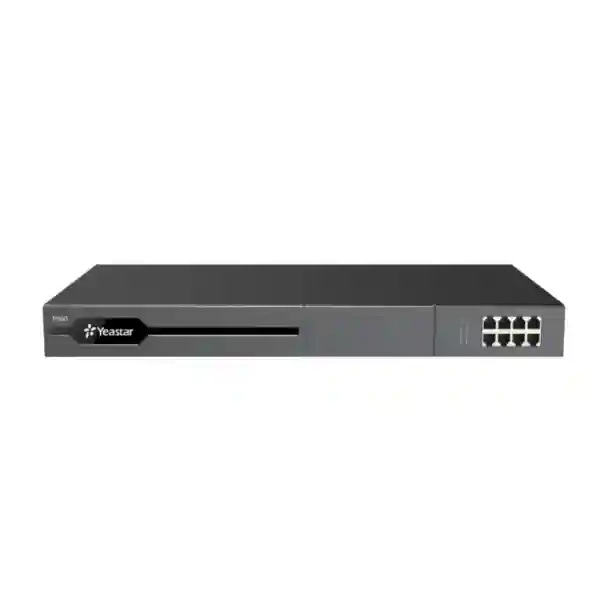
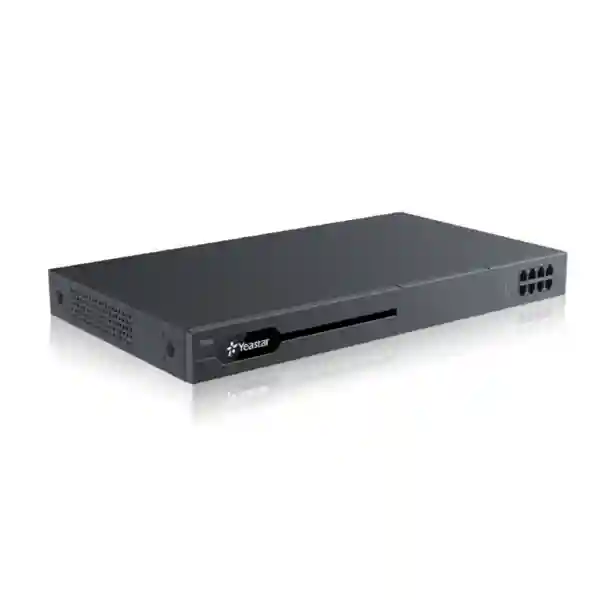
Yeastar P560 IP PBX
Yeastar P560 IP PBX is a rack-mount P-Series Appliance Edition communications platform for organisations that want the control of an on-premises business phone system together with modern unified communications. Yeastar positions the P560 between the smaller P550 and larger P570, with 100 base users expandable to 200 users and 30 base concurrent calls expandable to 60 concurrent calls. The appliance can be configured around SIP trunks and supported legacy or cellular interfaces, making it useful for businesses migrating from traditional telephony while building a more flexible IP communications environment.
For buyers in Tanzania, the right P560 project is not simply the appliance itself. A complete design should consider users, busy-hour call concurrency, trunk type, desk phones, mobile users, Linkus clients, analog devices, reception workflows, call queues, recording policy, network readiness, power continuity, integration requirements and growth. FourTeck can use those inputs to help prepare a clearer bill of requirements and quotation discussion without assuming stock, delivery time, licensing entitlement or compatibility that has not been confirmed.
What the Yeastar P560 IP PBX solves
Many growing organisations reach a point where basic analog PBX systems, disconnected mobile numbers or small office phone platforms become difficult to manage. Reception may struggle to see user availability, branches may maintain separate numbering, customer-service teams may need queues and reporting, and remote employees may need access to their business extension away from the desk. The P560 is designed for this middle stage of growth: large enough for a substantial SME or multi-department office, but still delivered as a dedicated appliance that can sit in an organisation’s own rack and remain under local administrative control.
Yeastar’s P-Series brings traditional PBX functions together with unified communications. Depending on the selected feature plan and configuration, organisations can use Linkus web, desktop and mobile clients, call routing, IVR, ring groups, queues, voicemail, call recording, reporting, conferencing, operator tools and integration pathways. This means the phone system can be designed around business workflows rather than only extension-to-extension calling. A sales team may need click-to-call and CRM context, a receptionist may need fast transfer visibility, a service desk may need queue monitoring, and managers may need mobile access while travelling.
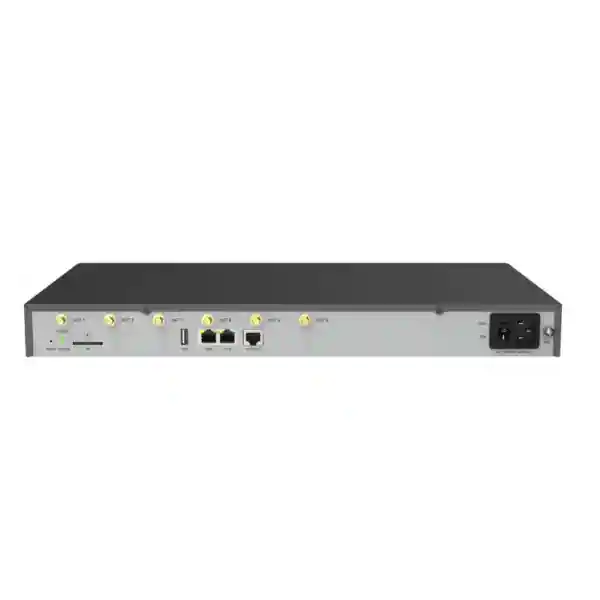
The appliance also supports a modular transition from older telephony. Yeastar documents P560 support for up to eight FXS ports, up to eight FXO/BRI ports, up to four 3G/4G ports and one E1/T1/J1 interface, subject to the correct expansion board and modules. This flexibility can matter where an organisation wants SIP trunks for new services but still has analog lines, fax devices, legacy handsets or digital carrier connections that cannot be removed immediately.
Verified Yeastar P560 capacity and expansion points
| Users | 100 base users / 200 maximum users |
| Concurrent calls | 30 base / 60 maximum |
| FXS | Up to 8 ports |
| FXO / BRI | Up to 8 ports |
| 3G / 4G | Up to 4 ports |
| E1/T1/J1 | Up to 1 interface using the supported expansion approach |
| Expansion board | Maximum 1 EX08 or EX30 |
| Telephony modules | Maximum 4 supported modules when using the applicable expansion arrangement |
| D30 capacity module | Maximum 1; Yeastar states a D30 adds 100 VoIP users and 30 concurrent calls |
Capacity figures should be read as platform limits, not as a guarantee that every deployment should be configured to the maximum. Call patterns, recording, trunks, feature plan, network performance and operational requirements should be reviewed during solution design.
Unified communications, remote work and integrations
Yeastar P-Series is intended to extend beyond a conventional PBX. Linkus UC clients provide a supported route for users to work from web browsers, desktop computers and mobile devices, allowing business extensions and communication tools to follow the user rather than remaining tied to one desk. This can help organisations with travelling managers, field teams, hybrid staff, branches and customer-facing employees who need a consistent business identity across devices.
The platform also includes integration pathways for CRM, helpdesk, Microsoft collaboration environments, hotel systems and APIs, with availability varying by edition, feature plan and current Yeastar support. Integration projects should begin with the workflow, not with the integration name. For example, a CRM project may require click-to-call, call pop-ups, contact synchronisation or call logging; a helpdesk project may need caller identification and ticket context; a hospitality project may need room status, wake-up call or PMS-related workflows. Each requirement should be checked against the current Yeastar compatibility documentation before purchase.
For a broader overview of the platform family, review the Yeastar P-Series UC Solution Tanzania guide, which explains appliance, software and cloud-oriented deployment choices and why user count alone is not enough for PBX sizing.
How to size a Yeastar P560 project
The P560’s 100-user starting point can look straightforward, but practical sizing depends on simultaneous activity. A 100-person professional office may rarely exceed a small number of external calls, while a 40-agent customer-service operation could create much heavier busy-hour traffic. Start by estimating the number of users, then calculate how many external and internal calls may happen at the same time. Add reception, queue, conferencing, recording and branch requirements before deciding whether the base 30 concurrent calls are sufficient or whether the D30 expansion path is relevant.
Next, document carrier connectivity. If the organisation uses SIP trunks, identify providers, DIDs, failover arrangements and firewall requirements. If analog PSTN, BRI, cellular or E1/T1/J1 services remain, define exactly how many interfaces are required and which devices depend on them. The P560’s modular architecture can be useful, but the chosen EX08 or EX30 board and modules must match the real interface mix.
Finally, separate platform capacity from endpoint requirements. Desk phones, conference phones, analog adapters, headsets, PoE switch ports, VLANs, QoS policies, UPS capacity and cabling are all part of the working phone system even though they are not built into the PBX appliance. The Yeastar product comparison guide can help buyers understand where P560 sits within the wider Yeastar portfolio before committing to a model.
Yeastar P560 IP PBX Tanzania
Tanzanian organisations evaluating the Yeastar P560 IP PBX are usually looking for a communications platform that can support more users, more departments and more structured call handling than a small-office PBX. The P560 is particularly relevant where the business expects roughly 100 users at the initial stage but wants a documented path to 200 users and up to 60 concurrent calls through Yeastar’s supported D30 expansion. That gives procurement teams room to consider future recruitment, new branches or customer-service growth without automatically moving to the largest appliance in the family.
The Tanzania design should start with a call-flow map. List main telephone numbers, DIDs, reception positions, departments, queues, after-hours destinations, emergency routes, voicemail requirements and any numbers that must behave differently. Then identify user types: fixed desk users, managers, warehouse or reception staff, remote workers, field employees and contact-center agents. This helps decide which people need IP phones, which can use Linkus clients, who needs a headset and where mobile access is operationally useful rather than simply convenient.
Connectivity and power continuity deserve equal attention. SIP trunks and Linkus remote access depend on stable IP connectivity, while desk phones depend on LAN switching and frequently on PoE. A PBX may be correctly sized yet still provide poor voice quality if packet loss, jitter, congested uplinks or inadequate Wi-Fi are ignored. A Tanzania deployment should therefore review switch capacity, voice VLANs, QoS policy, firewall traversal, DNS, time synchronisation and UPS protection for the PBX, core switch, router and critical reception phones. Where business continuity is important, a secondary internet or trunk strategy can be considered, but its behaviour should be tested under realistic failure conditions.
For organisations retaining legacy telephony, the P560 can be designed around modular interfaces instead of forcing an immediate all-SIP migration. Analog lines, analog endpoints, BRI, selected cellular interfaces or E1/T1/J1 connectivity can be evaluated with the appropriate Yeastar expansion hardware. Existing fax devices, gate phones, lift phones and other special analog devices should be listed early because they can change module and gateway requirements.
FourTeck’s Yeastar procurement guidance for Tanzania explains how quotation preparation, compatibility review and deployment planning can be approached without assuming official authorization status. Buyers can also review FourTeck Tanzania business technology solutions to consider the PBX together with switching, Wi-Fi, firewalls, servers and other shared infrastructure. A useful quotation request should include user count, concurrent calls, trunk type, number of sites, required interfaces, endpoints, Linkus users, call queues, recording needs, integration targets and preferred support scope.
Yeastar P560 IP PBX Dar es Salaam
Dar es Salaam businesses often combine busy reception desks, sales lines, logistics coordination, accounts teams and multi-site operations, making call-flow design as important as appliance capacity. A Yeastar P560 deployment can centralise extensions and public numbers while giving each department a clearer inbound route. Instead of transferring every caller through one receptionist, an organisation can design IVR menus, direct numbers, ring groups or queues around the way customers actually contact the business. Reception can remain the human front door while overflow, busy and after-hours rules reduce missed calls and ambiguous handoffs.
In a commercial building or multi-floor office, LAN readiness should be checked before installing IP phones. Count PoE ports, verify switch power budgets, review uplinks, separate voice traffic where appropriate and make sure firewall rules support the chosen SIP and remote-access architecture. If staff use softphones or Linkus mobile clients over Wi-Fi, voice quality also depends on access-point placement, roaming behaviour, congestion and RF conditions. A phone-system project should therefore be coordinated with network design rather than treated as an isolated telecom purchase.
Businesses migrating from older PBXs should create an inventory of current numbers and special services. Identify analog trunks, PRI circuits, fax lines, gate intercoms, lift phones, hunt groups, call-forward destinations and any number used in advertising or customer contracts. The P560’s support for modular telephony interfaces can help phase the transition, but module selection should follow the inventory. Organisations using SIP trunks should confirm porting, DID presentation, emergency routing, codec and firewall requirements before scheduling cutover.
Customer-service operations may also consider Yeastar’s P-Series contact-center capabilities. Queues, wallboards, reports and supervisor tools can be valuable when several employees share responsibility for incoming enquiries. The Yeastar P-Series Contact Center Solution Tanzania page explains how queue design, agent workflow and reporting requirements can be considered as part of the wider communications architecture rather than as add-ons after launch.
A Dar es Salaam quotation should separate the P560 appliance, expansion hardware, feature plan, endpoints, headsets, gateways, trunks, switching changes, configuration, migration, user training and support. That structure makes competing proposals easier to evaluate and prevents a low headline appliance price from hiding important implementation components. For quotation discussions, the verified FourTeck Tanzania contact page accepts IP PBX requirements including extension counts, reception, queue and branch needs.
Yeastar P560 IP PBX Mwanza
Mwanza organisations may need a phone system that connects head-office staff, warehouses, field employees, service teams and regional branches without relying on personal mobile numbers for every business conversation. Yeastar P560 can provide a central extension environment while Linkus clients extend supported calling and collaboration to users who are not always seated at a desk. This is useful for trading companies, distribution operations, hospitality businesses, healthcare administration, education institutions and service organisations where staff frequently move between desks, customer sites and field locations.
The key design question is not simply whether 100 users fit. Mwanza buyers should estimate busy-hour simultaneous calls, particularly if reception, sales or support teams receive concentrated inbound traffic. A business may have fewer than 100 employees yet still need careful concurrency planning because several queues and outbound teams are active at the same time. Conversely, an organisation with many administrative users may stay comfortably below the base concurrency limit. Measuring real call patterns or making a conservative operational estimate gives better guidance than selecting a model by headcount alone.
Resilience can be especially important when the PBX supports several operational functions. If SIP trunks or remote users depend on one internet connection, define what should happen during an outage. Some businesses may accept temporary mobile fallback; others may consider a second internet service, alternate trunk path or local analog/cellular option where technically and commercially appropriate. Power continuity should also cover the full voice path, including the PBX, switches, router, firewall and key phones. A UPS protecting only the PBX will not preserve service if the network switch loses power.
For organisations retaining analog lines or devices, document exactly what needs to remain. The P560 can accept supported modular FXS, FXO, BRI and cellular interfaces through Yeastar expansion hardware. If a digital E1/T1/J1 carrier circuit is involved, the EX30 approach can be evaluated. Avoid ordering modules only because they are available; each port should correspond to a real trunk, endpoint or contingency requirement.
Mwanza procurement should request a written design summary showing user count, extension plan, trunking, interfaces, phones, remote users, queue needs, recordings, integrations, network assumptions, power protection and growth allowance. This makes it easier to compare solutions and to hand the system over to internal IT after deployment. Where a different enterprise voice architecture is being considered, the FortiVoice VM 5000 Tanzania page offers a useful contrast with a much larger virtual PBX model, helping buyers understand the difference between appliance-scale and enterprise virtual deployments.
Yeastar P560 IP PBX Arusha
Arusha has a diverse business mix that can produce very different telephony priorities. Hospitality and tourism operations may value reservation handling, front-desk visibility, after-hours routing and mobile communication. NGOs may need branch connectivity and remote users. Professional firms may focus on reception, direct numbers, call recording and CRM integration. Education and healthcare administration may need clear departmental routing and reliable internal extensions. The Yeastar P560 is attractive in this environment because it combines a dedicated appliance with unified communications and modular interface options, but the exact design should follow the workflow rather than the industry label.
Hospitality projects should document room and front-desk requirements separately from normal office extensions. If a hotel expects PMS-related workflows, wake-up calls, room status or billing functions, those features and integration conditions should be checked against the current Yeastar edition and plan. Guest-room analog phones can also create FXS or gateway requirements that differ from staff IP phones. A property with many rooms may therefore need a telephony architecture that combines P560 capabilities with external gateways or a different model, depending on final port and user counts.
Arusha organisations with international partners often rely heavily on conferencing and remote collaboration. P-Series supports browser, desktop and mobile communications through Linkus and includes video-oriented capabilities in the platform family, but call and meeting quality still depends on WAN performance and user devices. Network assessment should therefore include latency, packet loss, available bandwidth, Wi-Fi coverage and firewall policy. Headsets and microphones are practical productivity components, especially for reservation, sales or support staff who spend significant time on calls.
Migration planning is another area where careful preparation saves disruption. Keep a record of existing extension numbers, advertised DIDs, groups, IVR prompts, opening hours, special forwarding rules and emergency contacts. Rebuild the desired call flow in a test configuration before the final cutover. Users should know how to transfer, park, conference, access voicemail and use Linkus before the legacy system is removed. Administrators should receive the configuration documentation and backup procedure.
For Arusha buyers, a good quotation request should explain whether the project is a straightforward office PBX, a hospitality communication system, a multi-site deployment or a customer-service environment. Include planned user growth, expected simultaneous calls, legacy interfaces, branch links, remote users and integrations. FourTeck’s Tanzania solutions overview describes the broader IT and telecom scope that may support an IP PBX project, including networking, Wi-Fi and related infrastructure.
Yeastar P560 IP PBX Dodoma
Dodoma organisations in administration, education, healthcare, professional services and growing private-sector operations often need structured communication across multiple departments. Yeastar P560 can centralise extensions, reception, IVR, queues and branch calling while giving administrators a web-based platform for managing users and routes. The planning process should begin with organisational structure: which departments need public numbers, which users need direct inward dialing, who handles reception overflow, how after-hours calls are routed and which calls require recording or supervision.
Security should be part of the initial design. Yeastar documents security controls across the P-Series family including encrypted signalling and media options, two-factor authentication and defense mechanisms. These features work best when the surrounding network is also well managed. Administrator access should be restricted, default credentials should not remain in service, firmware should be maintained, backups should be scheduled, and firewall rules should expose only what is necessary. Voice VLANs and segmented management can further reduce unnecessary access between endpoint and infrastructure networks.
If the Dodoma office connects to branches, decide whether the P560 will act as the central communications core or whether other sites need independent local systems. Centralisation can simplify numbering and administration, but it creates dependencies on WAN connectivity. Branch autonomy can improve local continuity but increases management complexity. The right architecture depends on business impact, available links, local trunk requirements and the organisation’s IT operating model.
Public-sector-facing and regulated organisations may also require formal policies for recording, retention, access and audit. The PBX can provide technical recording functions where supported, but the organisation should decide who may record calls, how long files are retained, who can access them and how they are protected. Storage requirements can change significantly when many users record calls, so retention should be included in capacity planning rather than decided after deployment.
A Dodoma quotation should break the project into platform, feature plan, telephony modules, trunks, endpoints, network changes, UPS requirements, configuration, migration, training and support. This makes lifecycle cost more transparent and helps internal stakeholders understand recurring subscriptions versus one-time equipment. If the organisation is still comparing deployment options, the P-Series UC deployment guide provides a broader appliance, software and cloud context.
Yeastar P560 IP PBX UAE
UAE organisations considering the Yeastar P560 often operate in multi-office, customer-service or rapidly scaling environments where unified communications and integration matter as much as basic calling. The appliance can support a substantial user base while remaining locally hosted, which may appeal to organisations that prefer ownership and administration of the PBX hardware in their own rack. Before choosing an on-premises appliance, buyers should compare this operating model with software and cloud alternatives, considering server responsibility, recurring subscriptions, internet resilience, internal IT skills and long-term scalability.
A UAE project may involve SIP trunks, number porting, existing PRI services, analog lines, door phones or branch connectivity. The P560’s modular hardware can support several of these transition paths, but interface selection should be confirmed against the exact carrier and endpoint environment. If E1/T1/J1 is required, document the circuit details early because that affects expansion-board selection. If analog devices remain, count each endpoint or line rather than assuming that a generic analog module will be sufficient.
Customer-facing businesses can evaluate Linkus, queues, recording, reporting and P-Series contact-center functions according to the selected feature plan. CRM, helpdesk or Microsoft collaboration integrations can also be useful where employees already spend much of their day in those applications. The integration requirement should specify the desired workflow—for example click-to-call, screen pop, call logging, contact sync or embedded calling—so compatibility can be validated before licensing is purchased.
Multi-site UAE organisations should decide how extension numbering, public numbers and failover will work between locations. A central PBX may simplify administration, but branch sites depend on connectivity to the central system. Power protection and dual internet paths may be appropriate for critical operations, while other offices may accept a simpler design. The continuity requirement should therefore be agreed with the business before the network architecture is finalised.
For UAE-specific infrastructure and telecom planning, visit FourTeck UAE integrated IT and telecom solutions. The regional site covers IP PBX and surrounding IT infrastructure, helping buyers consider telephony together with switching, firewalls, cabling and support requirements. Product availability, licensing and deployment scope should still be confirmed during quotation.
Yeastar P560 IP PBX Uganda
Ugandan businesses evaluating Yeastar P560 may be replacing traditional PBX systems, standardising communication across branches or enabling more mobile work. A central P560 can provide one extension environment for reception, sales, support, accounts and management while Linkus clients extend supported business calling to laptops and mobile devices. For organisations spread across Kampala and up-country locations, the most important architectural question is whether communication should be centralised at one site, distributed across multiple systems or moved toward a cloud model.
The answer depends on internet quality, branch autonomy, carrier availability and the operational impact of a link failure. A central appliance can simplify administration and numbering, but branch users may depend on WAN connectivity to reach it. Distributed appliances can keep more services local but require more administration. Cloud systems remove the on-site PBX appliance but place greater reliance on internet access. The P560 is best assessed when these tradeoffs are explicit rather than when procurement begins from a model name alone.
Legacy telephony can also influence the design. Some Ugandan offices may continue to use analog lines, cellular voice channels or analog devices during migration. Yeastar’s modular interfaces can be relevant in these environments, but buyers should count the required ports and confirm module support. SIP trunks should be tested for registration behaviour, DTMF, caller ID, emergency routing, NAT traversal and codec compatibility before final cutover.
Power protection is particularly important because IP telephony depends on multiple powered components. The PBX, PoE switches, firewall, router and access points used by softphone clients should be included in the continuity design. Backup internet can improve resilience for remote access and SIP services, but failover should be tested with the actual provider, DNS and firewall configuration. Configuration backups should also be stored securely and restoration procedures documented.
For regional context, FourTeck Uganda covers IP PBX, VoIP and networking solutions for businesses in Uganda. A P560 quotation should still be based on exact users, concurrent calls, trunks, modules, endpoints, queues, recordings, integrations and support expectations rather than a generic package.
Yeastar P560 IP PBX Kampala
Kampala companies often need one phone system to serve very different user roles. Receptionists need transfer visibility and quick access to departments; sales staff may spend more time on outbound calls and customer follow-up; finance users may need direct numbers; managers need mobility; and support teams may need queues and reporting. Yeastar P560 can bring these roles into one managed extension environment, while the final feature set depends on the selected P-Series plan and configuration.
Sizing should separate users from simultaneous calls. A company with 120 registered users may have relatively light traffic, while a 60-user service operation may generate heavy concurrency. Estimate the busiest 15–30 minutes of a normal day and identify how many external calls, internal calls and conferences may overlap. If the base 30-call capacity is likely to be restrictive, the P560’s documented D30 expansion path can be evaluated. This should be confirmed before deployment rather than discovered after queues become busy.
Kampala offices also benefit from disciplined network preparation. Desk IP phones often share network infrastructure with PCs, cameras and Wi-Fi. Managed switches, sufficient PoE power, voice VLANs, sensible QoS and reliable uplinks reduce contention and simplify troubleshooting. Remote Linkus users introduce firewall and internet dependencies that should be tested from typical employee networks. For branches, reserve logical extension ranges and document call permissions so growth does not produce an inconsistent numbering plan.
If CRM or helpdesk integration is planned, define the business outcome. A sales team may want calls logged automatically against contacts; a service desk may want a screen pop when a known customer calls; a receptionist may simply need a directory. Integration is most successful when the workflow and data ownership are clear. Compatibility should then be checked against the current Yeastar documentation and the third-party platform version.
Procurement teams should request itemised quotations showing the PBX, expansion components, feature plan, phones, headsets, gateways, SIP service assumptions, implementation, training and ongoing support separately. This reduces confusion when comparing offers. Organisations with broader East African requirements can also review the FourTeck Africa technology site when standardising communications and network infrastructure across several countries.
Yeastar P560 IP PBX Arua
Arua organisations may require a phone system that keeps a local office connected with headquarters, field teams, partner organisations and customers while remaining practical to administer. The Yeastar P560 can serve as a central appliance when user and concurrency requirements justify its capacity, but the site design should reflect actual connectivity and power conditions. For a smaller branch, the P560 may instead belong at headquarters while Arua users connect through supported remote or branch methods. The architecture should be decided from operational needs rather than assuming every location needs identical hardware.
Remote and branch communication can benefit from a consistent extension plan. Reserve number ranges for locations or departments so that future users can be added without reworking the entire dial plan. Decide which branches should dial each other internally, which need local outbound caller ID and which incoming numbers should terminate centrally. If internet connectivity between sites is interrupted, define whether calls should fail over to mobile numbers, alternate trunks or simply queue until service returns. A continuity plan is useful even when the chosen answer is deliberately simple.
Arua projects should also pay attention to endpoint choices. Not every user needs an advanced desk phone. Reception and supervisors may benefit from larger displays or more programmable keys, while ordinary office users may need simpler SIP phones. Mobile or field users may be better served by Linkus clients where supported. Shared spaces such as meeting rooms may require conference devices. Matching endpoint capability to role can control project cost without reducing usability.
If analog services remain in use, document them early. An old fax, analog emergency phone or PSTN line can determine whether FXS or FXO capability is needed. The P560’s modular design can accommodate supported interfaces, but every added module has a purpose and should be included in the bill of materials intentionally. Where cellular connectivity is considered, operator compatibility and intended use should be validated rather than assumed.
A practical Arua quotation brief should include user count, maximum expected simultaneous calls, headquarters relationship, WAN links, public numbers, endpoint mix, legacy devices, queue needs, remote users and support expectations. This gives the solution designer enough information to decide whether P560 is the right central platform and what network or gateway components are required around it.
Yeastar P560 IP PBX Mbarara
Mbarara businesses can use a Yeastar P560 project to replace fragmented telephone lines with a more structured communications environment for reception, sales, service, accounts and management. The appliance’s published base capacity of 100 users provides a clear starting point for medium-sized organisations, while the documented D30 path gives room for additional users and concurrent calls. The decision to expand should be based on expected growth and call traffic rather than buying capacity that may never be used.
Customer experience often improves when call routing reflects real responsibilities. A main number can enter a short IVR, ring a receptionist or feed a queue depending on the organisation. Unanswered calls should have a defined next destination rather than ringing indefinitely. After-hours rules should be simple and predictable. Departments should own their queue or ring group so that responsibility is clear. Yeastar P-Series tools can support these patterns, but the organisation still needs to decide what a good caller journey looks like.
Mbarara companies with field staff or managers who travel can evaluate Linkus clients for business calling outside the office. Remote access should be deployed with secure authentication and appropriate network controls. Users should understand when to use the business app instead of personal mobile calling, especially when call logging, recording or customer identity is important. Remote voice quality also depends on the user’s internet connection, so expectations should account for conditions beyond the office LAN.
Network and power planning should include the entire communication path. PoE switches need enough power budget for phones; uplinks must carry voice alongside other traffic; routers and firewalls need correct SIP handling; and UPS systems should protect the PBX plus essential network equipment. If the business uses cloud applications or remote branches, backup connectivity may be worth evaluating. Testing failover is more useful than simply listing a second circuit in the design.
For procurement, document existing telephone numbers, trunk providers, analog devices, phones that might be reused, planned staff growth, recording requirements and any CRM or helpdesk integrations. An itemised quotation then lets the buyer distinguish between the P560 appliance, optional modules, software entitlement, endpoints, network work and implementation services. This is especially important when comparing offers that may include different scopes under similar product descriptions.
Yeastar P560 IP PBX Gulu
Gulu organisations in education, healthcare, NGOs, logistics, professional services and commerce may need a business phone system that connects office staff with field teams and other branches. Yeastar P560 can provide a centrally administered appliance for this purpose when the user and concurrent-call profile fits. Linkus clients can extend communications to supported mobile and desktop users, while the PBX handles extension routing, IVR, queues, voicemail and other telephony functions according to the selected plan.
Before choosing the model, identify which users actually need extensions. Shared work areas, hot desks and mobile staff can change the relationship between employee headcount and PBX user count. Then estimate call concurrency. Consider incoming customer traffic, outbound teams, branch calls and conferences at the busiest time. If the business is near the P560’s base limits from day one, include realistic growth rather than designing a system with no headroom. If requirements already exceed the maximum published capacity, evaluate a larger model or another deployment approach instead of forcing the P560 beyond its intended range.
Gulu sites should also plan for WAN and power disruptions. Local on-premises PBX hardware gives an organisation direct control of the appliance, but SIP trunks, remote users and branch connectivity still depend on external services. A continuity plan might include UPS protection, secondary internet, alternative trunks or documented mobile fallback depending on business criticality. The best design is one whose failure behaviour is understood and tested, not one that simply contains the greatest number of backup products.
Legacy equipment can be retained during a phased migration if the correct interfaces or gateways are selected. The P560 can support modular analog, BRI, cellular and E1/T1/J1 connectivity within its published limits. List every analog phone, fax, PSTN line or digital circuit before ordering. If a legacy system is being decommissioned, export or document extension numbers, public DIDs, call groups, business hours and prompts so the new configuration reproduces required workflows intentionally.
A Gulu handover should include administrator credentials under controlled ownership, a configuration backup, extension and DID maps, trunk details, basic troubleshooting steps and escalation contacts. User training should cover transfers, hold, voicemail, conferencing, Linkus use and any queue functions. These operational details often determine whether the migration feels successful after the installation team leaves.
Yeastar P560 IP PBX Kenya
Kenyan organisations evaluating the Yeastar P560 may be looking to standardise communication across a head office and branches, replace a legacy PBX or add unified communications to an existing SIP environment. The P560’s combination of appliance deployment, 100 base users, 30 base concurrent calls and modular expansion makes it relevant to medium-sized businesses that want room for controlled growth. The final model decision should still be based on busy-hour call traffic and interface requirements rather than employee count alone.
Multi-site companies should design a numbering plan that scales. Reserve extension ranges for branches or departments, decide where public DIDs terminate and define what happens if a branch link fails. A centralised P560 can reduce administrative duplication, but remote sites rely on WAN connectivity. Where branch autonomy is essential, a distributed or cloud architecture may be more appropriate. This tradeoff should be discussed before procurement because it affects trunks, licenses, support and network resilience.
Kenyan businesses using existing SIP phones may be able to preserve part of their endpoint investment if interoperability and provisioning are confirmed. Do not assume every SIP device will provide the same user experience or automatic provisioning features. Create a small compatibility test group before a large migration. Where new phones are required, match endpoint features to roles rather than issuing the same model to every employee. Reception, executives, contact-center agents and general office users often have different needs.
For call centers and service desks, define agent numbers, queue volume, supervisor requirements, recording policy and reporting objectives. Yeastar’s P-Series contact-center capabilities can provide useful operational tools, but entitlement varies by feature plan. Recording also introduces storage and governance considerations. A technical design should state where recordings are stored, how long they are retained and who has permission to access them.
For Kenya-specific regional context, visit FourTeck Kenya, which covers IP PBX, VoIP phones, conferencing, network security and enterprise networking. Cross-border organisations can use a common requirements template across Tanzania and Kenya while still adapting carrier, power, connectivity and support assumptions to each site.
Yeastar P560 IP PBX Kuwait
Kuwait businesses considering Yeastar P560 often need a modern office phone platform that combines conventional PBX controls with mobile and desktop communications. The appliance can suit organisations that prefer an on-premises system and have a clear requirement for around 100 users with growth potential. Before choosing hardware, compare the appliance model with self-hosted software and cloud-oriented options based on control, recurring cost, internet dependency, administration and expected scale.
A migration should begin with the existing carrier environment. Document SIP trunks, PRI or other digital services, analog lines, DIDs and any numbers that must be preserved. If E1/T1/J1 connectivity is required, the P560 supports one interface through the appropriate expansion arrangement. Analog or BRI requirements can be addressed through supported modules, while SIP trunks remain a core IP option. Carrier compatibility and porting procedures should be confirmed before the production cutover date is committed.
For organisations with customer-service teams, the P560 can be part of a broader P-Series contact-center design with queues, supervisor visibility, reports and recordings according to plan. Sales and account-management teams may instead prioritise CRM integration and Linkus mobility. Define the workflow first and then select entitlements. Buying the most feature-rich plan is not automatically the best outcome if teams do not use the capabilities or if integration dependencies are not ready.
Security and business continuity should be documented as operational policies. Restrict administrator access, maintain firmware, use strong authentication and encryption features where supported, keep configuration backups and test recovery. If voice is business critical, protect PBX, switches, routers and firewalls with suitable UPS capacity. Where external calls rely on internet-based SIP, consider whether redundant connectivity is justified and how failover will be validated.
Kuwait procurement teams can review FourTeck Kuwait IT and VoIP solutions for regional infrastructure context. A complete quotation should state appliance, modules, feature plan, endpoints, trunk assumptions, configuration, migration, training and support so the total project scope is visible.
Yeastar P560 IP PBX Ghana
Ghanaian organisations can consider Yeastar P560 when they need a communications platform that can grow beyond a basic office PBX without moving immediately to a large enterprise system. The appliance’s published 100-user base capacity and expansion path can fit multi-department companies, institutions, hospitality operations and customer-facing businesses where extensions, queues, mobile users and integrations need to operate within one manageable environment.
For a company with offices in Accra and other locations, decide how centralisation should work. A P560 at headquarters can manage common numbering and call flows, but remote sites depend on WAN quality. A cloud model may reduce on-site hardware, while distributed appliances can give branches more local independence. None of these patterns is universally better. The right architecture depends on local trunking, internet stability, business continuity targets, IT skills and the importance of local calling during WAN outages.
Voice quality is a network outcome as much as a PBX outcome. Managed switching, adequate PoE, sensible VLAN design, reliable uplinks and suitable QoS can make call quality more predictable. If users connect over Wi-Fi, the wireless network needs enough coverage and capacity for real-time traffic. Remote Linkus users add the variability of home or mobile networks, so helpdesk procedures should distinguish office-side problems from user-side internet conditions.
Procurement should also address support ownership. Determine who manages SIP trunks, firewall rules, extension provisioning, phone firmware, backups, recordings and user changes. If an external partner handles administration, define escalation and access procedures. If internal IT owns the system, include administrator training and documentation. The initial installation is only one stage in the PBX lifecycle; moves, adds, changes, firmware updates and troubleshooting continue after launch.
For Ghana-specific regional information, see FourTeck Ghana technology solutions. Organisations operating across Tanzania and Ghana can use common PBX standards while adapting carrier interfaces, continuity and deployment services to each local environment.
Yeastar P560 IP PBX Nigeria
Nigeria presents a wide range of business communications requirements, from compact professional offices to multi-branch companies and busy customer-service teams. Yeastar P560 can be evaluated where an organisation wants an on-premises appliance that combines core PBX functions with unified communications and a clear expansion path. The first design decision should be whether the P560’s maximum user and call capacity aligns with growth plans. If the project is likely to exceed 200 users or 60 concurrent calls, a larger Yeastar appliance or different deployment model may be more appropriate from the outset.
Power and internet resilience should be treated as part of the communications architecture. The PBX itself can remain operational only if supporting switches, routers, firewalls and phones are powered. SIP trunks and remote users add internet dependency. Businesses with high call criticality may consider UPS systems, generator-backed circuits, redundant internet or alternate trunk paths according to risk and budget. Each failover path should be tested to confirm DNS, SIP registration, NAT and firewall behaviour under real outage conditions.
Sales and service teams can benefit from queues, reporting, recordings and CRM integration, but these features increase planning requirements. Estimate peak simultaneous calls, define agent and supervisor roles, determine recording retention and identify the exact CRM workflow. If every call is recorded, storage planning becomes important. If recordings contain sensitive customer information, access permissions and retention policy should be documented. Technical capability should be aligned with organisational policy.
Multi-site companies can standardise deployment by using one discovery worksheet for every branch: user count, concurrent calls, DIDs, trunks, analog devices, endpoints, WAN, UPS, queues, recordings, integrations and growth. This makes it easier to decide whether each site needs local hardware or whether several locations should use a common central system. It also exposes differences in carrier or network conditions before equipment is ordered.
For Nigeria-specific technology context, visit FourTeck Nigeria. Buyers should request an itemised bill of materials and scope rather than comparing only appliance prices, because phones, PoE, gateways, subscriptions, configuration, migration and support can significantly affect total project cost.
Yeastar P560 IP PBX Seychelles
Seychelles organisations, particularly in hospitality, tourism, professional services and distributed island operations, may need a communications platform that combines dependable local business calling with mobility and central administration. Yeastar P560 can be assessed for hotels, reservation teams, offices, support desks and multi-site businesses where an on-premises appliance is preferred and the published user and concurrency range fits the requirement.
Hospitality projects should pay special attention to the difference between staff communication and guest-room telephony. Staff may use SIP phones or Linkus clients, while guest rooms may still rely on analog handsets or require PMS-related workflows. List room count, front-desk positions, reservation lines, wake-up call requirements, room-status expectations, analog devices and the exact PMS platform before choosing modules or licensing. Do not assume that every hospitality feature is available under every P-Series edition or feature plan; validate the required functions during solution design.
Connectivity between islands or sites can also influence architecture. A single central PBX can simplify administration, but remote locations depend on WAN quality to reach it. Some organisations may prefer local survivability, while others may accept centralisation for operational simplicity. Linkus mobility can be useful for managers and staff who move between properties, but remote call quality will depend on internet or mobile data performance.
For tourism businesses receiving calls from multiple countries and time zones, after-hours and overflow routing should be deliberate. Reservation queues can route callers to available staff, while voicemail or alternate destinations can handle closed periods. Multi-language IVR may be useful where supported and where it improves customer experience, but menus should remain short. Call recordings and reports can help service management, provided retention and privacy policies are defined.
A Seychelles quotation should include the P560 appliance, feature plan, required telephony interfaces, room or staff endpoints, any external gateways, switching and PoE, UPS, trunk assumptions, configuration, integration testing and user training. Where organisations operate across several African markets, the FourTeck Africa network can provide broader regional technology context while each site is designed around its own carrier and infrastructure conditions.
Deployment and migration checklist
Record current and forecast users, busy-hour simultaneous calls, contact-center agents, conference usage and expected growth. Use concurrency, not only headcount, to assess whether the base platform or D30 expansion is appropriate.
List SIP trunks, analog lines, BRI, E1/T1/J1 services, cellular requirements, DIDs, caller-ID rules and number-porting tasks. Confirm provider compatibility before final cutover.
Count desk phones, conference phones, analog devices, headsets and Linkus users. Reuse existing SIP phones only after compatibility and provisioning tests.
Review PoE budgets, VLANs, QoS, cabling, uplinks, firewall rules, internet capacity, DNS and Wi-Fi. Voice quality problems often originate outside the PBX.
Decide how the organisation should operate during power, internet, trunk or appliance failures. Protect the full network path and test realistic failover scenarios.
Provide extension maps, DID routing, configuration backups, administrator procedures, user training and clear ownership for support, firmware, recordings and future changes.
Frequently asked questions about Yeastar P560
How many users does Yeastar P560 support?
Yeastar publishes 100 base users and 200 maximum users for the P560. The expansion path uses the supported D30 module. User capacity should still be considered alongside concurrent-call demand and feature requirements.
How many simultaneous calls can the P560 handle?
Yeastar lists 30 base concurrent calls and 60 maximum concurrent calls for the P560. Estimate real busy-hour traffic before deciding whether the base capacity is enough.
Does the Yeastar P560 support analog lines and phones?
Yes, supported modular configurations can provide FXS and FXO interfaces. Yeastar documents up to eight FXS ports and up to eight FXO/BRI ports on the P560. The exact expansion board and module mix must match the requirement.
Can P560 connect to E1/T1/J1?
Yeastar publishes support for one E1/T1/J1 interface on the P560 using the relevant supported expansion approach. Carrier and circuit compatibility should be confirmed before procurement.
Does P560 support mobile and desktop users?
P-Series supports Linkus UC clients for web, desktop and mobile use. Exact capabilities and entitlement depend on the selected deployment and feature plan, and remote users need dependable internet plus appropriate security configuration.
Can Yeastar P560 integrate with CRM or Microsoft tools?
Yeastar publishes integrations across CRM, helpdesk and Microsoft environments in the P-Series ecosystem. Compatibility and required plan should be checked for the exact third-party platform and desired workflow before purchase.
Is P560 suitable for a call center?
It can support P-Series contact-center functions such as queues, agent and supervisor tools, reporting and other customer-service capabilities depending on the selected plan. Busy-hour call concurrency and agent count should be included in sizing.
What should I include in a P560 quotation request?
Include current and future users, estimated simultaneous calls, number of sites, trunk types, DIDs, analog or digital interfaces, phones, Linkus users, queues, recordings, integrations, network conditions, power continuity and implementation scope.
Related FourTeck Tanzania resources
Yeastar P-Series Contact CenterPlanning information for queues, agent workflows, supervisor visibility, reporting and customer-service use cases.
Yeastar Product Comparison TanzaniaCompare P-Series positioning and understand how model scale and interface options influence selection.
Yeastar Procurement Guidance TanzaniaGuidance for quotation preparation, compatibility review and selecting Yeastar components without unsupported authorization claims.
FortiVoice VM 5000 TanzaniaA much larger virtual PBX reference for organisations comparing appliance-scale and enterprise virtual communications platforms.
About FourTeck TanzaniaOverview of the wider IT, telecom, networking, security and infrastructure solution scope supporting communications projects.
Contact FourTeck TanzaniaSubmit extension counts, queue, branch, endpoint and integration requirements for product guidance and quotation discussion.
Quotation checklist for Yeastar P560
A useful quotation should contain enough detail to show whether the proposed system really matches the organisation. Provide the number of current users and the expected number in the next two to three years. Estimate peak simultaneous calls. List every trunk type and public number. Identify analog phones, fax machines, door phones or other devices that must remain. State how many employees need desk phones, Linkus mobile access, desktop clients or headsets. Include reception, queues, recording and reporting requirements. If there are branches, list each site and its internet connection. If CRM, helpdesk, Microsoft Teams or hotel integrations are required, name the exact platform and workflow.
Also define implementation scope. Clarify whether the project includes network assessment, PoE switching, VLAN configuration, firewall changes, SIP trunk setup, phone provisioning, number migration, user training, administrator handover, backup configuration and ongoing support. This prevents an appliance-only quote from being mistaken for a complete working phone-system project.
Decision recap: when the P560 is a strong fit
Yeastar P560 is a strong candidate when an organisation wants a dedicated P-Series appliance, expects around 100 users initially, needs up to 30 concurrent calls at base capacity, values a documented path to 200 users and 60 calls, and may need modular analog, BRI, cellular or E1/T1/J1 connectivity alongside SIP. It can also suit businesses that want Linkus unified communications, modern call routing, queues, remote work and integration options without moving immediately to a cloud-only phone system.
It is less appropriate when the project clearly exceeds its maximum capacity, when every site needs independent local survivability that a single appliance cannot provide, or when the organisation prefers a purely software or cloud operating model. The best model is the one that fits real users, traffic, interfaces, workflows and growth—not simply the device with the most features.
Discuss your Yeastar P560 requirement
Share your user count, expected simultaneous calls, trunk type, number of branches, phones, remote users, analog requirements, queues, recordings and integrations. FourTeck can use that information to help structure product selection and quotation requirements for Tanzania and related regional projects.




Reviews
There are no reviews yet.