
YEASTAR ANALOG-TO-VOIP GATEWAY
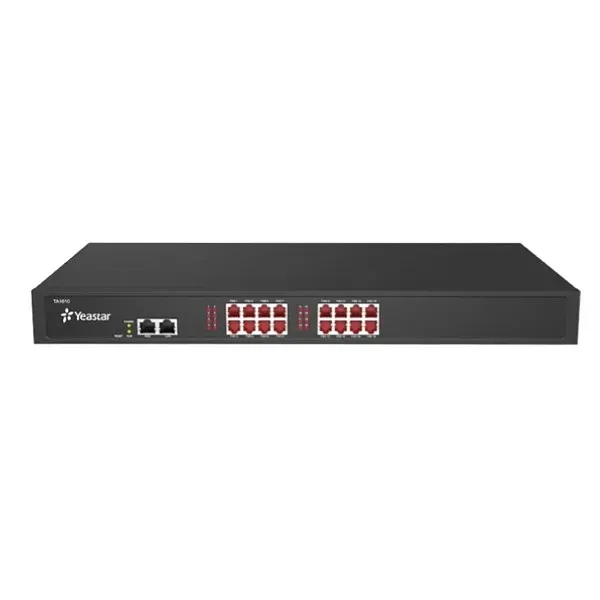
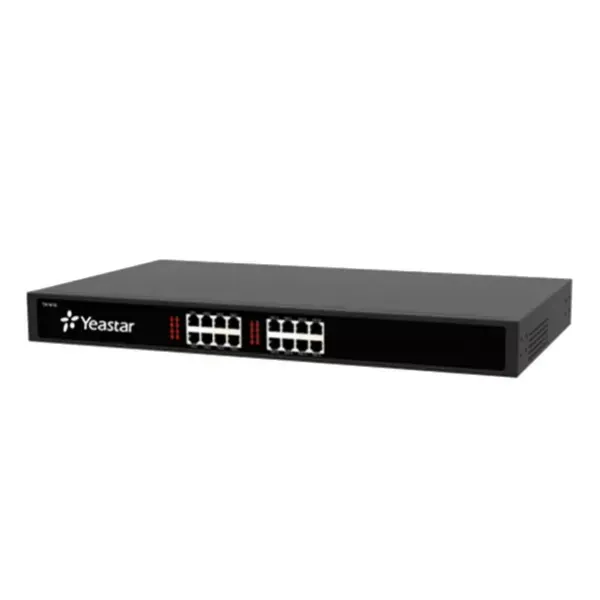
Yeastar TA1610 FXO VoIP Gateway
The Yeastar TA1610 is a 16-port FXO VoIP gateway for organisations that need to connect traditional PSTN telephone lines or compatible analog PABX interfaces to an IP PBX, hosted voice platform or other SIP-based telephony environment. It is especially useful when a business wants the call-routing and management advantages of IP telephony without discarding every existing analog line at once. FourTeck Tanzania can help buyers define the required line count, PBX integration, call flow, rack and network requirements before quotation.
What the Yeastar TA1610 is designed to solve
Many companies operate mixed telephony environments. A site may still depend on established PSTN numbers, analog carrier lines or extension interfaces from an older PABX while the organisation is introducing an IP PBX, SIP handsets, branch calling or a hosted communications platform. Replacing every element in one project can be unnecessary or operationally disruptive. The TA1610 provides a controlled bridge between these systems. Its FXO interfaces accept analog line connections and make those trunks available to a compatible IP telephony platform through supported VoIP protocols.
The model is positioned for denser analog trunk requirements than the smaller TA410 and TA810. Yeastar lists 16 RJ11 FXO ports for TA1610 and one RJ21 interface, together with a 10/100 Mbps LAN port and a separate 10/100 Mbps WAN port. This makes the product appropriate for communications rooms, central offices, legacy-PBX migration projects and larger branch sites where several analog circuits need to be integrated in a structured way. The 440 × 250 × 44 mm chassis can be used on a desktop or installed in a rack, helping organisations keep voice equipment organised alongside switches, routers, firewalls and PBX appliances.
A gateway does not replace planning. Before ordering, the analog service type, caller-ID method, disconnect supervision, inbound and outbound routing, PBX compatibility and network design should be reviewed. Those details decide whether the system behaves predictably after installation. Buyers should therefore treat the TA1610 as part of a voice architecture rather than as a simple line converter.
PSTN trunking for IP PBX
Use existing analog telephone lines as trunks for a compatible IP PBX. This can support phased migration and preserve published business numbers while call control moves to an IP platform.
Legacy PABX integration
Where a legacy PABX presents suitable analog extension interfaces, the gateway can help interconnect the older voice environment with a newer SIP-based system without an immediate all-at-once replacement.
Branch and transition projects
A branch can keep local analog services while joining a centralised voice architecture. Routing, numbering and failover intentions should be documented before deployment.
Verified Yeastar TA1610 technical specifications
| FXO interfaces | 16 RJ11 FXO ports; 1 RJ21 interface listed by Yeastar |
| Ethernet | 1 × 10/100 Mbps LAN and 1 × 10/100 Mbps WAN |
| VoIP protocols | SIP (RFC3261), IAX2 |
| Transport / media security | UDP, TCP, TLS, SRTP |
| Voice codecs | G.711 A-law/µ-law, G.722, G.723, G.726, G.729A, GSM, ADPCM |
| Voice processing | ITU-T G.168 line echo cancellation, dynamic jitter buffer, VAD, CNG and PLC |
| DTMF | RFC2833, SIP Info, in-band |
| Fax | T.30 |
| QoS | DiffServ, ToS, 802.1P/Q VLAN tagging |
| Network features | DHCP, DDNS, OpenVPN, PPPoE, static route and VLAN |
| FXO functions | Programmable AC impedance, hangup detection, answer detection and caller-ID detection |
| Caller ID formats | BELL202, ETSI V23, NTT V23-Japan and DTMF-based CID |
| Management access | Web-based management plus FTP, TFTP, HTTP, HTTPS and SSH; TA1610 remote management is listed by Yeastar |
| Physical size | 440 × 250 × 44 mm |
| Environment / mounting | 0°C to 40°C operating range, 10–90% non-condensing humidity; desktop or rack mounting |
Compatibility, line behaviour and final configuration depend on the PBX platform, firmware, carrier line characteristics, dial plan and deployment environment. Confirm these items before purchase or migration.
Integration with Yeastar P-Series and other SIP platforms
Yeastar publishes an integration workflow showing the TA1610 extending 16 FXO trunks to a Yeastar P-Series PBX. In that example, a SIP peer trunk is created on the PBX and a corresponding service-provider SIP trunk is created on the TA1610. The vendor documentation then routes outbound calls from the PBX through the extended FXO lines and routes incoming calls from the analog lines back to the PBX. This gives buyers a useful reference architecture, but production settings should still be adapted to the real IP addressing, security policy, dial plan, carrier line behaviour and PBX version in use.
Yeastar also positions the TA family for interoperability with common IP telephony systems. When a customer uses a third-party PBX, the safe procurement approach is to share the exact PBX brand, release, SIP expectations and required call flow before finalising the gateway. For broader telephony planning in Tanzania, review FourTeck Tanzania’s IP PBX and VoIP communication capabilities, browse the Tanzania technology shop, or use the FourTeck Tanzania quotation page to describe your line count and existing PBX.
Buying and deployment checklist
Confirm how many PSTN circuits or compatible analog PABX interfaces must be connected now, and whether near-term growth justifies spare capacity.
Document which numbers receive inbound calls, which departments answer them, outbound route preferences, after-hours behaviour and any fallback routing.
Provide the IP PBX brand, model or software edition, firmware/version and whether the PBX is on the same LAN, at another branch or hosted remotely.
Caller ID, busy tone, polarity reversal and disconnect behaviour should be understood so FXO detection settings can be tuned appropriately.
Reserve addressing, decide VLAN policy, confirm switch ports, firewall rules and QoS, and ensure the voice path is stable enough for the expected call load.
The TA1610 is rack-mount capable. Include rack position, power protection, ventilation, labelling and cable organisation in the deployment scope.
Yeastar TA1610 FXO VoIP Gateway Tanzania
For organisations in Tanzania, the TA1610 is most relevant where analog telephone lines remain operationally important but the business wants modern IP-based call handling. This can include companies moving from an older PABX to an IP PBX, offices retaining established PSTN numbers, hospitality or institutional sites with legacy voice infrastructure, and multi-site organisations trying to standardise telephony without forcing every location onto exactly the same carrier technology. Sixteen FXO ports give the gateway enough density for a central office or larger branch while retaining a clear one-port-per-analog-line design that administrators can document and troubleshoot.
A Tanzania deployment should start with the carrier and PBX environment rather than the product alone. Confirm the number of live analog lines, whether caller ID is provided, how disconnect is signalled, whether inbound and outbound calling both use the lines, and which numbers must remain published during migration. On the IP side, document the PBX address, SIP trunk method, extension plan, VLAN arrangement and firewall path. If the gateway and PBX are located in different sites, VPN and WAN quality become part of the voice design. QoS can help classify traffic, but it cannot compensate for an unstable or highly congested connection.
Procurement teams in Tanzania should request a quotation with the exact TA1610 model, quantity, destination, installation scope and required accessories rather than comparing only a headline hardware price. Ask whether configuration, rack mounting, PBX trunk creation, routing tests and documentation are included or treated as separate services. For an integrated office project, the gateway may depend on switches, structured cabling, UPS protection and the PBX itself. FourTeck Tanzania’s main site explains its broader approach to telecom, networking and infrastructure planning, which is useful when the gateway forms part of a larger upgrade.
The strongest reason to choose the TA1610 in Tanzania is not simply that it has sixteen ports. It is that those ports can give an IP telephony project a practical migration boundary: the carrier-facing analog side can remain familiar while internal call handling becomes more flexible. That allows the business to plan change around actual operational priorities, test routing carefully and retire legacy components at a controlled pace.
Yeastar TA1610 FXO VoIP Gateway Dar es Salaam
Dar es Salaam businesses often have the most complex mixed-technology voice environments in a Tanzania rollout because headquarters, customer-service teams, warehouses, retail operations and branch coordination may converge in the same city. A company can have long-established analog lines and published telephone numbers while also adopting SIP phones, call queues, IVR menus and remote extensions. The TA1610 gives such a site sixteen FXO interfaces that can be presented to an IP PBX, allowing the organisation to modernise the call-control layer while keeping selected analog trunks active.
For a Dar es Salaam head office, the design should map each analog line to a business purpose. Some lines may be general inbound numbers, others may support specific departments, and some may be retained for resilience or transitional use. That mapping helps the PBX engineer create sensible inbound destinations and outbound route priorities. The gateway’s answer detection, hangup detection, caller-ID detection and programmable AC impedance are relevant because analog behaviour can vary, and successful cutover depends on the system recognising line conditions correctly rather than merely receiving dial tone.
Network preparation is equally important. Place the TA1610 on a managed, documented LAN segment, give it a stable address and ensure voice traffic has a predictable path to the PBX. If the PBX is hosted or located at another site, the internet or private WAN becomes part of the call-quality equation. Security settings, access permissions and remote management should be restricted to authorised administrators. Configuration backups should be taken before major routing changes, and call tests should cover inbound presentation, outbound dialling, caller ID, busy conditions and line release after hangup.
When requesting a Dar es Salaam quotation, include the current PBX model, number of analog lines, target extension count, rack availability, preferred installation window and whether existing phone numbers must remain uninterrupted during migration. FourTeck Tanzania’s contact and quotation page is designed for this kind of requirement description. A clear scope makes it easier to separate hardware supply from configuration, cabling, testing and wider PBX work.
Yeastar TA1610 FXO VoIP Gateway Mwanza
In Mwanza, the TA1610 can suit regional offices, trading companies, hospitality properties, education environments, healthcare organisations and operational sites that still depend on analog carrier services while moving internal communications to IP. The advantage of a 16-port FXO gateway is consolidation. Instead of treating every analog line as an isolated connection to an old PBX, the lines can be integrated into one IP telephony platform where extensions, departments, reception rules and call routing are managed more consistently.
Before deployment, count the actual lines in service and determine which ones should remain. A migration is a good time to identify unused circuits, duplicated services or numbers that no longer serve a clear purpose. Once the retained lines are known, decide how calls should enter the IP PBX and what should happen when staff are unavailable. Ring groups, queues, voicemail or time conditions belong on the PBX side, while the TA1610 handles the boundary between those IP features and the physical analog circuits. Separating those responsibilities makes troubleshooting easier.
For Mwanza sites where network support may be centralised elsewhere, remote administration can be valuable, but it should be implemented securely. The gateway supports HTTPS and SSH management methods and Yeastar lists remote management for TA1610. Administrators should restrict access, use strong credentials and keep configuration records. Firmware should be matched carefully to the hardware generation; Yeastar continues to publish TA1610 V3 firmware and specifically warns against applying firmware intended for incompatible hardware generations.
A useful Mwanza purchase request should include the line count, PBX platform, required call direction, physical rack location, LAN addressing and whether the organisation expects future branches. If other network work is planned, review the FourTeck Tanzania business technology shop for the wider categories that may support the project, such as switching, firewalls, IP phones and infrastructure. The gateway performs best when those dependencies are considered together rather than after installation.
Yeastar TA1610 FXO VoIP Gateway Arusha
Arusha organisations in hospitality, tourism, professional services, education and multi-site operations may need to preserve familiar analog numbers while improving the way calls are routed internally. The TA1610 offers a practical path for this transition by taking up to sixteen analog FXO connections and making them usable by a compatible IP PBX. The business can therefore adopt SIP extensions, better reception flows and branch connectivity without requiring every legacy carrier circuit to disappear on the first day of the project.
Hospitality and customer-facing environments should place particular emphasis on continuity. Published numbers, reception coverage and after-hours behaviour are operational assets. Before changing the voice platform, document where each number currently rings, which departments depend on it and what callers should experience during busy or unanswered conditions. Build and test those flows on the PBX, then use the TA1610 to connect the retained analog circuits. This method prevents the gateway configuration from becoming a substitute for proper call-flow design.
Physical deployment matters too. TA1610 is a rack-capable 1U-height device, which makes it easier to place in a communications rack than a collection of small adapters. The rack should have appropriate ventilation, labelled patching and reliable power. A UPS can protect the gateway and related network equipment from short interruptions, although the complete voice path also depends on the PBX, switches and any routers or firewalls between them. If these devices are not protected together, keeping only the gateway powered will not preserve calling.
For an Arusha quote, specify whether the requirement is hardware only or includes installation, trunk configuration, call-route testing and handover documentation. FourTeck Tanzania’s technology enquiry process encourages buyers to share the number of extensions, existing telephone lines and branch requirements. That is exactly the information needed to judge whether a 16-FXO gateway is the right fit or whether a smaller or different gateway architecture would be more appropriate.
Yeastar TA1610 FXO VoIP Gateway Dodoma
Dodoma offices planning an IP telephony upgrade may face a common procurement question: how can existing analog lines remain useful while the organisation moves call handling to a modern PBX? The TA1610 addresses this requirement by providing sixteen FXO ports for analog line interfaces and SIP/IAX2 connectivity toward the IP voice system. That structure can be useful for administrative offices, institutions, service organisations and larger branches that need a controlled migration rather than an immediate replacement of every carrier service.
The project should begin with a line inventory and a dial-plan workshop. Record every active analog number, its current business owner, inbound destination, outbound use and whether the line carries caller ID. Decide which numbers remain on analog service and which may eventually move to another trunk technology. Then design the PBX so the organisation’s call logic is clear regardless of the underlying carrier type. This keeps future migration options open: the PBX call flow can remain stable even if individual trunk technologies change later.
Administrators should also plan monitoring and troubleshooting. The TA1610 provides a web configuration interface, status information, call logs and system logs. These tools are useful when diagnosing one-way calling, caller-ID issues, lines that fail to release or routing mistakes. Network staff should document the gateway IP address, VLAN, switch port, PBX trunk relationship and backup configuration. For organisations with formal change control, save a configuration backup before altering line or routing settings and keep a record of tested call scenarios.
A Dodoma procurement request becomes more accurate when it includes the current line count, expected extension population, PBX platform, site network design and support expectations. The FourTeck Tanzania solution portfolio also covers IP PBX, IP phones, network switching and supporting infrastructure, so the TA1610 can be discussed as one component in a complete communication design rather than as an isolated appliance.
Yeastar TA1610 FXO VoIP Gateway UAE
For UAE organisations, the TA1610 is relevant when traditional analog PSTN circuits still need to feed a modern IP PBX or hosted voice system. This can occur in established offices, hospitality environments, warehouses, service centres and multi-branch companies where published numbers or existing carrier services cannot be replaced immediately. Sixteen FXO ports allow a larger set of analog trunks to be consolidated into one managed gateway, while SIP and IAX2 provide IP-side integration options.
UAE buyers should first distinguish an FXO requirement from an FXS, GSM or digital-trunk requirement. FXO is used to receive analog line service from the PSTN side or a compatible analog PABX interface. It is not the interface used to power ordinary analog phones. Making that distinction before ordering prevents one of the most common gateway-selection errors. For organisations that need a broader review, FourTeck’s Yeastar VoIP Gateway Solutions in Dubai explains the differences between analog, cellular and digital gateway families.
When the TA1610 is selected, document the carrier line behaviour, caller-ID requirements, PBX platform, dial plan and rack location. Large offices should also decide whether the gateway will sit on a dedicated voice VLAN and how administrators will reach the web interface. TLS and SRTP are listed among the supported transport/media options, but security must be designed end to end; enabling a protocol on one device does not automatically secure the full call path. Firewall policy, credentials, network segmentation and remote-management restrictions remain important.
For cross-border groups with offices in Tanzania and the UAE, using a common PBX and gateway standard can simplify documentation and support even when carriers differ by country. The configuration should still be localised to each site’s analog signalling and numbering. FourTeck’s TA Series FXO gateway guidance can support UAE-side model selection while the Tanzania team handles the Tanzania project context.
Yeastar TA1610 FXO VoIP Gateway Uganda
Uganda businesses with a mixture of analog trunks and IP telephony can use the TA1610 as a migration bridge rather than replacing every line and phone-system component at once. The product’s sixteen FXO ports are appropriate where the organisation has a larger set of analog circuits feeding a headquarters or central branch. Those lines can be connected to a compatible IP PBX so that reception, extension routing, queues, time conditions and other modern call-control functions are managed on the PBX side.
A Uganda deployment should include line testing before the final cutover. Analog services can differ in caller-ID presentation and disconnect signalling, so installation should verify whether the gateway correctly detects ringing, answer, busy conditions and hangup for each line. The TA1610 provides programmable AC impedance and several detection functions specifically for this analog boundary. These settings should be tuned only after observing the actual line behaviour rather than copied blindly from another country or office.
For companies with multiple Ugandan branches, centralising PBX logic can make extension numbering and call handling more consistent. However, the WAN path between a remote TA1610 and a central PBX must be stable enough for voice. Consider latency, jitter, packet loss, VPN design and failover. Where local analog lines are important during WAN outages, the continuity strategy should be discussed explicitly because a gateway connected to a distant PBX may still depend on that IP path for call processing.
Regional procurement teams can use the FourTeck Uganda site for Uganda-specific technology enquiries and the Tanzania site for Tanzania projects. When requesting a TA1610 quote, share line quantity, PBX model, site city, desired call flows and whether services such as configuration and testing are required. That information is more useful than asking only for the lowest gateway price.
Yeastar TA1610 FXO VoIP Gateway Kampala
Kampala headquarters and larger business sites can benefit from the TA1610 when they have many established analog lines but want to manage calls through an IP PBX. A 16-port gateway can reduce the number of separate analog-to-IP devices in the rack and give network administrators one configuration point for the analog trunk boundary. This is useful during PBX migration, office consolidation or branch standardisation projects.
The best design starts with business call handling. Reception numbers, direct business lines, departmental numbers and outbound line priorities should be listed before configuring ports. Create the PBX routes around the desired caller experience, then associate the relevant FXO channels. When numbers are business-critical, schedule test calls from multiple external networks, verify caller ID, confirm that unanswered calls follow the intended destination, and make repeated calls to ensure ports release cleanly after each hangup.
Kampala IT teams should also think about operations after installation. Web management, status screens and logs are useful only if access is documented and secured. Assign a stable management address, label the physical lines and switch ports, save a configuration backup and keep the PBX trunk settings with the network documentation. When remote support is permitted, restrict access to approved administrators or protected management networks. Routine firmware changes should be scheduled rather than performed casually on a live voice gateway.
When comparing TA1610 quotations in Kampala, check what is included: gateway hardware, mounting accessories, power components, delivery, configuration, integration, testing and warranty terms can be quoted differently by different suppliers. Procurement should compare scope as well as price. For related regional projects, FourTeck’s Uganda technology site can be used alongside the Tanzania FourTeck network for coordinated requirements.
Yeastar TA1610 FXO VoIP Gateway Arua
Arua branch offices and regional operations may retain analog telephone services because those lines are established, operationally familiar or appropriate for the site, while the wider organisation adopts an IP PBX. The TA1610 provides a way to connect up to sixteen such analog interfaces to the IP voice environment. This lets a branch participate in central extension plans and call-routing standards without forcing immediate carrier replacement.
For a branch deployment, resilience deserves careful discussion. If the PBX is located in Kampala, Tanzania or another data centre, the TA1610’s ability to reach that PBX depends on the branch IP connection. Before centralising all call processing, decide what should happen during a WAN interruption. The answer may involve a local PBX, alternate route, carrier forwarding or an operational procedure rather than a feature of the gateway itself. Writing this decision into the project scope avoids false assumptions about failover.
The local installation should remain simple and serviceable. Mount the gateway securely, label every analog pair and record which telephone number or PABX interface is attached to each FXO port. Document the Ethernet connection, IP address, default gateway, VLAN and PBX peer details. If the site has limited on-site technical staff, good labelling and remote access controls become especially important. The TA1610’s logs and web interface can then help a remote engineer distinguish a carrier-line problem from a network or PBX problem.
An Arua quotation request should therefore include more than the model name. State how many analog lines are live, where the PBX is hosted, what WAN connection links the branch, whether rack space and UPS power are available, and who will perform the line patching. This gives the supplier enough information to identify project dependencies and reduces the risk of receiving a hardware-only quote for a requirement that actually needs integration work.
Yeastar TA1610 FXO VoIP Gateway Mbarara
Mbarara organisations planning a voice upgrade can consider TA1610 when sixteen or fewer analog line interfaces need to be brought into an IP PBX environment. The gateway is particularly relevant when a business wants to protect its investment in working carrier lines while improving internal extension management. Instead of replacing every external trunk at the same time as the PBX, the organisation can migrate in stages and keep the public-facing numbers stable while users move to SIP phones or newer call-handling workflows.
Stage the project carefully. First, connect and test the IP side in a controlled environment. Confirm that the PBX can establish the required SIP relationship and that routing logic is understood. Then bring analog lines across in planned groups rather than moving all circuits simultaneously. For each line, test inbound ringing, caller ID where available, outbound dialling, busy conditions and hangup. This staged method helps isolate problems because an installer can tell whether an issue belongs to one analog circuit, the gateway configuration or the PBX route.
Mbarara sites should also consider the quality of the network connecting phones, PBX and gateway. The TA1610 supports VLAN-related QoS functions, while the broader LAN should keep voice traffic predictable and avoid unnecessary congestion. A managed switch and clear voice VLAN policy can help, but configuration should match the existing architecture. If the site uses a firewall between voice components, SIP and RTP paths must be understood; unnecessary SIP application-layer manipulation can sometimes complicate troubleshooting, so changes should be made deliberately and tested.
For procurement, include the gateway quantity, active line count, IP PBX platform, intended location, installation requirement and expected project date. If the Mbarara site is one branch in a wider East African network, ask for a consistent documentation template across locations. Standard naming, IP addressing and trunk records can lower support effort even when each site has different telephone providers.
Yeastar TA1610 FXO VoIP Gateway Gulu
Gulu businesses and institutions that depend on analog lines but need newer call-management capabilities can use a TA1610 to place those lines behind an IP PBX. The model supports sixteen FXO channels, which is enough for substantial branch requirements without moving into a collection of small gateways. The central benefit is operational: external analog connectivity remains available while internal calling can be organised using IP extensions, reception groups, IVR, queues or other functions supported by the chosen PBX.
Before installation, determine whether all sixteen ports are genuinely required. Buying some spare capacity can be sensible, but excessive oversizing adds cost without improving call quality. Compare the present line count, planned growth and expected future trunk migration. If the business currently has only a few analog lines and is likely to reduce that number, a smaller FXO model may be more economical. If the site has twelve to sixteen lines and expects them to remain important, TA1610’s density and rack-mount form factor are more compelling.
Operational documentation is especially valuable for regional sites. Label each port with the corresponding number or source, keep a simple diagram showing analog lines, gateway, switch and PBX, and record the firmware and configuration backup. When a call issue occurs, support staff can then check the physical line, FXO status, SIP trunk status and PBX route in a logical sequence. Without this documentation, faults are often passed between the telecom provider, network team and PBX administrator without a clear starting point.
A Gulu buyer should ask suppliers to clarify warranty terms, configuration scope, delivery scope and the exact model generation being quoted. Current firmware availability should not be interpreted as a guarantee that every old hardware revision can use the same firmware. Yeastar’s own firmware guidance distinguishes TA1610 V3, so administrators should verify device generation before an upgrade.
Yeastar TA1610 FXO VoIP Gateway Kenya
Kenya has a mature market for IP PBX and hybrid telephony, and TA1610 is commonly sought where businesses retain analog trunks while introducing SIP-based call control. The gateway’s sixteen FXO ports make it suitable for head offices, hotels, schools, healthcare sites, logistics operations and regional branches with a significant number of analog circuits. Rather than forcing an immediate move away from those lines, the gateway can expose them to a compatible IP PBX and allow the migration to proceed in a controlled sequence.
Kenyan buyers should compare solutions by verified specification and project scope, not only by advertised price. Some reseller pages publish local pricing, stock or delivery promises, but those details change and should be confirmed at quotation time. More durable criteria include the number of active lines, PBX compatibility, rack requirements, installation services, support expectations and whether the analog circuits have caller ID or special disconnect behaviour. These factors determine deployment success long after the purchase price is forgotten.
For Nairobi or up-country branches, central support can be simplified by standardising gateway configuration templates while still tuning analog line settings for each carrier. Use consistent port names, route descriptions, IP addressing and backup procedures. Where the PBX is centralised, verify WAN performance and security. Where a local PBX is used, keep the TA1610 and PBX on a well-documented voice network and ensure the supporting switch and UPS are sized for the full voice stack.
Businesses coordinating Kenya and Tanzania deployments can use the FourTeck Kenya site for Kenyan requirements while maintaining common architecture standards across the group. A cross-border quotation request should list quantities and line conditions by country rather than assuming identical carrier behaviour in every market.
Yeastar TA1610 FXO VoIP Gateway Kuwait
Kuwait organisations that still operate analog PSTN services alongside an IP PBX can use the TA1610 as the interface between those technologies. This is relevant for established offices, hospitality sites, service operations and facilities where analog numbers or line services remain useful during a broader communications upgrade. Sixteen FXO ports provide a dense gateway for multi-line installations, while the IP side can connect to a compatible SIP or IAX2 environment.
The procurement team should first validate that the required interfaces are genuinely analog FXO. If the site instead has PRI, BRI, SIP trunk or cellular requirements, another gateway family may be needed. Once FXO is confirmed, collect details about caller-ID presentation, call direction, number of simultaneous lines, PBX platform and physical rack. This avoids ordering a correct product for the wrong interface problem.
For Kuwait deployments with strong network-security controls, place management access inside the appropriate administration zone and restrict remote connectivity. The gateway supports common IP management protocols and security-related transport options, but enterprise policy should decide which services are enabled. Unused management methods can remain disabled where the platform permits, and credentials should be controlled through the organisation’s standard process. Configuration backups should be stored securely because they contain operational voice-routing information.
If the Kuwait branch belongs to a regional group, document the TA1610 in the same format used for Tanzania or UAE sites: port map, phone numbers, PBX peer, network address, VLAN, firmware and tested call flows. FourTeck’s Kuwait regional site can support local procurement discussions while a shared technical standard keeps multi-country operations easier to manage.
Yeastar TA1610 FXO VoIP Gateway Ghana
In Ghana, the TA1610 can help organisations connect a sizeable group of traditional analog lines to an IP PBX without discarding working trunk infrastructure. It is a useful option for offices and institutions moving gradually to VoIP, particularly where reception numbers and carrier services are already established. The sixteen FXO interfaces create a clear demarcation between the analog network and the IP call-control system.
A Ghana project should include a test plan for analog behaviour. Caller-ID format, answer supervision and hangup recognition can influence how well the gateway works with the line service. Yeastar provides caller-ID detection and disconnect methods including busy tone and polarity reversal, but the appropriate setting depends on what the carrier presents. Installers should observe the real lines and configure accordingly. This is more reliable than copying a configuration from another country where the telephone network may behave differently.
For businesses adopting new IP phones at the same time, remember that TA1610 does not power or register those phones. The phones connect to the PBX over the LAN, while TA1610 provides the analog external trunks. The LAN therefore needs adequate switching, VLAN design and power arrangements for the endpoints separately. If PoE phones are used, switch PoE capacity should be calculated independently of the gateway.
Procurement teams can use the FourTeck Ghana site for country-specific enquiries and align the technical scope with other FourTeck-supported regional projects. Include quantity, existing PBX, analog line count, desired migration date and whether installation or remote configuration is expected. Avoid treating published third-party prices as a guarantee of local availability or final project cost.
Yeastar TA1610 FXO VoIP Gateway Nigeria
Nigeria organisations often operate complex, multi-provider communications environments, and the TA1610 can be valuable where analog telephone circuits still form part of the trunk strategy. With sixteen FXO ports, the gateway can consolidate a substantial set of analog lines and present them to a compatible IP PBX. This enables the business to centralise extension management, reception routing and departmental call logic while keeping selected analog services active.
The project should define why each analog line is being retained. Some may carry established public numbers, others may be kept for backup or a specific department. Once the purpose is known, the PBX routes can reflect real business priorities. For outbound calls, route order can be designed around policy rather than random port selection. For inbound calls, each number can point to the correct reception, ring group or queue. The TA1610 then provides the physical and protocol bridge rather than becoming the place where business logic is hidden.
Power and connectivity planning deserve attention in Nigerian installations. A gateway cannot maintain calls if the PBX, switch or router is offline, so any continuity design should protect the relevant chain of equipment. Rack organisation, UPS sizing and environmental conditions should be considered together. The manufacturer specifies an operating range up to 40°C and non-condensing humidity, so communications rooms should be ventilated and maintained appropriately.
For Nigeria-specific sourcing and project coordination, buyers can refer to FourTeck Nigeria. When comparing offers, request the exact model, configuration scope, warranty terms and delivery conditions. For multi-country organisations, standardise documentation and PBX logic but keep carrier-facing analog settings local to each site.
Yeastar TA1610 FXO VoIP Gateway Seychelles
Seychelles businesses in hospitality, corporate services and multi-property operations may have practical reasons to retain analog carrier lines even while introducing IP PBX features. The TA1610 supports this hybrid approach with sixteen FXO ports, allowing multiple analog circuits to be connected to a SIP- or IAX2-based voice environment. For a hotel, office or operational property, this can make it possible to modernise call handling while maintaining external line services that are already established.
Island deployments benefit from careful preparation because avoidable return visits or shipping delays can be costly. Before ordering, verify the exact line type, count, PBX compatibility and rack location. Ensure that patch leads, mounting hardware, surge and power considerations, network switch ports and any required console or management access are included in the plan. A complete bill of materials is more useful than receiving the gateway first and discovering missing infrastructure during installation.
Remote support planning is also important. Document the management address and secure access method, keep a current configuration backup and label each analog circuit. When a fault occurs, the support engineer should be able to identify whether the problem is the carrier line, FXO port, network path or PBX route without relying on a person at the site to guess. Status and call logs can help with this process when the system is documented properly.
A Seychelles quotation should include delivery location, quantity, analog line count, PBX model and installation scope. If the organisation also operates in Tanzania, Kenya, Uganda or the UAE, consider using a common voice documentation standard across sites. This makes remote troubleshooting and future migrations easier even though each location may use different carriers and numbering plans.
Key Yeastar TA1610 features in practical terms
Line detection controls
Programmable AC impedance, answer detection, hangup detection and caller-ID detection help the installer adapt the FXO side to real analog line behaviour.
Flexible VoIP interconnection
SIP RFC3261 and IAX2 allow the gateway to connect with compatible IP telephony systems. Exact interoperability should still be checked against the target PBX and firmware.
Voice-quality tools
Echo cancellation, jitter buffering, packet-loss concealment and QoS capabilities support reliable voice operation when the underlying network is properly engineered.
Administrative visibility
Web configuration, status views, logs, backup and restore help teams operate the gateway as a managed network device rather than an undocumented analog adapter.
Related FourTeck resources
A TA1610 project is usually connected to other technology decisions. The gateway needs a compatible PBX, a stable LAN and an appropriate external line service. For broader planning, the FourTeck Tanzania home page describes integrated IP telephony, networking, switching, firewall and infrastructure services. The FourTeck Tanzania shop provides a procurement starting point for IP phones, IP PBX hardware and related business technology. The FourTeck Tanzania services page is relevant when the requirement includes configuration, installation or broader project support, while the About FourTeck Tanzania page gives company context. Use the Tanzania contact page to request a TA1610 quotation.
Regional groups can also coordinate related requirements through FourTeck UAE, FourTeck Kenya, FourTeck Uganda, FourTeck Ghana and FourTeck Nigeria. These regional references are useful when procurement teams want consistent architecture and documentation across more than one country while handling local carrier conditions separately.
Frequently asked questions about Yeastar TA1610
What is the Yeastar TA1610 used for?
TA1610 is a 16-port FXO analog VoIP gateway. It is used to connect analog PSTN lines or suitable analog PABX interfaces to an IP telephony network, allowing a compatible IP PBX to make and receive calls through those analog circuits.
Does TA1610 have 16 FXO ports?
Yes. Yeastar lists 16 RJ11 FXO ports for TA1610 and also lists one RJ21 interface. The model is the highest-capacity FXO unit in the TA410, TA810 and TA1610 family shown on Yeastar’s current FXO gateway page.
Does Yeastar TA1610 support SIP?
Yes. Yeastar specifies SIP RFC3261 and IAX2. Supported transport options include UDP, TCP and TLS, with SRTP listed for media security. Final configuration should match the PBX and network security design.
Can TA1610 connect to Yeastar P-Series PBX?
Yes. Yeastar publishes a current integration guide that demonstrates TA1610 extending sixteen FXO trunks to Yeastar P-Series PBX through a SIP peer/service-provider trunk relationship.
Can TA1610 be installed in a rack?
Yes. Yeastar lists desktop and rack mounting for TA1610. Its published dimensions are 440 × 250 × 44 mm, making it suitable for a structured communications rack where analog and network cabling can be organised.
Does TA1610 support fax?
Yeastar lists T.30 fax support for the FXO gateway family. If fax is business-critical, describe the existing fax device, line type and expected workflow before deployment because real-world fax behaviour can be sensitive to network and telephony conditions.
What should I provide when requesting a TA1610 quote?
Provide the required quantity, number of analog lines, PBX brand and model, site location, inbound and outbound call requirements, rack availability, whether configuration is required and any known caller-ID or line-signalling requirements. This makes the quotation more accurate and helps identify integration dependencies.
Is TA1610 the same as an FXS gateway?
No. TA1610 is an FXO gateway intended for analog trunk or compatible analog PABX interfaces. FXS gateways serve a different purpose: they provide analog station interfaces for devices such as analog phones. Confirm the interface type before purchase.
Quotation checklist for Yeastar TA1610
For the fastest technical review, send the following information with your enquiry: exact model and quantity; number of analog PSTN or PABX lines; current IP PBX brand, model and version; whether the PBX is local, hosted or at another branch; required inbound call destinations; outbound dialling policy; caller-ID requirement; rack and power availability; site location; desired installation window; and whether you need configuration, testing or handover documentation. If you are replacing an existing gateway, include the current model and the reason for replacement.
Decision recap
Choose the Yeastar TA1610 when your project genuinely needs a high-density FXO gateway for up to sixteen analog line interfaces and you want those lines integrated with a compatible IP PBX or VoIP environment. It is a strong fit for phased analog-to-IP migration, central offices with multiple PSTN lines and sites that value rack mounting and remote administration. Before purchase, verify the analog interface type, PBX compatibility, line signalling, network path and deployment scope. If the requirement is for analog phones rather than analog trunks, or for GSM, PRI/BRI or pure SIP carrier connectivity, select the gateway family that matches that interface instead of forcing TA1610 into the wrong role.
Talk to FourTeck Tanzania about your TA1610 requirement
Share your current analog line count, PBX platform, site location and intended call flow. FourTeck Tanzania can use that information to discuss model fit, quotation scope and the surrounding IP telephony requirements. For larger migrations, include the existing rack, switching, firewall, IP phones and branch design so the gateway is planned as part of the whole communications environment.



Reviews
There are no reviews yet.