
Cisco Meraki MX250 Tanzania
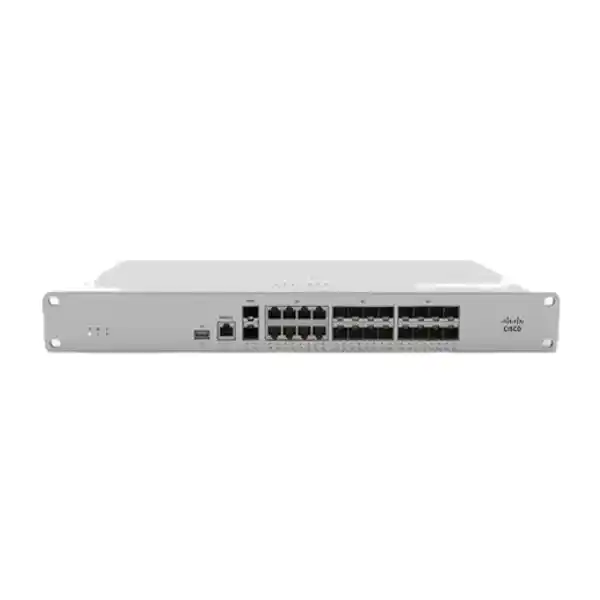
The Cisco Meraki MX250 is built for organisations that need a high-capacity edge platform for campus networks, data-centre or hub connectivity, and large VPN topologies without giving up the operational simplicity of cloud management. Cisco positions the MX250 as a Security & SD-WAN appliance for large campus environments and secure VPN concentration. Current Cisco documentation recommends it for up to 2,000 devices and lists two dedicated 10GbE SFP+ WAN interfaces, eight 10GbE SFP+ LAN ports, eight 1GbE SFP LAN ports and eight 1GbE RJ45 LAN ports.
For Tanzanian enterprises, universities, large offices, hospitality groups, financial organisations, distributed businesses and multi-site operators, the practical value of the MX250 is not simply a headline throughput figure. Its value comes from combining routing, policy enforcement, SD-WAN, VPN connectivity, cloud visibility and license-dependent security services in a platform that can be centrally managed through the Meraki Dashboard. Correct results still depend on sizing, WAN design, security-service selection, licensing, redundancy, transceivers, switching and the applications that will cross the appliance.
Choose the MX250 when your design calls for a cloud-managed large-campus or VPN-concentrator appliance, high-speed fibre uplinks and room for substantial site-to-site VPN scale. Before ordering, confirm expected internet bandwidth, traffic mix, number of devices, security license tier, VPN topology, interface/transceiver needs and whether a warm-spare high-availability design is required.
Cisco’s current sizing guidance identifies the MX250 for campus or VPN-concentrator deployments with up to 2,000 devices.
The September 2026 Cisco MX family data sheet lists 7.5 Gbps firewall throughput for the MX250.
Cisco currently lists maximum site-to-site VPN throughput of 4 Gbps for the MX250.
Centralised Meraki Dashboard management supports visibility, configuration, firmware management and distributed operations.
Cisco Meraki MX250 overview
Cisco Meraki MX appliances are multifunction security and SD-WAN platforms. The MX250 is the higher-capacity model aimed at environments where the edge is expected to handle significant traffic, many endpoints or a large VPN topology. It is rack mounted and designed around high-speed WAN connectivity, multiple fibre and copper LAN interfaces, redundant power supplies and Meraki’s cloud operational model. This makes it relevant to customers consolidating branch routing, VPN, traffic steering and firewall functions into a centrally administered platform.
The appliance should be evaluated as part of an architecture rather than as an isolated firewall. Internet circuits, upstream providers, switch uplinks, VLAN design, IP addressing, remote sites, cloud applications, identity systems, logging, endpoint security and wireless access can all affect the final design. An organisation with 2,000 low-traffic devices may have different requirements from a smaller environment carrying heavy application, backup, video or encrypted traffic. Sizing should therefore compare expected workload with the particular features that will be enabled.
The Meraki Dashboard gives administrators a web-based interface for monitoring and configuration. Cisco also documents API capabilities for automation and integration. For multi-site environments, Auto VPN can simplify site-to-site VPN deployment, while SD-WAN policies can help steer traffic according to uplink conditions and application priorities. These capabilities are especially useful where a central IT team supports branches in different cities or countries and wants consistent policy without individually managing every appliance through a traditional local interface.
Verified MX250 hardware and performance facts
| Recommended use | Large campus SD-WAN/UTM edge or VPN concentrator for large VPN topologies; current Cisco family data sheet references up to 2,000 devices. |
| Firewall throughput | 7.5 Gbps in Cisco’s September 2026 MX family data sheet. |
| Advanced security services throughput | 3 Gbps in the current family data sheet; real design should reflect enabled features and traffic mix. |
| Maximum site-to-site VPN throughput | 4 Gbps in the current family data sheet. |
| Dedicated WAN | 2 × 10GbE SFP+. |
| LAN interfaces | 8 × 1GbE RJ45, 8 × 1GbE SFP and 8 × 10GbE SFP+. |
| Management | 1 × RJ45 management interface plus cloud management through Meraki Dashboard. |
| Form factor | 1U rack mount; approximately 483 × 440 × 44 mm; 7.3 kg. |
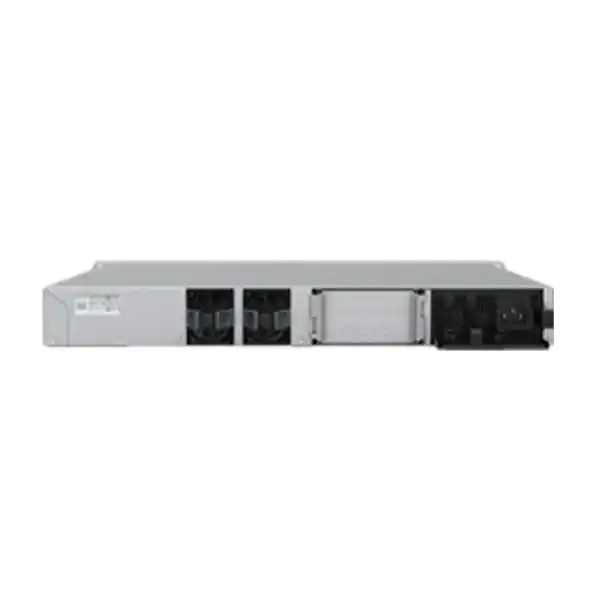
| Power | Two modular 250 W AC PSUs; Cisco documents a 105 W idle and 190 W maximum power load. |
Security, SD-WAN and licensing choices
MX licensing is a central part of the purchasing decision. Cisco’s co-termination documentation lists Enterprise, Advanced Security and Secure SD-WAN Plus options for MX security appliances, while subscription licensing uses different tier names in current Cisco documentation. The exact model and licensing mode in the customer’s Meraki organisation should be checked before ordering because features, renewal behaviour and mixing rules depend on licensing architecture.
Enterprise
Suitable when the requirement centres on secure connectivity, core firewalling, Auto VPN and essential SD-WAN functionality. Buyers should verify the feature set against the current Cisco licensing table before deciding that this tier is sufficient.
Advanced Security
Adds security capabilities such as IDS/IPS, content filtering and malware-protection functions identified in Cisco’s licensing documentation. It is commonly considered where the MX provides direct Internet edge security.
Secure SD-WAN Plus
Adds advanced analytics and application-experience capabilities for organisations heavily dependent on SaaS, IaaS or data-centre applications. Confirm the current licensing model and supported features for the organisation before purchase.
A quotation should identify hardware and license separately, including the intended term. If an organisation already uses Meraki, provide the existing Dashboard organisation and licensing model so compatibility can be checked. If it is a new deployment, decide whether the priority is a simple organisation-wide approach or a model that supports more granular licensing. Do not treat a license renewal as an afterthought: the license is integral to cloud management and support.
When the MX250 is a strong fit
The MX250 becomes particularly attractive when an organisation needs a robust head-end or campus edge with 10GbE connectivity, many routed segments, multiple WAN services or a large population of remote sites. A university campus can use the appliance as a central policy and SD-WAN point, provided the traffic model is correctly sized. A multi-branch business can use it as a VPN hub while smaller MX appliances operate at remote locations. A data-centre or main office can use it where cloud-managed operations and rapid branch provisioning are strategic priorities.
It may be unnecessarily large for a modest office with a low-speed internet connection and few users. Conversely, a very large data centre or high-throughput inspection workload may require a larger platform or a different architecture. Buyers should avoid choosing a firewall purely from user count. Measure WAN capacity, expected east-west and north-south traffic, encryption, VPN scale, security services, failover requirements, application sensitivity and growth plans.
Deployment planning checklist
Document primary and backup circuit speeds, handoff type, public IP details, routing requirements and whether dynamic path selection is needed.
Confirm whether uplinks are copper or fibre, required SFP/SFP+ optics, switch models, VLANs, trunking and link capacity.
List branch count, third-party VPN peers, remote-access needs, cloud networks and expected encrypted traffic.
Define web filtering, IDS/IPS, application control, malware protection, guest isolation, segmentation and logging requirements.
Decide whether dual WAN, redundant power and a second appliance in a high-availability design are required by business continuity objectives.
Confirm Meraki licensing model, tier and term before ordering, especially when adding to an existing organisation.
Related FourTeck resources
For wider project planning, explore FourTeck Tanzania IT, networking and security solutions. If your project extends beyond Tanzania, the FourTeck Uganda technology portfolio, FourTeck Kenya IT solutions and FourTeck Africa regional technology coverage provide relevant regional context. Organisations coordinating projects through the Gulf can also review FourTeck UAE integrated IT and telecom solutions.
Within Tanzania, the FourTeck Tanzania shop is useful for broader product discovery, while FourTeck Tanzania services provides context for deployment, integration and support requirements that may accompany a firewall or SD-WAN project.
Cisco Meraki MX250 Tanzania
In Tanzania, the Cisco Meraki MX250 is most relevant to organisations planning a substantial security or SD-WAN edge rather than a small standalone firewall purchase. Large enterprises, universities, distributed service organisations, hospitality operators, technology companies and institutions with many users or branches can benefit from a platform that combines cloud-based administration with routing, VPN and security functions. The key buying question is whether the organisation’s workload, WAN capacity and network design genuinely need the MX250’s scale and high-speed interfaces.
A Tanzania deployment should start by mapping internet circuits and branch connectivity. Businesses often have more than one provider or may be considering a secondary path for resilience. The MX250’s two 10GbE SFP+ WAN interfaces can fit higher-capacity handoffs, but transceiver compatibility, provider presentation and actual contracted bandwidth must be confirmed. If traffic is concentrated in a Dar es Salaam head office but branches operate elsewhere in the country, the hub must be sized not only for its own users but also for VPN traffic arriving from remote sites.
Power and rack planning should also be part of procurement. The appliance is a 1U rack device with redundant modular power supplies. A professional deployment should consider UPS capacity, rack airflow, fibre patching, labeling and access to both power feeds. If high availability is required, a second appliance, additional ports and upstream design may be needed. The quotation should clearly separate appliance hardware, appropriate license, optics or DACs, professional configuration and any switching or rack components needed to complete the design.
For a useful quotation, provide FourTeck Tanzania with user/device count, internet bandwidth, number of sites, expected VPN traffic, existing firewall model, switch uplinks, required security functions and whether the organisation already uses Meraki Dashboard. That information helps distinguish between a straightforward hardware request and a design that needs SD-WAN, segmentation, licensing and migration planning.
Cisco Meraki MX250 Dar es Salaam
For Dar es Salaam businesses, the MX250 can serve as a primary campus edge, head-office security platform or VPN hub where many branch and cloud connections terminate. Organisations with fast fibre internet, multiple providers, large office populations or significant SaaS usage should build the design around application requirements instead of simply matching the firewall to the ISP headline speed. Critical applications may need policy-based steering, stable latency, resilient routing and clear separation between staff, guest, server, voice and management networks.
The city context often involves headquarters, regional offices, data-intensive services and central IT teams. In that environment, Meraki Dashboard can reduce operational friction by allowing administrators to view connectivity, policy and site status from a common cloud interface. Auto VPN can simplify branch rollout when remote locations use compatible Meraki appliances. However, network teams should still document routes, VLANs, public IP dependencies, NAT rules, third-party tunnels and application exceptions before migration so cloud simplicity does not replace sound change control.
A Dar es Salaam quotation should account for physical interfaces. The MX250 provides both copper and fibre LAN options, including 10GbE SFP+. Confirm the switch-side optics, fibre type and required distances. It is easy to purchase the appliance and later discover that the correct SFP/SFP+ modules, patch leads or rack accessories were not included. High-availability designs also need a complete review of upstream switching and WAN handoff to avoid a single point of failure outside the firewall pair.
Before choosing Advanced Security or Secure SD-WAN Plus, identify which security and application-experience features are genuinely required. A business connecting directly to the internet may value IDS/IPS, malware protection and filtering, while an application-heavy environment may place greater value on advanced SD-WAN visibility. Licensing should be confirmed against the organisation’s existing Meraki model so the new MX250 fits operationally as well as technically.
Cisco Meraki MX250 Mwanza
In Mwanza, an MX250 deployment can make sense for a large regional operation, campus, manufacturing or logistics environment that needs a secure connection to headquarters, cloud systems and remote offices. The business case may be less about raw local user count and more about acting as a reliable aggregation point for regional networks. If the site connects warehouses, branch offices, cameras, voice systems and business applications, traffic classification and WAN policy can become important for maintaining predictable performance.
Connectivity planning should review available primary and backup links, expected bandwidth and the impact of outages on operations. Meraki SD-WAN capabilities can use multiple uplinks, but benefits depend on correct policies and realistic link characteristics. Critical traffic such as ERP, voice or collaboration may need priority over background transfers, guest traffic or large updates. A practical design therefore includes application requirements, not only IP addresses and VLANs.
For a Mwanza site connected to a Dar es Salaam head office or data centre, calculate the encrypted throughput expected across site-to-site VPN. Cisco’s current published maximum for the MX250 is 4 Gbps, but capacity planning should account for real traffic patterns and enabled services. Remote branches using smaller Meraki appliances can be brought into an Auto VPN topology, while third-party VPN peers should be documented separately for compatibility and routing review.
Procurement should include optics, rack space, UPS planning and the correct license. If the MX250 is intended to replace another firewall, prepare an inventory of NAT policies, VPNs, DHCP scopes, static routes and access rules before cutover. A clean migration plan reduces the risk of discovering business-critical dependencies during a maintenance window. FourTeck can use this information to prepare a more relevant scope and quotation rather than pricing only the appliance.
Cisco Meraki MX250 Arusha
Arusha organisations with tourism, hospitality, education, NGO, corporate or regional-office networks may use the MX250 when a central site supports many users, multiple buildings or distributed branches. The device can act as a secure edge and SD-WAN platform, but the design should reflect local operational priorities such as guest internet separation, staff access, cloud applications, IP telephony, surveillance networks and remote support.
Segmentation is especially important in mixed-use environments. Guest wireless traffic should not share unrestricted access with business systems; cameras and building systems may deserve their own policies; servers can be isolated behind tighter controls; management interfaces should be limited to authorised users. The MX platform provides policy tools, but the quality of the security posture still depends on how network segments, user groups and application rules are designed.
A cloud-managed platform can be useful where specialist network staff are not permanently on site. Meraki Dashboard enables central configuration and monitoring, while zero-touch provisioning can support deployment workflows. This does not eliminate the need for careful on-site installation. Rack preparation, fibre patching, WAN handoff, UPS capacity, labeling and validation testing all matter. For a high-availability pair, upstream connections should be designed so redundancy is real rather than just two appliances sharing one fragile path.
When asking for pricing in Arusha, include the number of users and devices, ISP speed, backup link plans, branch count, applications that are sensitive to delay, VPN requirements and desired security services. If the organisation uses Meraki access points or switches, also mention the existing Dashboard organisation and licensing model. A coordinated Meraki environment can simplify operations, but the exact advantage depends on how networking, security and licensing are standardised across sites.
Cisco Meraki MX250 Dodoma
The Cisco Meraki MX250 can suit large organisations in Dodoma that need a centrally managed edge for significant user populations, secure branch connectivity and resilient access to cloud or data-centre applications. Government-related environments, institutions, education and large enterprises may place strong emphasis on policy consistency, auditability, uptime and controlled inter-site communications. Those requirements should shape the design before a model is selected.
A proper assessment should identify which systems are local and which are reached through the internet or VPN. Applications hosted in a Dar es Salaam data centre, public cloud region or another country may create different routing and latency considerations. SD-WAN can help make better use of multiple WAN paths, but business-critical applications need explicit priority and performance expectations. The organisation should also decide what happens during an ISP failure and whether the backup link has enough capacity to carry essential services.
Licensing deserves early attention. Advanced Security adds capabilities relevant to an internet edge, while Secure SD-WAN Plus may be relevant to organisations that need richer application experience and analytics. The exact license should be validated against current Cisco terms and the customer’s Meraki organisation. Renewals should be budgeted as part of lifecycle planning rather than treated as an optional future expense.
For Dodoma procurement, list any required fibre transceivers and confirm switch-side compatibility. If the appliance will sit in an existing rack, check depth, airflow and power. If there is a second power supply, plan how each feed will be protected. A migration plan should include configuration backup from the existing firewall, NAT mapping, VPN details, routing and rollback steps. These operational details are what turn a product purchase into a controlled infrastructure upgrade.
Cisco Meraki MX250 UAE
For organisations operating between Tanzania and the UAE, the MX250 can form part of a common Meraki SD-WAN architecture that provides consistent policy and visibility across offices. A UAE head office, regional data centre or cloud-heavy operation may use an MX250 as a hub while branches connect through Auto VPN. The advantage is not geographical; it comes from standardising network operations and reducing the amount of per-site manual configuration.
When cross-border traffic is involved, application placement becomes important. SaaS traffic may be better sent directly to the internet at each site, while private applications may need VPN paths to a hub or data centre. Secure SD-WAN policy can help align traffic steering with the application. The network team should document which applications are public, private or cloud hosted and identify latency-sensitive services such as voice, video or virtual desktops.
UAE deployments often have access to high-speed fibre services, so the 10GbE WAN capability can be relevant, but a high-speed physical port does not automatically mean the security stack will inspect all traffic at that rate. Cisco’s current family data sheet distinguishes firewall, advanced-security and VPN performance. Size according to enabled features and expected traffic, and verify current Cisco guidance for the software release being deployed.
For regional coordination, FourTeck UAE can be referenced through the broader network while the Tanzania team handles the local requirement. A complete project brief should specify countries, sites, internet circuits, existing Meraki organisations, security tier and desired monitoring model. This makes it easier to build a consistent architecture rather than treating each location as a separate appliance purchase.
Cisco Meraki MX250 Uganda
For Uganda-wide networks, an MX250 can act as a central VPN or SD-WAN hub for a distributed organisation with branches in Kampala and other cities. The cloud-managed operating model is useful when the IT team needs a consistent view of connectivity and security across sites. Smaller branches can use appropriately sized MX models while the MX250 provides greater capacity at a headquarters or aggregation point.
Planning should begin with branch count, WAN bandwidth, application flows and resilience expectations. If traffic from many branches is backhauled to a central site, the MX250 must carry the combined encrypted traffic plus local headquarters activity. If branches use direct internet breakout, security policy and web filtering need to be considered at those sites as well. The preferred architecture depends on where applications are hosted and how security controls are distributed.
A regional project should also consider licensing consistency. Existing Meraki organisations may impose specific requirements for co-termination or subscription licensing. Provide the current license model before quoting additional appliances. If the project is new, decide whether licences will be managed centrally and how renewal dates will be tracked across the network.
FourTeck Uganda is part of the broader FourTeck network and can be useful for country-specific project coordination. For Tanzania-to-Uganda deployments, document which location is the primary hub, whether there are cross-border private links, what applications require low latency and how failover should work. This gives the project team enough information to recommend topology, appliance sizing and support scope rather than simply matching product names across sites.
Cisco Meraki MX250 Kampala
In Kampala, the MX250 can fit a headquarters, campus or central services site that carries traffic for a sizeable user population or multiple remote branches. Businesses with multiple ISP connections can use SD-WAN capabilities to improve path selection and resilience, but each link should be characterised by bandwidth, latency and stability. A backup circuit that is much smaller than the primary circuit may support only priority applications during failover, so policy should reflect that reality.
Cloud management is valuable for teams that support many sites, because policy and connectivity information can be viewed centrally. The MX platform can work alongside Meraki switching and wireless products in the Dashboard ecosystem, which can simplify operations for organisations already standardised on Meraki. If the environment uses third-party switches and access points, the MX250 can still operate as the edge appliance, but integration responsibilities need to be clearly documented.
Kampala procurement should identify whether the appliance will be installed as a single unit or a high-availability pair. Redundancy decisions should include WAN devices, switches, power and rack infrastructure. A pair of firewalls does not provide end-to-end resilience if both connect to one unprotected upstream switch or one power circuit. The project should therefore evaluate the complete path from ISP handoff through the firewall to the core network.
When requesting a quote, include expected throughput with security services, site-to-site VPN requirements, VLAN count, number of public services, need for remote access, logs or SIEM integration, and optics. This level of detail helps avoid under-scoping the license or overlooking accessories that are essential on installation day.
Cisco Meraki MX250 Arua
Arua organisations with a regional hub, education campus, NGO operation, logistics site or distributed business network can consider the MX250 where the local site needs to aggregate multiple services or act as a resilient gateway. The model is generally larger than what a small branch requires, so selection should be justified by traffic, branch aggregation, high-speed interfaces or growth rather than by brand preference alone.
Remote operational environments benefit from clear monitoring and predictable recovery procedures. Meraki Dashboard can reduce dependence on local command-line access for routine visibility, but the site still requires reliable WAN connectivity and sound physical installation. If the primary internet service fails, a secondary path should be tested under realistic load. If the secondary link cannot carry normal traffic, policies can prioritise essential business applications while limiting noncritical use.
If the MX250 is used as a VPN hub for smaller branches, calculate total tunnel and throughput requirements. Cisco publishes maximum figures based on specific test conditions, so real deployment planning should use recommended sizing guidance rather than treating laboratory maxima as guaranteed production capacity. Application mix, encryption and security services all influence usable performance.
A useful Arua project brief includes number of branches, internet providers, link speeds, expected growth, on-premises services, cloud applications and uptime requirements. Include whether the organisation already has Meraki licences and Dashboard administration. With this information, the MX250 can be evaluated as part of a complete architecture including switches, access points, power and remote-support processes.
Cisco Meraki MX250 Mbarara
In Mbarara, the MX250 may be suitable for a large regional business site, institutional campus or central network hub where many users and services depend on stable connectivity. A growing organisation might select the platform to support faster fibre circuits, multiple WAN paths and future branch expansion. The decision should be supported by a sizing exercise rather than by choosing the largest model available.
The appliance’s combination of copper and fibre interfaces can simplify connectivity to a core network, but it also means optics must be selected deliberately. Confirm fibre mode, connector type, distance and switch compatibility. If 10GbE links are used internally, review whether downstream switching and server infrastructure can actually use that capacity. Oversized uplinks are not harmful, but they should be part of a coherent network design.
Security licensing should align with the threat-control objectives. If the MX250 is the direct internet edge, Advanced Security may be considered for IDS/IPS, malware protection and content filtering. If SD-WAN application experience is a major concern, Secure SD-WAN Plus may be more appropriate. Buyers should verify the exact current feature table because Cisco’s licensing models continue to evolve.
For migration, document existing firewall objects, VLANs, routes, NAT rules, VPNs and remote-access users. Schedule testing for critical applications before decommissioning the old platform. A rollback plan is especially important when the site hosts systems used by other branches. FourTeck can incorporate these details into the project scope so the purchase covers deployment needs instead of ending at hardware supply.
Cisco Meraki MX250 Gulu
For Gulu, the MX250 can support a large campus or regional hub requiring secure internet access and managed connectivity to other sites. Its suitability depends on whether the site needs the capacity, interface density and VPN scale of the MX250. Smaller environments should compare other MX models, while a strategic hub serving many remote locations can justify the larger platform.
A major benefit of cloud management is central operational visibility. IT staff can review uplinks, clients, traffic and policy from the Meraki Dashboard, reducing the need for specialist staff to be physically present for routine tasks. Zero-touch provisioning can also help with deployment workflows. Nevertheless, security policy, IP design and change control remain the responsibility of the network team and should be planned before the appliance is brought online.
For organisations using voice, video meetings or cloud ERP, WAN performance can affect user experience as much as the firewall itself. SD-WAN policies should distinguish latency-sensitive traffic from bulk transfers and guest traffic. Where two providers are available, test failover and confirm DNS, public-IP and VPN behaviour during a circuit change. Some applications may require additional planning if they depend on a fixed public address.
When asking for MX250 pricing in Gulu, include licensing term, desired security tier, number of users/devices, branch topology, WAN speed, optics and high-availability requirement. This makes the quotation comparable and helps identify whether professional configuration, rack work or migration support should be included.
Cisco Meraki MX250 Kenya
For Kenya projects, the MX250 is relevant to large campus environments, headquarters and VPN aggregation sites where a cloud-managed SD-WAN and security platform can simplify operations. Organisations with offices in Nairobi, Mombasa or other regions may use a hub-and-spoke or more distributed internet architecture depending on application placement. The MX250 can serve as the hub, but topology should be selected around traffic flows and resilience goals rather than geography alone.
If Tanzanian and Kenyan operations share applications, the project should identify whether traffic moves across site-to-site VPN, public cloud, a regional data centre or direct SaaS connections. This determines where security inspection occurs and whether internet breakout should be local. Meraki’s SD-WAN tools can help steer traffic, but policies need measurable objectives such as latency, packet loss or application priority.
The current Cisco MX family data sheet identifies the MX250 as supporting up to 2,000 devices and includes high-speed 10GbE interfaces. This does not mean every deployment needs 10GbE WAN service. Many customers select the platform for scale, VPN topology and interface flexibility even when the current internet speed is lower. Future circuit upgrades can be considered in the sizing process.
FourTeck Kenya provides regional context for cross-border projects. For a combined Tanzania-Kenya deployment, use common naming, VLAN templates, security policy, license tracking and monitoring standards where practical. Standardisation simplifies handover and troubleshooting while still allowing local ISP and site requirements to differ.
Cisco Meraki MX250 Kuwait
In Kuwait, the MX250 can serve enterprises that need a large-campus edge, VPN hub or cloud-managed security platform with high-speed fibre interfaces. The decision process should consider local internet capacity, branch topology and the amount of traffic sent to SaaS, private cloud or data-centre resources. Meraki SD-WAN is most valuable when the network has clear path-selection and resilience objectives.
A cross-region organisation linking Kuwait with East Africa can use a common Meraki design to simplify policy and monitoring. However, long-distance latency still exists regardless of platform, so applications should be placed thoughtfully. High-volume traffic that does not need to traverse a central hub can often use local breakout, while private systems may require secure tunnels. The design should avoid unnecessary backhaul that consumes bandwidth and increases delay.
Licensing and renewal planning is particularly important for organisations with many sites. Track appliance model, serial ownership, license tier, term and organisation structure. If adding an MX250 to an existing Meraki estate, confirm the current licensing model before purchase so the new license is compatible. Where security inspection is required, size for the relevant advanced-security throughput rather than relying only on the higher basic firewall figure.
The procurement list may include SFP+ modules, fibre patch leads, rack hardware, a second unit for high availability, UPS capacity and professional services. Treat these as part of the project bill of materials rather than last-minute accessories. A fully specified quotation is easier to compare and reduces installation delays.
Cisco Meraki MX250 Ghana
For Ghana, the MX250 can support a headquarters, enterprise campus or regional network hub where many users and remote sites depend on a centrally managed security edge. The platform’s cloud operating model can be useful to organisations with small local IT teams because configuration and monitoring are handled through Meraki Dashboard. This does not remove the need for local connectivity planning, but it can make a distributed environment easier to administer consistently.
The WAN design should consider whether the site has one or two providers, how failover is expected to behave and which applications must remain available during an outage. For organisations using cloud business systems, latency and packet loss can matter as much as bandwidth. SD-WAN policies can prioritise critical traffic and steer it over a preferred path, but the organisation should define those policies before deployment.
Security design should separate employee, guest, server, voice, surveillance and management traffic where appropriate. Advanced Security licensing can add threat-prevention and filtering capabilities documented by Cisco. If a separate security stack already provides those controls, the buyer should compare architectures rather than paying for overlapping functions without a clear reason.
For Ghana projects connected with Tanzania or other African sites, standardise VPN naming, route ownership, monitoring and license documentation. FourTeck Africa can provide broader regional context while the country-specific project team handles local requirements. A complete technical brief makes it easier to determine whether the MX250 is correctly sized or whether another MX platform is a better fit.
Cisco Meraki MX250 Nigeria
Nigeria’s large enterprise environments can present demanding connectivity requirements, making the MX250 relevant to headquarters, campuses, branch aggregation and cloud-connected networks. Organisations may operate several ISP circuits and need traffic steering that keeps critical applications stable even when one path degrades. Meraki SD-WAN can support that objective, but success depends on how application priorities, performance thresholds and failover behaviour are defined.
A multi-site business should decide whether the MX250 acts as a central hub or whether traffic is distributed between regional hubs. Central backhaul simplifies some policy models but can create bottlenecks and latency. Local internet breakout can improve SaaS performance but requires confidence in branch security. The correct design is therefore a balance between central control, application location and available connectivity.
High-speed WAN and LAN interfaces give the MX250 room for substantial throughput, but enabled security services must be included in sizing. Cisco’s September 2026 data sheet lists 3 Gbps for advanced security services and 4 Gbps maximum site-to-site VPN throughput. These figures are useful references, not guarantees for every application mix. Growth, encrypted traffic and logging requirements should be considered.
A Nigeria procurement request should specify hardware quantity, licensing tier and term, optics, power, high availability and whether implementation is included. For regional FourTeck coordination, a common statement of work can establish configuration standards while allowing each country to use suitable ISPs and local addressing. This approach is more maintainable than building independent firewall islands with different policies.
Cisco Meraki MX250 Seychelles
In Seychelles, the MX250 is likely to be considered for larger hospitality, enterprise, government, education or multi-property networks where a central site handles significant user and branch traffic. Because island connectivity and upstream links can be strategically important, the project should examine WAN diversity and failover carefully. An oversized appliance cannot compensate for a single fragile internet path, so resilience must be designed across provider, power and switching layers.
Hospitality and mixed-use networks often need strong segmentation. Guest traffic, staff systems, payment or business applications, IP phones, cameras and building devices should not all share the same unrestricted network. The MX250 can enforce firewall policies between segments and provide internet-edge control, while access switches and wireless infrastructure carry those VLANs to users and devices. A coordinated design across firewall, switching and Wi-Fi is therefore important.
Meraki Dashboard can be beneficial for centralised administration across multiple properties or islands, especially when staff must support sites remotely. Auto VPN can simplify connectivity between locations using compatible Meraki appliances. Yet the organisation should still maintain an IP plan, device inventory, license register and documented change process to avoid configuration drift.
For a Seychelles quotation, provide expected user/device totals, property or branch count, ISP links, security tier, VPN requirements and any need for 10GbE uplinks. Include environmental and rack details if equipment rooms are space-constrained. This information helps determine whether the MX250’s capacity is justified and what supporting components are needed for a complete installation.
Frequently asked questions
What is the Cisco Meraki MX250 designed for?
Cisco describes the MX250 as a Security & SD-WAN appliance for large campus environments and large VPN topologies. Current family documentation positions it for campus or VPN-concentrator use with up to 2,000 devices.
What is the current firewall throughput of the MX250?
Cisco’s September 2026 MX family data sheet lists 7.5 Gbps firewall throughput for the MX250. It separately lists 3 Gbps advanced-security-services throughput and 4 Gbps maximum site-to-site VPN throughput. Always size against the actual enabled feature set and current Cisco guidance.
Does the MX250 require a license?
Yes. Cisco Meraki hardware is cloud-managed and requires an appropriate license. Current co-termination options include Enterprise, Advanced Security and Secure SD-WAN Plus, while subscription licensing uses a different structure. Confirm the organisation’s licensing model before ordering.
Can the MX250 be used as a VPN concentrator?
Yes. Cisco explicitly lists large VPN-topology concentration as a recommended use case. The final topology should be designed around branch count, encrypted throughput, routing and any third-party VPN peers.
What interfaces does the MX250 have?
The MX250 includes two dedicated 10GbE SFP+ WAN ports, eight 10GbE SFP+ LAN ports, eight 1GbE SFP LAN ports, eight 1GbE RJ45 LAN ports and a dedicated RJ45 management interface.
Can I use two MX250 appliances for high availability?
Meraki MX supports high-availability designs. A project should verify the current MX250 HA guidance, licensing implications and upstream connectivity. True resilience also requires suitable WAN, switching and power design.
What should I provide for an MX250 quotation?
Provide appliance quantity, user/device count, internet speeds, number of sites, VPN requirements, security features, licensing term, existing Meraki organisation details, optics/transceivers, high-availability requirement and whether migration/configuration services are needed.
Quotation checklist for Cisco Meraki MX250
A precise quotation is easier when the technical scope is clear. Include the exact hardware quantity, preferred license tier and term, expected WAN bandwidth now and in the next few years, number of users and devices, branch count, site-to-site VPN traffic, remote-access needs, public services, NAT rules, routing requirements, security inspection features, logging requirements, switch uplinks, required SFP/SFP+ modules, rack and power constraints, high-availability design and planned migration window. If you already have Meraki, include the organisation licensing model and relevant network structure.
This information helps determine whether the MX250 is the right model, whether a different appliance would be more economical, and what accessories or services are needed for a complete deployment.
Decision recap
The Cisco Meraki MX250 is a strong candidate for large-campus and VPN-hub designs that benefit from high-speed 10GbE connectivity, substantial firewall and VPN capacity, and cloud-based operational management. Its strongest advantages appear when the organisation wants to standardise SD-WAN and security across multiple sites, simplify branch provisioning and give a central IT team consistent visibility. The product should be sized using the newest Cisco documentation and the actual security services enabled.
Before purchase, confirm that the MX250 is neither oversized nor undersized for the workload. Evaluate the full path from ISP circuits to core switching, the licensing model, the need for advanced security, HA expectations, transceivers and migration complexity. A good firewall purchase is one that fits the network architecture and lifecycle plan, not simply the device with the highest specification on a shortlist.
Consult FourTeck Tanzania
FourTeck Tanzania can help turn an MX250 product request into a clearer procurement scope by reviewing user/device count, WAN bandwidth, VPN topology, licensing, optics, switching, high availability and migration needs. For the best response, share your current firewall, branch count, internet links, target security features and whether you already operate a Meraki Dashboard organisation.



Reviews
There are no reviews yet.