
Cisco Meraki MS150-48MP-4X Tanzania
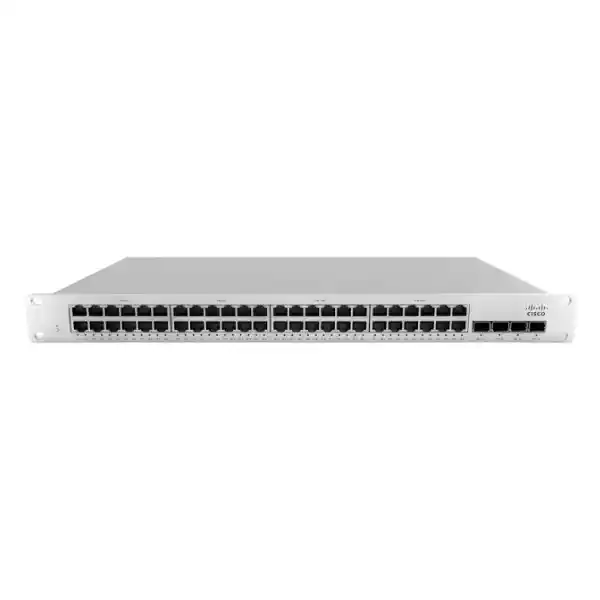
The Cisco Meraki MS150-48MP-4X is built for organizations that need more than a conventional 1 GbE access switch. It combines 32 standard 1 GbE copper ports with 16 multigigabit ports capable of up to 5 GbE, four fixed 10 GbE SFP+ uplinks, high-power PoE capability, physical stacking and Meraki cloud management. For businesses modernizing wireless, voice, surveillance and office networks, it provides a practical access-layer foundation that can support high-performance Wi-Fi access points and power-hungry edge devices while keeping operational control centralized through the Meraki Dashboard.
Multigigabit access
Thirty-two ports provide 1 GbE connectivity while sixteen ports support up to 5 GbE, giving high-throughput endpoints room to operate without replacing the entire access layer with 10 GbE copper.
High-power PoE
The switch offers a 740 W PoE budget, with the multigigabit ports designed for higher-power PoE++ use. This is valuable for modern wireless access points, cameras and other powered devices.
Meraki Dashboard management
Cloud-based administration simplifies configuration, monitoring, firmware management and troubleshooting across one site or many sites, reducing the need to manage each switch as an isolated device.
Physical stacking
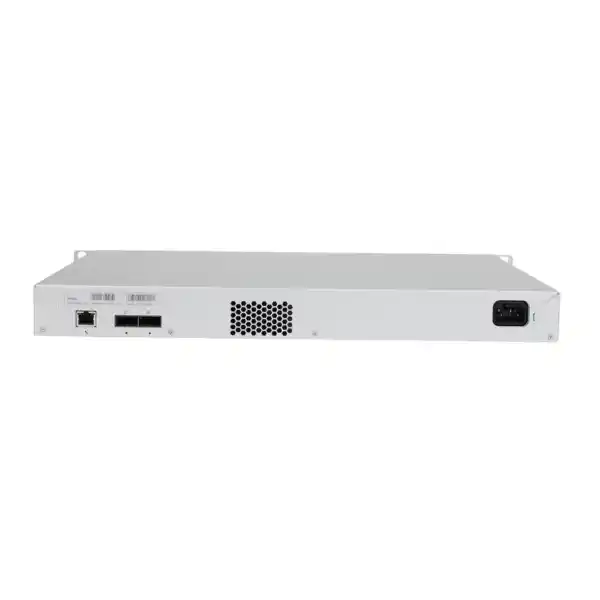
Two dedicated stacking ports provide 80 Gbps stacking bandwidth, helping organizations build a more manageable access-switch stack where multiple switches are required in the same rack.
What the Cisco Meraki MS150-48MP-4X is designed to solve
Many access networks are reaching the point where a simple 1 GbE switch can become the bottleneck rather than the solution. Newer wireless access points can exceed a single gigabit of aggregate traffic, high-resolution cameras can increase bandwidth and power requirements, and branch networks increasingly depend on cloud applications that benefit from predictable switching performance and easier remote administration. The MS150-48MP-4X addresses that gap with a mixed-speed port design: most user and endpoint connections can remain on cost-effective 1 GbE ports while sixteen multigigabit ports are available for high-demand devices.
The result is a useful transition platform for organizations that are upgrading in stages. A business does not need every endpoint to operate at multigigabit speed to benefit from faster access for wireless, storage-facing edge devices or selected workstations. The four 10 GbE SFP+ uplinks support higher-capacity connections toward aggregation or core switching, while cloud management helps network teams standardize configuration and troubleshoot sites remotely. For organizations evaluating switching as part of a wider infrastructure project, Fourteck Tanzania also covers integrated IT, networking and security planning in Tanzania, allowing the switch to be considered alongside Wi-Fi, firewall, voice and cabling requirements rather than as a standalone purchase.
Cisco Meraki MS150-48MP-4X specifications
| Access interfaces | 32 x 1 GbE RJ45 plus 16 x multigigabit RJ45 ports supporting up to 5 GbE |
| Uplinks | 4 x 10 GbE SFP+ |
| PoE | 802.3bt capable; up to 60 W on ports 33–48 |
| Total PoE budget | 740 W |
| Physical stacking | 2 dedicated stacking ports, 80 Gbps stacking bandwidth |
| Switching capacity | 304 Gbps |
| Layer 3 | Static routing |
| Management | Cisco Meraki cloud management |
| Form factor | Integrated 1U rack mount |
| Power input | 100–240 VAC |
| Operating temperature | 0°C to 45°C |
Specifications above are based on current Cisco Meraki product documentation. Final configuration should also account for the required license term, transceivers, stacking cables, power cord and deployment design.
Licensing and procurement guidance
Meraki switching is licensed, so the hardware should not be quoted in isolation. Cisco documents Enterprise and Advanced license tiers for the MS150 family in one-, three-, five-, seven- and ten-year terms under the traditional Meraki licensing structure. The Advanced tier adds Adaptive Policy capability. Cisco also supports subscription licensing for the MS150 family. The correct license depends on the customer’s Meraki organization, licensing model and feature requirements.
Before ordering, confirm whether the switch will join an existing Meraki organization, which license model is active, whether Advanced features are required, and the required term. It is also important to identify SFP/SFP+ transceivers, stacking cables and the appropriate regional power cord. This prevents a technically correct switch from arriving without the accessories or entitlement needed for deployment.
Typical use cases
Wi-Fi 7 access layer
Multigigabit copper ports and high-power PoE make the MS150-48MP-4X well suited to newer wireless access points that can exceed conventional 1 GbE uplink requirements.
Enterprise office switching
Standard 1 GbE ports can serve desktops, phones and ordinary endpoints while selected 5 GbE ports are reserved for higher-performance devices.
IP surveillance and IoT
A large PoE budget supports dense powered-device deployments, subject to endpoint power requirements and proper PoE budget calculations.
Multi-site branch networks
Dashboard management gives central IT teams visibility across distributed locations without relying on separate local management workflows for every switch.
Cisco Meraki MS150-48MP-4X Tanzania
For organizations in Tanzania, the Cisco Meraki MS150-48MP-4X is particularly relevant where network modernization must support a mix of conventional office devices and newer high-bandwidth wireless infrastructure. A corporate office may have hundreds of ordinary 1 GbE endpoints yet only a smaller number of Wi-Fi 7 access points that need multigigabit links and higher PoE. In that scenario, the mixed-port architecture helps concentrate premium bandwidth where it creates value. The 32 standard gigabit ports can serve user devices, phones, printers and other edge equipment, while the 16 multigigabit ports can be allocated to access points or high-performance endpoints. This avoids overengineering every port while still creating headroom for newer wireless and IoT requirements.
Tanzania deployments should also consider the complete infrastructure around the switch. A 740 W PoE design can draw significant power under load, so UPS sizing, rack ventilation, electrical quality and circuit planning are important. The switch supports a 0°C to 45°C operating range, but the practical rack environment matters: a poorly ventilated communications room can be considerably warmer than the surrounding office. Cable quality is equally important when using multigigabit Ethernet. Existing copper should be assessed before promising 2.5 or 5 GbE performance over every run. Where the switch uplinks toward another floor, building or core, the correct SFP+ optics and fiber type should be selected rather than treated as a generic accessory.
Procurement teams should request a bill of materials that covers hardware, the appropriate Meraki license, regional power cord, uplink transceivers, stacking cables if required, rack accessories and deployment services. Businesses upgrading a wider LAN can review Fourteck Tanzania’s IT infrastructure and technical services to connect switching decisions with wireless, firewall, cabling and deployment planning. The useful buying question is not simply whether the switch has 48 ports; it is whether its port mix, PoE budget, uplink design and cloud-management model match the number and type of devices the site will support over the next several years.
Cisco Meraki MS150-48MP-4X Dar es Salaam
In Dar es Salaam, the MS150-48MP-4X fits offices, headquarters, hospitality environments, education sites, healthcare facilities and multi-floor commercial buildings that need a managed access layer with room for wireless growth. The city’s larger office deployments often combine wired users, VoIP phones, access points, cameras, meeting-room systems and building devices on the same physical switching infrastructure. That makes VLAN design and PoE planning as important as port count. The Meraki platform can help central IT teams maintain a consistent configuration across several switches and sites, but the initial design should still define which traffic belongs on which VLAN, where Layer 3 boundaries sit and how uplinks connect to firewalls or aggregation switches.
For a high-density office, the sixteen multigigabit ports can be reserved for wireless access points while the 1 GbE interfaces serve users and conventional devices. If several access points are upgraded to Wi-Fi 7, an access switch with only 1 GbE ports can restrict the benefit of the new wireless hardware. The MS150-48MP-4X removes that specific edge bottleneck by supporting up to 5 GbE on ports 33–48. The four 10 GbE SFP+ uplinks then provide a path toward upstream switching without forcing all traffic through a single 1 GbE or 10 GbE connection. Actual uplink design should be based on traffic patterns, redundancy goals and the number of stacked switches.
Dar es Salaam buyers should include the switch room in the project scope. Verify rack depth, airflow, UPS capacity, patch-panel layout, fiber availability and cable labeling before deployment. The switch is cloud-managed, so reliable internet and DNS access also matter for normal management operation. Where a site is adding cameras or access points, calculate the expected PoE draw rather than assuming the 740 W budget will cover any mix of endpoints. A structured quote should identify endpoint counts, expected power per device, desired uplink medium and license term so the selected configuration can be deployed without last-minute substitutions.
Cisco Meraki MS150-48MP-4X Mwanza
For businesses in Mwanza, the Cisco Meraki MS150-48MP-4X can support a consolidated branch or campus access layer where network visibility and remote administration are priorities. Distributed organizations may have limited IT staff at each site, so a cloud-managed switch can reduce the dependence on technicians logging into individual devices locally for routine monitoring. Network teams can apply consistent policies, review status and troubleshoot from the Meraki Dashboard. That operational model is useful for organizations that have branches in more than one Tanzanian city and want the switching environment to follow a repeatable standard rather than evolve independently at each location.
The hardware design is also relevant to mixed-use sites. Retail offices, logistics facilities, hotels, schools and healthcare environments can have a combination of user workstations, access points, IP phones, CCTV cameras and operational devices. The switch’s 32 gigabit ports can handle mainstream wired devices, while 16 multigigabit ports provide higher-speed capacity for selected endpoints. Because those same multigigabit ports can deliver up to 60 W PoE++, they can be assigned to access points or devices that need more power than standard PoE. Proper sizing should still reserve power headroom and consider future additions instead of using the entire 740 W budget on day one.
A Mwanza project should also review the upstream network and power environment. Four 10 GbE SFP+ ports are valuable only when matched with compatible optics, fiber or direct-attach cabling and an upstream device that supports the intended link. If the site will stack multiple MS150 switches, Cisco-supported stacking cables should be included in the bill of materials. UPS sizing should use realistic switch and PoE loads, not only idle consumption. For organizations standardizing sites, define one repeatable template covering VLANs, port profiles, uplinks, device naming, firmware windows, licensing and monitoring. That approach makes future expansion and troubleshooting substantially easier.
Cisco Meraki MS150-48MP-4X Arusha
Arusha organizations in hospitality, tourism, professional services, education and multi-building commercial environments often need a network that can support heavy wireless usage alongside cameras, phones and office applications. The MS150-48MP-4X is a strong fit when a site is planning new-generation wireless and wants its wired access layer to avoid constraining the radio network. Sixteen copper interfaces support up to 5 GbE, which is particularly useful for high-capacity access points, while the remaining 32 copper ports remain available for standard 1 GbE endpoints. This mixed design helps keep network upgrades balanced rather than forcing every port into a more expensive high-speed tier.
Hospitality and guest-facing environments should pay close attention to segmentation. Guest Wi-Fi, staff devices, IP cameras, payment or business systems and building devices should not be treated as one flat LAN simply because they share the same switch. The MS150 family supports the managed switching capabilities needed to participate in a structured VLAN design, while upstream firewall policy can enforce which networks may communicate. Meraki Dashboard visibility can help IT teams identify switch-port status, connected devices and configuration issues without visiting every communications room, which is useful for properties or organizations with more than one building or branch.
Arusha deployment planning should include rack conditions, cable testing and wireless design. Multigigabit Ethernet depends on suitable cabling, and a powerful access point will still underperform if radio placement, channel planning or upstream internet capacity is poor. A complete project should therefore link the switch BOM to the wireless survey, firewall capacity and internet design. Where multiple switches are needed in one rack, physical stacking can simplify the operational model and provide an 80 Gbps stacking fabric. Buyers should request the correct Meraki license term and verify all accessories before ordering, including SFP+ optics, stacking cables and the regional power cord.
Cisco Meraki MS150-48MP-4X Dodoma
In Dodoma, the MS150-48MP-4X is suited to offices, institutions, campuses and branch networks that need centralized switching management with capacity for wireless and powered-device growth. Public-facing facilities and large administrative environments can accumulate many networked systems over time: user computers, phones, meeting rooms, surveillance, access points, printers and specialist devices. A modern access switch should therefore be selected around bandwidth classes, PoE demand and operational management rather than port count alone. The MS150-48MP-4X provides a practical split between mainstream gigabit access and sixteen higher-speed copper ports that can be prioritized for the most demanding endpoints.
For institutions with more than one building or department, the four 10 GbE SFP+ uplinks allow the switch to connect into faster fiber-based distribution designs. The exact topology should be planned around fiber type, distance, redundancy requirements and the upstream switch. If several MS150 units share the same rack, dedicated physical stacking is available and can reduce the management complexity of a group of access switches. VLANs should be mapped to clear business functions—for example staff, voice, guest, surveillance and infrastructure management—so that the network remains understandable as it expands. Static routing is supported, but the location of routing functions should be deliberately designed rather than enabled ad hoc.
Power continuity deserves special attention. A fully loaded PoE switch can represent a substantial UPS load, and downstream access points or cameras depend on the switch staying powered. UPS sizing should therefore consider the switch plus the powered endpoints and any upstream equipment required to keep services operating. The rack should also provide adequate airflow and organized patching. During procurement, include licensing and support entitlement in the cost model. A Meraki switch without the correct license plan is not a complete deployment, so renewal dates and the organization’s existing licensing model should be documented at the start of the project.
Cisco Meraki MS150-48MP-4X UAE
For UAE organizations, the Cisco Meraki MS150-48MP-4X can serve as a high-capacity access switch for offices, retail groups, hospitality, education, healthcare and distributed enterprise networks. Businesses operating across Dubai, Abu Dhabi, Sharjah or multiple regional branches frequently value a common cloud-managed platform because configuration and monitoring can be standardized centrally. The 48-port form factor is suitable for dense access racks, while the mixture of 1 GbE and 5 GbE copper interfaces aligns well with staged upgrades to Wi-Fi 7. Instead of replacing every user-facing link with multigigabit switching, the higher-speed ports can be targeted at access points and selected devices that can actually use the bandwidth.
The 740 W PoE budget is useful for deployments with many powered endpoints, but designers should calculate actual load and reserve headroom. The MS150-48MP-4X can provide up to 60 W PoE++ on ports 33–48, making those ports particularly appropriate for higher-power access points or other compatible endpoints. Uplink design is equally important. Four fixed 10 GbE SFP+ interfaces can connect the access layer to aggregation or core infrastructure, but transceiver choice must match distance and fiber type. Physical stacking can be used when multiple MS150 switches are deployed together, providing a dedicated 80 Gbps stack fabric.
For cross-border customers coordinating Tanzania and UAE infrastructure, it is useful to standardize BOM rules, VLAN design, naming, licensing and spare strategy. Fourteck’s broader UAE and MEA IT infrastructure portfolio can support discussions where one organization wants consistent network architecture across several countries. Procurement should still treat each site individually for power cords, optics, rack conditions, internet availability and local installation requirements. The switch is a capable platform, but consistent operational standards are what turn multiple devices into a manageable regional network.
Cisco Meraki MS150-48MP-4X Uganda
Ugandan businesses considering the MS150-48MP-4X are typically looking for a switch that can support both present-day 1 GbE access and the higher demands of modern wireless. The sixteen multigigabit interfaces provide a practical growth path for Wi-Fi 6E and Wi-Fi 7 access points, while 32 conventional gigabit ports remain available for workstations, IP phones, cameras and general devices. This makes the model particularly useful for growing offices, campuses and branch networks that would otherwise need to choose between an all-gigabit access layer that may age quickly and a more expensive design that provides high-speed copper on every port.
Cloud management is valuable when a network spans more than one Ugandan site. An IT team can use the Meraki Dashboard to view device status, manage configuration and troubleshoot remotely instead of relying on separate local interfaces. The operational benefit becomes larger when switches are deployed with consistent port profiles and VLAN standards. A rollout should define how access points, phones, cameras, guest networks and business users map to VLANs, and how those VLANs are protected by upstream firewall rules. The switching platform should be part of an architecture rather than an isolated piece of hardware.
For procurement and rollout coordination, Fourteck’s Uganda IT and networking solutions site provides a regional point of reference for related network projects. Buyers should request a complete BOM with the required license, optics, stacking cables and power accessories. Site readiness should cover rack ventilation, UPS capacity, copper cable quality and available fiber. If the switch is intended to power a large camera or wireless deployment, calculate both total PoE draw and the per-port requirement of each endpoint so that high-power devices are placed on suitable ports.
Cisco Meraki MS150-48MP-4X Kampala
In Kampala, organizations upgrading office towers, hotels, retail operations, healthcare facilities, schools and enterprise branches can use the MS150-48MP-4X as a converged access switch for data, voice, wireless and surveillance. Its value is strongest where the network edge is no longer homogeneous. A standard user desktop may need only 1 GbE and a modest PoE phone, while a new access point may need several gigabits of Ethernet capacity and significantly more power. The switch accommodates both classes without requiring two separate access platforms, helping simplify the rack while preserving higher-performance ports for devices that need them.
Kampala sites with multiple floors should plan uplink capacity carefully. Four 10 GbE SFP+ ports support faster links toward aggregation, but the correct design may use redundant uplinks, link aggregation or separate paths depending on the upstream infrastructure. Fiber type and transceiver selection must match the installed cabling and distance. If several access switches are installed in the same communications room, the two dedicated stacking ports can be used with supported cables to create a physical stack. That can simplify management and provide a dedicated stacking fabric rather than consuming front-panel uplinks for stack traffic.
Wireless projects should also verify that existing copper can support multigigabit speeds. Good access points cannot compensate for poor cabling, overloaded uplinks or weak internet capacity. A deployment checklist should therefore include cable certification, PoE calculations, WLAN design, firewall throughput, DNS and internet availability for cloud management, UPS runtime and rack cooling. Licensing should be quoted for the desired term and aligned with the Meraki organization’s existing licensing model. Planning these dependencies in advance reduces the risk of buying a capable switch that is constrained by the surrounding infrastructure.
Cisco Meraki MS150-48MP-4X Arua
For organizations in Arua, the MS150-48MP-4X can be attractive where centralized management is more important than having specialist network staff permanently available on site. A cloud-managed switch allows an authorized central team to monitor status and configuration remotely, which can simplify support for branch offices, institutional sites and distributed operations. The key is to deploy the switch with a documented standard from the beginning. Port profiles, VLANs, naming, uplinks and firmware windows should be defined centrally so that troubleshooting does not depend on local memory or undocumented changes.
The port architecture supports a mixed endpoint population. Thirty-two 1 GbE ports suit ordinary computers, printers, phones and many cameras, while sixteen ports support up to 5 GbE for selected devices. Those multigigabit ports also support higher-power PoE, which can be useful for modern access points. A total 740 W PoE budget gives substantial capacity, but designers should still calculate the expected load. Reserving headroom is sensible because powered-device requirements can grow when additional cameras, phones or access points are installed later.
Arua deployments should pay attention to power resilience and environmental conditions. Network switches, internet equipment and wireless access points form a dependency chain, so a UPS strategy should include the entire path required for useful connectivity rather than only the switch. Rack airflow, dust management and cable organization affect long-term reliability. Where fiber is used for uplinks, spare optics and clear labeling can simplify future maintenance. Licensing and cloud connectivity also need to be treated as operational requirements. Document the license term, renewal ownership and Meraki organization details during handover so that future administrators understand both the physical network and the subscription obligations.
Cisco Meraki MS150-48MP-4X Mbarara
Mbarara businesses, education environments, hospitality sites and regional offices can use the Cisco Meraki MS150-48MP-4X when they need dense PoE switching with a straightforward path to multigigabit wireless. The switch does not assume every device needs the same speed. Most office endpoints can remain on 1 GbE, while high-capacity wireless access points or specialist devices use the 5 GbE-capable interfaces. This creates a practical balance between current requirements and future expansion, especially where a site is modernizing Wi-Fi before replacing every other endpoint on the LAN.
The four SFP+ uplinks make the access switch suitable for connection to faster distribution infrastructure, but their value depends on upstream design. For a campus or multi-floor building, fiber can provide distance and electrical isolation between communications rooms. Link capacity should be chosen based on real traffic: camera recording streams, wireless user traffic, voice, backups and cloud applications may all converge on the uplinks. Where network growth is expected, a 10 GbE uplink can provide useful headroom compared with a legacy 1 GbE uplink that may become congested even when individual user ports look lightly loaded.
Deployment quality remains essential. Multigigabit copper performance can be limited by cabling, and PoE capacity can be undermined by poor patching or inadequate UPS planning. Buyers should request cable testing where existing infrastructure is uncertain, identify endpoint power requirements and confirm the Meraki license before installation. For larger projects, a port schedule showing each connected device, VLAN, PoE class and intended switch port can make commissioning faster. This also gives future support teams a baseline for troubleshooting and expansion instead of forcing them to rediscover the network one connection at a time.
Cisco Meraki MS150-48MP-4X Gulu
In Gulu, the MS150-48MP-4X can support organizations that want a managed, scalable access network without making every site dependent on complex local administration. Meraki’s cloud-management approach is useful for branch networks because configuration, monitoring and troubleshooting can be performed centrally. That does not remove the need for good design, but it makes a standardized design easier to operate across locations. A common template can define VLANs for staff, guest Wi-Fi, voice, cameras and infrastructure, along with naming and port-profile conventions that make each site recognizable to the same support team.
The hardware provides room for modern endpoint requirements. Sixteen 5 GbE-capable ports can serve access points or higher-bandwidth devices, while 32 gigabit ports continue to support ordinary user access. A large 740 W PoE budget reduces the need for separate power injectors in dense powered-device deployments, although the total and per-port limits must be respected. The multigigabit ports are the appropriate area for devices that may require up to 60 W, and endpoint specifications should be checked before final port assignment.
For Gulu sites, resilience planning should include internet, power and spares. Because management is cloud-based, reliable connectivity improves operational visibility. UPS capacity should cover the switch and the critical network path, while rack airflow should remain within the switch’s supported operating conditions. If the site uses fiber uplinks, the project should document optic type and keep clear records of fiber routes. The license term and renewal process should also be documented. These practical steps turn the switch from a one-time purchase into a maintainable network component that can be supported consistently over its lifecycle.
Cisco Meraki MS150-48MP-4X Kenya
Kenyan organizations can deploy the MS150-48MP-4X in branch, campus and enterprise access networks where Wi-Fi growth and centralized operations are key requirements. Nairobi offices and larger distributed businesses increasingly use wireless as a primary user-access method, which puts more pressure on the wired switch ports behind access points. A 1 GbE edge can limit newer access points even when their radios support much greater aggregate throughput. The sixteen multigigabit interfaces on the MS150-48MP-4X provide up to 5 GbE and can therefore be targeted at those higher-capacity wireless connections while the remaining 32 gigabit ports serve ordinary endpoints.
The switch can also simplify powered-device infrastructure because it provides a 740 W PoE budget. A project should map each access point, phone and camera to its expected power requirement and leave enough reserve for growth. The 10 GbE SFP+ uplinks can connect the access layer to a higher-speed core or distribution layer, but optics and fiber must be matched properly. For organizations with several access switches in one rack, physical stacking provides an alternative to managing every unit as a completely separate island and offers a dedicated 80 Gbps stack fabric.
Customers coordinating networks between Tanzania and Kenya can also reference Fourteck’s Kenya enterprise networking solutions for region-specific project discussions. A cross-border standard should define license policy, VLAN naming, SSID-to-VLAN mapping, uplink design and device naming while still allowing each location to differ in port count and local connectivity. Procurement should cover the full bill of materials, including the Meraki license, optics, stacking accessories and appropriate power cord. Standardization works best when technical documentation and renewal ownership travel with the hardware.
Cisco Meraki MS150-48MP-4X Kuwait
For Kuwait deployments, the Cisco Meraki MS150-48MP-4X can support enterprise offices, retail groups, hospitality sites and distributed organizations that need a dense access switch with substantial PoE capability. Modern offices commonly combine wireless access points, IP telephony, cameras, meeting-room systems and ordinary wired users on the same access layer. The switch’s combination of 32 gigabit ports and 16 multigigabit ports allows the network designer to reserve faster copper interfaces for the endpoints that can benefit from them while maintaining cost-effective connectivity for the rest of the site.
Environmental planning is important in any communications room, particularly where high PoE loads and multiple switches add heat. The MS150-48MP-4X is specified for operation up to 45°C, but rack design should aim for controlled conditions rather than treating the maximum rating as a target. Adequate ventilation, organized cabling and correctly sized UPS systems improve maintainability. The switch’s 740 W PoE budget can support many devices, but a loaded switch also increases electrical and backup-power requirements. Power design should therefore be based on expected PoE load, not only the switch’s idle draw.
Cloud management can simplify support for companies with several Kuwait sites or regional branches, but licensing must be planned from the start. Confirm the Meraki organization’s licensing model and the required Enterprise or Advanced feature tier before placing the order. Uplink transceivers should match fiber type and distance, and stacking cables should be included when physical stacking is planned. A good deployment handover should record switch serials, license details, port assignments, VLANs, uplink paths and renewal responsibility so that the network can be operated predictably after the installation team leaves.
Cisco Meraki MS150-48MP-4X Ghana
In Ghana, the MS150-48MP-4X can be a practical access-switch choice for organizations that expect wireless bandwidth and powered-device requirements to increase over the life of the network. Rather than providing one speed across all 48 access ports, it combines 32 standard gigabit interfaces with sixteen ports that support up to 5 GbE. This is useful in offices and institutions where most devices remain gigabit-class but the newest wireless access points, specialist workstations or other edge devices need more bandwidth. The mixed architecture can make a phased modernization plan more economical and easier to justify.
The switch is also relevant for camera-heavy and voice-enabled networks because the 740 W PoE budget allows many endpoints to receive power through Ethernet. However, power design should start with the endpoint list, not the headline budget. Identify which devices use basic PoE, PoE+ or higher-power PoE, place high-power endpoints on suitable ports and reserve capacity for future expansion. Four 10 GbE SFP+ uplinks provide bandwidth toward aggregation, while physical stacking supports groups of MS150 switches in the same rack.
Operationally, the Meraki Dashboard can make multi-site support more consistent by centralizing configuration and visibility. This is valuable for businesses with branches in Accra and other locations or for regional groups that also operate in Tanzania. The network should still have clear documentation: VLAN purpose, port profiles, IP addressing, uplink topology and device naming. Procurement should include the required Meraki license and compatible accessories. Site readiness should confirm rack space, ventilation, UPS capacity and structured cabling. When these dependencies are handled properly, the switch becomes part of a scalable architecture instead of a standalone hardware upgrade.
Cisco Meraki MS150-48MP-4X Nigeria
Nigerian enterprises, branch networks, financial services, education, hospitality and technology organizations can use the MS150-48MP-4X where edge bandwidth, PoE density and centralized management are all important. The sixteen multigigabit ports are a key differentiator for sites deploying higher-capacity wireless access points, because they can provide up to 5 GbE rather than forcing every access point through a 1 GbE bottleneck. The remaining 32 gigabit ports continue to support the large population of ordinary business devices that do not need multigigabit connectivity, creating a sensible balance for mixed-generation networks.
For large offices and campuses, uplinks and power resilience deserve the same attention as access-port speed. Four 10 GbE SFP+ ports can provide high-capacity paths to upstream switching, but redundant design, optic choice and fiber routing should be planned explicitly. The switch’s high PoE budget makes it possible to consolidate many powered endpoints, yet that also concentrates operational dependency on the switch and its UPS. Critical wireless, voice and surveillance services may all be affected if the switch loses power, so backup-power calculations should consider the full expected PoE load and the duration the business needs to remain operational.
Meraki cloud management can help organizations with sites in Lagos, Abuja or other cities apply common configuration standards and troubleshoot remotely. A repeatable branch template should include VLANs, port profiles, SSID mapping, uplink settings and naming conventions. Licensing should be aligned with the customer’s existing Meraki organization and feature requirements. Before ordering, confirm the required Enterprise or Advanced tier, term, optics, stack cables and power cord. The best procurement outcome is a complete, deployable BOM that matches the architecture rather than a hardware-only quotation that leaves licensing and connectivity decisions unresolved.
Cisco Meraki MS150-48MP-4X Seychelles
For Seychelles businesses, resorts, hospitality properties, offices and institutions, the MS150-48MP-4X is relevant where the LAN must support high-quality wireless access, phones, cameras and business systems from a centrally managed switching platform. Hospitality environments in particular may have a high proportion of wireless traffic, and newer access points can benefit from more than 1 GbE of wired uplink capacity. The switch provides sixteen ports capable of up to 5 GbE for those demanding connections while retaining 32 conventional gigabit interfaces for other devices.
Because island and distributed-site operations can place a premium on remote visibility, cloud management can help a central IT team diagnose switch and port conditions without relying on immediate physical access. That makes documentation and standardization even more valuable. Device names, port descriptions, VLANs and uplink topology should be clear enough that a remote engineer can understand the site quickly. If multiple switches are installed in one rack, physical stacking can simplify the access layer, and four 10 GbE SFP+ uplinks provide options for connection toward distribution or core infrastructure.
Procurement should be planned carefully because missing accessories can delay deployment. The BOM should include the correct Meraki license, compatible optics, stacking cables where required and the appropriate power cord. For resort or camera-heavy environments, calculate PoE draw and UPS runtime together because wireless and surveillance services depend on switch power. Environmental conditions inside communications rooms should also be controlled with adequate ventilation. The MS150-48MP-4X is a capable hardware platform, but a reliable outcome depends on integrating it with structured cabling, upstream switching, internet access, firewall policy and a support process that accounts for the location’s operational realities.
Compatibility and deployment checklist
Separate ordinary 1 GbE devices from the endpoints that genuinely require 2.5 or 5 GbE so the multigigabit ports are assigned deliberately.
List every powered endpoint, its expected draw and future additions. Keep reserve capacity instead of designing to the absolute limit.
Confirm single-mode, multimode or direct-attach requirements, distance and upstream compatibility before choosing SFP+ modules.
Confirm the Meraki licensing model, feature tier and desired term before purchase to avoid entitlement mismatches.
Validate copper quality for multigigabit links and fiber quality for uplinks. Existing cabling should not be assumed suitable without assessment.
Plan UPS capacity, ventilation, rack space, cable management and power feeds around the expected loaded condition.
Frequently asked questions
How many multigigabit ports does the MS150-48MP-4X have?
It has sixteen multigigabit RJ45 ports supporting up to 5 GbE. These are ports 33–48. The other 32 access ports provide 1 GbE.
Does the MS150-48MP-4X support PoE++?
Yes. Cisco documents 802.3bt support on the model, with up to 60 W available on ports 33–48. The total switch PoE budget is 740 W.
What uplinks are available?
The switch provides four 10 GbE SFP+ uplink interfaces. The exact transceiver or direct-attach cable should be selected to match distance, fiber type and the upstream device.
Does it support physical stacking?
Yes. The MS150 family includes two dedicated stacking ports, and Cisco specifies 80 Gbps stacking bandwidth. Supported Meraki stacking cables should be used.
Is a Meraki license required?
Yes. The MS150 family requires Meraki licensing. The appropriate license depends on the licensing model, feature tier and term used by the customer’s Meraki organization.
Is the MS150-48MP-4X suitable for Wi-Fi 7?
Cisco positions the MS150 family for branch and campus multigigabit deployments including secure Wi-Fi 7 environments. The 5 GbE access ports and high-power PoE are the key capabilities for that use case.
What should be included in a quotation?
Include the switch hardware, correct Meraki license, regional power cord, required SFP/SFP+ optics or DACs, stacking cables if used, rack and UPS considerations, and any deployment or configuration services.
Related network planning for Tanzania
A switch should be selected as part of the whole access architecture. Wireless capacity, firewall throughput, structured cabling, VLAN design, optics, rack layout and UPS runtime all influence the real performance users experience. If your project is replacing legacy switching, document the current number of active ports, PoE endpoints, VLANs and uplinks before choosing a migration window.
For multi-country projects, Fourteck’s regional sites can help align network requirements across markets. The Uganda Fourteck network and Kenya Fourteck network are relevant to organizations standardizing East African branch infrastructure, while Fourteck UAE and MEA supports wider regional technology discussions.
Quotation checklist
Decision recap
Choose the Cisco Meraki MS150-48MP-4X when you need a 48-port cloud-managed access switch with a deliberate mix of gigabit and multigigabit connectivity, substantial PoE capacity, 10 GbE uplinks and physical stacking. It is especially suitable for networks preparing for high-performance wireless while still supporting a large installed base of conventional Ethernet endpoints. Before purchase, confirm the Meraki license, PoE profile, uplink optics, stacking plan, cabling and power environment. These details determine whether the switch delivers its intended value in the actual site.
Consultation for Cisco Meraki switching projects
If you are planning a new office, Wi-Fi 7 rollout, switch refresh, PoE expansion or multi-site standardization, prepare an endpoint count, floor or rack plan, expected wireless access-point models, uplink requirements and existing Meraki licensing details. With that information, the switching bill of materials can be checked for port capacity, PoE headroom, optics and licensing before procurement. This reduces the chance of discovering after delivery that the network needs different transceivers, more PoE capacity or a different license tier.



Reviews
There are no reviews yet.