
Yealink W74H DECT Handset Tanzania
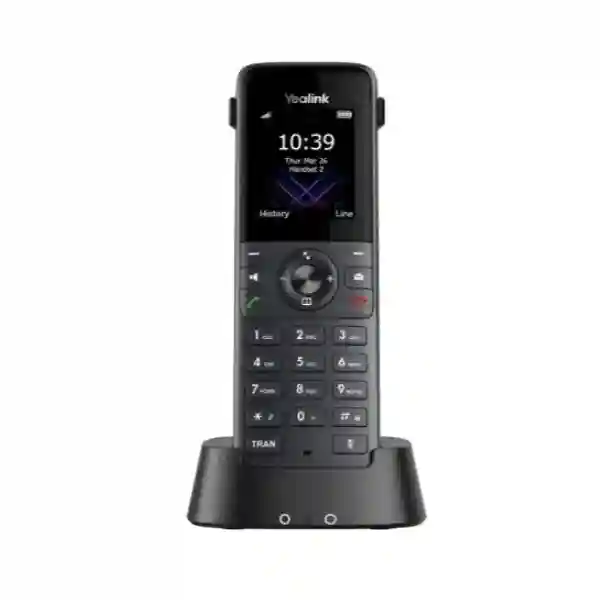
The Yealink W74H is a business-focused DECT handset for teams that need to move away from a desk without giving up professional call handling. It combines a compact modern design with a 1.8-inch color display, HD voice, Flexible Noise Reduction, Bluetooth 5.1, a 3.5 mm headset jack, vibration alerts and long battery endurance. For Tanzanian offices, hospitality teams, retail operations, warehouses, clinics, schools and service organizations, the practical value is mobility: users can remain reachable while walking between work areas, serving customers, checking stock, supervising operations or coordinating colleagues.
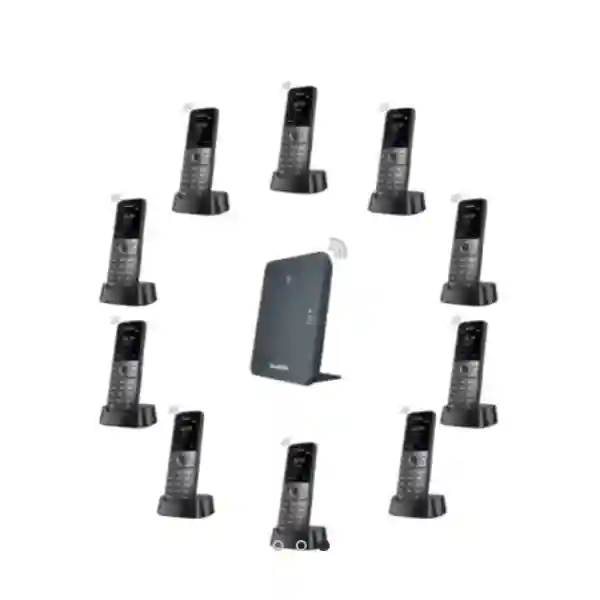
The W74H is a handset rather than a complete stand-alone phone system. It must be registered to compatible Yealink DECT infrastructure. Yealink lists compatibility with the W70B single-cell base and supported W75, W80 and W90 multi-cell platforms. That distinction matters during procurement because the correct base architecture depends on user count, coverage area, roaming needs, building layout, simultaneous-call demand and future expansion.
What the Yealink W74H is designed to solve
Fixed desk phones work well for employees who stay at one workstation, but many business roles are naturally mobile. A supervisor may move between offices and storage areas, a hospitality employee may move between front desk and guest areas, a retail manager may circulate across a floor, and a technician may need to remain reachable while away from a desk. The W74H addresses that gap by providing a portable DECT endpoint that remains part of the organization’s IP telephony environment through the compatible Yealink base system.
The handset supports up to two simultaneous calls per handset, 3-way conferencing, transfer, hold, call waiting, DND, voicemail indication, redial and other familiar business call functions when supported by the deployed platform. It also supports remote, LDAP and XML phonebook functions through the system. For buyers, the key planning question is therefore not simply whether the handset looks suitable, but whether the existing or planned DECT base, PBX, network and coverage design match the required workflow.
Key Yealink W74H features and business benefits
HD voice and noise reduction
HD audio and Flexible Noise Reduction are intended to improve speech clarity in everyday business environments, helping users communicate more comfortably when background activity is present.
Bluetooth 5.1 and 3.5 mm jack
Users can choose supported Bluetooth headsets or a wired 3.5 mm headset, useful for hands-free work, longer conversations and roles where staff move frequently while speaking.
Vibration alert
Vibration provides an additional incoming-call cue in noisy or busy workplaces where a ringtone can be missed or where users prefer discreet notifications.
Long working endurance
Yealink specifies up to 24 hours of talk time and up to 320 hours of standby time in ideal conditions, plus quick charging that can provide about two hours of talk time from a ten-minute charge.
Single-cell or multi-cell deployment
The W74H can be used with compatible Yealink single-cell and multi-cell DECT systems, so the same handset family can suit compact offices as well as larger premises requiring broader roaming coverage.
Portable business design
At approximately 144.5 × 48 × 21 mm and 117 g, the handset is designed to be carried during the workday and includes a belt clip for users who need quick access while moving.
Technical specifications
| Display | 1.8-inch 128 × 160 TFT color screen, backlit keypad, notification light |
| Audio | HD audio, full-duplex speakerphone, FNR / noise cancellation, HAC compliant |
| Headset connectivity | Built-in Bluetooth 5.1 and 3.5 mm headset jack |
| Calling | Up to 2 simultaneous calls per handset; 3-way conference, transfer, hold, waiting, DND and related functions |
| Battery | Lithium-ion; up to 24 hours talk and up to 320 hours standby in ideal conditions |
| Quick charge | 10-minute charge for approximately 2 hours talk time under manufacturer test conditions |
| DECT range | Up to 50 m indoors and up to 300 m outdoors in ideal conditions; real buildings can reduce range |
| Compatible architecture | Yealink W70B single-cell and supported W75/W80/W90 multi-cell DECT systems |
| Physical | 144.5 × 48 × 21 mm; approximately 117 g; Space Gray |
| Package | W74H handset, charger cradle, rechargeable battery, belt clip and power adapter |
Choosing the right Yealink DECT architecture
A W74H purchase should begin with the coverage and capacity requirement. For a compact office with a manageable number of users, the W70B single-cell base can provide a simple architecture. Yealink states that the W70B platform can support up to ten handsets, ten SIP accounts and twenty simultaneous calls, with up to two simultaneous calls per handset. For larger buildings, multi-floor facilities or sites where users need to roam across a wider area, W75, W80 or W90 multi-cell designs may be more appropriate. Multi-cell planning should consider base placement, overlap, building materials, floor slabs, metal shelving, machinery and the expected movement path of users.
Do not treat published maximum radio distances as guaranteed building coverage. Yealink’s quoted range is measured under ideal conditions, while real sites introduce walls, glass, reinforced concrete, doors, shelving and electromagnetic interference. A responsible quotation should therefore identify the number of users, expected simultaneous calls, indoor and outdoor coverage zones, floor count, PBX or SIP platform, headset needs and growth plans before final quantities are confirmed.
Yealink W74H Tanzania
For organizations searching for the Yealink W74H in Tanzania, the buying decision is usually connected to mobility rather than simply replacing a desktop phone. Businesses may have managers moving between offices, hospitality personnel working across guest areas, warehouse staff switching between storage and dispatch zones, retail supervisors covering several counters, or technical teams who need to stay reachable without carrying a mobile phone for every internal call. The W74H can fit these workflows when paired with correctly selected Yealink DECT infrastructure and an IP telephony platform that supports the intended call features.
A Tanzania deployment should begin by separating handset requirements from base-station requirements. If the site is small, one compatible single-cell base may be enough. If staff must roam across floors, long corridors, hotel wings, warehouse bays or multiple connected areas, a multi-cell system deserves consideration. Building structure can materially change DECT propagation, so quoted distances should not be treated as a substitute for site planning. Reinforced walls, metal racks and partition layouts can reduce practical range, while open spaces may allow better coverage.
Procurement teams should also confirm the voice platform, SIP account design, extension count, simultaneous-call expectations and power resilience for the network supporting the DECT base. For environments where uptime matters, the network switch, router, firewall and PBX should be included in the continuity plan rather than focusing only on handset battery life. A UPS-protected network can help maintain the wider voice infrastructure during short power interruptions, subject to the design of the site.
FourTeck Tanzania can help frame the requirement as a complete business communication project. Review the broader FourTeck Tanzania technology portfolio when the handset is part of a wider IP telephony, networking or infrastructure upgrade. For direct purchasing discussions, provide expected handset quantity, premises type, PBX details, current base stations if any, and whether staff need Bluetooth headsets, roaming or coverage across multiple floors.
Yealink W74H DECT Handset Dar es Salaam
Dar es Salaam businesses often combine offices, customer-facing areas, logistics activity and multi-department operations within the same site. In these environments, a cordless business handset can help staff remain reachable while moving between reception, management areas, store rooms, service desks or warehouse sections. The Yealink W74H is particularly relevant for organizations already using or planning Yealink DECT because it provides Bluetooth 5.1, a wired headset option, vibration alerts and business call handling in a portable form.
For a small professional office in Dar es Salaam, the design may be straightforward: a W70B base positioned to give stable coverage across the occupied space, with W74H handsets registered for users who move between desks and common areas. For a hotel, clinic, warehouse, school campus or larger office, however, a multi-cell solution may be preferable. The correct choice depends on actual coverage boundaries and roaming requirements. A handset that works well near one base does not automatically guarantee seamless movement across a complex building unless the underlying system is designed for it.
Dar es Salaam buyers should include network readiness in the quotation. The DECT base connects into the IP voice environment, so LAN stability, VLAN policy, switch capacity, internet or SIP connectivity, firewall rules and PBX configuration may affect the overall experience. If the business is replacing analog cordless phones, it is useful to map existing numbers, extension logic, hunt groups, reception flows and after-hours routing before hardware is purchased.
A practical request should specify whether the business needs only additional W74H handsets or a complete base-plus-handset system. Buyers can also review the FourTeck Tanzania business technology shop for related procurement context. The goal should be a system that matches staff movement, call volume and future expansion instead of selecting quantities solely from a room count.
Yealink W74H DECT Handset Mwanza
In Mwanza, the Yealink W74H can suit organizations that need dependable cordless extension mobility inside business premises. Typical use cases can include administrative offices, healthcare environments, education facilities, hospitality operations, distribution points and service businesses where staff cannot remain beside a desk phone all day. The W74H’s vibration alert is useful in active environments, while Bluetooth 5.1 can support compatible wireless headsets for users who need both hands free during conversations.
The first planning question should be whether the handset is an addition to an existing Yealink DECT platform or part of a new installation. Existing customers should identify their base model and firmware environment before ordering because DECT compatibility is not universal across vendors. Yealink explicitly notes that its DECT platform is not intended to interoperate with third-party DECT base and handset products merely because they use the same broad technology category. Confirming the base platform protects the buyer from purchasing a handset that cannot be registered as expected.
New Mwanza installations should also be sized by workflow. A reception team may need a fixed desk phone while roaming supervisors use W74H handsets. Warehouse users may require coverage around shelving and loading areas, while hospitality staff may need movement across rooms and corridors. Each environment creates a different radio pattern. Metal storage structures, reinforced surfaces and separated buildings can make simplistic range assumptions unreliable. For this reason, identify dead-zone risks and the required movement paths before deciding on single-cell versus multi-cell architecture.
When requesting a quotation, include the number of mobile users, expected concurrent calls, site layout, desired coverage areas, PBX or SIP system, current Yealink equipment and headset requirements. These details allow the handset quantity and base design to be evaluated together rather than as unrelated items.
Yealink W74H DECT Handset Arusha
Arusha businesses that operate hospitality, tourism support, professional services, education, healthcare, retail or administrative facilities may benefit from cordless voice when staff routinely leave their desks but still need a managed business extension. The Yealink W74H is built for this style of use. Its compact form, color interface, vibration function and headset flexibility make it more practical for mobile staff than repeatedly returning to a fixed phone, while still keeping calling within the organization’s DECT and VoIP environment.
Hospitality environments deserve special planning because users may move through corridors, service areas, reception zones, offices and back-of-house spaces. A single base that appears adequate on paper may encounter attenuation through concrete walls, doors or floor slabs. For a small property or office, a W70B single-cell arrangement may be sufficient; for larger premises, compatible multi-cell platforms can provide a more scalable foundation. Coverage should be planned around the places where staff actually need to talk rather than around the geometric center of the building.
Another important point is the distinction between handset endurance and infrastructure resilience. The W74H may offer long talk and standby time under ideal conditions, but calls still depend on the DECT base, network switching and voice system. Organizations that treat telephony as operationally important should therefore consider stable power, UPS support for critical network equipment, documented PBX configuration and controlled changes to firewall or VLAN settings.
Arusha procurement teams can prepare a better quotation by listing required users, coverage zones, number of floors, existing network equipment, SIP or PBX platform and whether users need Bluetooth or wired headsets. That information helps distinguish a straightforward handset expansion from a broader DECT redesign and reduces the risk of ordering hardware without enough coverage infrastructure.
Yealink W74H DECT Handset Dodoma
The Yealink W74H is relevant in Dodoma for organizations that require structured internal communication while allowing employees to move around offices, institutional buildings, service locations and operational areas. Rather than relying entirely on personal mobile phones for short internal calls, a DECT system can keep business extensions under the organization’s telephony platform. The W74H adds modern user features such as Bluetooth 5.1, a 3.5 mm headset connection, vibration alerts, HD voice and a color display.
Government-related offices, education facilities, professional organizations, healthcare sites and service businesses can have very different call flows, so handset selection should be tied to role. Some users may only need a fixed phone; others benefit from roaming between rooms. A mixed endpoint strategy is often more cost-effective than putting cordless phones at every position. Identify which employees are truly mobile, how frequently they receive calls, and whether they must answer while walking through noisy or customer-facing areas.
For larger Dodoma facilities, DECT planning should include floor layout and base coverage. Yealink lists ideal-condition distances of up to 50 metres indoors and 300 metres outdoors, but those numbers are not a promise of performance in a specific building. Thick walls, metal structures, partitions and elevation changes can reduce usable range. Multi-cell infrastructure may be justified where users need continuous mobility across several areas, while a small single-floor office may only need one W70B base.
Before ordering, document the voice platform, extension plan, expected simultaneous calls, desired handset count, current base stations and any reception or queue requirements. This allows the W74H to be evaluated as part of the communication system rather than as an isolated cordless device. It also creates a clearer basis for expansion if the organization adds users or moves into additional space.
Yealink W74H DECT Handset UAE
For UAE businesses, the Yealink W74H is a practical cordless handset option for offices, hospitality, retail, logistics, clinics and other environments where users need to move around a premises while remaining on a managed business extension. Its Bluetooth 5.1 connectivity, vibration alert, HD audio and quick-charge capability make it especially useful for mobile roles. Buyers should distinguish between the W74H handset and a complete DECT system: the handset depends on a compatible Yealink base architecture and the organization’s voice platform.
UAE projects can vary from compact offices to large hospitality and logistics sites. A W70B base may suit smaller deployments, while W75, W80 or W90 multi-cell designs can address larger roaming requirements. The system should be sized from real user movement, floor count, coverage boundaries and concurrency rather than by handset count alone. In warehouses, high racks and dense stock can alter radio propagation. In hotels, corridors, fire doors and reinforced service areas can create uneven coverage. In offices, glass partitions and multiple floors may also affect performance.
Procurement should also consider how the DECT platform integrates with SIP services, hosted PBX or on-premises telephony. The handset exposes many familiar business functions, but their practical availability can depend on the base and PBX configuration. Centralized provisioning, extension naming, contact directories and call routing should be documented for larger deployments. For organizations with branches across countries, a consistent handset family can simplify training while the local voice architecture remains appropriately designed for each site.
For broader regional telephony requirements, customers can review FourTeck IP phone and business voice solutions. A useful W74H quotation request includes the number of users, current Yealink bases, PBX platform, required roaming areas and headset preference.
Yealink W74H DECT Handset Uganda
Ugandan organizations considering the Yealink W74H are usually looking for an extension device that supports staff mobility inside the workplace. The handset can be particularly useful in offices, hospitality sites, healthcare environments, retail facilities, warehouses and education settings where employees move between desks, counters, rooms or operational areas. Bluetooth 5.1 and the 3.5 mm headset jack provide flexible audio options, while vibration can help signal incoming calls in louder environments.
The architecture should start with the compatible base system. Yealink lists W70B single-cell support and compatibility with selected W75, W80 and W90 multi-cell platforms. A buyer adding one handset to an established system may only need registration and extension provisioning. A new site, by contrast, needs coverage and capacity planning. Published range figures should be treated as ideal-condition guidance because the actual radio environment depends on wall construction, room layout, shelving, outdoor transitions and other physical factors.
Uganda deployments that span several departments should also map call flow. A roaming handset does not replace the need for sensible IVR, ring groups, queues or reception routing. For example, a warehouse manager may require a personal extension while a service counter uses a shared group. Documenting those workflows helps determine how many SIP accounts, extensions and handsets are required and which users benefit most from cordless mobility.
Organizations with Uganda-wide requirements can explore FourTeck Uganda technology solutions for regional project context. When requesting the W74H, include base model, PBX platform, handset quantity, physical coverage areas and whether the project is an expansion or a new installation.
Yealink W74H DECT Handset Kampala
Kampala offices and customer-facing businesses often need communication that follows employees as they move through busy premises. The Yealink W74H provides a business-oriented cordless option without relying solely on consumer mobile devices. Its compact size, color display, HD voice, vibration and Bluetooth headset capability can make daily call handling easier for managers, service teams, hospitality staff and supervisors who routinely step away from a desk.
A compact office may only require a W70B base with several registered W74H handsets. Yealink states that the W70B platform can support up to ten handsets and twenty simultaneous calls, with two calls per handset, but system design should still reflect the organization’s real call demand. In a larger Kampala property, the decision shifts from simple handset quantity to radio coverage. Users moving across floors or separate wings may require multi-cell infrastructure that supports roaming, while isolated work areas can require different base positioning.
The network path also deserves attention. IP telephony is sensitive to poor LAN design, unstable uplinks and misconfigured voice policies. DECT removes the Ethernet cable from the handset, but the base still participates in the data network and voice platform. Businesses should therefore treat switch configuration, VLANs, firewall rules, PBX integration and power continuity as parts of the same communication system.
For procurement, specify whether the W74H will connect to an existing W70B or multi-cell platform, or whether FourTeck should consider the base system as part of the requirement. Provide floor count, approximate coverage areas, user roles and expected growth. This information makes it easier to avoid under-sizing a project that initially appears to be a simple cordless-phone purchase.
Yealink W74H DECT Handset Arua
In Arua, the Yealink W74H can help organizations maintain structured voice communication for employees who spend much of the day away from a fixed desk. Businesses, service facilities, education sites, healthcare teams, hospitality operations and local distribution environments may all have users who move between rooms, counters, storage spaces and outdoor-adjacent work areas. A properly designed DECT system gives those users a consistent extension identity while retaining access to business call functions.
The W74H is designed for compatible Yealink DECT infrastructure rather than arbitrary third-party DECT bases. That point should be checked early because buyers sometimes assume that all DECT-branded devices are interchangeable. If an organization already owns a Yealink W70B, W75, W80 or W90 environment, confirm the exact model and system software before expansion. If there is no existing base, the project should include one and should be planned around coverage.
Arua deployments may benefit from carefully defining indoor versus outdoor-adjacent requirements. Yealink lists up to 50 metres indoor and 300 metres outdoor range under ideal conditions, but actual performance can differ substantially. The distance between a front office and a store room, the presence of concrete walls, metal roofs, shelving or separate structures can all affect usable signal. A multi-cell design may be more appropriate where staff must move through broader or segmented spaces.
The best quotation request should include handset count, existing base systems, PBX or SIP platform, intended coverage zones, number of floors and critical roaming paths. Bluetooth headset requirements should also be stated if hands-free operation is part of the workflow. These details help ensure the purchase solves the communication need rather than simply adding another device.
Yealink W74H DECT Handset Mbarara
Mbarara organizations looking for the Yealink W74H can evaluate it as a premium cordless business handset for users who need mobility within a managed telephony environment. The combination of a color screen, HD audio, Flexible Noise Reduction, vibration, Bluetooth 5.1 and long manufacturer-rated battery endurance addresses common practical needs in busy workplaces. It can allow employees to answer internal or external business calls while moving between operational zones instead of depending on a desk extension.
The correct deployment starts with a coverage map. For a small office, a single compatible base may serve the required space. For larger facilities, multi-cell design should be considered where users cross several rooms, corridors, floors or buildings. Real coverage varies with construction and layout, so it is better to identify high-priority call areas than to rely on maximum range figures. Receiving areas, administration desks, stock rooms, service points and manager routes can all be marked during planning.
Mbarara buyers should also decide whether users require personal extensions or shared roles. A personal handset can follow a named employee, while shift-based operational teams may require a different provisioning approach. Phonebook integration, voicemail, ring groups and transfer behavior should be aligned with the PBX. These details influence user experience more than the handset alone and should be considered before rollout.
When requesting pricing, state whether chargers and power adapters are required as standard packaged accessories, whether Bluetooth headsets will be included separately, and whether the site already has compatible Yealink DECT bases. Avoid assuming stock, delivery timing or local availability until these are confirmed in the formal quotation. The technical requirement can be prepared first so procurement comparisons are made on like-for-like scope.
Yealink W74H DECT Handset Gulu
The Yealink W74H is a suitable candidate for Gulu businesses and institutions that want cordless business extensions for mobile employees. It is not intended as a consumer mobile replacement; its value comes from participating in a Yealink DECT and IP telephony system where extensions, call routing and business voice functions can be managed centrally. That makes it useful for environments where operational staff need to remain reachable but are not always beside their workstation.
The handset’s vibration alert is helpful where ambient sound can mask a ringtone, while Bluetooth 5.1 can support hands-free use with compatible headsets. HD voice and Flexible Noise Reduction are intended to improve clarity, and the full-duplex speakerphone offers another option for short conversations. Battery specifications are strong on paper, but buyers should remember that actual endurance varies with usage, signal conditions, call duration and battery age.
For Gulu sites, system planning should match the building. A W70B single-cell arrangement may be appropriate for smaller premises. Facilities with wider grounds, multiple wings or several floors may need a multi-cell platform. The W74H is listed for compatible W75, W80 and W90 multi-cell systems, allowing a scalable route where roaming is important. A coverage assessment should focus on employee movement paths and places where calls are operationally critical.
A strong procurement brief should identify the current telephone system, whether SIP service is already in place, existing Yealink base models, required extensions, approximate concurrent calls and any business continuity expectations. Once those details are known, the W74H can be positioned as one component in a complete communication design, with the base, network and PBX sized appropriately around it.
Yealink W74H DECT Handset Kenya
Kenyan organizations can use the Yealink W74H where business users need cordless mobility without leaving the managed office telephony environment. The handset is especially useful in workplaces where supervisors, hospitality teams, healthcare staff, store personnel or operations users need to move while remaining reachable. Bluetooth 5.1 supports compatible wireless headsets, while the 3.5 mm jack gives a wired option. Vibration alerts add another layer of notification for active spaces.
A buyer should first determine whether the W74H is being added to an existing Yealink deployment. If the site already uses W70B or supported Yealink multi-cell infrastructure, expansion may be relatively direct after compatibility and capacity are checked. For greenfield deployments, the number of handsets is only one part of the design. The site needs enough DECT coverage and call capacity, and the base architecture must integrate with the PBX or SIP service that delivers business calling.
Kenyan multi-floor offices, hotels, clinics and warehouses should pay close attention to propagation. Published ideal-condition range figures cannot represent every building. Concrete, lift shafts, doors, metal racks and dense partitioning can create weak zones. A multi-cell platform may be justified when users need dependable roaming between coverage areas. The system should also have a documented IP network configuration, including addressing, VLAN policy and security controls that fit the organization’s standards.
For projects centered in Kenya, see FourTeck Kenya business technology solutions for broader regional support context. When requesting the W74H, provide quantity, base model, PBX platform, building layout and roaming requirement so the quotation can distinguish handset supply from any base-system or configuration work.
Yealink W74H DECT Handset Kuwait
For Kuwait businesses, the Yealink W74H is a premium cordless handset for users who need mobility around offices, hospitality locations, healthcare environments, retail operations or logistics sites. The handset combines business DECT calling with Bluetooth 5.1, a 3.5 mm headset connector, vibration alerts, HD voice and a compact design. It is most valuable where the organization wants mobile staff to remain on centrally managed extensions rather than relying on ad-hoc mobile numbers for internal workflows.
The base architecture should be chosen according to the premises. Small offices can consider the W70B single-cell platform, subject to capacity and coverage. Larger locations may use supported W75, W80 or W90 multi-cell systems when roaming and broader coverage are required. High-density interiors, concrete walls, service corridors and industrial structures can reduce radio range, so a detailed floor plan is useful for any project where uninterrupted mobility is operationally important.
Kuwait procurement teams should also consider the complete telephony stack. The W74H provides the user interface, but call routing, SIP accounts, numbering, voicemail and queue logic come from the wider voice platform. If the project is part of a modernization, document the existing PBX, available licenses, SIP trunks, extension ranges and any auto-attendant flows. This reduces surprises during installation and makes it easier to decide whether existing equipment can be retained.
A quotation request should include handset quantity, compatible base requirements, intended coverage, headset preference and whether configuration or integration is needed. Avoid comparing offers solely on handset unit price when one quote includes base infrastructure or provisioning and another does not. A like-for-like scope gives procurement a more reliable basis for evaluating total project requirements.
Yealink W74H DECT Handset Ghana
Ghanaian businesses can consider the Yealink W74H when staff mobility is a central requirement of the voice system. A cordless handset can help supervisors, customer-service staff, facility teams, hospitality employees and warehouse users answer calls away from a fixed desk. The W74H’s business-oriented feature set includes Bluetooth 5.1, HD voice, Flexible Noise Reduction, a vibration function, a color display and a wired headset jack, giving users several ways to work comfortably.
The handset should be matched to Yealink DECT infrastructure. A single-cell W70B can be effective for a compact location, while compatible multi-cell systems address larger coverage and roaming scenarios. Organizations should estimate not only total handset count but also the number of users likely to be in calls at the same time. Yealink’s W70B-based W74P platform supports up to ten handsets, ten SIP accounts and twenty simultaneous calls, but larger systems follow different capacities and should be sized separately.
Physical planning matters in Ghana just as much as elsewhere. A published range measured in ideal conditions is not a guaranteed building result. Concrete walls, warehouse stock, metal barriers and long floor layouts can create weak areas. If calls must continue while users move, place coverage requirements into the project brief. A simple sketch showing work areas and movement routes can improve the quality of system design.
For procurement, clarify whether the requirement is handset-only, a new DECT base plus handsets, or a complete IP telephony solution including PBX integration. The clearer the scope, the easier it is to compare quotations and avoid missing infrastructure. Include any Bluetooth headset needs, expected future user growth and business-hours call flows in the request.
Yealink W74H DECT Handset Nigeria
Nigerian organizations that need business mobility can deploy the Yealink W74H as part of a compatible Yealink DECT system. It suits roles where employees walk between offices, service areas, retail floors, hotel sections, warehouse zones or healthcare rooms while still needing access to a business extension. The handset’s vibration alert can help in active spaces, and Bluetooth 5.1 supports hands-free communication with compatible wireless headsets.
New deployments should be designed from the base station outward. A small site can consider the W70B single-cell architecture, while larger premises may need W75, W80 or W90 multi-cell infrastructure. The decision should reflect floor area, construction, user movement and simultaneous-call demand. Maximum manufacturer range values are achieved under ideal conditions and should not be used as a promise that one base will cover an entire facility.
Power and network resilience are also relevant. Although the handset has its own rechargeable battery, the DECT base and IP network still require power. Businesses that consider voice essential during short outages should examine UPS protection for key network and telephony components. Switches, routers, firewalls, PBX appliances and internet access may all be part of the continuity chain. This broader planning is particularly important when cordless telephony supports operational or customer-facing activity.
A Nigerian procurement brief should include user count, site type, floors, current voice platform, base requirements, number of simultaneous calls and headset needs. It should also state whether the business wants simple supply or a wider design and integration scope. Those details ensure that W74H pricing is connected to a realistic system configuration rather than an incomplete handset-only comparison.
Yealink W74H DECT Handset Seychelles
The Yealink W74H can be a strong fit for Seychelles hospitality, service, administration and business environments where employees move frequently across a property. Resorts, hotels, offices, clinics and operational sites may benefit from a handset that keeps staff connected to managed business extensions while they work away from a desk. Bluetooth 5.1, vibration alerts and the compact handset design are particularly useful for roles where quick response and hands-free options matter.
Hospitality projects should pay close attention to coverage architecture. Guest-room wings, service corridors, stairwells, back-of-house areas and outdoor-adjacent spaces may each behave differently for radio coverage. A single-cell base can work for smaller zones, but multi-cell platforms can be more suitable when staff roam through larger properties. The W74H is compatible with supported Yealink multi-cell systems, making it possible to plan handset mobility as the property grows.
The phone system should also be designed around operational roles. Front desk may need fixed consoles with line visibility, while supervisors and service managers use W74H handsets. Housekeeping or technical teams may require group-call workflows rather than direct individual extensions. A clear call-flow plan helps avoid over-purchasing handsets or creating a confusing set of extensions. The PBX, SIP service and directory structure should be configured to support the business process rather than merely register devices.
Seychelles buyers should provide the number of buildings or wings, expected staff mobility, current Yealink infrastructure and desired call features when asking for a quotation. If the project spans separated structures, do not assume standard DECT coverage will bridge every gap; each area should be assessed as part of the design. Clear scope improves procurement and supports future expansion.
Compatibility and integration guidance
The W74H is designed for Yealink DECT systems, and this is one of the most important facts to confirm before purchasing. Yealink’s documentation lists compatibility with the W70B single-cell base and supported W75, W80 and W90 multi-cell systems. Yealink also states that its DECT implementation is not compatible with third-party DECT devices merely because they use DECT technology. Buyers should therefore identify exact installed base models before ordering expansion handsets.
Integration with an IP PBX or hosted voice service should also be validated. SIP registration, extension provisioning, remote phonebooks, LDAP, XML directories, voicemail indication and call features may depend on the base and PBX environment. For large deployments, agree on naming, extension numbering, user ownership, firmware processes and configuration backup so the system is maintainable after rollout.
Who should choose the W74H?
Mobile office staff
Managers and coordinators who move between desks, meeting areas and shared spaces.
Hospitality teams
Operational staff who need to stay reachable while moving through guest and service areas.
Retail and warehouses
Supervisors who need calls while checking stock, counters, receiving areas or storage zones.
Healthcare and education
Administrative and operational users who circulate between rooms while remaining on a managed extension.
Related FourTeck communication resources
A DECT handset is only one part of business voice. For organizations planning broader infrastructure, FourTeck business technology solutions provide regional context across networking, telephony and IT. These related resources are useful when the W74H must be integrated with switching, SIP platforms, firewalls, PBX systems or multi-site communication requirements.
For Tanzania projects, the preferred approach is to define the communication workflow first, then match the handset, base architecture and network to that requirement. This avoids buying a premium handset but under-sizing coverage or overlooking the PBX and LAN components needed to make the system useful.
Frequently asked questions about Yealink W74H
Is the Yealink W74H a complete phone system?
No. The W74H is a DECT handset. It needs a compatible Yealink DECT base system and a configured voice platform. Yealink lists the W70B single-cell base and supported W75, W80 and W90 multi-cell systems among compatible architectures.
Does the W74H support Bluetooth?
Yes. Yealink specifies built-in Bluetooth 5.1 for compatible wireless headsets. The handset also includes a 3.5 mm headset jack for wired headset use.
How long does the battery last?
Yealink specifies up to 24 hours of talk time and up to 320 hours of standby time under ideal conditions. Actual results vary with calls, signal conditions, settings, battery age and operating environment.
What is the W74H indoor range?
Yealink specifies up to 50 metres indoors and 300 metres outdoors in ideal conditions. Walls, metal, floors, doors and interference can reduce practical coverage, so business deployments should be planned from the real site.
Can I use the W74H with any DECT base?
No. Yealink documents compatibility with its supported DECT infrastructure and states that its DECT devices are not intended to interoperate with third-party DECT bases and handsets simply because they share the DECT category.
Does the W74H support vibration?
Yes. The handset includes a vibration alert, useful in busy or noisy environments where users might miss an audible ringtone.
How many calls can one W74H handle at once?
Yealink specifies up to two simultaneous calls per handset. Overall system capacity depends on the selected base platform.
Quotation checklist
To receive an accurate Yealink W74H quotation, provide as much of the following information as possible:
Decision recap
Choose the Yealink W74H when your priority is a modern business DECT handset with Bluetooth 5.1, vibration alerts, HD voice, headset flexibility and long manufacturer-rated battery life. It is a particularly good match for organizations that already use compatible Yealink DECT infrastructure or that are planning a scalable Yealink single-cell or multi-cell deployment.
Do not choose it purely from handset specifications if the base architecture is not yet known. The quality of the final solution depends on correct compatibility, coverage, PBX integration, network readiness and user workflow. A short planning exercise before purchase can prevent poor coverage, insufficient capacity and unnecessary hardware.
Talk to FourTeck about the Yealink W74H
For a useful recommendation, share your site type, number of mobile users, current phone system, Yealink base model if already installed, and the areas where staff need reliable cordless coverage. FourTeck can then help frame whether the requirement is handset-only or should include a base station, multi-cell design, PBX integration or related network work.
Pricing, availability, delivery schedules, warranty terms and project scope should be confirmed in the current quotation rather than assumed from a web page. This protects procurement teams from outdated stock or commercial information and keeps the technical scope aligned with the actual deployment.


Reviews
There are no reviews yet.